
Articles | Volume 26, issue 17
https://doi.org/10.5194/acp-26-12261-2026
© Author(s) 2026. This work is distributed under
the Creative Commons Attribution 4.0 License.
the Creative Commons Attribution 4.0 License.
https://doi.org/10.5194/acp-26-12261-2026
© Author(s) 2026. This work is distributed under
the Creative Commons Attribution 4.0 License.
the Creative Commons Attribution 4.0 License.
Research article
| 
31 Aug 2026
Research article |
| 31 Aug 2026
| 31 Aug 2026
Heterogeneous nitrosation reactions of amines driven by dinitrogen tetroxide: a missing source of particulate nitrosamines
Tai-Xing Chi
Institute of Catalysis for Energy and Environment, College of Chemistry and Chemical Engineering, Shenyang Normal University, Shenyang 110034, China
State Key Laboratory of Environment Characteristics and Effects for Near-space, Key Laboratory of Cluster Science, Ministry of Education of China, School of Chemistry and Chemical Engineering, Beijing Institute of Technology, Beijing 100081, China
Shuang Ni
Institute of Catalysis for Energy and Environment, College of Chemistry and Chemical Engineering, Shenyang Normal University, Shenyang 110034, China
Wei-Kang Xiao
State Key Laboratory of Environment Characteristics and Effects for Near-space, Key Laboratory of Cluster Science, Ministry of Education of China, School of Chemistry and Chemical Engineering, Beijing Institute of Technology, Beijing 100081, China
Yang Liu
State Key Laboratory of Environment Characteristics and Effects for Near-space, Key Laboratory of Cluster Science, Ministry of Education of China, School of Chemistry and Chemical Engineering, Beijing Institute of Technology, Beijing 100081, China
Xiu-Cong Deng
State Key Laboratory of Environment Characteristics and Effects for Near-space, Key Laboratory of Cluster Science, Ministry of Education of China, School of Chemistry and Chemical Engineering, Beijing Institute of Technology, Beijing 100081, China
State Key Laboratory of Environment Characteristics and Effects for Near-space, Key Laboratory of Cluster Science, Ministry of Education of China, School of Chemistry and Chemical Engineering, Beijing Institute of Technology, Beijing 100081, China

Institute of Catalysis for Energy and Environment, College of Chemistry and Chemical Engineering, Shenyang Normal University, Shenyang 110034, China
State Key Laboratory of Environment Characteristics and Effects for Near-space, Key Laboratory of Cluster Science, Ministry of Education of China, School of Chemistry and Chemical Engineering, Beijing Institute of Technology, Beijing 100081, China
Zhen Zhao
Institute of Catalysis for Energy and Environment, College of Chemistry and Chemical Engineering, Shenyang Normal University, Shenyang 110034, China
State Key Laboratory of Heavy Oil Processing, China University of Petroleum, Chang Ping, Beijing 102249, China
State Key Laboratory of Environment Characteristics and Effects for Near-space, Key Laboratory of Cluster Science, Ministry of Education of China, School of Chemistry and Chemical Engineering, Beijing Institute of Technology, Beijing 100081, China
Related authors
No articles found.
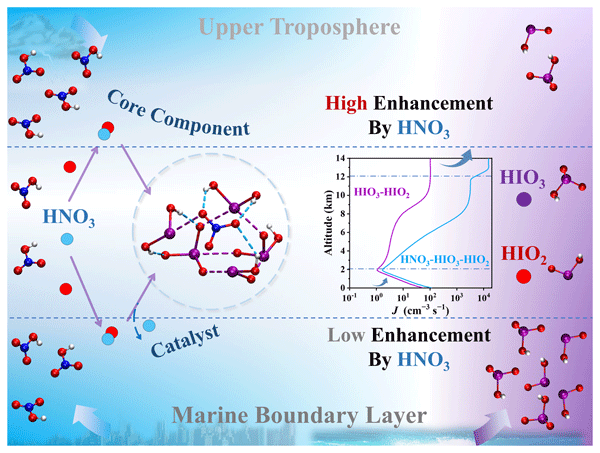
Jiaze Zhang, Ling Liu, An Ning, Haotian Zu, Jing Li, Fengyang Bai, Jie Yang, Xueshun Chen, and Xiuhui Zhang
Atmos. Chem. Phys., 26, 11627–11643, https://doi.org/10.5194/acp-26-11627-2026, https://doi.org/10.5194/acp-26-11627-2026, 2026
Short summary
Short summary
Sulfuric acid (SA)-dominated nucleation cannot explain observed tropospheric particulate matter and cloud condensation nuclei. Via quantum chemical calculations and atmospheric cluster dynamics simulations, we find the role of nitric acid shifts from a marine boundary layer catalyst to an upper troposphere cluster core in HIO3–HIO2 nucleation, with particle formation rates surpassing established SA pathways, explaining unaccounted-for new particle formation (NPF) amid falling sulfur and rising marine iodine emissions.
Ling Liu, Zizhou Cai, An Ning, Biwu Chu, Haotian Zu, Jing Li, Jiayi Tang, and Xiuhui Zhang
EGUsphere, https://doi.org/10.5194/egusphere-2026-2877, https://doi.org/10.5194/egusphere-2026-2877, 2026
Short summary
Short summary
Sulfuric acid (SA)–ammonia (NH3) nucleation cannot fully explain the observed new particle formation in cold regions. Using quantum chemical calculations and atmospheric cluster dynamics simulations, we find trifluoroacetic acid (TFA), a model perfluorocarboxylic acid (PFCA), markedly enhances SA–NH3 nucleation under cold conditions. This work reveals a PFCA-assisted nucleation mechanism and provides a molecular-level foundation for future atmospheric observations and aerosol modeling.
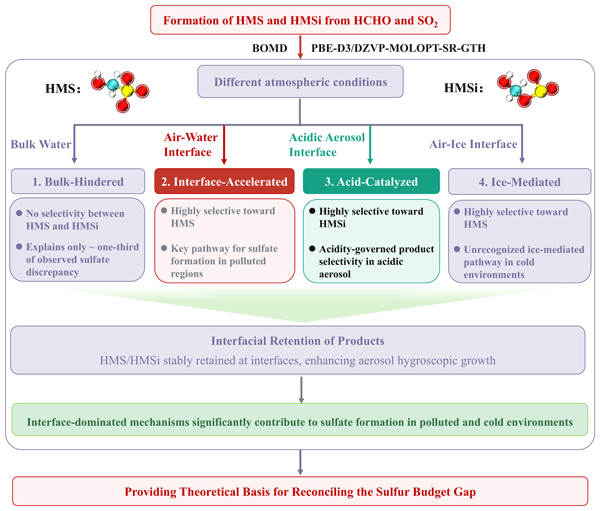
Yang Liu, An Ning, Xiaohua Yang, Yuchen Zhang, Ling Liu, and Xiuhui Zhang
Atmos. Chem. Phys., 26, 9357–9371, https://doi.org/10.5194/acp-26-9357-2026, https://doi.org/10.5194/acp-26-9357-2026, 2026
Short summary
Short summary
Current atmospheric models fail to explain observed sulfate concentrations in polluted and cold regions. Using Born–Oppenheimer molecular dynamics (BOMD) simulations, we show that hydroxymethanesulfonate and its isomer hydroxymethyl sulfite form mainly through reactions at air–water and air–ice surfaces rather than in bulk water. Strong acidity in polluted aerosols shifts formation toward hydroxymethyl sulfite. These findings help explain long-standing gaps between modeled and observed atmospheric sulfate.
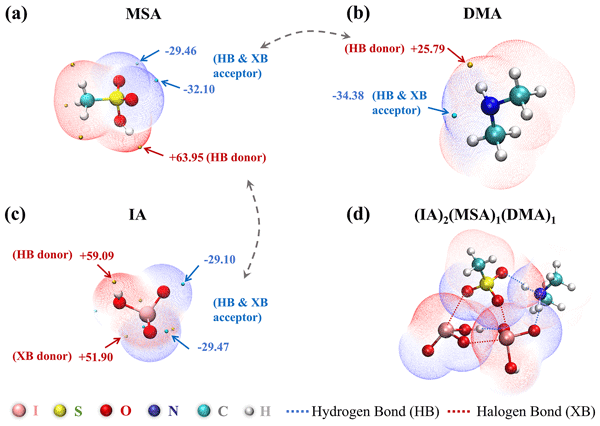
Jing Li, An Ning, Ling Liu, Xiucong Deng, and Xiuhui Zhang
Atmos. Chem. Phys., 26, 4423–4437, https://doi.org/10.5194/acp-26-4423-2026, https://doi.org/10.5194/acp-26-4423-2026, 2026
Short summary
Short summary
Marine new particle formation involves precursors such as methanesulfonic acid (MSA), iodic acid (IA), and dimethylamine (DMA), yet their nucleation mechanism remains incompletely understood. This study employs theoretical calculations to examine the IA–MSA–DMA system. We propose a nucleation mechanism that underscores the importance of synergistic interactions between sulfur-, iodine-, and nitrogen-containing vapors in driving marine new particle formation.
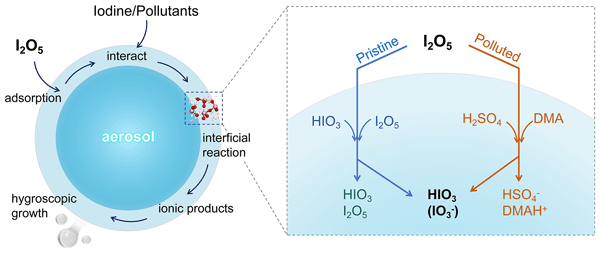
Xiucong Deng, An Ning, Ling Liu, Fengyang Bai, Jie Yang, Jing Li, Jiarong Liu, and Xiuhui Zhang
Atmos. Chem. Phys., 26, 477–488, https://doi.org/10.5194/acp-26-477-2026, https://doi.org/10.5194/acp-26-477-2026, 2026
Short summary
Short summary
I2O5 is known as a significant contributor to marine aerosol, yet the chemical mechanism remains unclear. The atmospheric complexity arises from intricate coupling effects between I2O5 and diverse chemical species. We performed Born-Oppenheimer molecular dynamics to elucidate the I2O5 hydrolysis mechanisms mediated by prevalent chemicals at the air-water interface. The proposed heterogeneous reactions provides molecular-level insight into the role of I2O5 in the atmospheric iodine chemistry.
Jiaqi Jin, Runlong Cai, Yiliang Liu, Gan Yang, Yueyang Li, Chuang Li, Lei Yao, Jingkun Jiang, Xiuhui Zhang, and Lin Wang
Atmos. Chem. Phys., 25, 17125–17138, https://doi.org/10.5194/acp-25-17125-2025, https://doi.org/10.5194/acp-25-17125-2025, 2025
Short summary
Short summary
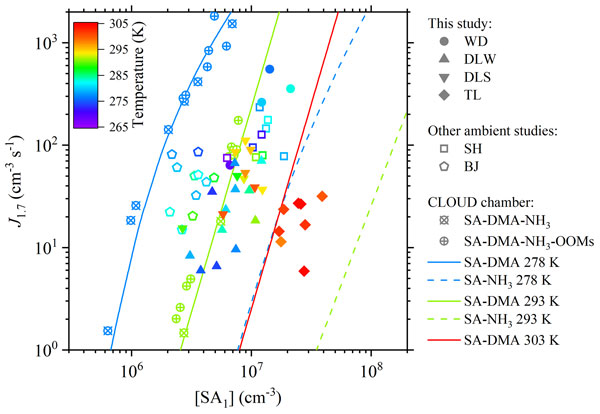
Based on observed atmospheric new particle formation events at multiple sites in eastern China, we find that sulfuric acid and dimethylamine can explain the observed atmospheric nucleation and the differences in the nucleation intensity among campaigns can be largely attributed to temperature and precursor concentrations. Our results also show that oxygenated organic molecules can make a great contribution to the initial growth of freshly nucleated particles in the real atmosphere.
Jing Li, An Ning, Ling Liu, Fengyang Bai, Qishen Huang, Pai Liu, Xiucong Deng, Yunhong Zhang, and Xiuhui Zhang
Atmos. Chem. Phys., 25, 14237–14249, https://doi.org/10.5194/acp-25-14237-2025, https://doi.org/10.5194/acp-25-14237-2025, 2025
Short summary
Short summary
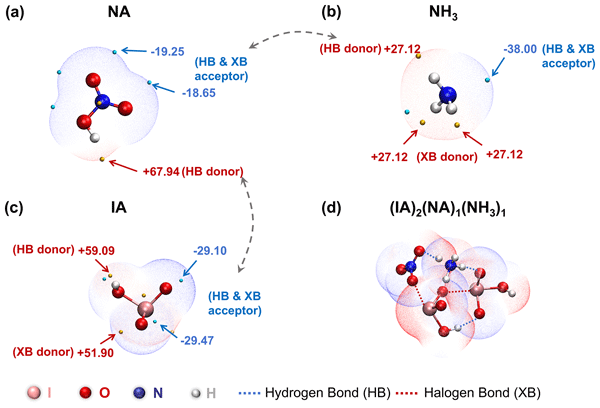
Iodic acid (IA) particles are frequently observed in the upper troposphere and lower stratosphere (UTLS), yet their formation mechanism remains unclear. Nitric acid (NA) and ammonia (NH3) are key nucleation precursors in the UTLS. This study investigates the IA–NA–NH3 system using a theoretical approach. Our proposed nucleation mechanism highlights the crucial role of NA in IA nucleation, providing molecular-level evidence for the missing sources of IA particles in the UTLS.
Jiewen Shen, Bin Zhao, Shuxiao Wang, An Ning, Yuyang Li, Runlong Cai, Da Gao, Biwu Chu, Yang Gao, Manish Shrivastava, Jingkun Jiang, Xiuhui Zhang, and Hong He
Atmos. Chem. Phys., 24, 10261–10278, https://doi.org/10.5194/acp-24-10261-2024, https://doi.org/10.5194/acp-24-10261-2024, 2024
Short summary
Short summary
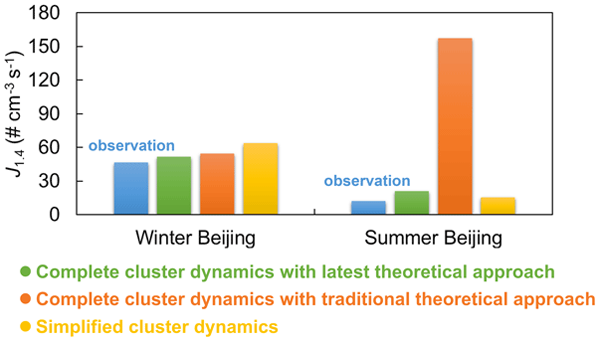
We extensively compare various cluster-dynamics-based parameterizations for sulfuric acid–dimethylamine nucleation and identify a newly developed parameterization derived from Atmospheric Cluster Dynamic Code (ACDC) simulations as being the most reliable one. This study offers a valuable reference for developing parameterizations of other nucleation systems and is meaningful for the accurate quantification of the environmental and climate impacts of new particle formation.
Haotian Zu, Biwu Chu, Yiqun Lu, Ling Liu, and Xiuhui Zhang
Atmos. Chem. Phys., 24, 5823–5835, https://doi.org/10.5194/acp-24-5823-2024, https://doi.org/10.5194/acp-24-5823-2024, 2024
Short summary
Short summary
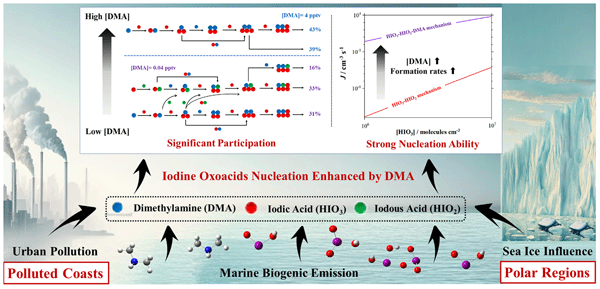
The nucleation of iodic acid (HIO3) and iodous acid (HIO2) was proven to be critical in marine areas. However, HIO3–HIO2 nucleation cannot effectively derive the rapid nucleation in some polluted coasts. We find a significant enhancement of dimethylamine (DMA) on the HIO3–HIO2 nucleation in marine and polar regions with abundant DMA sources, which may establish reasonable connections between the HIO3–HIO2 nucleation and the rapid formation of new particles in polluted marine and polar regions.
Jing Li, Nan Wu, Biwu Chu, An Ning, and Xiuhui Zhang
Atmos. Chem. Phys., 24, 3989–4000, https://doi.org/10.5194/acp-24-3989-2024, https://doi.org/10.5194/acp-24-3989-2024, 2024
Short summary
Short summary
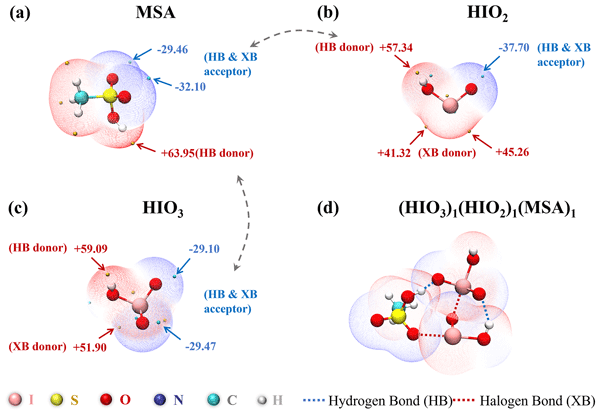
Iodic acid (HIO3) nucleates with iodous acid (HIO2) efficiently in marine areas; however, whether methanesulfonic acid (MSA) can synergistically participate in the HIO3–HIO2-based nucleation is unclear. We provide molecular-level evidence that MSA can efficiently promote the formation of HIO3–HIO2-based clusters using a theoretical approach. The proposed MSA-enhanced iodine nucleation mechanism may help us to deeply understand marine new particle formation events with bursts of iodine particles.
Yangyang Liu, Yue Deng, Jiarong Liu, Xiaozhong Fang, Tao Wang, Kejian Li, Kedong Gong, Aziz U. Bacha, Iqra Nabi, Qiuyue Ge, Xiuhui Zhang, Christian George, and Liwu Zhang
Atmos. Chem. Phys., 22, 9175–9197, https://doi.org/10.5194/acp-22-9175-2022, https://doi.org/10.5194/acp-22-9175-2022, 2022
Short summary
Short summary
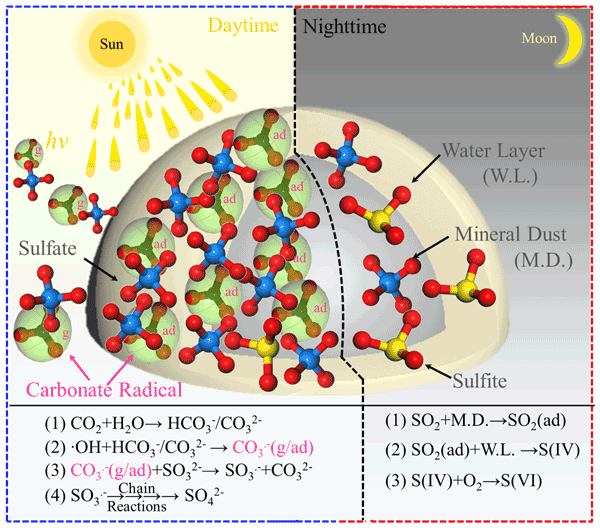
Both CO2 and carbonate salt work as the precursor of carbonate radicals, which largely promotes sulfate formation during the daytime. This study provides the first indication that the carbonate radical not only plays a role as an intermediate in tropospheric anion chemistry but also as a strong oxidant for the surface processing of trace gas in the atmosphere. CO2, carbponate radicals, and sulfate receive attention from those looking at the environment, atmosphere, aerosol, and photochemistry.
An Ning, Ling Liu, Lin Ji, and Xiuhui Zhang
Atmos. Chem. Phys., 22, 6103–6114, https://doi.org/10.5194/acp-22-6103-2022, https://doi.org/10.5194/acp-22-6103-2022, 2022
Short summary
Short summary
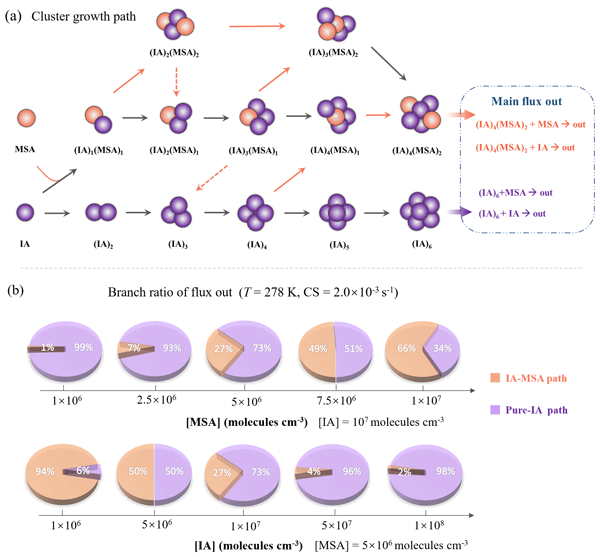
Iodic acid (IA) and methanesulfonic acid (MSA) were previously proved to be significant nucleation precursors in marine areas. However, the nucleation process involved in IA and MSA remains unclear. We show the enhancement of MSA on IA cluster formation and reveal the IAM-SA nucleating mechanism using a theoretical approach. This study helps to understand the clustering process in which marine sulfur- and iodine-containing species are jointly involved and its impact on new particle formation.

Narcisse Tsona Tchinda, Lin Du, Ling Liu, and Xiuhui Zhang
Atmos. Chem. Phys., 22, 1951–1963, https://doi.org/10.5194/acp-22-1951-2022, https://doi.org/10.5194/acp-22-1951-2022, 2022
Short summary
Short summary
This study explores the effect of pyruvic acid (PA) both in the SO3 hydrolysis and in sulfuric-acid-based aerosol formation. Results show that in dry and polluted areas, PA-catalyzed SO3 hydrolysis is about 2 orders of magnitude more efficient at forming sulfuric acid than the water-catalyzed reaction. Moreover, PA can effectively enhance the ternary SA-PA-NH3 particle formation rate by up to 4.7×10² relative to the binary SA-NH3 particle formation rate at cold temperatures.
Cited articles
Akyüz, B. G. and Akyüz, M.: Seasonal variations, source apportionment, and health risk assessment of nitrosamines in inhalable particulate matter (PM10) in the atmosphere of Zonguldak, Türkiye, Environ. Sci. Pollut. Res., 32, 11083–11096, https://doi.org/10.1007/s11356-025-36280-z, 2025.
Brown, S. S. and Stutz, J.: Nighttime radical observations and chemistry, Chem. Soc. Rev., 41, 6405–6447, https://doi.org/10.1039/c2cs35181a, 2012.
Bussi, G. and Tribello, G. A.: Analyzing and Biasing Simulations with PLUMED, in: Biomolecular Simulations: Methods and Protocols, edited by: Bonomi, M. and Camilloni, C., Springer, New York, NY, 529–578, https://doi.org/10.1007/978-1-4939-9608-7_21, 2019.
Cape, J. N., Cornell, S. E., Jickells, T. D., and Nemitz, E.: Organic nitrogen in the atmosphere – Where does it come from? A review of sources and methods, Atmos. Res., 102, 30–48, https://doi.org/10.1016/j.atmosres.2011.07.009, 2011.
Challis, B. C. and Kyrtopoulos, S. A.: The chemistry of nitrosocompounds. Part 11. Nitrosation of amines by the two-phase interaction of amines in solution with gaseous oxides of nitrogen. J. Chem. Soc. Perk. T. 1, 8, 299–304, https://doi.org/10.1039/P19790000299, 1979.
Challis, B. C., Shuker, D. E., Fine, D. H., Goff, E. U., and Hoffman, G. A.: Amine nitration and nitrosation by gaseous nitrogen dioxide, IARC Scientific Publication, 41, 11–20, 1982.
Chen, T., Ge, Y., Liu, Y., and He, H.: N-nitration of secondary aliphatic amines in the particle phase, Chemosphere, 293, 133639, https://doi.org/10.1016/j.chemosphere.2022.133639, 2022.
Chen, H., Yuan, X., Zhang, J., Chen, X., Francisco, J. S., Meng, Y., and Zhang, X.: Simultaneous Reduction and Oxidation of NO2 on Water Microdroplets Provides Previously Unknown Pathways to the Formation of HONO and HNO3, J. Am. Chem. Soc., 147, 38500–38507, https://doi.org/10.1021/jacs.5c12051, 2025a.
Chen, X., Wan, Z., Bai, Q., Zhu, C., and Francisco, J. S.: HOCl/ClONO2 Catalytic Cycle: Promotion of the Reactive Uptake of N2O5 at the Air–Water Interface, J. Am. Chem. Soc., 147, 29215–29222, https://doi.org/10.1021/jacs.5c08347, 2025b.
Choi, N. R., Ahn, Y. G., Lee, J. Y., Kim, E., Kim, S., Park, S. M., Song, I. H., and Kim, Y. P.: Winter-time particulate nitrosamines and nitramines in the atmosphere at seoul, South Korea, Atmos. Environ., 237, 117582, https://doi.org/10.1016/j.atmosenv.2020.117582, 2020.
Choi, N. R., Ahn, Y. G., Lee, J. Y., Kim, E., Kim, S., Park, S. M., Song, I. H., Shin, H. J., and Kim, Y. P.: Particulate Nitrosamines and Nitramines in Seoul and Their Major Sources: Primary Emission versus Secondary Formation, Environ. Sci. Technol., 55, 7841–7849, https://doi.org/10.1021/acs.est.1c01503, 2021.
Choi, N. R., Kim, Y. P., Lee, J. Y., Kim, E., Kim, S., and Shin, H. J.: Impact of ozonation on the formation of particulate nitrosodi-methylamine (NDMA) in atmosphere, Chemosphere, 349, 140794, https://doi.org/10.1016/j.chemosphere.2023.140794, 2024.
Choi, N. R., Kim, Y. P., Ahn, Y. G., Lee, J. Y., Kim, E., Kim, S., and Shin, H. J.: Trend and health risk of carcinogenic particulate nitrosamines in the atmosphere in Seoul, South Korea, Atmos. Environ., 356, 121309, https://doi.org/10.1016/j.atmosenv.2025.121309, 2025a.
Choi, N. R., Kim, Y. P., Lee, J. Y., Ahn, Y. G., Kim, E., Kim, S., and Shin, H. J.: Characteristics of the atmospheric behavior of particulate Nitro(so) compounds in the urban atmosphere of Seoul during Spring 2019: Role of the oxides of nitrogen to the formation of Nitro(so) compounds, Atmos. Environ., 358, 121337, https://doi.org/10.1016/j.atmosenv.2025.121337, 2025b.
Da Silva, G.: Formation of Nitrosamines and Alkyldiazohydroxides in the Gas Phase: The CH3NH + NO Reaction Revisited, Environ. Sci. Technol., 47, 7766–7772, https://doi.org/10.1021/es401591n, 2013.
Deng, X., Ning, A., Liu, L., Bai, F., Yang, J., Li, J., Liu, J., and Zhang, X.: Mechanistic insights into I2O5 heterogeneous hydrolysis and its role in iodine aerosol growth in pristine and polluted atmospheres, Atmos. Chem. Phys., 26, 477–488, https://doi.org/10.5194/acp-26-477-2026, 2026.
Evans, D. J. and Holian, B. L.: The Nose–Hoover thermostat, J. Chem. Phys., 83, 4069–4074, https://doi.org/10.1063/1.449071, 1985.
Fang, Y., Li, X., Yuan, C., Li, X., Yuan, X., Zhang, D., Zhang, X., Zhu, C., and Fang, W.: Spontaneous Generation of Alkoxide Radical from Alcohols on Microdroplets Surface, Angew. Chem. Int. Edit., 137, e202417920, https://doi.org/10.1002/ange.202417920, 2025.
Farren, N. J., Ramírez, N., Lee, J. D., Finessi, E., Lewis, A. C., and Hamilton, J. F.: Estimated Exposure Risks from Carcinogenic Nitrosamines in Urban Airborne Particulate Matter, Environ. Sci. Technol., 49, 9648–9656, https://doi.org/10.1021/acs.est.5b01620, 2015.
Finlayson-Pitts, B. J. and Pitts Jr., J. N.: Chemistry of the Upper and Lower Atmosphere: Theory, Experiments, and Applications, Elsevier, https://doi.org/10.1016/B978-0-12-257060-5.X5000-X, 1999.
Finlayson-Pitts, B. J., Wingen, L. M., Sumner, A. L., Syomin, D., and Ramazan, K. A.: The heterogeneous hydrolysis of NO2 in laboratory systems and in outdoor and indoor atmospheres: An integrated mechanism, Phys. Chem. Chem. Phys., 5, 223–242, https://doi.org/10.1039/B208564J, 2003.
Ge, X., Wexler, A. S., and Clegg, S. L.: Atmospheric amines – Part I. A review, Atmos. Environ., 45, 524–546, https://doi.org/10.1016/j.atmosenv.2010.10.012, 2011.
Goedecker, S., Teter, M., and Hutter, J.: Separable dual-space Gaussian pseudopotentials, Phys. Rev. B, 54, 1703–1710, https://doi.org/10.1103/PhysRevB.54.1703, 1996.
Grimme, S., Antony, J., Ehrlich, S., and Krieg, H.: A consistent and accurate ab initio parametrization of density functional dispersion correction (DFT-D) for the 94 elements H-Pu, J. Chem. Phys., 132, 154104, https://doi.org/10.1063/1.3382344, 2010.
Hartwigsen, C.: Relativistic separable dual-space Gaussian pseudopotentials from H to Rn, Phys. Rev. B, 58, 3641–3662, https://doi.org/10.1103/PhysRevB.58.3641, 1998.
Humphrey, W., Dalke, A., and Schulten, K.: VMD: Visual molecular dynamics, J. Mol. Graphics, 14, 33–38, https://doi.org/10.1016/0263-7855(96)00018-5, 1996.
Hutchings, J. W., Ervens, B., Straub, D., and Herckes, P.: N-Nitrosodimethylamine Occurrence, Formation and Cycling in Clouds and Fogs, Environ. Sci. Technol., 44, 8128–8133, https://doi.org/10.1021/es101698q, 2010.
IARC (International Agency for Research on Cancer): Smokeless Tobacco and Some Tobacco-specific N-Nitrosamines, IARC Monographs on the Evaluation of Carcinogenic Risks to Humans, IARC, Lyon, France, 89, 626 pp., ISBN 978-92-832-1289-8, 2007.
Karl, M., Herckes, P., Mitch, W., and Falck da Silva, E.: Atmospheric Chemistry-Aqueous phase chemistry, Project 257430193: D6 Final Report, SINTEF Report F23082, SINTEF Materials and Chemistry, Process Technology, Trondheim, Norway, 58 pp., 2012.
Kim, J. Y., Kim, Y. P., Yu, X., Yu, J., Wu, Z., Lee, H.-M., Song, M., Jang, K. S., Kim, C., Choi, N. R., and Lee, J. Y.: Concentrations and formation pathways of nitrogen-containing organic compounds in PM2.5 from Seoul and Beijing, Environ. Res., 286, 122959, https://doi.org/10.1016/j.envres.2025.122959, 2025.
Kühne, T. D., Iannuzzi, M., Del Ben, M., Rybkin, V. V., Seewald, P., Stein, F., Laino, T., Khaliullin, R. Z., Schütt, O., Schiffmann, F., Golze, D., Wilhelm, J., Chulkov, S., Bani-Hashemian, M. H., Weber, V., Borštnik, U., Taillefumier, M., Jakobovits, A. S., Lazzaro, A., Pabst, H., Müller, T., Schade, R., Guidon, M., Andermatt, S., Holmberg, N., Schenter, G. K., Hehn, A., Bussy, A., Belleflamme, F., Tabacchi, G., Glöß, A., Lass, M., Bethune, I., Mundy, C. J., Plessl, C., Watkins, M., VandeVondele, J., Krack, M., and Hutter, J.: CP2K: An electronic structure and molecular dynamics software package - Quickstep: Efficient and accurate electronic structure calculations, J. Chem. Phys., 152, 194103, https://doi.org/10.1063/5.0007045, 2020.
Lu, T. and Chen, F.: Multiwfn: A multifunctional wavefunction analyzer, J Comput Chem, 33, 580–592, https://doi.org/10.1002/jcc.22885, 2012.
Lv, C. L., Liu, Y. D., and Zhong, R.: Theoretical Investigation of Nitration and Nitrosation of Dimethylamine by N2O4, J. Phys. Chem. A, 112, 7098–7105, https://doi.org/10.1021/jp8029924, 2008.
Ma, J., Qi, Y., Han, Y., Ge, J., Wen, L., Fu, X., Hu, W., Shi, Z., Volmer, D. A., and Fu, P.: Sources and potential health indicators in urban aerosols revealed by gas chromatography-mass spectrometry combined with nitrogen chemiluminescence detector: evidence from a megacity (Tianjin) of China, Atmos. Environ., 358, 121345, https://doi.org/10.1016/j.atmosenv.2025.121345, 2025.
Mai, T. T. H. and Kim, H.: Occurrence of N-nitrosamines in the atmosphere and human health risk: A case study in an urban area of Chuncheon, Gangwon State, South Korea, Environ. Pollut., 349, 123802, https://doi.org/10.1016/j.envpol.2024.123802, 2024.
Martins-Costa, M. T. C., Anglada, J. M., Francisco, J. S., and Ruiz‐López, M. F.: Theoretical Investigation of the Photoexcited NO2 + H2O reaction at the Air–Water Interface and Its Atmospheric Implications, Chem. Eur. J., 25, 13899–13904, https://doi.org/10.1002/chem.201902769, 2019.
Martins-Costa, M. T. C., Anglada, J. M., Francisco, J. S., and Ruiz-López, M. F.: The Aqueous Surface as an Efficient Transient Stop for the Reactivity of Gaseous NO2 in Liquid Water, J. Am. Chem. Soc., 142, 20937–20941, https://doi.org/10.1021/jacs.0c10364, 2020.
Mayer, I.: Charge, bond order and valence in the AB initio SCF theory, Chem. Phys. Lett., 97, 270–274, https://doi.org/10.1016/0009-2614(83)80005-0, 1983.
Nielsen, C. J., Bossi, R., Bunkan, A. J. C., Dithmer, L., Glasius, M., Hallquist, M., Hansen, A. M. K., Lutz, A., Salo, K., and Maguta, M. M.: Atmospheric Degradation of Amines (ADA): summary report from atmospheric chemistry studies of amines, nitrosamines, nitramines and amides, University of Oslo, Norway, 176 pp., ISBN 978-82-992954-7-5, 2012a.
Nielsen, C. J., Herrmann, H., and Weller, C.: Atmospheric chemistry and environmental impact of the use of amines in carbon capture and storage (CCS), Chem. Soc. Rev., 41, 6684–6704, https://doi.org/10.1039/c2cs35059a, 2012b.
Ning, A., Zhong, J., Li, L., Li, H., Liu, J., Liu, L., Liang, Y., Li, J., Zhang, X., Francisco, J. S., and He, H.: Chemical Implications of Rapid Reactive Absorption of I2O4 at the Air-Water Interface, J. Am. Chem. Soc., 145, 10817–10825, https://doi.org/10.1021/jacs.3c01862, 2023.
Ning, A., Li, J., Du, L., Yang, X., Liu, J., Yang, Z., Zhong, J., Saiz-Lopez, A., Liu, L., Francisco, J. S., and Zhang, X.: Heterogenous Chemistry of I2O3 as a Critical Step in Iodine Cycling, J. Am. Chem. Soc., 146, 33229–33238, https://doi.org/10.1021/jacs.4c13060, 2024.
NTP (National Toxicology Program): 14th Report on Carcinogens (RoC), U.S. Department of Health and Human Services, Public Health Service, Research Triangle Park, NC, ISBN 978-1-5231-0852-7, 2016.
Perdew, J. P. and Wang, Y.: Accurate and simple analytic representation of the electron-gas correlation energy, Phys. Rev. B, 45, 13244–13249, https://doi.org/10.1103/PhysRevB.45.13244, 1992.
Roscoe, H. K. and Hind, A. K: The equilibrium constant of NO2 with N2O4 and the temperature dependence of the visible spectrum of NO2: A critical review and the implications for measurements of NO2 in the polar stratosphere, J. Atmos. Chem. 16, 257–276, https://doi.org/10.1007/BF00696899, 1993.
Seinfeld, J. H. and Pandis, S. N.: Atmospheric Chemistry and Physics: From Air Pollution to Climate Change, 3rd edn., John Wiley & Sons, Hoboken, NJ, 1152 pp., ISBN 978-1-119-22117-3, 2016.
Song, Z., Zhu, C., Gong, K., Wang, R., Zhang, J., Zhao, S., Li, Z., Zhang, X., and Xie, J.: Deciphering the Microdroplet Acceleration Factors of Aza-Michael Addition Reactions, J. Am. Chem. Soc., 146, 10963–10972, https://doi.org/10.1021/jacs.4c02312, 2024.
Wang, J., Zhou, X., Hua, Z., Jiang, N., and He, X.: Concentration level, health risk assessment and source apportionment of nitrosamines in PM2.5 in Urumqi during winter time, Atmos. Pollut. Res., 14, 101756, https://doi.org/10.1016/j.apr.2023.101756, 2023.
White, E. H. and Feldman, W. R.: THE NITROSATION AND NITRATION OF AMINES AND ALCOHOLS WITH NITROGEN TETROXIDE, J. Am. Chem. Soc., 79, 5832–5833, https://doi.org/10.1021/ja01578a074, 1957.
Xie, R., Guo, K., Li, Y., Zhang, Y., Zhong, H., Leung, D. Y. C., and Huang, H.: Harnessing air–water interface to generate interfacial ROS for ultrafast environmental remediation, Nat. Commun., 15, 8860, https://doi.org/10.1038/s41467-024-53289-z, 2024.
Zhang, Q. and Anastasio, C.: Chemistry of fog waters in California's Central Valley–Part 3: concentrations and speciation of organic and inorganic nitrogen, Atmos. Environ., 35, 5629–5643, https://doi.org/10.1016/S1352-2310(01)00337-5, 2001.
Zhang, Y., Yang, X., Gu, J., Liu, Y., Wang, Z., Liu, B., Li, H., and Zhang, X.: H2O2-Driven Sulfate Formation at Air–Water Interfaces: Stepwise Mechanism and Accelerated Kinetics, Environ. Sci. Technol., 60, 21082–21091, https://doi.org/10.1021/acs.est.5c17902, 2026.
Short summary
Carcinogenic nitrosamines are pervasive in air pollution, yet their origins remain elusive. Using Born–Oppenheimer molecular dynamics, we demonstrate that nitrosamines form rapidly at the air–water interface via the reaction of amines with dinitrogen tetroxide. This mechanism also yields nitrous acid, thereby exacerbating pollution. By identifying this critical missing source of airborne carcinogens, our work underscores the necessity of integrating interfacial chemistry into atmospheric models.
Carcinogenic nitrosamines are pervasive in air pollution, yet their origins remain elusive....


Altmetrics
Final-revised paper
Preprint