
Articles | Volume 26, issue 16
https://doi.org/10.5194/acp-26-11561-2026
© Author(s) 2026. This work is distributed under
the Creative Commons Attribution 4.0 License.
the Creative Commons Attribution 4.0 License.
https://doi.org/10.5194/acp-26-11561-2026
© Author(s) 2026. This work is distributed under
the Creative Commons Attribution 4.0 License.
the Creative Commons Attribution 4.0 License.
Research article
| 
17 Aug 2026
Research article |
| 17 Aug 2026
| 17 Aug 2026
Tracking air volumes for assessing the effect of urban aerosols on convective precipitation: a multi-member modeling study
Friederike Keil
CORRESPONDING AUTHOR

Helmholtz-Zentrum Hereon, Geesthacht, Germany
Markus Quante
Helmholtz-Zentrum Hereon, Geesthacht, Germany
Bernd Heinold
Leibniz Institute for Tropospheric Research, Leipzig, Germany
Volker Matthias
Helmholtz-Zentrum Hereon, Geesthacht, Germany
Related authors
Friederike Keil, Markus Quante, Bernd Heinold, and Volker Matthias
EGUsphere, https://doi.org/10.5194/egusphere-2026-2934, https://doi.org/10.5194/egusphere-2026-2934, 2026
Short summary
Short summary
Using simulations of two differing rain events, we investigated how sensitive convective precipitation is to urban emission levels by varying emission strengths across a wide range. Low emissions produce only modest effects, but high levels can trigger systematic changes, including substantial increases in ice content and precipitation intensity accompanied by spatial and temporal shifts. The magnitude of these responses depends critically on the prevailing meteorological conditions.
Pascal Simon, Martin Otto Paul Ramacher, Stefan Hagemann, Volker Matthias, Hanna Joerss, and Johannes Bieser
Earth Syst. Sci. Data, 18, 5713–5737, https://doi.org/10.5194/essd-18-5713-2026, https://doi.org/10.5194/essd-18-5713-2026, 2026
Short summary
Short summary
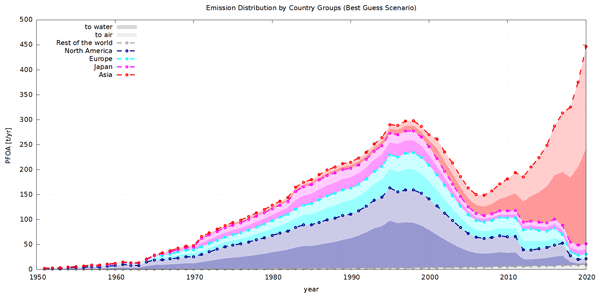
Per- and Polyfluorinated Alkyl Substances (PFAS) constitute a group of often toxic, persistent, and bioaccumulative substances. We constructed a global Emissions model and inventory based on multiple datasets for 23 widely used PFAS. The model computes temporally and spatially resolved model ready emissions distinguishing between emissions to air and emissions to water covering the time span from 1950 up until 2020 on an annual basis to be used for chemistry transport modelling.
Pascal Kunze, Bernd Heinold, and Ina Tegen
EGUsphere, https://doi.org/10.5194/egusphere-2026-2121, https://doi.org/10.5194/egusphere-2026-2121, 2026
Short summary
Short summary
Dust emission is mostly driven by wind speed and is often linked to convective events. However, the resolution of current climate models cannot resolve these events, which leads to uncertainties in dust emission modelling. This study compares global dust emissions in high-resolution and low-resolution models and shows large differences across major dust source regions. The results highlight that representing convection more realistically is crucial for improving global dust predictions.
Hiram Meza-Landero, Julia Bruckert, Ronny Petrik, Pascal Simon, Elena Mikheeva, Heike Vogel, Volker Matthias, Johannes Bieser, and Martin Otto Paul Ramacher
Geosci. Model Dev., 19, 6587–6626, https://doi.org/10.5194/gmd-19-6587-2026, https://doi.org/10.5194/gmd-19-6587-2026, 2026
Short summary
Short summary
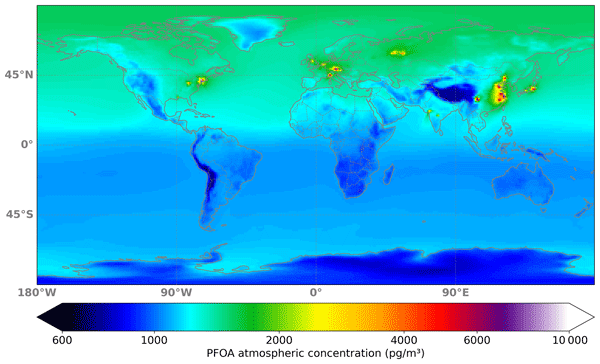
To understand how persistent hazardous industrial chemicals travel through the air and are deposited back on Earth's surface, we created a new computer model that combines meteorology and chemistry in clouds and clean air. Using the most recent global emissions data, this model represents the trajectory and changes of these chemicals, matching patterns in many areas and overlooking others. The work seeks to improve global monitoring and modeling of hazardous chemicals.
Sofía Gómez Maqueo Anaya, Sudharaj Aryasree, Konrad Kandler, Eduardo José dos Santos Souza, Khanneh Wadinga Fomba, Dietrich Althausen, Maria Kezoudi, Matthias Faust, Bernd Heinold, Ina Tegen, Moritz Haarig, Holger Baars, and Kerstin Schepanski
Atmos. Chem. Phys., 26, 9929–9966, https://doi.org/10.5194/acp-26-9929-2026, https://doi.org/10.5194/acp-26-9929-2026, 2026
Short summary
Short summary
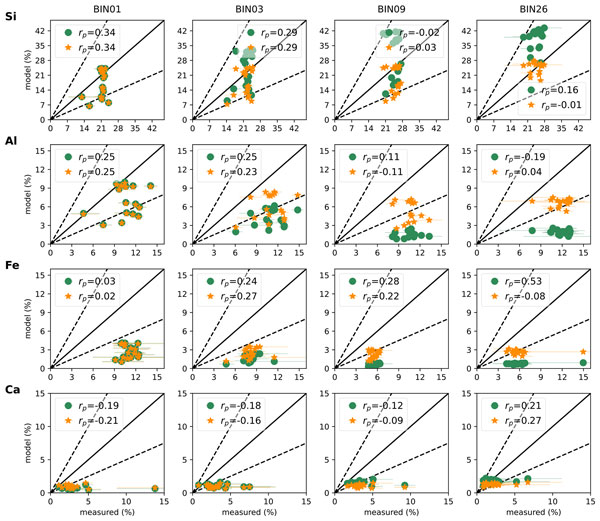
During two 2022 measurement campaigns in Cape Verde, Saharan dust aerosols were collected and analyzed for mineral composition. Mineralogy is crucial for dust–radiation and dust–cloud interactions. We improve dust representation in an atmospheric model by refining the translation of soil into aerosol particle size distributions. Validation with mineral and elemental measurements shows improved representation of some minerals and reveals biases missed by mineral-only comparisons.
Bernd Heinold, Philipp Weiss, Sadhitro De, Anne Kubin, Jason Müller, Fabian Senf, Philip Stier, and Ina Tegen
Geosci. Model Dev., 19, 6167–6187, https://doi.org/10.5194/gmd-19-6167-2026, https://doi.org/10.5194/gmd-19-6167-2026, 2026
Short summary
Short summary
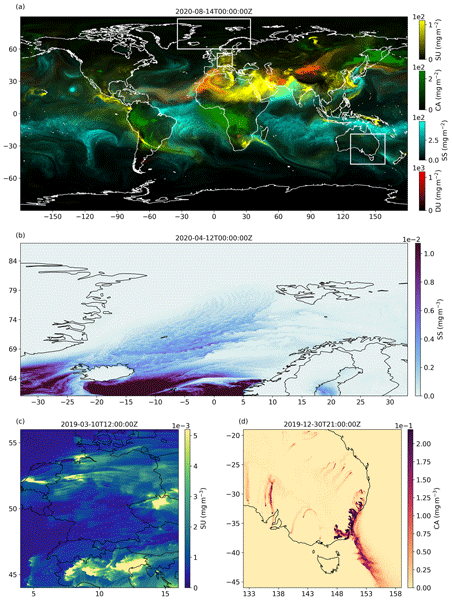
Understanding climate effects of airborne particles requires computer models that can represent small-scale dynamics. We introduce a new regional configuration of a kilometre-scale aerosol–climate model and apply it to air pollution in Central Europe, sea spray in the Atlantic Arctic, and smoke and dust over Australia. The simulations reproduce key particle patterns and variability, but also reveal limitations due to simplified sources and chemistry. The results guide future model improvements.
Friederike Keil, Markus Quante, Bernd Heinold, and Volker Matthias
EGUsphere, https://doi.org/10.5194/egusphere-2026-2934, https://doi.org/10.5194/egusphere-2026-2934, 2026
Short summary
Short summary
Using simulations of two differing rain events, we investigated how sensitive convective precipitation is to urban emission levels by varying emission strengths across a wide range. Low emissions produce only modest effects, but high levels can trigger systematic changes, including substantial increases in ice content and precipitation intensity accompanied by spatial and temporal shifts. The magnitude of these responses depends critically on the prevailing meteorological conditions.
Moritz Zeising, Laurent Oziel, Silke Thoms, Özgür Gürses, Judith Hauck, Bernd Heinold, Svetlana N. Losa, Manuela van Pinxteren, Christoph Völker, Sebastian Zeppenfeld, and Astrid Bracher
Geosci. Model Dev., 19, 2077–2109, https://doi.org/10.5194/gmd-19-2077-2026, https://doi.org/10.5194/gmd-19-2077-2026, 2026
Short summary
Short summary
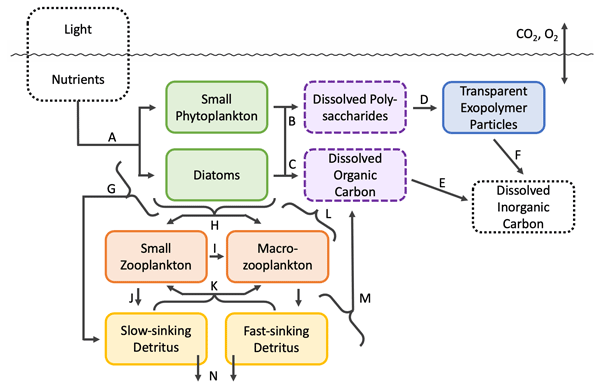
We assess the implementation of additional organic carbon pathways into a global setup of a numerical model, which simulates the ocean circulation, sea ice, and biogeochemical processes. With a focus on the Arctic Ocean, this model tracks the temporal and spatial dynamics of phytoplankton, exudation of organic carbon, and its aggregation to so-called transparent exopolymer particles. We evaluate the simulation using measurements from ship-based and remote-sensing campaigns in the Arctic Ocean.
Anisbel Leon-Marcos, Manuela van Pinxteren, Sebastian Zeppenfeld, Moritz Zeising, Astrid Bracher, Laurent Oziel, Ina Tegen, and Bernd Heinold
Atmos. Chem. Phys., 26, 1109–1144, https://doi.org/10.5194/acp-26-1109-2026, https://doi.org/10.5194/acp-26-1109-2026, 2026
Short summary
Short summary
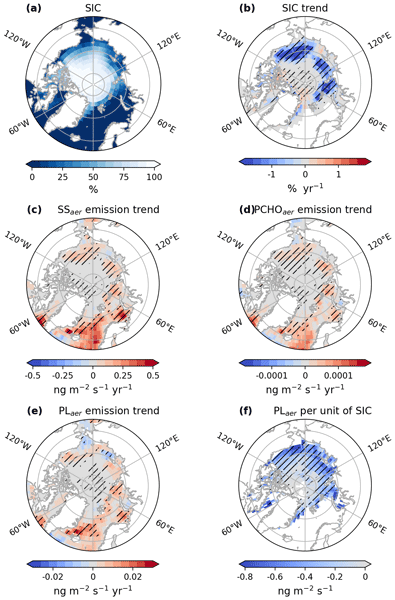
This study combines modelled ocean surface concentrations of major marine organic groups with the aerosol-climate model ECHAM-HAM to quantify species-resolved primary marine organic aerosol emissions from 1990 to 2019. Strong seasonality appears, driven by productivity and summer sea-ice loss. Emissions and burdens rise over time, with regional differences across the Arctic and aerosol species.
Sofía Gómez Maqueo Anaya, Dietrich Althausen, Julian Hofer, Moritz Haarig, Ulla Wandinger, Bernd Heinold, Ina Tegen, Matthias Faust, Holger Baars, Albert Ansmann, Ronny Engelmann, Annett Skupin, Birgit Heese, and Kerstin Schepanski
Atmos. Chem. Phys., 25, 9737–9764, https://doi.org/10.5194/acp-25-9737-2025, https://doi.org/10.5194/acp-25-9737-2025, 2025
Short summary
Short summary
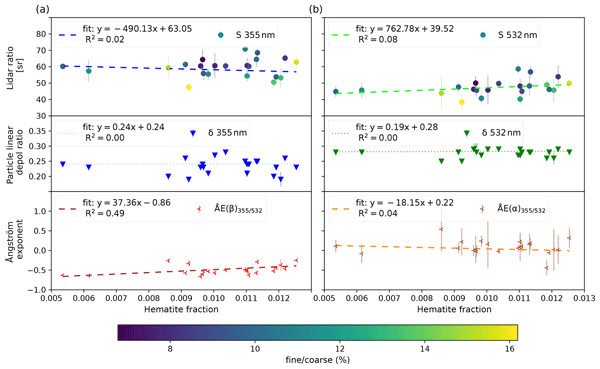
This study investigates how hematite in Sahara dust affects how dust particles interact with radiation. Using lidar data from Cabo Verde (2021–2022) and hematite content from atmospheric model simulations, the results show that a higher hematite fraction leads to a decrease in the particle backscattering coefficients in a spectrally different way. These findings can improve the representation of mineral dust in climate models, particularly regarding their radiative effect.
Anisbel Leon-Marcos, Moritz Zeising, Manuela van Pinxteren, Sebastian Zeppenfeld, Astrid Bracher, Elena Barbaro, Anja Engel, Matteo Feltracco, Ina Tegen, and Bernd Heinold
Geosci. Model Dev., 18, 4183–4213, https://doi.org/10.5194/gmd-18-4183-2025, https://doi.org/10.5194/gmd-18-4183-2025, 2025
Short summary
Short summary
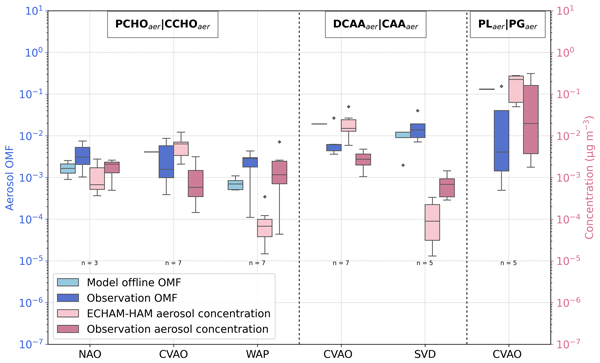
This study represents the primary marine organic aerosol (PMOA) emissions, focusing on their sea–atmosphere transfer. Using the FESOM2.1–REcoM3 model, concentrations of key organic biomolecules were estimated and integrated into the ECHAM6.3–HAM2.3 aerosol–climate model. Results highlight the influence of marine biological activity and surface winds on PMOA emissions, with reasonably good agreement with observations improving aerosol representation in the southern oceans.
Jamie R. Banks, Bernd Heinold, and Kerstin Schepanski
Atmos. Chem. Phys., 24, 11451–11475, https://doi.org/10.5194/acp-24-11451-2024, https://doi.org/10.5194/acp-24-11451-2024, 2024
Short summary
Short summary
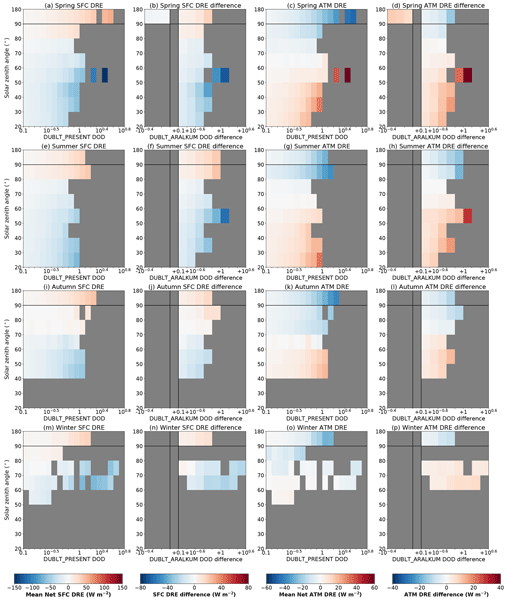
The Aralkum is a new desert in Central Asia formed by the desiccation of the Aral Sea. This has created a source of atmospheric dust, with implications for the balance of solar and thermal radiation. Simulating these effects using a dust transport model, we find that Aralkum dust adds radiative cooling effects to the surface and atmosphere on average but also adds heating events. Increases in surface pressure due to Aralkum dust strengthen the Siberian High and weaken the summer Asian heat low.
Andreas Walbröl, Janosch Michaelis, Sebastian Becker, Henning Dorff, Kerstin Ebell, Irina Gorodetskaya, Bernd Heinold, Benjamin Kirbus, Melanie Lauer, Nina Maherndl, Marion Maturilli, Johanna Mayer, Hanno Müller, Roel A. J. Neggers, Fiona M. Paulus, Johannes Röttenbacher, Janna E. Rückert, Imke Schirmacher, Nils Slättberg, André Ehrlich, Manfred Wendisch, and Susanne Crewell
Atmos. Chem. Phys., 24, 8007–8029, https://doi.org/10.5194/acp-24-8007-2024, https://doi.org/10.5194/acp-24-8007-2024, 2024
Short summary
Short summary
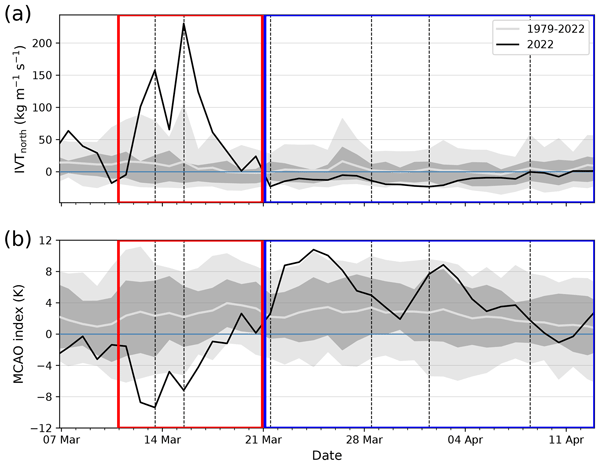
To support the interpretation of the data collected during the HALO-(AC)3 campaign, which took place in the North Atlantic sector of the Arctic from 7 March to 12 April 2022, we analyze how unusual the weather and sea ice conditions were with respect to the long-term climatology. From observations and ERA5 reanalysis, we found record-breaking warm air intrusions and a large variety of marine cold air outbreaks. Sea ice concentration was mostly within the climatological interquartile range.
Sofía Gómez Maqueo Anaya, Dietrich Althausen, Matthias Faust, Holger Baars, Bernd Heinold, Julian Hofer, Ina Tegen, Albert Ansmann, Ronny Engelmann, Annett Skupin, Birgit Heese, and Kerstin Schepanski
Geosci. Model Dev., 17, 1271–1295, https://doi.org/10.5194/gmd-17-1271-2024, https://doi.org/10.5194/gmd-17-1271-2024, 2024
Short summary
Short summary
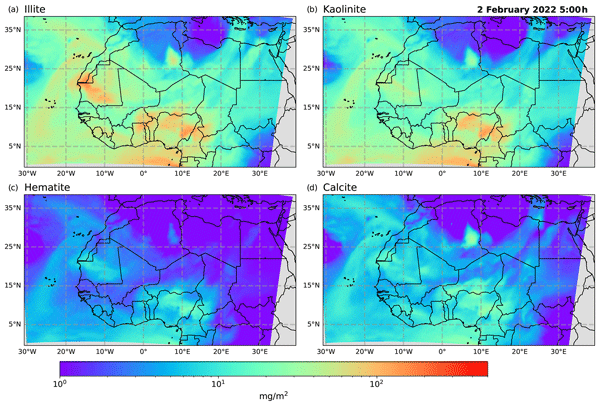
Mineral dust aerosol particles vary greatly in their composition depending on source region, which leads to different physicochemical properties. Most atmosphere–aerosol models consider mineral dust aerosols to be compositionally homogeneous, which ultimately increases model uncertainty. Here, we present an approach to explicitly consider the heterogeneity of the mineralogical composition for simulations of the Saharan atmospheric dust cycle with regard to dust transport towards the Atlantic.
Michael Weger and Bernd Heinold
Atmos. Chem. Phys., 23, 13769–13790, https://doi.org/10.5194/acp-23-13769-2023, https://doi.org/10.5194/acp-23-13769-2023, 2023
Short summary
Short summary
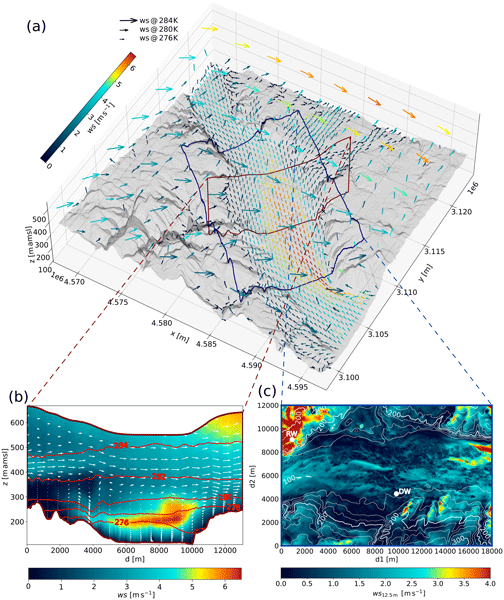
This study investigates the effects of complex terrain on air pollution trapping using a numerical model which simulates the dispersion of emissions under real meteorological conditions. The additionally simulated aerosol age allows us to distinguish areas that accumulate aerosol over time from areas that are more influenced by fresh emissions. The Dresden Basin, a widened section of the Elbe Valley in eastern Germany, is selected as the target area in a case study to demonstrate the concept.
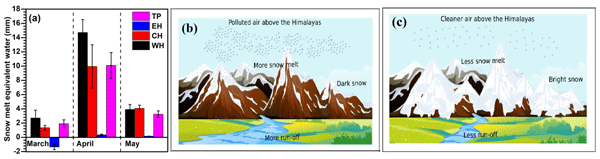
Suvarna Fadnavis, Bernd Heinold, T. P. Sabin, Anne Kubin, Katty Huang, Alexandru Rap, and Rolf Müller
Atmos. Chem. Phys., 23, 10439–10449, https://doi.org/10.5194/acp-23-10439-2023, https://doi.org/10.5194/acp-23-10439-2023, 2023
Short summary
Short summary
The influence of the COVID-19 lockdown on the Himalayas caused increases in snow cover and a decrease in runoff, ultimately leading to an enhanced snow water equivalent. Our findings highlight that, out of the two processes causing a retreat of Himalayan glaciers – (1) slow response to global climate change and (2) fast response to local air pollution – a policy action on the latter is more likely to be within the reach of possible policy action to help billions of people in southern Asia.
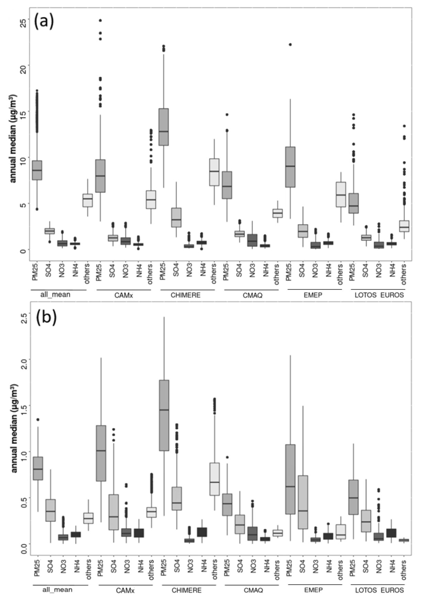
Lea Fink, Matthias Karl, Volker Matthias, Sonia Oppo, Richard Kranenburg, Jeroen Kuenen, Sara Jutterström, Jana Moldanova, Elisa Majamäki, and Jukka-Pekka Jalkanen
Atmos. Chem. Phys., 23, 10163–10189, https://doi.org/10.5194/acp-23-10163-2023, https://doi.org/10.5194/acp-23-10163-2023, 2023
Short summary
Short summary
The Mediterranean Sea is a heavily trafficked shipping area, and air quality monitoring stations in numerous cities along the Mediterranean coast have detected high levels of air pollutants originating from shipping emissions. The current study investigates how existing restrictions on shipping-related emissions to the atmosphere ensure compliance with legislation. Focus was laid on fine particles and particle species, which were simulated with five different chemical transport models.
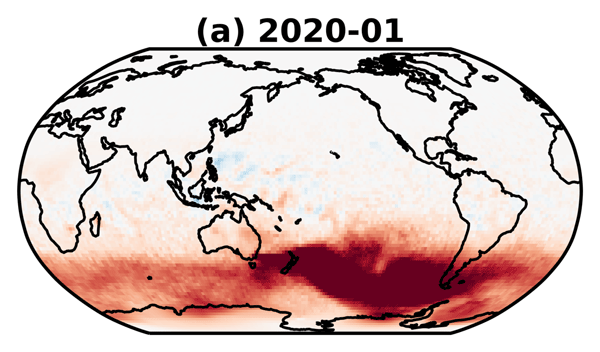
Fabian Senf, Bernd Heinold, Anne Kubin, Jason Müller, Roland Schrödner, and Ina Tegen
Atmos. Chem. Phys., 23, 8939–8958, https://doi.org/10.5194/acp-23-8939-2023, https://doi.org/10.5194/acp-23-8939-2023, 2023
Short summary
Short summary
Wildfire smoke is a significant source of airborne atmospheric particles that can absorb sunlight. Extreme fires in particular, such as those during the 2019–2020 Australian wildfire season (Black Summer fires), can considerably affect our climate system. In the present study, we investigate the various effects of Australian smoke using a global climate model to clarify how the Earth's atmosphere, including its circulation systems, adjusted to the extraordinary amount of Australian smoke.
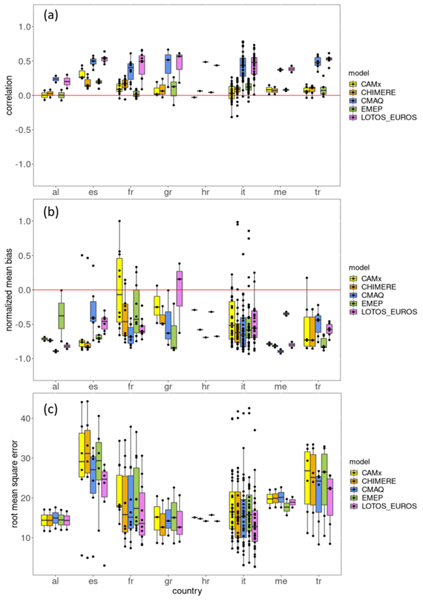
Lea Fink, Matthias Karl, Volker Matthias, Sonia Oppo, Richard Kranenburg, Jeroen Kuenen, Jana Moldanova, Sara Jutterström, Jukka-Pekka Jalkanen, and Elisa Majamäki
Atmos. Chem. Phys., 23, 1825–1862, https://doi.org/10.5194/acp-23-1825-2023, https://doi.org/10.5194/acp-23-1825-2023, 2023
Short summary
Short summary
Potential ship impact on air pollution in the Mediterranean Sea was simulated with five chemistry transport models. An evaluation of the results for NO2 and O3 air concentrations and dry deposition is presented. Emission data, modeled year and domain were the same. Model run outputs were compared to measurements from background stations. We focused on comparing model outputs regarding the concentration of regulatory pollutants and the relative ship impact on total air pollution concentrations.

Bernd Heinold, Holger Baars, Boris Barja, Matthew Christensen, Anne Kubin, Kevin Ohneiser, Kerstin Schepanski, Nick Schutgens, Fabian Senf, Roland Schrödner, Diego Villanueva, and Ina Tegen
Atmos. Chem. Phys., 22, 9969–9985, https://doi.org/10.5194/acp-22-9969-2022, https://doi.org/10.5194/acp-22-9969-2022, 2022
Short summary
Short summary
The extreme 2019–2020 Australian wildfires produced massive smoke plumes lofted into the lower stratosphere by pyrocumulonimbus convection. Most climate models do not adequately simulate the injection height of such intense fires. By combining aerosol-climate modeling with prescribed pyroconvective smoke injection and lidar observations, this study shows the importance of the representation of the most extreme wildfire events for estimating the atmospheric energy budget.
Ronny Badeke, Volker Matthias, Matthias Karl, and David Grawe
Geosci. Model Dev., 15, 4077–4103, https://doi.org/10.5194/gmd-15-4077-2022, https://doi.org/10.5194/gmd-15-4077-2022, 2022
Short summary
Short summary
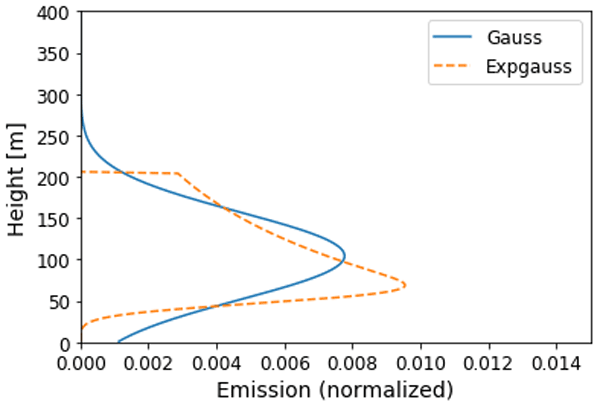
For air quality modeling studies, it is very important to distribute pollutants correctly into the model system. This has not yet been done for shipping pollution in great detail. We studied the effects of different vertical distributions of shipping pollutants on the urban air quality and derived advanced formulas for it. These formulas take weather conditions and ship-specific parameters like the exhaust gas temperature into account.
Michael Weger, Holger Baars, Henriette Gebauer, Maik Merkel, Alfred Wiedensohler, and Bernd Heinold
Geosci. Model Dev., 15, 3315–3345, https://doi.org/10.5194/gmd-15-3315-2022, https://doi.org/10.5194/gmd-15-3315-2022, 2022
Short summary
Short summary
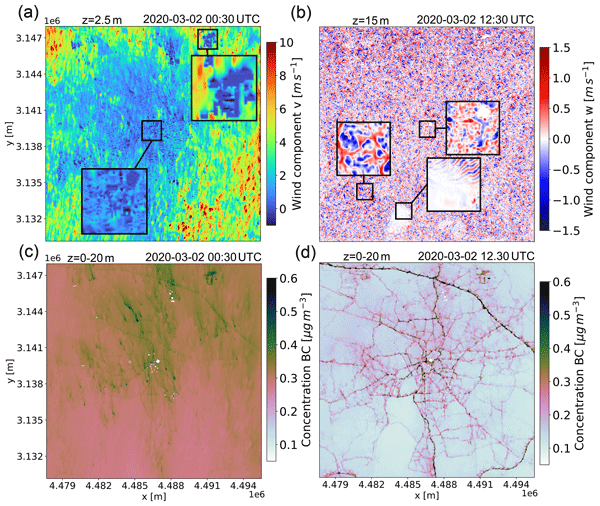
Numerical models are an important tool to assess the air quality in cities,
as they can provide near-continouos data in time and space. In this paper,
air pollution for an entire city is simulated at a high spatial resolution of 40 m.
At this spatial scale, the effects of buildings on the atmosphere,
like channeling or blocking of the air flow, are directly represented by diffuse obstacles in the used model CAIRDIO. For model validation, measurements from air-monitoring sites are used.
H. E. Markus Meier, Madline Kniebusch, Christian Dieterich, Matthias Gröger, Eduardo Zorita, Ragnar Elmgren, Kai Myrberg, Markus P. Ahola, Alena Bartosova, Erik Bonsdorff, Florian Börgel, Rene Capell, Ida Carlén, Thomas Carlund, Jacob Carstensen, Ole B. Christensen, Volker Dierschke, Claudia Frauen, Morten Frederiksen, Elie Gaget, Anders Galatius, Jari J. Haapala, Antti Halkka, Gustaf Hugelius, Birgit Hünicke, Jaak Jaagus, Mart Jüssi, Jukka Käyhkö, Nina Kirchner, Erik Kjellström, Karol Kulinski, Andreas Lehmann, Göran Lindström, Wilhelm May, Paul A. Miller, Volker Mohrholz, Bärbel Müller-Karulis, Diego Pavón-Jordán, Markus Quante, Marcus Reckermann, Anna Rutgersson, Oleg P. Savchuk, Martin Stendel, Laura Tuomi, Markku Viitasalo, Ralf Weisse, and Wenyan Zhang
Earth Syst. Dynam., 13, 457–593, https://doi.org/10.5194/esd-13-457-2022, https://doi.org/10.5194/esd-13-457-2022, 2022
Short summary
Short summary
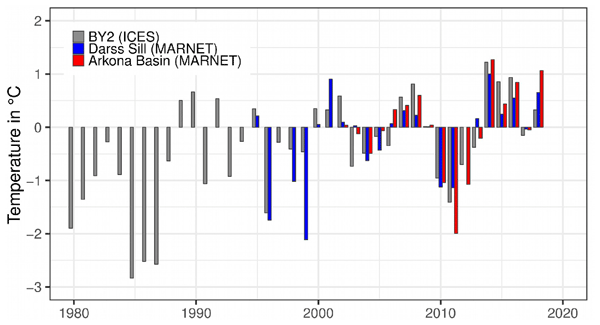
Based on the Baltic Earth Assessment Reports of this thematic issue in Earth System Dynamics and recent peer-reviewed literature, current knowledge about the effects of global warming on past and future changes in the climate of the Baltic Sea region is summarised and assessed. The study is an update of the Second Assessment of Climate Change (BACC II) published in 2015 and focuses on the atmosphere, land, cryosphere, ocean, sediments, and the terrestrial and marine biosphere.
Sara Jutterström, Filip Moldan, Jana Moldanová, Matthias Karl, Volker Matthias, and Maximilian Posch
Atmos. Chem. Phys., 21, 15827–15845, https://doi.org/10.5194/acp-21-15827-2021, https://doi.org/10.5194/acp-21-15827-2021, 2021
Short summary
Short summary
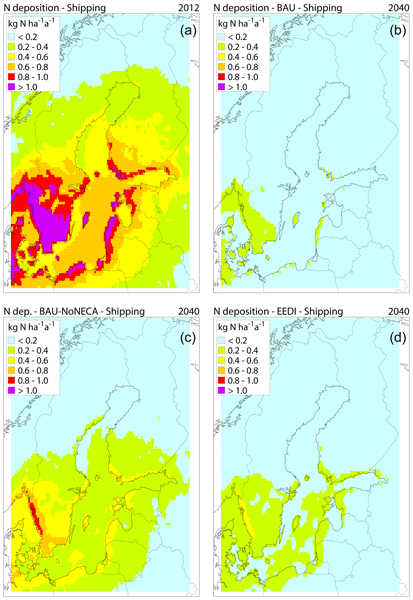
For the Baltic Sea countries, shipping emissions are an important source of air pollution. This study investigates the contribution of shipping emissions to the acidification and eutrophication of soils and freshwater within the airshed of the Baltic Sea in the years 2012 and 2040. The implementation of emission control areas and improving energy efficiency significantly reduces the negative impact on ecosystems expressed as a decrease in the exceedance of critical loads for sulfur and nitrogen.
Cited articles
Abdul-Razzak, H. and Ghan, S. J.: A parameterization of aerosol activation: 2. Multiple aerosol types, J. Geophys. Res.-Atmos., 105, 6837–6844, https://doi.org/10.1029/1999JD901161, 2000. a, b
Albrecht, B. A.: Aerosols, cloud microphysics, and fractional cloudiness, Science, 245, 1227–1230, https://doi.org/10.1126/science.245.4923.1227, 1989. a
Andreae, M. O., Rosenfeld, D., Artaxo, P., Costa, A. A., Frank, G. P., Longo, K. M., and Silva-Dias, M. A. F.: Smoking Rain Clouds over the Amazon, Science, 303, 1337–1342, https://doi.org/10.1126/science.1092779, 2004. a
Burrows, S. M., McCluskey, C. S., Cornwell, G., Steinke, I., Zhang, K., Zhao, B., Zawadowicz, M., Raman, A., Kulkarni, G., China, S., Zelenyuk, A., and DeMott, P. J.: Ice-nucleating particles that impact clouds and climate: Observational and modeling research needs, Rev. Geophys., 60, e2021RG000745, https://doi.org/10.1029/2021RG000745, 2022. a
Cotton, W. R. and Walko, R.: Examination of Aerosol-Induced Convective Invigoration Using Idealized Simulations, J. Atmos. Sci., 78, 287–298, https://doi.org/10.1175/JAS-D-20-0023.1, 2021. a
Doms, G., Förstner, J., Heise, E., Herzog, H.-J., Mironov, D., Raschendorfer, M., Reinhardt, T., Ritter, B., Schrodin, R., Schulz, J.-P., and Vogel, G.: A Description of the Nonhydrostatic Regional COSMO Model. Part II: Physical Parameterizations, Deutscher Wetterdienst, https://doi.org/10.5676/DWD_pub/nwv/cosmo-doc_5.05_II, 2018. a
Fan, J. and Khain, A.: Comments on “Do Ultrafine Cloud Condensation Nuclei Invigorate Deep Convection?”, J. Atmos. Sci., 78, 329–339, https://doi.org/10.1175/JAS-D-20-0218.1, 2021. a
Fan, J., Rosenfeld, D., Yang, Y., Zhao, C., Leung, L. R., and Li, Z.: Substantial contribution of anthropogenic air pollution to catastrophic floods in Southwest China, Geophys. Res. Lett., 42, 6066–6075, https://doi.org/10.1002/2015GL064479, 2015. a
Fan, J., Rosenfeld, D., Zhang, Y., Giangrande, S. E., Li, Z., Machado, L. A. T., Martin, S. T., Yang, Y., Wang, J., Artaxo, P., Barbosa, H. M. J., Braga, R. C., Comstock, J. M., Feng, Z., Gao, W., Gomes, H. B., Mei, F., Pöhlker, C., Pöhlker, M. L., Pöschl, U., and de Souza, R. A. F.: Substantial convection and precipitation enhancements by ultrafine aerosol particles, Science, 359, 411–418, https://doi.org/10.1126/science.aan8461, 2018. a
Fan, J., Zhang, Y., Li, Z., Hu, J., and Rosenfeld, D.: Urbanization-induced land and aerosol impacts on sea-breeze circulation and convective precipitation, Atmos. Chem. Phys., 20, 14163–14182, https://doi.org/10.5194/acp-20-14163-2020, 2020. a, b
Fan, J., Zhang, Y., Li, Z., Yan, H., Prabhakaran, T., Rosenfeld, D., and Khain, A.: Unveiling Aerosol Impacts on Deep Convective Clouds: Scientific Concept, Modeling, Observational Analysis, and Future Direction, J. Geophys. Res.-Atmos., 130, e2024JD041931, https://doi.org/10.1029/2024JD041931, 2025. a
Genz, C., Schrödner, R., Heinold, B., Henning, S., Baars, H., Spindler, G., and Tegen, I.: Estimation of cloud condensation nuclei number concentrations and comparison to in situ and lidar observations during the HOPE experiments, Atmos. Chem. Phys., 20, 8787–8806, https://doi.org/10.5194/acp-20-8787-2020, 2020. a, b
Granier, C., Darras, S., Denier van der Gon, H., Doubalova, J., Elguindi, N., Galle, B., Gauss, M., Guevara, M., Jalkanen, J.-P., Kuenen, J., Liousse, C., Quack, B., Simpson, D., and Sindelarova, K.: The Copernicus Atmosphere Monitoring Service global and regional emissions (April 2019 version), Tech. rep., Copernicus Atmosphere Monitoring Service (CAMS), https://doi.org/10.24380/d0bn-kx16, 2019. a
Guevara, M., Jorba, O., Tena, C., Denier van der Gon, H., Kuenen, J., Elguindi, N., Darras, S., Granier, C., and Pérez García-Pando, C.: Copernicus Atmosphere Monitoring Service TEMPOral profiles (CAMS-TEMPO): global and European emission temporal profile maps for atmospheric chemistry modelling, Earth Syst. Sci. Data, 13, 367–404, https://doi.org/10.5194/essd-13-367-2021, 2021. a
Han, J.-Y., Baik, J.-J., and Khain, A. P.: A numerical study of urban aerosol impacts on clouds and precipitation, J. Atmos. Sci., 69, 504–520, https://doi.org/10.1175/JAS-D-11-071.1, 2012. a
Heinold, B., Tegen, I., Schepanski, K., Tesche, M., Esselborn, M., Freudenthaler, V., Gross, S., Kandler, K., Knippertz, P., MMüller, D., Schladitz, A., Toledano, C., Weinzierl, B., Ansmann, A., Althausen, D., Müller, T., Petzold, A. and Wiedensohler, A.: Regional modelling of Saharan dust and biomass-burning smoke: Part I: Model description and evaluation, Tellus B, 63, 781–799, https://doi.org/10.1111/j.1600-0889.2011.00570.x, 2011. a
Hersbach, H., Bell, B., Berrisford, P., Hirahara, S., Horányi, A., Muñoz-Sabater, J., Nicolas, J., Peubey, C., Radu, R., Schepers, D., Simmons, A., Soci, C., Abdalla, S., Abellan, X., Balsamo, G., Bechtold, P., Biavati, G., Bidlot, J., Bonavita, M., De Chiara, G., Dahlgren, P., Dee, D., Diamantakis, M., Dragani, R., Flemming, J., Forbes, R., Fuentes, M., Geer, A., Haimberger, L., Healy, S., Hogan, R. J., Hólm, E., Janisková, M., Keeley, S., Laloyaux, P., Lopez, P., Lupu, C., Radnoti, G., de Rosnay, P., Rozum, I., Vamborg, F., Villaume, S., and Thépaut, J.-N.: The ERA5 global reanalysis, Q. J. Roy. Meteor. Soc., 146, 1999–2049, https://doi.org/10.1002/qj.3803, 2020. a
Igel, A. L. and van den Heever, S. C.: Invigoration or enervation of convective clouds by aerosols?, Geophys. Res. Lett., 48, e2021GL093804, https://doi.org/10.1029/2021GL093804, 2021. a
Inness, A., Ades, M., Agustí-Panareda, A., Barré, J., Benedictow, A., Blechschmidt, A.-M., Dominguez, J. J., Engelen, R., Eskes, H., Flemming, J., Huijnen, V., Jones, L., Kipling, Z., Massart, S., Parrington, M., Peuch, V.-H., Razinger, M., Remy, S., Schulz, M., and Suttie, M.: The CAMS reanalysis of atmospheric composition, Atmos. Chem. Phys., 19, 3515–3556, https://doi.org/10.5194/acp-19-3515-2019, 2019. a
Kawecki, S., Henebry, G. M., and Steiner, A. L.: Effects of urban plume aerosols on a mesoscale convective system, J. Atmos. Sci., 73, 4641–4660, https://doi.org/10.1175/JAS-D-16-0084.1, 2016. a, b, c
Kumar, P., Morawska, L., Birmili, W., Paasonen, P., Hu, M., Kulmala, M., Harrison, R. M., Norford, L., and Britter, R.: Ultrafine particles in cities, Environ. Int., 66, 1–10, https://doi.org/10.1016/j.envint.2014.01.013, 2014. a
Lebo, Z. J., Morrison, H., and Seinfeld, J. H.: Are simulated aerosol-induced effects on deep convective clouds strongly dependent on saturation adjustment?, Atmos. Chem. Phys., 12, 9941–9964, https://doi.org/10.5194/acp-12-9941-2012, 2012. a
Lehmann, J., Coumou, D., and Frieler, K.: Increased record-breaking precipitation events under global warming, Climatic Change, 132, 501–515, https://doi.org/10.1007/s10584-015-1434-y, 2015. a
Lengfeld, K., Walawender, E., Winterrath, T., and Becker, A.: CatRaRE: A Catalogue of radar-based heavy rainfall events in Germany derived from 20 years of data, Meteorol. Z., 30, 469–487, https://doi.org/10.1127/metz/2021/1088, 2021. a
Liu, J. and Niyogi, D.: Meta-analysis of urbanization impact on rainfall modification, Sci. Rep., 9, 7301, https://doi.org/10.1038/s41598-019-42494-2, 2019. a
Marinescu, P. J., Van Den Heever, S. C., Heikenfeld, M., Barrett, A. I., Barthlott, C., Hoose, C., Fan, J., Fridlind, A. M., Matsui, T., Miltenberger, A. K., Stier, P., Vie, B., White, B. A., and Zhang, Y.: Impacts of varying concentrations of cloud condensation nuclei on deep convective cloud updrafts – A multimodel assessment, J. Atmos. Sci., 78, 1147–1172, https://doi.org/10.1175/JAS-D-20-0200.1, 2021. a, b, c
Martilli, A., Clappier, A., and Rotach, M. W.: An urban surface exchange parameterisation for mesoscale models, Bound.-Lay. Meteorol., 104, 261–304, https://doi.org/10.1023/A:1016099921195, 2002. a
Petters, M. D. and Kreidenweis, S. M.: A single parameter representation of hygroscopic growth and cloud condensation nucleus activity, Atmos. Chem. Phys., 7, 1961–1971, https://doi.org/10.5194/acp-7-1961-2007, 2007. a
Prein, A. F., Langhans, W., Fosser, G., Ferrone, A., Ban, N., Goergen, K., Keller, M., Tölle, M., Gutjahr, O., Feser, F., Brisson, E., Kollet, S., Schmidli, J., van Lipzig, N. P. M., and Leung, R.: A review on regional convection-permitting climate modeling: Demonstrations, prospects, and challenges, Rev. Geophys., 53, 323–361, https://doi.org/10.1002/2014RG000475, 2015. a
Pruppacher, H. R. and Klett, J. D.: Microphysics of Clouds and Precipitation, Atmospheric and Oceanographic Sciences Library, 2nd edn., Springer, https://doi.org/10.1007/978-0-306-48100-0, 1997. a, b
Rosenfeld, D.: Suppression of rain and snow by urban and industrial air pollution, Science, 287, 1793–1796, https://doi.org/10.1126/science.287.5459.1793, 2000. a
Rosenfeld, D., Lohmann, U., Raga, G. B., O'Dowd, C. D., Kulmala, M., Fuzzi, S., Reissell, A., and Andreae, M. O.: Flood or drought: How do aerosols affect precipitation?, Science, 321, 1309–1313, https://doi.org/10.1126/science.1160606, 2008. a, b, c, d
Rozoff, C. M., Cotton, W. R., and Adegoke, J. O.: Simulation of St. Louis, Missouri, land use impacts on thunderstorms, J. Appl. Meteorol. Clim., 42, 716–738, https://doi.org/10.1175/1520-0450(2003)042<0716:SOSLML>2.0.CO;2, 2003. a
Sarangi, C., Tripathi, S., Qian, Y., Kumar, S., and Ruby Leung, L.: Aerosol and urban land use effect on rainfall around cities in Indo-Gangetic Basin from observations and cloud resolving model simulations, J. Geophys. Res.-Atmos., 123, 3645–3667, https://doi.org/10.1002/2017JD028004, 2018. a, b, c
Schättler, U., Doms, G., and Schraff, C.: A description of the nonhydrostatic regional COSMO-model. Part VII: User's guide, Deutscher Wetterdienst, https://doi.org/10.5676/DWD_pub/nwv/cosmo-doc_5.05_VII, 2018. a
Schmid, P. E. and Niyogi, D.: Modeling urban precipitation modification by spatially heterogeneous aerosols, J. Appl. Meteorol. Clim., 56, 2141–2153, https://doi.org/10.1175/JAMC-D-16-0320.1, 2017. a
Schneider, C., Pelzer, M., Tönges-Schuller, N., Nacken, M., and Niederau, A.: ArcGIS basierte Lösung zur detaillierten, deutschlandweiten Verteilung (Gridding) nationaler Emissionsjahreswerte auf Basis des Inventars zur Emissionsberichterstattung, Umweltbundesamt UBA-FB-002360, Texte 71/2016, ISSN 1862-4804, 2016. a
Schubert, S., Grossman-Clarke, S., and Martilli, A.: A double-canyon radiation scheme for multi-layer urban canopy models, Bound.-Lay. Meteorol., 145, 439–468, https://doi.org/10.1007/s10546-012-9728-3, 2012. a
Seifert, A. and Beheng, K.: A two-moment cloud microphysics parameterization for mixed-phase clouds. Part 2: Maritime vs. continental deep convective storms, Meteorol. Atmos. Phys., 92, 67–82, https://doi.org/10.1007/s00703-005-0113-3, 2006a. a
Seifert, A. and Beheng, K. D.: A two-moment cloud microphysics parameterization for mixed-phase clouds. Part 1: Model description, Meteorol. Atmos. Phys., 92, 45–66, https://doi.org/10.1007/s00703-005-0112-4, 2006b. a
Seneviratne, S. I., Zhang, X., Adnan, M., Badi, W., Dereczynski, C., Di Luca, A., Ghosh, S., Iskandar, I., Kossin, J., Lewis, S., Otto, F., Pinto, I., Satoh, M., Vicente-Serrano, S. M., Wehner, M., and Zhou, B.: Weather and Climate Extreme Events in a Changing Climate, in: Climate Change 2021: The Physical Science Basis. Contribution of Working Group I to the Sixth Assessment Report of the Intergovernmental Panel on Climate Change, chap. 11, edited by: Masson-Delmotte, V., Zhai, P., Pirani, A., Connors, S. L., Péan, C., Berger, S., Caud, N., Chen, Y., Goldfarb, L., Gomis, M. I., Huang, M., Leitzell, K., Lonnoy, E., Matthews, J. B. R., Maycock, T. K., Waterfield, T., Yelekçi, O., Yu, R., and Zhou, B., Cambridge University Press, Cambridge, UK and New York, NY, USA, https://doi.org/10.1017/9781009157896.013, 1513–1766, 2021. a
Sharma, M., Rapp, A. D., Nowotarski, C. J., Chen, B., and Brooks, S. D.: The Importance of an Ensemble Approach for Modeling Aerosol-Convection Interactions, Geophys. Res. Lett., 53, e2025GL118530, https://doi.org/10.1029/2025GL118530, 2026. a
Sprenger, M. and Wernli, H.: The LAGRANTO Lagrangian analysis tool – version 2.0, Geosci. Model Dev., 8, 2569–2586, https://doi.org/10.5194/gmd-8-2569-2015, 2015. a
Sui, X., Yang, Z.-L., Shepherd, M., and Niyogi, D.: Global scale assessment of urban precipitation anomalies, P. Natl. Acad. Sci. USA, 121, e2311496121, https://doi.org/10.1073/pnas.2311496121, 2024. a
Talukdar, S., Venkat Ratnam, M., Ravikiran, V., and Chakraborty, R.: Influence of black carbon aerosol on the atmospheric instability, J. Geophys. Res.-Atmos., 124, 5539–5554, https://doi.org/10.1029/2018JD029611, 2019. a
Twomey, S.: Pollution and the planetary albedo, Atmos. Environ. (1967), 8, 1251–1256, https://doi.org/10.1016/0004-6981(74)90004-3, 1974. a
Van Den Heever, S. C. and Cotton, W. R.: Urban aerosol impacts on downwind convective storms, J. Appl. Meteorol. Clim., 46, 828–850, https://doi.org/10.1175/JAM2492.1, 2007. a, b, c
Varble, A. C., Igel, A. L., Morrison, H., Grabowski, W. W., and Lebo, Z. J.: Opinion: A critical evaluation of the evidence for aerosol invigoration of deep convection, Atmos. Chem. Phys., 23, 13791–13808, https://doi.org/10.5194/acp-23-13791-2023, 2023. a, b, c
Weger, M., Heinold, B., Engler, C., Schumann, U., Seifert, A., Fößig, R., Voigt, C., Baars, H., Blahak, U., Borrmann, S., Hoose, C., Kaufmann, S., Krämer, M., Seifert, P., Senf, F., Schneider, J., and Tegen, I.: The impact of mineral dust on cloud formation during the Saharan dust event in April 2014 over Europe, Atmos. Chem. Phys., 18, 17545–17572, https://doi.org/10.5194/acp-18-17545-2018, 2018. a, b
Winterrath, T., Brendel, C., Hafer, M., Junghänel, T., Klameth, A., Lengfeld, K., Walawender, E., Weigl, E., and Becker, A.: Radarklimatologie aus quasi-angeeichten 5-Minuten-Niederschlagsraten Version 2017.002 Gerasterte Niederschlagswerte für Deutschland version v2017.02, https://doi.org/10.5676/DWD/RADKLIM_YW_V2017.002, 2018. a
Wolke, R., Knoth, O., Hellmuth, O., Schröder, W., and Renner, E.: The parallel model system LM-MUSCAT for chemistry-transport simulations: Coupling scheme, parallelization and applications, Adv. Par. Com., 13 363–369, https://doi.org/10.1016/S0927-5452(04)80048-0, 2004. a, b
Wolke, R., Schröder, W., Schrödner, R., and Renner, E.: Influence of grid resolution and meteorological forcing on simulated European air quality: A sensitivity study with the modeling system COSMO–MUSCAT, Atmos. Environ., 53, 110–130, https://doi.org/10.1016/j.atmosenv.2012.02.085, 2012. a, b, c
Yan, H., Gao, Y., Wilby, R., Yu, D., Wright, N., Yin, J., Chen, X., Chen, J., and Guan, M.: Urbanization Further Intensifies Short-Duration Rainfall Extremes in a Warmer Climate, Geophys. Res. Lett., 51, e2024GL108565, https://doi.org/10.1029/2024GL108565, 2024. a
Yue, C., Han, Z., Gu, W., Tang, Y., and Ao, X.: Research Progress for Dynamic Effects of Cities on Precipitation: A Review, Atmosphere, 12, https://doi.org/10.3390/atmos12101355, 2021. a
Zhang, Y., Fan, J., Li, Z., and Rosenfeld, D.: Impacts of cloud microphysics parameterizations on simulated aerosol–cloud interactions for deep convective clouds over Houston, Atmos. Chem. Phys., 21, 2363–2381, https://doi.org/10.5194/acp-21-2363-2021, 2021. a
Zheng, Z., Zhao, C., Lolli, S., Wang, X., Wang, Y., Ma, X., Li, Q., and Yang, Y.: Diurnal variation of summer precipitation modulated by air pollution: observational evidences in the Beijing metropolitan area, Environ. Res. Lett., https://doi.org/10.1088/1748-9326/ab99fc, 2020. a
Short summary
Using model simulations, we studied convective weather events to see how urban aerosol emissions influence cloud microphysics and precipitation. By tracing urban air volumes from convective clouds back to their emission sources, we could isolate the effects of emissions. The results show that urban emissions affect precipitation differently depending on the meteorological situation, highlighting the complex and case-dependent role of cities in shaping local rainfall.
Using model simulations, we studied convective weather events to see how urban aerosol emissions...


Altmetrics
Final-revised paper
Preprint