Articles | Volume 26, issue 15
https://doi.org/10.5194/acp-26-11235-2026
© Author(s) 2026. This work is distributed under
the Creative Commons Attribution 4.0 License.
Special issue:
https://doi.org/10.5194/acp-26-11235-2026
© Author(s) 2026. This work is distributed under
the Creative Commons Attribution 4.0 License.
Fractal characteristics of ice-supersaturated regions in the tropopause region of the northern midlatitudes
Helena Zoe Schuh
CORRESPONDING AUTHOR
Institute for Atmospheric Physics, Johannes Gutenberg University Mainz, Mainz, Germany
Philipp Reutter
Institute for Atmospheric Physics, Johannes Gutenberg University Mainz, Mainz, Germany
Stefan Niebler
Institute for Computer Sciences, Johannes Gutenberg University Mainz, Mainz, Germany
Peter Spichtinger
Institute for Atmospheric Physics, Johannes Gutenberg University Mainz, Mainz, Germany
Related authors
No articles found.
Tim Lüttmer, Sylwester Arabas, and Peter Spichtinger
EGUsphere, https://doi.org/10.5194/egusphere-2026-2217, https://doi.org/10.5194/egusphere-2026-2217, 2026
Short summary
Short summary
Homogeneous freezing describes the spontaneous freezing of supercooled droplets, with the probability depending on temperature, droplet size, and elapsed time. Droplets freeze across a range of temperatures rather than all at once, and faster updrafts and larger droplets lead to freezing at warmer temperatures. Once some droplets freeze, the growing ice crystals deplete the surrounding vapour, causing the remaining droplets to evaporate. This affects the number of ice crystals in the cloud.
Philipp Reutter and Peter Spichtinger
Atmos. Chem. Phys., 25, 16303–16314, https://doi.org/10.5194/acp-25-16303-2025, https://doi.org/10.5194/acp-25-16303-2025, 2025
Short summary
Short summary
We present a new technique to determine the tropopause based on the gradient of relative humidity over ice. This approach captures the character of the tropopause remarkably well, both in individual vertical profiles and in long-term averages, providing a consistent and physically meaningful representation of the transition between the troposphere and the stratosphere.
Alena Kosareva, Stamen Dolaptchiev, Peter Spichtinger, and Ulrich Achatz
Geosci. Model Dev., 18, 6117–6133, https://doi.org/10.5194/gmd-18-6117-2025, https://doi.org/10.5194/gmd-18-6117-2025, 2025
Short summary
Short summary
This study improves how we predict ice formation in clouds by accounting for variable ice sizes and different weather conditions. Using simulations, we developed a more accurate method that works efficiently, making it suitable for application in weather and climate prediction models. The new approach is numerically verified and provides precise predictions of ice formation events and reliable estimates of key parameters.
Tim Lüttmer, Annette Miltenberger, and Peter Spichtinger
Atmos. Chem. Phys., 25, 10245–10265, https://doi.org/10.5194/acp-25-10245-2025, https://doi.org/10.5194/acp-25-10245-2025, 2025
Short summary
Short summary
We investigate ice formation pathways in a warm conveyor belt case study. We employ a multi-phase microphysics scheme that distinguishes between ice from different nucleation processes. Ice crystals in the cirrus outflow mostly stem from in situ formation. Hence, they were formed directly from the vapor phase. Sedimentational redistribution modulates cirrus properties and leads to disagreement between cirrus origin classifications based on thermodynamic history and nucleation processes.
Tim Lüttmer, Peter Spichtinger, and Axel Seifert
Atmos. Chem. Phys., 25, 4505–4529, https://doi.org/10.5194/acp-25-4505-2025, https://doi.org/10.5194/acp-25-4505-2025, 2025
Short summary
Short summary
We investigate ice formation pathways in idealized convective clouds using a novel microphysics scheme that distinguishes between five ice classes each with their own unique formation mechanism. Ice crystals from rime splintering form the lowermost layer of ice crystals around the updraft core. The majority of ice crystals in the anvil of the convective cloud stems from frozen droplets. Ice stemming from homogeneous and deposition nucleation was only relevant in the overshoot.
Daniel Köhler, Philipp Reutter, and Peter Spichtinger
Atmos. Chem. Phys., 24, 10055–10072, https://doi.org/10.5194/acp-24-10055-2024, https://doi.org/10.5194/acp-24-10055-2024, 2024
Short summary
Short summary
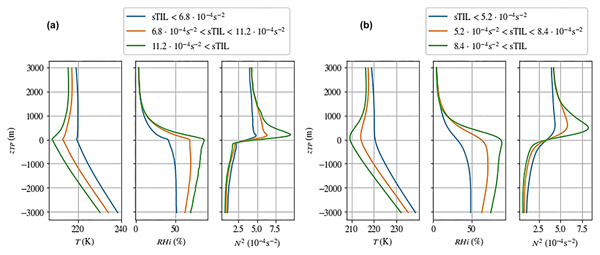
In this work, the influence of humidity on the properties of the tropopause is studied. The tropopause is the interface between the troposphere and the stratosphere and represents a barrier for the transport of air masses between the troposphere and the stratosphere. We consider not only the tropopause itself, but also a layer around it called the tropopause inversion layer (TIL). It is shown that the moister the underlying atmosphere is, the more this layer acts as a barrier.
Sarah Brüning, Stefan Niebler, and Holger Tost
Atmos. Meas. Tech., 17, 961–978, https://doi.org/10.5194/amt-17-961-2024, https://doi.org/10.5194/amt-17-961-2024, 2024
Short summary
Short summary
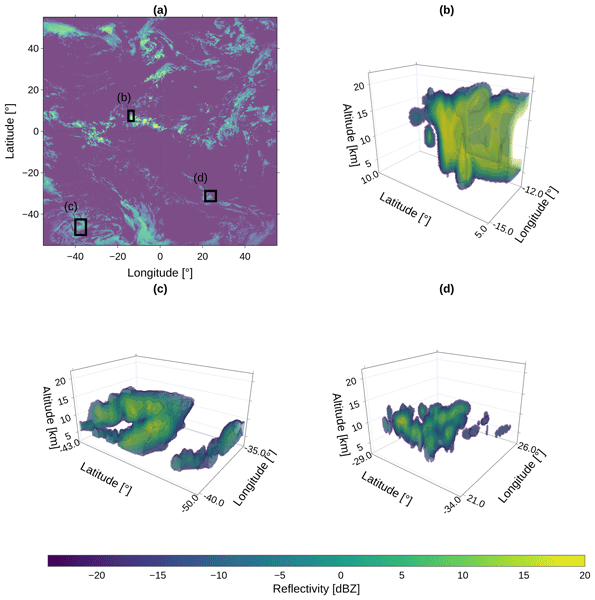
We apply the Res-UNet to derive a comprehensive 3D cloud tomography from 2D satellite data over heterogeneous landscapes. We combine observational data from passive and active remote sensing sensors by an automated matching algorithm. These data are fed into a neural network to predict cloud reflectivities on the whole satellite domain between 2.4 and 24 km height. With an average RMSE of 2.99 dBZ, we contribute to closing data gaps in the representation of clouds in observational data.
Peter Spichtinger, Patrik Marschalik, and Manuel Baumgartner
Atmos. Chem. Phys., 23, 2035–2060, https://doi.org/10.5194/acp-23-2035-2023, https://doi.org/10.5194/acp-23-2035-2023, 2023
Short summary
Short summary
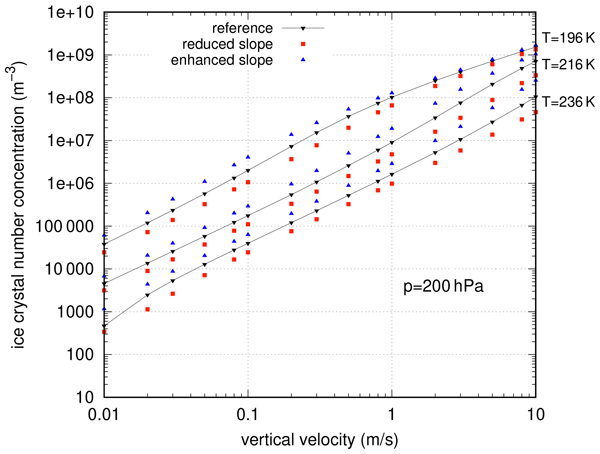
We investigate the impact of the homogeneous nucleation rate on nucleation events in cirrus. As long as the slope of the rate is represented sufficiently well, the resulting ice crystal number concentrations are not crucially affected. Even a change in the prefactor over orders of magnitude does not change the results. However, the maximum supersaturation during nucleation events shows strong changes. This quantity should be used for diagnostics instead of the popular nucleation threshold.
Hans-Christoph Lachnitt, Peter Hoor, Daniel Kunkel, Martina Bramberger, Andreas Dörnbrack, Stefan Müller, Philipp Reutter, Andreas Giez, Thorsten Kaluza, and Markus Rapp
Atmos. Chem. Phys., 23, 355–373, https://doi.org/10.5194/acp-23-355-2023, https://doi.org/10.5194/acp-23-355-2023, 2023
Short summary
Short summary
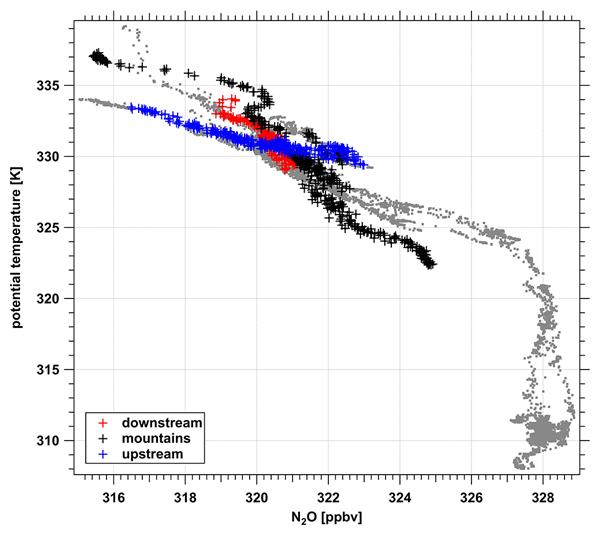
We present an analysis of high-resolution airborne measurements during a flight of the DEEPWAVE 2014 campaign in New Zealand. The focus of this flight was to study the effects of enhanced mountain wave activity over the Southern Alps. We discuss changes in the upstream and downstream distributions of N2O and CO and show that these changes are related to turbulence-induced trace gas fluxes which have persistent effects on the trace gas composition in the lower stratosphere.
Stefan Niebler, Annette Miltenberger, Bertil Schmidt, and Peter Spichtinger
Weather Clim. Dynam., 3, 113–137, https://doi.org/10.5194/wcd-3-113-2022, https://doi.org/10.5194/wcd-3-113-2022, 2022
Short summary
Short summary
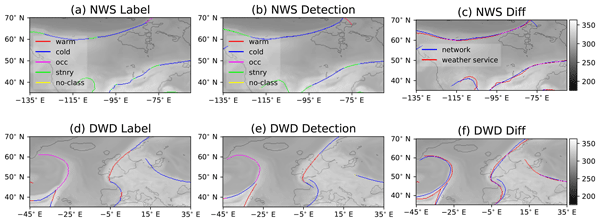
We use machine learning to create a network that detects and classifies four types of synoptic-scale weather fronts from ERA5 atmospheric reanalysis data. We present an application of our method, showing its use case in a scientific context. Additionally, our results show that multiple sources of training data are necessary to perform well on different regions, implying differences within those regions. Qualitative evaluation shows that the results are physically plausible.
Manuel Baumgartner, Christian Rolf, Jens-Uwe Grooß, Julia Schneider, Tobias Schorr, Ottmar Möhler, Peter Spichtinger, and Martina Krämer
Atmos. Chem. Phys., 22, 65–91, https://doi.org/10.5194/acp-22-65-2022, https://doi.org/10.5194/acp-22-65-2022, 2022
Short summary
Short summary
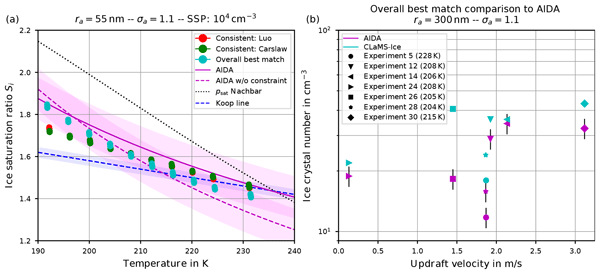
An important mechanism for the appearance of ice particles in the upper troposphere at low temperatures is homogeneous nucleation. This process is commonly described by the
Koop line, predicting the humidity at freezing. However, laboratory measurements suggest that the freezing humidities are above the Koop line, motivating the present study to investigate the influence of different physical parameterizations on the homogeneous freezing with the help of a detailed numerical model.
Ralf Weigel, Christoph Mahnke, Manuel Baumgartner, Martina Krämer, Peter Spichtinger, Nicole Spelten, Armin Afchine, Christian Rolf, Silvia Viciani, Francesco D'Amato, Holger Tost, and Stephan Borrmann
Atmos. Chem. Phys., 21, 13455–13481, https://doi.org/10.5194/acp-21-13455-2021, https://doi.org/10.5194/acp-21-13455-2021, 2021
Short summary
Short summary
In July and August 2017, the StratoClim mission took place in Nepal with eight flights of the M-55 Geophysica at up to 20 km in the Asian monsoon anticyclone. New particle formation (NPF) next to cloud ice was detected in situ by abundant nucleation-mode aerosols (> 6 nm) along with ice particles (> 3 µm). NPF was observed mainly below the tropopause, down to 15 % being non-volatile residues. Observed intra-cloud NPF indicates its importance for the composition in the tropical tropopause layer.
Cited articles
Batista-Tomás, A., Díaz, O., Batista-Leyva, A., and Altshuler, E.: Classification and dynamics of tropical clouds by their fractal dimension, Q. J. Roy. Meteor. Soc., 142, 983–988, https://doi.org/10.1002/qj.2699, 2016. a, b, c, d
Benner, T. and Curry, J.: Characteristics of small tropical cumulus clouds and their impact on the environment, J. Geophys. Res.-Atmos., 103, 28753–28767, https://doi.org/10.1029/98JD02579, 1998. a
Brinkhoff, L. A., von Savigny, C., Randall, C. E., and Burrows, J. P.: The fractal perimeter dimension of noctilucent clouds: Sensitivity analysis of the area-perimeter method and results on the seasonal and hemispheric dependence of the fractal dimension, J. Atmos. Solar-Terr. Phy., 127, 66–72, https://doi.org/10.1016/j.jastp.2014.06.005, 2015. a
Cahalan, R. and Joseph, J.: Fractal Statistics Of Cloud Fields, Mon. Weather Rev., 117, 261–272, https://doi.org/10.1175/1520-0493(1989)117<0261:FSOCF>2.0.CO;2, 1989. a
Cahalan, R., Ridgway, W., Wiscombe, W., Bell, T., and Snider, J.: The Albedo of Fractal Stratocumulus Clouds, J. Atmos. Sci., 51, 2434–2455, https://doi.org/10.1175/1520-0469(1994)051<2434:TAOFSC>2.0.CO;2, 1994. a
Cheng, Q.: The perimeter-area fractal model and its application to geology, Math. Geol., 27, 69–82, https://doi.org/10.1007/BF02083568, 1995. a
Chopard, B. and Droz, M.: Cellular Automata Modeling of Physical Systems, Collection Alea-Saclay: Monographs and Texts in Statistical Physics, Cambridge University Press, https://doi.org/10.1017/CBO9780511549755, 1998. a, b, c
Christensen, H. M. and Driver, O. G. A.: The Fractal Nature of Clouds in Global Storm-Resolving Models, Geophys. Res. Lett., 48, https://doi.org/10.1029/2021GL095746, 2021. a, b, c
Clough, S. A., Iacono, M. J., and Moncet, J.: Line‐by‐line calculations of atmospheric fluxes and cooling rates: Application to water vapor, J. Geophys. Res.-Atmos., 97, 15761–15785, https://doi.org/10.1029/92JD01419, 1992. a
Dessler, A. E. and Sherwood, S. C.: A matter of humidity, Science, 323, 1020–1021, https://doi.org/10.1126/science.1171264, 2009. a
DeWitt, T. D., Garrett, T. J., Rees, K. N., Bois, C., Krueger, S. K., and Ferlay, N.: Climatologically invariant scale invariance seen in distributions of cloud horizontal sizes, Atmos. Chem. Phys., 24, 109–122, https://doi.org/10.5194/acp-24-109-2024, 2024. a
Diao, M., Zondlo, M. A., Heymsfield, A. J., Avallone, L. M., Paige, M. E., Beaton, S. P., Campos, T., and Rogers, D. C.: Cloud-scale ice-supersaturated regions spatially correlate with high water vapor heterogeneities, Atmos. Chem. Phys., 14, 2639–2656, https://doi.org/10.5194/acp-14-2639-2014, 2014. a
Florio, B. J., Fawell, P. D., and Small, M.: The use of the perimeter-area method to calculate the fractal dimension of aggregates, Powder Technol., 343, 551–559, https://doi.org/10.1016/j.powtec.2018.11.030, 2019. a
Fusina, F., Spichtinger, P., and Lohmann, U.: Impact of ice supersaturated regions and thin cirrus on radiation in the midlatitudes, J. Geophys. Res.-Atmos., 112, https://doi.org/10.1029/2007JD008449, 2007. a, b
Gettelman, A., Fetzer, E. J., Eldering, A., and Irion, F. W.: The Global Distribution of Supersaturation in the Upper Troposphere from the Atmospheric Infrared Sounder, J. Climate, 19, 6089 – 6103, https://doi.org/10.1175/JCLI3955.1, 2006. a
Gotoh, K. and Fujii, Y.: A fractal dimensional analysis on the cloud shape parameters of cumulus over land, J. Appl. Meteorol., 37, 1283–1292, https://doi.org/10.1175/1520-0450(1998)037<1283:AFDAOT>2.0.CO;2, 1998. a
Haywood, J. M., Allan, R. P., Bornemann, J., Forster, P. M., Francis, P. N., Milton, S., Rädel, G., Rap, A., Shine, K. P., and Thorpe, R.: A case study of the radiative forcing of persistent contrails evolving into contrail-induced cirrus, J. Geophys. Res.-Atmos., 114, https://doi.org/10.1029/2009JD012650, 2009. a
Held, I. M. and Soden, B. J.: Water vapor feedback and global warming, Annu. Rev. Energ. Environ., 25, 441–475, https://doi.org/10.1146/annurev.energy.25.1.441, 2000. a
Hersbach, H., Bell, B., Berrisford, P., Hirahara, S., Horányi, A., Muñoz‐Sabater, J., Nicolas, J., Peubey, C., Radu, R., Schepers, D., Simmons, A., Soci, C., Abdalla, S., Abellan, X., Balsamo, G., Bechtold, P., Biavati, G., Bidlot, J., Bonavita, M., Chiara, G., Dahlgren, P., Dee, D., Diamantakis, M., Dragani, R., Flemming, J., Forbes, R., Fuentes, M., Geer, A., Haimberger, L., Healy, S., Hogan, R. J., Hólm, E., Janisková, M., Keeley, S., Laloyaux, P., Lopez, P., Lupu, C., Radnoti, G., Rosnay, P., Rozum, I., Vamborg, F., Villaume, S., and Thépaut, J.: The ERA5 global reanalysis, Q. J. Roy. Meteor. Soc., 146, 1999–2049, https://doi.org/10.1002/qj.3803, 2020 (data available at: https://apps.ecmwf.int/data-catalogues/era5/?class=ea, last access: 20 June 2024). a, b
Imre, A.: Artificial fractal dimension obtained by using perimeter-area relationship on digitalized images, Appl. Math. Comput., 173, 443–449, https://doi.org/10.1016/j.amc.2005.04.042, 2006. a, b
Joseph, J. and Cahalan, R.: Nearest Neighbor Spacing of Fair Weather Cumulus Clouds, J. Appl. Meteorol., 29, 793–805, https://doi.org/10.1175/1520-0450(1990)029<0793:NNSOFW>2.0.CO;2, 1990. a
Klinkenberg, B.: A review of methods used to determine the fractal dimension of linear features, Math. Geol., 26, 23–46, https://doi.org/10.1007/BF02065874, 1994. a
Köhler, D., Reutter, P., and Spichtinger, P.: Relative humidity over ice as a key variable for Northern Hemisphere midlatitude tropopause inversion layers, Atmos. Chem. Phys., 24, 10055–10072, https://doi.org/10.5194/acp-24-10055-2024, 2024. a, b
Krämer, M., Rolf, C., Luebke, A., Afchine, A., Spelten, N., Costa, A., Meyer, J., Zöger, M., Smith, J., Herman, R. L., Buchholz, B., Ebert, V., Baumgardner, D., Borrmann, S., Klingebiel, M., and Avallone, L.: A microphysics guide to cirrus clouds – Part 1: Cirrus types, Atmos. Chem. Phys., 16, 3463–3483, https://doi.org/10.5194/acp-16-3463-2016, 2016. a
Lamquin, N., Stubenrauch, C. J., Gierens, K., Burkhardt, U., and Smit, H.: A global climatology of upper-tropospheric ice supersaturation occurrence inferred from the Atmospheric Infrared Sounder calibrated by MOZAIC, Atmos. Chem. Phys., 12, 381–405, https://doi.org/10.5194/acp-12-381-2012, 2012. a, b
Lee, D., Pitari, G., Grewe, V., Gierens, K., Penner, J., Petzold, A., Prather, M., Schumann, U., Bais, A., Berntsen, T., Iachetti, D., Lim, L., and Sausen, R.: Transport impacts on atmosphere and climate: Aviation, Atmos. Environ., 44, 4678–4734, https://doi.org/10.1016/j.atmosenv.2009.06.005, 2010. a, b
Lee, D., Fahey, D., Skowron, A., Allen, M., Burkhardt, U., Chen, Q., Doherty, S., Freeman, S., Forster, P., Fuglestvedt, J., Gettelman, A., De León, R., Lim, L., Lund, M., Millar, R., Owen, B., Penner, J., Pitari, G., Prather, M., Sausen, R., and Wilcox, L.: The contribution of global aviation to anthropogenic climate forcing for 2000 to 2018, Atmos. Environ., 244, 117834, https://doi.org/10.1016/j.atmosenv.2020.117834, 2021. a
Lovejoy, S.: Area-perimeter relation for rain and cloud areas, Science, 216, 185–187, https://doi.org/10.1126/science.216.4542.185, 1982. a, b, c
Lovejoy, S. and Mandelbrot, B. B.: Fractal properties of rain, and a fractal model, Tellus A, 37A, 209–232, https://doi.org/10.1111/j.1600-0870.1985.tb00423.x, 1985. a, b
Mandelbrot, B.: The Fractal Geometry of Nature, W. H. Freeman and Co., ISBN 0-7167-1186-9, 1982. a
Mandelbrot, B. B., Passoja, D. E., and Paullay, A. J.: Fractal character of fracture surfaces of metals, Nature, 308, 721–722, https://doi.org/10.1038/308721a0, 1984. a
Marenco, A., Thouret, V., Nédélec, P., Smit, H., Helten, M., Kley, D., Karcher, F., Simon, P., Law, K., Pyle, J., Poschmann, G., von Wrede, R., Hume, C., and Cook, T.: Measurement of ozone and water vapor by Airbus in-service aircraft: The MOZAIC airborne program, An overview, J. Geophys. Res.-Atmos., 103, 25631–25642, https://doi.org/10.1029/98JD00977, 1998. a
Murphy, D. M. and Koop, T.: Review of the vapour pressures of ice and supercooled water for atmospheric applications, Q. J. Roy. Meteor. Soc., 131, 1539–1565, https://doi.org/10.1256/qj.04.94, 2005. a
Peitgen, H.-O., Jürgens, H., and Saupe, D.: Chaos and fractals – new frontiers of science, 2nd edn., Springer, ISBN 978-0-387-20229-7, https://doi.org/10.1007/b97624, 2004. a, b
Petzold, A., Thouret, V., Gerbig, C., Zahn, A., Brenninkmeijer, C. A. M., Gallagher, M., Hermann, M., Pontaud, M., Ziereis, H., Boulanger, D., Marshall, J., Nédélec, P., Smit, H. G. J., Friess, U., Flaud, J.-M., Wahner, A., Cammas, J.-P., Volz-Thomas, A., and Team, I.: Global-scale atmosphere monitoring by in-service aircraft–current achievements and future prospects of the European Research Infrastructure IAGOS, Tellus B, 67, 28452, https://doi.org/10.3402/tellusb.v67.28452, 2015. a, b, c
Petzold, A., Neis, P., Rütimann, M., Rohs, S., Berkes, F., Smit, H. G. J., Krämer, M., Spelten, N., Spichtinger, P., Nédélec, P., and Wahner, A.: Ice-supersaturated air masses in the northern mid-latitudes from regular in situ observations by passenger aircraft: vertical distribution, seasonality and tropospheric fingerprint, Atmos. Chem. Phys., 20, 8157–8179, https://doi.org/10.5194/acp-20-8157-2020, 2020. a
Petzold, A., Khan, N. F., Li, Y., Spichtinger, P., Rohs, S., Crewell, S., Wahner, A., and Kramer, M.: Most long-lived contrails form within cirrus clouds with uncertain climate impact, Nat. Commun., 16, https://doi.org/10.1038/s41467-025-65532-2, 2025. a, b
Rees, K. N., Garrett, T. J., DeWitt, T. D., Bois, C., Krueger, S. K., and Riedi, J. C.: A global analysis of the fractal properties of clouds revealing anisotropy of turbulence across scales, Nonlin. Processes Geophys., 31, 497–513, https://doi.org/10.5194/npg-31-497-2024, 2024. a
Reutter, P., Neis, P., Rohs, S., and Sauvage, B.: Ice supersaturated regions: properties and validation of ERA-Interim reanalysis with IAGOS in situ water vapour measurements, Atmos. Chem. Phys., 20, 787–804, https://doi.org/10.5194/acp-20-787-2020, 2020. a, b, c, d
Richardson, L. F.: Atmospheric diffusion shown on a distance-neighbour graph, Proceedings of the Royal Society of London. Series A, Containing Papers of a Mathematical and Physical Character, 110, 709–737, https://doi.org/10.1098/rspa.1926.0043, 1926. a
Rys, F. and Waldvogel, A.: Fractal Shape Of Hail Clouds, Phys. Rev. Lett., 56, 784–787, https://doi.org/10.1103/PhysRevLett.56.784, 1986. a
Sakellariou, M., Nakos, B., and Mitsakaki, C.: On the fractal character of rock surfaces, in: International journal of rock mechanics and mining sciences & geomechanics abstracts, vol. 28, 527–533, Pergamon, https://doi.org/10.1016/0148-9062(91)91129-F, 1991. a
Sanchez, N., Alfaro, E., and Pérez, E.: The fractal dimension of projected clouds, Astrophys. J., 625, 849–856, https://doi.org/10.1086/429553, 2005. a
Schuh, H. Z.: hzschuh/Fractal_Paper: Fractal Characteristics of Ice-Supersaturated Regions in the Tropopause Region of the northern midlatitudes (Version fractal_code_v1), Zenodo [software], https://doi.org/10.5281/zenodo.21158240, 2026. a
Schumann, U.: On conditions for contrail formation from aircraft exhausts, Meteorol. Z., 5, 4–23, https://doi.org/10.1127/metz/5/1996/4, 1996. a
Siebesma, A. and Jonker, H.: Anomalous scaling of cumulus cloud boundaries, Phys. Rev. Lett., 85, 214–217, https://doi.org/10.1103/PhysRevLett.85.214, 2000. a
Snow, A. D., Whitaker, J., Cochran, M., Miara, I., den Bossche, J. V., Mayo, C., Lucas, G., Cochrane, P., de Kloe, J., Karney, C., Shaw, J. J., Anh, T. Q., Filipe, Ouzounoudis, G., Dearing, J., Lostis, G., Couwenberg, B., Hoese, D., de Bittencourt, H., Little, B., May, R., Itkin, M., McDonald, D., Schneck, C., Gohlke, C., Jurd, B., Raspaud, M., Brett, M., and Meulien, M.: pyproj4/pyproj: 3.7.1 Release, Zenodo [code], https://doi.org/10.5281/zenodo.14876934, 2025. a
Spichtinger, P., Gierens, K., and Read, W.: The global distribution of ice-supersaturated regions as seen by the Microwave Limb Sounder, Q. J. Roy. Meteor. Soc., 129, 3391–3410, https://doi.org/10.1256/qj.02.141, 2003b. a
Spichtinger, P., Gierens, K., Smit, H. G. J., Ovarlez, J., and Gayet, J.-F.: On the distribution of relative humidity in cirrus clouds, Atmos. Chem. Phys., 4, 639–647, https://doi.org/10.5194/acp-4-639-2004, 2004. a
Sreenivasan, K.: Fractals And Multifractals In Fluid Turbulence, Annual Rev. Fluid Mech., 23, 539, https://doi.org/10.1146/annurev.fl.23.010191.002543, 1991. a
Sreenivasan, K. and Meneveau, C.: The fractal facets of turbulence, J. Fluid Mech., 173, 357–386, https://doi.org/10.1017/S0022112086001209, 1986. a
Stuber, N., Forster, P., Rädel, G., and Shine, K.: The importance of the diurnal and annual cycle of air traffic for contrail radiative forcing, Nature, 441, 864–867, https://doi.org/10.1038/nature04877, 2006. a
Vogelaar, M. and Wakker, B.: Measuring the fractal structure of interstellar clouds, Astron. Astrophys., 291, 557–568, https://doi.org/10.1007/978-94-011-3384-5_90, 1994. a
von Savigny, C., Brinkhoff, L. A., Bailey, S. M., Randall, C. E., and Russell III, J. M.: First determination of the fractal perimeter dimension of noctilucent clouds, Geophys. Res. Lett., 38, https://doi.org/10.1029/2010GL045834, 2011. a, b
Wegener, A.: Über die Eisphase des Wasserdampfes in der Atmosphäre (On the ice phase of water vapor in the atmosphere), Meteor. Z., 27, 451–459, 1910. a
Wegener, A.: Thermodynamik der Atmosphäre, J. A. Barth, Leipzig, https://archive.org/details/bub_gb_kWtUAAAAMAAJ (last access: 5 August 2026), 1911. a

Short summary
We studied ice-supersaturated regions in the upper troposphere and lower stratosphere where high humidity can lead to cloud and contrail formation. Using data from 2010 to 2020, we found these regions to have fractal characteristics by applying an area-perimeter method. The fractal dimension follows a seasonal cycle. Our results can help evaluate climate models and have possible implications on contrail mitigation.
We studied ice-supersaturated regions in the upper troposphere and lower stratosphere where high...
Altmetrics
Final-revised paper
Preprint