
Articles | Volume 26, issue 14
https://doi.org/10.5194/acp-26-10679-2026
© Author(s) 2026. This work is distributed under
the Creative Commons Attribution 4.0 License.
the Creative Commons Attribution 4.0 License.
https://doi.org/10.5194/acp-26-10679-2026
© Author(s) 2026. This work is distributed under
the Creative Commons Attribution 4.0 License.
the Creative Commons Attribution 4.0 License.
Research article
| 
30 Jul 2026
Research article |
| 30 Jul 2026
| 30 Jul 2026
Estimation of nocturnal boundary layer height in the central Amazon, supported by gas concentration profiles
Carla M. A. Souza
CORRESPONDING AUTHOR

Max Planck Institute for Biogeochemistry, Jena, Thuringia, Germany
National Institute of Amazonian Research (INPA), Graduate Program in Climate and Environment (CLIAMB), Manaus, Amazonas, Brazil
Anne C. S. Mendonça
National Institute of Amazonian Research (INPA), Graduate Program in Climate and Environment (CLIAMB), Manaus, Amazonas, Brazil
Hella van Asperen
Max Planck Institute for Biogeochemistry, Jena, Thuringia, Germany
Flávio A. F. D'Oliveira
Federal University of the State of Pará, Graduate Program in Environmental Sciences (PPGCA), Belém, Pará, Brazil
Santiago Botía
Max Planck Institute for Biogeochemistry, Jena, Thuringia, Germany
Luís G. N. Martins
Federal University of Santa Maria, Santa Maria, Rio Grande do Sul, Brazil
Denisi H. Hall
National Institute of Amazonian Research (INPA), Large-Scale Biosphere-Atmosphere Program in the Amazon (LBA), Manaus, Amazonas, Brazil
Raoni A. Santana
Federal University of Western Pará (UFOPA), Santarém, Pará, Brazil
Gilberto Fisch
University of Taubaté, Taubaté, São Paulo, Brazil
Leonardo R. Oliveira
National Institute of Amazonian Research (INPA), Large-Scale Biosphere-Atmosphere Program in the Amazon (LBA), Manaus, Amazonas, Brazil
Jailson R. Mata
National Institute of Amazonian Research (INPA), Large-Scale Biosphere-Atmosphere Program in the Amazon (LBA), Manaus, Amazonas, Brazil
Ranyelli Figueiredo
National Institute of Amazonian Research (INPA), Graduate Program in Climate and Environment (CLIAMB), Manaus, Amazonas, Brazil
National Institute of Amazonian Research (INPA), Large-Scale Biosphere-Atmosphere Program in the Amazon (LBA), Manaus, Amazonas, Brazil
Rachel Albrecht
University of São Paulo, São Paulo, Brazil
Bruno T. T. Portela
National Institute of Amazonian Research (INPA), Large-Scale Biosphere-Atmosphere Program in the Amazon (LBA), Manaus, Amazonas, Brazil
Carlos A. Quesada
National Institute of Amazonian Research (INPA), Large-Scale Biosphere-Atmosphere Program in the Amazon (LBA), Manaus, Amazonas, Brazil
Cléo Q. Dias-Júnior
CORRESPONDING AUTHOR
National Institute of Amazonian Research (INPA), Graduate Program in Climate and Environment (CLIAMB), Manaus, Amazonas, Brazil
National Institute of Amazonian Research (INPA), Large-Scale Biosphere-Atmosphere Program in the Amazon (LBA), Manaus, Amazonas, Brazil
Related authors
Sanam N. Vardag, Kilian Ticks, Santiago Botía, Gerrit Eisele, Philip Papastefanou, Cleo Quaresma, Hella van Asperen, Carla Souza, Flavio A. F. D'Oliveira, Susan Trumbore, Sönke Zaehle, and Sam P. Jones
EGUsphere, https://doi.org/10.5194/egusphere-2026-6034, https://doi.org/10.5194/egusphere-2026-6034, 2026
This preprint is open for discussion and under review for Biogeosciences (BG).
Short summary
Short summary
This study introduces a 2.5-year data set of CO2 and its stable carbon isotope 13C measured at the Amazon rainforest and analyses what these observations can reveal about how the forest responds to its environment. We find clear day–night changes but much weaker seasonal changes than predicted by a vegetation model, suggesting that the real forest is better buffered against seasonal water stress than the model represents.
Ramon C. Braga, Manfred Wendisch, Rachel Albrecht, and Daniel Harrison
Atmos. Chem. Phys., 26, 14769–14791, https://doi.org/10.5194/acp-26-14769-2026, https://doi.org/10.5194/acp-26-14769-2026, 2026
Short summary
Short summary
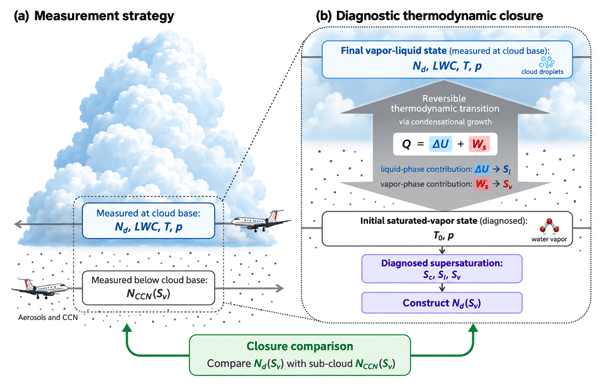
We introduce a new thermodynamic framework to derive water vapor supersaturation at warm cumulus cloud base from in situ measurements. The framework describes the local transition between saturated thermodynamic states as an adiabatic and reversible process under quasi-isobaric conditions, in which the latent energy released during condensation is partitioned between changes in internal energy and water-vapor expansion work.
Anna C. Huitema, Vincent S. de Feiter, Raquel González-Armas, Oscar K. Hartogensis, Hella van Asperen, Cleo Q. Dias-Júnior, and Jordi Vilà-Guerau de Arellano
Atmos. Chem. Phys., 26, 14725–14747, https://doi.org/10.5194/acp-26-14725-2026, https://doi.org/10.5194/acp-26-14725-2026, 2026
Short summary
Short summary
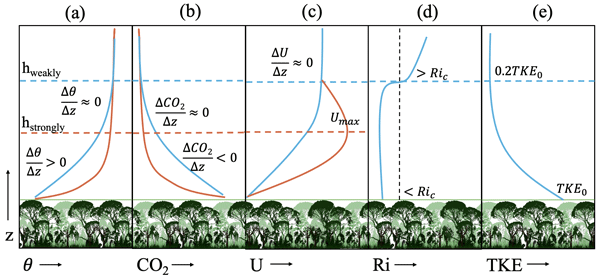
We studied how well idealised models of the nighttime boundary layer capture observed variability above the Amazon rainforest, using observations from the CloudRoots-Amazon22 campaign. The observations indicate large nocturnal variability, caused by non-stationary processes and interactions between the within- and above-canopy atmosphere. Common weather and climate models often miss this variability, highlighting the need to represent the complex forest-atmosphere interactions better.
Chloe A. Brashear, Maarten M. J. W. van Herpen, Sergey Gromov, Berend van de Kraats, Carina van der Veen, Xietiancheng Yu, Matthew S. Johnson, Helder Timas, Sönke Zaehle, Armin Jordan, Heiko Moossen, Africa Barreto, Natalia Pratts, Isabel Baños, Jesús Arrieta, Dickon Young, Peter Sealy, Hella van Asperen, Simonetta Montaguti, Peter Sperlich, Rowena Moss, Sylvia Nichol, Stephen Matthew Platt, Ove Hermansen, Cathrine Lund Myhre, Gabrielle Petron, Andy Crotwell, Isaac Vimont, and Thomas Röckmann
EGUsphere, https://doi.org/10.5194/egusphere-2026-5618, https://doi.org/10.5194/egusphere-2026-5618, 2026
This preprint is open for discussion and under review for Atmospheric Chemistry and Physics (ACP).
Short summary
Short summary
This study evaluates trends in atmospheric CO between 1995–2025 and uses the isotopic composition of CO to constrain emission shifts during this time. We find that CO from fossil fuel combustion has reduced dramatically in the Northern Hemisphere during winter, linked to global air quality regulations. Conversely, a small background rise in CO is driven by increasing atmospheric CH4 and recent extreme wildfire seasons have caused large peaks in CO, counteracting reductions from fossil emissions.
Sanam N. Vardag, Kilian Ticks, Santiago Botía, Gerrit Eisele, Philip Papastefanou, Cleo Quaresma, Hella van Asperen, Carla Souza, Flavio A. F. D'Oliveira, Susan Trumbore, Sönke Zaehle, and Sam P. Jones
EGUsphere, https://doi.org/10.5194/egusphere-2026-6034, https://doi.org/10.5194/egusphere-2026-6034, 2026
This preprint is open for discussion and under review for Biogeosciences (BG).
Short summary
Short summary
This study introduces a 2.5-year data set of CO2 and its stable carbon isotope 13C measured at the Amazon rainforest and analyses what these observations can reveal about how the forest responds to its environment. We find clear day–night changes but much weaker seasonal changes than predicted by a vegetation model, suggesting that the real forest is better buffered against seasonal water stress than the model represents.
Anne-Wil van den Berg, Joram J. D. Hooghiem, Auke M. van der Woude, Pieter Rijsdijk, Roland Vernooij, Santiago Botía, Guido R. van der Werf, John B. Miller, Ingrid T. Luijkx, Maarten C. Krol, and Wouter Peters
Atmos. Chem. Phys., 26, 13929–13958, https://doi.org/10.5194/acp-26-13929-2026, https://doi.org/10.5194/acp-26-13929-2026, 2026
Short summary
Short summary
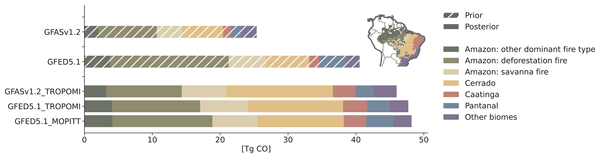
We estimate 2019 Brazilian fire carbon monoxide (CO) emissions using CO retrievals from multiple satellites in a new top-down inversion framework. The retrievals strongly constrain fire emissions and complement existing inventories. National-scale posterior emissions align well with the new Global Fire Emissions Database v5.1, supporting progress in fire emission models. Yet, posterior emissions in the Cerrado and Caatinga are systematically higher than inventories; we discuss potential drivers.
Shrutika Wagh, Luana S. Basso, Ayan F. Fleischmann, João Henrique Fernandes Amaral, John Melack, Jost Larvic, David Walter, Stijn Hantson, Julia Marshall, Chris Wilson, Youmi Oh, Lori Bruhwiler, John B. Miller, Corinne Vigouroux, Christian Rödenbeck, and Santiago Botía
EGUsphere, https://doi.org/10.5194/egusphere-2026-5245, https://doi.org/10.5194/egusphere-2026-5245, 2026
This preprint is open for discussion and under review for Atmospheric Chemistry and Physics (ACP).
Short summary
Short summary
We estimated methane emissions from the Amazon, Orinoco, and Paraná river basins using the Jena CarboScope global inversion system. We included Amazon measurements to evaluate their effect on the results. Adding them led to a large adjustment in estimated wetland emissions and strongly influenced the Amazon estimate. Without these measurements, the Amazon estimate increased by about 75 %. Our findings highlight the need to maintain and expand measurements across tropical South America.
Theo Glauch, Marcia J. Kroker, Sanam N. Vardag, Santiago Botía, André Butz, and Julia Marshall
EGUsphere, https://doi.org/10.5194/egusphere-2026-4847, https://doi.org/10.5194/egusphere-2026-4847, 2026
This preprint is open for discussion and under review for Biogeosciences (BG).
Short summary
Short summary
Ecosystems absorb CO2 through photosynthesis and release it via respiration, but sensors only measure the combined, net effect. This paper introduces pyVPRNN, an AI model to separate these two processes using satellite imagery, land-cover, and weather data. Tested at 32 European sites, it outperforms current methods, especially in forests and grasslands, and can even estimate carbon exchange in places without physical sensors – helping track how ecosystems absorb carbon as the climate changes.
Flossie Brown, Colette L. Heald, Allison Steiner, Ana Maria Yáñez-Serrano, Jürgen Kesselmeier, Carolina de A. Monteiro, Hartwig Harder, Alessandro C. de Araújo, Denisi H. Hall, Cléo Quaresma Dias-Júnior, and Stefan Wolff
Atmos. Chem. Phys., 26, 9181–9205, https://doi.org/10.5194/acp-26-9181-2026, https://doi.org/10.5194/acp-26-9181-2026, 2026
Short summary
Short summary
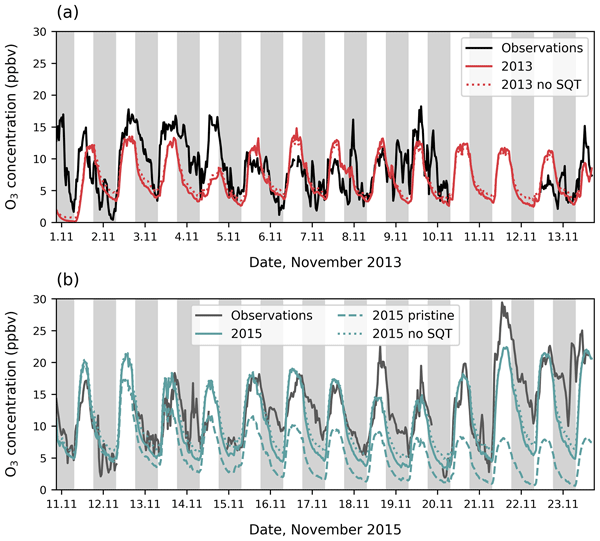
The environment inside a forest canopy is often not represented in large atmospheric models. This study uses a detailed canopy model to understand trace gas emissions and chemistry within the Amazon rainforest. We show escape of trace gases from the canopy to the atmosphere can depend on turbulence and vary over the day, which is currently not included in atmospheric models. We show that the atmospheric composition above the Amazon and within the canopy is strongly affected by forest fires.
Bárbara Antonucci, Raoni A. Santana, Nara L. R. Andrade, Eliane Gomes Alves, Santiago Botía, Carla M.A. Souza, Anne C. S. Mendonça, Shujiro Komiya, Denisi H. Hall, Natalia Restrepo-Coupe, Gabriel B. Costa, and Cléo Q. Dias-Júnior
EGUsphere, https://doi.org/10.5194/egusphere-2026-3167, https://doi.org/10.5194/egusphere-2026-3167, 2026
This preprint is open for discussion and under review for Biogeosciences (BG).
Short summary
Short summary
The Amazon rainforest helps regulate the global climate by absorbing carbon from the atmosphere. We developed a simple method to improve long-term estimates of forest carbon exchange using measurements available at many monitoring sites. Applying this approach to a 13-year record from the southwestern Amazon showed that the forest absorbed carbon during wetter years but became a weaker carbon sink, or even a carbon source, during droughts and El Niño events.
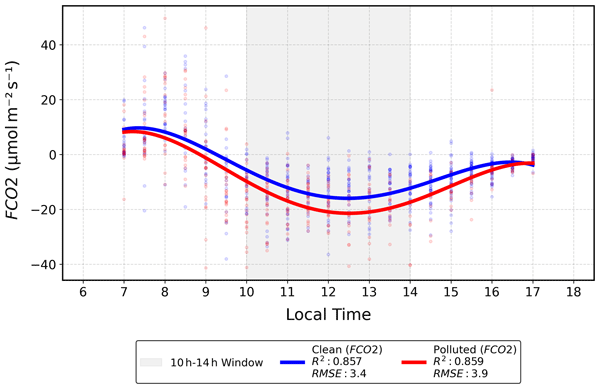
Mariano A. B. da Rocha, Cléo Q. Dias-Júnior, Anne C. S. Mendonça, Julia C. P. Cohen, Flávio A. F. D'Oliveira, Christopher Pöhlker, Subha Raj, Alessandro C. de Araujo, Marco A. Franco, Paulo Artaxo, Carlos A. Quesada, and Rafael S. Palácios
Atmos. Chem. Phys., 26, 8051–8066, https://doi.org/10.5194/acp-26-8051-2026, https://doi.org/10.5194/acp-26-8051-2026, 2026
Short summary
Short summary
We studied how airborne particles like smoke affect a pristine Amazon rainforest. Using long-term data, we found that high aerosol pollution reduces the heat and water vapor released by the forest, causing a cooling effect. Surprisingly, it also substantially boosts the forest's carbon dioxide absorption by scattering sunlight, which helps plants with photosynthesis. This shows that aerosols significantly alter the Amazon's microclimate and its crucial role in the global carbon and water cycles.
Joao Henrique Fernandes Amaral, Santiago Botía, Paula Torres Quintero, Anghy Sthephany Gutierrez Rincon, David Ho, Adriana Sanchez, Alvaro Avila-Diaz, Antje Uhde, Benjamin Quesada, Juan C. Benavides, R. Scott Winton, Carlos A. Sierra, Miguel A. Navarro-Ramírez, Diego David Pardo Buitrago, and Stijn Hantson
EGUsphere, https://doi.org/10.5194/egusphere-2026-2080, https://doi.org/10.5194/egusphere-2026-2080, 2026
Short summary
Short summary
Methane is a powerful greenhouse gas driving climate change. Atmospheric methane levels are rising by anthropogenic emissions from livestock, oil and gas, rice farms, fires, and, naturally, mainly from wetlands. Tropical wetlands are a major source, yet data is uncertain. Our study examines South America's Orinoco wetlands (Colombia, Venezuela), reviewing emissions from natural and anthropogenic sources. We discuss and identify research needed to better understand this ecosystem's methane cycle.
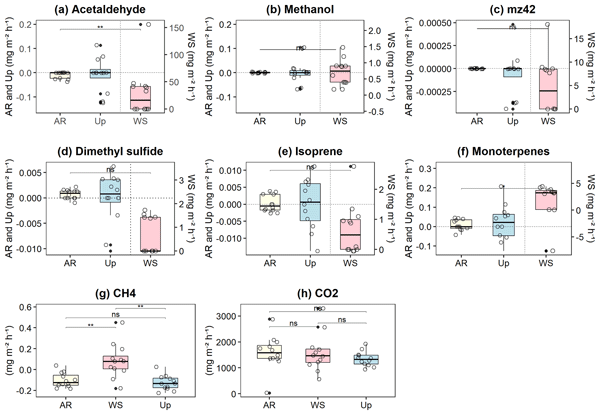
Débora Pinheiro-Oliveira, Hella van Asperen, Murielli Garcia Caetano, Michelle Robin, Achim Edtbauer, Nora Zannoni, Joseph Byron, Jonathan Williams, Layon Oreste Demarchi, Maria Teresa Fernandez Piedade, Jochen Schöngart, Florian Wittmann, Sergio Duvoisin-Junior, Carla Batista, Rodrigo Augusto Ferreira de Souza, and Eliane Gomes Alves
Biogeosciences, 23, 2451–2476, https://doi.org/10.5194/bg-23-2451-2026, https://doi.org/10.5194/bg-23-2451-2026, 2026
Short summary
Short summary
Forests release trace gases that influence air and climate. While plants are the main source, soil and leaf litter can also release significant amounts, especially in tropical forests like the Amazon. We measured these fluxes in different forest types and found soil and litter to be active sources and sinks. This can improves climate models by including realistic forest processes, vital for understanding and protecting the Amazon.
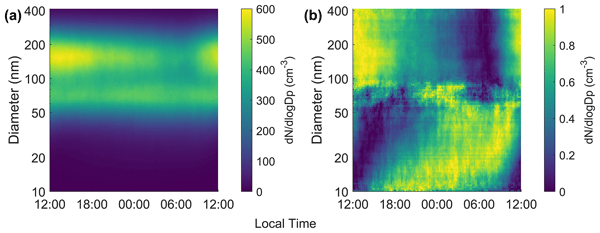
Bruno B. Meller, Marco A. Franco, Rafael Valiati, Christopher Pöhlker, Luiz A. T. Machado, Florian Ditas, Leslie A. Kremper, Subha S. Raj, Cleo Q. Dias-Júnior, Flávio A. F. D'Oliveira, Luciana V. Rizzo, Ulrich Pöschl, and Paulo Artaxo
Atmos. Chem. Phys., 26, 4885–4899, https://doi.org/10.5194/acp-26-4885-2026, https://doi.org/10.5194/acp-26-4885-2026, 2026
Short summary
Short summary
Aerosols are tiny particles that help clouds form and influence the climate. In the Amazon, clear events of new aerosol particle formation are rare, making it difficult to explain their origin. Using ten years of measurements, we discovered a subtle but frequent process called Quiet New Particle Formation. This hidden mechanism slowly produces and grows small particles and is responsible for nearly half of the smallest aerosols observed during the wet season.
Noelia R. Benavente, Santiago Botía, Luciana V. Rizzo, Angel Vara-Vela, Paulo Artaxo, Hella van Asperen, Felipe Santos da Silva, Flavio A. F. D'Oliveira, Horst Fischer, Michał Gałkowski, Theo Glauch, Alice Henkes, David Ho, Cléo Q. Dias-Júnior, Amauri C. P. Junior, Julia Marshall, Linda Ort, Ben-Hur M. Portella, and Luiz A. T. Machado
EGUsphere, https://doi.org/10.5194/egusphere-2026-979, https://doi.org/10.5194/egusphere-2026-979, 2026
Short summary
Short summary
The Amazon Basin plays a vital role in regulating Earth's climate by absorbing and releasing carbon dioxide and methane. We studied how a high-resolution atmospheric transport model captures these gases, comparing it with measurements from towers and aircraft over the forest. Adjusting for forest carbon exchange improved carbon dioxide results, while methane levels were heavily dependent on emission estimates. Remaining errors were linked to winds and atmospheric mixing.
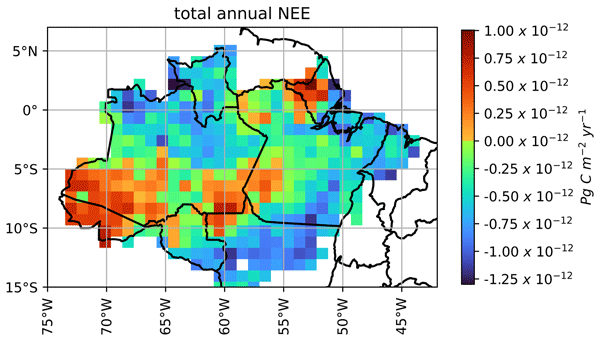
Amauri C. Prudente Jr., Luiz A. T. Machado, Felipe S. Silva, Tercio Ambrizzi, Paulo Artaxo, Santiago Botia, Luan P. Cordeiro, Cleo Q. Dias Jr., Edmilson Freitas, Demerval S. Moreira, Christopher Pöhlker, Ivan M. C. Toro, Xiyan Xu, and Luciana V. Rizzo
Biogeosciences, 23, 1771–1793, https://doi.org/10.5194/bg-23-1771-2026, https://doi.org/10.5194/bg-23-1771-2026, 2026
Short summary
Short summary
This study propoes a new method of spatialization to estimate carbon fluxes in the Brazilian Amazon biome. To do so, was used a land surface model (JULES) and two vegetation properties. The results of this spatialization resulted in a carbon fluxes of -1.34 Pg C during the year of 2021 in the entire Brazilian Amazon biome being the states of Amapa and Acre main relevant regions of carbon source.

Samuel Upton, Markus Reichstein, Wouter Peters, Santiago Botía, Jacob A. Nelson, Sophia Walther, Martin Jung, Fabian Gans, László Haszpra, and Ana Bastos
Atmos. Chem. Phys., 26, 2561–2595, https://doi.org/10.5194/acp-26-2561-2026, https://doi.org/10.5194/acp-26-2561-2026, 2026
Short summary
Short summary
We create a hybrid ecosystem-level carbon flux model using both eddy-covariance observations and observations of the atmospheric mole fraction of CO2 at three tall-tower observatories. Our study uses an atmospheric transport model (STILT) to connect the atmospheric signal to the ecosystem-level model. We show that this inclusion of atmospheric information meaningfully improves the model's representation of the interannual variability of the global net flux of CO2.
Dieu Anh Tran, Jordi Vilà-Guerau de Arellano, Ingrid T. Luijkx, Christoph Gerbig, Michał Gałkowski, Santiago Botía, Kim Faassen, and Sönke Zaehle
Atmos. Chem. Phys., 25, 16553–16588, https://doi.org/10.5194/acp-25-16553-2025, https://doi.org/10.5194/acp-25-16553-2025, 2025
Short summary
Short summary
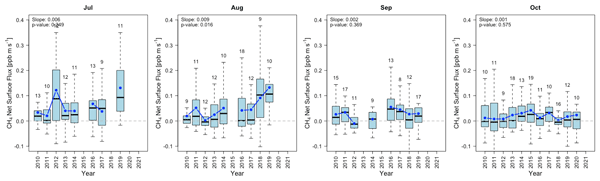
Analysis of CH4 data (2010–2021) from ZOtino Tall Tower Observatory in Central Siberia shows an increase in the late summer diurnal amplitude, driven by nighttime emissions. These trends correlate with rising soil temperature and moisture during the late summer and snow depth of the preceding spring. Peaks in 2012 and 2019 emission link to wildfires activity. Findings suggest wetlands as key CH4 sources and underscore the need for ongoing high-resolution monitoring in this region.
Carlos A. Sierra, Ingrid Chanca, Meinrat O. Andreae, Alessandro Carioca de Araújo, Hella van Asperen, Lars Borchardt, Santiago Botía, Luiz Antonio Candido, Caio S. C. Correa, Cléo Quaresma Dias-Junior, Markus Eritt, Annica Fröhlich, Luciana V. Gatti, Marcus Guderle, Samuel Hammer, Martin Heimann, Viviana Horna, Armin Jordan, Steffen Knabe, Richard Kneißl, Jost Valentin Lavric, Ingeborg Levin, Kita Macario, Juliana Menger, Heiko Moossen, Carlos Alberto Quesada, Michael Rothe, Christian Rödenbeck, Yago Santos, Axel Steinhof, Bruno Takeshi, Susan Trumbore, and Sönke Zaehle
Earth Syst. Sci. Data, 17, 5871–5884, https://doi.org/10.5194/essd-17-5871-2025, https://doi.org/10.5194/essd-17-5871-2025, 2025
Short summary
Short summary
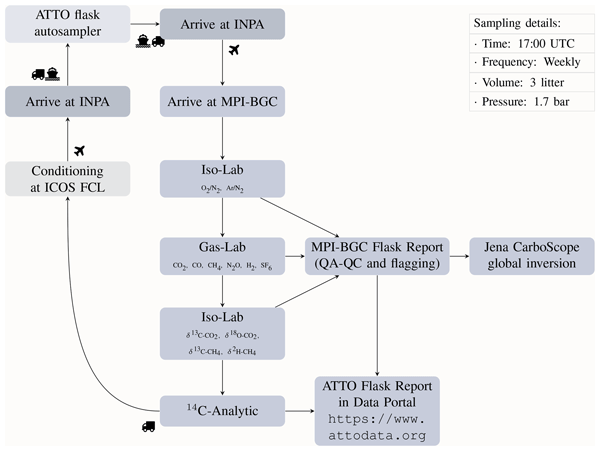
We present here a unique dataset of atmospheric observations of greenhouse gases and isotopes that provide key information on land-atmosphere interactions for the Amazon forests of central Brazil. The data show a relatively large level of variability, but also important trends in greenhouse gases, and signals from fires as well as seasonal biological activity.
Camila da Cunha Lopes, Rachel Ifanger Albrecht, Douglas Messias Uba, Thiago Souza Biscaro, and Ivan Saraiva
Earth Syst. Sci. Data, 17, 5489–5505, https://doi.org/10.5194/essd-17-5489-2025, https://doi.org/10.5194/essd-17-5489-2025, 2025
Short summary
Short summary
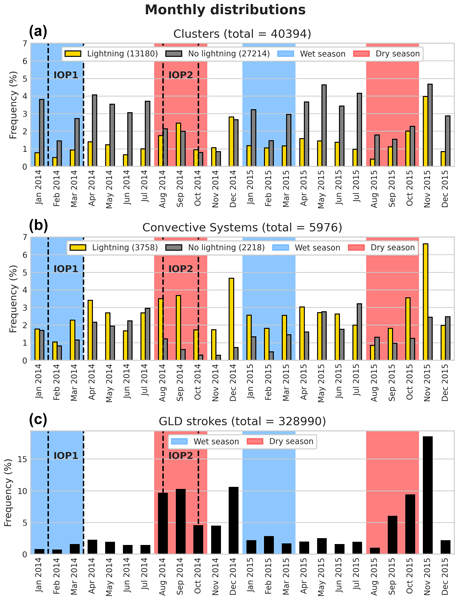
This study utilized observations collected during the Observations and Modeling of the Green Ocean Amazon (GoAmazon2014/5) experiment to create a database of storm and thunderstorm characteristics with weather radar and lightning measurements. These storms have different sizes and durations between the wet and dry seasons as well as throughout the day, with the most intense events occurring during the dry-season–wet-season transition. This database will be useful for future studies on Amazonian clouds.
Theo Glauch, Julia Marshall, Christoph Gerbig, Santiago Botía, Michał Gałkowski, Sanam N. Vardag, and André Butz
Geosci. Model Dev., 18, 4713–4742, https://doi.org/10.5194/gmd-18-4713-2025, https://doi.org/10.5194/gmd-18-4713-2025, 2025
Short summary
Short summary
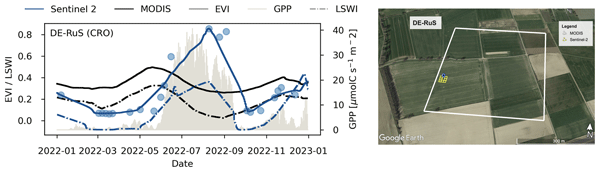
The Vegetation Photosynthesis and Respiration Model (VPRM) estimates carbon exchange between the atmosphere and biosphere by modeling gross primary production and respiration using satellite data and weather variables. Our new version, pyVPRM, supports diverse satellite products like Sentinel-2, MODIS, VIIRS, and new land cover maps, enabling high spatial and temporal resolution. This improves flux estimates, especially in complex landscapes, and ensures continuity as MODIS nears decommissioning.
Santiago Botía, Saqr Munassar, Thomas Koch, Danilo Custodio, Luana S. Basso, Shujiro Komiya, Jost V. Lavric, David Walter, Manuel Gloor, Giordane Martins, Stijn Naus, Gerbrand Koren, Ingrid T. Luijkx, Stijn Hantson, John B. Miller, Wouter Peters, Christian Rödenbeck, and Christoph Gerbig
Atmos. Chem. Phys., 25, 6219–6255, https://doi.org/10.5194/acp-25-6219-2025, https://doi.org/10.5194/acp-25-6219-2025, 2025
Short summary
Short summary
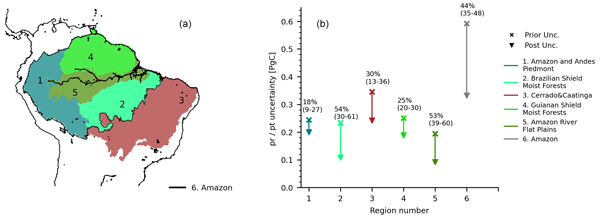
This study uses dry CO2 mole fractions from the Amazon Tall Tower Observatory together with airborne profiles to estimate net carbon exchange in tropical South America. We found that the biogeographic Amazon is a net carbon sink, while the Cerrado and Caatinga biomes are net carbon sources, resulting in an overall neutral balance. Finally, to further reduce the uncertainty in our estimates we call for an expansion of the monitoring capacity, especially in the Amazon–Andes foothills.
Ingrid Chanca, Ingeborg Levin, Susan Trumbore, Kita Macario, Jost Lavric, Carlos Alberto Quesada, Alessandro Carioca de Araújo, Cléo Quaresma Dias Júnior, Hella van Asperen, Samuel Hammer, and Carlos A. Sierra
Biogeosciences, 22, 455–472, https://doi.org/10.5194/bg-22-455-2025, https://doi.org/10.5194/bg-22-455-2025, 2025
Short summary
Short summary
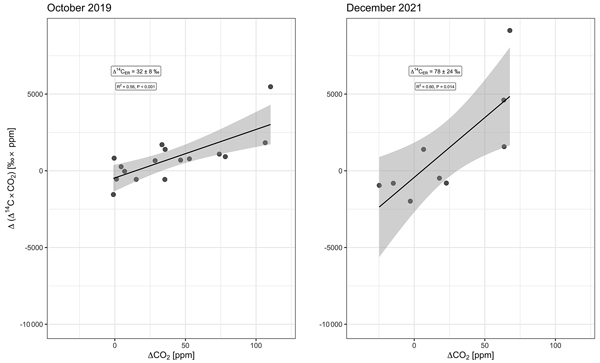
Assessing the net carbon (C) budget of the Amazon entails considering the magnitude and timing of C absorption and losses through respiration (transit time of C). Radiocarbon-based estimates of the transit time of C in the Amazon Tall Tower Observatory (ATTO) suggest a change in the transit time from 6 ± 2 years and 18 ± 4 years within 2 years (October 2019 and December 2021, respectively). This variability indicates that only a fraction of newly fixed C can be stored for decades or longer.
Saqr Munassar, Christian Rödenbeck, Michał Gałkowski, Frank-Thomas Koch, Kai U. Totsche, Santiago Botía, and Christoph Gerbig
Atmos. Chem. Phys., 25, 639–656, https://doi.org/10.5194/acp-25-639-2025, https://doi.org/10.5194/acp-25-639-2025, 2025
Short summary
Short summary
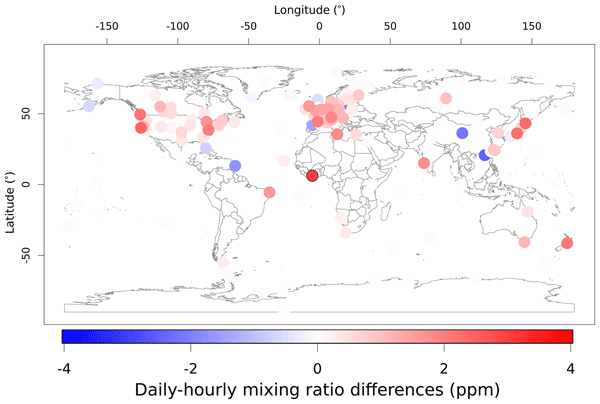
CO2 mole fractions simulated over a global set of stations showed an overestimation of CO2 if the diurnal cycle is missing in biogenic fluxes. This leads to biases in the estimated fluxes derived from the regional-scale inversions. Interannual variability of estimated biogenic fluxes is also affected by the exclusion of the CO2 diurnal cycle. The findings point to the importance of including the diurnal variations of CO2 in the biogenic fluxes used as priors in global and regional inversions.
David Ho, Michał Gałkowski, Friedemann Reum, Santiago Botía, Julia Marshall, Kai Uwe Totsche, and Christoph Gerbig
Geosci. Model Dev., 17, 7401–7422, https://doi.org/10.5194/gmd-17-7401-2024, https://doi.org/10.5194/gmd-17-7401-2024, 2024
Short summary
Short summary
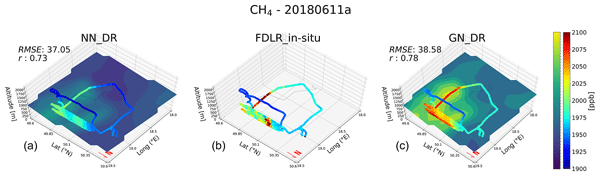
Atmospheric model users often overlook the impact of the land–atmosphere interaction. This study accessed various setups of WRF-GHG simulations that ensure consistency between the model and driving reanalysis fields. We found that a combination of nudging and frequent re-initialization allows certain improvement by constraining the soil moisture fields and, through its impact on atmospheric mixing, improves atmospheric transport.
Luiz A. T. Machado, Jürgen Kesselmeier, Santiago Botía, Hella van Asperen, Meinrat O. Andreae, Alessandro C. de Araújo, Paulo Artaxo, Achim Edtbauer, Rosaria R. Ferreira, Marco A. Franco, Hartwig Harder, Sam P. Jones, Cléo Q. Dias-Júnior, Guido G. Haytzmann, Carlos A. Quesada, Shujiro Komiya, Jost Lavric, Jos Lelieveld, Ingeborg Levin, Anke Nölscher, Eva Pfannerstill, Mira L. Pöhlker, Ulrich Pöschl, Akima Ringsdorf, Luciana Rizzo, Ana M. Yáñez-Serrano, Susan Trumbore, Wanda I. D. Valenti, Jordi Vila-Guerau de Arellano, David Walter, Jonathan Williams, Stefan Wolff, and Christopher Pöhlker
Atmos. Chem. Phys., 24, 8893–8910, https://doi.org/10.5194/acp-24-8893-2024, https://doi.org/10.5194/acp-24-8893-2024, 2024
Short summary
Short summary
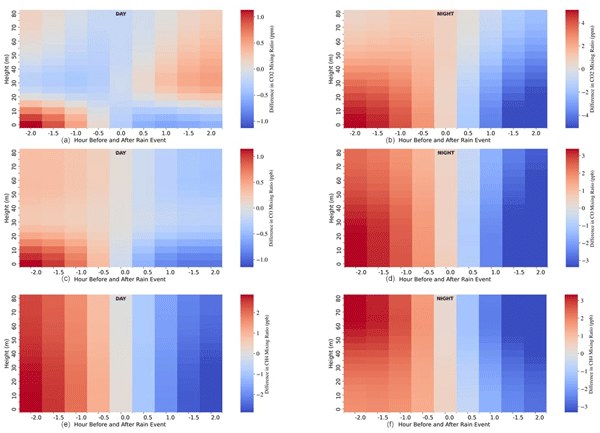
Composite analysis of gas concentration before and after rainfall, during the day and night, gives insight into the complex relationship between trace gas variability and precipitation. The analysis helps us to understand the sources and sinks of trace gases within a forest ecosystem. It elucidates processes that are not discernible under undisturbed conditions and contributes to a deeper understanding of the trace gas life cycle and its intricate interactions with cloud dynamics in the Amazon.
Hella van Asperen, Thorsten Warneke, Alessandro Carioca de Araújo, Bruce Forsberg, Sávio José Filgueiras Ferreira, Thomas Röckmann, Carina van der Veen, Sipko Bulthuis, Leonardo Ramos de Oliveira, Thiago de Lima Xavier, Jailson da Mata, Marta de Oliveira Sá, Paulo Ricardo Teixeira, Julie Andrews de França e Silva, Susan Trumbore, and Justus Notholt
Biogeosciences, 21, 3183–3199, https://doi.org/10.5194/bg-21-3183-2024, https://doi.org/10.5194/bg-21-3183-2024, 2024
Short summary
Short summary
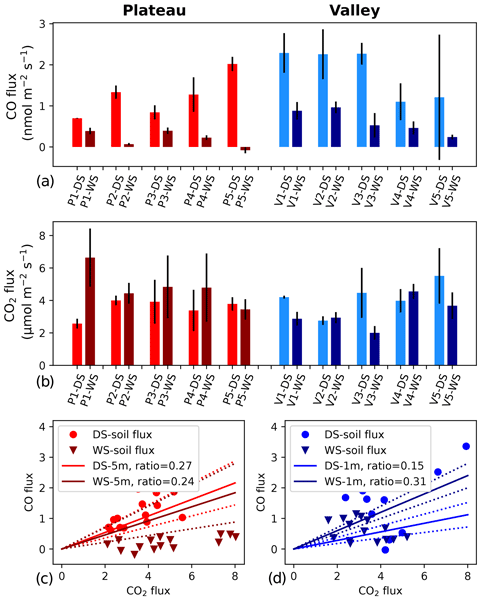
Carbon monoxide (CO) is regarded as an important indirect greenhouse gas. Soils can emit and take up CO, but, until now, uncertainty remains as to which process dominates in tropical rainforests. We present the first soil CO flux measurements from a tropical rainforest. Based on our observations, we report that tropical rainforest soils are a net source of CO. In addition, we show that valley streams and inundated areas are likely additional hot spots of CO in the ecosystem.
João Paulo Darela-Filho, Anja Rammig, Katrin Fleischer, Tatiana Reichert, Laynara Figueiredo Lugli, Carlos Alberto Quesada, Luis Carlos Colocho Hurtarte, Mateus Dantas de Paula, and David M. Lapola
Earth Syst. Sci. Data, 16, 715–729, https://doi.org/10.5194/essd-16-715-2024, https://doi.org/10.5194/essd-16-715-2024, 2024
Short summary
Short summary
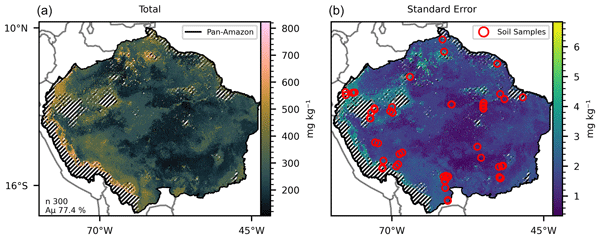
Phosphorus (P) is crucial for plant growth, and scientists have created models to study how it interacts with carbon cycle in ecosystems. To apply these models, it is important to know the distribution of phosphorus in soil. In this study we estimated the distribution of phosphorus in the Amazon region. The results showed a clear gradient of soil development and P content. These maps can help improve ecosystem models and generate new hypotheses about phosphorus availability in the Amazon.
Eliane Gomes Alves, Raoni Aquino Santana, Cléo Quaresma Dias-Júnior, Santiago Botía, Tyeen Taylor, Ana Maria Yáñez-Serrano, Jürgen Kesselmeier, Efstratios Bourtsoukidis, Jonathan Williams, Pedro Ivo Lembo Silveira de Assis, Giordane Martins, Rodrigo de Souza, Sérgio Duvoisin Júnior, Alex Guenther, Dasa Gu, Anywhere Tsokankunku, Matthias Sörgel, Bruce Nelson, Davieliton Pinto, Shujiro Komiya, Diogo Martins Rosa, Bettina Weber, Cybelli Barbosa, Michelle Robin, Kenneth J. Feeley, Alvaro Duque, Viviana Londoño Lemos, Maria Paula Contreras, Alvaro Idarraga, Norberto López, Chad Husby, Brett Jestrow, and Iván Mauricio Cely Toro
Atmos. Chem. Phys., 23, 8149–8168, https://doi.org/10.5194/acp-23-8149-2023, https://doi.org/10.5194/acp-23-8149-2023, 2023
Short summary
Short summary
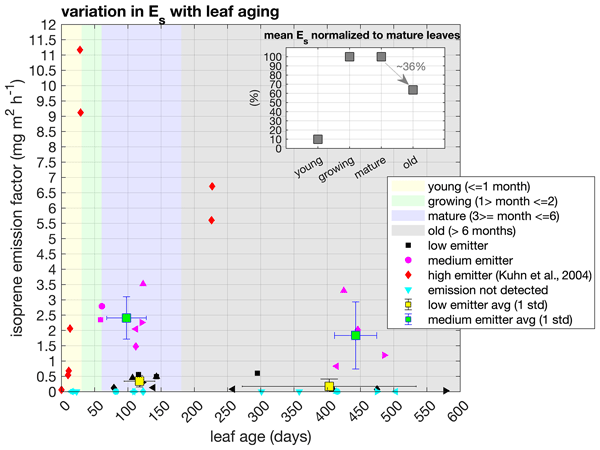
Isoprene is emitted mainly by plants and can influence atmospheric chemistry and air quality. But, there are uncertainties in model emission estimates and follow-up atmospheric processes. In our study, with long-term observational datasets of isoprene and biological and environmental factors from central Amazonia, we show that isoprene emission estimates could be improved when biological processes were mechanistically incorporated into the model.
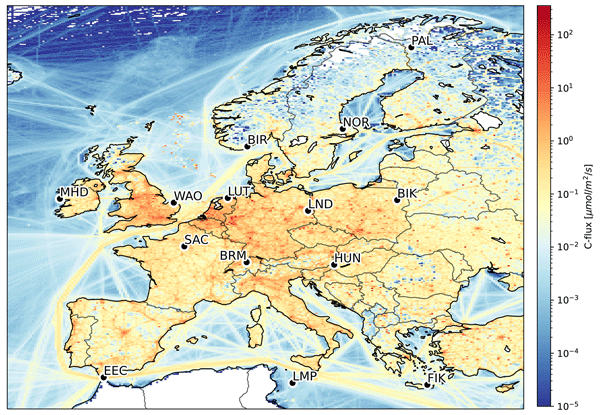
Auke M. van der Woude, Remco de Kok, Naomi Smith, Ingrid T. Luijkx, Santiago Botía, Ute Karstens, Linda M. J. Kooijmans, Gerbrand Koren, Harro A. J. Meijer, Gert-Jan Steeneveld, Ida Storm, Ingrid Super, Hubertus A. Scheeren, Alex Vermeulen, and Wouter Peters
Earth Syst. Sci. Data, 15, 579–605, https://doi.org/10.5194/essd-15-579-2023, https://doi.org/10.5194/essd-15-579-2023, 2023
Short summary
Short summary
To monitor the progress towards the CO2 emission goals set out in the Paris Agreement, the European Union requires an independent validation of emitted CO2. For this validation, atmospheric measurements of CO2 can be used, together with first-guess estimates of CO2 emissions and uptake. To quickly inform end users, it is imperative that this happens in near real-time. To aid these efforts, we create estimates of European CO2 exchange at high resolution in near real time.
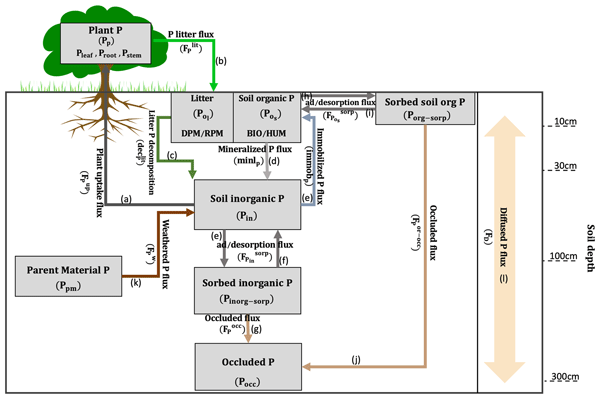
Mahdi André Nakhavali, Lina M. Mercado, Iain P. Hartley, Stephen Sitch, Fernanda V. Cunha, Raffaello di Ponzio, Laynara F. Lugli, Carlos A. Quesada, Kelly M. Andersen, Sarah E. Chadburn, Andy J. Wiltshire, Douglas B. Clark, Gyovanni Ribeiro, Lara Siebert, Anna C. M. Moraes, Jéssica Schmeisk Rosa, Rafael Assis, and José L. Camargo
Geosci. Model Dev., 15, 5241–5269, https://doi.org/10.5194/gmd-15-5241-2022, https://doi.org/10.5194/gmd-15-5241-2022, 2022
Short summary
Short summary
In tropical ecosystems, the availability of rock-derived elements such as P can be very low. Thus, without a representation of P cycling, tropical forest responses to rising atmospheric CO2 conditions in areas such as Amazonia remain highly uncertain. We introduced P dynamics and its interactions with the N and P cycles into the JULES model. Our results highlight the potential for high P limitation and therefore lower CO2 fertilization capacity in the Amazon forest with low-fertility soils.
Cited articles
Andreae, M. O., Acevedo, O. C., Araùjo, A., Artaxo, P., Barbosa, C. G. G., Barbosa, H. M. J., Brito, J., Carbone, S., Chi, X., Cintra, B. B. L., da Silva, N. F., Dias, N. L., Dias-Júnior, C. Q., Ditas, F., Ditz, R., Godoi, A. F. L., Godoi, R. H. M., Heimann, M., Hoffmann, T., Kesselmeier, J., Könemann, T., Krüger, M. L., Lavric, J. V., Manzi, A. O., Lopes, A. P., Martins, D. L., Mikhailov, E. F., Moran-Zuloaga, D., Nelson, B. W., Nölscher, A. C., Santos Nogueira, D., Piedade, M. T. F., Pöhlker, C., Pöschl, U., Quesada, C. A., Rizzo, L. V., Ro, C.-U., Ruckteschler, N., Sá, L. D. A., de Oliveira Sá, M., Sales, C. B., dos Santos, R. M. N., Saturno, J., Schöngart, J., Sörgel, M., de Souza, C. M., de Souza, R. A. F., Su, H., Targhetta, N., Tóta, J., Trebs, I., Trumbore, S., van Eijck, A., Walter, D., Wang, Z., Weber, B., Williams, J., Winderlich, J., Wittmann, F., Wolff, S., and Yáñez-Serrano, A. M.: The Amazon Tall Tower Observatory (ATTO): overview of pilot measurements on ecosystem ecology, meteorology, trace gases, and aerosols, Atmos. Chem. Phys., 15, 10723–10776, https://doi.org/10.5194/acp-15-10723-2015, 2015. a, b, c, d
Barber, D. G. and Thomas, A.: The influence of cloud cover on the radiation budget, physical properties, and microwave scattering coefficient (σ) of first-year and multiyear sea ice, IEEE T. Geosci. Remote, 36, 38–50, https://doi.org/10.1109/36.655316, 1998. a
Barbosa, C. G. G., Taylor, P. E., Sá, M. O., Teixeira, P. R., Souza, R. A. F., Albrecht, R. I., Barbosa, H. M. J., Sebben, B., Manzi, A. O., Araújo, A. C., Prass, M., Pöhlker, C., Weber, B., Andreae, M. O., and Godoi, R. H. M.: Identification and quantification of giant bioaerosol particles over the Amazon rainforest, NPJ Climate and Atmospheric Science, 5, 73, https://doi.org/10.1038/s41612-022-00294-y, 2022. a
Botía, S., Gerbig, C., Marshall, J., Lavric, J. V., Walter, D., Pöhlker, C., Holanda, B., Fisch, G., de Araújo, A. C., Sá, M. O., Teixeira, P. R., Resende, A. F., Dias-Junior, C. Q., van Asperen, H., Oliveira, P. S., Stefanello, M., and Acevedo, O. C.: Understanding nighttime methane signals at the Amazon Tall Tower Observatory (ATTO), Atmos. Chem. Phys., 20, 6583–6606, https://doi.org/10.5194/acp-20-6583-2020, 2020. a, b
Carneiro, R. G., Ribeiro, M. M., Gatti, L. V., de Souza, C. M. A., Dias-Júnior, C. Q., Tejada, G., Domingues, L. G., Rykowska, Z., dos Santos, C. A., and Fisch, G.: Assessing the effectiveness of convective boundary layer height estimation using flight data and ERA5 profiles in the Amazon biome, Clim. Dynam., 63, 109, https://doi.org/10.1007/s00382-025-07609-8, 2025. a
Cava, D., Dias-Júnior, C. Q., Acevedo, O., Oliveira, P. E. S., Tsokankunku, A., Sörgel, M., Manzi, A. O., de Araújo, A. C., Brondani, D. V., Cely Toro, I. M., and Mortarini, L.: Vertical propagation of submeso and coherent structure in a tall and dense Amazon Forest in different stability conditions PART I: Flow structure within and above the roughness sublayer, Agr. Forest Meteorol., 322, 108983, https://doi.org/10.1016/j.agrformet.2022.108983, 2022. a, b
Chamecki, M., Freire, L. S., Dias, N. L., Chen, B., Dias-Junior, C. Q., Machado, L. A. T., Sörgel, M., Tsokankunku, A., and de Araújo, A. C.: Effects of vegetation and topography on the boundary layer structure above the Amazon forest, J. Atmos. Sci., 77, 2941–2957, https://doi.org/10.1175/JAS-D-20-0063.1, 2020. a
de Oliveira, G., Brunsell, N. A., Moraes, E. C., Bertani, G., dos Santos, T. V., Shimabukuro, Y. E., and Aragão, L. E. O. C.: Use of MODIS sensor images combined with reanalysis products to retrieve net radiation in Amazonia, Sensors, 16, 956, https://doi.org/10.3390/s16070956, 2016. a
Dias, N. L., Cely Toro, I. M., Dias-Júnior, C. Q., Mortarini, L., and Brondani, D.: The relaxed eddy accumulation method over the Amazon forest: the importance of flux strength on individual and aggregated flux estimates, Bound.-Lay. Meteorol., 189, 139–161, https://doi.org/10.1007/s10546-023-00829-7, 2023. a, b
Dias-Júnior, C. Q., Dias, N. L., dos Santos, R. M. N., Sörgel, M., Araújo, A., Tsokankunku, A., Ditas, F., de Santana, R. A., von Randow, C., Sá, M., Manzi, A., Trebs, I., Andreae, M. O., and Acevedo, O. C.: Is there a classical inertial sublayer over the Amazon forest?, Geophys. Res. Lett., 46, 5614–5622, https://doi.org/10.1029/2019GL083237, 2019. a
Dias-Júnior, C. Q., Carneiro, R. G., Fisch, G., D'Oliveira, F. A. F., Sörgel, M., Botía, S., Machado, L. A. T., Wolff, S., dos Santos, R. M. N., and Pöhlker, C.: Intercomparison of planetary boundary layer heights using remote sensing retrievals and ERA5 reanalysis over Central Amazonia, Remote Sens., 14, 4561, https://doi.org/10.3390/rs14184561, 2022. a, b, c, d, e, f, g
Dias-Júnior, C. Q., Marques Filho, E. P., Araújo, A., Mendonça, A. C. S., Hall, D. H., de Santana, R. A. S., D'Oliveira, F. A. F., Fisch, G., Acevedo, O., Dias, N. L., Oliveira, P. E., Souza, C. M. A., Figueiredo, R., de Souza Farias, C.., Ramos de Oliveira, L., Ramos da Mata, J., de Lima Xavier, T., Teixeira, P. R., Tanaka Portela, B. T., Alves, E. G., Botía, S., van Asperen, H., Komiya, S., Andreae, M. O., Sörgel, M., Trumbore, S., Manzi, A., and Quesada, C. A.: Characterizing long-term meteorological and flux variability of an old-growth tropical forest in the Central Amazon: a decade of ATTO tower observations, SSRN [preprint], https://doi.org/10.2139/ssrn.6468680, 2026. a, b
Driedonks, A. G. M.: Models and observations of the growth of the atmospheric boundary layer, Bound.-Lay. Meteorol., 23, 283–306, https://doi.org/10.1007/BF00121117, 1982. a
Fisch, G., Tota, J., Machado, L. A. T., Silva Dias, M. A. F., da F. Lyra, R. F., Nobre, C. A., Dolman, A. J., and Gash, J. H. C.: The convective boundary layer over pasture and forest in Amazonia, Theor. Appl. Climatol., 78, 47–59, https://doi.org/10.1007/s00704-004-0043-x, 2004. a, b, c
Foken, T. and Mauder, M.: Micrometeorology, vol. 2, Springer, https://doi.org/10.1007/978-3-540-74666-9, 2008. a
Franco, M. A., Valiati, R., Holanda, B. A., Meller, B. B., Kremper, L. A., Rizzo, L. V., Carbone, S., Morais, F. G., Nascimento, J. P., Andreae, M. O., Cecchini, M. A., Machado, L. A. T., Ponczek, M., Pöschl, U., Walter, D., Pöhlker, C., and Artaxo, P.: Vertically resolved aerosol variability at the Amazon Tall Tower Observatory under wet-season conditions, Atmos. Chem. Phys., 24, 8751–8770, https://doi.org/10.5194/acp-24-8751-2024, 2024. a
Gao, W., Shaw, R. H., and Paw U, K. T.: Observation of organized structure in turbulent flow within and above a forest canopy, Bound.-Lay. Meteorol., 47, 349–377, https://doi.org/10.1007/BF00122339, 1989. a
Garratt, J. R.: Surface influence upon vertical profiles in the atmospheric near-surface layer, Q. J. Roy. Meteor. Soc., 106, 803–819, https://doi.org/10.1002/qj.49710645011, 1980. a
Gomes Alves, E., Aquino Santana, R., Quaresma Dias-Júnior, C., Botía, S., Taylor, T., Yáñez-Serrano, A. M., Kesselmeier, J., Bourtsoukidis, E., Williams, J., Lembo Silveira de Assis, P. I., Martins, G., de Souza, R., Duvoisin Júnior, S., Guenther, A., Gu, D., Tsokankunku, A., Sörgel, M., Nelson, B., Pinto, D., Komiya, S., Martins Rosa, D., Weber, B., Barbosa, C., Robin, M., Feeley, K. J., Duque, A., Londoño Lemos, V., Contreras, M. P., Idarraga, A., López, N., Husby, C., Jestrow, B., and Cely Toro, I. M.: Intra- and interannual changes in isoprene emission from central Amazonia, Atmos. Chem. Phys., 23, 8149–8168, https://doi.org/10.5194/acp-23-8149-2023, 2023. a
Guo, J., Miao, Y., Zhang, Y., Liu, H., Li, Z., Zhang, W., He, J., Lou, M., Yan, Y., Bian, L., and Zhai, P.: The climatology of planetary boundary layer height in China derived from radiosonde and reanalysis data, Atmos. Chem. Phys., 16, 13309–13319, https://doi.org/10.5194/acp-16-13309-2016, 2016. a
Huitema, A. C., de Feiter, V. S., González-Armas, R., Hartogensis, O. K., van Asperen, H., Quaresma Dias-Júnior, C., and Vilà-Guerau de Arellano, J.: CO2 and Heat exchange across the Nocturnal Canopy–Atmosphere interface in the Amazon rainforest, EGUsphere [preprint], https://doi.org/10.5194/egusphere-2026-684, 2026. a, b
Jimenez, J. C., Libonati, R., and Peres, L. F.: Droughts over Amazonia in 2005, 2010, and 2015: A cloud cover perspective, Frontiers in Earth Science, 6, 227, https://doi.org/10.3389/feart.2018.00227, 2018. a, b
Kaimal, J. C. and Finnigan, J. J.: Atmospheric boundary layer flows: their structure and measurement, Oxford University Press, ISBN 9780195062397, 1994. a
Keirsbulck, L., Labraga, L., Mazouz, A., and Tournier, C.: Surface roughness effects on turbulent boundary layer structures, J. Fluid. Eng., 124, 127–135, https://doi.org/10.1115/1.1445141, 2002. a
Krishnamurthy, R., Newsom, R. K., Berg, L. K., Xiao, H., Ma, P.-L., and Turner, D. D.: On the estimation of boundary layer heights: a machine learning approach, Atmos. Meas. Tech., 14, 4403–4424, https://doi.org/10.5194/amt-14-4403-2021, 2021. a
Kulmala, M., Kokkonen, T., Ezhova, E., Baklanov, A., Mahura, A., Mammarella, I., Bäck, J., Lappalainen, H. K., Tyuryakov, S., Kerminen, V.-M., Zilitinkevich, S., and Petäjä, T.: Aerosols, clusters, greenhouse gases, trace gases and boundary-layer dynamics: on feedbacks and interactions, Bound.-Lay. Meteorol., 186, 475–503, https://doi.org/10.1007/s10546-022-00769-8, 2023. a
Lenschow, D. H., Li, X. S., Zhu, C. J., and Stankov, B. B.: The stably stratified boundary layer over the Great Plains: I. Mean and turbulence structure, Bound.-Lay. Meteorol., 42, 95–121, https://doi.org/10.1007/BF00119877, 1988. a
Mahrt, L. and Acevedo, O.: Types of vertical structure of the nocturnal boundary layer, Bound.-Lay. Meteorol., 187, 141–161, https://doi.org/10.1007/s10546-022-00716-7, 2023. a, b
Marengo, J. A., Liebmann, B., Kousky, V. E., Filizola, N. P., and Wainer, I. C.: Onset and end of the rainy season in the Brazilian Amazon Basin, J. Climate, 14, 833–852, https://doi.org/10.1175/1520-0442(2001)014<0833:OAEOTR>2.0.CO;2, 2001. a
Marengo, J. A., Souza Jr., C. M., Thonicke, K., Burton, C., Halladay, K., Betts, R. A., Alves, L. M., and Soares, W. R.: Changes in climate and land use over the Amazon region: current and future variability and trends, Frontiers in Earth Science, 6, 228, https://doi.org/10.3389/feart.2018.00228, 2018. a
Mendonça, A. C. S., Dias-Junior, C. Q., Acevedo, O. C., Marra, D. M., Cely-Toro, I. M., Fisch, G., Brondani, D. V., Manzi, A. O., Portela, B. T. T., Quesada, C. A., and Mortarini, L.: Estimation of the nocturnal boundary layer height over the Central Amazon forest using turbulence measurements, Agr. Forest Meteorol., 367, 110469, https://doi.org/10.1016/j.agrformet.2025.110469, 2025. a, b, c, d, e, f, g, h, i
Mendonça, A. C. S., Dias-Junior, C. Q., de Oliveira, M. I., Maroneze, R., Martins, L. G. N., Marra, D. M., D'Oliveira, F. A. F., Costa, F. D., Fisch, G., and Hall, D. H.: Is Low-Level Jet height a good approximation for the top of the nocturnal boundary-layer?, Agr. Forest Meteorol., 380, 111065, https://doi.org/10.1016/j.agrformet.2026.111065, 2026. a
Miao, Y., Hu, X.-M., Liu, S., Qian, T., Xue, M., Zheng, Y., and Wang, S.: Seasonal variation of local atmospheric circulations and boundary layer structure in the Beijing-Tianjin-Hebei region and implications for air quality, J. Adv. Model. Earth Sy., 7, 1602–1626, https://doi.org/10.1002/2015MS000522, 2015. a
Molero, F., Barragán, R., and Artíñano, B.: Estimation of the atmospheric boundary layer height by means of machine learning techniques using ground-level meteorological data, Atmos. Res., 279, 106401, https://doi.org/10.1016/j.atmosres.2022.106401, 2022. a
Oliveira, P. E. S., Acevedo, O. C., Sörgel, M., Tsokankunku, A., Wolff, S., Araújo, A. C., Souza, R. A. F., Sá, M. O., Manzi, A. O., and Andreae, M. O.: Nighttime wind and scalar variability within and above an Amazonian canopy, Atmos. Chem. Phys., 18, 3083–3099, https://doi.org/10.5194/acp-18-3083-2018, 2018. a
Restrepo-Coupe, N., O'Donnell Christoffersen, B., Longo, M., Alves, L. F., Campos, K. S., da Araujo, A. C., de Oliveira Jr., R. C., Prohaska, N., da Silva, R., Tapajos, R., Wiedemann, K. T., Wofsy, S. C., and Saleska, S. R.: Asymmetric response of Amazon forest water and energy fluxes to wet and dry hydrological extremes reveals onset of a local drought-induced tipping point, Glob. Change Biol., 29, 6077–6092, https://doi.org/10.1111/gcb.16933, 2023. a
Santana, R. A., Dias-Júnior, C. Q., da Silva, J. T., Fuentes, J. D., do Vale, R. S., Alves, E. G., dos Santos, R. M. N., and Manzi, A. O.: Air turbulence characteristics at multiple sites in and above the Amazon rainforest canopy, Agr. Forest Meteorol., 260, 41–54, https://doi.org/10.1016/j.agrformet.2018.05.027, 2018. a
Santos, R. M. N., Fisch, G., and Dolman, A. J.: Modelagem da camada limite noturna (CLN) durante a época úmida na Amazônia, sob diferentes condições de desenvolvimento, Revista Brasileira de Meteorologia, 22, 387–407, https://doi.org/10.1590/S0102-77862007000300011, 2007. a, b
Shaw, R. H. and Schumann, U.: Large-eddy simulation of turbulent flow above and within a forest, Bound.-Lay. Meteorol., 61, 47–64, https://doi.org/10.1007/BF02033994, 1992. a
Souza, C. M. A., Dias-Júnior, C. Q., D'Oliveira, F. A. F., Martins, H. S., Carneiro, R. G., Portela, B. T. T., and Fisch, G.: Long-term measurements of the atmospheric boundary layer height in central Amazonia using remote sensing instruments, Remote Sens., 15, 3261, https://doi.org/10.3390/rs15133261, 2023. a, b, c, d
Souza, C. M. A., Dias-Júnior, C. Q., Mendonça, A. C. S. de, and Santana, R. A. S. de.: Python scripts for analyzing nocturnal boundary-layer dynamics and atmospheric drivers at the Amazon Tall Tower Observatory, Zenodo [code], https://doi.org/10.5281/zenodo.20798853, 2026. a
Starkenburg, D., Metzger, S., Fochesatto, G. J., Alfieri, J. G., Gens, R., Prakash, A., and Cristóbal, J.: Assessment of despiking methods for turbulence data in micrometeorology, J. Atmos. Ocean. Tech., 33, 2001–2013, https://doi.org/10.1175/JTECH-D-15-0154.1, 2016. a
Su, T., Li, Z., and Kahn, R.: Relationships between the planetary boundary layer height and surface pollutants derived from lidar observations over China: regional pattern and influencing factors, Atmos. Chem. Phys., 18, 15921–15935, https://doi.org/10.5194/acp-18-15921-2018, 2018. a
Sun, J., Burns, S. P., Lenschow, D. H., Banta, R., Newsom, R., Coulter, R., Frasier, S., Ince, T., Nappo, C., Cuxart, J., Blumen, W., Lee, X., and Hu, X.-Z.: Intermittent turbulence associated with a density current passage in the stable boundary layer, Bound.-Lay. Meteorol., 105, 199–219, https://doi.org/10.1023/A:1019969131774, 2002. a
van Asperen, H., Komiya, S., Jones, S., Botia, S., Lavric, J., Warneke, T., Griffith, D., and Trumbore, S.: Unique Tall Tower Greenhouse Gas Measurements in the Amazon Rainforest: observed patterns and daily cycles, EGU General Assembly 2023, Vienna, Austria, 24–28 Apr 2023, EGU23-10522, https://doi.org/10.5194/egusphere-egu23-10522, 2023. a
van Asperen, H., Warneke, T., Carioca de Araújo, A., Forsberg, B., José Filgueiras Ferreira, S., Röckmann, T., van der Veen, C., Bulthuis, S., Ramos de Oliveira, L., de Lima Xavier, T., da Mata, J., de Oliveira Sá, M., Ricardo Teixeira, P., Andrews de França e Silva, J., Trumbore, S., and Notholt, J.: The emission of CO from tropical rainforest soils, Biogeosciences, 21, 3183–3199, https://doi.org/10.5194/bg-21-3183-2024, 2024. a, b, c
Vilà-Guerau de Arellano, J., Hartogensis, O. K., de Boer, H., Moonen, R., González-Armas, R., Janssens, M., Adnew, G. A., Bonell-Fontás, D. J., Botía, S., Jones, S. P., van Asperen, H., Komiya, S., de Feiter, V. S., Rikkers, D., de Haas, S., Machado, L. A. T., Dias-Junior, C. Q., Giovanelli-Haytzmann, G., Valenti, W. I. D., Figueiredo, R. C., Farias, C. S., Hall, D. H., Mendonça, A. C. S., da Silva, F. A. G., Marton da Silva, J. I., Souza, R., Martins, G., Miller, J. N., Mol, W. B., Heusinkveld, B., van Heerwaarden, C. C., D'Oliveira, F. A. F., Rodrigues Ferreira, R., Acosta Gotuzzo, R., Pugliese, G., Williams, J., Ringsdorf, A., Edtbauer, A., Quesada, C. A., Takeshi Tanaka Portela, B., Gomes Alves, E., Pöhlker, C., Trumbore, S., Lelieveld, J., and Röckmann, T.: CloudRoots-Amazon22: Integrating clouds with photosynthesis by crossing scales, B. Am. Meteorol. Soc., 105, E1275–E1302, https://doi.org/10.1175/BAMS-D-23-0333.1, 2024. a
von Randow, C., Manzi, A. O., Kruijt, B., de Oliveira, P. J., Zanchi, F. B., Silva, R. L., Hodnett, M. G., Gash, J. H. C., Elbers, J. A., Waterloo, M. J., Cardoso, F. L., and Kabat, P.: Comparative measurements and seasonal variations in energy and carbon exchange over forest and pasture in South West Amazonia, Theor. Appl. Climatol., 78, 5–26, https://doi.org/10.1007/s00704-004-0041-z, 2004. a
Wang, L., Liu, J., Gao, Z., Li, Y., Huang, M., Fan, S., Zhang, X., Yang, Y., Miao, S., Zou, H., Sun, Y., Chen, Y., and Yang, T.: Vertical observations of the atmospheric boundary layer structure over Beijing urban area during air pollution episodes, Atmos. Chem. Phys., 19, 6949–6967, https://doi.org/10.5194/acp-19-6949-2019, 2019. a
Webb, E. K., Pearman, G. I., and Leuning, R.: Correction of flux measurements for density effects due to heat and water vapour transfer, Q. J. Roy. Meteor. Soc., 106, 85–100, https://doi.org/10.1002/qj.49710644707, 1980. a
Wilczak, J. M., Oncley, S. P., and Stage, S. A.: Sonic anemometer tilt correction algorithms, Bound.-Lay. Meteorol., 99, 127–150, https://doi.org/10.1023/A:1018966204465, 2001. a
Yuval, Levi, Y., Dayan, U., Levy, I., and Broday, D. M.: On the association between characteristics of the atmospheric boundary layer and air pollution concentrations, Atmos. Res., 231, 104675, https://doi.org/10.1016/j.atmosres.2019.104675, 2020. a
Zahn, E., Chor, T. L., and Dias, N. L.: A simple methodology for quality control of micrometeorological datasets, American Journal of Environmental Engineering, 6, 135–142, 2016. a
Short summary
We investigated how the height of the nocturnal air layer (hn) above the Amazon forest changes over the year and how this influences gas measurements. Using two years of tower observations, we found that this layer is higher during wetter periods and much lower during dry periods linked to large climate events. hn can controls how gases accumulate or disperse at night, which affects how we interpret observations and improve weather and climate predictions.
We investigated how the height of the nocturnal air layer (hn) above the Amazon forest changes...


Altmetrics
Final-revised paper
Preprint