
the Creative Commons Attribution 4.0 License.
the Creative Commons Attribution 4.0 License.
 | 11 Jun 2026
Observed impacts of aerosol regimes on energy and carbon fluxes in the Amazon forest
Mariano A. B. da Rocha
Cléo Q. Dias-Júnior
Anne C. S. Mendonça
Julia C. P. Cohen
Flávio A. F. D'Oliveira
Christopher Pöhlker
Subha Raj
Alessandro C. de Araujo
Marco A. Franco
Paulo Artaxo
Carlos A. Quesada
Rafael S. Palácios
Atmospheric aerosols play a crucial role in modulating the energy available to the Earth’s surface, influencing the hydrological cycle, ecosystems, and climate. In the Amazon, previous studies have mainly examined how aerosols scatter and absorb radiation. However, little is known about their interactions with energy partitioning (i.e., sensible and latent heat fluxes). Here, we investigate how regimes of high (AOD >0.40) and low (AOD <0.13) aerosol optical depth (AOD) affect surface energy and carbon dioxide (CO2) fluxes in an undisturbed Amazon rainforest. For this, we used long-term meteorological measurements from the Amazon Tall Tower Observatory (ATTO) collected between 2016 and 2022. We find that enhanced aerosol presence reduces both sensible heat flux and energy available for evapotranspiration by approximately 13.5 % and 2.1 % respectively, while increasing CO2 uptake (i.e., CO2 flux becoming more negative) by about 39.5 %. The impact of aerosols on turbulent surface fluxes is reflected in a cooling of approximately 0.9 °C at the canopy top, caused by a 2.8 % reduction in incoming shortwave radiation. These results demonstrate that aerosols modify turbulent energy exchange, with consequences for the forest microclimate and the coupled carbon and water cycles.
- Article
(3396 KB) - Full-text XML
-
Supplement
(1353 KB) - BibTeX
- EndNote


Atmospheric aerosols, which are defined as solid or liquid particles suspended in the air (Seinfeld and Pandis, 2006), play a multifaceted role in the Earth system. They influence the atmospheric cycle (Lohmann and Feichter, 2005; Rap et al., 2013; Gavrouzou et al., 2023), the hydrological cycle (Miller et al., 2004; Lau et al., 2005; Suzuki et al., 2017), and ecosystem processes (Kanakidou et al., 2018; Artaxo et al., 2022; Karthick Raja Namasivayam et al., 2024).
In the atmosphere, aerosols interact directly with solar radiation through scattering and absorption processes. These interactions influence the Earth's energy balance and, consequently, the climate (Liu et al., 2020). Aerosols also act indirectly by interacting with clouds, acting as cloud condensation nuclei. This interaction alters the albedo, formation, microphysics, and lifetime of clouds, thereby impacting global climate patterns (Andreae et al., 2004; Eltbaakh et al., 2012; Wang and Yi, 2024).
In the hydrological cycle, aerosols reduce the intensity of precipitation through complex, partially nonlinear processes that involve suppression of convection through mechanisms of aerosol-radiation interaction that stabilize the atmosphere, particularly at levels of aerosol optical depth (AOD) greater than 0.40 (Herbert and Stier, 2023). This results in a greater number of cloud droplets with a radius of less than 14 µm forming, which are insufficient for precipitation (Ramanathan et al., 2001; Gonçalves et al., 2015). In addition, they influence downdrafts, which alter the concentration of gases near the surface (D'Oliveira et al., 2022). Aerosols also reduce global evapotranspiration, which has a more significant impact on tropical forests (Palácios et al., 2024).
In forest ecosystems, high concentrations of aerosols can increase the intensity of diffuse radiation, which positively impacts photosynthetic rates (Li et al., 2025). This phenomenon, known as diffuse fertilization, mainly benefits shaded areas, allowing them to carry out photosynthesis more efficiently (Kanniah et al., 2012).
The Amazon region, home to the world's largest tropical rainforest, has been the site of significant research on the intricate relationship between aerosols, the biosphere, the atmosphere, and human activities. Since the 1980s, several scientific projects have been conducted in the region to better understand these interactions (Orsini et al., 1986; Artaxo and Orsini, 1987; Harriss et al., 1988; Avissar et al., 2002). Other studies have deepened our knowledge of the formation, transformation and impact of aerosols, particularly on clouds and precipitation (Yokelson et al., 2007; Martin et al., 2010; Brito et al., 2014; Machado et al., 2014; Martin et al., 2017; Machado et al., 2021; Franco et al., 2022). The Amazon Tall Tower Observatory (ATTO) project has recently played an instrumental role in monitoring long-term changes and in understanding the role of aerosols in global climate and the Amazon ecosystem (Andreae et al., 2015; Cecchini et al., 2025).
Aerosols in the Amazon are mainly composed of organic carbon, accounting for more than 80 % of their mass (Artaxo et al., 2022). This proportion varies seasonally and can exceed 90 % during the burning seasons. During the wet season, aerosol concentrations are low and similar to those of concentrations above the ocean (Pöhlker et al., 2018). However, in the dry season, fires drastically increase the aerosol load, which affects cloud formation and precipitation. These particles also alter the radiative balance, significantly affecting carbon absorption by the forest (Rodrigues et al., 2024). Changes in land use and an increase in fires not only lead to higher levels of pollution, but also reduce rainfall efficiency and modify the regional climate. This creates a positive feedback that can result in two different climatic states: one humid and sparsely polluted and the other dry and highly polluted (Andreae et al., 2004; Pöhlker et al., 2019).
Despite advances in understanding aerosol-biosphere-atmosphere interactions in the Amazon, the impact of these particles on energy and radiation partitioning and CO2 fluxes is still unclear. Using numerical simulations for the Amazon basin, Braghiere et al. (2020) showed that there are considerable uncertainties about the influence of aerosols on the surface energy balance. Their simulations also revealed that, in a scenario without aerosols (AOD =0), the sensible and latent heat fluxes were higher than those measured experimentally, resulting in higher surface temperatures. Furthermore, recent studies, such as those by Blichner et al. (2024), reveal that numerical models still fail to accurately portray the interaction between aerosols and thermal effects in the Amazon. This is mainly due to the models' inability to adequately capture the relationship between temperature and organic aerosol concentrations.
The aim of this study was to evaluate the influence of aerosols on energy and carbon fluxes, at the forest-atmosphere interface in an undisturbed region of the Amazon. Using in situ measurements, the study analyzed the period between 2016 and 2022, contributing to our understanding of processes involving the interaction between atmospheric aerosols and the energy balance in an area of pristine Amazon forest. To date, we are unaware of any studies that have used a long-term, purely observational approach to examine the relationship between aerosols and energy partitioning directly from surface-based measurements in the Amazon.
2.1 Experimental site
The data used in this study were collected as part of the ATTO project, a bilateral initiative between Brazil and Germany. Since 2012, ATTO has carried out continuous measurements, as described by Andreae et al. (2015), located in an area of pristine tropical forests in the central Amazon (Fig. 1), which contains the Instant Tower of 81 m (−2.1441° S, −58.9999° W).
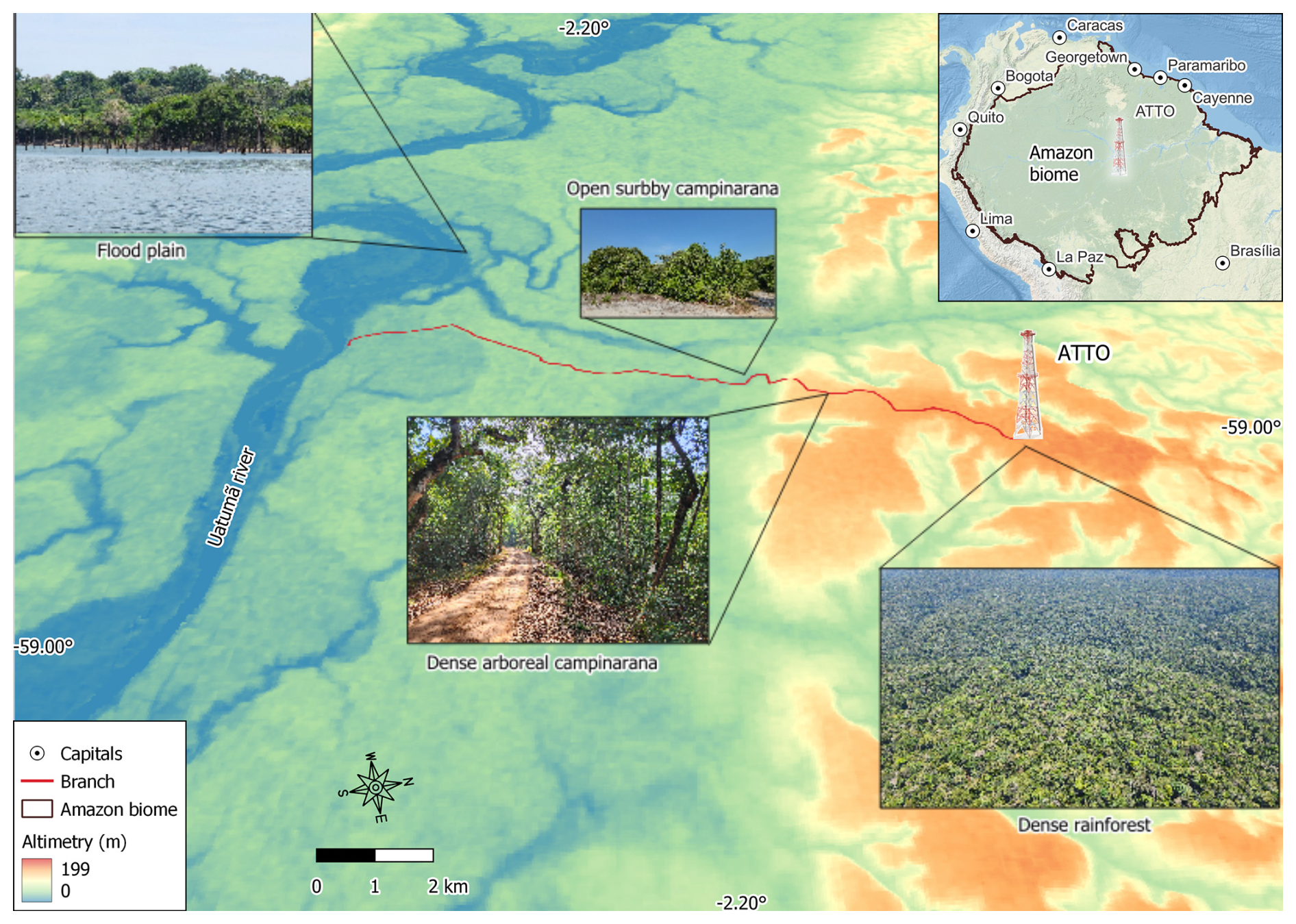
Figure 1Amazon Tall Tower Observatory (ATTO) in central Amazonia, which has different landscapes along the topographic gradient, including floodplains, shrubby campinarana, dense arboreal campinarana, and dense ombrophilous forests. It is close to the Uatumã River, which runs in an NW-SE direction and is a tributary of the left bank of the Amazon River. Map generated from Esri base map data | Powered by Esri, altimetry data by NASA JPL (2020) and vector data by RAISG (2023).
The Instant tower is located 150 km from the city of Manaus in the state of Amazonas, Brazil, at an altitude of 120 m above sea level on a plateau covered by terra firme forests with an average crown height of 40 m (Gomes Alves et al., 2023). In this landscape, wind speeds are relatively low, around 1 m s−1 immediately above the forest canopy, and above the canopy, the wind speed increases logarithmically with height (Santana et al., 2016). The main wind direction at the site is from the NE–E. It passes through areas of minimal anthropogenic influence in the northeast, a clean fetch region covered by tropical forests (Pöhlker et al., 2019).
The climate is tropical humid and characterized by two seasons (wet and dry), driven by seasonal shifts of the Intertropical Convergence Zone over the Amazon Basin (Andreae et al., 2015). The wet season is characterized by more than 200 mm of rainfall per month and an average temperature of around 25 °C at the forest-atmosphere interface. In contrast, the dry season sees less than 100 mm of rainfall per month and an average temperature of around 27.7 °C (Schmitt et al., 2023).
2.2 Experimental data
The dataset used in this study was measured at the ATTO site from 2016 to 2022 (see Table 1). Wind speed, sensible heat flux (H), latent heat flux (LE), and carbon dioxide flux (FCO2) data were calculated as 30 min averages using EddyPro® software (LI-COR), as derived from fast-response sonic anemometers, according to Fratini and Mauder (2014). The other variables (radiation, thermodynamics and aerosols) were obtained as 30 min averages, including net radiation (Rn) and its radiative components: incoming and outgoing shortwave radiation (SWin and SWout), and atmospheric and terrestrial longwave radiation (LWatm and LWterr), respectively. Additionally, diffuse shortwave radiation (SWd) was measured using a SPN1 Pyranometer (Delta-T Devices) installed at 75 m above ground level. However, SWd data were available only for 2021, prior to this year, SWd was not measured at the ATTO site, and data from 2022 were excluded due to technical issues with the sensor.
Table 1Variables and the methods used to obtain them.
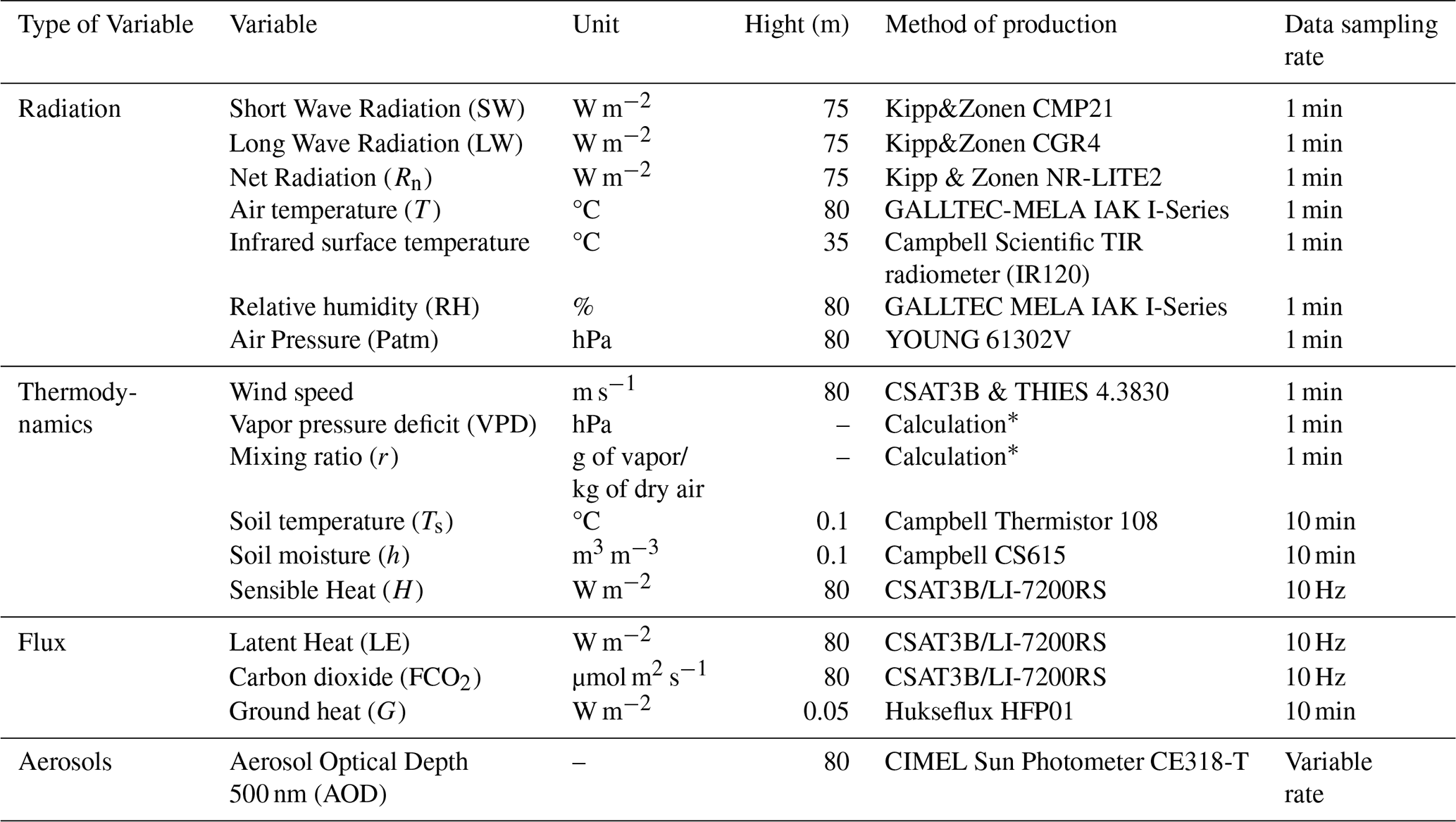
* Calculations according to Bolton (1980).
Based on Andreae et al. (2015) and Pöhlker et al. (2016), these data were organized by seasonality into four periods: (i) the wet season (February to May), which has a cleaner atmosphere, (ii) the wet-dry transition (June to July), (iii) the dry season (August to November), which has higher levels of pollution, and (iv) the dry-wet transition (December to January).
To eliminate cloud interference and investigate the role of aerosols in surface energy fluxes, the central objective of this study, we used data from the Aerosol Robotic Network (AERONET) at the ATTO site, specifically AOD (version 3, level 2). These data are free of cloud contamination due to pre and post-field calibration (Giles et al., 2019). Based on this, 30 min averages were calculated between 2016 and 2022 for which AOD data from AERONET were available, the initial combined dataset comprised 10 890 observations, including all variables listed in Table 1. This matched dataset served as the starting point for the subsequent quality control and filtering procedures. First, the turbulent fluxes underwent quality control following Foken et al. (2004), who defined that only data with flags “0” (best quality) and “1” (acceptable for general analysis) should be used; data with flag “2” (poor quality) were discarded. Second, this study only considered the daytime period (from 07:00 to 17:00 LT) because the highest Rn values occur during this time. After filtering, the resulting dataset is summarized in Table S1 and S2 in the Supplement.
Using the values for humidity and temperature (variables shown in Table 1), it was possible to calculate the vapor pressure deficit (VPD) using Eqs. (1) to (3) according to Bolton (1980).
The water vapor saturation pressure (es) as a function of temperature (T) was calculated according to the equation Tetens (1930).
The actual vapor pressure (ea) was obtained by relating it to the relative humidity (RH).
2.3 Analysis methods
Daily averages of AOD values were obtained to investigate seasonal variability. Our analysis distinguishes two contrasting atmospheric conditions at the ATTO site, defined as “Clean” and “Polluted” using AOD thresholds derived from the dry-season distribution of AOD. The Clean and Polluted regimes correspond to the 10th (AOD ≤0.13) and 90th (AOD ≤0.40) percentiles, respectively. Further details on the seasonal aerosol analysis are provided in Sect. 3.1 and Table S3. Subsequently, 30 min AOD averages between 07:00 and 17:00 LT were computed to ensure temporal consistency with the surface flux data and enable direct comparisons. To improve the visualization of the mean diurnal patterns, a 4th-order polynomial curve was applied exclusively as a smoothing technique to the observational data. This curve fitting was used solely for graphical purposes and does not represent a physical or predictive model. All analyses were based on the measured data. For comparisons between Clean and Polluted regimes, only the interval from 10:00 to 14:00 local time was considered, as this period corresponds to the maximum net radiation at the study site and minimizes the influence of low solar elevation angles.
Statistical differences in meteorological variables and surface fluxes between the Clean and Polluted regimes were assessed using the Mann-Whitney U test. This non-parametric approach was selected because the observational data violated the assumption of normality, as confirmed by preliminary Shapiro-Wilk tests. The Mann-Whitney U test was used to determine whether the median values of the two independent regimes differed significantly (p<0.05), offering a robust framework for analyzing non-normally distributed atmospheric data (Wilks, 2011).
3.1 Characteristics of seasonal aerosol variation
The distribution of atmospheric aerosols, expressed as AOD, exhibits a clear seasonal cycle at the ATTO site (Fig. 2). The lowest values occur during the wet season, with an average of 0.07 in April, while the dry season is marked by higher AOD values, reaching an average of 0.28 in September. Furthermore, this seasonal variation in AOD values has previously been observed at other sites in the Amazon region (Artaxo et al., 2013; Cirino et al., 2014; Morais et al., 2022; Palácios et al., 2022). Cirino et al. (2014), for example, used data measured at the ZF2 site, located 60 km northwest of Manaus in central Amazonia, to show that AOD values were close to 0.4 (with peaks above 0.5) in the dry season and less than 0.2 in the wet season. Attention is drawn to the AOD values observed in the southern region of the Amazon basin, which is influenced by the arc of deforestation, an agricultural frontier zone with intense burning activity during the dry season (Davidson et al., 2012). Several studies in this region have shown that AOD values often exceed 4 in the dry season, whereas in the wet season they rarely exceed 0.2 (Fuzzi et al., 2007; Artaxo et al., 2013; Palácios et al., 2024).
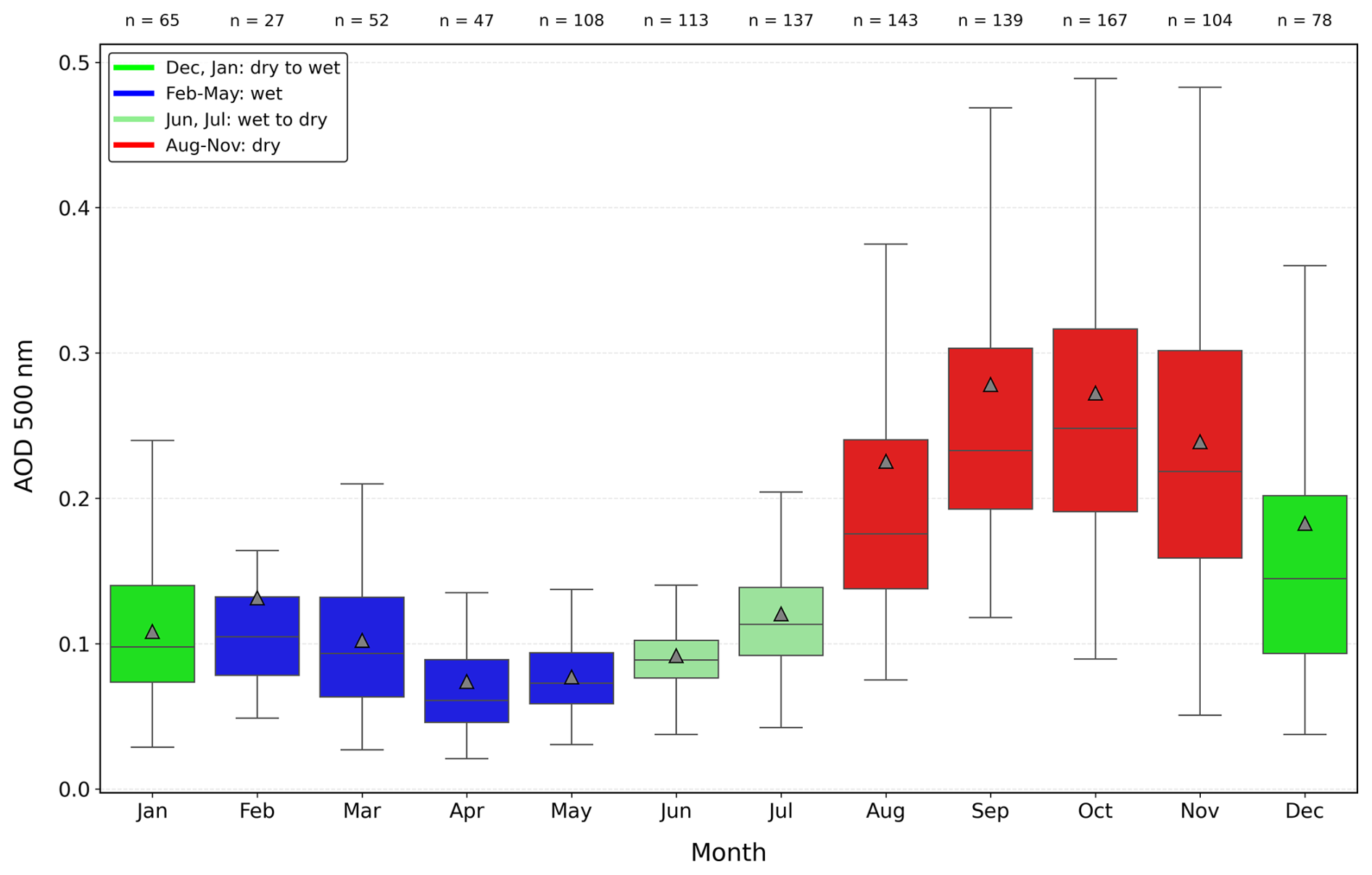
Figure 2Box plot showing monthly AOD 500 nm values measured at the ATTO site between 2016 and 2022. The box represents the central 50 % of the data, the whiskers represent the smallest and largest non-outlier values, while the means are indicated by the green triangles and the medians are the lines inside the box. Numbers above each month indicate the sample size (n).
The main distinction between the AOD values measured at the ATTO site and those measured in the southern Amazon is the magnitude of these values. In particular, the AOD values at the ATTO site are approximately 15 times lower than those in the region close to the arc of deforestation during the dry season (Sena et al., 2013; Palácios et al., 2020). Pöhlker et al. (2018) and Holanda et al. (2023) for example, investigated the seasonal contrast of aerosols at the ATTO site, highlighting that parts of the wet season resemble preindustrial conditions with minimal human impact.
Figure 3 shows the average daily AOD values for the dry and wet seasons, from 2016 to 2022. It is clear to see that the highest average AOD values were obtained during the dry season, with values reaching 1.5, while in the wet season these values did not exceed 0.5, a result similar to that already reported in Fig. 2. It should also be noted that during the dry season, the 90th and 10th percentiles of the AOD values are 0.40 and 0.13, respectively. During the wet season, these percentiles were 0.13 and 0.04, respectively. In other words, the AOD values above the 90th percentile in the wet season are slightly higher than the values observed for the 10th percentile in the dry season. This reinforces what was already mentioned in Fig. 2, that the wet season in the ATTO region is quite “Clean” compared to the dry season. As the main goal of this work is to investigate the impact of aerosols on surface turbulent fluxes, the analysis focuses on data from the dry season. In addition, during the dry season there is more aerosol data since the cloud interference is much less pronounced than during the wet season. Two aerosol regimes were defined based on percentile thresholds of the dry-season AOD distribution. Several percentile combinations were tested to assess the robustness of the regime separation. Based on this analysis, the 10th and 90th percentiles were selected to define the Clean (AOD ≤0.13) and Polluted (AOD ≥0.40) regimes, respectively, as they preserve physically meaningful differences between aerosol regimes (See Table S1).
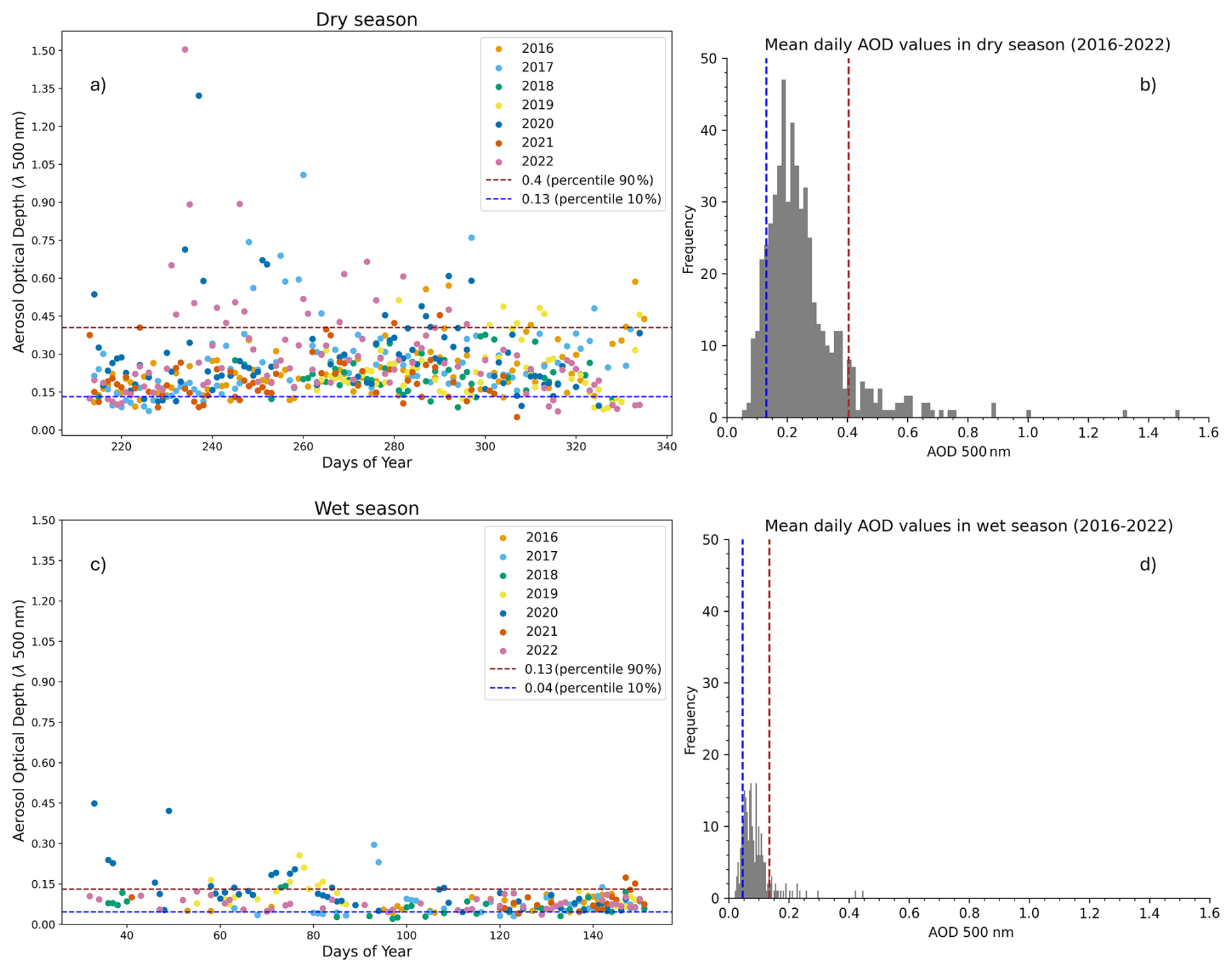
Figure 3(a, c) Daily AOD averages (500 nm), (b, d) their respective histograms. Values above the red line indicate high aerosol concentration (above the 90th percentile), while values below the blue line indicate low aerosol concentration (below the 10th percentile).
3.2 Relationship between AOD and surface turbulent fluxes
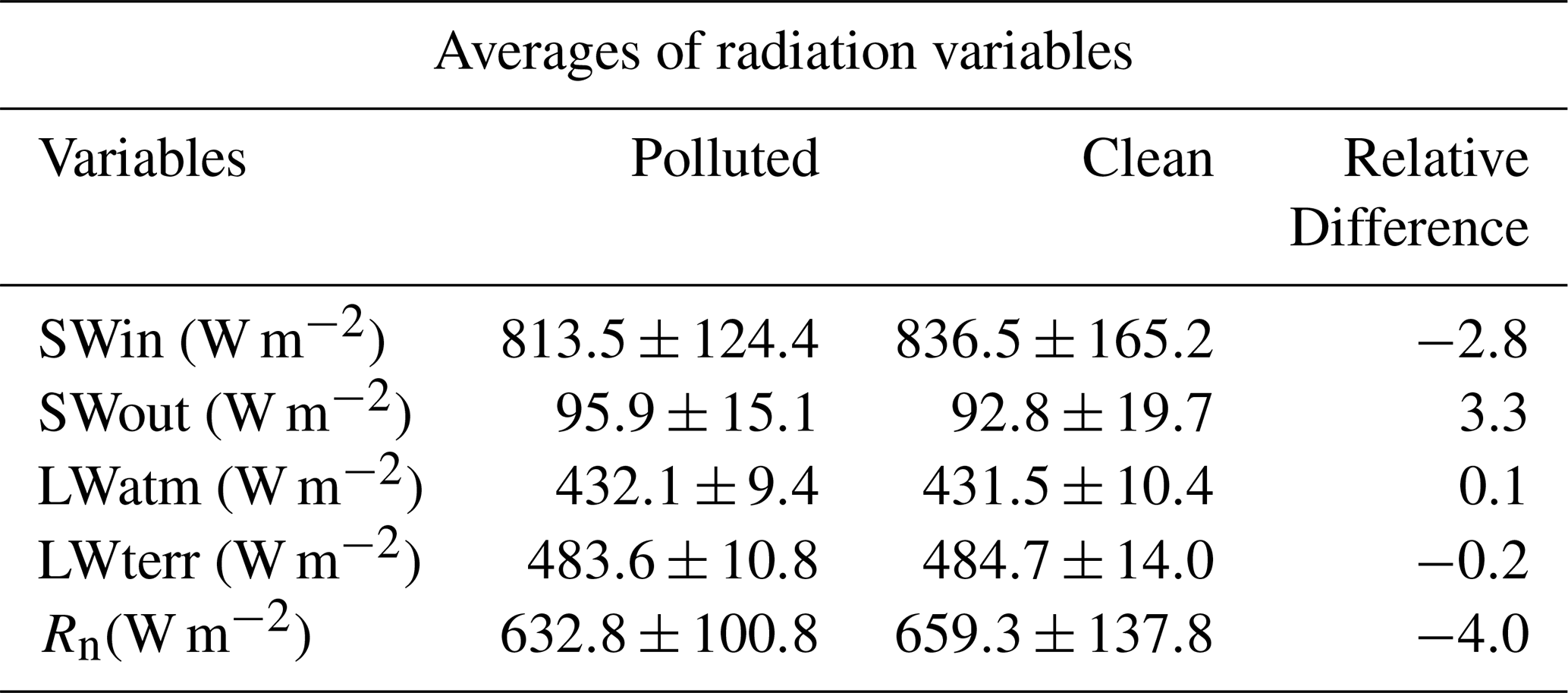
As described in Sect. 2.3, the comparisons between Clean and Polluted regimes were restricted to the 10:00–14:00 LT period, corresponding to the maximum net radiation. The full diurnal cycles of shortwave, longwave, and net radiation during the dry season (2016–2022) show that the maximum values occur between 10:00 and 14:00 LT (Fig. 4), supporting the choice of this time window for the subsequent analyses. The average values of the radiation balance components during this period are summarized in Table 2. The negative sign in the difference between the Polluted and Clean regimes indicates that the radiative components decrease during this period. The Rn fell the most in relative terms, by around −4 %. Outgoing shortwave radiation (SWout) showed a non-significant increase of 3.3 % (p=0.07). As is well known, the longwave balance is always negative during the daytime in the Amazon region (von Randow et al., 2004) since LWterr is greater than LWatm. However, pollution reduced the difference between LWatm and LWterr by around 2 Wm−2 compared to the Clean regime, indicating a slightly less radiative surface and a slightly warmer atmosphere.
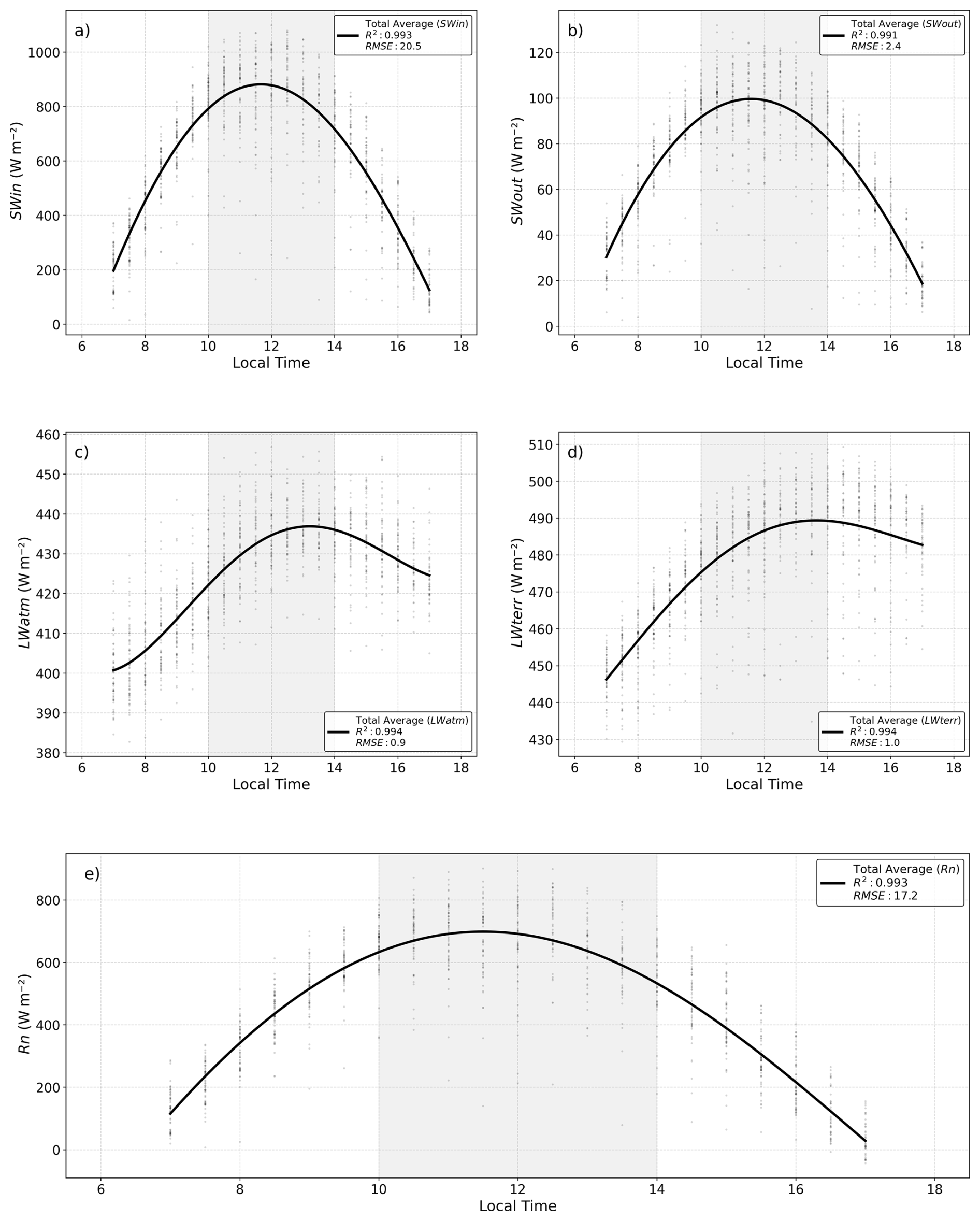
Figure 4Diurnal cycles of radiative fluxes during the dry season from 2016 to 2022: (a) incoming (SWin) and (b) outgoing (SWout) shortwave radiation, (c) incoming atmospheric (LWatm) and (d) outgoing terrestrial (LWterr) longwave radiation, and (e) net radiation (Rn). Markers indicate observed data, and solid lines represent fourth-order polynomial fits, with the corresponding R2 and RMSE
Table 2Averages of the radiation components in the period from 10:00 to 14:00 LT, during the dry season from 2016 to 2022, with the respective relative difference between the Polluted and Clean regimes.
Quantifying the impact of aerosols on radiative flux remains a significant challenge in climate system studies, with persistent uncertainties (Palácios et al., 2022). However, the relationship between aerosols and radiative flux has been investigated for decades in the Amazon region (Ross et al., 1998; Procopio et al., 2004; Rizzo et al., 2011; Artaxo et al., 2013; Palácios et al., 2022). There is a consensus in the literature that an increase in AOD reduces SWin, which consequently also causes a reduction in Rn. However, the magnitude of these reductions varies considerably. Studies carried out during the dry season in the Amazon rainforest using different methods to estimate direct aerosol radiative forcing (ARF) illustrate this variability. For example, Ross et al. (1998) reported an average daily ARF of per unit of AOD at 550 nm in the Amazon rainforest. Consistent with these findings, Palácios et al. (2022) estimated an average ARF of Wm−2 for the dry season in the central Amazon. Procopio et al. (2004) found daily ARF values ranging from −21 to in the deforestation arc, an area with higher levels of pollution than the central Amazon. Rizzo et al. (2011) investigated this central region and reported a daily ARF value of −32 Wm−2.
Although these studies provide estimates of the reduction in surface radiation from aerosols in the Amazon, they do not converge on a single consensus value. This is because, in addition to the different methodologies used to obtain ARF values, Procopio et al. (2004), Sena et al. (2013) and Palácios et al. (2020, 2022) point out that uncertainties lie mainly in the complex interactions between types and concentrations of aerosols, surface characteristics, atmospheric conditions, and solar angle.
SWout is directly related to surface albedo and the fact that it did not change significantly in our data between regimes (maintaining albedo at ∼0.11) indicates that pollution has a secondary effect compared to the characteristics of the surface itself. There is a wide range of surface characteristics in the Amazon that directly influence albedo, as observed by von Randow et al. (2004) and Pareja-Quispe et al. (2021): (i) degree of vegetation cover; (ii) soil and vegetation water conditions; (iii) solar elevation; (iv) cloud cover and; (v) wind speed and direction.
However, the behavior of longwave radiation was quite interesting. It shows that because of their interaction with the incident shortwaves, aerosols increase the emission of thermal energy toward the surface. At the same time, they act as a barrier to the total energy reaching the surface, thus impacting the amount of thermal energy emitted by the surface itself. The increase in LWatm and the decrease in LWterr in the Polluted regime result in a smaller longwave balance in this regime. de Menezes Neto et al. (2016) also observed this effect in their experiments involving biomass burning aerosols in South America: a subtle variation in longwave intensity attributed to the presence of aerosols.
With reduced solar energy input on the surface during the Polluted regime, cooling occurs at the forest-atmosphere interface, accompanied by a decrease in VPD compared to the Clean regime, as illustrated in Fig. 5. The cooling between the 10:00 and 14:00 LT regimes implies an average reduction in canopy surface temperature of 0.9 °C, based on infrared surface temperature measurements, and a corresponding reduction in air temperature of 0.3 °C, resulting in a −2 hPa (13 %) decrease in VPD.
As the curve for the Clean regime is consistently above that for the Polluted regime at all shown temperatures, it is suggested that the Clean regime will first achieve a reduction in evapotranspiration, given the approximately linear relationship between temperature and VPD.
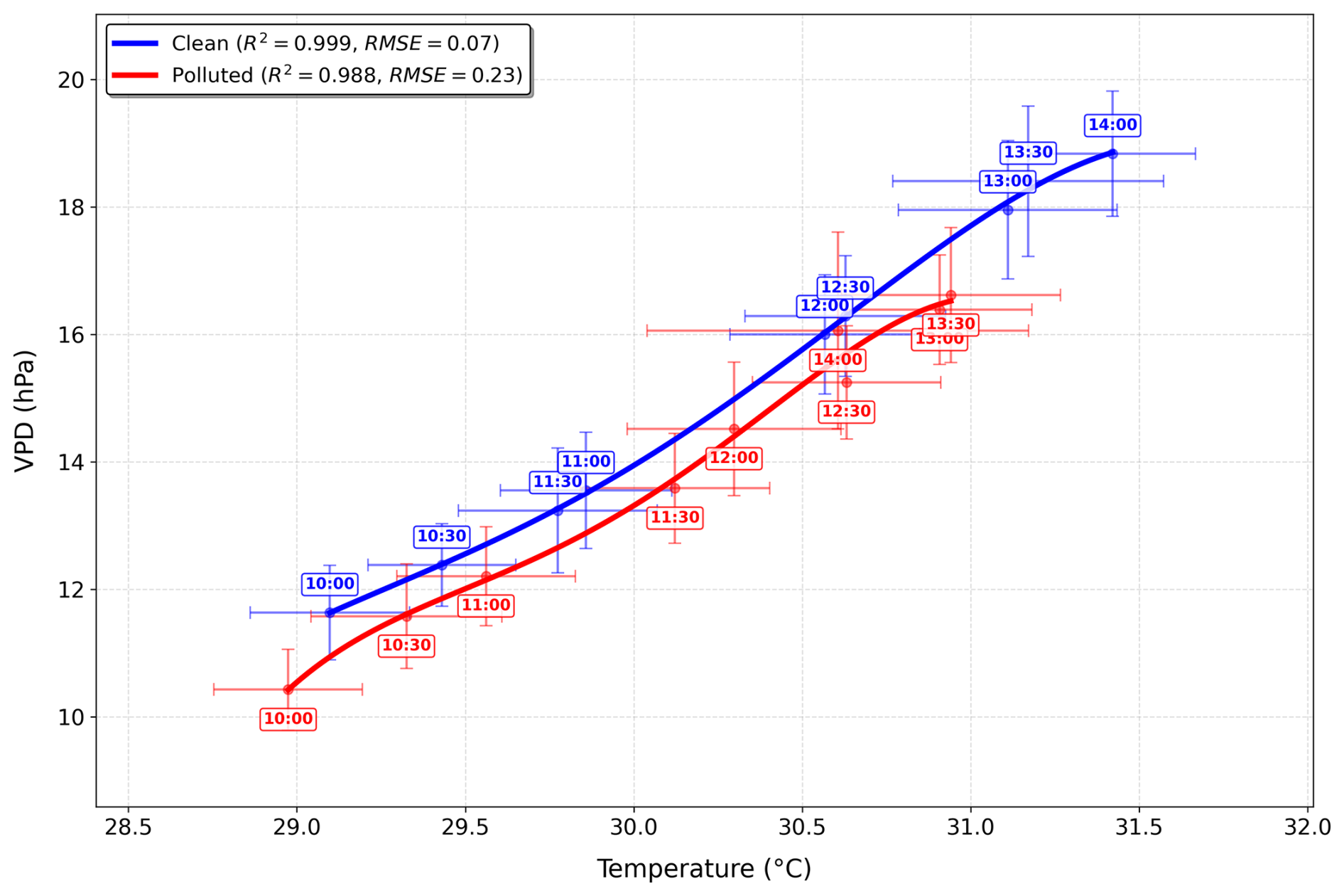
Figure 5Relationship between temperature and vapor pressure deficit (VPD) above the forest canopy at the ATTO for Clean (blue) and Polluted (red) regimes during the dry season (2016–2022).
These cooling values are consistent with the effects documented in other studies. For example, Moreira et al. (2017) found a reduction in 1.2 °C above the Amazon region, while Cirino et al. (2014) identified a 1.8 °C and a decrease in 35 % in VPD in the central Amazon. In the deforestation arc, Rodrigues et al. (2024) found an average cooling effect of between 3 and 4 °C, as well as reductions of between −2 and −3 hPa in VPD.
Braghiere et al. (2020) investigated temperature variations in the Amazon using a radiative transfer model. By simulating a scenario without aerosols (AOD =0) and comparing it with real conditions, they observed an increase in temperature in the scenario without aerosols. They identified a correlation between relative irradiance, air temperature, and VPD. Meanwhile, Herbert and Stier (2023) and Palácios et al. (2024) reinforce the idea that AOD significantly influences temperature variations, particularly on a regional scale. For instance, Palácios et al. (2024) observed positive linear correlations between AOD and air temperature across distinct climatic phases, attributed to the absorption of solar radiation by biomass burning emissions resulting in atmospheric heating. Similarly, Herbert and Stier (2023) utilized reanalysis data to demonstrate that 2 m air temperature increases as a function of AOD, consistent with localized heating of the smoke layer due to strong absorption of solar radiation.
Herbert and Stier (2023) and Palácios et al. (2024) also highlight that the physical characteristics of the aerosols present in the atmosphere, such as size, mixing state and presence of coatings, as well as the chemical characteristics, such as the ability to absorb or scatter light and hygroscopicity, determine their direct impact on temperature and VPD through radiative interaction, as well as their indirect impact by influencing cloud properties and evapotranspiration rates. These are essential components of the atmosphere's energy balance.
The interaction between aerosols, radiation, and evapotranspiration affects not only temperature and VPD, but also the fluxes of energy and matter on the surface. This has a direct impact on atmospheric and ecosystem processes. Figure 6 illustrates the impact of aerosols on these fluxes. It shows that for the Polluted regime, the values were lower than those observed during the Clean regime, especially during periods of high solar radiation, i.e. between 10:00 and 14:00 LT. The most significant reductions in the energy available to the surface occur during this period, with Rn falling by −4 %, as reflected in the energy partitions. The surface energy balance closure was 0.89 for the Clean regime and 0.88 for the Polluted regime, comparable to values reported in the literature (Mauder et al., 2024). The corresponding residuals were of similar magnitude (70 Wm−2 for Clean and 75 Wm−2 for Polluted), indicating that the observed differences in energy fluxes are not related to differences in energy balance closure.
Sensible heat decreased by an average of −21.7 Wm−2 (13.5 %), reflecting reduced energy transfer to the atmospheric boundary layer. Similarly, LE decreased by −8.9 Wm−2 (2 %), indicating limited evapotranspiration due to the reduced radiative energy available. The Bowen ratio, which relates H and LE, recorded 0.38 in the Clean regime and 0.33 in the Polluted regime, suggesting that a higher proportion of energy was allocated to latent processes, as expected in forest environments. The ground heat flux (G) also decreased by −1.0 Wm−2 (54.5 %), demonstrating its greater sensitivity to variations in Rn compared to turbulent fluxes.
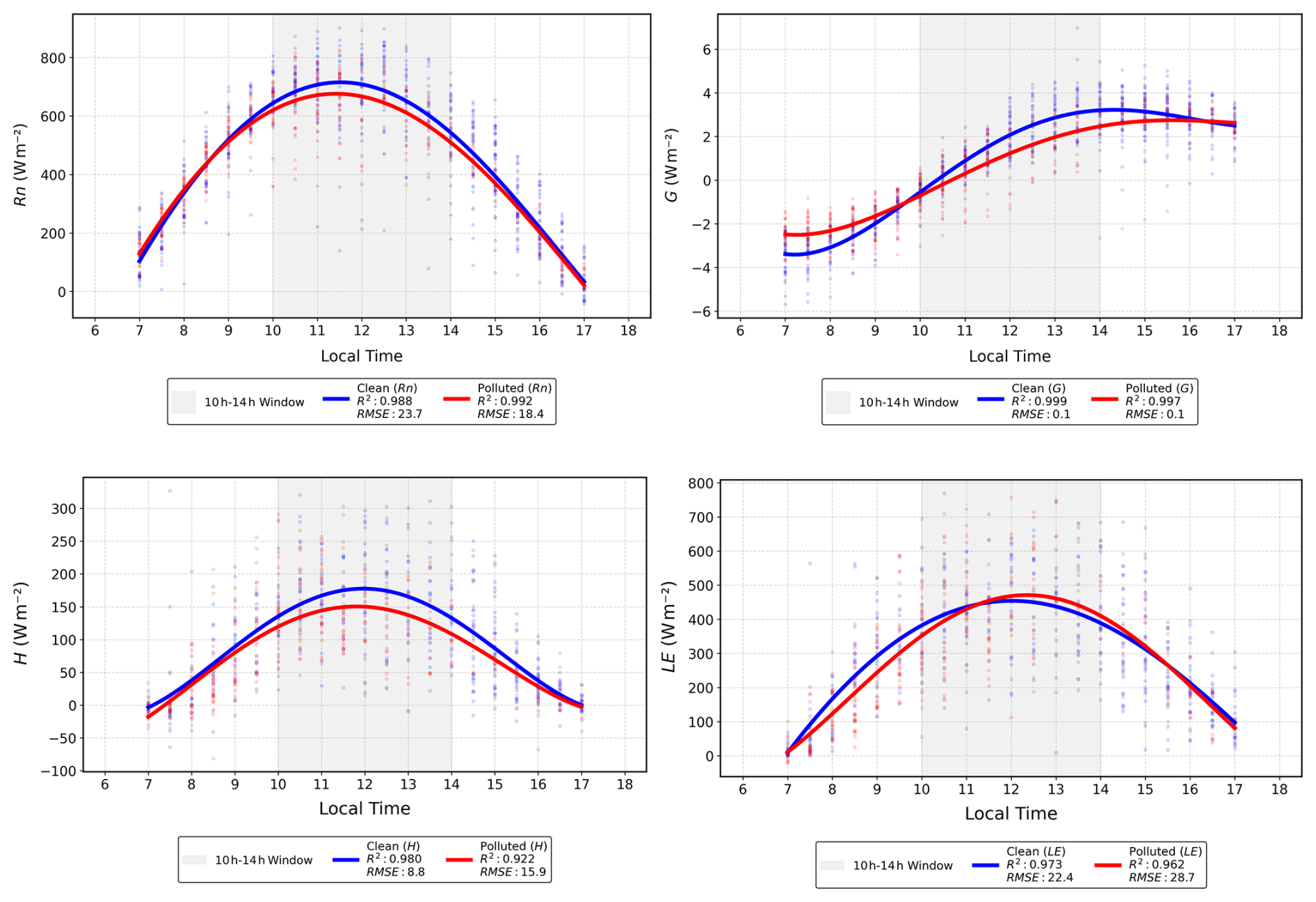
Figure 6Diurnal cycle of surface fluxes during the dry season (2016–2022) under Clean (blue) and Polluted (red) regimes, highlighting the 10:00–14:00 LT period. Rn (net radiation), G (ground heat flux), H (sensible heat flux), and LE (latent heat flux).
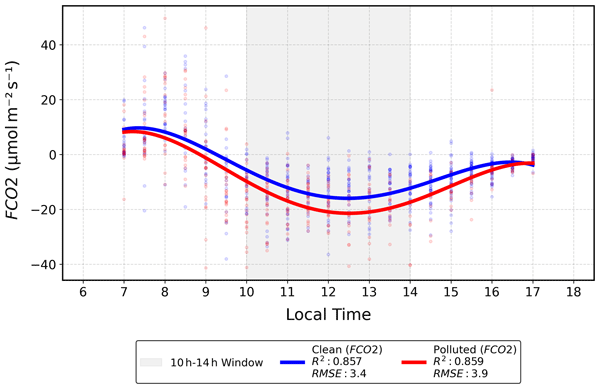
In addition to their effect on energy fluxes, aerosols were found to have a significant influence on CO2 flux, becoming more negative by an average of 4.9 (39.5 %) in the Polluted regime compared to Clean conditions between 10:00 and 14:00 LT. This is when the difference between the Polluted and Clean regimes is most pronounced, indicating that the forest absorbs more CO2 in the Polluted regime (Fig. 7). The reductions in H, LE, G, and FCO2 shown in Figs. 6 and 7 were also observed across individual years (see Fig. S3 in the Supplement).
In the Polluted regime, CO2 fluxes were more negative (Fig. 7), indicating increased CO2 uptake by vegetation related to photosynthetic activity. Such enhanced photosynthesis may be linked to changes in stomatal regulation that allow greater CO2 uptake without a proportional increase in transpiration, reflecting higher stomatal conductance efficiency (Liu et al., 2022; Crous et al., 2025). However, analysis of the LE, which represents the fraction of available energy converted into evapotranspiration, shows a consistent decrease in the Polluted regime compared to the Clean regime (Fig. 6).
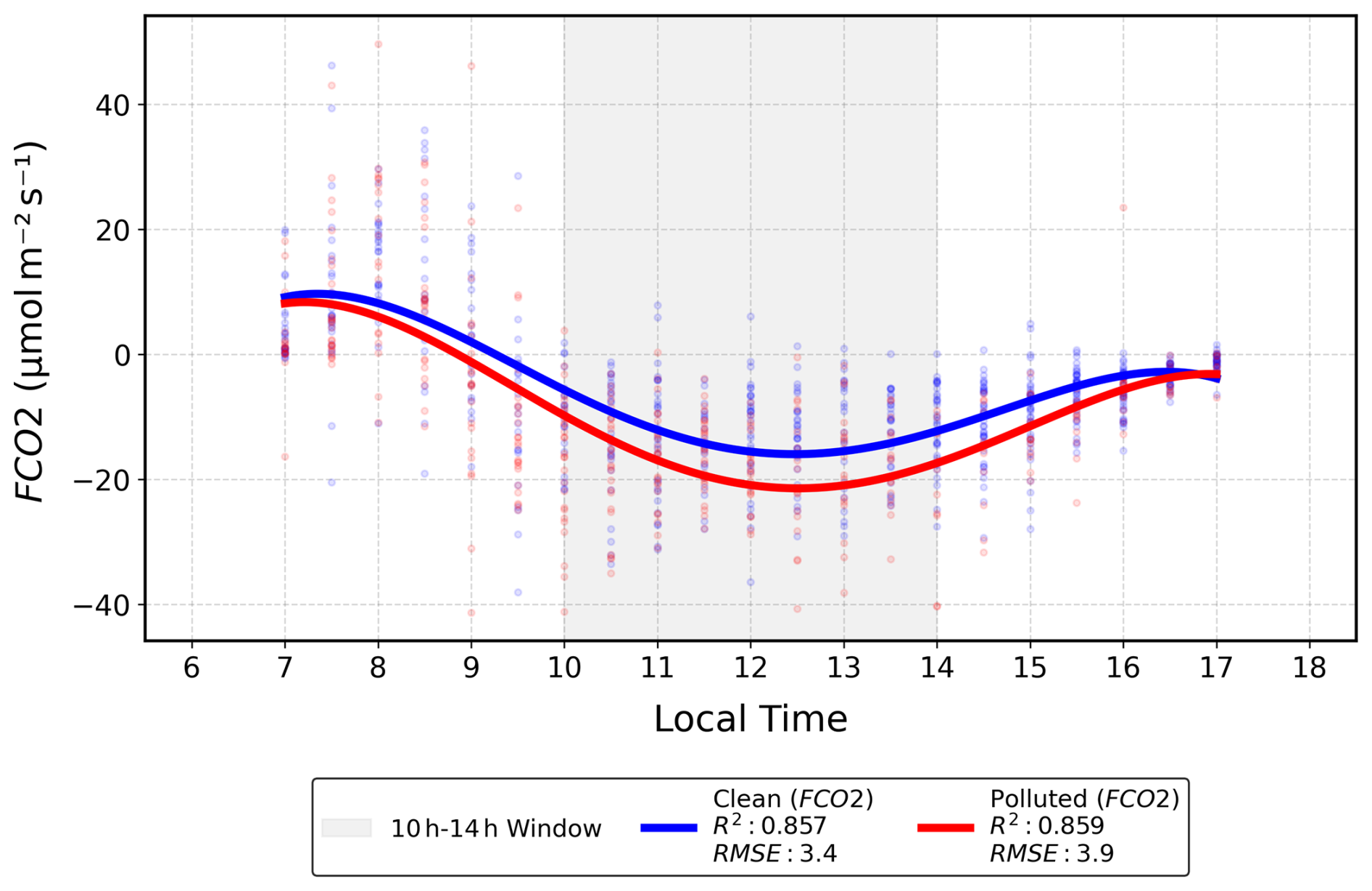
Figure 7Diurnal cycle of CO2 flux (FCO2) during the dry season (2016–2022) under Clean (blue) and Polluted (red) regimes, highlighting the 10:00–14:00 LT period.
The apparent paradox of an increase in CO2 absorption alongside an equilibrium in LE can be explained by water use efficiency (WUE). According to Dekker et al. (2016) and Yang et al. (2016), WUE is defined as the ratio of carbon assimilated to water transpired by vegetation. In this study, WUE was estimated using FCO2/LE as a proxy. WUE was significantly higher under Polluted compared to Clean regime (mean values of 0.042 and 0.029 µmol J−1, respectively, p<0.05). This indicates that, under Polluted regimes, vegetation assimilates more carbon per unit of water lost, consistent with the observed equilibrium in latent heat flux (Fig. 6) despite enhanced CO2 uptake (Fig. 7).
In forests in the USA, Steiner et al. (2013) conducted experiments to quantify the impact of aerosols on turbulent surface fluxes, observing reductions in H and LE ranging from 10 % to 30 %. Few studies have examined the relationship between H, LE and AOD in the Amazon region. Zhang et al. (2008), for example, used regional modeling with an AOD threshold of 0.3 to obtain a daily average reduction of −15 Wm−2 for H and −5 Wm−2 for LE. In the deforestation zone, Braghiere et al. (2020) observed a decrease of −67 Wm−2 (36 %) for H and −4 Wm−2 (2 %) for LE when simulating Clean conditions (AOD =0) and comparing them with real conditions involving the presence of aerosols. These results suggest that regional climate models may underestimate the reduction in LE, highlighting the importance of biological processes, such as transpiration, in compensating for these effects.
In contrast, numerous studies in the Amazon have demonstrated the significant impact of aerosols on CO2 assimilation by forests. This occurs by increasing the diffuse fraction of photosynthetically active radiation reaching forest shade zones, thereby intensifying photosynthesis. Simultaneously, it reduces the net direct solar radiation reaching the canopy surface, thereby generating photosynthetic enhancement in this region (Doughty et al., 2010; Cirino et al., 2014; Rap et al., 2015; Moreira et al., 2017; Malavelle et al., 2019; Rodrigues et al., 2024). This diffuse fraction, which falls within the wavelengths of interest for vegetation (0.4 to 0.7 µm), can increase from around 19 % (the typical value of a Clean atmosphere) to 80 % under biomass burning conditions (Yamasoe et al., 2006).
We quantified the diffuse radiation fraction () for the available period (2021) and compared Fd between Clean and Polluted aerosol regimes. Our results indicate higher Fd values under Polluted regime compared to Clean regime (Fig. S1). Specifically for the 10:00 and 14:00 LT interval, the mean Fd values were 0.43 and 0.27 for Polluted and Clean regime, respectively, indicating an absolute difference of 0.16 between the two regimes (p<0.05). This is consistent with enhanced scattering of solar radiation associated with increased aerosol loading (Giorgi et al., 2002; Seinfeld and Pandis, 2016; Ezhova et al., 2018). Moreover, daytime CO2 fluxes showed a non-linear dependence on Fd, with net CO2 uptake increasing up to an Fd threshold (≈0.6) and decreasing at higher Fd values (Fig. S2). This behaviour was consistent with the response of net ecosystem exchange for diffuse radiation reported by Deng et al. (2022) for four forest sites in China and aligns with the global-scale mechanisms proposed by Mercado et al. (2009). These results provide observational support for the proposed mechanism linking aerosol loading, radiation partitioning, and ecosystem carbon exchange.
This study assessed, for the first time, the impact of aerosol regimes on the exchange of surface energy (net radiation – Rn, sensible heat – H and latent heat – LE) and mass (carbon dioxide flux – FCO2) at the forest-atmosphere interface in the central Amazon, a region that experiences relatively pristine atmospheric conditions during part of the year. Based on long-term data collected between 2016 and 2022 at the ATTO site, our analysis provides clear and quantitative evidence that high aerosol loads (AOD >0.40) reduced the magnitude of FCO2, H, and LE fluxes compared to Clean conditions (AOD <0.13).
During the peak radiation period (10:00–14:00 LT), the Polluted regime (AOD >0.40) substantially reduces turbulent energy fluxes, decreasing H by 21.7 Wm−2 (13.5 %) and LE by 8.9 Wm−2 (2.1 %). Simultaneously, the forest's net CO2 absorption increased, with FCO2 decreasing by −4.9 µmol m−2 s−1 (39.5 %), indicating a significant increase in carbon assimilation. This biophysical response was accompanied by a cooling of the forest-atmosphere interface by 0.9 °C and a reduction in the vapor pressure deficit (VPD) by 2.0 hPa (12.9 %). Thus, aerosols also play an important role in modulating energy partitioning in the tropical forest ecosystem.
Our findings indicate that even in the relatively pristine central Amazon during the dry season, a threshold aerosol load (AOD 0.40) exists, above which significant impacts on energy fluxes occur. This suggests that in regions with higher aerosol loads, such as the southern Amazon's arc of deforestation, impacts on energy balance could be even more severe.
Our statistical analyses indicate that aerosols and surface turbulent fluxes interactions are predominantly indirect and nonlinear, mediated by environmental variables like radiation, temperature, and humidity. Consequently, different inflection points likely exist across the Amazon, and the AOD threshold identified here cannot be applied to the entire region. Furthermore, isolating the aerosol effect from clouds requires rigorous filtering and a significant data collection effort, as cloud-free moments are scarce in long-term Amazonian time series.
Our work advances knowledge by quantifying the simultaneous effects of aerosol on energy and matter fluxes, bringing with it possibilities for improvements in climate models for the Amazon region and opening up the possibility of future work aimed at coupling the carbon and water cycles, mediated by aerosols, shedding light on the functioning of forest ecosystems. All of this is possible with the integrated analysis of diffuse radiation and the efficient use of water combined with the impact of aerosols on energy and matter fluxes.
In addition, future work involving remote sensing and data from micrometeorological towers throughout the Amazon is crucial in order to spatialize the results of all these dynamics between the forest-atmosphere interface, which is essential for quantifying the impact of aerosols on the Amazonian climate system.
The software code used in this study is publicly available in the Zenodo repository at 10.5281/zenodo.20534199 (Da Rocha et al., 2026).
The research data supporting this study are available through the Amazon Tall Tower Observatory (ATTO) data portal at https://www.attodata.org/ (last access: 28 May 2026). Due to the consortium's data policy, access requires user registration and a formal data request through the platform.
The supplement related to this article is available online at https://doi.org/10.5194/acp-26-8051-2026-supplement.
Conceptualization: MABdR, CQDJ, JCPC and FAFDO. Data curation: CQDJ, ACdA, CP, SR, MAF and PA. Formal analysis: MABdR, CQDJ. Funding acquisition: CQDJ and MAF. Investigation: MABdR, CQDJ and FAFDO. Methodology: MABdR, CQDJ, FAFDO and RSP. Project administration: CAQ, CQDJ. Resources: CQDJ, ACdA, CP, SR and PA. Software: MABdR and FAFDO. Supervision: CQDJ and RSP. Validation: MABdR and FAFDO. Writing (original draft preparation): MABdR, CQDJ. Writing (review and editing): MABdR, CQDJ, JCPC, FAFDO, ACSM, CP, SR, ACdA, MAF, PA, CAQ, RSP.
The contact author has declared that none of the authors has any competing interests.
Publisher's note: Copernicus Publications remains neutral with regard to jurisdictional claims made in the text, published maps, institutional affiliations, or any other geographical representation in this paper. The authors bear the ultimate responsibility for providing appropriate place names. Views expressed in the text are those of the authors and do not necessarily reflect the views of the publisher.
Mariano A. B. da Rocha thanks the Environmental Science Graduate Program (PPGCA/UFPA); the Coordenação de Aperfeiçoamento de Pessoal de Nível Superior – Brasil (CAPES); the Universidade do Estado do Amapá (UEAP); Instituto de Astronomia, Geofísica e Ciências Atmosféricas da Universidade de São Paulo (IAG/USP); the Universidade do Estado do Amazonas (UEA); the Fundação de Amparo à Pesquisa do Estado do Amazonas (FAPEAM); the Programa de Grande Escala da Biosfera-Atmosfera na Amazônia (LBA); the SDS/CEUC/RDS-Uatumã; the Max Planck Society (MPG) and the Instituto Nacional de Pesquisas da Amazônia (INPA). This study is part of the Amazon Tall Tower Observatory (ATTO).
This research has been supported by the CNPQ (grant nos. 406884/2022-6, 307530/2022-1, 406307/2023-7, 407752/2023-4, 444929/2024-0, 445451/2024-6, and 404254/2024-1), the German Federal Ministry of Education and Research (BMBF) (grant nos. 01LB1001A and 01LK1602A), the Brazilian Ministry of Science, Technology and Innovation (MCTI/FINEP) (grant no. 01.11.01248.00), and the Fundação de Amparo à Pesquisa do Estado de São Paulo (FAPESP) (grant no.2023/04358-9).
This paper was edited by Philip Stier and reviewed by L. M Mercado and one anonymous referee.
Andreae, M. O., Rosenfeld, D., Artaxo, P., Costa, A. A., Frank, G. P., Longo, K. M., and Silva-Dias, M. A. F.: Smoking Rain Clouds over the Amazon, Science, 303, 1337–1342, https://doi.org/10.1126/science.1092779, 2004. a, b
Andreae, M. O., Acevedo, O. C., Araùjo, A., Artaxo, P., Barbosa, C. G. G., Barbosa, H. M. J., Brito, J., Carbone, S., Chi, X., Cintra, B. B. L., da Silva, N. F., Dias, N. L., Dias-Júnior, C. Q., Ditas, F., Ditz, R., Godoi, A. F. L., Godoi, R. H. M., Heimann, M., Hoffmann, T., Kesselmeier, J., Könemann, T., Krüger, M. L., Lavric, J. V., Manzi, A. O., Lopes, A. P., Martins, D. L., Mikhailov, E. F., Moran-Zuloaga, D., Nelson, B. W., Nölscher, A. C., Santos Nogueira, D., Piedade, M. T. F., Pöhlker, C., Pöschl, U., Quesada, C. A., Rizzo, L. V., Ro, C.-U., Ruckteschler, N., Sá, L. D. A., de Oliveira Sá, M., Sales, C. B., dos Santos, R. M. N., Saturno, J., Schöngart, J., Sörgel, M., de Souza, C. M., de Souza, R. A. F., Su, H., Targhetta, N., Tóta, J., Trebs, I., Trumbore, S., van Eijck, A., Walter, D., Wang, Z., Weber, B., Williams, J., Winderlich, J., Wittmann, F., Wolff, S., and Yáñez-Serrano, A. M.: The Amazon Tall Tower Observatory (ATTO): overview of pilot measurements on ecosystem ecology, meteorology, trace gases, and aerosols, Atmos. Chem. Phys., 15, 10723–10776, https://doi.org/10.5194/acp-15-10723-2015, 2015. a, b, c, d
Artaxo, P. and Orsini, C.: PIXE and receptor models applied to remote aerosol source apportionment in Brazil, Nucl. Instrum. Meth. B, 22, 259–263, https://doi.org/10.1016/0168-583X(87)90339-9, 1987. a
Artaxo, P., Rizzo, L. V., Brito, J. F., Barbosa, H. M. J., Arana, A., Sena, E. T., Cirino, G. G., Bastos, W., Martin, S. T., and Andreae, M. O.: Atmospheric aerosols in Amazonia and land use change: from natural biogenic to biomass burning conditions, Faraday Discuss., 165, 203, https://doi.org/10.1039/c3fd00052d, 2013. a, b, c
Artaxo, P., Hansson, H.-C., Andreae, M. O., Bäck, J., Alves, E. G., Barbosa, H. M. J., Bender, F., Bourtsoukidis, E., Carbone, S., Chi, J., Decesari, S., Després, V. R., Ditas, F., Ezhova, E., Fuzzi, S., Hasselquist, N. J., Heintzenberg, J., Holanda, B. A., Guenther, A., Hakola, H., Heikkinen, L., Kerminen, V.-M., Kontkanen, J., Krejci, R., Kulmala, M., Lavric, J. V., De Leeuw, G., Lehtipalo, K., Machado, L. A. T., McFiggans, G., Franco, M. A. M., Meller, B. B., Morais, F. G., Mohr, C., Morgan, W., Nilsson, M. B., Peichl, M., Petäjä, T., Praß, M., Pöhlker, C., Pöhlker, M. L., Pöschl, U., Von Randow, C., Riipinen, I., Rinne, J., Rizzo, L. V., Rosenfeld, D., Silva Dias, M. A. F., Sogacheva, L., Stier, P., Swietlicki, E., Sörgel, M., Tunved, P., Virkkula, A., Wang, J., Weber, B., Yáñez-Serrano, A. M., Zieger, P., Mikhailov, E., Smith, J. N., and Kesselmeier, J.: Tropical and Boreal Forest – Atmosphere Interactions: A Review, Tellus B, 74, 24, https://doi.org/10.16993/tellusb.34, 2022. a, b
Avissar, R., Silva Dias, P. L., Silva Dias, M. A. F., and Nobre, C.: The Large-Scale Biosphere-Atmosphere Experiment in Amazonia (LBA): Insights and future research needs, J. Geophys. Ress.-Atmos., 107, https://doi.org/10.1029/2002jd002704, 2002. a
Blichner, S. M., Yli-Juuti, T., Mielonen, T., Pöhlker, C., Holopainen, E., Heikkinen, L., Mohr, C., Artaxo, P., Carbone, S., Meller, B. B., Quaresma Dias-Júnior, C., Kulmala, M., Petäjä, T., Scott, C. E., Svenhag, C., Nieradzik, L., Sporre, M., Partridge, D. G., Tovazzi, E., Virtanen, A., Kokkola, H., and Riipinen, I.: Process-evaluation of forest aerosol-cloud-climate feedback shows clear evidence from observations and large uncertainty in models, Nat. Commun., 15, https://doi.org/10.1038/s41467-024-45001-y, 2024. a
Bolton, D.: The Computation of Equivalent Potential Temperature, Mon. Weather Rev., 108, 1046–1053, https://doi.org/10.1175/1520-0493(1980)108<1046:tcoept>2.0.co;2, 1980. a
Braghiere, R. K., Yamasoe, M. A., Évora do Rosário, N. M., Ribeiro da Rocha, H., de Souza Nogueira, J., and de Araújo, A. C.: Characterization of the radiative impact of aerosols on CO2 and energy fluxes in the Amazon deforestation arch using artificial neural networks, Atmos. Chem. Phys., 20, 3439–3458, https://doi.org/10.5194/acp-20-3439-2020, 2020. a, b, c
Brito, J., Rizzo, L. V., Morgan, W. T., Coe, H., Johnson, B., Haywood, J., Longo, K., Freitas, S., Andreae, M. O., and Artaxo, P.: Ground-based aerosol characterization during the South American Biomass Burning Analysis (SAMBBA) field experiment, Atmos. Chem. Phys., 14, 12069–12083, https://doi.org/10.5194/acp-14-12069-2014, 2014. a
Cecchini, M. A., Albrecht, R. I., Andreae, M. O., Asperen, H. v., Artaxo, P., Bagheri, G., Balestra, G. G., Barbosa, C. G. G., Barbosa, H. M. J., Bighetto, A. S., Biscaro, T. S., Bodenschatz, E., Botía, S., Brito, L. P. D., Bueno, R. C., Calheiros, A. J. P., Camargo, L., Chiu, J. C., Conde, M., Costa, E. N. D., Dias-Júnior, C. Q., Faulhammer, P., Franco, M. A., Giangrande, S. E., Harder, H., Haytzmann, G. G., Herdies, D. L., Herdy, S., Jones, S. P., Kesselmeier, J., Lelieveld, J., Lopes, C. D. C., Lipken, F., Macêdo, T. L. B. D., Magina, F. C., Massafferri, A., Monteiro, C. D. A., Morais, F. G., Neofiti, M. C. S., Pöhlker, C., Pöhlker, M., Pöschl, U., Pugliesi, A. C., Raidiel, P. B., Quesada, C. A., Raj, S. S., Rizzo, L. V., Rossi, M. I., Sapucci, L. F., Saraiva, I., Seifert, P., Silva, F. A. G. D., Silva, D. F., Souza, R. A. F. D., Souza, C. M. A., Takeshi, B., Torres, A. B. S., Trumbore, S. E., Tsokankunku, A., Unfer, G. R., Valenti, W. I. D., Arellano, J. V.-G. D., Weber, B., Williams, C. R., Williams, J., and Machado, L. A. T.: The ATTO-Campina site: A new observatory for tropical convection and gas-aerosol-cloud-precipitation interactions in the Amazon, B. Am. Meteor. Soc., 106, BAMS–D–24–0092.1, https://doi.org/10.1175/BAMS-D-24-0092.1, 2025. a
Cirino, G. G., Souza, R. A. F., Adams, D. K., and Artaxo, P.: The effect of atmospheric aerosol particles and clouds on net ecosystem exchange in the Amazon, Atmos. Chem. Phys., 14, 6523–6543, https://doi.org/10.5194/acp-14-6523-2014, 2014. a, b, c, d
Crous, K. Y., Middleby, K. B., Cheesman, A. W., Bouet, A. Y., Schiffer, M., Liddell, M. J., Barton, C. V., and Cernusak, L. A.: Leaf warming in the canopy of mature tropical trees reduced photosynthesis due to downregulation of photosynthetic capacity and reduced stomatal conductance, New Phytol., 245, 1421–1436, https://doi.org/10.1111/nph.20320, 2025. a
Da Rocha, M. A. B., Dias Jr., C. Q., D'Oliveira, F. A. F., and Palácios, R. S.: Observed impacts of aerosol regimes on energy and carbon fluxes in the Amazon forest, Zenodo [code], https://doi.org/10.5281/zenodo.20534199, 2026. a
Davidson, E. A., de Araújo, A. C., Artaxo, P., Balch, J. K., Brown, I. F., C. Bustamante, M. M., Coe, M. T., DeFries, R. S., Keller, M., Longo, M., Munger, J. W., Schroeder, W., Soares-Filho, B. S., Souza, C. M., and Wofsy, S. C.: The Amazon basin in transition, Nature, 481, 321–328, https://doi.org/10.1038/nature10717, 2012. a
Dekker, S. C., Groenendijk, M., Booth, B. B. B., Huntingford, C., and Cox, P. M.: Spatial and temporal variations in plant water-use efficiency inferred from tree-ring, eddy covariance and atmospheric observations, Earth Syst. Dynam., 7, 525–533, https://doi.org/10.5194/esd-7-525-2016, 2016. a
de Menezes Neto, O. L., Coutinho, M. M., Marengo, J. A., and Capistrano, V. B.: The impacts of a plume-rise scheme on earth system modeling: climatological effects of biomass aerosols on the surface temperature and energy budget of South America, Theor. Appl. Climatol., 129, 1035–1044, https://doi.org/10.1007/s00704-016-1821-y, 2016. a
Deng, X., Zhang, J., Che, Y., Zhou, L., Lu, T., and Han, T.: The effect of diffuse radiation on ecosystem carbon fluxes across China from FLUXNET forest observations, Front. Earth Sci., 10, 906408, https://doi.org/10.3389/feart.2022.906408, 2022. a
D'Oliveira, F. A., Cohen, J. C., Spracklen, D. V., Medeiros, A. S., Cirino, G. G., Artaxo, P., and Dias-Júnior, C. Q.: Simulation of the effects of biomass burning in a mesoscale convective system in the central amazon, Atmos. Res., 278, 106 345, https://doi.org/10.1016/j.atmosres.2022.106345, 2022. a
Doughty, C. E., Flanner, M. G., and Goulden, M. L.: Effect of smoke on subcanopy shaded light, canopy temperature, and carbon dioxide uptake in an Amazon rainforest, Global Biogeochem. Cy., 24, https://doi.org/10.1029/2009gb003670, 2010. a
Eltbaakh, Y. A., Ruslan, M., Alghoul, M., Othman, M., Sopian, K., and Razykov, T.: Solar attenuation by aerosols: An overview, Renew. Sust. Energ. Rev., 16, 4264–4276, https://doi.org/10.1016/j.rser.2012.03.053, 2012. a
Ezhova, E., Ylivinkka, I., Kuusk, J., Komsaare, K., Vana, M., Krasnova, A., Noe, S., Arshinov, M., Belan, B., Park, S.-B., Lavrič, J. V., Heimann, M., Petäjä, T., Vesala, T., Mammarella, I., Kolari, P., Bäck, J., Rannik, Ü., Kerminen, V.-M., and Kulmala, M.: Direct effect of aerosols on solar radiation and gross primary production in boreal and hemiboreal forests, Atmos. Chem. Phys., 18, 17863–17881, https://doi.org/10.5194/acp-18-17863-2018, 2018. a
Foken, T., Göockede, M., Mauder, M., Mahrt, L., Amiro, B., and Munger, W.: Post-Field Data Quality Control, Kluwer Academic Publishers, 181–208, ISBN 1402022646, https://doi.org/10.1007/1-4020-2265-4_9, 2004. a
Franco, M. A., Ditas, F., Kremper, L. A., Machado, L. A. T., Andreae, M. O., Araújo, A., Barbosa, H. M. J., de Brito, J. F., Carbone, S., Holanda, B. A., Morais, F. G., Nascimento, J. P., Pöhlker, M. L., Rizzo, L. V., Sá, M., Saturno, J., Walter, D., Wolff, S., Pöschl, U., Artaxo, P., and Pöhlker, C.: Occurrence and growth of sub-50 nm aerosol particles in the Amazonian boundary layer, Atmos. Chem. Phys., 22, 3469–3492, https://doi.org/10.5194/acp-22-3469-2022, 2022. a
Fratini, G. and Mauder, M.: Towards a consistent eddy-covariance processing: an intercomparison of EddyPro and TK3, Atmos. Meas. Tech., 7, 2273–2281, https://doi.org/10.5194/amt-7-2273-2014, 2014. a
Fuzzi, S., Decesari, S., Facchini, M. C., Cavalli, F., Emblico, L., Mircea, M., Andreae, M. O., Trebs, I., Hoffer, A., Guyon, P., Artaxo, P., Rizzo, L. V., Lara, L. L., Pauliquevis, T., Maenhaut, W., Raes, N., Chi, X., Mayol‐Bracero, O. L., Soto‐García, L. L., Claeys, M., Kourtchev, I., Rissler, J., Swietlicki, E., Tagliavini, E., Schkolnik, G., Falkovich, A. H., Rudich, Y., Fisch, G., and Gatti, L. V.: Overview of the inorganic and organic composition of size-segregated aerosol in Rondônia, Brazil, from the biomass-burning period to the onset of the wet season, J. Geophys. Res.-Atmos., 112, https://doi.org/10.1029/2005jd006741, 2007. a
Gavrouzou, M., Hatzianastassiou, N., Korras-Carraca, M.-B., Stamatis, M., Lolis, C., Matsoukas, C., Michalopoulos, N., and Vardavas, I.: Three-Dimensional Distributions of the Direct Effect of anExtended and Intense Dust Aerosol Episode (16–18 June 2016) over the Mediterranean Basin on Regional Shortwave Radiation, Atmospheric Thermal Structure, and Dynamics, Appl. Sci., 13, 6878, https://doi.org/10.3390/app13126878, 2023. a
Giles, D. M., Sinyuk, A., Sorokin, M. G., Schafer, J. S., Smirnov, A., Slutsker, I., Eck, T. F., Holben, B. N., Lewis, J. R., Campbell, J. R., Welton, E. J., Korkin, S. V., and Lyapustin, A. I.: Advancements in the Aerosol Robotic Network (AERONET) Version 3 database – automated near-real-time quality control algorithm with improved cloud screening for Sun photometer aerosol optical depth (AOD) measurements, Atmos. Meas. Tech., 12, 169–209, https://doi.org/10.5194/amt-12-169-2019, 2019. a
Giorgi, F., Bi, X., and Qian, Y.: Direct radiative forcing and regional climatic effects of anthropogenic aerosols over East Asia: A regional coupled climate-chemistry/aerosol model study, J. Geophys. Res.-Atmos., 107, AAC-7, https://doi.org/10.1029/2001JD001066, 2002. a
Gomes Alves, E., Aquino Santana, R., Quaresma Dias-Júnior, C., Botía, S., Taylor, T., Yáñez-Serrano, A. M., Kesselmeier, J., Bourtsoukidis, E., Williams, J., Lembo Silveira de Assis, P. I., Martins, G., de Souza, R., Duvoisin Júnior, S., Guenther, A., Gu, D., Tsokankunku, A., Sörgel, M., Nelson, B., Pinto, D., Komiya, S., Martins Rosa, D., Weber, B., Barbosa, C., Robin, M., Feeley, K. J., Duque, A., Londoño Lemos, V., Contreras, M. P., Idarraga, A., López, N., Husby, C., Jestrow, B., and Cely Toro, I. M.: Intra- and interannual changes in isoprene emission from central Amazonia, Atmos. Chem. Phys., 23, 8149–8168, https://doi.org/10.5194/acp-23-8149-2023, 2023. a
Gonçalves, W. A., Machado, L. A. T., and Kirstetter, P.-E.: Influence of biomass aerosol on precipitation over the Central Amazon: an observational study, Atmos. Chem. Phys., 15, 6789–6800, https://doi.org/10.5194/acp-15-6789-2015, 2015. a
Harriss, R. C., Wofsy, S. C., Garstang, M., Browell, E. V., Molion, L. C. B., McNeal, R. J., Hoell, J. M., Bendura, R. J., Beck, S. M., Navarro, R. L., Riley, J. T., and Snell, R. L.: The Amazon Boundary Layer Experiment (ABLE 2A): dry season 1985, J. Geophys. Res.-Atmos., 93, 1351–1360, https://doi.org/10.1029/jd093id02p01351, 1988. a
Herbert, R. and Stier, P.: Satellite observations of smoke–cloud–radiation interactions over the Amazon rainforest, Atmos. Chem. Phys., 23, 4595–4616, https://doi.org/10.5194/acp-23-4595-2023, 2023. a, b, c
Holanda, B. A., Franco, M. A., Walter, D., Artaxo, P., Carbone, S., Cheng, Y., Chowdhury, S., Ditas, F., Gysel-Beer, M., Klimach, T., Kremper, L. A., Krüger, O. O., Lavric, J. V., Lelieveld, J., Ma, C., Machado, L. A. T., Modini, R. L., Morais, F. G., Pozzer, A., Saturno, J., Su, H., Wendisch, M., Wolff, S., Pöhlker, M. L., Andreae, M. O., Pöschl, U., and Pöhlker, C.: African biomass burning affects aerosol cycling over the Amazon, Commun. Earth Environ., 4, https://doi.org/10.1038/s43247-023-00795-5, 2023. a
Kanakidou, M., Myriokefalitakis, S., and Tsigaridis, K.: Aerosols in atmospheric chemistry and biogeochemical cycles of nutrients, Environ. Res. Lett., 13, 063004, https://doi.org/10.1088/1748-9326/aabcdb, 2018. a
Kanniah, K. D., Beringer, J., North, P., and Hutley, L.: Control of atmospheric particles on diffuse radiation and terrestrial plant productivity: A review, Progress in Physical Geography: Earth and Environment, 36, 209–237, https://doi.org/10.1177/0309133311434244, 2012. a
Karthick Raja Namasivayam, S., Priyanka, S., Lavanya, M., Krithika Shree, S., Francis, A., Avinash, G., Arvind Bharani, R., Kavisri, M., and Moovendhan, M.: A review on vulnerable atmospheric aerosol nanoparticles: Sources, impact on the health, ecosystem and management strategies, J. Environ. Manage., 365, 121644, https://doi.org/10.1016/j.jenvman.2024.121644, 2024. a
Lau, K. M., Wu, H. T., Sud, Y. C., and Walker, G. K.: Effects of Cloud Microphysics on Tropical Atmospheric Hydrologic Processes and Intraseasonal Variability, J. Climate, 18, 4731–4751, https://doi.org/10.1175/jcli3561.1, 2005. a
Li, H., Zhang, M., Wang, L., Su, X., and Lu, Y.: Effects of Different Types of Aerosols on Diffuse Radiation Based on Global AERONET, J. Geophys. Res.-Atmos., 130, https://doi.org/10.1029/2024jd042701, 2025. a
Liu, L., Cheng, Y., Wang, S., Wei, C., Pöhlker, M. L., Pöhlker, C., Artaxo, P., Shrivastava, M., Andreae, M. O., Pöschl, U., and Su, H.: Impact of biomass burning aerosols on radiation, clouds, and precipitation over the Amazon: relative importance of aerosol–cloud and aerosol–radiation interactions, Atmos. Chem. Phys., 20, 13283–13301, https://doi.org/10.5194/acp-20-13283-2020, 2020. a
Liu, Y., Flournoy, O., Zhang, Q., Novick, K. A., Koster, R. D., and Konings, A. G.: Canopy height and climate dryness parsimoniously explain spatial variation of unstressed stomatal conductance, Geophys. Res. Lett., 49, e2022GL099339, https://doi.org/10.1029/2022GL099339, 2022. a
Lohmann, U. and Feichter, J.: Global indirect aerosol effects: a review, Atmos. Chem. Phys., 5, 715–737, https://doi.org/10.5194/acp-5-715-2005, 2005. a
Machado, L. A. T., Silva Dias, M. A. F., Morales, C., Fisch, G., Vila, D., Albrecht, R., Goodman, S. J., Calheiros, A. J. P., Biscaro, T., Kummerow, C., Cohen, J., Fitzjarrald, D., Nascimento, E. L., Sakamoto, M. S., Cunningham, C., Chaboureau, J.-P., Petersen, W. A., Adams, D. K., Baldini, L., Angelis, C. F., Sapucci, L. F., Salio, P., Barbosa, H. M. J., Landulfo, E., Souza, R. A. F., Blakeslee, R. J., Bailey, J., Freitas, S., Lima, W. F. A., and Tokay, A.: The Chuva Project: How Does Convection Vary across Brazil?, B. Am. Meteor. Soc., 95, 1365–1380, https://doi.org/10.1175/bams-d-13-00084.1, 2014. a
Machado, L. A. T., Franco, M. A., Kremper, L. A., Ditas, F., Andreae, M. O., Artaxo, P., Cecchini, M. A., Holanda, B. A., Pöhlker, M. L., Saraiva, I., Wolff, S., Pöschl, U., and Pöhlker, C.: How weather events modify aerosol particle size distributions in the Amazon boundary layer, Atmos. Chem. Phys., 21, 18065–18086, https://doi.org/10.5194/acp-21-18065-2021, 2021. a
Malavelle, F. F., Haywood, J. M., Mercado, L. M., Folberth, G. A., Bellouin, N., Sitch, S., and Artaxo, P.: Studying the impact of biomass burning aerosol radiative and climate effects on the Amazon rainforest productivity with an Earth system model, Atmos. Chem. Phys., 19, 1301–1326, https://doi.org/10.5194/acp-19-1301-2019, 2019. a
Martin, S. T., Andreae, M. O., Althausen, D., Artaxo, P., Baars, H., Borrmann, S., Chen, Q., Farmer, D. K., Guenther, A., Gunthe, S. S., Jimenez, J. L., Karl, T., Longo, K., Manzi, A., Müller, T., Pauliquevis, T., Petters, M. D., Prenni, A. J., Pöschl, U., Rizzo, L. V., Schneider, J., Smith, J. N., Swietlicki, E., Tota, J., Wang, J., Wiedensohler, A., and Zorn, S. R.: An overview of the Amazonian Aerosol Characterization Experiment 2008 (AMAZE-08), Atmos. Chem. Phys., 10, 11415–11438, https://doi.org/10.5194/acp-10-11415-2010, 2010. a
Martin, S. T., Artaxo, P., Machado, L., Manzi, A. O., Souza, R. A. F., Schumacher, C., Wang, J., Biscaro, T., Brito, J., Calheiros, A., Jardine, K., Medeiros, A., Portela, B., de Sá, S. S., Adachi, K., Aiken, A. C., Albrecht, R., Alexander, L., Andreae, M. O., Barbosa, H. M. J., Buseck, P., Chand, D., Comstock, J. M., Day, D. A., Dubey, M., Fan, J., Fast, J., Fisch, G., Fortner, E., Giangrande, S., Gilles, M., Goldstein, A. H., Guenther, A., Hubbe, J., Jensen, M., Jimenez, J. L., Keutsch, F. N., Kim, S., Kuang, C., Laskin, A., McKinney, K., Mei, F., Miller, M., Nascimento, R., Pauliquevis, T., Pekour, M., Peres, J., Petäjä, T., Pöhlker, C., Pöschl, U., Rizzo, L., Schmid, B., Shilling, J. E., Dias, M. A. S., Smith, J. N., Tomlinson, J. M., Tóta, J., and Wendisch, M.: The Green Ocean Amazon Experiment (GoAmazon2014/5) Observes Pollution Affecting Gases, Aerosols, Clouds, and Rainfall over the Rain Forest, B. Am. Meteor. Soc., 98, 981–997, https://doi.org/10.1175/bams-d-15-00221.1, 2017. a
Mauder, M., Jung, M., Stoy, P., Nelson, J., and Wanner, L.: Energy balance closure at FLUXNET sites revisited, Agr. Forest Meteorol., 358, 110235, https://doi.org/10.1016/j.agrformet.2024.110235, 2024. a
Mercado, L. M., Bellouin, N., Sitch, S., Boucher, O., Huntingford, C., Wild, M., and Cox, P. M.: Impact of changes in diffuse radiation on the global land carbon sink, Nature, 458, 1014–1017, https://doi.org/10.1038/nature07949, 2009. a
Miller, R. L., Tegen, I., and Perlwitz, J.: Surface radiative forcing by soil dust aerosols and the hydrologic cycle, J. Geophys. Res.-Atmos., 109, https://doi.org/10.1029/2003jd004085, 2004. a
Morais, F. G., Franco, M. A., Palácios, R., Machado, L. A. T., Rizzo, L. V., Barbosa, H. M. J., Jorge, F., Schafer, J. S., Holben, B. N., Landulfo, E., and Artaxo, P.: Relationship between Land Use and Spatial Variability of Atmospheric Brown Carbon and Black Carbon Aerosols in Amazonia, Atmosphere, 13, https://doi.org/10.3390/atmos13081328, 2022. a
Moreira, D. S., Longo, K. M., Freitas, S. R., Yamasoe, M. A., Mercado, L. M., Rosário, N. E., Gloor, E., Viana, R. S. M., Miller, J. B., Gatti, L. V., Wiedemann, K. T., Domingues, L. K. G., and Correia, C. C. S.: Modeling the radiative effects of biomass burning aerosols on carbon fluxes in the Amazon region, Atmos. Chem. Phys., 17, 14785–14810, https://doi.org/10.5194/acp-17-14785-2017, 2017. a, b
NASA JPL: NASADEM Merged DEM Global 1 arc second V001, NASA EOSDIS Land Processes DAAC [data set], https://doi.org/10.5067/MEaSUREs/NASADEM/NASADEM, 2020. a
Orsini, C. Q., Tabacniks, M. H., Artaxo, P., Andrade, M. F., and Kerr, A. S.: Characteristics of fine and coarse particles of natural and urban aerosols of Brazil, Atmos. Environ., 20, 2259–2269, https://doi.org/10.1016/0004-6981(86)90316-1, 1986. a
Palácios, R., Castagna, D., Barbosa, L., Souza, A. P., Imbiriba, B., Zolin, C. A., Nassarden, D., Duarte, L., Morais, F. G., Franco, M. A., Cirino, G., Kuhn, P., Sodré, G., Curado, L., Basso, J., Roberto de Paulo, S., and Rodrigues, T.: ENSO effects on the relationship between aerosols and evapotranspiration in the south of the Amazon biome, Environ. Res., 250, 118516, https://doi.org/10.1016/j.envres.2024.118516, 2024. a, b, c, d
Palácios, R. D. S., Morais, F. G., Landulfo, E., Franco, M. A. D. M., Kuhnen, I. A., Marques, J. B., Nogueira, J. D. S., Júnior, L. C. G. D. V., Rodrigues, T. R., Romera, K. S., Curado, L. F. A., Banga, N. M., Rothmund, L. D., Sallo, F. D. S., Morais, D., Santos, A. C. A., and Moraes, T. J.: Long Term Analysis of Optical and Radiative Properties of Aerosols in the Amazon Basin, Aerosol Air Qual. Res., 20, 139–154, https://doi.org/10.4209/aaqr.2019.04.0189, 2020. a, b
Palácios, R. D. S., Artaxo, P., Cirino, G. G., Nakale, V., Morais, F. G., Rothmund, L. D., Biudes, M. S., Machado, N. G., Curado, L. F. A., Marques, J. B., and Nogueira, J. D. S.: Long-term measurements of aerosol optical properties and radiative forcing (2011-2017) over Central Amazonia, Atmósfera, 35, 143–163, https://doi.org/10.20937/atm.52892, 2022. a, b, c, d, e
Pareja-Quispe, D., Franchito, S. H., and Fernandez, J. P. R.: Assessment of the RegCM4 Performance in Simulating the Surface Radiation Budget and Hydrologic Balance Variables in South America, Earth Syst. Environ., 5, 499–518, https://doi.org/10.1007/s41748-021-00249-y, 2021. a
Pöhlker, C., Walter, D., Paulsen, H., Könemann, T., Rodríguez-Caballero, E., Moran-Zuloaga, D., Brito, J., Carbone, S., Degrendele, C., Després, V. R., Ditas, F., Holanda, B. A., Kaiser, J. W., Lammel, G., Lavrič, J. V., Ming, J., Pickersgill, D., Pöhlker, M. L., Praß, M., Löbs, N., Saturno, J., Sörgel, M., Wang, Q., Weber, B., Wolff, S., Artaxo, P., Pöschl, U., and Andreae, M. O.: Land cover and its transformation in the backward trajectory footprint region of the Amazon Tall Tower Observatory, Atmos. Chem. Phys., 19, 8425–8470, https://doi.org/10.5194/acp-19-8425-2019, 2019. a, b
Pöhlker, M. L., Pöhlker, C., Ditas, F., Klimach, T., Hrabe de Angelis, I., Araújo, A., Brito, J., Carbone, S., Cheng, Y., Chi, X., Ditz, R., Gunthe, S. S., Kesselmeier, J., Könemann, T., Lavrič, J. V., Martin, S. T., Mikhailov, E., Moran-Zuloaga, D., Rose, D., Saturno, J., Su, H., Thalman, R., Walter, D., Wang, J., Wolff, S., Barbosa, H. M. J., Artaxo, P., Andreae, M. O., and Pöschl, U.: Long-term observations of cloud condensation nuclei in the Amazon rain forest – Part 1: Aerosol size distribution, hygroscopicity, and new model parametrizations for CCN prediction, Atmos. Chem. Phys., 16, 15709–15740, https://doi.org/10.5194/acp-16-15709-2016, 2016. a
Pöhlker, M. L., Ditas, F., Saturno, J., Klimach, T., Hrabě de Angelis, I., Araùjo, A. C., Brito, J., Carbone, S., Cheng, Y., Chi, X., Ditz, R., Gunthe, S. S., Holanda, B. A., Kandler, K., Kesselmeier, J., Könemann, T., Krüger, O. O., Lavrič, J. V., Martin, S. T., Mikhailov, E., Moran-Zuloaga, D., Rizzo, L. V., Rose, D., Su, H., Thalman, R., Walter, D., Wang, J., Wolff, S., Barbosa, H. M. J., Artaxo, P., Andreae, M. O., Pöschl, U., and Pöhlker, C.: Long-term observations of cloud condensation nuclei over the Amazon rain forest – Part 2: Variability and characteristics of biomass burning, long-range transport, and pristine rain forest aerosols, Atmos. Chem. Phys., 18, 10289–10331, https://doi.org/10.5194/acp-18-10289-2018, 2018. a, b
Procopio, A. S., Artaxo, P., Kaufman, Y. J., Remer, L. A., Schafer, J. S., and Holben, B. N.: Multiyear analysis of amazonian biomass burning smoke radiative forcing of climate, Geophys. Res. Lett., 31, https://doi.org/10.1029/2003gl018646, 2004. a, b, c
RAISG: Geospatial Vetor Data of the biomes, limits and cities, https://www.raisg.org/en/maps/ (last access: 1 December 2023), 2023. a
Ramanathan, V., Crutzen, P. J., Kiehl, J. T., and Rosenfeld, D.: Aerosols, Climate, and the Hydrological Cycle, Science, 294, 2119–2124, https://doi.org/10.1126/science.1064034, 2001. a
Rap, A., Scott, C. E., Spracklen, D. V., Bellouin, N., Forster, P. M., Carslaw, K. S., Schmidt, A., and Mann, G.: Natural aerosol direct and indirect radiative effects, Geophys. Res. Lett., 40, 3297–3301, https://doi.org/10.1002/grl.50441, 2013. a
Rap, A., Spracklen, D. V., Mercado, L., Reddington, C. L., Haywood, J. M., Ellis, R. J., Phillips, O. L., Artaxo, P., Bonal, D., Restrepo Coupe, N., and Butt, N.: Fires increase Amazon forest productivity through increases in diffuse radiation, Geophys. Res. Lett., 42, 4654–4662, https://doi.org/10.1002/2015gl063719, 2015. a
Rizzo, L. V., Correia, A. L., Artaxo, P., Procópio, A. S., and Andreae, M. O.: Spectral dependence of aerosol light absorption over the Amazon Basin, Atmos. Chem. Phys., 11, 8899–8912, https://doi.org/10.5194/acp-11-8899-2011, 2011. a, b
Rodrigues, S., Cirino, G., Moreira, D., Pozzer, A., Palácios, R., Lee, S.-C., Imbiriba, B., Nogueira, J., Vitorino, M. I., and Vourlitis, G.: Enhanced net CO2 exchange of a semideciduous forest in the southern Amazon due to diffuse radiation from biomass burning, Biogeosciences, 21, 843–868, https://doi.org/10.5194/bg-21-843-2024, 2024. a, b, c
Ross, J. L., Hobbs, P. V., and Holben, B.: Radiative characteristics of regional hazes dominated by smoke from biomass burning in Brazil: Closure tests and direct radiative forcing, J. Geophys. Res.-Atmos., 103, 31925–31941, https://doi.org/10.1029/97jd03677, 1998. a, b
Santana, R. A. S. D., Vale, R. S. D., Silva, J. T. D., Santos, R. M. N. D., Fitzjarrald, D. R., Picanço, G. A. D. S., Batalha, S. S. A., Gomes, A. C. D. S., Costa, G. B., Tapajós, R., and Silva, R. D.: Wind averages features above and below of the forest canopy during GoAmazon in an experimental site in the Amazon, Ciência e Natura, 38, 152, https://doi.org/10.5902/2179460x20131, 2016. a
Schmitt, A. U., Ament, F., de Araújo, A. C., Sá, M., and Teixeira, P.: Modeling atmosphere–land interactions at a rainforest site – a case study using Amazon Tall Tower Observatory (ATTO) measurements and reanalysis data, Atmos. Chem. Phys., 23, 9323–9346, https://doi.org/10.5194/acp-23-9323-2023, 2023. a
Seinfeld, J. H. and Pandis, S. N.: Atmospheric Chemistry and Physics, Wiley-Interscience, 2. aufl. edn., ISBN 0471720186, 2006. a
Seinfeld, J. H. and Pandis, S. N.: Atmospheric chemistry and physics: from air pollution to climate change, John Wiley & Sons, ISBN 978-1118947401, 2016. a
Sena, E. T., Artaxo, P., and Correia, A. L.: Spatial variability of the direct radiative forcing of biomass burning aerosols and the effects of land use change in Amazonia, Atmos. Chem. Phys., 13, 1261–1275, https://doi.org/10.5194/acp-13-1261-2013, 2013. a, b
Steiner, A. L., Mermelstein, D., Cheng, S. J., Twine, T. E., and Oliphant, A.: Observed Impact of Atmospheric Aerosols on the Surface Energy Budget, Earth Interact., 17, 1–22, https://doi.org/10.1175/2013ei000523.1, 2013. a
Suzuki, K., Stephens, G. L., and Golaz, J.: Significance of aerosol radiative effect in energy balance control on global precipitation change, Atmos. Sci. Lett., 18, 389–395, https://doi.org/10.1002/asl.780, 2017. a
Tetens, O.: Uber einige meteorologische Begriffe, Z. Geophys., 6, 297–309, https://cir.nii.ac.jp/crid/1571698600341727488 (last access: 8 January 2025), 1930. a
von Randow, C., Manzi, A. O., Kruijt, B., de Oliveira, P. J., Zanchi, F. B., Silva, R. L., Hodnett, M. G., Gash, J. H. C., Elbers, J. A., Waterloo, M. J., Cardoso, F. L., and Kabat, P.: Comparative measurements and seasonal variations in energy and carbon exchange over forest and pasture in South West Amazonia, Theor. Appl. Climatol., 78, https://doi.org/10.1007/s00704-004-0041-z, 2004. a, b
Wang, S. and Yi, B.: Bibliometric Analysis of Aerosol-Radiation Research from 1999 to 2023, Atmosphere, 15, 1189, https://doi.org/10.3390/atmos15101189, 2024. a
Wilks, D. S.: Statistical methods in the atmospheric sciences, 100, Academic Press, ISBN 978-0-12-751966-1, 2011. a
Yamasoe, M. A., von Randow, C., Manzi, A. O., Schafer, J. S., Eck, T. F., and Holben, B. N.: Effect of smoke and clouds on the transmissivity of photosynthetically active radiation inside the canopy, Atmos. Chem. Phys., 6, 1645–1656, https://doi.org/10.5194/acp-6-1645-2006, 2006. a
Yang, Y., Guan, H., Batelaan, O., McVicar, T. R., Long, D., Piao, S., Liang, W., Liu, B., Jin, Z., and Simmons, C. T.: Contrasting responses of water use efficiency to drought across global terrestrial ecosystems, Sci. Rep., 6, https://doi.org/10.1038/srep23284, 2016. a
Yokelson, R. J., Karl, T., Artaxo, P., Blake, D. R., Christian, T. J., Griffith, D. W. T., Guenther, A., and Hao, W. M.: The Tropical Forest and Fire Emissions Experiment: overview and airborne fire emission factor measurements, Atmos. Chem. Phys., 7, 5175–5196, https://doi.org/10.5194/acp-7-5175-2007, 2007. a
Zhang, Y., Fu, R., Yu, H., Dickinson, R. E., Juarez, R. N., Chin, M., and Wang, H.: A regional climate model study of how biomass burning aerosol impacts land-atmosphere interactions over the Amazon, J. Geophys. Res.-Atmos., 113, https://doi.org/10.1029/2007jd009449, 2008. a