
Articles | Volume 26, issue 14
https://doi.org/10.5194/acp-26-10071-2026
© Author(s) 2026. This work is distributed under
the Creative Commons Attribution 4.0 License.
the Creative Commons Attribution 4.0 License.
https://doi.org/10.5194/acp-26-10071-2026
© Author(s) 2026. This work is distributed under
the Creative Commons Attribution 4.0 License.
the Creative Commons Attribution 4.0 License.
Research article
| 
17 Jul 2026
Research article |
| 17 Jul 2026
| 17 Jul 2026
Aerosol-deep convection interaction based on joint cell-thermal tracking in Large Eddy Simulations during the TRACER campaign
Daniel Hernandez-Deckers
CORRESPONDING AUTHOR

Departamento de Geociencias, Universidad Nacional de Colombia, Bogotá D.C., Colombia
Toshihisa Matsui
NASA Goddard Space Flight Center Code 612, Greenbelt, MD, USA
Earth System Science Interdisciplanary Center – ESSIC, University of Maryland, College Park, MD, USA
Takamichi Iguchi
NASA Goddard Space Flight Center Code 612, Greenbelt, MD, USA
Earth System Science Interdisciplanary Center – ESSIC, University of Maryland, College Park, MD, USA
Kelcy Brunner
National Wind Institute, Texas Tech University, Lubbock, TX, USA
Eric Bruning
Department of Geosciences, Texas Tech University, Lubbock, TX, USA
Marcus van Lier-Walqui
NASA Goddard Institute for Space Studies, New York, NY, USA
Center for Climate System Research (CCSR), The Earth Institute, Columbia University, New York, NY, USA
Edward R. Mansell
NOAA National Severe Storms Laboratory, Norman, OK, USA
Tamanna Subba
Environmental Science and Technologies Department, Brookhaven National Laboratory, Upton, NY, USA
Chongai Kuang
Environmental Science and Technologies Department, Brookhaven National Laboratory, Upton, NY, USA
Michael P. Jensen
Environmental Science and Technologies Department, Brookhaven National Laboratory, Upton, NY, USA
Scott Braun
NASA Goddard Space Flight Center Code 612, Greenbelt, MD, USA
Related authors
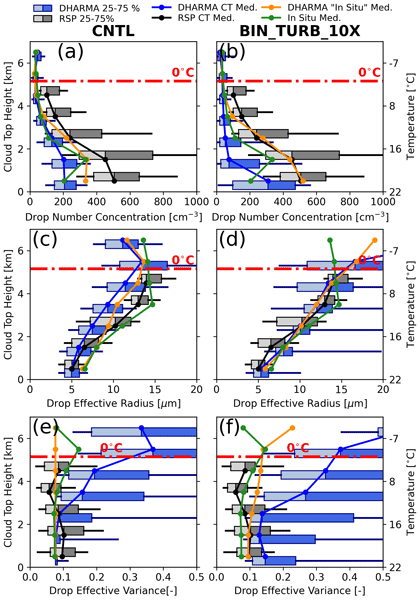
McKenna W. Stanford, Ann M. Fridlind, Andrew S. Ackerman, Bastiaan van Diedenhoven, Qian Xiao, Jian Wang, Toshihisa Matsui, Daniel Hernandez-Deckers, and Paul Lawson
Atmos. Chem. Phys., 25, 11199–11231, https://doi.org/10.5194/acp-25-11199-2025, https://doi.org/10.5194/acp-25-11199-2025, 2025
Short summary
Short summary
The evolution of cloud droplets, from the point they are activated by atmospheric aerosol to the formation of precipitation, is an important process relevant to understanding cloud–climate feedbacks. This study demonstrates a benchmark framework for using novel airborne measurements and retrievals to constrain high-resolution simulations of moderately deep cumulus clouds and pathways for scaling results to large-scale models and space-based observational platforms.
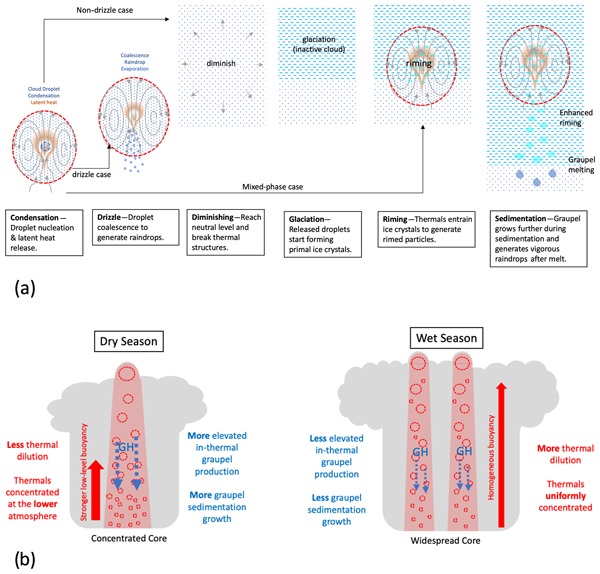
Toshi Matsui, Daniel Hernandez-Deckers, Scott E. Giangrande, Thiago S. Biscaro, Ann Fridlind, and Scott Braun
Atmos. Chem. Phys., 24, 10793–10814, https://doi.org/10.5194/acp-24-10793-2024, https://doi.org/10.5194/acp-24-10793-2024, 2024
Short summary
Short summary
Using computer simulations and real measurements, we discovered that storms over the Amazon were narrower but more intense during the dry periods, producing heavier rain and more ice particles in the clouds. Our research showed that cumulus bubbles played a key role in creating these intense storms. This study can improve the representation of the effect of continental and ocean environments on tropical regions' rainfall patterns in simulations.
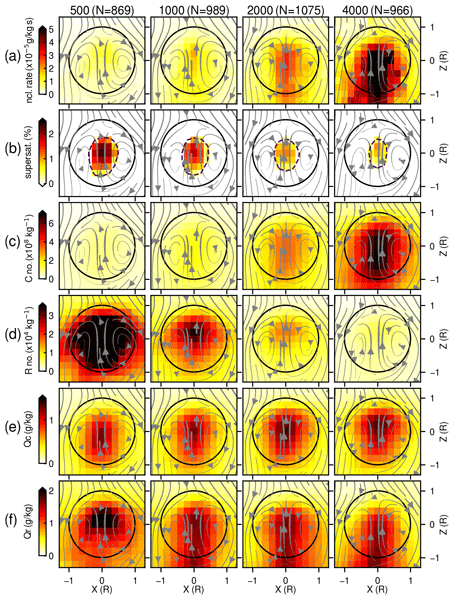
Daniel Hernandez-Deckers, Toshihisa Matsui, and Ann M. Fridlind
Atmos. Chem. Phys., 22, 711–724, https://doi.org/10.5194/acp-22-711-2022, https://doi.org/10.5194/acp-22-711-2022, 2022
Short summary
Short summary
We investigate how the concentration of aerosols (small particles that serve as seeds for cloud droplets) affect the dynamics of simulated clouds using two different frameworks, i.e., the traditional selection of cloudy rising grid points and tracking small-scale coherent rising features (cumulus thermals). By doing so, we find that these cumulus thermals reveal useful information about the coupling between internal cloud circulations and cloud droplet and raindrop formation.
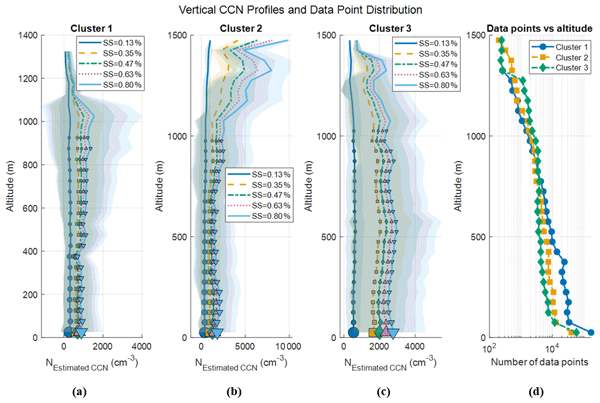
Fan Mei, Jian Wang, Israel Silber, Nurun Nahar Lata, Gregory W. Vandergrift, Jing Li, Bo Chen, Sarah D. Brooks, Michael P. Jensen, Min Deng, Damao Zhang, Darielle Dexheimer, Beat Schmid, Zezhen Cheng, and Swarup China
Atmos. Chem. Phys., 26, 13885–13908, https://doi.org/10.5194/acp-26-13885-2026, https://doi.org/10.5194/acp-26-13885-2026, 2026
Short summary
Short summary
Tethered balloon measurements from 149 flights during DOE ARM TRACER over Houston characterize vertical aerosol and CCN structure. Back-trajectory clustering identifies three air mass types – marine, mixed, and urban – with distinct profiles shaped by boundary-layer depth and coastal circulations. A case study shows mesoscale advection simultaneously transforms thermodynamic and aerosol conditions, underscoring the need to constrain meteorology before attributing cloud changes to aerosol forcing.
Yuhang Guo, Chongai Kuang, Darielle Dexheimer, Manish Shrivastava, Ogochukwu Enekwizu, Yang Wang, Jingbo Mao, Gan Luo, Fangqun Yu, and Jie Zhang
EGUsphere, https://doi.org/10.5194/egusphere-2026-4905, https://doi.org/10.5194/egusphere-2026-4905, 2026
This preprint is open for discussion and under review for Atmospheric Chemistry and Physics (ACP).
Short summary
Short summary
Aerosol particle size distributions can vary greatly with height, but these vertical changes are rarely measured directly. Using a tethered balloon, we measured particle size distributions from the ground to about 1.2 kilometers in two contrasting environments. We found that atmospheric mixing strongly shapes their vertical structure, storage overnight, and redistribution the next day. These observations improve our understanding of how aerosol populations evolve in the lower atmosphere.
Toshi Matsui, Scott A. Braun, and Sarah E. Ringerud
EGUsphere, https://doi.org/10.5194/egusphere-2026-4156, https://doi.org/10.5194/egusphere-2026-4156, 2026
This preprint is open for discussion and under review for Atmospheric Measurement Techniques (AMT).
Short summary
Short summary
This study shows how NASA’s TROPICS small satellites can estimate tropical rainfall and latent heating using a deep-learning method trained with GPM satellite data. The spatial texture of microwave observations from space provides useful information for producing realistic views of rainfall and storm-heating structure across the Tropics.
Aino Ovaska, Daniel Holmberg, Elio Rauth, Mansour Alghamdi, Paulo Artaxo, Eija Asmi, John Backman, Benjamin Bergmans, Matthew Boyer, Liezl Bredenkamp, Maurizio Busetto, Delano Campos De Oliveira, Juan Andrés Casquero-Vera, Darius Ceburnis, Tak Chan, Tommy Chan, Sebastien Conil, Daniele Contini, Suzanne Crumeyrolle, Valentin Duflot, Kostas Eleftheriadis, Johan Esveld, Ekaterina Ezhova, Markus Fiebig, Shahzad Gani, Olga Garmash, Francisco Gómez-Moreno, Roy M. Harrison, Andras Hoffer, Rakesh Hooda, Antti Hyvärinen, Tareq Hussein, Jorma Joutsensaari, Nikos Kalivitis, Heinz Kaminski, Jutta Kesti, Radovan Krejci, Adam Kristensson, Chongai Kuang, Markku Kulmala, Lauri Laakso, Ari Leskinen, Heikki Lihavainen, Andreas Massling, Maik Merkel, Steffen Noe, Jakub Ondracek, Noemí Perez, Jean-Eudes Petit, Tuukka Petäjä, Michael Pikridas, Christopher Pöhlker, Mira Pöhlker, Jean-Philippe Putaud, Ximeng Qi, Cristina Reche, Sergio Rodríguez, Petr Roztocil, Jean Sciare, Karine Sellegri, Dongjie Shang, Ashish Singh, Mikko Sipilä, Henrik Skov, Mar Sorribas, Tamanna Subba, Junying Sun, Peter Tunved, Ville Vakkari, Pieter G. Van Zyl, Aki Virkkula, Jens Voigtländer, Kay Weinhold, Alfred Wiedensohler, Hee-Jung Yoo, Putian Zhou, Kai Puolamäki, Tuomo Nieminen, Veli-Matti Kerminen, Victoria A. Sinclair, and Pauli Paasonen
Earth Syst. Sci. Data Discuss., https://doi.org/10.5194/essd-2026-415, https://doi.org/10.5194/essd-2026-415, 2026
Preprint under review for ESSD
Short summary
Short summary
All clouds form around aerosol particles, and their abundance influences cloud properties. In turn, clouds affect climate by changing how energy moves through the atmosphere, making them important for climate change. To better understand these interactions, we need accurate information on how many aerosol particles are in the atmosphere. Therefore, we have developed a new 21-year global dataset of particle concentrations relevant for cloud formation.
Ken S. Carslaw, Leighton A. Regayre, Ulrike Proske, Andrew Gettelman, David M. H. Sexton, Yun Qian, Lauren R. Marshall, Oliver Wild, Marcus van Lier-Walqui, Annika Oertel, Saloua Peatier, Ben Yang, Jill S. Johnson, Sihan Li, Daniel T. McCoy, Benjamin M. Sanderson, Christina J. Williamson, Gregory S. Elsaesser, Kuniko Yamazaki, and Ben B. B. Booth
Atmos. Chem. Phys., 26, 4651–4667, https://doi.org/10.5194/acp-26-4651-2026, https://doi.org/10.5194/acp-26-4651-2026, 2026
Short summary
Short summary
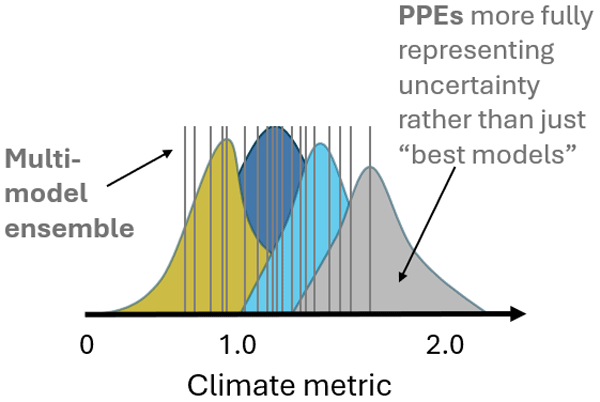
A major challenge in climate science is reducing projection uncertainty despite advances in models and observational constraints. Perturbed parameter ensembles (PPEs) offer a powerful tool to explore and reduce uncertainty by revealing model weaknesses and guiding development. PPEs are now widely applied across climate systems and scales. We argue they should be prioritized alongside complexity and resolution in model resource planning.
Yuli Liu, Jie Gong, Ian S. Adams, Rachael A. Kroodsma, Ruiyao Chen, Dong L. Wu, Ralf Bennartz, and Scott A. Braun
EGUsphere, https://doi.org/10.5194/egusphere-2026-1348, https://doi.org/10.5194/egusphere-2026-1348, 2026
Short summary
Short summary
This paper presents an ice hydrometeor retrieval algorithm for the PolSIR and PMM satellite missions. The algorithm combines Bayesian Monte Carlo Integration with the Optimal Estimation Method, extending retrieval capability beyond the limitations of the a priori database. Experiments using simulations and airborne observations show that the algorithm effectively reduces discrepancies between observations and simulations and improves the accuracy of retrieved ice cloud microphysical properties.
Tamanna Subba, Michael P. Jensen, Min Deng, Scott E. Giangrande, Mark C. Harvey, Ashish Singh, Die Wang, Maria Zawadowicz, and Chongai Kuang
Atmos. Chem. Phys., 26, 2853–2879, https://doi.org/10.5194/acp-26-2853-2026, https://doi.org/10.5194/acp-26-2853-2026, 2026
Short summary
Short summary
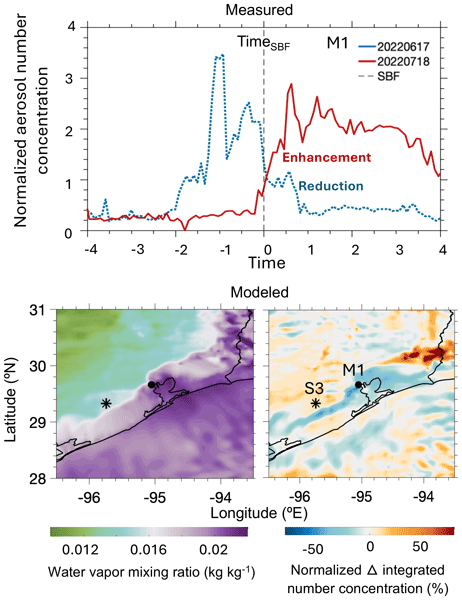
Using TRacking Aerosol Convection Interactions Experiment field campaign observations and model simulations, we studied summertime sea-breeze events in southern Texas. When sea-breeze fronts moved inland, they mixed marine and continental air, changing aerosol concentrations by up to a factor of two as far as 50 km inland. The sea breeze also reduced the number of particles that can form cloud droplets, highlighting the connection between coastal meteorology and aerosol-cloud interactions.
Kaiden Sookdar, Scott E. Giangrande, John Rausch, Lihong Ma, Meng Wang, Dié Wang, Michael P. Jensen, Ching-Shu Hung, and J. Christine Chiu
Atmos. Meas. Tech., 18, 6271–6289, https://doi.org/10.5194/amt-18-6271-2025, https://doi.org/10.5194/amt-18-6271-2025, 2025
Short summary
Short summary
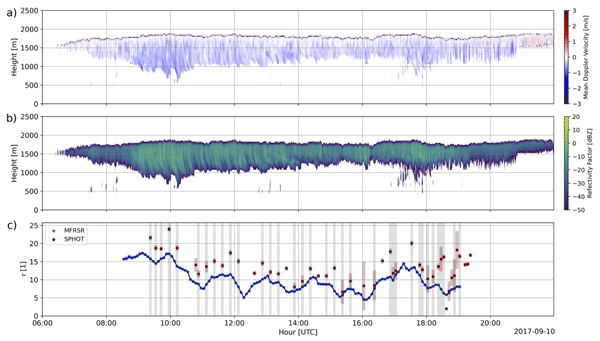
Photometer observations of stratocumulus cloud properties are evaluated for a multiyear archive. Retrievals for cloud optical depth, cloud droplet effective radius, and liquid water path show solid agreement with collocated references. Continental stratocumulus clouds sorted by cloud thickness indicate double the cloud optical depth and liquid water path of their marine counterparts, while exhibiting similar bulk cloud droplet effective radius.
Jing Li, Jiaoshi Zhang, Xianda Gong, Steven Spielman, Chongai Kuang, Ashish Singh, Maria A. Zawadowicz, Lu Xu, and Jian Wang
Atmos. Chem. Phys., 25, 13975–13993, https://doi.org/10.5194/acp-25-13975-2025, https://doi.org/10.5194/acp-25-13975-2025, 2025
Short summary
Short summary
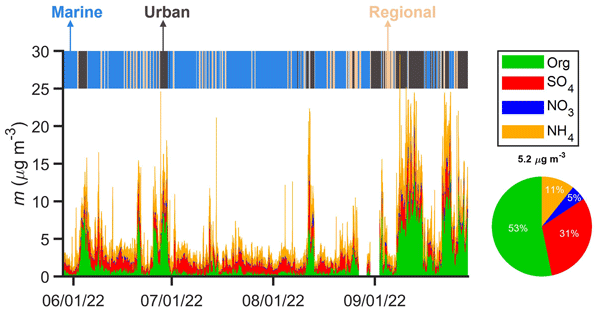
Using measurements at a rural coastal site, we quantified aerosols in representative air masses and identified major sources of organics in the Houston area. Our results show cooking aerosol is likely overestimated by earlier studies. Additionally, diurnal variation of highly oxidized organics is mostly driven by air mass changes instead of photochemistry. This study highlights the impacts of emissions, atmospheric chemistry, and meteorology on aerosol properties in the coastal–rural environment.
McKenna W. Stanford, Ann M. Fridlind, Andrew S. Ackerman, Bastiaan van Diedenhoven, Qian Xiao, Jian Wang, Toshihisa Matsui, Daniel Hernandez-Deckers, and Paul Lawson
Atmos. Chem. Phys., 25, 11199–11231, https://doi.org/10.5194/acp-25-11199-2025, https://doi.org/10.5194/acp-25-11199-2025, 2025
Short summary
Short summary
The evolution of cloud droplets, from the point they are activated by atmospheric aerosol to the formation of precipitation, is an important process relevant to understanding cloud–climate feedbacks. This study demonstrates a benchmark framework for using novel airborne measurements and retrievals to constrain high-resolution simulations of moderately deep cumulus clouds and pathways for scaling results to large-scale models and space-based observational platforms.
Dié Wang, Roni Kobrosly, Tao Zhang, Tamanna Subba, Susan van den Heever, Siddhant Gupta, and Michael Jensen
Atmos. Chem. Phys., 25, 9295–9314, https://doi.org/10.5194/acp-25-9295-2025, https://doi.org/10.5194/acp-25-9295-2025, 2025
Short summary
Short summary
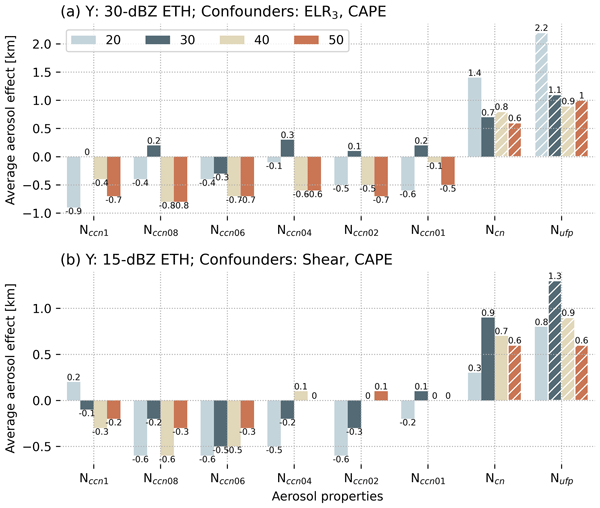
We aim to understand how tiny particles in the air, called aerosols, affect rain clouds in the Houston–Galveston area. More aerosols generally do not make these clouds grow much taller, with an average height increase of about 1 km. However, their effects on rainfall strength and cloud expansion are less certain. Clouds influenced by sea breezes show a stronger aerosol impact, possibly due to factors that are unaccounted for like vertical winds in near-surface layers.
Min Deng, Scott E. Giangrande, Michael P. Jensen, Karen Johnson, Christopher R. Williams, Jennifer M. Comstock, Ya-Chien Feng, Alyssa Matthews, Iosif A. Lindenmaier, Timothy G. Wendler, Marquette Rocque, Aifang Zhou, Zeen Zhu, Edward Luke, and Die Wang
Atmos. Meas. Tech., 18, 1641–1657, https://doi.org/10.5194/amt-18-1641-2025, https://doi.org/10.5194/amt-18-1641-2025, 2025
Short summary
Short summary
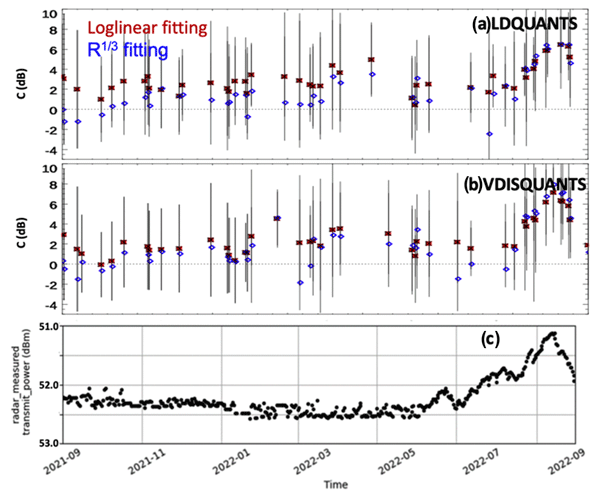
A relative calibration technique is developed for the cloud radar by monitoring the intercept of the wet-radome attenuation log-linear behavior as a function of rainfall rates in light and moderate rain conditions. This resulting reflectivity offset during the recent field campaign is compared favorably with the traditional disdrometer comparison near the rain onset, while it also demonstrates similar trends with respect to collocated and independently calibrated reference radars.
Trude Eidhammer, Andrew Gettelman, Katherine Thayer-Calder, Duncan Watson-Parris, Gregory Elsaesser, Hugh Morrison, Marcus van Lier-Walqui, Ci Song, and Daniel McCoy
Geosci. Model Dev., 17, 7835–7853, https://doi.org/10.5194/gmd-17-7835-2024, https://doi.org/10.5194/gmd-17-7835-2024, 2024
Short summary
Short summary
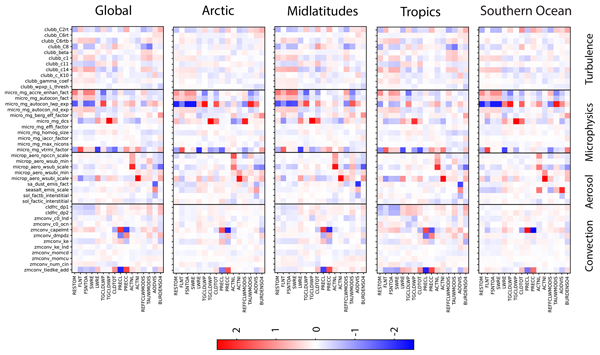
We describe a dataset where 45 parameters related to cloud processes in the Community Earth System Model version 2 (CESM2) Community Atmosphere Model version 6 (CAM6) are perturbed. Three sets of perturbed parameter ensembles (263 members) were created: current climate, preindustrial aerosol loading and future climate with sea surface temperature increased by 4 K.
Toshi Matsui, Daniel Hernandez-Deckers, Scott E. Giangrande, Thiago S. Biscaro, Ann Fridlind, and Scott Braun
Atmos. Chem. Phys., 24, 10793–10814, https://doi.org/10.5194/acp-24-10793-2024, https://doi.org/10.5194/acp-24-10793-2024, 2024
Short summary
Short summary
Using computer simulations and real measurements, we discovered that storms over the Amazon were narrower but more intense during the dry periods, producing heavier rain and more ice particles in the clouds. Our research showed that cumulus bubbles played a key role in creating these intense storms. This study can improve the representation of the effect of continental and ocean environments on tropical regions' rainfall patterns in simulations.
G. Alexander Sokolowsky, Sean W. Freeman, William K. Jones, Julia Kukulies, Fabian Senf, Peter J. Marinescu, Max Heikenfeld, Kelcy N. Brunner, Eric C. Bruning, Scott M. Collis, Robert C. Jackson, Gabrielle R. Leung, Nils Pfeifer, Bhupendra A. Raut, Stephen M. Saleeby, Philip Stier, and Susan C. van den Heever
Geosci. Model Dev., 17, 5309–5330, https://doi.org/10.5194/gmd-17-5309-2024, https://doi.org/10.5194/gmd-17-5309-2024, 2024
Short summary
Short summary
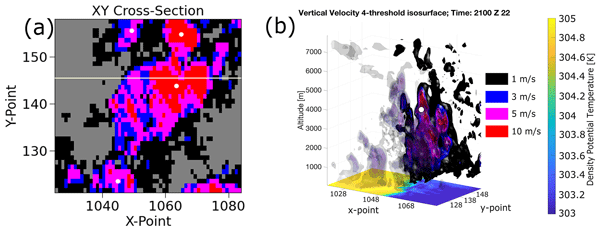
Building on previous analysis tools developed for atmospheric science, the original release of the Tracking and Object-Based Analysis (tobac) Python package, v1.2, was open-source, modular, and insensitive to the type of gridded input data. Here, we present the latest version of tobac, v1.5, which substantially improves scientific capabilities and computational efficiency from the previous version. These enhancements permit new uses for tobac in atmospheric science and potentially other fields.
Siddhant Gupta, Dié Wang, Scott E. Giangrande, Thiago S. Biscaro, and Michael P. Jensen
Atmos. Chem. Phys., 24, 4487–4510, https://doi.org/10.5194/acp-24-4487-2024, https://doi.org/10.5194/acp-24-4487-2024, 2024
Short summary
Short summary
We examine the lifecycle of isolated deep convective clouds (DCCs) in the Amazon rainforest. Weather radar echoes from the DCCs are tracked to evaluate their lifecycle. The DCC size and intensity increase, reach a peak, and then decrease over the DCC lifetime. Vertical profiles of air motion and mass transport from different seasons are examined to understand the transport of energy and momentum within DCC cores and to address the deficiencies in simulating DCCs using weather and climate models.
Calvin Howes, Pablo E. Saide, Hugh Coe, Amie Dobracki, Steffen Freitag, Jim M. Haywood, Steven G. Howell, Siddhant Gupta, Janek Uin, Mary Kacarab, Chongai Kuang, L. Ruby Leung, Athanasios Nenes, Greg M. McFarquhar, James Podolske, Jens Redemann, Arthur J. Sedlacek, Kenneth L. Thornhill, Jenny P. S. Wong, Robert Wood, Huihui Wu, Yang Zhang, Jianhao Zhang, and Paquita Zuidema
Atmos. Chem. Phys., 23, 13911–13940, https://doi.org/10.5194/acp-23-13911-2023, https://doi.org/10.5194/acp-23-13911-2023, 2023
Short summary
Short summary
To better understand smoke properties and its interactions with clouds, we compare the WRF-CAM5 model with observations from ORACLES, CLARIFY, and LASIC field campaigns in the southeastern Atlantic in August 2017. The model transports and mixes smoke well but does not fully capture some important processes. These include smoke chemical and physical aging over 4–12 days, smoke removal by rain, sulfate particle formation, aerosol activation into cloud droplets, and boundary layer turbulence.

Francesca Gallo, Janek Uin, Kevin J. Sanchez, Richard H. Moore, Jian Wang, Robert Wood, Fan Mei, Connor Flynn, Stephen Springston, Eduardo B. Azevedo, Chongai Kuang, and Allison C. Aiken
Atmos. Chem. Phys., 23, 4221–4246, https://doi.org/10.5194/acp-23-4221-2023, https://doi.org/10.5194/acp-23-4221-2023, 2023
Short summary
Short summary
This study provides a summary statistic of multiday aerosol plume transport event influences on aerosol physical properties and the cloud condensation nuclei budget at the U.S. Department of Energy Atmospheric Radiation Measurement Facility in the eastern North Atlantic (ENA). An algorithm that integrates aerosol properties is developed and applied to identify multiday aerosol transport events. The influence of the aerosol plumes on aerosol populations at the ENA is successively assessed.
Daniel Hernandez-Deckers, Toshihisa Matsui, and Ann M. Fridlind
Atmos. Chem. Phys., 22, 711–724, https://doi.org/10.5194/acp-22-711-2022, https://doi.org/10.5194/acp-22-711-2022, 2022
Short summary
Short summary
We investigate how the concentration of aerosols (small particles that serve as seeds for cloud droplets) affect the dynamics of simulated clouds using two different frameworks, i.e., the traditional selection of cloudy rising grid points and tracking small-scale coherent rising features (cumulus thermals). By doing so, we find that these cumulus thermals reveal useful information about the coupling between internal cloud circulations and cloud droplet and raindrop formation.
Cited articles
Abbott, T. H. and Cronin, T. W.: Aerosol invigoration of atmospheric convection through increases in humidity, Science, 371, 83–85, https://doi.org/10.1126/science.abc5181, 2021. a, b, c, d
Abdul-Razzak, H. and Ghan, S. J.: A parameterization of aerosol activation: 2. Multiple aerosol types, J. Geophys. Res., 105, 6837–6844, https://doi.org/10.1029/1999JD901161, 2000. a
Ackerman, A. S., Toon, O. B., Stevens, D. E., Heymsfield, A. J., Ramanathan, V., and Welton, E. J.: Reduction of Tropical Cloudiness by Soot, Science, 288, 1042–1047, https://doi.org/10.1126/science.288.5468.1042, 2000. a
Albrecht, B. A.: Aerosols, Cloud Microphysics, and Fractional Cloudiness, Science, 245, 1227–1230, https://doi.org/10.1126/science.245.4923.1227, 1989. a
Andreae, M. O., Rosenfeld, D., Artaxo, P., Costa, A. A., Frank, G. P., Longo, K. M., and Silva-Dias, M. A. F.: Smoking Rain Clouds over the Amazon, Science, 303, 1337–1342, https://doi.org/10.1126/science.1092779, 2004. a, b
Arakawa, A. and Schubert, W. H.: Interaction of a Cumulus Cloud Ensemble with the Large-Scale Environment, Part I, J. Atmos. Sci., 31, 674–701, https://doi.org/10.1175/1520-0469(1974)031<0674:IOACCE>2.0.CO;2, 1974. a
Birch, C. E., Parker, D. J., O'Leary, A., Marsham, J. H., Taylor, C. M., Harris, P. P., and Lister, G. M. S.: Impact of soil moisture and convectively generated waves on the initiation of a West African mesoscale convective system, Q. J. Roy. Meteor. Soc., 139, 1712–1730, https://doi.org/10.1002/qj.2062, 2013. a
Blyth, A. M., Lasher-Trapp, S. G., and Cooper, W. A.: A study of thermals in cumulus clouds, Q. J. Roy. Meteor. Soc., 131, 1171–1190, https://doi.org/10.1256/qj.03.180, 2005. a, b
Bruning, E. C., Brunner, K. N., van Lier-Walqui, M., Logan, T., and Matsui, T.: Lightning and Radar Measures of Mixed-Phase Updraft Variability in Tracked Storms during the TRACER Field Campaign in Houston, Texas, Mon. Weather Rev., 152, 2753–2769, https://doi.org/10.1175/MWR-D-24-0060.1, 2024. a, b
Chen, B., Thompson, S. A., Matthews, B. H., Sharma, M., Li, R., Nowotarski, C. J., Rapp, A. D., and Brooks, S. D.: A new technique to retrieve aerosol vertical profiles using micropulse lidar and ground-based aerosol measurements, Atmos. Meas. Tech., 18, 5841–5859, https://doi.org/10.5194/amt-18-5841-2025, 2025. a
Chen, F., Kusaka, H., Bornstein, R., Ching, J., Grimmond, C. S. B., Grossman-Clarke, S., Loridan, T., Manning, K. W., Martilli, A., Miao, S., Sailor, D., Salamanca, F. P., Taha, H., Tewari, M., Wang, X., Wyszogrodzki, A. A., and Zhang, C.: The integrated WRF/urban modelling system: development, evaluation, and applications to urban environmental problems, Int. J. Climatol., 31, 273–288, https://doi.org/10.1002/joc.2158, 2011. a
Choi, Y. and Lee, Y.-H.: Urban Effect on Sea-Breeze-Initiated Rainfall: A Case Study for Seoul Metropolitan Area, Atmosphere, 12, https://doi.org/10.3390/atmos12111483, 2021. a
Chou, M.-D. and Suarez, M. J.: A Solar Radiation Parameterization for Atmospheric Studies, Tech. Rep. NASA/TM-1999-104606, Vol. 15, NASA Goddard Space Flight Center, Greenbelt, Maryland, https://ntrs.nasa.gov/api/citations/19990060930/downloads/19990060930.pdf (last access: 14 July 2026), 1999. a
Chou, M.-D., Suarez, M. J., Liang, X.-Z., and Yah, M. M.-H.: A Thermal Infrared Radiation Parameterization for Atmospheric Studies, Tech. Rep. NASA/TM-2001-104606, Vol. 19, NASA Goddard Space Flight Center, Greenbelt, Maryland, https://gmao.gsfc.nasa.gov/media/publications/zbly36ziNFDFbmYmvhQeVqPhUo/104606vol19.pdf (last access: 14 July 2026), 2001. a
Damiani, R., Vali, G., and Haimov, S.: The Structure of Thermals in Cumulus from Airborne Dual-Doppler Radar Observations, J. Atmos. Sci., 63, 1432–1450, https://doi.org/10.1175/JAS3701.1, 2006. a, b
DeMott, P. J., Prenni, A. J., Liu, X., Kreidenweis, S. M., Petters, M. D., Twohy, C. H., Richardson, M. S., Eidhammer, T., and Rogers, D. C.: Predicting global atmospheric ice nuclei distributions and their impacts on climate, P. Natl. Acad. Sci. USA, 107, 11217–11222, https://doi.org/10.1073/pnas.0910818107, 2010. a, b
Dudhia, J.: Overview of WRF Physics: Boundary Layer and Turbulence [PDF], NCAR/MMM2, National Center for Atmospheric Research, https://www2.mmm.ucar.edu/wrf/users/tutorial/presentation_pdfs/202101/dudhia_physics_pbl_turbulence.pdf (last access: 9 April 2026), 2021. a
Emanuel, K.: Atmospheric Convection, Oxford University Press, New York, ISBN 978-0-19-506630-2, 1994. a
Fan, J., Zhang, Y., Li, Z., Yan, H., Prabhakaran, T., Rosenfeld, D., and Khain, A.: Unveiling Aerosol Impacts on Deep Convective Clouds: Scientific Concept, Modeling, Observational Analysis, and Future Direction, J. Geophys. Res., 130, e2024JD041931, https://doi.org/10.1029/2024JD041931, 2025. a, b, c
Fierro, A. O., Mansell, E. R., MacGorman, D. R., and Ziegler, C. L.: The Implementation of an Explicit Charging and Discharge Lightning Scheme within the WRF-ARW Model: Benchmark Simulations of a Continental Squall Line, a Tropical Cyclone, and a Winter Storm, Mon. Weather Rev., 141, 2390–2415, https://doi.org/10.1175/MWR-D-12-00278.1, 2013. a
Fridlind, A. M., Li, X., Wu, D., van Lier-Walqui, M., Ackerman, A. S., Tao, W.-K., McFarquhar, G. M., Wu, W., Dong, X., Wang, J., Ryzhkov, A., Zhang, P., Poellot, M. R., Neumann, A., and Tomlinson, J. M.: Derivation of aerosol profiles for MC3E convection studies and use in simulations of the 20 May squall line case, Atmos. Chem. Phys., 17, 5947–5972, https://doi.org/10.5194/acp-17-5947-2017, 2017. a
Friedl, M., McIver, D., Hodges, J., Zhang, X., Muchoney, D., Strahler, A., Woodcock, C., Gopal, S., Schneider, A., Cooper, A., Baccini, A., Gao, F., and Schaaf, C.: Global land cover mapping from MODIS: algorithms and early results, Remote Sens. Environ., 83, 287–302, https://doi.org/10.1016/S0034-4257(02)00078-0, 2002. a
Givati, A. and Rosenfeld, D.: Quantifying Precipitation Suppression Due to Air Pollution, J. Appl. Meteorol., 43, 1038–1056, https://doi.org/10.1175/1520-0450(2004)043<1038:QPSDTA>2.0.CO;2, 2004. a, b
Grabowski, W. W. and Morrison, H.: Do Ultrafine Cloud Condensation Nuclei Invigorate Deep Convection?, J. Atmos. Sci., 77, 2567–2583, https://doi.org/10.1175/JAS-D-20-0012.1, 2020. a
Grant, L. D. and van den Heever, S. C.: Cold Pool and Precipitation Responses to Aerosol Loading: Modulation by Dry Layers, J. Atmos. Sci., 72, 1398–1408, https://doi.org/10.1175/JAS-D-14-0260.1, 2015. a
Gu, J.-F., Stephen Plant, R., Holloway, C. E., and Muetzelfeldt, M. R.: Pressure Drag for Shallow Cumulus Clouds: From Thermals to the Cloud Ensemble, Geophys. Res. Lett., 47, e2020GL090460, https://doi.org/10.1029/2020GL090460, 2020. a, b
Harkema, S. S., Mansell, E. R., Fierro, A. O., Carey, L. D., Schultz, C. J., Matsui, T., and Berndt, E. B.: Explicitly Resolving Lightning and Electrification Processes From the 10–12 April 2019 Thundersnow Outbreak, J. Geophys. Res., 129, e2023JD039987, https://doi.org/10.1029/2023JD039987, 2024. a
Heikenfeld, M., Marinescu, P. J., Christensen, M., Watson-Parris, D., Senf, F., van den Heever, S. C., and Stier, P.: tobac 1.2: towards a flexible framework for tracking and analysis of clouds in diverse datasets, Geosci. Model Dev., 12, 4551–4570, https://doi.org/10.5194/gmd-12-4551-2019, 2019. a
Hernandez-Deckers, D. and Sherwood, S. C.: On the Role of Entrainment in the Fate of Cumulus Thermals, J. Atmos. Sci., 75, 3911–3924, https://doi.org/10.1175/JAS-D-18-0077.1, 2018. a, b, c
Hernandez-Deckers, D., Matsui, T., and Fridlind, A. M.: Updraft dynamics and microphysics: on the added value of the cumulus thermal reference frame in simulations of aerosol–deep convection interactions, Atmos. Chem. Phys., 22, 711–724, https://doi.org/10.5194/acp-22-711-2022, 2022. a, b
Hersbach, H., Bell, B., Berrisford, P., Hirahara, S., Horányi, A., Muñoz-Sabater, J., Nicolas, J., Peubey, C., Radu, R., Schepers, D., Simmons, A., Soci, C., Abdalla, S., Abellan, X., Balsamo, G., Bechtold, P., Biavati, G., Bidlot, J., Bonavita, M., De Chiara, G., Dahlgren, P., Dee, D., Diamantakis, M., Dragani, R., Flemming, J., Forbes, R., Fuentes, M., Geer, A., Haimberger, L., Healy, S., Hogan, R. J., Hólm, E., Janisková, M., Keeley, S., Laloyaux, P., Lopez, P., Lupu, C., Radnoti, G., de Rosnay, P., Rozum, I., Vamborg, F., Villaume, S., and Thépaut, J.-N.: The ERA5 global reanalysis, Q. J. Roy. Meteor. Soc., 146, 1999–2049, https://doi.org/10.1002/qj.3803, 2020. a
Hirt, M., Craig, G. C., Schäfer, S. A. K., Savre, J., and Heinze, R.: Cold-pool-driven convective initiation: using causal graph analysis to determine what convection-permitting models are missing, Q. J. Roy. Meteor. Soc., 146, 2205–2227, https://doi.org/10.1002/qj.3788, 2020. a
Hu, J., Rosenfeld, D., Ryzhkov, A., Zrnic, D., Williams, E., Zhang, P., Snyder, J. C., Zhang, R., and Weitz, R.: Polarimetric Radar Convective Cell Tracking Reveals Large Sensitivity of Cloud Precipitation and Electrification Properties to CCN, J. Geophys. Res., 124, 12194–12205, https://doi.org/10.1029/2019JD030857, 2019. a, b, c
Hu, Q.: A Cumulus Parameterization Based on a Cloud Model of Intermittently Rising Thermals, J. Atmos. Sci., 54, 2292–2307, https://doi.org/10.1175/1520-0469(1997)054<2292:ACPBOA>2.0.CO;2, 1997. a
Igel, A. L. and van den Heever, S. C.: Invigoration or Enervation of Convective Clouds by Aerosols?, Geophys. Res. Lett., 48, e2021GL093804, https://doi.org/10.1029/2021GL093804, 2021. a
Iguchi, T., Rutledge, S. A., Tao, W.-K., Matsui, T., Dolan, B., Lang, S. E., and Barnum, J.: Impacts of Aerosol and Environmental Conditions on Maritime and Continental Deep Convective Systems Using a Bin Microphysical Model, J. Geophys. Res., 125, e2019JD030952, https://doi.org/10.1029/2019JD030952, 2020. a, b
Jensen, M. P., Flynn, J. H., Judd, L. M., Kollias, P., Kuang, C., Mcfarquhar, G., Nadkarni, R., Powers, H., and Sullivan, J.: A Succession of Cloud, Precipitation, Aerosol, and Air Quality Field Experiments in the Coastal Urban Environment, B. Am. Meteorol. Soc., 103, 103–105, https://doi.org/10.1175/BAMS-D-21-0104.1, 2022. a
Jensen, M. P., Flynn, J. H., Gonzalez-Cruz, J. E., Judd, L. M., Kollias, P., Kuang, C., McFarquhar, G. M., Powers, H., Ramamurthy, P., Sullivan, J., Aiken, A. C., Alvarez, S. L., Argay, P., Argrow, B., Bell, T. M., Boyer, D., Brooks, S. D., Bruning, E. C., Brunner, K., Butterworth, B., Calmer, R., Cappa, C. D., Chakrabarty, R. K., Chandrasekar, V., Chao, C.-Y., Chen, B., China, S., Collins, D. R., Collis, S. M., Crowell, S., Porto, R. D., de Boer, G., Deng, M., Dexheimer, D., Drager, A. J., Du, X., Dubey, M. K., Dzambo, A. M., Etten-Bohm, M., Fan, J., Farley, R., Feng, Y.-C., Feng, Y., Fenn, M., Ferrare, R. E., Flusche, S., Fridlind, A. M., Galewsky, J., Gamarro, H., Gardner, S., Ghate, V. P., Giangrande, S. E., Griffin, R. J., Griggs, T., Gronoff, G. P., Grover, M., Gaugenti, M., Guo, F., Gupta, S., Hu, J., Huang, Y., Jackson, R. C., Hair, J. W., Johnson, K. L., Kasparoglu, S., Klein, P., Kotsakis, A. E., Kumar, J., Kumjian, M. R., Lamer, K., Lappin, F. M., Lei, Z., Li, J., Li, R., Li, Y., Logan, T., Lombardo, K., Luke, E. P., Mages, Z., Matthews, A. A., Matthews, B. H., Mayol-Bracero, O., Matsui, T., McKeown, K. E., Mehra, M., Mei, F., Meskidzhe, N., Nguyen, C., Nielsen, E. R., Nowotarski, C. J., Oaks, D., Oktem, R., Oue, M., Park, J. M., Partida, N., Patil, S., Pena, J. C., Petters, M. D., Phoenix, D. B., Puthserry, J. V., Rapp, A. D., Romps, D. M., Roots, M., Rosenfeld, D., Saleeby, S. M., Savala, P., Sedlacek, A. J., Sharma, M., Sheesley, R., Shingler, T. J., Shrestha, S., Singh, A., Smith, E. N., Smith, J. N., Smith, S., Snyder, J., Spicer, E., Spinei, E., Spychala, M., Steir, P., Storm, M. R., Subba, T., Treserras, B. P., Trojanowski, R., Theisen, A., Thompson, S. A., Twigg, L., Uin, J., Ulinski, A. R., van den Heever, S., van Lier-Walqui, M., Varble, A. C., Wagner, T. J., Wakeen, J., Wales, N. A., Walter, P. J., Wang, D., Wang, J., Wood, L., Wang, Y., Wolde, M., Yoon, S., Young, M. H., Zawadowicz, M. A., Zhang, Q., Zhou, A., Zhu, Z., and Zhu, Z.: Studying Aerosol, Clouds, and Air Quality in the Coastal Urban Environment of Southeastern Texas, B. Am. Meteorol. Soc., https://doi.org/10.1175/BAMS-D-23-0331.1, 2025. a, b
Khain, A. P., BenMoshe, N., and Pokrovsky, A.: Factors Determining the Impact of Aerosols on Surface Precipitation from Clouds: An Attempt at Classification, J. Atmos. Sci., 65, 1721–1748, https://doi.org/10.1175/2007JAS2515.1, 2008. a
Koontz, A., Uin, J., Andrews, E., Enekwizu, O., Hayes, C., and Salwen, C.: Cloud Condensation Nuclei Particle Counter (AOSCCN2COLASPECTRA), 2021-10-01 to 2022-09-02, ARM Mobile Facility (HOU), Houston, TX, AMF1 (main site for TRACER) (M1), https://doi.org/10.5439/1323896, 2021. a
Koren, I., Kaufman, Y. J., Rosenfeld, D., Remer, L. A., and Rudich, Y.: Aerosol invigoration and restructuring of Atlantic convective clouds, Geophys. Res. Lett., 32, https://doi.org/10.1029/2005GL023187, 2005. a
Kusaka, H. and Kimura, F.: Coupling a Single-Layer Urban Canopy Model with a Simple Atmospheric Model: Impact on Urban Heat Island Simulation for an Idealized Case, J. Meteorol. Soc. Jpn., 82, 67–80, https://doi.org/10.2151/jmsj.82.67, 2004. a
Kusaka, H., Kondo, H., Kikegawa, Y., and Kimura, F.: A Simple Single-Layer Urban Canopy Model For Atmospheric Models: Comparison With Multi-Layer And Slab Models, Bound.-Lay. Meteorol., 101, 329–358, https://doi.org/10.1023/A:1019207923078, 2001. a
Li, Z., Niu, F., Fan, J., Liu, Y., Rosenfeld, D., and Ding, Y.: Long-term impacts of aerosols on the vertical development of clouds and precipitation, Nat. Geosci., 4, 888–894, https://doi.org/10.1038/ngeo1313, 2011. a
Lilly, D. K.: Stratified Turbulence and the Mesoscale Variability of the Atmosphere, J. Atmos. Sci., 40, 749–761, https://doi.org/10.1175/1520-0469(1983)040<0749:STATMV>2.0.CO;2, 1983. a
Lin, J. C., Matsui, T., Pielke Sr., R. A., and Kummerow, C.: Effects of biomass-burning-derived aerosols on precipitation and clouds in the Amazon Basin: a satellite-based empirical study, J. Geophys. Res., 111, https://doi.org/10.1029/2005JD006884, 2006. a
Mages, Z., Kollias, P., Treserras, B. P., Borque, P., and Oue, M.: Shallow cloud variability in Houston, Texas, during the ESCAPE and TRACER field experiments, Atmos. Chem. Phys., 25, 6025–6045, https://doi.org/10.5194/acp-25-6025-2025, 2025. a
Mansell, E. R., MacGorman, D. R., Ziegler, C. L., and Straka, J. M.: Charge structure and lightning sensitivity in a simulated multicell thunderstorm, J. Geophys. Res., 110, https://doi.org/10.1029/2004JD005287, 2005. a
Mansell, E. R., Ziegler, C. L., and Bruning, E. C.: Simulated Electrification of a Small Thunderstorm with Two-Moment Bulk Microphysics, J. Atmos. Sci., 67, 171–194, https://doi.org/10.1175/2009JAS2965.1, 2010. a
Marinescu, P. J., van den Heever, S. C., Heikenfeld, M., Barrett, A. I., Barthlott, C., Hoose, C., Fan, J., Fridlind, A. M., Matsui, T., Miltenberger, A. K., Stier, P., Vie, B., White, B. A., and Zhang, Y.: Impacts of Varying Concentrations of Cloud Condensation Nuclei on Deep Convective Cloud Updrafts—A Multimodel Assessment, J. Atmos. Sci., 78, 1147–1172, https://doi.org/10.1175/JAS-D-20-0200.1, 2021. a, b, c, d, e
Matsui, T., Dolan, B., Iguchi, T., Rutledge, S. A., Tao, W.-K., and Lang, S.: Polarimetric Radar Characteristics of Simulated and Observed Intense Convective Cores for a Midlatitude Continental and Tropical Maritime Environment, J. Hydrometeorol., 21, 501–517, https://doi.org/10.1175/JHM-D-19-0185.1, 2020a. a
Matsui, T., Zhang, S. Q., Lang, S. E., Tao, W.-K., Ichoku, C., and Peters-Lidard, C. D.: Impact of radiation frequency, precipitation radiative forcing, and radiation column aggregation on convection-permitting West African monsoon simulations, Clim. Dynam., 55, 193–213, https://doi.org/10.1007/s00382-018-4187-2, 2020b. a
Matsui, T., Wolff, D. B., Lang, S., Mohr, K., Zhang, M., Xie, S., Tang, S., Saleeby, S. M., Posselt, D. J., Braun, S. A., Chern, J.-D., Dolan, B., Pippitt, J. L., and Loftus, A. M.: Systematic Validation of Ensemble Cloud-Process Simulations Using Polarimetric Radar Observations and Simulator Over the NASA Wallops Flight Facility, J. Geophys. Res., 128, e2022JD038134, https://doi.org/10.1029/2022JD038134, 2023. a
Matsui, T., Hernandez-Deckers, D., Giangrande, S. E., Biscaro, T. S., Fridlind, A., and Braun, S.: A thermal-driven graupel generation process to explain dry-season convective vigor over the Amazon, Atmos. Chem. Phys., 24, 10793–10814, https://doi.org/10.5194/acp-24-10793-2024, 2024. a, b
Monin, A. and Obukhov, A.: Basic laws of turbulent mixing in the ground surface layer, Tr. Geophiz. Inst. Akad. Nauk. SSSR, 151, 163–187, 1954. a
Morrison, H. and Peters, J. M.: Theoretical Expressions for the Ascent Rate of Moist Deep Convective Thermals, J. Atmos. Sci., 75, 1699–1719, https://doi.org/10.1175/jas-d-17-0295.1, 2018. a
Morrison, H., Peters, J. M., Varble, A. C., Hannah, W. M., and Giangrande, S. E.: Thermal Chains and Entrainment in Cumulus Updrafts. Part I: Theoretical Description, J. Atmos. Sci., 77, 3637–3660, https://doi.org/10.1175/JAS-D-19-0243.1, 2020a. a
Morrison, H., van Lier-Walqui, M., Fridlind, A. M., Grabowski, W. W., Harrington, J. Y., Hoose, C., Korolev, A., Kumjian, M. R., Milbrandt, J. A., Pawlowska, H., Posselt, D. J., Prat, O. P., Reimel, K. J., Shima, S.-I., van Diedenhoven, B., and Xue, L.: Confronting the Challenge of Modeling Cloud and Precipitation Microphysics, J. Adv. Model. Earth Sy., 12, e2019MS001689, https://doi.org/10.1029/2019MS001689, 2020b. a
Morrison, H., Jeevanjee, N., Lecoanet, D., and Peters, J. M.: What Controls the Entrainment Rate of Dry Buoyant Thermals with Varying Initial Aspect Ratio?, J. Atmos. Sci., 80, 2711–2728, https://doi.org/10.1175/JAS-D-23-0063.1, 2023. a
Nakanishi, M. and Niino, H.: An Improved Mellor–Yamada Level-3 Model: Its Numerical Stability and Application to a Regional Prediction of Advection Fog, Bound.-Lay. Meteorol., 119, 397–407, https://doi.org/10.1007/s10546-005-9030-8, 2006. a
Nakanishi, M. and Niino, H.: Development of an Improved Turbulence Closure Model for the Atmospheric Boundary Layer, J. Meteorol. Soc. Jpn., 87, 895–912, https://doi.org/10.2151/jmsj.87.895, 2009. a
Niu, G.-Y., Yang, Z.-L., Mitchell, K. E., Chen, F., Ek, M. B., Barlage, M., Kumar, A., Manning, K., Niyogi, D., Rosero, E., Tewari, M., and Xia, Y.: The community Noah land surface model with multiparameterization options (Noah-MP): 1. Model description and evaluation with local-scale measurements, J. Geophys. Res., 116, https://doi.org/10.1029/2010JD015139, 2011. a
Öktem, R., Romps, D. M., and Varble, A. C.: No Warm-Phase Invigoration of Convection Detected during GoAmazon, J. Atmos. Sci., 80, 2345–2364, https://doi.org/10.1175/JAS-D-22-0241.1, 2023. a
Peters, J. M., Morrison, H., Varble, A. C., Hannah, W. M., and Giangrande, S. E.: Thermal Chains and Entrainment in Cumulus Updrafts. Part II: Analysis of Idealized Simulations, J. Atmos. Sci., 77, 3661–3681, https://doi.org/10.1175/JAS-D-19-0244.1, 2020. a, b, c
Peters-Lidard, C. D., Kemp, E. M., Matsui, T., Santanello, J. A., Kumar, S. V., Jacob, J. P., Clune, T., Tao, W.-K., Chin, M., Hou, A., Case, J. L., Kim, D., Kim, K.-M., Lau, W., Liu, Y., Shi, J., Starr, D., Tan, Q., Tao, Z., Zaitchik, B. F., Zavodsky, B., Zhang, S. Q., and Zupanski, M.: Integrated modeling of aerosol, cloud, precipitation and land processes at satellite-resolved scales, Environ. Modell. Softw., 67, 149–159, https://doi.org/10.1016/j.envsoft.2015.01.007, 2015. a
Raymond, D. J. and Herman, M. J.: Convective quasi-equilibrium reconsidered, J. Adv. Model. Earth Sy., 3, https://doi.org/10.1029/2011MS000079, 2011. a
Romps, D. M. and Charn, A. B.: Sticky Thermals: Evidence for a Dominant Balance between Buoyancy and Drag in Cloud Updrafts, J. Atmos. Sci., 72, 2890–2901, https://doi.org/10.1175/JAS-D-15-0042.1, 2015. a
Romps, D. M., Öktem, R., Endo, S., and Vogelmann, A. M.: On the Life Cycle of a Shallow Cumulus Cloud: Is It a Bubble or Plume, Active or Forced?, J. Atmos. Sci., 78, 2823–2833, https://doi.org/10.1175/JAS-D-20-0361.1, 2021. a, b
Rosenfeld, D., Lohmann, U., Raga, G. B., O'Dowd, C. D., Kulmala, M., Fuzzi, S., Reissell, A., and Andreae, M. O.: Flood or Drought: How Do Aerosols Affect Precipitation?, Science, 321, 1309–1313, https://doi.org/10.1126/science.1160606, 2008. a, b, c
Saleeby, S. M., van den Heever, S. C., Marinescu, P. J., Oue, M., Barrett, A. I., Barthlott, C., Cherian, R., Fan, J., Fridlind, A. M., Heikenfeld, M., Hoose, C., Matsui, T., Miltenberger, A. K., Quaas, J., Shpund, J., Stier, P., Vie, B., White, B. A., and Zhang, Y.: Model Intercomparison of the Impacts of Varying Cloud Droplet–Nucleating Aerosols on the Life Cycle and Microphysics of Isolated Deep Convection, J. Atmos. Sci., 82, 2197–2217, https://doi.org/10.1175/JAS-D-24-0181.1, 2025. a, b, c, d
Salinas, V., Bruning, E. C., and Mansell, E. R.: Examining the Kinematic Structures within which Lightning Flashes Are Initiated Using a Cloud-Resolving Model, J. Atmos. Sci., 79, 513–530, https://doi.org/10.1175/JAS-D-21-0132.1, 2022. a
Saunders, P. M.: An observational study of Cumulus, J. Atmos. Sci., 18, 451–467, https://doi.org/10.1175/1520-0469(1961)018<0451:AOSOC>2.0.CO;2, 1961. a
Scorer, R. S. and Ludlam, F. H.: Bubble theory of penetrative convection, Q. J. Roy. Meteor. Soc., 79, 94–103, https://doi.org/10.1002/qj.49707933908, 1953. a
Seinfeld, J. and Pandis, S.: Atmospheric Chemistry and Physics: From Air Pollution to Climate Change, John Wiley & Sons, New York, ISBN 978-0-471-72017-1, 2006. a
Shepherd, J. M. and Burian, S. J.: Detection of Urban-Induced Rainfall Anomalies in a Major Coastal City, Earth Interact., 7, 1–17, https://doi.org/10.1175/1087-3562(2003)007<0001:DOUIRA>2.0.CO;2, 2003. a
Sherwood, S. C., Hernández-Deckers, D., Colin, M., and Robinson, F.: Slippery Thermals and the Cumulus Entrainment Paradox, J. Atmos. Sci., 70, 2426–2442, https://doi.org/10.1175/JAS-D-12-0220.1, 2013. a, b, c, d
Singh, A. and Kuang, C.: Scanning Mobility Particle Sizer (SMPS) Instrument Handbook, Tech. Rep. DOE/SC-ARM-TR-147, U.S. Department of Energy, Atmospheric Radiation Measurement user facility, Richland, Washington, https://doi.org/10.2172/1245993, 2024. a
Singh, A., Kuang, C., Howie, J., Salwen, C., and Hayes, C.: Scanning mobility particle sizer (AOSSMPS), 2021-10-01 to 2022-10-01, ARM Mobile Facility (HOU), Houston, TX; AMF1 (main site for TRACER) (M1), Atmospheric Radiation Measurement (ARM) user facility [data set], https://doi.org/10.5439/1476898, 2022. a
Skamarock, W. C., Klemp, J. B., Dudhia, J., Gill, D. O., Barker, D. M., Duda, M. G., Huang, X.-Y., Wang, W., and Powers, J. G.: A Description of the Advanced Research WRF Version 3, NCAR Technical Note NCAR/TN-475+STR, June 2008, Mesoscale and Microscale Meteorology Division. National Center for Atmospheric Research, Boulder, https://doi.org/10.5065/D68S4MVH, 2008. a
Sokolowsky, G. A., Freeman, S. W., Jones, W. K., Kukulies, J., Senf, F., Marinescu, P. J., Heikenfeld, M., Brunner, K. N., Bruning, E. C., Collis, S. M., Jackson, R. C., Leung, G. R., Pfeifer, N., Raut, B. A., Saleeby, S. M., Stier, P., and van den Heever, S. C.: tobac v1.5: introducing fast 3D tracking, splits and mergers, and other enhancements for identifying and analysing meteorological phenomena, Geosci. Model Dev., 17, 5309–5330, https://doi.org/10.5194/gmd-17-5309-2024, 2024. a, b
Stanford, M. W., Fridlind, A. M., Ackerman, A. S., van Diedenhoven, B., Xiao, Q., Wang, J., Matsui, T., Hernandez-Deckers, D., and Lawson, P.: Warm-phase microphysical evolution in large-eddy simulations of tropical cumulus congestus: evaluating drop size distribution evolution using polarimetry retrievals, in situ measurements, and a thermal-based framework, Atmos. Chem. Phys., 25, 11199–11231, https://doi.org/10.5194/acp-25-11199-2025, 2025. a
Stephens, G. L., Shiro, K. A., Hakuba, M. Z., Takahashi, H., Pilewskie, J. A., Andrews, T., Stubenrauch, C. J., and Wu, L.: Tropical Deep Convection, Cloud Feedbacks and Climate Sensitivity, Surv. Geophys., 45, 1903–1931, https://doi.org/10.1007/s10712-024-09831-1, 2024. a
Tao, W.-K., Li, X., Khain, A., Matsui, T., Lang, S., and Simpson, J.: Role of atmospheric aerosol concentration on deep convective precipitation: Cloud-resolving model simulations, J. Geophys. Res., 112, https://doi.org/10.1029/2007JD008728, 2007. a
Tao, W.-K., Chen, J.-P., Li, Z., Wang, C., and Zhang, C.: Impact of aerosols on convective clouds and precipitation, Rev. Geophys., 50, https://doi.org/10.1029/2011RG000369, 2012. a
Thompson, S. A., Peña, T. A., Lei, Z., Chen, B., Sharma, M., Matthews, B. H., Li, R., Nowotarski, C. J., Rapp, A. D., and Brooks, S. D.: Understanding aerosol properties in convective outflows during TRACER, Aerosol Sci. Tech., 60, 858–879, https://doi.org/10.1080/02786826.2025.2608352, 2026. a
Twomey, S.: Pollution and the planetary albedo, Atmos. Environ., 8, 1251–1256, https://doi.org/10.1016/0004-6981(74)90004-3, 1974. a
Uin, J., Aiken, A. C., Dubey, M. K., Kuang, C., Pekour, M., Salwen, C., Sedlacek, A. J., Senum, G., Smith, S., Wang, J., Watson, T. B., and Springston, S. R.: Atmospheric Radiation Measurement (ARM) Aerosol Observing Systems (AOS) for Surface-Based In Situ Atmospheric Aerosol and Trace Gas Measurements, J. Atmos. Ocean. Tech., 36, 2429–2447, https://doi.org/10.1175/JTECH-D-19-0077.1, 2019. a
Varble, A. C., Igel, A. L., Morrison, H., Grabowski, W. W., and Lebo, Z. J.: Opinion: A critical evaluation of the evidence for aerosol invigoration of deep convection, Atmos. Chem. Phys., 23, 13791–13808, https://doi.org/10.5194/acp-23-13791-2023, 2023. a, b
Vraciu, C. V., Kruse, I. L., and Haerter, J. O.: The Role of Passive Cloud Volumes in the Transition From Shallow to Deep Atmospheric Convection, Geophys. Res. Lett., 50, e2023GL105996, https://doi.org/10.1029/2023GL105996, 2023. a
Vraciu, C. V., Savre, J., and Colin, M.: The Rapid Transition From Shallow to Precipitating Convection as a Predator–Prey Process, J. Adv. Model. Earth Sy., 17, e2024MS004630, https://doi.org/10.1029/2024MS004630, 2025. a
Wang, D., Jensen, M. P., Taylor, D., Kowalski, G., Hogan, M., Wittemann, B. M., Rakotoarivony, A., Giangrande, S. E., and Park, J. M.: Linking Synoptic Patterns to Cloud Properties and Local Circulations Over Southeastern Texas, J. Geophys. Res., 127, e2021JD035920, https://doi.org/10.1029/2021JD035920, 2022. a, b
Wang, D., Melvin, E. C., Smith, N., Jensen, M. P., Gupta, S., Abdullah-Smoot, A., Pszeniczny, N., and Hahn, T.: TRACER Perspectives on Gulf-Breeze and Bay-Breeze Circulations and Coastal Convection, Mon. Weather Rev., 152, 2207–2228, https://doi.org/10.1175/MWR-D-23-0292.1, 2024. a
Wang, D., Kobrosly, R., Zhang, T., Subba, T., van den Heever, S., Gupta, S., and Jensen, M.: Aerosol impacts on isolated deep convection: findings from TRACER, Atmos. Chem. Phys., 25, 9295–9314, https://doi.org/10.5194/acp-25-9295-2025, 2025. a
Xue, H. and Feingold, G.: Large-Eddy Simulations of Trade Wind Cumuli: Investigation of Aerosol Indirect Effects, J. Atmos. Sci., 63, 1605–1622, https://doi.org/10.1175/JAS3706.1, 2006. a, b
Yang, Z.-L., Niu, G.-Y., Mitchell, K. E., Chen, F., Ek, M. B., Barlage, M., Longuevergne, L., Manning, K., Niyogi, D., Tewari, M., and Xia, Y.: The community Noah land surface model with multiparameterization options (Noah-MP): 2. Evaluation over global river basins, J. Geophys. Res., 116, https://doi.org/10.1029/2010JD015140, 2011. a
Yano, J.-I.: Basic convective element: bubble or plume? A historical review, Atmos. Chem. Phys., 14, 7019–7030, https://doi.org/10.5194/acp-14-7019-2014, 2014. a, b
Yin, J., Pan, Z., Mao, F., Rosenfeld, D., Zang, L., Chen, J., and Gong, J.: Large effects of fine and coarse aerosols on tropical deep convective systems throughout their lifecycle, NPJ Clim. Atmos. Sci., 7, https://doi.org/10.1038/s41612-024-00739-6, 2024. a, b, c
Short summary
Aerosols from air pollution affect weather and climate in various ways. Uncertainties remain on their interactions with clouds, in particular via microphysics (processes related to phase-changes of water that generate rain and lightning). We investigate this with high resolution simulations, focusing on cumulus thermals (the rising bubbles in clouds). We describe the thermals’ roles in these interactions, and identify related mesoscale feedback that enhance convection under polluted conditions.
Aerosols from air pollution affect weather and climate in various ways. Uncertainties remain on...


Altmetrics
Final-revised paper
Preprint