
Articles | Volume 25, issue 23
https://doi.org/10.5194/acp-25-17933-2025
© Author(s) 2025. This work is distributed under
the Creative Commons Attribution 4.0 License.
the Creative Commons Attribution 4.0 License.
https://doi.org/10.5194/acp-25-17933-2025
© Author(s) 2025. This work is distributed under
the Creative Commons Attribution 4.0 License.
the Creative Commons Attribution 4.0 License.
Research article
| 
08 Dec 2025
Research article |
| 08 Dec 2025
| 08 Dec 2025
Drone-based vertical profiling of particulate matter size distribution and carbonaceous aerosols: urban vs. rural environment
Kajal Julaha
CORRESPONDING AUTHOR

Department of Atmospheric Physics, Faculty of Mathematics and Physics, Charles University, Prague, 18000, Czech Republic
Institute of Chemical Process Fundamentals of the Czech Academy of Sciences, Prague 16500, Czech Republic
Vladimír Ždímal
Institute of Chemical Process Fundamentals of the Czech Academy of Sciences, Prague 16500, Czech Republic
Saliou Mbengue
Global Change Research Institute of the Czech Academy of Sciences, Brno 60300, Czech Republic
David Brus
Atmospheric Composition Research, Finnish Meteorological Institute, Helsinki 00560, Finland
Institute of Chemical Process Fundamentals of the Czech Academy of Sciences, Prague 16500, Czech Republic
Institute for Environmental Studies, Faculty of Sciences, Charles University, Prague, 12801, Czech Republic
Related authors
Konstantinos Matthaios Doulgeris, David Brus, Christian Maier, Naděžda Zikova, Kajal Julaha, Cuiqi Zhang, Zamin A. Kanji, Ville Kaikkonen, Harri Juttula, Eero Molkoselkä, Anssi Makynen, Mika Komppula, Sergej Sel, and Elke Ludewig
EGUsphere, https://doi.org/10.5194/egusphere-2026-3898, https://doi.org/10.5194/egusphere-2026-3898, 2026
Short summary
Short summary
Clouds are important for weather and climate, but measuring their cloud water droplets accurately is difficult. We compared seven instruments during a field campaign at a high mountain observatory under natural cloud conditions. We found that the way instruments are installed can strongly influence the measurements. Our results provide practical guidance for improving cloud observations and support more consistent measurements across the European ACTRIS research infrastructure.
Ross J. Herbert, Larissa Lacher, Alexander Böhmländer, Mark D. Tarn, Antoine Canzi, Aidan Pantoya, Evelyn Freney, Kristina Höhler, Pia Bogert, Céline Planche, Ping Tian, Michael Adams, Sarah Barr, David Brus, Nicole Büttner, Martin Daily, Konstantinos Doulgeris, Konstantinos Eleftheriadis, Grant Forster, Romy Fösig, Dimitrios G. Georgakopoulos, Maria I. Gini, A. Gannet Hallar, Radovan Krejci, Elke Ludewig, Mauro Mazzola, Ian B. McCubbin, Athanasios Nenes, Tuukka Petäjä, Joseph Robinson, Franziska Vogel, Paul Zieger, Stephen Arnold, Kenneth S. Carslaw, Naruki Hiranuma, Ottmar Möhler, and Benjamin J. Murray
Earth Syst. Sci. Data, 18, 6465–6483, https://doi.org/10.5194/essd-18-6465-2026, https://doi.org/10.5194/essd-18-6465-2026, 2026
Short summary
Short summary
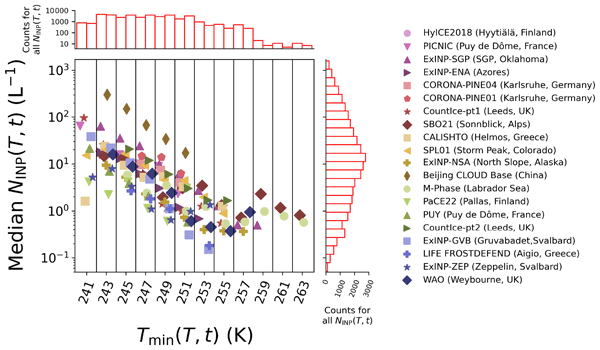
Ice formation in sub-zero clouds is influenced by airborne particles called ice-nucleating particles (INPs), whose concentrations vary substantially over short time and spatial scales. To assess the role of INPs in our climate, a comprehensive and consistent global dataset is essential. Our GloPINE model-ready dataset is a major step in this direction, comprising 36,000 measurements made using a single instrument design (PINE) over 70,000 hours of operation at 20 Northern Hemisphere sites.
Maria Filioglou, Krista Luoma, Eija Asmi, Viet Le, Klaus Haikarainen, David Brus, Tero Mielonen, Mika Komppula, Annele Virtanen, Olli Sippula, Iida Pullinen, Angela Buchholz, Pasi Miettinen, Snehitha Kommula, Saara Peltokorpi, Liqing Hao, Kajar Köster, Annika Saarto, Sanna Pätsi, Pieter G. van Zyl, Liezl Bredenkamp, and Ville Vakkari
Atmos. Chem. Phys., 26, 11525–11542, https://doi.org/10.5194/acp-26-11525-2026, https://doi.org/10.5194/acp-26-11525-2026, 2026
Short summary
Short summary
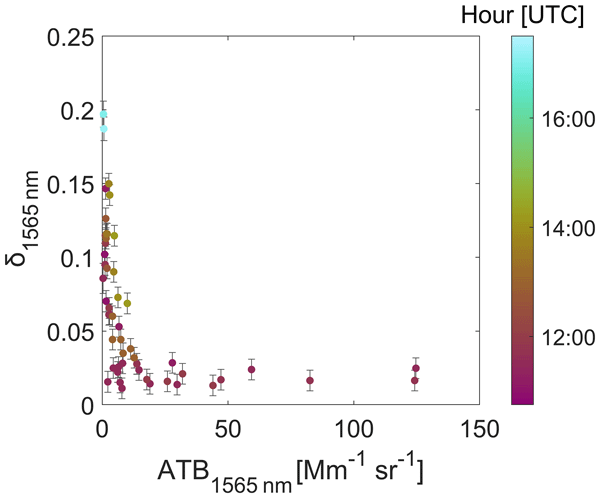
This study explores how smoke and volcanic ash particles, alter the way light is scattered in the atmosphere. By using a ground‑based HALO Doppler lidar system, we observed clear differences in the depolarization ratio, a shape-relevant optical parameter, between fresh smoke, aged smoke, and volcanic ash. These findings show that HALO Doppler lidars can help identify particle types in the air and even provide estimates of smoke mass concentrations, improving assessments of air quality.
Konstantinos Matthaios Doulgeris, David Brus, Christian Maier, Naděžda Zikova, Kajal Julaha, Cuiqi Zhang, Zamin A. Kanji, Ville Kaikkonen, Harri Juttula, Eero Molkoselkä, Anssi Makynen, Mika Komppula, Sergej Sel, and Elke Ludewig
EGUsphere, https://doi.org/10.5194/egusphere-2026-3898, https://doi.org/10.5194/egusphere-2026-3898, 2026
Short summary
Short summary
Clouds are important for weather and climate, but measuring their cloud water droplets accurately is difficult. We compared seven instruments during a field campaign at a high mountain observatory under natural cloud conditions. We found that the way instruments are installed can strongly influence the measurements. Our results provide practical guidance for improving cloud observations and support more consistent measurements across the European ACTRIS research infrastructure.
Jonas Svensson, Ramazon Rakhmonov, Kamoliddin Nazirzoda, Abdusamad Hojiev, Tamlikho Jurabekov, Amirsho Hiyoev, Davlatjon Rahimzoda, Hizbullo Kholzoda, Muzaffar Shodmonov, David Brus, Viet Le, Krista Luoma, Adriano Lemos, Germán Perez Fogwill, Meri M. Ruppel, Outi Meinander, Johan Ström, Eija Asmi, and Antti Hyvärinen
Earth Syst. Sci. Data, 18, 5697–5712, https://doi.org/10.5194/essd-18-5697-2026, https://doi.org/10.5194/essd-18-5697-2026, 2026
Short summary
Short summary
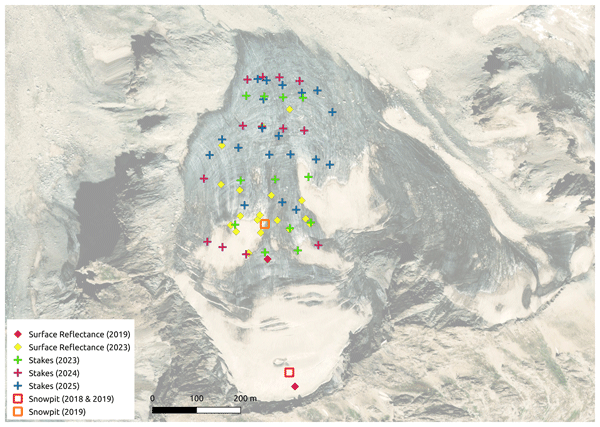
This paper presents data collected at the Zarafshon River Basin and the Hydrographic Party Glacier (GGP), Tajikistan. In annual field expeditions from 2018–2025, data has been collected on the glacier, as well as including meteorological measurements and aerosols. Presented results highlight the environmental conditions that are driving environmental change in Central Asia.
Shubhi Arora, Laurent Poulain, Radek Lhotka, Petr Vodička, Saliou Mbengue, Petra Pokorná, Jaroslav Schwarz, Naděžda Zíková, Jakub Ondráček, Vladimír Ždímal, and Hartmut Herrmann
EGUsphere, https://doi.org/10.5194/egusphere-2026-2028, https://doi.org/10.5194/egusphere-2026-2028, 2026
Short summary
Short summary
Accurate air pollution data is essential for effective policy, yet this study shows that common measurement methods can disagree under real-world conditions. Across three European sites, results matched in summer but diverged in winter, especially during combustion related pollution. The findings identify when measurements are reliable and provide practical guidance to improve monitoring, ensuring more robust data for air quality regulation and public health protection.
Ari Leskinen, Antonia Radlwimmer, Uula Isopahkala, Silvia Calderón, David Brus, Konstantinos Doulgeris, Ville Kaikkonen, Eero Molkoselkä, Dmitri Moiseev, Marie Lou Hirschy, Anssi Mäkynen, Sami Romakkaniemi, and Mika Komppula
EGUsphere, https://doi.org/10.5194/egusphere-2026-2088, https://doi.org/10.5194/egusphere-2026-2088, 2026
Short summary
Short summary
We present a lightweight holographic imaging instrument, designed for high-resolution in-cloud particle measurements at a rate of 10 holograms per second, which leads to sub-meter spatial resolution on-board UAV. The approach offers a cost-effective and versatile alternative, capable of accessing confined or remote areas, enabling improved validation of remote sensing products and numerical cloud models. We present the potential of such instrumentation for high-resolution cloud observations.
Viet Le, Konstantinos Doulgeris, Mika Komppula, John Backman, Gholamhossein Bagheri, Eberhard Bodenschatz, and David Brus
Earth Syst. Sci. Data Discuss., https://doi.org/10.5194/essd-2026-135, https://doi.org/10.5194/essd-2026-135, 2026
Preprint under review for ESSD
Short summary
Short summary
Vertical profiles and time series of aerosol particles, cloud droplets, and weather conditions were measured by the Finnish Meteorological Institute airborne payload attached to tethered balloons during the Pallas Cloud Experiment 2022 in Finland. When combined with other datasets collected during the campaign, these measurements will enable integrated analyses and offer a comprehensive view of the atmospheric conditions during the experiment.
Jessica Girdwood, David Brus, Konstantinos-Matthaios Doulgeris, and Alexander Böhmländer
Earth Syst. Sci. Data, 18, 2819–2828, https://doi.org/10.5194/essd-18-2819-2026, https://doi.org/10.5194/essd-18-2819-2026, 2026
Short summary
Short summary
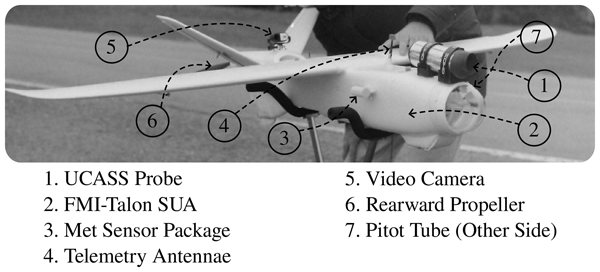
In-situ data of cloud microphysics is essential for targeted studies of cloud processes, validating remote sensing, and both assessing and improving the accuracy of weather and climate models. In this work we adopt a novel technique using a small uncrewed aircraft (SUA) and a bespoke sensor to produce vertical profiles of cloud microphysical parameters. The data are publicly available from https://zenodo.org/records/14756233.
Lenka Suchánková, Jakub Ondráček, Naděžda Zíková, Petr Roztočil, Petr Vodička, Roman Prokeš, Ivan Holoubek, and Vladimír Ždímal
Atmos. Meas. Tech., 19, 1611–1628, https://doi.org/10.5194/amt-19-1611-2026, https://doi.org/10.5194/amt-19-1611-2026, 2026
Short summary
Short summary
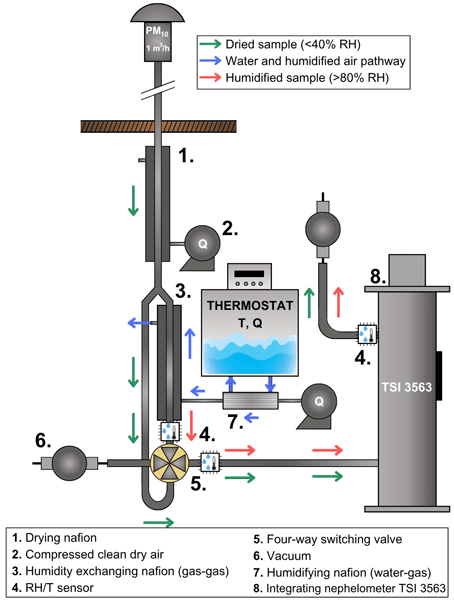
In this work, we show how aerosol particles in city air change their ability to scatter light when exposed to humidity, which affects the climate. Using a simpler tool, we found that in Prague's suburbs, these particles showed only a small change in light scattering, likely due to carbon-rich pollution that effectively absorbs light. Our method helps to reduce certain types of measurement uncertainty and helps fill gaps in urban climate data.
Sami D. Harni, Lasse Johansson, Jarkko V. Niemi, Ville Silvonen, Juan Andrés Casquero-Vera, Anu Kousa, Krista Luoma, Viet Le, David Brus, Konstantinos Doulgeris, Topi Rönkkö, Hanna E. Manninen, Tuukka Petäjä, and Hilkka Timonen
Atmos. Chem. Phys., 25, 18719–18738, https://doi.org/10.5194/acp-25-18719-2025, https://doi.org/10.5194/acp-25-18719-2025, 2025
Short summary
Short summary
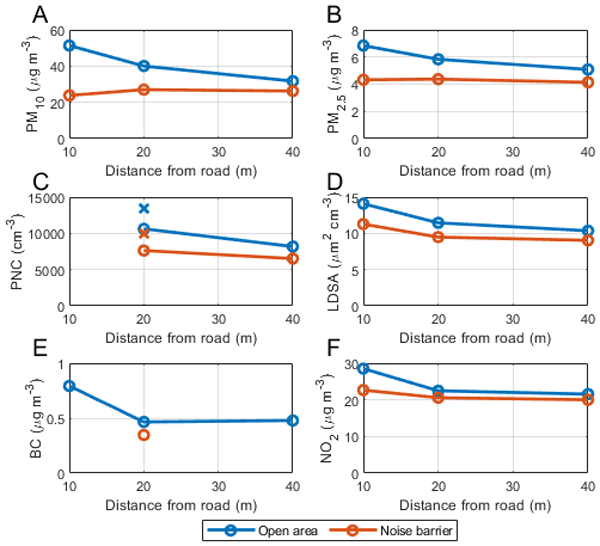
A three-month-long measurement campaign was conducted at Espoo, Finland, in spring 2023. The measurement campaign studied the effect of the noise barrier on pollutant concentration gradients on the side of a major highway. The studied pollutants included PM10, PM2.5, lung deposited surface area (LDSA), particle number concentration (PNC), NO2, and black carbon (BC). The noise barrier was found to be effective in reducing, especially the concentration of particulate pollutants.
Konstantinos Matthaios Doulgeris, Ville Kaikkonen, Harri Juttula, Eero Molkoselkä, Anssi Mäkynen, and David Brus
Earth Syst. Sci. Data, 17, 6497–6506, https://doi.org/10.5194/essd-17-6497-2025, https://doi.org/10.5194/essd-17-6497-2025, 2025
Short summary
Short summary
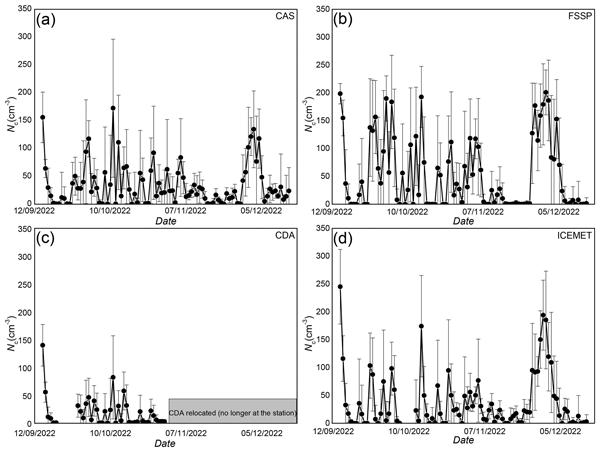
We present data collected from ground-based cloud instruments that measured cloud droplets in autumn 2022 in northern Finland. The aim of the research was to improve understanding of how clouds form and behave in cold regions. Measurements were taken directly inside clouds and include information on droplet sizes, water content, and weather conditions. The results support better climate and weather prediction.
Laurence C. Windell, Saliou Mbengue, Petra Pokorná, Jaroslav Schwarz, André S. H. Prévôt, Manousos I. Manousakas, Stefanos Papagiannis, Jakub Ondráček, Roman Prokeš, and Vladimir Ždímal
Atmos. Meas. Tech., 18, 7021–7038, https://doi.org/10.5194/amt-18-7021-2025, https://doi.org/10.5194/amt-18-7021-2025, 2025
Short summary
Short summary
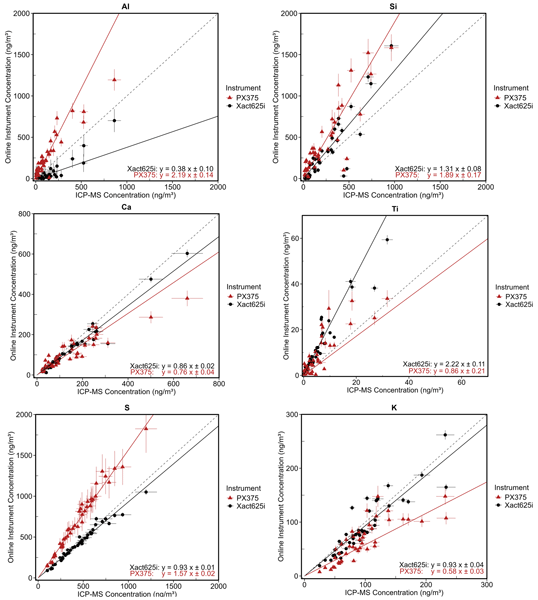
In this work, we compare the two most widely used online XRF monitors for ambient elemental analysis, the Xact625i and PX-375. We found strong correlations between the online instruments and the reference method (better so for the Xact625i), while in terms of absolute concentrations, some elements were over- and underestimated. Overall, we determined both instruments can be used as powerful tools to produce high-time resolution elemental data for use in air quality monitoring.
Alexander Böhmländer, Larissa Lacher, Kristina Höhler, David Brus, Konstantinos-Matthaios Doulgeris, Jessica Girdwood, Thomas Leisner, and Ottmar Möhler
Earth Syst. Sci. Data, 17, 6157–6164, https://doi.org/10.5194/essd-17-6157-2025, https://doi.org/10.5194/essd-17-6157-2025, 2025
Short summary
Short summary
Clouds play a key role in weather and climate. Pure liquid water droplets are liquid until about −35 °C without the presence of a small subset of aerosols, ice-nucleating particles (INPs). These INPs lead to primary ice formation and therefore impact the phase of clouds. The dataset described herein provides INP concentration measurements at two altitudes. Connecting this data to synoptic conditions and ambient data might provide a better understanding of INPs in Finnish Lapland.
Alexander Böhmländer, Larissa Lacher, Romy Fösig, Nicole Büttner, Jens Nadolny, David Brus, Konstantinos-Matthaios Doulgeris, and Ottmar Möhler
Earth Syst. Sci. Data, 17, 6165–6171, https://doi.org/10.5194/essd-17-6165-2025, https://doi.org/10.5194/essd-17-6165-2025, 2025
Short summary
Short summary
Cloud-aerosol interactions lead to a phase change of water droplets inside the atmosphere. One of these interactions happens due to a small subset of aerosols, ice-nucleating particles (INPs). These INPs lead to the freezing of pure water droplets above −35 °C, which otherwise would stay liquid. This has impacts on the weather and climate. The present data set presents a unique data set with a high temporal resolution.
Hanna Wiedenhaus, Roland Schrödner, Ralf Wolke, Marie L. Luttkus, Shubhi Arora, Laurent Poulain, Radek Lhotka, Petr Vodička, Jaroslav Schwarz, Petra Pokorna, Jakub Ondráček, Vladimir Ždímal, Hartmut Herrmann, and Ina Tegen
Atmos. Chem. Phys., 25, 12893–12922, https://doi.org/10.5194/acp-25-12893-2025, https://doi.org/10.5194/acp-25-12893-2025, 2025
Short summary
Short summary
This study examines winter air quality in central Europe, focusing on the impact of domestic heating. Using a chemical transport model and measurements, it was found that the model underestimated organic particle concentrations. This was due to an underestimation of gases from domestic heating that form secondary organic particles. Improving the model by increasing these emissions and the particle formation led to better results, demonstrating the important role of heating emissions in winter.
David Brus, Viet Le, Joel Kuula, and Konstantinos Doulgeris
Earth Syst. Sci. Data, 17, 5209–5219, https://doi.org/10.5194/essd-17-5209-2025, https://doi.org/10.5194/essd-17-5209-2025, 2025
Short summary
Short summary
This paper provides datasets collected as part of the Pallas Cloud Experiment campaign in northern Finland during autumn of 2022. We provide an overview of a custom-built drone backpack for air quality and atmospheric state variable measurements carried on top of a consumer-grade drone (DJI Mavic 2 Pro). Moreover, we describe the flight strategies and provide an overview of the datasets obtained, including a description of the measurements against a reference for data validation.
Jürgen Gratzl, Alexander Böhmländer, Sanna Pätsi, Clara-E. Pogner, Markus Gorfer, David Brus, Konstantinos Matthaios Doulgeris, Florian Wieland, Eija Asmi, Annika Saarto, Ottmar Möhler, Dominik Stolzenburg, and Hinrich Grothe
Atmos. Chem. Phys., 25, 12007–12035, https://doi.org/10.5194/acp-25-12007-2025, https://doi.org/10.5194/acp-25-12007-2025, 2025
Short summary
Short summary
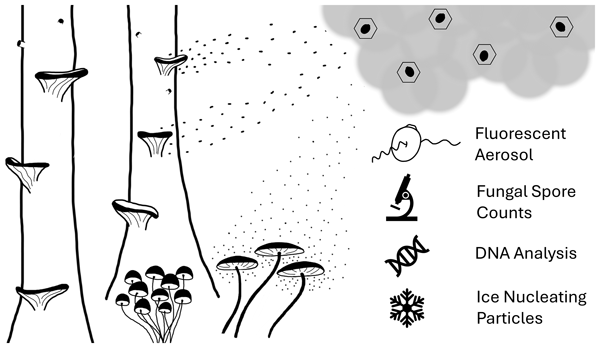
We studied particles in the air over 1 year in the Finnish sub-Arctic to understand how biological particles affect ice formation in clouds. We found that fungal spores are the main contributors to ice formation at warmer temperatures. These particles are released locally and vary with the weather. Our results also show that we know very little about which fungi can form ice in the atmosphere, highlighting a major gap in our understanding of how nature influences weather and climate.
Alexander Böhmländer, Larissa Lacher, David Brus, Konstantinos-Matthaios Doulgeris, Zoé Brasseur, Matthew Boyer, Joel Kuula, Thomas Leisner, and Ottmar Möhler
Atmos. Meas. Tech., 18, 3959–3971, https://doi.org/10.5194/amt-18-3959-2025, https://doi.org/10.5194/amt-18-3959-2025, 2025
Short summary
Short summary
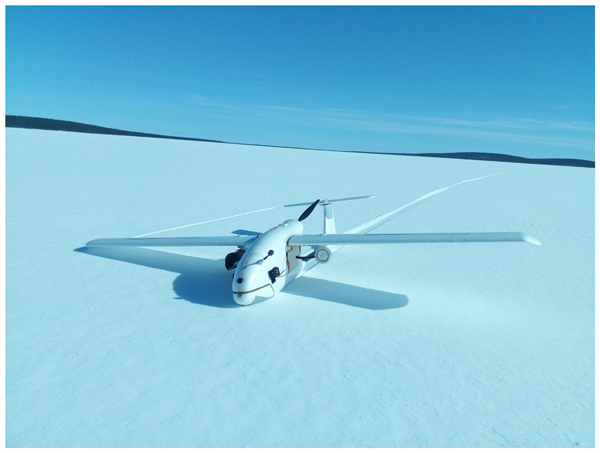
Clouds and aerosol are important for weather and climate. Typically, pure water cloud droplets stay liquid until around −35 °C, unless they come into contact with ice-nucleating particles (INPs). INPs are a rare subset of aerosol particles. Using uncrewed aerial vehicles (UAVs), it is possible to collect aerosol particles and analyse their ice-nucleating ability. This study describes the test and validation of a sampling set-up that can be used to collect aerosol particles onto a filter.
Jürgen Gratzl, David Brus, Konstantinos Doulgeris, Alexander Böhmländer, Ottmar Möhler, and Hinrich Grothe
Earth Syst. Sci. Data, 17, 3975–3985, https://doi.org/10.5194/essd-17-3975-2025, https://doi.org/10.5194/essd-17-3975-2025, 2025
Short summary
Short summary
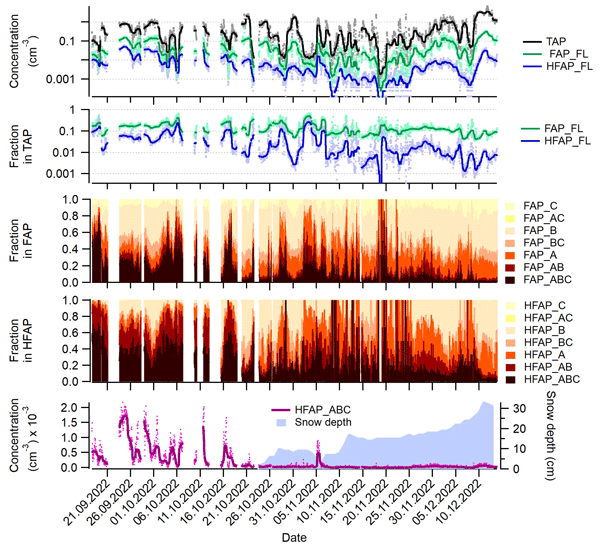
Near-real time monitoring of airborne biological particles like fungal spores or pollen grains is of great interest for two main reasons: to improve atmospheric allergen forecasts and to deepen the understanding of how bio-aerosols influence cloud formation. Here, we measured fluorescent bio-aerosols in the Finnish sub-Arctic with a high time resolution. A data set that might improve our understanding of biosphere–cloud interactions and the dynamics of bio-aerosols in the atmosphere.
John Backman, Krista Luoma, Henri Servomaa, Ville Vakkari, and David Brus
Earth Syst. Sci. Data Discuss., https://doi.org/10.5194/essd-2025-284, https://doi.org/10.5194/essd-2025-284, 2025
Revised manuscript under review for ESSD
Short summary
Short summary
This work describes the in-situ aerosol measurements at the Arctic Sammaltunturi measurement station in Pallas in northern Finland. This data paper describes the instruments and the data post processing of key aerosol particle measurements that are relevant for cloud properties. Data reported here are part of the Pallas Cloud Experiment in 2022 (PaCE2022).
Viet Le, Konstantinos Matthaios Doulgeris, Mika Komppula, John Backman, Gholamhossein Bagheri, Eberhard Bodenschatz, and David Brus
Earth Syst. Sci. Data Discuss., https://doi.org/10.5194/essd-2025-148, https://doi.org/10.5194/essd-2025-148, 2025
Preprint withdrawn
Short summary
Short summary
This manuscript presents datasets collected during the Pallas Cloud Experiment in northern Finland during the autumn of 2022. We provide an overview of the payload that measured meteorological, cloud, and aerosol properties, and was deployed on tethered balloon systems across 21 flights. Additionally, we describe the datasets obtained, including details of the instruments on the payload.
Jean-Philippe Putaud, Enrico Pisoni, Alexander Mangold, Christoph Hueglin, Jean Sciare, Michael Pikridas, Chrysanthos Savvides, Jakub Ondracek, Saliou Mbengue, Alfred Wiedensohler, Kay Weinhold, Maik Merkel, Laurent Poulain, Dominik van Pinxteren, Hartmut Herrmann, Andreas Massling, Claus Nordstroem, Andrés Alastuey, Cristina Reche, Noemí Pérez, Sonia Castillo, Mar Sorribas, Jose Antonio Adame, Tuukka Petaja, Katrianne Lehtipalo, Jarkko Niemi, Véronique Riffault, Joel F. de Brito, Augustin Colette, Olivier Favez, Jean-Eudes Petit, Valérie Gros, Maria I. Gini, Stergios Vratolis, Konstantinos Eleftheriadis, Evangelia Diapouli, Hugo Denier van der Gon, Karl Espen Yttri, and Wenche Aas
Atmos. Chem. Phys., 23, 10145–10161, https://doi.org/10.5194/acp-23-10145-2023, https://doi.org/10.5194/acp-23-10145-2023, 2023
Short summary
Short summary
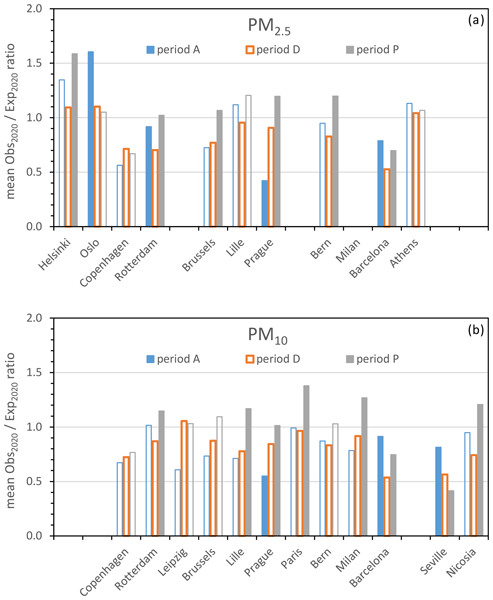
Many European people are still exposed to levels of air pollution that can affect their health. COVID-19 lockdowns in 2020 were used to assess the impact of the reduction in human mobility on air pollution across Europe by comparing measurement data with values that would be expected if no lockdown had occurred. We show that lockdown measures did not lead to consistent decreases in the concentrations of fine particulate matter suspended in the air, and we investigate why.
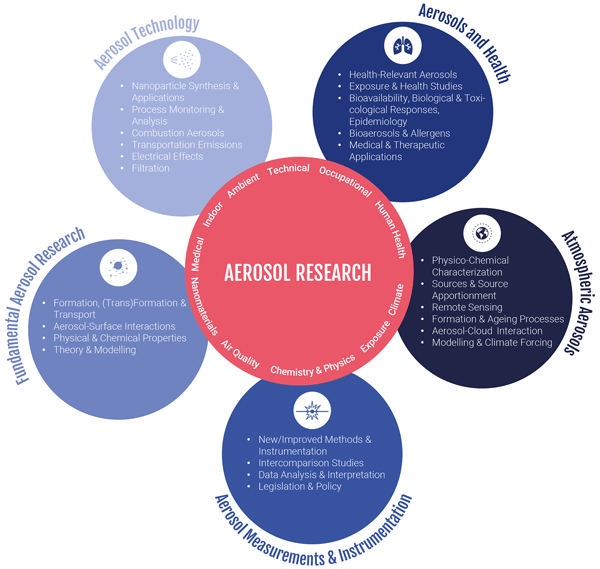
Jonas Elm, Aladár Czitrovszky, Andreas Held, Annele Virtanen, Astrid Kiendler-Scharr, Benjamin J. Murray, Daniel McCluskey, Daniele Contini, David Broday, Eirini Goudeli, Hilkka Timonen, Joan Rosell-Llompart, Jose L. Castillo, Evangelia Diapouli, Mar Viana, Maria E. Messing, Markku Kulmala, Naděžda Zíková, and Sebastian H. Schmitt
Aerosol Research, 1, 13–16, https://doi.org/10.5194/ar-1-13-2023, https://doi.org/10.5194/ar-1-13-2023, 2023
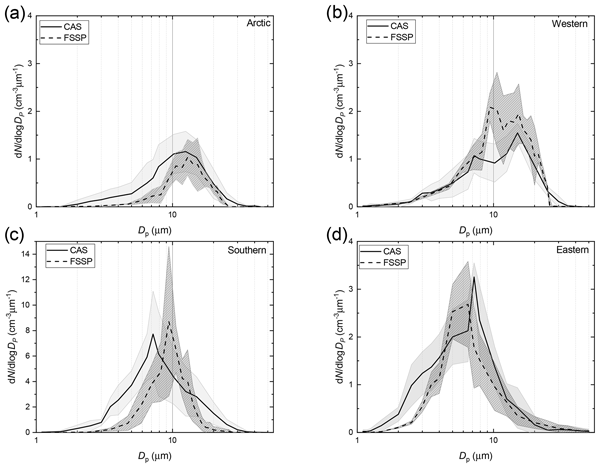
Konstantinos Matthaios Doulgeris, Ville Vakkari, Ewan J. O'Connor, Veli-Matti Kerminen, Heikki Lihavainen, and David Brus
Atmos. Chem. Phys., 23, 2483–2498, https://doi.org/10.5194/acp-23-2483-2023, https://doi.org/10.5194/acp-23-2483-2023, 2023
Short summary
Short summary
We investigated how different long-range-transported air masses can affect the microphysical properties of low-level clouds in a clean subarctic environment. A connection was revealed. Higher values of cloud droplet number concentrations were related to continental air masses, whereas the lowest values of number concentrations were related to marine air masses. These were characterized by larger cloud droplets. Clouds in all regions were sensitive to increases in cloud number concentration.

Petra Pokorná, Naděžda Zíková, Petr Vodička, Radek Lhotka, Saliou Mbengue, Adéla Holubová Šmejkalová, Véronique Riffault, Jakub Ondráček, Jaroslav Schwarz, and Vladimír Ždímal
Atmos. Chem. Phys., 22, 5829–5858, https://doi.org/10.5194/acp-22-5829-2022, https://doi.org/10.5194/acp-22-5829-2022, 2022
Short summary
Short summary
By examining individual episodes of high mass and number concentrations, we show that the seasonality in the physicochemical properties of aerosol particles was caused by the sources' diversity and was related to the different air masses and meteorology. We also confirmed the relation between particle size and age that is reflected in oxidation state and shape (difference in densities; effective vs. material). The results have general validity and thus transcend the study regional character.
Zoé Brasseur, Dimitri Castarède, Erik S. Thomson, Michael P. Adams, Saskia Drossaart van Dusseldorp, Paavo Heikkilä, Kimmo Korhonen, Janne Lampilahti, Mikhail Paramonov, Julia Schneider, Franziska Vogel, Yusheng Wu, Jonathan P. D. Abbatt, Nina S. Atanasova, Dennis H. Bamford, Barbara Bertozzi, Matthew Boyer, David Brus, Martin I. Daily, Romy Fösig, Ellen Gute, Alexander D. Harrison, Paula Hietala, Kristina Höhler, Zamin A. Kanji, Jorma Keskinen, Larissa Lacher, Markus Lampimäki, Janne Levula, Antti Manninen, Jens Nadolny, Maija Peltola, Grace C. E. Porter, Pyry Poutanen, Ulrike Proske, Tobias Schorr, Nsikanabasi Silas Umo, János Stenszky, Annele Virtanen, Dmitri Moisseev, Markku Kulmala, Benjamin J. Murray, Tuukka Petäjä, Ottmar Möhler, and Jonathan Duplissy
Atmos. Chem. Phys., 22, 5117–5145, https://doi.org/10.5194/acp-22-5117-2022, https://doi.org/10.5194/acp-22-5117-2022, 2022
Short summary
Short summary
The present measurement report introduces the ice nucleation campaign organized in Hyytiälä, Finland, in 2018 (HyICE-2018). We provide an overview of the campaign settings, and we describe the measurement infrastructure and operating procedures used. In addition, we use results from ice nucleation instrument inter-comparison to show that the suite of these instruments deployed during the campaign reports consistent results.
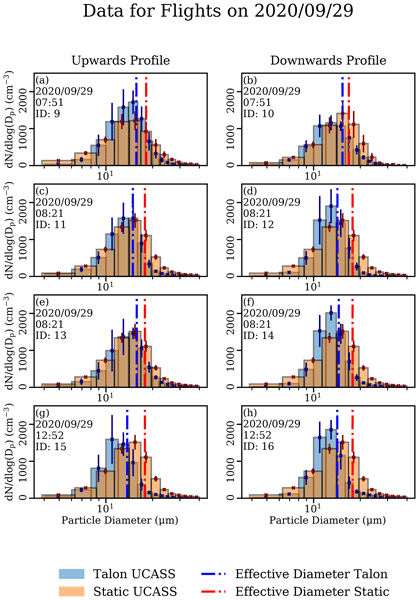
Joseph Girdwood, Warren Stanley, Chris Stopford, and David Brus
Atmos. Meas. Tech., 15, 2061–2076, https://doi.org/10.5194/amt-15-2061-2022, https://doi.org/10.5194/amt-15-2061-2022, 2022
Short summary
Short summary
UAVs have great potential to be used for airborne measurements of cloud and aerosol properties, which are of particular importance due to the largely uncharacterised nature of such phenomena. However, since UAVs are a new tool in atmospheric physics expensive platform validation and characterisation of UAV-instrument combinations needs to be performed. This paper presents an evaluation of a fixed-wing UAV in combination with an instrument that measures cloud droplet diameter.
Konstantinos Matthaios Doulgeris, Heikki Lihavainen, Anti-Pekka Hyvärinen, Veli-Matti Kerminen, and David Brus
Earth Syst. Sci. Data, 14, 637–649, https://doi.org/10.5194/essd-14-637-2022, https://doi.org/10.5194/essd-14-637-2022, 2022
Short summary
Short summary
We produced and summarized data sets obtained from two cloud ground-based spectrometers (CAPS and FSSP-100 ground setups) during 8 years of Pallas Cloud Experiment campaigns conducted in autumn from 2004 until 2019 along with several meteorological variables. The campaigns took place in the Finnish sub-Arctic region in a clear environment in temperatures that were usually below zero. This data set provides a helpful contribution to cloud microphysics processes.
Clémence Rose, Martine Collaud Coen, Elisabeth Andrews, Yong Lin, Isaline Bossert, Cathrine Lund Myhre, Thomas Tuch, Alfred Wiedensohler, Markus Fiebig, Pasi Aalto, Andrés Alastuey, Elisabeth Alonso-Blanco, Marcos Andrade, Begoña Artíñano, Todor Arsov, Urs Baltensperger, Susanne Bastian, Olaf Bath, Johan Paul Beukes, Benjamin T. Brem, Nicolas Bukowiecki, Juan Andrés Casquero-Vera, Sébastien Conil, Konstantinos Eleftheriadis, Olivier Favez, Harald Flentje, Maria I. Gini, Francisco Javier Gómez-Moreno, Martin Gysel-Beer, Anna Gannet Hallar, Ivo Kalapov, Nikos Kalivitis, Anne Kasper-Giebl, Melita Keywood, Jeong Eun Kim, Sang-Woo Kim, Adam Kristensson, Markku Kulmala, Heikki Lihavainen, Neng-Huei Lin, Hassan Lyamani, Angela Marinoni, Sebastiao Martins Dos Santos, Olga L. Mayol-Bracero, Frank Meinhardt, Maik Merkel, Jean-Marc Metzger, Nikolaos Mihalopoulos, Jakub Ondracek, Marco Pandolfi, Noemi Pérez, Tuukka Petäjä, Jean-Eudes Petit, David Picard, Jean-Marc Pichon, Veronique Pont, Jean-Philippe Putaud, Fabienne Reisen, Karine Sellegri, Sangeeta Sharma, Gerhard Schauer, Patrick Sheridan, James Patrick Sherman, Andreas Schwerin, Ralf Sohmer, Mar Sorribas, Junying Sun, Pierre Tulet, Ville Vakkari, Pieter Gideon van Zyl, Fernando Velarde, Paolo Villani, Stergios Vratolis, Zdenek Wagner, Sheng-Hsiang Wang, Kay Weinhold, Rolf Weller, Margarita Yela, Vladimir Zdimal, and Paolo Laj
Atmos. Chem. Phys., 21, 17185–17223, https://doi.org/10.5194/acp-21-17185-2021, https://doi.org/10.5194/acp-21-17185-2021, 2021
Short summary
Short summary
Aerosol particles are a complex component of the atmospheric system the effects of which are among the most uncertain in climate change projections. Using data collected at 62 stations, this study provides the most up-to-date picture of the spatial distribution of particle number concentration and size distribution worldwide, with the aim of contributing to better representation of aerosols and their interactions with clouds in models and, therefore, better evaluation of their impact on climate.
Cited articles
Alas, H. D. C., Müller, T., Weinhold, K., Pfeifer, S., Glojek, K., Gregorič, A., Močnik, G., Drinovec, L., Costabile, F., Ristorini, M., and Wiedensohler, A.: Performance of microAethalometers: Real-world Field Intercomparisons from Multiple Mobile Measurement Campaigns in Different Atmospheric Environments, Aerosol Air Qual. Res., 20, 2640–2653, https://doi.org/10.4209/aaqr.2020.03.0113, 2020.
Babu, S. S., Moorthy, K. K., Manchanda, R. K., Sinha, P. R., Satheesh, S. K., Vajja, D. P., Srinivasan, S., and Kumar, V. H. A.: Free tropospheric black carbon aerosol measurements using high altitude balloon: Do BC layers build “their own homes” up in the atmosphere?, Geophys. Res. Lett., 38, L08803, https://doi.org/10.1029/2011GL046654, 2011.
Barbieri, L., Kral, S. T., Bailey, S. C. C., Frazier, A. E., Jacob, J. D., Reuder, J., Brus, D., Chilson, P. B., Crick, C., Detweiler, C., Doddi, A., Elston, J., Foroutan, H., González-Rocha, J., Greene, B. R., Guzman, M. I., Houston, A. L., Islam, A., Kemppinen, O., Lawrence, D., Pillar-Little, E. A., Ross, S. D., Sama, M. P., Schmale, D. G., Schuyler, T. J., Shankar, A., Smith, S. W., Waugh, S., Dixon, C., Borenstein, S., and de Boer, G.: Intercomparison of Small Unmanned Aircraft System (sUAS) Measurements for Atmospheric Science during the LAPSE-RATE Campaign, Sensors, 19, 2179, https://doi.org/10.3390/s19092179, 2019.
Battaglia, M. A., Douglas, S., and Hennigan, C. J.: Effect of the Urban Heat Island on Aerosol pH, Environ. Sci. Technol., 51, 13095–13103, https://doi.org/10.1021/acs.est.7b02786, 2017.
Bezantakos, S., Costi, M., Barmpounis, K., Antoniou, P., Vouterakos, P., Keleshis, C., Sciare, J., and Biskos, G.: Qualification of the Alphasense optical particle counter for inline air quality monitoring, Aerosol Sci. Tech., 55, 361–370, 2020.
Bond, T. C., Doherty, S. J., Fahey, D. W., Forster, P. M., Berntsen, T., DeAngelo, B. J., Flanner, M. G., Ghan, S., Kärcher, B., and Koch, D.: Bounding the role of black carbon in the climate system: A scientific assessment, J. Geophys. Res.-Atmos., 118, 5380–5552, 2013.
Brady, J. M., Stokes, M. D., Bonnardel, J., and Bertram, T. H.: Characterization of a Quadrotor Unmanned Aircraft System for Aerosol-Particle-Concentration Measurements, Environ. Sci. Technol., 50, 1376–1383, https://doi.org/10.1021/acs.est.5b05320, 2016.
Brus, D., Gustafsson, J., Vakkari, V., Kemppinen, O., de Boer, G., and Hirsikko, A.: Measurement report: Properties of aerosol and gases in the vertical profile during the LAPSE-RATE campaign, Atmos. Chem. Phys., 21, 517–533, https://doi.org/10.5194/acp-21-517-2021, 2021.
Brus, D., Le, V., Kuula, J., and Doulgeris, K.: Data collected by a drone backpack for air quality and atmospheric state measurements during Pallas Cloud Experiment 2022 (PaCE2022), Earth Syst. Sci. Data, 17, 5209–5219, https://doi.org/10.5194/essd-17-5209-2025, 2025.
Cai, J., Yan, B., Kinney, P. L., Perzanowski, M. S., Jung, K.-H., Li, T., Xiu, G., Zhang, D., Olivo, C., and Ross, J.: Optimization approaches to ameliorate humidity and vibration related issues using the microAeth black carbon monitor for personal exposure measurement, Aerosol Sci. Tech., 47, 1196–1204, 2013.
Cappelletti, D., Petroselli, C., Mateos, D., Herreras, M., Ferrero, L., Losi, N., Gregorič, A., Frangipani, C., La Porta, G., and Lonardi, M.: Vertical profiles of black carbon and nanoparticles pollutants measured by a tethered balloon in Longyearbyen (Svalbard islands), Atmos. Environ., 290, 119373, https://doi.org/10.1016/j.atmosenv.2022.119373, 2022.
Chacón-Mateos, M., Laquai, B., Vogt, U., and Stubenrauch, C.: Evaluation of a low-cost dryer for a low-cost optical particle counter, Atmos. Meas. Tech., 15, 7395–7410, https://doi.org/10.5194/amt-15-7395-2022, 2022.
Chen, D., Liao, H., Yang, Y., Chen, L., Zhao, D., and Ding, D.: Simulated impacts of vertical distributions of black carbon aerosol on meteorology and PM2.5 concentrations in Beijing during severe haze events, Atmos. Chem. Phys., 22, 1825–1844, https://doi.org/10.5194/acp-22-1825-2022, 2022.
Chi, X., Winderlich, J., Mayer, J.-C., Panov, A. V., Heimann, M., Birmili, W., Heintzenberg, J., Cheng, Y., and Andreae, M. O.: Long-term measurements of aerosol and carbon monoxide at the ZOTTO tall tower to characterize polluted and pristine air in the Siberian taiga, Atmos. Chem. Phys., 13, 12271–12298, https://doi.org/10.5194/acp-13-12271-2013, 2013.
Chilinski, M. T., Markowicz, K. M., and Markowicz, J.: Observation of vertical variability of black carbon concentration in lower troposphere on campaigns in Poland, Atmos. Environ., 137, 155–170, https://doi.org/10.1016/j.atmosenv.2016.04.020, 2016.
Corrigan, C. E., Roberts, G. C., Ramana, M. V., Kim, D., and Ramanathan, V.: Capturing vertical profiles of aerosols and black carbon over the Indian Ocean using autonomous unmanned aerial vehicles, Atmos. Chem. Phys., 8, 737–747, https://doi.org/10.5194/acp-8-737-2008, 2008.
CSD: https://www.rsd.cz/silnice-a-dalnice/scitani-dopravy (last access: 11 December 2024), 2020.
de Boer, G., Diehl, C., Jacob, J., Houston, A., Smith, S. W., Chilson, P., Schmale, D. G., Intrieri, J., Pinto, J., Elston, J., Brus, D., Kemppinen, O., Clark, A., Lawrence, D., Bailey, S. C. C., Sama, M. P., Frazier, A., Crick, C., Natalie, V., Pillar-Little, E., Klein, P., Waugh, S., Lundquist, J. K., Barbieri, L., Kral, S. T., Jensen, A. A., Dixon, C., Borenstein, S., Hesselius, D., Human, K., Hall, P., Argrow, B., Thornberry, T., Wright, R., and Kelly, J. T.: Development of Community, Capabilities, and Understanding through Unmanned Aircraft-Based Atmospheric Research: The LAPSE-RATE Campaign, B. Am. Meteorol. Soc., 101, E684–E699, https://doi.org/10.1175/BAMS-D-19-0050.1, 2020.
Ding, A. J., Huang, X., Nie, W., Sun, J. N., Kerminen, V. -M., Petäjä, T., Su, H., Cheng, Y. F., Yang, X. -Q., Wang, M. H., Chi, X. G., Wang, J. P., Virkkula, A., Guo, W. D., Yuan, J., Wang, S. Y., Zhang, R. J., Wu, Y. F., Song, Y., Zhu, T., Zilitinkevich, S., Kulmala, M., and Fu, C. B.: Enhanced haze pollution by black carbon in megacities in China, Geophys. Res. Lett., 43, 2873–2879, https://doi.org/10.1002/2016GL067745, 2016.
Donateo, A., Pappaccogli, G., Famulari, D., Mazzola, M., Scoto, F., and Decesari, S.: Characterization of size-segregated particles' turbulent flux and deposition velocity by eddy correlation method at an Arctic site, Atmos. Chem. Phys., 23, 7425–7445, https://doi.org/10.5194/acp-23-7425-2023, 2023.
Dvorská, A., Sedlák, P., Schwarz, J., Fusek, M., Hanuš, V., Vodička, P., and Trusina, J.: Atmospheric station Křešín u Pacova, Czech Republic – a Central European research infrastructure for studying greenhouse gases, aerosols and air quality, Adv. Sci. Res., 12, 79–83, 2015.
Ferrero, L., Ritter, C., Cappelletti, D., Moroni, B., Močnik, G., Mazzola, M., Lupi, A., Becagli, S., Traversi, R., and Cataldi, M.: Aerosol optical properties in the Arctic: The role of aerosol chemistry and dust composition in a closure experiment between Lidar and tethered balloon vertical profiles, Sci. Total Environ., 686, 452–467, 2019.
Gani, S., Bhandari, S., Seraj, S., Wang, D. S., Patel, K., Soni, P., Arub, Z., Habib, G., Hildebrandt Ruiz, L., and Apte, J. S.: Submicron aerosol composition in the world's most polluted megacity: the Delhi Aerosol Supersite study, Atmos. Chem. Phys., 19, 6843–6859, https://doi.org/10.5194/acp-19-6843-2019, 2019.
Gao, J., Chai, F., Wang, T., Wang, S., and Wang, W.: Particle number size distribution and new particle formation: New characteristics during the special pollution control period in Beijing, J. Environ. Sci., 24, 14–21, https://doi.org/10.1016/S1001-0742(11)60725-0, 2012.
Good, N., Mölter, A., Peel, J. L., and Volckens, J.: An accurate filter loading correction is essential for assessing personal exposure to black carbon using an Aethalometer, J. Expo. Sci. Env. Epid., 27, 409–416, https://doi.org/10.1038/jes.2016.71, 2017.
Haeffelin, M., Ribaud, J.-F., Kotthaus, S., Dupont, J.-C., Lemonsu, A., and Masson, V.: Effect of nocturnal urban boundary layer stability and mixing on temperature contrasts between built-up environments and urban parks, EGU General Assembly 2024, Vienna, Austria, 14–19 Apr 2024, EGU24-19030, https://doi.org/10.5194/egusphere-egu24-19030, 2024.
Hagan, D. H. and Kroll, J. H.: Assessing the accuracy of low-cost optical particle sensors using a physics-based approach, Atmos. Meas. Tech., 13, 6343–6355, https://doi.org/10.5194/amt-13-6343-2020, 2020.
Harm-Altstädter, B., Voß, A., Aust, S., Bärfuss, K., Bretschneider, L., Merkel, M., Pätzold, F., Schlerf, A., Weinhold, K., Wiedensohler, A., Winkler, U., and Lampert, A.: First study using a fixed-wing drone for systematic measurements of aerosol vertical distribution close to a civil airport, Frontiers in Environmental Science, 12, 1376980, https://doi.org/10.3389/fenvs.2024.1376980, 2024.
Hedworth, H., Page, J., Sohl, J., and Saad, T.: Investigating errors observed during UAV-based vertical measurements using computational fluid dynamics, Drones, 6, 253, https://doi.org/10.3390/drones6090253, 2022.
Hersbach, H., Bell, B., Berrisford, P., Biavati, G., Horányi, A., Muñoz-Sabater, J., Nicolas, J., Peubey, C., Radu, R., Rozum, I., Schepers, D., Simmons, A., Soci, C., Dee, D. and Thépaut, J.-N.: ERA5 hourly data on single levels from 1940 to present, Copernicus Climate Change Service (C3S) Climate Data Store (CDS) [data set], https://doi.org/10.24381/cds.adbb2d47, 2023.
Julaha, K.: “Drone_rural_urban”, V1, Mendeley Data [data set], https://doi.org/10.17632/snbp6w49v91, 2025.
Julaha, K., Ždímal, V., Holubová Šmejkalová, A., Komínková, K., and Zíková, N.: Boundary layer and mixing layer height: Models vs. Ground-based measurements intercomparison, Atmos. Res., 315, 107897, https://doi.org/10.1016/j.atmosres.2024.107897, 2025.
Kotthaus, S., Haeffelin, M., Céspedes, J., Van Hove, M., Drouin, M.-A., Dupont, J.-C., and Foret, G.: Urban atmosphere dynamics for air quality applications: Atmospheric boundary layer height and wind profiles from ground-based remote sensing networks, EGU General Assembly 2023, Vienna, Austria, 23–28 Apr 2023, EGU23-13154, https://doi.org/10.5194/egusphere-egu23-13154, 2023.
Kulmala, M., Vehkamäki, H., Petäjä, T., Dal Maso, M., Lauri, A., Kerminen, V.-M., Birmili, W., and McMurry, P. H.: Formation and growth rates of ultrafine atmospheric particles: a review of observations, J. Aerosol Sci., 35, 143–176, https://doi.org/10.1016/j.jaerosci.2003.10.003, 2004.
Lee, J.: Performance test of microaeth® AE51 at concentrations lower than 2 µg m−3 in indoor laboratory, Applied Sciences, 9, 2766, https://doi.org/10.3390/app9132766, 2019.
Lencer: Czech Republic location map (equirectangular projection), own work using United States National Imagery and Mapping Agency data, Wikimedia Commons, https://commons.wikimedia.org/wiki/File:Czech_Republic_location_map.svg (last access: 26 November 2025), 24 July 2008.
Li, J., Von Salzen, K., Peng, Y., Zhang, H., and Liang, X.: Evaluation of black carbon semi-direct radiative effect in a climate model, J. Geophys. Res.-Atmos., 118, 4715–4728, https://doi.org/10.1002/jgrd.50327, 2013.
Liang, Y., Wu, C., Wu, D., Liu, B., Li, Y. J., Sun, J., Yang, H., Mao, X., Tan, J., and Xia, R.: Vertical distributions of atmospheric black carbon in dry and wet seasons observed at a 356-m meteorological tower in Shenzhen, South China, Sci. Total Environ., 853, 158657, https://doi.org/10.1016/j.scitotenv.2022.158657, 2022.
Liu, B., Wu, C., Ma, N., Chen, Q., Li, Y., Ye, J., Martin, S. T., and Li, Y. J.: Vertical profiling of fine particulate matter and black carbon by using unmanned aerial vehicle in Macau, China, Sci. Total Environ., 709, 136109, https://doi.org/10.1016/j.scitotenv.2019.136109, 2020.
Liu, H., Pan, X., Lei, S., Zhang, Y., Du, A., Yao, W., Tang, G., Wang, T., Xin, J., Li, J., Sun, Y., Cao, J., and Wang, Z.: Vertical distribution of black carbon and its mixing state in the urban boundary layer in summer, Atmos. Chem. Phys., 23, 7225–7239, https://doi.org/10.5194/acp-23-7225-2023, 2023.
Marucci, D. and Carpentieri, M.: Effect of local and upwind stratification on flow and dispersion inside and above a bi-dimensional street canyon, Build. Environ., 156, 74–88, 2019.
Masey, N., Ezani, E., Gillespie, J., Sutherland, F., Lin, C., Hamilton, S., Heal, M. R., and Beverland, I. J.: Consistency of urban background black carbon concentration measurements by portable AE51 and reference AE22 aethalometers: Effect of corrections for filter loading, Aerosol Air Qual. Res., 20, 329–340, 2020.
Mbengue, S., Serfozo, N., Schwarz, J., Ziková, N., Holubová, S. A., and Holoubek, I.: Characterization of Equivalent Black Carbon at a regional background site in Central Europe: Variability and source apportionment?, Environ. Pollut., 260, 113771, https://doi.org/10.1016/j.envpol.2019.113771, 2020.
Mbengue, S., Zikova, N., Schwarz, J., Vodička, P., Šmejkalová, A. H., and Holoubek, I.: Mass absorption cross-section and absorption enhancement from long term black and elemental carbon measurements: A rural background station in Central Europe, Sci. Total Environ., 794, 148365, https://doi.org/10.1016/j.scitotenv.2021.148365, 2021.
Mbengue, S., Vodička, P., Komínková, K., Zíková, N., Schwarz, J., Prokeš, R., Suchánková, L., Julaha, K., Ondráček, J., and Holoubek, I.: Different approaches to explore the impact of COVID-19 lockdowns on carbonaceous aerosols at a European rural background site, Sci. Total Environ., 892, 164527, https://doi.org/10.1016/j.scitotenv.2023.164527, 2023.
Metrostav: https://www.metrostav.cz/en/segments/tunnelling/references/28-blanka-tunnel-complex, last access: 11 December 2024.
Miyakawa, T., Mordovskoi, P., and Kanaya, Y.: Evaluation of black carbon mass concentrations using a miniaturized aethalometer: Intercomparison with a continuous soot monitoring system (COSMOS) and a single-particle soot photometer (SP2), Aerosol Sci. Tech., 54, 811–825, 2020.
Mizera, J., Havelcová, M., Machovič, V., Borecká, L., and Vöröš, D.: Neutron Activation Analysis in Urban Geochemistry: Impact of Traffic Intensification after Opening the Blanka Tunnel Complex in Prague, Minerals, 12, 281, https://doi.org/10.3390/min12030281, 2022.
Moteki, N.: Climate-relevant properties of black carbon aerosols revealed by in situ measurements: a review, Prog. Earth Planet. Sci., 10, 12, https://doi.org/10.1186/s40645-023-00544-4, 2023.
Myhre, G., Myhre, C. E. L., Samset, B. H., and Storelvmo, T.: Aerosols and their relation to global climate and climate sensitivity, Nature Education Knowledge, 4, 7, https://www.nature.com/scitable/knowledge/library/aerosols-and-their-relation-to-global-climate-102215345/ (last access: 10 March 2025), 2013.
Nurowska, K. and Markowicz, K. M.: Determination of hygroscopic aerosol growth based on the OPC-N3 counter, Atmosphere, 15, 61, https://doi.org/10.3390/atmos15010061, 2023.
Nurowska, K., Mohammadi, M., Malinowski, S., and Markowicz, K.: Applicability of the low-cost OPC-N3 optical particle counter for microphysical measurements of fog, Atmos. Meas. Tech., 16, 2415–2430, https://doi.org/10.5194/amt-16-2415-2023, 2023.
Petzold, A., Ogren, J. A., Fiebig, M., Laj, P., Li, S.-M., Baltensperger, U., Holzer-Popp, T., Kinne, S., Pappalardo, G., Sugimoto, N., Wehrli, C., Wiedensohler, A., and Zhang, X.-Y.: Recommendations for reporting ”black carbon” measurements, Atmos. Chem. Phys., 13, 8365–8379, https://doi.org/10.5194/acp-13-8365-2013, 2013.
Ramana, M., Ramanathan, V., Feng, Y., Yoon, S., Kim, S., Carmichael, G., and Schauer, J.: Warming influenced by the ratio of black carbon to sulphate and the black-carbon source, Nat. Geosci., 3, 542–545, 2010.
Ramanathan, V. and Carmichael, G.: Global and regional climate changes due to black carbon, Nat. Geosci., 1, 221–227, 2008.
Ramatheerthan, S. K., Peiker, J., Crespo, N. M., and Kozubek, M.: Monitoring Extreme Meteorological and Pollution Events in Prague: A Station Data Based Analysis, WDS'24 Proceedings of Contributed Papers – Physics, edited by: Šafránková, J. and Pavlů, J., 9–18, ISBN 978-80-7378-520-8, 2024.
Renard, J.-B., Michoud, V., and Giacomoni, J.: Vertical profiles of pollution particle concentrations in the boundary layer above Paris (France) from the optical aerosol counter LOAC onboard a touristic balloon, Sensors, 20, 1111, https://doi.org/10.3390/s20041111, 2020.
Samad, A., Vogt, U., Panta, A., and Uprety, D.: Vertical distribution of particulate matter, black carbon and ultra-fine particles in Stuttgart, Germany, Atmos. Pollut. Res., 11, 1441–1450, https://doi.org/10.1016/j.apr.2020.05.017, 2020.
Samset, B. H., Myhre, G., Schulz, M., Balkanski, Y., Bauer, S., Berntsen, T. K., Bian, H., Bellouin, N., Diehl, T., Easter, R. C., Ghan, S. J., Iversen, T., Kinne, S., Kirkevåg, A., Lamarque, J.-F., Lin, G., Liu, X., Penner, J. E., Seland, Ø., Skeie, R. B., Stier, P., Takemura, T., Tsigaridis, K., and Zhang, K.: Black carbon vertical profiles strongly affect its radiative forcing uncertainty, Atmos. Chem. Phys., 13, 2423–2434, https://doi.org/10.5194/acp-13-2423-2013, 2013.
Schulz, H., Zanatta, M., Bozem, H., Leaitch, W. R., Herber, A. B., Burkart, J., Willis, M. D., Kunkel, D., Hoor, P. M., Abbatt, J. P. D., and Gerdes, R.: High Arctic aircraft measurements characterising black carbon vertical variability in spring and summer, Atmos. Chem. Phys., 19, 2361–2384, https://doi.org/10.5194/acp-19-2361-2019, 2019.
Schwarz, J. P., Gao, R. S., Fahey, D. W., Thomson, D. S., Watts, L. A., Wilson, J. C., Reeves, J. M., Darbeheshti, M., Baumgardner, D. G., Kok, G. L., Chung, S. H., Schulz, M., Hendricks, J., Lauer, A., Kärcher, B., Slowik, J. G., Rosenlof, K. H., Thompson, T. L., Langford, A. O., Loewenstein, M., and Aikin, K. C.: Single-particle measurements of midlatitude black carbon and light-scattering aerosols from the boundary layer to the lower stratosphere, J. Geophys. Res., 111, 2006JD007076, https://doi.org/10.1029/2006JD007076, 2006.
Sheskin, D. J.: Handbook of parametric and nonparametric statistical procedures, Chapman and Hall/CRC, ISBN 978-04-2918-619-6, https://doi.org/10.1201/9780429186196, 2003.
Steeneveld, G.-J.: Current challenges in understanding and forecasting stable boundary layers over land and ice, Frontiers in Environmental Science, 2, 41, https://doi.org/10.3389/fenvs.2014.00041, 2014.
Sun, T., Wu, C., Wu, D., Liu, B., Sun, J. Y., Mao, X., Yang, H., Deng, T., Song, L., Li, M., Li, Y. J., and Zhou, Z.: Time-resolved black carbon aerosol vertical distribution measurements using a 356-m meteorological tower in Shenzhen, Theor. Appl. Climatol., 140, 1263–1276, https://doi.org/10.1007/s00704-020-03168-6, 2020.
Sun, Y., Chen, C., Zhang, Y., Xu, W., Zhou, L., Cheng, X., Zheng, H., Ji, D., Li, J., and Tang, X.: Rapid formation and evolution of an extreme haze episode in Northern China during winter 2015, Scientific Reports, 6, 27151, https://doi.org/10.1038/srep27151, 2016.
Villa, T. F., Salimi, F., Morton, K., Morawska, L., and Gonzalez, F.: Development and validation of a UAV based system for air pollution measurements, Sensors, 16, 2202, https://doi.org/10.3390/s16122202, 2016.
Vodička, P., Schwarz, J., Cusack, M., and Ždímal, V.: Detailed comparison of OC/EC aerosol at an urban and a rural Czech background site during summer and winter, Sci. Total Environ., 518, 424–433, 2015.
von der Weiden, S.-L., Drewnick, F., and Borrmann, S.: Particle Loss Calculator – a new software tool for the assessment of the performance of aerosol inlet systems, Atmos. Meas. Tech., 2, 479–494, https://doi.org/10.5194/amt-2-479-2009, 2009.
Wang, H., Sun, Z., Li, H., Gao, Y., Wu, J., and Cheng, T.: Vertical-distribution characteristics of atmospheric aerosols under different thermodynamic conditions in Beijing, Aerosol Air Qual. Res., 18, 2775–2787, 2018a.
Wang, J., Flagan, R. C., and Seinfeld, J. H.: Diffusional losses in particle sampling systems containing bends and elbows, J. Aerosol Sci., 33, 843–857, 2002.
Wang, Q., Sun, Y., Xu, W., Du, W., Zhou, L., Tang, G., Chen, C., Cheng, X., Zhao, X., Ji, D., Han, T., Wang, Z., Li, J., and Wang, Z.: Vertically resolved characteristics of air pollution during two severe winter haze episodes in urban Beijing, China, Atmos. Chem. Phys., 18, 2495–2509, https://doi.org/10.5194/acp-18-2495-2018, 2018b.
Wang, Y., Vogel, J. M., Lin, Y., Pan, B., Hu, J., Liu, Y., Dong, X., Jiang, J. H., Yung, Y. L., and Zhang, R.: Aerosol microphysical and radiative effects on continental cloud ensembles, Adv. Atmos. Sci., 35, 234–247, 2018c.
Weltje, G. J. and Roberson, S.: Numerical methods for integrating particle-size frequency distributions, Comput. Geosci., 44, 156–167, https://doi.org/10.1016/j.cageo.2011.09.020, 2012.
Wu, C., Liu, B., Wu, D., Yang, H., Mao, X., Tan, J., Liang, Y., Sun, J. Y., Xia, R., and Sun, J.: Vertical profiling of black carbon and ozone using a multicopter unmanned aerial vehicle (UAV) in urban Shenzhen of South China, Sci. Total Environ., 801, 149689, https://doi.org/10.1016/j.scitotenv.2021.149689, 2021.
Xie, C., Xu, W., Wang, J., Wang, Q., Liu, D., Tang, G., Chen, P., Du, W., Zhao, J., Zhang, Y., Zhou, W., Han, T., Bian, Q., Li, J., Fu, P., Wang, Z., Ge, X., Allan, J., Coe, H., and Sun, Y.: Vertical characterization of aerosol optical properties and brown carbon in winter in urban Beijing, China, Atmos. Chem. Phys., 19, 165–179, https://doi.org/10.5194/acp-19-165-2019, 2019.
Zheng, Y., Miao, R., Zhang, Q., Li, Y., Cheng, X., Liao, K., Koenig, T. K., Ge, Y., Tang, L., and Shang, D.: Secondary formation of submicron and supermicron organic and inorganic aerosols in a highly polluted urban area, J. Geophys. Res.-Atmos., 128, e2022JD037865, https://doi.org/10.1029/2022JD037865, 2023.
Zhu, Y., Wu, Z., Park, Y., Fan, X., Bai, D., Zong, P., Qin, B., Cai, X., and Ahn, K.-H.: Measurements of atmospheric aerosol vertical distribution above North China Plain using hexacopter, Sci. Total Environ., 665, 1095–1102, https://doi.org/10.1016/j.scitotenv.2019.02.100, 2019.
Short summary
This study used drones for vertical profiling of black carbon and particle number at rural and urban sites in Czechia. With aerosol drying, drone measurements matched with fixed instruments; without drying, black carbon was significantly overestimated. Rural profiles were more stratified in winter, while urban summer profiles were well-mixed. These findings can help improve air-quality monitoring and policies by capturing vertical pollution structures that ground stations cannot resolve.
This study used drones for vertical profiling of black carbon and particle number at rural and...


Altmetrics
Final-revised paper
Preprint