
Articles | Volume 20, issue 9
https://doi.org/10.5194/acp-20-5405-2020
© Author(s) 2020. This work is distributed under
the Creative Commons Attribution 4.0 License.
the Creative Commons Attribution 4.0 License.
https://doi.org/10.5194/acp-20-5405-2020
© Author(s) 2020. This work is distributed under
the Creative Commons Attribution 4.0 License.
the Creative Commons Attribution 4.0 License.
Research article
| 
08 May 2020
Research article |
| 08 May 2020
| 08 May 2020
Characteristics of methanesulfonic acid, non-sea-salt sulfate and organic carbon aerosols over the Amundsen Sea, Antarctica
Korea Polar Research Institute, 26 Songdomirae-ro, Yeonsu-gu, Incheon
21990, Republic of Korea
Sang-Bum Hong
Korea Polar Research Institute, 26 Songdomirae-ro, Yeonsu-gu, Incheon
21990, Republic of Korea
Meilian Chen
Sejong University, 209 Neungdong-ro, Gwangjin-gu, Seoul 05006,
Republic of Korea
Environmental program, Guangdong Technion-Israel Institute of
Technology, Shantou 515063, China
Jin Hur
Sejong University, 209 Neungdong-ro, Gwangjin-gu, Seoul 05006,
Republic of Korea
Liping Jiao
Third Institute of Oceanography, State Oceanic Administration, Xiamen
361005, China
Youngju Lee
Korea Polar Research Institute, 26 Songdomirae-ro, Yeonsu-gu, Incheon
21990, Republic of Korea
Keyhong Park
Korea Polar Research Institute, 26 Songdomirae-ro, Yeonsu-gu, Incheon
21990, Republic of Korea
Doshik Hahm
Pusan National University, Busan 46241, Republic of Korea
Jung-Ok Choi
Korea Polar Research Institute, 26 Songdomirae-ro, Yeonsu-gu, Incheon
21990, Republic of Korea
Eun Jin Yang
Korea Polar Research Institute, 26 Songdomirae-ro, Yeonsu-gu, Incheon
21990, Republic of Korea
Jisoo Park
Korea Polar Research Institute, 26 Songdomirae-ro, Yeonsu-gu, Incheon
21990, Republic of Korea
Tae-Wan Kim
Korea Polar Research Institute, 26 Songdomirae-ro, Yeonsu-gu, Incheon
21990, Republic of Korea
SangHoon Lee
Korea Polar Research Institute, 26 Songdomirae-ro, Yeonsu-gu, Incheon
21990, Republic of Korea
Related authors
Igor V. Polyakov, Andrey V. Pnyushkov, Eddy C. Carmack, Matthew Charette, Kyoung-Ho Cho, Steven Dykstra, Jari Haapala, Jinyoung Jung, Lauren Kipp, Eun Jin Yang, and Sergey Molodtsov
Ocean Sci., 21, 3105–3122, https://doi.org/10.5194/os-21-3105-2025, https://doi.org/10.5194/os-21-3105-2025, 2025
Short summary
Short summary
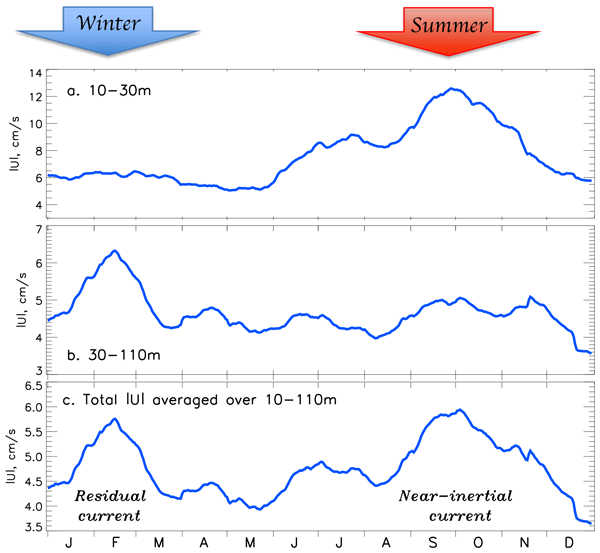
The Siberian Arctic Ocean greatly influences the Arctic climate system. Moreover, the region is experiencing some of the most notable Arctic climate change. In the summer, strong near-inertial currents in the upper (<30m) ocean account for more than half of the current speed and shear. In the winter, upper ocean ventilation due to atlantification distributes wind energy to far deeper (>100m) layers. Understanding the implications for mixing and halocline weakening depends on these findings.
Charlotte Eich, Mathijs van Manen, J. Scott P. McCain, Loay J. Jabre, Willem H. van de Poll, Jinyoung Jung, Sven B. E. H. Pont, Hung-An Tian, Indah Ardiningsih, Gert-Jan Reichart, Erin M. Bertrand, Corina P. D. Brussaard, and Rob Middag
Biogeosciences, 21, 4637–4663, https://doi.org/10.5194/bg-21-4637-2024, https://doi.org/10.5194/bg-21-4637-2024, 2024
Short summary
Short summary
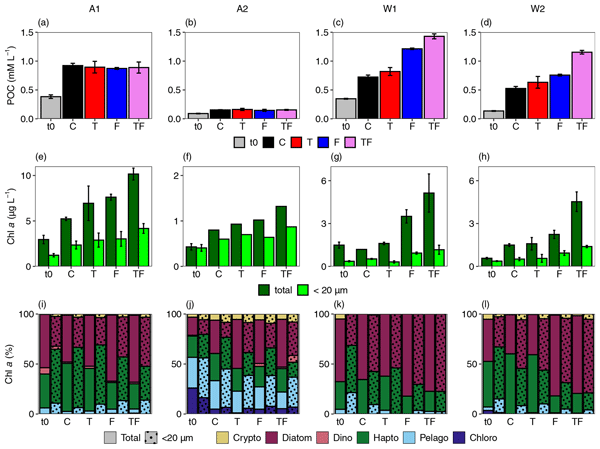
Phytoplankton growth in the Southern Ocean (SO) is often limited by low iron (Fe) concentrations. Sea surface warming impacts Fe availability and can affect phytoplankton growth. We used shipboard Fe clean incubations to test how changes in Fe and temperature affect SO phytoplankton. Their abundances usually increased with Fe addition and temperature increase, with Fe being the major factor. These findings imply potential shifts in ecosystem structure, impacting food webs and elemental cycling.
Yange Deng, Hiroshi Tanimoto, Kohei Ikeda, Sohiko Kameyama, Sachiko Okamoto, Jinyoung Jung, Young Jun Yoon, Eun Jin Yang, and Sung-Ho Kang
Atmos. Chem. Phys., 24, 6339–6357, https://doi.org/10.5194/acp-24-6339-2024, https://doi.org/10.5194/acp-24-6339-2024, 2024
Short summary
Short summary
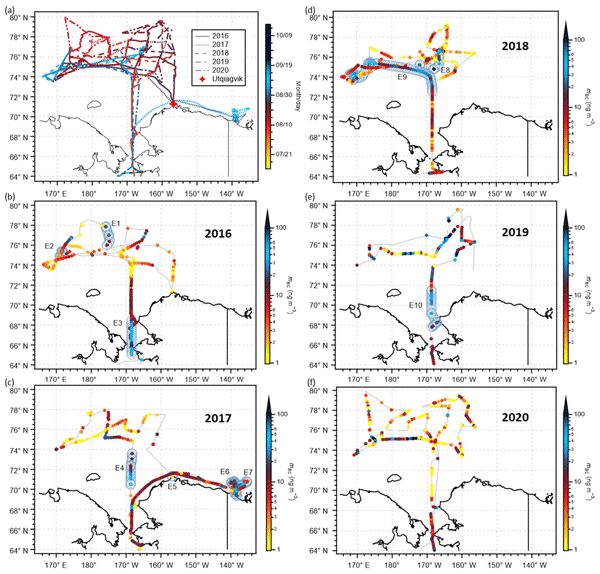
Black carbon (BC) aerosols play important roles in Arctic climate change, yet they are not well understood because of limited observational data. We observed BC mass concentrations (mBC) in the western Arctic Ocean during summer and early autumn 2016–2020. The mean mBC in 2019 was much higher than in other years. Biomass burning was likely the dominant BC source. Boreal fire BC transport occurring near the surface and/or in the mid-troposphere contributed to high-BC events in the Arctic Ocean.
Jinyoung Jung, Yuzo Miyazaki, Jin Hur, Yun Kyung Lee, Mi Hae Jeon, Youngju Lee, Kyoung-Ho Cho, Hyun Young Chung, Kitae Kim, Jung-Ok Choi, Catherine Lalande, Joo-Hong Kim, Taejin Choi, Young Jun Yoon, Eun Jin Yang, and Sung-Ho Kang
Atmos. Chem. Phys., 23, 4663–4684, https://doi.org/10.5194/acp-23-4663-2023, https://doi.org/10.5194/acp-23-4663-2023, 2023
Short summary
Short summary
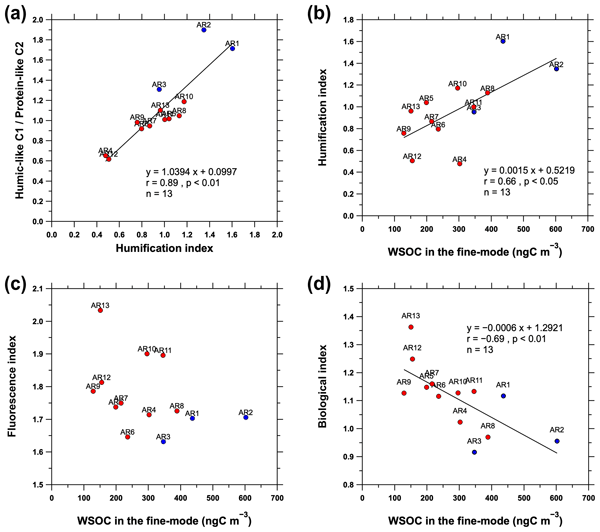
This study examined the summertime fluorescence properties of water-soluble organic carbon (WSOC) in aerosols over the western Arctic Ocean. We found that the WSOC in fine-mode aerosols in coastal areas showed a higher polycondensation degree and aromaticity than in sea-ice-covered areas. The fluorescence properties of atmospheric WSOC in the summertime marine Arctic boundary can improve our understanding of the WSOC chemical and biological linkages at the ocean–sea-ice–atmosphere interface.
Shenjie Zhou, Pierre Dutrieux, Claudia Giulivi, Andrew Meijers, Won Sang Lee, Tae-Wan Kim, Tore Hattermann, and Markus Janout
Earth Syst. Sci. Data Discuss., https://doi.org/10.5194/essd-2025-727, https://doi.org/10.5194/essd-2025-727, 2026
Preprint under review for ESSD
Short summary
Short summary
A collection of temperature and salinity measurements made in the Southern Ocean and around Antarctic continental shelf seas is assembled and described in this paper. A gridded product developed out of these scattered data points is also described. The gridded product provide us a better view of contemporary mean status of the Southern Ocean and Antarctic shelf seas and help models to better reference the prediction of the future climate.
Igor V. Polyakov, Andrey V. Pnyushkov, Eddy C. Carmack, Matthew Charette, Kyoung-Ho Cho, Steven Dykstra, Jari Haapala, Jinyoung Jung, Lauren Kipp, Eun Jin Yang, and Sergey Molodtsov
Ocean Sci., 21, 3105–3122, https://doi.org/10.5194/os-21-3105-2025, https://doi.org/10.5194/os-21-3105-2025, 2025
Short summary
Short summary
The Siberian Arctic Ocean greatly influences the Arctic climate system. Moreover, the region is experiencing some of the most notable Arctic climate change. In the summer, strong near-inertial currents in the upper (<30m) ocean account for more than half of the current speed and shear. In the winter, upper ocean ventilation due to atlantification distributes wind energy to far deeper (>100m) layers. Understanding the implications for mixing and halocline weakening depends on these findings.
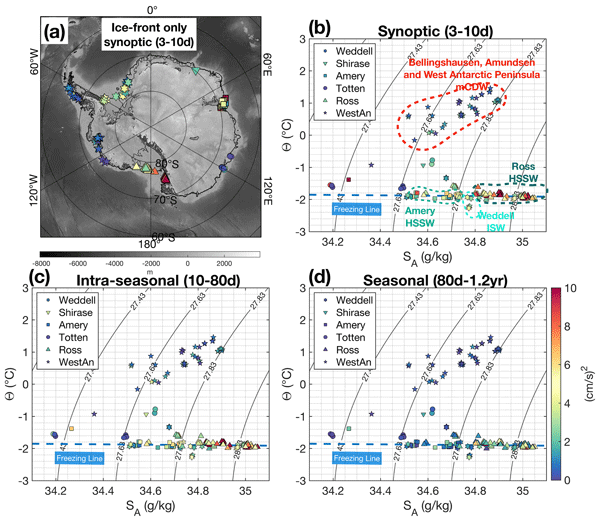
Shenjie Zhou, Pierre Dutrieux, Claudia F. Giulivi, Adrian Jenkins, Alessandro Silvano, Christopher Auckland, E. Povl Abrahamsen, Michael Meredith, Irena Vaňková, Keith Nicholls, Peter E. D. Davis, Svein Østerhus, Arnold L. Gordon, Christopher J. Zappa, Tiago S. Dotto, Ted Scambos, Kathryn L. Gunn, Stephen R. Rintoul, Shigeru Aoki, Craig Stevens, Chengyan Liu, Sukyoung Yun, Tae-Wan Kim, Won Sang Lee, Markus Janout, Tore Hattermann, Julius Lauber, Elin Darelius, Anna Wåhlin, Leo Middleton, Pasquale Castagno, Giorgio Budillon, Karen J. Heywood, Jennifer Graham, Stephen Dye, Daisuke Hirano, and Una Kim Miller
Earth Syst. Sci. Data, 17, 5693–5706, https://doi.org/10.5194/essd-17-5693-2025, https://doi.org/10.5194/essd-17-5693-2025, 2025
Short summary
Short summary
We created the first standardised dataset of in-situ ocean measurements time series from around Antarctica collected since 1970s. This includes temperature, salinity, pressure, and currents recorded by instruments deployed in icy, challenging conditions. Our analysis highlights the dominance of tidal currents and separates these from other patterns to study regional energy distribution. This unique dataset offers a foundation for future research on Antarctic ocean dynamics and ice interactions.
Charlotte Eich, Mathijs van Manen, J. Scott P. McCain, Loay J. Jabre, Willem H. van de Poll, Jinyoung Jung, Sven B. E. H. Pont, Hung-An Tian, Indah Ardiningsih, Gert-Jan Reichart, Erin M. Bertrand, Corina P. D. Brussaard, and Rob Middag
Biogeosciences, 21, 4637–4663, https://doi.org/10.5194/bg-21-4637-2024, https://doi.org/10.5194/bg-21-4637-2024, 2024
Short summary
Short summary
Phytoplankton growth in the Southern Ocean (SO) is often limited by low iron (Fe) concentrations. Sea surface warming impacts Fe availability and can affect phytoplankton growth. We used shipboard Fe clean incubations to test how changes in Fe and temperature affect SO phytoplankton. Their abundances usually increased with Fe addition and temperature increase, with Fe being the major factor. These findings imply potential shifts in ecosystem structure, impacting food webs and elemental cycling.
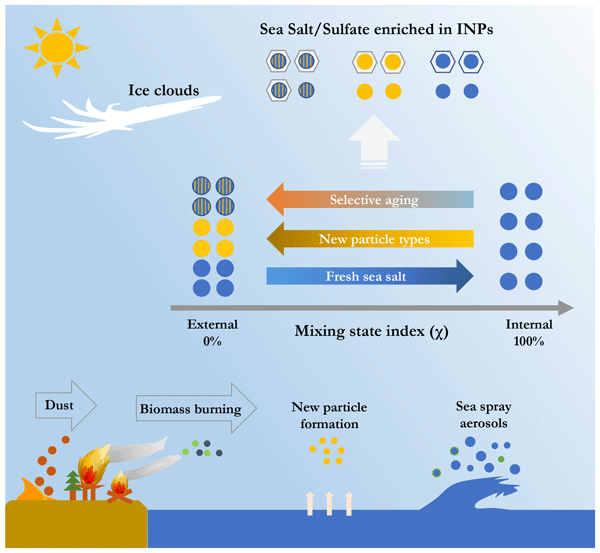
Jiao Xue, Tian Zhang, Keyhong Park, Jinpei Yan, Young Jun Yoon, Jiyeon Park, and Bingbing Wang
Atmos. Chem. Phys., 24, 7731–7754, https://doi.org/10.5194/acp-24-7731-2024, https://doi.org/10.5194/acp-24-7731-2024, 2024
Short summary
Short summary
Ice formation by particles is an important way of making mixed-phase and ice clouds. We found that particles collected in the marine atmosphere exhibit diverse ice nucleation abilities and mixing states. Sea salt mixed-sulfate particles were enriched in ice-nucleating particles. Selective aging on sea salt particles made particle populations more externally mixed. Characterizations of particles and their mixing state are needed for a better understanding of aerosol–cloud interactions.
Yange Deng, Hiroshi Tanimoto, Kohei Ikeda, Sohiko Kameyama, Sachiko Okamoto, Jinyoung Jung, Young Jun Yoon, Eun Jin Yang, and Sung-Ho Kang
Atmos. Chem. Phys., 24, 6339–6357, https://doi.org/10.5194/acp-24-6339-2024, https://doi.org/10.5194/acp-24-6339-2024, 2024
Short summary
Short summary
Black carbon (BC) aerosols play important roles in Arctic climate change, yet they are not well understood because of limited observational data. We observed BC mass concentrations (mBC) in the western Arctic Ocean during summer and early autumn 2016–2020. The mean mBC in 2019 was much higher than in other years. Biomass burning was likely the dominant BC source. Boreal fire BC transport occurring near the surface and/or in the mid-troposphere contributed to high-BC events in the Arctic Ocean.
Jinyoung Jung, Yuzo Miyazaki, Jin Hur, Yun Kyung Lee, Mi Hae Jeon, Youngju Lee, Kyoung-Ho Cho, Hyun Young Chung, Kitae Kim, Jung-Ok Choi, Catherine Lalande, Joo-Hong Kim, Taejin Choi, Young Jun Yoon, Eun Jin Yang, and Sung-Ho Kang
Atmos. Chem. Phys., 23, 4663–4684, https://doi.org/10.5194/acp-23-4663-2023, https://doi.org/10.5194/acp-23-4663-2023, 2023
Short summary
Short summary
This study examined the summertime fluorescence properties of water-soluble organic carbon (WSOC) in aerosols over the western Arctic Ocean. We found that the WSOC in fine-mode aerosols in coastal areas showed a higher polycondensation degree and aromaticity than in sea-ice-covered areas. The fluorescence properties of atmospheric WSOC in the summertime marine Arctic boundary can improve our understanding of the WSOC chemical and biological linkages at the ocean–sea-ice–atmosphere interface.
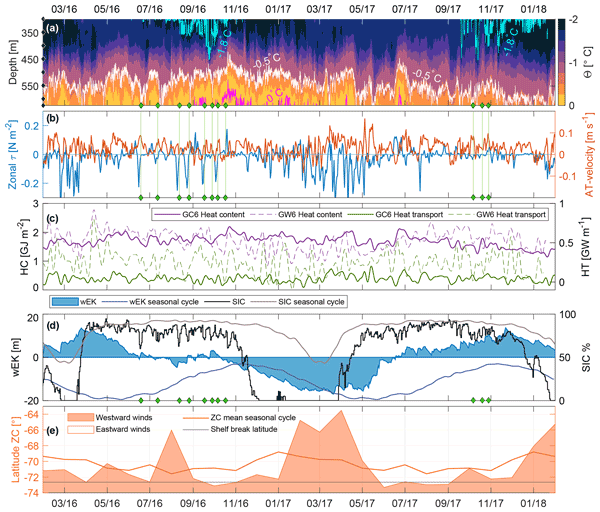
Vår Dundas, Elin Darelius, Kjersti Daae, Nadine Steiger, Yoshihiro Nakayama, and Tae-Wan Kim
Ocean Sci., 18, 1339–1359, https://doi.org/10.5194/os-18-1339-2022, https://doi.org/10.5194/os-18-1339-2022, 2022
Short summary
Short summary
Ice shelves in the Amundsen Sea are thinning rapidly as ocean currents bring warm water into cavities beneath the floating ice. We use 2-year-long mooring records and 16-year-long model simulations to describe the hydrography and circulation near the ice front between Siple and Carney Islands. We find that temperatures here are lower than at neighboring ice fronts and that the transport of heat toward the cavity is governed by wind stress over the Amundsen Sea continental shelf.
Miming Zhang, Jinpei Yan, Qi Lin, Hongguo Zheng, Keyhong Park, Shuhui Zhao, Suqing Xu, Meina Ruan, Shanshan Wang, Xinlin Zhong, and Suli Zhao
Atmos. Chem. Phys. Discuss., https://doi.org/10.5194/acp-2022-454, https://doi.org/10.5194/acp-2022-454, 2022
Revised manuscript not accepted
Short summary
Short summary
Extremely low contribution of DMS chemistry to the aerosols over the high AO was determined by the inhibition of marine phytoplankton, which extends the knowledge how will biogenic sulfur cycle impact the regional climate as AO sea ice retreat in the future.
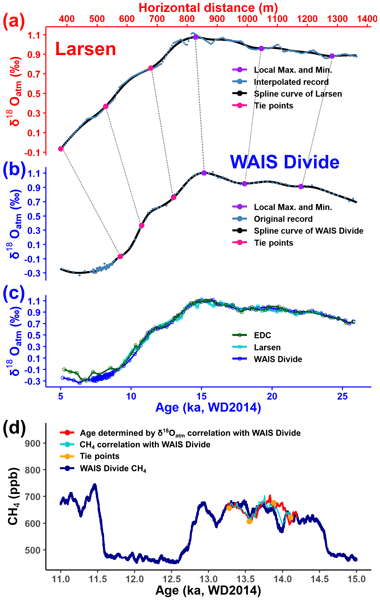
Giyoon Lee, Jinho Ahn, Hyeontae Ju, Florian Ritterbusch, Ikumi Oyabu, Christo Buizert, Songyi Kim, Jangil Moon, Sambit Ghosh, Kenji Kawamura, Zheng-Tian Lu, Sangbum Hong, Chang Hee Han, Soon Do Hur, Wei Jiang, and Guo-Min Yang
The Cryosphere, 16, 2301–2324, https://doi.org/10.5194/tc-16-2301-2022, https://doi.org/10.5194/tc-16-2301-2022, 2022
Short summary
Short summary
Blue-ice areas (BIAs) have several advantages for reconstructing past climate. However, the complicated ice flow in the area hinders constraining the age. We applied state-of-the-art techniques and found that the ages cover the last deglaciation period. Our study demonstrates that the BIA in northern Victoria Land may help reconstruct the past climate during the termination of the last glacial period.
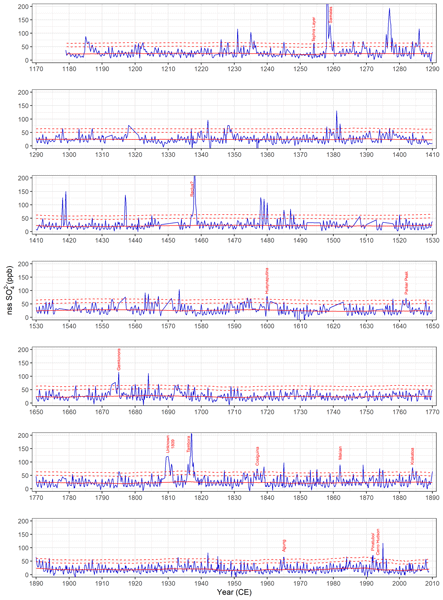
Raffaello Nardin, Mirko Severi, Alessandra Amore, Silvia Becagli, Francois Burgay, Laura Caiazzo, Virginia Ciardini, Giuliano Dreossi, Massimo Frezzotti, Sang-Bum Hong, Ishaq Khan, Bianca Maria Narcisi, Marco Proposito, Claudio Scarchilli, Enricomaria Selmo, Andrea Spolaor, Barbara Stenni, and Rita Traversi
Clim. Past, 17, 2073–2089, https://doi.org/10.5194/cp-17-2073-2021, https://doi.org/10.5194/cp-17-2073-2021, 2021
Short summary
Short summary
The first step to exploit all the potential information buried in ice cores is to produce a reliable age scale. Based on chemical and isotopic records from the 197 m Antarctic GV7(B) ice core, accurate dating was achieved and showed that the archive spans roughly the last 830 years. The relatively high accumulation rate allowed us to use the non-sea-salt sulfate seasonal pattern to count annual layers. The accumulation rate reconstruction exhibited a slight increase since the 18th century.
Cited articles
Andreae, M. O. and Crutzen, P. J.: Atmospheric Aerosols: Biogeochemical
Sources and Role in Atmospheric Chemistry, Science, 276, 1052–1058,
https://doi.org/10.1126/science.276.5315.1052, 1997.
Andreae, M. O., Ferek, R. J., Bermond, F., Byrd, K. P., Engstrom, R. T.,
Hardin, S., Houmere, P. D., LeMarrec, F., Raemdonck, H., and Chatfield, R.
B.: Dimethyl sulfide in the marine atmosphere, J. Geophys. Res., 90,
12891–12900, https://doi.org/10.1029/JD090iD07p12891, 1985.
Arrigo, K. R. and van Dijken, G. L.: Phytoplankton dynamics within 37
Antarctic coastal polynya systems, J. Geophys. Res., 108, 3271,
https://doi.org/10.1029/2002JC001739, 2003.
Arrigo, K. R., Worthen, D. L., and Robinson, D. H.: A coupled ocean-ecosystem
model of the Ross Sea: 2. Iron regulation of phytoplankton taxonomic
variability and primary production, J. Geophys. Res., 108, 3231,
https://doi.org/10.1029/2001JC000856, 2003.
Arrigo, K. R., Lowry, K. E., and van Dijken, G. L.: Annual changes in sea ice
and phytoplankton in polynyas of the Amundsen Sea, Antarctica, Deep-Sea Res. Pt. II, 71, 5–15, https://doi.org/10.1016/j.dsr2.2012.03.006, 2012.
Ayers, G. P., Ivey, J. P., and Gillett, R. W.: Coherence between seasonal
cycles of dimethyl sulphide, methanesulphonate and sulphate in marine air,
Nature, 349, 404–406, https://doi.org/10.1038/349404a0, 1991.
Bates, T. S., Calhoun, J. A., and Quinn, P. K.: Variations in the
methanesulfonate to sulfate molar ratio in submicrometer marine aerosol
particles over the South Pacific Ocean, J. Geophys. Res.-Atmos., 97,
9859–9865, https://doi.org/10.1029/92JD00411, 1992.
Benner, R., Pakulski, J. D., McCarthy, M., Hedges, J. I., and Hatcher, P. G.:
Bulk chemical characteristics of dissolved organic matter in the ocean,
Science, 255, 1561–1564, https://doi.org/10.1126/science.255.5051.1561, 1992.
Berresheim, H., Andreae, M. O., Ayers, G. P., Gillett, R. W., Merrill, J.
T., Davis, V. J. and Chameides, W. L.: Airborne measurements of
dimethylsulfide, sulfur dioxide, and aerosol ions over the Southern Ocean
South of Australia, J. Atmos. Chem., 10, 341–370,
https://doi.org/10.1007/BF00053868, 1990.
Biersmith, A. and Benner, R.: Carbohydrates in phytoplankton and freshly
produced dissolved organic matter, Mar. Chem., 63, 131–144,
https://doi.org/10.1016/S0304-4203(98)00057-7, 1998.
Birch, M. E. And Cary, R. A.: Elemental carbon-based method for monitoring
occupational exposures to particulate diesel exhaust, Aerosol. Sci.
Technol., 25, 221–241, 1996.
Boreddy, S. K. R., Haque, M. M., and Kawamura, K.: Long-term (2001–2012) trends of carbonaceous aerosols from a remote island in the western North Pacific: an outflow region of Asian pollutants, Atmos. Chem. Phys., 18, 1291–1306, https://doi.org/10.5194/acp-18-1291-2018, 2018.
Bromwich, D. H., Nicolas, J. P., Monaghan, A. J., Lazzara, M. A., Keller, L.
M., Weidner, G. A., and Wilson, A. B.: Central West Antarctica among the most
rapidly warming regions on Earth, Nat. Geosci., 6, 1–8,
https://doi.org/10.1038/ngeo1671, 2013.
Ceburnis, D., O'Dowd, C. D., Jennings, G. S., Facchini, M. C., Emblico, L.,
Decesari, S., Fuzzi, S., and Sakalys, J.: Marine aerosol chemistry gradients:
Elucidating primary and secondary processes and fluxes, Geophys. Res. Lett.,
35, L07804, https://doi.org/10.1029/2008GL033462, 2008.
Ceburnis, D., Rinaldi, M., Ovadnevaite, J., Martucci, G., Giulianelli, L., and O'Dowd, C. D.: Marine submicron aerosol gradients, sources and sinks, Atmos. Chem. Phys., 16, 12425–12439, https://doi.org/10.5194/acp-16-12425-2016, 2016.
Charlson, R. J., Lovelock, J. E., Andreae, M. O., and Warren, S. G.: Oceanic
phytoplankton, atmospheric sulfur, cloud albedo and climate, Nature,
326, 655–661, https://doi.org/10.1038/326655a0, 1987.
Chen, L., Wang, J., Gao, Y., Xu, G., Yang, X., Lin, Q., and Zhang, Y.:
Latitudinal distributions of atmospheric MSA and MSA ∕ nss-
Chen, M., Price, R. M., Yamashita, Y., and Jaffé, R.: Comparative study
of dissolved organic matter from groundwater and surface water in the
Florida coastal Everglades using multi-dimensional spectrofluorometry
combined with multivariate statistics, Appl. Geochem., 25, 872–880,
https://doi.org/10.1016/j.apgeochem.2010.03.005, 2010.
Chen, M., Jung, J., Lee, Y. K., and Hur, J.: Surface accumulation of low
molecular weight dissolved organic matter in surface waters and horizontal
off-shelf spreading of nutrients and humic-like fluorescence in the Chukchi
Sea of the Arctic Ocean, Sci. Total Environ., 639, 624–632,
https://doi.org/10.1016/j.scitotenv.2018.05.205, 2018.
Chen, M., Kim, J.-H., Choi, J., Lee, Y. K., and Hur, J.: Biological early
diagenesis and insolation-paced paleoproductivity signified in deep core
sediment organic matter, Sci. Rep., 7, 1–11, https://doi.org/10.1038/s41598-017-01759-4,
2017.
Coble, P. G.: Characterization of marine and terrestrial DOM in seawater
using excitation-emission matrix spectroscopy, Mar. Chem., 51, 325–346,
https://doi.org/10.1016/0304-4203(95)00062-3, 1996.
Coble, P. G.: Marine optical biogeochemistry: The chemistry of ocean color,
Chem. Rev., 107, 402–418, https://doi.org/10.1021/cr050350+, 2007.
Coble, P. G., Del Castillo, C. E., and Avril, B.: Distribution and optical
properties of CDOM in the Arabian Sea during the 1995 Southwest Monsoon,
Deep-Sea Res. Pt. II, 45, 2195–2223,
https://doi.org/10.1016/S0967-0645(98)00068-X, 1998.
Covert, D. S., Kapustin, V. N., Quinn, P. K., and Bates, T. S.: New particle
formation in the marine boundary layer, J. Geophys. Res., 97,
20581–20589, 1992.
Criscitiello, A. S., Das, S. B., Evans, M. J., Frey, K. E., Conway, H.,
Joughin, I., Medley, B., and Steig, E. J.: Ice sheet record of recent sea-ice
behavior and polynya variability in the Amundsen Sea, West Antarctica, J.
Geophys. Res.-Oceans, 118, 118–130, https://doi.org/10.1029/2012JC008077, 2013.
Dall'Osto, M., Ovadnevaite, J., Paglione, M., Beddows, D. C. S., Ceburnis,
D., Cree, C., Cortes, P., Zamanillo, M., Nunes, S. O., Perez, G. L.,
Ortega-Retuerta, E., Emelianov, M., Vaque, D., Marrase, C., Estrada, M.,
Sala, M. M., Vidal, M., Fitzsimons, M. F., Beale, R., Airs, R., Rinaldi, M.,
Decesari, S., Facchini, M. C., Harrison, R. M., O'Dowd, C. and Simo, R.:
Antarctic sea ice region as a source of biogenic organic nitrogen in
aerosols, Sci. Rep., 7, 1–10, https://doi.org/10.1038/s41598-017-06188-x, 2017.
de Leeuw, G., Andreas, E. L., Anguelova, M. D., Fairall, C. W., Lewis, E.
R., O'Dowd, C., Schulz, M., and Schwartz, S. E.: Production flux of sea spray
aerosol, Rev. Geophys., 49, RG2001, https://doi.org/10.1029/2010RG000349, 2011.
Dutrieux, P., De Rydt, J., Jenkins, A., Holland, P. R., Ha, H. K., Lee, S.
H., Steig, E. J., Ding, Q., Abrahamsen, E. P., and Schröder, M.: Strong
sensitivity of Pine Island ice-shelf melting to climatic variability,
Science, 343, 174–178, https://doi.org/10.1126/science.1244341, 2014.
Fu, P., Kawamura, K., Chen, J., Qin, M., Ren, L., Sun, Y., Wang, Z., Barrie,
L. A., Tachibana, E., Ding, A., and Yamashita, Y.: Fluorescent water-soluble
organic aerosols in the High Arctic atmosphere, Sci. Rep., 5, 1053–1058,
https://doi.org/10.1038/srep09845, 2015.
Furutani, H., Dall'osto, M., Roberts, G. C., and Prather, K.: Assessment of
the relative importance of atmospheric aging on CCN activity derived from
field observations, Atmos. Environ., 42, 3130–3142,
https://doi.org/10.1016/j.atmosenv.2007.09.024, 2008.
Facchini, M. C., Mircea, M., Fuzzi, S., and Charlson, R.: Cloud albedo
enhancement by surface-active organic solutes in growing droplets, Nature,
401, 257–259, 1999.
Facchini, M. C., Rinaldi, M., Decesari, S., Carbone, C., Finessi, E.,
Mircea, M., Fuzzi, S., Ceburnis, D., Flanagan, R., Nilsson, E. D., de Leeuw,
G., Martino, M., Woeltjen, J., and O'Dowd, C. D.: Primary submicron marine
aerosol dominated by insoluble organic colloids and aggregates, Geophys.
Res. Lett., 35, 396, https://doi.org/10.1029/2008GL034210, 2008a.
Facchini, M. C., Decesari, S., Rinaldi, M., Carbone, C., Finessi, E.,
Mircea, M., Fuzzi, S., Moretti, F., Tagliavini, E., Ceburnis, D., and O'Dowd,
C. D.: Important source of marine secondary organic aerosol from biogenic
amines, Environ. Sci. Technol., 42, 9116–9121, https://doi.org/10.1021/es8018385,
2008b.
Gantt, B. and Meskhidze, N.: The physical and chemical characteristics of marine primary organic aerosol: a review, Atmos. Chem. Phys., 13, 3979–3996, https://doi.org/10.5194/acp-13-3979-2013, 2013.
Gantt, B., Meskhidze, N., Facchini, M. C., Rinaldi, M., Ceburnis, D., and O'Dowd, C. D.: Wind speed dependent size-resolved parameterization for the organic mass fraction of sea spray aerosol, Atmos. Chem. Phys., 11, 8777–8790, https://doi.org/10.5194/acp-11-8777-2011, 2011.
Giordano, M. R., Kalnajs, L. E., Avery, A., Goetz, J. D., Davis, S. M., and DeCarlo, P. F.: A missing source of aerosols in Antarctica – beyond long-range transport, phytoplankton, and photochemistry, Atmos. Chem. Phys., 17, 1–20, https://doi.org/10.5194/acp-17-1-2017, 2017.
Gondwe, M., Krol, M., Klaassen, W., Gieskes, W., and de Baar, H.: Comparison
of modeled versus measured MSA:nss SO
Gras, J. L. and Keywood, M.: Cloud condensation nuclei over the Southern Ocean: wind dependence and seasonal cycles, Atmos. Chem. Phys., 17, 4419–4432, https://doi.org/10.5194/acp-17-4419-2017, 2017.
Hahm, D., Rhee, T. S., Kim, H.-C., Park, J., Kim, Y. N., Shin, H. C., and
Lee, S.: Spatial and temporal variation of net community production and its
regulating factors in the Amundsen Sea, Antarctica, J. Geophys. Res.-Oceans,
119, 2815–2826, https://doi.org/10.1002/2013JC009762, 2014.
Hegg, D. A., Ferek, R. J., Hobbs, P. V., and Radke, L. F.: Dimethyl sulfide
and cloud condensation nucleus correlations in the Northeast Pacific Ocean,
J. Geophys. Res.-Atmos., 96, 13189–13191, https://doi.org/10.1029/91JD01309, 1991.
Hong, S.-B., Lee, K., Hur, S.-D., Hong, S., Soyol-Erdene, T.-O., Kim, S.-M., Chung, J.-W., Jun, S.-J., and Kang, C.-H.: Development of Melting
System for Measurement of Trace Elements and Ions in Ice Core, Bull. Korean
Chem. Soc., 36, 1069–1081, https://doi.org/10.1002/bkcs.10198, 2015.
Huguet, A., Vacher, L., Relexans, S., Saubusse, S., Froidefond, J. M., and
Parlanti, E.: Properties of fluorescent dissolved organic matter in the
Gironde Estuary, Org. Geochem., 40, 706–719,
https://doi.org/10.1016/j.orggeochem.2009.03.002, 2009.
Jung, J., Furutani, H., Uematsu, M., Kim, S., and Yoon, S.: Atmospheric inorganic nitrogen input via dry, wet, and sea fog deposition to the subarctic western North Pacific Ocean, Atmos. Chem. Phys., 13, 411–428, https://doi.org/10.5194/acp-13-411-2013, 2013.
Jung, J., Furutani, H., Uematsu, M., and Park, J.: Distributions of
atmospheric non-sea-salt sulfate and methanesulfonic acid over the Pacific
Ocean between 48∘ N and 55∘ S during summer, Atmos.
Environ., 99, 374–384, https://doi.org/10.1016/j.atmosenv.2014.10.009, 2014.
Kanakidou, M., Seinfeld, J. H., Pandis, S. N., Barnes, I., Dentener, F. J.,
Facchini, M. C., Van Dingenen, R., Ervens, B., Nenes, A., Nielsen, C. J.,
Swietlicki, E., Putaud, J. P., Balkanski, Y., Fuzzi, S., Horth, J.,
Moortgat, G. K., Winterhalter, R., Myhre, C., Tsigaridis, K., Vignati, E.,
Stephanou, E. G., and Wilson, J.: Organic aerosol and global climate
modelling: a review, J. Atmos. Chem., 5, 1053–1123, 2005.
Kawamura, K., Kasukabe, H., and Barrie, L. A.: Secondary formation of
water-soluble organic acids and α-dicarbonyls and their
contributions to total carbon and water-soluble organic carbon:
Photochemical aging of organic aerosols in the Arctic spring, J. Geophys.
Res., 115, D21306, https://doi.org/10.1029/2010JD014299, 2010.
Kawamura, K., Seméré, R., Imai, Y., Fujii, Y., and Hayashi, M.: Water
soluble dicarboxylic acids and related compounds in Antarctic aerosols, J.
Geophys. Res., 101, 18721–18728, https://doi.org/10.1029/96JD01541, 1996.
Kim, I., Hahm, D., Park, K., Lee, Y., Choi, J.-O., Zhang, M., Chen, L.,
Kim, H.-C., and Lee, S.: Characteristics of the horizontal and vertical
distributions of dimethyl sulfide throughout the Amundsen Sea Polynya, Sci.
Total Environ., 584, 154–163, https://doi.org/10.1016/j.scitotenv.2017.01.165,
2017.
Kloster, S., Feichter, J., Maier-Reimer, E., Six, K. D., Stier, P., and Wetzel, P.: DMS cycle in the marine ocean-atmosphere system – a global model study, Biogeosciences, 3, 29–51, https://doi.org/10.5194/bg-3-29-2006, 2006.
Korhonen, H., Carslaw, K. S., Spracklen, D. V., Mann, G. W., and Woodhouse,
M. T.: Influence of oceanic dimethyl sulfide emissions on cloud condensation
nuclei concentrations and seasonality over the remote Southern Hemisphere
oceans: A global model study, J. Geophys. Res., 113, D15204,
https://doi.org/10.1029/2007JD009718, 2008.
Lawaetz, A. J. and Stedmon, C. A.: Fluorescence Intensity Calibration Using
the Raman Scatter Peak of Water, Appl. Spectrosc., 63, 936–940,
https://doi.org/10.1366/000370209788964548, 2009.
Lee, Y., Yang, E. J., Park, J., Jung, J., Kim, T. W., and Lee, S.:
Physical-biological coupling in the Amundsen Sea, Antarctica: Influence of
physical factors on phytoplankton community structure and biomass, Deep-Sea
Res. Pt. I, 117, 51–60, https://doi.org/10.1016/j.dsr.2016.10.001, 2016.
Legrand, M. and Pasteur, E. C.: Methane sulfonic acid to non-sea-salt
sulfate ratio in coastal Antarctic aerosol and surface snow, J. Geophys.
Res., 103, 10991–11006, 1998.
Liss, P. S., Malin, G., Turner, S. M., and Holligan, P. M.: Dimethyl sulphide
and Phaeocystics: A review, J. Mar. Syst., 5, 41–53, 1994.
McKnight, D. M., Boyer, E. W., Westerhoff, P. K., Doran, P. T., Kulbe, T.
and Andersen, D. T.: Spectrofluorometric characterization of dissolved
organic matter for indication of precursor organic material and aromaticity,
Limnol. Oceanogr., 46, 38–48, https://doi.org/10.4319/lo.2001.46.1.0038, 2001.
McGillis, W. R., Dacey, J., Frew, N. M., Bock, E. J., and Nelson, R. K.:
Water-air flux of dimethylsulfide, J. Geophys. Res.-Oceans, 105,
1187–1193, https://doi.org/10.1029/1999JC900243, 2000.
Meskhidze, N. and Nenes, A.: Effects of ocean ecosystem on marine
aerosol-cloud interaction, Adv. Meteorol., 4923, 1–13,
https://doi.org/10.1155/2010/239808, 2010.
Millero, F. J. and Sohn, M. L.: Chemical Oceanography, CRC Press, Boca
Raton, FL, 521 pp., 1992.
Minikin, A., Legrand, M., Hall, J., Wagenbach, D., Kleefeld, C., Wolff, E.,
Pasteur, E. C., and Ducroz, F.: Sulfur-containing species (sulfate and
methanesulfonate) in coastal Antarctic aerosol and precipitation, J.
Geophys. Res., 103, 10975–10990, https://doi.org/10.1029/98JD00249, 1998.
Miyazaki, Y., Kawamura, K., Jung, J., Furutani, H., and Uematsu, M.: Latitudinal distributions of organic nitrogen and organic carbon in marine aerosols over the western North Pacific, Atmos. Chem. Phys., 11, 3037–3049, https://doi.org/10.5194/acp-11-3037-2011, 2011.
Miyazaki, Y., Coburn, S., Ono, K., Ho, D. T., Pierce, R. B., Kawamura, K., and Volkamer, R.: Contribution of dissolved organic matter to submicron water-soluble organic aerosols in the marine boundary layer over the eastern equatorial Pacific, Atmos. Chem. Phys., 16, 7695–7707, https://doi.org/10.5194/acp-16-7695-2016, 2016.
Miyazaki, Y., Yamashita, Y., Kawana, K., Tachibana, E., Kagami, S., Mochida,
M., Suzuki, K., and Nishioka, J.: Chemical transfer of dissolved organic
matter from surface seawater to sea spray water-soluble organic aerosol in
the marine atmosphere, Sci. Rep., 8, 2593,
https://doi.org/10.1038/s41598-018-32864-7, 2018.
Mochida, M., Kitamori, Y., Kawamura, K., Nojiri, Y., and Suzuki, K.: Fatty
acids in the marine atmosphere: Factors governing their concentrations and
evaluation of organic films on sea-salt particles, J. Geophys. Res.-Atmos.,
107, 1–10, https://doi.org/10.1029/2001JD001278, 2002.
Mochida, M., Nishita-Hara, C., Furutani, H., Miyazaki, Y., Jung, J.,
Kawamura, K., and Uematsu, M.: Hygroscopicity and cloud condensation nucleus
activity of marine aerosol particles over the western North Pacific, J.
Geophys. Res., 116, 6920–16, https://doi.org/10.1029/2010JD014759, 2011.
Monahan, E. C. and O'Muircheartaigh, I. G.: Whitecaps and the Passive
Remote-Sensing of the Ocean Surface, Int. J. Remote Sens., 7, 627–642,
https://doi.org/10.1080/01431168608954716, 1986.
Nightingale, P. D., Malin, G., Law, C. S., Watson, A. J., Liss, P. S.,
Liddicoat, M. I., Boutin, J., and Upstill-Goddard, R. C.: In situ evaluation
of air-sea gas exchange parameterizations using novel conservative and
volatile tracers, Global Biogeochem. Cy., 14, 373–387,
https://doi.org/10.1029/1999GB900091, 2000.
Niu, Z., Zhang, F., Kong, X., Chen, J., Yin, L., and Xu, L.: One-year
measurement of organic and elemental carbon in size-segregated atmospheric
aerosol at a coastal and suburban site in Southeast China, J. Environ.
Monit., 14, 2961–2967, https://doi.org/10.1039/c2em30337j, 2012.
Niu, Z., Zhang, F., Chen, J., Yin, L., Wang, S., and Xu, L.: Carbonaceous
species in PM2.5 in the coastal urban agglomeration in the Western Taiwan
Strait Region, China, Atmos. Res., 122, 102–110,
https://doi.org/10.1016/j.atmosres.2012.11.002, 2013.
O'Dowd, C. D., Lowe, J. A., Smith, M. H., Davison, B., Hewitt, N., and
Harrison, R. M.: Biogenic sulphur emissions and inferred
non-sea-salt-sulphate cloud condensation nuclei in and around Antarctica, J.
Geophys. Res.-Atmos., 102, 12839–12854, 1997.
O'Dowd, C. D., Facchini, M. C., Cavalli, F., Ceburnis, D., Mircea, M.,
Decesari, S., Fuzzi, S., Yoon, Y.-J., and Putaud, J.-P.: Biogenically driven
organic contribution to marine aerosol, Nature, 431, 676–680,
https://doi.org/10.1038/nature02959, 2004.
O'Dowd, C. D., Langmann, B., Varghese, S., Scannell, C., Ceburnis, D., and
Facchini, M. C.: A combined organic-inorganic sea-spray source function,
Geophys. Res. Lett., 35, L01801, https://doi.org/10.1029/2007GL030331, 2008.
Park, J., Kuzminov, F. I., Bailleul, B., Yang, E. J., Lee, S., Falkowski, P.
G., and Gorbunov, M. Y.: Light availability rather than Fe controls the
magnitude of massive phytoplankton bloom in the Amundsen Sea polynyas,
Antarctica, Limnol. Oceanogr., 62, 2260–2276, https://doi.org/10.1002/lno.10565,
2017.
Quinn, P. K. and Bates, T. S.: The case against climate regulation via
oceanic phytoplankton sulphur emissions, Nature, 480, 51–56,
https://doi.org/10.1038/nature10580, 2011.
Quinn, P. K., Bates, T. S., Schulz, K. S., Coffman, D. J., Frossard, A. A.,
Russell, L. M., Keene, W. C., and Kieber, D. J.: Contribution of sea surface
carbon pool to organic matter enrichment in sea spray aerosol, Nat.
Geosci., 7, 228–232, https://doi.org/10.1038/NGEO2092, 2014.
Read, K. A., Lewis, A. C., Bauguitte, S., Rankin, A. M., Salmon, R. A., Wolff, E. W., Saiz-Lopez, A., Bloss, W. J., Heard, D. E., Lee, J. D., and Plane, J. M. C.: DMS and MSA measurements in the Antarctic Boundary Layer: impact of BrO on MSA production, Atmos. Chem. Phys., 8, 2985–2997, https://doi.org/10.5194/acp-8-2985-2008, 2008.
Retelletti Brogi, S., Ha, S.-Y., Kim, K., Derrien, M., Lee, Y. K., and Hur,
J.: Optical and molecular characterization of dissolved organic matter (DOM)
in the Arctic ice core and the underlying seawater (Cambridge Bay, Canada):
Implication for increased autochthonous DOM during ice melting, Sci. Total
Environ., 627, 802–811, https://doi.org/10.1016/j.scitotenv.2018.01.251, 2018.
Rignot, E., Bamber, J. L., van den Broeke, M. R., Davis, C., Li, Y., van de
Berg, W. J., and van Meijgaard, E.: Recent Antarctic ice mass loss from
radar interferometry and regional climate modelling, Nat. Geosci., 1,
106–110, https://doi.org/10.1038/ngeo102, 2008.
Roberts, D., Craven, M., Cai, M., Allison, I., and Nash, G.: Protists in the
marine ice of the Amery Ice Shelf, East Antarctica, Polar Biol., 30,
143–153, 2007.
Romakkaniemi, S., Kokkola, H., Smith, J. N., Prisle, N. L., Schwier, A. N.,
McNeill, V. F., and Laaksonen, A.: Partitioning of semivolatile
surface-active compounds between bulk, surface and gas phase, Geophys. Res.
Lett., 38, L03807, https://doi.org/10.1029/2010GL046147, 2011.
Russell, L. M., Hawkins, L. N., Frossard, A. A., Quinn, P. K., and Bates, T.
S.: Carbohydrate-like composition of submicron atmospheric particles and
their production from ocean bubble bursting, P. Natl. Acad. Sci. USA,
107, 6652–6657, https://doi.org/10.1073/pnas.0908905107, 2010.
Sanchez, K. J., Chen, C.-L., Russell, L. M., Betha, R., Liu, J., Price, D.
J., Massoli, P., Ziemba, L. D., Crosbie, E. C., Moore, R. H., Mueller, M.,
Schiller, S. A., Wisthaler, A., Lee, A. K. Y., Quinn, P. K., Bates, T. S.,
Porter, J., Bell, T. G., Saltzman, E. S., Vaillancourt, R. D., and
Behrenfeld, M. J.: Substantial seasonal contribution of observed biogenic
sulfate particles to cloud condensation nuclei, Sci. Rep., 8,
https://doi.org/10.1038/s41598-018-21590-9, 2018.
Savoie, D. L., Prospero, J. M., Larsen, R. J., Huang, F., Izaguirre, M. A.,
Huang, R., Snowdon, T. H., Custals, L., and Sanderson C. G.: Nitrogen and
sulfur species in Antarctic aerosols at Mawson, Palmer Station, and Marsh
(King George Island), J. Atmos. Chem., 17, 95–122, 1993.
Savoie, D. L., Prospero, J. M., Arimoto, R., and Duce, R. A.: Non-sea-salt
sulfate and methanesulfonate at American Samoa, J. Geophys. Res., 99,
3587–3596, https://doi.org/10.1029/93JD03337, 1994.
Sciare, J., Favez, O., Sarda-Estève, R., Oikonomou, K., Cachier, H., and
Kazan, V.: Long-term observations of carbonaceous aerosols in the Austral
Ocean atmosphere: Evidence of a biogenic marine organic source, J. Geophys.
Res., 114, 1253, https://doi.org/10.1029/2009JD011998, 2009.
Schoemann, V., Becquevort, S., Stefels, J., Rousseau, V., and Lancelot, C.:
Phaeocystis blooms in the global ocean and their controlling mechanisms: a review, J.
Sea Res., 53, 43–66, https://doi.org/10.1016/j.seares.2004.01.008, 2005.
Sherrell, R. M., Lagerström, M. E., Forsch, K. O., Stammerjohn, S. E.,
and Yager, P. L.: Dynamics of dissolved iron and other bioactive trace
metals (Mn, Ni, Cu, Zn) in the Amundsen Sea Polynya, Antarctica, Elem. Sci.
Anth., 3, 71–27, https://doi.org/10.12952/journal.elementa.000071, 2015.
Smith, M. J., Walker, C. F., Bell, T. G., Harvey, M. J., Saltzman, E. S., and Law, C. S.: Gradient flux measurements of sea-air DMS transfer during the Surface Ocean Aerosol Production (SOAP) experiment, Atmos. Chem. Phys., 18, 5861–5877, https://doi.org/10.5194/acp-18-5861-2018, 2018.
Spreen, G., Kaleschke, L., and Heygster, G.: Sea ice remote sensing using
AMSR-E 89-GHz channels, J. Geophys. Res., 113, C02S03,
https://doi.org/10.1029/2005JC003384, 2008.
Stammerjohn, S., Massom, R., Rind, D., and Martinson, D.: Regions of rapid
sea ice change: An inter-hemispheric seasonal comparison, Geophys. Res.
Lett., 39, L06501, https://doi.org/10.1029/2012GL050874, 2012.
Stedmon, C. A., Markager, S., and Bro, R.: Tracing dissolved organic matter
in aquatic environments using a new approach to fluorescence spectroscopy,
Mar. Chem., 82, 239–254, https://doi.org/10.1016/S0304-4203(03)00072-0, 2003.
Stedmon, C. A., Thomas, D. N., Granskog, M., Kaartokallio, H.,
Papadimitriou, S., and Kuosa, H.: Characteristics of dissolved organic matter
in Baltic coastal sea ice: Allochthonous or autochthonous origins?, Environ.
Sci. Technol., 41, 7273–7279, https://doi.org/10.1021/es071210f, 2007.
Stedmon, C. A., Thomas, D. N., Papadimitriou, S., Granskog, M. A., and
Dieckmann, G. S.: Using fluorescence to characterize dissolved organic
matter in Antarctic sea ice brines, J. Geophys. Res., 116, G03027,
https://doi.org/10.1029/2011JG001716, 2011.
Sun, J. M. and Ariya, P. A.: Atmospheric organic and bio-aerosols as cloud
condensation nuclei (CCN): A review, Atmos. Environ., 40, 795–820,
https://doi.org/10.1016/j.atmosenv.2005.05.052, 2006.
Tortell, P. D., Long, M. C., Payne, C. D., Alderkamp, A.-C., Dutrieux, P.,
and Arrigo, K. R.: Spatial distribution of pCO2, ΔO2/Ar
and dimethylsulfide (DMS) in polynya waters and the sea ice zone of the
Amundsen Sea, Antarctica, Deep-Sea Res. Pt. II, 71, 77–93,
https://doi.org/10.1016/j.dsr2.2012.03.010, 2012.
Vallina, S. M., Simó, R., and Gassó, S.: What controls CCN
seasonality in the Southern Ocean?, A statistical analysis based on
satellite-derived chlorophyll and CCN and model-estimated OH radical and
rainfall, Global Biogeochem. Cy., 20, GB1014, https://doi.org/10.1029/2005GB002597,
2006.
Wanninkhof, R.: Relationship between wind-speed and gas-exchange over the
ocean, J. Geophys. Res., 97, 7373–7382, https://doi.org/10.1029/92JC00188, 1992.
Wanninkhof, R.: Relationship between wind speed and gas exchange over the
ocean revisited, Limnol. Oceanogr. Methods, 12, 351–362,
https://doi.org/10.4319/lom.2014.12.351, 2014.
Wanninkhof, R. and McGillis, W. R.: A cubic relationship between air-sea
CO2 exchange and wind speed, Geophys. Res. Lett., 26, 1889–1892,
https://doi.org/10.1029/1999GL900363, 1999.
Wilson, T. W., Ladino, L. A., Alpert, P. A., Breckels, M. N., Brooks, I. M.,
Browse, J., Burrows, S. M., Carslaw, K. S., Huffman, J. A., Judd, C.,
Kilthau, W. P., Mason, R. H., McFiggans, G., Miller, L. A., Nájera, J.
J., Polishchuk, E., Rae, S., Schiller, C. L., Si, M., Temprado, J. V.,
Whale, T. F., Wong, J. P. S., Wurl, O., Yakobi-Hancock, J. D., Abbatt, J. P.
D., Aller, J. Y., Bertram, A. K., Knopf, D. A., and Murray, B. J.: A marine
biogenic source of atmospheric ice-nucleating particles, Nature, 525,
234–238, https://doi.org/10.1038/nature14986, 2015.
Woodhouse, M. T., Carslaw, K. S., Mann, G. W., Vallina, S. M., Vogt, M., Halloran, P. R., and Boucher, O.: Low sensitivity of cloud condensation nuclei to changes in the sea-air flux of dimethyl-sulphide, Atmos. Chem. Phys., 10, 7545–7559, https://doi.org/10.5194/acp-10-7545-2010, 2010.
Wright, S. W., van den Enden, R. L., Pearce, I., Davidson, A. T., Scott, F.
J., and Westwood, K. J.: Phytoplankton community structure and stocks in the
Southern Ocean (30–80∘ E) determined by CHEMTAX analysis of
HPLC pigment signatures, Deep-Sea Res. Pt. II, 57, 758–778,
https://doi.org/10.1016/j.dsr2.2009.06.015, 2010.
Yager, P., Sherrell, R., Stammerjohn, S., Alderkamp, A.-C., Schofield, O.,
Abrahamsen, P., Arrigo, K., Bertilsson, S., Garay, L., Guerrero, R., Lowry,
K., Moksnes, P.-O., Ndungo, K., Post, A., Randall-Goodwin, E., Riemann, L.,
Severmann, S., Thatje, S., van Dijken, G., and Wilson, S.: ASPIRE: The
Amundsen Sea Polynya International Research Expedition, Oceanogr., 25,
40–53, https://doi.org/10.5670/oceanog.2012.73, 2012.
Yager, P. L., Sherrell, R. M., Stammerjohn, S. E., Ducklow, H. W.,
Schofield, O., Ingall, E. D., Wilson, S. E., Lowry, K. E., Williams, C. M.,
Riemann, L., Bertilsson, S., Alderkamp, A. C., Dinasquet, J., Logares, R.,
Richert, I., Sipler, R. E., Melara, A. J., Mu, L., Newstead, R. G., Post, A.
F., Swalethorp, R. and van Dijken, G. L.: A carbon budget for the Amundsen
Sea Polynya, Antarctica: Estimating net community production and export in a
highly productive polar ecosystem, Elem. Sci. Anth., 4, p. 140,
https://doi.org/10.12952/journal.elementa.000140, 2016..
Yamashita, Y., Panton, A., Mahaffey, C., and Jaffé, R.: Assessing the
spatial and temporal variability of dissolved organic matter in Liverpool
Bay using excitation – emission matrix fluorescence and parallel factor
analysis, Ocean Dynam., 61, 569–579, https://doi.org/10.1007/s10236-010-0365-4, 2011.
Yamashita, Y. and Tanoue, E.: Chemical characterization of protein-like
fluorophores in DOM in relation to aromatic amino acids, Mar. Chem.,
82, 255–271, https://doi.org/10.1016/S0304-4203(03)00073-2, 2003.
Yang, L., Chen, W., Zhuang, W.-E., Cheng, Q., Li, W., Wang, H., Guo, W.,
Chen, C.-T. A., and Liu, M.: Characterization and bioavailability of
rainwater dissolved organic matter at the southeast coast of China using
absorption spectroscopy and fluorescence EEM-PARAFAC, Eastuar. Coast. Shelf S., 217, 45–55, https://doi.org/10.1016/j.ecss.2018.11.002, 2019.
Zapata, M., Rodríguez, F., and Garrido, J. L.: Separation of
chlorophylls and carotenoids from marine phytoplankton: a new HPLC method
using a reversed phase C8 column and pyridine-containing mobile phases,
Mar. Ecol. Prog. Ser., 195, 29–45, https://doi.org/10.3354/meps195029, 2000.
Short summary
Characteristics of atmospheric sulfur and organic carbon species in marine aerosols and the environmental factors influencing their distributions were investigated over the Southern Ocean and the Amundsen Sea, Antarctica, during austral summer. The simultaneous measurements of chemical species in aerosols as well as the chemical and biological properties of seawater in the Amundsen Sea allowed for a better understanding of the effect of the ocean ecosystem on marine aerosols.
Characteristics of atmospheric sulfur and organic carbon species in marine aerosols and the...


Altmetrics
Final-revised paper
Preprint