
Articles | Volume 26, issue 13
https://doi.org/10.5194/acp-26-9997-2026
© Author(s) 2026. This work is distributed under
the Creative Commons Attribution 4.0 License.
the Creative Commons Attribution 4.0 License.
https://doi.org/10.5194/acp-26-9997-2026
© Author(s) 2026. This work is distributed under
the Creative Commons Attribution 4.0 License.
the Creative Commons Attribution 4.0 License.
Research article
| 
16 Jul 2026
Research article |
| 16 Jul 2026
| 16 Jul 2026
Alkaline dust deposition to foliage surfaces likely enhances the dry deposition velocity of SO2: an investigation in the Alberta Oil-Sands Region using the GEM-MACH air-quality model

Environment and Climate Change Canada, Toronto, ON, Canada
Paul A. Makar
CORRESPONDING AUTHOR
Environment and Climate Change Canada, Toronto, ON, Canada
Kenjiro Toyota
Environment and Climate Change Canada, Toronto, ON, Canada
Colin Lee
Environment and Climate Change Canada, Toronto, ON, Canada
Verica Savic-Jovcic
Environment and Climate Change Canada, Toronto, ON, Canada
Sepehr Fathi
Environment and Climate Change Canada, Toronto, ON, Canada
Mahtab Majdzadeh
Environment and Climate Change Canada, Toronto, ON, Canada
Katherine Hayden
Environment and Climate Change Canada, Toronto, ON, Canada
Related authors
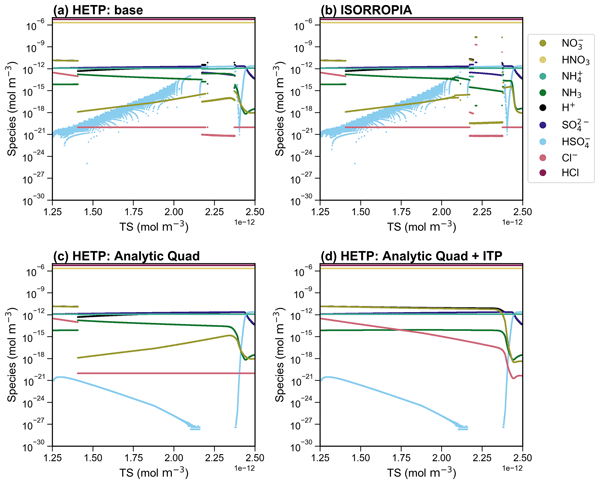
Stefan J. Miller, Paul A. Makar, and Colin J. Lee
Geosci. Model Dev., 17, 2197–2219, https://doi.org/10.5194/gmd-17-2197-2024, https://doi.org/10.5194/gmd-17-2197-2024, 2024
Short summary
Short summary
This work outlines a new solver written in Fortran to calculate the partitioning of metastable aerosols at thermodynamic equilibrium based on the forward algorithms of ISORROPIA II. The new code includes numerical improvements that decrease the computational speed (compared to ISORROPIA II) while improving the accuracy of the partitioning solution.
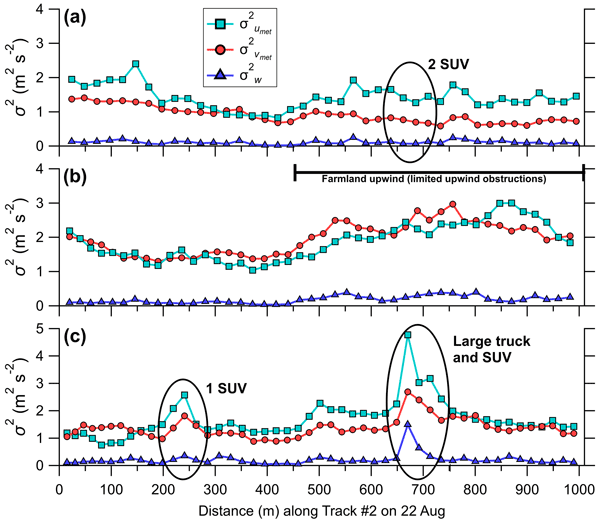
Stefan J. Miller and Mark Gordon
Atmos. Meas. Tech., 15, 6563–6584, https://doi.org/10.5194/amt-15-6563-2022, https://doi.org/10.5194/amt-15-6563-2022, 2022
Short summary
Short summary
This research investigates the measurement of atmospheric turbulence using a low-cost instrumented car that travels at near-highway speeds and is impacted by upwind obstructions and other on-road traffic. We show that our car design can successfully measure the mean flow and atmospheric turbulence near the surface. We outline a technique to isolate and remove the effects of sporadic passing traffic from car-measured velocity variances and discuss potential measurement uncertainties.
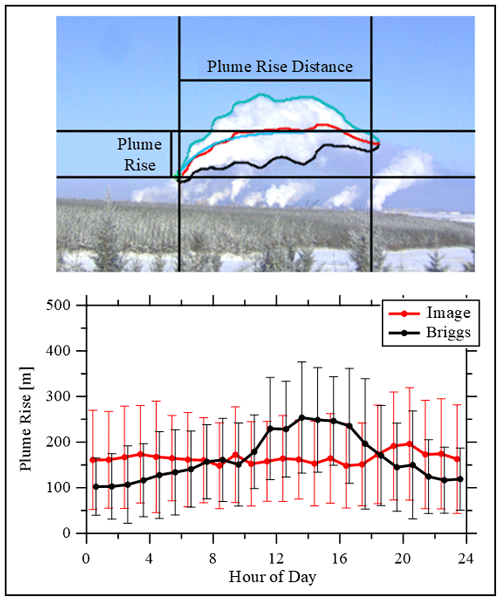
Kevin M. Axelrod, Mark Gordon, Mohammad Koushafar, Jingliang Hao, Paul Makar, Sepehr Fathi, and Gunho Sohn
Geosci. Model Dev., 19, 8855–8876, https://doi.org/10.5194/gmd-19-8855-2026, https://doi.org/10.5194/gmd-19-8855-2026, 2026
Short summary
Short summary
The is a study of the plumes that rise from smokestacks. Knowing how these plume behave helps predict downwind pollutant concentrations. We use photos over a 2-year period to investigate how these plumes rise under different conditions and compare this to a commonly used model parameterization. It is found that the equations used to model plume rise in current models do well for some condition, but these equations can over-predict the plume rise, typically during the day when it is hot.
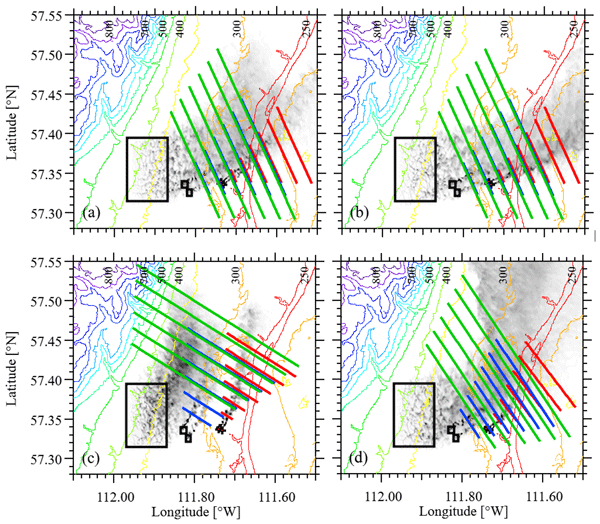
Sepehr Fathi, Mark Gordon, and Jingliang Hao
Atmos. Meas. Tech., 19, 3911–3931, https://doi.org/10.5194/amt-19-3911-2026, https://doi.org/10.5194/amt-19-3911-2026, 2026
Short summary
Short summary
Aircraft are often used to measure emissions from industry and other sources by flying downwind of the source and measuring the pollutant winds and concentration. This study uses model simulation to help choose the best flight configuration and parameters for a given source type (e.g. smokestacks, mine faces, or surface emissions). The results provide uncertainty estimates based on downwind flight distances, which helps to plan aircraft-based measurements campaigns.
Michael D. Moran, Alexandru Lupu, Verica Savic-Jovcic, Junhua Zhang, Qiong Zheng, Elisa I. Boutzis, Rabab Mashayekhi, Craig A. Stroud, Sylvain Ménard, Jack Chen, Konstantinos Menelaou, Rodrigo Munoz-Alpizar, Dragana Kornic, and Patrick M. Manseau
Geosci. Model Dev., 19, 4205–4270, https://doi.org/10.5194/gmd-19-4205-2026, https://doi.org/10.5194/gmd-19-4205-2026, 2026
Short summary
Short summary
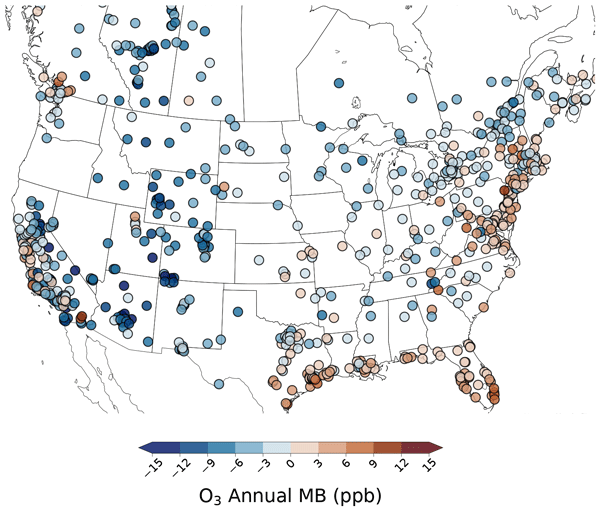
We present an evaluation of 6 annual runs made with the Regional Air Quality Deterministic Prediction System, an operational chemical weather forecast system for North America. Measurements used included NO2, O3, and PM2.5, 8 other gas-phase species, 7 PM2.5 species, and 3 ions in precipitation. Routine scores were augmented by many stratified analyses, and the results pointed to some model components where improvements are desirable. A companion paper provides a full description of the system.
Michael D. Moran, Verica Savic-Jovcic, Craig A. Stroud, Sylvain Ménard, Wanmin Gong, Junhua Zhang, Qiong Zheng, Jack Chen, Ayodeji Akingunola, Alexandru Lupu, Konstantinos Menelaou, and Rodrigo Munoz-Alpizar
Geosci. Model Dev., 19, 4137–4203, https://doi.org/10.5194/gmd-19-4137-2026, https://doi.org/10.5194/gmd-19-4137-2026, 2026
Short summary
Short summary
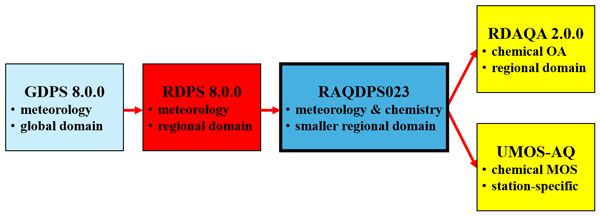
Canada's weather agency uses an online chemical weather forecast system to produce forecasts of key air pollutants over North America. Here we describe two recent versions of this Regional Air Quality Deterministic Prediction System (RAQDPS), including the meteorological host model, embedded chemistry module, and two downstream systems. Three simplifications to reduce run time are also described. A companion paper presents results from a comprehensive, 5-year evaluation of RAQDPS predictions.
Debora Griffin, Colin Hempel, Chris McLinden, Shailesh Kumar Kharol, Colin Lee, Andre Fogal, Christopher Sioris, Mark Shephard, and Yuan You
Atmos. Meas. Tech., 18, 7497–7511, https://doi.org/10.5194/amt-18-7497-2025, https://doi.org/10.5194/amt-18-7497-2025, 2025
Short summary
Short summary
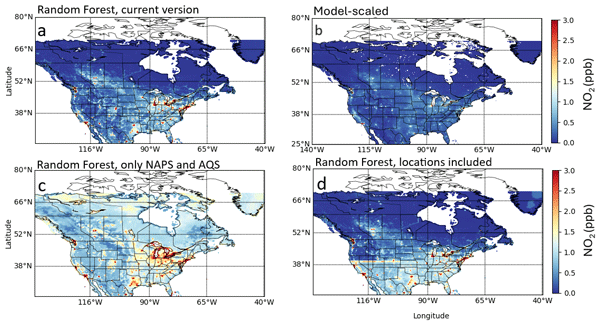
NO2 surface concentrations are obtained across North America using satellite data and machine learning, and compared to traditional approaches to determine surface NO2 from satellite observations.
Chi-Tsan Wang, Patrick C. Campbell, Paul Makar, Siqi Ma, Irena Ivanova, Bok H. Baek, Wei-Ting Hung, Zachary Moon, Youhua Tang, Barry Baker, Rick Saylor, Jung-Hun Woo, and Daniel Tong
Atmos. Chem. Phys., 25, 16631–16655, https://doi.org/10.5194/acp-25-16631-2025, https://doi.org/10.5194/acp-25-16631-2025, 2025
Short summary
Short summary
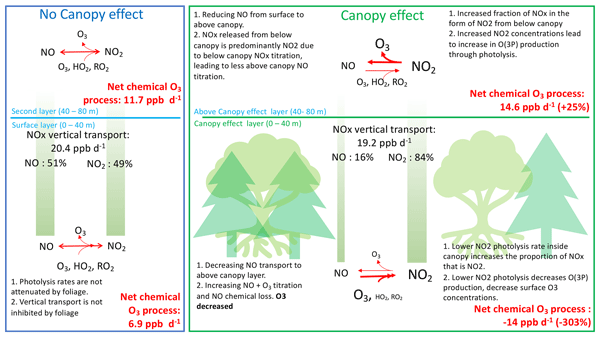
Forests influence air quality by altering ozone levels, but most air pollution models overlook canopy effects. Our study improves ozone predictions by incorporating forest canopy shading and turbulence into a widely used model. We found that tree cover reduces near-surface ozone by decreasing photolysis rates and diffusion inside canopy, resulting in lower ozone concentrations in densely forested areas. These findings enhance ozone surface prediction accuracy and improve air quality modeling.
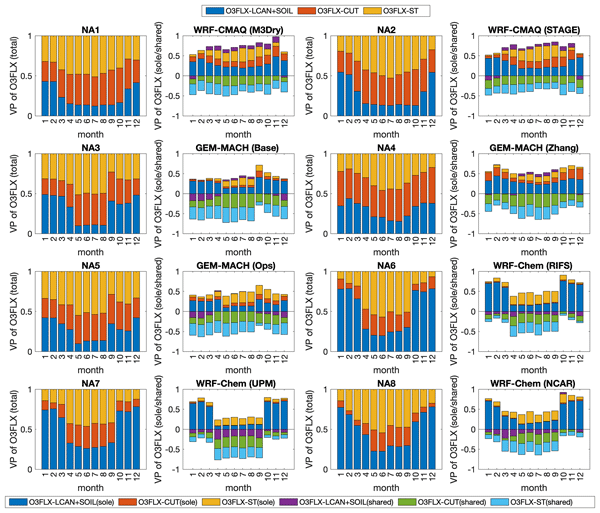
Ioannis Kioutsioukis, Christian Hogrefe, Paul A. Makar, Ummugulsum Alyuz, Jesse O. Bash, Roberto Bellasio, Roberto Bianconi, Tim Butler, Olivia E. Clifton, Philip Cheung, Alma Hodzic, Richard Kranenburg, Aura Lupascu, Kester Momoh, Juan Luis Perez-Camaño, Jonathan Pleim, Young-Hee Ryu, Roberto San Jose, Donna Schwede, Ranjeet Sokhi, and Stefano Galmarini
Atmos. Chem. Phys., 25, 12923–12953, https://doi.org/10.5194/acp-25-12923-2025, https://doi.org/10.5194/acp-25-12923-2025, 2025
Short summary
Short summary
Deposition is key in air quality modeling. An unprecedented evaluation of the Air Quality Model Evaluation International Initiative phase 4 models is performed on different deposition schemes in relation to the land use and land cover (LULC) used. Among the results, LULC masks have to be harmonized and up-to-date information used in place of masks that are outdated and too coarse. Alternatively, LULC masks should be evaluated and intercompared when multiple model results are analyzed.
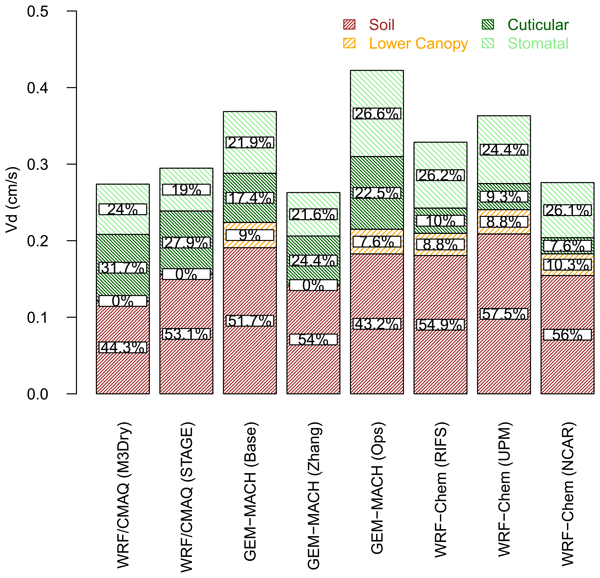
Christian Hogrefe, Stefano Galmarini, Paul A. Makar, Ioannis Kioutsioukis, Olivia E. Clifton, Ummugulsum Alyuz, Jesse O. Bash, Roberto Bellasio, Roberto Bianconi, Tim Butler, Philip Cheung, Alma Hodzic, Richard Kranenburg, Aurelia Lupascu, Kester Momoh, Juan Luis Perez-Camanyo, Jonathan E. Pleim, Young-Hee Ryu, Roberto San Jose, Martijn Schaap, Donna B. Schwede, and Ranjeet Sokhi
Atmos. Chem. Phys., 25, 12629–12656, https://doi.org/10.5194/acp-25-12629-2025, https://doi.org/10.5194/acp-25-12629-2025, 2025
Short summary
Short summary
Performed under the umbrella of Phase 4 of the Air Quality Model Evaluation International Initiative (AQMEII4), this study applies AQMEII4 diagnostic tools to better characterize how dry deposition removes pollutants from the atmosphere in regional-scale models. The results also strongly suggest that improvement and harmonization of the representation of land use in these models would serve the community in their future development efforts.
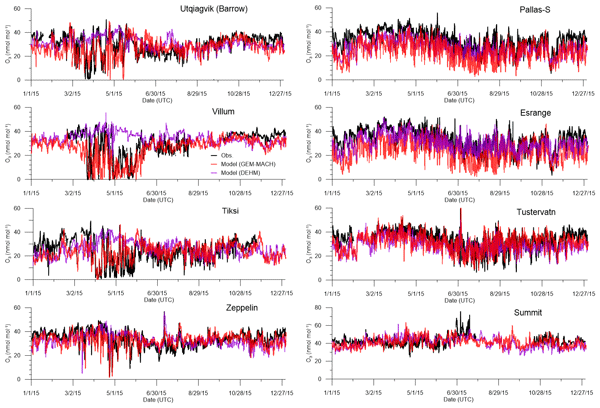
Wanmin Gong, Stephen R. Beagley, Kenjiro Toyota, Henrik Skov, Jesper Heile Christensen, Alex Lupu, Diane Pendlebury, Junhua Zhang, Ulas Im, Yugo Kanaya, Alfonso Saiz-Lopez, Roberto Sommariva, Peter Effertz, John W. Halfacre, Nis Jepsen, Rigel Kivi, Theodore K. Koenig, Katrin Müller, Claus Nordstrøm, Irina Petropavlovskikh, Paul B. Shepson, William R. Simpson, Sverre Solberg, Ralf M. Staebler, David W. Tarasick, Roeland Van Malderen, and Mika Vestenius
Atmos. Chem. Phys., 25, 8355–8405, https://doi.org/10.5194/acp-25-8355-2025, https://doi.org/10.5194/acp-25-8355-2025, 2025
Short summary
Short summary
This study showed that the springtime O3 depletion plays a critical role in driving the surface O3 seasonal cycle in the central Arctic. The O3 depletion events, while occurring most notably within the lowest few hundred metres above the Arctic Ocean, can induce a 5–7 % loss in the pan-Arctic tropospheric O3 burden during springtime. The study also found enhancements in O3 and NOy (mostly peroxyacetyl nitrate) concentrations in the Arctic due to northern boreal wildfires, particularly at higher altitudes.
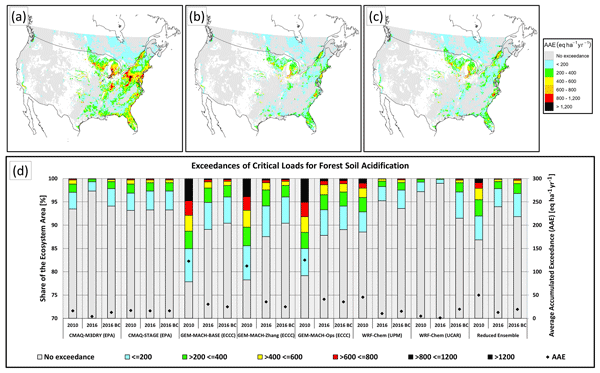
Paul A. Makar, Philip Cheung, Christian Hogrefe, Ayodeji Akingunola, Ummugulsum Alyuz, Jesse O. Bash, Michael D. Bell, Roberto Bellasio, Roberto Bianconi, Tim Butler, Hazel Cathcart, Olivia E. Clifton, Alma Hodzic, Ioannis Kioutsioukis, Richard Kranenburg, Aurelia Lupascu, Jason A. Lynch, Kester Momoh, Juan L. Perez-Camanyo, Jonathan Pleim, Young-Hee Ryu, Roberto San Jose, Donna Schwede, Thomas Scheuschner, Mark W. Shephard, Ranjeet S. Sokhi, and Stefano Galmarini
Atmos. Chem. Phys., 25, 3049–3107, https://doi.org/10.5194/acp-25-3049-2025, https://doi.org/10.5194/acp-25-3049-2025, 2025
Short summary
Short summary
The large range of sulfur and nitrogen deposition estimates from air quality models results in a large range of predicted impacts. We used models and deposition diagnostics to identify the processes controlling atmospheric sulfur and nitrogen deposition variability. Controlling factors included the uptake of gases and aerosols by hydrometeors, aerosol inorganic chemistry, particle dry deposition, ammonia bidirectional fluxes, gas deposition via plant cuticles and soil, and land use data.
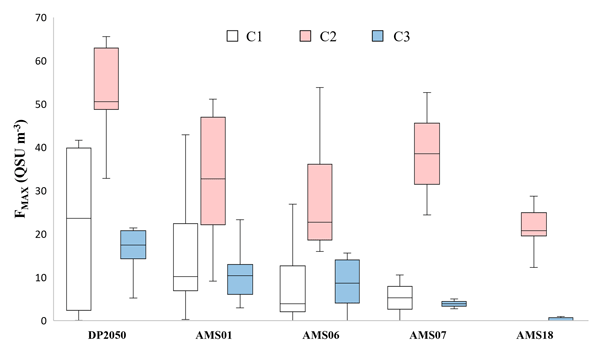
Dane Blanchard, Mark Gordon, Duc Huy Dang, Paul Andrew Makar, and Julian Aherne
Atmos. Chem. Phys., 25, 2423–2442, https://doi.org/10.5194/acp-25-2423-2025, https://doi.org/10.5194/acp-25-2423-2025, 2025
Short summary
Short summary
This study offers the first known evaluation of water-soluble brown carbon aerosols in the Athabasca oil sands region (AOSR), Canada. Fluorescence spectroscopy analysis of aerosol samples from five regional sites (collected during the summer of 2021) identified oil sands operations as a measurable brown carbon source. Industrial aerosol emissions were unlikely to impact regional radiative forcing. These findings show that fluorescence spectroscopy can be used to monitor brown carbon in the AOSR.
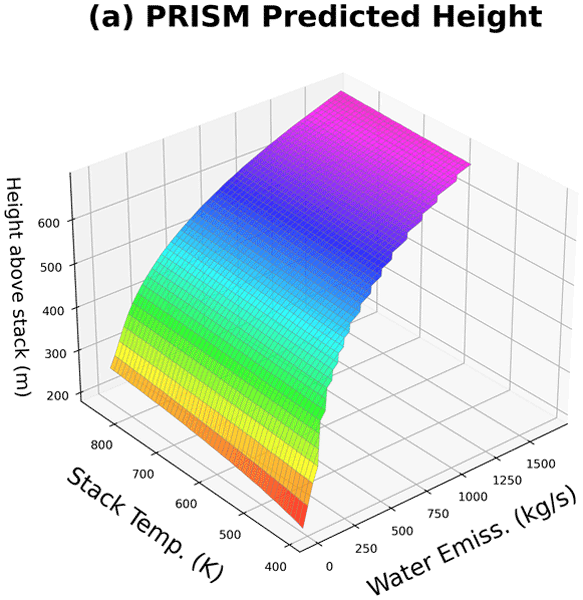
Sepehr Fathi, Paul Makar, Wanmin Gong, Junhua Zhang, Katherine Hayden, and Mark Gordon
Atmos. Chem. Phys., 25, 2385–2405, https://doi.org/10.5194/acp-25-2385-2025, https://doi.org/10.5194/acp-25-2385-2025, 2025
Short summary
Short summary
Our study explores the influence of water phase changes in plumes from industrial sources on atmospheric dispersion of emitted pollutants and air quality. Employing PRISM (Plume-Rise-Iterative-Stratified-Moist), a new method, we found that considering these effects significantly improves predictions of pollutant dispersion. This insight enhances our understanding of environmental impacts, enabling more accurate air quality modelling and fostering more effective pollution management strategies.
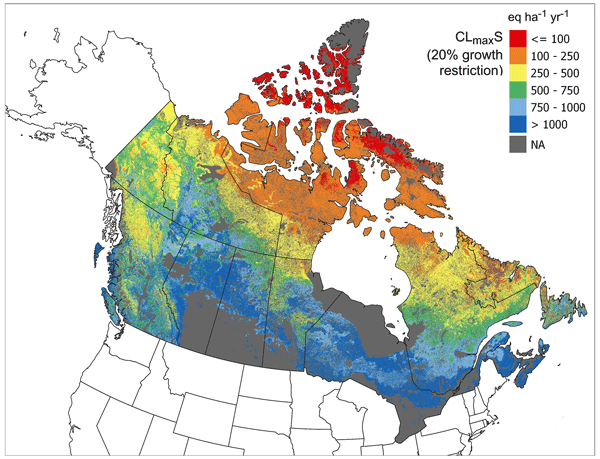
Hazel Cathcart, Julian Aherne, Michael D. Moran, Verica Savic-Jovcic, Paul A. Makar, and Amanda Cole
Biogeosciences, 22, 535–554, https://doi.org/10.5194/bg-22-535-2025, https://doi.org/10.5194/bg-22-535-2025, 2025
Short summary
Short summary
Deposition from sulfur and nitrogen pollution can harm ecosystems, and recovery from this type of pollution can take decades or longer. To identify risk to Canadian soils, we created maps showing sensitivity to sulfur and nitrogen pollution. Results show that some ecosystems are at risk from acid and nutrient nitrogen deposition: 10 % of protected areas are receiving acid deposition beyond their damage threshold, and 70 % may be receiving nitrogen deposition that could cause biodiversity loss.
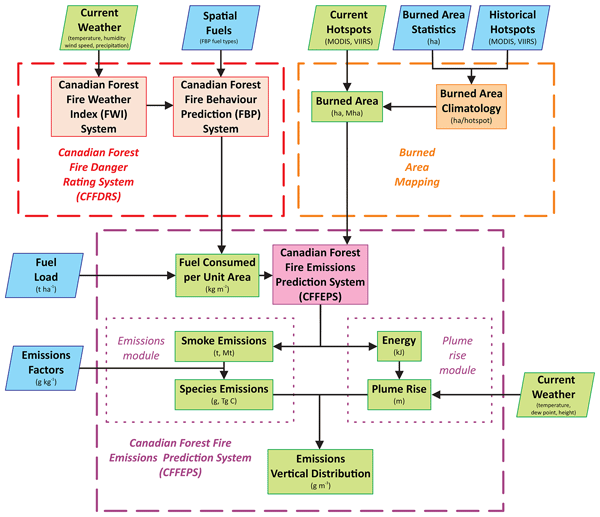
Kerry Anderson, Jack Chen, Peter Englefield, Debora Griffin, Paul A. Makar, and Dan Thompson
Geosci. Model Dev., 17, 7713–7749, https://doi.org/10.5194/gmd-17-7713-2024, https://doi.org/10.5194/gmd-17-7713-2024, 2024
Short summary
Short summary
The Global Forest Fire Emissions Prediction System (GFFEPS) is a model that predicts smoke and carbon emissions from wildland fires. The model calculates emissions from the ground up based on satellite-detected fires, modelled weather and fire characteristics. Unlike other global models, GFFEPS uses daily weather conditions to capture changing burning conditions on a day-to-day basis. GFFEPS produced lower carbon emissions due to the changing weather not captured by the other models.
Debora Griffin, Jack Chen, Kerry Anderson, Paul Makar, Chris A. McLinden, Enrico Dammers, and Andre Fogal
Atmos. Chem. Phys., 24, 10159–10186, https://doi.org/10.5194/acp-24-10159-2024, https://doi.org/10.5194/acp-24-10159-2024, 2024
Short summary
Short summary
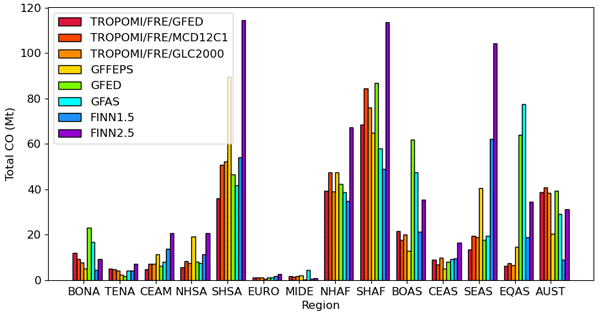
Satellite-derived CO emissions provide new insights into the understanding of global CO emission rates from wildfires. We use TROPOMI satellite data to create a global inventory database of wildfire CO emissions. These satellite-derived wildfire emissions are used for the evaluation and improvement of existing fire emission inventories and to examine how the wildfire CO emissions have changed over the past 2 decades.
Stefan J. Miller, Paul A. Makar, and Colin J. Lee
Geosci. Model Dev., 17, 2197–2219, https://doi.org/10.5194/gmd-17-2197-2024, https://doi.org/10.5194/gmd-17-2197-2024, 2024
Short summary
Short summary
This work outlines a new solver written in Fortran to calculate the partitioning of metastable aerosols at thermodynamic equilibrium based on the forward algorithms of ISORROPIA II. The new code includes numerical improvements that decrease the computational speed (compared to ISORROPIA II) while improving the accuracy of the partitioning solution.
Roya Ghahreman, Wanmin Gong, Paul A. Makar, Alexandru Lupu, Amanda Cole, Kulbir Banwait, Colin Lee, and Ayodeji Akingunola
Geosci. Model Dev., 17, 685–707, https://doi.org/10.5194/gmd-17-685-2024, https://doi.org/10.5194/gmd-17-685-2024, 2024
Short summary
Short summary
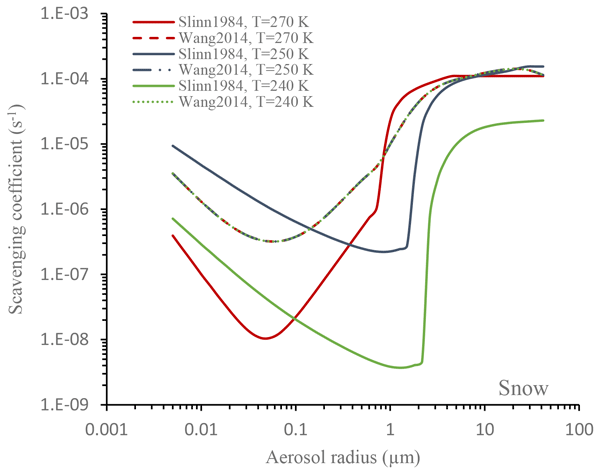
The article explores the impact of different representations of below-cloud scavenging on model biases. A new scavenging scheme and precipitation-phase partitioning improve the model's performance, with better SO42- scavenging and wet deposition of NO3- and NH4+.
Colin J. Lee, Paul A. Makar, and Joana Soares
Geosci. Model Dev. Discuss., https://doi.org/10.5194/gmd-2023-185, https://doi.org/10.5194/gmd-2023-185, 2023
Publication in GMD not foreseen
Short summary
Short summary
Clustering is an analysis technique for finding similarities within datasets. We present a new implementation of the hierarchical clustering algorithm that is able to process much larger datasets than was previously possible, by spreading the program out over many connected computers in a high-performance computing system. We show airshed maps of a high-resolution regional model output domain, and find related air pollution profiles at monitoring stations separated by thousands of kilometers.
Xuanyi Zhang, Mark Gordon, Paul A. Makar, Timothy Jiang, Jonathan Davies, and David Tarasick
Atmos. Chem. Phys., 23, 13647–13664, https://doi.org/10.5194/acp-23-13647-2023, https://doi.org/10.5194/acp-23-13647-2023, 2023
Short summary
Short summary
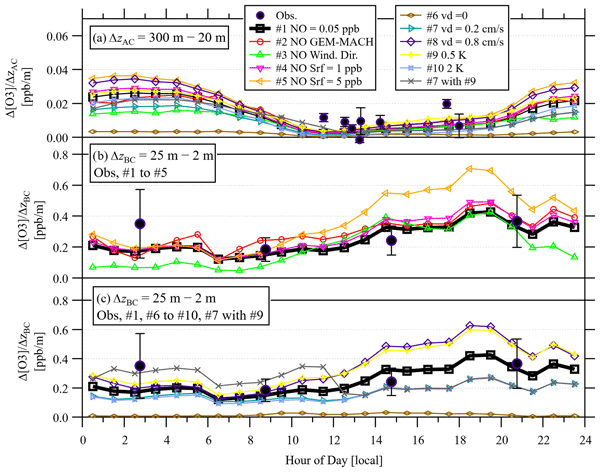
Measurements of ozone in the atmosphere were made in a forest downwind of oil sands mining and production facilities in northern Alberta. These measurements show that the emissions of other pollutants from oil sands production and processing reduce the amount of ozone in the forest. By using an atmospheric model combined with measurements, we find that the rate at which ozone is absorbed by the forest is lower than typical rates from similar measurements in other forests.
Olivia E. Clifton, Donna Schwede, Christian Hogrefe, Jesse O. Bash, Sam Bland, Philip Cheung, Mhairi Coyle, Lisa Emberson, Johannes Flemming, Erick Fredj, Stefano Galmarini, Laurens Ganzeveld, Orestis Gazetas, Ignacio Goded, Christopher D. Holmes, László Horváth, Vincent Huijnen, Qian Li, Paul A. Makar, Ivan Mammarella, Giovanni Manca, J. William Munger, Juan L. Pérez-Camanyo, Jonathan Pleim, Limei Ran, Roberto San Jose, Sam J. Silva, Ralf Staebler, Shihan Sun, Amos P. K. Tai, Eran Tas, Timo Vesala, Tamás Weidinger, Zhiyong Wu, and Leiming Zhang
Atmos. Chem. Phys., 23, 9911–9961, https://doi.org/10.5194/acp-23-9911-2023, https://doi.org/10.5194/acp-23-9911-2023, 2023
Short summary
Short summary
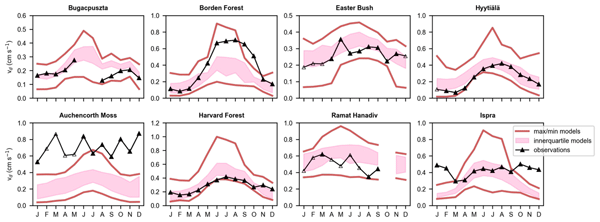
A primary sink of air pollutants is dry deposition. Dry deposition estimates differ across the models used to simulate atmospheric chemistry. Here, we introduce an effort to examine dry deposition schemes from atmospheric chemistry models. We provide our approach’s rationale, document the schemes, and describe datasets used to drive and evaluate the schemes. We also launch the analysis of results by evaluating against observations and identifying the processes leading to model–model differences.
Sepehr Fathi, Mark Gordon, and Yongsheng Chen
Geosci. Model Dev., 16, 5069–5091, https://doi.org/10.5194/gmd-16-5069-2023, https://doi.org/10.5194/gmd-16-5069-2023, 2023
Short summary
Short summary
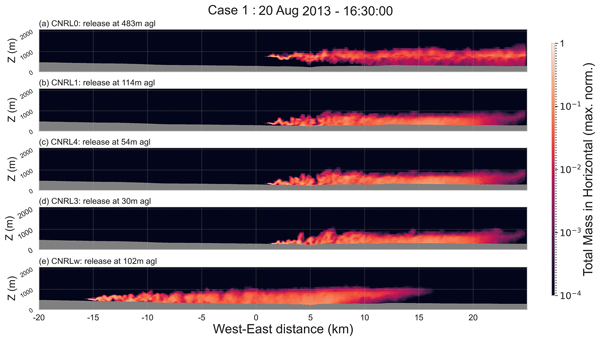
We have combined various capabilities within a WRF model to generate simulations of atmospheric pollutant dispersion at 50 m resolution. The study objective was to resolve transport processes at the scale of measurements to assess and optimize aircraft-based emission rate retrievals. Model performance evaluation resulted in agreement within 5 % of observed meteorological and within 1–2 standard deviations of observed wind fields. Mass was conserved in the model within 5 % of input emissions.
Mark Gordon, Dane Blanchard, Timothy Jiang, Paul A. Makar, Ralf M. Staebler, Julian Aherne, Cris Mihele, and Xuanyi Zhang
Atmos. Chem. Phys., 23, 7241–7255, https://doi.org/10.5194/acp-23-7241-2023, https://doi.org/10.5194/acp-23-7241-2023, 2023
Short summary
Short summary
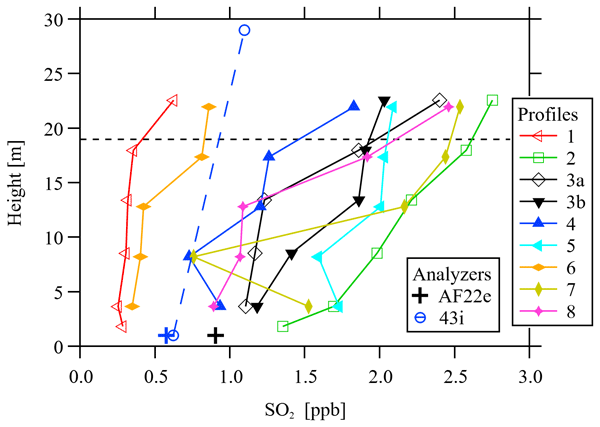
Measurements of the gas sulfur dioxide (SO2) were made in a forest downwind of oil sands mining and production facilities in northern Alberta. These measurements tell us the rate at which SO2 is absorbed by the forest. The measured rate is much higher than what is currently used by air quality models, which is supported by a previous study in this region. This suggests that SO2 may have a much shorter lifetime in the atmosphere at this location than currently predicted by models.
Timothy Jiang, Mark Gordon, Paul A. Makar, Ralf M. Staebler, and Michael Wheeler
Atmos. Chem. Phys., 23, 4361–4372, https://doi.org/10.5194/acp-23-4361-2023, https://doi.org/10.5194/acp-23-4361-2023, 2023
Short summary
Short summary
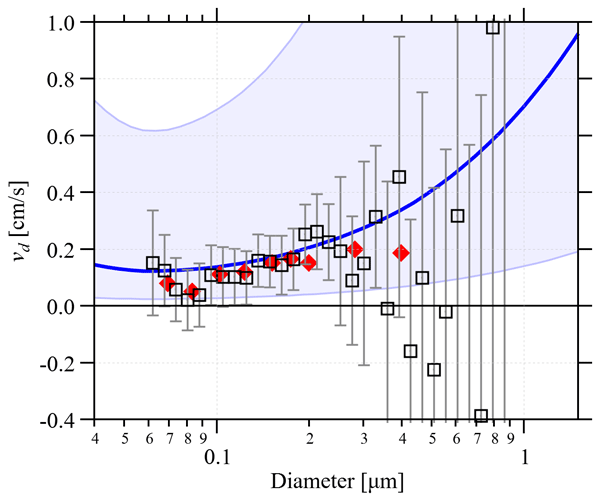
Measurements of submicron aerosols (particles smaller than 1 / 1000 of a millimeter) were made in a forest downwind of oil sands mining and production facilities in northern Alberta. These measurements tell us how quickly aerosols are absorbed by the forest (known as deposition rate) and how the deposition rate depends on the size of the aerosol. The measurements show good agreement with a parameterization developed from a recent study for deposition of aerosols to a similar pine forest.
Stefan J. Miller and Mark Gordon
Atmos. Meas. Tech., 15, 6563–6584, https://doi.org/10.5194/amt-15-6563-2022, https://doi.org/10.5194/amt-15-6563-2022, 2022
Short summary
Short summary
This research investigates the measurement of atmospheric turbulence using a low-cost instrumented car that travels at near-highway speeds and is impacted by upwind obstructions and other on-road traffic. We show that our car design can successfully measure the mean flow and atmospheric turbulence near the surface. We outline a technique to isolate and remove the effects of sporadic passing traffic from car-measured velocity variances and discuss potential measurement uncertainties.
Robin Stevens, Andrei Ryjkov, Mahtab Majdzadeh, and Ashu Dastoor
Atmos. Chem. Phys., 22, 13527–13549, https://doi.org/10.5194/acp-22-13527-2022, https://doi.org/10.5194/acp-22-13527-2022, 2022
Short summary
Short summary
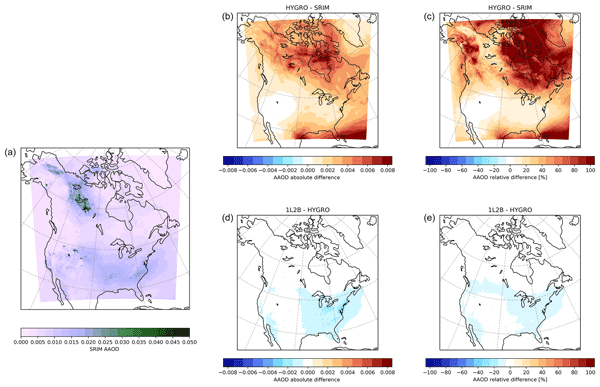
Absorbing particles like black carbon can be coated with other matter. How much radiation these particles absorb depends on the coating thickness. The removal of these particles by clouds and rain depends on the coating composition. These effects are important for both climate and air quality. We implement a more detailed representation of these particles in an air quality model which accounts for both coating thickness and composition. We find a significant effect on particle concentrations.
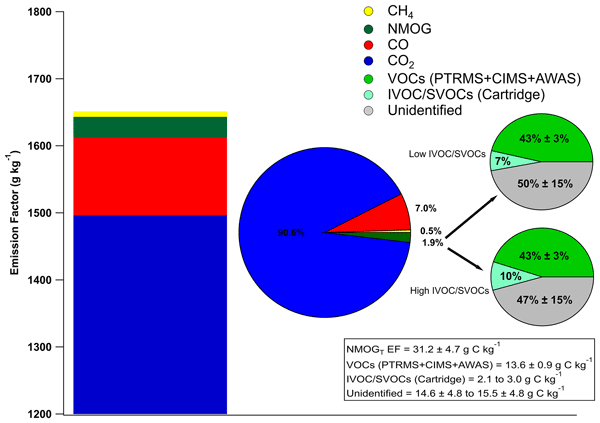
Katherine L. Hayden, Shao-Meng Li, John Liggio, Michael J. Wheeler, Jeremy J. B. Wentzell, Amy Leithead, Peter Brickell, Richard L. Mittermeier, Zachary Oldham, Cristian M. Mihele, Ralf M. Staebler, Samar G. Moussa, Andrea Darlington, Mengistu Wolde, Daniel Thompson, Jack Chen, Debora Griffin, Ellen Eckert, Jenna C. Ditto, Megan He, and Drew R. Gentner
Atmos. Chem. Phys., 22, 12493–12523, https://doi.org/10.5194/acp-22-12493-2022, https://doi.org/10.5194/acp-22-12493-2022, 2022
Short summary
Short summary
In this study, airborne measurements provided the most detailed characterization, to date, of boreal forest wildfire emissions. Measurements showed a large diversity of air pollutants expanding the volatility range typically reported. A large portion of organic species was unidentified, likely comprised of complex organic compounds. Aircraft-derived emissions improve wildfire chemical speciation and can support reliable model predictions of pollution from boreal forest wildfires.
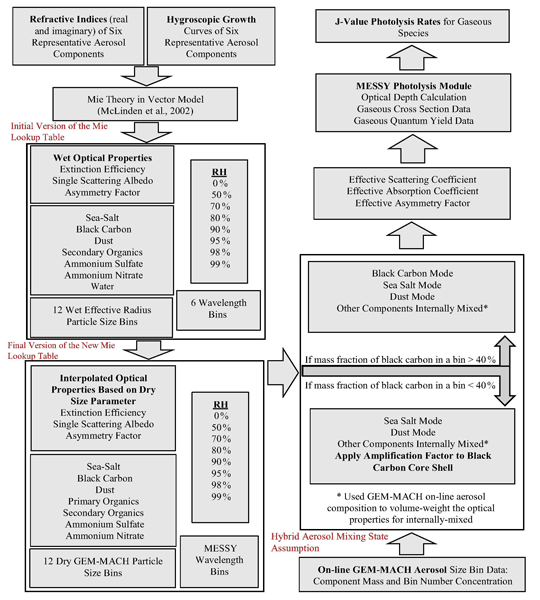
Mahtab Majdzadeh, Craig A. Stroud, Christopher Sioris, Paul A. Makar, Ayodeji Akingunola, Chris McLinden, Xiaoyi Zhao, Michael D. Moran, Ihab Abboud, and Jack Chen
Geosci. Model Dev., 15, 219–249, https://doi.org/10.5194/gmd-15-219-2022, https://doi.org/10.5194/gmd-15-219-2022, 2022
Short summary
Short summary
A new lookup table for aerosol optical properties based on a Mie scattering code was calculated and adopted within an improved version of the photolysis module in the GEM-MACH in-line chemical transport model. The modified version of the photolysis module makes use of online interactive aerosol feedback and applies core-shell parameterizations to the black carbon absorption efficiency based on Bond et al. (2006) to the size bins with black carbon mass fraction of less than 40 %.
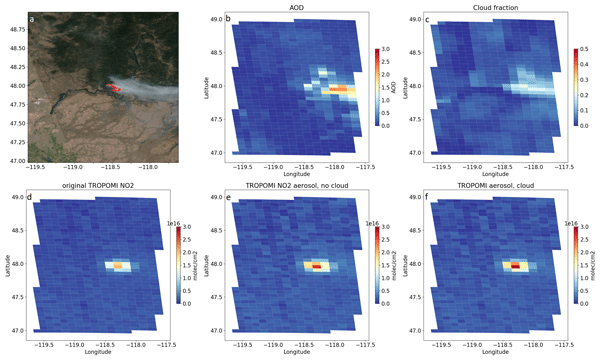
Debora Griffin, Chris A. McLinden, Enrico Dammers, Cristen Adams, Chelsea E. Stockwell, Carsten Warneke, Ilann Bourgeois, Jeff Peischl, Thomas B. Ryerson, Kyle J. Zarzana, Jake P. Rowe, Rainer Volkamer, Christoph Knote, Natalie Kille, Theodore K. Koenig, Christopher F. Lee, Drew Rollins, Pamela S. Rickly, Jack Chen, Lukas Fehr, Adam Bourassa, Doug Degenstein, Katherine Hayden, Cristian Mihele, Sumi N. Wren, John Liggio, Ayodeji Akingunola, and Paul Makar
Atmos. Meas. Tech., 14, 7929–7957, https://doi.org/10.5194/amt-14-7929-2021, https://doi.org/10.5194/amt-14-7929-2021, 2021
Short summary
Short summary
Satellite-derived NOx emissions from biomass burning are estimated with TROPOMI observations. Two common emission estimation methods are applied, and sensitivity tests with model output were performed to determine the accuracy of these methods. The effect of smoke aerosols on TROPOMI NO2 columns is estimated and compared to aircraft observations from four different aircraft campaigns measuring biomass burning plumes in 2018 and 2019 in North America.
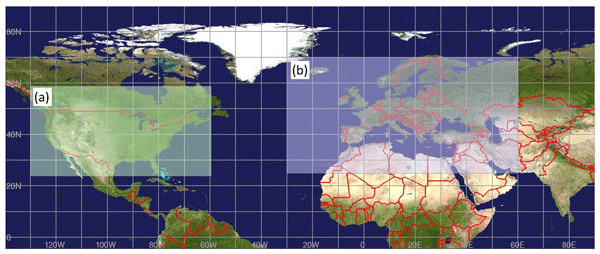
Stefano Galmarini, Paul Makar, Olivia E. Clifton, Christian Hogrefe, Jesse O. Bash, Roberto Bellasio, Roberto Bianconi, Johannes Bieser, Tim Butler, Jason Ducker, Johannes Flemming, Alma Hodzic, Christopher D. Holmes, Ioannis Kioutsioukis, Richard Kranenburg, Aurelia Lupascu, Juan Luis Perez-Camanyo, Jonathan Pleim, Young-Hee Ryu, Roberto San Jose, Donna Schwede, Sam Silva, and Ralf Wolke
Atmos. Chem. Phys., 21, 15663–15697, https://doi.org/10.5194/acp-21-15663-2021, https://doi.org/10.5194/acp-21-15663-2021, 2021
Short summary
Short summary
This technical note presents the research protocols for phase 4 of the Air Quality Model Evaluation International Initiative (AQMEII4). This initiative has three goals: (i) to define the state of wet and dry deposition in regional models, (ii) to evaluate how dry deposition influences air concentration and flux predictions, and (iii) to identify the causes for prediction differences. The evaluation compares LULC-specific dry deposition and effective conductances and fluxes.
Sepehr Fathi, Mark Gordon, Paul A. Makar, Ayodeji Akingunola, Andrea Darlington, John Liggio, Katherine Hayden, and Shao-Meng Li
Atmos. Chem. Phys., 21, 15461–15491, https://doi.org/10.5194/acp-21-15461-2021, https://doi.org/10.5194/acp-21-15461-2021, 2021
Short summary
Short summary
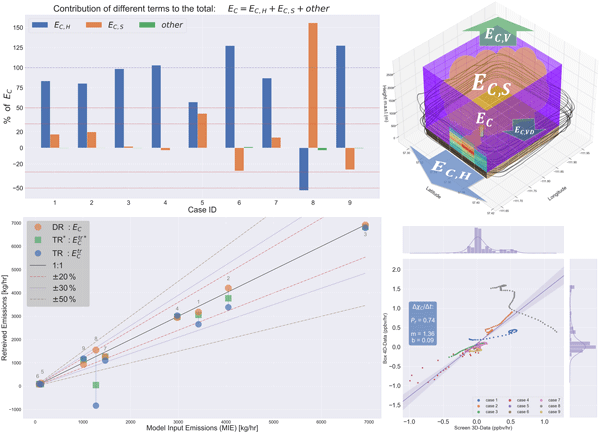
We have investigated the accuracy of aircraft-based mass balance methodologies through computer model simulations of the atmosphere and air quality at a regional high-resolution scale. We have defined new quantitative metrics to reduce emission retrieval uncertainty by evaluating top-down mass balance estimates against the known simulated meteorology and input emissions. We also recommend methodologies and flight strategies for improved retrievals in future aircraft-based studies.
Xinxin Ye, Pargoal Arab, Ravan Ahmadov, Eric James, Georg A. Grell, Bradley Pierce, Aditya Kumar, Paul Makar, Jack Chen, Didier Davignon, Greg R. Carmichael, Gonzalo Ferrada, Jeff McQueen, Jianping Huang, Rajesh Kumar, Louisa Emmons, Farren L. Herron-Thorpe, Mark Parrington, Richard Engelen, Vincent-Henri Peuch, Arlindo da Silva, Amber Soja, Emily Gargulinski, Elizabeth Wiggins, Johnathan W. Hair, Marta Fenn, Taylor Shingler, Shobha Kondragunta, Alexei Lyapustin, Yujie Wang, Brent Holben, David M. Giles, and Pablo E. Saide
Atmos. Chem. Phys., 21, 14427–14469, https://doi.org/10.5194/acp-21-14427-2021, https://doi.org/10.5194/acp-21-14427-2021, 2021
Short summary
Short summary
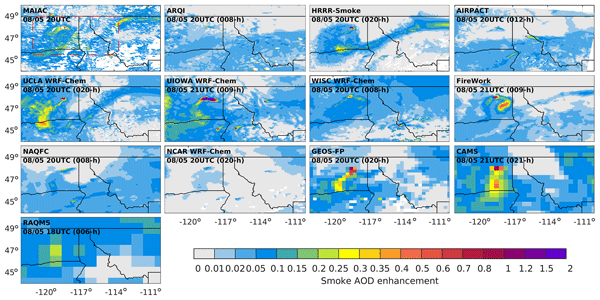
Wildfire smoke has crucial impacts on air quality, while uncertainties in the numerical forecasts remain significant. We present an evaluation of 12 real-time forecasting systems. Comparison of predicted smoke emissions suggests a large spread in magnitudes, with temporal patterns deviating from satellite detections. The performance for AOD and surface PM2.5 and their discrepancies highlighted the role of accurately represented spatiotemporal emission profiles in improving smoke forecasts.
Cited articles
Adams, C. M. and Hutchinson, T. C.: A comparison of the ability of leaf surfaces of three species to neutralize acidic rain drops, New Phytol., 97, 463–478, https://doi.org/10.1111/j.1469-8137.1984.tb03612.x, 1984.
Adams, C. M. and Hutchinson, T. C.: Comparative abilities of leaf surfaces to neutralize acidic raindrops. II. the influence of leaf wettability, leaf age and rain duration on changes in droplet pH and chemistry on leaf surfaces, New Phytol., 106, 437–456, https://doi.org/10.1111/j.1469-8137.1987.tb00151.x, 1987.
Adema, E. H. and Heeres, P.: Dry deposition of sulphur dioxide and ammonia on wet surfaces and the surface oxidation kinetics of bisulphite, Atmos. Environ., 29, 1091–1103, https://doi.org/10.1016/1352-2310(95)00039-2, 1995.
AEP (Alberta Environment and Parks): Development of Performance Specifications for Continuous Ambient Air Monitoring Analyzers, Government of Alberta, AEP, Alberta, Canada, https://open.alberta.ca/publications/9781460115442 (last access: 9 July 2026), 2014.
Avila, A., Alarcón, M., and Queralt, I.: The chemical composition of dust transported in Red Rains – its contribution to the biogeochemical cycle of a Holm Oak Forest in Catalonia (Spain), Atmos. Environ., 32, 179–191, https://doi.org/10.1016/s1352-2310(97)00286-0, 1998.
Bakhtiari, M. J., Harbottle, D., Curran, M., Ng, S., Spence, J., Siy, R., Liu, Q., Masliyah, J., and Xu, Z.: Role of caustic addition in bitumen-clay interactions, Energ. Fuel., 29, 58–69, https://doi.org/10.1021/ef502088z, 2015.
Baldocchi, D. D., Hicks, B. B., and Camara, P.: A canopy stomatal resistance model for gaseous deposition to vegetated surfaces, Atmos. Environ., 21, 91–101, https://doi.org/10.1016/0004-6981(87)90274-5, 1987.
Beckett, K. P., Freer-Smith, P. H., and Taylor, G.: Urban woodlands: Their role in reducing the effects of particulate pollution, Environ. Pollut., 99, 347–360, https://doi.org/10.1016/s0269-7491(98)00016-5, 1998.
Beckett, K. P., Freer-Smith, P. H., and Taylor, G.: Particulate pollution capture by urban trees: Effect of species and Windspeed, Glob. Change Biol., 6, 995–1003, https://doi.org/10.1046/j.1365-2486.2000.00376.x, 2000.
Bélair, S., Crevier, L.-P., Mailhot, J., Bilodeau, B., and Delage, Y.: Operational implementation of the ISBA land surface scheme in the Canadian regional weather forecast model. Part I: warm season results, J. Hydrometeorol., 4, 352–370, https://doi.org/10.1175/1525-7541(2003)4<352:OIOTIL>2.0.CO;2, 2003a.
Bélair, S., Brown, R., Mailhot, J., Bilodeau, B., and Crevier, L.-P.: Operational implementation of the ISBA land surface scheme in the Canadian regional weather forecast model. Part II: cold season results, J. Hydrometeorol., 4, 371–386, https://doi.org/10.1175/1525-7541(2003)4<371:OIOTIL>2.0.CO;2, 2003b.
Beysens, D., Ohayon, C., Muselli, M., and Clus, O.: Chemical and biological characteristics of dew and rain water in an urban coastal area (Bordeaux, France), Atmos. Environ., 40, 3710–3723, https://doi.org/10.1016/j.atmosenv.2006.03.007, 2006.
Beysens, D., Mongruel, A., and Acker, K.: Urban dew and rain in Paris, France: Occurrence and physico-chemical characteristics, Atmos. Res., 189, 152–161, https://doi.org/10.1016/j.atmosres.2017.01.013, 2017.
Boulard, T., Mermier, M., Fargues, J., Smits, N., Rougier, M., and Roy, J. C.: Tomato leaf boundary layer climate: Implications for microbiological whitefly control in greenhouses, Agr. Forest Meteorol., 110, 159–176, https://doi.org/10.1016/s0168-1923(01)00292-1, 2002.
Bradley, D. J., Gilbert, G. S., and Parker, I. M.: Susceptibility of clover species to fungal infection: the interaction of leaf surface traits and environment, Am. J. Bot., 90, 857–864, https://doi.org/10.3732/ajb.90.6.857, 2003.
Brewer, C. A. and Smith, W. K.: Patterns of leaf surface wetness for montane and subalpine plants, Plant Cell Environ., 20, 1–11, https://doi.org/10.1046/j.1365-3040.1997.d01-15.x, 1997.
Burkhardt, J.: Hygroscopic salts on the leaf surface as a possible cause of forest decline symptoms, Water Air Soil Poll., 85, 1245–1250, https://doi.org/10.1007/bf00477152, 1995.
Burkhardt, J.: Hygroscopic particles on leaves: nutrients or desiccants?, Ecol. Monogr., 80, 369–399, https://doi.org/10.1890/09-1988.1, 2010.
Burkhardt, J. and Eiden, R.: The ion concentration of dew condensed on Norway spruce (picea abies (L.) karst.) and Scots pine (pinus sylvestris L.) needles, Trees, 4, 22–26, https://doi.org/10.1007/bf00226236, 1990.
Burkhardt, J. and Eiden, R.: Thin water films on coniferous needles, Atmos. Environ., 28, 2001–2011, https://doi.org/10.1016/1352-2310(94)90469-3, 1994.
Burkhardt, J. and Hunsche, M.: “Breath figures” on leaf surfaces – formation and effects of microscopic leaf wetness, Front. Plant Sci., 4, 422, https://doi.org/10.3389/fpls.2013.00422, 2013.
Burkhardt, J., Kaiser H., Goldbach, H., and Kappen, L.: Measurements of electrical leaf surface conductance reveal re-condensation of transpired water vapour on leaf surfaces, Plant Cell Environ., 22, 189–196, https://doi.org/10.1046/j.1365-3040.1999.00387.x, 1999.
Burkhardt, J., Koch, K., and Kaiser, H.: Deliquescence of deposited atmospheric particles on leaf surfaces, Water Air Soil Poll., 1, 313–321, https://doi.org/10.1023/A:1013179810839, 2001.
Burkhardt, J., Flechard, C. R., Gresens, F., Mattsson, M., Jongejan, P. A. C., Erisman, J. W., Weidinger, T., Meszaros, R., Nemitz, E., and Sutton, M. A.: Modelling the dynamic chemical interactions of atmospheric ammonia with leaf surface wetness in a managed grassland canopy, Biogeosciences, 6, 67–84, https://doi.org/10.5194/bg-6-67-2009, 2009.
Burkhardt, J., Basi, S., Pariyar, S., and Hunsche, M.: Stomatal penetration by aqueous solutions – an update involving leaf surface particles, New Phytol., 196, 774–787, https://doi.org/10.1111/j.1469-8137.2012.04307.x, 2012.
Cadle, S. H., Marshall, J. D., and Mulawa, P. A.: A laboratory investigation of the routes of HNO3 dry deposition to coniferous seedlings, Environ. Pollut., 72, 287–305, https://doi.org/10.1016/0269-7491(91)90003-f, 1991.
Cai, M., Xin, Z., and Yu, X.: Particulate matter transported from urban greening plants during precipitation events in Beijing, China, Environ. Pollut., 252, 1648–1658, https://doi.org/10.1016/j.envpol.2019.06.119, 2019.
Cape, J. N.: Direct damage to vegetation caused by acid rain and polluted cloud: Definition of critical levels for forest trees, Environ. Pollut., 82, 167–180, https://doi.org/10.1016/0269-7491(93)90114-4, 1993.
Carlson, R. W., Bazzaz, F. A., Stukel, J. J., and Wedding, J. B.: Physiological effects, wind reentrainment, and rainwash of lead aerosol particulate deposited on plant leaves, Environ. Sci. Technol., 10, 1139–1142, https://doi.org/10.1021/es60122a001, 1976.
Caron, J.-F., Milewski, T., Buehner, M., Fillion, L., Reszka, M., Macpherson, S., and St-James, J.: Implementation of deterministic weather forecasting systems based on ensemble-variational data assimilation at Environment Canada. Part II: the regional system, Mon. Weather Rev., 143, 2560–2580, https://doi.org/10.1175/MWR-D-14-00353.1, 2015.
Chameides, W. L.: Acid Dew and the role of chemistry in the dry deposition of reactive gases to wetted surfaces, J. Geophys. Res.-Atmos., 92, 11895–11908, https://doi.org/10.1029/jd092id10p11895, 1987.
Chameides, W. L. and Stelson, A. W.: Aqueous-phase chemical processes in Deliquescent Sea-salt aerosols: A mechanism that couples the atmospheric cycles of S and sea salt, J. Geophys. Res.-Atmos., 97, 20565–20580, https://doi.org/10.1029/92jd01923, 1992.
Chen, L., Liu, C., Zhang, L., Zou, R., and Zhang, Z.: Variation in tree species ability to capture and retain airborne fine particulate matter (PM2.5), Sci. Rep., 7, https://doi.org/10.1038/s41598-017-03360-1, 2017.
Chiwa, M., Oshiro, N., Miyake, T., Nakatani, N., Kimura, N., Yuhara, T., Hashimoto, N., and Sakugawa, H.: Dry deposition washoff and dew on the surfaces of pine foliage on the urban- and mountain-facing sides of Mt. Gokurakuji, Western Japan, Atmos. Environ., 37, 327–337, https://doi.org/10.1016/s1352-2310(02)00889-0, 2003.
Clarke, A. G. and Radojevic, M.: Oxidation of SO2 in rainwater and its role in acid rain chemistry, Atmos. Environ., 21, 1115–1123, https://doi.org/10.1016/0004-6981(87)90238-1, 1987.
Clifton, O. E., Schwede, D., Hogrefe, C., Bash, J. O., Bland, S., Cheung, P., Coyle, M., Emberson, L., Flemming, J., Fredj, E., Galmarini, S., Ganzeveld, L., Gazetas, O., Goded, I., Holmes, C. D., Horváth, L., Huijnen, V., Li, Q., Makar, P. A., Mammarella, I., Manca, G., Munger, J. W., Pérez-Camanyo, J. L., Pleim, J., Ran, L., San Jose, R., Silva, S. J., Staebler, R., Sun, S., Tai, A. P. K., Tas, E., Vesala, T., Weidinger, T., Wu, Z., and Zhang, L.: A single-point modeling approach for the intercomparison and evaluation of ozone dry deposition across chemical transport models (Activity 2 of AQMEII4), Atmos. Chem. Phys., 23, 9911–9961, https://doi.org/10.5194/acp-23-9911-2023, 2023.
Coopman, R. E., Nguyen, H. T., Mencuccini, M., Oliveira, R. S., Sack, L., Lovelock, C. E., and Ball, M. C.: Harvesting water from unsaturated atmospheres: Deliquescence of salt secreted onto leaf surfaces drives reverse sap flow in a dominant arid climate mangrove, avicennia marina, New Phytol., 231, 1401–1414, https://doi.org/10.1111/nph.17461, 2021.
Corada, K., Woodward, H., Alaraj, H., Collins, C. M., and de Nazelle, A.: A systematic review of the leaf traits considered to contribute to removal of airborne particulate matter pollution in urban areas, Environ. Pollut., 269, 116104, https://doi.org/10.1016/j.envpol.2020.116104, 2021.
Côté, J., Gravel, S., Méthot, A., Patoine, A., Roch, M., and Staniforth, A.: The operational CMC-MRB Global Environmental Multiscale (GEM) Model. Part I: design considerations and formulation, Mon. Weather Rev., 126, 1373–1395, https://doi.org/10.1175/1520-0493(1998)126<1373:TOCMGE>2.0.CO;2, 1998a.
Côté, J., Desmarais, J.-G., Gravel, G., Méthot, A., and Patoine, A.: The operational CMC-MRB Global Environmental Multiscale (GEM) Model. Part II: results, Mon. Weather Rev., 126, 1397–1418, https://doi.org/10.1175/1520-0493(1998)126<1397:TOCMGE>2.0.CO;2, 1998b.
Cox, R. M., Spavold-Tims, J., and Hughes, R. N.: Acid fog and ozone: Their possible role in birch deterioration around the Bay of Fundy, Canada, Water Air Soil Poll., 48, https://doi.org/10.1007/bf00282383, 1989.
Darley, E. F.: Studies on the effect of cement-kiln dust on vegetation, J. Air Poll. Control Assoc., 16, 145–150, https://doi.org/10.1080/00022470.1966.10468456, 1966.
Dasch, J. M.: Dry deposition of sulfur dioxide or nitric acid to oak, elm and Pine Leaves, Environ. Pollut., 59, 1–16, https://doi.org/10.1016/0269-7491(89)90018-3, 1989.
Dentener, F. J., Carmichael, G. R., Zhang, Y., Lelieveld, J., and Crutzen, P. J.: Role of mineral aerosol as a reactive surface in the global troposphere, J. Geophys. Res.-Atmos., 101, 22869–22889, https://doi.org/10.1029/96jd01818, 1996.
Donat, J. and Ruck, B.: Simulated ground deposition of fine airborne particles in an array of idealized tree crowns, Bound.-Lay. Meteorol., 93, 469–492, https://doi.org/10.1023/a:1002019623725, 1999.
Draaijers, G. P., Van Ek, R., and Bleuten, W.: Atmospheric deposition in complex forest landscapes, Bound.-Lay. Meteorol., 69, 343–366, https://doi.org/10.1007/bf00718124, 1994.
Dutcher, C. S., Wexler, A. S., and Clegg, S. L.: Surface tensions of inorganic multicomponent aqueous electrolyte solutions and melts, J. Phys. Chem. A., 114, 12216–12230, https://doi.org/10.1021/jp105191z, 2010.
Eiden, R., Burkhardt, J., and Burkhardt, O.: Atmospheric aerosol particles and their role in the formation of dew on the surface of plant leaves, J. Aerosol Sci., 25, 367–376, https://doi.org/10.1016/0021-8502(94)90087-6, 1994.
El Haber, M., Gérard, V., Kleinheins, J., Ferronato, C., and Nozière, B.: Measuring the surface tension of atmospheric particles and relevant mixtures to better understand key atmospheric processes, Chem. Rev., 124, 10924–10963, https://doi.org/10.1021/acs.chemrev.4c00173, 2024.
Emerson, E. W., Hodshire, A. L., DeBolt, H. M., Bilsback, K. R., Pierce, J. R., McMeeking, G. R., and Farmer, D. K.: Revisiting particle dry deposition and its role in radiative effect estimates, P. Natl. Acad. Sci. USA, 117, 26076–26082, https://doi.org/10.1073/pnas.2014761117, 2020.
Erisman, J. W.: Evaluation of a surface resistance parametrization of sulphur dioxide, Atmos. Environ., 28, 2583–2594, https://doi.org/10.1016/1352-2310(94)90432-4, 1994.
Erisman, J. W., Van Pul, A., and Wyers, P.: Parametrization of surface resistance for the quantification of atmospheric deposition of acidifying pollutants and ozone, Atmos. Environ., 28, 2595–2607, https://doi.org/10.1016/1352-2310(94)90433-2, 1994.
Fathi, S., Makar, P., Gong, W., Zhang, J., Hayden, K., and Gordon, M.: The importance of moist thermodynamics on neutral buoyancy height for plumes from anthropogenic sources, Atmos. Chem. Phys., 25, 2385–2405, https://doi.org/10.5194/acp-25-2385-2025, 2025.
Feliciano, M. S., Pio, C. A., and Vermeulen, A. T.: Evaluation of SO2 dry deposition over short vegetation in Portugal, Atmos. Environ., 35, 3633–3643, https://doi.org/10.1016/S1352-2310(00)00539-2, 2001.
Finkelstein, P. L., Ellestad, T. G., Clarke, J. F., Meyers, T. P., Schwede, D. B., Herbert, E. O., and Neal, J. A.: Ozone and sulfur dioxide dry deposition to forests: observations and model evaluation, J. Geophy. Res., 15365–15377, https://doi.org/10.1029/2000JD900185, 2000.
Flechard, C. R., Fowler, D., Sutton, M. A., and Cape, J. N.: A dynamic chemical model of bi-directional ammonia exchange between semi-natural vegetation and the atmosphere, Q. J. Roy. Meteor. Soc., 125, 2611–2641, https://doi.org/10.1002/qj.49712555914, 1999.
Flückiger, W., Flückiger-Keller, H., and Oertli, J. J.: Der Einfluss yon Strassenstaub auf den stomataren Diffusionswiderstand und die Blatt-Temperatur – ein antagonistischer Effekt, Staub Reinhalt. Luft, 38, 502–505, 1978.
Fortmann, R. C. and Johnson, D. L.: Effect of simulated rainfall on removal and in situ formation of particles on Taxus Needles, Environ. Pollut. B, 7, 297–316, https://doi.org/10.1016/0143-148x(84)90044-2, 1984.
Foster, J. R., Pribush, R. A., and Carter, B. H.: The chemistry of Dews and frosts in Indianapolis, Indiana, Atmos. Environ. A-Gen., 24, 2229–2236, https://doi.org/10.1016/0960-1686(90)90254-k, 1990.
Fountoukis, C. and Nenes, A.: ISORROPIA II: a computationally efficient thermodynamic equilibrium model for K+-Ca2+-Mg2+-
Fowler, D.: Dry deposition of SO2 on agricultural crops, Atmos. Environ., 12, 369–373, https://doi.org/10.1016/0004-6981(78)90219-6, 1978.
Fowler, D. and Unsworth, M.: Turbulent transfer of sulphur dioxide to a wheat crop, Q. J. Roy. Meteor. Soc., 105, 767–783, https://doi.org/10.1256/smsqj.44602, 1979.
Fowler, D., Sutton, M. A., Flechard, C., Cape, J. N., Storeton-West, R., Coyle, M., and Smith, R. I.: The control of SO2 dry deposition on to natural surfaces by NH3 and its effects on regional deposition, Water Air Soil Poll., 1, 39–48, https://doi.org/10.1023/A:1013161912231, 2001.
Freer-Smith, P. H., Beckett, K. P., and Taylor, G.: Deposition velocities to Sorbus aria, Acer campestre, populus deltoides × trichocarpa “beaupré”, pinus nigra and × cupressocyparis leylandii for coarse, fine and ultra-fine particles in the urban environment, Environ. Pollut., 133, 157–167, https://doi.org/10.1016/j.envpol.2004.03.031, 2005.
Fritsche, U.: Studies on leaching from spruce twigs and beech leaves, Environ. Pollut., 75, 251–257, https://doi.org/10.1016/0269-7491(92)90047-e, 1992.
Fuentes, J. D., Gillespie, T. J., and Bunce, N. J.: Effects of foliage wetness on the dry deposition of ozone onto Red Maple and Poplar leaves, Water Air Soil Poll., 74, 189–210, https://doi.org/10.1007/bf01257155, 1994.
Galmarini, S., Makar, P., Clifton, O. E., Hogrefe, C., Bash, J. O., Bellasio, R., Bianconi, R., Bieser, J., Butler, T., Ducker, J., Flemming, J., Hodzic, A., Holmes, C. D., Kioutsioukis, I., Kranenburg, R., Lupascu, A., Perez-Camanyo, J. L., Pleim, J., Ryu, Y.-H., San Jose, R., Schwede, D., Silva, S., and Wolke, R.: Technical note: AQMEII4 Activity 1: evaluation of wet and dry deposition schemes as an integral part of regional-scale air quality models, Atmos. Chem. Phys., 21, 15663–15697, https://doi.org/10.5194/acp-21-15663-2021, 2021.
Ganzeveld, L., Lelieveld, J., and Roelofs, G.-J.: A dry deposition parameterization for sulfur oxides in a chemistry and general circulation model, J. Geophys. Res.-Atmos., 103, 5679–5694, https://doi.org/10.1029/97JD03077, 1998.
Garland, J. A.: The dry deposition of sulphur dioxide to land and water surfaces, P. Roy. Soc. Lond. A, 354, 245–268, https://doi.org/10.1098/rspa.1977.0066, 1977.
Gilbert, O. L.: Field evidence for an acid rain effect on lichens, Environ. Pollut. A, 40, 227–231, https://doi.org/10.1016/0143-1471(86)90097-8, 1986.
Gong, W., Makar, P. A., Zhang, J., Milbrandt, J., Gravel, S., Hayden, K. L., and Macdonald, A. M.: Modelling aerosol–cloud–meteorology interaction: A case study with a fully coupled air quality model (GEM-MACH), Atmos. Environ., 115, 695–715, https://doi.org/10.1016/j.atmosenv.2015.05.062, 2015.
Gordon, A. G. and Gorham, E.: Ecological aspects of air pollution from an iron-sintering plant at Wawa, Ontario, Can. J. Bot., 41, 1063–1078, https://doi.org/10.1139/b63-089, 1963.
Gordon, M., Blanchard, D., Jiang, T., Makar, P. A., Staebler, R. M., Aherne, J., Mihele, C., and Zhang, X.: High sulfur dioxide deposition velocities measured with the flux–gradient technique in a boreal forest in the Alberta Oil Sands Region, Atmos. Chem. Phys., 23, 7241–7255, https://doi.org/10.5194/acp-23-7241-2023, 2023.
Government of Alberta: Oil sands facts and statistics Alberta.ca, https://www.alberta.ca/oil-sands-facts-and-statistics (last access: 30 June 2026), 2025.
Grace, J. and Wilson, J.: The boundary layer over a populus leaf, J. Exp. Bot., 27, 231–241, https://doi.org/10.1093/jxb/27.2.231, 1976.
Grönholm, T., Launiainen, S., Ahlm, L., Mårtensson, E. M., Kulmala, M., Vesala, T., and Nilsson, E. D. : Aerosol particle dry deposition to canopy and forest floor measured by two-layer eddy covariance system, J. Geophys. Res.-Atmos., 114, https://doi.org/10.1029/2008jd010663, 2009.
Hames, R. S., Rosenberg, K. V., Lowe, J. D., Barker, S. E., and Dhondt, A. A.: Adverse effects of acid rain on the distribution of the wood thrushhylocichla mustelina in North America, P. Natl. Acad. Sci. USA, 99, 11235–11240, https://doi.org/10.1073/pnas.172700199, 2002.
Hansen, K., Draaijers, G., Ivens, W., Gundersen, P., and Vanleeuwen, N.: Concentration variations in rain and canopy throughfall collected sequentially during individual rain events, Atmos. Environ., 28, 3195–3205, https://doi.org/10.1016/1352-2310(94)00176-l, 1994.
Hayden, K., Li, S.-M., Makar, P., Liggio, J., Moussa, S. G., Akingunola, A., McLaren, R., Staebler, R. M., Darlington, A., O'Brien, J., Zhang, J., Wolde, M., and Zhang, L.: New methodology shows short atmospheric lifetimes of oxidized sulfur and nitrogen due to dry deposition, Atmos. Chem. Phys., 21, 8377–8392, https://doi.org/10.5194/acp-21-8377-2021, 2021.
Hughes, R. N. and Brimblecombe, P.: Dew and guttation: Formation and environmental significance, Agr. Forest Meteorol., 67, 173–190, https://doi.org/10.1016/0168-1923(94)90002-7, 1994.
Hutchinson, T. C. and Whitby, L. M.: The effects of acid rainfall and heavy metal particulates on a boreal forest ecosystem near the Sudbury Smelting Region of Canada, Water Air Soil Poll., 7, 421–438, https://doi.org/10.1007/bf00285542, 1977.
Hwang, H.-J., Yook, S.-J., and Ahn, K.-H.: Experimental investigation of submicron and ultrafine soot particle removal by tree leaves, Atmos. Environ., 45, 6987–6994, https://doi.org/10.1016/j.atmosenv.2011.09.019, 2011.
Irwin, J. G. and Williams, M. L.: Acid rain: Chemistry and transport, Environ. Pollut., 50, 29–59, https://doi.org/10.1016/0269-7491(88)90184-4, 1988.
Katata, G. and Held, A.: Combined measurements of microscopic leaf wetness and dry-deposited inorganic compounds in a spruce forest, Atmos. Pollut. Res., 12, 217–224, https://doi.org/10.1016/j.apr.2020.11.004, 2021.
Kerkweg, A., Buchholz, J., Ganzeveld, L., Pozzer, A., Tost, H., and Jöckel, P.: Technical Note: An implementation of the dry removal processes DRY DEPosition and SEDImentation in the Modular Earth Submodel System (MESSy), Atmos. Chem. Phys., 6, 4617–4632, https://doi.org/10.5194/acp-6-4617-2006, 2006.
Kerkweg, A., Buchholz, J., Ganzeveld, L., Pozzer, A., Tost, H., and Jöckel, P.: Corrigendum to “Technical Note: An implementation of the dry removal processes DRY DEPosition and SEDImentation in the Modular Earth Submodel System (MESSy)” published in Atmos. Chem. Phys., 6, 4617–4632, 2006, Atmos. Chem. Phys., 9, 9569–9569, https://doi.org/10.5194/acp-9-9569-2009, 2009.
Klemm, O., Riederer, M., and Frevert, T.: PH-response on leaves and isolated cuticles of Hedera helix L. after wetting with artificial rainwater, Environ. Exp. Bot., 27, 349–355, https://doi.org/10.1016/0098-8472(87)90045-1, 1987.
Knabe, W.: Effects of Sulphur Dioxide on Terrestrial Vegetation, Ambio, 5, 213–218, http://www.jstor.org/stable/4312219 (last access: 9 July 2026), 1976.
Kohno, Y., Matsuki, R., Nomura, S., Mitsunari, K., and Nakao, M.: Neutralization of acid droplets on plant leaf surfaces, Water Air Soil Poll., 130, 977–982, https://doi.org/10.1007/978-94-007-0810-5_10, 2001.
Konrad, W., Burkhardt, J., Ebner, M., and Roth-Nebelsick, A.: Leaf pubescence as a possibility to increase water use efficiency by promoting condensation, Ecohydrology, 8, 480–492, https://doi.org/10.1002/eco.1518, 2014.
Kwak, M. J., Lee, J., Park, S., Lim, Y. J., Kim, H., Jeong, S. G., Son, J.-A., Ji, S. M., Chang, H., Oh, C.-Y., Kim, K., and Woo, S. Y.: Understanding particulate matter retention and wash-off during rainfall in relation to leaf traits of urban forest tree species, Horticulturae, 9, 165, https://doi.org/10.3390/horticulturae9020165, 2023.
Landis, M. S., Studabaker, W. B., Pancras, J. P., Graney, J. R., White, E. M., and Edgerton, E. S.: Source apportionment of ambient fine and coarse particulate matter polycyclic aromatic hydrocarbons at the Bertha Ganter-Fort McKay community site in the Oil Sands Region of Alberta, Canada, Sci. Total Environ., 666, 540–558, https://doi.org/10.1016/j.scitotenv.2019.02.126, 2019.
Lekouch, I., Mileta, M., Muselli, M., Milimouk-Melnytchouk, I., Šojat, V., Kabbachi, B., and Beysens, D.: Comparative Chemical Analysis of dew and rain water, Atmos. Res., 95, 224–234, https://doi.org/10.1016/j.atmosres.2009.10.002, 2010.
Li, S.-M., Leithead, A., Moussa, S. G., Liggio, J., Moran, M. D., Wang, D., Hayden, K., Darlington, A., Gordon, M., Staebler, R., Makar, P. A., Stroud, C. A., McLaren, R., Liu, P. S., O'Brien, J., Mittermeier, R. L., Zhang, J., Marson, G., Cober, S. G., Wolde, M., and Wentzell, J. J.: Differences between measured and reported volatile organic compound emissions from oil sands facilities in Alberta, Canada, P. Natl. Acad. Sci. USA, 114, https://doi.org/10.1073/pnas.1617862114, 2017.
Makar, P. A., Akingunola, A., Aherne, J., Cole, A. S., Aklilu, Y.-A., Zhang, J., Wong, I., Hayden, K., Li, S.-M., Kirk, J., Scott, K., Moran, M. D., Robichaud, A., Cathcart, H., Baratzedah, P., Pabla, B., Cheung, P., Zheng, Q., and Jeffries, D. S.: Estimates of exceedances of critical loads for acidifying deposition in Alberta and Saskatchewan, Atmos. Chem. Phys., 18, 9897–9927, https://doi.org/10.5194/acp-18-9897-2018, 2018.
Makar, P. A., Akingunola, A., Chen, J., Pabla, B., Gong, W., Stroud, C., Sioris, C., Anderson, K., Cheung, P., Zhang, J., and Milbrandt, J.: Forest-fire aerosol–weather feedbacks over western North America using a high-resolution, online coupled air-quality model, Atmos. Chem. Phys., 21, 10557–10587, https://doi.org/10.5194/acp-21-10557-2021, 2021.
Makar, P. A., Cheung, P., Hogrefe, C., Akingunola, A., Alyuz, U., Bash, J. O., Bell, M. D., Bellasio, R., Bianconi, R., Butler, T., Cathcart, H., Clifton, O. E., Hodzic, A., Kioutsioukis, I., Kranenburg, R., Lupascu, A., Lynch, J. A., Momoh, K., Perez-Camanyo, J. L., Pleim, J., Ryu, Y.-H., San Jose, R., Schwede, D., Scheuschner, T., Shephard, M. W., Sokhi, R. S., and Galmarini, S.: Critical load exceedances for North America and Europe using an ensemble of models and an investigation of causes of environmental impact estimate variability: an AQMEII4 study, Atmos. Chem. Phys., 25, 3049–3107, https://doi.org/10.5194/acp-25-3049-2025, 2025.
Makar, P. A., Gong, W., Milbrandt, J., Hogrefe, C., Zhang, Y., Curci, G., Zabkar, R., Im, U., Balzarini, A., Baro, R., Bianconi, R., Cheung, P., Forkel, R., Gravel, S., Hirtl, H., Honzak, L., Hou, A., Jimenz-Guerrero, P., Langer, M., Moran, M. D., Pabla, B., Perez, J. L., Pirovano, G., San Jose, R., Tuccella, P., Werhahn, J., Zhang, J., and Galmarini, S.: Feedbacks between air pollution and weather, part 1: Effects on weather, Atmos. Environ., 115, 442–469, https://doi.org/10.1016/j.atmosenv.2014.12.003, 2015a.
Makar, P. A., Gong, W., Hogrefe, C., Zhang, Y., Curci, G., Zabkar, R., Milbrandt, J., Im, U., Balzarini, A., Baro, R., Bianconi, R., Cheung, P., Forkel, R., Gravel, S., Hirtl, H., Honzak, L., Hou, A., Jimenz-Guerrero, P., Langer, M., Moran, M. D., Pabla, B., Perez, J. L., Pirovano, G., San Jose, R., Tuccella, P., Werhahn, J., Zhang, J., and Galmarini, S.: Feedbacks between air pollution and weather, part 2: Effects on chemistry, Atmos. Environ., 115, 499–526, https://doi.org/10.1016/j.atmosenv.2014.10.021, 2015b.
Mamun, A. A., Celo, V., Dabek-Zlotorzynska, E., Charland, J.-P., Cheng, I., and Zhang, L.: Characterization and source apportionment of airborne particulate elements in the Athabasca oil sands region, Sci. Total Environ., 788, 147748, https://doi.org/10.1016/j.scitotenv.2021.147748, 2021.
Mandre, M. and Tuulmets, L.: Pigment changes in Norway spruce induced by dust pollution, Water Air Soil Poll., 94, 247–258, https://doi.org/10.1007/bf02406061, 1997.
Manning, W. J.: Effects of limestone dust on leaf condition, foliar disease incidence, and leaf surface microflora of native plants, Environ. Pollut., 2, 69–76, https://doi.org/10.1016/0013-9327(71)90038-3, 1971.
Massad, R.-S., Nemitz, E., and Sutton, M. A.: Review and parameterisation of bi-directional ammonia exchange between vegetation and the atmosphere, Atmos. Chem. Phys., 10, 10359–10386, https://doi.org/10.5194/acp-10-10359-2010, 2010.
Milbrandt, J. A. and Morrison, H.: Parameterization of Cloud Microphysics Based on the Prediction of Bulk Ice Particle Properties. Part III: Introduction of Multiple Free Categories, J. Atmos. Sci., 73, 975–995, https://doi.org/10.1175/JAS-D-15-0204.1, 2016.
Miller, S. J., Makar, P. A., and Lee, C. J.: HETerogeneous vectorized or Parallel (HETPv1.0): an updated inorganic heterogeneous chemistry solver for the metastable-state NH
Miller, S. J., Makar, P., Toyota, K., Lee, C., Savic Jovcic, V., Fathi, S., Majdzadeh, M., and Hayden, K.: Model code version for “Alkaline dust deposition to foliage surfaces likely enhances the dry deposition velocity of SO2: A modelling investigation in the Alberta Oil-Sands Region using the GEM-MACH air-quality model”, Zenodo [code], https://doi.org/10.5281/zenodo.17989573, 2025.
Moran, M. D., Ménard, S., Talbot, D., Huang, P., Makar, P. A., Gong, W., Landry, H., Gravel, S., Gong, S., Crevier, L.-P., Kallaur, A., and Sassi, M.: Particulate-matter forecasting with GEM-MACH15, a new Canadian air-quality forecast model, in: Air Pollution Modelling and Its Application XX, edited by: Steyn, D. G. and Rao, S. T., Springer, Dordrecht, 289–292, https://doi.org/10.1007/978-90-481-3812-8, 2010.
Moran, M. D., Pavlovic, R., and Anselmo, D.: Regional air quality deterministic prediction system (RAQDPS): update from version 019 to version 020, Environment and Climate Change Canada, Montreal, https://collaboration.cmc.ec.gc.ca/cmc/CMOI/product_guide/docs/tech_notes/technote_raqdps-v20_20180918_e.pdf (last access: 30 June 2026), 2018.
Morrison, H. and Milbrandt, J. A.: Parameterization of Cloud Microphysics Based on the Prediction of Bulk Ice Particle Properties. Part I: Scheme Description and Idealized Tests, J. Atmos. Sci., 72, 287–311, https://doi.org/10.1175/JAS-D-14-0065.1, 2015.
Munger, J. W., Jacob, D. J., Waldman, J. M., and Hoffmann, M. R.: Fogwater Chemistry in an urban atmosphere, J. Geophys. Res.-Oceans, 88, 5109–5121, https://doi.org/10.1029/jc088ic09p05109, 1983.
Neirynck, J., Flechard, C. R., and Fowler, D.: Long-term (13 years) measurements of SO2 fluxes over a forest and their control by Surface Chemistry, Agr. Forest Meteorol., 151, 1768–1780, https://doi.org/10.1016/j.agrformet.2011.07.013, 2011.
Nemitz, E., Milford, C., and Sutton, M. A.: A two-layer canopy compensation point model for describing bi-directional biosphere-atmosphere exchange of ammonia, Q. J. Roy. Meteor. Soc., 127, 815–833, https://doi.org/10.1002/qj.49712757306, 2001.
Odeh, I., Arar, S., Al-Hunaiti, A., Sa'aydeh, H., Hammad, G., Duplissy, J., Vuollekoski, H., Korpela, A., Petäjä, T., Kulmala, M., and Hussein, T.: Chemical investigation and quality of urban dew collections with dust precipitates, Environ. Sci. Pollut. R., 24, 12312–12318, https://doi.org/10.1007/s11356-017-8870-3, 2017.
Ottelé, M., van Bohemen, H. D., and Fraaij, A. L. A.: Quantifying the deposition of particulate matter on climber vegetation on living walls, Ecol. Eng., 36, 154–162, https://doi.org/10.1016/j.ecoleng.2009.02.007, 2010.
Ould-Dada, Z. and Baghini, N. M.: Resuspension of small particles from tree surfaces, Atmos. Environ., 35, 3799–3809, https://doi.org/10.1016/s1352-2310(01)00161-3, 2001.
Ould-Dada, Z., Copplestone, D., Toal, M., and Shaw, G.: Effect of forest edges on deposition of radioactive aerosols, Atmos. Environ., 36, 5595–5606, https://doi.org/10.1016/s1352-2310(02)00699-4, 2002.
Pandis, S. N. and Seinfeld, J. H.: Mathematical modeling of acid deposition due to radiation fog, J. Geophys. Res.-Atmos., 94, 12911–12923, https://doi.org/10.1029/jd094id10p12911, 1989.
Pereira, P., Úbeda, X., and Martin, D. A.: Fire severity effects on ash chemical composition and water-extractable elements, Geoderma, 191, 105–114, https://doi.org/10.1016/j.geoderma.2012.02.005, 2012.
Pereira, P., Úbeda, X., Martin, D., Mataix-Solera, J., Cerdà, A., and Burguet, M.: Wildfire effects on extractable elements in ash from apinus pinaster forest in Portugal, Hydrol. Process., 28, 3681–3690, https://doi.org/10.1002/hyp.9907, 2013.
Pfanz, H., Martinoia, E., Lange, O.-L., and Heber, U.: Mesophyll resistances to SO2 fluxes into leaves, Plant Physiol., 85, 922–927, https://doi.org/10.1104/pp.85.4.922, 1987.
Pierson, W. R., Brachaczek, W. W., Gorse Jr., R. A., Japar, S. M., and Norbeck, J. M.: On the acidity of dew, J. Geophys. Res.-Atmos., 91, 4083–4096, https://doi.org/10.1029/JD091iD03p04083, 1986.
Popek, R., Haynes, A., Przybysz, A., and Robinson, S. A.: How much does weather matter? Effects of rain and wind on PM accumulation by four species of Australian native trees, Atmosphere, 10, 633, https://doi.org/10.3390/atmos10100633, 2019.
Potter, C. S.: Nutrient leaching from Acer rubrum leaves by experimental acid rainfall, Can. J. Forest Res., 21, 222–229, https://doi.org/10.1139/x91-027, 1991.
Potter, C. S. and Ragsdale, H. L.: Dry deposition Washoff from forest tree leaves by experimental acid rainfall, Atmos. Environ. A-Gen., 25, 341–349, https://doi.org/10.1016/0960-1686(91)90305-q, 1991.
Proemse, B., Maynard, D., and Mayer, B.: Foliage chemistry of pinus baksiana in the Athabasca oil sands region, Alberta, Canada, Forests, 7, 312, https://doi.org/10.3390/f7120312, 2016.
Pryor, S. C., Barthelmie, R. J., and Hornsby, K. E.: Size-resolved particle fluxes and vertical gradients over and in a sparse pine forest, Aerosol Sci. Tech., 47, 1248–1257, https://doi.org/10.1080/02786826.2013.831974, 2013.
Przybysz, A., Sæbø, A., Hanslin, H. M., and Gawroński, S. W.: Accumulation of particulate matter and trace elements on vegetation as affected by pollution level, rainfall and the passage of Time, Sci. Total Environ., 481, 360–369, https://doi.org/10.1016/j.scitotenv.2014.02.072, 2014.
Pullman, M. R.: Conifer PM2.5 deposition and re-suspension in wind and rain events (MSc Thesis, Cornell University), https://hdl.handle.net/1813/11239 (last access: 30 June 2026), 2009.
Pye, H. O. T., Nenes, A., Alexander, B., Ault, A. P., Barth, M. C., Clegg, S. L., Collett Jr., J. L., Fahey, K. M., Hennigan, C. J., Herrmann, H., Kanakidou, M., Kelly, J. T., Ku, I.-T., McNeill, V. F., Riemer, N., Schaefer, T., Shi, G., Tilgner, A., Walker, J. T., Wang, T., Weber, R., Xing, J., Zaveri, R. A., and Zuend, A.: The acidity of atmospheric particles and clouds, Atmos. Chem. Phys., 20, 4809–4888, https://doi.org/10.5194/acp-20-4809-2020, 2020.
Rafaï, S., Sarker, D., Bergeron, V., Meunier, J., and Bonn, D.: Superspreading: aqueous surfactant drops spreading on hydrophobic surfaces, Langmuir, 18, 10486–10488, https://doi.org/10.1021/la020271i, 2002.
Raynor, G. S., Hayes, J. V., and Ogden, E. C.: Particulate dispersion into and within a forest, Bound.-Lay. Meteorol., 7, 429–456, https://doi.org/10.1007/bf00568335, 1974.
Rennenberg, H.: The fate of excess sulfur in higher plants, Annu. Rev. Plant Phys., 35, 121–153, https://doi.org/10.1146/annurev.arplant.35.1.121, 1984.
Rogge, W. F., Hildemann, L. M., Mazurek, M. A., Cass, G. R., and Simoneit, B. R.: Sources of fine organic aerosol. 4. particulate abrasion products from leaf surfaces of urban plants, Environ. Sci. Technol., 27, 2700–2711, https://doi.org/10.1021/es00049a008, 1993.
Rosas, D., Silva, M. M., Figueroa, B., Morton-Bermea, O., Miranda, J., Alvarez, H., Puig, T. P., Morales, J., Uuh, J., Hernández-Alvarez, E., Novelo, S., Olivares, J., Salcedo, D., Rosas, I., Ponce, C., Raga, G. B., and Ladino, L. A.: African dust particles over the western Caribbean: chemical characterization, Atmos. Environ., 347, 121095, https://doi.org/10.1016/j.atmosenv.2025.121095, 2025.
Russell, M., Hakami, A., Makar, P. A., Akingunola, A., Zhang, J., Moran, M. D., and Zheng, Q.: An evaluation of the efficacy of very high resolution air-quality modelling over the Athabasca oil sands region, Alberta, Canada, Atmos. Chem. Phys., 19, 4393–4417, https://doi.org/10.5194/acp-19-4393-2019, 2019.
Sánchez-García, C., Santín, C., Neris, J., Sigmund, G., Otero, X. L., Manley, J., González-Rodríguez, G., Belcher, C. M., Cerdà, A., Marcotte, A. L., Murphy, S. F., Rhoades, C. C., Sheridan, G., Strydom, T., Robichaud, P. R., and Doerr, S. H.: Chemical characteristics of wildfire ash across the globe and their environmental and socio-economic implications, Environ. Int., 178, 108065, https://doi.org/10.1016/j.envint.2023.108065, 2023.
Savchenko, G., Wiese, C., Neimanis, S., Hedrich, R., and Heber, U.: pH regulation in apoplastic and cytoplasmic cell compartments of leaves, Planta, 211, 246–255, https://doi.org/10.1007/s004250000280, 2000.
Scherbatskoy, T. and Tyree, M. T.: Kinetics of exchange of ions between artificial precipitation and Maple Leaf Surfaces, New Phytol., 114, 703–712, https://doi.org/10.1111/j.1469-8137.1990.tb00442.x, 1990.
Scheuvens, D., Schütz, L., Kandler, K., Ebert, M., and Weinbruch, S.: Bulk composition of northern African dust and its source sediments – a compilation, Earth-Sci. Rev., 116, 170–194, https://doi.org/10.1016/j.earscirev.2012.08.005, 2013.
Schindler, D. W., Kasian, S. E., and Hesslein, R. H.: Losses of biota from American aquatic communities due to acid rain, Environ. Monit. Assess., 12, 269–285, https://doi.org/10.1007/bf00394806, 1989.
Schuepp, P. H.: Tansley Review no. 59, Leaf boundary layers, New Phytol., 125, 477–507, https://doi.org/10.1111/j.1469-8137.1993.tb03898.x, 1993.
Sellers, P. J., Mintz, Y., Sud, Y. C., and Dalcher, A.: A simple biosphere model (SiB) for use within general circulation models, J. Atmos. Sci., 43, 505–531, https://doi.org/10.1175/1520-0469(1986)043<0505:ASBMFU>2.0.CO;2, 1986.
Shigihara, A., Matsumoto, K., Sakurai, N., and Igawa, M.: Leaching of cell wall components caused by acid deposition on Fir Needles and trees, Sci. Total Environ., 398, 185–195, https://doi.org/10.1016/j.scitotenv.2008.03.007, 2008.
Singh, S.: Guttation: Mechanism, momentum and modulation, Bot. Rev., 82, 149–182, https://doi.org/10.1007/s12229-016-9165-y, 2016.
Siqueira-Silva, A. I., Pereira, E. G., Modolo, L. V., Lemos-Filho, J. P., and Paiva, E. A.: Impact of cement dust pollution on Cedrela Fissilis Vell. (Meliaceae): A potential bioindicator species, Chemosphere, 158, 56–65, https://doi.org/10.1016/j.chemosphere.2016.05.047, 2016.
Sorteberg, A. and Hov, Ø.: Two parametrizations of the dry deposition exchange for SO2 and NH3 in a numerical model, Atmos. Environ., 30, 1823–1840, https://doi.org/10.1016/1352-2310(95)00381-9, 1996.
Sutton, M. A., Burkhardt, J. K., Guerin, D., Nemitz, E., and Fowler, D.: Development of resistance models to describe measurements of bi-directional ammonia surface–atmosphere exchange, Atmos. Environ., 32, 473–480, https://doi.org/10.1016/s1352-2310(97)00164-7, 1998.
Taylor, G. E., McLaughlin, S. B., Shriner, D. S., and Selvidge, W. J.: The flux of sulfur-containing gases to vegetation, Atmos. Environ., 17, 789–796, https://doi.org/10.1016/0004-6981(83)90428-6, 1983.
Taylor, K. E.: Summarizing multiple aspects of model performance in a single diagram, J. Geophys. Res.-Atmos., 106, 7183–7192, https://doi.org/10.1029/2000jd900719, 2001.
Tiwary, A., Morvan, H. P., and Colls, J. J.: Modelling the size-dependent collection efficiency of hedgerows for ambient aerosols, J. Aerosol Sci., 37, 990–1015, https://doi.org/10.1016/j.jaerosci.2005.07.004, 2006.
Tredenick, E. C., Stuart-Williams, H., and Enge, T. G.: Materials on plant leaf surfaces are deliquescent in a variety of environments, Front. Plant Sci., 13, https://doi.org/10.3389/fpls.2022.722710, 2022.
Tukey, H. B.: Leaching of metabolites from above-ground plant parts and its implications, B. Torrey Bot. Club, 93, 385, https://doi.org/10.2307/2483411, 1966.
Van Hove, L. W. A., Adema, E. H., Vredenberg, W. J., and Pieters, G. A.: A study of the adsorption of NH3 and SO2 on leaf surfaces, Atmos. Environ., 23, 1479–1486, https://doi.org/10.1016/0004-6981(89)90407-1, 1989.
Vet, R., Artz, R. S., and Carou, S.: A global assessment of precipitation chemistry and deposition of sulfur, nitrogen, sea salt, base cations, organic acids, acidity and pH, and phosphorus, Atmos. Environ., 93, 1–2, https://doi.org/10.1016/j.atmosenv.2013.11.013, 2014.
Wang, W., Ganzeveld, L., Rossabi, S., Hueber, J., and Helmig, D.: Measurement report: Leaf-scale gas exchange of atmospheric reactive trace species (NO2, NO, O3) at a northern hardwood forest in Michigan, Atmos. Chem. Phys., 20, 11287–11304, https://doi.org/10.5194/acp-20-11287-2020, 2020.
Wang, X., Chow, J. C., Kohl, S. D., Percy, K. E., Legge, A. H., and Watson, J. G.: Characterization of PM2.5 and PM10 fugitive dust source profiles in the Athabasca oil sands region, J. Air Waste Manage., 65, 1421–1433, https://doi.org/10.1080/10962247.2015.1100693, 2015.
Wang, Y., Zhuang, G., Sun, Y., and An, Z.: Water-soluble part of the aerosol in the dust storm season – evidence of the mixing between mineral and pollution aerosols, Atmos. Environ., 39, 7020–7029, https://doi.org/10.1016/j.atmosenv.2005.08.005, 2005.
Watmough, S. A., Bird, A., McDonough, A., and Grimm, E.: Forest fertilization associated with oil sands emissions, Ecosystems, 22, 1–44, https://doi.org/10.1007/s10021-018-0249-x, 2019.
Watson, J. G., Chow, J. C., Wang, X., Kohl, S. D., and Yatavelli, L. N. R.: Windblown fugitive dust characterization in the Athabasca oil sands region, report for the Wood Buffalo Environmental Association, WBEA-DRI Agreement Number: T108-13, Desert Research Institute, 277 pp., https://www.researchgate.net/profile/John-Watson-27/publication/310327278_Windblown_fugitive_dust_in_the_Athabasca_Oil_Sands_Region/links/582b886c08ae004f74afb968/Windblown-fugitive-dust-in-the-Athabasca-Oil-Sands-Region.pdf (last access: 30 June 2026), 2014.
Weerakkody, U., Dover, J. W., Mitchell, P., and Reiling, K.: The impact of rainfall in remobilising particulate matter accumulated on leaves of four evergreen species grown on a green screen and a living wall, Urban For. Urban Gree., 35, 21–31, https://doi.org/10.1016/j.ufug.2018.07.018, 2018.
Wentworth, G. R., Murphy, J. G., Benedict, K. B., Bangs, E. J., and Collett Jr., J. L.: The role of dew as a night-time reservoir and morning source for atmospheric ammonia, Atmos. Chem. Phys., 16, 7435–7449, https://doi.org/10.5194/acp-16-7435-2016, 2016.
Wesely, M.: Parameterization of surface resistances to gaseous dry deposition in regional-scale numerical models, Atmos. Environ., 23, 1293–1304, https://doi.org/10.1016/0004-6981(89)90153-4, 1989.
Wesely, M. L. and Hicks, B. B.: Some factors that affect the deposition rates of sulfur dioxide and similar gases on vegetation, J. Air Poll. Control Assoc., 27, 1110–1116, https://doi.org/10.1080/00022470.1977.10470534, 1977.
Wesely, M. L., Sisterson, D. L., and Jastrow, J. D.: Observations of the chemical properties of dew on vegetation that affect the dry deposition of SO2, J. Geophys. Res.-Atmos., 95, 7501–7514, https://doi.org/10.1029/jd095id06p07501, 1990.
Wisniewski, J.: The potential acidity associated with dews, frosts, and fogs, Water Air Soil Poll., 17, 361–377, https://doi.org/10.1007/bf00460104, 1982.
Wohlfahrt, G., Bianchi, K., and Cernusca, A.: Leaf and stem maximum water storage capacity of herbaceous plants in a mountain meadow, J. Hydrol., 319, 383–390, https://doi.org/10.1016/j.jhydrol.2005.06.036, 2006.
Wu, Z., Staebler, R., Vet, R., and Zhang, L.: Dry deposition of O3 and SO2 estimated from gradient measurements above a temperate mixed forest, Environ. Pollut., 210, 202–210, https://doi.org/10.1016/j.envpol.2015.11.052, 2016.
Wu, Z., Schwede, D. B., Vet, R., Walker, J. T., Shaw, M., Staebler, R., and Zhang, L.: Evaluation and Intercomparison of five North American dry deposition algorithms at a mixed forest site, J. Adv. Model. Earth. Sy., 10, 1571–1586, https://doi.org/10.1029/2017ms001231, 2018.
Wuyts, K., De Schrijver, A., Staelens, J., Gielis, L., Vandenbruwane, J., and Verheyen, K.: Comparison of forest edge effects on throughfall deposition in different forest types, Environ. Pollut., 156, 854–861, https://doi.org/10.1016/j.envpol.2008.05.018, 2008.
Xu, L., Liu, Y., Feng, S., Liu, C., Zhong, X., Ren, Y., Liu, Y., Huang, Y., and Yang, M.: The relationship between atmospheric particulate matter, leaf surface microstructure, and the phyllosphere microbial diversity of Ulmus L., BMC Plant Biol., 566, 15 pp., https://doi.org/10.1186/s12870-024-05232-z, 2024.
Xu, X., Zhang, Z., Bao, L., Mo, L., Yu, X., Fan, D., and Lun, X.: Influence of rainfall duration and intensity on particulate matter removal from plant leaves. Sci. Total Environ., 609, 11–16, https://doi.org/10.1016/j.scitotenv.2017.07.141, 2017.
Xu, X., Yu, X., Bao, L., and Desai, A. R.: Size distribution of particulate matter in runoff from different leaf surfaces during controlled rainfall processes, Environ. Pollut., 255, 113234, https://doi.org/10.1016/j.envpol.2019.113234, 2019.
You, Y., O'Brien, J. M., Cole, A. S., Zhang, L., He, Z., Feng, J., and Pearson, S.: Contribution of emissions from the oil sands activities in Alberta, Canada to atmospheric concentration and deposition of nitrogen and sulfur species at a downwind site, Environ. Pollut., 356, 124301, https://doi.org/10.1016/j.envpol.2024.124301, 2024.
Yu, Q., Tang, C., and Kuo, J.: A critical review on methods to measure apoplastic pH in plants, Plant Soil, 219, 29–40, https://doi.org/10.1023/a:1004724610550, 2000.
Zhang, J., Moran, M. D., Zheng, Q., Makar, P. A., Baratzadeh, P., Marson, G., Liu, P., and Li, S.-M.: Emissions preparation and analysis for multiscale air quality modeling over the Athabasca Oil Sands Region of Alberta, Canada, Atmos. Chem. Phys., 18, 10459–10481, https://doi.org/10.5194/acp-18-10459-2018, 2018a.
Zhang, L., Moran, M. D., Makar, P. A., Brook, J. R., and Gong, S.: Modelling gaseous dry deposition in AURAMS: a unified re gional air-quality modelling system, Atmos. Environ., 36, 537–560, https://doi.org/10.1016/S1352-2310(01)00447-2, 2002.
Zhang, L., Brook, J. R., and Vet, R.: A revised parameterization for gaseous dry deposition in air-quality models, Atmos. Chem. Phys., 3, 2067–2082, https://doi.org/10.5194/acp-3-2067-2003, 2003.
Zhang, L., Wright, L. P., and Asman, W. A.: Bi-directional air-surface exchange of atmospheric ammonia: A review of measurements and a development of a big-leaf model for applications in regional-scale air-quality models, J. Geophys. Res.-Atmos., 115, https://doi.org/10.1029/2009jd013589, 2010.
Zhang, L., Zhang, Z., Chen, L., and McNulty, S.: An investigation on the leaf accumulation-removal efficiency of atmospheric particulate matter for five urban plant species under different rainfall regimes, Atmos. Environ., 208, 123–132, https://doi.org/10.1016/j.atmosenv.2019.04.010, 2019.
Zhang, W., Zhang, Z., Meng, H., and Zhang, T.: How does leaf surface micromorphology of different trees impact their ability to capture particulate matter?, Forests, 9, 681, https://doi.org/10.3390/f9110681, 2018b.
Zheng, G. and Li, P.: Resuspension of settled atmospheric particulate matter on plant leaves determined by wind and leaf surface characteristics, Environ. Sci. Pollut. R., 26, 19606–19614, https://doi.org/10.1007/s11356-019-05241-8, 2019.
Short summary
This work identifies an important and hitherto unsuspected controlling factor influencing the rate of deposition of atmospheric gases to foliage surfaces. We show base cation-containing dust that settles on foliage can raise the pH of thin water films on leaves, significantly increasing sulphur dioxide dry deposition rates (often by more than 1 cm s-1), and lowering concentrations (by up to 60%), near sources of alkaline dust emissions, changing sulphur deposition fluxes' spatial distribution.
This work identifies an important and hitherto unsuspected controlling factor influencing the...


Altmetrics
Final-revised paper
Preprint