
Articles | Volume 26, issue 13
https://doi.org/10.5194/acp-26-9793-2026
© Author(s) 2026. This work is distributed under
the Creative Commons Attribution 4.0 License.
the Creative Commons Attribution 4.0 License.
https://doi.org/10.5194/acp-26-9793-2026
© Author(s) 2026. This work is distributed under
the Creative Commons Attribution 4.0 License.
the Creative Commons Attribution 4.0 License.
Research article
| 
13 Jul 2026
Research article |
| 13 Jul 2026
| 13 Jul 2026
Chemical characteristics and environmental drivers of nitrogen-containing organic aerosol formation in coastal and inland urban atmospheres in Myanmar
Ning Zhang
Jiangsu Key Laboratory of Intelligent Atmospheric Environment Monitoring and Carbon–Pollution Co-control, NUIST-UdA Joint Laboratory of Air Impact Research (AIR-LAB), Collaborative Innovation Center of Atmospheric Environment and Equipment Technology (CIC-AEET), School of Environmental Science and Engineering, Nanjing University of Information Science and Technology, Nanjing 210044, China
School of Environmental and Chemical Engineering, Shanghai University, Shanghai 200444, China
Jialiang Feng
School of Environmental and Chemical Engineering, Shanghai University, Shanghai 200444, China
Simon Patrick O'Meara
Department for Earth and Environmental Sciences, University of Manchester, Manchester, M13 9PL, UK
National Centre for Atmospheric Science, University of Manchester, Manchester, M13 9PL, UK
Ziyi Liu
Guangdong Provincial Key Laboratory of Atmospheric Environment and Pollution Control, College of Environment and Energy, South China University of Technology, Guangzhou Higher Education Mega Center, Guangzhou 510006, China
Yingge Ma
Shanghai Academy of Environmental Sciences, Shanghai 200233, China
State of Environmental Protection Key Laboratory of the Formation and Prevention of Urban Air Complex, Shanghai, 200233, China
Xinlei Ge
School of Energy and Environment, Southeast University, Nanjing 211189, China
Wenjing Li
Meteorological Development and Planning Institute of China Meteorological Administration, Beijing, 100081, China
China Meteorological Administration Key Open Laboratory of Transforming Climate Resource to Economy, Chongqing, 401147, China
Piero Chiacchiaretta
Department of Advanced Technologies in Medicine & Dentistry, University “G.d'Annunzio” of Chieti-Pescara, Chieti 66100, Italy
Center for Advanced Studies and Technology-CAST, Chieti 66100, Italy
Piero Di Carlo
Department of Advanced Technologies in Medicine & Dentistry, University “G.d'Annunzio” of Chieti-Pescara, Chieti 66100, Italy
Center for Advanced Studies and Technology-CAST, Chieti 66100, Italy

Jiangsu Key Laboratory of Intelligent Atmospheric Environment Monitoring and Carbon–Pollution Co-control, NUIST-UdA Joint Laboratory of Air Impact Research (AIR-LAB), Collaborative Innovation Center of Atmospheric Environment and Equipment Technology (CIC-AEET), School of Environmental Science and Engineering, Nanjing University of Information Science and Technology, Nanjing 210044, China
Eleonora Aruffo
Center for Advanced Studies and Technology-CAST, Chieti 66100, Italy
Department of Science, University “G.d'Annunzio” of Chieti-Pescara, Chieti 66100, Italy
Related authors
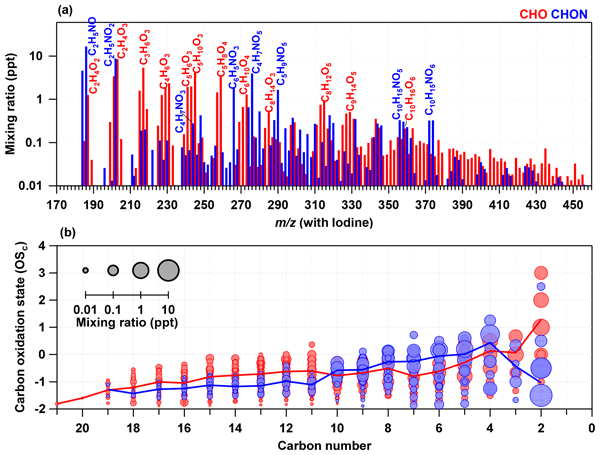
Yi Zhang, Wei Zhou, Weiqi Xu, Yan Li, Yu Zhang, Zijun Zhang, Bojiang Su, Ning Zhang, Eleonora Aruffo, Junfeng Wang, Piero Di Carlo, Lanzhong Liu, Xiaole Pan, Zifa Wang, Douglas R. Worsnop, and Yele Sun
Atmos. Chem. Phys., 26, 14637–14653, https://doi.org/10.5194/acp-26-14637-2026, https://doi.org/10.5194/acp-26-14637-2026, 2026
Short summary
Short summary
We investigated how plants, pollution and weather shape air quality at a forested mountain in southeastern China, with frequent clouds. We measured compounds formed as plant and human emissions react in the atmosphere. Warm conditions favored plant emissions, while cooler periods increased the influence of pollution transported from other regions. Clouds both removed some compounds and changed others through chemical reactions, showing how weather and clouds shape air quality in mountains.
Yi Zhang, Wei Zhou, Weiqi Xu, Yan Li, Yu Zhang, Zijun Zhang, Bojiang Su, Ning Zhang, Eleonora Aruffo, Junfeng Wang, Piero Di Carlo, Lanzhong Liu, Xiaole Pan, Zifa Wang, Douglas R. Worsnop, and Yele Sun
Atmos. Chem. Phys., 26, 14637–14653, https://doi.org/10.5194/acp-26-14637-2026, https://doi.org/10.5194/acp-26-14637-2026, 2026
Short summary
Short summary
We investigated how plants, pollution and weather shape air quality at a forested mountain in southeastern China, with frequent clouds. We measured compounds formed as plant and human emissions react in the atmosphere. Warm conditions favored plant emissions, while cooler periods increased the influence of pollution transported from other regions. Clouds both removed some compounds and changed others through chemical reactions, showing how weather and clouds shape air quality in mountains.
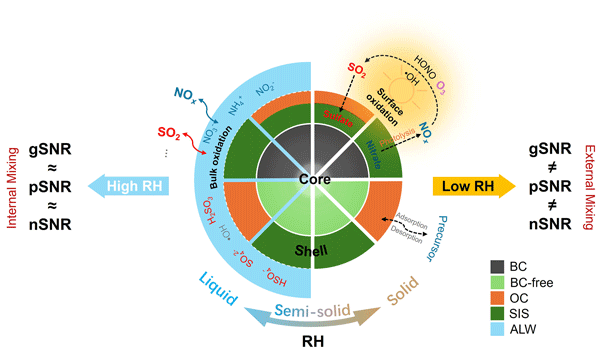
Yuan Dai, Junfeng Wang, Mindong Chen, Su Zhang, Haiwei Li, Yunjiang Zhang, Yun Wu, Ming Wang, and Xinlei Ge
Atmos. Chem. Phys., 26, 14015–14029, https://doi.org/10.5194/acp-26-14015-2026, https://doi.org/10.5194/acp-26-14015-2026, 2026
Short summary
Short summary
Air pollution involves complex interactions between airborne particles and gases, but these links are not fully understood. We analyzed individual particles and gases across different emission levels. We found that relative sulfur and nitrogen levels influence how gases interact with particles and alter their properties. These processes vary by particle type and humidity, helping explain how pollution forms and evolves. Our findings provide new evidence for particle-gas interactions.
Alejandra Velazquez-Garcia, Chenjie Yu, Sarah Tinorua, Hichem Bouzidi, Eleonora Aruffo, Piero Di Carlo, Peter DeCarlo, Benjamin A. Nault, Thierry Bourrianne, Kevin Tu, Edouard Pangui, Diana L. Pereira, Mathieu Cazaunau, Ludovico Di Antonio, Guillaume Siour, Matthias Beekmann, Astrid Bauville, Christopher Cantrell, Paola Formenti, Vincent Michoud, and Cyrielle Denjean
EGUsphere, https://doi.org/10.5194/egusphere-2026-4423, https://doi.org/10.5194/egusphere-2026-4423, 2026
Short summary
Short summary
As city air pollution travels downwind, its climate impact evolves. Using a research aircraft, we tracked the Paris pollution plume and found that sunlight rapidly transforms urban emissions, forming secondary organic particles that absorb more sunlight within six hours. These findings show that urban pollution changes chemically during transport, providing key constraints to improve future climate models.
Chenjie Yu, Ludovico Di Antonio, Peter F. DeCarlo, Benjamin A. Nault, Alejandra Velazquez-Garcia, Eleonora Aruffo, Piero Di Carlo, Cyrielle Denjean, Sarah Tinorua, Thierry Bourrianne, Diana L. Pereira, Kevin Tu, Edouard Pangui, Mathieu Cazaunau, Astrid Bauville, Noël Grand, Antonin Bergé, Claudia Di Biagio, Aline Gratien, Matthias Beekmann, Guillaume Siour, Gilles Foret, Barbara D'Anna, Julien Kammer, Huihui Wu, Christopher Cantrell, Paola Formenti, and Vincent Michoud
EGUsphere, https://doi.org/10.5194/egusphere-2026-3147, https://doi.org/10.5194/egusphere-2026-3147, 2026
Short summary
Short summary
This study used coordinated airborne and ground-based measurements in Paris and its downwind regions to quantify the effects of 2–6 h of urban plume aging on aerosol properties. Aging enhanced secondary organic aerosol production and PM1 mass and shifted optical properties toward higher SSA, higher real and lower imaginary refractive indices, and stronger brown carbon absorption. These results highlight the need to account for aerosol aging in atmospheric models and remote-sensing retrievals.
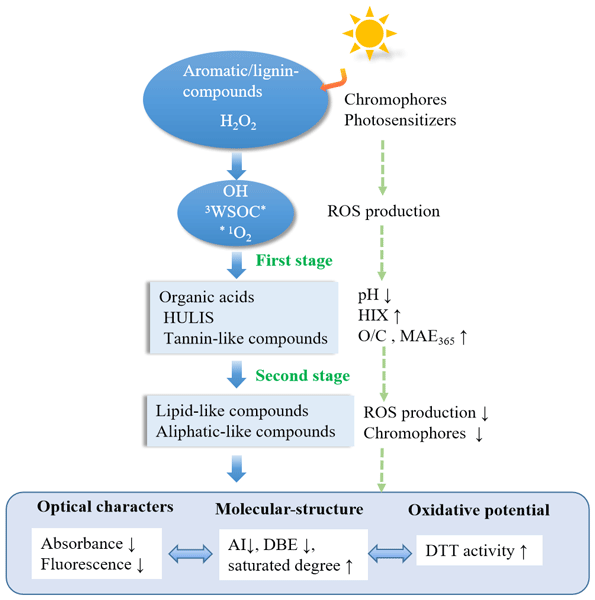
Zhaolian Ye, Dandan Hu, Qiuyan Chen, Xiangpeng Huang, and Xinlei Ge
Atmos. Chem. Phys., 26, 8255–8274, https://doi.org/10.5194/acp-26-8255-2026, https://doi.org/10.5194/acp-26-8255-2026, 2026
Short summary
Short summary
Few studies have compared the molecular and optical evolution of smoke extracts during aqueous photooxidation. Here, OH-initiated aqueous photodegradation of two smoke extracts was investigated. Optical and molecular changes were characterized using a combination of analytical techniques. Reactive oxygen species contributions and potential reaction mechanisms were also examined. These results improve understanding of aqueous photochemistry and support more accurate representation in atmospheric models.
Lorenzo Gentile, Eleonora Aruffo, Alessandra Mascitelli, Piero Chiacchiaretta, and Piero Di Carlo
EGUsphere, https://doi.org/10.5194/egusphere-2026-1262, https://doi.org/10.5194/egusphere-2026-1262, 2026
Short summary
Short summary
Low-cost sensors are continuously improved by manufacturers. This study evaluated three commercial sensor platforms in their factory primary calibration during a three-week field campaign, through comparison with certified reference instruments. Results show strong agreement for meteorological variables, moderate agreement for gaseous pollutants, and partial agreement for particulate matter. Analysis of data also showed sensors detection of emission patterns during rush hours and holidays.
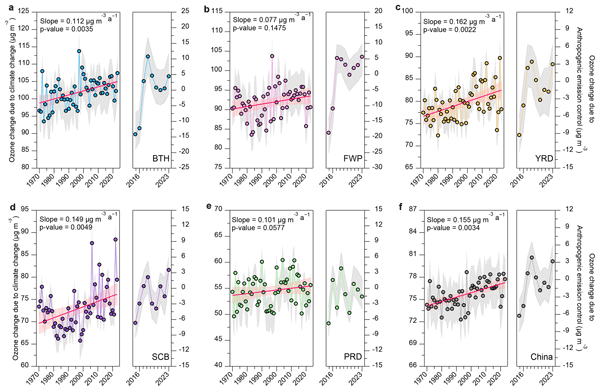
Jie Fang, Yunjiang Zhang, Didier Hauglustaine, Bo Zheng, Ming Wang, Jingyi Li, Yong Sun, Haiwei Li, Junfeng Wang, Yun Wu, Bin Yuan, Mindong Chen, and Xinlei Ge
Atmos. Chem. Phys., 26, 851–867, https://doi.org/10.5194/acp-26-851-2026, https://doi.org/10.5194/acp-26-851-2026, 2026
Short summary
Short summary
Surface ozone pollution is a pressing global challenge driven by human activities and a warming climate. Using nationwide observations (2013–2023) across China together with satellite data, we developed a new machine learning approach to decouple the impacts of emission controls and weather changes. Our results show that while emission reductions improved ozone in some regions, climate change is increasingly offsetting these gains, underscoring the need for joint air quality and climate actions.
Xu Yu, Min Zhou, Shuhui Zhu, Liping Qiao, Jinjian Li, Yingge Ma, Zijing Zhang, Kezheng Liao, Hongli Wang, and Jian Zhen Yu
Atmos. Chem. Phys., 25, 9061–9074, https://doi.org/10.5194/acp-25-9061-2025, https://doi.org/10.5194/acp-25-9061-2025, 2025
Short summary
Short summary
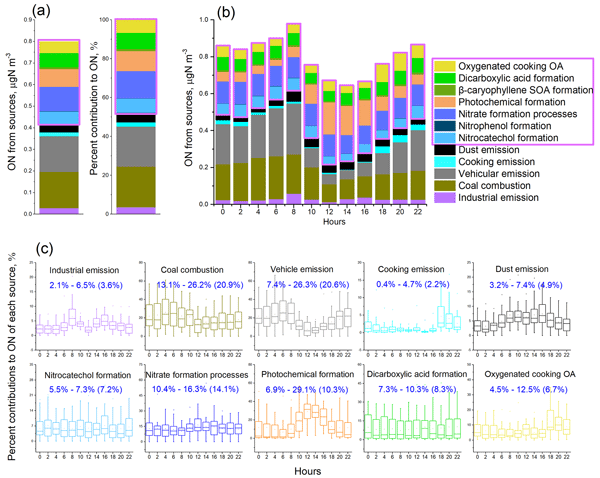
Online measurements of bulk aerosol organic nitrogen (ON), in conjunction with a comprehensive array of source markers, have revealed five emission sources and five potentially significant formation processes of nitrogenous organic aerosols. This study provides a first quantitative source analysis of ON aerosol and valuable observational evidence of secondary ON aerosol formation through NH3 and NOx chemistries.
Yuan Dai, Junfeng Wang, Houjun Wang, Shijie Cui, Yunjiang Zhang, Haiwei Li, Yun Wu, Ming Wang, Eleonora Aruffo, and Xinlei Ge
Atmos. Chem. Phys., 24, 9733–9748, https://doi.org/10.5194/acp-24-9733-2024, https://doi.org/10.5194/acp-24-9733-2024, 2024
Short summary
Short summary
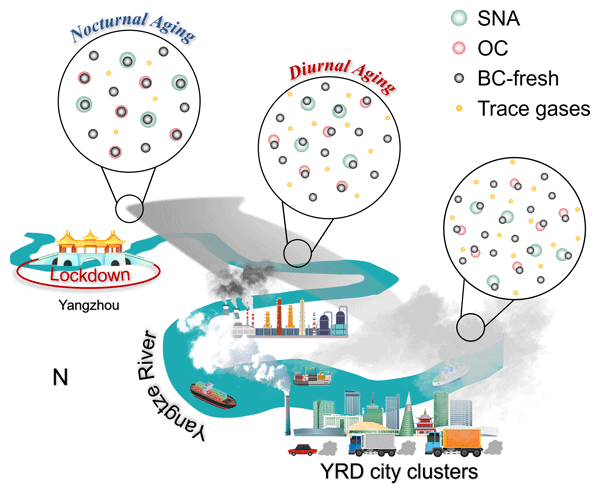
Short-term strict emission control can improve air quality, but its effectiveness needs assessment. During the 2021 summer COVID-19 lockdown in Yangzhou, we found that PM2.5 levels did not decrease despite reduced primary emissions. Aged black-carbon particles increased substantially due to higher O3 levels and transported pollutants. High humidity and low wind also played key roles. The results highlight the importance of a regionally balanced control strategy for future air quality management.
Yiqun Lu, Yingge Ma, Dan Dan Huang, Shengrong Lou, Sheng'ao Jing, Yaqin Gao, Hongli Wang, Yanjun Zhang, Hui Chen, Yunhua Chang, Naiqiang Yan, Jianmin Chen, Christian George, Matthieu Riva, and Cheng Huang
Atmos. Chem. Phys., 23, 3233–3245, https://doi.org/10.5194/acp-23-3233-2023, https://doi.org/10.5194/acp-23-3233-2023, 2023
Short summary
Short summary
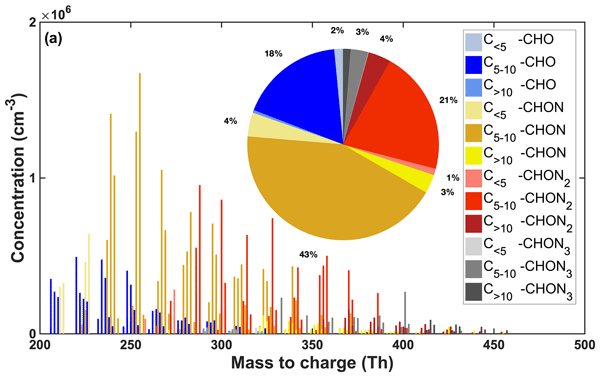
N-containing oxygenated organic molecules have been identified as important precursors of aerosol particles. We used an ultra-high-resolution mass spectrometer coupled with an online sample inlet to accurately measure their molecular composition, concentration level and variation patterns. We show their formation process and influencing factors in a Chinese megacity involving various volatile organic compound precursors and atmospheric oxidants, and we highlight the influence of PM2.5 episodes.
Rui Li, Kun Zhang, Qing Li, Liumei Yang, Shunyao Wang, Zhiqiang Liu, Xiaojuan Zhang, Hui Chen, Yanan Yi, Jialiang Feng, Qiongqiong Wang, Ling Huang, Wu Wang, Yangjun Wang, Jian Zhen Yu, and Li Li
Atmos. Chem. Phys., 23, 3065–3081, https://doi.org/10.5194/acp-23-3065-2023, https://doi.org/10.5194/acp-23-3065-2023, 2023
Short summary
Short summary
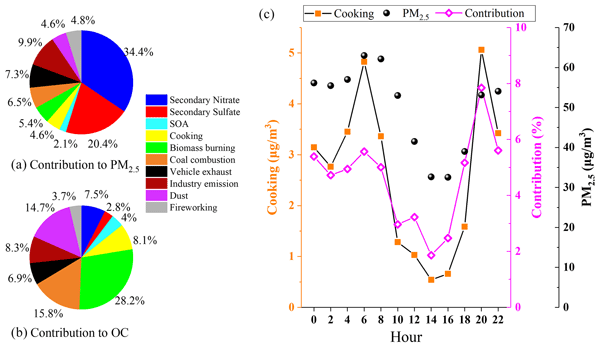
Molecular markers in organic aerosol (OA) provide specific source information on PM2.5, and the contribution of cooking emissions to OA is significant, especially in urban environments. This study investigates the variation in concentrations and oxidative degradation of fatty acids and corresponding oxidation products in ambient air, which can be a guide for the refinement of aerosol source apportionment and provide scientific support for the development of emission source control policies.
Min Zhou, Guangjie Zheng, Hongli Wang, Liping Qiao, Shuhui Zhu, DanDan Huang, Jingyu An, Shengrong Lou, Shikang Tao, Qian Wang, Rusha Yan, Yingge Ma, Changhong Chen, Yafang Cheng, Hang Su, and Cheng Huang
Atmos. Chem. Phys., 22, 13833–13844, https://doi.org/10.5194/acp-22-13833-2022, https://doi.org/10.5194/acp-22-13833-2022, 2022
Short summary
Short summary
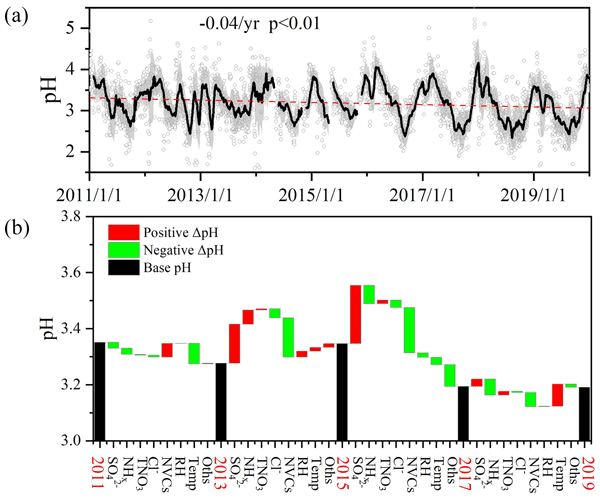
The trend of aerosol pH and its drivers is crucial in understanding the multiphase formation pathways of aerosols. We reported the first trend analysis of aerosol pH from 2011 to 2019 in eastern China. Although significant variations of aerosol compositions were observed from 2011 to 2019, the aerosol pH estimated by model only slightly declined by 0.24. Our work shows that the opposite effects of SO42− and non-volatile cation changes play key roles in determining the moderate pH trend.
Shijie Cui, Dan Dan Huang, Yangzhou Wu, Junfeng Wang, Fuzhen Shen, Jiukun Xian, Yunjiang Zhang, Hongli Wang, Cheng Huang, Hong Liao, and Xinlei Ge
Atmos. Chem. Phys., 22, 8073–8096, https://doi.org/10.5194/acp-22-8073-2022, https://doi.org/10.5194/acp-22-8073-2022, 2022
Short summary
Short summary
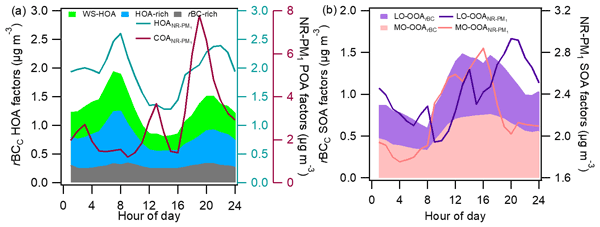
Refractory black carbon (rBC) aerosols are important to air quality and climate change. rBC can mix with many other species, which can significantly change its properties and impacts. We used a specific set of techniques to exclusively characterize rBC-containing (rBCc) particles in Shanghai. We elucidated their composition, sources and size distributions and factors that affect their properties. Our findings are very valuable for advancing the understanding of BC and controlling BC pollution.
Cited articles
Abudumutailifu, M., Shang, X., Wang, L., Zhang, M., Kang, H., Chen, Y., Li, L., Ju, R., Li, B., Ouyang, H., Tang, X., Li, C., Wang, L., Wang, X., George, C., Rudich, Y., Zhang, R., and Chen, J.: Unveiling the molecular characteristics, origins, and formation mechanism of reduced nitrogen organic compounds in the urban atmosphere of Shanghai using a versatile aerosol concentration enrichment system, Environ. Sci. Technol., 58, 7099–7112, https://doi.org/10.1021/acs.est.3c04071, 2024.
Amnuaylojaroen, T. and Parasin, N.: Perspective on particulate matter: from biomass burning to the health crisis in mainland Southeast Asia, Toxics, 11, 553, https://doi.org/10.3390/toxics11070553, 2023.
Andreae, M. O.: Emission of trace gases and aerosols from biomass burning – an updated assessment, Atmos. Chem. Phys., 19, 8523–8546, https://doi.org/10.5194/acp-19-8523-2019, 2019.
Aruffo, E., Wang, J., Ye, J., Ohno, P., Qin, Y., Stewart, M., McKinney, K., Di Carlo, P., and Martin, S. T.: Partitioning of organonitrates in the production of secondary organic aerosols from α-pinene photo-oxidation, Environ. Sci. Technol., 56, 5421–5429, https://doi.org/10.1021/acs.est.1c08380, 2022.
Aung, W.-Y., Noguchi, M., Pan-Nu Yi, E.-E., Thant, Z., Uchiyama, S., Win-Shwe, T.-T., Kunugita, N., and Mar, O.: Preliminary assessment of outdoor and indoor air quality in Yangon city, Myanmar, Atmos. Pollut. Res., 10, 722–730, https://doi.org/10.1016/j.apr.2018.11.011, 2019.
Bandowe, B. A. M. and Meusel, H.: Nitrated polycyclic aromatic hydrocarbons (nitro-PAHs) in the environment – a review, Sci. Total Environ., 581–582, 237–257, https://doi.org/10.1016/j.scitotenv.2016.12.115, 2017.
Bianco, A., Deguillaume, L., Vaïtilingom, M., Nicol, E., Baray, J.-L., Chaumerliac, N., and Bridoux, M.: Molecular characterization of cloud water samples collected at the puy de Dôme (France) by fourier transform ion cyclotron resonance mass spectrometry, Environ. Sci. Technol., 52, 10275–10285, https://doi.org/10.1021/acs.est.8b01964, 2018.
Bloss, C., Wagner, V., Jenkin, M. E., Volkamer, R., Bloss, W. J., Lee, J. D., Heard, D. E., Wirtz, K., Martin-Reviejo, M., Rea, G., Wenger, J. C., and Pilling, M. J.: Development of a detailed chemical mechanism (MCMv3.1) for the atmospheric oxidation of aromatic hydrocarbons, Atmos. Chem. Phys., 5, 641–664, https://doi.org/10.5194/acp-5-641-2005, 2005.
Cai, D., Wang, X., George, C., Cheng, T., Herrmann, H., Li, X., and Chen, J.: Formation of secondary nitroaromatic compounds in polluted urban environments, J. Geophys. Res.-Atmos., 127, e2021JD036167, https://doi.org/10.1029/2021JD036167, 2022.
Cao, M., Yu, W., Chen, M., and Chen, M.: Characterization of nitrated aromatic compounds in fine particles from Nanjing, China: optical properties, source allocation, and secondary processes, Environ. Pollut., 316, 120650, https://doi.org/10.1016/j.envpol.2022.120650, 2023.
Claeys, M., Vermeylen, R., Yasmeen, F., Gómez-González, Y., Chi, X., Maenhaut, W., Mészáros, T., and Salma, I.: Chemical characterisation of humic-like substances from urban, rural and tropical biomass burning environments using liquid chromatography with UV/vis photodiode array detection and electrospray ionisation mass spectrometry, Environ. Chem., 9, 273–284, https://doi.org/10.1071/EN11163, 2012.
Desyaterik, Y., Sun, Y., Shen, X., Lee, T., Wang, X., Wang, T., and Collett Jr., J. L.: Speciation of “brown” carbon in cloud water impacted by agricultural biomass burning in eastern China, J. Geophys. Res.-Atmos., 118, 7389–7399, https://doi.org/10.1002/jgrd.50561, 2013.
Feng, J., Li, M., Zhang, P., Gong, S., Zhong, M., Wu, M., Zheng, M., Chen, C., Wang, H., and Lou, S.: Investigation of the sources and seasonal variations of secondary organic aerosols in PM2.5 in Shanghai with organic tracers, Atmos. Environ., 79, 614–622, https://doi.org/10.1016/j.atmosenv.2013.07.022, 2013.
Fredrickson, C. D., Palm, B. B., Lee, B. H., Zhang, X., Orlando, J. J., Tyndall, G. S., Garofalo, L. A., Pothier, M. A., Farmer, D. K., Decker, Z. C. J., Robinson, M. A., Brown, S. S., Murphy, S. M., Shen, Y., Sullivan, A. P., Schobesberger, S., and Thornton, J. A.: Formation and evolution of catechol-derived SOA mass, composition, volatility, and light absorption, ACS Earth Space Chem., 6, 1067–1079, https://doi.org/10.1021/acsearthspacechem.2c00007, 2022.
Geng, H., Park, Y., Hwang, H., Kang, S., and Ro, C.-U.: Elevated nitrogen-containing particles observed in Asian dust aerosol samples collected at the marine boundary layer of the Bohai Sea and the Yellow Sea, Atmos. Chem. Phys., 9, 6933–6947, https://doi.org/10.5194/acp-9-6933-2009, 2009.
Harrison, M. A. J., Barra, S., Borghesi, D., Vione, D., Arsene, C., and Iulian Olariu, R.: Nitrated phenols in the atmosphere: a review, Atmos. Environ., 39, 231–248, https://doi.org/10.1016/j.atmosenv.2004.09.044, 2005.
Hayman, G.: Effects of pollution control on UV exposure, in: AEA technology final report, Reference AEA/RCEC/22522001/R/002 ISSUE1, Department of Health on Contract 121/6377, AEA Technology, Oxfordshire, UK, 1997.
Herich, H., Hueglin, C., and Buchmann, B.: A 2.5 year's source apportionment study of black carbon from wood burning and fossil fuel combustion at urban and rural sites in Switzerland, Atmos. Meas. Tech., 4, 1409–1420, https://doi.org/10.5194/amt-4-1409-2011, 2011.
Jacob, D. J.: Heterogeneous chemistry and tropospheric ozone, Atmos. Environ., 34, 2131–2159, https://doi.org/10.1016/S1352-2310(99)00462-8, 2000.
Jenkin, M. E., Saunders, S. M., and Pilling, M. J.: The tropospheric degradation of volatile organic compounds: a protocol for mechanism development, Atmos. Environ., 31, 81–104, https://doi.org/10.1016/S1352-2310(96)00105-7, 1997.
Jenkin, M. E., Saunders, S. M., Wagner, V., and Pilling, M. J.: Protocol for the development of the Master Chemical Mechanism, MCM v3 (Part B): tropospheric degradation of aromatic volatile organic compounds, Atmos. Chem. Phys., 3, 181–193, https://doi.org/10.5194/acp-3-181-2003, 2003.
Jiang, H., Li, J., Tang, J., Zhao, S., Chen, Y., Tian, C., Zhang, X., Jiang, B., Liao, Y., and Zhang, G.: Factors influencing the molecular compositions and distributions of atmospheric nitrogen-containing compounds, J. Geophys. Res.-Atmos., 127, e2021JD036284, https://doi.org/10.1029/2021JD036284, 2022.
Kholod, Y. A., Gryn'ova, G., Gorb, L., Hill, F. C., and Leszczynski, J.: Evaluation of the dependence of aqueous solubility of nitro compounds on temperature and salinity: A COSMO-RS simulation, Chemosphere, 83, 287–294, https://doi.org/10.1016/j.chemosphere.2010.12.065, 2011.
Koch, B. P. and Dittmar, T.: From mass to structure: an aromaticity index for high-resolution mass data of natural organic matter, Rapid Commun. Mass Spectrom., 20, 926–932, https://doi.org/10.1002/rcm.2386, 2006.
Kourtchev, I., Godoi, R. H. M., Connors, S., Levine, J. G., Archibald, A. T., Godoi, A. F. L., Paralovo, S. L., Barbosa, C. G. G., Souza, R. A. F., Manzi, A. O., Seco, R., Sjostedt, S., Park, J.-H., Guenther, A., Kim, S., Smith, J., Martin, S. T., and Kalberer, M.: Molecular composition of organic aerosols in central Amazonia: an ultra-high-resolution mass spectrometry study, Atmos. Chem. Phys., 16, 11899–11913, https://doi.org/10.5194/acp-16-11899-2016, 2016.
Krugly, E., Martuzevicius, D., Puida, E., Buinevicius, K., Stasiulaitiene, I., Radziuniene, I., Minikauskas, A., and Kliucininkas, L.: Characterization of gaseous- and particle-phase emissions from the combustion of biomass-residue-derived fuels in a small residential boiler, Energy & Fuels, 28, 5057–5066, https://doi.org/10.1021/ef500420t, 2014.
Křůmal, K., Mikuška, P., and Večeřa, Z.: Polycyclic aromatic hydrocarbons and hopanes in PM1 aerosols in urban areas, Atmos. Environ., 67, 27–37, https://doi.org/10.1016/j.atmosenv.2012.10.033, 2013.
Laskin, A., Laskin, J., and Nizkorodov, S. A.: Chemistry of atmospheric brown carbon, Chem. Rev., 115, 4335–4382, https://doi.org/10.1021/cr5006167, 2015.
Lee, S. C., Hung, H., Shiu, W. Y., and Mackay, D.: Estimations of vapor pressure and activity coefficients in water and octanol for selected aromatic chemicals at 25 °C, Environ. Toxicol. Chem., 19, 2623–2630, https://doi.org/10.1002/etc.5620191102, 2000.
Lelieveld, J., Gromov, S., Pozzer, A., and Taraborrelli, D.: Global tropospheric hydroxyl distribution, budget and reactivity, Atmos. Chem. Phys., 16, 12477–12493, https://doi.org/10.5194/acp-16-12477-2016, 2016.
Li, X., Wang, Y., Hu, M., Tan, T., Li, M., Wu, Z., Chen, S., and Tang, X.: Characterizing chemical composition and light absorption of nitroaromatic compounds in the winter of Beijing, Atmos. Environ., 237, 117712, https://doi.org/10.1016/j.atmosenv.2020.117712, 2020.
Li, Y., Fu, T.-M., Yu, J. Z., Zhang, A., Yu, X., Ye, J., Zhu, L., Shen, H., Wang, C., Yang, X., Tao, S., Chen, Q., Li, Y., Li, L., Che, H., and Heald, C. L.: Nitrogen dominates global atmospheric organic aerosol absorption, Science, 387, 989–995, https://doi.org/10.1126/science.adr4473, 2025.
Lin, M., Walker, J., Geron, C., and Khlystov, A.: Organic nitrogen in PM2.5 aerosol at a forest site in the Southeast US, Atmos. Chem. Phys., 10, 2145–2157, https://doi.org/10.5194/acp-10-2145-2010, 2010.
Lin, P., Rincon, A. G., Kalberer, M., and Yu, J. Z.: Elemental composition of HULIS in the Pearl River Delta Region, China: results inferred from positive and negative electrospray high resolution mass spectrometric data, Environ. Sci. Technol., 46, 7454–7462, https://doi.org/10.1021/es300285d, 2012a.
Lin, P., Yu, J. Z., Engling, G., and Kalberer, M.: Organosulfates in humic-like substance fraction isolated from aerosols at seven locations in East Asia: a study by ultra-high-resolution mass spectrometry, Environ. Sci. Technol., 46, 13118–13127, https://doi.org/10.1021/es303570v, 2012b.
Lin, P., Fleming, L. T., Nizkorodov, S. A., Laskin, J., and Laskin, A.: Comprehensive molecular characterization of atmospheric brown carbon by high resolution mass spectrometry with electrospray and atmospheric pressure photoionization, Anal. Chem., 90, 12493–12502, https://doi.org/10.1021/acs.analchem.8b02177, 2018.
Ma, Y.-J., Xu, Y., Yang, T., Xiao, H.-W., and Xiao, H.-Y.: Measurement report: Characteristics of nitrogen-containing organics in PM2.5 in Ürümqi, northwestern China – differential impacts of combustion of fresh and aged biomass materials, Atmos. Chem. Phys., 24, 4331–4346, https://doi.org/10.5194/acp-24-4331-2024, 2024.
Nannoolal, Y., Rarey, J., and Ramjugernath, D.: Estimation of pure component properties: Part 3. Estimation of the vapor pressure of non-electrolyte organic compounds via group contributions and group interactions, Fluid Phase Equilibr., 269, 117–133, https://doi.org/10.1016/j.fluid.2008.04.020, 2008.
Nelson, B. S., Stewart, G. J., Drysdale, W. S., Newland, M. J., Vaughan, A. R., Dunmore, R. E., Edwards, P. M., Lewis, A. C., Hamilton, J. F., Acton, W. J., Hewitt, C. N., Crilley, L. R., Alam, M. S., Şahin, Ü. A., Beddows, D. C. S., Bloss, W. J., Slater, E., Whalley, L. K., Heard, D. E., Cash, J. M., Langford, B., Nemitz, E., Sommariva, R., Cox, S., Shivani, Gadi, R., Gurjar, B. R., Hopkins, J. R., Rickard, A. R., and Lee, J. D.: In situ ozone production is highly sensitive to volatile organic compounds in Delhi, India, Atmos. Chem. Phys., 21, 13609–13630, https://doi.org/10.5194/acp-21-13609-2021, 2021.
Ng, N. L., Chhabra, P. S., Chan, A. W. H., Surratt, J. D., Kroll, J. H., Kwan, A. J., McCabe, D. C., Wennberg, P. O., Sorooshian, A., Murphy, S. M., Dalleska, N. F., Flagan, R. C., and Seinfeld, J. H.: Effect of NOx level on secondary organic aerosol (SOA) formation from the photooxidation of terpenes, Atmos. Chem. Phys., 7, 5159–5174, https://doi.org/10.5194/acp-7-5159-2007, 2007.
Nway, N. C., Aung, W. Y., Yi, E. E. P. N., Thant, Z., Yagishita, M., Ishigaki, Y., Suzuki, T., Nakajima, D., Win-Shwe, T.-T., and Mar, O.: Seasonal and regional variation of particulate matter dispersion in Yangon City and Taunggyi City, Myanmar, IOP Conference Series: Earth and Environmental Science, 496, 012003, https://doi.org/10.1088/1755-1315/496/1/012003, 2020.
O'Meara, S. P., Xu, S., Topping, D., Alfarra, M. R., Capes, G., Lowe, D., Shao, Y., and McFiggans, G.: PyCHAM (v2.1.1): a Python box model for simulating aerosol chambers, Geosci. Model Dev., 14, 675–702, https://doi.org/10.5194/gmd-14-675-2021, 2021.
Pankow, J. F.: An absorption model of gas/particle partitioning of organic compounds in the atmosphere, Atmos. Environ., 28, 185–188, https://doi.org/10.1016/1352-2310(94)90093-0, 1994.
Pawar, P. V., Mahajan, A. S., and Ghude, S. D.: HONO chemistry and its impact on the atmospheric oxidizing capacity over the Indo-Gangetic Plain, Sci. Total Environ., 947, 174604, https://doi.org/10.1016/j.scitotenv.2024.174604, 2024.
Priestley, M., Le Breton, M., Bannan, T. J., Leather, K. E., Bacak, A., Reyes-Villegas, E., De Vocht, F., Shallcross, B. M. A., Brazier, T., Anwar Khan, M., Allan, J., Shallcross, D. E., Coe, H., and Percival, C. J.: Observations of isocyanate, amide, nitrate, and nitro compounds from an anthropogenic biomass burning event using a ToF-CIMS, J. Geophys. Res.-Atmos., 123, 7687–7704, https://doi.org/10.1002/2017JD027316, 2018.
Rickard, A.: Master Chemical Mechanism (MCM) v3.3.1, https://www.mcm.york.ac.uk/MCM (last access: May 2025), 2025.
Rollins, A. W., Browne, E. C., Min, K. E., Pusede, S. E., Wooldridge, P. J., Gentner, D. R., Goldstein, A. H., Liu, S., Day, D. A., Russell, L. M., and Cohen, R. C.: Evidence for NOx control over nighttime SOA formation, Science, 337, 1210–1212, https://doi.org/10.1126/science.1221520, 2012.
Salvador, C. M. G., Tang, R., Priestley, M., Li, L., Tsiligiannis, E., Le Breton, M., Zhu, W., Zeng, L., Wang, H., Yu, Y., Hu, M., Guo, S., and Hallquist, M.: Ambient nitro-aromatic compounds – biomass burning versus secondary formation in rural China, Atmos. Chem. Phys., 21, 1389–1406, https://doi.org/10.5194/acp-21-1389-2021, 2021.
Samy, S. and Hays, M. D.: Quantitative LC–MS for water-soluble heterocyclic amines in fine aerosols (PM2.5) at Duke Forest, USA, Atmos. Environ., 72, 77–80, https://doi.org/10.1016/j.atmosenv.2013.02.032, 2013.
Samy, S., Robinson, J., Rumsey, I. C., Walker, J. T., and Hays, M. D.: Speciation and trends of organic nitrogen in southeastern U.S. fine particulate matter (PM2.5), J. Geophys. Res.-Atmos., 118, 1996–2006, https://doi.org/10.1029/2012JD017868, 2013.
Saunders, S. M., Jenkin, M. E., Derwent, R. G., and Pilling, M. J.: Protocol for the development of the Master Chemical Mechanism, MCM v3 (Part A): tropospheric degradation of non-aromatic volatile organic compounds, Atmos. Chem. Phys., 3, 161–180, https://doi.org/10.5194/acp-3-161-2003, 2003.
Serrano Damha, C., Cummings, B. E., Schervish, M., Shiraiwa, M., Waring, M. S., and Zuend, A.: Capturing the relative-humidity-sensitive gas-particle partitioning of organic aerosols in a 2D volatility basis set, Geophys. Res. Lett., 51, e2023GL106095, https://doi.org/10.1029/2023GL106095, 2024.
Simoneit, B. R. T., Sheng, G., Chen, X., Fu, J., Zhang, J., and Xu, Y.: Molecular marker study of extractable organic matter in aerosols from urban areas of China, Atmos. Environ. A-Gen., 25, 2111–2129, https://doi.org/10.1016/0960-1686(91)90088-O, 1991.
Smith, J. S., Laskin, A., and Laskin, J.: Molecular characterization of biomass burning aerosols using high-resolution mass spectrometry, Anal. Chem., 81, 1512–1521, https://doi.org/10.1021/ac8020664, 2009.
Sun, Y., Luo, H., Li, Y., Zhou, W., Xu, W., Fu, P., and Zhao, D.: Atmospheric organic aerosols: online molecular characterization and environmental impacts, npj Clim. Atmos. Sci., 8, 305, https://doi.org/10.1038/s41612-025-01199-2, 2025.
Tan, Z., Rohrer, F., Lu, K., Ma, X., Bohn, B., Broch, S., Dong, H., Fuchs, H., Gkatzelis, G. I., Hofzumahaus, A., Holland, F., Li, X., Liu, Y., Liu, Y., Novelli, A., Shao, M., Wang, H., Wu, Y., Zeng, L., Hu, M., Kiendler-Scharr, A., Wahner, A., and Zhang, Y.: Wintertime photochemistry in Beijing: observations of ROx radical concentrations in the North China Plain during the BEST-ONE campaign, Atmos. Chem. Phys., 18, 12391–12411, https://doi.org/10.5194/acp-18-12391-2018, 2018.
Topping, D., Barley, M., Bane, M. K., Higham, N., Aumont, B., Dingle, N., and McFiggans, G.: UManSysProp v1.0: an online and open-source facility for molecular property prediction and atmospheric aerosol calculations, Geosci. Model Dev., 9, 899–914, https://doi.org/10.5194/gmd-9-899-2016, 2016.
Wang, H., Gao, Y., Wang, S., Wu, X., Liu, Y., Li, X., Huang, D., Lou, S., Wu, Z., Guo, S., Jing, S., Li, Y., Huang, C., Tyndall, G. S., Orlando, J. J., and Zhang, X.: Atmospheric processing of nitrophenols and nitrocresols from biomass burning emissions, J. Geophys. Res.-Atmos., 125, e2020JD033401, https://doi.org/10.1029/2020JD033401, 2020.
Wang, X. K., Rossignol, S., Ma, Y., Yao, L., Wang, M. Y., Chen, J. M., George, C., and Wang, L.: Molecular characterization of atmospheric particulate organosulfates in three megacities at the middle and lower reaches of the Yangtze River, Atmos. Chem. Phys., 16, 2285–2298, https://doi.org/10.5194/acp-16-2285-2016, 2016.
Wang, Z., Ge, Y., Bi, S., Liang, Y., and Shi, Q.: Molecular characterization of organic aerosol in winter from Beijing using UHPLC-Orbitrap MS, Sci. Total Environ., 812, 151507, https://doi.org/10.1016/j.scitotenv.2021.151507, 2022.
Xie, Q., Su, S., Chen, J., Dai, Y., Yue, S., Su, H., Tong, H., Zhao, W., Ren, L., Xu, Y., Cao, D., Li, Y., Sun, Y., Wang, Z., Liu, C.-Q., Kawamura, K., Jiang, G., Cheng, Y., and Fu, P.: Increase of nitrooxy organosulfates in firework-related urban aerosols during Chinese New Year's Eve, Atmos. Chem. Phys., 21, 11453–11465, https://doi.org/10.5194/acp-21-11453-2021, 2021.
Xu, W., Sun, Y., Wang, Q., Du, W., Zhao, J., Ge, X., Han, T., Zhang, Y., Zhou, W., Li, J., Fu, P., Wang, Z., and Worsnop, D. R.: Seasonal characterization of organic nitrogen in atmospheric aerosols using high resolution aerosol mass spectrometry in Beijing, China, ACS Earth Space Chem., 1, 673–682, https://doi.org/10.1021/acsearthspacechem.7b00106, 2017.
Xu, Y., Dong, X.-N., He, C., Wu, D.-S., Xiao, H.-W., and Xiao, H.-Y.: Mist cannon trucks can exacerbate the formation of water-soluble organic aerosol and PM2.5 pollution in the road environment, Atmos. Chem. Phys., 23, 6775–6788, https://doi.org/10.5194/acp-23-6775-2023, 2023.
Yu, K., Zhu, Q., Du, K., and Huang, X.-F.: Characterization of nighttime formation of particulate organic nitrates based on high-resolution aerosol mass spectrometry in an urban atmosphere in China, Atmos. Chem. Phys., 19, 5235–5249, https://doi.org/10.5194/acp-19-5235-2019, 2019.
Yu, X., Li, Q., Ge, Y., Li, Y., Liao, K., Huang, X. H., Li, J., and Yu, J. Z.: Simultaneous determination of aerosol inorganic and organic nitrogen by thermal evolution and chemiluminescence detection, Environ. Sci. Technol., 55, 11579–11589, https://doi.org/10.1021/acs.est.1c04876, 2021.
Yu, X., Li, Q., Liao, K., Li, Y., Wang, X., Zhou, Y., Liang, Y., and Yu, J. Z.: New measurements reveal a large contribution of nitrogenous molecules to ambient organic aerosol, npj Clim. Atmos. Sci., 7, 72, https://doi.org/10.1038/s41612-024-00620-6, 2024.
Yu, X., Zhou, M., Zhu, S., Qiao, L., Li, J., Ma, Y., Zhang, Z., Liao, K., Wang, H., and Yu, J. Z.: Significant secondary formation of nitrogenous organic aerosols in an urban atmosphere revealed by bihourly measurements of bulk organic nitrogen and comprehensive molecular markers, Atmos. Chem. Phys., 25, 9061–9074, https://doi.org/10.5194/acp-25-9061-2025, 2025.
Zeng, Y., Shen, Z., Takahama, S., Zhang, L., Zhang, T., Lei, Y., Zhang, Q., Xu, H., Ning, Y., Huang, Y., Cao, J., and Rudolf, H.: Molecular absorption and evolution mechanisms of PM2.5 brown carbon revealed by electrospray ionization fourier transform–ion cyclotron resonance mass spectrometry during a severe winter pollution episode in Xi'an, China, Geophys. Res. Lett., 47, e2020GL087977, https://doi.org/10.1029/2020GL087977, 2020.
Zhang, M., Cai, D., Lin, J., Liu, Z., Li, M., Wang, Y., and Chen, J.: Molecular characterization of atmospheric organic aerosols in typical megacities in China, npj Clim. Atmos. Sci., 7, 230, https://doi.org/10.1038/s41612-024-00784-1, 2024a.
Zhang, N.: Data for “Chemical characteristics and environmental drivers of nitrogen-containing organic aerosol formation in coastal and inland urban atmospheres in Myanmar”, Zenodo [data set], https://doi.org/10.5281/zenodo.20328885, 2026.
Zhang, N., Maung, M. W., Win, M. S., Feng, J., and Yao, X.: Carbonaceous aerosol and inorganic ions of PM2.5 in Yangon and Mandalay of Myanmar: seasonal and spatial variations in composition and sources, Atmos. Pollut. Res., 13, 101444, https://doi.org/10.1016/j.apr.2022.101444, 2022.
Zhang, N., Maung, M. W., Wang, S., Aruffo, E., and Feng, J.: Characterization and health risk assessment of PM2.5-bound polycyclic aromatic hydrocarbons in Yangon and Mandalay of Myanmar, Sci. Total Environ., 914, 170034, https://doi.org/10.1016/j.scitotenv.2024.170034, 2024b.
Zhong, Y., Chen, J., Zhao, Q., Zhang, N., Feng, J., and Fu, Q.: Temporal trends of the concentration and sources of secondary organic aerosols in PM2.5 in Shanghai during 2012 and 2018, Atmos. Environ., 261, 170034, https://doi.org/10.1016/j.atmosenv.2021.118596, 2021.
Short summary
We investigated how nitrogen-containing organic compounds form and evolve in fine particles using field measurements in Myanmar and box-model simulations. We show that relative humidity, photochemistry, and precursor availability jointly control the formation and gas–particle partitioning of light-absorbing nitrophenolic compounds. These findings improve understanding of their impacts on air quality and climate.
We investigated how nitrogen-containing organic compounds form and evolve in fine particles...


Altmetrics
Final-revised paper
Preprint