
Articles | Volume 26, issue 13
https://doi.org/10.5194/acp-26-9779-2026
© Author(s) 2026. This work is distributed under
the Creative Commons Attribution 4.0 License.
the Creative Commons Attribution 4.0 License.
https://doi.org/10.5194/acp-26-9779-2026
© Author(s) 2026. This work is distributed under
the Creative Commons Attribution 4.0 License.
the Creative Commons Attribution 4.0 License.
Research article
| 
13 Jul 2026
Research article |
| 13 Jul 2026
| 13 Jul 2026
Relaxed Eddy Accumulation based Flux Measurement of Atmospheric Inorganic Acidic Species over Cropland under the Long-Term Exposure to Chemical Industry Emissions in a Chinese Megacity
Jingya Hua
Department of Atmospheric Science, School of Environmental Studies, China University of Geosciences, Wuhan 430074, China
Xinyu Wang
Department of Atmospheric Science, School of Environmental Studies, China University of Geosciences, Wuhan 430074, China
Yulian Wei
Department of Atmospheric Science, School of Environmental Studies, China University of Geosciences, Wuhan 430074, China
Jieya Sun
Department of Atmospheric Science, School of Environmental Studies, China University of Geosciences, Wuhan 430074, China
Zongjun Li
Department of Atmospheric Science, School of Environmental Studies, China University of Geosciences, Wuhan 430074, China
Zhongliang Huang
Department of Atmospheric Science, School of Environmental Studies, China University of Geosciences, Wuhan 430074, China
Qiongqiong Wang
Department of Atmospheric Science, School of Environmental Studies, China University of Geosciences, Wuhan 430074, China

Department of Atmospheric Science, School of Environmental Studies, China University of Geosciences, Wuhan 430074, China
Related authors
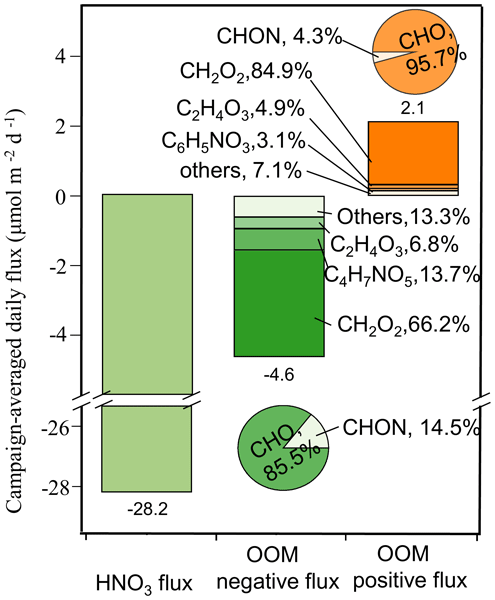
Jieya Sun, Xinyu Wang, Jingya Hua, Bo Zhu, Nan Chen, and Huan Yu
Atmos. Chem. Phys., 26, 13213–13225, https://doi.org/10.5194/acp-26-13213-2026, https://doi.org/10.5194/acp-26-13213-2026, 2026
Short summary
Short summary
Oxygenated organic molecules affect air quality and form fine particles, but their exchange between urban surfaces and air had never been measured. We made the first such measurements in a Chinese city in summer, using sensitive tools at a suburban campus. We refined methods for reliable data on these low-concentration molecules and reveals complex bidirectional exchange behaviors. This work fills a key gap and aids future air pollution studies.
Jieya Sun, Xinyu Wang, Jingya Hua, Bo Zhu, Nan Chen, and Huan Yu
Atmos. Chem. Phys., 26, 13213–13225, https://doi.org/10.5194/acp-26-13213-2026, https://doi.org/10.5194/acp-26-13213-2026, 2026
Short summary
Short summary
Oxygenated organic molecules affect air quality and form fine particles, but their exchange between urban surfaces and air had never been measured. We made the first such measurements in a Chinese city in summer, using sensitive tools at a suburban campus. We refined methods for reliable data on these low-concentration molecules and reveals complex bidirectional exchange behaviors. This work fills a key gap and aids future air pollution studies.
Qiongqiong Wang, Zhongliang Huang, Zongjun Li, Shuihui Zhu, Liping Qiao, Min Zhou, Dandan Huang, Hongli Wang, Qingyan Fu, Kezheng Liao, and Jian Zhen Yu
EGUsphere, https://doi.org/10.5194/egusphere-2026-4766, https://doi.org/10.5194/egusphere-2026-4766, 2026
Short summary
Short summary
Brown carbon (BrC) is a poorly understood carbonaceous aerosol component that significantly affects climate and air quality. We examined the sources and secondary formation of BrC based on long-term field measurements of bihourly BrC and a suite of organic and elemental tracers in urban Shanghai. Seasonal contrast of source contributions and complexity of secondary formation and evolution was observed. This study offers a scientific basis for BrC mitigation and urban air quality improvement.
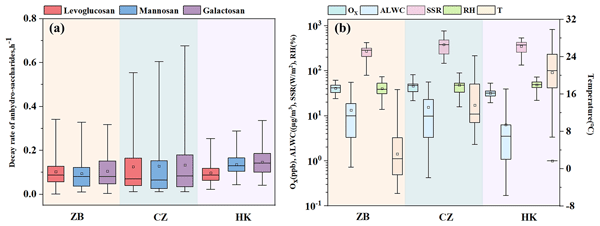
Biao Zhou, Kun Zhang, Qiongqiong Wang, Jiqi Zhu, Li Li, and Jian Zhen Yu
Atmos. Chem. Phys., 26, 3589–3606, https://doi.org/10.5194/acp-26-3589-2026, https://doi.org/10.5194/acp-26-3589-2026, 2026
Short summary
Short summary
Anhydro-saccharides are key organic markers for biomass burning, but their decay rates and driving factors in real ambient environments remain unclear. This study conducted an online field measurement of PM₂.₅-bound saccharides in three eastern Chinese cities. Daytime levoglucosan decay rates were calculated, and the driving factors were investigated using a machine learning model. Findings of this study offers a strong scientific basis to support air pollution management.
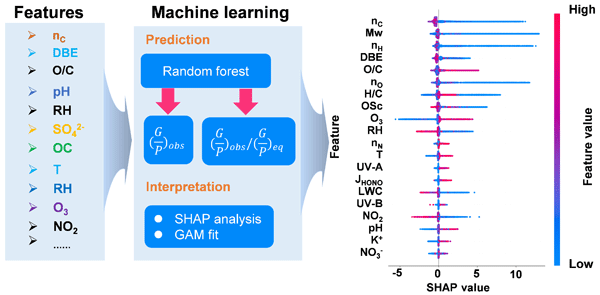
Xinyu Wang, Nan Chen, Bo Zhu, and Huan Yu
Atmos. Chem. Phys., 25, 9601–9615, https://doi.org/10.5194/acp-25-9601-2025, https://doi.org/10.5194/acp-25-9601-2025, 2025
Short summary
Short summary
Gas–particle partitioning governs the fate of organic molecules and the formation of organic aerosols in the atmosphere. Based on field measurement data, we built machine learning models to predict gas–particle partitioning. We also unveiled previously unrecognized interactions that led to the deviations of partitioning from the equilibrium state under real atmospheric conditions. Our study provided valuable insights for future research in atmospheric chemistry.
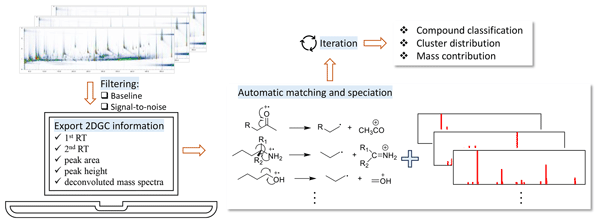
Xiao He, Xuan Zheng, Shuwen Guo, Lewei Zeng, Ting Chen, Bohan Yang, Shupei Xiao, Qiongqiong Wang, Zhiyuan Li, Yan You, Shaojun Zhang, and Ye Wu
Atmos. Chem. Phys., 24, 10655–10666, https://doi.org/10.5194/acp-24-10655-2024, https://doi.org/10.5194/acp-24-10655-2024, 2024
Short summary
Short summary
This study introduces an innovative method for identifying and quantifying complex organic vapors and aerosols. By combining advanced analytical techniques and new algorithms, we categorized thousands of compounds from heavy-duty diesel vehicles and ambient air and highlighted specific tracers for emission sources. The innovative approach enhances peak identification, reduces quantification uncertainties, and offers new insights for air quality management and atmospheric chemistry.
Shan Wang, Kezheng Liao, Zijing Zhang, Yuk Ying Cheng, Qiongqiong Wang, Hanzhe Chen, and Jian Zhen Yu
Atmos. Chem. Phys., 24, 5803–5821, https://doi.org/10.5194/acp-24-5803-2024, https://doi.org/10.5194/acp-24-5803-2024, 2024
Short summary
Short summary
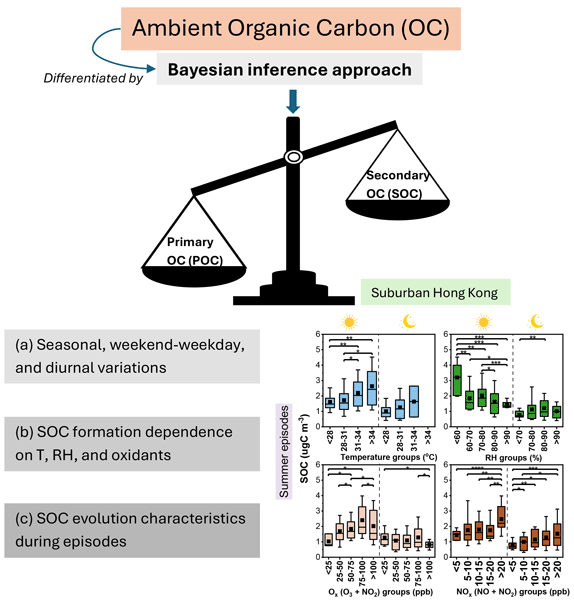
In this work, hourly primary and secondary organic carbon were estimated by a novel Bayesian inference approach in suburban Hong Kong. Their multi-temporal-scale variations and evolution characteristics during PM2.5 episodes were examined. The methodology could serve as a guide for other locations with similar monitoring capabilities. The observation-based results are helpful for understanding the evolving nature of secondary organic aerosols and refining the accuracy of model simulations.
Qiongqiong Wang, Shuhui Zhu, Shan Wang, Cheng Huang, Yusen Duan, and Jian Zhen Yu
Atmos. Chem. Phys., 24, 475–486, https://doi.org/10.5194/acp-24-475-2024, https://doi.org/10.5194/acp-24-475-2024, 2024
Short summary
Short summary
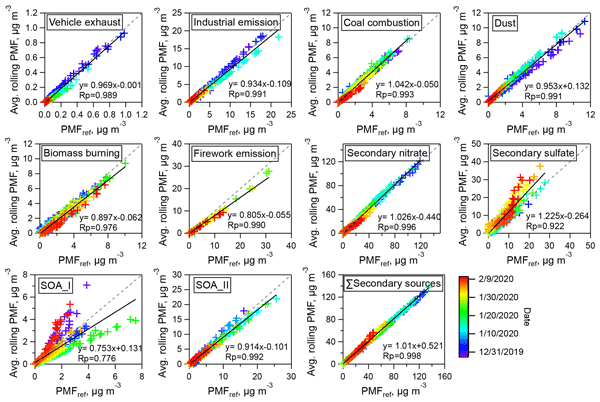
We investigated short-term source apportionment of PM2.5 utilizing rolling positive matrix factorization (PMF) and online PM chemical speciation data, which included source-specific organic tracers collected over a period of 37 d during the winter of 2019–2020 in suburban Shanghai, China. The findings highlight that by imposing constraints on the primary source profiles, short-term PMF analysis successfully replicated both the individual primary sources and the total secondary sources.
Shuhui Zhu, Min Zhou, Liping Qiao, Dan Dan Huang, Qiongqiong Wang, Shan Wang, Yaqin Gao, Shengao Jing, Qian Wang, Hongli Wang, Changhong Chen, Cheng Huang, and Jian Zhen Yu
Atmos. Chem. Phys., 23, 7551–7568, https://doi.org/10.5194/acp-23-7551-2023, https://doi.org/10.5194/acp-23-7551-2023, 2023
Short summary
Short summary
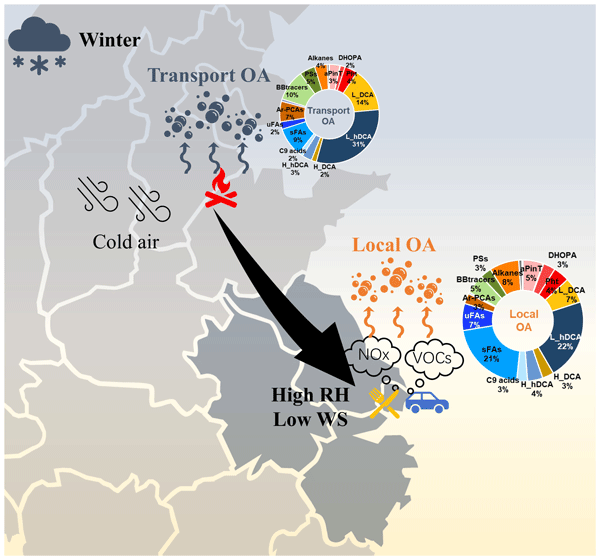
Organic aerosol (OA) is increasingly important in urban PM2.5 pollution as inorganic ions are becoming lower. We investigated the chemical characteristics of OA during nine episodes in Shanghai. The availability of bi-hourly measured molecular markers revealed that the control of local urban sources such as vehicular and cooking emissions lessened the severity of local episodes. Regional control of precursors and biomass burning would reduce PM2.5 episodes influenced by regional transport.
Rui Li, Kun Zhang, Qing Li, Liumei Yang, Shunyao Wang, Zhiqiang Liu, Xiaojuan Zhang, Hui Chen, Yanan Yi, Jialiang Feng, Qiongqiong Wang, Ling Huang, Wu Wang, Yangjun Wang, Jian Zhen Yu, and Li Li
Atmos. Chem. Phys., 23, 3065–3081, https://doi.org/10.5194/acp-23-3065-2023, https://doi.org/10.5194/acp-23-3065-2023, 2023
Short summary
Short summary
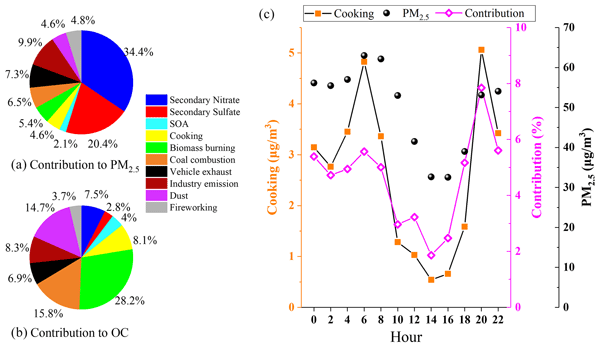
Molecular markers in organic aerosol (OA) provide specific source information on PM2.5, and the contribution of cooking emissions to OA is significant, especially in urban environments. This study investigates the variation in concentrations and oxidative degradation of fatty acids and corresponding oxidation products in ambient air, which can be a guide for the refinement of aerosol source apportionment and provide scientific support for the development of emission source control policies.
Yibei Wan, Xiangpeng Huang, Chong Xing, Qiongqiong Wang, Xinlei Ge, and Huan Yu
Atmos. Chem. Phys., 22, 15413–15423, https://doi.org/10.5194/acp-22-15413-2022, https://doi.org/10.5194/acp-22-15413-2022, 2022
Short summary
Short summary
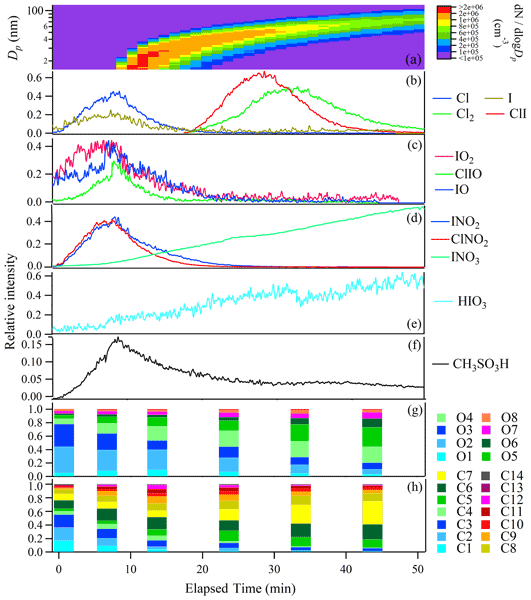
The organic compounds involved in continental new particle formation have been investigated in depth in the last 2 decades. In contrast, no prior work has studied the exact chemical composition of organic compounds and their role in coastal new particle formation. We present a complementary study to the ongoing laboratory and field research on iodine nucleation in the coastal atmosphere. This study provided a more complete story of coastal I-NPF from low-tide macroalgal emission.
Haoran Zhang, Nan Li, Keqin Tang, Hong Liao, Chong Shi, Cheng Huang, Hongli Wang, Song Guo, Min Hu, Xinlei Ge, Mindong Chen, Zhenxin Liu, Huan Yu, and Jianlin Hu
Atmos. Chem. Phys., 22, 5495–5514, https://doi.org/10.5194/acp-22-5495-2022, https://doi.org/10.5194/acp-22-5495-2022, 2022
Short summary
Short summary
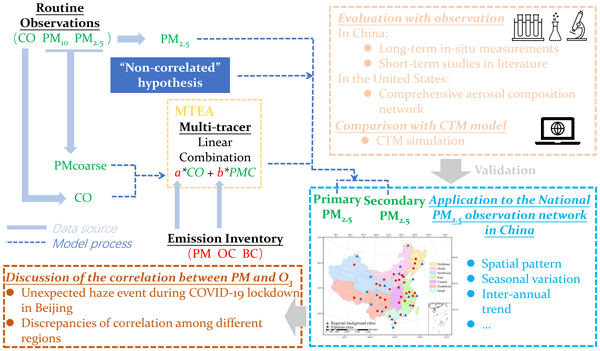
We developed a new algorithm with low economic/technique costs to identify primary and secondary components of PM2.5. Our model was shown to be reliable by comparison with different observation datasets. We systematically explored the patterns and changes in the secondary PM2.5 pollution in China at large spatial and time scales. We believe that this method is a promising tool for efficiently estimating primary and secondary PM2.5, and has huge potential for future PM mitigation.
Cited articles
Aber, J., McDowell, W., Nadelhoffer, K., Magill, A., Berntson, G., Kamakea, M., McNulty, S., Currie, W., Rustad, L., and Fernandez, I.: Nitrogen Saturation in Temperate Forest Ecosystems, Bioscience, 48, 921–934, https://doi.org/10.2307/1313296, 1998.
Baergen, A. M. and Donaldson, D. J.: Formation of reactive nitrogen oxides from urban grime photochemistry, Atmos. Chem. Phys., 16, 6355–6363, https://doi.org/10.5194/acp-16-6355-2016, 2016.
Bowling, D. R., Turnipseed, A. A., Delany, A. C., Baldocchi, D. D., Greenberg, J. P., and Monson, R. K.: The use of relaxed eddy accumulation to measure biosphere-atmosphere exchange of isoprene and other biological trace gases, Oecologia, 116, 306–315, https://doi.org/10.1007/s004420050592, 1998.
Businger, J. A. and Oncley, S. P.: Flux Measurement with Conditional Sampling, J. Atmos. Ocean. Technol., 7, 349–352, https://doi.org/10.1175/1520-0426(1990)007<0349:FMWCS>2.0.CO;2, 1990.
Chang, L. T.-C., Tsai, J.-H., Lin, J.-M., Huang, Y.-S., and Chiang, H.-L.: Particulate matter and gaseous pollutants during a tropical storm and air pollution episode in Southern Taiwan, Atmos. Res., 99, 67–79, https://doi.org/10.1016/j.atmosres.2010.09.002, 2011.
Desjardins, R. L.: Description and evaluation of a sensible heat flux detector, Bound.-Layer Meteor., 11, 147–154, https://doi.org/10.1007/BF02166801, 1977.
Farmer, D. K., Kimmel, J. R., Phillips, G., Docherty, K. S., Worsnop, D. R., Sueper, D., Nemitz, E., and Jimenez, J. L.: Eddy covariance measurements with high-resolution time-of-flight aerosol mass spectrometry: a new approach to chemically resolved aerosol fluxes, Atmos. Meas. Tech., 4, 1275–1289, https://doi.org/10.5194/amt-4-1275-2011, 2011.
Farmer, D. K., Chen, Q., Kimmel, J. R., Docherty, K. S., Nemitz, E., Artaxo, P. A., Cappa, C. D., Martin, S. T., and Jimenez, J. L.: Chemically Resolved Particle Fluxes Over Tropical and Temperate Forests, Aerosol Sci. Technol., 47, 818–830, https://doi.org/10.1080/02786826.2013.791022, 2013.
Finlayson-Pitts, B. J. and Pitts, J. J. N.: Chemistry of the Upper and Lower Atmosphere: Theory, Experiments and Applications, Elsevier, https://doi.org/10.1016/b978-0-12-257060-5.x5000-x, 1999.
Fitz, D. R.: Evaluation of diffusion denuder coatings for removing acid gases from ambient air, US Environmental Protection Agency, Office of Air Quality Planning and Standards, Emissions, Monitoring, and Analysis Division, 2002.
Galloway, J. N.: Acid deposition: Perspectives in time and space, Water, Air, Soil Pollut., 85, 15-24, https://doi.org/10.1007/BF00483685, 1995.
Gaman, A., Rannik, Ü., Aalto, P., Pohja, T., Siivola, E., Kulmala, M., and Vesala, T.: Relaxed Eddy Accumulation System for Size-Resolved Aerosol Particle Flux Measurements, J. Atmos. Ocean. Technol., 21, 933–943, https://doi.org/10.1175/1520-0426(2004)021<0933:REASFS>2.0.CO;2, 2004.
Gordon, M., Staebler, R. M., Liggio, J., Vlasenko, A., Li, S.-M., and Hayden, K.: Aerosol flux measurements above a mixed forest at Borden, Ontario, Atmos. Chem. Phys., 11, 6773–6786, https://doi.org/10.5194/acp-11-6773-2011, 2011.
Hansen, K., Pryor, S. C., Boegh, E., Hornsby, K. E., Jensen, B., and Sørensen, L. L.: Background concentrations and fluxes of atmospheric ammonia over a deciduous forest, Agric. For. Meteorol., 214–215, 380–392, https://doi.org/10.1016/j.agrformet.2015.09.004, 2015.
Harrison, R. M., Peak, J. D., and Collins, G. M.: Tropospheric cycle of nitrous acid, J. Geophys. Res., 101, 14429–14439, https://doi.org/10.1029/96JD00341, 1996.
Huebert, B. J. and Robert, C. H.: The dry deposition of nitric acid to grass, J. Geophys. Res.: Atmos., 90, 2085–2090, https://doi.org/10.1029/JD090iD01p02085, 1985.
Huebert, B. J., Luke, W. T., Delany, A. C., and Brost, R. A.: Measurements of concentrations and dry surface fluxes of atmospheric nitrates in the presence of ammonia, J. Geophys. Res., 93, https://doi.org/10.1029/JD093iD06p07127, 1988.
Karl, T., Harley, P., Guenther, A., Rasmussen, R., Baker, B., Jardine, K., and Nemitz, E.: The bi-directional exchange of oxygenated VOCs between a loblolly pine (Pinus taeda) plantation and the atmosphere, Atmos. Chem. Phys., 5, 3015–3031, https://doi.org/10.5194/acp-5-3015-2005, 2005.
Kljun, N., Calanca, P., Rotach, M. W., and Schmid, H. P.: A simple two-dimensional parameterisation for Flux Footprint Prediction (FFP), Geosci. Model Dev., 8, 3695–3713, https://doi.org/10.5194/gmd-8-3695-2015, 2015.
Laufs, S., Cazaunau, M., Stella, P., Kurtenbach, R., Cellier, P., Mellouki, A., Loubet, B., and Kleffmann, J.: Diurnal fluxes of HONO above a crop rotation, Atmos. Chem. Phys., 17, 6907–6923, https://doi.org/10.5194/acp-17-6907-2017, 2017.
Lee, A., Schade, G. W., Holzinger, R., and Goldstein, A. H.: A comparison of new measurements of total monoterpene flux with improved measurements of speciated monoterpene flux, Atmos. Chem. Phys., 5, 505–513, https://doi.org/10.5194/acp-5-505-2005, 2005.
Lin, Y.-C., Cheng, M.-T., Ting, W.-Y., and Yeh, C.-R.: Characteristics of gaseous HNO2, HNO3, NH3 and particulate ammonium nitrate in an urban city of Central Taiwan, Atmos. Environ., 40, 4725–4733, https://doi.org/10.1016/j.atmosenv.2006.04.037, 2006.
Liu, Z., Wang, Y., Costabile, F., Amoroso, A., Zhao, C., Huey, L. G., Stickel, R., Liao, J., and Zhu, T.: Evidence of Aerosols as a Media for Rapid Daytime HONO Production over China, Environ. Sci. Technol., 48, 14386–14391, https://doi.org/10.1021/es504163z, 2014.
Matsuda, K., Watanabe, I., Mizukami, K., Ban, S., and Takahashi, A.: Dry deposition of PM2.5 sulfate above a hilly forest using relaxed eddy accumulation, Atmos. Environ., 107, 255–261, https://doi.org/10.1016/j.atmosenv.2015.02.050, 2015.
Meng, F., Qin, M., Fang, W., Duan, J., Tang, K., Zhang, H., Shao, D., Liao, Z., Feng, Y., Huang, Y., Ni, T., Xie, P., Liu, J., and Liu, W.: Measurement of HONO flux using the aerodynamic gradient method over an agricultural field in the Huaihe River Basin, China, J. Environ. Sci., 114, 297–307, https://doi.org/10.1016/j.jes.2021.09.005, 2022.
Meyers, T. P., Huebert, B. J., and Hicks, B. B.: HNO3 deposition to a deciduous forest, Bound.-Layer Meteor., 49, 395–410, https://doi.org/10.1007/BF00123651, 1989.
Meyers, T. P., Finkelstein, P., Clarke, J., Ellestad, T. G., and Sims, P. F.: A multilayer model for inferring dry deposition using standard meteorological measurements, J. Geophys. Res., 103, 22645–22661, https://doi.org/10.1029/98JD01564, 1998.
Meyers, T. P., Luke, W. T., and Meisinger, J. J.: Fluxes of ammonia and sulfate over maize using relaxed eddy accumulation, Agric. For. Meteorol., 136, 203–213, https://doi.org/10.1016/j.agrformet.2004.10.005, 2006.
Myles, L., Meyers, T. P., and Robinson, L.: Relaxed eddy accumulation measurements of ammonia, nitric acid, sulfur dioxide and particulate sulfate dry deposition near Tampa, FL, USA, Environ. Res. Lett., 2, 034004, https://doi.org/10.1088/1748-9326/2/3/034004, 2007.
Nemitz, E., Sutton, M. A., Wyers, G. P., Otjes, R. P., Mennen, M. G., van Putten, E. M., and Gallagher, M. W.: Gas-particle interactions above a Dutch heathland: II. Concentrations and surface exchange fluxes of atmospheric particles, Atmos. Chem. Phys., 4, 1007–1024, https://doi.org/10.5194/acp-4-1007-2004, 2004.
Nemitz, E., Dorsey, J. R., Flynn, M. J., Gallagher, M. W., Hensen, A., Erisman, J. W., Owen, S. M., Dämmgen, U., and Sutton, M. A.: Aerosol fluxes and particle growth above managed grassland, Biogeosciences, 6, 1627–1645, https://doi.org/10.5194/bg-6-1627-2009, 2009.
Nguyen, T. B., Crounse, J. D., Teng, A. P., St Clair, J. M., Paulot, F., Wolfe, G. M., and Wennberg, P. O.: Rapid deposition of oxidized biogenic compounds to a temperate forest, Proc. Natl. Acad. Sci. USA., 112, E392–E401, https://doi.org/10.1073/pnas.1418702112, 2015.
Nie, W., Ding, A. J., Xie, Y. N., Xu, Z., Mao, H., Kerminen, V.-M., Zheng, L. F., Qi, X. M., Huang, X., Yang, X.-Q., Sun, J. N., Herrmann, E., Petäjä, T., Kulmala, M., and Fu, C. B.: Influence of biomass burning plumes on HONO chemistry in eastern China, Atmos. Chem. Phys., 15, 1147–1159, https://doi.org/10.5194/acp-15-1147-2015, 2015.
Poor, N., Pribble, R., and Greening, H.: Direct wet and dry deposition of ammonia, nitric acid, ammonium and nitrate to the Tampa Bay Estuary, FL, USA, Atmos. Environ., 35, 3947–3955, https://doi.org/10.1016/S1352-2310(01)00180-7, 2001.
Pryor, S. C., Barthelmie, R. J., Sørensen, L. L., and Jensen, B.: Ammonia concentrations and fluxes over a forest in the midwestern USA, Atmos. Environ., 35, 5645–5656, https://doi.org/10.1016/S1352-2310(01)00259-X, 2001.
Pryor, S. C., Barthelmie, R. J., Jensen, B., Jensen, N. O., and Sørensen, L. L.: HNO3 fluxes to a deciduous forest derived using gradient and REA methods, Atmos. Environ., 36, 5993–5999, https://doi.org/10.1016/S1352-2310(02)00765-3, 2002.
Pryor, S. C., Larsen, S. E., Sørensen, L. L., Barthelmie, R. J., Grönholm, T., Kulmala, M., Launiainen, S., Rannik, Ü., and Vesala, T.: Particle fluxes over forests: Analyses of flux methods and functional dependencies, J. Geophys. Res., 112, https://doi.org/10.1029/2006JD008066, 2007.
Rattray, G. and Sievering, H.: Dry deposition of ammonia, nitric acid, ammonium, and nitrate to alpine tundra at Niwot Ridge, Colorado, Atmos. Environ., 35, 1105–1109, https://doi.org/10.1016/S1352-2310(00)00276-4, 2001.
Ren, X., Sanders, J. E., Rajendran, A., Weber, R. J., Goldstein, A. H., Pusede, S. E., Browne, E. C., Min, K.-E., and Cohen, R. C.: A relaxed eddy accumulation system for measuring vertical fluxes of nitrous acid, Atmos. Meas. Tech., 4, 2093–2103, https://doi.org/10.5194/amt-4-2093-2011, 2011.
Ren, Y., Stieger, B., Spindler, G., Grosselin, B., Mellouki, A., Tuch, T., Wiedensohler, A., and Herrmann, H.: Role of the dew water on the ground surface in HONO distribution: a case measurement in Melpitz, Atmos. Chem. Phys., 20, 13069–13089, https://doi.org/10.5194/acp-20-13069-2020, 2020.
Rumsey, I. C. and Walker, J. T.: Application of an online ion-chromatography-based instrument for gradient flux measurements of speciated nitrogen and sulfur, Atmos. Meas. Tech., 9, 2581–2592, https://doi.org/10.5194/amt-9-2581-2016, 2016.
Scharko, N. K., Schütte, U. M. E., Berke, A. E., Banina, L., Peel, H. R., Donaldson, M. A., Hemmerich, C., White, J. R., and Raff, J. D.: Combined Flux Chamber and Genomics Approach Links Nitrous Acid Emissions to Ammonia Oxidizing Bacteria and Archaea in Urban and Agricultural Soil, Environ. Sci. Technol., 49, 13825–13834, https://doi.org/10.1021/acs.est.5b00838 2015.
Schobesberger, S., Lopez-Hilfiker, F. D., Taipale, D., Millet, D. B., D'Ambro, E. L., Rantala, P., Mammarella, I., Zhou, P., Wolfe, G. M., Lee, B. H., Boy, M., and Thornton, J. A.: High upward fluxes of formic acid from a boreal forest canopy, Geophys. Res. Lett., 43, 9342–9351, https://doi.org/10.1002/2016GL069599, 2016.
Shaw, W. J., Spicer, C. W., and Kenny, D. V.: Eddy correlation fluxes of trace gases using a tandem mass spectrometer, Atmos. Environ., 32, 2887–2898, https://doi.org/10.1016/S1352-2310(98)00036-3, 1998.
Shen, Jianlin, Chen, Deli, Bai, Mei, Sun, Jianlei, Lam, and Shu: Spatial variations in soil and plant nitrogen levels caused by ammonia deposition near a cattle feedlot, Atmos. Environ., https://doi.org/10.1016/j.atmosenv.2017.12.022, 2018.
Sievering, H., Kelly, T., McConville, G., Seibold, C., and Turnipseed, A.: Nitric acid dry deposition to conifer forests:: Niwot Ridge spruce–fir–pine study, Atmos. Environ., 35, 3851–3859, https://doi.org/10.1016/S1352-2310(01)00156-X, 2001.
Su, H., Cheng, Y., Oswald, R., Behrendt, T., Trebs, I., Meixner, F. X., Andreae, M. O., Cheng, P., Zhang, Y., and Pöschl, U.: Soil Nitrite as a Source of Atmospheric HONO and OH Radicals, Science, 333, 1616–1618, https://doi.org/10.1126/science.1207687, 2011.
Trebs, I., Meixner, F. X., Slanina, J., Otjes, R., Jongejan, P., and Andreae, M. O.: Real-time measurements of ammonia, acidic trace gases and water-soluble inorganic aerosol species at a rural site in the Amazon Basin, Atmos. Chem. Phys., 4, 967–987, https://doi.org/10.5194/acp-4-967-2004, 2004.
van Breemen, N. and van Dijk, H. F. G.: Ecosystem effects of atmospheric deposition of nitrogen in The Netherlands, Environ. Pollut., 54, 249–274, https://doi.org/10.1016/0269-7491(88)90115-7, 1988.
Velentini, R., Greco, S., Seufert, G., Bertin, N., Ciccioli, P., Cecinato, A., Brancaleoni, E., and Frattoni, M.: Fluxes of biogenic VOC from Mediterranean vegetation by trap enrichment relaxed eddy accumulation, Atmos. Environ., 31, 229–238, https://doi.org/10.1016/S1352-2310(97)00085-X, 1997.
Villena, G., Kleffmann, J., Kurtenbach, R., Wiesen, P., Lissi, E., Rubio, M. A., Croxatto, G., and Rappenglück, B.: Vertical gradients of HONO, NOX and O3 in Santiago de Chile, Atmos. Environ., 45, 3867–3873, https://doi.org/10.1016/j.atmosenv.2011.01.073, 2011.
Vitousek, P. M. and Howarth, R. W.: Nitrogen limitation on land and in the sea: How can it occur?, Biogeochemistry, 13, 87–115, https://doi.org/10.1007/BF00002772, 1991.
von der Heyden, L., Wißdorf, W., Kurtenbach, R., and Kleffmann, J.: A relaxed eddy accumulation (REA) LOPAP system for flux measurements of nitrous acid (HONO), Atmos. Meas. Tech., 15, 1983–2000, https://doi.org/10.5194/amt-15-1983-2022, 2022.
Wesely, M. L.: Parameterization of surface resistances to gaseous dry deposition in regional-scale numerical models, Atmos. Environ., 41, 52–63, https://doi.org/10.1016/j.atmosenv.2007.10.058, 2007.
Wong, K. W., Tsai, C., Lefer, B., Haman, C., Grossberg, N., Brune, W. H., Ren, X., Luke, W., and Stutz, J.: Daytime HONO vertical gradients during SHARP 2009 in Houston, TX, Atmos. Chem. Phys., 12, 635–652, https://doi.org/10.5194/acp-12-635-2012, 2012.
Wu, D., Horn, M. A., Behrendt, T., Müller, S., Li, J., Cole, J. A., Xie, B., Ju, X., Li, G., Ermel, M., Oswald, R., Fröhlich-Nowoisky, J., Hoor, P., Hu, C., Liu, M., Andreae, M. O., Pöschl, U., Cheng, Y., Su, H., Trebs, I., Weber, B., and Sörgel, M.: Soil HONO emissions at high moisture content are driven by microbial nitrate reduction to nitrite: tackling the HONO puzzle, ISME J., 13, 1688–1699, https://doi.org/10.1038/s41396-019-0379-y, 2019.
Xu, M., Kasahara, K., Sorimachi, A., and Matsuda, K.: Nitric acid dry deposition associated with equilibrium shift of ammonium nitrate above a forest by long-term measurement using relaxed eddy accumulation, Atmos. Environ., 256, 118454, https://doi.org/10.1016/j.atmosenv.2021.118454, 2021.
Young, L.-H., Hsiao, T.-C., Griffith, S. M., Huang, Y.-H., Hsieh, H.-G., Lin, T.-H., Tsay, S.-C., Lin, Y.-J., Lai, K.-L., Lin, N.-H., and Lin, W.-Y.: Secondary inorganic aerosol chemistry and its impact on atmospheric visibility over an ammonia-rich urban area in Central Taiwan, Environ. Pollut., 312, 119951, https://doi.org/10.1016/j.envpol.2022.119951, 2022.
Zhang, N., Zhou, X., Bertman, S., Tang, D., Alaghmand, M., Shepson, P. B., and Carroll, M. A.: Measurements of ambient HONO concentrations and vertical HONO flux above a northern Michigan forest canopy, Atmos. Chem. Phys., 12, 8285–8296, https://doi.org/10.5194/acp-12-8285-2012, 2012.
Zhou, X., Zhang, N. TerAvest, M., Tang, D., Hou, J., Bertman, S., Alaghmand, M., Shepson, P. B., Carroll, M. A., Griffith, S., Dusanter, S., and Stevens. P. S.: Nitric acid photolysis on forest canopy surface as a source for tropospheric nitrous acid, Nat. Geosci., https://doi.org/10.1038/ngeo1164, 2011.
Short summary
We described the design and deployment of a flux measurement system to track acidic species at a vegetable farm in China's industrial-agricultural mixed zones. Bidirectional fluxes indicate the farmland was both sink and source. Nitrous acid and nitrate exchange was 10–100 times higher than those reported in the literature. Nitric acid emissions rose with wind speed, while nitrous acid increased at lower temperatures. The results help air pollution controls and protect farm ecosystems.
We described the design and deployment of a flux measurement system to track acidic species at a...


Altmetrics
Final-revised paper
Preprint