
Articles | Volume 26, issue 11
https://doi.org/10.5194/acp-26-7933-2026
© Author(s) 2026. This work is distributed under
the Creative Commons Attribution 4.0 License.
the Creative Commons Attribution 4.0 License.
https://doi.org/10.5194/acp-26-7933-2026
© Author(s) 2026. This work is distributed under
the Creative Commons Attribution 4.0 License.
the Creative Commons Attribution 4.0 License.
Research article
| 
10 Jun 2026
Research article |
| 10 Jun 2026
| 10 Jun 2026
Satellite observations reveal heterogeneous atmospheric composition responses to rapid emission changes
Zeyu Yang
MEEKL-AERM, College of Environmental Sciences and Engineering, Institute of Tibetan Plateau, and Center for Environment and Health, Peking University, Beijing, China
State Key Laboratory of Regional Environment and Sustainability, School of Environment, Tsinghua University, Beijing, China
Fan Cheng
MEEKL-AERM, College of Environmental Sciences and Engineering, Institute of Tibetan Plateau, and Center for Environment and Health, Peking University, Beijing, China
School of the Environment and Sustainable Engineering, Eastern Institute of Technology, Ningbo, China
School of Environmental Science and Engineering, Shanghai Jiao Tong University, Shanghai, China
Jian Gao
Chinese Research Academy of Environmental Sciences, Beijing, China
State Key Laboratory of Regional Environment and Sustainability, School of Environment, Tsinghua University, Beijing, China
Institute for Carbon Neutrality, Tsinghua University, Beijing, China

MEEKL-AERM, College of Environmental Sciences and Engineering, Institute of Tibetan Plateau, and Center for Environment and Health, Peking University, Beijing, China
Related authors
No articles found.
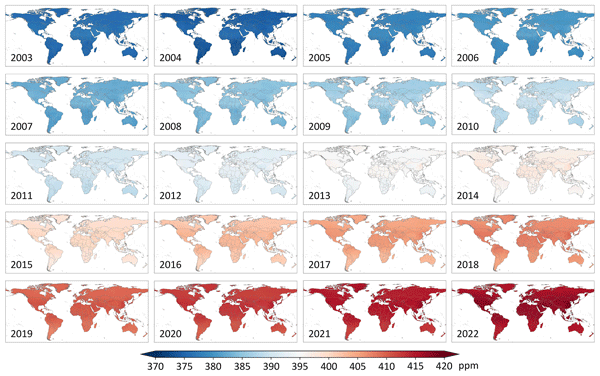
Yu Qu, Xian Shi, Yulong Fan, Zhihui Wang, and Jing Wei
Earth Syst. Sci. Data, 18, 4279–4301, https://doi.org/10.5194/essd-18-4279-2026, https://doi.org/10.5194/essd-18-4279-2026, 2026
Short summary
Short summary
We developed a new global dataset that provides daily seamless observations of XCO2 over land from 2003 to 2022. Using artificial intelligence to integrate multiple satellite missions, atmospheric reanalysis, and environmental data, we filled data gaps and ensured continuity across satellite records. The dataset captures both long-term increases in XCO2 and short-term enhancements associated with events such as wildfires, supporting carbon-emission monitoring and climate-change studies.
Weiwei Zhang, Zhaofeng Lv, Wen Yi, Tingkun He, Bensheng Xiao, Qiang Zhang, and Huan Liu
EGUsphere, https://doi.org/10.5194/egusphere-2026-1935, https://doi.org/10.5194/egusphere-2026-1935, 2026
Short summary
Short summary
We developed a model to track near-real-time global ship emissions. Previous methods failed to include newly-built ship activities or account for different compliance strategies ships used to meet environmental laws. Our model uncovered significant underestimated carbon dioxide and particular matter emissions, especially in the Indian Ocean and South China Sea. The findings provide a more accurate foundation for understanding how shipping affects our air quality and climate.
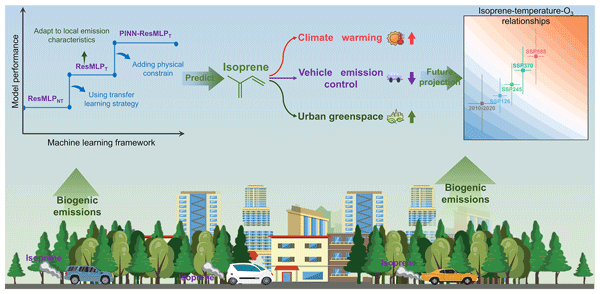
Song Liu, Xiaopu Lyu, Fumo Yang, Zongbo Shi, Xin Huang, Tengyu Liu, Hongli Wang, Mei Li, Jian Gao, Nan Chen, Guoliang Shi, Yu Zou, Chenglei Pei, Chengxu Tong, Xinyi Liu, Li Zhou, Alex B. Guenther, and Nan Wang
Atmos. Chem. Phys., 26, 635–646, https://doi.org/10.5194/acp-26-635-2026, https://doi.org/10.5194/acp-26-635-2026, 2026
Short summary
Short summary
We studied the invisible gas isoprene, which trees and vehicles release into the air and which can worsen urban smog. Using advanced computer learning trained on measurements from many cities, we uncovered how temperature, sunlight, and city greening shape isoprene levels. Comparing Hong Kong and London, we found climate warming boosts isoprene and future ozone pollution, but strong cuts in anthropogenic emission could limit this impact.
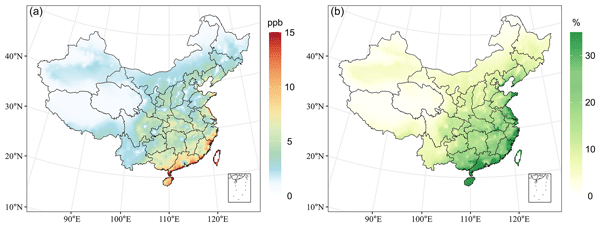
Zhenyu Luo, Li Peng, Zhaofeng Lv, Junchao Zhao, Tingkun He, Wen Yi, Yongyue Wang, Kebin He, and Huan Liu
Atmos. Chem. Phys., 25, 13635–13649, https://doi.org/10.5194/acp-25-13635-2025, https://doi.org/10.5194/acp-25-13635-2025, 2025
Short summary
Short summary
This study explores how shipping emissions affect ozone pollution in China. By combining atmospheric simulation and machine learning, we show that shipping emissions increase ozone levels by an average of 3.5 ppb nationwide, with large differences depending on location and season. Our findings highlight that controlling shipping emissions together with land-based sources is critical for improving air quality.
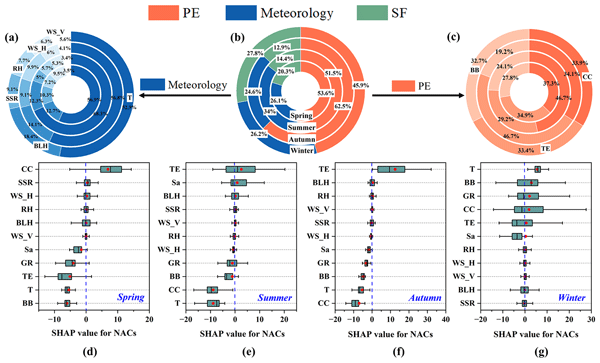
Min Li, Xinfeng Wang, Tianshuai Li, Yujia Wang, Yueru Jiang, Yujiao Zhu, Wei Nie, Rui Li, Jian Gao, Likun Xue, Qingzhu Zhang, and Wenxing Wang
Atmos. Chem. Phys., 25, 8407–8425, https://doi.org/10.5194/acp-25-8407-2025, https://doi.org/10.5194/acp-25-8407-2025, 2025
Short summary
Short summary
By integrating field measurements with an interpretable ensemble machine learning framework, we comprehensively identified key driving factors of nitro-aromatic compounds (NACs), demonstrated complex interrelationships, and quantified their contributions across different locations. This work provides a reliable modeling approach for recognizing causes of NAC pollution, enhances our understanding of variations of atmospheric NACs, and highlights the necessity of strengthening emission controls.
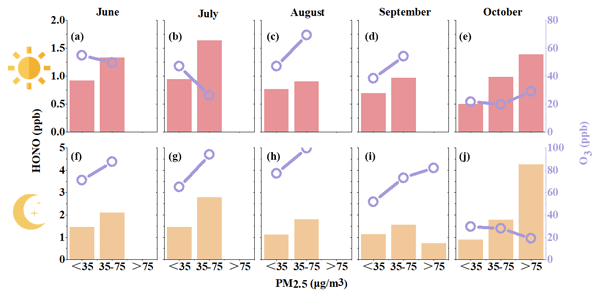
Junling Li, Chaofan Lian, Mingyuan Liu, Hao Zhang, Yongxin Yan, Yufei Song, Chun Chen, Jiaqi Wang, Haijie Zhang, Yanqin Ren, Yucong Guo, Weigang Wang, Yisheng Xu, Hong Li, Jian Gao, and Maofa Ge
Atmos. Chem. Phys., 25, 2551–2568, https://doi.org/10.5194/acp-25-2551-2025, https://doi.org/10.5194/acp-25-2551-2025, 2025
Short summary
Short summary
As a key source of hydroxyl (OH) radical, nitrous acid (HONO) has attracted much attention for its important role in the atmospheric oxidant capacity (AOC) increase. In this study, we made a comparison of the ambient levels, variation patterns, sources, and formation pathway in the warm season on the basis of continuous intensive observations at an urban site of Beijing. This work highlights the importance of HONO for the AOC in the warm season.
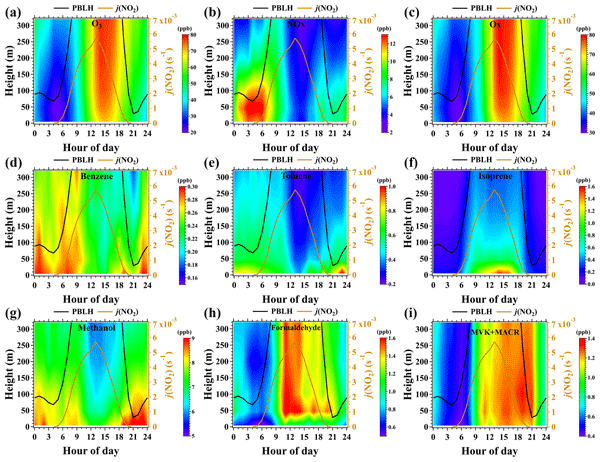
Xiao-Bing Li, Bin Yuan, Yibo Huangfu, Suxia Yang, Xin Song, Jipeng Qi, Xianjun He, Sihang Wang, Yubin Chen, Qing Yang, Yongxin Song, Yuwen Peng, Guiqian Tang, Jian Gao, Dasa Gu, and Min Shao
Atmos. Chem. Phys., 25, 2459–2472, https://doi.org/10.5194/acp-25-2459-2025, https://doi.org/10.5194/acp-25-2459-2025, 2025
Short summary
Short summary
Online vertical gradient measurements of volatile organic compounds (VOCs), ozone, and NOx were conducted based on a 325 m tall tower in urban Beijing. Vertical changes in the concentrations, compositions, key drivers, and environmental impacts of VOCs were analyzed in this study. We find that VOC species display differentiated vertical variation patterns and distinct roles in contributing to photochemical ozone formation with increasing height in the urban planetary boundary layer.
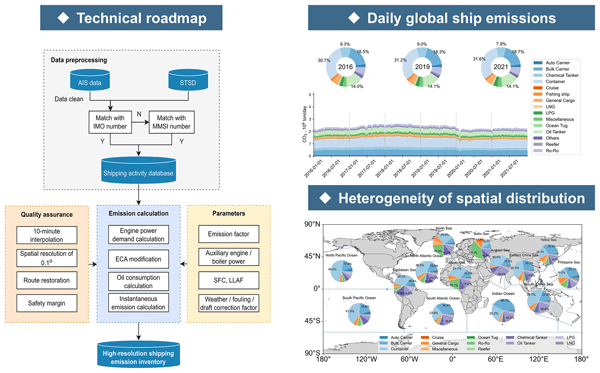
Wen Yi, Xiaotong Wang, Tingkun He, Huan Liu, Zhenyu Luo, Zhaofeng Lv, and Kebin He
Earth Syst. Sci. Data, 17, 277–292, https://doi.org/10.5194/essd-17-277-2025, https://doi.org/10.5194/essd-17-277-2025, 2025
Short summary
Short summary
This study presents a detailed global dataset on ship emissions, covering the years 2013 and 2016–2021, using advanced modeling techniques. The dataset includes emissions data for four types of greenhouse gases and five types of air pollutants. The data, available for research, offer valuable insights into ship emission spatiotemporal patterns by vessel type and age, providing a solid data foundation for fine-scale scientific research and shipping emission mitigation.
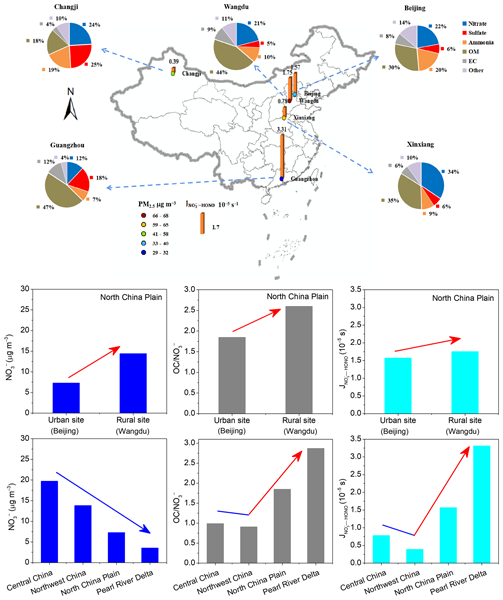
Bowen Li, Jian Gao, Chun Chen, Liang Wen, Yuechong Zhang, Junling Li, Yuzhe Zhang, Xiaohui Du, Kai Zhang, and Jiaqi Wang
Atmos. Chem. Phys., 24, 13183–13198, https://doi.org/10.5194/acp-24-13183-2024, https://doi.org/10.5194/acp-24-13183-2024, 2024
Short summary
Short summary
The photolysis rate constant of particulate nitrate for HONO production (JNO3−–HONO), derived from PM2.5 samples collected at five representative sites in China, exhibited a wide range of variation. A parameterization equation relating JNO3−–HONO to OC/NO3− has been established and can be used to estimate JNO3−–HONO in different environments. Our work provides an important reference for research in other regions of the world where aerosol samples have a high proportion of organic components.
Nana Wu, Guannan Geng, Ruochong Xu, Shigan Liu, Xiaodong Liu, Qinren Shi, Ying Zhou, Yu Zhao, Huan Liu, Yu Song, Junyu Zheng, Qiang Zhang, and Kebin He
Earth Syst. Sci. Data, 16, 2893–2915, https://doi.org/10.5194/essd-16-2893-2024, https://doi.org/10.5194/essd-16-2893-2024, 2024
Short summary
Short summary
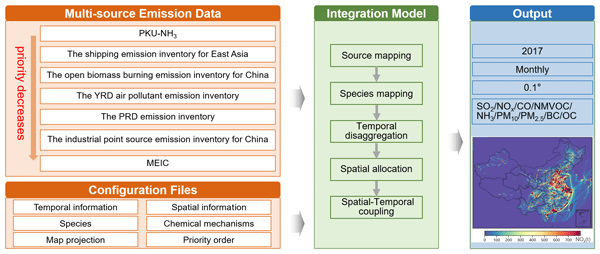
The commonly used method for developing large-scale air pollutant emission datasets for China faces challenges due to limited availability of detailed parameter information. In this study, we develop an efficient integrated framework to gather such information by harmonizing seven heterogeneous inventories from five research institutions. Emission characterizations are analyzed and validated, demonstrating that the dataset provides more accurate emission magnitudes and spatiotemporal patterns.
Jiaqi Wang, Jian Gao, Fei Che, Xin Yang, Yuanqin Yang, Lei Liu, Yan Xiang, and Haisheng Li
Atmos. Chem. Phys., 23, 14715–14733, https://doi.org/10.5194/acp-23-14715-2023, https://doi.org/10.5194/acp-23-14715-2023, 2023
Short summary
Short summary
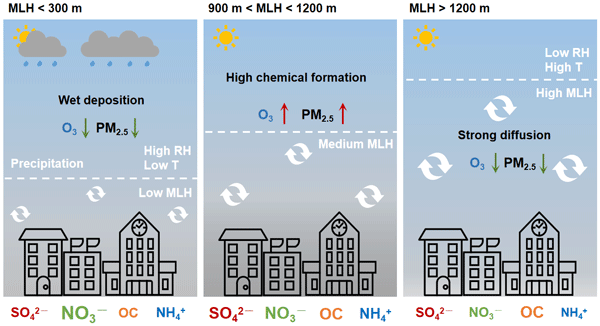
Regional-scale observations of surface O3, PM2.5 and its major chemical species, mixing layer height (MLH), and other meteorological parameters were made in the North China Plain during summer. Unlike the cold season, synchronized increases in MDA8 O3 and PM2.5 under medium MLH conditions have been witnessed. The increasing trend of PM2.5 was associated with enhanced secondary chemical formation. The correlation between MLH and secondary air pollutants should be treated with care in hot seasons.

Jing Wei, Zhanqing Li, Jun Wang, Can Li, Pawan Gupta, and Maureen Cribb
Atmos. Chem. Phys., 23, 1511–1532, https://doi.org/10.5194/acp-23-1511-2023, https://doi.org/10.5194/acp-23-1511-2023, 2023
Short summary
Short summary
This study estimated the daily seamless 10 km ambient gaseous pollutants (NO2, SO2, and CO) across China using machine learning with extensive input variables measured on monitors, satellites, and models. Our dataset yields a high data quality via cross-validation at varying spatiotemporal scales and outperforms most previous related studies, making it most helpful to future (especially short-term) air pollution and environmental health-related studies.
Jingyu An, Cheng Huang, Dandan Huang, Momei Qin, Huan Liu, Rusha Yan, Liping Qiao, Min Zhou, Yingjie Li, Shuhui Zhu, Qian Wang, and Hongli Wang
Atmos. Chem. Phys., 23, 323–344, https://doi.org/10.5194/acp-23-323-2023, https://doi.org/10.5194/acp-23-323-2023, 2023
Short summary
Short summary
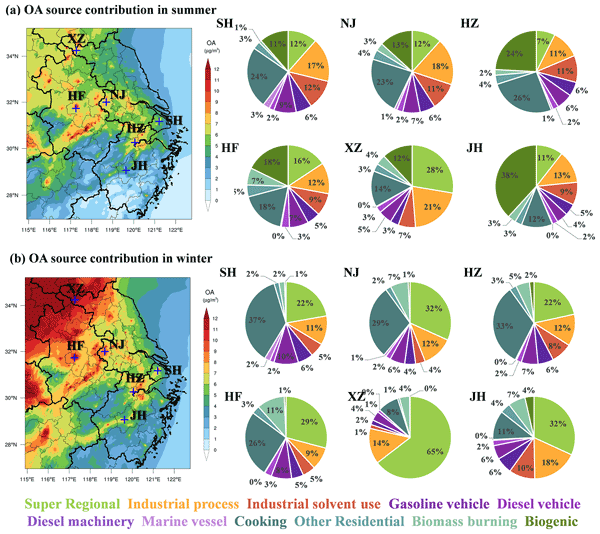
This paper aims to build up an approach to establish a high-resolution emission inventory of intermediate-volatility and semi-volatile organic compounds in city-scale and detailed source categories and incorporate it into the CMAQ model. We believe this approach can be widely applied to improve the simulation of secondary organic aerosol and its source contributions.
Zhaofeng Lv, Zhenyu Luo, Fanyuan Deng, Xiaotong Wang, Junchao Zhao, Lucheng Xu, Tingkun He, Yingzhi Zhang, Huan Liu, and Kebin He
Atmos. Chem. Phys., 22, 15685–15702, https://doi.org/10.5194/acp-22-15685-2022, https://doi.org/10.5194/acp-22-15685-2022, 2022
Short summary
Short summary
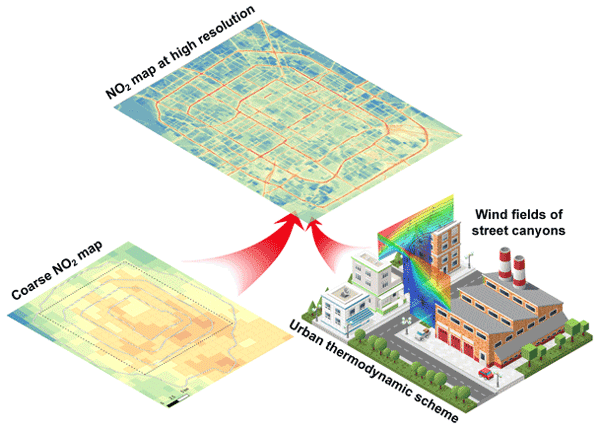
This study developed a hybrid model, CMAQ-RLINE_URBAN, to predict the urban NO2 concentrations at a high spatial resolution. To estimate the influence of various street canyons on the dispersion of air pollutants, a new parameterization scheme was established based on computational fluid dynamics and machine learning methods. This work created a new method to identify the characteristics of vehicle-related air pollution at both city and street scales simultaneously and accurately.
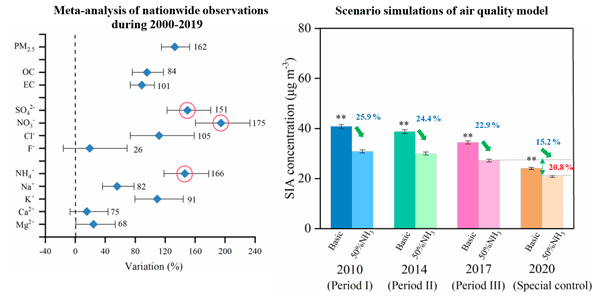
Fanlei Meng, Yibo Zhang, Jiahui Kang, Mathew R. Heal, Stefan Reis, Mengru Wang, Lei Liu, Kai Wang, Shaocai Yu, Pengfei Li, Jing Wei, Yong Hou, Ying Zhang, Xuejun Liu, Zhenling Cui, Wen Xu, and Fusuo Zhang
Atmos. Chem. Phys., 22, 6291–6308, https://doi.org/10.5194/acp-22-6291-2022, https://doi.org/10.5194/acp-22-6291-2022, 2022
Short summary
Short summary
PM2.5 pollution is a pressing environmental issue threatening human health and food security globally. We combined a meta-analysis of nationwide measurements and air quality modeling to identify efficiency gains by striking a balance between controlling NH3 and acid gas emissions. Persistent secondary inorganic aerosol pollution in China is limited by acid gas emissions, while an additional control on NH3 emissions would become more important as reductions in SO2 and NOx emissions progress.
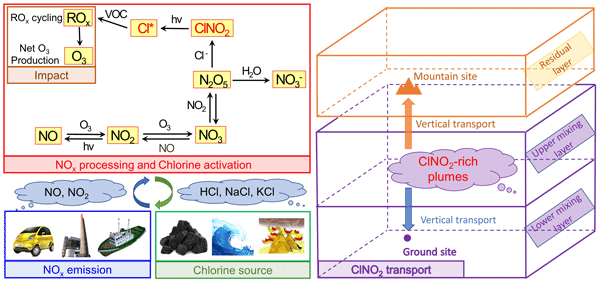
Men Xia, Xiang Peng, Weihao Wang, Chuan Yu, Zhe Wang, Yee Jun Tham, Jianmin Chen, Hui Chen, Yujing Mu, Chenglong Zhang, Pengfei Liu, Likun Xue, Xinfeng Wang, Jian Gao, Hong Li, and Tao Wang
Atmos. Chem. Phys., 21, 15985–16000, https://doi.org/10.5194/acp-21-15985-2021, https://doi.org/10.5194/acp-21-15985-2021, 2021
Short summary
Short summary
ClNO2 is an important precursor of chlorine radical that affects photochemistry. However, its production and impact are not well understood. Our study presents field observations of ClNO2 at three sites in northern China. These observations provide new insights into nighttime processes that produce ClNO2 and the significant impact of ClNO2 on secondary pollutions during daytime. The results improve the understanding of photochemical pollution in the lower part of the atmosphere.
Cited articles
Antwarg, L., Miller, R. M., Shapira, B., and Rokach, L.: Explaining anomalies detected by autoencoders using Shapley Additive Explanations, Expert Syst. Appl., 186, 115736, https://doi.org/10.1016/j.eswa.2021.115736, 2021.
Bhatti, U. A., Zeeshan, Z., Nizamani, M. M., Bazai, S., Yu, Z., and Yuan, L.: Assessing the change of ambient air quality patterns in Jiangsu Province of China pre-to post-COVID-19, Chemosphere, 288, 132569, https://doi.org/10.1016/j.chemosphere.2021.132569, 2022.
Cersosimo, A., Serio, C., and Masiello, G.: TROPOMI NO2 Tropospheric Column Data: Regridding to 1 km Grid-Resolution and Assessment of their Consistency with In Situ Surface Observations, Remote Sens., 12, 2212, https://doi.org/10.3390/rs12142212, 2020.
Cheng, F., Li, Z., Yang, Z., Li, R., Wang, D., Jia, A., Li, K., Zhao, B., Wang, S., Yin, D., Li, S., Xue, W., Cribb, M., and Wei, J.: First retrieval of 24-hourly 1-km-resolution gapless surface ozone (O3) from space in China using artificial intelligence: Diurnal variations and implications for air quality and phytotoxicity, Remote Sens. Environ., 316, 114482, https://doi.org/10.1016/j.rse.2024.114482, 2025.
Cleveland, R. B., Cleveland, W. S., McRae, J. E., and Terpenning, I. J. J. o. S.: STL: A seasonal-trend decomposition, J. Off. Stat., 6, 3–73, 1990.
Cooper, M. J., Martin, R. V., Hammer, M. S., Levelt, P. F., Veefkind, P., Lamsal, L. N., Krotkov, N. A., Brook, J. R., and McLinden, C. A.: Global fine-scale changes in ambient NO2 during COVID-19 lockdowns, Nature, 601, 380–387, https://doi.org/10.1038/s41586-021-04229-0, 2022.
Feng, T., Du, H., Lin, Z., Chen, X., Chen, Z., and Tu, Q.: Green recovery or pollution rebound? Evidence from air pollution of China in the post-COVID-19 era, J. Environ. Manage., 324, 116360, https://doi.org/10.1016/j.jenvman.2022.116360, 2022.
Geng, G., Liu, Y., Liu, Y., Liu, S., Cheng, J., Yan, L., Wu, N., Hu, H., Tong, D., Zheng, B., Yin, Z., He, K., and Zhang, Q.: Efficacy of China's clean air actions to tackle PM2.5 pollution between 2013 and 2020, Nat. Geosci., 17, 987–994, https://doi.org/10.1038/s41561-024-01540-z, 2024.
Guo, Q., Wang, Z., He, Z., Li, X., Meng, J., Hou, Z., and Yang, J.: Changes in Air Quality from the COVID to the Post-COVID Era in the Beijing-Tianjin-Tangshan Region in China, Aerosol Air Qual. Res., 21, 210270, https://doi.org/10.4209/aaqr.210270, 2021.
Hale, T., Angrist, N., Goldszmidt, R., Kira, B., Petherick, A., Phillips, T., Webster, S., Cameron-Blake, E., Hallas, L., Majumdar, S., and Tatlow, H.: A global panel database of pandemic policies (Oxford COVID-19 Government Response Tracker), Nature Human Behaviour, 5, 529–538, https://doi.org/10.1038/s41562-021-01079-8, 2021.
Hersbach, H., Bell, B., Berrisford, P., Hirahara, S., Horányi, A., Muñoz-Sabater, J., Nicolas, J., Peubey, C., Radu, R., Schepers, D., Simmons, A., Soci, C., Abdalla, S., Abellan, X., Balsamo, G., Bechtold, P., Biavati, G., Bidlot, J., Bonavita, M., De Chiara, G., Dahlgren, P., Dee, D., Diamantakis, M., Dragani, R., Flemming, J., Forbes, R., Fuentes, M., Geer, A., Haimberger, L., Healy, S., Hogan, R. J., Hólm, E., Janisková, M., Keeley, S., Laloyaux, P., Lopez, P., Lupu, C., Radnoti, G., de Rosnay, P., Rozum, I., Vamborg, F., Villaume, S., and Thépaut, J.-N.: The ERA5 global reanalysis, Q. J. Roy. Meteor. Soc., 146, 1999–2049, https://doi.org/10.1002/qj.3803, 2020.
Hu, J., Ying, Q., Wang, Y., and Zhang, H.: Characterizing multi-pollutant air pollution in China: Comparison of three air quality indices, Environ. Int., 84, 17–25, https://doi.org/10.1016/j.envint.2015.06.014, 2015.
Kyrkilis, G., Chaloulakou, A., and Kassomenos, P. A.: Development of an aggregate Air Quality Index for an urban Mediterranean agglomeration: Relation to potential health effects, Environ. Int., 33, 670–676, https://doi.org/10.1016/j.envint.2007.01.010, 2007.
Li, S., Wang, S., Wu, Q., Zhang, Y., Ouyang, D., Zheng, H., Han, L., Qiu, X., Wen, Y., Liu, M., Jiang, Y., Yin, D., Liu, K., Zhao, B., Zhang, S., Wu, Y., and Hao, J.: Emission trends of air pollutants and CO2 in China from 2005 to 2021, Earth Syst. Sci. Data, 15, 2279–2294, https://doi.org/10.5194/essd-15-2279-2023, 2023.
Li, Z.: Extracting spatial effects from machine learning model using local interpretation method: An example of SHAP and XGBoost, Comput. Environ. Urban, 96, 101845, https://doi.org/10.1016/j.compenvurbsys.2022.101845, 2022.
Liu, Y., Wang, T., Stavrakou, T., Elguindi, N., Doumbia, T., Granier, C., Bouarar, I., Gaubert, B., and Brasseur, G. P.: Diverse response of surface ozone to COVID-19 lockdown in China, Sci. Total Environ., 789, 147739, https://doi.org/10.1016/j.scitotenv.2021.147739, 2021.
MEE: Ministry of Ecology and Environment (MEE), Revision of the Ambien air quality standards (GB 3095–2012), http://www.mee.gov.cn/xxgk2018/xxgk/xxgk01/201808/t20180815_629602.html (last access: 20 April 2026), 2018 (in Chinese).
Muñoz-Sabater, J., Dutra, E., Agustí-Panareda, A., Albergel, C., Arduini, G., Balsamo, G., Boussetta, S., Choulga, M., Harrigan, S., Hersbach, H., Martens, B., Miralles, D. G., Piles, M., Rodríguez-Fernández, N. J., Zsoter, E., Buontempo, C., and Thépaut, J.-N.: ERA5-Land: a state-of-the-art global reanalysis dataset for land applications, Earth Syst. Sci. Data, 13, 4349–4383, https://doi.org/10.5194/essd-13-4349-2021, 2021.
Venter, Z. S., Aunan, K., Chowdhury, S., and Lelieveld, J.: COVID-19 lockdowns cause global air pollution declines, P. Natl. Acad. Sci. USA, 117, 18984–18990, https://doi.org/10.1073/pnas.2006853117, 2020.
Wang, Q. and Yang, X.: How do pollutants change post-pandemic? Evidence from changes in five key pollutants in nine Chinese cities most affected by the COVID-19, Environ. Res., 197, 111108, https://doi.org/10.1016/j.envres.2021.111108, 2021.
Wang, X. and Zhang, R.: How Did Air Pollution Change during the COVID-19 Outbreak in China?, B. Am. Meteorol. Soc., 101, E1645–E1652, https://doi.org/10.1175/BAMS-D-20-0102.1, 2020.
Wei, J., Li, Z., Lyapustin, A., Sun, L., Peng, Y., Xue, W., Su, T., and Cribb, M.: Reconstructing 1-km-resolution high-quality PM2.5 data records from 2000 to 2018 in China: spatiotemporal variations and policy implications, Remote Sens. Environ., 252, 112136, https://doi.org/10.1016/j.rse.2020.112136, 2021.
Wei, J., Li, Z., Li, K., Dickerson, R. R., Pinker, R. T., Wang, J., Liu, X., Sun, L., Xue, W., and Cribb, M.: Full-coverage mapping and spatiotemporal variations of ground-level ozone (O3) pollution from 2013 to 2020 across China, Remote Sens. Environ., 270, 112775, https://doi.org/10.1016/j.rse.2021.112775, 2022a.
Wei, J., Liu, S., Li, Z., Liu, C., Qin, K., Liu, X., Pinker, R. T., Dickerson, R. R., Lin, J., Boersma, K. F., Sun, L., Li, R., Xue, W., Cui, Y., Zhang, C., and Wang, J.: Ground-Level NO2 Surveillance from Space Across China for High Resolution Using Interpretable Spatiotemporally Weighted Artificial Intelligence, Environ. Sci. Technol., 56, 9988–9998, https://doi.org/10.1021/acs.est.2c03834, 2022b.
Wei, J., Li, Z., Chen, X., Li, C., Sun, Y., Wang, J., Lyapustin, A., Brasseur, G. P., Jiang, M., Sun, L., Wang, T., Jung, C. H., Qiu, B., Fang, C., Liu, X., Hao, J., Wang, Y., Zhan, M., Song, X., and Liu, Y.: Separating Daily 1 km PM2.5 Inorganic Chemical Composition in China since 2000 via Deep Learning Integrating Ground, Satellite, and Model Data, Environ. Sci. Technol., 57, 18282–18295, https://doi.org/10.1021/acs.est.3c00272, 2023a.
Wei, J., Li, Z., Lyapustin, A., Wang, J., Dubovik, O., Schwartz, J., Sun, L., Li, C., Liu, S., and Zhu, T.: First close insight into global daily gapless 1 km PM2.5 pollution, variability, and health impact, Nat. Commun., 14, 8349, https://doi.org/10.1038/s41467-023-43862-3, 2023b.
Wei, J., Li, Z., Wang, J., Li, C., Gupta, P., and Cribb, M.: Ground-level gaseous pollutants (NO2, SO2, and CO) in China: daily seamless mapping and spatiotemporal variations, Atmos. Chem. Phys., 23, 1511–1532, https://doi.org/10.5194/acp-23-1511-2023, 2023c.
Wei, J., Wang, J., Li, Z., Kondragunta, S., Anenberg, S., Wang, Y., Zhang, H., Diner, D., Hand, J., Lyapustin, A., Kahn, R., Colarco, P., Da Silva, A., and Ichoku, C.: Long-term mortality burden trends attributed to black carbon and PM2.5 from wildfire emissions across the continental USA from 2000 to 2020: a deep learning modelling study, The Lancet Planetary Health, 7, e963–e975, https://doi.org/10.1016/S2542-5196(23)00235-8, 2023d.
Wei, J., Wang, Z., Li, Z., Li, Z., Pang, S., Xi, X., Cribb, M., and Sun, L.: Global aerosol retrieval over land from Landsat imagery integrating Transformer and Google Earth Engine, Remote Sens. Environ., 315, 114404, https://doi.org/10.1016/j.rse.2024.114404, 2024.
Yang, Z., Li, Z., Cheng, F., Lv, Q., Li, K., Zhang, T., Zhou, Y., Zhao, B., Xue, W., and Wei, J.: Two-decade surface ozone (O3) pollution in China: Enhanced fine-scale estimations and environmental health implications, Remote Sens. Environ., 317, 114459, https://doi.org/10.1016/j.rse.2024.114459, 2025.
Short summary
We developed a machine learning approach to map daily air pollution across China at high resolution, covering six major pollutants. Our results reveal how different pollutants respond differently to changes in human activity and emissions, uncovering the underlying chemical and atmospheric processes. This study provides detailed evidence of air pollution patterns and interactions, offering insights that can guide more effective strategies to protect air quality and public health.
We developed a machine learning approach to map daily air pollution across China at high...


Altmetrics
Final-revised paper
Preprint