
Articles | Volume 26, issue 11
https://doi.org/10.5194/acp-26-7895-2026
© Author(s) 2026. This work is distributed under
the Creative Commons Attribution 4.0 License.
the Creative Commons Attribution 4.0 License.
https://doi.org/10.5194/acp-26-7895-2026
© Author(s) 2026. This work is distributed under
the Creative Commons Attribution 4.0 License.
the Creative Commons Attribution 4.0 License.
Research article
| 
05 Jun 2026
Research article |
| 05 Jun 2026
| 05 Jun 2026
Comparing secondary organic aerosols schemes implemented in current chemical transport models and the policy implications of uncertainties
Ling Huang
School of Environmental and Chemical Engineering, Shanghai University, Shanghai, 200444, China
Benjie Chen
School of Environmental and Chemical Engineering, Shanghai University, Shanghai, 200444, China
Zi'ang Wu
School of Environmental and Chemical Engineering, Shanghai University, Shanghai, 200444, China
Katie Tuite
Ramboll, Novato, California, 94945, USA
Pradeepa Vennam
Ramboll, Novato, California, 94945, USA

Ramboll, Novato, California, 94945, USA
School of Environmental and Chemical Engineering, Shanghai University, Shanghai, 200444, China
Related authors
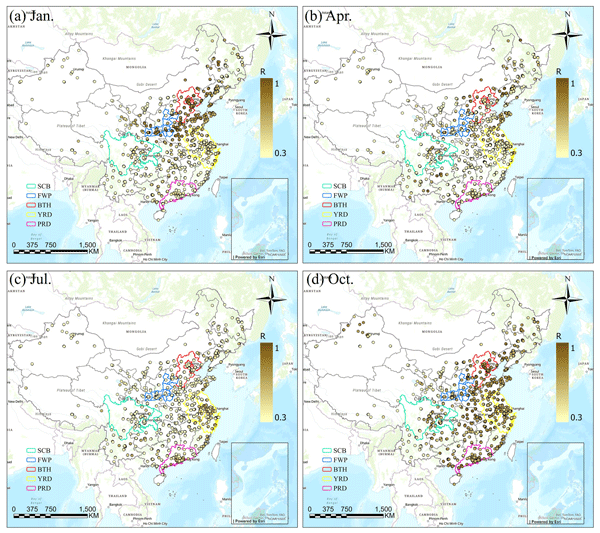
Qingfang Su, Yifei Chen, Yangjun Wang, David C. Wong, Havala O. T. Pye, Ling Huang, Golam Sarwar, Benjamin Murphy, Bryan Place, and Li Li
Geosci. Model Dev., 19, 2531–2550, https://doi.org/10.5194/gmd-19-2531-2026, https://doi.org/10.5194/gmd-19-2531-2026, 2026
Short summary
Short summary
This study evaluated the PM2.5 simulation by the latest Community Regional Atmospheric Chemistry Multiphase Mechanism (CRACMM) mechanism coupled with the Community Multiscale Air Quality (CMAQ) model, covering different seasons and specific regions over China. Modelling results derived by CRACMM are compared with two well-established chemical mechanisms. The research findings provide a solid foundation for the further application of CRACMM in understanding and regulating air pollution globally.
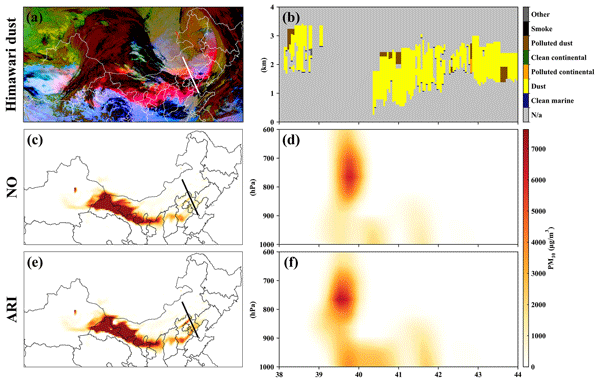
Chao Gao, Xuelei Zhang, Hu Yang, Ling Huang, Hongmei Zhao, Shichun Zhang, and Aijun Xiu
Atmos. Chem. Phys., 26, 3765–3781, https://doi.org/10.5194/acp-26-3765-2026, https://doi.org/10.5194/acp-26-3765-2026, 2026
Short summary
Short summary
Mineral dust impacts climate and air quality, varying by composition. This study examined its effects on radiation and pollution during a North China dust storm using WRF-CHIMERE and three dust atlases. Bulk dust had a shortwave radiative forcing of -5.72 W/m², while mineral-specific effects increased it by +0.10 W/m². Aerosol-radiation interactions raised PM₁₀ to 1189.48 μg/m³. Accurate mineral data is essential for improving dust-related climate and air quality simulations.
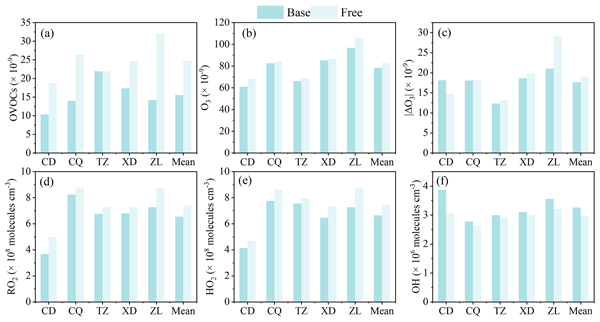
Jingwen Dai, Kun Zhang, Yanli Feng, Xin Yi, Rui Li, Jin Xue, Qing Li, Lishu Shi, Jiaqiang Liao, Yanan Yi, Fangting Wang, Liumei Yang, Hui Chen, Ling Huang, Jiani Tan, Yangjun Wang, and Li Li
Atmos. Chem. Phys., 25, 7467–7484, https://doi.org/10.5194/acp-25-7467-2025, https://doi.org/10.5194/acp-25-7467-2025, 2025
Short summary
Short summary
Oxygenated volatile organic compounds (OVOCs) are important ozone (O3) precursors. However, most O3 formation analysis based on the box model (OBM) does not include any OVOC constraint. To access the interference of OVOCs with O3 simulation, this study presents results from a field campaign and OBM analysis. Our results indicate that no OVOC constraint in the OBM can lead to overestimation of OVOCs, free radicals, and O3.
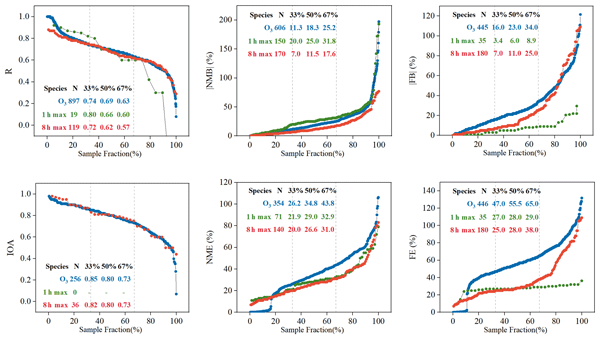
Ling Huang, Xinxin Zhang, Chris Emery, Qing Mu, Greg Yarwood, Hehe Zhai, Zhixu Sun, Shuhui Xue, Yangjun Wang, Joshua S. Fu, and Li Li
Atmos. Chem. Phys., 25, 4233–4249, https://doi.org/10.5194/acp-25-4233-2025, https://doi.org/10.5194/acp-25-4233-2025, 2025
Short summary
Short summary
Ground-level ozone pollution has emerged as a significant air pollutant in China. Chemical transport models (CTMs) serve as crucial tools in addressing ozone pollution. This study reviews CTM applications for simulating ozone in China and proposes goal and criteria benchmark values for evaluating ozone. Along with prior work on PM₂₅ and other pollutants, this effort establishes a comprehensive framework for evaluating CTM performance in China.
Ling Huang, Jiong Fang, Jiaqiang Liao, Greg Yarwood, Hui Chen, Yangjun Wang, and Li Li
Atmos. Chem. Phys., 23, 14919–14932, https://doi.org/10.5194/acp-23-14919-2023, https://doi.org/10.5194/acp-23-14919-2023, 2023
Short summary
Short summary
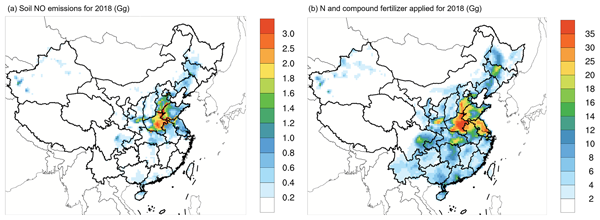
Surface ozone concentrations have emerged as a major environmental issue in China. Although control strategies aimed at reducing NOx emissions from conventional combustion sources are widely recognized, soil NOx emissions have received little attention. The impact of soil NO emissions on ground-level ozone concentration is yet to be evaluated. In this study, we estimated the soil NO emissions and evaluated its impact on ozone formation in China.
Rui Li, Kun Zhang, Qing Li, Liumei Yang, Shunyao Wang, Zhiqiang Liu, Xiaojuan Zhang, Hui Chen, Yanan Yi, Jialiang Feng, Qiongqiong Wang, Ling Huang, Wu Wang, Yangjun Wang, Jian Zhen Yu, and Li Li
Atmos. Chem. Phys., 23, 3065–3081, https://doi.org/10.5194/acp-23-3065-2023, https://doi.org/10.5194/acp-23-3065-2023, 2023
Short summary
Short summary
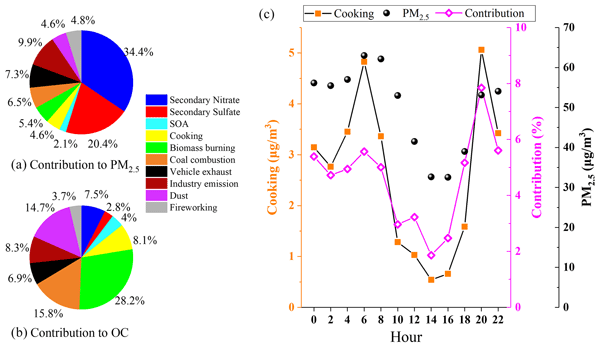
Molecular markers in organic aerosol (OA) provide specific source information on PM2.5, and the contribution of cooking emissions to OA is significant, especially in urban environments. This study investigates the variation in concentrations and oxidative degradation of fatty acids and corresponding oxidation products in ambient air, which can be a guide for the refinement of aerosol source apportionment and provide scientific support for the development of emission source control policies.
Ling Huang, Hanqing Liu, Greg Yarwood, Gary Wilson, Jun Tao, Zhiwei Han, Dongsheng Ji, Yangjun Wang, and Li Li
EGUsphere, https://doi.org/10.5194/egusphere-2022-1502, https://doi.org/10.5194/egusphere-2022-1502, 2023
Preprint archived
Short summary
Short summary
Secondary organic aerosols are an important component of PM2.5, with contributions from anthropogenic, biogenic volatile organic compounds, semi- and intermediate volatility organic compounds. Policy makers need to know which SOA precursors are important. We investigated the role of different SOA precursors and SOA algorithms by applying two commonly used models, CAMx and CMAQ. Suggestions for SOA modelling and control are provided.
Kun Zhang, Zhiqiang Liu, Xiaojuan Zhang, Qing Li, Andrew Jensen, Wen Tan, Ling Huang, Yangjun Wang, Joost de Gouw, and Li Li
Atmos. Chem. Phys., 22, 4853–4866, https://doi.org/10.5194/acp-22-4853-2022, https://doi.org/10.5194/acp-22-4853-2022, 2022
Short summary
Short summary
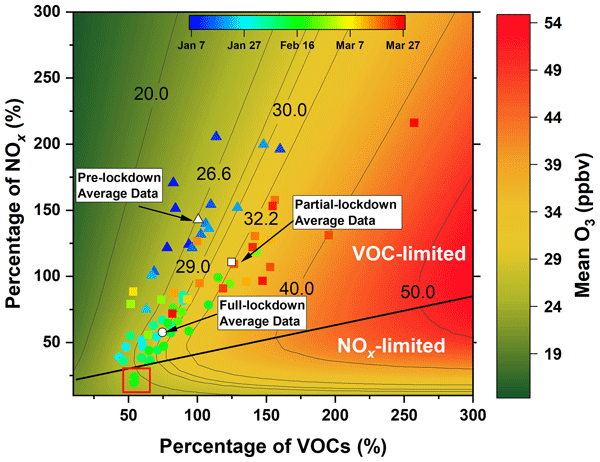
A significant increase in O3 concentrations was found during the lockdown period of COVID-19 in most areas of China. By field measurements coupled with machine learning, an observation-based model (OBM) and sensitivity analysis, we found the changes in the NOx / VOC ratio were a key reason for the significant rise in O3. To restrain O3 pollution, more efforts should be devoted to the control of anthropogenic OVOCs, alkenes and aromatics.
Qingfang Su, Yifei Chen, Yangjun Wang, David C. Wong, Havala O. T. Pye, Ling Huang, Golam Sarwar, Benjamin Murphy, Bryan Place, and Li Li
Geosci. Model Dev., 19, 2531–2550, https://doi.org/10.5194/gmd-19-2531-2026, https://doi.org/10.5194/gmd-19-2531-2026, 2026
Short summary
Short summary
This study evaluated the PM2.5 simulation by the latest Community Regional Atmospheric Chemistry Multiphase Mechanism (CRACMM) mechanism coupled with the Community Multiscale Air Quality (CMAQ) model, covering different seasons and specific regions over China. Modelling results derived by CRACMM are compared with two well-established chemical mechanisms. The research findings provide a solid foundation for the further application of CRACMM in understanding and regulating air pollution globally.
Katie Tuite, Alan M. Dunker, and Greg Yarwood
Atmos. Chem. Phys., 26, 4173–4187, https://doi.org/10.5194/acp-26-4173-2026, https://doi.org/10.5194/acp-26-4173-2026, 2026
Short summary
Short summary
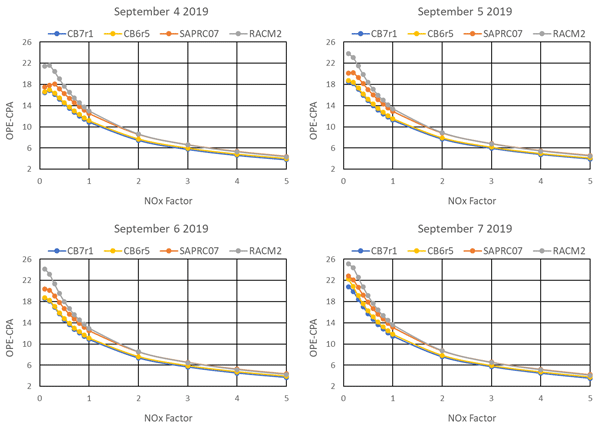
Gas-phase chemical mechanisms are key components of air quality models used by regulatory agencies for air quality and public health planning. We use modeled ozone concentrations and Ozone Production Efficiency (OPE) to compare four chemical mechanisms and find that OPE is a viable comparison metric under atmospheric conditions where nitrogen oxides are limited. Using OPE to predict how ozone responds to emissions reductions, however, is an oversimplification that can overstate ozone reductions.
Chao Gao, Xuelei Zhang, Hu Yang, Ling Huang, Hongmei Zhao, Shichun Zhang, and Aijun Xiu
Atmos. Chem. Phys., 26, 3765–3781, https://doi.org/10.5194/acp-26-3765-2026, https://doi.org/10.5194/acp-26-3765-2026, 2026
Short summary
Short summary
Mineral dust impacts climate and air quality, varying by composition. This study examined its effects on radiation and pollution during a North China dust storm using WRF-CHIMERE and three dust atlases. Bulk dust had a shortwave radiative forcing of -5.72 W/m², while mineral-specific effects increased it by +0.10 W/m². Aerosol-radiation interactions raised PM₁₀ to 1189.48 μg/m³. Accurate mineral data is essential for improving dust-related climate and air quality simulations.
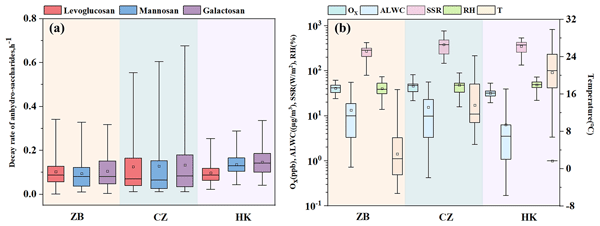
Biao Zhou, Kun Zhang, Qiongqiong Wang, Jiqi Zhu, Li Li, and Jian Zhen Yu
Atmos. Chem. Phys., 26, 3589–3606, https://doi.org/10.5194/acp-26-3589-2026, https://doi.org/10.5194/acp-26-3589-2026, 2026
Short summary
Short summary
Anhydro-saccharides are key organic markers for biomass burning, but their decay rates and driving factors in real ambient environments remain unclear. This study conducted an online field measurement of PM₂.₅-bound saccharides in three eastern Chinese cities. Daytime levoglucosan decay rates were calculated, and the driving factors were investigated using a machine learning model. Findings of this study offers a strong scientific basis to support air pollution management.
Yan Zhang, Jiani Tan, Qing Mu, Joshua S. Fu, and Li Li
EGUsphere, https://doi.org/10.5194/egusphere-2025-6160, https://doi.org/10.5194/egusphere-2025-6160, 2026
Short summary
Short summary
Despite growing use of machine learning in environmental research, few have studied how input data affects findings. We examined the impact of input data characteristics on nitrogen deposition estimates in East and Southeast Asia. Insufficient sample size cuts accuracy by up to 12 %, while data-scarce and remote areas show up to 50 % bias due to poor training data representation. We created a transferable framework for uncertainty quantification, applicable to other data-scarce geospatial tasks.
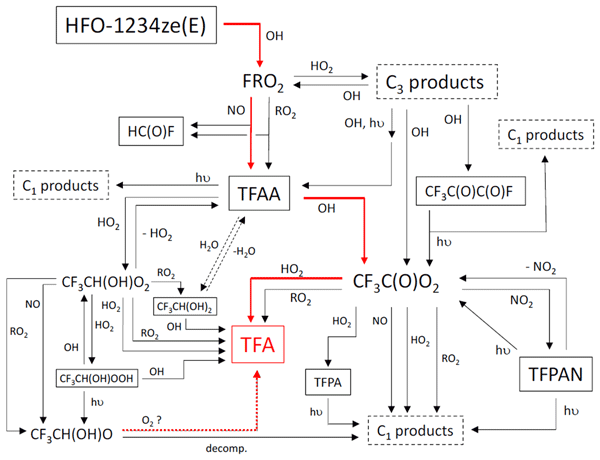
Shivendra G. Tewari, Krish Vijayaraghavan, Kun Zhao, Liji M. David, Katie Tuite, Felix Kristanovich, Yuan Zhuang, Benjamin Yang, Cecilia Hurtado, Dimitrios K. Papanastasiou, Paul Giffen, Holly Kimko, Megan Gibbs, and Stefan Platz
Atmos. Chem. Phys., 25, 15469–15486, https://doi.org/10.5194/acp-25-15469-2025, https://doi.org/10.5194/acp-25-15469-2025, 2025
Short summary
Short summary
This study indicates that using HFO‑1234ze(E) as a medical propellant in pressurized metered dose inhalers (pMDIs) reduces environmental impact compared with current propellants, and that associated trifluoroacetic acid (TFA) formation levels are predicted to be significantly below all reported safety thresholds. The results suggest this next‑generation propellant supports climate goals with its near‑zero global warming potential (GWP) and offers a sustainable substitute, helping ensure future pMDI supply for people with chronic respiratory diseases.
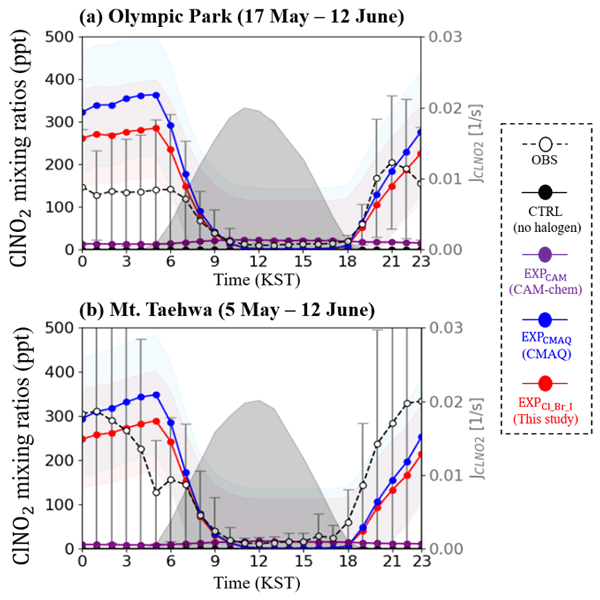
Kiyeon Kim, Chul Han Song, Kyung Man Han, Greg Yarwood, Ross Beardsley, and Saewung Kim
Atmos. Chem. Phys., 25, 10293–10314, https://doi.org/10.5194/acp-25-10293-2025, https://doi.org/10.5194/acp-25-10293-2025, 2025
Short summary
Short summary
Despite the crucial role of halogen radicals in the atmosphere, current chemical transport models (CTMs) do not account for multi-phase halogen processes. To address this issue, we incorporated 177 halogen reactions, together with anthropogenic and natural halogen emissions into the CTMs. Our findings reveal that incorporation of these halogen processes significantly improves model performances compared to observations. In addition, we emphasize the influence of halogen radicals on air quality.
Jingwen Dai, Kun Zhang, Yanli Feng, Xin Yi, Rui Li, Jin Xue, Qing Li, Lishu Shi, Jiaqiang Liao, Yanan Yi, Fangting Wang, Liumei Yang, Hui Chen, Ling Huang, Jiani Tan, Yangjun Wang, and Li Li
Atmos. Chem. Phys., 25, 7467–7484, https://doi.org/10.5194/acp-25-7467-2025, https://doi.org/10.5194/acp-25-7467-2025, 2025
Short summary
Short summary
Oxygenated volatile organic compounds (OVOCs) are important ozone (O3) precursors. However, most O3 formation analysis based on the box model (OBM) does not include any OVOC constraint. To access the interference of OVOCs with O3 simulation, this study presents results from a field campaign and OBM analysis. Our results indicate that no OVOC constraint in the OBM can lead to overestimation of OVOCs, free radicals, and O3.
Ling Huang, Xinxin Zhang, Chris Emery, Qing Mu, Greg Yarwood, Hehe Zhai, Zhixu Sun, Shuhui Xue, Yangjun Wang, Joshua S. Fu, and Li Li
Atmos. Chem. Phys., 25, 4233–4249, https://doi.org/10.5194/acp-25-4233-2025, https://doi.org/10.5194/acp-25-4233-2025, 2025
Short summary
Short summary
Ground-level ozone pollution has emerged as a significant air pollutant in China. Chemical transport models (CTMs) serve as crucial tools in addressing ozone pollution. This study reviews CTM applications for simulating ozone in China and proposes goal and criteria benchmark values for evaluating ozone. Along with prior work on PM₂₅ and other pollutants, this effort establishes a comprehensive framework for evaluating CTM performance in China.
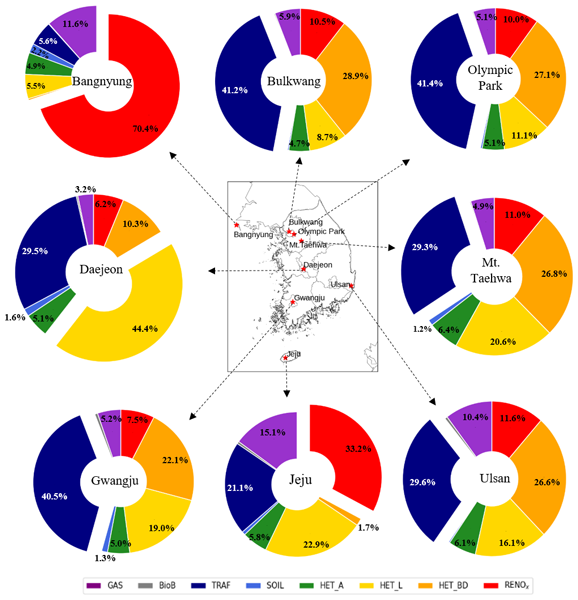
Kiyeon Kim, Kyung Man Han, Chul Han Song, Hyojun Lee, Ross Beardsley, Jinhyeok Yu, Greg Yarwood, Bonyoung Koo, Jasper Madalipay, Jung-Hun Woo, and Seogju Cho
Atmos. Chem. Phys., 24, 12575–12593, https://doi.org/10.5194/acp-24-12575-2024, https://doi.org/10.5194/acp-24-12575-2024, 2024
Short summary
Short summary
We incorporated each HONO process into the current CMAQ modeling framework to enhance the accuracy of HONO mixing ratio predictions. These results expand our understanding of HONO photochemistry and identify crucial sources of HONO that impact the total HONO budget in Seoul, South Korea. Through this investigation, we contribute to resolving discrepancies in understanding chemical transport models, with implications for better air quality management and environmental protection in the region.
Christopher A. Emery, Kirk R. Baker, Gary M. Wilson, and Greg Yarwood
Geosci. Model Dev. Discuss., https://doi.org/10.5194/gmd-2024-48, https://doi.org/10.5194/gmd-2024-48, 2024
Preprint withdrawn
Short summary
Short summary
We describe the Comprehensive Air quality Model with extensions (CAMx) and evaluate a model simulation during 2016 over nine U.S. climate zones. For ozone, the model statistically replicates measured concentrations better than most other past models and applications. For small inhalable particulates, the model replicates concentrations consistent with most other past models and applications subject to common uncertainties associated with sources, weather, and chemical interactions.
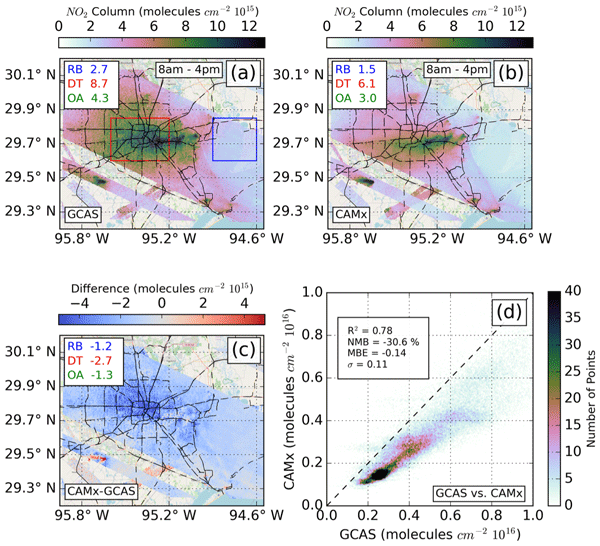
M. Omar Nawaz, Jeremiah Johnson, Greg Yarwood, Benjamin de Foy, Laura Judd, and Daniel L. Goldberg
Atmos. Chem. Phys., 24, 6719–6741, https://doi.org/10.5194/acp-24-6719-2024, https://doi.org/10.5194/acp-24-6719-2024, 2024
Short summary
Short summary
NO2 is a gas with implications for air pollution. A campaign conducted in Houston provided an opportunity to compare NO2 from different instruments and a model. Aircraft and satellite observations agreed well with measurements on the ground; however, the latter estimated lower values. We find that model-simulated NO2 was lower than observations, especially downtown, suggesting that NO2 sources associated with the urban core of Houston, such as vehicle emissions, may be underestimated.
Ling Huang, Jiong Fang, Jiaqiang Liao, Greg Yarwood, Hui Chen, Yangjun Wang, and Li Li
Atmos. Chem. Phys., 23, 14919–14932, https://doi.org/10.5194/acp-23-14919-2023, https://doi.org/10.5194/acp-23-14919-2023, 2023
Short summary
Short summary
Surface ozone concentrations have emerged as a major environmental issue in China. Although control strategies aimed at reducing NOx emissions from conventional combustion sources are widely recognized, soil NOx emissions have received little attention. The impact of soil NO emissions on ground-level ozone concentration is yet to be evaluated. In this study, we estimated the soil NO emissions and evaluated its impact on ozone formation in China.
Rui Li, Kun Zhang, Qing Li, Liumei Yang, Shunyao Wang, Zhiqiang Liu, Xiaojuan Zhang, Hui Chen, Yanan Yi, Jialiang Feng, Qiongqiong Wang, Ling Huang, Wu Wang, Yangjun Wang, Jian Zhen Yu, and Li Li
Atmos. Chem. Phys., 23, 3065–3081, https://doi.org/10.5194/acp-23-3065-2023, https://doi.org/10.5194/acp-23-3065-2023, 2023
Short summary
Short summary
Molecular markers in organic aerosol (OA) provide specific source information on PM2.5, and the contribution of cooking emissions to OA is significant, especially in urban environments. This study investigates the variation in concentrations and oxidative degradation of fatty acids and corresponding oxidation products in ambient air, which can be a guide for the refinement of aerosol source apportionment and provide scientific support for the development of emission source control policies.
Ling Huang, Hanqing Liu, Greg Yarwood, Gary Wilson, Jun Tao, Zhiwei Han, Dongsheng Ji, Yangjun Wang, and Li Li
EGUsphere, https://doi.org/10.5194/egusphere-2022-1502, https://doi.org/10.5194/egusphere-2022-1502, 2023
Preprint archived
Short summary
Short summary
Secondary organic aerosols are an important component of PM2.5, with contributions from anthropogenic, biogenic volatile organic compounds, semi- and intermediate volatility organic compounds. Policy makers need to know which SOA precursors are important. We investigated the role of different SOA precursors and SOA algorithms by applying two commonly used models, CAMx and CMAQ. Suggestions for SOA modelling and control are provided.
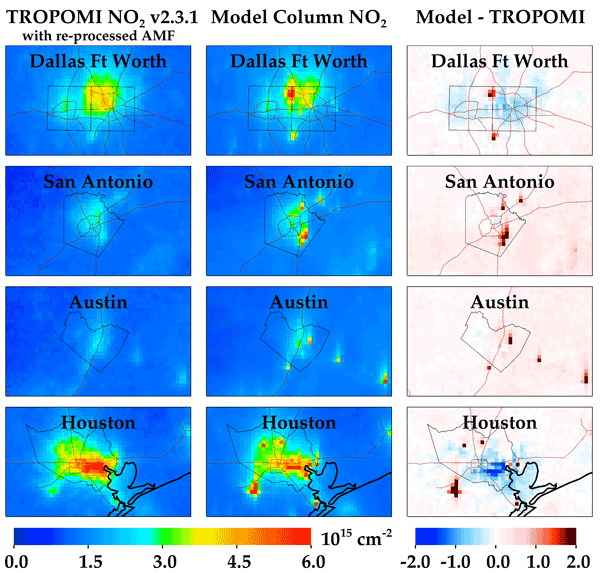
Daniel L. Goldberg, Monica Harkey, Benjamin de Foy, Laura Judd, Jeremiah Johnson, Greg Yarwood, and Tracey Holloway
Atmos. Chem. Phys., 22, 10875–10900, https://doi.org/10.5194/acp-22-10875-2022, https://doi.org/10.5194/acp-22-10875-2022, 2022
Short summary
Short summary
TROPOMI measurements offer a valuable means to validate emissions inventories and ozone formation regimes, with important limitations. Lightning NOx is important to account for in Texas and can contribute up to 24 % of the column NO2 in rural areas and 8 % in urban areas. Modeled NO2 in urban areas agrees with TROPOMI NO2 to within 20 % in most circumstances, with a small underestimate in Dallas (−13 %) and Houston (−20 %). Near Texas power plants, the satellite appears to underrepresent NO2.
Kun Zhang, Zhiqiang Liu, Xiaojuan Zhang, Qing Li, Andrew Jensen, Wen Tan, Ling Huang, Yangjun Wang, Joost de Gouw, and Li Li
Atmos. Chem. Phys., 22, 4853–4866, https://doi.org/10.5194/acp-22-4853-2022, https://doi.org/10.5194/acp-22-4853-2022, 2022
Short summary
Short summary
A significant increase in O3 concentrations was found during the lockdown period of COVID-19 in most areas of China. By field measurements coupled with machine learning, an observation-based model (OBM) and sensitivity analysis, we found the changes in the NOx / VOC ratio were a key reason for the significant rise in O3. To restrain O3 pollution, more efforts should be devoted to the control of anthropogenic OVOCs, alkenes and aromatics.
Cited articles
Appel, K. W., Bash, J. O., Fahey, K. M., Foley, K. M., Gilliam, R. C., Hogrefe, C., Hutzell, W. T., Kang, D., Mathur, R., Murphy, B. N., Napelenok, S. L., Nolte, C. G., Pleim, J. E., Pouliot, G. A., Pye, H. O. T., Ran, L., Roselle, S. J., Sarwar, G., Schwede, D. B., Sidi, F. I., Spero, T. L., and Wong, D. C.: The Community Multiscale Air Quality (CMAQ) model versions 5.3 and 5.3.1: system updates and evaluation, Geosci. Model Dev., 14, 2867–2897, https://doi.org/10.5194/gmd-14-2867-2021, 2021.
Baboomian, V. J., Gu, Y., and Nizkorodov, S. A.: Photodegradation of secondary organic aerosols by long-term exposure to solar actinic radiation, ACS Earth Space Chem., 4, 1078–1089, 2020.
Cappa, C. D. and Wilson, K. R.: Multi-generation gas-phase oxidation, equilibrium partitioning, and the formation and evolution of secondary organic aerosol, Atmos. Chem. Phys., 12, 9505–9528, https://doi.org/10.5194/acp-12-9505-2012, 2012.
Chang, X., Zhao, B., Zheng, H., Wang, S., Cai, S., Guo, F., and Donahue, N. M.: Full-volatility emission framework corrects missing and underestimated secondary organic aerosol sources, One Earth, 5, 403–412, 2022.
Chen, Q., Miao, R., Geng, G., Shrivastava, M., Dao, X., Xu, B., and Zhu, T.: Widespread 2013–2020 decreases and reduction challenges of organic aerosol in China, Nat. Comm., 15, 1–8, https://doi.org/10.1038/s41467-024-48902-0, 2024.
CHIMERE Development Team: CHIMERE Chemistry-transport model v2023r1 Documentation, http://www.lmd.polytechnique.fr/chimere/ (last access: 30 May 2026), 2024.
Couvidat, F., Bessagnet, B., Garcia-Vivanco, M., Real, E., Menut, L., and Colette, A.: Development of an inorganic and organic aerosol model (CHIMERE 2017β v1.0): seasonal and spatial evaluation over Europe, Geosci. Model Dev., 11, 165–194, https://doi.org/10.5194/gmd-11-165-2018, 2018.
Crippa, M., Janssens-Maenhout, G., Dentener, F., Guizzardi, D., Sindelarova, K., Muntean, M., Van Dingenen, R., and Granier, C.: Forty years of improvements in European air quality: regional policy-industry interactions with global impacts, Atmos. Chem. Phys., 16, 3825–3841, https://doi.org/10.5194/acp-16-3825-2016, 2016.
Donahue, N. M., Robinson, A. L., Stanier, C. O., and Pandis, S. N.: Coupled partitioning, dilution, and chemical aging of semivolatile organics, Environ. Sci. Technol., 40, 2635–2643, 2006.
Donahue, N. M., Epstein, S. A., Pandis, S. N., and Robinson, A. L.: A two-dimensional volatility basis set: 1. organic-aerosol mixing thermodynamics, Atmos. Chem. Phys., 11, 3303–3318, https://doi.org/10.5194/acp-11-3303-2011, 2011.
Emery, C. A., Baker, K. R., Wilson, G. M., and Yarwood, G.: Comprehensive Air Quality Model With Extensions, v7.20: Formulation and Evaluation for Ozone and Particulate Matter Over the US, Geosci. Model Dev. Discuss. [preprint], https://doi.org/10.5194/gmd-2024-48, 2024.
EPA: Overview of the Clean Air Act and Air Pollution, https://www.epa.gov/clean-air-act-overview (last access: 30 May 2026), 2017.
Hodzic, A. and Jimenez, J. L.: Modeling anthropogenically controlled secondary organic aerosols in a megacity: a simplified framework for global and climate models, Geosci. Model Dev., 4, 901–917, https://doi.org/10.5194/gmd-4-901-2011, 2011.
Hodzic, A., Kasibhatla, P. S., Jo, D. S., Cappa, C. D., Jimenez, J. L., Madronich, S., and Park, R. J.: Rethinking the global secondary organic aerosol (SOA) budget: stronger production, faster removal, shorter lifetime, Atmos. Chem. Phys., 16, 7917–7941, https://doi.org/10.5194/acp-16-7917-2016, 2016.
Huang, L.: Figure data for “Comparing Secondary Organic Aerosols Schemes Implemented in Current Chemical Transport Models and the Policy Implications of Uncertainties”, Zenodo [data set], https://doi.org/10.5281/zenodo.16757660, 2025.
Huang, L., Liu, H., Yarwood, G., Wilson, G., Tao, J., Han, Z., and Li, L.: Modeling of secondary organic aerosols (SOA) based on two commonly used air quality models in China: Consistent S/IVOCs contribution but large differences in SOA aging, Sci. Total Environ., 903, 166162, https://doi.org/10.1016/j.scitotenv.2023.166162, 2023.
Huang, L., Wu, Z. A., Liu, H., Yarwood, G., Huang, D., Wilson, G., Chen, H., Ji, D., Han, Z., Wang, Y., Wang, H., Huang, C., and Li, L.: An improved framework for efficiently modeling organic aerosol (OA) considering primary OA evaporation and secondary OA formation from VOCs, IVOCs, and SVOCs, Environ. Sci.: Atmos., 4, 1064–1078, 2024.
Huang, R. J., Zhang, Y., Bozzetti, C., Ho, K. F., Cao, J. J., Han, Y., and Prévôt, A. S.: High secondary aerosol contribution to particulate pollution during haze events in China, Nature, 514, 218–222, 2014.
Kenagy, H. S., Heald, C. L., Tahsini, N., Goss, M. B., and Kroll, J. H.: Can we achieve atmospheric chemical environments in the laboratory? An integrated model-measurement approach to chamber SOA studies, Sci. Adv., 10, eado1482, https://doi.org/10.1126/sciadv.ado1482, 2024.
Koo, B., Knipping, E., and Yarwood, G.: 1.5-Dimensional volatility basis set approach for modeling organic aerosol in CAMx and CMAQ, Atmos. Environ., 95, 158–164, 2014.
Lane, T. E., Donahue, N. M., and Pandis, S. N.: Simulating secondary organic aerosol formation using the volatility basis-set approach in a chemical transport model, Atmos. Environ.,, 42, 7439–7451, 2008.
Li, H., Zheng, B., Lei, Y., Hauglustaine, D., Chen, C., Lin, X., and He, K.: Trends and drivers of anthropogenic NOx emissions in China since 2020, Environ. Sci. Ecotechnol., 21, 100425, https://doi.org/doi.org/10.1016/j.ese.2024.100425, 2024.
Li, J., Zhang, H., Li, L., Ye, F., Wang, H., Guo, S., and Hu, J.: Modeling Secondary Organic Aerosols in China: State of the Art and Perspectives, Curr. Pollut. Rep., 9, 22–45, 2023.
Ma, P. K., Zhao, Y., Robinson, A. L., Worton, D. R., Goldstein, A. H., Ortega, A. M., Jimenez, J. L., Zotter, P., Prévôt, A. S. H., Szidat, S., and Hayes, P. L.: Evaluating the impact of new observational constraints on P-S/IVOC emissions, multi-generation oxidation, and chamber wall losses on SOA modeling for Los Angeles, CA, Atmos. Chem. Phys., 17, 9237–9259, https://doi.org/10.5194/acp-17-9237-2017, 2017.
NOAA: WRF-Chem version 4.4 User's Guide, https://www2.mmm.ucar.edu/wrf/users/docs/user_guide_v4/v4.4/contents.html (last access: 30 May 2026), 2022.
O'Brien, R. E. and Kroll, J. H.: Photolytic aging of secondary organic aerosol: Evidence for a substantial photo-recalcitrant fraction, J. Phys. Chem. Lett., 10, 4003–4009, 2019.
Pai, S. J., Heald, C. L., Pierce, J. R., Farina, S. C., Marais, E. A., Jimenez, J. L., Campuzano-Jost, P., Nault, B. A., Middlebrook, A. M., Coe, H., Shilling, J. E., Bahreini, R., Dingle, J. H., and Vu, K.: An evaluation of global organic aerosol schemes using airborne observations, Atmos. Chem. Phys., 20, 2637–2665, https://doi.org/10.5194/acp-20-2637-2020, 2020.
Pankow, J. F.: An absorption model of the gas/aerosol partitioning involved in the formation of secondary organic aerosol, Atmos. Environ., 28, 189–193, 1994.
Pankow, J. F. and Asher, W. E.: SIMPOL.1: a simple group contribution method for predicting vapor pressures and enthalpies of vaporization of multifunctional organic compounds, Atmos. Chem. Phys., 8, 2773–2796, https://doi.org/10.5194/acp-8-2773-2008, 2008.
Peng, W., Le, C., Porter, W. C., and Cocker III, D. R.: Variability in Aromatic Aerosol Yields under Very Low NOx Conditions at Different HO2/RO2 Regimes, Environ. Sci. Technol., 56, 750–760, 2022.
Peng, Z., Lee-Taylor, J., Orlando, J. J., Tyndall, G. S., and Jimenez, J. L.: Organic peroxy radical chemistry in oxidation flow reactors and environmental chambers and their atmospheric relevance, Atmos. Chem. Phys., 19, 813–834, https://doi.org/10.5194/acp-19-813-2019, 2019.
Pennington, E. A., Seltzer, K. M., Murphy, B. N., Qin, M., Seinfeld, J. H., and Pye, H. O. T.: Modeling secondary organic aerosol formation from volatile chemical products, Atmos. Chem. Phys., 21, 18247–18261, https://doi.org/10.5194/acp-21-18247-2021, 2021.
Pennington, E. A., Wang, Y., Schulze, B. C., Seltzer, K. M., Yang, J., Zhao, B., Jiang, Z., Shi, H., Venecek, M., Chau, D., Murphy, B. N., Kenseth, C. M., Ward, R. X., Pye, H. O. T., and Seinfeld, J. H.: An updated modeling framework to simulate Los Angeles air quality – Part 1: Model development, evaluation, and source apportionment, Atmos. Chem. Phys., 24, 2345–2363, https://doi.org/10.5194/acp-24-2345-2024, 2024.
Praske, E., Otkjær, R. V., Crounse, J. D., Hethcox, J. C., Stoltz, B. M., Kjaergaard, H. G., and Wennberg, P. O.: Atmospheric autoxidation is increasingly important in urban and suburban North America, P. Natl. Acad. Sci., 115, 64–69, 2018.
Pye, H. O., Pinder, R. W., Piletic, I. R., Xie, Y., Capps, S. L., Lin, Y. H., and Surratt, J. D.: Epoxide pathways improve model predictions of isoprene markers and reveal key role of acidity in aerosol formation, Environ. Sci. Technol., 47, 11056–11064, 2013.
Pye, H. O. T., Chan, A. W. H., Barkley, M. P., and Seinfeld, J. H.: Global modeling of organic aerosol: the importance of reactive nitrogen (NOx and NO3), Atmos. Chem. Phys., 10, 11261–11276, https://doi.org/10.5194/acp-10-11261-2010, 2010.
Pye, H. O. T., Ward-Caviness, C., Murphy, B. N., Appel, K. W., and Seltzer, K. M.: Secondary organic aerosol association with cardiorespiratory disease mortality in the United States, Nat. Comm., 12, 1–8, https://doi.org/10.1038/s41467-021-27484-1, 2021.
Pye, H. O. T., Place, B. K., Murphy, B. N., Seltzer, K. M., D'Ambro, E. L., Allen, C., Piletic, I. R., Farrell, S., Schwantes, R. H., Coggon, M. M., Saunders, E., Xu, L., Sarwar, G., Hutzell, W. T., Foley, K. M., Pouliot, G., Bash, J., and Stockwell, W. R.: Linking gas, particulate, and toxic endpoints to air emissions in the Community Regional Atmospheric Chemistry Multiphase Mechanism (CRACMM), Atmos. Chem. Phys., 23, 5043–5099, https://doi.org/10.5194/acp-23-5043-2023, 2023.
Ramboll Environment and Health: User's Guide – Comprehensive Air Quality Model with Extensions Version 7.20, https://www.camx.com/Files/CAMxUsersGuide_v7.20.pdf (last access: 30 May 2026), 2022.
Robinson, A. L., Donahue, N. M., Shrivastava, M. K., Weitkamp, E. A., Sage, A. M., Grieshop, A. P., and Pandis, S. N.: Rethinking organic aerosols: Semivolatile emissions and photochemical aging, Science, 315, 1259–1262, 2007.
Sarrafzadeh, M., Wildt, J., Pullinen, I., Springer, M., Kleist, E., Tillmann, R., Schmitt, S. H., Wu, C., Mentel, T. F., Zhao, D., Hastie, D. R., and Kiendler-Scharr, A.: Impact of NOx and OH on secondary organic aerosol formation from β-pinene photooxidation, Atmos. Chem. Phys., 16, 11237–11248, https://doi.org/10.5194/acp-16-11237-2016, 2016.
Sasidharan, S., He, Y., Akherati, A., Li, Q., Li, W., Cocker, D., and Jathar, S. H.: Secondary organic aerosol formation from volatile chemical product emissions: Model parameters and contributions to anthropogenic aerosol, Environ. Sci. Technol., 57, 11891–11892, 2023.
Schell, B., Ackermann, I. J., Hass, H., Binkowski, F. S., and Ebel, A.: Modeling the formation of secondary organic aerosol within a comprehensive air quality model system, J. Geophys. Res.-Atmos., 106, 28275–28293, 2001.
Shrivastava, M., Fast, J., Easter, R., Gustafson Jr., W. I., Zaveri, R. A., Jimenez, J. L., Saide, P., and Hodzic, A.: Modeling organic aerosols in a megacity: comparison of simple and complex representations of the volatility basis set approach, Atmos. Chem. Phys., 11, 6639–6662, https://doi.org/10.5194/acp-11-6639-2011, 2011.
Shrivastava, M., Easter, R. C., Liu, X., Zelenyuk, A., Singh, B., Zhang, K., and Tiitta, P.: Global transformation and fate of SOA: Implications of low-volatility SOA and gas-phase fragmentation reactions, J. Geophys. Res.-Atmos., 120, 4169–4195, 2015.
Seltzer, K. M., Pennington, E., Rao, V., Murphy, B. N., Strum, M., Isaacs, K. K., and Pye, H. O. T.: Reactive organic carbon emissions from volatile chemical products, Atmos. Chem. Phys., 21, 5079–5100, https://doi.org/10.5194/acp-21-5079-2021, 2021.
Strader, R., Lurmann, F., and Pandis, S. N.: Evaluation of secondary organic aerosol formation in winter, Atmos. Environ., 33, 4849–4863, 1999.
Tsimpidi, A. P., Karydis, V. A., Pandis, S. N., and Lelieveld, J.: Global combustion sources of organic aerosols: model comparison with 84 AMS factor-analysis data sets, Atmos. Chem. Phys., 16, 8939–8962, https://doi.org/10.5194/acp-16-8939-2016, 2016.
Vitali, B., Bettineschi, M., Cholakian, A., Zardi, D., Bianchi, F., Sinclair, V. A., and Mikkola, J.: Analysis of chemical and transport processes of biogenic aerosols over the northern Apennines: insights from the WRF-CHIMERE model, Environ. Sci.: Atmos., 4, 967–987, 2024.
Wennberg, P. O.: Let's Abandon the “High NOx” and “Low NOx” Terminology, ACS ES&T Air, 1, 3–4, 2023.
Wildt, J., Mentel, T. F., Kiendler-Scharr, A., Hoffmann, T., Andres, S., Ehn, M., Kleist, E., Müsgen, P., Rohrer, F., Rudich, Y., Springer, M., Tillmann, R., and Wahner, A.: Suppression of new particle formation from monoterpene oxidation by NOx, Atmos. Chem. Phys., 14, 2789–2804, https://doi.org/10.5194/acp-14-2789-2014, 2014.
Yarwood, G. and Tuite, K.: Representing Ozone Formation from Volatile Chemical Products (VCP) in Carbon Bond (CB) Chemical Mechanisms, Atmosphere, 15, 1–19, https://doi.org/10.3390/atmos15020178, 2024.
Yu, H., Møller, K. H., Buenconsejo, R. S., Crounse, J. D., Kjaergaard, H. G., and Wennberg, P. O.: Atmospheric Photo-Oxidation of 2-Ethoxyethanol: Autoxidation Chemistry of Glycol Ethers, J. Phys. Chem. A, 127, 9564–9579, 2023.
Zawadowicz, M. A., Lee, B. H., Shrivastava, M., Zelenyuk, A., Zaveri, R. A., Flynn, C., and Shilling, J. E.: Photolysis controls atmospheric budgets of biogenic secondary organic aerosol, Environ. Sci. Technol., 54, 3861–3870, 2020.
Zhang, Q. J., Beekmann, M., Drewnick, F., Freutel, F., Schneider, J., Crippa, M., Prevot, A. S. H., Baltensperger, U., Poulain, L., Wiedensohler, A., Sciare, J., Gros, V., Borbon, A., Colomb, A., Michoud, V., Doussin, J.-F., Denier van der Gon, H. A. C., Haeffelin, M., Dupont, J.-C., Siour, G., Petetin, H., Bessagnet, B., Pandis, S. N., Hodzic, A., Sanchez, O., Honoré, C., and Perrussel, O.: Formation of organic aerosol in the Paris region during the MEGAPOLI summer campaign: evaluation of the volatility-basis-set approach within the CHIMERE model, Atmos. Chem. Phys., 13, 5767–5790, https://doi.org/10.5194/acp-13-5767-2013, 2013.
Zhang, X., Cappa, C. D., Jathar, S. H., McVay, R. C., Ensberg, J. J., Kleeman, M. J., and Seinfeld, J. H.: Influence of vapor wall loss in laboratory chambers on yields of secondary organic aerosol, P. Natl. Acad. Sci., 111, 5802–5807, 2014.
Zhao, B., Wang, S., Donahue, N. M., Jathar, S. H., Huang, X., Wu, W., and Robinson, A. L.: Quantifying the effect of organic aerosol aging and intermediate-volatility emissions on regional-scale aerosol pollution in China, Sci. Rep., 6, 28815, https://doi.org/10.1038/srep28815, 2016.
Zhao, D., Schmitt, S. H., Wang, M., Acir, I.-H., Tillmann, R., Tan, Z., Novelli, A., Fuchs, H., Pullinen, I., Wegener, R., Rohrer, F., Wildt, J., Kiendler-Scharr, A., Wahner, A., and Mentel, T. F.: Effects of NOx and SO2 on the secondary organic aerosol formation from photooxidation of α-pinene and limonene, Atmos. Chem. Phys., 18, 1611–1628, https://doi.org/10.5194/acp-18-1611-2018, 2018.
Zhao, Y., Hennigan, C. J., May, A. A., Tkacik, D. S., de Gouw, J. A., Gilman, J. B., and Robinson, A. L.: Intermediate-volatility organic compounds: a large source of secondary organic aerosol, Environ. Sci. Technol., 48, 13743–13750, 2014.
Short summary
Secondary organic aerosol (SOA) constitutes a major component of atmospheric aerosol that models must account for to assess how human activities influence air quality, climate, and public health. We find substantial differences in how current air quality models represent SOA highlighting a lack of consensus within the modelling community. Our findings emphasize the need to recognize the limitations of current SOA schemes in the context of air quality management and policy development.
Secondary organic aerosol (SOA) constitutes a major component of atmospheric aerosol that models...


Altmetrics
Final-revised paper
Preprint