
Articles | Volume 26, issue 11
https://doi.org/10.5194/acp-26-7867-2026
© Author(s) 2026. This work is distributed under
the Creative Commons Attribution 4.0 License.
the Creative Commons Attribution 4.0 License.
https://doi.org/10.5194/acp-26-7867-2026
© Author(s) 2026. This work is distributed under
the Creative Commons Attribution 4.0 License.
the Creative Commons Attribution 4.0 License.
Research article
| 
05 Jun 2026
Research article |
| 05 Jun 2026
| 05 Jun 2026
Impacts of lake on diurnal evolution of surface PM2.5 concentrations around a typical megacity of China
Zining Yang
National Key Laboratory of Deep Space Exploration/Joint Laboratory of Fengyun Remote Sensing, School of Earth and Space Sciences, University of Science and Technology of China, Hefei, China

National Key Laboratory of Deep Space Exploration/Joint Laboratory of Fengyun Remote Sensing, School of Earth and Space Sciences, University of Science and Technology of China, Hefei, China
Chun Zhao
National Key Laboratory of Deep Space Exploration/Joint Laboratory of Fengyun Remote Sensing, School of Earth and Space Sciences, University of Science and Technology of China, Hefei, China
State Key Laboratory of Fire Science, University of Science and Technology of China, Hefei, China
Institute of Frontier and Interdisciplinary Research in High-Performance Computing Systems and Software, University of Science and Technology of China, Hefei, China
Laoshan Laboratory, Qingdao, China
Zihan Xia
National Key Laboratory of Deep Space Exploration/Joint Laboratory of Fengyun Remote Sensing, School of Earth and Space Sciences, University of Science and Technology of China, Hefei, China
Qiuyan Du
National Key Laboratory of Deep Space Exploration/Joint Laboratory of Fengyun Remote Sensing, School of Earth and Space Sciences, University of Science and Technology of China, Hefei, China
Gudongze Li
National Key Laboratory of Deep Space Exploration/Joint Laboratory of Fengyun Remote Sensing, School of Earth and Space Sciences, University of Science and Technology of China, Hefei, China
Mingyue Xu
National Key Laboratory of Deep Space Exploration/Joint Laboratory of Fengyun Remote Sensing, School of Earth and Space Sciences, University of Science and Technology of China, Hefei, China
Zhiyuan Hu
College of Atmospheric Science, Lanzhou University, Lanzhou, 730000, China
Collaborative Innovation Center for West Ecological Safety (CIWES), Lanzhou University, Lanzhou 730000, China
Southern Marine Science and Engineering Guangdong Laboratory, Zhuhai, China
Renmin Yuan
National Key Laboratory of Deep Space Exploration/Joint Laboratory of Fengyun Remote Sensing, School of Earth and Space Sciences, University of Science and Technology of China, Hefei, China
Jiawang Feng
National Key Laboratory of Deep Space Exploration/Joint Laboratory of Fengyun Remote Sensing, School of Earth and Space Sciences, University of Science and Technology of China, Hefei, China
National Key Laboratory of Deep Space Exploration/Joint Laboratory of Fengyun Remote Sensing, School of Earth and Space Sciences, University of Science and Technology of China, Hefei, China
Yubin Li
School of Atmospheric Physics, Nanjing University of Information Science and Technology, Nanjing, China
Related authors
Zihan Xia, Chun Zhao, Chen Jin, Xin Qu, Zining Yang, Ziyu Zhang, Qike Yang, Jun Gu, Gudongze Li, Jiawang Feng, Shen Du, and Jane Liu
EGUsphere, https://doi.org/10.5194/egusphere-2026-4483, https://doi.org/10.5194/egusphere-2026-4483, 2026
Short summary
Short summary
To study multiscale air pollution, we developed an online gas-phase chemistry framework in a global variable-resolution atmospheric model. Comparing simulations using a global 60km grid and a 4km refinement over North China, we found that regional refinement reverses nighttime ozone errors over complex terrain by capturing slope winds and local nitrogen oxide emissions. It also corrects daily ozone cycles, showing that mesh refinement alters coupled physical and chemical processes across scales.
Yi Gao, Yu Zhao, Meigen Zhang, and Zining Yang
EGUsphere, https://doi.org/10.5194/egusphere-2026-3891, https://doi.org/10.5194/egusphere-2026-3891, 2026
Short summary
Short summary
This study presented how emission reduction affected simultaneous PM2.5 and O3 pollution under different meteorological conditions in a polluted area of China using a regional model. The meteorological conditions were classified into five types based on boundary layer, temperature, and humidity. PM2.5 decreased most under warm humid and stable conditions, while O3 decreased most under warm humid conditions. Aerosol enhanced PM2.5 reduction yet weakened O3 reduction under stable conditions.
Yibo Xue, Chun Zhao, Jiawang Feng, Xin Qu, Zihan Xia, Zining Yang, Xiaoxiao Zhang, Qike Yang, Gudongze Li, Ziyu Zhang, and Jianxi Zhang
EGUsphere, https://doi.org/10.5194/egusphere-2026-3149, https://doi.org/10.5194/egusphere-2026-3149, 2026
Short summary
Short summary
Dust storms can carry large amounts of particles across countries, affecting air quality and climate. We used a global model with finer grids over East Asian dust source regions to simulate a severe March 2021 dust storm. Finer grids better captured local winds, dust emission, transport, and removal by rain. The results show how model resolution can influence dust forecasts and help improve simulations of extreme dust events.
Qike Yang, Chun Zhao, Jiawang Feng, Gudongze Li, Jun Gu, Zihan Xia, Mingyue Xu, and Zining Yang
Geosci. Model Dev., 18, 5373–5396, https://doi.org/10.5194/gmd-18-5373-2025, https://doi.org/10.5194/gmd-18-5373-2025, 2025
Short summary
Short summary
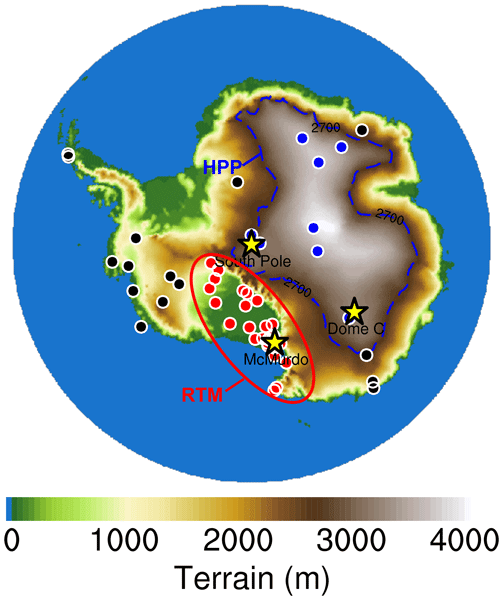
This study provides a comprehensive evaluation of unstructured meshes using the integrated Atmospheric Model Across Scales (iAMAS) over Antarctica, encompassing both surface and upper-level meteorological fields. Comparisons with the fifth-generation reanalysis (ERA5) from the European Centre for Medium-Range Weather Forecasts and observational data indicate that iAMAS performs well in simulating the Antarctic atmosphere.
Zining Yang, Qiuyan Du, Qike Yang, Chun Zhao, Gudongze Li, Zihan Xia, Mingyue Xu, Renmin Yuan, Yubin Li, Kaihui Xia, Jun Gu, and Jiawang Feng
Atmos. Chem. Phys., 25, 8831–8857, https://doi.org/10.5194/acp-25-8831-2025, https://doi.org/10.5194/acp-25-8831-2025, 2025
Short summary
Short summary
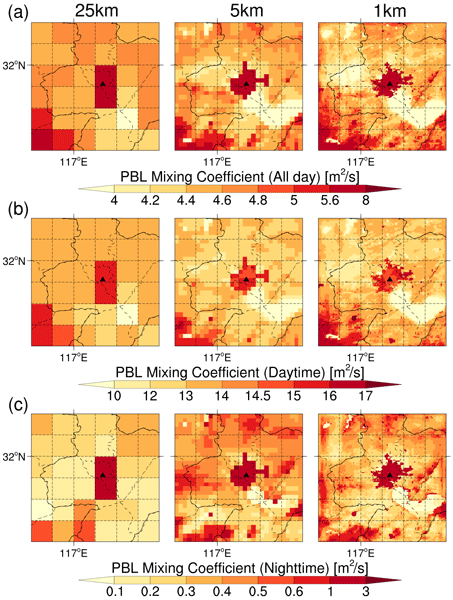
This study investigates the impact of turbulent mixing on black carbon (BC) concentrations in urban areas simulated at 25, 5, and 1 km resolutions. Significant variations in BC and turbulent mixing occur mainly at night. Higher resolutions reduce BC overestimation due to enhanced mixing coefficients and vertical wind fluxes. Small-scale eddies at higher resolutions increase the BC lifetime and column concentrations. Land use and terrain variations across multiple resolutions affect turbulent mixing.
Zihan Xia, Chun Zhao, Zining Yang, Qiuyan Du, Jiawang Feng, Chen Jin, Jun Shi, and Hong An
Atmos. Chem. Phys., 25, 6197–6218, https://doi.org/10.5194/acp-25-6197-2025, https://doi.org/10.5194/acp-25-6197-2025, 2025
Short summary
Short summary
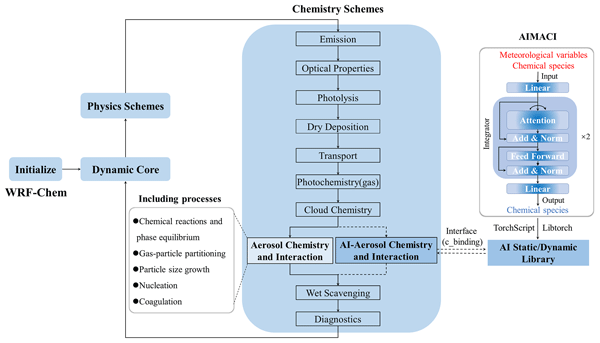
Traditional numerical schemes of aerosol chemistry and interactions (ACI) in atmospheric models are computationally costly and are often simplified or omitted, introducing uncertainties. We use an AI scheme to achieve fast, accurate, and stable end-to-end simulation for full ACI within an atmospheric model, replacing numerical schemes. This innovation is expected to enhance the accuracy and efficiency of ACI simulations in climate models that would otherwise neglect or simplify ACI processes.
Jiawang Feng, Chun Zhao, Qiuyan Du, Zining Yang, and Chen Jin
Geosci. Model Dev., 18, 585–603, https://doi.org/10.5194/gmd-18-585-2025, https://doi.org/10.5194/gmd-18-585-2025, 2025
Short summary
Short summary
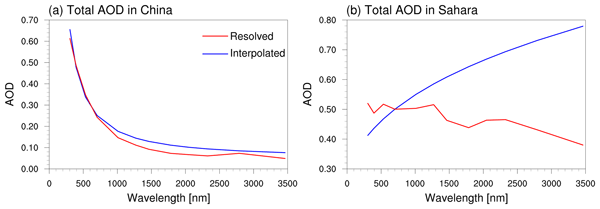
In this study, we improved the calculation of how aerosols in the air interact with radiation in WRF-Chem. The original model used a simplified method, but we developed a more accurate approach. We found that this method significantly changes the properties of the estimated aerosols and their effects on radiation, especially for dust aerosols. It also impacts the simulated weather conditions. Our work highlights the importance of correctly representing aerosol–radiation interactions in models.
Jiawei Yan, Lu Zhang, Yizhou Xu, Xinfeng Ling, Weiwei Ding, Yubin Li, Yuan Wang, and Yuanjian Yang
EGUsphere, https://doi.org/10.5194/egusphere-2026-3201, https://doi.org/10.5194/egusphere-2026-3201, 2026
This preprint is open for discussion and under review for Atmospheric Chemistry and Physics (ACP).
Short summary
Short summary
Paddy fields play an important role in greenhouse gas budgets and carbon cycling. Based on in-situ observation, we found that under calm nighttime conditions, weak turbulent mixing renders carbon dioxide and methane accumulate near the surface, whereas short bursts of turbulence rapidly disperse them upward. This transport processes cannot be fully described by conventional physical framework due to the influence of submeso motions. The understanding is helpful to improve the relevant models.
Zihan Xia, Chun Zhao, Chen Jin, Xin Qu, Zining Yang, Ziyu Zhang, Qike Yang, Jun Gu, Gudongze Li, Jiawang Feng, Shen Du, and Jane Liu
EGUsphere, https://doi.org/10.5194/egusphere-2026-4483, https://doi.org/10.5194/egusphere-2026-4483, 2026
Short summary
Short summary
To study multiscale air pollution, we developed an online gas-phase chemistry framework in a global variable-resolution atmospheric model. Comparing simulations using a global 60km grid and a 4km refinement over North China, we found that regional refinement reverses nighttime ozone errors over complex terrain by capturing slope winds and local nitrogen oxide emissions. It also corrects daily ozone cycles, showing that mesh refinement alters coupled physical and chemical processes across scales.
Yi Gao, Yu Zhao, Meigen Zhang, and Zining Yang
EGUsphere, https://doi.org/10.5194/egusphere-2026-3891, https://doi.org/10.5194/egusphere-2026-3891, 2026
Short summary
Short summary
This study presented how emission reduction affected simultaneous PM2.5 and O3 pollution under different meteorological conditions in a polluted area of China using a regional model. The meteorological conditions were classified into five types based on boundary layer, temperature, and humidity. PM2.5 decreased most under warm humid and stable conditions, while O3 decreased most under warm humid conditions. Aerosol enhanced PM2.5 reduction yet weakened O3 reduction under stable conditions.
Yibo Xue, Chun Zhao, Jiawang Feng, Xin Qu, Zihan Xia, Zining Yang, Xiaoxiao Zhang, Qike Yang, Gudongze Li, Ziyu Zhang, and Jianxi Zhang
EGUsphere, https://doi.org/10.5194/egusphere-2026-3149, https://doi.org/10.5194/egusphere-2026-3149, 2026
Short summary
Short summary
Dust storms can carry large amounts of particles across countries, affecting air quality and climate. We used a global model with finer grids over East Asian dust source regions to simulate a severe March 2021 dust storm. Finer grids better captured local winds, dust emission, transport, and removal by rain. The results show how model resolution can influence dust forecasts and help improve simulations of extreme dust events.
Gudongze Li, Chun Zhao, Yinhua Xia, Li Dong, Yibo Xue, Xiao-Xiao Zhang, Jun Gu, Jiawang Feng, and Zihan Xia
EGUsphere, https://doi.org/10.5194/egusphere-2026-2532, https://doi.org/10.5194/egusphere-2026-2532, 2026
Short summary
Short summary
Simulating how chemical species are advected by air flow is essential for air quality and climate research, but becomes prohibitively slow when hundreds of species are tracked at high resolution. We developed a new transport method that removes the most costly step in current approaches. Tests show it matches existing accuracy while achieving nearly 4-fold computational speedup. The design is transferable to other models, offering a pathway toward faster high-resolution atmospheric simulations.
Xiangyu Pi, Yuanjie Zhang, Xiaoze Xu, and Yubin Li
EGUsphere, https://doi.org/10.5194/egusphere-2026-1778, https://doi.org/10.5194/egusphere-2026-1778, 2026
This preprint is open for discussion and under review for Atmospheric Measurement Techniques (AMT).
Short summary
Short summary
Dropsonde estimates of hurricane boundary layer height are accurate but sparse, whereas reanalysis data are continuous but biased. Here, we develop a merged hurricane boundary layer height dataset over the western Atlantic by combining dropsonde observations and reanalysis data with a machine learning method. The resulting dataset preserves continuous coverage, agrees much better with observations, and more realistically represents boundary layer structure.
Renjie Liu, Yuhong Pu, Renmin Yuan, and Chaoxun Hang
EGUsphere, https://doi.org/10.5194/egusphere-2026-2182, https://doi.org/10.5194/egusphere-2026-2182, 2026
Short summary
Short summary
Measuring airborne particles over water is vital for understanding climate, yet direct observations remain scarce. To address this, we tested a long-distance optical instrument, a large-aperture scintillometer, to measure particle exchange over an inland lake and a coastal bay. Our results demonstrate that this optical method successfully captures particle movements over broad water areas, though dense fog limits its operation. This proves it is a valuable new tool for marine observations.
Yan Wang, Yujia Cao, Haixiao Yu, Shuo Wang, Qiaoyun Hu, Yuyang Chang, Chun Zhao, Zhengqiang Li, and Cheng Chen
EGUsphere, https://doi.org/10.5194/egusphere-2025-5076, https://doi.org/10.5194/egusphere-2025-5076, 2025
Short summary
Short summary
Pyrocumulonimbus (PyroCb) convection during the August 2024 North American wildfires injected smoke aerosols into the upper troposphere and lower stratosphere, altering cloud microphysics. These aerosols induced warming near fire sources and downwind over Western Europe, while producing contrasting effects over fire-source regions, cooling along the US West Coast and warming across North America, demonstrating strong wildfire-aerosol-cloud-radiation feedbacks with transcontinental impacts.
Jiawang Feng, Chun Zhao, Jun Gu, Gudongze Li, Mingyue Xu, Shengfu Lin, and Jie Feng
Atmos. Chem. Phys., 25, 12051–12068, https://doi.org/10.5194/acp-25-12051-2025, https://doi.org/10.5194/acp-25-12051-2025, 2025
Short summary
Short summary
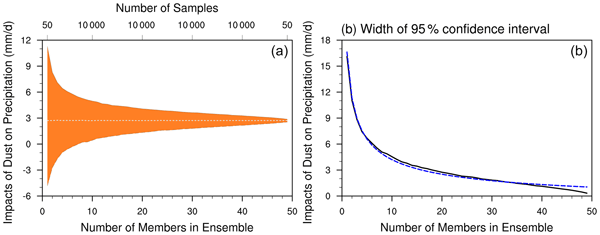
Climate models help in the study of aerosol impacts on regional climate. However, the atmosphere's chaotic nature makes it hard to separate true aerosol impacts from chaotic effects. Our ensemble experiments show that while large-scale aerosol effects are consistent, regional aerosol impacts vary significantly among experiments. We give a formula showing the relationship between chaotic effects and ensemble sizes, emphasizing the necessity of adequate ensemble members to capture reliable aerosol impacts.
Qike Yang, Chun Zhao, Jiawang Feng, Gudongze Li, Jun Gu, Zihan Xia, Mingyue Xu, and Zining Yang
Geosci. Model Dev., 18, 5373–5396, https://doi.org/10.5194/gmd-18-5373-2025, https://doi.org/10.5194/gmd-18-5373-2025, 2025
Short summary
Short summary
This study provides a comprehensive evaluation of unstructured meshes using the integrated Atmospheric Model Across Scales (iAMAS) over Antarctica, encompassing both surface and upper-level meteorological fields. Comparisons with the fifth-generation reanalysis (ERA5) from the European Centre for Medium-Range Weather Forecasts and observational data indicate that iAMAS performs well in simulating the Antarctic atmosphere.
Zining Yang, Qiuyan Du, Qike Yang, Chun Zhao, Gudongze Li, Zihan Xia, Mingyue Xu, Renmin Yuan, Yubin Li, Kaihui Xia, Jun Gu, and Jiawang Feng
Atmos. Chem. Phys., 25, 8831–8857, https://doi.org/10.5194/acp-25-8831-2025, https://doi.org/10.5194/acp-25-8831-2025, 2025
Short summary
Short summary
This study investigates the impact of turbulent mixing on black carbon (BC) concentrations in urban areas simulated at 25, 5, and 1 km resolutions. Significant variations in BC and turbulent mixing occur mainly at night. Higher resolutions reduce BC overestimation due to enhanced mixing coefficients and vertical wind fluxes. Small-scale eddies at higher resolutions increase the BC lifetime and column concentrations. Land use and terrain variations across multiple resolutions affect turbulent mixing.
Zihan Xia, Chun Zhao, Zining Yang, Qiuyan Du, Jiawang Feng, Chen Jin, Jun Shi, and Hong An
Atmos. Chem. Phys., 25, 6197–6218, https://doi.org/10.5194/acp-25-6197-2025, https://doi.org/10.5194/acp-25-6197-2025, 2025
Short summary
Short summary
Traditional numerical schemes of aerosol chemistry and interactions (ACI) in atmospheric models are computationally costly and are often simplified or omitted, introducing uncertainties. We use an AI scheme to achieve fast, accurate, and stable end-to-end simulation for full ACI within an atmospheric model, replacing numerical schemes. This innovation is expected to enhance the accuracy and efficiency of ACI simulations in climate models that would otherwise neglect or simplify ACI processes.
Xia Wang, Tao Che, Xueyin Ruan, Shanna Yue, Jing Wang, Chun Zhao, and Lei Geng
Geosci. Model Dev., 18, 651–670, https://doi.org/10.5194/gmd-18-651-2025, https://doi.org/10.5194/gmd-18-651-2025, 2025
Short summary
Short summary
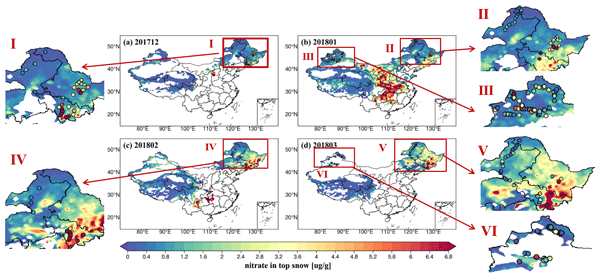
We employed the WRF-Chem model to parameterize atmospheric nitrate deposition in snow and evaluate its performance in simulating snow cover, snow depth, and concentrations of dust and nitrate using new observations from northern China. The results generally exhibit reasonable agreement with field observations in northern China, demonstrating the model's capability to simulate snow properties, including concentrations of reservoir species.
Jiawang Feng, Chun Zhao, Qiuyan Du, Zining Yang, and Chen Jin
Geosci. Model Dev., 18, 585–603, https://doi.org/10.5194/gmd-18-585-2025, https://doi.org/10.5194/gmd-18-585-2025, 2025
Short summary
Short summary
In this study, we improved the calculation of how aerosols in the air interact with radiation in WRF-Chem. The original model used a simplified method, but we developed a more accurate approach. We found that this method significantly changes the properties of the estimated aerosols and their effects on radiation, especially for dust aerosols. It also impacts the simulated weather conditions. Our work highlights the importance of correctly representing aerosol–radiation interactions in models.
Renmin Yuan, Hongsheng Zhang, Jiajia Hua, Hao Liu, Peizhe Wu, Xingyu Zhu, and Jianning Sun
Atmos. Meas. Tech., 17, 2089–2102, https://doi.org/10.5194/amt-17-2089-2024, https://doi.org/10.5194/amt-17-2089-2024, 2024
Short summary
Short summary
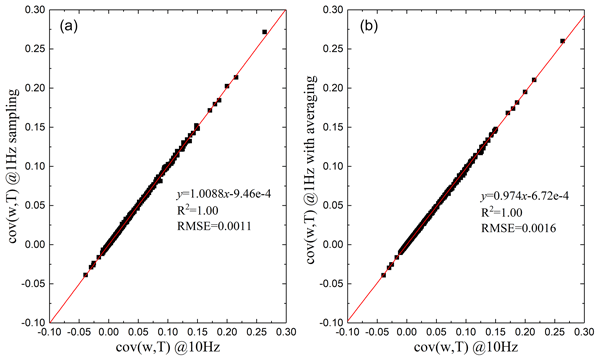
Previously, a new method for atmospheric aerosol flux was proposed, and a large-aperture scintillometer was developed for experimental measurements, but the method was consistently not validated. In this paper, eddy correlation experiments for aerosol vertical transport fluxes were conducted to verify the reliability of the previous large-aperture scintillometer method. The experimental results also show that urban green land is a sink area for aerosol particles.
Shaohui Zhou, Chloe Yuchao Gao, Zexia Duan, Xingya Xi, and Yubin Li
Geosci. Model Dev., 16, 6247–6266, https://doi.org/10.5194/gmd-16-6247-2023, https://doi.org/10.5194/gmd-16-6247-2023, 2023
Short summary
Short summary
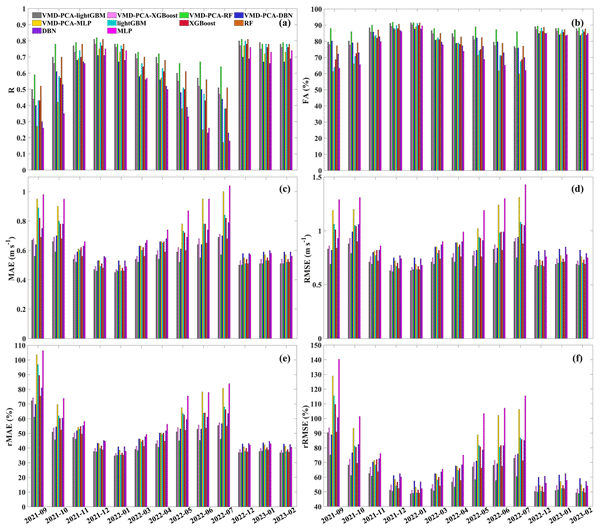
The proposed wind speed correction model (VMD-PCA-RF) demonstrates the highest prediction accuracy and stability in the five southern provinces in nearly a year and at different heights. VMD-PCA-RF evaluation indices for 13 months remain relatively stable: the forecasting accuracy rate FA is above 85 %. In future research, the proposed VMD-PCA-RF algorithm can be extrapolated to the 3 km grid points of the five southern provinces to generate a 3 km grid-corrected wind speed product.
Jianbin Zhang, Zhiqiu Gao, Yubin Li, and Yuncong Jiang
Geosci. Model Dev. Discuss., https://doi.org/10.5194/gmd-2023-187, https://doi.org/10.5194/gmd-2023-187, 2023
Preprint withdrawn
Short summary
Short summary
This study developed a deep learning model called CNN-BiLSTM-AM for convective weather forecasting. The results showed that the CNN-BiLSTM-AM model outperformed traditional machine learning algorithms in predicting convective weather, with higher accuracy as the forecast lead time increased. When compared to subjective forecasts by forecasters, the objective approach of the CNN-BiLSTM-AM model also demonstrated advantages in various metrics.
Naifu Shao, Chunsong Lu, Xingcan Jia, Yuan Wang, Yubin Li, Yan Yin, Bin Zhu, Tianliang Zhao, Duanyang Liu, Shengjie Niu, Shuxian Fan, Shuqi Yan, and Jingjing Lv
Atmos. Chem. Phys., 23, 9873–9890, https://doi.org/10.5194/acp-23-9873-2023, https://doi.org/10.5194/acp-23-9873-2023, 2023
Short summary
Short summary
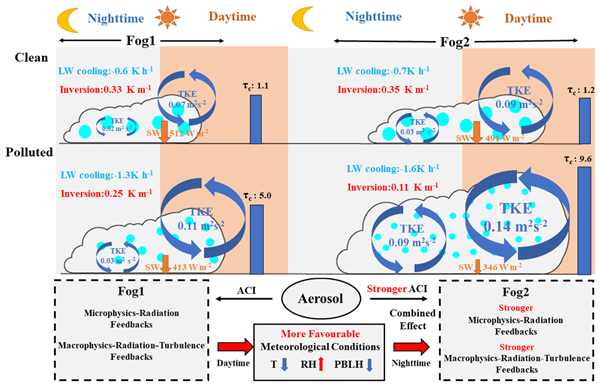
Fog is an important meteorological phenomenon that affects visibility. Aerosols and the planetary boundary layer (PBL) play critical roles in the fog life cycle. In this study, aerosol-induced changes in fog properties become more remarkable in the second fog (Fog2) than in the first fog (Fog1). The reason is that aerosol–cloud interaction (ACI) delays Fog1 dissipation, leading to the PBL meteorological conditions being more conducive to Fog2 formation and to stronger ACI in Fog2.
Qike Yang, Xiaoqing Wu, Xiaodan Hu, Zhiyuan Wang, Chun Qing, Tao Luo, Pengfei Wu, Xianmei Qian, and Yiming Guo
Atmos. Chem. Phys., 23, 6339–6355, https://doi.org/10.5194/acp-23-6339-2023, https://doi.org/10.5194/acp-23-6339-2023, 2023
Short summary
Short summary
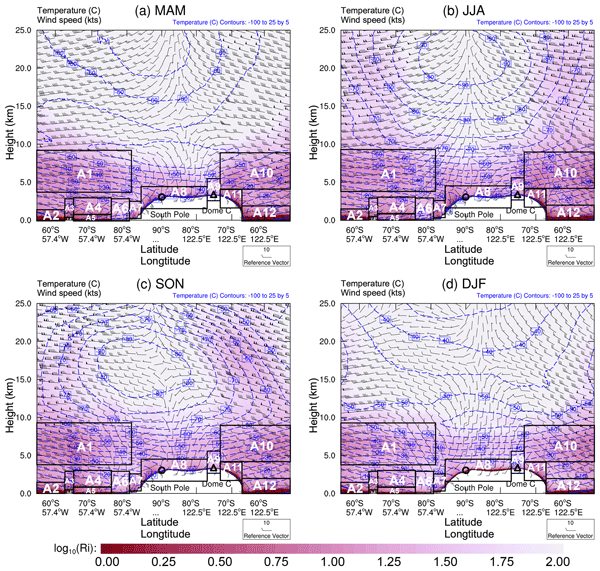
The AMPS-forecasted Richardson number was first comprehensively validated over the Antarctic continent. Some potential underlying reasons for the discrepancies between the forecasts and observations were analyzed. The underlying physical processes of triggering atmospheric turbulence in Antarctica were investigated. Our results suggest that the estimated Richardson number by the AMPS is reasonable and the turbulence conditions in Antarctica are well revealed.
Koichi Sakaguchi, L. Ruby Leung, Colin M. Zarzycki, Jihyeon Jang, Seth McGinnis, Bryce E. Harrop, William C. Skamarock, Andrew Gettelman, Chun Zhao, William J. Gutowski, Stephen Leak, and Linda Mearns
Geosci. Model Dev., 16, 3029–3081, https://doi.org/10.5194/gmd-16-3029-2023, https://doi.org/10.5194/gmd-16-3029-2023, 2023
Short summary
Short summary
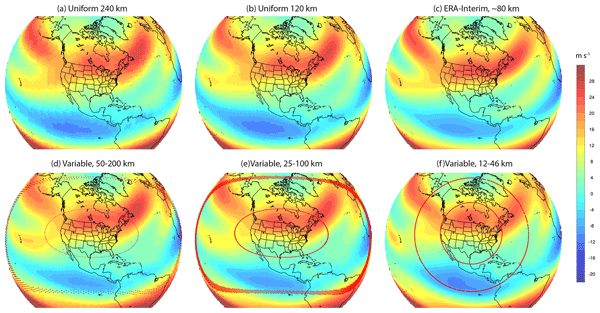
We document details of the regional climate downscaling dataset produced by a global variable-resolution model. The experiment is unique in that it follows a standard protocol designed for coordinated experiments of regional models. We found negligible influence of post-processing on statistical analysis, importance of simulation quality outside of the target region, and computational challenges that our model code faced due to rapidly changing super computer systems.
Jianbin Zhang, Zexia Duan, Shaohui Zhou, Yubin Li, and Zhiqiu Gao
Atmos. Meas. Tech., 16, 2197–2207, https://doi.org/10.5194/amt-16-2197-2023, https://doi.org/10.5194/amt-16-2197-2023, 2023
Short summary
Short summary
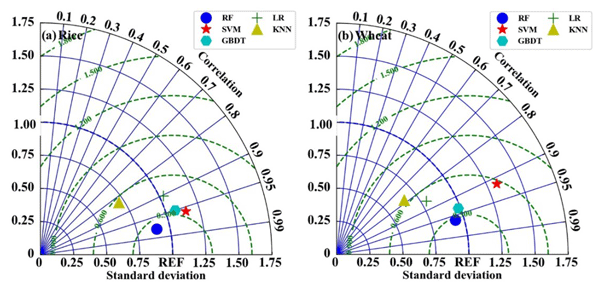
In this paper, we used a random forest model to fill the observation gaps of the fluxes measured during 2015–2019. We found that the net radiation was the most important input variable. And we justified the reliability of the model. Further, it was revealed that the model performed better after relative humidity was removed from the input. Lastly, we compared the results of the model with those of three other machine learning models, and we found that the model outperformed all of them.

Hongxia Zhu, Rui Li, Shuping Yang, Chun Zhao, Zhe Jiang, and Chen Huang
Atmos. Chem. Phys., 23, 2421–2437, https://doi.org/10.5194/acp-23-2421-2023, https://doi.org/10.5194/acp-23-2421-2023, 2023
Short summary
Short summary
The impacts of atmospheric dust aerosols and cloud dynamic conditions on precipitation vertical development in southeastern China were studied using multiple satellite observations. It was found that the precipitating drops under dusty conditions grow faster in the middle layer but slower in the upper and lower layers compared with their pristine counterparts. Quantitative estimation of the sensitivity of the precipitation top temperature to the dust aerosol optical depth is also provided.
Xueyin Ruan, Chun Zhao, Rahul A. Zaveri, Pengzhen He, Xinming Wang, Jingyuan Shao, and Lei Geng
Geosci. Model Dev., 15, 6143–6164, https://doi.org/10.5194/gmd-15-6143-2022, https://doi.org/10.5194/gmd-15-6143-2022, 2022
Short summary
Short summary
Accurate prediction of aerosol pH in chemical transport models is essential to aerosol modeling. This study examines the performance of the Weather Research and Forecasting model coupled with Chemistry (WRF-Chem) on aerosol pH predictions and the sensitivities to emissions of nonvolatile cations and NH3, aerosol-phase state assumption, and heterogeneous sulfate production. Temporal evolution of aerosol pH during haze cycles in Beijing and the driving factors are also presented and discussed.
Lian Zong, Yuanjian Yang, Haiyun Xia, Meng Gao, Zhaobin Sun, Zuofang Zheng, Xianxiang Li, Guicai Ning, Yubin Li, and Simone Lolli
Atmos. Chem. Phys., 22, 6523–6538, https://doi.org/10.5194/acp-22-6523-2022, https://doi.org/10.5194/acp-22-6523-2022, 2022
Short summary
Short summary
Heatwaves (HWs) paired with higher ozone (O3) concentration at surface level pose a serious threat to human health. Taking Beijing as an example, three unfavorable synoptic weather patterns were identified to dominate the compound HW and O3 pollution events. Under the synergistic stress of HWs and O3 pollution, public mortality risk increased, and synoptic patterns and urbanization enhanced the compound risk of events in Beijing by 33.09 % and 18.95 %, respectively.
Shaohui Zhou, Yuanjian Yang, Zhiqiu Gao, Xingya Xi, Zexia Duan, and Yubin Li
Atmos. Meas. Tech., 15, 757–773, https://doi.org/10.5194/amt-15-757-2022, https://doi.org/10.5194/amt-15-757-2022, 2022
Short summary
Short summary
Our research has determined the possible relationship between Weibull natural wind mesoscale parameter c and shape factor k with height under the conditions of a desert steppe terrain in northern China, which has great potential in wind power generation. We have gained an enhanced understanding of the seasonal changes in the surface roughness of the desert grassland and the changes in the incoming wind direction.
Xiaodong Wang, Chun Zhao, Mingyue Xu, Qiuyan Du, Jianqiu Zheng, Yun Bi, Shengfu Lin, and Yali Luo
Geosci. Model Dev., 15, 199–218, https://doi.org/10.5194/gmd-15-199-2022, https://doi.org/10.5194/gmd-15-199-2022, 2022
Short summary
Short summary
Regional models are widely used to investigate aerosol climatic impacts. However, there are few studies examining the sensitivities of modeling results to regional domain size. In this study, the regional model is used to study the aerosol impacts on the East Asian summer monsoon system and focus on the modeling sensitivities to domain size. This study highlights the important impacts of domain size on regional modeling results of aerosol climatic impacts, which may not be limited to East Asia.
Mingshuai Zhang, Chun Zhao, Yuhan Yang, Qiuyan Du, Yonglin Shen, Shengfu Lin, Dasa Gu, Wenjing Su, and Cheng Liu
Geosci. Model Dev., 14, 6155–6175, https://doi.org/10.5194/gmd-14-6155-2021, https://doi.org/10.5194/gmd-14-6155-2021, 2021
Short summary
Short summary
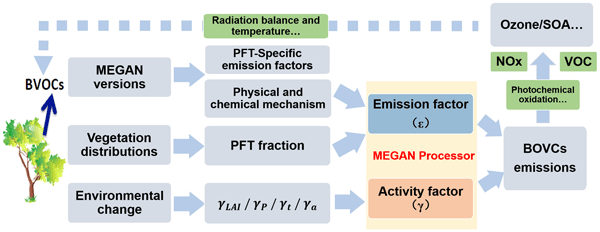
Biogenic volatile organic compounds (BVOCs) can influence atmospheric chemistry and secondary pollutant formation. This study examines the performance of different versions of the Model of Emissions of Gases and Aerosols from Nature (MEGAN) in modeling BVOCs and ozone and their sensitivities to vegetation distributions over eastern China. The results suggest more accurate vegetation distribution and measurements of BVOC emission fluxes are needed to reduce the uncertainties.
Cited articles
Atkinson, B. W.: Meso-scale atmospheric circulations, Academic Press, London, 495 pp., ISBN 978-0120659609, 1981.
Binkowski, F. S. and Shankar, U.: The Regional Particulate Matter Model, 1, Model description and preliminary results, J. Geophys. Res. Atmos., 100, 26191–26209, https://doi.org/10.1029/95jd02093, 1995.
Brook, J. R., Makar, P. A., Sills, D. M. L., Hayden, K. L., and McLaren, R.: Exploring the nature of air quality over southwestern Ontario: main findings from the Border Air Quality and Meteorology Study, Atmos. Chem. Phys., 13, 10461–10482, https://doi.org/10.5194/acp-13-10461-2013, 2013.
Burley, J. D., Theiss, S., Bytnerowicz, A., Gertler, A., Schilling, S., and Zielinska, B.: Surface ozone in the Lake Tahoe Basin, Atmos. Environ., 109, 351–369, https://doi.org/10.1016/j.atmosenv.2015.02.001, 2015.
Capps, S. L., Hu, Y., and Russell, A. G.: Assessing Near-Field and Downwind Impacts of Reactivity-Based Substitutions, J. Air Waste Manag. Assoc., 60, 316–327, https://doi.org/10.3155/1047-3289.60.3.316, 2010.
Chai, F., Gao, J., Chen, Z., Wang, S., Zhang, Y., Zhang, J., Zhang, H., Yun, Y., and Ren, C.: Spatial and temporal variation of particulate matter and gaseous pollutants in 26 cities in China, J. Environ. Sci., 26, 75–82, https://doi.org/10.1016/s1001-0742(13)60383-6, 2014.
Chapman, E. G., Gustafson Jr., W. I., Easter, R. C., Barnard, J. C., Ghan, S. J., Pekour, M. S., and Fast, J. D.: Coupling aerosol-cloud-radiative processes in the WRF-Chem model: Investigating the radiative impact of elevated point sources, Atmos. Chem. Phys., 9, 945–964, https://doi.org/10.5194/acp-9-945-2009, 2009.
Chen, F. and Dudhia, J.: Coupling an Advanced Land Surface–Hydrology Model with the Penn State–NCAR MM5 Modeling System. Part I: Model Implementation and Sensitivity, Mon. Weather Rev., 129, 569–585, 2001.
Chen, J. and Hoek, G.: Long-term exposure to PM and all-cause and cause-specific mortality: A systematic review and meta-analysis, Environ. Int., 143, https://doi.org/10.1016/j.envint.2020.105974, 2020.
Chen, X., Chen, Y., Shimizu, T., Niu, J., Nakagami, K. i., Qian, X., Jia, B., Nakajima, J., Han, J., and Li, J.: Water resources management in the urban agglomeration of the Lake Biwa region, Japan: An ecosystem services-based sustainability assessment, Sci. Total Environ., 586, 174–187, https://doi.org/10.1016/j.scitotenv.2017.01.197, 2017.
CMA, 2018: Technical Specifications for Maintenance of Regional Automatic Weather Stations, QX/T 465–201, http://cmastd.cmatc.cn/standardView.jspx?id=3076 (last access: 5 May 2022), 2018 (in Chinese).
Dentener, F., Kinne, S., Bond, T., Boucher, O., Cofala, J., Generoso, S., Ginoux, P., Gong, S., Hoelzemann, J. J., Ito, A., Marelli, L., Penner, J. E., Putaud, J.-P., Textor, C., Schulz, M., van der Werf, G. R., and Wilson, J.: Emissions of primary aerosol and precursor gases in the years 2000 and 1750 prescribed data-sets for AeroCom, Atmos. Chem. Phys., 6, 4321–4344, https://doi.org/10.5194/acp-6-4321-2006, 2006.
Du, Q., Zhao, C., Zhang, M., Dong, X., Chen, Y., Liu, Z., Hu, Z., Zhang, Q., Li, Y., Yuan, R., and Miao, S.: Modeling diurnal variation of surface PM2.5 concentrations over East China with WRF-Chem: impacts from boundary-layer mixing and anthropogenic emission, Atmos. Chem. Phys., 20, 2839–2863, https://doi.org/10.5194/acp-20-2839-2020, 2020.
Dye, T. S., Roberts, P. T., and Korc, M. E.: Observations of Transport Processes for Ozone and Ozone Precursors during the 1991 Lake Michigan Ozone Study, J. Appl. Meteorol. Clim., 34, 1877–1889, https://doi.org/10.1175/1520-0450(1995)034<1877:Ootpfo>2.0.Co;2, 1995.
Estevez, J., Gavilan, P., and Giraldez, J. V.: Guidelines on validation procedures for meteorological data from automatic weather stations, J. Hydrol., 402, 144–154, https://doi.org/10.1016/j.jhydrol.2011.02.031, 2011.
Fast, J. D. and Heilman, W. E.: Simulated sensitivity of seasonal ozone exposure in the Great Lakes region to changes in anthropogenic emissions in the presence of interannual variability, Atmos. Environ., 39, 5291–5306, https://doi.org/10.1016/j.atmosenv.2005.05.032, 2005.
Fosco, T. and Schmeling, M.: Aerosol ion concentration dependence on atmospheric conditions in Chicago, Atmos. Environ., 40, 6638–6649, https://doi.org/10.1016/j.atmosenv.2006.05.061, 2006.
Garratt, J. R.: The internal boundary layer – a review, Bound.-Layer Meteorol., 50, 171–203, https://doi.org/10.1007/bf00120524, 1990.
Geng, G., Liu, Y., Liu, Y., Liu, S., Cheng, J., Yan, L., Wu, N., Hu, H., Tong, D., Zheng, B., Yin, Z., He, K., and Zhang, Q.: Efficacy of China's clean air actions to tackle PM2.5 pollution between 2013 and 2020, Nat. Geosci., 17, https://doi.org/10.1038/s41561-024-01540-z, 2024a.
Geng, G. N., Liu, Y. X., Liu, Y., Liu, S. G., Cheng, J., Yan, L., Wu, N. N., Hu, H. W., Tong, D., Zheng, B., Yin, Z. C., He, K. B., and Zhang, Q.: Efficacy of China's clean air actions to tackle PM2.5 pollution between 2013 and 2020, Nat. Geosci., 17, https://doi.org/10.1038/s41561-024-01540-z, 2024b.
Guo, H., Cheng, T., Gu, X., Wang, Y., Chen, H., Bao, F., Shi, S., Xu, B., Wang, W., Zuo, X., Zhang, X., and Meng, C.: Assessment of PM2.5 concentrations and exposure throughout China using ground observations, Sci. Total Environ., 601, 1024–1030, https://doi.org/10.1016/j.scitotenv.2017.05.263, 2017.
Guo, J., Deng, M., Lee, S. S., Wang, F., Li, Z., Zhai, P., Liu, H., Lv, W., Yao, W., and Li, X.: Delaying precipitation and lightning by air pollution over the Pearl River Delta. Part I: Observational analyses, J. Geophys. Res. Atmos., 121, 6472–6488, https://doi.org/10.1002/2015jd023257, 2016.
Guo, S., Hu, M., Zamora, M. L., Peng, J., Shang, D., Zheng, J., Du, Z., Wu, Z., Shao, M., Zeng, L., Molina, M. J., and Zhang, R.: Elucidating severe urban haze formation in China, Proc. Natl. Acad. Sci. USA, 111, 17373–17378, https://doi.org/10.1073/pnas.1419604111, 2014.
Gustafson, W. I., Jr., Chapman, E. G., Ghan, S. J., Easter, R. C., and Fast, J. D.: Impact on modeled cloud characteristics due to simplified treatment of uniform cloud condensation nuclei during NEAQS 2004, Geophys. Res. Lett., 34, https://doi.org/10.1029/2007gl030021, 2007.
Harris, L. and Kotamarthi, V. R.: The characteristics of the Chicago Lake breeze and its effects on trace particle transport: Results from an episodic event simulation, J. Appl. Meteorol. Climatol., 44, 1637–1654, https://doi.org/10.1175/jam2301.1, 2005.
Hayden, K. L., Sills, D. M. L., Brook, J. R., Li, S.-M., Makar, P. A., Markovic, M. Z., Liu, P., Anlauf, K. G., O'Brien, J. M., Li, Q., and McLaren, R.: Aircraft study of the impact of lake-breeze circulations on trace gases and particles during BAQS-Met 2007, Atmos. Chem. Phys., 11, 10173–10192, https://doi.org/10.5194/acp-11-10173-2011, 2011.
He, J., Gong, S., Yu, Y., Yu, L., Wu, L., Mao, H., Song, C., Zhao, S., Liu, H., Li, X., and Li, R.: Air pollution characteristics and their relation to meteorological conditions during 2014-2015 in major Chinese cities, Environ. Pollut., 223, 484–496, https://doi.org/10.1016/j.envpol.2017.01.050, 2017.
Ho, H. C., Wong, M. S., Yang, L., Shi, W., Yang, J., Bilal, M., and Chan, T.-C.: Spatiotemporal influence of temperature, air quality, and urban environment on cause-specific mortality during hazy days, Environ. Int., 112, 10–22, https://doi.org/10.1016/j.envint.2017.12.001, 2018.
Hong, S.-Y., Noh, Y., and Dudhia, J.: A new vertical diffusion package with an explicit treatment of entrainment processes, Mon. Weather Rev., 134, 2318–2341, https://doi.org/10.1175/mwr3199.1, 2006.
Hu, J., Wang, Y., Ying, Q., and Zhang, H.: Spatial and temporal variability of PM2.5 and PM10 over the North China Plain and the Yangtze River Delta, China, Atmos. Environ., 95, 598–609, https://doi.org/10.1016/j.atmosenv.2014.07.019, 2014a.
Hu, J., Zhang, H., Chen, S., Ying, Q., Wiedinmyer, C., Vandenberghe, F., and Kleeman, M. J.: Identifying PM2.5 and PM0.1 Sources for Epidemiological Studies in California, Environ. Sci. Technol., 48, 4980–4990, https://doi.org/10.1021/es404810z, 2014b.
Hu, L. and Li, Q.: Greenspace, bluespace, and their interactive influence on urban thermal environments, Environ. Res. Lett., 15, https://doi.org/10.1088/1748-9326/ab6c30, 2020.
Hu, X.-M. and Xue, M.: Influence of Synoptic Sea-Breeze Fronts on the Urban Heat Island Intensity in Dallas-Fort Worth, Texas, Mon. Weather Rev., 144, 1487–1507, https://doi.org/10.1175/mwr-d-15-0201.1, 2016.
Hu, X.-M., Ma, Z., Lin, W., Zhang, H., Hu, J., Wang, Y., Xu, X., Fuentes, J. D., and Xue, M.: Impact of the Loess Plateau on the atmospheric boundary layer structure and air quality in the North China Plain: A case study, Sci. Total Environ., 499, 228–237, https://doi.org/10.1016/j.scitotenv.2014.08.053, 2014c.
Hu, Z., Huang, J., Zhao, C., Bi, J., Jin, Q., Qian, Y., Leung, L. R., Feng, T., Chen, S., and Ma, J.: Modeling the contributions of Northern Hemisphere dust sources to dust outflow from East Asia, Atmos. Environ., 202, 234–243, https://doi.org/10.1016/j.atmosenv.2019.01.022, 2019.
Huang, R.-J., Zhang, Y., Bozzetti, C., Ho, K.-F., Cao, J.-J., Han, Y., Daellenbach, K. R., Slowik, J. G., Platt, S. M., Canonaco, F., Zotter, P., Wolf, R., Pieber, S. M., Bruns, E. A., Crippa, M., Ciarelli, G., Piazzalunga, A., Schwikowski, M., Abbaszade, G., Schnelle-Kreis, J., Zimmermann, R., An, Z., Szidat, S., Baltensperger, U., El Haddad, I., and Prevot, A. S. H.: High secondary aerosol contribution to particulate pollution during haze events in China, Nature, 514, 218–222, https://doi.org/10.1038/nature13774, 2014.
Iacono, M. J., Mlawer, E. J., Clough, S. A., and Morcrette, J. J.: Impact of an improved longwave radiation model, RRTM, on the energy budget and thermodynamic properties of the NCAR community climate model, CCM3, J. Geophys Res. Atmos., 105, 14873–14890, https://doi.org/10.1029/2000jd900091, 2000.
Janssens-Maenhout, G., Crippa, M., Guizzardi, D., Dentener, F., Muntean, M., Pouliot, G., Keating, T., Zhang, Q., Kurokawa, J., Wankmüller, R., Denier van der Gon, H., Kuenen, J. J. P., Klimont, Z., Frost, G., Darras, S., Koffi, B., and Li, M.: HTAP_v2.2: a mosaic of regional and global emission grid maps for 2008 and 2010 to study hemispheric transport of air pollution, Atmos. Chem. Phys., 15, 11411–11432, https://doi.org/10.5194/acp-15-11411-2015, 2015.
Jiang, Z., Huo, F., Ma, H., Song, J., and Dai, A.: Impact of Chinese Urbanization and Aerosol Emissions on the East Asian Summer Monsoon, J. Clim., 30, 1019–1039, https://doi.org/10.1175/jcli-d-15-0593.1, 2017.
Kain, J. S.: The Kain-Fritsch convective parameterization: An update, J. Appl. Meteorol. Climatol., 43, 170–181, https://doi.org/10.1175/1520-0450(2004)043<0170:Tkcpau>2.0.Co;2, 2004.
Lei, Y., Zhang, Q., He, K. B., and Streets, D. G.: Primary anthropogenic aerosol emission trends for China, 1990–2005, Atmos. Chem. Phys., 11, 931–954, https://doi.org/10.5194/acp-11-931-2011, 2011.
Levy, I., Dayan, U., and Mahrer, Y.: A five-year study of coastal recirculation and its effect on air pollutants over the East Mediterranean region, J. Geophys. Res. Atmos., 113, https://doi.org/10.1029/2007jd009529, 2008.
Levy, I., Makar, P. A., Sills, D., Zhang, J., Hayden, K. L., Mihele, C., Narayan, J., Moran, M. D., Sjostedt, S., and Brook, J.: Unraveling the complex local-scale flows influencing ozone patterns in the southern Great Lakes of North America, Atmos. Chem. Phys., 10, 10895–10915, https://doi.org/10.5194/acp-10-10895-2010, 2010.
Li, H., Ren, G., and Li, W.: Diurnal and intra-season variation of warm-season temperature in coastal zone of Qinghai Lake, Theor. Appl. Climatol., 138, 1203–1217, https://doi.org/10.1007/s00704-019-02893-x, 2019.
Li, M., Liu, H., Geng, G., Hong, C., Liu, F., Song, Y., Tong, D., Zheng, B., Cui, H., Man, H., Zhang, Q., and He, K.: Anthropogenic emission inventories in China: a review, Natl. Sci. Rev., 4, 834–866, https://doi.org/10.1093/nsr/nwx150, 2017a.
Li, M., Zhang, Q., Kurokawa, J.-I., Woo, J.-H., He, K., Lu, Z., Ohara, T., Song, Y., Streets, D. G., Carmichael, G. R., Cheng, Y., Hong, C., Huo, H., Jiang, X., Kang, S., Liu, F., Su, H., and Zheng, B.: MIX: a mosaic Asian anthropogenic emission inventory under the international collaboration framework of the MICS-Asia and HTAP, Atmos. Chem. Phys., 17, 935–963, https://doi.org/10.5194/acp-17-935-2017, 2017b.
Li, Y., An, J., and Gultepe, I.: Effects of Additional HONO Sources on Visibility over the North China Plain, Adv. Atmos. Sci., 31, 1221–1232, https://doi.org/10.1007/s00376-014-4019-1, 2014.
Li, Z., Guo, J., Ding, A., Liao, H., Liu, J., Sun, Y., Wang, T., Xue, H., Zhang, H., and Zhu, B.: Aerosol and boundary-layer interactions and impact on air quality, Natl. Sci. Rev., 4, 810–833, https://doi.org/10.1093/nsr/nwx117, 2017c.
Li, Z., Li, C., Chen, H., Tsay, S. C., Holben, B., Huang, J., Li, B., Maring, H., Qian, Y., Shi, G., Xia, X., Yin, Y., Zheng, Y., and Zhuang, G.: East Asian Studies of Tropospheric Aerosols and their Impact on Regional Climate (EAST-AIRC): An overview, J. Geophys. Res. Atmos., 116, https://doi.org/10.1029/2010jd015257, 2011.
Li, Z., Lau, W. K. M., Ramanathan, V., Wu, G., Ding, Y., Manoj, M. G., Liu, J., Qian, Y., Li, J., Zhou, T., Fan, J., Rosenfeld, D., Ming, Y., Wang, Y., Huang, J., Wang, B., Xu, X., Lee, S. S., Cribb, M., Zhang, F., Yang, X., Zhao, C., Takemura, T., Wang, K., Xia, X., Yin, Y., Zhang, H., Guo, J., Zhai, P. M., Sugimoto, N., Babu, S. S., and Brasseur, G. P.: Aerosol and monsoon climate interactions over Asia, Rev. Geophys., 54, 866–929, https://doi.org/10.1002/2015rg000500, 2016.
Liu, Z., Gao, W., Yu, Y., Hu, B., Xin, J., Sun, Y., Wang, L., Wang, G., Bi, X., Zhang, G., Xu, H., Cong, Z., He, J., Xu, J., and Wang, Y.: Characteristics of PM2.5 mass concentrations and chemical species in urban and background areas of China: emerging results from the CARE-China network, Atmos. Chem. Phys., 18, 8849–8871, https://doi.org/10.5194/acp-18-8849-2018, 2018.
Lu, D., Xu, J., Yang, D., and Zhao, J.: Spatio-temporal variation and influence factors of PM2.5 concentrations in China from 1998 to 2014, Atmos. Pollut. Res., 8, 1151–1159, https://doi.org/10.1016/j.apr.2017.05.005, 2017.
Lyons, W. A.: The climatology and prediction of the Chicago lake breeze, J. Appl. Meteorol. Climatol., 11, 1259–1270, 1972.
Lyons, W. A. and Olsson, L. E.: Detailed mesometeorological studies of air pollution dispersion in the Chicago lake breeze, Mon. Weather Rev., 101, 387–403, 1973.
Lyons, W. A., Pielke, R. A., Tremback, C. J., Walko, R. L., Moon, D. A., and Keen, C. S.: Modeling impacts of mesoscale vertical motions upon coastal zone air pollution dispersion, Atmos. Environ., 29, 283–301, https://doi.org/10.1016/1352-2310(94)00217-9, 1995.
Makar, P. A., Zhang, J., Gong, W., Stroud, C., Sills, D., Hayden, K. L., Brook, J., Levy, I., Mihele, C., Moran, M. D., Tarasick, D. W., He, H., and Plummer, D.: Mass tracking for chemical analysis: the causes of ozone formation in southern Ontario during BAQS-Met 2007, Atmos. Chem. Phys., 10, 11151–11173, https://doi.org/10.5194/acp-10-11151-2010, 2010.
Miao, Y., Liu, S., Chen, B., Zhang, B., Wang, S., and Li, S.: Simulating urban flow and dispersion in Beijing by coupling a CFD model with the WRF model, Adv. Atmos. Sci., 30, 1663–1678, https://doi.org/10.1007/s00376-013-2234-9, 2013.
Miao, Y., Guo, J., Liu, S., Liu, H., Li, Z., Zhang, W., and Zhai, P.: Classification of summertime synoptic patterns in Beijing and their associations with boundary layer structure affecting aerosol pollution, Atmos. Chem. Phys., 17, 3097–3110, https://doi.org/10.5194/acp-17-3097-2017, 2017.
Mlawer, E. J., Taubman, S. J., Brown, P. D., Iacono, M. J., and Clough, S. A.: Radiative transfer for inhomogeneous atmospheres: RRTM, a validated correlated-k model for the longwave, J. Geophys. Res. Atmos., 102, 16663–16682, https://doi.org/10.1029/97jd00237, 1997.
Monks, P. S., Archibald, A. T., Colette, A., Cooper, O., Coyle, M., Derwent, R., Fowler, D., Granier, C., Law, K. S., Mills, G. E., Stevenson, D. S., Tarasova, O., Thouret, V., von Schneidemesser, E., Sommariva, R., Wild, O., and Williams, M. L.: Tropospheric ozone and its precursors from the urban to the global scale from air quality to short-lived climate forcer, Atmos. Chem. Phys., 15, 8889–8973, https://doi.org/10.5194/acp-15-8889-2015, 2015.
Morrison, H., Thompson, G., and Tatarskii, V.: Impact of Cloud Microphysics on the Development of Trailing Stratiform Precipitation in a Simulated Squall Line: Comparison of One- and Two-Moment Schemes, Mon. Weather Rev., 137, 991–1007, https://doi.org/10.1175/2008mwr2556.1, 2009.
NCEP: NCEP FNL operational model global tropospheric analyses, continuing from July 1999, Research Data Archive at the National Center for Atmospheric Research, Computational and Information Systems Laboratory [data set], https://doi.org/10.5065/D6M043C6, 2000.
Peng, J., Huang, Y., Liu, T., Jiang, L., Xu, Z., Xing, W., Feng, X., and De Maeyer, P.: Atmospheric nitrogen pollution in urban agglomeration and its impact on alpine lake-case study of Tianchi Lake, Sci. Total Environ., 688, 312–323, https://doi.org/10.1016/j.scitotenv.2019.06.202, 2019.
Sills, D. M. L., Brook, J. R., Levy, I., Makar, P. A., Zhang, J., and Taylor, P. A.: Lake breezes in the southern Great Lakes region and their influence during BAQS-Met 2007, Atmos. Chem. Phys., 11, 7955–7973, https://doi.org/10.5194/acp-11-7955-2011, 2011.
Steiner, A. L., Mermelstein, D., Cheng, S. J., Twine, T. E., and Oliphant, A.: Observed Impact of Atmospheric Aerosols on the Surface Energy Budget, Earth Interact., 17, https://doi.org/10.1175/2013ei000523.1, 2013.
Stull, R. B.: An Introduction to Boundary Layer Meteorology, Atmospheric Sciences Library, Kluwer Academic Publishers, Dordrecht, https://doi.org/10.1007/978-94-009-3027-8, 1988.
Unger, N., Menon, S., Koch, D. M., and Shindell, D. T.: Impacts of aerosol-cloud interactions on past and future changes in tropospheric composition, Atmos. Chem. Phys., 9, 4115–4129, https://doi.org/10.5194/acp-9-4115-2009, 2009.
Wang, F., Wang, Y., and Gao, M.: Impact of lake-atmosphere exchange on summertime ozone in the Lake Taihu region, Atmos. Environ., 300, https://doi.org/10.1016/j.atmosenv.2023.119664, 2023.
Wang, Y., Ying, Q., Hu, J., and Zhang, H.: Spatial and temporal variations of six criteria air pollutants in 31 provincial capital cities in China during 2013–2014, Environ. Int., 73, 413–422, https://doi.org/10.1016/j.envint.2014.08.016, 2014.
Wang, Y., Gao, Y., Qin, H., Huang, J., Liu, C., Hu, C., Wang, W., Liu, S., and Lee, X.: Spatiotemporal Characteristics of Lake Breezes over Lake Taihu, China, J. Appl. Meteorol. Climatol. and Climatology, 56, 2053–2065, https://doi.org/10.1175/jamc-d-16-0220.1, 2017.
Wei, J., Li, Z., Pinker, R. T., Wang, J., Sun, L., Xue, W., Li, R., and Cribb, M.: Himawari-8-derived diurnal variations in ground-level PM2.5 pollution across China using the fast space-time Light Gradient Boosting Machine (LightGBM), Atmos. Chem. Phys., 21, 7863–7880, https://doi.org/10.5194/acp-21-7863-2021, 2021.
Wentworth, G. R., Murphy, J. G., and Sills, D. M. L.: Impact of lake breezes on ozone and nitrogen oxides in the Greater Toronto Area, Atmos. Environ., 109, 52–60, https://doi.org/10.1016/j.atmosenv.2015.03.002, 2015.
Wiedinmyer, C., Akagi, S. K., Yokelson, R. J., Emmons, L. K., Al-Saadi, J. A., Orlando, J. J., and Soja, A. J.: The Fire INventory from NCAR (FINN): a high resolution global model to estimate the emissions from open burning, Geosci. Model Dev., 4, 625–641, https://doi.org/10.5194/gmd-4-625-2011, 2011.
Wild, O., Zhu, X., and Prather, M. J.: Fast-j: Accurate simulation of in- and below-cloud photolysis in tropospheric chemical models, J. Atmos. Chem., 37, 245–282, https://doi.org/10.1023/a:1006415919030, 2000.
WRAP: 2002 Fire Emission Inventory for the WRAP Region – Phase II, Project No. 178-6, http://www.wrapair.org/forums/fejf/tasks/FEJFtask7PhaseII.html (last access: 30 September 2021), 2005.
Xia, Z., Zhao, C., Yang, Z., Du, Q., Jia, W., Jin, C., Shi, J., and An, H.: Source code for Hybrid WRFCHEM with Physics and AI Schemes (Aerosol Chemistry and Interactions) (v1.0), Zenodo [code], https://doi.org/10.5281/zenodo.15702248, 2024.
Yang, Y., Ruan, Z., Wang, X., Yang, Y., Mason, T. G., Lin, H., and Tian, L.: Short-term and long-term exposures to fine particulate matter constituents and health: A systematic review and meta-analysis, Environ. Pollut., 247, 874–882, https://doi.org/10.1016/j.envpol.2018.12.060, 2019.
Yang, Z., Du, Q., Yang, Q., Zhao, C., Li, G., Xia, Z., Xu, M., Yuan, R., Li, Y., Xia, K., Gu, J., and Feng, J.: Modeling urban pollutant transport at multiple resolutions: impacts of turbulent mixing, Atmos. Chem. Phys., 25, 8831–8857, https://doi.org/10.5194/acp-25-8831-2025, 2025.
Yue, X., Ma, N. L., Sonne, C., Guan, R., Lam, S. S., Le, Q. V., Chen, X., Yang, Y., Gu, H., Rinklebe, J., and Peng, W.: Mitigation of indoor air pollution: A review of recent advances in adsorption materials and catalytic oxidation, J. Hazard. Mater., 405, https://doi.org/10.1016/j.jhazmat.2020.124138, 2021.
Zaveri, R. A. and Peters, L. K.: A new lumped structure photochemical mechanism for large-scale applications, J. Geophys. Res. Atmos., 104, 30387–30415, https://doi.org/10.1029/1999jd900876, 1999.
Zhang, H., Wang, Y., Hu, J., Ying, Q., and Hu, X.-M.: Relationships between meteorological parameters and criteria air pollutants in three megacities in China, Environ. Res., 140, 242–254, https://doi.org/10.1016/j.envres.2015.04.004, 2015a.
Zhang, L., Zhu, B., Gao, J., and Kang, H.: Impact of Taihu Lake on city ozone in the Yangtze River Delta, Adv. Atmos. Sci., 34, 226–234, https://doi.org/10.1007/s00376-016-6099-6, 2017.
Zhang, M., Zhao, C., Yang, Y., Du, Q., Shen, Y., Lin, S., Gu, D., Su, W., and Liu, C.: Modeling sensitivities of BVOCs to different versions of MEGAN emission schemes in WRF-Chem (v3.6) and its impacts over eastern China, Geosci. Model Dev., 14, 6155–6175, https://doi.org/10.5194/gmd-14-6155-2021, 2021.
Zhang, R., Wang, G., Guo, S., Zarnora, M. L., Ying, Q., Lin, Y., Wang, W., Hu, M., and Wang, Y.: Formation of Urban Fine Particulate Matter, Chem. Rev., 115, 3803–3855, https://doi.org/10.1021/acs.chemrev.5b00067, 2015b.
Zhang, R., Jing, J., Tao, J., Hsu, S.-C., Wang, G., Cao, J., Lee, C. S. L., Zhu, L., Chen, Z., Zhao, Y., and Shen, Z.: Chemical characterization and source apportionment of PM2.5 in Beijing: seasonal perspective, Atmos. Chem. Phys., 13, 7053–7074, https://doi.org/10.5194/acp-13-7053-2013, 2013.
Zhang, X. Y., Wang, Y. Q., Niu, T., Zhang, X. C., Gong, S. L., Zhang, Y. M., and Sun, J. Y.: Atmospheric aerosol compositions in China: spatial/temporal variability, chemical signature, regional haze distribution and comparisons with global aerosols, Atmos. Chem. Phys., 12, 779–799, https://doi.org/10.5194/acp-12-779-2012, 2012.
Zhao, C., Liu, X., Ruby Leung, L., and Hagos, S.: Radiative impact of mineral dust on monsoon precipitation variability over West Africa, Atmos. Chem. Phys., 11, 1879–1893, https://doi.org/10.5194/acp-11-1879-2011, 2011.
Zhao, C., Leung, L. R., Easter, R., Hand, J., and Avise, J.: Characterization of speciated aerosol direct radiative forcing over California, J. Geophys. Res. Atmos., 118, 2372–2388, https://doi.org/10.1029/2012jd018364, 2013a.
Zhao, C., Chen, S., Leung, L. R., Qian, Y., Kok, J. F., Zaveri, R. A., and Huang, J.: Uncertainty in modeling dust mass balance and radiative forcing from size parameterization, Atmos. Chem. Phys., 13, 10733–10753, https://doi.org/10.5194/acp-13-10733-2013, 2013b.
Zhao, C., Hu, Z., Qian, Y., Ruby Leung, L., Huang, J., Huang, M., Jin, J., Flanner, M. G., Zhang, R., Wang, H., Yan, H., Lu, Z., and Streets, D. G.: Simulating black carbon and dust and their radiative forcing in seasonal snow: a case study over North China with field campaign measurements, Atmos. Chem. Phys., 14, 11475–11491, https://doi.org/10.5194/acp-14-11475-2014, 2014.
Zhao, C., Huang, M., Fast, J. D., Berg, L. K., Qian, Y., Guenther, A., Gu, D., Shrivastava, M., Liu, Y., Walters, S., Pfister, G., Jin, J., Shilling, J. E., and Warneke, C.: Sensitivity of biogenic volatile organic compounds to land surface parameterizations and vegetation distributions in California, Geosci. Model Dev., 9, 1959–1976, https://doi.org/10.5194/gmd-9-1959-2016, 2016.
Zheng, B., Tong, D., Li, M., Liu, F., Hong, C., Geng, G., Li, H., Li, X., Peng, L., Qi, J., Yan, L., Zhang, Y., Zhao, H., Zheng, Y., He, K., and Zhang, Q.: Trends in China's anthropogenic emissions since 2010 as the consequence of clean air actions, Atmos. Chem. Phys., 18, 14095–14111, https://doi.org/10.5194/acp-18-14095-2018, 2018.
Short summary
This study uses 1 km resolution Weather Research and Forecasting model coupled with
Chemistry (WRF-Chem) simulations to investigate how Lake Chaohu affects fine
particulate matter (PM2.5) in Hefei. The lake shows a diurnal reversal, increasing
daytime pollution by secondary aerosol formation and storage zones with suppressed
mixing and low deposition, while purifying urban air at night through enhanced vertical
mixing. Lake emission treatment affects lake-urban air quality assessments.
Chemistry (WRF-Chem) simulations to investigate how Lake Chaohu affects fine
particulate matter (PM2.5) in Hefei. The lake shows a diurnal reversal, increasing
daytime pollution by secondary aerosol formation and storage zones with suppressed
mixing and low deposition, while purifying urban air at night through enhanced vertical
mixing. Lake emission treatment affects lake-urban air quality assessments.
This study uses 1 km resolution Weather Research and Forecasting model coupled with
Chemistry...
Chemistry...


Altmetrics
Final-revised paper
Preprint