
Articles | Volume 26, issue 10
https://doi.org/10.5194/acp-26-6557-2026
© Author(s) 2026. This work is distributed under
the Creative Commons Attribution 4.0 License.
the Creative Commons Attribution 4.0 License.
https://doi.org/10.5194/acp-26-6557-2026
© Author(s) 2026. This work is distributed under
the Creative Commons Attribution 4.0 License.
the Creative Commons Attribution 4.0 License.
Research article
| 
18 May 2026
Research article |
| 18 May 2026
| 18 May 2026
Surface ozone distribution and trends over Ireland: insights from long-term measurement record and source attribution modelling
Nikhil Korhale
School of Natural Sciences, Physics, Ryan Institute's Centre for Climate & Air Pollution Studies, University of Galway, Galway, Ireland
Tabish Ansari
Research Institute for Sustainability (RIFS) at GFZ Helmholtz Centre for Geosciences, 14467 Potsdam, Germany
Tim Butler
Research Institute for Sustainability (RIFS) at GFZ Helmholtz Centre for Geosciences, 14467 Potsdam, Germany
Jurgita Ovadnevaite
School of Natural Sciences, Physics, Ryan Institute's Centre for Climate & Air Pollution Studies, University of Galway, Galway, Ireland
Emmanuel Chevassus
School of Natural Sciences, Physics, Ryan Institute's Centre for Climate & Air Pollution Studies, University of Galway, Galway, Ireland
Darius Ceburnis
School of Natural Sciences, Physics, Ryan Institute's Centre for Climate & Air Pollution Studies, University of Galway, Galway, Ireland
Damien Martin
School of Natural Sciences, Physics, Ryan Institute's Centre for Climate & Air Pollution Studies, University of Galway, Galway, Ireland
Colin D. O'Dowd
School of Natural Sciences, Physics, Ryan Institute's Centre for Climate & Air Pollution Studies, University of Galway, Galway, Ireland
Liz Coleman
CORRESPONDING AUTHOR

School of Natural Sciences, Physics, Ryan Institute's Centre for Climate & Air Pollution Studies, University of Galway, Galway, Ireland
Related authors
No articles found.
Alice E. Ramsden, Anita L. Ganesan, Matthew Rigby, Chris Rennick, Tim Arnold, Emmal Safi, Edward Chung, Dafina Kikaj, Cameron Yeo, Dave Lowry, Pete Levy, Simon O'Doherty, Kieran M. Stanley, Dickon Young, Joe Pitt, Damien Martin, Morgan Lopez, Michel Ramonet, Grant L. Forster, Arnoud Frumau, and Alistair J. Manning
Atmos. Chem. Phys., 26, 11421–11448, https://doi.org/10.5194/acp-26-11421-2026, https://doi.org/10.5194/acp-26-11421-2026, 2026
Short summary
Short summary
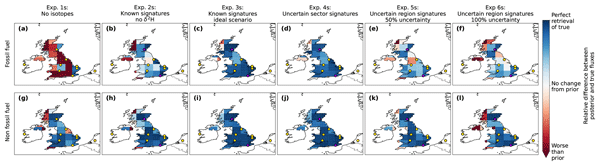
Methane is emitted from a range of anthropogenic and natural sources, each with a characteristic isotope ratio signature. We present a method for estimating emissions from multiple sources using isotopic signatures and observations of atmospheric methane isotope ratios. We show the importance of considering isotopic signature uncertainty and demonstrate how our current understanding of these signatures may be limiting this method’s ability to reduce uncertainties in emissions estimates.
Lu Lei, Wei Xu, Chunshui Lin, Kirsten N. Fossum, Darius Ceburnis, John Gallagher, Colin O'Dowd, and Jurgita Ovadnevaite
Atmos. Chem. Phys., 26, 10927–10946, https://doi.org/10.5194/acp-26-10927-2026, https://doi.org/10.5194/acp-26-10927-2026, 2026
Short summary
Short summary
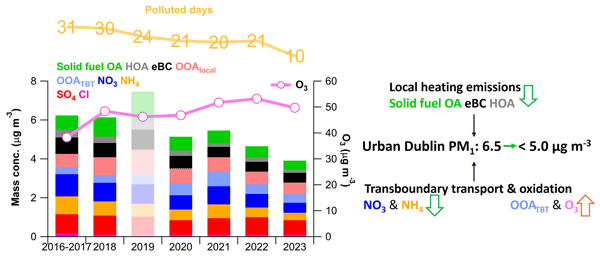
Home heating is the major driver of air pollution across Europe, yet pollution trends and mitigation responses remain limited. PM1 observations from 2016–2023 in a temperate European city influenced by continental pollution reveal changing sources and composition. Major pollution contributors were identified, shaping clear seasonal patterns. Air quality has improved with reduced heating emissions and regional precursors reductions, while secondary organic aerosols show increasing importance.
Aino Ovaska, Daniel Holmberg, Elio Rauth, Mansour Alghamdi, Paulo Artaxo, Eija Asmi, John Backman, Benjamin Bergmans, Matthew Boyer, Liezl Bredenkamp, Maurizio Busetto, Delano Campos De Oliveira, Juan Andrés Casquero-Vera, Darius Ceburnis, Tak Chan, Tommy Chan, Sebastien Conil, Daniele Contini, Suzanne Crumeyrolle, Valentin Duflot, Kostas Eleftheriadis, Johan Esveld, Ekaterina Ezhova, Markus Fiebig, Shahzad Gani, Olga Garmash, Francisco Gómez-Moreno, Roy M. Harrison, Andras Hoffer, Rakesh Hooda, Antti Hyvärinen, Tareq Hussein, Jorma Joutsensaari, Nikos Kalivitis, Heinz Kaminski, Jutta Kesti, Radovan Krejci, Adam Kristensson, Chongai Kuang, Markku Kulmala, Lauri Laakso, Ari Leskinen, Heikki Lihavainen, Andreas Massling, Maik Merkel, Steffen Noe, Jakub Ondracek, Noemí Perez, Jean-Eudes Petit, Tuukka Petäjä, Michael Pikridas, Christopher Pöhlker, Mira Pöhlker, Jean-Philippe Putaud, Ximeng Qi, Cristina Reche, Sergio Rodríguez, Petr Roztocil, Jean Sciare, Karine Sellegri, Dongjie Shang, Ashish Singh, Mikko Sipilä, Henrik Skov, Mar Sorribas, Tamanna Subba, Junying Sun, Peter Tunved, Ville Vakkari, Pieter G. Van Zyl, Aki Virkkula, Jens Voigtländer, Kay Weinhold, Alfred Wiedensohler, Hee-Jung Yoo, Putian Zhou, Kai Puolamäki, Tuomo Nieminen, Veli-Matti Kerminen, Victoria A. Sinclair, and Pauli Paasonen
Earth Syst. Sci. Data Discuss., https://doi.org/10.5194/essd-2026-415, https://doi.org/10.5194/essd-2026-415, 2026
Preprint under review for ESSD
Short summary
Short summary
All clouds form around aerosol particles, and their abundance influences cloud properties. In turn, clouds affect climate by changing how energy moves through the atmosphere, making them important for climate change. To better understand these interactions, we need accurate information on how many aerosol particles are in the atmosphere. Therefore, we have developed a new 21-year global dataset of particle concentrations relevant for cloud formation.
Wenche Aas, Thérèse Salameh, Robert Wegener, Heidi Hellén, Jean-Luc Jaffrezo, Pontus Roldin, Elisabeth Alonso-Blanco, Andres Alastuey, Crist Amelynck, Jgor Arduini, Benjamin Bergmans, Marie Bertrand, Agnes Borbon, Efstratios Bourtsoukidis, Laetitia Bouvier, David Butterfield, Iris Buxbaum, Darius Ceburnis, Anja Claude, Augustin Colette, Aurélie Colomb, Sophie Darfeuil, James Dernie, Maximilien Desservettaz, Elías Díaz-Ramiro, Marvin Dufresne, René Dubus, Mario Duval, Marie Dury, Anna Font, Kirsten N. Fossum, Evelyn Freney, Gotzon Gangoiti, Yao Ge, Maria Carmen Gomez, Francisco J. Gómez-Moreno, Marie Gohy, Valérie Gros, Paul Hamer, Bryan Hellack, Hartmut Herrmann, Robert Holla, Adéla Holubová, Niels R. Jensen, Tuija Jokinen, Matthew Jones, Uwe Käfer, Lukas Kesper, Dieter Klemp, Dagmar Kubistin, Angela Marinoni, Martina Mazzini, Vy Ngoc Thuy Dinh, Jurgita Ovadnevaite, Tuukka Petäjä, Miguel Portillo-Estrada, Jitka Přívozníková, Jean-Philippe Putaud, Stefan Reimann, Laura Renzi, Veronique Riffault, Stuart Ritchie, Chris Robins, Begoña Artíñano Rodríguez de Torres, Laurent Poulain, Julian Rüdiger, Agnieszka Sanocka, Estibaliz Saez de Camara Oleaga, Niels Schoon, Roger Seco, Ivan Simmons, Leïla Simon, David Simpson, Sverre Solberg, Emmanuel Tison, August Thomasson, Svetlana Tsyro, Marsailidh Twigg, Toni Tykkä, Bert Verreyken, Ågot Watne, Katie Williams, Ana Maria Yáñez-Serrano, Karen Yeung, Ilona Ylivinkka, and Karl Espen Yttri
Atmos. Chem. Phys., 26, 8717–8751, https://doi.org/10.5194/acp-26-8717-2026, https://doi.org/10.5194/acp-26-8717-2026, 2026
Short summary
Short summary
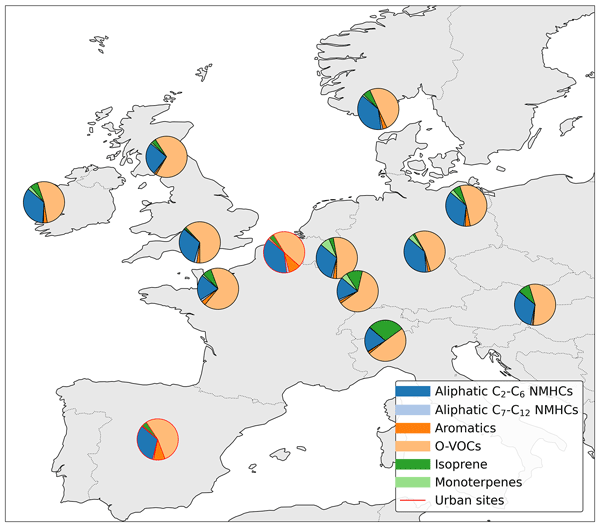
A one-week intensive measurement campaign during the 2022 European heatwave included monitoring of ozone, volatile organic compounds, aerosol chemical composition, and organic tracers to investigate air pollution sources. Results showed that emissions from vegetation and human activities contributed to peaks in ozone and secondary organic aerosol particles. Differences between measurements and model simulations underline the need for better characterization of sources and formation pathways.
Imran A. Girach, Mehul R. Pandya, Tabish Ansari, Sonam Angmo, Subrat Sharma, Bipasha Paul Shukla, Aditya Vaishya, Lokesh Kumar Sahu, Tim Butler, and Narendra Ojha
EGUsphere, https://doi.org/10.5194/egusphere-2026-3032, https://doi.org/10.5194/egusphere-2026-3032, 2026
Short summary
Short summary
We investigated variabilities in free-tropospheric ozone (O3) over the Trans-Himalaya, one of the most climate-sensitive regions. Daytime O3 buildup, a unique feature not observed over high-altitude mountains, is mainly governed by photochemistry and entrainment. Manmade NOx emitted outside South Asia is a larger contributor to O3. Seasonal cycle, shaped largely by stratospheric inputs and biogenic emissions of precursors, peaks in June, unlike April-May over the Himalaya and Gangatic regions.
Stefanos Papagiannis, Manousos I. Manousakas, Dimitrios F. Anagnostopoulos, Michael Pikridas, Rima Baalbaki, Jean Sciare, Niall O'Sullivan, Stig Hellebust, John Wenger, Kirsten N. Fossum, Jurgita Ovadnevaite, Anja Tremper, David Green, Konstantinos Eleftheriadis, and Evangelia Diapouli
Atmos. Meas. Tech., 19, 3491–3509, https://doi.org/10.5194/amt-19-3491-2026, https://doi.org/10.5194/amt-19-3491-2026, 2026
Short summary
Short summary
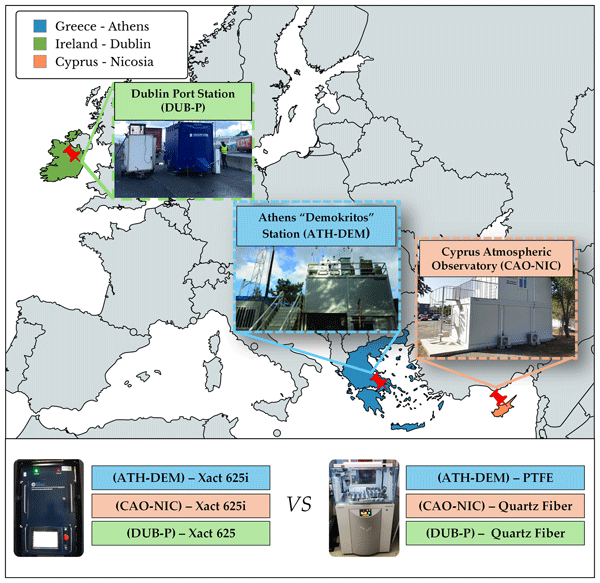
We compared near real-time and benchtop XRF spectrometers measuring trace elements in airborne particles across three European cities. Results show filter material dictates accuracy: Teflon yielded strong inter-instrument agreement, while quartz caused systematic attenuation errors for light elements. Because empirical corrections left residual biases, using optimal substrates—preferably Teflon—is essential for accurately tracking pollution sources.
Emmanuel Chevassus, Vaios Moschos, Kirsten N. Fossum, Lu Lei, Liz Coleman, Dagmar B. Stengel, Vignesh Prabhu, Wei Xu, Darius Ceburnis, Colin O'Dowd, and Jurgita Ovadnevaite
EGUsphere, https://doi.org/10.5194/egusphere-2026-2745, https://doi.org/10.5194/egusphere-2026-2745, 2026
Short summary
Short summary
The ocean is a major source of tiny airborne particles that can influence clouds and climate, but their biological controls remain poorly understood. Here, one year of measurements at Mace Head, Ireland, was combined with ocean biology and air transport data. Sea spray particle formation was found to depend on plankton community, small marine animals, and the combined effects of season, wind, waves and temperature. These results call for mesocosm experiments to better represent sea spray.
Emmal Safi, Joe Pitt, Grant Forster, Chris Rennick, Simon O’Doherty, Dickon Young, Kanokrat Charoenpornpukdee, Nick Garrard, Dafina Kikaj, Andrew Manning, Gerard Spain, Damien Martin, Morgan Lopez, Michel Ramonet, and Kieran Stanely
EGUsphere, https://doi.org/10.5194/egusphere-2026-1802, https://doi.org/10.5194/egusphere-2026-1802, 2026
Short summary
Short summary
We compared whole and synthetic-air reference materials (RMs) for investigating offsets in greenhouse gas measurements so data from different sites/networks can be trusted when combined. By sending whole and synthetic-air (RMs) to six sites and measuring under routine field conditions, we found whole-air gives the most precise results, especially for carbon dioxide and nitrous oxide. Synthetic-air worked fairly well for methane but synthetic-air RMs needs lower uncertainty before wide use.
Max Gräfnings, Yuanyuan Luo, Jian Zhao, Claudia L. Cara-Ortega, Kirsten N. Fossum, Frans Graeffe, Lu Lei, Dagmar B. Stengel, Roseline C. Thakur, Jurgita Ovadnevaite, Mikael Ehn, and Camilla Gustafsson
EGUsphere, https://doi.org/10.5194/egusphere-2026-2159, https://doi.org/10.5194/egusphere-2026-2159, 2026
Short summary
Short summary
Biogenic volatile organic compounds emitted by Earth’s ecosystems have profound climate impacts, but emissions from marine benthic sources are poorly quantified. We quantified BVOC emission rates from three macrophytes across two contrasting marine regions and found highly diverse emission profiles with substantial intra‑ and interspecific variability. Our results underscore the need for more high-quality data, so that macrophyte emissions can eventually be integrated into marine BVOC budgets.
Tim Butler, Tabish Ansari, Claudio A. Belis, Elisa Bergas-Masso, Willem van Caspel, Hilde Fagerli, Johannes Flemming, Marta Garcia Vivanco, Paul Griffiths, Douglas S. Hamilton, Coralina Hernandez Trujillo, Lena Höglund-Isaksson, Vincent Huijnen, Matthew Kasoar, Johannes W. Kaiser, Gerbrand Koren, Zbigniew Klimont, Florian Lindl, Aura Lupascu, Mariano Mertens, Martijn Schaap, Steven T. Turnock, Oliver Wild, Philipp Weiss, Jacek Kaminski, Rosa Wu, and Terry Keating
EGUsphere, https://doi.org/10.5194/egusphere-2026-1367, https://doi.org/10.5194/egusphere-2026-1367, 2026
Short summary
Short summary
Air pollution travels across continents, meaning emissions in one region can affect air quality far away. To better understand this, scientists from many groups are planning to run coordinated computer simulations of the atmosphere. By comparing results across models and emission scenarios, the planned study will show how pollution moves between regions and which sources matter most, helping governments design more effective air quality policies.
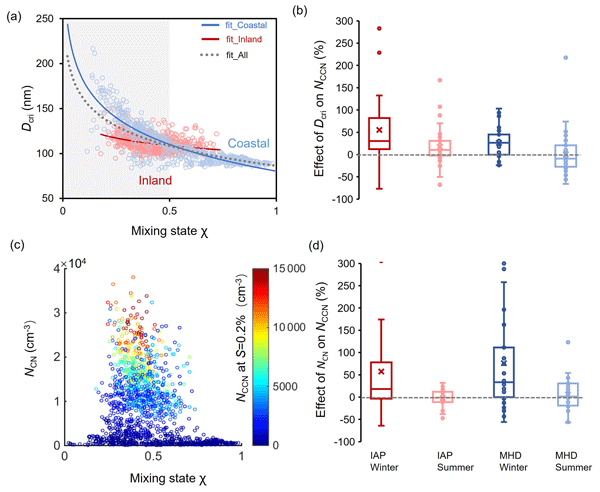
Jingye Ren, Wei Xu, Ru-Jin Huang, Fang Zhang, Ying Wang, Lu Chen, Jurgita Ovadnevaite, Darius Ceburnis, Colin O'Dowd, and Yele Sun
Atmos. Chem. Phys., 26, 2985–3000, https://doi.org/10.5194/acp-26-2985-2026, https://doi.org/10.5194/acp-26-2985-2026, 2026
Short summary
Short summary
Impact of mixing state on cloud condensation nuclei (CCN) was incorporated in limited modeling with simplified assumption. This study derived a mixing state index from hygroscopicity and systematically investigated the covariation between the mixing state and CCN activity in inland and coastal air. We propose a practical approach for estimating critical diameter from mixing state index, applicable when the aerosol particles are not highly aged.
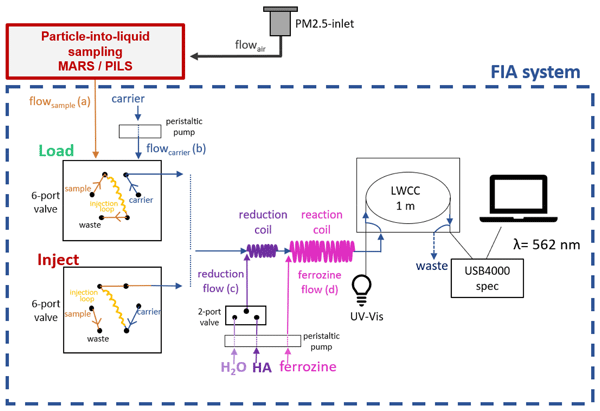
Sabine Lüchtrath, Sven Klemer, Florian Fröhlich, Darius Ceburnis, Dominik van Pinxteren, Hartmut Herrmann, Wolfgang Frenzel, and Andreas Held
Aerosol Research, 4, 81–101, https://doi.org/10.5194/ar-4-81-2026, https://doi.org/10.5194/ar-4-81-2026, 2026
Short summary
Short summary
The first online instrument for the speciation of water‑soluble iron in ambient aerosols is presented. The system combines flow injection analysis with spectrophotometric detection using a liquid waveguide capillary cell. Sensitive iron speciation will help to better describe tropospheric aqueous-phase reactions driven by soluble iron, e.g. hydroxyl radical formation through Fenton chemistry. In first measurements in Berlin, ambient water-soluble-iron concentrations reached up to 47 ng m-3.
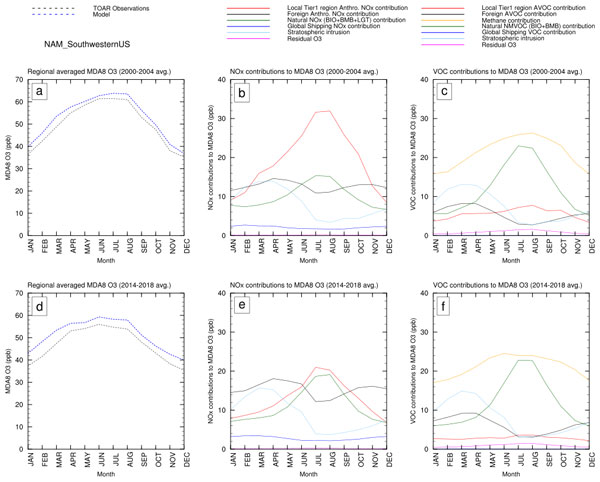
Tabish Ansari, Aditya Nalam, Aurelia Lupaşcu, Carsten Hinz, Simon Grasse, and Tim Butler
Atmos. Chem. Phys., 25, 16833–16876, https://doi.org/10.5194/acp-25-16833-2025, https://doi.org/10.5194/acp-25-16833-2025, 2025
Short summary
Short summary
Surface ozone can travel far from its sources. In recent decades, emissions of ozone-forming gases have decreased in North America and Europe but risen in Asia, alongside rising global methane levels. Using advanced modeling, this study reveals that while local reductions in nitrogen oxides have lowered summer ozone, increases in ozone production from natural and foreign sources offset these gains. Methane remains important, but its ozone impact has declined with reduced local emissions.
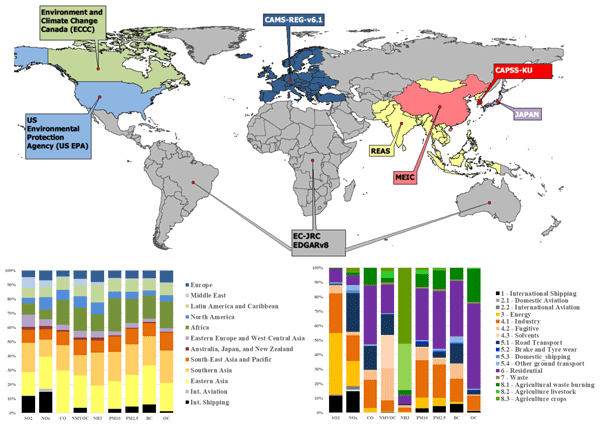
Diego Guizzardi, Monica Crippa, Tim Butler, Terry Keating, Rosa Wu, Jacek Kaminski, Jeroen Kuenen, Junichi Kurokawa, Satoru Chatani, Tazuko Morikawa, George Pouliot, Jacinthe Racine, Michael D. Moran, Zbigniew Klimont, Patrick M. Manseau, Rabab Mashayekhi, Barron H. Henderson, Steven J. Smith, Rachel Hoesly, Marilena Muntean, Manjola Banja, Edwin Schaaf, Federico Pagani, Jung-Hun Woo, Jinseok Kim, Enrico Pisoni, Junhua Zhang, David Niemi, Mourad Sassi, Annie Duhamel, Tabish Ansari, Kristen Foley, Guannan Geng, Yifei Chen, and Qiang Zhang
Earth Syst. Sci. Data, 17, 5915–5950, https://doi.org/10.5194/essd-17-5915-2025, https://doi.org/10.5194/essd-17-5915-2025, 2025
Short summary
Short summary
The global air pollution emission mosaic HTAP_v3.2 is the state-of-the-art inventory to address the evolution of a set of policy-relevant pollutants over the past 2 decades. The mosaic is made harmonising and blending seven regional inventories, gapfilled with the most recent release of the Emissions Database for Global Atmospheric Research. By incorporating the best available local information, the HTAP_v3.2 emission mosaic can be used for policy-relevant studies at regional and global level.
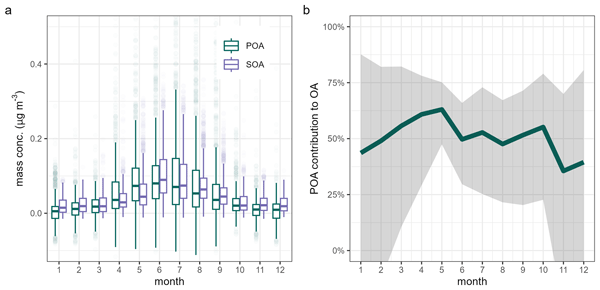
Baihua Chen, Lu Lei, Emmanuel Chevassus, Wei Xu, Ling Zhen, Haobin Zhong, Lin Wang, Chunshui Lin, Ru-Jin Huang, Darius Ceburnis, Colin O'Dowd, and Jurgita Ovadnevaite
Atmos. Chem. Phys., 25, 14205–14219, https://doi.org/10.5194/acp-25-14205-2025, https://doi.org/10.5194/acp-25-14205-2025, 2025
Short summary
Short summary
This study uses machine learning to separate marine primary organic aerosol (POA) and secondary organic aerosol (SOA) from 1 decade of high-resolution data. POA averages 51 % of marine organic aerosols annually, peaking at 63 % in summer. A support vector regression model, validated via fuzzy clustering and Monte Carlo simulations, identifies seasonal patterns of POA linked to biological activity. We found diverse impacts of marine POA and SOA on the aerosol hygroscopicity and mixing state.
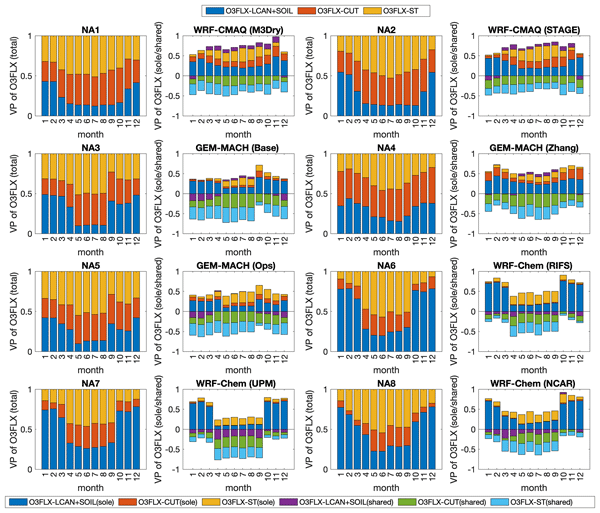
Ioannis Kioutsioukis, Christian Hogrefe, Paul A. Makar, Ummugulsum Alyuz, Jesse O. Bash, Roberto Bellasio, Roberto Bianconi, Tim Butler, Olivia E. Clifton, Philip Cheung, Alma Hodzic, Richard Kranenburg, Aura Lupascu, Kester Momoh, Juan Luis Perez-Camaño, Jonathan Pleim, Young-Hee Ryu, Roberto San Jose, Donna Schwede, Ranjeet Sokhi, and Stefano Galmarini
Atmos. Chem. Phys., 25, 12923–12953, https://doi.org/10.5194/acp-25-12923-2025, https://doi.org/10.5194/acp-25-12923-2025, 2025
Short summary
Short summary
Deposition is key in air quality modeling. An unprecedented evaluation of the Air Quality Model Evaluation International Initiative phase 4 models is performed on different deposition schemes in relation to the land use and land cover (LULC) used. Among the results, LULC masks have to be harmonized and up-to-date information used in place of masks that are outdated and too coarse. Alternatively, LULC masks should be evaluated and intercompared when multiple model results are analyzed.
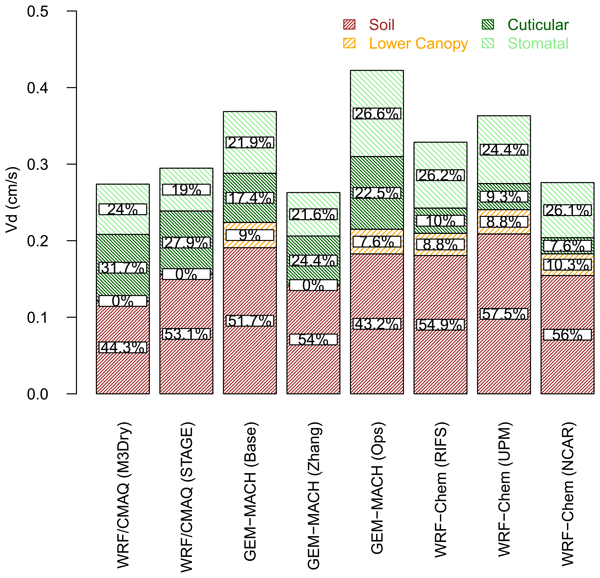
Christian Hogrefe, Stefano Galmarini, Paul A. Makar, Ioannis Kioutsioukis, Olivia E. Clifton, Ummugulsum Alyuz, Jesse O. Bash, Roberto Bellasio, Roberto Bianconi, Tim Butler, Philip Cheung, Alma Hodzic, Richard Kranenburg, Aurelia Lupascu, Kester Momoh, Juan Luis Perez-Camanyo, Jonathan E. Pleim, Young-Hee Ryu, Roberto San Jose, Martijn Schaap, Donna B. Schwede, and Ranjeet Sokhi
Atmos. Chem. Phys., 25, 12629–12656, https://doi.org/10.5194/acp-25-12629-2025, https://doi.org/10.5194/acp-25-12629-2025, 2025
Short summary
Short summary
Performed under the umbrella of Phase 4 of the Air Quality Model Evaluation International Initiative (AQMEII4), this study applies AQMEII4 diagnostic tools to better characterize how dry deposition removes pollutants from the atmosphere in regional-scale models. The results also strongly suggest that improvement and harmonization of the representation of land use in these models would serve the community in their future development efforts.
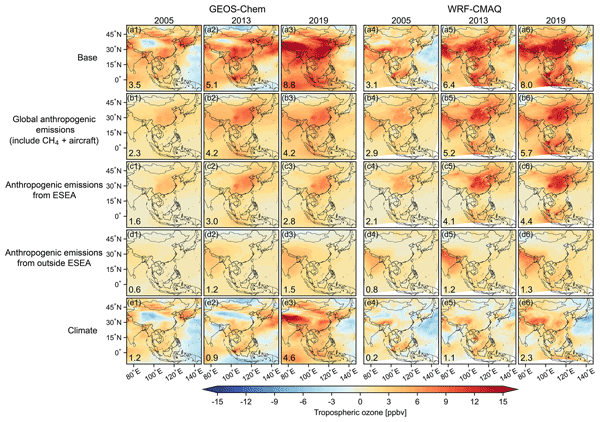
Xiao Lu, Yiming Liu, Jiayin Su, Xiang Weng, Tabish Ansari, Yuqiang Zhang, Guowen He, Yuqi Zhu, Haolin Wang, Ganquan Zeng, Jingyu Li, Cheng He, Shuai Li, Teerachai Amnuaylojaroen, Tim Butler, Qi Fan, Shaojia Fan, Grant L. Forster, Meng Gao, Jianlin Hu, Yugo Kanaya, Mohd Talib Latif, Keding Lu, Philippe Nédélec, Peer Nowack, Bastien Sauvage, Xiaobin Xu, Lin Zhang, Ke Li, Ja-Ho Koo, and Tatsuya Nagashima
Atmos. Chem. Phys., 25, 7991–8028, https://doi.org/10.5194/acp-25-7991-2025, https://doi.org/10.5194/acp-25-7991-2025, 2025
Short summary
Short summary
This study analyzes summertime ozone trends in East and Southeast Asia derived from a comprehensive observational database spanning from 1995 to 2019, incorporating aircraft observations, ozonesonde data, and measurements from 2500 surface sites. Multiple models are applied to attribute to changes in anthropogenic emissions and climate. The results highlight that increases in anthropogenic emissions are the primary driver of ozone increases both in the free troposphere and at the surface.
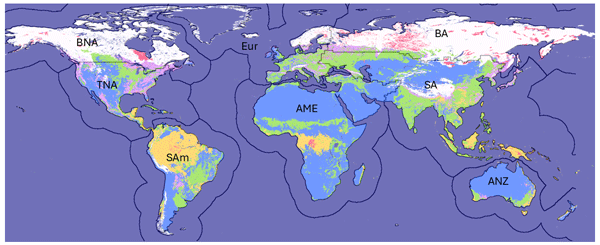
Cynthia H. Whaley, Tim Butler, Jose A. Adame, Rupal Ambulkar, Steve R. Arnold, Rebecca R. Buchholz, Benjamin Gaubert, Douglas S. Hamilton, Min Huang, Hayley Hung, Johannes W. Kaiser, Jacek W. Kaminski, Christoph Knote, Gerbrand Koren, Jean-Luc Kouassi, Meiyun Lin, Tianjia Liu, Jianmin Ma, Kasemsan Manomaiphiboon, Elisa Bergas Masso, Jessica L. McCarty, Mariano Mertens, Mark Parrington, Helene Peiro, Pallavi Saxena, Saurabh Sonwani, Vanisa Surapipith, Damaris Y. T. Tan, Wenfu Tang, Veerachai Tanpipat, Kostas Tsigaridis, Christine Wiedinmyer, Oliver Wild, Yuanyu Xie, and Paquita Zuidema
Geosci. Model Dev., 18, 3265–3309, https://doi.org/10.5194/gmd-18-3265-2025, https://doi.org/10.5194/gmd-18-3265-2025, 2025
Short summary
Short summary
The multi-model experiment design of the HTAP3 Fires project takes a multi-pollutant approach to improving our understanding of transboundary transport of wildland fire and agricultural burning emissions and their impacts. The experiments are designed with the goal of answering science policy questions related to fires. The options for the multi-model approach, including inputs, outputs, and model setup, are discussed, and the official recommendations for the project are presented.
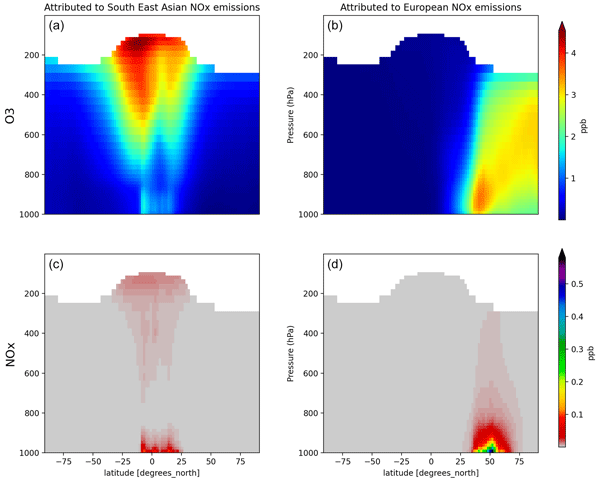
Aditya Nalam, Aura Lupaşcu, Tabish Ansari, and Tim Butler
Atmos. Chem. Phys., 25, 5287–5311, https://doi.org/10.5194/acp-25-5287-2025, https://doi.org/10.5194/acp-25-5287-2025, 2025
Short summary
Short summary
Tropospheric O3 molecules are labeled with the identity of their precursor source to simulate contributions from various emission sources to the global tropospheric O3 burden (TOB) and its trends. With an equatorward shift, anthropogenic NOx emissions become significantly more efficient at producing O3 and play a major role in driving TOB trends, mainly due to larger convection at the tropics effectively lifting O3 and its precursors to the free troposphere, where O3 lifetime is longer.
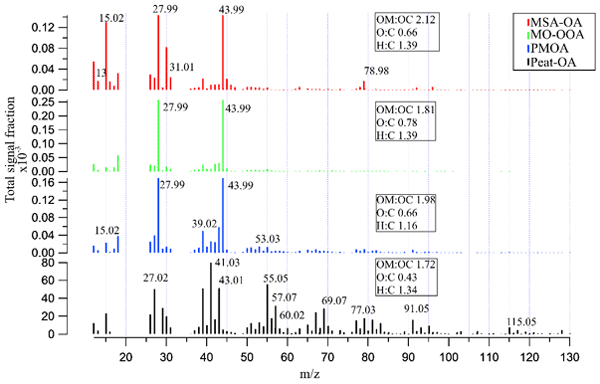
Emmanuel Chevassus, Kirsten N. Fossum, Darius Ceburnis, Lu Lei, Chunshui Lin, Wei Xu, Colin O'Dowd, and Jurgita Ovadnevaite
Atmos. Chem. Phys., 25, 4107–4129, https://doi.org/10.5194/acp-25-4107-2025, https://doi.org/10.5194/acp-25-4107-2025, 2025
Short summary
Short summary
This study presents the first source apportionment of organic aerosol at Mace Head via high-resolution mass spectrometry. Introducing transfer entropy as a novel method reveals that aged organic aerosol originates from both open-ocean ozonolysis and local peat-burning oxidation. Methanesulfonic acid and organic sea spray both mirror phytoplankton activity, with the former closely tied to coccolithophore blooms and the latter linked to diatoms, chlorophytes, and cyanobacteria.
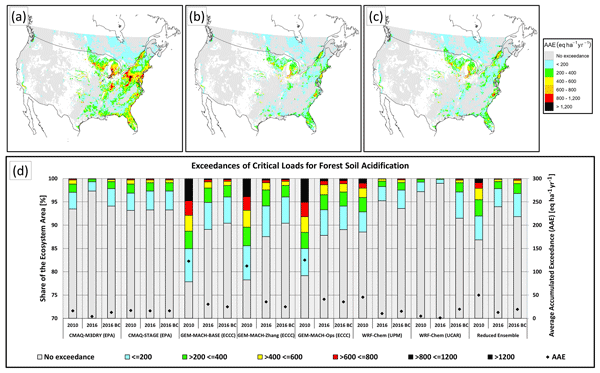
Paul A. Makar, Philip Cheung, Christian Hogrefe, Ayodeji Akingunola, Ummugulsum Alyuz, Jesse O. Bash, Michael D. Bell, Roberto Bellasio, Roberto Bianconi, Tim Butler, Hazel Cathcart, Olivia E. Clifton, Alma Hodzic, Ioannis Kioutsioukis, Richard Kranenburg, Aurelia Lupascu, Jason A. Lynch, Kester Momoh, Juan L. Perez-Camanyo, Jonathan Pleim, Young-Hee Ryu, Roberto San Jose, Donna Schwede, Thomas Scheuschner, Mark W. Shephard, Ranjeet S. Sokhi, and Stefano Galmarini
Atmos. Chem. Phys., 25, 3049–3107, https://doi.org/10.5194/acp-25-3049-2025, https://doi.org/10.5194/acp-25-3049-2025, 2025
Short summary
Short summary
The large range of sulfur and nitrogen deposition estimates from air quality models results in a large range of predicted impacts. We used models and deposition diagnostics to identify the processes controlling atmospheric sulfur and nitrogen deposition variability. Controlling factors included the uptake of gases and aerosols by hydrometeors, aerosol inorganic chemistry, particle dry deposition, ammonia bidirectional fluxes, gas deposition via plant cuticles and soil, and land use data.

Edward C. Chan, Ilona J. Jäkel, Basit Khan, Martijn Schaap, Timothy M. Butler, Renate Forkel, and Sabine Banzhaf
Geosci. Model Dev., 18, 1119–1139, https://doi.org/10.5194/gmd-18-1119-2025, https://doi.org/10.5194/gmd-18-1119-2025, 2025
Short summary
Short summary
An enhanced emission module has been developed for the PALM model system, improving flexibility and scalability of emission source representation across different sectors. A model for parametrized domestic emissions has also been included, for which an idealized model run is conducted for particulate matter (PM10). The results show that, in addition to individual sources and diurnal variations in energy consumption, vertical transport and urban topology play a role in concentration distribution.
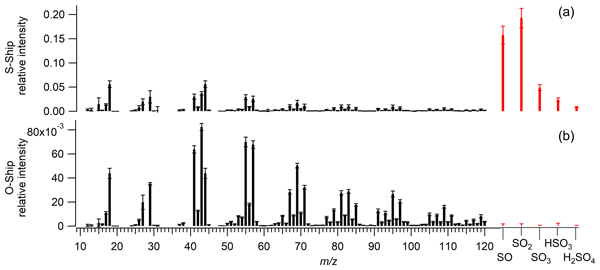
Kirsten N. Fossum, Chunshui Lin, Niall O'Sullivan, Lu Lei, Stig Hellebust, Darius Ceburnis, Aqeel Afzal, Anja Tremper, David Green, Srishti Jain, Steigvilė Byčenkienė, Colin O'Dowd, John Wenger, and Jurgita Ovadnevaite
Atmos. Chem. Phys., 24, 10815–10831, https://doi.org/10.5194/acp-24-10815-2024, https://doi.org/10.5194/acp-24-10815-2024, 2024
Short summary
Short summary
The chemical composition and sources of submicron aerosol in the Dublin Port area were investigated over a month-long campaign. Two distinct types of ship emissions were identified and characterised: sulfate-rich plumes from the use of heavy fuel oil with scrubbers and organic-rich plumes from the use of low-sulfur fuels. The latter were more frequent, emitting double the particle number and having a typical V / Ni ratio for ship emission.
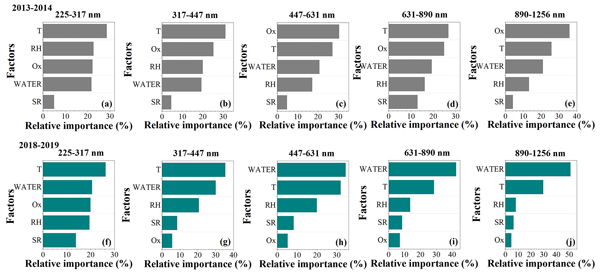
Jing Duan, Ru-Jin Huang, Ying Wang, Wei Xu, Haobin Zhong, Chunshui Lin, Wei Huang, Yifang Gu, Jurgita Ovadnevaite, Darius Ceburnis, and Colin O'Dowd
Atmos. Chem. Phys., 24, 7687–7698, https://doi.org/10.5194/acp-24-7687-2024, https://doi.org/10.5194/acp-24-7687-2024, 2024
Short summary
Short summary
The chemical composition of atmospheric particles has shown significant changes in recent years. We investigated the potential effects of changes in inorganics on aerosol water uptake and, thus, secondary organic aerosol formation in wintertime haze based on the size-resolved measurements of non-refractory fine particulate matter (NR-PM2.5) in Xi’an, northwestern China. We highlight the key role of aerosol water as a medium to link inorganics and organics in their multiphase processes.
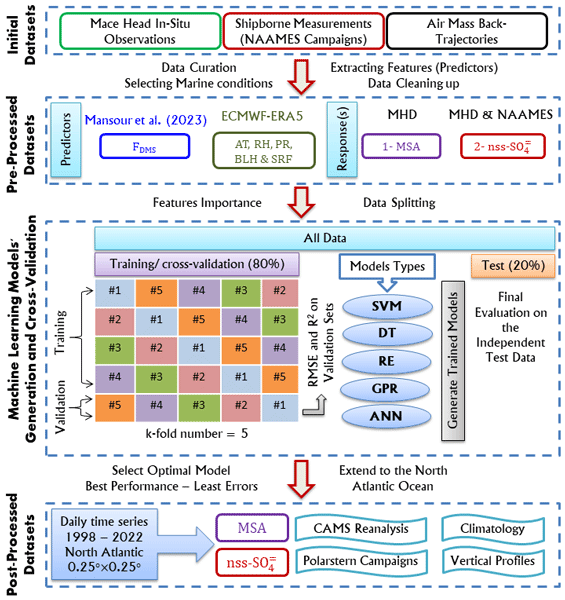
Karam Mansour, Stefano Decesari, Darius Ceburnis, Jurgita Ovadnevaite, Lynn M. Russell, Marco Paglione, Laurent Poulain, Shan Huang, Colin O'Dowd, and Matteo Rinaldi
Earth Syst. Sci. Data, 16, 2717–2740, https://doi.org/10.5194/essd-16-2717-2024, https://doi.org/10.5194/essd-16-2717-2024, 2024
Short summary
Short summary
We propose and evaluate machine learning predictive algorithms to model freshly formed biogenic methanesulfonic acid and sulfate concentrations. The long-term constructed dataset covers the North Atlantic at an unprecedented resolution. The improved parameterization of biogenic sulfur aerosols at regional scales is essential for determining their radiative forcing, which could help further understand marine-aerosol–cloud interactions and reduce uncertainties in climate models
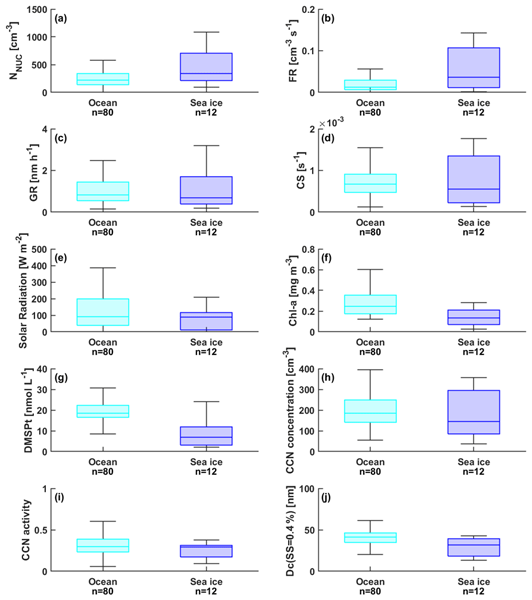
Jiyeon Park, Hyojin Kang, Yeontae Gim, Eunho Jang, Ki-Tae Park, Sangjong Park, Chang Hoon Jung, Darius Ceburnis, Colin O'Dowd, and Young Jun Yoon
Atmos. Chem. Phys., 23, 13625–13646, https://doi.org/10.5194/acp-23-13625-2023, https://doi.org/10.5194/acp-23-13625-2023, 2023
Short summary
Short summary
We measured the number size distribution of 2.5–300 nm particles and cloud condensation nuclei (CCN) number concentrations at King Sejong Station on the Antarctic Peninsula continuously from 1 January to 31 December 2018. During the pristine and clean periods, 97 new particle formation (NPF) events were detected. For 83 of these, CCN concentrations increased by 2 %–268 % (median 44 %) following 1 to 36 h (median 8 h) after NPF events.
Monica Crippa, Diego Guizzardi, Tim Butler, Terry Keating, Rosa Wu, Jacek Kaminski, Jeroen Kuenen, Junichi Kurokawa, Satoru Chatani, Tazuko Morikawa, George Pouliot, Jacinthe Racine, Michael D. Moran, Zbigniew Klimont, Patrick M. Manseau, Rabab Mashayekhi, Barron H. Henderson, Steven J. Smith, Harrison Suchyta, Marilena Muntean, Efisio Solazzo, Manjola Banja, Edwin Schaaf, Federico Pagani, Jung-Hun Woo, Jinseok Kim, Fabio Monforti-Ferrario, Enrico Pisoni, Junhua Zhang, David Niemi, Mourad Sassi, Tabish Ansari, and Kristen Foley
Earth Syst. Sci. Data, 15, 2667–2694, https://doi.org/10.5194/essd-15-2667-2023, https://doi.org/10.5194/essd-15-2667-2023, 2023
Short summary
Short summary
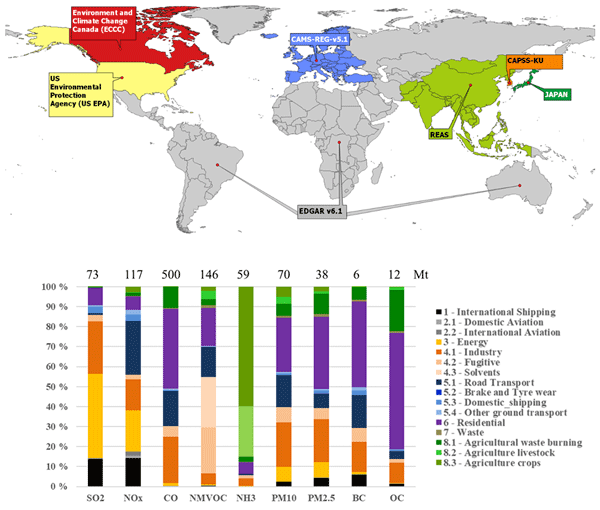
This study responds to the global and regional atmospheric modelling community's need for a mosaic of air pollutant emissions with global coverage, long time series, spatially distributed data at a high time resolution, and a high sectoral resolution in order to enhance the understanding of transboundary air pollution. The mosaic approach to integrating official regional emission inventories with a global inventory based on a consistent methodology ensures policy-relevant results.
Edward C. Chan, Joana Leitão, Andreas Kerschbaumer, and Timothy M. Butler
Geosci. Model Dev., 16, 1427–1444, https://doi.org/10.5194/gmd-16-1427-2023, https://doi.org/10.5194/gmd-16-1427-2023, 2023
Short summary
Short summary
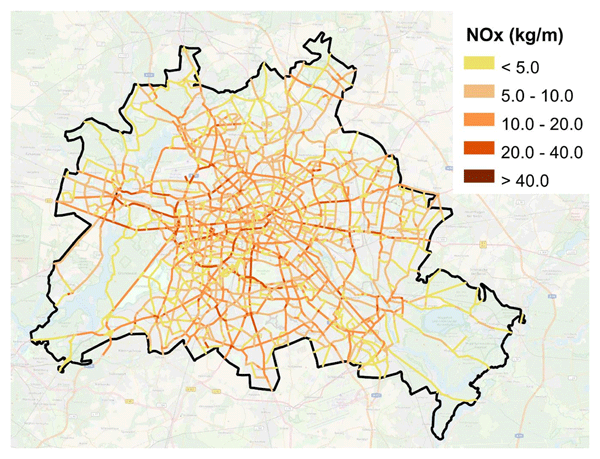
Yeti is a Handbook Emission Factors for Road Transport-based traffic emission inventory written in the Python 3 scripting language, which adopts a generalized treatment for activity data using traffic information of varying levels of detail introduced in a systematic and consistent manner, with the ability to maximize reusability. Thus, Yeti has been conceived and implemented with a high degree of data and process symmetry, allowing scalable and flexible execution while affording ease of use.
Felix Kleinert, Lukas H. Leufen, Aurelia Lupascu, Tim Butler, and Martin G. Schultz
Geosci. Model Dev., 15, 8913–8930, https://doi.org/10.5194/gmd-15-8913-2022, https://doi.org/10.5194/gmd-15-8913-2022, 2022
Short summary
Short summary
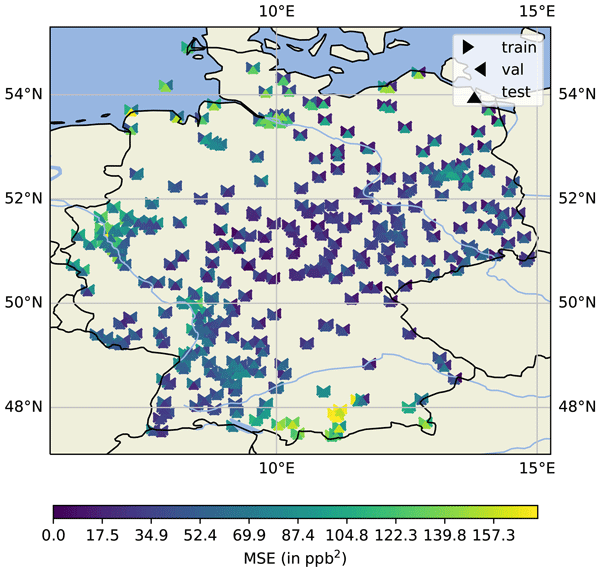
We examine the effects of spatially aggregated upstream information as input for a deep learning model forecasting near-surface ozone levels. Using aggregated data from one upstream sector (45°) improves the forecast by ~ 10 % for 4 prediction days. Three upstream sectors improve the forecasts by ~ 14 % on the first 2 d only. Our results serve as an orientation for other researchers or environmental agencies focusing on pointwise time-series predictions, for example, due to regulatory purposes.
Johana Romero-Alvarez, Aurelia Lupaşcu, Douglas Lowe, Alba Badia, Scott Archer-Nicholls, Steve Dorling, Claire E. Reeves, and Tim Butler
Atmos. Chem. Phys., 22, 13797–13815, https://doi.org/10.5194/acp-22-13797-2022, https://doi.org/10.5194/acp-22-13797-2022, 2022
Short summary
Short summary
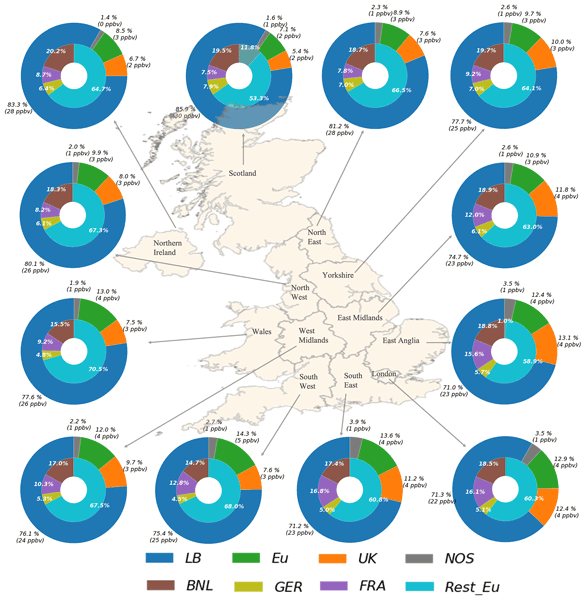
As ozone can be transported across countries, efficient air quality management and regulatory policies rely on the assessment of local ozone production vs. transport. In our study, we investigate the origin of surface ozone in the UK and the contribution of the different source regions to regulatory ozone metrics. It is shown that emission controls would be necessary over western Europe to improve health-related metrics and over larger areas to reduce impacts on ecosystems.
Marta Via, Gang Chen, Francesco Canonaco, Kaspar R. Daellenbach, Benjamin Chazeau, Hasna Chebaicheb, Jianhui Jiang, Hannes Keernik, Chunshui Lin, Nicolas Marchand, Cristina Marin, Colin O'Dowd, Jurgita Ovadnevaite, Jean-Eudes Petit, Michael Pikridas, Véronique Riffault, Jean Sciare, Jay G. Slowik, Leïla Simon, Jeni Vasilescu, Yunjiang Zhang, Olivier Favez, André S. H. Prévôt, Andrés Alastuey, and María Cruz Minguillón
Atmos. Meas. Tech., 15, 5479–5495, https://doi.org/10.5194/amt-15-5479-2022, https://doi.org/10.5194/amt-15-5479-2022, 2022
Short summary
Short summary
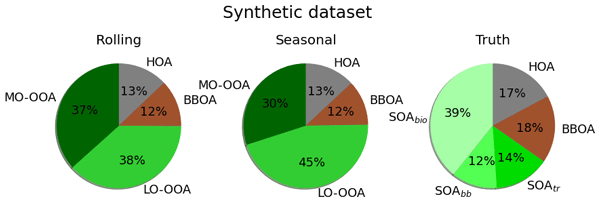
This work presents the differences resulting from two techniques (rolling and seasonal) of the positive matrix factorisation model that can be run for organic aerosol source apportionment. The current state of the art suggests that the rolling technique is more accurate, but no proof of its effectiveness has been provided yet. This paper tackles this issue in the context of a synthetic dataset and a multi-site real-world comparison.
Aurelia Lupaşcu, Noelia Otero, Andrea Minkos, and Tim Butler
Atmos. Chem. Phys., 22, 11675–11699, https://doi.org/10.5194/acp-22-11675-2022, https://doi.org/10.5194/acp-22-11675-2022, 2022
Short summary
Short summary
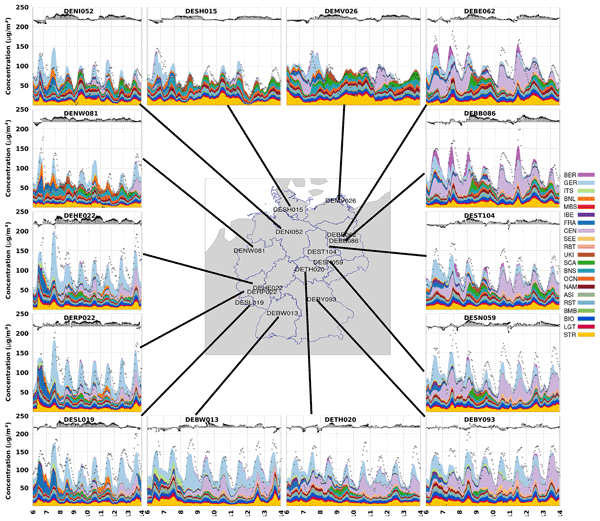
Ground-level ozone is an important air pollutant that affects human health, ecosystems, and climate. Ozone is not emitted directly but rather formed in the atmosphere through chemical reactions involving two distinct precursors. Our results provide detailed information about the origin of ozone in Germany during two peak ozone events that took place in 2015 and 2018, thus improving our understanding of ground-level ozone.
Jing Duan, Ru-Jin Huang, Yifang Gu, Chunshui Lin, Haobin Zhong, Wei Xu, Quan Liu, Yan You, Jurgita Ovadnevaite, Darius Ceburnis, Thorsten Hoffmann, and Colin O'Dowd
Atmos. Chem. Phys., 22, 10139–10153, https://doi.org/10.5194/acp-22-10139-2022, https://doi.org/10.5194/acp-22-10139-2022, 2022
Short summary
Short summary
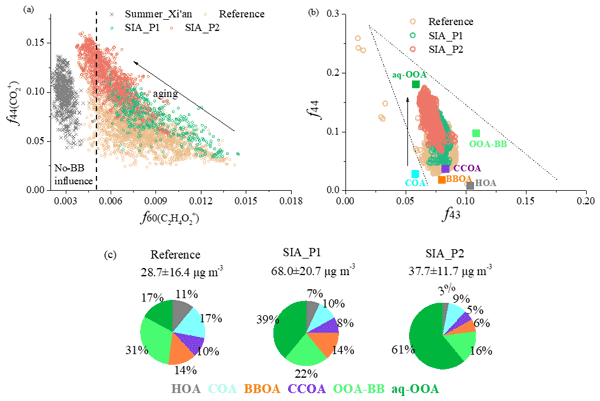
Biomass-burning-influenced oxygenated organic aerosol (OOA-BB), formed from the photochemical oxidation and aging of biomass burning OA (BBOA), was resolved in urban Xi’an. The aqueous-phase processed oxygenated OA (aq-OOA) concentration was more dependent on secondary inorganic aerosol (SIA) content and aerosol liquid water content (ALWC). The increased aq-OOA contribution during SIA-enhanced periods likely reflects OA evolution due to the addition of alcohol or peroxide groups
Haobin Zhong, Ru-Jin Huang, Chunshui Lin, Wei Xu, Jing Duan, Yifang Gu, Wei Huang, Haiyan Ni, Chongshu Zhu, Yan You, Yunfei Wu, Renjian Zhang, Jurgita Ovadnevaite, Darius Ceburnis, and Colin D. O'Dowd
Atmos. Chem. Phys., 22, 9513–9524, https://doi.org/10.5194/acp-22-9513-2022, https://doi.org/10.5194/acp-22-9513-2022, 2022
Short summary
Short summary
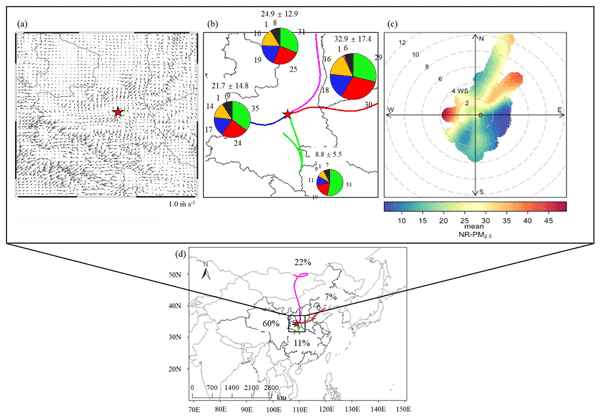
To investigate the physico-chemical properties of aerosol transported from major pollution regions in China, observations were conducted ~200 m above the ground at the junction location of the two key pollution areas. We found that the formation efficiency, oxidation state and production rate of secondary aerosol were different in the transport sectors from different pollution regions, and they were largely enhanced by the regional long-distance transport.
Noelia Otero, Oscar E. Jurado, Tim Butler, and Henning W. Rust
Atmos. Chem. Phys., 22, 1905–1919, https://doi.org/10.5194/acp-22-1905-2022, https://doi.org/10.5194/acp-22-1905-2022, 2022
Short summary
Short summary
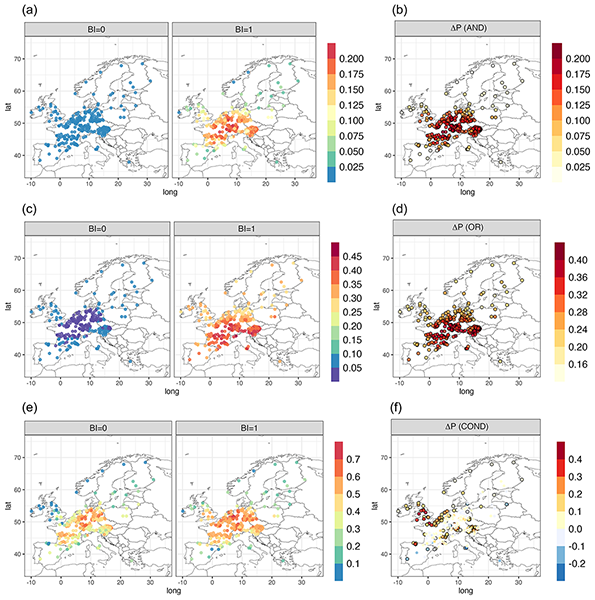
Surface ozone and temperature are strongly dependent and their extremes might be exacerbated by underlying climatological drivers, such as atmospheric blocking. Using an observational data set, we measure the dependence structure between ozone and temperature under the influence of atmospheric blocking. Blocks enhanced the probability of occurrence of compound ozone and temperature extremes over northwestern and central Europe, leading to greater health risks.

Chunshui Lin, Darius Ceburnis, Anna Trubetskaya, Wei Xu, William Smith, Stig Hellebust, John Wenger, Colin O'Dowd, and Jurgita Ovadnevaite
Atmos. Meas. Tech., 14, 6905–6916, https://doi.org/10.5194/amt-14-6905-2021, https://doi.org/10.5194/amt-14-6905-2021, 2021
Short summary
Short summary
Source apportionment of solid-fuel-burning emissions can be complicated by the use of different fuels, stoves, and burning conditions. Here, the organic aerosol mass spectra produced from burning a range of solid fuels in several stoves were compared. This study accounts for the source variability and provides better constraints on the primary factor contributions to the ambient organic aerosol estimations, holding significant implications for public health and policymakers.
Stefano Galmarini, Paul Makar, Olivia E. Clifton, Christian Hogrefe, Jesse O. Bash, Roberto Bellasio, Roberto Bianconi, Johannes Bieser, Tim Butler, Jason Ducker, Johannes Flemming, Alma Hodzic, Christopher D. Holmes, Ioannis Kioutsioukis, Richard Kranenburg, Aurelia Lupascu, Juan Luis Perez-Camanyo, Jonathan Pleim, Young-Hee Ryu, Roberto San Jose, Donna Schwede, Sam Silva, and Ralf Wolke
Atmos. Chem. Phys., 21, 15663–15697, https://doi.org/10.5194/acp-21-15663-2021, https://doi.org/10.5194/acp-21-15663-2021, 2021
Short summary
Short summary
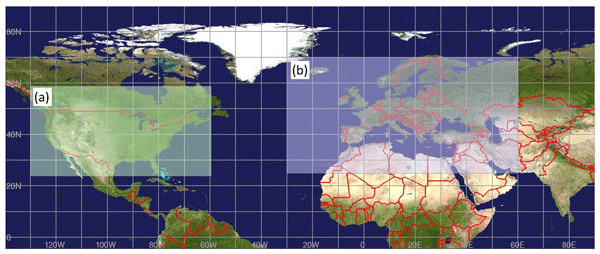
This technical note presents the research protocols for phase 4 of the Air Quality Model Evaluation International Initiative (AQMEII4). This initiative has three goals: (i) to define the state of wet and dry deposition in regional models, (ii) to evaluate how dry deposition influences air concentration and flux predictions, and (iii) to identify the causes for prediction differences. The evaluation compares LULC-specific dry deposition and effective conductances and fluxes.
Cited articles
Aghedo, A. M., Bowman, K. W., Worden, H. M., Kulawik, S. S., Shindell, D. T., Lamarque, J. F., Faluvegi, G., Parrington, M., Jones, D. B. A., and Rast, S.: The vertical distribution of ozone instantaneous radiative forcing from satellite and chemistry climate models, J. Geophys. Res.-Atmos., 116, https://doi.org/10.1029/2010JD014243, 2011.
Anenberg, S. C., West, J. J., Fiore, A. M., Jaffe, D. A., Prather, M. J., Bergmann, D., Cuvelier, K., Dentener, F. J., Duncan, B. N., Gauss, M., Hess, P., Jonson, J. E., Lupu, A., Mackenzie, I. A., Marmer, E., Park, R. J., Sanderson, M. G., Schultz, M., Shindell, D. T., Szopa, S., Vivanco, M. G., Wild, O., and Zeng, G.: Intercontinental impacts of ozone pollution on human mortality, Environ. Sci. Technol., 43, 6482–6487, https://doi.org/10.1021/es900518z, 2009.
Ansari, T., Nalam, A., Lupaşcu, A., Hinz, C., Grasse, S., and Butler, T.: Explaining trends and changing seasonal cycles of surface ozone in North America and Europe over the 2000–2018 period: a global modelling study with NOx and VOC tagging, Atmos. Chem. Phys., 25, 16833–16876, https://doi.org/10.5194/acp-25-16833-2025, 2025.
Archibald, A. T., Neu, J. L., Elshorbany, Y. F., Cooper, O. R., Young, P. J., Frost, G. J., Galbally, I. E., Gerosa, G., Granier, C., and Griffiths, P. T.: Tropospheric Ozone Assessment Report: A critical review of changes in the tropospheric ozone burden and budget from 1850 to 2100, Elementa, 8, 34, https://doi.org/10.1525/elementa.2020.034, 2020.
Ashmore, M. R.: Assessing the future global impacts of ozone on vegetation, Plant Cell Environ., 28, 949–964, https://doi.org/10.1111/j.1365-3040.2005.01341.x, 2005.
Atkinson-Palombo, C. M., Miller, J. A., and Balling, R. C.: Quantifying the ozone “weekend effect” at various locations in Phoenix, Arizona, Atmos. Environ., 40, 7644–7658, https://doi.org/10.1016/j.atmosenv.2006.05.023, 2006.
Auvray, M. and Bey, I.: Long-range transport to Europe: Seasonal variations and implications for the European ozone budget, J. Geophys. Res.-Atmos., 110, https://doi.org/10.1029/2004JD005503, 2005.
Bessagnet, B., Pirovano, G., Mircea, M., Cuvelier, C., Aulinger, A., Calori, G., Ciarelli, G., Manders, A., Stern, R., Tsyro, S., Garciá Vivanco, M., Thunis, P., Pay, M. T., Colette, A., Couvidat, F., Meleux, F., Rouïl, L., Ung, A., Aksoyoglu, S., Baldasano, J. M., Bieser, J., Briganti, G., Cappelletti, A., D'Isidoro, M., Finardi, S., Kranenburg, R., Silibello, C., Carnevale, C., Aas, W., Dupont, J. C., Fagerli, H., Gonzalez, L., Menut, L., Prévôt, A. S. H., Roberts, P., and White, L.: Presentation of the EURODELTA III intercomparison exerciseevaluation of the chemistry transport models' performance on criteria pollutants and joint analysis with meteorology, Atmos. Chem. Phys., 16, 12667–12701, https://doi.org/10.5194/acp-16-12667-2016, 2016.
Bonaccorso, B., Peres, D. J., Cancelliere, A., and Di Mauro, G.: Probabilistic forecasting of drought class transitions in Sicily (Italy) using Standardized Precipitation Index and North Atlantic Oscillation Index, J. Hydrol., 526, 136–150, https://doi.org/10.1016/j.jhydrol.2015.01.070, 2015.
Boylan, P., Helmig, D., and Oltmans, S.: Ozone in the Atlantic Ocean marine boundary layer, Elementa, 1–13, https://doi.org/10.12952/journal.elementa.000045, 2014.
Butchart, N., Charlton-Perez, A. J., Cionni, I., Hardiman, S. C., Haynes, P. H., Krüger, K., Kushner, P. J., Newman, P. A., Osprey, S. M., Perlwitz, J., Sigmond, M., Wang, L., Akiyoshi, H., Austin, J., Bekki, S., Baumgaertner, A., Braesicke, P., Brhl, C., Chipperfield, M., Dameris, M., Dhomse, S., Eyring, V., Garcia, R., Garny, H., Jöckel, P., Lamarque, J. F., Marchand, M., Michou, M., Morgenstern, O., Nakamura, T., Pawson, S., Plummer, D., Pyle, J., Rozanov, E., Scinocca, J., Shepherd, T. G., Shibata, K., Smale, D., Teyssèdre, H., Tian, W., Waugh, D., and Yamashita, Y.: Multimodel climate and variability of the stratosphere, J. Geophys. Res.-Atmos., 116, https://doi.org/10.1029/2010JD014995, 2011.
Butler, T., Lupascu, A., Coates, J., and Zhu, S.: TOAST 1.0: Tropospheric ozone attribution of sources with tagging for CESM 1.2.2, Geosci. Model Dev., 11, 2825–2840, https://doi.org/10.5194/gmd-11-2825-2018, 2018.
Butler, T., Lupascu, A., and Nalam, A.: Attribution of ground-level ozone to anthropogenic and natural sources of nitrogen oxides and reactive carbon in a global chemical transport model, Atmos. Chem. Phys., 20, 10707–10731, https://doi.org/10.5194/acp-20-10707-2020, 2020.
Carslaw, D. C.: On the changing seasonal cycles and trends of ozone at Mace Head, Ireland, Atmos. Chem. Phys., 5, 3441–3450, https://doi.org/10.5194/acp-5-3441-2005, 2005.
Chang, K.-L., Schultz, M. G., Koren, G., and Selke, N.: Guidance note on best statistical 1108 practices for TOAR analyses, arXiv [preprint], arXiv:2304.14236, https://doi.org/10.48550/arXiv.2304.14236, 2023.
Coates, J., Mar, K. A., Ojha, N., and Butler, T. M.: The influence of temperature on ozone production under varying NOx conditions – a modelling study, Atmos. Chem. Phys., 16, 11601–11615, https://doi.org/10.5194/acp-16-11601-2016, 2016.
Coleman, L., McVeigh, P., Berresheim, H., Martino, M., and O'Dowd, C. D.: Photochemical impact on ozone fluxes in coastal waters, Adv. Meteorol., 2012, https://doi.org/10.1155/2012/943785, 2012.
Coleman, L., Martin, D., Varghese, S., Jennings, S. G., and O'Dowd, C. D.: Assessment of changing meteorology and emissions on air quality using a regional climate model: Impact on ozone, Atmos. Environ., 69, 198–210, https://doi.org/10.1016/j.atmosenv.2012.11.048, 2013.
Creilson, J. K., Fishman, J., and Wozniak, A. E.: Intercontinental transport of tropospheric ozone: A study of its seasonal variability across the North Atlantic utilizing tropospheric ozone residuals and its relationship to the North Atlantic Oscillation, Atmos. Chem. Phys., 3, 2053–2066, https://doi.org/10.5194/acp-3-2053-2003, 2003.
Crippa, M., Guizzardi, D., Butler, T., Keating, T., Wu, R., Kaminski, J., Kuenen, J., Kurokawa, J., Chatani, S., Morikawa, T., Pouliot, G., Racine, J., Moran, M. D., Klimont, Z., Manseau, P. M., Mashayekhi, R., Henderson, B. H., Smith, S. J., Suchyta, H., Muntean, M., Solazzo, E., Banja, M., Schaaf, E., Pagani, F., Woo, J.-H., Kim, J., Monforti-Ferrario, F., Pisoni, E., Zhang, J., Niemi, D., Sassi, M., Ansari, T., and Foley, K.: The HTAP_v3 emission mosaic: merging regional and global monthly emissions (2000–2018) to support air quality modelling and policies, Earth Syst. Sci. Data, 15, 2667–2694, https://doi.org/10.5194/essd-15-2667-2023, 2023.
Crippa, M., Guizzardi, D., Pagani, F., Schiavina, M., Melchiorri, M., Pisoni, E., Graziosi, F., Muntean, M., Maes, J., Dijkstra, L., Van Damme, M., Clarisse, L., and Coheur, P.: Insights into the spatial distribution of global, national, and subnational greenhouse gas emissions in the Emissions Database for Global Atmospheric Research (EDGAR v8.0), Earth Syst. Sci. Data, 16, 2811–2830, https://doi.org/10.5194/essd-16-2811-2024, 2024.
Derwent, R. G.: Observation and interpretation of the seasonal cycles in the surface concentrations of ozone and carbon monoxide at Mace Head, Ireland from 1990 to 1994, Atmos. Environ., 32, 2310, https://doi.org/10.1016/S1352-2310(97)00338-5, 1998.
Derwent, R. G., Simmonds, P. G., and Collins, W. J.: Ozone and carbon monoxide measurements at a remote maritime location, mace head, Ireland, from 1990 to 1992, Atmos. Environ., 28, 2623–2637, https://doi.org/10.1016/1352-2310(94)90436-7, 1994.
Derwent, R. G., Collins, W. J., Johnson, C. E., and Stevenson, D. S.: Transient behaviour of tropospheric ozone precursors in a global 3-D CTM and their indirect greenhouse effects, Climatic Change, 49, 463–487, https://doi.org/10.1023/A:1010648913655, 2001.
Derwent, R. G., Stevenson, D. S., Collins, W. J., and Johnson, C. E.: Intercontinental transport and the origins of the ozone observed at surface sites in Europe, Atmos. Environ., 38, 1891–1901, https://doi.org/10.1016/j.atmosenv.2004.01.008, 2004.
Derwent, R. G., Stevenson, D. S., Doherty, R. M., Collins, W. J., and Sanderson, M. G.: How is surface ozone in Europe linked to Asian and North American NOx emissions?, Atmos. Environ., 42, 7412–7422, https://doi.org/10.1016/j.atmosenv.2008.06.037, 2008.
Derwent, R. G., Manning, A. J., Simmonds, P. G., Spain, T. G., and O'Doherty, S.: Analysis and interpretation of 25 years of ozone observations at the Mace Head Atmospheric Research Station on the Atlantic Ocean coast of Ireland from 1987 to 2012, Atmos. Environ., 80, 361–368, https://doi.org/10.1016/j.atmosenv.2013.08.003, 2013.
Derwent, R. G., Manning, A. J., Simmonds, P. G., and Doherty, S. O.: Long-term trends in ozone in baseline and European regionally-polluted air at Mace Head, Ireland over a 30-year period, Atmos. Environ., 179, 279–287, https://doi.org/10.1016/j.atmosenv.2018.02.024, 2018.
Derwent, R. G., Parrish, D. D., Manning, A. J., Spain, T. G., Simmonds, P. G., and O'Doherty, S.: Ozone at Mace Head, Ireland from 1987 to 2021: Declining baselines, phase-out of European regional pollution, COVID-19 impacts, Atmos. Environ., 320, https://doi.org/10.1016/j.atmosenv.2023.120322, 2024.
Ding, J., Dai, Q., Fan, W., Lu, M., Zhang, Y., Han, S., and Feng, Y.: Impacts of meteorology and precursor emission change on O3 variation in Tianjin, China from 2015 to 2021, J. Environ. Sci., 126, 506–516, https://doi.org/10.1016/j.jes.2022.03.010, 2023.
Donlon, B., Cahalane, A., and Fanning, A.: Ireland's State of the Environment Report 2024 Editors, Environmental Protection Agency, https://epawebapp.epa.ie/ebooks/soe2024/3/ (last access: 6 December 2024), 2024.
Draxler, R. R.: Evaluation of an Ensemble Dispersion Calculation, http://wesley.wwb.noaa.gov/reanalysis.html (last access: 6 October 2024), 2003.
EEA: Exceedance of air quality standards in Europe (Indicator AIR003, Issue.1109), https://www.eea.europa.eu/en/analysis/indicators/exceedance-of-air-quality-standards (last access: 21 May 2025), 2024.
Emmons, L. K., Hess, P. G., Lamarque, J.-F., and Pfister, G. G.: Tagged ozone mechanism for MOZART-4, CAM-chem and other chemical transport models, Atmos. Chem. Phys., 12, 4607–4622, https://doi.org/10.5194/acp-12-4607-2012, 2012.
Finch, D. P. and Palmer, P. I.: Increasing ambient surface ozone levels over the UK accompanied by fewer extreme events. Atmos. Environ., 237, 117627, https://doi.org/10.1016/j.atmosenv.2020.117627, 2020.
Fiore, A. M., Dentener, F. J., Wild, O., Cuvelier, C., Schultz, M. G., Hess, P., Textor, C., Schulz, M., Doherty, R. M., Horowitz, L. W., MacKenzie, I. A., Sanderson, M. G., Shindell, D. T., Stevenson, D. S., Szopa, S., Van Dingenen, R., Zeng, G., Atherton, C., Bergmann, D., Bey, I., Carmichael, G., Collins, W. J., Duncan, B. N., Faluvegi, G., Folberth, G., Gauss, M., Gong, S., Hauglustaine, D., Holloway, T., Isaksen, I. S. A., Jacob, D. J., Jonson, J. E., Kaminski, J. W., Keating, T. J., Lupu, A., Manner, E., Montanaro, V., Park, R. J., Pitari, G., Pringle, K. J., Pyle, J. A., Schroeder, S., Vivanco, M. G., Wind, P., Wojcik, G., Wu, S., and Zuber, A.: Multimodel estimates of intercontinental source-receptor relationships for ozone pollution, J. Geophys. Res.-Atmos., 114, https://doi.org/10.1029/2008JD010816, 2009.
Fowler, D., Coyle, M., Skiba, U., Sutton, M. A., Cape, J. N., Reis, S., Sheppard, L. J., Jenkins, A., Grizzetti, B., Galloway, J. N., Vitousek, P., Leach, A., Bouwman, A. F., Butterbach-Bahl, K., Dentener, F., Stevenson, D., Amann, M., and Voss, M.: The global nitrogen cycle in the Twentyfirst century, Philos. T. Roy. Soc. B, 368, https://doi.org/10.1098/rstb.2013.0164, 2013.
Girach, I. A., Tripathi, N., Nair, P. R., Sahu, L. K., and Ojha, N.: O3 and CO in the South Asian outflow over the Bay of Bengal: Impact of monsoonal dynamics and chemistry, Atmos. Environ., 233, https://doi.org/10.1016/j.atmosenv.2020.117610, 2020.
Griffiths, P. T., Murray, L. T., Zeng, G., Shin, Y. M., Abraham, N. L., Archibald, A. T., Deushi, M., Emmons, L. K., Galbally, I. E., Hassler, B., Horowitz, L. W., Keeble, J., Liu, J., Moeini, O., Naik, V., O'Connor, F. M., Oshima, N., Tarasick, D., Tilmes, S., Turnock, S. T., Wild, O., Young, P. J., and Zanis, P.: Tropospheric ozone in CMIP6 simulations, Atmos. Chem. Phys., 21, 4187–4218, https://doi.org/10.5194/acp-21-4187-2021, 2021.
Grigas, T., Ovadnevaite, J., Ceburnis, D., Moran, E., McGovern, F. M., Jennings, S. G., and O'Dowd, C.: Sophisticated Clean Air Strategies Required to Mitigate Against Particulate Organic Pollution, Sci. Rep., 7, https://doi.org/10.1038/srep44737, 2017.
Guerreiro, C. B. B., Foltescu, V., and de Leeuw, F.: Air quality status and trends in Europe, Atmos. Environ., 98, 376–384, https://doi.org/10.1016/j.atmosenv.2014.09.017, 2014.
Huang, M., Carmichael, G. R., Pierce, R. B., Jo, D. S., Park, R. J., Flemming, J., Emmons, L. K., Bowman, K. W., Henze, D. K., Davila, Y., Sudo, K., Jonson, J. E., Lund, M. T., Janssens-Maenhout, G., Dentener, F. J., Keating, T. J., and Saiz-Lopez, A.: Impact of intercontinental pollution transport on North American ozone air pollution: An HTAP phase 2 multi-model study, Atmos. Chem. Phys., 17, 5721–5750, https://doi.org/10.5194/acp-17-5721-2017, 2017.
IPCC, Masson-Delmotte, V., Zhai, P., Chen, Y., Goldfarb, L., Gomis, M. I., Matthews, J. B. R., Berger, S., Huang, M., Yelekçi, O., Yu, R., Zhou, B., Lonnoy, E., Maycock, T. K., Waterfield, T., Leitzell, K., and Caud, N.: Working Group I Contribution to the Sixth Assessment Report of the Intergovernmental Panel on Climate Change, Cambridge University Press, https://doi.org/10.1017/9781009157896, 2023.
Jeon, W. B., Lee, S. H., Lee, H., Park, C., Kim, D. H., and Park, S. Y.: A study on high ozone formation mechanism associated with change of NOx
Jonson, J. E., Stohl, A., Fiore, A. M., Hess, P., Szopa, S., Wild, O., Zeng, G., Dentener, F. J., Lupu, A., Schultz, M. G., Duncan, B. N., Sudo, K., Wind, P., Schulz, M., Marmer, E., Cuvelier, C., Keating, T., Zuber, A., Valdebenito, A., Dorokhov, V., De Backer, H., Davies, J., Chen, G. H., Johnson, B., Tarasick, D. W., Stübi, R., Newchurch, M. J., Von Der Gathen, P., Steinbrecht, W., and Claude, H.: A multi-model analysis of vertical ozone profiles, Atmos. Chem. Phys., 10, 5759–5783, https://doi.org/10.5194/acp-10-5759-2010, 2010.
Khiem, M., Ooka, R., Huang, H., Hayami, H., Yoshikado, H., and Kawamoto, Y.: Analysis of the Relationship between Changes in Meteorological Conditions and the Variation in Summer Ozone Levels over the Central Kanto Area, Adv. Meteorol., 2010, 1–13, https://doi.org/10.1155/2010/349248, 2010.
Lamarque, J. F. and Solomon, S.: Impact of changes in climat.e and halocarbons on recent lower stratosphere ozone and temperature trends, J. Climate, 23, 2599–2611, https://doi.org/10.1175/2010JCLI3179.1, 2010.
Lamarque, J. F., Kinnison, D. E., Hess, P. G., and Vitt, F. M.: Simulated lower stratospheric trends between 1970 and 2005: Identifying the role of climate and composition changes, J. Geophys. Res.-Atmos., 113, https://doi.org/10.1029/2007JD009277, 2008.
Lamarque, J. F., Bond, T. C., Eyring, V., Granier, C., Heil, A., Klimont, Z., Lee, D., Liousse, C., Mieville, A., Owen, B., Schultz, M. G., Shindell, D., Smith, S. J., Stehfest, E., Van Aardenne, J., Cooper, O. R., Kainuma, M., Mahowald, N., McConnell, J. R., Naik, V., Riahi, K., and Van Vuuren, D. P.: Historical (1850–2000) gridded anthropogenic and biomass burning emissions of reactive gases and aerosols: Methodology and application, Atmos. Chem. Phys., 10, 7017–7039, https://doi.org/10.5194/acp-10-7017-2010, 2010.
Lamarque, J. F., Emmons, L. K., Hess, P. G., Kinnison, D. E., Tilmes, S., Vitt, F., Heald, C. L., Holland, E. A., Lauritzen, P. H., Neu, J., Orlando, J. J., Rasch, P. J., and Tyndall, G. K.: CAMchem: Description and evaluation of interactive atmospheric chemistry in the Community Earth System Model, Geosci. Model Dev., 5, 369–411, https://doi.org/10.5194/gmd-5-369-2012, 2012.
Lefohn, A. S., Malley, C. S., Smith, L., Wells, B., Hazucha, M., Simon, H., Naik, V., Mills, G., Schultz, M. G., Paoletti, E., De Marco, A., Xu, X., Zhang, L., Wang, T., Neufeld, H. S., Musselman, R. C., Tarasick, D., Brauer, M., Feng, Z., Tang, H., Kobayashi, K., Sicard, P., Solberg, S., and Gerosa, G.: Tropospheric ozone assessment report: Global ozone metrics for climate change, human health, and crop/ecosystem research, Elementa, 6, https://doi.org/10.1525/elementa.279, 2018.
Lin, M., Fiore, A. M., Cooper, O. R., Horowitz, L. W., Langford, A. O., Levy, H., Johnson, B. J., Naik, V., Oltmans, S. J., and Senff, C. J.: Springtime high surface ozone events over the western United States: Quantifying the role of stratospheric intrusions, J. Geophys. Res.-Atmos., 117, https://doi.org/10.1029/2012JD018151, 2012.
Lin, Y., Jiang, F., Zhao, J., Zhu, G., He, X., Ma, X., Li, S., Sabel, C. E., and Wang, H.: Impacts of O3 on premature mortality and crop yield loss across China, Atmos. Environ., 194, 41–47, https://doi.org/10.1016/j.atmosenv.2018.09.024, 2018.
Lupaşcu, A., Otero, N., Minkos, A., and Butler, T.: Attribution of surface ozone to NOx and volatile organic compound sources during two different high ozone events, Atmos. Chem. Phys., 22, 11675–11699, https://doi.org/10.5194/acp-22-11675-2022, 2022.
McVeigh, P., O'Dowd, C., and Berresheim, H.: Eddy Correlation Measurements of Ozone Fluxes over Coastal Waters West of Ireland, Adv. Meteorol., 2010, https://doi.org/10.1155/2010/754941, 2010.
Moiseenko, K. B., Vasileva, A. V., Skorokhod, A. I., Belikov, I. B., Repin, A. Y., and Shtabkin, Y. A.: Regional Impact of Ozone Precursor Emissions on NOX and O3 Levels at ZOTTO Tall Tower in Central Siberia, Earth Space Sci., 8, https://doi.org/10.1029/2021EA001762, 2021.
Molod, A., Takacs, L., Suarez, M., and Bacmeister, J.: Development of the GEOS-5 atmospheric general circulation model: Evolution from MERRA to MERRA2, Geosci. Model Dev., 8, 1339–1356, https://doi.org/10.5194/gmd-8-1339-2015, 2015.
Monks, P. S., Archibald, A. T., Colette, A., Cooper, O., Coyle, M., Derwent, R., Fowler, D., Granier, C., Law, K. S., Mills, G. E., Stevenson, D. S., Tarasova, O., Thouret, V., von Schneidemesser, E., Sommariva, R., Wild, O., and Williams, M. L.: Tropospheric ozone and its precursors from the urban to the global scale from air quality to short-lived climate forcer, Atmos. Chem. Phys., 15, 8889–8973, https://doi.org/10.5194/acp-15-8889-2015, 2015.
Nalam, A., Lupaşcu, A., Ansari, T., and Butler, T.: Regional and sectoral contributions of NOx and reactive carbon emission sources to global trends in tropospheric ozone during the 2000–2018 period, Atmos. Chem. Phys., 25, 5287–5311, https://doi.org/10.5194/acp-25-5287-2025, 2025.
Nelson, B. S. and Drysdale, W. S.: Urban ozone trends in Europe and the USA (2000–2021), Atmos. Chem. Phys., 25, 16009–16026, https://doi.org/10.5194/acp-25-16009-2025, 2025.
O'Dowd, C., Ceburnis, D., Ovadnevaite, J., Vaishya, A., Rinaldi, M., and Facchini, M. C.: Do anthropogenic, continental or coastal aerosol sources impact on a marine aerosol signature at Mace Head?, Atmos. Chem. Phys., 14, 10687–10704, https://doi.org/10.5194/acp-14-10687-2014, 2014.
Oltmans, S. J., Lefohn, A. S., Harris, J. M., Galbally, I., Scheel, H. E., Bodeker, G., Brunke, E., Claude, H., Tarasick, D., Johnson, B. J., and Simmonds, P.: Long-term changes in tropospheric ozone, Atmos. Environ., 40, 3156–3173, https://doi.org/10.1016/j.atmosenv.2006.01.029, 2006.
Oltmans, S. J., Lefohn, A. S., Shadwick, D., Harris, J. M., Scheel, H. E., Galbally, I., Tarasick, D. W., Johnson, B. J., Brunke, E. G., Claude, H., Zeng, G., Nichol, S., Schmidlin, F., Davies, J., Cuevas, E., Redondas, A., Naoe, H., Nakano, T., and Kawasato, T.: Recent tropospheric ozone changes – A pattern dominated by slow or no growth, Atmos. Environ., 67, 331–351, https://doi.org/10.1016/j.atmosenv.2012.10.057, 2013.
Ordóñez, C., Garrido-Perez, J. M., and García-Herrera, R. Early spring near-surface ozone in Europe during the COVID-19 shutdown: Meteorological effects outweigh emission changes, Sci. Total Environ., 747, 141322, https://doi.org/10.1016/j.scitotenv.2020.141322, 2020.
Pallé, E. and Butler, C. J.: Comparison of sunshine records and synoptic cloud observations: a case study for Ireland, Phys. Chem. Earth Pt. A/B/C, 27, 405–414, 2002.
Pan, C., Zhu, B., Gao, J., Hou, X., Kang, H., and Wang, D.: Quantifying Arctic lower stratospheric ozone sources in winter and spring, Sci. Rep., 8, https://doi.org/10.1038/s41598-018-27045-5, 2018.
Paoletti, E.: Impact of ozone on Mediterranean forests: A review, Environ. Pollut., 144, 463–474, https://doi.org/10.1016/j.envpol.2005.12.051, 2006.
Pausata, F. S. R., Pozzoli, L., Vignati, E., and Dentener, F. J.. North Atlantic Oscillation and tropospheric ozone variability in Europe: Model analysis and measurements intercomparison, Atmos. Chem. Phys., 12, 6357–6376, https://doi.org/10.5194/acp-12-6357-2012, 2012.
Pio, C. A., Feliciano, M. S., Vermeulen, A. T., and Sousa, E. C.: Seasonal variability of ozone dry deposition under southern European climate conditions, in Portugal, Atmos. Environ., 34, 195–205, 2000.
Russo, M. R., Kerridge, B. J., Abraham, N. L., Keeble, J., Latter, B. G., Siddans, R., Weber, J., Griffiths, P. T., Pyle, J. A., and Archibald, A. T.: Seasonal, interannual and decadal variability of tropospheric ozone in the North Atlantic: comparison of UM-UKCA and remote sensing observations for 2005–2018, Atmos. Chem. Phys., 23, 6169–6196, https://doi.org/10.5194/acp-23-6169-2023, 2023.
Saiz-Lopez, A., Mahajan, A. S., Abbatt, J., Bobrowski, N., Brown, S. S., Burrows, J. P., Carpenter, L. J., Chipperfield, M. P., Cuevas, C. A., Fernandez, R., Hossaini, R., Kinnison, D. E., Lamarque, J.-F., Finlayson-Pitts, B. J., Plane, J. M. C., Platt, U., Pratt, K., Ravishankara, A. R., Salawitch, R. J., Saltzman, E. S., Simpson, W. R., Solomon, S., Thornton, J. A., and Wang, T.: The influence of short-lived halogens on atmospheric chemistry and climate, Nature, 648, 289–299, https://doi.org/10.1038/s41586-025-09753-x, 2025.
Seinfeld, J. H. and Pandis, S. N.: Atmospheric Chemistry and Physics: From Air Pollution to Climate Change, in: 3rd Edn., Wiley, Hoboken, NJ, ISBN 978-1-118-94740-1, 2016.
Shindell, D. T., Chin, M., Dentener, F., Doherty, R. M., Faluvegi, G., Fiore, A. M., Hess, P., Koch, D. M., MacKenzie, I. A., Sanderson, M. G., Schultz, M. G., Schulz, M., Stevenson, D. S., Teich, H., Textor, C., Wild, O., Bergmann, D. J., Bey, I., Bian, H., Cuvelier, C., Duncan, B. N., Folberth, G., Horowitz, L. W., Jonson, J., Kaminski, J. W., Marmer, E., Park, R., Pringle, K. J., Schroeder, S., Szopa, S., Takemura, T., Zeng, G., Keating, T. J., and Zuber, A.: A multi-model assessment of pollution transport to the Arctic, Atmos. Chem. Phys., 8, 5353–5372, https://doi.org/10.5194/acp-8-5353-2008, 2008.
Sicard, P., Serra, R., and Rossello, P.: Spatiotemporal trends in ground-level ozone concentrations and metrics in France over the time period 1999–2012, Environ. Res., 149, 122–144, https://doi.org/10.1016/j.envres.2016.05.014, 2016.
Simmonds, P. G. and Derwent, R. G.: Measurements of ozone and other radiatively active gases at Mace Head in the Republic of Ireland, Atmos. Environ., 23, 1795–1808, https://doi.org/10.1016/0960-1686(91)90264-8, 1991.
Simmonds, P. G., Derwent, R. G., Manning, A. L., and Spain, G.: Significant growth in surface ozone at Mace Head, Ireland, 1987–2003, Atmos. Environ., 38, 4769–4778, https://doi.org/10.1016/j.atmosenv.2004.04.036, 2004.
Soares, J., Plass, D., Kienzler, S., González Ortiz, A., Gsella, A., and Horálek, J.: Health Risk Assessment of Air Pollution: assessing the environmental burden of disease in Europe in 2021, Eionet Report – ETC HE 2023/7, European Topic Centre on Human Health and the Environment, https://www.eionet.europa.eu/etcs/all-etc-reports (last access: 19 April 2025), 2023.
Spohn, T. K., Martin, D., Geever, M., and O'Dowd, C.: Effect of COVID-19 lockdown on regional pollution in Ireland, Air Qual. Atmos. Health, 15, 221–234, https://doi.org/10.1007/s11869-021-01098-4, 2022.
Stein, A. F., Draxler, R. R., Rolph, G. D., Stunder, B. J. B., Cohen, M. D., and Ngan, F.: NOAA's HYSPLIT atmospheric transport and dispersion modeling system, B. Am. Meteorol. Soc., 96, 2059–2077, https://doi.org/10.1175/BAMS-D-14-00110.1, 2015.
Stunder, B. J. B.: Global Data Assimilation System (GDAS) Archive Information, NOAA Air Resources Laboratory, Silver Spring, MD, USA, https://www.ready.noaa.gov/data/archives/gdas1/ (last access: 6 October 2024), 2004.
Sudo, K. and Akimoto, H.: Global source attribution of tropospheric ozone: Long-range transport from various source regions, J. Geophys. Res., 112, D12302, https://doi.org/10.1029/2006JD007992, 2007.
Tan, J., Fu, J. S., Dentener, F., Sun, J., Emmons, L., Tilmes, S., Flemming, J., Takemura, T., Bian, H., Zhu, Q., Yang, C. E., and Keating, T.: Source contributions to sulfur and nitrogen deposition – An HTAP II multi-model study on hemispheric transport, Atmos. Chem. Phys., 18, 12223–12240, https://doi.org/10.5194/acp-18-12223-2018, 2018.
Tavella, R. A. and da Silva Júnior, F. M. R.: Watch out for trends: did ozone increased or decreased during the COVID-19 pandemic?, Environ. Sci. Pollut. Res., 28, 67880–67885, https://doi.org/10.1007/s11356-021-17142-w, 2021.
Tilmes, S., Lamarque, J. F., Emmons, L. K., Kinnison, D. E., Ma, P. L., Liu, X., Ghan, S., Bardeen, C., Arnold, S., Deeter, M., Vitt, F., Ryerson, T., Elkins, J. W., Moore, F., Spackman, J. R., and Val Martin, M.: Description and evaluation of tropospheric chemistry and aerosols in the Community Earth System Model (CESM1.2), Geosci. Model Dev., 8, 1395–1426, https://doi.org/10.5194/gmd-8-1395-2015, 2015.
Tilmes, S., Sanderson, B. M., and O'Neill, B. C.: Climate impacts of geoengineering in a delayed mitigation scenario, Geophys. Res. Lett., 43, 8222–8229, https://doi.org/10.1002/2016GL070122, 2016.
Todorović, M. N., Radenković, M. B., Rajšić, S. F., and Ignjatović, L. M.: Evaluation of mortality attributed to air pollution in the three most populated cities in Serbia, Int. J. Environ. Sci. Technol., 16, 7059–7070, https://doi.org/10.1007/s13762-019-02384-6, 2019.
Tripathi, O. P., Jennings, S. G., O'Dowd, C. D., Coleman, L., Leinert, S., O'Leary, B., Moran, E., O'Doherty, S. J., and Spain, T. G.: Statistical analysis of eight surface ozone measurement series for various sites in Ireland, J. Geophys. Res.-Atmos., 115, 1–20, https://doi.org/10.1029/2010JD014040, 2010.
Tripathi, O. P., Jennings, S. G., O'Dowd, C., O'Leary, B., Lambkin, K., Moran, E., O'Doherty, S. J., and Gerard Spain, T.: An assessment of the surface ozone trend in Ireland relevant to air pollution and environmental protection, Atmos. Pollut. Res., 3, 341–351, https://doi.org/10.5094/APR.2012.038, 2012.
Tripathi, O. P., Jennings, S. G., Colman, L., Lambkin, K., Moran, E., and O'Dowd, C.: Ozone levels, changes and trends over Ireland: an integrated analysis. STRIVE Programme 2007–2013, 2006-AQ-MS, Technical Report, Environmental Protection Agency of Ireland, Johnstown Castle, Ireland, 137 pp., https://centaur.reading.ac.uk/32556/1/STRIVE_FINAL_REPORT_OZONE_2006-AQ-MS-50.pdf (last access: 27 November 2024), 2013.
Vautard, R., Moran, M. D., Solazzo, E., Gilliam, R. C., Matthias, V., Bianconi, R., Chemel, C., Ferreira, J., Geyer, B., Hansen, A. B., Jericevic, A., Prank, M., Segers, A., Silver, J. D., Werhahn, J., Wolke, R., Rao, S. T., and Galmarini, S.: Evaluation of the meteorological forcing used for the Air Quality Model Evaluation International Initiative (AQMEII) air quality simulations, Atmos. Environ., 53, 15–37, https://doi.org/10.1016/j.atmosenv.2011.10.065, 2012.
Van Der Werf, G. R., Randerson, J. T., Giglio, L., Collatz, G. J., Mu, M., Kasibhatla, P. S., Morton, D. C., Defries, R. S., Jin, Y., and Van Leeuwen, T. T.: Global fire emissions and the contribution of deforestation, savanna, forest, agricultural, and peat fires (1997–2009), Atmos. Chem. Phys., 10, 11707–11735, https://doi.org/10.5194/acp-10-11707-2010, 2010.
Wespes, C., Hurtmans, D., Clerbaux, C., and Coheur, P. F.: O3 variability in the troposphere as observed by IASI over 2008–2016: Contribution of atmospheric chemistry and dynamics, J. Geophys. Res., 122, 2429–2451, https://doi.org/10.1002/2016JD025875, 2017.
WHO: WHO global air quality guidelines: particulate matter (PM2.5 and PM10), ozone, nitrogen dioxide, sulfur dioxide and carbon monoxide, World Health Organization, https://iris.who.int/handle/10665/345329 (last access: 20 December 2025), 2021.
Wild, O. and Ryan, E. M.: Quantifying and addressing the uncertainties in tropospheric ozone and OH in a global chemistry transport model, Atmos. Chem. Phys., 26, 2255–2273, https://doi.org/10.5194/acp-26-2255-2026, 2026.
Yan, Y., Pozzer, A., Ojha, N., Lin, J., and Lelieveld, J.: Analysis of European ozone trends in the period 1995–2014, Atmos. Chem. Phys., 18, 5589–5605, https://doi.org/10.5194/acp-18-5589-2018, 2018.
Young, P. J., Archibald, A. T., Bowman, K. W., Lamarque, J.-F., Naik, V., Stevenson, D. S., Tilmes, S., Voulgarakis, A., Wild, O., Bergmann, D., Cameron-Smith, P., Cionni, I., Collins, W. J., Dalsøren, S. B., Doherty, R. M., Eyring, V., Faluvegi, G., Horowitz, L. W., Josse, B., Lee, Y. H., MacKenzie, I. A., Nagashima, T., Plummer, D. A., Righi, M., Rumbold, S. T., Skeie, R. B., Shindell, D. T., Strode, S. A., Sudo, K., Szopa, S., and Zeng, G.: Pre-industrial to end 21st century projections of tropospheric ozone from the Atmospheric Chemistry and Climate Model Intercomparison Project (ACCMIP), Atmos. Chem. Phys., 13, 2063–2090, https://doi.org/10.5194/acp-13-2063-2013, 2013.
Yu, H., Chin, M., West, J. J., Atherton, C. S., Bellouin, N., Bergmann, D., Bey, I., Bian, H., Diehl, T., Forberich, O., Hess, P., Schulz, M., Takemura, T., and Tan, Q.: A multimodel assessment of the influence of regional anthropogenic emission reductions on aerosol direct radiative forcing and the role of intercontinental transport, J. Geophys. Res.-Atmos., 118, 7004–7025, https://doi.org/10.1002/jgrd.50502, 2013.
Zhang, C. and Stevenson, D.: Characteristic changes of ozone and its precursors in London during COVID-19 lockdown and the ozone surge reason analysis, Atmos. Environ., 273, 118980, https://doi.org/10.1016/j.atmosenv.2022.118980, 2022.
Zhang, J. J., Wei, Y., and Fang, Z.: Ozone pollution: A major health hazard worldwide, Front. Immunol., 10, 1–10, https://doi.org/10.3389/fimmu.2019.02518, 2019.
Zhu, T., Melamed, M., Parrish, D., Gauss, M., Klenner, L. G., Lawrence, M., Konare, A., and Liousse, C.: Impacts of Megaci-ties on Air Pollution and Climate, WMO, Geneva, https://igacproject.org/sites/default/files/2016-07/GAW Report 205.pdf (last access: 12 January 2025), 2012.
Short summary
We investigate the distribution and trends of surface ozone and its precursors over Ireland using advanced modelling to determine the drivers of ozone. Trajectory analysis is used to trace the origins of air masses, revealing the impact of transboundary pollution and atmospheric transport. The rising trend has been observed at urban sites over the past two decades, but without a similar trend at coastal sites. Coastal areas consistently show higher ozone levels than rural and urban areas.
We investigate the distribution and trends of surface ozone and its precursors over Ireland...


Altmetrics
Final-revised paper
Preprint