
Articles | Volume 26, issue 1
https://doi.org/10.5194/acp-26-59-2026
© Author(s) 2026. This work is distributed under
the Creative Commons Attribution 4.0 License.
the Creative Commons Attribution 4.0 License.
https://doi.org/10.5194/acp-26-59-2026
© Author(s) 2026. This work is distributed under
the Creative Commons Attribution 4.0 License.
the Creative Commons Attribution 4.0 License.
Research article
| 
05 Jan 2026
Research article |
| 05 Jan 2026
| 05 Jan 2026
Machine learning reveals strong grid-scale dependence in the satellite Nd–LWP relationship
Matthew W. Christensen
CORRESPONDING AUTHOR

Pacific Northwest National Laboratory, Richland, WA, USA
Andrew Geiss
Pacific Northwest National Laboratory, Richland, WA, USA
Adam C. Varble
Pacific Northwest National Laboratory, Richland, WA, USA
Po-Lun Ma
Pacific Northwest National Laboratory, Richland, WA, USA
Related authors
Andrew Geiss, Johannes Mülmenstädt, Adam C. Varble, Matthew W. Christensen, and Heng Xiao
EGUsphere, https://doi.org/10.5194/egusphere-2026-4426, https://doi.org/10.5194/egusphere-2026-4426, 2026
Short summary
Short summary
Cloud droplet and liquid water concentrations change in response to atmospheric aerosols, affecting cloud brightness, lifetime, and ultimately the Earth's climate. This study examines how the relationship between droplet number and liquid water concentrations varies by cloud type. We find that cloud type can be used to explain most variance in liquid water between satellite-observed cloud scenes, but the influence of droplet concentration on water content is largely independent of cloud type.
Netta Yeheskel, Matthew W. Christensen, Fabian Hoffmann, Graham Feingold, and Guy Dagan
Atmos. Chem. Phys., 26, 8765–8781, https://doi.org/10.5194/acp-26-8765-2026, https://doi.org/10.5194/acp-26-8765-2026, 2026
Short summary
Short summary
Aerosols influence cloud formation, structure, and radiative effects. As air masses move from the subtropics to the tropics, clouds transition from shallow to deeper systems. Using five years of satellite observations and numerical simulations, we find a robust aerosol impact on this Lagrangian cloud evolution: higher aerosol levels produce thicker, more reflective clouds, enhancing cooling and modifying energy and moisture transport toward the tropics.
Naser Mahfouz, Hassan Beydoun, Johannes Mülmenstädt, Noel Keen, Adam C. Varble, Luca Bertagna, Peter Bogenschutz, Andrew Bradley, Matthew W. Christensen, T. Conrad Clevenger, Aaron Donahue, Jerome Fast, James Foucar, Jean-Christophe Golaz, Oksana Guba, Walter Hannah, Benjamin Hillman, Robert Jacob, Wuyin Lin, Po-Lun Ma, Yun Qian, Balwinder Singh, Christopher Terai, Hailong Wang, Mingxuan Wu, Kai Zhang, Andrew Gettelman, Mark Taylor, L. Ruby Leung, Peter Caldwell, and Susannah Burrows
Atmos. Chem. Phys., 25, 15105–15120, https://doi.org/10.5194/acp-25-15105-2025, https://doi.org/10.5194/acp-25-15105-2025, 2025
Short summary
Short summary
Our study assesses the aerosol effective radiative forcing in a global cloud-resolving atmosphere model at ultra-high resolution. We demonstrate that global aerosol forcing signal can be robustly reproduced across resolutions when aerosol activation processes are carefully parameterized. Further, we argue that simplified prescribed aerosol schemes will open the door for further process/mechanism studies under controlled conditions.
Johannes Mülmenstädt, Andrew S. Ackerman, Ann M. Fridlind, Meng Huang, Po-Lun Ma, Naser Mahfouz, Susanne E. Bauer, Susannah M. Burrows, Matthew W. Christensen, Sudhakar Dipu, Andrew Gettelman, L. Ruby Leung, Florian Tornow, Johannes Quaas, Adam C. Varble, Hailong Wang, Kai Zhang, and Youtong Zheng
Atmos. Chem. Phys., 24, 13633–13652, https://doi.org/10.5194/acp-24-13633-2024, https://doi.org/10.5194/acp-24-13633-2024, 2024
Short summary
Short summary
Stratocumulus clouds play a large role in Earth's climate by reflecting incoming solar energy back to space. Turbulence at stratocumulus cloud top mixes in dry, warm air, which can lead to cloud dissipation. This process is challenging for coarse-resolution global models to represent. We show that global models nevertheless agree well with our process understanding. Global models also think the process is less important for the climate than other lines of evidence have led us to conclude.
Johannes Mülmenstädt, Edward Gryspeerdt, Sudhakar Dipu, Johannes Quaas, Andrew S. Ackerman, Ann M. Fridlind, Florian Tornow, Susanne E. Bauer, Andrew Gettelman, Yi Ming, Youtong Zheng, Po-Lun Ma, Hailong Wang, Kai Zhang, Matthew W. Christensen, Adam C. Varble, L. Ruby Leung, Xiaohong Liu, David Neubauer, Daniel G. Partridge, Philip Stier, and Toshihiko Takemura
Atmos. Chem. Phys., 24, 7331–7345, https://doi.org/10.5194/acp-24-7331-2024, https://doi.org/10.5194/acp-24-7331-2024, 2024
Short summary
Short summary
Human activities release copious amounts of small particles called aerosols into the atmosphere. These particles change how much sunlight clouds reflect to space, an important human perturbation of the climate, whose magnitude is highly uncertain. We found that the latest climate models show a negative correlation but a positive causal relationship between aerosols and cloud water. This means we need to be very careful when we interpret observational studies that can only see correlation.
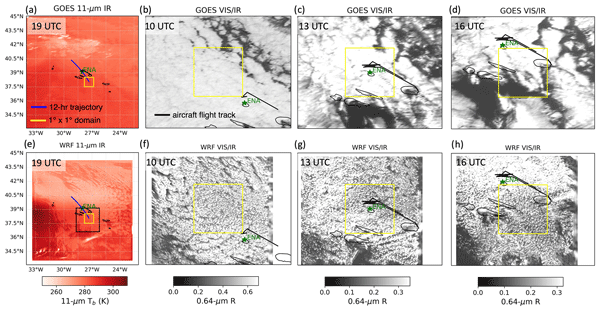
Matthew W. Christensen, Peng Wu, Adam C. Varble, Heng Xiao, and Jerome D. Fast
Atmos. Chem. Phys., 24, 6455–6476, https://doi.org/10.5194/acp-24-6455-2024, https://doi.org/10.5194/acp-24-6455-2024, 2024
Short summary
Short summary
Clouds are essential to keep Earth cooler by reflecting sunlight back to space. We show that an increase in aerosol concentration suppresses precipitation in clouds, causing them to accumulate water and expand in a polluted environment with stronger turbulence and radiative cooling. This process enhances their reflectance by 51 %. It is therefore prudent to account for cloud fraction changes in assessments of aerosol–cloud interactions to improve predictions of climate change.
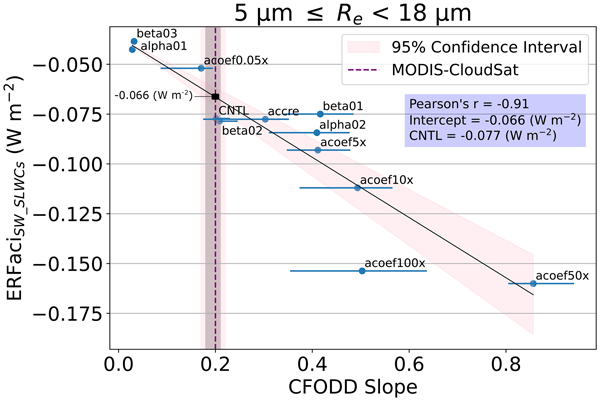
Charlotte M. Beall, Po-Lun Ma, Matthew W. Christensen, Johannes Mülmenstädt, Adam Varble, Kentaroh Suzuki, and Takuro Michibata
Atmos. Chem. Phys., 24, 5287–5302, https://doi.org/10.5194/acp-24-5287-2024, https://doi.org/10.5194/acp-24-5287-2024, 2024
Short summary
Short summary
Single-layer warm liquid clouds cover nearly one-third of the Earth's surface, and uncertainties regarding the impact of aerosols on their radiative properties pose a significant challenge to climate prediction. Here, we demonstrate how satellite observations can be used to constrain Earth system model estimates of the radiative forcing from the interactions of aerosols with clouds due to warm rain processes.
Yu Yao, Po-Lun Ma, Yi Qin, Matthew W. Christensen, Hui Wan, Kai Zhang, Balwinder Singh, Meng Huang, and Mikhail Ovchinnikov
EGUsphere, https://doi.org/10.5194/egusphere-2024-523, https://doi.org/10.5194/egusphere-2024-523, 2024
Preprint withdrawn
Short summary
Short summary
Giant aerosols have substantial effects on warm rain formation. However, it remains challenging to quantify the impact of giant particles at global scale. In this work, we applied earth system model to investigate its impacts by implementing new giant aerosol treatments to consider its physical process. We found this approach substantially affect liquid cloud and improved model's precipitation response to aerosols. Our findings demonstrate the significant impact of giant aerosols on climate.
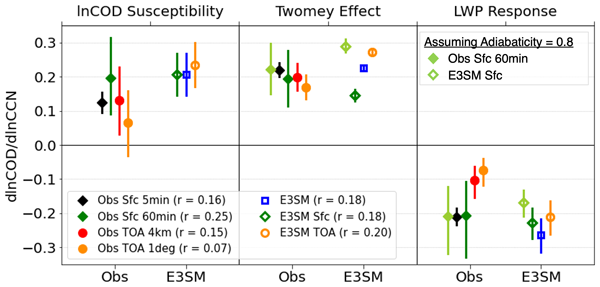
Adam C. Varble, Po-Lun Ma, Matthew W. Christensen, Johannes Mülmenstädt, Shuaiqi Tang, and Jerome Fast
Atmos. Chem. Phys., 23, 13523–13553, https://doi.org/10.5194/acp-23-13523-2023, https://doi.org/10.5194/acp-23-13523-2023, 2023
Short summary
Short summary
We evaluate how clouds change in response to changing atmospheric particle (aerosol) concentrations in a climate model and find that the model-predicted cloud brightness increases too much as aerosols increase because the cloud drop number increases too much. Excessive drizzle in the model mutes this difference. Many differences between observational and model estimates are explained by varying assumptions of how much liquid has been lost in clouds, which impacts the estimated cloud drop number.
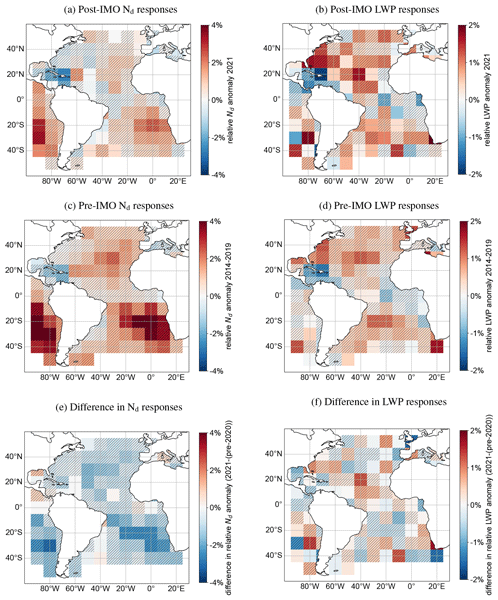
Peter Manshausen, Duncan Watson-Parris, Matthew W. Christensen, Jukka-Pekka Jalkanen, and Philip Stier
Atmos. Chem. Phys., 23, 12545–12555, https://doi.org/10.5194/acp-23-12545-2023, https://doi.org/10.5194/acp-23-12545-2023, 2023
Short summary
Short summary
Aerosol from burning fuel changes cloud properties, e.g., the number of droplets and the content of water. Here, we study how clouds respond to different amounts of shipping aerosol. Droplet numbers increase linearly with increasing aerosol over a broad range until they stop increasing, while the amount of liquid water always increases, independently of emission amount. These changes in cloud properties can make them reflect more or less sunlight, which is important for the earth's climate.
William K. Jones, Matthew W. Christensen, and Philip Stier
Atmos. Meas. Tech., 16, 1043–1059, https://doi.org/10.5194/amt-16-1043-2023, https://doi.org/10.5194/amt-16-1043-2023, 2023
Short summary
Short summary
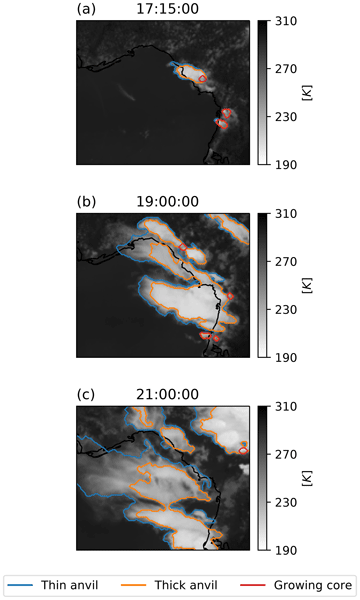
Geostationary weather satellites have been used to detect storm clouds since their earliest applications. However, this task remains difficult as imaging satellites cannot observe the strong vertical winds that are characteristic of storm clouds. Here we introduce a new method that allows us to detect the early development of storms and continue to track them throughout their lifetime, allowing us to study how their early behaviour affects subsequent weather.

Matthew W. Christensen, Po-Lun Ma, Peng Wu, Adam C. Varble, Johannes Mülmenstädt, and Jerome D. Fast
Atmos. Chem. Phys., 23, 2789–2812, https://doi.org/10.5194/acp-23-2789-2023, https://doi.org/10.5194/acp-23-2789-2023, 2023
Short summary
Short summary
An increase in aerosol concentration (tiny airborne particles) is shown to suppress rainfall and increase the abundance of droplets in clouds passing over Graciosa Island in the Azores. Cloud drops remain affected by aerosol for several days across thousands of kilometers in satellite data. Simulations from an Earth system model show good agreement, but differences in the amount of cloud water and its extent remain despite modifications to model parameters that control the warm-rain process.

Bernd Heinold, Holger Baars, Boris Barja, Matthew Christensen, Anne Kubin, Kevin Ohneiser, Kerstin Schepanski, Nick Schutgens, Fabian Senf, Roland Schrödner, Diego Villanueva, and Ina Tegen
Atmos. Chem. Phys., 22, 9969–9985, https://doi.org/10.5194/acp-22-9969-2022, https://doi.org/10.5194/acp-22-9969-2022, 2022
Short summary
Short summary
The extreme 2019–2020 Australian wildfires produced massive smoke plumes lofted into the lower stratosphere by pyrocumulonimbus convection. Most climate models do not adequately simulate the injection height of such intense fires. By combining aerosol-climate modeling with prescribed pyroconvective smoke injection and lidar observations, this study shows the importance of the representation of the most extreme wildfire events for estimating the atmospheric energy budget.

Matthew W. Christensen, Andrew Gettelman, Jan Cermak, Guy Dagan, Michael Diamond, Alyson Douglas, Graham Feingold, Franziska Glassmeier, Tom Goren, Daniel P. Grosvenor, Edward Gryspeerdt, Ralph Kahn, Zhanqing Li, Po-Lun Ma, Florent Malavelle, Isabel L. McCoy, Daniel T. McCoy, Greg McFarquhar, Johannes Mülmenstädt, Sandip Pal, Anna Possner, Adam Povey, Johannes Quaas, Daniel Rosenfeld, Anja Schmidt, Roland Schrödner, Armin Sorooshian, Philip Stier, Velle Toll, Duncan Watson-Parris, Robert Wood, Mingxi Yang, and Tianle Yuan
Atmos. Chem. Phys., 22, 641–674, https://doi.org/10.5194/acp-22-641-2022, https://doi.org/10.5194/acp-22-641-2022, 2022
Short summary
Short summary
Trace gases and aerosols (tiny airborne particles) are released from a variety of point sources around the globe. Examples include volcanoes, industrial chimneys, forest fires, and ship stacks. These sources provide opportunistic experiments with which to quantify the role of aerosols in modifying cloud properties. We review the current state of understanding on the influence of aerosol on climate built from the wide range of natural and anthropogenic laboratories investigated in recent decades.
Andrew Geiss, Johannes Mülmenstädt, Adam C. Varble, Matthew W. Christensen, and Heng Xiao
EGUsphere, https://doi.org/10.5194/egusphere-2026-4426, https://doi.org/10.5194/egusphere-2026-4426, 2026
Short summary
Short summary
Cloud droplet and liquid water concentrations change in response to atmospheric aerosols, affecting cloud brightness, lifetime, and ultimately the Earth's climate. This study examines how the relationship between droplet number and liquid water concentrations varies by cloud type. We find that cloud type can be used to explain most variance in liquid water between satellite-observed cloud scenes, but the influence of droplet concentration on water content is largely independent of cloud type.
Casey J. Wall, Adam C. Varble, Rusen Öktem, and David M. Romps
EGUsphere, https://doi.org/10.5194/egusphere-2026-3986, https://doi.org/10.5194/egusphere-2026-3986, 2026
Short summary
Short summary
The concept of warm-phase convective invigoration from aerosol-cloud interactions posits that polluted clouds form smaller and more numerous droplets than their non-polluted counterparts. This causes polluted cloud updrafts to consume moisture more readily, which ultimately leads to faster updrafts. This work develops a theoretical model of warm-phase convective invigoration and applies the model with aircraft measurements to infer how much the mechanism can invigorate cloud updrafts in nature.
Netta Yeheskel, Matthew W. Christensen, Fabian Hoffmann, Graham Feingold, and Guy Dagan
Atmos. Chem. Phys., 26, 8765–8781, https://doi.org/10.5194/acp-26-8765-2026, https://doi.org/10.5194/acp-26-8765-2026, 2026
Short summary
Short summary
Aerosols influence cloud formation, structure, and radiative effects. As air masses move from the subtropics to the tropics, clouds transition from shallow to deeper systems. Using five years of satellite observations and numerical simulations, we find a robust aerosol impact on this Lagrangian cloud evolution: higher aerosol levels produce thicker, more reflective clouds, enhancing cooling and modifying energy and moisture transport toward the tropics.
Jerome D. Fast, Balwinder Singh, Oscar Diaz-Ibarra, Jeff Johnson, Chandru Dhandapani, Brian Gaudet, Taufiq Hassan, Meng Huang, Jaelyn Litzinger, James Overfelt, Kyle Pressel, Michael Schmidt, Shuaiqi Tang, Adam C. Varble, Hui Wan, Mingxuan Wu, Kai Zhang, and Po-Lun Ma
EGUsphere, https://doi.org/10.5194/egusphere-2026-1538, https://doi.org/10.5194/egusphere-2026-1538, 2026
Short summary
Short summary
We ported a prognostic representation of aerosols to C++ and integrated it into an Earth system model that runs on powerful GPU supercomputers. The code conversion approach keeps the same detailed physics as the Fortran version, was carefully tested, and results show that new code produces aerosol simulations consistent with real‑world data over the central U.S. in spring 2016. Future work will optimize the code for GPUs so to reduce the overall computational time.
Johannes Mülmenstädt and Po-Lun Ma
EGUsphere, https://doi.org/10.5194/egusphere-2026-748, https://doi.org/10.5194/egusphere-2026-748, 2026
Short summary
Short summary
Aerosols emitted by human activities change the planetary energy budget by, among other mechanisms, changing how much liquid water is contained in clouds and thus their reflectance. Different lines of evidence (observations and models) disagree on the sign of the liquid water change even though they agree on the sign of the correlation between aerosols and liquid water in present-day internal variability. We show one way that observations can constrain models to resolve this disagreement.
Naser Mahfouz, Hassan Beydoun, Johannes Mülmenstädt, Noel Keen, Adam C. Varble, Luca Bertagna, Peter Bogenschutz, Andrew Bradley, Matthew W. Christensen, T. Conrad Clevenger, Aaron Donahue, Jerome Fast, James Foucar, Jean-Christophe Golaz, Oksana Guba, Walter Hannah, Benjamin Hillman, Robert Jacob, Wuyin Lin, Po-Lun Ma, Yun Qian, Balwinder Singh, Christopher Terai, Hailong Wang, Mingxuan Wu, Kai Zhang, Andrew Gettelman, Mark Taylor, L. Ruby Leung, Peter Caldwell, and Susannah Burrows
Atmos. Chem. Phys., 25, 15105–15120, https://doi.org/10.5194/acp-25-15105-2025, https://doi.org/10.5194/acp-25-15105-2025, 2025
Short summary
Short summary
Our study assesses the aerosol effective radiative forcing in a global cloud-resolving atmosphere model at ultra-high resolution. We demonstrate that global aerosol forcing signal can be robustly reproduced across resolutions when aerosol activation processes are carefully parameterized. Further, we argue that simplified prescribed aerosol schemes will open the door for further process/mechanism studies under controlled conditions.
Lexie Goldberger, Maxwell Levin, Carlandra Harris, Andrew Geiss, Matthew D. Shupe, and Damao Zhang
Atmos. Meas. Tech., 18, 5393–5414, https://doi.org/10.5194/amt-18-5393-2025, https://doi.org/10.5194/amt-18-5393-2025, 2025
Short summary
Short summary
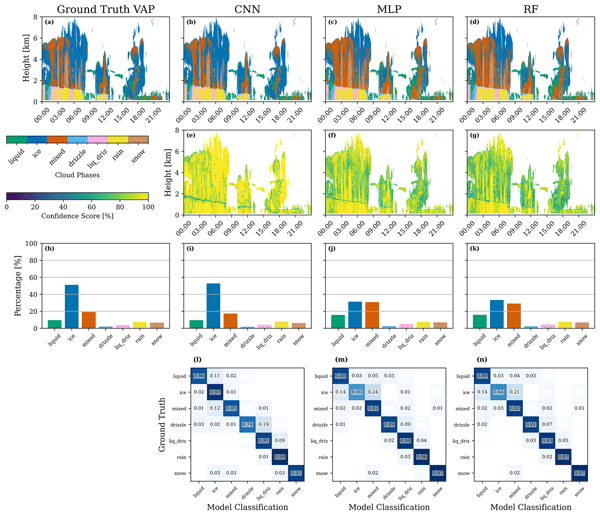
This study leverages machine learning models to classify cloud thermodynamic phases using multi-sensor remote sensing data collected at the Department of Energy Atmospheric Radiation Measurement North Slope of Alaska observatory. We evaluate model performance, feature importance, and application of the model to another observatory and quantify how the models respond to instrument outages.
Jianfeng Li, Andrew Geiss, Zhe Feng, L. Ruby Leung, Yun Qian, and Wenjun Cui
Earth Syst. Sci. Data, 17, 3721–3740, https://doi.org/10.5194/essd-17-3721-2025, https://doi.org/10.5194/essd-17-3721-2025, 2025
Short summary
Short summary
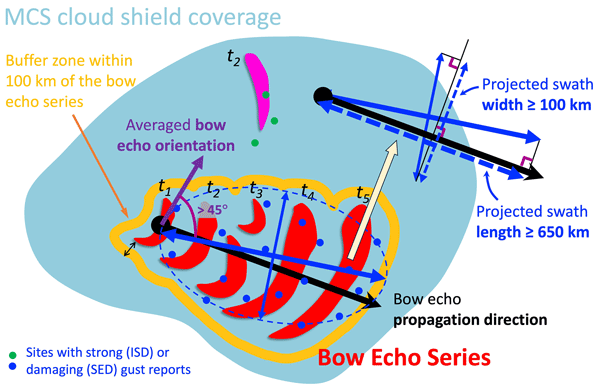
We developed a high-resolution (4 km and hourly) observational derecho dataset over the United States east of the Rocky Mountains from 2004 to 2021 by using a mesoscale convective system dataset, bow echoes detected by a machine learning method, hourly gust speeds, and physically based identification criteria.
Andrew Geiss and Po-Lun Ma
Geosci. Model Dev., 18, 1809–1827, https://doi.org/10.5194/gmd-18-1809-2025, https://doi.org/10.5194/gmd-18-1809-2025, 2025
Short summary
Short summary
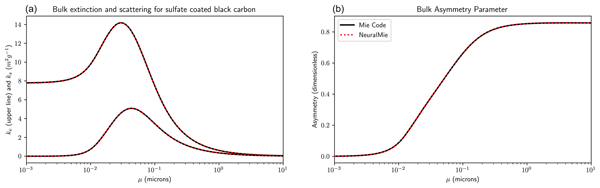
Particles in the Earth's atmosphere strongly impact the planet's energy budget, and atmosphere simulations require accurate representation of their interaction with light. This work introduces two approaches to represent light scattering by small particles. The first is a scattering simulator based on Mie theory implemented in Python. The second is a neural network emulator that is more accurate than existing methods and is fast enough to be used in climate and weather simulations.
Katherine M. Smith, Alice M. Barthel, LeAnn M. Conlon, Luke P. Van Roekel, Anthony Bartoletti, Jean-Christophe Golaz, Chengzhu Zhang, Carolyn Branecky Begeman, James J. Benedict, Gautam Bisht, Yan Feng, Walter Hannah, Bryce E. Harrop, Nicole Jeffery, Wuyin Lin, Po-Lun Ma, Mathew E. Maltrud, Mark R. Petersen, Balwinder Singh, Qi Tang, Teklu Tesfa, Jonathan D. Wolfe, Shaocheng Xie, Xue Zheng, Karthik Balaguru, Oluwayemi Garuba, Peter Gleckler, Aixue Hu, Jiwoo Lee, Ben Moore-Maley, and Ana C. Ordoñez
Geosci. Model Dev., 18, 1613–1633, https://doi.org/10.5194/gmd-18-1613-2025, https://doi.org/10.5194/gmd-18-1613-2025, 2025
Short summary
Short summary
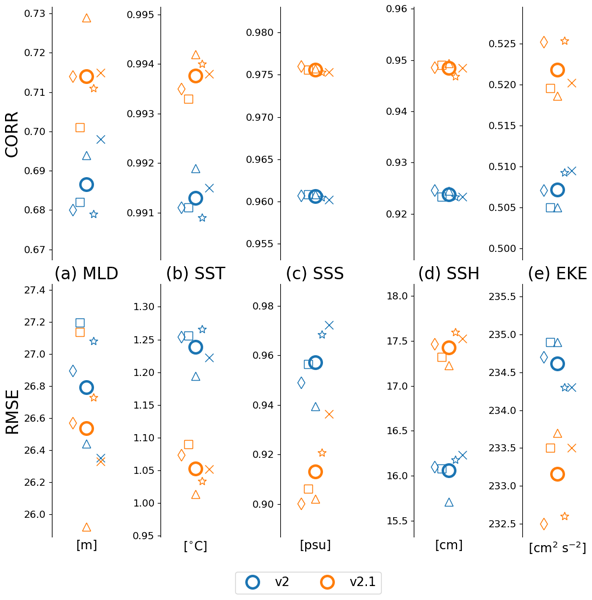
Version 2.1 of the U.S. Department of Energy's Energy Exascale Earth System Model (E3SM) adds the Fox-Kemper et al. (2011) mixed-layer eddy parameterization, which restratifies the ocean surface layer through an overturning streamfunction. Results include surface layer bias reduction in temperature, salinity, and sea ice extent in the North Atlantic; a small strengthening of the Atlantic meridional overturning circulation; and improvements to many atmospheric climatological variables.

Brandon M. Duran, Casey J. Wall, Nicholas J. Lutsko, Takuro Michibata, Po-Lun Ma, Yi Qin, Margaret L. Duffy, Brian Medeiros, and Matvey Debolskiy
Atmos. Chem. Phys., 25, 2123–2146, https://doi.org/10.5194/acp-25-2123-2025, https://doi.org/10.5194/acp-25-2123-2025, 2025
Short summary
Short summary
We use satellite simulator data generated by global climate models to investigate how aerosol particles impact the radiative properties of liquid clouds. Specifically, we quantify the radiative perturbations arising from aerosol-driven changes in the number density of cloud droplets, the vertically integrated cloud water mass, and the cloud amount. Our results show that, in models, aerosol effects on the number density of cloud droplets contribute the most to anthropogenic climate forcing.
Johannes Mülmenstädt, Andrew S. Ackerman, Ann M. Fridlind, Meng Huang, Po-Lun Ma, Naser Mahfouz, Susanne E. Bauer, Susannah M. Burrows, Matthew W. Christensen, Sudhakar Dipu, Andrew Gettelman, L. Ruby Leung, Florian Tornow, Johannes Quaas, Adam C. Varble, Hailong Wang, Kai Zhang, and Youtong Zheng
Atmos. Chem. Phys., 24, 13633–13652, https://doi.org/10.5194/acp-24-13633-2024, https://doi.org/10.5194/acp-24-13633-2024, 2024
Short summary
Short summary
Stratocumulus clouds play a large role in Earth's climate by reflecting incoming solar energy back to space. Turbulence at stratocumulus cloud top mixes in dry, warm air, which can lead to cloud dissipation. This process is challenging for coarse-resolution global models to represent. We show that global models nevertheless agree well with our process understanding. Global models also think the process is less important for the climate than other lines of evidence have led us to conclude.
Jerome D. Fast, Adam C. Varble, Fan Mei, Mikhail Pekour, Jason Tomlinson, Alla Zelenyuk, Art J. Sedlacek III, Maria Zawadowicz, and Louisa Emmons
Atmos. Chem. Phys., 24, 13477–13502, https://doi.org/10.5194/acp-24-13477-2024, https://doi.org/10.5194/acp-24-13477-2024, 2024
Short summary
Short summary
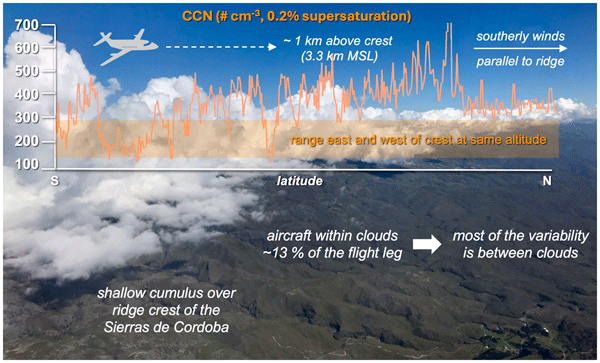
Aerosol property measurements recently collected on the ground and by a research aircraft in central Argentina during the Cloud, Aerosol, and Complex Terrain Interactions (CACTI) campaign exhibit large spatial and temporal variability. These measurements coupled with coincident meteorological information provide a valuable data set needed to evaluate and improve model predictions of aerosols in a traditionally data-sparse region of South America.
Fan Mei, Jennifer M. Comstock, Mikhail S. Pekour, Jerome D. Fast, Krista L. Gaustad, Beat Schmid, Shuaiqi Tang, Damao Zhang, John E. Shilling, Jason M. Tomlinson, Adam C. Varble, Jian Wang, L. Ruby Leung, Lawrence Kleinman, Scot Martin, Sebastien C. Biraud, Brian D. Ermold, and Kenneth W. Burk
Earth Syst. Sci. Data, 16, 5429–5448, https://doi.org/10.5194/essd-16-5429-2024, https://doi.org/10.5194/essd-16-5429-2024, 2024
Short summary
Short summary
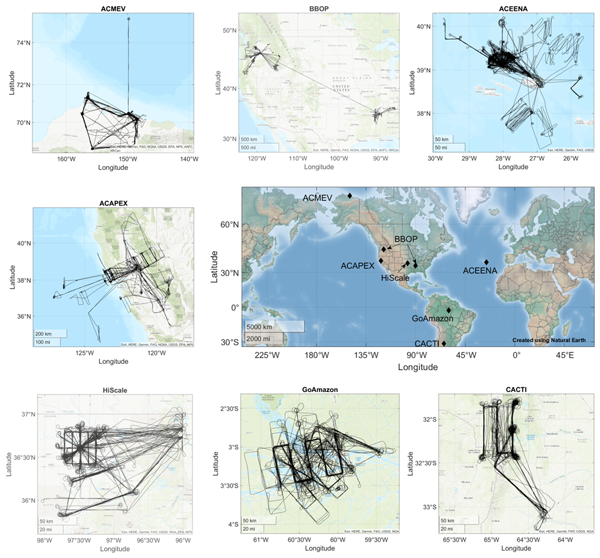
Our study explores a comprehensive dataset from airborne field studies (2013–2018) conducted using the US Department of Energy's Gulfstream 1 (G-1). The 236 flights span diverse regions, including the Arctic, US Southern Great Plains, US West Coast, eastern North Atlantic, Amazon Basin in Brazil, and Sierras de Córdoba range in Argentina. This dataset provides unique insights into atmospheric dynamics, aerosols, and clouds and makes data available in a more accessible format.
Johannes Mülmenstädt, Edward Gryspeerdt, Sudhakar Dipu, Johannes Quaas, Andrew S. Ackerman, Ann M. Fridlind, Florian Tornow, Susanne E. Bauer, Andrew Gettelman, Yi Ming, Youtong Zheng, Po-Lun Ma, Hailong Wang, Kai Zhang, Matthew W. Christensen, Adam C. Varble, L. Ruby Leung, Xiaohong Liu, David Neubauer, Daniel G. Partridge, Philip Stier, and Toshihiko Takemura
Atmos. Chem. Phys., 24, 7331–7345, https://doi.org/10.5194/acp-24-7331-2024, https://doi.org/10.5194/acp-24-7331-2024, 2024
Short summary
Short summary
Human activities release copious amounts of small particles called aerosols into the atmosphere. These particles change how much sunlight clouds reflect to space, an important human perturbation of the climate, whose magnitude is highly uncertain. We found that the latest climate models show a negative correlation but a positive causal relationship between aerosols and cloud water. This means we need to be very careful when we interpret observational studies that can only see correlation.
Matthew W. Christensen, Peng Wu, Adam C. Varble, Heng Xiao, and Jerome D. Fast
Atmos. Chem. Phys., 24, 6455–6476, https://doi.org/10.5194/acp-24-6455-2024, https://doi.org/10.5194/acp-24-6455-2024, 2024
Short summary
Short summary
Clouds are essential to keep Earth cooler by reflecting sunlight back to space. We show that an increase in aerosol concentration suppresses precipitation in clouds, causing them to accumulate water and expand in a polluted environment with stronger turbulence and radiative cooling. This process enhances their reflectance by 51 %. It is therefore prudent to account for cloud fraction changes in assessments of aerosol–cloud interactions to improve predictions of climate change.
Charlotte M. Beall, Po-Lun Ma, Matthew W. Christensen, Johannes Mülmenstädt, Adam Varble, Kentaroh Suzuki, and Takuro Michibata
Atmos. Chem. Phys., 24, 5287–5302, https://doi.org/10.5194/acp-24-5287-2024, https://doi.org/10.5194/acp-24-5287-2024, 2024
Short summary
Short summary
Single-layer warm liquid clouds cover nearly one-third of the Earth's surface, and uncertainties regarding the impact of aerosols on their radiative properties pose a significant challenge to climate prediction. Here, we demonstrate how satellite observations can be used to constrain Earth system model estimates of the radiative forcing from the interactions of aerosols with clouds due to warm rain processes.
Taufiq Hassan, Kai Zhang, Jianfeng Li, Balwinder Singh, Shixuan Zhang, Hailong Wang, and Po-Lun Ma
Geosci. Model Dev., 17, 3507–3532, https://doi.org/10.5194/gmd-17-3507-2024, https://doi.org/10.5194/gmd-17-3507-2024, 2024
Short summary
Short summary
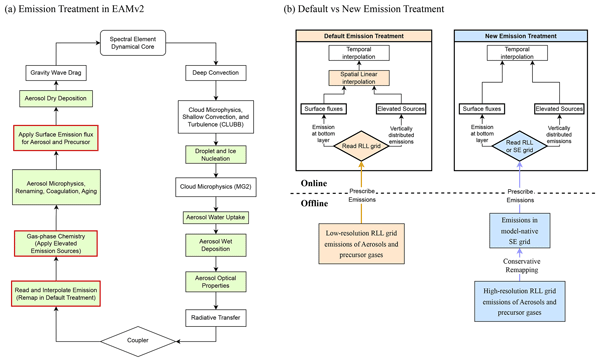
Anthropogenic aerosol emissions are an essential part of global aerosol models. Significant errors can exist from the loss of emission heterogeneity. We introduced an emission treatment that significantly improved aerosol emission heterogeneity in high-resolution model simulations, with improvements in simulated aerosol surface concentrations. The emission treatment will provide a more accurate representation of aerosol emissions and their effects on climate.
Yu Yao, Po-Lun Ma, Yi Qin, Matthew W. Christensen, Hui Wan, Kai Zhang, Balwinder Singh, Meng Huang, and Mikhail Ovchinnikov
EGUsphere, https://doi.org/10.5194/egusphere-2024-523, https://doi.org/10.5194/egusphere-2024-523, 2024
Preprint withdrawn
Short summary
Short summary
Giant aerosols have substantial effects on warm rain formation. However, it remains challenging to quantify the impact of giant particles at global scale. In this work, we applied earth system model to investigate its impacts by implementing new giant aerosol treatments to consider its physical process. We found this approach substantially affect liquid cloud and improved model's precipitation response to aerosols. Our findings demonstrate the significant impact of giant aerosols on climate.
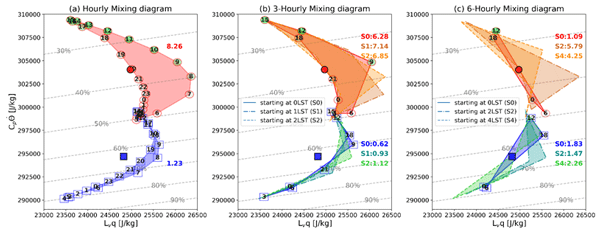
Kirsten L. Findell, Zun Yin, Eunkyo Seo, Paul A. Dirmeyer, Nathan P. Arnold, Nathaniel Chaney, Megan D. Fowler, Meng Huang, David M. Lawrence, Po-Lun Ma, and Joseph A. Santanello Jr.
Geosci. Model Dev., 17, 1869–1883, https://doi.org/10.5194/gmd-17-1869-2024, https://doi.org/10.5194/gmd-17-1869-2024, 2024
Short summary
Short summary
We outline a request for sub-daily data to accurately capture the process-level connections between land states, surface fluxes, and the boundary layer response. This high-frequency model output will allow for more direct comparison with observational field campaigns on process-relevant timescales, enable demonstration of inter-model spread in land–atmosphere coupling processes, and aid in targeted identification of sources of deficiencies and opportunities for improvement of the models.
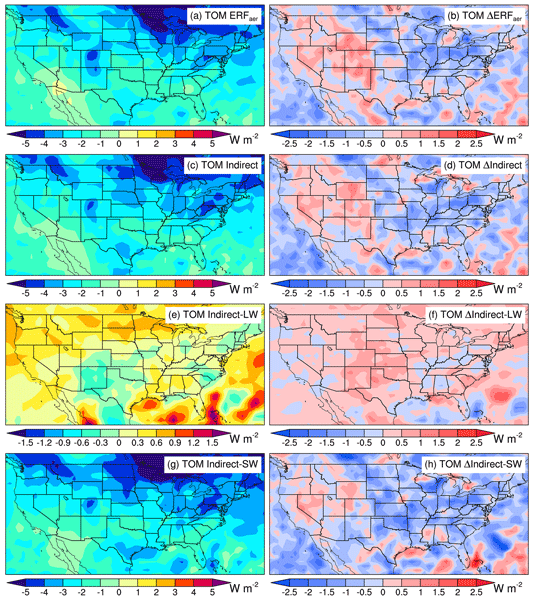
Jianfeng Li, Kai Zhang, Taufiq Hassan, Shixuan Zhang, Po-Lun Ma, Balwinder Singh, Qiyang Yan, and Huilin Huang
Geosci. Model Dev., 17, 1327–1347, https://doi.org/10.5194/gmd-17-1327-2024, https://doi.org/10.5194/gmd-17-1327-2024, 2024
Short summary
Short summary
By comparing E3SM simulations with and without regional refinement, we find that model horizontal grid spacing considerably affects the simulated aerosol mass budget, aerosol–cloud interactions, and the effective radiative forcing of anthropogenic aerosols. The study identifies the critical physical processes strongly influenced by model resolution. It also highlights the benefit of applying regional refinement in future modeling studies at higher or even convection-permitting resolutions.
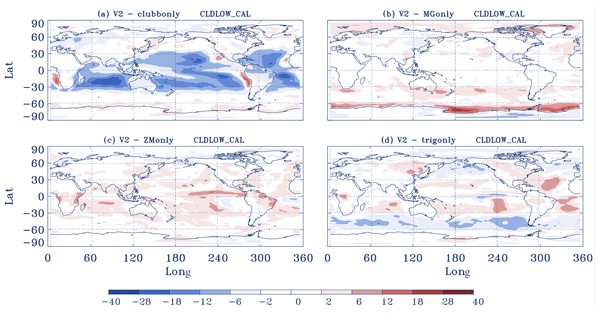
Yuying Zhang, Shaocheng Xie, Yi Qin, Wuyin Lin, Jean-Christophe Golaz, Xue Zheng, Po-Lun Ma, Yun Qian, Qi Tang, Christopher R. Terai, and Meng Zhang
Geosci. Model Dev., 17, 169–189, https://doi.org/10.5194/gmd-17-169-2024, https://doi.org/10.5194/gmd-17-169-2024, 2024
Short summary
Short summary
We performed systematic evaluation of clouds simulated in the Energy
Exascale Earth System Model (E3SMv2) to document model performance and understand what updates in E3SMv2 have caused changes in clouds from E3SMv1 to E3SMv2. We find that stratocumulus clouds along the subtropical west coast of continents are dramatically improved, primarily due to the retuning done in CLUBB. This study offers additional insights into clouds simulated in E3SMv2 and will benefit future E3SM developments.
Exascale Earth System Model (E3SMv2) to document model performance and understand what updates in E3SMv2 have caused changes in clouds from E3SMv1 to E3SMv2. We find that stratocumulus clouds along the subtropical west coast of continents are dramatically improved, primarily due to the retuning done in CLUBB. This study offers additional insights into clouds simulated in E3SMv2 and will benefit future E3SM developments.
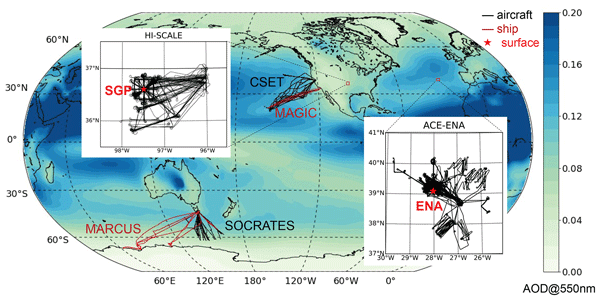
Shuaiqi Tang, Adam C. Varble, Jerome D. Fast, Kai Zhang, Peng Wu, Xiquan Dong, Fan Mei, Mikhail Pekour, Joseph C. Hardin, and Po-Lun Ma
Geosci. Model Dev., 16, 6355–6376, https://doi.org/10.5194/gmd-16-6355-2023, https://doi.org/10.5194/gmd-16-6355-2023, 2023
Short summary
Short summary
To assess the ability of Earth system model (ESM) predictions, we developed a tool called ESMAC Diags to understand how aerosols, clouds, and aerosol–cloud interactions are represented in ESMs. This paper describes its version 2 functionality. We compared the model predictions with measurements taken by planes, ships, satellites, and ground instruments over four regions across the world. Results show that this new tool can help identify model problems and guide future development of ESMs.
Adam C. Varble, Adele L. Igel, Hugh Morrison, Wojciech W. Grabowski, and Zachary J. Lebo
Atmos. Chem. Phys., 23, 13791–13808, https://doi.org/10.5194/acp-23-13791-2023, https://doi.org/10.5194/acp-23-13791-2023, 2023
Short summary
Short summary
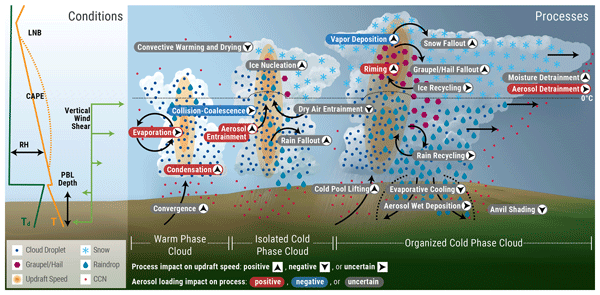
As atmospheric particles called aerosols increase in number, the number of droplets in clouds tends to increase, which has been theorized to increase storm intensity. We critically evaluate the evidence for this theory, showing that flaws and limitations of previous studies coupled with unaddressed cloud process complexities draw it into question. We provide recommendations for future observations and modeling to overcome current uncertainties.
Adam C. Varble, Po-Lun Ma, Matthew W. Christensen, Johannes Mülmenstädt, Shuaiqi Tang, and Jerome Fast
Atmos. Chem. Phys., 23, 13523–13553, https://doi.org/10.5194/acp-23-13523-2023, https://doi.org/10.5194/acp-23-13523-2023, 2023
Short summary
Short summary
We evaluate how clouds change in response to changing atmospheric particle (aerosol) concentrations in a climate model and find that the model-predicted cloud brightness increases too much as aerosols increase because the cloud drop number increases too much. Excessive drizzle in the model mutes this difference. Many differences between observational and model estimates are explained by varying assumptions of how much liquid has been lost in clouds, which impacts the estimated cloud drop number.
Peter Manshausen, Duncan Watson-Parris, Matthew W. Christensen, Jukka-Pekka Jalkanen, and Philip Stier
Atmos. Chem. Phys., 23, 12545–12555, https://doi.org/10.5194/acp-23-12545-2023, https://doi.org/10.5194/acp-23-12545-2023, 2023
Short summary
Short summary
Aerosol from burning fuel changes cloud properties, e.g., the number of droplets and the content of water. Here, we study how clouds respond to different amounts of shipping aerosol. Droplet numbers increase linearly with increasing aerosol over a broad range until they stop increasing, while the amount of liquid water always increases, independently of emission amount. These changes in cloud properties can make them reflect more or less sunlight, which is important for the earth's climate.
Zhe Feng, Joseph Hardin, Hannah C. Barnes, Jianfeng Li, L. Ruby Leung, Adam Varble, and Zhixiao Zhang
Geosci. Model Dev., 16, 2753–2776, https://doi.org/10.5194/gmd-16-2753-2023, https://doi.org/10.5194/gmd-16-2753-2023, 2023
Short summary
Short summary
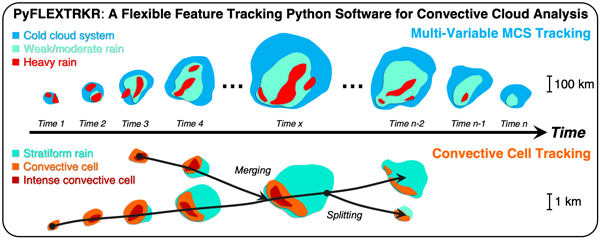
PyFLEXTRKR is a flexible atmospheric feature tracking framework with specific capabilities to track convective clouds from a variety of observations and model simulations. The package has a collection of multi-object identification algorithms and has been optimized for large datasets. This paper describes the algorithms and demonstrates applications for tracking deep convective cells and mesoscale convective systems from observations and model simulations at a wide range of scales.
Aishwarya Raman, Thomas Hill, Paul J. DeMott, Balwinder Singh, Kai Zhang, Po-Lun Ma, Mingxuan Wu, Hailong Wang, Simon P. Alexander, and Susannah M. Burrows
Atmos. Chem. Phys., 23, 5735–5762, https://doi.org/10.5194/acp-23-5735-2023, https://doi.org/10.5194/acp-23-5735-2023, 2023
Short summary
Short summary
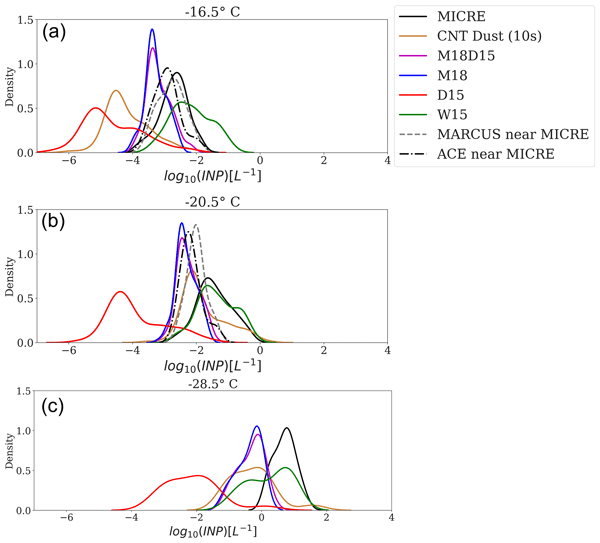
Ice-nucleating particles (INPs) play an important role in cloud processes and associated precipitation. Yet, INPs are not accurately represented in climate models. This study attempts to uncover these gaps by comparing model-simulated INP concentrations against field campaign measurements in the SO for an entire year, 2017–2018. Differences in INP concentrations and variability between the model and observations have major implications for modeling cloud properties in high latitudes.
Andrew Geiss, Po-Lun Ma, Balwinder Singh, and Joseph C. Hardin
Geosci. Model Dev., 16, 2355–2370, https://doi.org/10.5194/gmd-16-2355-2023, https://doi.org/10.5194/gmd-16-2355-2023, 2023
Short summary
Short summary
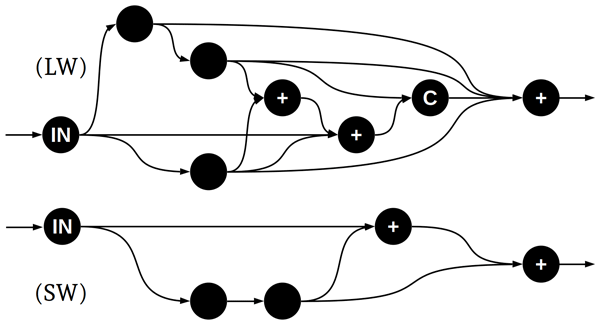
Atmospheric aerosols play a critical role in Earth's climate, but it is too computationally expensive to directly model their interaction with radiation in climate simulations. This work develops a new neural-network-based parameterization of aerosol optical properties for use in the Energy Exascale Earth System Model that is much more accurate than the current one; it also introduces a unique model optimization method that involves randomly generating neural network architectures.
Matthew W. Christensen, Po-Lun Ma, Peng Wu, Adam C. Varble, Johannes Mülmenstädt, and Jerome D. Fast
Atmos. Chem. Phys., 23, 2789–2812, https://doi.org/10.5194/acp-23-2789-2023, https://doi.org/10.5194/acp-23-2789-2023, 2023
Short summary
Short summary
An increase in aerosol concentration (tiny airborne particles) is shown to suppress rainfall and increase the abundance of droplets in clouds passing over Graciosa Island in the Azores. Cloud drops remain affected by aerosol for several days across thousands of kilometers in satellite data. Simulations from an Earth system model show good agreement, but differences in the amount of cloud water and its extent remain despite modifications to model parameters that control the warm-rain process.
William K. Jones, Matthew W. Christensen, and Philip Stier
Atmos. Meas. Tech., 16, 1043–1059, https://doi.org/10.5194/amt-16-1043-2023, https://doi.org/10.5194/amt-16-1043-2023, 2023
Short summary
Short summary
Geostationary weather satellites have been used to detect storm clouds since their earliest applications. However, this task remains difficult as imaging satellites cannot observe the strong vertical winds that are characteristic of storm clouds. Here we introduce a new method that allows us to detect the early development of storms and continue to track them throughout their lifetime, allowing us to study how their early behaviour affects subsequent weather.
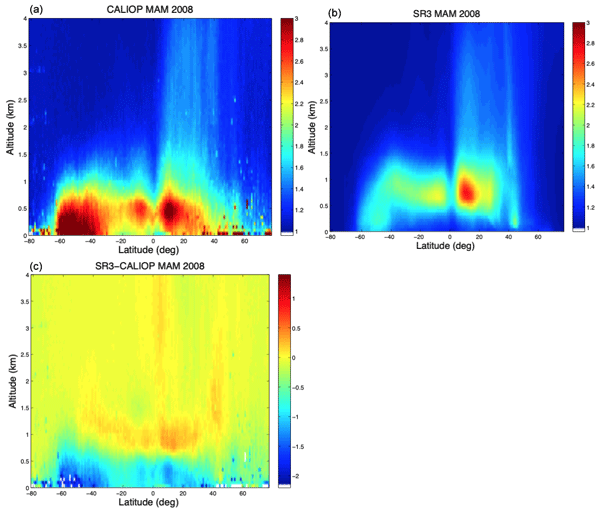
Marine Bonazzola, Hélène Chepfer, Po-Lun Ma, Johannes Quaas, David M. Winker, Artem Feofilov, and Nick Schutgens
Geosci. Model Dev., 16, 1359–1377, https://doi.org/10.5194/gmd-16-1359-2023, https://doi.org/10.5194/gmd-16-1359-2023, 2023
Short summary
Short summary
Aerosol has a large impact on climate. Using a lidar aerosol simulator ensures consistent comparisons between modeled and observed aerosol. We present a lidar aerosol simulator that applies a cloud masking and an aerosol detection threshold. We estimate the lidar signals that would be observed at 532 nm by the Cloud-Aerosol Lidar with Orthogonal Polarization overflying the atmosphere predicted by a climate model. Our comparison at the seasonal timescale shows a discrepancy in the Southern Ocean.
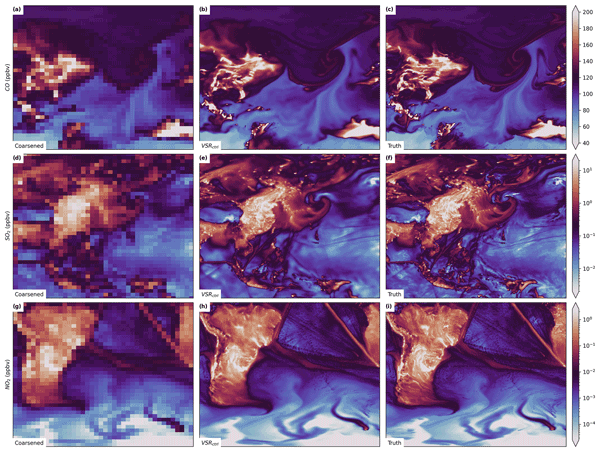
Andrew Geiss, Sam J. Silva, and Joseph C. Hardin
Geosci. Model Dev., 15, 6677–6694, https://doi.org/10.5194/gmd-15-6677-2022, https://doi.org/10.5194/gmd-15-6677-2022, 2022
Short summary
Short summary
This work demonstrates the use of modern machine learning techniques to enhance the resolution of atmospheric chemistry simulations. We evaluate the schemes for an 8 x 10 increase in resolution and find that they perform substantially better than conventional methods. Methods are introduced to target machine learning methods towards this type of problem, most notably by ensuring they do not break known physical constraints.
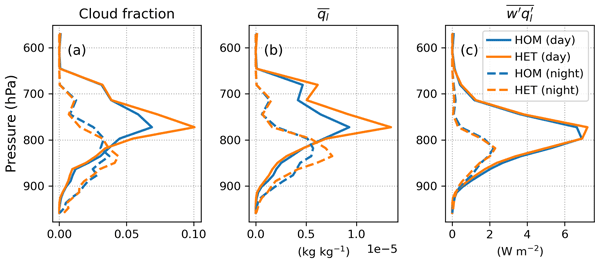
Meng Huang, Po-Lun Ma, Nathaniel W. Chaney, Dalei Hao, Gautam Bisht, Megan D. Fowler, Vincent E. Larson, and L. Ruby Leung
Geosci. Model Dev., 15, 6371–6384, https://doi.org/10.5194/gmd-15-6371-2022, https://doi.org/10.5194/gmd-15-6371-2022, 2022
Short summary
Short summary
The land surface in one grid cell may be diverse in character. This study uses an explicit way to account for that subgrid diversity in a state-of-the-art Earth system model (ESM) and explores its implications for the overlying atmosphere. We find that the shallow clouds are increased significantly with the land surface diversity. Our work highlights the importance of accurately representing the land surface and its interaction with the atmosphere in next-generation ESMs.
Bernd Heinold, Holger Baars, Boris Barja, Matthew Christensen, Anne Kubin, Kevin Ohneiser, Kerstin Schepanski, Nick Schutgens, Fabian Senf, Roland Schrödner, Diego Villanueva, and Ina Tegen
Atmos. Chem. Phys., 22, 9969–9985, https://doi.org/10.5194/acp-22-9969-2022, https://doi.org/10.5194/acp-22-9969-2022, 2022
Short summary
Short summary
The extreme 2019–2020 Australian wildfires produced massive smoke plumes lofted into the lower stratosphere by pyrocumulonimbus convection. Most climate models do not adequately simulate the injection height of such intense fires. By combining aerosol-climate modeling with prescribed pyroconvective smoke injection and lidar observations, this study shows the importance of the representation of the most extreme wildfire events for estimating the atmospheric energy budget.
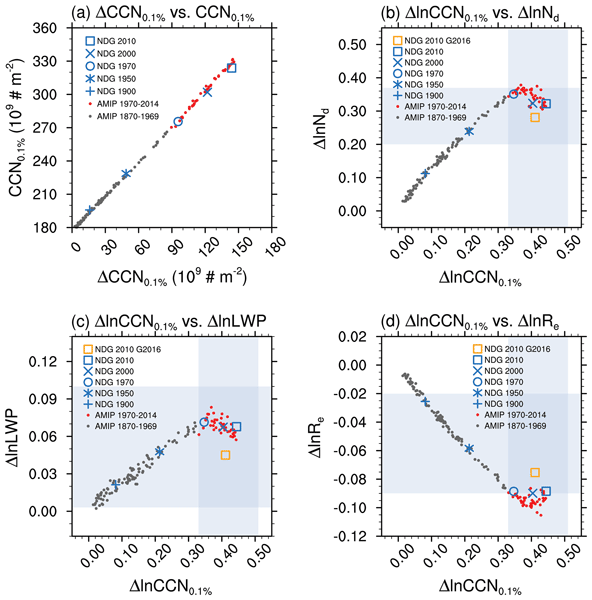
Kai Zhang, Wentao Zhang, Hui Wan, Philip J. Rasch, Steven J. Ghan, Richard C. Easter, Xiangjun Shi, Yong Wang, Hailong Wang, Po-Lun Ma, Shixuan Zhang, Jian Sun, Susannah M. Burrows, Manish Shrivastava, Balwinder Singh, Yun Qian, Xiaohong Liu, Jean-Christophe Golaz, Qi Tang, Xue Zheng, Shaocheng Xie, Wuyin Lin, Yan Feng, Minghuai Wang, Jin-Ho Yoon, and L. Ruby Leung
Atmos. Chem. Phys., 22, 9129–9160, https://doi.org/10.5194/acp-22-9129-2022, https://doi.org/10.5194/acp-22-9129-2022, 2022
Short summary
Short summary
Here we analyze the effective aerosol forcing simulated by E3SM version 1 using both century-long free-running and short nudged simulations. The aerosol forcing in E3SMv1 is relatively large compared to other models, mainly due to the large indirect aerosol effect. Aerosol-induced changes in liquid and ice cloud properties in E3SMv1 have a strong correlation. The aerosol forcing estimates in E3SMv1 are sensitive to the parameterization changes in both liquid and ice cloud processes.
Shuaiqi Tang, Jerome D. Fast, Kai Zhang, Joseph C. Hardin, Adam C. Varble, John E. Shilling, Fan Mei, Maria A. Zawadowicz, and Po-Lun Ma
Geosci. Model Dev., 15, 4055–4076, https://doi.org/10.5194/gmd-15-4055-2022, https://doi.org/10.5194/gmd-15-4055-2022, 2022
Short summary
Short summary
We developed an Earth system model (ESM) diagnostics package to compare various types of aerosol properties simulated in ESMs with aircraft, ship, and surface measurements from six field campaigns across spatial scales. The diagnostics package is coded and organized to be flexible and modular for future extension to other field campaign datasets and adapted to higher-resolution model simulations. Future releases will include comprehensive cloud and aerosol–cloud interaction diagnostics.
Susannah M. Burrows, Richard C. Easter, Xiaohong Liu, Po-Lun Ma, Hailong Wang, Scott M. Elliott, Balwinder Singh, Kai Zhang, and Philip J. Rasch
Atmos. Chem. Phys., 22, 5223–5251, https://doi.org/10.5194/acp-22-5223-2022, https://doi.org/10.5194/acp-22-5223-2022, 2022
Short summary
Short summary
Sea spray particles are composed of a mixture of salts and organic substances from oceanic microorganisms. In prior work, our team developed an approach connecting sea spray chemistry to ocean biology, called OCEANFILMS. Here we describe its implementation within an Earth system model, E3SM. We show that simulated sea spray chemistry is consistent with observed seasonal cycles and that sunlight reflected by simulated Southern Ocean clouds increases, consistent with analysis of satellite data.
Po-Lun Ma, Bryce E. Harrop, Vincent E. Larson, Richard B. Neale, Andrew Gettelman, Hugh Morrison, Hailong Wang, Kai Zhang, Stephen A. Klein, Mark D. Zelinka, Yuying Zhang, Yun Qian, Jin-Ho Yoon, Christopher R. Jones, Meng Huang, Sheng-Lun Tai, Balwinder Singh, Peter A. Bogenschutz, Xue Zheng, Wuyin Lin, Johannes Quaas, Hélène Chepfer, Michael A. Brunke, Xubin Zeng, Johannes Mülmenstädt, Samson Hagos, Zhibo Zhang, Hua Song, Xiaohong Liu, Michael S. Pritchard, Hui Wan, Jingyu Wang, Qi Tang, Peter M. Caldwell, Jiwen Fan, Larry K. Berg, Jerome D. Fast, Mark A. Taylor, Jean-Christophe Golaz, Shaocheng Xie, Philip J. Rasch, and L. Ruby Leung
Geosci. Model Dev., 15, 2881–2916, https://doi.org/10.5194/gmd-15-2881-2022, https://doi.org/10.5194/gmd-15-2881-2022, 2022
Short summary
Short summary
An alternative set of parameters for E3SM Atmospheric Model version 1 has been developed based on a tuning strategy that focuses on clouds. When clouds in every regime are improved, other aspects of the model are also improved, even though they are not the direct targets for calibration. The recalibrated model shows a lower sensitivity to anthropogenic aerosols and surface warming, suggesting potential improvements to the simulated climate in the past and future.
Artem G. Feofilov, Hélène Chepfer, Vincent Noël, Rodrigo Guzman, Cyprien Gindre, Po-Lun Ma, and Marjolaine Chiriaco
Atmos. Meas. Tech., 15, 1055–1074, https://doi.org/10.5194/amt-15-1055-2022, https://doi.org/10.5194/amt-15-1055-2022, 2022
Short summary
Short summary
Space-borne lidars have been providing invaluable information of atmospheric optical properties since 2006, and new lidar missions are on the way to ensure continuous observations. In this work, we compare the clouds estimated from space-borne ALADIN and CALIOP lidar observations. The analysis of collocated data shows that the agreement between the retrieved clouds is good up to 3 km height. Above that, ALADIN detects 40 % less clouds than CALIOP, except for polar stratospheric clouds (PSCs).
Matthew W. Christensen, Andrew Gettelman, Jan Cermak, Guy Dagan, Michael Diamond, Alyson Douglas, Graham Feingold, Franziska Glassmeier, Tom Goren, Daniel P. Grosvenor, Edward Gryspeerdt, Ralph Kahn, Zhanqing Li, Po-Lun Ma, Florent Malavelle, Isabel L. McCoy, Daniel T. McCoy, Greg McFarquhar, Johannes Mülmenstädt, Sandip Pal, Anna Possner, Adam Povey, Johannes Quaas, Daniel Rosenfeld, Anja Schmidt, Roland Schrödner, Armin Sorooshian, Philip Stier, Velle Toll, Duncan Watson-Parris, Robert Wood, Mingxi Yang, and Tianle Yuan
Atmos. Chem. Phys., 22, 641–674, https://doi.org/10.5194/acp-22-641-2022, https://doi.org/10.5194/acp-22-641-2022, 2022
Short summary
Short summary
Trace gases and aerosols (tiny airborne particles) are released from a variety of point sources around the globe. Examples include volcanoes, industrial chimneys, forest fires, and ship stacks. These sources provide opportunistic experiments with which to quantify the role of aerosols in modifying cloud properties. We review the current state of understanding on the influence of aerosol on climate built from the wide range of natural and anthropogenic laboratories investigated in recent decades.

Andrew Geiss and Joseph C. Hardin
Atmos. Meas. Tech., 14, 7729–7747, https://doi.org/10.5194/amt-14-7729-2021, https://doi.org/10.5194/amt-14-7729-2021, 2021
Short summary
Short summary
Radars can suffer from missing or poor-quality data regions for several reasons: beam blockage, instrument failure, and near-ground blind zones, etc. Here, we demonstrate how deep convolutional neural networks can be used for filling in radar-missing data regions and that they can significantly outperform conventional approaches in terms of realism and accuracy.
Zhonghua Zheng, Matthew West, Lei Zhao, Po-Lun Ma, Xiaohong Liu, and Nicole Riemer
Atmos. Chem. Phys., 21, 17727–17741, https://doi.org/10.5194/acp-21-17727-2021, https://doi.org/10.5194/acp-21-17727-2021, 2021
Short summary
Short summary
Aerosol mixing state is an important emergent property that affects aerosol radiative forcing and aerosol–cloud interactions, but it has not been easy to constrain this property globally. We present a framework for evaluating the error in aerosol mixing state induced by aerosol representation assumptions, which is one of the important contributors to structural uncertainty in aerosol models. Our study provides insights into potential improvements to model process representation for aerosols.
Cited articles
Albrecht, B. A.: Aerosols, Cloud Microphysics, and Fractional Cloudiness, Science, 245, 1227–1230, https://doi.org/10.1126/science.245.4923.1227, 1989. a, b, c
Andersen, H., Cermak, J., Douglas, A., Myers, T. A., Nowack, P., Stier, P., Wall, C. J., and Wilson Kemsley, S.: Sensitivities of cloud radiative effects to large-scale meteorology and aerosols from global observations, Atmos. Chem. Phys., 23, 10775–10794, https://doi.org/10.5194/acp-23-10775-2023, 2023. a, b
Arola, A., Lipponen, A., Kolmonen, P., Virtanen, T. H., Bellouin, N., Grosvenor, D. P., Gryspeerdt, E., Quaas, J., and Kokkola, H.: Aerosol effects on clouds are concealed by natural cloud heterogeneity and satellite retrieval errors, Nat. Commun., 13, 7357, https://doi.org/10.1038/s41467-022-34948-5, 2022. a, b
Bellouin, N., Quaas, J., Gryspeerdt, E., Kinne, S., Stier, P., Watson-Parris, D., Boucher, O., Carslaw, K. S., Christensen, M., Daniau, A.-L., Dufresne, J.-L., Feingold, G., Fiedler, S., Forster, P., Gettelman, A., Haywood, J. M., Lohmann, U., Malavelle, F., Mauritsen, T., McCoy, D. T., Myhre, G., Mulmenstadt, J., Neubauer, D., Possner, A., Rugenstein, M., Sato, Y., Schulz, M., Schwartz, S. E., Sourdeval, O., Storelvmo, T., Toll, V., Winker, D., and Stevens, B.: Bounding Global Aerosol Radiative Forcing of Climate Change, Reviews of Geophysics, 58, e2019RG000660, https://doi.org/10.1029/2019RG000660, 2020. a, b
Bentley, J. L.: Multidimensional binary search trees used for associative searching, Commun. ACM, 18, 509–517, https://doi.org/10.1145/361002.361007, 1975. a
Breiman, L.: Random Forests, Machine Learning, 45, https://doi.org/10.1023/A:1010933404324, 2001. a, b, c
Caldwell, P. M., Terai, C. R., Hillman, B., Keen, N. D., Bogenschutz, P., Lin, W., Beydoun, H., Taylor, M., Bertagna, L., Bradley, A. M., Clevenger, T. C., Donahue, A. S., Eldred, C., Foucar, J., Golaz, J.-C., Guba, O., Jacob, R., Johnson, J., Krishna, J., Liu, W., Pressel, K., Salinger, A. G., Singh, B., Steyer, A., Ullrich, P., Wu, D., Yuan, X., Shpund, J., Ma, H.-Y., and Zender, C. S.: Convection-Permitting Simulations With the E3SM Global Atmosphere Model, Journal of Advances in Modeling Earth Systems, 13, e2021MS002544, https://doi.org/10.1029/2021MS002544, 2021. a
Chen, Y., Haywood, J., Wang, Y., Malavelle, F., Jordan, G., Partridge, D., Fieldsend, J., De Leeuw, J., Schmidt, A., Cho, N., Oreopoulos, L., Platnick, S., Grosvenor, D. P., Field, P., and Lohmann, U.: Machine learning reveals climate forcing from aerosols is dominated by increased cloud cover, Nature Geoscience, 15, https://doi.org/10.1038/s41561-022-00991-6, 2022. a, b
Christensen, M. W., Chen, Y.-C., and Stephens, G. L.: Aerosol indirect effect dictated by liquid clouds, Journal of Geophysical Research: Atmospheres, 121, 14,636–14,650, https://doi.org/10.1002/2016JD025245, 2016. a
Christensen, M. W., Neubauer, D., Poulsen, C. A., Thomas, G. E., McGarragh, G. R., Povey, A. C., Proud, S. R., and Grainger, R. G.: Unveiling aerosol–cloud interactions – Part 1: Cloud contamination in satellite products enhances the aerosol indirect forcing estimate, Atmos. Chem. Phys., 17, 13151–13164, https://doi.org/10.5194/acp-17-13151-2017, 2017. a
Christensen, M. W., Gettelman, A., Cermak, J., Dagan, G., Diamond, M., Douglas, A., Feingold, G., Glassmeier, F., Goren, T., Grosvenor, D. P., Gryspeerdt, E., Kahn, R., Li, Z., Ma, P.-L., Malavelle, F., McCoy, I. L., McCoy, D. T., McFarquhar, G., Mülmenstädt, J., Pal, S., Possner, A., Povey, A., Quaas, J., Rosenfeld, D., Schmidt, A., Schrödner, R., Sorooshian, A., Stier, P., Toll, V., Watson-Parris, D., Wood, R., Yang, M., and Yuan, T.: Opportunistic experiments to constrain aerosol effective radiative forcing, Atmos. Chem. Phys., 22, 641–674, https://doi.org/10.5194/acp-22-641-2022, 2022. a
Christensen, M. W., Ma, P.-L., Wu, P., Varble, A. C., Mülmenstädt, J., and Fast, J. D.: Evaluation of aerosol–cloud interactions in E3SM using a Lagrangian framework, Atmos. Chem. Phys., 23, 2789–2812, https://doi.org/10.5194/acp-23-2789-2023, 2023. a, b
Christensen, M. W., Geiss, A., Varble, A. C., and Ma, P.-L.: Multiscale ACI Satellite Database, DataHub [data set], https://doi.org/10.25584/3005733, 2025. a
Coakley, J. A., Friedman, M. A., and Tahnk, W. R.: Retrieval of Cloud Properties for Partly Cloudy Imager Pixels, Journal of Atmospheric and Oceanic Technology, 22, 3–17, https://doi.org/10.1175/JTECH-1681.1, 2005. a
Feingold, G., McComiskey, A., Yamaguchi, T., Johnson, J. S., Carslaw, K. S., and Schmidt, K. S.: New approaches to quantifying aerosol influence on the cloud radiative effect, Proceedings of the National Academy of Sciences, 113, 5812–5819, https://doi.org/10.1073/pnas.1514035112, 2016. a
Goren, T., Choudhury, G., Kretzschmar, J., and McCoy, I.: Co-variability drives the inverted-V sensitivity between liquid water path and droplet concentrations, Atmos. Chem. Phys., 25, 3413–3423, https://doi.org/10.5194/acp-25-3413-2025, 2025. a
Grandey, B. S., Stier, P., and Wagner, T. M.: Investigating relationships between aerosol optical depth and cloud fraction using satellite, aerosol reanalysis and general circulation model data, Atmos. Chem. Phys., 13, 3177–3184, https://doi.org/10.5194/acp-13-3177-2013, 2013. a
Grosvenor, D. P., Sourdeval, O., Zuidema, P., Ackerman, A., Alexandrov, M. D., Bennartz, R., Boers, R., Cairns, B., Chiu, J. C., Christensen, M., Deneke, H., Diamond, M., Feingold, G., Fridlind, A., Hünerbein, A., Knist, C., Kollias, P., Marshak, A., McCoy, D., Merk, D., Painemal, D., Rausch, J., Rosenfeld, D., Russchenberg, H., Seifert, P., Sinclair, K., Stier, P., van Diedenhoven, B., Wendisch, M., Werner, F., Wood, R., Zhang, Z. B., and Quaas, J.: Remote Sensing of Droplet Number Concentration in Warm Clouds: A Review of the Current State of Knowledge and Perspectives, Reviews of Geophysics, 56, 409–453, https://doi.org/10.1029/2017rg000593, 2018. a, b
Gryspeerdt, E. and Stier, P.: Regime-based analysis of aerosol-cloud interactions, Geophysical Research Letters, 39, https://doi.org/10.1029/2012GL053221, 2012. a
Gryspeerdt, E., Quaas, J., and Bellouin, N.: Constraining the aerosol influence on cloud fraction, Journal of Geophysical Research: Atmospheres, 121, 3566–3583, https://doi.org/10.1002/2015JD023744, 2016. a
Gryspeerdt, E., Goren, T., Sourdeval, O., Quaas, J., Mülmenstädt, J., Dipu, S., Unglaub, C., Gettelman, A., and Christensen, M.: Constraining the aerosol influence on cloud liquid water path, Atmos. Chem. Phys., 19, 5331–5347, https://doi.org/10.5194/acp-19-5331-2019, 2019. a, b, c, d, e, f, g, h, i, j, k
Gryspeerdt, E., McCoy, D. T., Crosbie, E., Moore, R. H., Nott, G. J., Painemal, D., Small-Griswold, J., Sorooshian, A., and Ziemba, L.: The impact of sampling strategy on the cloud droplet number concentration estimated from satellite data, Atmos. Meas. Tech., 15, 3875–3892, https://doi.org/10.5194/amt-15-3875-2022, 2022. a, b
Hersbach, H., Bell, B., Berrisford, P., Hirahara, S., Horányi, A., Muñoz-Sabater, J., Nicolas, J., Peubey, C., Radu, R., Schepers, D., Simmons, A., Soci, C., Abdalla, S., Abellan, X., Balsamo, G., Bechtold, P., Biavati, G., Bidlot, J., Bonavita, M., De Chiara, G., Dahlgren, P., Dee, D., Diamantakis, M., Dragani, R., Flemming, J., Forbes, R., Fuentes, M., Geer, A., Haimberger, L., Healy, S., Hogan, R. J., Hólm, E., Janisková, M., Keeley, S., Laloyaux, P., Lopez, P., Lupu, C., Radnoti, G., de Rosnay, P., Rozum, I., Vamborg, F., Villaume, S., and Thépaut, J.-N.: The ERA5 global reanalysis, Quarterly Journal of the Royal Meteorological Society, 146, 1999–2049, https://doi.org/10.1002/qj.3803, 2020. a
Hoffmann, F., Glassmeier, F., Yamaguchi, T., and Feingold, G.: Liquid Water Path Steady States in Stratocumulus: Insights from Process-Level Emulation and Mixed-Layer Theory, Journal of the Atmospheric Sciences, 77, 2203–2215, https://doi.org/10.1175/JAS-D-19-0241.1, 2020. a
Klein, S. A. and Hartmann, D. L.: The Seasonal Cycle of Low Stratiform Clouds, Journal of Climate, 6, https://doi.org/10.1175/1520-0442(1993)006<1587:TSCOLS>2.0.CO;2, 1993. a
Lebsock, M. D., Stephens, G. L., and Kummerow, C.: Multisensor satellite observations of aerosol effects on warm clouds, Journal of Geophysical Research: Atmospheres, 113, https://doi.org/10.1029/2008JD009876, 2008. a
L'Ecuyer, T. S., Berg, W., Haynes, J., Lebsock, M., and Takemura, T.: Global observations of aerosol impacts on precipitation occurrence in warm maritime clouds, Journal of Geophysical Research: Atmospheres, 114, https://doi.org/10.1029/2008JD011273, 2009. a
Loeb, N., Wielicki, B., Doelling, D., Smith, G., Keyes, D., Kato, S., Manalo-Smith, N., and Wong, T.: Toward Optimal Closure of the Earth's Top-of-Atmosphere Radiation Budget, J. Climate, 22, 748–766, https://doi.org/10.1175/2008JCLI2637.1, 2009. a
McComiskey, A. and Feingold, G.: The scale problem in quantifying aerosol indirect effects, Atmos. Chem. Phys., 12, 1031–1049, https://doi.org/10.5194/acp-12-1031-2012, 2012. a
McGarragh, G. R., Poulsen, C. A., Thomas, G. E., Povey, A. C., Sus, O., Stapelberg, S., Schlundt, C., Proud, S., Christensen, M. W., Stengel, M., Hollmann, R., and Grainger, R. G.: The Community Cloud retrieval for CLimate (CC4CL) – Part 2: The optimal estimation approach, Atmos. Meas. Tech., 11, 3397–3431, https://doi.org/10.5194/amt-11-3397-2018, 2018. a, b
McGrath-Spangler, E. L., Molod, A., Ott, L. E., and Pawson, S.: Impact of planetary boundary layer turbulence on model climate and tracer transport, Atmos. Chem. Phys., 15, 7269–7286, https://doi.org/10.5194/acp-15-7269-2015, 2015. a
Nakajima, T. and King, M. D.: Determination of the Optical Thickness and Effective Particle Radius of Clouds from Reflected Solar Radiation Measurements. Part I: Theory, Journal of Atmospheric Sciences, 47, 1878–1893, https://doi.org/10.1175/1520-0469(1990)047<1878:DOTOTA>2.0.CO;2, 1990. a
Platnick, S. and Twomey, S.: Determining the Susceptibility of Cloud Albedo to Changes in Droplet Concentration with the Advanced Very High Resolution Radiometer, Journal of Applied Meteorology, 33, 334–347, https://doi.org/10.1175/1520-0450(1994)033<0334:DTSOCA>2.0.CO;2, 1994. a
Platnick, S., Meyer, K. G., King, M. D., Wind, G., Amarasinghe, N., Marchant, B., Arnold, G. T., Zhang, Z., Hubanks, P. A., Holz, R. E., Yang, P., Ridgway, W. L., and Riedi, J.: The MODIS Cloud Optical and Microphysical Products: Collection 6 Updates and Examples From Terra and Aqua, IEEE Transactions on Geoscience and Remote Sensing, 55, 502–525, https://doi.org/10.1109/TGRS.2016.2610522, 2017. a
Quaas, J., Boucher, O., and Lohmann, U.: Constraining the total aerosol indirect effect in the LMDZ and ECHAM4 GCMs using MODIS satellite data, Atmos. Chem. Phys., 6, 947–955, https://doi.org/10.5194/acp-6-947-2006, 2006. a, b
Quaas, J., Stevens, B., Stier, P., and Lohmann, U.: Interpreting the cloud cover – aerosol optical depth relationship found in satellite data using a general circulation model, Atmos. Chem. Phys., 10, 6129–6135, https://doi.org/10.5194/acp-10-6129-2010, 2010. a
Randles, C. A., da Silva, A. M., Buchard, V., Colarco, P. R., Darmenov, A., Govindaraju, R., Smirnov, A.,x Holben, A., Ferrare, R., Hair, J., and Shinozuka, Y., and Flynn, C. J.: The MERRA-2 Aerosol Reanalysis, 1980 Onward. Part I: System Description and Data Assimilation Evaluation, J. Climate, 30, 6823–6850, https://doi.org/10.1175/JCLI-D-16-0609.1, 2017. a
Reverdy, M., Noel, V., Chepfer, H., and Legras, B.: On the origin of subvisible cirrus clouds in the tropical upper troposphere, Atmos. Chem. Phys., 12, 12081–12101, https://doi.org/10.5194/acp-12-12081-2012, 2012. a
Toll, V., Christensen, M., Quaas, J., and Bellouin, N.: Weak average liquid-cloud-water response to anthropogenic aerosols, Nature, 572, 51–55, https://doi.org/10.1038/s41586-019-1423-9, 2019. a
Wall, C. J., Storelvmo, T., and Possner, A.: Global observations of aerosol indirect effects from marine liquid clouds, Atmos. Chem. Phys., 23, 13125–13141, https://doi.org/10.5194/acp-23-13125-2023, 2023. a, b, c, d
Welch, R. M. and Wielicki, B. A.: A radiative parameterization of stratocumulus cloud fields, Journal of the Atmospheric Sciences, 42, 2888–2897, 1985. a
Wentz, F. J. and Meissner, T.: AMSR-E/Aqua L2B Global Swath Ocean Products derived from Wentz Algorithm, Version 2, Tech. rep., NASA National Snow and Ice Data Center Distributed Active Archive Center, Boulder, Colorado, USA, https://doi.org/10.5067/AMSRE/AE_OCEAN.002, 2004. a
Wood, R. and Bretherton, C. S.: On the Relationship between Stratiform Low Cloud Cover and Lower-Tropospheric Stability, Journal of Climate, 19, 6425–6432, https://doi.org/10.1175/JCLI3988.1, 2006. a
Short summary
We used satellite data and machine learning to better understand how tiny particles in the atmosphere affect clouds and their brightness. At higher spatial resolution, we discovered a new “M”-shaped pattern in the relationship between cloud water and droplet concentration unlike the inverted-V shape observed at coarsely gridded scales. Cloud water increases more with droplet concentration when rain is present. These findings support the development of next-generation atmospheric models.
We used satellite data and machine learning to better understand how tiny particles in the...


Altmetrics
Final-revised paper
Preprint