
Articles | Volume 26, issue 6
https://doi.org/10.5194/acp-26-4405-2026
© Author(s) 2026. This work is distributed under
the Creative Commons Attribution 4.0 License.
the Creative Commons Attribution 4.0 License.
https://doi.org/10.5194/acp-26-4405-2026
© Author(s) 2026. This work is distributed under
the Creative Commons Attribution 4.0 License.
the Creative Commons Attribution 4.0 License.
Research article
| 
31 Mar 2026
Research article |
| 31 Mar 2026
| 31 Mar 2026
Temporal variability of NOx emissions from power plants: a comparison of satellite- and inventory-based estimates

Empa, Laboratory for Air Pollution/Environmental Technology, Dübendorf, Switzerland
Erik Franciscus Maria Koene
Empa, Laboratory for Air Pollution/Environmental Technology, Dübendorf, Switzerland
Chloe Natasha Schooling
School of GeoSciences, University of Edinburgh, Edinburgh, United Kingdom
Paul Ian Palmer
School of GeoSciences, University of Edinburgh, Edinburgh, United Kingdom
National Centre for Earth Observation, University of Edinburgh, Edinburgh, United Kingdom
Òscar Collado López
Barcelona Supercomputing Center, Barcelona, Spain
Marc Guevara
Barcelona Supercomputing Center, Barcelona, Spain
Related authors
Sandro Meier, Dominik Brunner, and Gerrit Kuhlmann
EGUsphere, https://doi.org/10.5194/egusphere-2026-5235, https://doi.org/10.5194/egusphere-2026-5235, 2026
This preprint is open for discussion and under review for Atmospheric Chemistry and Physics (ACP).
Short summary
Short summary
Accurate computer-generated methane plumes could improve efforts to find and measure greenhouse gas emissions. We compared metre-scale simulations with images of controlled methane releases collected from an aircraft in France. The model reproduced most observed plume shapes and variations, but the viewing geometry caused important differences. Accounting for these effects can make satellite measurements and automated plume detection more reliable.
Jithin Sukumaran, Dhanyalekshmi Pillai, Gerrit Kuhlmann, Vishnu Thilakan, and Abhinav Dhiman
EGUsphere, https://doi.org/10.5194/egusphere-2026-3926, https://doi.org/10.5194/egusphere-2026-3926, 2026
Short summary
Short summary
This study addresses the challenge of quantifying CO2 emissions from coal-fired thermal power plants in India. A novel plume detection and quantification methodology, using TROPOMI NO2 and CO2M XCO2 measurements, is evaluated across 14 plants. The method reliably quantifies emissions from power plants exceeding 20 megatons annually. By decoupling anthropogenic signals, the study's outcome aids future satellite missions and contributes to the development of reliable MRV systems for the nation.
Audrey McManemin, Catherine Juéry, Vincent Blandin, Matthew Baker, Stéphane Bauguitte, Dominik Brunner, Philippine Burdeau, James Lawrence France, Anders M. Fredenslund, Andreas Hueni, Gerrit Kuhlmann, Patryk Łakomiec, Sando Meier, Roberto Paglini, Roubina Papaconstantinou, Jean-Daniel Paris, Pierre-Yves Quehe, Thomas Röckmann, Charlotte Scheutz, Martina Schmidt, Marius Vögtli, Julia B. Wietzel, and Adam R. Brandt
EGUsphere, https://doi.org/10.5194/egusphere-2026-1744, https://doi.org/10.5194/egusphere-2026-1744, 2026
Short summary
Short summary
Researchers tested five university-led systems to measure methane leaks at a facility in France. By releasing known amounts of gas, researchers checked if mobile tools on vehicles and planes could accurately detect and quantify emissions. Most sensors were excellent at finding leaks, but their accuracy in measuring the exact emission rate varied. Weather, especially low wind, significantly impacted results. These findings help improve how we track greenhouse gases to meet climate goals.
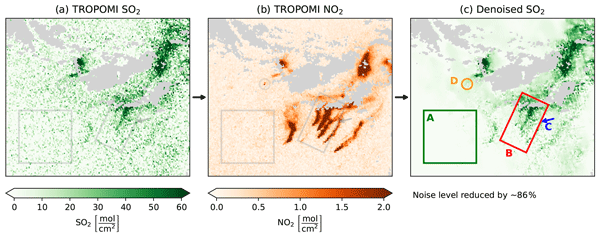
Erik Franciscus Maria Koene, Gerrit Kuhlmann, and Dominik Brunner
Atmos. Meas. Tech., 19, 3999–4012, https://doi.org/10.5194/amt-19-3999-2026, https://doi.org/10.5194/amt-19-3999-2026, 2026
Short summary
Short summary
We developed methods to reduce noise in satellite images that track air pollution. By using clearer measurements of a related gas, our techniques improve image quality by up to 80 percent, allowing more accurate identification of pollution sources. Tested with simulated and real satellite data, this approach could enhance monitoring of emissions and support better environmental decisions.
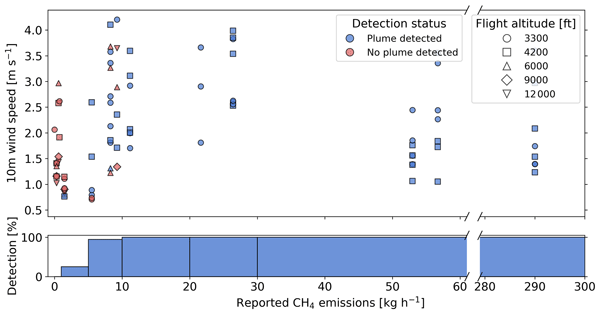
Sandro Meier, Marius Vögtli, Andreas Hueni, Audrey McManemin, Adam R. Brandt, Catherine Juéry, Vincent Blandin, Dominik Brunner, and Gerrit Kuhlmann
Atmos. Meas. Tech., 19, 333–358, https://doi.org/10.5194/amt-19-333-2026, https://doi.org/10.5194/amt-19-333-2026, 2026
Short summary
Short summary
We tested a new airborne imaging instrument to detect and measure methane emissions. Flying over controlled test releases in France, we compared our measurements with known release rates. The instrument detected emissions as low as 5.5 kilograms per hour in good weather and 1.45 kilograms per hour in ideal conditions. Our results show that better wind information is crucial for accurate totals. Our new instrument is important for helping target methane leaks in energy and waste systems.
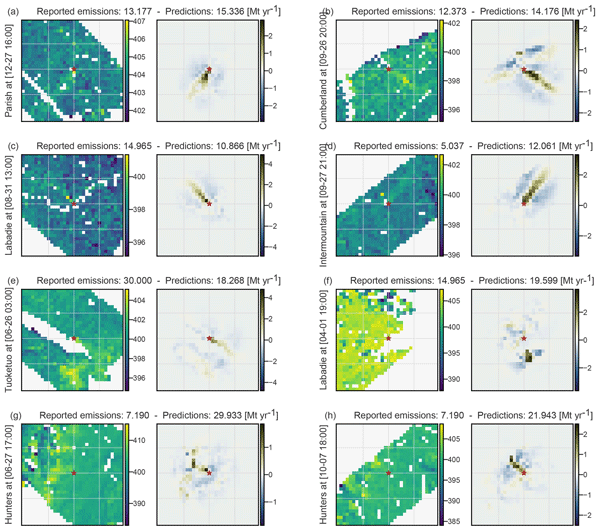
Joffrey Dumont Le Brazidec, Pierre Vanderbecken, Alban Farchi, Grégoire Broquet, Gerrit Kuhlmann, and Marc Bocquet
Geosci. Model Dev., 18, 3607–3622, https://doi.org/10.5194/gmd-18-3607-2025, https://doi.org/10.5194/gmd-18-3607-2025, 2025
Short summary
Short summary
We developed a deep learning method to estimate CO2 emissions from power plants using satellite images. Trained and validated on simulated data, our model accurately predicts emissions despite challenges like cloud cover. When applied to real OCO3 satellite images, the results closely match reported emissions. This study shows that neural networks trained on simulations can effectively analyse real satellite data, offering a new way to monitor CO2 emissions from space.
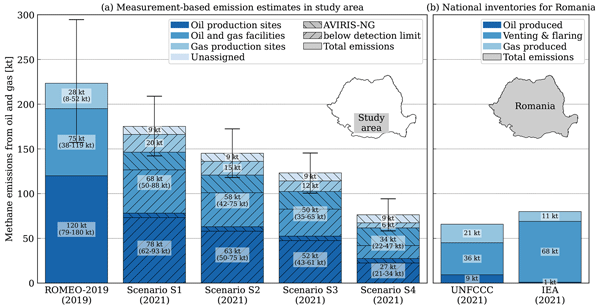
Gerrit Kuhlmann, Foteini Stavropoulou, Stefan Schwietzke, Daniel Zavala-Araiza, Andrew Thorpe, Andreas Hueni, Lukas Emmenegger, Andreea Calcan, Thomas Röckmann, and Dominik Brunner
Atmos. Chem. Phys., 25, 5371–5385, https://doi.org/10.5194/acp-25-5371-2025, https://doi.org/10.5194/acp-25-5371-2025, 2025
Short summary
Short summary
A measurement campaign in 2019 found that methane emissions from oil and gas in Romania were significantly higher than reported. In 2021, our follow-up campaign using airborne remote sensing showed a marked decreases in emissions by 20 %–60 % due to improved infrastructure. The study highlights the importance of measurement-based emission monitoring and illustrates the value of a multi-scale assessment integrating ground-based observations with large-scale airborne remote sensing campaigns.
Diego Santaren, Janne Hakkarainen, Gerrit Kuhlmann, Erik Koene, Frédéric Chevallier, Iolanda Ialongo, Hannakaisa Lindqvist, Janne Nurmela, Johanna Tamminen, Laia Amorós, Dominik Brunner, and Grégoire Broquet
Atmos. Meas. Tech., 18, 211–239, https://doi.org/10.5194/amt-18-211-2025, https://doi.org/10.5194/amt-18-211-2025, 2025
Short summary
Short summary
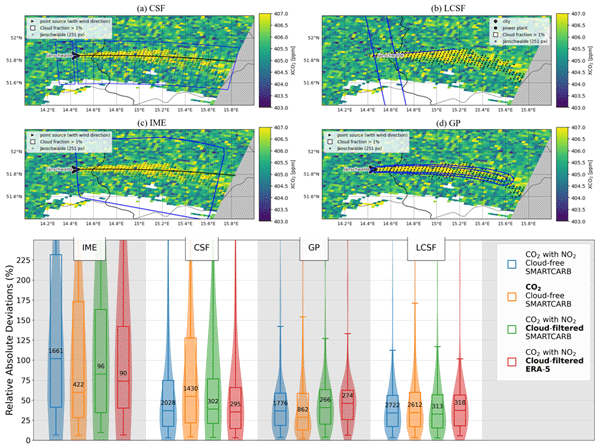
This study evaluates data-driven inversion methods for estimating CO2 emissions from local sources, such as power plants and cities, using meteorological data and XCO2 and NO2 satellite images rather than atmospheric transport modeling. We assess and compare the performance of five different methods using simulations of 1 year of satellite images, taken from the upcoming Copernicus CO2 Monitoring Mission, covering 15 power plants and the city of Berlin, Germany.
Sandro Meier, Erik F. M. Koene, Maarten Krol, Dominik Brunner, Alexander Damm, and Gerrit Kuhlmann
Atmos. Chem. Phys., 24, 7667–7686, https://doi.org/10.5194/acp-24-7667-2024, https://doi.org/10.5194/acp-24-7667-2024, 2024
Short summary
Short summary
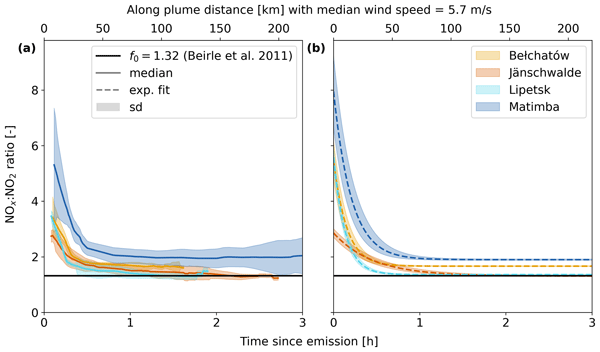
Nitrogen oxides (NOx = NO + NO2) are important air pollutants. This study addresses the challenge of accurately estimating NOx emissions from NO2 satellite observations. We develop a realistic model to convert NO2 to NOx by using simulated plumes from various power plants. We apply the model to satellite NO2 observations, significantly reducing biases in estimated NOx emissions. The study highlights the potential for a consistent, high-resolution estimation of NOx emissions using satellite data.
Gerrit Kuhlmann, Erik Koene, Sandro Meier, Diego Santaren, Grégoire Broquet, Frédéric Chevallier, Janne Hakkarainen, Janne Nurmela, Laia Amorós, Johanna Tamminen, and Dominik Brunner
Geosci. Model Dev., 17, 4773–4789, https://doi.org/10.5194/gmd-17-4773-2024, https://doi.org/10.5194/gmd-17-4773-2024, 2024
Short summary
Short summary
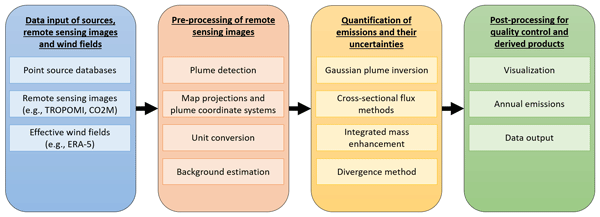
We present a Python software library for data-driven emission quantification (ddeq). It can be used to determine the emissions of hot spots (cities, power plants and industry) from remote sensing images using different methods. ddeq can be extended for new datasets and methods, providing a powerful community tool for users and developers. The application of the methods is shown using Jupyter notebooks included in the library.
Joffrey Dumont Le Brazidec, Pierre Vanderbecken, Alban Farchi, Grégoire Broquet, Gerrit Kuhlmann, and Marc Bocquet
Geosci. Model Dev., 17, 1995–2014, https://doi.org/10.5194/gmd-17-1995-2024, https://doi.org/10.5194/gmd-17-1995-2024, 2024
Short summary
Short summary
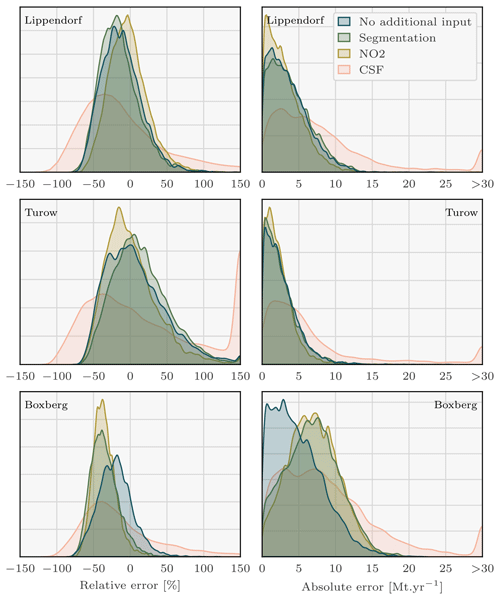
Our research presents an innovative approach to estimating power plant CO2 emissions from satellite images of the corresponding plumes such as those from the forthcoming CO2M satellite constellation. The exploitation of these images is challenging due to noise and meteorological uncertainties. To overcome these obstacles, we use a deep learning neural network trained on simulated CO2 images. Our method outperforms alternatives, providing a positive perspective for the analysis of CO2M images.
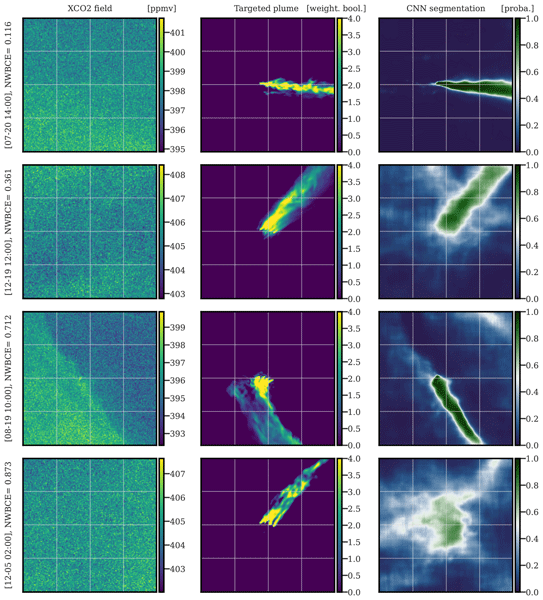
Joffrey Dumont Le Brazidec, Pierre Vanderbecken, Alban Farchi, Marc Bocquet, Jinghui Lian, Grégoire Broquet, Gerrit Kuhlmann, Alexandre Danjou, and Thomas Lauvaux
Geosci. Model Dev., 16, 3997–4016, https://doi.org/10.5194/gmd-16-3997-2023, https://doi.org/10.5194/gmd-16-3997-2023, 2023
Short summary
Short summary
Monitoring of CO2 emissions is key to the development of reduction policies. Local emissions, from cities or power plants, may be estimated from CO2 plumes detected in satellite images. CO2 plumes generally have a weak signal and are partially concealed by highly variable background concentrations and instrument errors, which hampers their detection. To address this problem, we propose and apply deep learning methods to detect the contour of a plume in simulated CO2 satellite images.
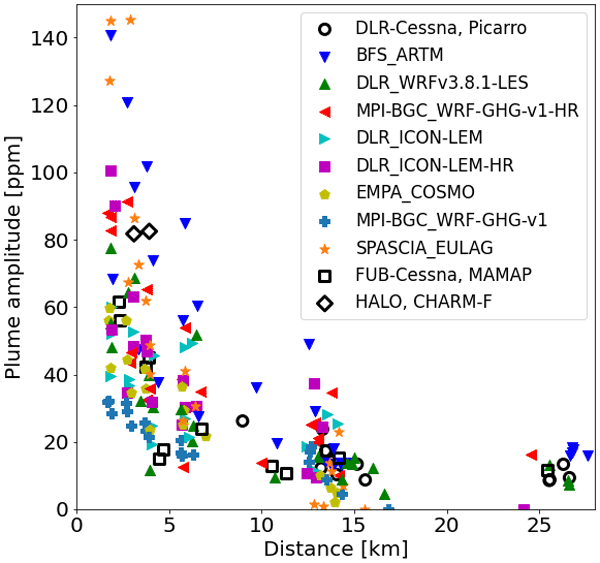
Dominik Brunner, Gerrit Kuhlmann, Stephan Henne, Erik Koene, Bastian Kern, Sebastian Wolff, Christiane Voigt, Patrick Jöckel, Christoph Kiemle, Anke Roiger, Alina Fiehn, Sven Krautwurst, Konstantin Gerilowski, Heinrich Bovensmann, Jakob Borchardt, Michal Galkowski, Christoph Gerbig, Julia Marshall, Andrzej Klonecki, Pascal Prunet, Robert Hanfland, Margit Pattantyús-Ábrahám, Andrzej Wyszogrodzki, and Andreas Fix
Atmos. Chem. Phys., 23, 2699–2728, https://doi.org/10.5194/acp-23-2699-2023, https://doi.org/10.5194/acp-23-2699-2023, 2023
Short summary
Short summary
We evaluated six atmospheric transport models for their capability to simulate the CO2 plumes from two of the largest power plants in Europe by comparing the models against aircraft observations collected during the CoMet (Carbon Dioxide and Methane Mission) campaign in 2018. The study analyzed how realistically such plumes can be simulated at different model resolutions and how well the planned European satellite mission CO2M will be able to quantify emissions from power plants.
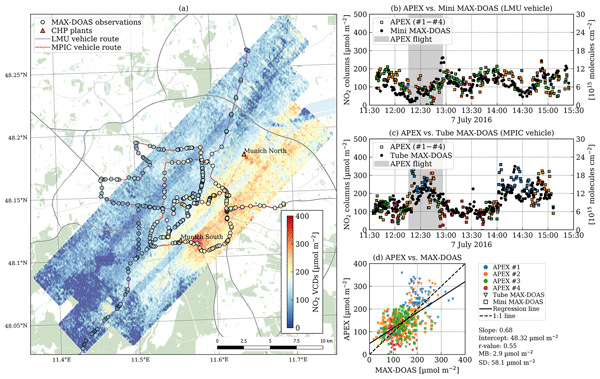
Gerrit Kuhlmann, Ka Lok Chan, Sebastian Donner, Ying Zhu, Marc Schwaerzel, Steffen Dörner, Jia Chen, Andreas Hueni, Duc Hai Nguyen, Alexander Damm, Annette Schütt, Florian Dietrich, Dominik Brunner, Cheng Liu, Brigitte Buchmann, Thomas Wagner, and Mark Wenig
Atmos. Meas. Tech., 15, 1609–1629, https://doi.org/10.5194/amt-15-1609-2022, https://doi.org/10.5194/amt-15-1609-2022, 2022
Short summary
Short summary
Nitrogen dioxide (NO2) is an air pollutant whose concentration often exceeds air quality guideline values, especially in urban areas. To map the spatial distribution of NO2 in Munich, we conducted the Munich NO2 Imaging Campaign (MuNIC), where NO2 was measured with stationary, mobile, and airborne in situ and remote sensing instruments. The campaign provides a unique dataset that has been used to compare the different instruments and to study the spatial variability of NO2 and its sources.
Sandro Meier, Dominik Brunner, and Gerrit Kuhlmann
EGUsphere, https://doi.org/10.5194/egusphere-2026-5235, https://doi.org/10.5194/egusphere-2026-5235, 2026
This preprint is open for discussion and under review for Atmospheric Chemistry and Physics (ACP).
Short summary
Short summary
Accurate computer-generated methane plumes could improve efforts to find and measure greenhouse gas emissions. We compared metre-scale simulations with images of controlled methane releases collected from an aircraft in France. The model reproduced most observed plume shapes and variations, but the viewing geometry caused important differences. Accounting for these effects can make satellite measurements and automated plume detection more reliable.
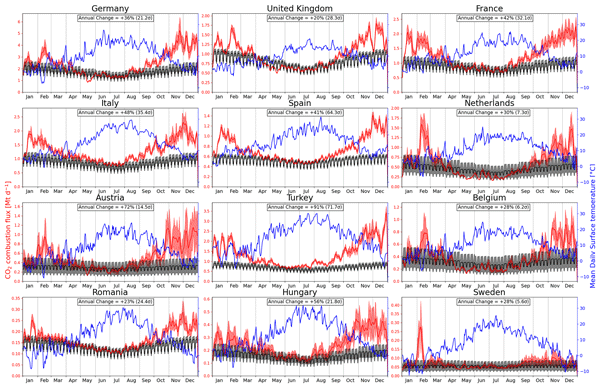
Chlöe N. Schooling, Liang Feng, Ingrid Super, and Paul I. Palmer
Atmos. Chem. Phys., 26, 13743–13766, https://doi.org/10.5194/acp-26-13743-2026, https://doi.org/10.5194/acp-26-13743-2026, 2026
Short summary
Short summary
We developed a method to estimate carbon dioxide emissions across Europe using satellite measurements of nitrogen dioxide, which is released alongside fuel combustion. By applying sector-specific ratios, we convert nitrogen dioxide observations into carbon dioxide estimates, revealing stronger seasonal patterns with higher total emissions across Europe, especially in winter. This approach provides more accurate information to monitor human-caused emissions and support climate action.
Arash Hamzehloo, Erik F. M. Koene, Nikolai Ponomarev, Michael Steiner, Sven Werchner, Xavier Lapillonne, William B. Sawyer, Michael Jähn, Lukas Emmenegger, and Dominik Brunner
EGUsphere, https://doi.org/10.5194/egusphere-2026-2531, https://doi.org/10.5194/egusphere-2026-2531, 2026
This preprint is open for discussion and under review for Geoscientific Model Development (GMD).
Short summary
Short summary
Tracking where greenhouse gases and air pollutants come from, and where plants absorb carbon dioxide, requires demanding computer simulations of the atmosphere. We rewrote key parts of a widely used atmospheric model so that they run efficiently on graphics processors. The new code runs six times faster than before and uses energy more efficiently. This supports air-quality monitoring, climate research, and combining satellite data with high-resolution simulations of cities and ecosystems.
Jithin Sukumaran, Dhanyalekshmi Pillai, Gerrit Kuhlmann, Vishnu Thilakan, and Abhinav Dhiman
EGUsphere, https://doi.org/10.5194/egusphere-2026-3926, https://doi.org/10.5194/egusphere-2026-3926, 2026
Short summary
Short summary
This study addresses the challenge of quantifying CO2 emissions from coal-fired thermal power plants in India. A novel plume detection and quantification methodology, using TROPOMI NO2 and CO2M XCO2 measurements, is evaluated across 14 plants. The method reliably quantifies emissions from power plants exceeding 20 megatons annually. By decoupling anthropogenic signals, the study's outcome aids future satellite missions and contributes to the development of reliable MRV systems for the nation.
Fei Yao, Paul I. Palmer, Xiaolin Wang, Yi Wang, Gitaek T. Lee, Haolin Wang, Liang Feng, Daven K. Henze, and Rokjin J. Park
Atmos. Chem. Phys., 26, 12049–12066, https://doi.org/10.5194/acp-26-12049-2026, https://doi.org/10.5194/acp-26-12049-2026, 2026
Short summary
Short summary
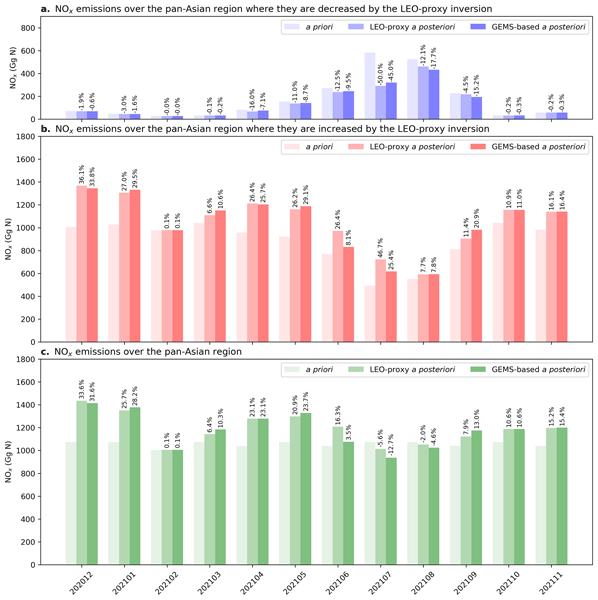
The Geostationary Environment Monitoring Spectrometer (GEMS) provides hourly measurements of tropospheric NO2 during sunlight hours. We assess the added value of GEMS geostationary satellite observations of tropospheric NO2 to constrain monthly NOx emissions and subsequent air quality modelling over a full annual cycle across Asia. We observe a clear seasonal divide, with significant benefits outside summer while limited or even detrimental impacts during summer.
Hui Li, Philippe Ciais, Frédéric Chevallier, Bo Zheng, Paul I. Palmer, Frank Hase, Morgan Lopez, Elsa M. Ordway, Shushi Peng, Danielle Monteverde, Michel Ramonet, Jason M. St. Clair, Le Bienfaiteur Sagang, and Benjamin Poulter
Atmos. Chem. Phys., 26, 11893–11908, https://doi.org/10.5194/acp-26-11893-2026, https://doi.org/10.5194/acp-26-11893-2026, 2026
Short summary
Short summary
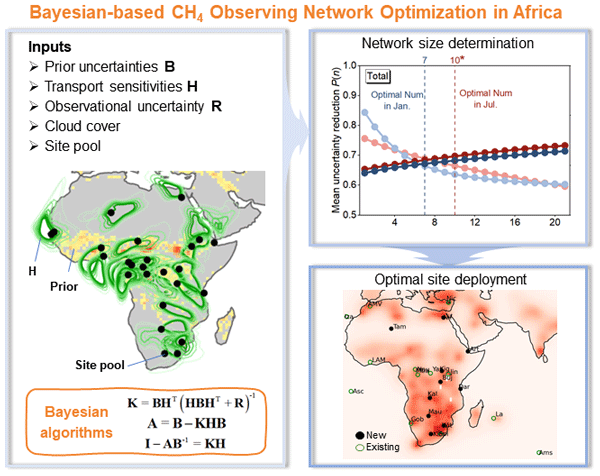
We studied how to best place methane monitoring instruments across Africa to better understand where emissions come from. Because observations can overlap in what they detect, adding more sites does not always improve results equally. Using a statistical approach, we identified both the ideal number and locations of sites (ten new sites can reduce emission uncertainty by over 65 % for total African CH4). Our results help guide cost-effective monitoring strategies in regions with limited data.
Marc Guevara, Carles Tena, Paula Camps, Kevin Oliveira, Johanna Gehlen, Angie Albarracin, Paula Castesana, Oscar Collado, Laura Herrero, Oliver Legarreta, Ivan Lombardich, Carmen Piñero-Megías, Luca Rizza, Jessica Slater, Artur Viñas, Francesca Macchia, Gilbert Montane, Oriol Jorba, and Carlos Pérez García-Pando
EGUsphere, https://doi.org/10.5194/egusphere-2026-4146, https://doi.org/10.5194/egusphere-2026-4146, 2026
This preprint is open for discussion and under review for Geoscientific Model Development (GMD).
Short summary
Short summary
We present the High-Elective Resolution Modelling Emission System delta version (HERMES_Δ), an open-source and flexible emission processing tool that allows making official national inventories fit for air quality and greenhouse gas modelling needs. HERMES_Δ converts raw inventories into gridded, vertically discretised, hourly and speciated emission numerical datasets to make them usable for model simulations. The use of HERMES_Δ is exemplified by processing the Spanish official inventories.
Audrey McManemin, Catherine Juéry, Vincent Blandin, Matthew Baker, Stéphane Bauguitte, Dominik Brunner, Philippine Burdeau, James Lawrence France, Anders M. Fredenslund, Andreas Hueni, Gerrit Kuhlmann, Patryk Łakomiec, Sando Meier, Roberto Paglini, Roubina Papaconstantinou, Jean-Daniel Paris, Pierre-Yves Quehe, Thomas Röckmann, Charlotte Scheutz, Martina Schmidt, Marius Vögtli, Julia B. Wietzel, and Adam R. Brandt
EGUsphere, https://doi.org/10.5194/egusphere-2026-1744, https://doi.org/10.5194/egusphere-2026-1744, 2026
Short summary
Short summary
Researchers tested five university-led systems to measure methane leaks at a facility in France. By releasing known amounts of gas, researchers checked if mobile tools on vehicles and planes could accurately detect and quantify emissions. Most sensors were excellent at finding leaks, but their accuracy in measuring the exact emission rate varied. Weather, especially low wind, significantly impacted results. These findings help improve how we track greenhouse gases to meet climate goals.
Douglas P. Finch and Paul I. Palmer
Atmos. Meas. Tech., 19, 4049–4064, https://doi.org/10.5194/amt-19-4049-2026, https://doi.org/10.5194/amt-19-4049-2026, 2026
Short summary
Short summary
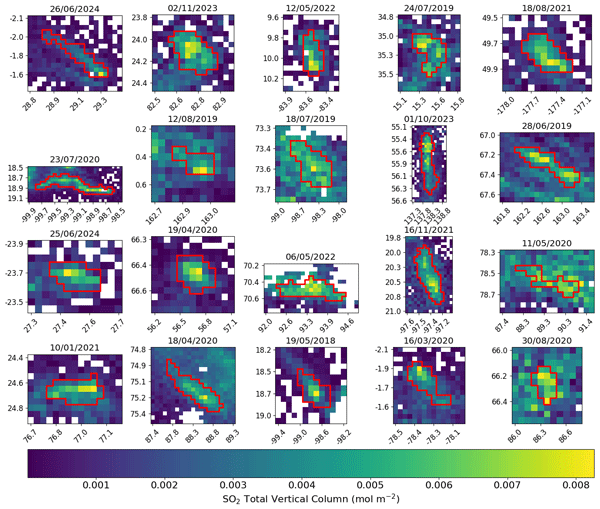
We have developed a machine learning tool to find emission plumes of sulphur dioxide (SO2) observed in satellite data. SO2 is an atmospheric pollutant from fuel combustion, metal smelting, and volcanic degassing, impacting health, acid deposition, and climate forcing. Over 6 years we find over 50 000 plumes, most of which are clustered around known sources (e.g. volcanoes or industrial hotspots). We show how this tool can be used to rapidly detect emissions across the globe.
Erik Franciscus Maria Koene, Gerrit Kuhlmann, and Dominik Brunner
Atmos. Meas. Tech., 19, 3999–4012, https://doi.org/10.5194/amt-19-3999-2026, https://doi.org/10.5194/amt-19-3999-2026, 2026
Short summary
Short summary
We developed methods to reduce noise in satellite images that track air pollution. By using clearer measurements of a related gas, our techniques improve image quality by up to 80 percent, allowing more accurate identification of pollution sources. Tested with simulated and real satellite data, this approach could enhance monitoring of emissions and support better environmental decisions.
Tilman Leo Hohenberger, Marya el Malki, Antoon Visschedijk, Marc Guevara, Martin Otto Paul Ramacher, Alessandro Marongiu, Guido Giuseppe Lanzani, Giuseppe Fossati, Anu Kousa, Eleni Athanasopoulou, Anastasia Kakouri, and Jeroen Kuenen
Earth Syst. Sci. Data, 18, 3959–3978, https://doi.org/10.5194/essd-18-3959-2026, https://doi.org/10.5194/essd-18-3959-2026, 2026
Short summary
Short summary
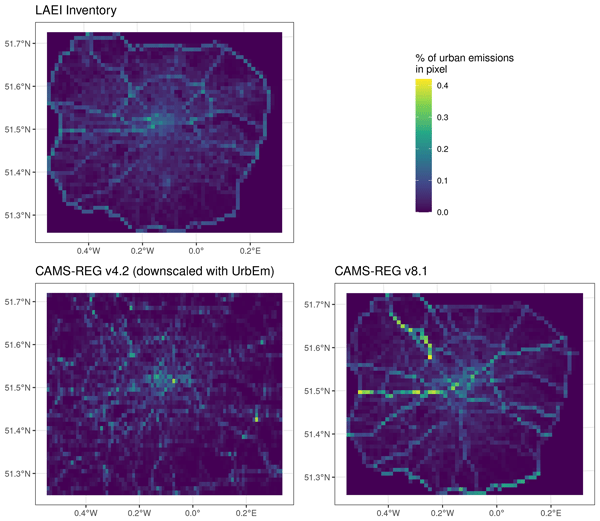
Spatial road transport emission data is fundamental for challenges of air pollution and climate change. In the existing European CAMS-REG (Copernicus Atmosphere Service-regional) inventory, several improvement opportunities exist, especially an underestimation in urban centers of ~35 %. We calculate emissions by combining gap-filled road information and emission factors, for the first time giving detailed emissions for most roads in Europe. With this, our dataset is much closer in line with independently combined city inventories.
Liang Feng, Paul I. Palmer, Haolin Wang, Robert Parker, Hartmut Boesch, Sébastien C. Biraud, Łukasz Chmura, Emanuel Gloor, László Haszpra, Elena Kozlova, Euan G. Nisbet, Steffen M. Noe, Thomas Röckmann, Rodrigo Augusto Ferreira de Souza, and Martin Steinbacher
EGUsphere, https://doi.org/10.5194/egusphere-2026-2662, https://doi.org/10.5194/egusphere-2026-2662, 2026
Short summary
Short summary
This study examines the relative roles of emissions and oxidation in recent rapid methane growth. Using an ensemble Kalman filter, we quantify global methane sources and sinks for 2018–2024. Emission changes dominate the increase, except in 2020 when a COVID‑19‑related OH decline strongly affected sinks. Atmospheric photochemistry—including OH and CH₄ variability and temperature‑dependent oxidation—also significantly shapes the methane budget.
Chlöe N. Schooling, Liang Feng, A. Jerome P. Woodwark, and Paul I. Palmer
EGUsphere, https://doi.org/10.5194/egusphere-2026-812, https://doi.org/10.5194/egusphere-2026-812, 2026
Short summary
Short summary
Methane is a powerful greenhouse gas, but monitoring it in tropical regions is difficult due to clouds and air pollution. We explore a new high-resolution satellite mission concept that could see between clouds and improve observations over tropical Africa. Using simulations with cloud and aerosol data, we show that this satellite could provide much more complete and reliable measurements, helping to better estimate methane emissions and support global climate monitoring efforts.
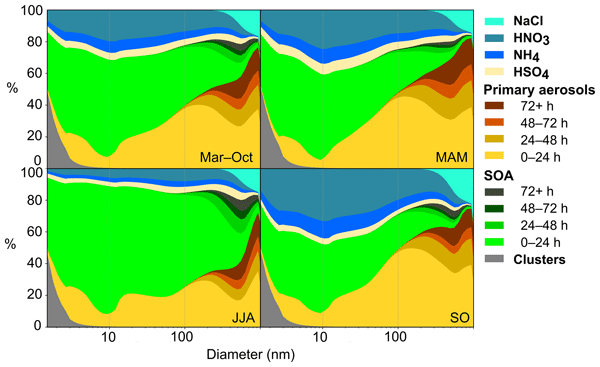
Petri Clusius, Metin Baykara, Carlton Xavier, Putian Zhou, Juniper Tyree, Benjamin Foreback, Mikko Äijälä, Frans Graeffe, Tuukka Petäjä, Markku Kulmala, Pauli Paasonen, Paul I. Palmer, and Michael Boy
Atmos. Chem. Phys., 26, 1967–1992, https://doi.org/10.5194/acp-26-1967-2026, https://doi.org/10.5194/acp-26-1967-2026, 2026
Short summary
Short summary
Cloud condensation nuclei are necessary to form clouds, and their size distribution affects cloud properties and therefore Earth’s energy budget. This study modelled the origins of cloud condensation nuclei at SMEAR II, Hyytiälä, Finland, and found that primary emissions and new particle formation separately contribute to more than half of the condensation nuclei, but they suppress each other, leading to current concentrations. Largest condensation nuclei originated mostly from emissions.
Sandro Meier, Marius Vögtli, Andreas Hueni, Audrey McManemin, Adam R. Brandt, Catherine Juéry, Vincent Blandin, Dominik Brunner, and Gerrit Kuhlmann
Atmos. Meas. Tech., 19, 333–358, https://doi.org/10.5194/amt-19-333-2026, https://doi.org/10.5194/amt-19-333-2026, 2026
Short summary
Short summary
We tested a new airborne imaging instrument to detect and measure methane emissions. Flying over controlled test releases in France, we compared our measurements with known release rates. The instrument detected emissions as low as 5.5 kilograms per hour in good weather and 1.45 kilograms per hour in ideal conditions. Our results show that better wind information is crucial for accurate totals. Our new instrument is important for helping target methane leaks in energy and waste systems.
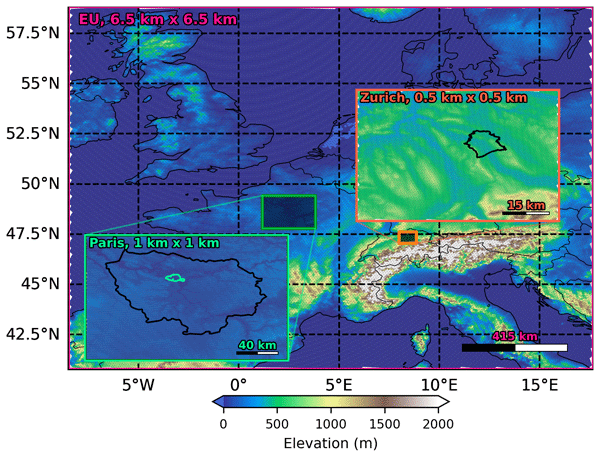
Nikolai Ponomarev, Michael Steiner, Erik Koene, Pascal Rubli, Stuart Grange, Lionel Constantin, Michel Ramonet, Leslie David, Arash Hamzehloo, Lukas Emmenegger, and Dominik Brunner
Atmos. Chem. Phys., 26, 547–570, https://doi.org/10.5194/acp-26-547-2026, https://doi.org/10.5194/acp-26-547-2026, 2026
Short summary
Short summary
Urban inversions are gaining increasing attention, as cities are major contributors to anthropogenic emissions, making accurate emission estimates at this scale essential for supporting climate action plans and verifying reported emission reductions. We estimated carbon dioxide emissions in Zurich and Paris over one year by combining atmospheric observations with mesoscale model simulations. Our study shows how factors like city size, terrain, and measurement methods affect emission estimates.
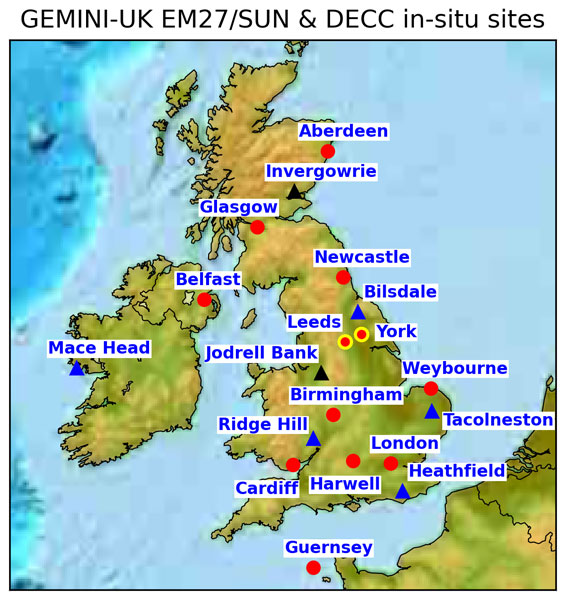
Alexander Kurganskiy, Liang Feng, Neil Humpage, Paul I. Palmer, A. Jerome P. Woodwark, Stamatia Doniki, and Damien Weidmann
Atmos. Meas. Tech., 18, 7525–7563, https://doi.org/10.5194/amt-18-7525-2025, https://doi.org/10.5194/amt-18-7525-2025, 2025
Short summary
Short summary
This study introduces GEMINI-UK (Greenhouse gas Emissions Monitoring network to Inform Net-zero Initiatives for the UK), the first UK-wide network using ground-based instruments to monitor net fluxes of CO2 and methane. By simulating its performance, we show that GEMINI-UK will significantly reduce uncertainties in these flux estimates, complementing data from existing tall towers and future satellite missions. The network will strengthen the UK's ability to track greenhouse gases, evaluate climate policies, and meet net-zero goals.
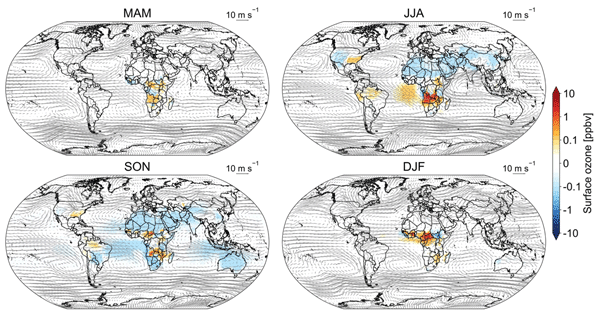
Haolin Wang, William Maslanka, Paul I. Palmer, Martin J. Wooster, Haofan Wang, Fei Yao, Liang Feng, Kai Wu, Xiao Lu, and Shaojia Fan
Atmos. Chem. Phys., 25, 17501–17526, https://doi.org/10.5194/acp-25-17501-2025, https://doi.org/10.5194/acp-25-17501-2025, 2025
Short summary
Short summary
We examine the impact of diurnally varying African biomass burning (BB) emissions on tropospheric ozone using GEOS-Chem simulations with a high-resolution satellite-derived emission inventory. Compared to coarser temporal resolutions, incorporating diurnal variations leads to significant changes in surface ozone and atmospheric oxidation capacity. Our findings highlight the importance of accurately representing BB emission timing in chemical transport models to improve ozone predictions.
Samantha Petch, Liang Feng, Paul I. Palmer, Robert P. King, Tristan Quaife, and Keith Haines
Biogeosciences, 22, 7031–7051, https://doi.org/10.5194/bg-22-7031-2025, https://doi.org/10.5194/bg-22-7031-2025, 2025
Short summary
Short summary
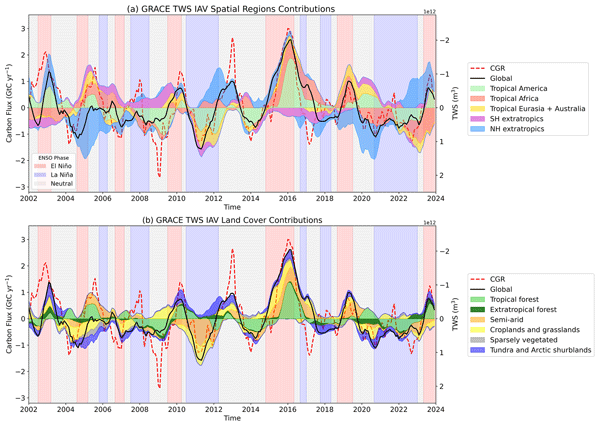
The growth rate of atmospheric CO2 varies year to year, mainly due to land ecosystems. Understanding factors controlling the land carbon uptake is crucial. Our study examines the link between terrestrial water storage and the CO2 growth rate from 2002–2023, revealing a strong negative correlation. We highlight the key role of tropical forests, especially in tropical America, and assess how regional contributions shift over time.
Shihan Sun, Paul I. Palmer, Richard Siddans, Brian J. Kerridge, Lucy Ventress, Achim Edtbauer, Akima Ringsdorf, Eva Y. Pfannerstill, and Jonathan Williams
Atmos. Chem. Phys., 25, 15801–15818, https://doi.org/10.5194/acp-25-15801-2025, https://doi.org/10.5194/acp-25-15801-2025, 2025
Short summary
Short summary
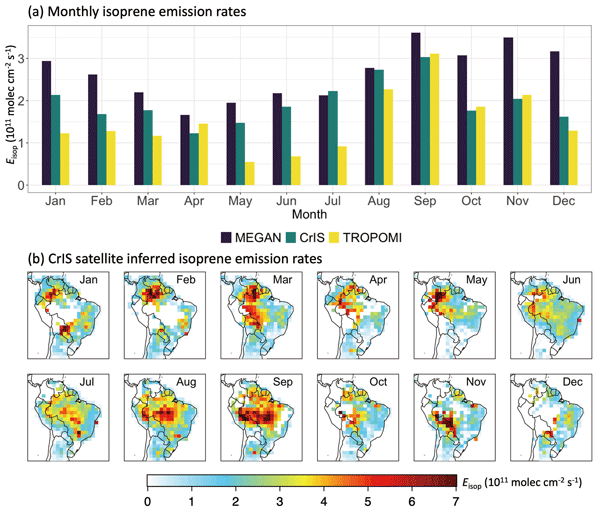
Isoprene released by plants can impact atmospheric chemistry and climate. The Amazon rainforest is a major source of isoprene. We derived isoprene emissions using satellite retrievals of isoprene columns and a chemical transport model. We evaluated our isoprene emission estimates using ground-based isoprene observations and satellite retrievals of formaldehyde. We found that using satellite retrievals of isoprene can help us better understand isoprene emissions over the Amazon.
Chlöe N. Schooling, Paul I. Palmer, Auke Visser, and Nicolas Bousserez
Atmos. Chem. Phys., 25, 15631–15652, https://doi.org/10.5194/acp-25-15631-2025, https://doi.org/10.5194/acp-25-15631-2025, 2025
Short summary
Short summary
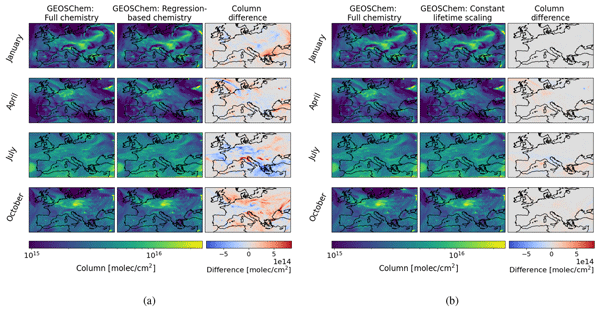
This study presents a new method to estimate fossil fuel CO2 (ffCO2) emissions by modelling NOx chemistry. Our regression models predict NOx chemical rates and NO2 : NO ratios with R² values above 0.95 using meteorological inputs. Incorporating these regressions reduces computational time compared to traditional methods and enables integration into model inversion frameworks. This scalable approach supports global emissions monitoring and climate change mitigation efforts.
Marc Guevara, Augustin Colette, Antoine Guion, Valentin Petiot, Mario Adani, Joaquim Arteta, Anna Benedictow, Robert Bergström, Andrea Bolignano, Paula Camps, Ana C. Carvalho, Jesper Heile Christensen, Florian Couvidat, Ilaria D'Elia, Hugo Denier van der Gon, Gaël Descombes, John Douros, Hilde Fagerli, Yalda Fatahi, Elmar Friese, Lise Frohn, Michael Gauss, Camilla Geels, Risto Hänninen, Kaj Hansen, Oriol Jorba, Jacek W. Kaminski, Rostislav Kouznetsov, Richard Kranenburg, Jeroen Kuenen, Victor Lannuque, Frédérik Meleux, Agnes Nyíri, Yuliia Palamarchuk, Carlos Pérez García-Pando, Lennard Robertson, Felicita Russo, Arjo Segers, Mikhail Sofiev, Joanna Struzewska, Renske Timmermans, Andreas Uppstu, Alvaro Valdebenito, and Zhuyun Ye
Atmos. Chem. Phys., 25, 13245–13278, https://doi.org/10.5194/acp-25-13245-2025, https://doi.org/10.5194/acp-25-13245-2025, 2025
Short summary
Short summary
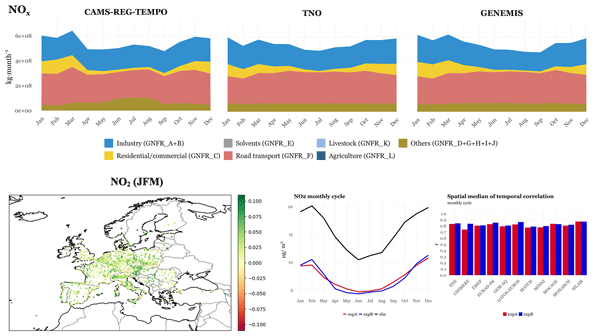
Air quality models require hourly emissions to accurately represent dispersion and physico-chemical processes in the atmosphere. Since emission inventories are typically provided at the annual level, emissions are downscaled to a refined temporal resolution using temporal profiles. This study quantifies the impact of using new anthropogenic temporal profiles on the performance of an European air quality multi-model ensemble. Overall, the findings indicate an improvement of the modelling results.
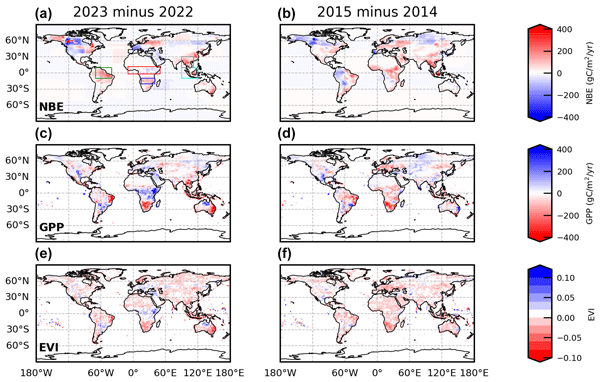
Liang Feng, Paul I. Palmer, Luke Smallman, Jingfeng Xiao, Paolo Cristofanelli, Ove Hermansen, John Lee, Casper Labuschagne, Simonetta Montaguti, Steffen M. Noe, Stephen M. Platt, Xinrong Ren, Martin Steinbacher, and Irène Xueref-Remy
Atmos. Chem. Phys., 25, 13053–13076, https://doi.org/10.5194/acp-25-13053-2025, https://doi.org/10.5194/acp-25-13053-2025, 2025
Short summary
Short summary
The year 2023 saw unexpectedly large global atmospheric CO2 growth. Satellite data reveal a role for increased tropical emissions. Larger emissions over eastern Brazil can be explained by warmer temperatures, which has led to exceptional drought, while hydrological changes play more of a role in emission increases elsewhere in the tropics. Broadly, we find that this situation continues into 2024.
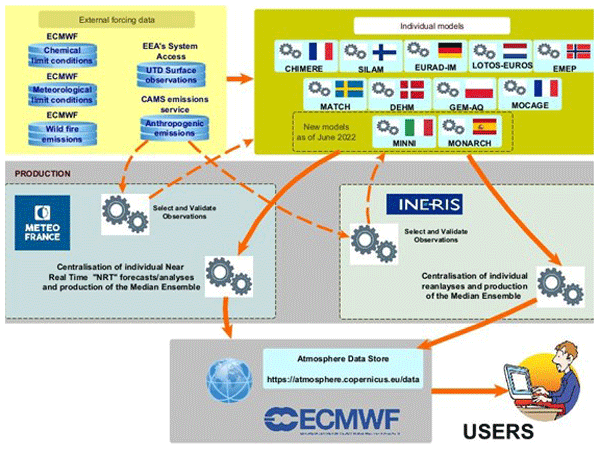
Augustin Colette, Gaëlle Collin, François Besson, Etienne Blot, Vincent Guidard, Frédérik Meleux, Adrien Royer, Valentin Petiot, Claire Miller, Oihana Fermond, Alizé Jeant, Mario Adani, Joaquim Arteta, Anna Benedictow, Robert Bergström, Dene Bowdalo, Jorgen Brandt, Gino Briganti, Ana C. Carvalho, Jesper Heile Christensen, Florian Couvidat, Ilaria D'Elia, Massimo D'Isidoro, Hugo Denier van der Gon, Gaël Descombes, Enza Di Tomaso, John Douros, Jeronimo Escribano, Henk Eskes, Hilde Fagerli, Yalda Fatahi, Johannes Flemming, Elmar Friese, Lise Frohn, Michael Gauss, Camilla Geels, Guido Guarnieri, Marc Guevara, Antoine Guion, Jonathan Guth, Risto Hänninen, Kaj Hansen, Ulas Im, Ruud Janssen, Marine Jeoffrion, Mathieu Joly, Luke Jones, Oriol Jorba, Evgeni Kadantsev, Michael Kahnert, Jacek W. Kaminski, Rostislav Kouznetsov, Richard Kranenburg, Jeroen Kuenen, Anne Caroline Lange, Joachim Langner, Victor Lannuque, Francesca Macchia, Astrid Manders, Mihaela Mircea, Agnes Nyiri, Miriam Olid, Carlos Pérez García-Pando, Yuliia Palamarchuk, Antonio Piersanti, Blandine Raux, Miha Razinger, Lennard Robertson, Arjo Segers, Martijn Schaap, Pilvi Siljamo, David Simpson, Mikhail Sofiev, Anders Stangel, Joanna Struzewska, Carles Tena, Renske Timmermans, Thanos Tsikerdekis, Svetlana Tsyro, Svyatoslav Tyuryakov, Anthony Ung, Andreas Uppstu, Alvaro Valdebenito, Peter van Velthoven, Lina Vitali, Zhuyun Ye, Vincent-Henri Peuch, and Laurence Rouïl
Geosci. Model Dev., 18, 6835–6883, https://doi.org/10.5194/gmd-18-6835-2025, https://doi.org/10.5194/gmd-18-6835-2025, 2025
Short summary
Short summary
The Copernicus Atmosphere Monitoring Service – Regional Production delivers daily forecasts, analyses, and reanalyses of air quality in Europe. The service relies on a distributed modelling production by 11 leading European modelling teams following stringent requirements with an operational design that has no equivalent in the world. All the products are free, open, and quality-assured and disseminated with a high level of reliability.
Joffrey Dumont Le Brazidec, Pierre Vanderbecken, Alban Farchi, Grégoire Broquet, Gerrit Kuhlmann, and Marc Bocquet
Geosci. Model Dev., 18, 3607–3622, https://doi.org/10.5194/gmd-18-3607-2025, https://doi.org/10.5194/gmd-18-3607-2025, 2025
Short summary
Short summary
We developed a deep learning method to estimate CO2 emissions from power plants using satellite images. Trained and validated on simulated data, our model accurately predicts emissions despite challenges like cloud cover. When applied to real OCO3 satellite images, the results closely match reported emissions. This study shows that neural networks trained on simulations can effectively analyse real satellite data, offering a new way to monitor CO2 emissions from space.
Gerrit Kuhlmann, Foteini Stavropoulou, Stefan Schwietzke, Daniel Zavala-Araiza, Andrew Thorpe, Andreas Hueni, Lukas Emmenegger, Andreea Calcan, Thomas Röckmann, and Dominik Brunner
Atmos. Chem. Phys., 25, 5371–5385, https://doi.org/10.5194/acp-25-5371-2025, https://doi.org/10.5194/acp-25-5371-2025, 2025
Short summary
Short summary
A measurement campaign in 2019 found that methane emissions from oil and gas in Romania were significantly higher than reported. In 2021, our follow-up campaign using airborne remote sensing showed a marked decreases in emissions by 20 %–60 % due to improved infrastructure. The study highlights the importance of measurement-based emission monitoring and illustrates the value of a multi-scale assessment integrating ground-based observations with large-scale airborne remote sensing campaigns.
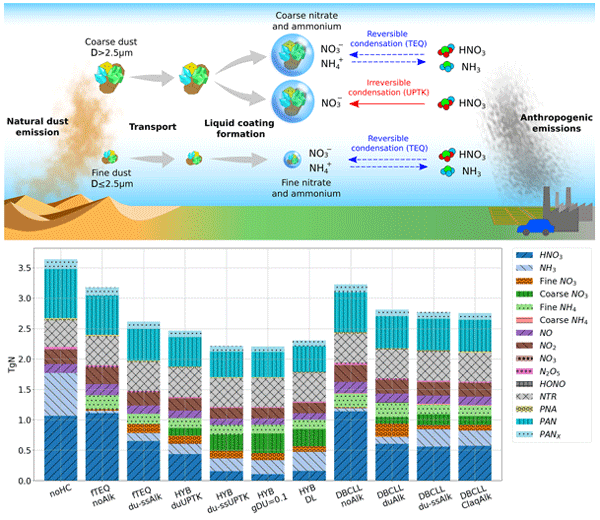
Rubén Soussé Villa, Oriol Jorba, María Gonçalves Ageitos, Dene Bowdalo, Marc Guevara, and Carlos Pérez García-Pando
Atmos. Chem. Phys., 25, 4719–4753, https://doi.org/10.5194/acp-25-4719-2025, https://doi.org/10.5194/acp-25-4719-2025, 2025
Short summary
Short summary
Desert dust forms nitrate coatings as it travels through the atmosphere. However, current models that predict this process vary greatly due to different methods and inaccuracies. We examined how nitrate forms in a global model, focusing on how gases condense on dust, the lifespan of different particles, and the impact of alkalinity. Our findings show that models work best when they consider reversible gas condensation with alkalinity. This should lead to better estimates of climate impacts.
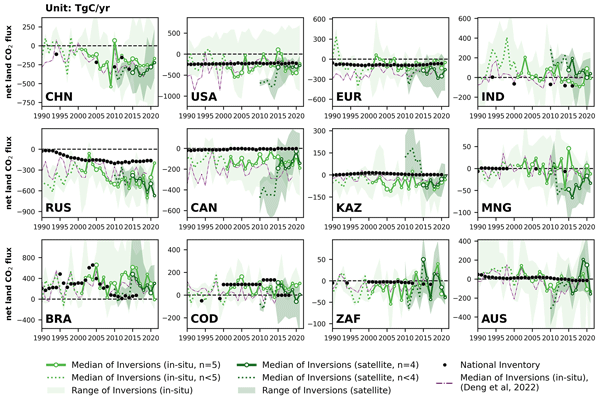
Zhu Deng, Philippe Ciais, Liting Hu, Adrien Martinez, Marielle Saunois, Rona L. Thompson, Kushal Tibrewal, Wouter Peters, Brendan Byrne, Giacomo Grassi, Paul I. Palmer, Ingrid T. Luijkx, Zhu Liu, Junjie Liu, Xuekun Fang, Tengjiao Wang, Hanqin Tian, Katsumasa Tanaka, Ana Bastos, Stephen Sitch, Benjamin Poulter, Clément Albergel, Aki Tsuruta, Shamil Maksyutov, Rajesh Janardanan, Yosuke Niwa, Bo Zheng, Joël Thanwerdas, Dmitry Belikov, Arjo Segers, and Frédéric Chevallier
Earth Syst. Sci. Data, 17, 1121–1152, https://doi.org/10.5194/essd-17-1121-2025, https://doi.org/10.5194/essd-17-1121-2025, 2025
Short summary
Short summary
This study reconciles national greenhouse gas (GHG) inventories with updated atmospheric inversion results to evaluate discrepancies for three principal GHG fluxes at the national level. Compared to our previous study, new satellite-based CO2 inversions were included and an updated mask of managed lands was used, improving agreement for Brazil and Canada. The proposed methodology can be regularly applied as a check to assess the gap between top-down inversions and bottom-up inventories.
Pierre Friedlingstein, Michael O'Sullivan, Matthew W. Jones, Robbie M. Andrew, Judith Hauck, Peter Landschützer, Corinne Le Quéré, Hongmei Li, Ingrid T. Luijkx, Are Olsen, Glen P. Peters, Wouter Peters, Julia Pongratz, Clemens Schwingshackl, Stephen Sitch, Josep G. Canadell, Philippe Ciais, Robert B. Jackson, Simone R. Alin, Almut Arneth, Vivek Arora, Nicholas R. Bates, Meike Becker, Nicolas Bellouin, Carla F. Berghoff, Henry C. Bittig, Laurent Bopp, Patricia Cadule, Katie Campbell, Matthew A. Chamberlain, Naveen Chandra, Frédéric Chevallier, Louise P. Chini, Thomas Colligan, Jeanne Decayeux, Laique M. Djeutchouang, Xinyu Dou, Carolina Duran Rojas, Kazutaka Enyo, Wiley Evans, Amanda R. Fay, Richard A. Feely, Daniel J. Ford, Adrianna Foster, Thomas Gasser, Marion Gehlen, Thanos Gkritzalis, Giacomo Grassi, Luke Gregor, Nicolas Gruber, Özgür Gürses, Ian Harris, Matthew Hefner, Jens Heinke, George C. Hurtt, Yosuke Iida, Tatiana Ilyina, Andrew R. Jacobson, Atul K. Jain, Tereza Jarníková, Annika Jersild, Fei Jiang, Zhe Jin, Etsushi Kato, Ralph F. Keeling, Kees Klein Goldewijk, Jürgen Knauer, Jan Ivar Korsbakken, Xin Lan, Siv K. Lauvset, Nathalie Lefèvre, Zhu Liu, Junjie Liu, Lei Ma, Shamil Maksyutov, Gregg Marland, Nicolas Mayot, Patrick C. McGuire, Nicolas Metzl, Natalie M. Monacci, Eric J. Morgan, Shin-Ichiro Nakaoka, Craig Neill, Yosuke Niwa, Tobias Nützel, Lea Olivier, Tsuneo Ono, Paul I. Palmer, Denis Pierrot, Zhangcai Qin, Laure Resplandy, Alizée Roobaert, Thais M. Rosan, Christian Rödenbeck, Jörg Schwinger, T. Luke Smallman, Stephen M. Smith, Reinel Sospedra-Alfonso, Tobias Steinhoff, Qing Sun, Adrienne J. Sutton, Roland Séférian, Shintaro Takao, Hiroaki Tatebe, Hanqin Tian, Bronte Tilbrook, Olivier Torres, Etienne Tourigny, Hiroyuki Tsujino, Francesco Tubiello, Guido van der Werf, Rik Wanninkhof, Xuhui Wang, Dongxu Yang, Xiaojuan Yang, Zhen Yu, Wenping Yuan, Xu Yue, Sönke Zaehle, Ning Zeng, and Jiye Zeng
Earth Syst. Sci. Data, 17, 965–1039, https://doi.org/10.5194/essd-17-965-2025, https://doi.org/10.5194/essd-17-965-2025, 2025
Short summary
Short summary
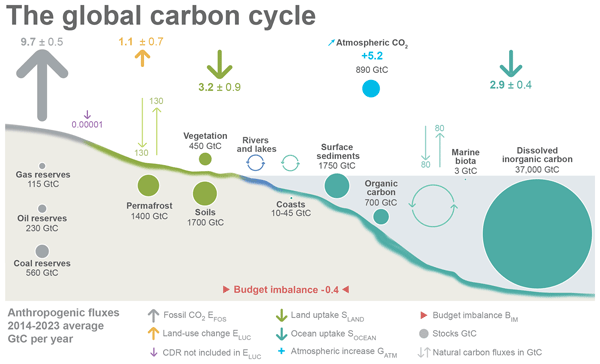
The Global Carbon Budget 2024 describes the methodology, main results, and datasets used to quantify the anthropogenic emissions of carbon dioxide (CO2) and their partitioning among the atmosphere, land ecosystems, and the ocean over the historical period (1750–2024). These living datasets are updated every year to provide the highest transparency and traceability in the reporting of CO2, the key driver of climate change.
Antoine Guion, Florian Couvidat, Marc Guevara, and Augustin Colette
Atmos. Chem. Phys., 25, 2807–2827, https://doi.org/10.5194/acp-25-2807-2025, https://doi.org/10.5194/acp-25-2807-2025, 2025
Short summary
Short summary
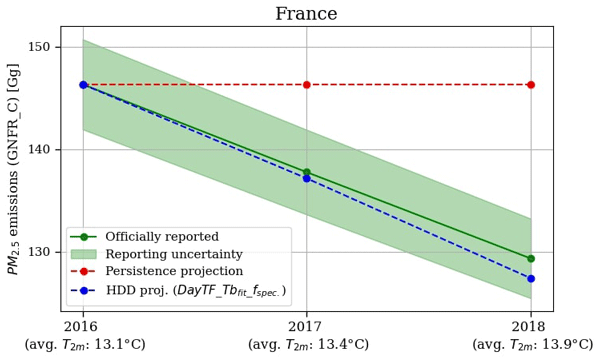
The residential sector can cause high background levels of pollutants and pollution peaks in winter. Its emissions are dominated by space heating and show strong daily variations linked to changes in outside temperature. Using heating degree days, we provide country- and species-dependent parameters for the distribution of these emissions, improving the performance of the CHIMERE air quality model. This also allows annual residential emissions to be projected before official publications.
Diego Santaren, Janne Hakkarainen, Gerrit Kuhlmann, Erik Koene, Frédéric Chevallier, Iolanda Ialongo, Hannakaisa Lindqvist, Janne Nurmela, Johanna Tamminen, Laia Amorós, Dominik Brunner, and Grégoire Broquet
Atmos. Meas. Tech., 18, 211–239, https://doi.org/10.5194/amt-18-211-2025, https://doi.org/10.5194/amt-18-211-2025, 2025
Short summary
Short summary
This study evaluates data-driven inversion methods for estimating CO2 emissions from local sources, such as power plants and cities, using meteorological data and XCO2 and NO2 satellite images rather than atmospheric transport modeling. We assess and compare the performance of five different methods using simulations of 1 year of satellite images, taken from the upcoming Copernicus CO2 Monitoring Mission, covering 15 power plants and the city of Berlin, Germany.
Ingrid Super, Tia Scarpelli, Arjan Droste, and Paul I. Palmer
Geosci. Model Dev., 17, 7263–7284, https://doi.org/10.5194/gmd-17-7263-2024, https://doi.org/10.5194/gmd-17-7263-2024, 2024
Short summary
Short summary
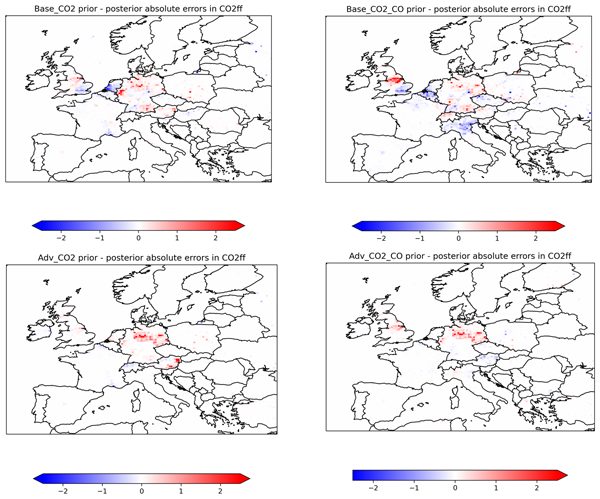
Monitoring greenhouse gas emission reductions requires a combination of models and observations, as well as an initial emission estimate. Each component provides information with a certain level of certainty and is weighted to yield the most reliable estimate of actual emissions. We describe efforts for estimating the uncertainty in the initial emission estimate, which significantly impacts the outcome. Hence, a good uncertainty estimate is key for obtaining reliable information on emissions.
Dene Bowdalo, Sara Basart, Marc Guevara, Oriol Jorba, Carlos Pérez García-Pando, Monica Jaimes Palomera, Olivia Rivera Hernandez, Melissa Puchalski, David Gay, Jörg Klausen, Sergio Moreno, Stoyka Netcheva, and Oksana Tarasova
Earth Syst. Sci. Data, 16, 4417–4495, https://doi.org/10.5194/essd-16-4417-2024, https://doi.org/10.5194/essd-16-4417-2024, 2024
Short summary
Short summary
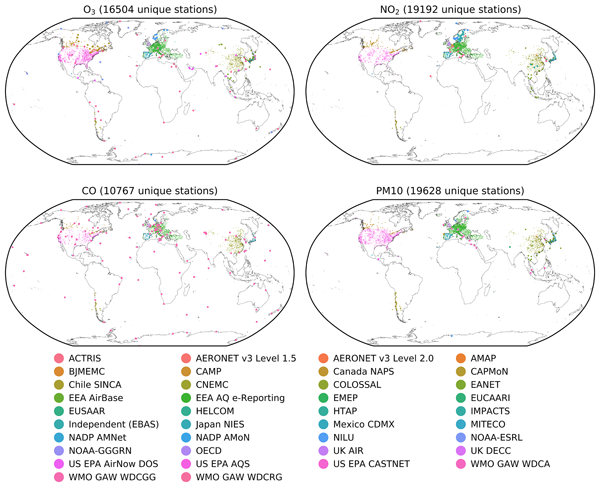
GHOST (Globally Harmonised Observations in Space and Time) represents one of the biggest collections of harmonised measurements of atmospheric composition at the surface. In total, 7 275 148 646 measurements from 1970 to 2023, from 227 different components, and from 38 reporting networks are compiled, parsed, and standardised. Components processed include gaseous species, total and speciated particulate matter, and aerosol optical properties.
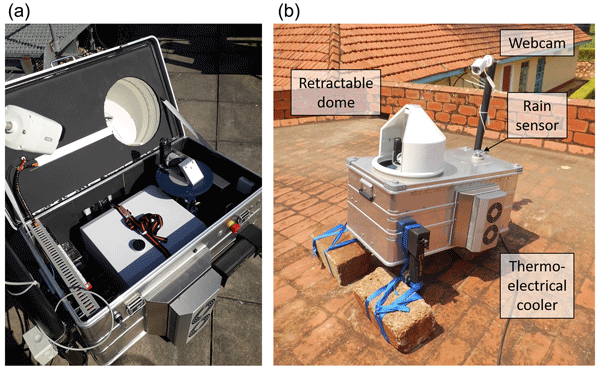
Neil Humpage, Hartmut Boesch, William Okello, Jia Chen, Florian Dietrich, Mark F. Lunt, Liang Feng, Paul I. Palmer, and Frank Hase
Atmos. Meas. Tech., 17, 5679–5707, https://doi.org/10.5194/amt-17-5679-2024, https://doi.org/10.5194/amt-17-5679-2024, 2024
Short summary
Short summary
We used a Bruker EM27/SUN spectrometer within an automated weatherproof enclosure to measure greenhouse gas column concentrations over a 3-month period in Jinja, Uganda. The portability of the EM27/SUN allows us to evaluate satellite and model data in locations not covered by traditional validation networks. This is of particular value in tropical Africa, where extensive terrestrial ecosystems are a significant store of carbon and play a key role in the atmospheric budgets of CO2 and CH4.
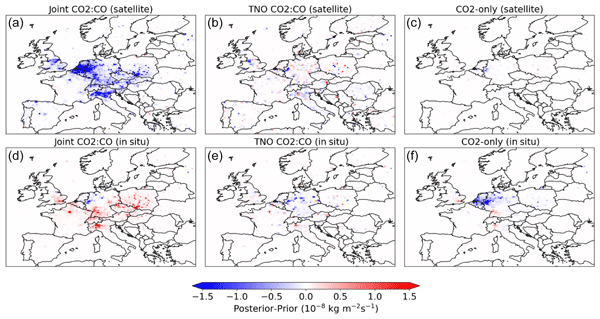
Tia R. Scarpelli, Paul I. Palmer, Mark Lunt, Ingrid Super, and Arjan Droste
Atmos. Chem. Phys., 24, 10773–10791, https://doi.org/10.5194/acp-24-10773-2024, https://doi.org/10.5194/acp-24-10773-2024, 2024
Short summary
Short summary
Under the Paris Agreement, countries must track their anthropogenic greenhouse gas emissions. This study describes a method to determine self-consistent estimates for combustion emissions and natural fluxes of CO2 from atmospheric data. We report consistent estimates inferred using this approach from satellite data and ground-based data over Europe, suggesting that satellite data can be used to determine national anthropogenic CO2 emissions for countries where ground-based CO2 data are absent.
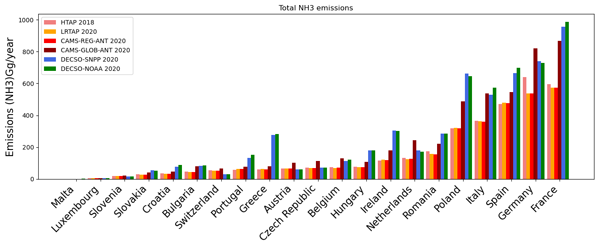
Jieying Ding, Ronald van der A, Henk Eskes, Enrico Dammers, Mark Shephard, Roy Wichink Kruit, Marc Guevara, and Leonor Tarrason
Atmos. Chem. Phys., 24, 10583–10599, https://doi.org/10.5194/acp-24-10583-2024, https://doi.org/10.5194/acp-24-10583-2024, 2024
Short summary
Short summary
Here we applied the existing Daily Emissions Constrained by Satellite Observations (DECSO) inversion algorithm to NH3 observations from the CrIS satellite instrument to estimate NH3 emissions. As NH3 in the atmosphere is influenced by NOx, we implemented DECSO to estimate NOx and NH3 emissions simultaneously. The emissions are derived over Europe for 2020 at a spatial resolution of 0.2° using daily observations from CrIS and TROPOMI. Results are compared to bottom-up emission inventories.
Sandro Meier, Erik F. M. Koene, Maarten Krol, Dominik Brunner, Alexander Damm, and Gerrit Kuhlmann
Atmos. Chem. Phys., 24, 7667–7686, https://doi.org/10.5194/acp-24-7667-2024, https://doi.org/10.5194/acp-24-7667-2024, 2024
Short summary
Short summary
Nitrogen oxides (NOx = NO + NO2) are important air pollutants. This study addresses the challenge of accurately estimating NOx emissions from NO2 satellite observations. We develop a realistic model to convert NO2 to NOx by using simulated plumes from various power plants. We apply the model to satellite NO2 observations, significantly reducing biases in estimated NOx emissions. The study highlights the potential for a consistent, high-resolution estimation of NOx emissions using satellite data.
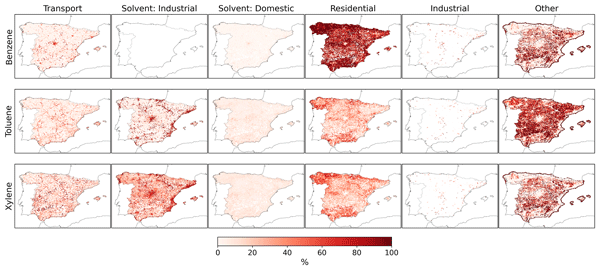
Kevin Oliveira, Marc Guevara, Oriol Jorba, Hervé Petetin, Dene Bowdalo, Carles Tena, Gilbert Montané Pinto, Franco López, and Carlos Pérez García-Pando
Atmos. Chem. Phys., 24, 7137–7177, https://doi.org/10.5194/acp-24-7137-2024, https://doi.org/10.5194/acp-24-7137-2024, 2024
Short summary
Short summary
In this work, we assess and evaluate benzene, toluene, and xylene primary emissions and air quality levels in Spain by combining observations, emission inventories, and air quality modelling techniques. The comparison between modelled and observed levels allows identifying uncertainty sources within the emission input. This contributes to improving air quality models' performance when simulating these compounds, leading to better support for the design of effective pollution control strategies.
Gerrit Kuhlmann, Erik Koene, Sandro Meier, Diego Santaren, Grégoire Broquet, Frédéric Chevallier, Janne Hakkarainen, Janne Nurmela, Laia Amorós, Johanna Tamminen, and Dominik Brunner
Geosci. Model Dev., 17, 4773–4789, https://doi.org/10.5194/gmd-17-4773-2024, https://doi.org/10.5194/gmd-17-4773-2024, 2024
Short summary
Short summary
We present a Python software library for data-driven emission quantification (ddeq). It can be used to determine the emissions of hot spots (cities, power plants and industry) from remote sensing images using different methods. ddeq can be extended for new datasets and methods, providing a powerful community tool for users and developers. The application of the methods is shown using Jupyter notebooks included in the library.
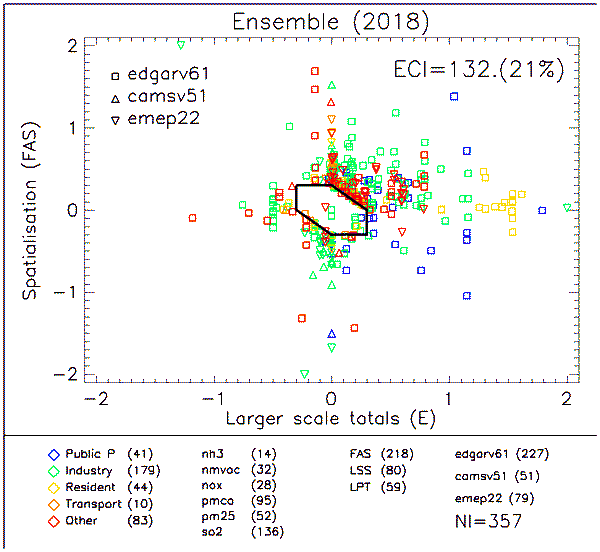
Philippe Thunis, Jeroen Kuenen, Enrico Pisoni, Bertrand Bessagnet, Manjola Banja, Lech Gawuc, Karol Szymankiewicz, Diego Guizardi, Monica Crippa, Susana Lopez-Aparicio, Marc Guevara, Alexander De Meij, Sabine Schindlbacher, and Alain Clappier
Geosci. Model Dev., 17, 3631–3643, https://doi.org/10.5194/gmd-17-3631-2024, https://doi.org/10.5194/gmd-17-3631-2024, 2024
Short summary
Short summary
An ensemble emission inventory is created with the aim of monitoring the status and progress made with the development of EU-wide inventories. This emission ensemble serves as a common benchmark for the screening and allows for the comparison of more than two inventories at a time. Because the emission “truth” is unknown, the approach does not tell which inventory is the closest to reality, but it identifies inconsistencies that require special attention.
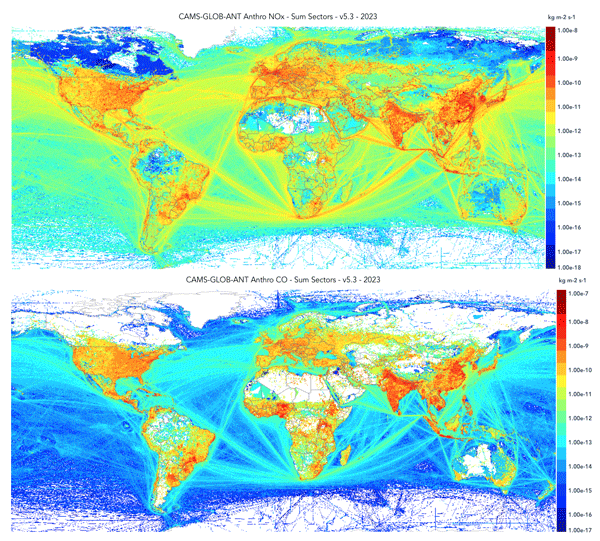
Antonin Soulie, Claire Granier, Sabine Darras, Nicolas Zilbermann, Thierno Doumbia, Marc Guevara, Jukka-Pekka Jalkanen, Sekou Keita, Cathy Liousse, Monica Crippa, Diego Guizzardi, Rachel Hoesly, and Steven J. Smith
Earth Syst. Sci. Data, 16, 2261–2279, https://doi.org/10.5194/essd-16-2261-2024, https://doi.org/10.5194/essd-16-2261-2024, 2024
Short summary
Short summary
Anthropogenic emissions are the result of transportation, power generation, industrial, residential and commercial activities as well as waste treatment and agriculture practices. This work describes the new CAMS-GLOB-ANT gridded inventory of 2000–2023 anthropogenic emissions of air pollutants and greenhouse gases. The methodology to generate the emissions is explained and the datasets are analysed and compared with publicly available global and regional inventories for selected world regions.
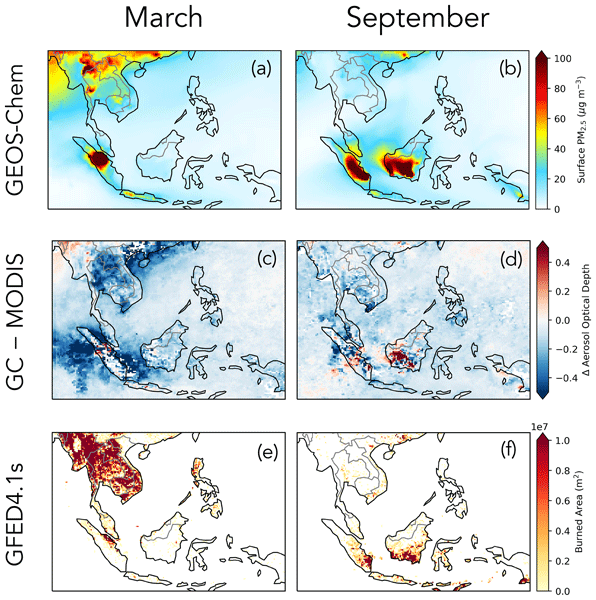
Margaret R. Marvin, Paul I. Palmer, Fei Yao, Mohd Talib Latif, and Md Firoz Khan
Atmos. Chem. Phys., 24, 3699–3715, https://doi.org/10.5194/acp-24-3699-2024, https://doi.org/10.5194/acp-24-3699-2024, 2024
Short summary
Short summary
We use an atmospheric chemistry model to investigate aerosols emitted from fire activity across Southeast Asia. We find that the limited nature of measurements in this region leads to large uncertainties that significantly hinder the model representation of these aerosols and their impacts on air quality. As a result, the number of monthly attributable deaths is underestimated by as many as 4500, particularly in March at the peak of the mainland burning season.
Joffrey Dumont Le Brazidec, Pierre Vanderbecken, Alban Farchi, Grégoire Broquet, Gerrit Kuhlmann, and Marc Bocquet
Geosci. Model Dev., 17, 1995–2014, https://doi.org/10.5194/gmd-17-1995-2024, https://doi.org/10.5194/gmd-17-1995-2024, 2024
Short summary
Short summary
Our research presents an innovative approach to estimating power plant CO2 emissions from satellite images of the corresponding plumes such as those from the forthcoming CO2M satellite constellation. The exploitation of these images is challenging due to noise and meteorological uncertainties. To overcome these obstacles, we use a deep learning neural network trained on simulated CO2 images. Our method outperforms alternatives, providing a positive perspective for the analysis of CO2M images.
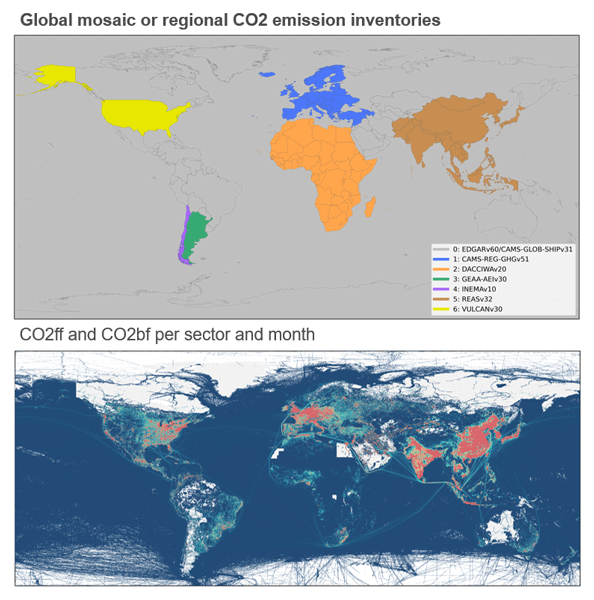
Ruben Urraca, Greet Janssens-Maenhout, Nicolás Álamos, Lucas Berna-Peña, Monica Crippa, Sabine Darras, Stijn Dellaert, Hugo Denier van der Gon, Mark Dowell, Nadine Gobron, Claire Granier, Giacomo Grassi, Marc Guevara, Diego Guizzardi, Kevin Gurney, Nicolás Huneeus, Sekou Keita, Jeroen Kuenen, Ana Lopez-Noreña, Enrique Puliafito, Geoffrey Roest, Simone Rossi, Antonin Soulie, and Antoon Visschedijk
Earth Syst. Sci. Data, 16, 501–523, https://doi.org/10.5194/essd-16-501-2024, https://doi.org/10.5194/essd-16-501-2024, 2024
Short summary
Short summary
CoCO2-MOSAIC 1.0 is a global mosaic of regional bottom-up inventories providing gridded (0.1×0.1) monthly emissions of anthropogenic CO2. Regional inventories include country-specific information and finer spatial resolution than global inventories. CoCO2-MOSAIC provides harmonized access to these datasets and can be considered as a regionally accepted reference to assess the quality of global inventories, as done in the current paper.
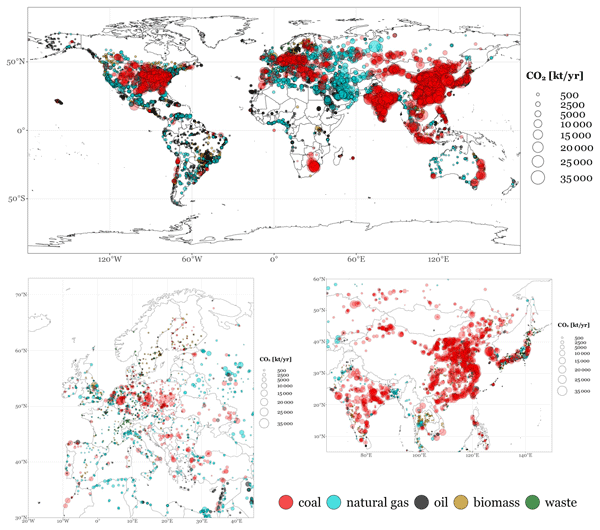
Marc Guevara, Santiago Enciso, Carles Tena, Oriol Jorba, Stijn Dellaert, Hugo Denier van der Gon, and Carlos Pérez García-Pando
Earth Syst. Sci. Data, 16, 337–373, https://doi.org/10.5194/essd-16-337-2024, https://doi.org/10.5194/essd-16-337-2024, 2024
Short summary
Short summary
A global dataset of emissions from thermal power plants was created for the year 2018. The resulting catalogue reports annual emissions of CO2 and co-emitted species (NOx, CO, SO2 and CH4) for more than 16000 individual facilities at their exact geographical locations. Information on the temporal and vertical distributions of the emissions is also provided at the facility level. The dataset is intended to support current and future satellite emission monitoring and inverse modelling efforts.
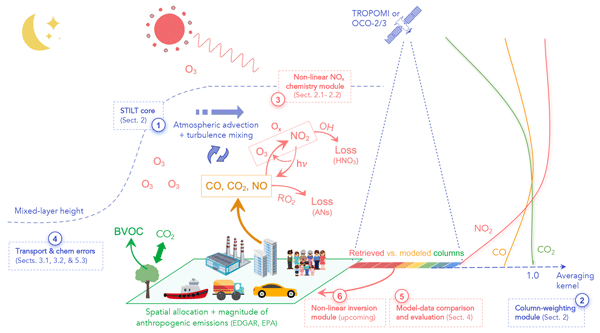
Dien Wu, Joshua L. Laughner, Junjie Liu, Paul I. Palmer, John C. Lin, and Paul O. Wennberg
Geosci. Model Dev., 16, 6161–6185, https://doi.org/10.5194/gmd-16-6161-2023, https://doi.org/10.5194/gmd-16-6161-2023, 2023
Short summary
Short summary
To balance computational expenses and chemical complexity in extracting emission signals from tropospheric NO2 columns, we propose a simplified non-linear Lagrangian chemistry transport model and assess its performance against TROPOMI v2 over power plants and cities. Using this model, we then discuss how NOx chemistry affects the relationship between NOx and CO2 emissions and how studying NO2 columns helps quantify modeled biases in wind directions and prior emissions.
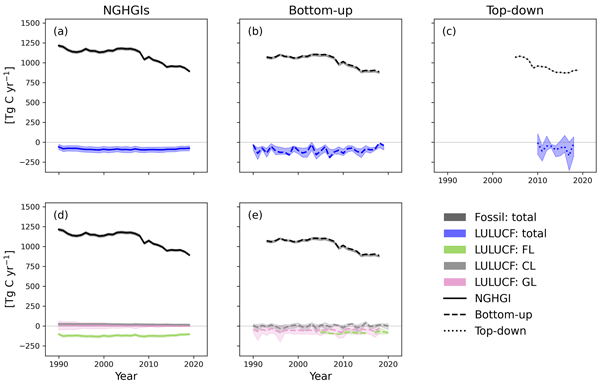
Matthew J. McGrath, Ana Maria Roxana Petrescu, Philippe Peylin, Robbie M. Andrew, Bradley Matthews, Frank Dentener, Juraj Balkovič, Vladislav Bastrikov, Meike Becker, Gregoire Broquet, Philippe Ciais, Audrey Fortems-Cheiney, Raphael Ganzenmüller, Giacomo Grassi, Ian Harris, Matthew Jones, Jürgen Knauer, Matthias Kuhnert, Guillaume Monteil, Saqr Munassar, Paul I. Palmer, Glen P. Peters, Chunjing Qiu, Mart-Jan Schelhaas, Oksana Tarasova, Matteo Vizzarri, Karina Winkler, Gianpaolo Balsamo, Antoine Berchet, Peter Briggs, Patrick Brockmann, Frédéric Chevallier, Giulia Conchedda, Monica Crippa, Stijn N. C. Dellaert, Hugo A. C. Denier van der Gon, Sara Filipek, Pierre Friedlingstein, Richard Fuchs, Michael Gauss, Christoph Gerbig, Diego Guizzardi, Dirk Günther, Richard A. Houghton, Greet Janssens-Maenhout, Ronny Lauerwald, Bas Lerink, Ingrid T. Luijkx, Géraud Moulas, Marilena Muntean, Gert-Jan Nabuurs, Aurélie Paquirissamy, Lucia Perugini, Wouter Peters, Roberto Pilli, Julia Pongratz, Pierre Regnier, Marko Scholze, Yusuf Serengil, Pete Smith, Efisio Solazzo, Rona L. Thompson, Francesco N. Tubiello, Timo Vesala, and Sophia Walther
Earth Syst. Sci. Data, 15, 4295–4370, https://doi.org/10.5194/essd-15-4295-2023, https://doi.org/10.5194/essd-15-4295-2023, 2023
Short summary
Short summary
Accurate estimation of fluxes of carbon dioxide from the land surface is essential for understanding future impacts of greenhouse gas emissions on the climate system. A wide variety of methods currently exist to estimate these sources and sinks. We are continuing work to develop annual comparisons of these diverse methods in order to clarify what they all actually calculate and to resolve apparent disagreement, in addition to highlighting opportunities for increased understanding.
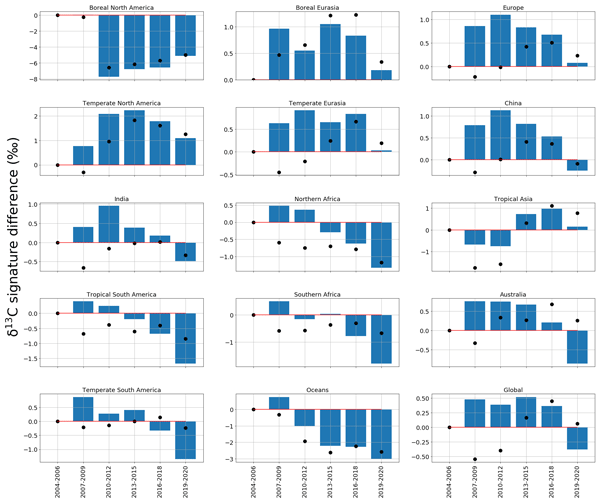
Alice Drinkwater, Paul I. Palmer, Liang Feng, Tim Arnold, Xin Lan, Sylvia E. Michel, Robert Parker, and Hartmut Boesch
Atmos. Chem. Phys., 23, 8429–8452, https://doi.org/10.5194/acp-23-8429-2023, https://doi.org/10.5194/acp-23-8429-2023, 2023
Short summary
Short summary
Changes in atmospheric methane over the last few decades are largely unexplained. Previous studies have proposed different hypotheses to explain short-term changes in atmospheric methane. We interpret observed changes in atmospheric methane and stable isotope source signatures (2004–2020). We argue that changes over this period are part of a large-scale shift from high-northern-latitude thermogenic energy emissions to tropical biogenic emissions, particularly from North Africa and South America.
Marc Guevara, Hervé Petetin, Oriol Jorba, Hugo Denier van der Gon, Jeroen Kuenen, Ingrid Super, Claire Granier, Thierno Doumbia, Philippe Ciais, Zhu Liu, Robin D. Lamboll, Sabine Schindlbacher, Bradley Matthews, and Carlos Pérez García-Pando
Atmos. Chem. Phys., 23, 8081–8101, https://doi.org/10.5194/acp-23-8081-2023, https://doi.org/10.5194/acp-23-8081-2023, 2023
Short summary
Short summary
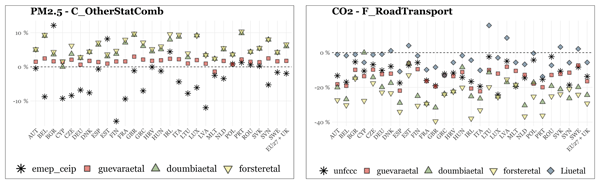
This study provides an intercomparison of European 2020 emission changes derived from official inventories, which are reported by countries under the framework of several international conventions and directives, and non-official near-real-time estimates, the use of which has significantly grown since the COVID-19 outbreak. The results of the work are used to produce recommendations on how best to approach and make use of near-real-time emissions for modelling and monitoring applications.
Joffrey Dumont Le Brazidec, Pierre Vanderbecken, Alban Farchi, Marc Bocquet, Jinghui Lian, Grégoire Broquet, Gerrit Kuhlmann, Alexandre Danjou, and Thomas Lauvaux
Geosci. Model Dev., 16, 3997–4016, https://doi.org/10.5194/gmd-16-3997-2023, https://doi.org/10.5194/gmd-16-3997-2023, 2023
Short summary
Short summary
Monitoring of CO2 emissions is key to the development of reduction policies. Local emissions, from cities or power plants, may be estimated from CO2 plumes detected in satellite images. CO2 plumes generally have a weak signal and are partially concealed by highly variable background concentrations and instrument errors, which hampers their detection. To address this problem, we propose and apply deep learning methods to detect the contour of a plume in simulated CO2 satellite images.
Thomas E. Taylor, Christopher W. O'Dell, David Baker, Carol Bruegge, Albert Chang, Lars Chapsky, Abhishek Chatterjee, Cecilia Cheng, Frédéric Chevallier, David Crisp, Lan Dang, Brian Drouin, Annmarie Eldering, Liang Feng, Brendan Fisher, Dejian Fu, Michael Gunson, Vance Haemmerle, Graziela R. Keller, Matthäus Kiel, Le Kuai, Thomas Kurosu, Alyn Lambert, Joshua Laughner, Richard Lee, Junjie Liu, Lucas Mandrake, Yuliya Marchetti, Gregory McGarragh, Aronne Merrelli, Robert R. Nelson, Greg Osterman, Fabiano Oyafuso, Paul I. Palmer, Vivienne H. Payne, Robert Rosenberg, Peter Somkuti, Gary Spiers, Cathy To, Brad Weir, Paul O. Wennberg, Shanshan Yu, and Jia Zong
Atmos. Meas. Tech., 16, 3173–3209, https://doi.org/10.5194/amt-16-3173-2023, https://doi.org/10.5194/amt-16-3173-2023, 2023
Short summary
Short summary
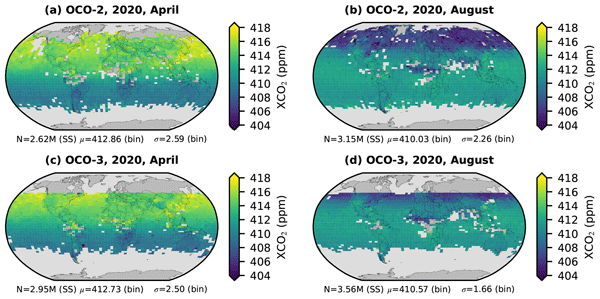
NASA's Orbiting Carbon Observatory 2 and 3 (OCO-2 and OCO-3, respectively) provide complementary spatiotemporal coverage from a sun-synchronous and precession orbit, respectively. Estimates of total column carbon dioxide (XCO2) derived from the two sensors using the same retrieval algorithm show broad consistency over a 2.5-year overlapping time record. This suggests that data from the two satellites may be used together for scientific analysis.
Liang Feng, Paul I. Palmer, Robert J. Parker, Mark F. Lunt, and Hartmut Bösch
Atmos. Chem. Phys., 23, 4863–4880, https://doi.org/10.5194/acp-23-4863-2023, https://doi.org/10.5194/acp-23-4863-2023, 2023
Short summary
Short summary
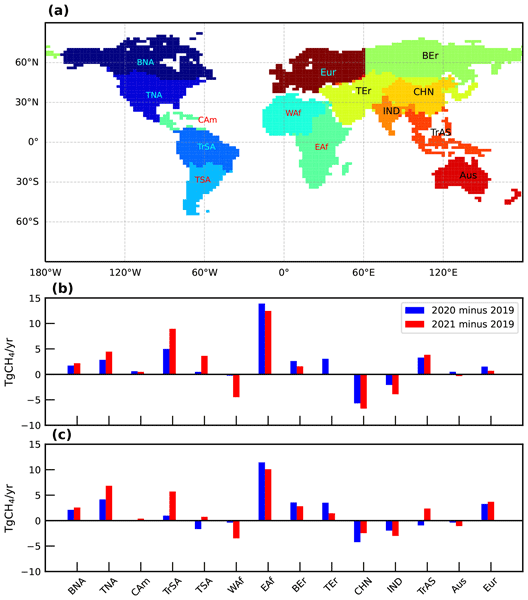
Our understanding of recent changes in atmospheric methane has defied explanation. Since 2007, the atmospheric growth of methane has accelerated to record-breaking values in 2020 and 2021. We use satellite observations of methane to show that (1) increasing emissions over the tropics are mostly responsible for these recent atmospheric changes, and (2) changes in the OH sink during the 2020 Covid-19 lockdown can explain up to 34% of changes in atmospheric methane for that year.
Alvaro Criado, Jan Mateu Armengol, Hervé Petetin, Daniel Rodriguez-Rey, Jaime Benavides, Marc Guevara, Carlos Pérez García-Pando, Albert Soret, and Oriol Jorba
Geosci. Model Dev., 16, 2193–2213, https://doi.org/10.5194/gmd-16-2193-2023, https://doi.org/10.5194/gmd-16-2193-2023, 2023
Short summary
Short summary
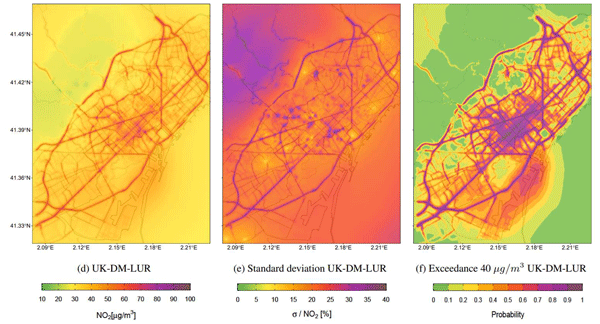
This work aims to derive and evaluate a general statistical post-processing tool specifically designed for the street scale that can be applied to any urban air quality system. Our data fusion methodology corrects NO2 fields based on continuous hourly observations and experimental campaigns. This study enables us to obtain exceedance probability maps of air quality standards. In 2019, 13 % of the Barcelona area had a 70 % or higher probability of exceeding the annual legal NO2 limit of 40 µg/m3.

Hervé Petetin, Marc Guevara, Steven Compernolle, Dene Bowdalo, Pierre-Antoine Bretonnière, Santiago Enciso, Oriol Jorba, Franco Lopez, Albert Soret, and Carlos Pérez García-Pando
Atmos. Chem. Phys., 23, 3905–3935, https://doi.org/10.5194/acp-23-3905-2023, https://doi.org/10.5194/acp-23-3905-2023, 2023
Short summary
Short summary
This study analyses the potential of the TROPOMI space sensor for monitoring the variability of NO2 pollution over the Iberian Peninsula. A reduction of NO2 levels is observed during the weekend and in summer, especially over most urbanized areas, in agreement with surface observations. An enhancement of NO2 is found during summer with TROPOMI over croplands, potentially related to natural soil NO emissions, which illustrates the outstanding value of TROPOMI for complementing surface networks.
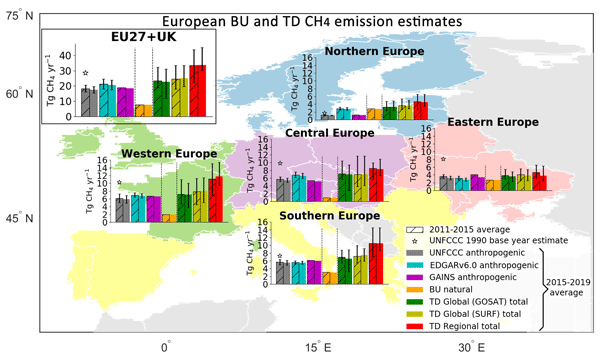
Ana Maria Roxana Petrescu, Chunjing Qiu, Matthew J. McGrath, Philippe Peylin, Glen P. Peters, Philippe Ciais, Rona L. Thompson, Aki Tsuruta, Dominik Brunner, Matthias Kuhnert, Bradley Matthews, Paul I. Palmer, Oksana Tarasova, Pierre Regnier, Ronny Lauerwald, David Bastviken, Lena Höglund-Isaksson, Wilfried Winiwarter, Giuseppe Etiope, Tuula Aalto, Gianpaolo Balsamo, Vladislav Bastrikov, Antoine Berchet, Patrick Brockmann, Giancarlo Ciotoli, Giulia Conchedda, Monica Crippa, Frank Dentener, Christine D. Groot Zwaaftink, Diego Guizzardi, Dirk Günther, Jean-Matthieu Haussaire, Sander Houweling, Greet Janssens-Maenhout, Massaer Kouyate, Adrian Leip, Antti Leppänen, Emanuele Lugato, Manon Maisonnier, Alistair J. Manning, Tiina Markkanen, Joe McNorton, Marilena Muntean, Gabriel D. Oreggioni, Prabir K. Patra, Lucia Perugini, Isabelle Pison, Maarit T. Raivonen, Marielle Saunois, Arjo J. Segers, Pete Smith, Efisio Solazzo, Hanqin Tian, Francesco N. Tubiello, Timo Vesala, Guido R. van der Werf, Chris Wilson, and Sönke Zaehle
Earth Syst. Sci. Data, 15, 1197–1268, https://doi.org/10.5194/essd-15-1197-2023, https://doi.org/10.5194/essd-15-1197-2023, 2023
Short summary
Short summary
This study updates the state-of-the-art scientific overview of CH4 and N2O emissions in the EU27 and UK in Petrescu et al. (2021a). Yearly updates are needed to improve the different respective approaches and to inform on the development of formal verification systems. It integrates the most recent emission inventories, process-based model and regional/global inversions, comparing them with UNFCCC national GHG inventories, in support to policy to facilitate real-time verification procedures.
Dominik Brunner, Gerrit Kuhlmann, Stephan Henne, Erik Koene, Bastian Kern, Sebastian Wolff, Christiane Voigt, Patrick Jöckel, Christoph Kiemle, Anke Roiger, Alina Fiehn, Sven Krautwurst, Konstantin Gerilowski, Heinrich Bovensmann, Jakob Borchardt, Michal Galkowski, Christoph Gerbig, Julia Marshall, Andrzej Klonecki, Pascal Prunet, Robert Hanfland, Margit Pattantyús-Ábrahám, Andrzej Wyszogrodzki, and Andreas Fix
Atmos. Chem. Phys., 23, 2699–2728, https://doi.org/10.5194/acp-23-2699-2023, https://doi.org/10.5194/acp-23-2699-2023, 2023
Short summary
Short summary
We evaluated six atmospheric transport models for their capability to simulate the CO2 plumes from two of the largest power plants in Europe by comparing the models against aircraft observations collected during the CoMet (Carbon Dioxide and Methane Mission) campaign in 2018. The study analyzed how realistically such plumes can be simulated at different model resolutions and how well the planned European satellite mission CO2M will be able to quantify emissions from power plants.
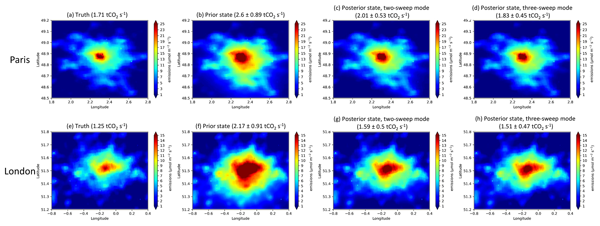
Kai Wu, Paul I. Palmer, Dien Wu, Denis Jouglet, Liang Feng, and Tom Oda
Atmos. Meas. Tech., 16, 581–602, https://doi.org/10.5194/amt-16-581-2023, https://doi.org/10.5194/amt-16-581-2023, 2023
Short summary
Short summary
We evaluate the theoretical ability of the upcoming MicroCarb satellite to estimate urban CO2 emissions over Paris and London. We explore the relative performance of alternative two-sweep and three-sweep city observing modes and take into account the impacts of cloud cover and urban biological CO2 fluxes. Our results find both the two-sweep and three-sweep observing modes are able to reduce prior flux errors by 20 %–40 % depending on the prevailing wind direction and cloud coverage.
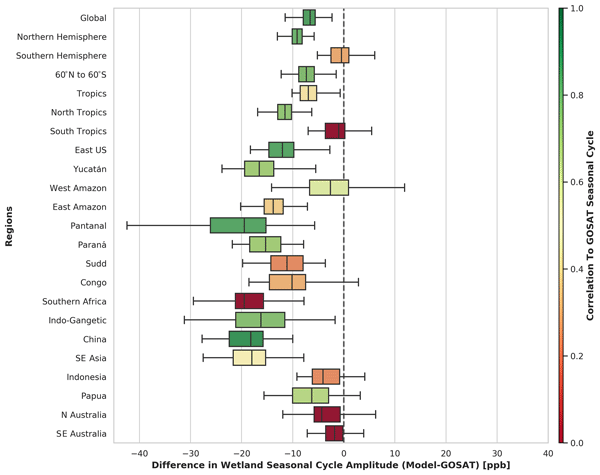
Robert J. Parker, Chris Wilson, Edward Comyn-Platt, Garry Hayman, Toby R. Marthews, A. Anthony Bloom, Mark F. Lunt, Nicola Gedney, Simon J. Dadson, Joe McNorton, Neil Humpage, Hartmut Boesch, Martyn P. Chipperfield, Paul I. Palmer, and Dai Yamazaki
Biogeosciences, 19, 5779–5805, https://doi.org/10.5194/bg-19-5779-2022, https://doi.org/10.5194/bg-19-5779-2022, 2022
Short summary
Short summary
Wetlands are the largest natural source of methane, one of the most important climate gases. The JULES land surface model simulates these emissions. We use satellite data to evaluate how well JULES reproduces the methane seasonal cycle over different tropical wetlands. It performs well for most regions; however, it struggles for some African wetlands influenced heavily by river flooding. We explain the reasons for these deficiencies and highlight how future development will improve these areas.
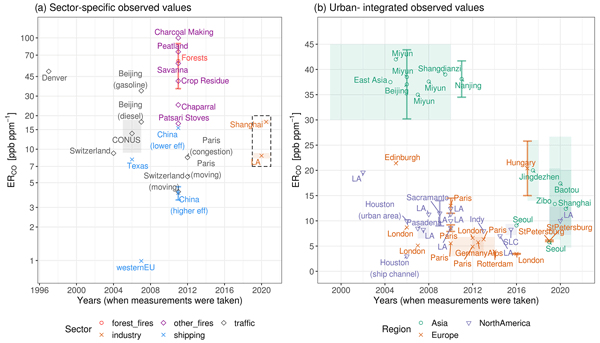
Dien Wu, Junjie Liu, Paul O. Wennberg, Paul I. Palmer, Robert R. Nelson, Matthäus Kiel, and Annmarie Eldering
Atmos. Chem. Phys., 22, 14547–14570, https://doi.org/10.5194/acp-22-14547-2022, https://doi.org/10.5194/acp-22-14547-2022, 2022
Short summary
Short summary
Prior studies have derived the combustion efficiency for a region/city using observed CO2 and CO. We further zoomed into the urban domain and accounted for factors affecting the calculation of spatially resolved combustion efficiency from two satellites. The intra-city variability in combustion efficiency was linked to heavy industry within Shanghai and LA without relying on emission inventories. Such an approach can be applied when analyzing data from future geostationary satellites.
Pierre Friedlingstein, Michael O'Sullivan, Matthew W. Jones, Robbie M. Andrew, Luke Gregor, Judith Hauck, Corinne Le Quéré, Ingrid T. Luijkx, Are Olsen, Glen P. Peters, Wouter Peters, Julia Pongratz, Clemens Schwingshackl, Stephen Sitch, Josep G. Canadell, Philippe Ciais, Robert B. Jackson, Simone R. Alin, Ramdane Alkama, Almut Arneth, Vivek K. Arora, Nicholas R. Bates, Meike Becker, Nicolas Bellouin, Henry C. Bittig, Laurent Bopp, Frédéric Chevallier, Louise P. Chini, Margot Cronin, Wiley Evans, Stefanie Falk, Richard A. Feely, Thomas Gasser, Marion Gehlen, Thanos Gkritzalis, Lucas Gloege, Giacomo Grassi, Nicolas Gruber, Özgür Gürses, Ian Harris, Matthew Hefner, Richard A. Houghton, George C. Hurtt, Yosuke Iida, Tatiana Ilyina, Atul K. Jain, Annika Jersild, Koji Kadono, Etsushi Kato, Daniel Kennedy, Kees Klein Goldewijk, Jürgen Knauer, Jan Ivar Korsbakken, Peter Landschützer, Nathalie Lefèvre, Keith Lindsay, Junjie Liu, Zhu Liu, Gregg Marland, Nicolas Mayot, Matthew J. McGrath, Nicolas Metzl, Natalie M. Monacci, David R. Munro, Shin-Ichiro Nakaoka, Yosuke Niwa, Kevin O'Brien, Tsuneo Ono, Paul I. Palmer, Naiqing Pan, Denis Pierrot, Katie Pocock, Benjamin Poulter, Laure Resplandy, Eddy Robertson, Christian Rödenbeck, Carmen Rodriguez, Thais M. Rosan, Jörg Schwinger, Roland Séférian, Jamie D. Shutler, Ingunn Skjelvan, Tobias Steinhoff, Qing Sun, Adrienne J. Sutton, Colm Sweeney, Shintaro Takao, Toste Tanhua, Pieter P. Tans, Xiangjun Tian, Hanqin Tian, Bronte Tilbrook, Hiroyuki Tsujino, Francesco Tubiello, Guido R. van der Werf, Anthony P. Walker, Rik Wanninkhof, Chris Whitehead, Anna Willstrand Wranne, Rebecca Wright, Wenping Yuan, Chao Yue, Xu Yue, Sönke Zaehle, Jiye Zeng, and Bo Zheng
Earth Syst. Sci. Data, 14, 4811–4900, https://doi.org/10.5194/essd-14-4811-2022, https://doi.org/10.5194/essd-14-4811-2022, 2022
Short summary
Short summary
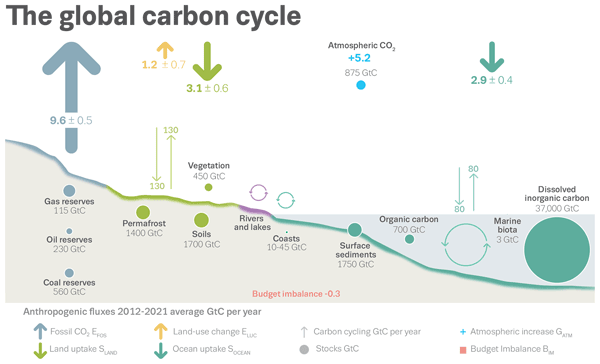
The Global Carbon Budget 2022 describes the datasets and methodology used to quantify the anthropogenic emissions of carbon dioxide (CO2) and their partitioning among the atmosphere, the land ecosystems, and the ocean. These living datasets are updated every year to provide the highest transparency and traceability in the reporting of CO2, the key driver of climate change.
Hervé Petetin, Dene Bowdalo, Pierre-Antoine Bretonnière, Marc Guevara, Oriol Jorba, Jan Mateu Armengol, Margarida Samso Cabre, Kim Serradell, Albert Soret, and Carlos Pérez Garcia-Pando
Atmos. Chem. Phys., 22, 11603–11630, https://doi.org/10.5194/acp-22-11603-2022, https://doi.org/10.5194/acp-22-11603-2022, 2022
Short summary
Short summary
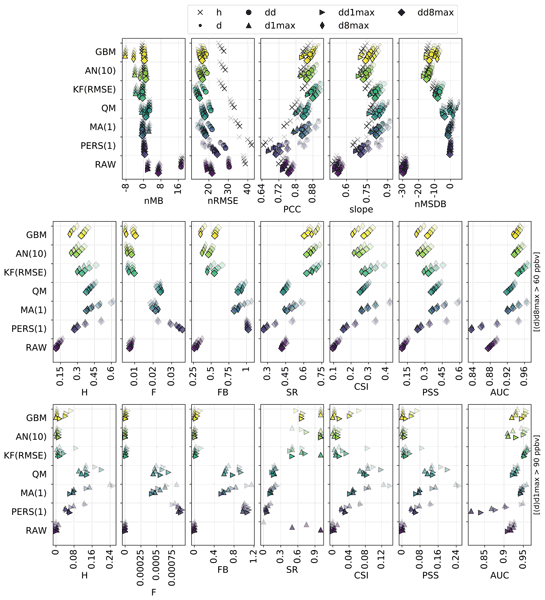
This study investigates the extent to which ozone forecasts provided by the Copernicus Atmospheric Monitoring Service (CAMS) can be improved using surface observations and state-of-the-art statistical methods. Through a case study over the Iberian Peninsula in 2018–2019, it unambiguously demonstrates the value of these methods for improving the raw CAMS O3 forecasts while at the same time highlighting the complexity of improving the detection of the highest O3 concentrations.
Selena Georgiou, Edward T. A. Mitchard, Bart Crezee, Paul I. Palmer, Greta C. Dargie, Sofie Sjögersten, Corneille E. N. Ewango, Ovide B. Emba, Joseph T. Kanyama, Pierre Bola, Jean-Bosco N. Ndjango, Nicholas T. Girkin, Yannick E. Bocko, Suspense A. Ifo, and Simon L. Lewis
EGUsphere, https://doi.org/10.5194/egusphere-2022-580, https://doi.org/10.5194/egusphere-2022-580, 2022
Preprint archived
Short summary
Short summary
Two major vegetation types, hardwood trees and palms, overlay the Central Congo Basin peatland complex, each dominant in different locations. We investigated the influence of terrain and climatological variables on their distribution, using a regression model, and found elevation and seasonal rainfall and temperature contribute significantly. There are indications of an optimal range of net water input for palm swamp to dominate, above and below which hardwood swamp dominates.
Philippe Thunis, Alain Clappier, Enrico Pisoni, Bertrand Bessagnet, Jeroen Kuenen, Marc Guevara, and Susana Lopez-Aparicio
Geosci. Model Dev., 15, 5271–5286, https://doi.org/10.5194/gmd-15-5271-2022, https://doi.org/10.5194/gmd-15-5271-2022, 2022
Short summary
Short summary
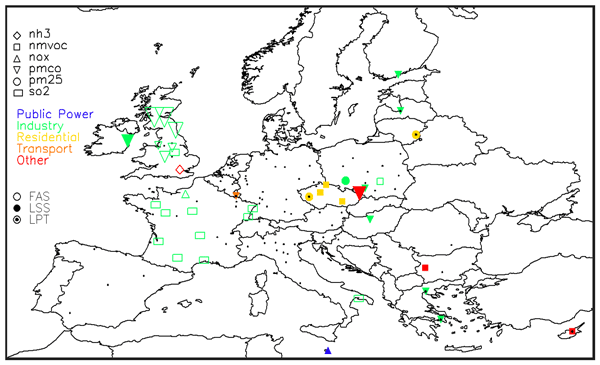
In this work, we propose a screening method to improve the quality of emission inventories, which are responsible for large uncertainties in air-quality modeling. The first step of screening consists of keeping only emission contributions that are relevant enough. In a second step, the method identifies large differences that provide evidence of methodological divergence or errors. We used the approach to compare two versions of the CAMS-REG European-scale inventory over 150 European cities.
Marc Guevara, Hervé Petetin, Oriol Jorba, Hugo Denier van der Gon, Jeroen Kuenen, Ingrid Super, Jukka-Pekka Jalkanen, Elisa Majamäki, Lasse Johansson, Vincent-Henri Peuch, and Carlos Pérez García-Pando
Earth Syst. Sci. Data, 14, 2521–2552, https://doi.org/10.5194/essd-14-2521-2022, https://doi.org/10.5194/essd-14-2521-2022, 2022
Short summary
Short summary
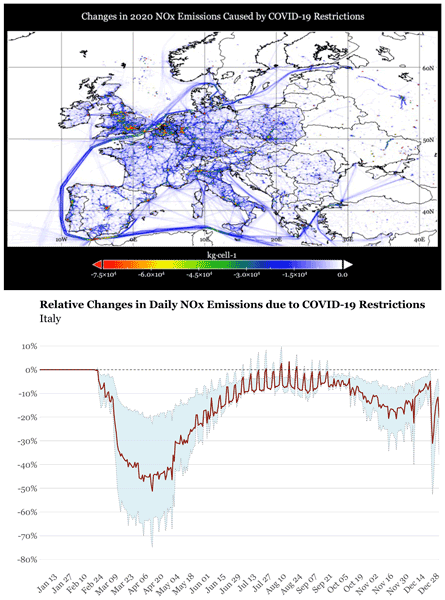
To control the spread of the COVID-19 disease, European governments implemented mobility restriction measures that resulted in an unprecedented drop in anthropogenic emissions. This work presents a dataset of emission adjustment factors that allows quantifying changes in 2020 European primary emissions per country and pollutant sector at the daily scale. The resulting dataset can be used as input in modelling studies aiming at quantifying the impact of COVID-19 on air quality levels.
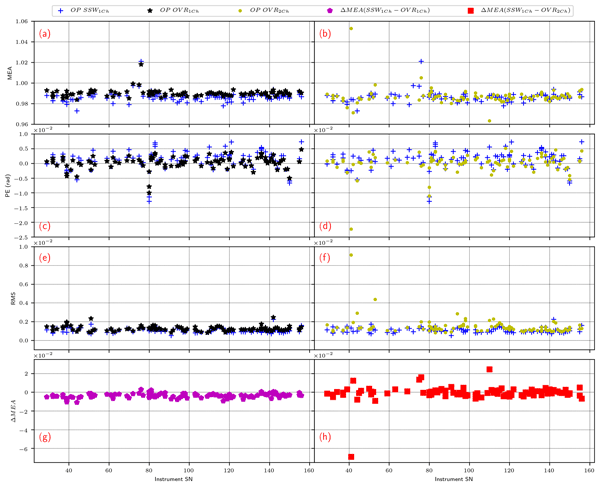
Carlos Alberti, Frank Hase, Matthias Frey, Darko Dubravica, Thomas Blumenstock, Angelika Dehn, Paolo Castracane, Gregor Surawicz, Roland Harig, Bianca C. Baier, Caroline Bès, Jianrong Bi, Hartmut Boesch, André Butz, Zhaonan Cai, Jia Chen, Sean M. Crowell, Nicholas M. Deutscher, Dragos Ene, Jonathan E. Franklin, Omaira García, David Griffith, Bruno Grouiez, Michel Grutter, Abdelhamid Hamdouni, Sander Houweling, Neil Humpage, Nicole Jacobs, Sujong Jeong, Lilian Joly, Nicholas B. Jones, Denis Jouglet, Rigel Kivi, Ralph Kleinschek, Morgan Lopez, Diogo J. Medeiros, Isamu Morino, Nasrin Mostafavipak, Astrid Müller, Hirofumi Ohyama, Paul I. Palmer, Mahesh Pathakoti, David F. Pollard, Uwe Raffalski, Michel Ramonet, Robbie Ramsay, Mahesh Kumar Sha, Kei Shiomi, William Simpson, Wolfgang Stremme, Youwen Sun, Hiroshi Tanimoto, Yao Té, Gizaw Mengistu Tsidu, Voltaire A. Velazco, Felix Vogel, Masataka Watanabe, Chong Wei, Debra Wunch, Marcia Yamasoe, Lu Zhang, and Johannes Orphal
Atmos. Meas. Tech., 15, 2433–2463, https://doi.org/10.5194/amt-15-2433-2022, https://doi.org/10.5194/amt-15-2433-2022, 2022
Short summary
Short summary
Space-borne greenhouse gas missions require ground-based validation networks capable of providing fiducial reference measurements. Here, considerable refinements of the calibration procedures for the COllaborative Carbon Column Observing Network (COCCON) are presented. Laboratory and solar side-by-side procedures for the characterization of the spectrometers have been refined and extended. Revised calibration factors for XCO2, XCO and XCH4 are provided, incorporating 47 new spectrometers.
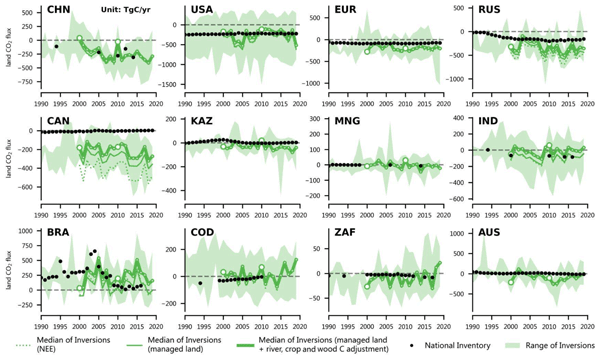
Zhu Deng, Philippe Ciais, Zitely A. Tzompa-Sosa, Marielle Saunois, Chunjing Qiu, Chang Tan, Taochun Sun, Piyu Ke, Yanan Cui, Katsumasa Tanaka, Xin Lin, Rona L. Thompson, Hanqin Tian, Yuanzhi Yao, Yuanyuan Huang, Ronny Lauerwald, Atul K. Jain, Xiaoming Xu, Ana Bastos, Stephen Sitch, Paul I. Palmer, Thomas Lauvaux, Alexandre d'Aspremont, Clément Giron, Antoine Benoit, Benjamin Poulter, Jinfeng Chang, Ana Maria Roxana Petrescu, Steven J. Davis, Zhu Liu, Giacomo Grassi, Clément Albergel, Francesco N. Tubiello, Lucia Perugini, Wouter Peters, and Frédéric Chevallier
Earth Syst. Sci. Data, 14, 1639–1675, https://doi.org/10.5194/essd-14-1639-2022, https://doi.org/10.5194/essd-14-1639-2022, 2022
Short summary
Short summary
In support of the global stocktake of the Paris Agreement on climate change, we proposed a method for reconciling the results of global atmospheric inversions with data from UNFCCC national greenhouse gas inventories (NGHGIs). Here, based on a new global harmonized database that we compiled from the UNFCCC NGHGIs and a comprehensive framework presented in this study to process the results of inversions, we compared their results of carbon dioxide (CO2), methane (CH4), and nitrous oxide (N2O).
Gerrit Kuhlmann, Ka Lok Chan, Sebastian Donner, Ying Zhu, Marc Schwaerzel, Steffen Dörner, Jia Chen, Andreas Hueni, Duc Hai Nguyen, Alexander Damm, Annette Schütt, Florian Dietrich, Dominik Brunner, Cheng Liu, Brigitte Buchmann, Thomas Wagner, and Mark Wenig
Atmos. Meas. Tech., 15, 1609–1629, https://doi.org/10.5194/amt-15-1609-2022, https://doi.org/10.5194/amt-15-1609-2022, 2022
Short summary
Short summary
Nitrogen dioxide (NO2) is an air pollutant whose concentration often exceeds air quality guideline values, especially in urban areas. To map the spatial distribution of NO2 in Munich, we conducted the Munich NO2 Imaging Campaign (MuNIC), where NO2 was measured with stationary, mobile, and airborne in situ and remote sensing instruments. The campaign provides a unique dataset that has been used to compare the different instruments and to study the spatial variability of NO2 and its sources.
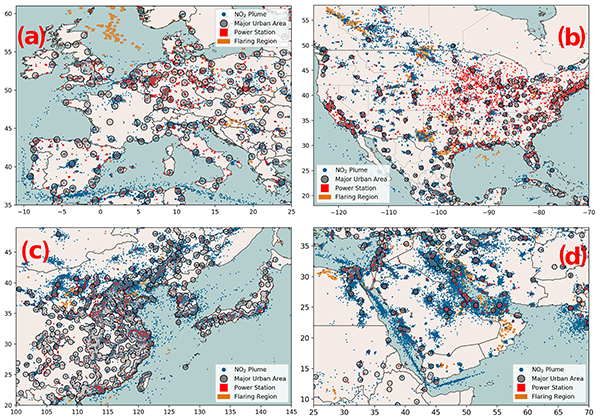
Douglas P. Finch, Paul I. Palmer, and Tianran Zhang
Atmos. Meas. Tech., 15, 721–733, https://doi.org/10.5194/amt-15-721-2022, https://doi.org/10.5194/amt-15-721-2022, 2022
Short summary
Short summary
We developed a machine learning model to detect plumes of nitrogen dioxide satellite observations over 2 years. We find over 310 000 plumes, mainly over cities, industrial regions, and areas of oil and gas production. Our model performs well in comparison to other datasets and in some cases finds emissions that are not included in other datasets. This method could be used to help locate and measure emission hotspots across the globe and help inform climate policies.
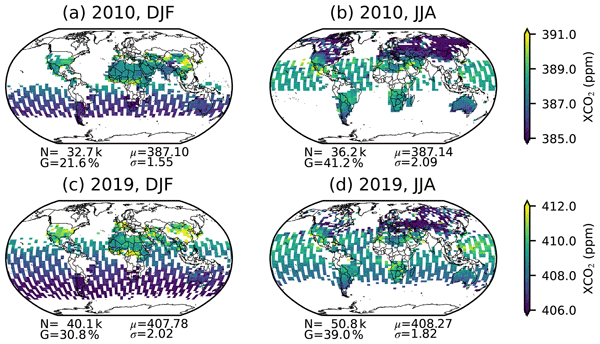
Thomas E. Taylor, Christopher W. O'Dell, David Crisp, Akhiko Kuze, Hannakaisa Lindqvist, Paul O. Wennberg, Abhishek Chatterjee, Michael Gunson, Annmarie Eldering, Brendan Fisher, Matthäus Kiel, Robert R. Nelson, Aronne Merrelli, Greg Osterman, Frédéric Chevallier, Paul I. Palmer, Liang Feng, Nicholas M. Deutscher, Manvendra K. Dubey, Dietrich G. Feist, Omaira E. García, David W. T. Griffith, Frank Hase, Laura T. Iraci, Rigel Kivi, Cheng Liu, Martine De Mazière, Isamu Morino, Justus Notholt, Young-Suk Oh, Hirofumi Ohyama, David F. Pollard, Markus Rettinger, Matthias Schneider, Coleen M. Roehl, Mahesh Kumar Sha, Kei Shiomi, Kimberly Strong, Ralf Sussmann, Yao Té, Voltaire A. Velazco, Mihalis Vrekoussis, Thorsten Warneke, and Debra Wunch
Earth Syst. Sci. Data, 14, 325–360, https://doi.org/10.5194/essd-14-325-2022, https://doi.org/10.5194/essd-14-325-2022, 2022
Short summary
Short summary
We provide an analysis of an 11-year record of atmospheric carbon dioxide (CO2) concentrations derived using an optimal estimation retrieval algorithm on measurements made by the GOSAT satellite. The new product (version 9) shows improvement over the previous version (v7.3) as evaluated against independent estimates of CO2 from ground-based sensors and atmospheric inversion systems. We also compare the new GOSAT CO2 values to collocated estimates from NASA's Orbiting Carbon Observatory-2.

Mark F. Lunt, Alistair J. Manning, Grant Allen, Tim Arnold, Stéphane J.-B. Bauguitte, Hartmut Boesch, Anita L. Ganesan, Aoife Grant, Carole Helfter, Eiko Nemitz, Simon J. O'Doherty, Paul I. Palmer, Joseph R. Pitt, Chris Rennick, Daniel Say, Kieran M. Stanley, Ann R. Stavert, Dickon Young, and Matt Rigby
Atmos. Chem. Phys., 21, 16257–16276, https://doi.org/10.5194/acp-21-16257-2021, https://doi.org/10.5194/acp-21-16257-2021, 2021
Short summary
Short summary
We present an evaluation of the UK's methane emissions between 2013 and 2020 using a network of tall tower measurement sites. We find emissions that are consistent in both magnitude and trend with the UK's reported emissions, with a declining trend driven by a decrease in emissions from England. The impact of various components of the modelling set-up on these findings are explored through a number of sensitivity studies.
Cited articles
Beirle, S., Borger, C., Dörner, S., Eskes, H., Kumar, V., de Laat, A., and Wagner, T.: Catalog of NOx emissions from point sources as derived from the divergence of the NO2 flux for TROPOMI, Earth Syst. Sci. Data, 13, 2995–3012, https://doi.org/10.5194/essd-13-2995-2021, 2021. a, b
Beirle, S., Borger, C., Jost, A., and Wagner, T.: Improved catalog of NOx point source emissions (version 2), Earth Syst. Sci. Data, 15, 3051–3073, https://doi.org/10.5194/essd-15-3051-2023, 2023. a, b, c
Bieser, J., Aulinger, A., Matthias, V., Quante, M., and Denier van der Gon, H.: Vertical emission profiles for Europe based on plume rise calculations, Environ. Pollut., 159, 2935–2946, https://doi.org/10.1016/j.envpol.2011.04.030, 2011. a
Brinkmann, T., Both, R., Scalet, B. M., Roudier, S., and Sancho, L. D.: JRC Reference Report on Monitoring of Emissions to Air and Water from IED Installations, EUR 29261 EN, https://doi.org/10.2760/344197, 2018. a
Brunner, D., Kuhlmann, G., Marshall, J., Clément, V., Fuhrer, O., Broquet, G., Löscher, A., and Meijer, Y.: Accounting for the vertical distribution of emissions in atmospheric CO2 simulations, Atmos. Chem. Phys., 19, 4541–4559, https://doi.org/10.5194/acp-19-4541-2019, 2019. a
Copernicus Atmosphere Monitoring Service: CAMS global emission inventories, Copernicus Atmosphere Monitoring Service (CAMS) Atmosphere Data Store [data set], https://doi.org/10.24381/1d158bec, 2020. a
Copernicus Climate Change Service (CDS): ERA5 hourly data on pressure levels from 1940 to present, Copernicus Climate Change Service (C3S) Climate Data Store (CDS) [data set], https://doi.org/10.24381/cds.bd0915c6, 2023a. a
Copernicus Climate Change Service (CDS): ERA5 hourly data on single levels from 1940 to present, Copernicus Climate Change Service (C3S) Climate Data Store (CDS) [data set], https://doi.org/10.24381/cds.adbb2d47, 2023b. a
Copernicus Sentinel-5P (processed by ESA): TROPOMI Level 2 Nitrogen Dioxide total column products. Version 02, European Space Agency [data set], https://doi.org/10.5270/S5P-9bnp8q8, 2021. a
Crippa, M., Guizzardi, D., Pagani, F., Schiavina, M., Melchiorri, M., Pisoni, E., Graziosi, F., Muntean, M., Maes, J., Dijkstra, L., Van Damme, M., Clarisse, L., and Coheur, P.: Insights into the spatial distribution of global, national, and subnational greenhouse gas emissions in the Emissions Database for Global Atmospheric Research (EDGAR v8.0), Earth Syst. Sci. Data, 16, 2811–2830, https://doi.org/10.5194/essd-16-2811-2024, 2024. a, b
Douros, J., Eskes, H., van Geffen, J., Boersma, K. F., Compernolle, S., Pinardi, G., Blechschmidt, A.-M., Peuch, V.-H., Colette, A., and Veefkind, P.: Comparing Sentinel-5P TROPOMI NO2 column observations with the CAMS regional air quality ensemble, Geosci. Model Dev., 16, 509–534, https://doi.org/10.5194/gmd-16-509-2023, 2023. a
EEA: Industrial Reporting under the Industrial Emissions Directive 2010/75/EU and European Pollutant Release and Transfer Register Regulation (EC) No 166/2006, Ver. 11, https://doi.org/10.2909/9300ec51-d805-4507-9a52-22dabdd9424d, 2024. a
Eskes, H. J. and Boersma, K. F.: Averaging kernels for DOAS total-column satellite retrievals, Atmos. Chem. Phys., 3, 1285–1291, https://doi.org/10.5194/acp-3-1285-2003, 2003. a
Goldberg, D. L., Lu, Z., Streets, D. G., de Foy, B., Griffin, D., McLinden, C. A., Lamsal, L. N., Krotkov, N. A., and Eskes, H.: Enhanced Capabilities of TROPOMI NO2: Estimating NOX from North American Cities and Power Plants, Environ. Sci. Technol., 53, 12594–12601, https://doi.org/10.1021/acs.est.9b04488, 2019. a
Griffin, D., Zhao, X., McLinden, C. A., Boersma, F., Bourassa, A., Dammers, E., Degenstein, D., Eskes, H., Fehr, L., Fioletov, V., Hayden, K., Kharol, S. K., Li, S.-M., Makar, P., Martin, R. V., Mihele, C., Mittermeier, R. L., Krotkov, N., Sneep, M., Lamsal, L. N., Linden, M. T., Geffen, J. V., Veefkind, P., and Wolde, M.: High-resolution mapping of nitrogen dioxide with TROPOMI: First results and validation over the Canadian oil sands, Geophys. Res. Lett., 46, 1049–1060, https://doi.org/10.1029/2018GL081095, 2019. a
Guevara, M., Enciso, S., Tena, C., Jorba, O., Dellaert, S., Denier van der Gon, H., and Pérez García-Pando, C.: A global catalogue of CO2 emissions and co-emitted species from power plants, including high-resolution vertical and temporal profiles, Earth Syst. Sci. Data, 16, 337–373, https://doi.org/10.5194/essd-16-337-2024, 2024. a, b
Guevara, M., Collado, O., Dellaert, S., and Denier van der Gon, H.: D1.2 Improved global point source emissions dataset, Zenodo [data set], https://doi.org/10.5281/zenodo.17206511, 2025. a, b
Hakkarainen, J., Kuhlmann, G., Koene, E., Santaren, D., Meier, S., Krol, M. C., van Stratum, B. J., Ialongo, I., Chevallier, F., Tamminen, J., Brunner, D., and Broquet, G.: Analyzing nitrogen dioxide to nitrogen oxide scaling factors for data-driven satellite-based emission estimation methods: A case study of Matimba/Medupi power stations in South Africa, Atmos. Pollut. Res., 15, 102171, https://doi.org/10.1016/j.apr.2024.102171, 2024. a, b, c
Hakkarainen, J., Ialongo, I., Oda, T., and Crisp, D.: A Robust Method for Calculating Carbon Dioxide Emissions From Cities and Power Stations Using OCO-2 and S5P/TROPOMI Observations, J. Geophys. Res.-Atmos., 130, e2025JD043358, https://doi.org/10.1029/2025JD043358, 2025. a
Hersbach, H., Bell, B., Berrisford, P., Hirahara, S., Horányi, A., Muñoz-Sabater, J., Nicolas, J., Peubey, C., Radu, R., Schepers, D., Simmons, A., Soci, C., Abdalla, S., Abellan, X., Balsamo, G., Bechtold, P., Biavati, G., Bidlot, J., Bonavita, M., De Chiara, G., Dahlgren, P., Dee, D., Diamantakis, M., Dragani, R., Flemming, J., Forbes, R., Fuentes, M., Geer, A., Haimberger, L., Healy, S., Hogan, R. J., Hólm, E., Janisková, M., Keeley, S., Laloyaux, P., Lopez, P., Lupu, C., Radnoti, G., de Rosnay, P., Rozum, I., Vamborg, F., Villaume, S., and Thépaut, J.-N.: The ERA5 global reanalysis, Q. J. Roy. Meteor. Soc., 146, 1999–2049, https://doi.org/10.1002/qj.3803, 2020. a
Hill, T. and Nassar, R.: Pixel Size and Revisit Rate Requirements for Monitoring Power Plant CO2 Emissions from Space, Remote Sens., 11, https://doi.org/10.3390/rs11131608, 2019. a
Hirth, L., Mühlenpfordt, J., and Bulkeley, M.: The ENTSO-E Transparency Platform – A review of Europe’s most ambitious electricity data platform, Appl. Energ., 225, 1054–1067, https://doi.org/10.1016/j.apenergy.2018.04.048, 2018. a, b
Inness, A., Baier, F., Benedetti, A., Bouarar, I., Chabrillat, S., Clark, H., Clerbaux, C., Coheur, P., Engelen, R. J., Errera, Q., Flemming, J., George, M., Granier, C., Hadji-Lazaro, J., Huijnen, V., Hurtmans, D., Jones, L., Kaiser, J. W., Kapsomenakis, J., Lefever, K., Leitão, J., Razinger, M., Richter, A., Schultz, M. G., Simmons, A. J., Suttie, M., Stein, O., Thépaut, J.-N., Thouret, V., Vrekoussis, M., Zerefos, C., and the MACC team: The MACC reanalysis: an 8 yr data set of atmospheric composition, Atmos. Chem. Phys., 13, 4073–4109, https://doi.org/10.5194/acp-13-4073-2013, 2013. a
Janssens-Maenhout, G., Pinty, B., Dowell, M., Zunker, H., Andersson, E., Balsamo, G., Bézy, J.-L., Brunhes, T., Bösch, H., Bojkov, B., Brunner, D., Buchwitz, M., Crisp, D., Ciais, P., Counet, P., Dee, D., van der Gon, H. D., Dolman, H., Drinkwater, M. R., Dubovik, O., Engelen, R., Fehr, T., Fernandez, V., Heimann, M., Holmlund, K., Houweling, S., Husband, R., Juvyns, O., Kentarchos, A., Landgraf, J., Lang, R., Löscher, A., Marshall, J., Meijer, Y., Nakajima, M., Palmer, P. I., Peylin, P., Rayner, P., Scholze, M., Sierk, B., Tamminen, J., and Veefkind, P.: Toward an Operational Anthropogenic CO2 Emissions Monitoring and Verification Support Capacity, B. Am. Meteorol. Soc., 101, E1439–E1451, https://doi.org/10.1175/BAMS-D-19-0017.1, 2020. a
Kaminski, T., Scholze, M., Rayner, P., Houweling, S., Voßbeck, M., Silver, J., Lama, S., Buchwitz, M., Reuter, M., Knorr, W., Chen, H. W., Kuhlmann, G., Brunner, D., Dellaert, S., Denier van der Gon, H., Super, I., Löscher, A., and Meijer, Y.: Assessing the Impact of Atmospheric CO2 and NO2 Measurements From Space on Estimating City-Scale Fossil Fuel CO2 Emissions in a Data Assimilation System, Front. Remote Sens., 3, https://doi.org/10.3389/frsen.2022.887456, 2022. a
Kim, J., Jeong, U., Ahn, M.-H., Kim, J. H., Park, R. J., Lee, H., Song, C. H., Choi, Y.-S., Lee, K.-H., Yoo, J.-M., Jeong, M.-J., Park, S. K., Lee, K.-M., Song, C.-K., Kim, S.-W., Kim, Y. J., Kim, S.-W., Kim, M., Go, S., Liu, X., Chance, K., Miller, C. C., Al-Saadi, J., Veihelmann, B., Bhartia, P. K., Torres, O., Abad, G. G., Haffner, D. P., Ko, D. H., Lee, S. H., Woo, J.-H., Chong, H., Park, S. S., Nicks, D., Choi, W. J., Moon, K.-J., Cho, A., Yoon, J., kyun Kim, S., Hong, H., Lee, K., Lee, H., Lee, S., Choi, M., Veefkind, P., Levelt, P. F., Edwards, D. P., Kang, M., Eo, M., Bak, J., Baek, K., Kwon, H.-A., Yang, J., Park, J., Han, K. M., Kim, B.-R., Shin, H.-W., Choi, H., Lee, E., Chong, J., Cha, Y., Koo, J.-H., Irie, H., Hayashida, S., Kasai, Y., Kanaya, Y., Liu, C., Lin, J., Crawford, J. H., Carmichael, G. R., Newchurch, M. J., Lefer, B. L., Herman, J. R., Swap, R. J., Lau, A. K. H., Kurosu, T. P., Jaross, G., Ahlers, B., Dobber, M., McElroy, C. T., and Choi, Y.: New era of air quality monitoring from space: Geostationary Environment Monitoring Spectrometer (GEMS), B. Am. Meteorol. Soc., 101, E1–E22, https://doi.org/10.1175/BAMS-D-18-0013.1, 2020. a
Krol, M., van Stratum, B., Anglou, I., and Boersma, K. F.: Evaluating NOx stack plume emissions using a high-resolution atmospheric chemistry model and satellite-derived NO2 columns, Atmos. Chem. Phys., 24, 8243–8262, https://doi.org/10.5194/acp-24-8243-2024, 2024. a, b, c
Kuhlmann, G., Broquet, G., Marshall, J., Clément, V., Löscher, A., Meijer, Y., and Brunner, D.: Detectability of CO2 emission plumes of cities and power plants with the Copernicus Anthropogenic CO2 Monitoring (CO2M) mission, Atmos. Meas. Tech., 12, 6695–6719, https://doi.org/10.5194/amt-12-6695-2019, 2019. a
Kuhlmann, G., Brunner, D., Broquet, G., and Meijer, Y.: Quantifying CO2 emissions of a city with the Copernicus Anthropogenic CO2 Monitoring satellite mission, Atmos. Meas. Tech., 13, 6733–6754, https://doi.org/10.5194/amt-13-6733-2020, 2020. a, b
Kuhlmann, G., Henne, S., Meijer, Y., and Brunner, D.: Quantifying CO2 Emissions of Power Plants With CO2 and NO2 Imaging Satellites, Front. Remote Sens., 2, https://doi.org/10.3389/frsen.2021.689838, 2021. a, b
Kuhlmann, G., Koene, E., Meier, S., Santaren, D., Broquet, G., Chevallier, F., Hakkarainen, J., Nurmela, J., Amorós, L., Tamminen, J., and Brunner, D.: The ddeq Python library for point source quantification from remote sensing images (version 1.0), Geosci. Model Dev., 17, 4773–4789, https://doi.org/10.5194/gmd-17-4773-2024, 2024. a, b, c, d
Lange, K., Richter, A., and Burrows, J. P.: Variability of nitrogen oxide emission fluxes and lifetimes estimated from Sentinel-5P TROPOMI observations, Atmos. Chem. Phys., 22, 2745–2767, https://doi.org/10.5194/acp-22-2745-2022, 2022. a, b
Leguijt, G., Maasakkers, J. D., Denier van der Gon, H. A. C., Segers, A. J., Borsdorff, T., van der Velde, I. R., and Aben, I.: Comparing space-based to reported carbon monoxide emission estimates for Europe's iron and steel plants, Atmos. Chem. Phys., 25, 555–574, https://doi.org/10.5194/acp-25-555-2025, 2025. a
Meier, S., Koene, E. F. M., Krol, M., Brunner, D., Damm, A., and Kuhlmann, G.: A lightweight NO2-to-NOx conversion model for quantifying NOx emissions of point sources from NO2 satellite observations, Atmos. Chem. Phys., 24, 7667–7686, https://doi.org/10.5194/acp-24-7667-2024, 2024. a, b, c, d
Nassar, R., Moeini, O., Mastrogiacomo, J.-P., O’Dell, C. W., Nelson, R. R., Kiel, M., Chatterjee, A., Eldering, A., and Crisp, D.: Tracking CO2 emission reductions from space: A case study at Europe’s largest fossil fuel power plant, Front. Remote Sens., 3, https://doi.org/10.3389/frsen.2022.1028240, 2022. a
Potisomporn, P., Adcock, T. A., and Vogel, C. R.: Evaluating ERA5 reanalysis predictions of low wind speed events around the UK, Energy Reports, 10, 4781–4790, https://doi.org/10.1016/j.egyr.2023.11.035, 2023. a
Santaren, D., Hakkarainen, J., Kuhlmann, G., Koene, E., Chevallier, F., Ialongo, I., Lindqvist, H., Nurmela, J., Tamminen, J., Amorós, L., Brunner, D., and Broquet, G.: Benchmarking data-driven inversion methods for the estimation of local CO2 emissions from synthetic satellite images of XCO2 and NO2, Atmos. Meas. Tech., 18, 211–239, https://doi.org/10.5194/amt-18-211-2025, 2025. a, b, c, d
Schooling, C. N., Palmer, P. I., Visser, A., and Bousserez, N.: Development of a parametrised atmospheric NOx chemistry scheme to help quantify fossil fuel CO2 emission estimates, Atmos. Chem. Phys., 25, 15631–15652, https://doi.org/10.5194/acp-25-15631-2025, 2025. a
Sierk, B., Fernandez, V., Bézy, J.-L., Meijer, Y., Durand, Y., Courrèges-Lacoste, G. B., Pachot, C., Löscher, A., Nett, H., Minoglou, K., Boucher, L., Windpassinger, R., Pasquet, A., Serre, D., and te Hennepe, F.: The Copernicus CO2M mission for monitoring anthropogenic carbon dioxide emissions from space, in: International Conference on Space Optics – ICSO 2020, edited by: Cugny, B., Sodnik, Z., and Karafolas, N., International Society for Optics and Photonics, SPIE, 11852, p. 118523M, https://doi.org/10.1117/12.2599613, 2021. a
Soulie, A., Granier, C., Darras, S., Zilbermann, N., Doumbia, T., Guevara, M., Jalkanen, J.-P., Keita, S., Liousse, C., Crippa, M., Guizzardi, D., Hoesly, R., and Smith, S. J.: Global anthropogenic emissions (CAMS-GLOB-ANT) for the Copernicus Atmosphere Monitoring Service simulations of air quality forecasts and reanalyses, Earth Syst. Sci. Data, 16, 2261–2279, https://doi.org/10.5194/essd-16-2261-2024, 2024. a, b
Sun, K., Saju, J. A., Nowlan, C. R., González Abad, G., and Liu, X.: Hourly Nitrogen Oxides Emissions Estimated From TEMPO and Comparison With Facility-Level Monitoring Data, J. Geophys. Res.-Atmos., 130, e2025JD044565, https://doi.org/10.1029/2025JD044565, 2025. a, b
Super, I., Dellaert, S. N. C., Visschedijk, A. J. H., and Denier van der Gon, H. A. C.: Uncertainty analysis of a European high-resolution emission inventory of CO2 and CO to support inverse modelling and network design, Atmos. Chem. Phys., 20, 1795–1816, https://doi.org/10.5194/acp-20-1795-2020, 2020. a
Tang, L., Xue, X., Qu, J., Mi, Z., Bo, X., Chang, X., Wang, S., Li, S., Cui, W., and Dong, G.: Air pollution emissions from Chinese power plants based on the continuous emission monitoring systems network, Sci. Data, 7, 325, https://doi.org/10.1038/s41597-020-00665-1, 2020. a
Tanimoto, H., Matsunaga, T., Someya, Y., Fujinawa, T., Ohyama, H., Morino, I., Yashiro, H., Sugita, T., Inomata, S., Müller, A., Saeki, T., Yoshida, Y., Niwa, Y., Saito, M., Noda, H., Yamashita, Y., Ikeda, K., Saigusa, N., Machida, T., Frey, M. M., Lim, H., Srivastava, P., Jin, Y., Shimizu, A., Nishizawa, T., Kanaya, Y., Sekiya, T., Patra, P., Takigawa, M., Bisht, J., Kasai, Y., and Sato, T. O.: The greenhouse gas observation mission with Global Observing SATellite for Greenhouse gases and Water cycle (GOSAT-GW): objectives, conceptual framework and scientific contributions, Prog. Earth Planet. Sci., 12, 8, https://doi.org/10.1186/s40645-025-00684-9, 2025. a
US EPA: Performance Specification 2 - Specifications and Test procedures for SO2 and NO2 continuous emission monitoring systems in stationary sources, https://www.epa.gov/emc/performance-specification-2-sulfur-dioxide-and-nitrogen-oxide (last access: October 2025), 2023. a
US EPA: Emissions & Generation Resource Integrated Database (eGRID), 2021. Washington, DC: Office of Atmospheric Protection, Clean Air Markets Division, https://www.epa.gov/egrid (last access: October 2024), 2024. a
van der A, R. J., Ding, J., and Eskes, H.: Monitoring European anthropogenic NOx emissions from space, Atmos. Chem. Phys., 24, 7523–7534, https://doi.org/10.5194/acp-24-7523-2024, 2024. a
Vanella, D., Longo-Minnolo, G., Belfiore, O. R., Ramírez-Cuesta, J. M., Pappalardo, S., Consoli, S., D’Urso, G., Chirico, G. B., Coppola, A., Comegna, A., Toscano, A., Quarta, R., Provenzano, G., Ippolito, M., Castagna, A., and Gandolfi, C.: Comparing the use of ERA5 reanalysis dataset and ground-based agrometeorological data under different climates and topography in Italy, J. Hydrol., 42, 101182, https://doi.org/10.1016/j.ejrh.2022.101182, 2022. a
van Geffen, J., Eskes, H., Compernolle, S., Pinardi, G., Verhoelst, T., Lambert, J.-C., Sneep, M., ter Linden, M., Ludewig, A., Boersma, K. F., and Veefkind, J. P.: Sentinel-5P TROPOMI NO2 retrieval: impact of version v2.2 improvements and comparisons with OMI and ground-based data, Atmos. Meas. Tech., 15, 2037–2060, https://doi.org/10.5194/amt-15-2037-2022, 2022. a
Varon, D. J., Jacob, D. J., McKeever, J., Jervis, D., Durak, B. O. A., Xia, Y., and Huang, Y.: Quantifying methane point sources from fine-scale satellite observations of atmospheric methane plumes, Atmos. Meas. Tech., 11, 5673–5686, https://doi.org/10.5194/amt-11-5673-2018, 2018. a
Veefkind, J., Aben, I., McMullan, K., Förster, H., de Vries, J., Otter, G., Claas, J., Eskes, H., de Haan, J., Kleipool, Q., van Weele, M., Hasekamp, O., Hoogeveen, R., Landgraf, J., Snel, R., Tol, P., Ingmann, P., Voors, R., Kruizinga, B., Vink, R., Visser, H., and Levelt, P.: TROPOMI on the ESA Sentinel-5 Precursor: A GMES mission for global observations of the atmospheric composition for climate, air quality and ozone layer applications, Remote Sens. Environ., 120, 70–83, https://doi.org/10.1016/j.rse.2011.09.027, 2012. a, b
Verhoelst, T., Compernolle, S., Pinardi, G., Lambert, J.-C., Eskes, H. J., Eichmann, K.-U., Fjæraa, A. M., Granville, J., Niemeijer, S., Cede, A., Tiefengraber, M., Hendrick, F., Pazmiño, A., Bais, A., Bazureau, A., Boersma, K. F., Bognar, K., Dehn, A., Donner, S., Elokhov, A., Gebetsberger, M., Goutail, F., Grutter de la Mora, M., Gruzdev, A., Gratsea, M., Hansen, G. H., Irie, H., Jepsen, N., Kanaya, Y., Karagkiozidis, D., Kivi, R., Kreher, K., Levelt, P. F., Liu, C., Müller, M., Navarro Comas, M., Piters, A. J. M., Pommereau, J.-P., Portafaix, T., Prados-Roman, C., Puentedura, O., Querel, R., Remmers, J., Richter, A., Rimmer, J., Rivera Cárdenas, C., Saavedra de Miguel, L., Sinyakov, V. P., Stremme, W., Strong, K., Van Roozendael, M., Veefkind, J. P., Wagner, T., Wittrock, F., Yela González, M., and Zehner, C.: Ground-based validation of the Copernicus Sentinel-5P TROPOMI NO2 measurements with the NDACC ZSL-DOAS, MAX-DOAS and Pandonia global networks, Atmos. Meas. Tech., 14, 481–510, https://doi.org/10.5194/amt-14-481-2021, 2021. a
Zheng, B., Chevallier, F., Ciais, P., Broquet, G., Wang, Y., Lian, J., and Zhao, Y.: Observing carbon dioxide emissions over China's cities and industrial areas with the Orbiting Carbon Observatory-2, Atmos. Chem. Phys., 20, 8501–8510, https://doi.org/10.5194/acp-20-8501-2020, 2020. a
Zoogman, P., Liu, X., Suleiman, R., Pennington, W., Flittner, D., Al-Saadi, J., Hilton, B., Nicks, D., Newchurch, M., Carr, J., Janz, S., Andraschko, M., Arola, A., Baker, B., Canova, B., Chan Miller, C., Cohen, R., Davis, J., Dussault, M., Edwards, D., Fishman, J., Ghulam, A., González Abad, G., Grutter, M., Herman, J., Houck, J., Jacob, D., Joiner, J., Kerridge, B., Kim, J., Krotkov, N., Lamsal, L., Li, C., Lindfors, A., Martin, R., McElroy, C., McLinden, C., Natraj, V., Neil, D., Nowlan, C., O'Sullivan, E., Palmer, P., Pierce, R., Pippin, M., Saiz-Lopez, A., Spurr, R., Szykman, J., Torres, O., Veefkind, J., Veihelmann, B., Wang, H., Wang, J., and Chance, K.: Tropospheric emissions: Monitoring of pollution (TEMPO), J. Quant. Spectrosc. Ra., 186, 17–39, https://doi.org/10.1016/j.jqsrt.2016.05.008, 2017. a
Short summary
We used satellite measurements of nitrogen dioxide (NO2) to estimate top-down nitrogen oxide (NOx) emissions from power plants in Europe and the United States. Our study shows that these observations can track seasonal and short-term changes in emissions and agree well with bottom-up estimates. This approach offers a promising way to monitor NOx and indirectly carbon dioxide (CO2) emissions, supporting anthropogenic emissions monitoring systems.
We used satellite measurements of nitrogen dioxide (NO2) to estimate top-down nitrogen oxide...


Altmetrics
Final-revised paper
Preprint