
Articles | Volume 26, issue 4
https://doi.org/10.5194/acp-26-3211-2026
© Author(s) 2026. This work is distributed under
the Creative Commons Attribution 4.0 License.
the Creative Commons Attribution 4.0 License.
https://doi.org/10.5194/acp-26-3211-2026
© Author(s) 2026. This work is distributed under
the Creative Commons Attribution 4.0 License.
the Creative Commons Attribution 4.0 License.
Research article
| 
03 Mar 2026
Research article |
| 03 Mar 2026
| 03 Mar 2026
Chlorine radical-initiated atmospheric oxidation of imines: implications for structural influence on the nitrosamine formation
Qian Xu
Key Laboratory of Industrial Ecology and Environmental Engineering (Ministry of Education), School of Environmental Science and Technology, Dalian University of Technology, Dalian 116024, China
Fangfang Ma
CORRESPONDING AUTHOR
Key Laboratory of Industrial Ecology and Environmental Engineering (Ministry of Education), School of Environmental Science and Technology, Dalian University of Technology, Dalian 116024, China
College of Resources and Environmental Engineering, Guizhou University, Guiyang, 550025, China
Guizhou Provincial Key Laboratory for Prevention and Control of Emerging Contaminants, Guiyang, 550025, China
Chang Liu
Key Laboratory of Industrial Ecology and Environmental Engineering (Ministry of Education), School of Environmental Science and Technology, Dalian University of Technology, Dalian 116024, China
Qiaojing Zhao
Key Laboratory of Industrial Ecology and Environmental Engineering (Ministry of Education), School of Environmental Science and Technology, Dalian University of Technology, Dalian 116024, China
Jingwen Chen
Key Laboratory of Industrial Ecology and Environmental Engineering (Ministry of Education), School of Environmental Science and Technology, Dalian University of Technology, Dalian 116024, China
Hong-Bin Xie
CORRESPONDING AUTHOR
Key Laboratory of Industrial Ecology and Environmental Engineering (Ministry of Education), School of Environmental Science and Technology, Dalian University of Technology, Dalian 116024, China
Related authors
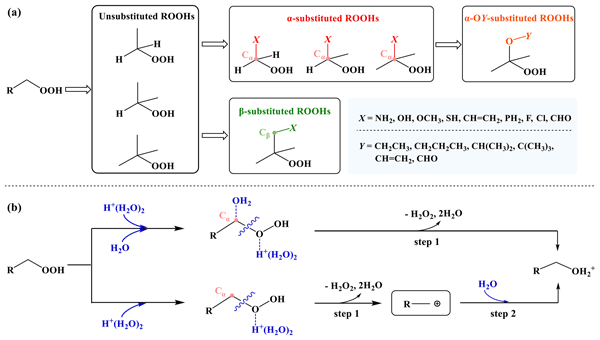
Qiaojing Zhao, Fangfang Ma, Hui Zhao, Qian Xu, Rujing Yin, Hong-Bin Xie, Xin Wang, and Jingwen Chen
Atmos. Chem. Phys., 25, 12615–12628, https://doi.org/10.5194/acp-25-12615-2025, https://doi.org/10.5194/acp-25-12615-2025, 2025
Short summary
Short summary
The scarcity of kinetic data for key aerosol aqueous-phase reactions contributes to large uncertainties in atmospheric models. We establish a computational strategy to rapidly predict acid-catalyzed hydrolysis kinetics of organic hydroperoxides, an aerosol constituent with high abundance. The kinetic parameters can be integrated into atmospheric models to improve simulations of the global hydrogen peroxide budget and secondary organic aerosol production.
Qiaojing Zhao, Fangfang Ma, Hui Zhao, Qian Xu, Rujing Yin, Hong-Bin Xie, Xin Wang, and Jingwen Chen
Atmos. Chem. Phys., 25, 12615–12628, https://doi.org/10.5194/acp-25-12615-2025, https://doi.org/10.5194/acp-25-12615-2025, 2025
Short summary
Short summary
The scarcity of kinetic data for key aerosol aqueous-phase reactions contributes to large uncertainties in atmospheric models. We establish a computational strategy to rapidly predict acid-catalyzed hydrolysis kinetics of organic hydroperoxides, an aerosol constituent with high abundance. The kinetic parameters can be integrated into atmospheric models to improve simulations of the global hydrogen peroxide budget and secondary organic aerosol production.
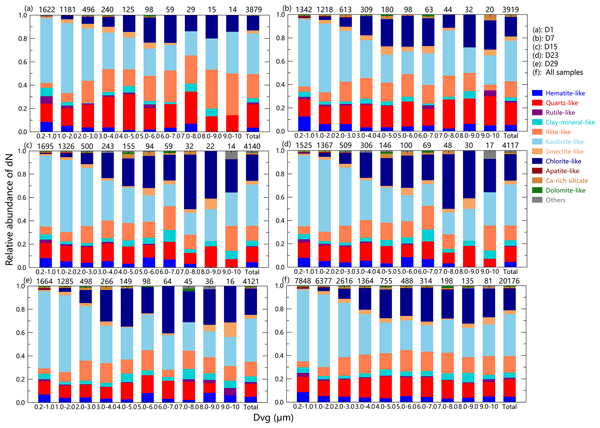
Tenglong Shi, Jiayao Wang, Daizhou Zhang, Jiecan Cui, Zihang Wang, Yue Zhou, Wei Pu, Yang Bai, Zhigang Han, Meng Liu, Yanbiao Liu, Hongbin Xie, Minghui Yang, Ying Li, Meng Gao, and Xin Wang
The Cryosphere, 19, 2821–2835, https://doi.org/10.5194/tc-19-2821-2025, https://doi.org/10.5194/tc-19-2821-2025, 2025
Short summary
Short summary
This study examines the properties of dust in snow in Changchun, China, using advanced technology to analyze its size, shape, and light absorption. We found that dust composition affects how much heat is absorbed by snow, with certain minerals, such as hematite, making snowmelt faster. Our research highlights the importance of creating clear standards for classifying dust, which could improve climate models and field observations. This work helps better understand dust's role in climate change.
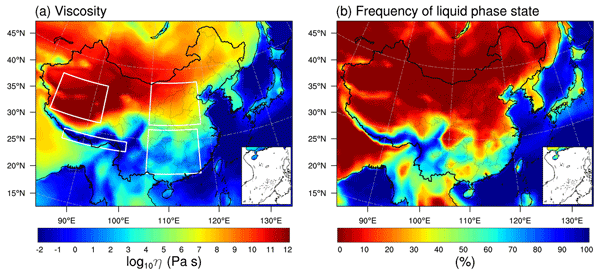
Zhiqiang Zhang, Ying Li, Haiyan Ran, Junling An, Yu Qu, Wei Zhou, Weiqi Xu, Weiwei Hu, Hongbin Xie, Zifa Wang, Yele Sun, and Manabu Shiraiwa
Atmos. Chem. Phys., 24, 4809–4826, https://doi.org/10.5194/acp-24-4809-2024, https://doi.org/10.5194/acp-24-4809-2024, 2024
Short summary
Short summary
Secondary organic aerosols (SOAs) can exist in liquid, semi-solid, or amorphous solid states, which are rarely accounted for in current chemical transport models. We predict the phase state of SOA particles over China and find that in northwestern China SOA particles are mostly highly viscous or glassy solid. Our results indicate that the particle phase state should be considered in SOA formation in chemical transport models for more accurate prediction of SOA mass concentrations.
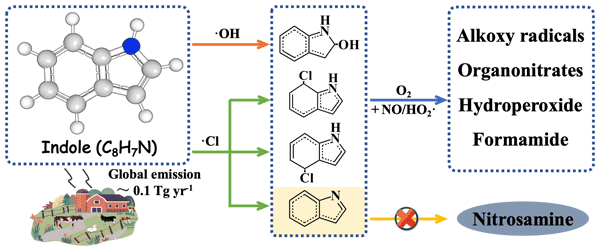
Jingwen Xue, Fangfang Ma, Jonas Elm, Jingwen Chen, and Hong-Bin Xie
Atmos. Chem. Phys., 22, 11543–11555, https://doi.org/10.5194/acp-22-11543-2022, https://doi.org/10.5194/acp-22-11543-2022, 2022
Short summary
Short summary
·OH/·Cl initiated indole reactions mainly form organonitrates, alkoxy radicals and hydroperoxide products, showing a varying mechanism from previously reported amines reactions. This study reveals carcinogenic nitrosamines cannot be formed in indole oxidation reactions despite radicals formed from -NH- H abstraction. The results are important to understand the atmospheric impact of indole oxidation and extend current understanding on the atmospheric chemistry of organic nitrogen compounds.

Rongjie Zhang, Jiewen Shen, Hong-Bin Xie, Jingwen Chen, and Jonas Elm
Atmos. Chem. Phys., 22, 2639–2650, https://doi.org/10.5194/acp-22-2639-2022, https://doi.org/10.5194/acp-22-2639-2022, 2022
Short summary
Short summary
Formic acid is screened out as the species that can effectively catalyze the new particle formation (NPF) of the methanesulfonic acid (MSA)–methylamine system, indicating organic acids might be required to facilitate MSA-driven NPF in the atmosphere. The results are significant to comprehensively understand the MSA-driven NPF and expand current knowledge of the contribution of OAs to NPF.
Cited articles
Abudumutailifu, M., Shang, X., Wang, L., Zhang, M., Kang, H., Chen, Y., Li, L., Ju, R., Li, B., Ouyang, H., Tang, X., Li, C., Wang, L., Wang, X., George, C., Rudich, Y., Zhang, R., and Chen, J.: Unveiling the Molecular Characteristics, Origins, and Formation Mechanism of Reduced Nitrogen Organic Compounds in the Urban Atmosphere of Shanghai Using a Versatile Aerosol Concentration Enrichment System, Environ. Sci. Technol., 58, 7099–7112, https://doi.org/10.1021/acs.est.3c04071, 2024.
Ali, M. A., Balaganesh, M., and Lin, K. C.:: Catalytic effect of a single water molecule on the OH + CH2NH reaction, Phys. Chem. Chem. Phys., 20, 4297–4307, https://doi.org/10.1039/C7CP07091H, 2018.
Ali, M. A.: Computational studies on the gas phase reaction of methylenimine (CH2NH) with water molecules, Sci. Rep., 10, 10995, https://doi.org/10.1038/s41598-020-67515-3, 2020.
Ali, M. A., Sonk, J. A., and Barker, J. R.: Predicted Chemical Activation Rate Constants for HO2+ CH2NH: The Dominant Role of a Hydrogen-Bonded Pre-reactive Complex, J. Phys. Chem. A, 120, 7060–7070, https://doi.org/10.1021/acs.jpca.6b06531, 2016.
Almeida, T. G. and Kurtén, T.: Atmospheric Oxidation of Imine Derivative of Piperazine Initiated by OH Radical, ACS Earth Space Chem., 6, 2453–2464, https://doi.org/10.1021/acsearthspacechem.2c00170, 2022.
Barker, J. R.: Multiple-Well, multiple-path unimolecular reaction systems. I. MultiWell computer program suite, Int. J. Chem. Kinet., 33, 232–245, https://doi.org/10.1002/kin.1017, 2001.
Barker, J. R., Ortiz, N. F., Preses, J. M., Lohr, L. L., Maranzana, A., Stimac, P. J., Nguyen, T. L., and Kumar, T. J. D.: MultiWell Program Suite User Manual, (MultiWell-2014.1), https://multiwell.engin.umich.edu/ (last access: 12 December 2025), 2014.
Bunkan, A. J. C., Reijrink, N. G., Mikoviny, T., Müller, M., Nielsen, C. J., Zhu, L., and Wisthaler, A.: Atmospheric Chemistry of N-Methylmethanimine (CH3N=CH2): A Theoretical and Experimental Study, J. Phys. Chem. A, 126, 3247–3264, https://doi.org/10.1021/acs.jpca.2c01925, 2022.
Bunkan, A. J. C., Tang, Y., Sellevåg, S. R., and Nielsen, C. J.: Atmospheric Gas Phase Chemistry of CH2=NH and HNC. A First-Principles Approach, J. Phys. Chem. A, 118, 5279–5288, https://doi.org/10.1021/jp5049088, 2014.
Cao, Y., Liu, J., Ma, Q., Zhang, C., Zhang, P., Chen, T., Wang, Y., Chu, B., Zhang, X., Francisco, J. S., and He, H.: Photoactivation of Chlorine and Its Catalytic Role in the Formation of Sulfate Aerosols, J. Am. Chem. Soc., 146, 1467–1475, https://doi.org/10.1021/jacs.3c10840, 2024.
Carey, F. A. and Sundberg, R. J.: Advanced Organic Chemistry: part A: Structure and Mechanisms, 5th, Springer Science & Business Media, ISBN 978-0-387-44897-8, 2007.
Chen, G., Fan, X., Lin, Z., Ji, X., Chen, Z., Xu, L., and Chen, J.: Driving factors and photochemical impacts of Cl2 in coastal atmosphere of Southeast China, npj Clim. Atmos. Sci., 8, 135, https://doi.org/10.1038/s41612-025-01022-y, 2025a.
Chen, X., Jiang, Y., Zong, Z., Wang, Y., Sun, W., Wang, Y., Xia, M., Guan, L., Liu, P., Zhang, C., Chen, J., Mu, Y., and Wang, T.: Atmospheric Reactive Halogens Reshaped by the Clean Energy Policy and Agricultural Activity in a Rural Area of the North China Plain, Environ. Sci. Technol., 59, 12775–12785, https://doi.org/10.1021/acs.est.4c13986, 2025b.
Cooke, M. E., Dam, M., Wingen, L. M., Perraud, V., Thomas, A. E., Rojas, B., Nagalingam, S., Ezell, M. J., La Salle, S., Bauer, P. S., Finlayson-Pitts, B. J., and Smith, J. N.: Emissions of Nitrous Acid, Nitryl Chloride, and Dinitrogen Pentoxide Associated with Automotive Braking, Environ. Sci. Technol., 59, 9167–9177, https://doi.org/10.1021/acs.est.4c13202, 2025.
Da Silva, G.: Formation of Nitrosamines and Alkyldiazohydroxides in the Gas Phase: The CH3NH + NO Reaction Revisited, Environ. Sci. Technol., 47, 7766–7772, https://doi.org/10.1021/es401591n, 2013.
Ding, Z., Tian, S., Dang, J., and Zhang, Q.: New mechanistic understanding for atmospheric oxidation of isoprene initiated by atomic chlorine, Sci. Total Environ., 801, 149768, https://doi.org/10.1016/j.scitotenv.2021.149768, 2021.
Ditto, J. C., Joo, T., Slade, J. H., Shepson, P. B., Ng, N. L., and Gentner, D. R.: Nontargeted Tandem Mass Spectrometry Analysis Reveals Diversity and Variability in Aerosol Functional Groups across Multiple Sites, Seasons, and Times of Day, Environ. Sci. Technol. Lett., 7, 60–69, https://doi.org/10.1021/acs.estlett.9b00702, 2020.
Ditto, J. C., Machesky, J., and Gentner, D. R.: Analysis of reduced and oxidized nitrogen-containing organic compounds at a coastal site in summer and winter, Atmos. Chem. Phys., 22, 3045–3065, https://doi.org/10.5194/acp-22-3045-2022, 2022.
Eckart, C.: The Penetration of a Potential Barrier by Electrons, Phys. Rev., 35, 1303–1309, https://doi.org/10.1103/PhysRev.35.1303, 1930.
Edwards, P. M. and Young, C. J.: Primary Radical Effectiveness: Do the Different Chemical Reactivities of Hydroxyl and Chlorine Radicals Matter for Tropospheric Oxidation? ACS ES&T Air, 1, 780–788, https://doi.org/10.1021/acsestair.3c00108, 2024.
Elm, J., Jen, C. N., Kurtén, T., and Vehkamäki, H.: Strong Hydrogen Bonded Molecular Interactions between Atmospheric Diamines and Sulfuric Acid, J. Phys. Chem. A, 120, 3693–3700, https://doi.org/10.1021/acs.jpca.6b03192, 2016.
Faxon, C. B. and Allen, D. T.: Chlorine chemistry in urban atmospheres: a review, Environ. Chem., 10, 221, https://doi.org/10.1071/EN13026, 2013.
Frisch, M. J., Trucks, G. W., Schlegel, H. B., Scuseria, G. E., Robb, M. A., Cheeseman, J. R., Scalmani, G., Barone, V., Petersson, G. A., Nakatsuji, H., Li, X., Caricato, M., Marenich, A. V., Bloino, J., Janesko, B. G., Gomperts, R., Mennucci, B., Hratchian, H. P., Ortiz, J. V., Izmaylov, A. F., Sonnenberg, J. L., Williams-Young, D., Ding, F., Lipparini, F., Egidi, F., Goings, J., Peng, B., Petrone, A., Henderson, T., Ranasinghe, D., Zakrzewski, V. G., Gao, J., Rega, N., Zheng, G., Liang, W., Hada, M., Ehara, M., Toyota, K., Fukuda, R., Hasegawa, J., Ishida, M., Nakajima, T., Honda, Y., Kitao, O., Nakai, H., Vreven, T., Throssell, K., Jr. Montgomery, J. A., Peralta, J. E., Ogliaro, F., Bearpark, M. J., Heyd, J. J., Brothers, E. N., Kudin, K. N., Staroverov, V. N., Keith, T. A., Kobayashi, R., Normand, J., Raghavachari, K., Rendell, A. P., Burant, J. C., Iyengar, S. S., Tomasi, J., Cossi, M., Millam, J. M., Klene, M., Adamo, C., Cammi, R., Ochterski, J. W., Martin, R. L., Morokuma, K., Farkas, O., Foresman, J. B., and Fox, D. J. G. I.: Gaussian 09, Revision A.02, Gaussian, Inc., Walling ford, CT, https://gaussian.com/g09citation/ (last access: 12 December 2025), 2009.
Fu, X., Wang, T., Wang, S., Zhang, L., Cai, S., Xing, J., and Hao, J.: Anthropogenic Emissions of Hydrogen Chloride and Fine Particulate Chloride in China, Environ. Sci. Technol., 52, 1644–1654, https://doi.org/10.1021/acs.est.7b05030, 2018.
Fu, Z., Guo, S., Xie, H., Zhou, P., Boy, M., Yao, M., and Hu, M.: A Near-Explicit Reaction Mechanism of Chlorine-Initiated Limonene: Implications for Health Risks Associated with the Concurrent Use of Cleaning Agents and Disinfectants, Environ. Sci. Technol., 58, 19762–19773, https://doi.org/10.1021/acs.est.4c04388, 2024.
Fukui, K.: The path of chemical reactions – the IRC approach, Acc. Chem. Res., 14, 363–368, https://doi.org/10.1021/ar00072a001, 1981.
Ge, X., Wexler, A. S., and Clegg, S. L.: Atmospheric amines – Part I. A review, Atmos. Environ., 45, 524–546, https://doi.org/10.1016/j.atmosenv.2010.10.012, 2011.
Gunthe, S. S., Liu, P., Panda, U., Raj, S. S., Sharma, A., Darbyshire, E., Reyes-Villegas, E., Allan, J., Chen, Y., Wang, X., Song, S., Pöhlker, M. L., Shi, L., Wang, Y., Kommula, S. M., Liu, T., Ravikrishna, R., McFiggans, G., Mickley, L. J., Martin, S. T., Pöschl, U., Andreae, M. O., and Coe, H.: Enhanced aerosol particle growth sustained by high continental chlorine emission in India, Nat. Geosci., 14, 77–84, https://doi.org/10.1038/s41561-020-00677-x, 2021.
Guo, X., Ma, F., Liu, C., Niu, J., He, N., Chen, J., and Xie, H.: Atmospheric oxidation mechanism and kinetics of isoprene initiated by chlorine radicals: A computational study, Sci. Total Environ., 712, 136330, https://doi.org/10.1016/j.scitotenv.2019.136330, 2020.
Li, C., Yao, L., Wang, Y., Fang, M., Chen, X., Wang, L., Li, Y., Yang, G., and Wang, L.: Formation of chlorinated organic compounds from Cl atom-initiated reactions of aromatics and their detection in suburban Shanghai, Atmos. Chem. Phys., 25, 11247–11260, https://doi.org/10.5194/acp-25-11247-2025, 2025.
Li, L., Yin, S., Huang, L., Yi, X., Wang, Y., Zhang, K., Ooi, C. G., and Allen, D. T.: An emission inventory for Cl2 and HOCl in Shanghai, 2017, Atmos. Environ., 223, 117220, https://doi.org/10.1016/j.atmosenv.2019.117220, 2020.
Li, S., Liu, Y., Zhu, Y., Jin, Y., Hong, Y., Shen, A., Xu, Y., Wang, H., Wang, H., Lu, X., Fan, S., and Fan, Q.: ACEIC: a comprehensive anthropogenic chlorine emission inventory for China, Atmos. Chem. Phys., 24, 11521–11544, https://doi.org/10.5194/acp-24-11521-2024, 2024.
Liu, C., Ma, F., Elm, J., Fu, Z., Tang, W., Chen, J., and Xie, H.: Mechanism and predictive model development of reaction rate constants for N-center radicals with O2, Chemosphere, 237, 124411, https://doi.org/10.1016/j.chemosphere.2019.124411, 2019.
Liu, L., Yu, F., Du, L., Yang, Z., Francisco, J. S., and Zhang, X.: Rapid sulfuric acid–dimethylamine nucleation enhanced by nitric acid in polluted regions, PNAS, 118, e2108384118, https://doi.org/10.1073/pnas.2108384118, 2021.
Liu, X., Liu, L., Zhang, B., Liu, P., Huang, R., Hildebrandt Ruiz, L., Miao, R., Chen, Q., and Wang, X.: Modeling the Global Impact of Chlorine Chemistry on Secondary Organic Aerosols, Environ. Sci. Technol., 58, 23064–23074, https://doi.org/10.1021/acs.est.4c05037, 2024.
Lu, R., Zhou, P., Ma, F., Zhao, Q., Peng, X., Chen, J., and Xie, H.: Multi-generation oxidation mechanism of M-xylene: Unexpected implications for secondary organic aerosol formation, Atmos. Environ., 327, 120511, https://doi.org/10.1016/j.atmosenv.2024.120511, 2024.
Lu, T.: Molclus program, Version 1.9.3., http://www.keinsci.com/research/molclus.html (last access: 12 December 2025), 2025.
Ma, F., Ding, Z., Elm, J., Xie, H., Yu, Q., Liu, C., Li, C., Fu, Z., Zhang, L., and Chen, J.: Atmospheric Oxidation of Piperazine Initiated by ⚫Cl: Unexpected High Nitrosamine Yield, Environ. Sci. Technol., 52, 9801–9809, https://doi.org/10.1021/acs.est.8b02510, 2018.
Ma, F., Xie, H., Elm, J., Shen, J., Chen, J., and Vehkamäki, H.: Piperazine Enhancing Sulfuric Acid-Based New Particle Formation: Implications for the Atmospheric Fate of Piperazine, Environ. Sci. Technol., 53, 8785–8795, https://doi.org/10.1021/acs.est.9b02117, 2019.
Ma, F., Guo, X., Xia, D., Xie, H., Wang, Y., Elm, J., Chen, J., and Niu, J.: Atmospheric Chemistry of Allylic Radicals from Isoprene: A Successive Cyclization-Driven Autoxidation Mechanism, Environ. Sci. Technol., 55, 4399–4409, https://doi.org/10.1021/acs.est.0c07925, 2021.
Ma, F., Xie, H., Zhang, R., Su, L., Jiang, Q., Tang, W., Chen, J., Engsvang, M., Elm, J., and He, X.: Enhancement of Atmospheric Nucleation Precursors on Iodic Acid-Induced Nucleation: Predictive Model and Mechanism, Environ. Sci. Technol., 57, 6944–6954, https://doi.org/10.1021/acs.est.3c01034, 2023.
Ma, W., Feng, Z., Chen, X., Xia, M., Liu, Y., Zhang, Y., Liu, Y., Wang, Y., Zheng, F., Hua, C., Li, J., Zhao, Z., Yang, H., Kulmala, M., Worsnop, D. R., He, H., and Liu, Y.: Overlooked Significance of Reactive Chlorines in the Reacted Loss of VOCs and the Formation of O3 and SOA, Environ. Sci. Technol., 59, 6155–6166, https://doi.org/10.1021/acs.est.4c10618, 2025.
Ning, A., Liu, L., Zhang, S., Yu, F., Du, L., Ge, M., and Zhang, X.: The critical role of dimethylamine in the rapid formation of iodic acid particles in marine areas, npj Clim. Atmos. Sci., 5, 1–9, https://doi.org/10.1038/s41612-022-00316-9, 2022.
Onel, L., Blitz, M., Dryden, M., Thonger, L., and Seakins, P.: Branching Ratios in Reactions of OH Radicals with Methylamine, Dimethylamine, and Ethylamine, Environ. Sci. Technol., 48, 9935–9942, https://doi.org/10.1021/es502398r, 2014.
Pople, J. A., Head-Gordon, M., Fox, D. J., Raghavachari, K., and Curtiss, L. A.: Gaussian-1 theory: A general procedure for prediction of molecular energies, J. Chem. Phys., 90, 5622–5629, https://doi.org/10.1063/1.456415, 1989.
Qiu, C. and Zhang, R.: Multiphase chemistry of atmospheric amines, Phys. Chem. Chem. Phys., 15, 5738–5752, https://doi.org/10.1039/c3cp43446j, 2013.
Reed, A. E., Weinstock, R. B., and Weinhold, F.: Natural population analysis, J. Chem. Phys., 83, 735–746, https://doi.org/10.1063/1.449486, 1985.
Ren, X.: HOx concentrations and OH reactivity observations in New York City during PMTACS-NY2001, Atmos. Environ., 37, 3627–3637, https://doi.org/10.1016/S1352-2310(03)00460-6, 2003.
Shen, X., Chen, J., Li, G., and An, T.: A new advance in the pollution profile, transformation process, and contribution to aerosol formation and aging of atmospheric amines, Environ. Sci. Atmos., 3, 444–473, https://doi.org/10.1039/D2EA00167E, 2023.
Sun, W., Hu, X., Fu, Y., Zhang, G., Zhu, Y., Wang, X., Yan, C., Xue, L., Meng, H., Jiang, B., Liao, Y., Wang, X., Peng, P., and Bi, X.: Different formation pathways of nitrogen-containing organic compounds in aerosols and fog water in northern China, Atmos. Chem. Phys., 24, 6987–6999, https://doi.org/10.5194/acp-24-6987-2024, 2024.
Tang, Y. and Nielsen, C. J.: A systematic theoretical study of imines formation from the atmospheric reactions of RnNH2-n with O2 and NO2 (R = CH3 and CH3CH2; n = 1 and 2), Atmos. Environ., 55, 185–189, https://doi.org/10.1016/j.atmosenv.2012.02.094, 2012.
Thornton, J. A., Kercher, J. P., Riedel, T. P., Wagner, N. L., Cozic, J., Holloway, J. S., Dubé, W. P., Wolfe, G. M., Quinn, P. K., Middlebrook, A. M., Alexander, B., and Brown, S. S.: A large atomic chlorine source inferred from mid-continental reactive nitrogen chemistry, Nature, 464, 271–274, https://doi.org/10.1038/nature08905, 2010.
Vereecken, L. and Francisco, J. S.: Theoretical studies of atmospheric reaction mechanisms in the tropospherew, Chem. Soc. Rev., 41, 6259–6293, https://doi.org/10.1039/C2CS35070J, 2012.
Wang, C., Liggio, J., Wentzell, J. J. B., Jorga, S., Folkerson, A., and Abbatt, J. P. D.: Chloramines as an important photochemical source of chlorine atoms in the urban atmosphere, PNAS, 120, e2074078176, https://doi.org/10.1073/pnas.2220889120, 2023.
Wang, D. S., Masoud, C. G., Modi, M., and Hildebrandt Ruiz, L.: Isoprene–Chlorine Oxidation in the Presence of NOx and Implications for Urban Atmospheric Chemistry, Environ. Sci. Technol., 56, 9251–9264, https://doi.org/10.1021/acs.est.1c07048, 2022.
Wang, L.: The Atmospheric Oxidation Mechanism of Benzyl Alcohol Initiated by OH Radicals: The Addition Channels, Chem. Phys. Chem., 16, 1542–1550, https://doi.org/10.1002/cphc.201500012, 2015.
Wang, S., Zhang, Q., Wang, W., and Wang, Q.: Unexpected enhancement of sulfuric acid-driven new particle formation by alcoholic amines: The role of ion-induced nucleation, J. Environ. Manage., 347, 119079, https://doi.org/10.1016/j.jenvman.2023.119079, 2023.
Wang, X., Jacob, D. J., Eastham, S. D., Sulprizio, M. P., Zhu, L., Chen, Q., Alexander, B., Sherwen, T., Evans, M. J., Lee, B. H., Haskins, J. D., Lopez-Hilfiker, F. D., Thornton, J. A., Huey, G. L., and Liao, H.: The role of chlorine in global tropospheric chemistry, Atmos. Chem. Phys., 19, 3981–4003, https://doi.org/10.5194/acp-19-3981-2019, 2019.
Waterman, R. and Hillhouse, G. L.: η2-Organoazide Complexes of Nickel and Their Conversion to Terminal Imido Complexes via Dinitrogen Extrusion, J. Am. Chem. Soc., 130, 12628–12629, https://doi.org/10.1021/ja805530z, 2008.
Xie, H., Li, C., He, N., Wang, C., Zhang, S., and Chen, J.: Atmospheric Chemical Reactions of Monoethanolamine Initiated by OH Radical: Mechanistic and Kinetic Study, Environ. Sci. Technol., 48, 1700–1706, https://doi.org/10.1021/es405110t, 2014.
Xie, H., Ma, F., Wang, Y., He, N., Yu, Q., and Chen, J.: Quantum Chemical Study on Cl-Initiated Atmospheric Degradation of Monoethanolamine, Environ. Sci. Technol., 49, 13246–13255, https://doi.org/10.1021/acs.est.5b03324, 2015.
Xie, H., Ma, F., Yu, Q., He, N., and Chen, J.: Computational Study of the Reactions of Chlorine Radicals with Atmospheric Organic Compounds Featuring NHx–π-Bond (x= 1, 2) Structures, J. Phys. Chem. A, 121, 1657–1665, https://doi.org/10.1021/acs.jpca.6b11418, 2017.
Xu, Q., Ma, F., Xia, D., Li, X., Chen, J., Xie, H., and Francisco, J. S.: Two-Step Noncatalyzed Hydrolysis Mechanism of Imines at the Air–Water Interface, J. Am. Chem. Soc., 146, 28866-28873, https://doi.org/10.1021/jacs.4c09080, 2024.
Xue, J., Ma, F., Elm, J., Chen, J., and Xie, H.-B.: Atmospheric oxidation mechanism and kinetics of indole initiated by ⚫OH and ⚫Cl: a computational study, Atmos. Chem. Phys., 22, 11543–11555, https://doi.org/10.5194/acp-22-11543-2022, 2022.
Yao, L., Wang, M.-Y., Wang, X.-K., Liu, Y.-J., Chen, H.-F., Zheng, J., Nie, W., Ding, A.-J., Geng, F.-H., Wang, D.-F., Chen, J.-M., Worsnop, D. R., and Wang, L.: Detection of atmospheric gaseous amines and amides by a high-resolution time-of-flight chemical ionization mass spectrometer with protonated ethanol reagent ions, Atmos. Chem. Phys., 16, 14527–14543, https://doi.org/10.5194/acp-16-14527-2016, 2016.
Yi, X., Sarwar, G., Bian, J., Huang, L., Li, Q., Jiang, S., Liu, H., Wang, Y., Chen, H., Wang, T., Chen, J., Saiz Lopez, A., Wong, D. C., and Li, L.: Significant Impact of Reactive Chlorine on Complex Air Pollution Over the Yangtze River Delta Region, China, J. Geophys. Res.-Atmos., 128, e2023JD038898, https://doi.org/10.1029/2023JD038898, 2023.
Yin, S., Yi, X., Li, L., Huang, L., Ooi, M. C. G., Wang, Y., Allen, D. T., and Streets, D. G.: An Updated Anthropogenic Emission Inventory of Reactive Chlorine Precursors in China, ACS Earth Space Chem., 6, 1846–1857, https://doi.org/10.1021/acsearthspacechem.2c00096, 2022.
You, B., Zhou, W., Li, J., Li, Z., and Sun, Y.: A review of indoor Gaseous organic compounds and human chemical Exposure: Insights from Real-time measurements, Environ. Int., 170, 107611, https://doi.org/10.1016/j.envint.2022.107611, 2022.
Young, C. J., Washenfelder, R. A., Edwards, P. M., Parrish, D. D., Gilman, J. B., Kuster, W. C., Mielke, L. H., Osthoff, H. D., Tsai, C., Pikelnaya, O., Stutz, J., Veres, P. R., Roberts, J. M., Griffith, S., Dusanter, S., Stevens, P. S., Flynn, J., Grossberg, N., Lefer, B., Holloway, J. S., Peischl, J., Ryerson, T. B., Atlas, E. L., Blake, D. R., and Brown, S. S.: Chlorine as a primary radical: evaluation of methods to understand its role in initiation of oxidative cycles, Atmos. Chem. Phys., 14, 3427–3440, https://doi.org/10.5194/acp-14-3427-2014, 2014.
Zhao, Y. and Truhlar, D. G.: The M06 suite of density functionals for main group thermochemistry, thermochemical kinetics, noncovalent interactions, excited states, and transition elements: two new functionals and systematic testing of four M06-class functionals and 12 other functionals, Theor. Chem. Acc., 120, 215–241, https://doi.org/10.1007/s00214-007-0310-x, 2008.
Zhu, S., Yan, C., Zheng, J., Chen, C., Ning, H., Yang, D., Wang, M., Ma, Y., Zhan, J., Hua, C., Yin, R., Li, Y., Liu, Y., Jiang, J., Yao, L., Wang, L., Kulmala, M., and Worsnop, D. R.: Observation and Source Apportionment of Atmospheric Alkaline Gases in Urban Beijing, Environ. Sci. Technol., 56, 17545–17555, https://doi.org/10.1021/acs.est.2c03584, 2022.
Short summary
·Cl-initiated oxidation of imines was investigated to clarify their atmospheric fate and reaction mechanisms. This study revealed that NH-containing imines mainly yield N-centered radicals, which react with NO to form nitrosamines or with O2 to form cyanide compounds, with pathways strongly dependent on molecular structure of N-centered radicals. This results highlight the role of imines in nitrosamine formation and advance Cl/ONCs chemistry.
·Cl-initiated oxidation of imines was investigated to clarify their atmospheric fate and...


Altmetrics
Final-revised paper
Preprint