
Articles | Volume 26, issue 4
https://doi.org/10.5194/acp-26-2741-2026
© Author(s) 2026. This work is distributed under
the Creative Commons Attribution 4.0 License.
the Creative Commons Attribution 4.0 License.
https://doi.org/10.5194/acp-26-2741-2026
© Author(s) 2026. This work is distributed under
the Creative Commons Attribution 4.0 License.
the Creative Commons Attribution 4.0 License.
Research article
| 
24 Feb 2026
Research article |
| 24 Feb 2026
| 24 Feb 2026
Advancements and continued challenges in observations and global modelling of atmospheric ice mass
Patrick Eriksson
CORRESPONDING AUTHOR
Department of Space, Earth and Environment, Chalmers University of Technology, Gothenburg, Sweden
Alejandro Baró Pérez
Department of Space, Earth and Environment, Chalmers University of Technology, Gothenburg, Sweden
now at: Department of Meteorology, Stockholm University, Stockholm, Sweden
Nils Müller
Department of Space, Earth and Environment, Chalmers University of Technology, Gothenburg, Sweden
Hanna Hallborn
Department of Space, Earth and Environment, Chalmers University of Technology, Gothenburg, Sweden
Eleanor May
Department of Space, Earth and Environment, Chalmers University of Technology, Gothenburg, Sweden
Manfred Brath
Meteorological Institute, Universität Hamburg, Hamburg, Germany
Stefan A. Buehler
Meteorological Institute, Universität Hamburg, Hamburg, Germany
Luisa Ickes
Department of Space, Earth and Environment, Chalmers University of Technology, Gothenburg, Sweden
Related authors
Lara Leko, Gunnar Behrens, Nils Müller, Adrià Amell, Axel Lauer, and Patrick Eriksson
EGUsphere, https://doi.org/10.5194/egusphere-2026-3869, https://doi.org/10.5194/egusphere-2026-3869, 2026
This preprint is open for discussion and under review for Atmospheric Chemistry and Physics (ACP).
Short summary
Short summary
We look at daily cycles of tropical ice clouds and their representation in models. New satellite data of ice clouds captures daily cycles over land and oceans, which was not possible yet. These are often shifted in time in reanalysis, and biased depending on the variable. High-resolution models show improvements but still have regional biases. We show that combining different satellite observations helps to understand daily cycles and improve the simulation of tropical ice clouds and rainfall.
Peter McEvoy, Eleanor May, and Patrick Eriksson
EGUsphere, https://doi.org/10.5194/egusphere-2026-2456, https://doi.org/10.5194/egusphere-2026-2456, 2026
Short summary
Short summary
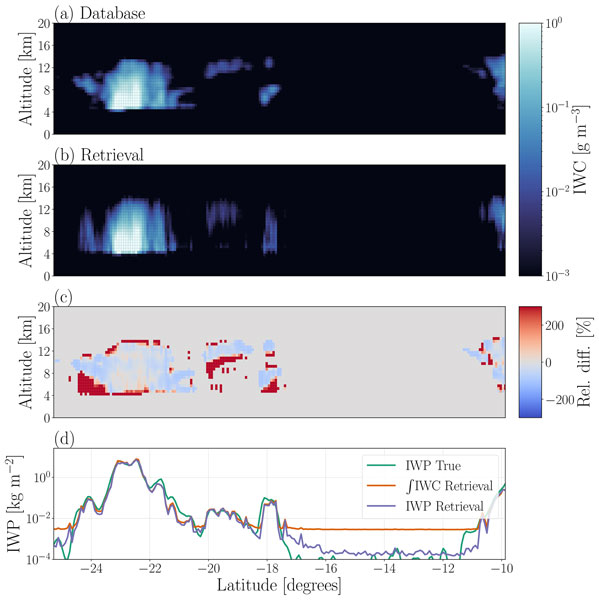
Clouds containing ice play an important role in Earth's climate, yet measuring them from space remains challenging. Using a new weather satellite, we developed a method to measure the amount of atmospheric ice across the globe. Computer simulations are used to train a neural network, making all assumptions explicit. It matches the accuracy of specialised radar instruments, but covers a much larger area. With upcoming satellites, observations can continue until 2045, for long-term monitoring.
Eleanor May and Patrick Eriksson
Atmos. Meas. Tech., 18, 7243–7266, https://doi.org/10.5194/amt-18-7243-2025, https://doi.org/10.5194/amt-18-7243-2025, 2025
Short summary
Short summary
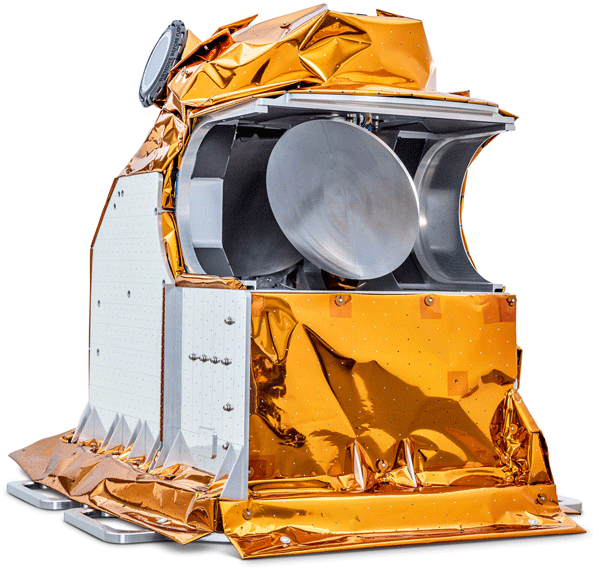
The vertical distribution of atmospheric ice impacts Earth's weather and climate. The Ice Cloud Imager (ICI) will measure at microwave and sub-millimetre frequencies, which are well suited to detect atmospheric ice. In this study, a machine learning model is trained on ICI simulations. Results show that the vertical distribution of ice can be derived from ICI observations, and that ICI could offer a valuable data source that complements existing radar- and lidar-based measurements.
Patrick Eriksson, Anders Emrich, Kalle Kempe, Johan Riesbeck, Alhassan Aljarosha, Olivier Auriacombe, Joakim Kugelberg, Enne Hekma, Roland Albers, Axel Murk, Søren Møller Pedersen, Laurenz John, Jan Stake, Peter McEvoy, Bengt Rydberg, Adam Dybbroe, Anke Thoss, Alessio Canestri, Christophe Accadia, Paolo Colucci, Daniele Gherardi, and Ville Kangas
Atmos. Meas. Tech., 18, 4709–4729, https://doi.org/10.5194/amt-18-4709-2025, https://doi.org/10.5194/amt-18-4709-2025, 2025
Short summary
Short summary
The Arctic Weather Satellite (AWS), developed by the European Space Agency, highlights a new approach in satellite design, aiming to expand the network of operational microwave sensors cost-effectively. Launched in August 2024, AWS features a 19-channel microwave cross-track radiometer. Notably, it introduces groundbreaking channels at 325.15 GHz. In addition, AWS acts as the stepping stone to a suggested constellation of satellites, denoted as EUMETSAT Polar System Sterna.
Eleanor May, Bengt Rydberg, Inderpreet Kaur, Vinia Mattioli, Hanna Hallborn, and Patrick Eriksson
Atmos. Meas. Tech., 17, 5957–5987, https://doi.org/10.5194/amt-17-5957-2024, https://doi.org/10.5194/amt-17-5957-2024, 2024
Short summary
Short summary
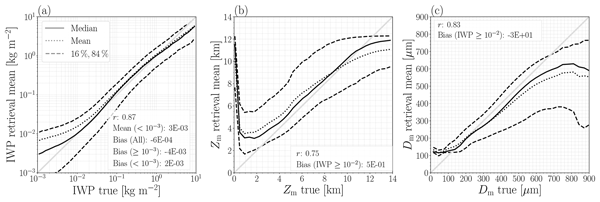
The upcoming Ice Cloud Imager (ICI) mission is set to improve measurements of atmospheric ice through passive microwave and sub-millimetre wave observations. In this study, we perform detailed simulations of ICI observations. Machine learning is used to characterise the atmospheric ice present for a given simulated observation. This study acts as a final pre-launch assessment of ICI's capability to measure atmospheric ice, providing valuable information to climate and weather applications.
Adrià Amell, Simon Pfreundschuh, and Patrick Eriksson
Atmos. Meas. Tech., 17, 4337–4368, https://doi.org/10.5194/amt-17-4337-2024, https://doi.org/10.5194/amt-17-4337-2024, 2024
Short summary
Short summary
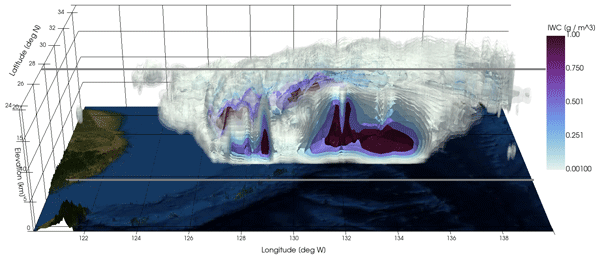
The representation of clouds in numerical weather and climate models remains a major challenge that is difficult to address because of the limitations of currently available data records of cloud properties. In this work, we address this issue by using machine learning to extract novel information on ice clouds from a long record of satellite observations. Through extensive validation, we show that this novel approach provides surprisingly accurate estimates of clouds and their properties.
Karina McCusker, Anthony J. Baran, Chris Westbrook, Stuart Fox, Patrick Eriksson, Richard Cotton, Julien Delanoë, and Florian Ewald
Atmos. Meas. Tech., 17, 3533–3552, https://doi.org/10.5194/amt-17-3533-2024, https://doi.org/10.5194/amt-17-3533-2024, 2024
Short summary
Short summary
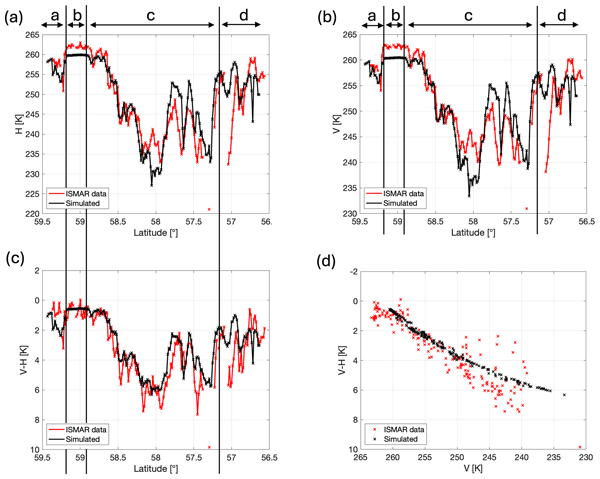
Polarised radiative transfer simulations are performed using an atmospheric model based on in situ measurements. These are compared to large polarisation measurements to explore whether such measurements can provide information on cloud ice, e.g. particle shape and orientation. We find that using oriented particle models with shapes based on imagery generally allows for accurate simulations. However, results are sensitive to shape assumptions such as the choice of single crystals or aggregates.
Simon Pfreundschuh, Clément Guilloteau, Paula J. Brown, Christian D. Kummerow, and Patrick Eriksson
Atmos. Meas. Tech., 17, 515–538, https://doi.org/10.5194/amt-17-515-2024, https://doi.org/10.5194/amt-17-515-2024, 2024
Short summary
Short summary
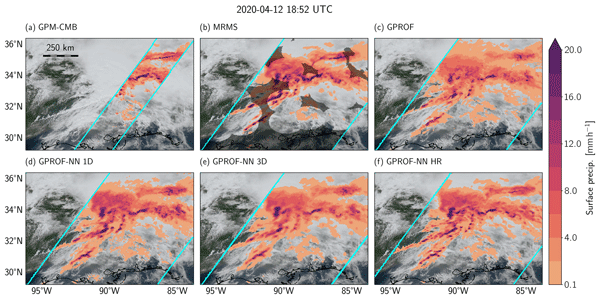
The latest version of the GPROF retrieval algorithm that produces global precipitation estimates using observations from the Global Precipitation Measurement mission is validated against ground-based radars. The validation shows that the algorithm accurately estimates precipitation on scales ranging from continental to regional. In addition, we validate candidates for the next version of the algorithm and identify principal challenges for further improving space-borne rain measurements.
Michael Kiefer, Dale F. Hurst, Gabriele P. Stiller, Stefan Lossow, Holger Vömel, John Anderson, Faiza Azam, Jean-Loup Bertaux, Laurent Blanot, Klaus Bramstedt, John P. Burrows, Robert Damadeo, Bianca Maria Dinelli, Patrick Eriksson, Maya García-Comas, John C. Gille, Mark Hervig, Yasuko Kasai, Farahnaz Khosrawi, Donal Murtagh, Gerald E. Nedoluha, Stefan Noël, Piera Raspollini, William G. Read, Karen H. Rosenlof, Alexei Rozanov, Christopher E. Sioris, Takafumi Sugita, Thomas von Clarmann, Kaley A. Walker, and Katja Weigel
Atmos. Meas. Tech., 16, 4589–4642, https://doi.org/10.5194/amt-16-4589-2023, https://doi.org/10.5194/amt-16-4589-2023, 2023
Short summary
Short summary
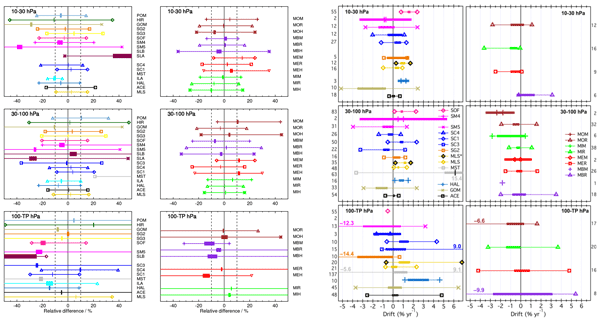
We quantify biases and drifts (and their uncertainties) between the stratospheric water vapor measurement records of 15 satellite-based instruments (SATs, with 31 different retrievals) and balloon-borne frost point hygrometers (FPs) launched at 27 globally distributed stations. These comparisons of measurements during the period 2000–2016 are made using robust, consistent statistical methods. With some exceptions, the biases and drifts determined for most SAT–FP pairs are < 10 % and < 1 % yr−1.
Simon Pfreundschuh, Ingrid Ingemarsson, Patrick Eriksson, Daniel A. Vila, and Alan J. P. Calheiros
Atmos. Meas. Tech., 15, 6907–6933, https://doi.org/10.5194/amt-15-6907-2022, https://doi.org/10.5194/amt-15-6907-2022, 2022
Short summary
Short summary
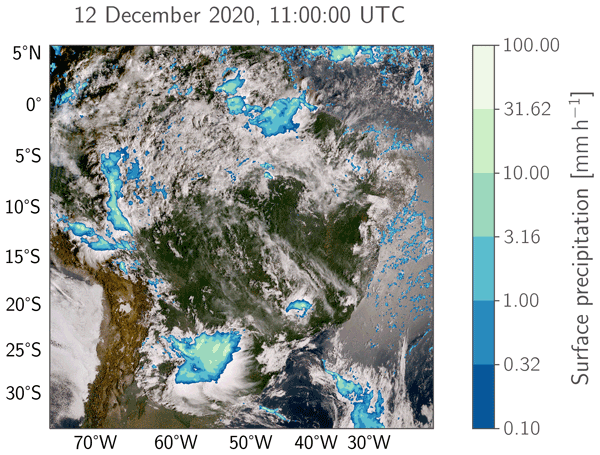
We used methods from the field of artificial intelligence to train an algorithm to estimate rain from satellite observations. In contrast to other methods, our algorithm not only estimates rain, but also the uncertainty of the estimate. Using independent measurements from rain gauges, we show that our method performs better than currently available methods and that the provided uncertainty estimates are reliable. Our method makes satellite-based measurements of rain more accurate and reliable.
Adrià Amell, Patrick Eriksson, and Simon Pfreundschuh
Atmos. Meas. Tech., 15, 5701–5717, https://doi.org/10.5194/amt-15-5701-2022, https://doi.org/10.5194/amt-15-5701-2022, 2022
Short summary
Short summary
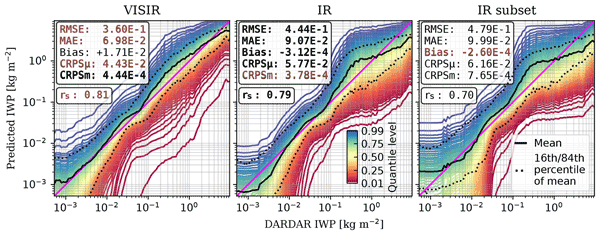
Geostationary satellites continuously image a given location on Earth, a feature that satellites designed to characterize atmospheric ice lack. However, the relationship between geostationary images and atmospheric ice is complex. Machine learning is used here to leverage such images to characterize atmospheric ice throughout the day in a probabilistic manner. Using structural information from the image improves the characterization, and this approach compares favourably to traditional methods.
Simon Pfreundschuh, Paula J. Brown, Christian D. Kummerow, Patrick Eriksson, and Teodor Norrestad
Atmos. Meas. Tech., 15, 5033–5060, https://doi.org/10.5194/amt-15-5033-2022, https://doi.org/10.5194/amt-15-5033-2022, 2022
Short summary
Short summary
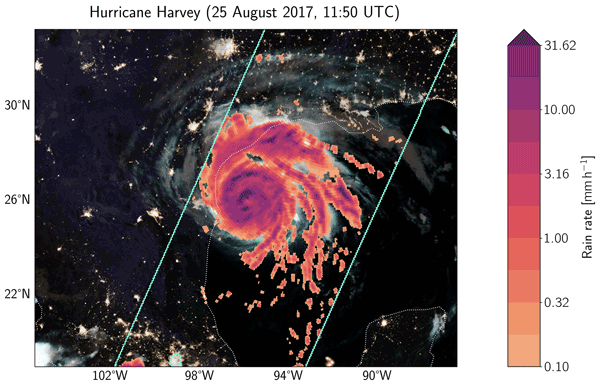
The Global Precipitation Measurement mission is an international satellite mission providing regular global rain measurements. We present two newly developed machine-learning-based implementations of one of the algorithms responsible for turning the satellite observations into rain measurements. We show that replacing the current algorithm with a neural network improves the accuracy of the measurements. A neural network that also makes use of spatial information unlocks further improvements.
William G. Read, Gabriele Stiller, Stefan Lossow, Michael Kiefer, Farahnaz Khosrawi, Dale Hurst, Holger Vömel, Karen Rosenlof, Bianca M. Dinelli, Piera Raspollini, Gerald E. Nedoluha, John C. Gille, Yasuko Kasai, Patrick Eriksson, Christopher E. Sioris, Kaley A. Walker, Katja Weigel, John P. Burrows, and Alexei Rozanov
Atmos. Meas. Tech., 15, 3377–3400, https://doi.org/10.5194/amt-15-3377-2022, https://doi.org/10.5194/amt-15-3377-2022, 2022
Short summary
Short summary
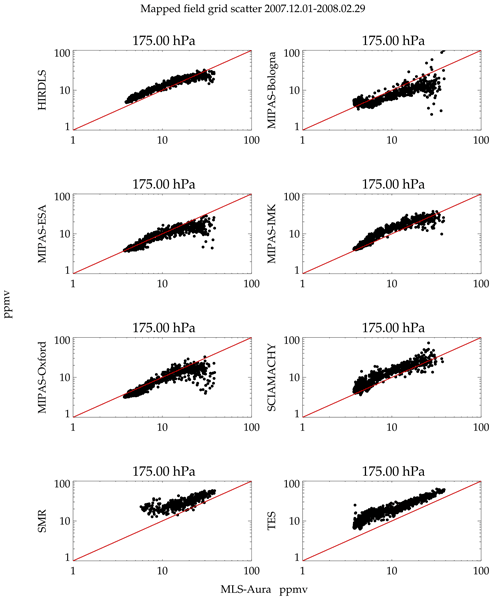
This paper attempts to provide an assessment of the accuracy of 21 satellite-based instruments that remotely measure atmospheric humidity in the upper troposphere of the Earth's atmosphere. The instruments made their measurements from 1984 to the present time; however, most of these instruments began operations after 2000, and only a few are still operational. The objective of this study is to quantify the accuracy of each satellite humidity data set.
Simon Pfreundschuh, Stuart Fox, Patrick Eriksson, David Duncan, Stefan A. Buehler, Manfred Brath, Richard Cotton, and Florian Ewald
Atmos. Meas. Tech., 15, 677–699, https://doi.org/10.5194/amt-15-677-2022, https://doi.org/10.5194/amt-15-677-2022, 2022
Short summary
Short summary
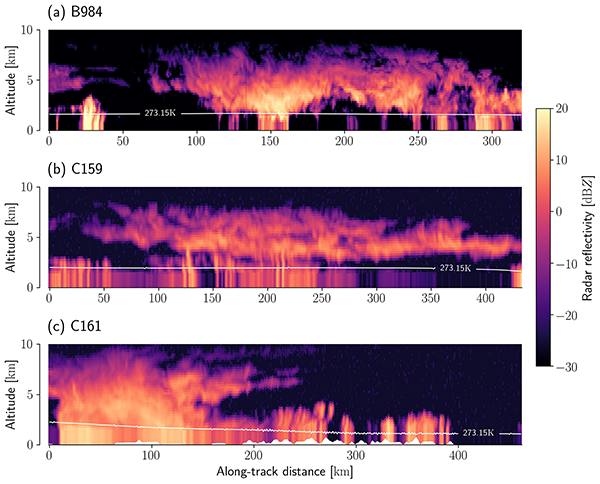
We test a novel method to remotely measure ice particles in clouds. This is important because such measurements are required to improve climate and weather models. The method combines a radar with newly developed sensors measuring microwave radiation at very short wavelengths. We use observations made from aircraft flying above the cloud and compare them to real measurements from inside the cloud. This works well given that one can model the ice particles in the cloud sufficiently well.
Alan J. Geer, Peter Bauer, Katrin Lonitz, Vasileios Barlakas, Patrick Eriksson, Jana Mendrok, Amy Doherty, James Hocking, and Philippe Chambon
Geosci. Model Dev., 14, 7497–7526, https://doi.org/10.5194/gmd-14-7497-2021, https://doi.org/10.5194/gmd-14-7497-2021, 2021
Short summary
Short summary
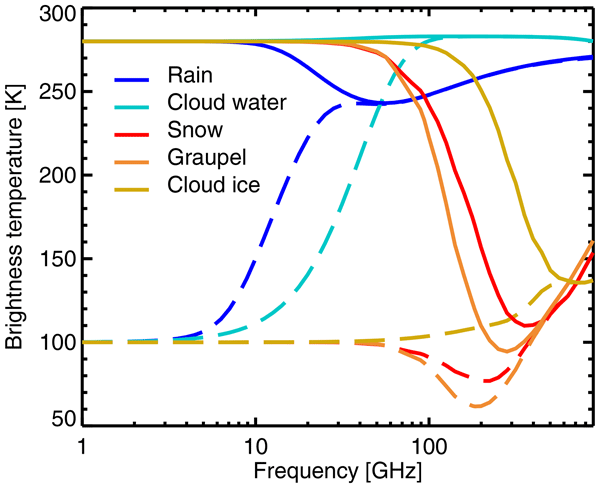
Satellite observations of radiation from the earth can have strong sensitivity to cloud and precipitation in the atmosphere, with applications in weather forecasting and the development of models. Computing the radiation received at the satellite sensor using radiative transfer theory requires a simulation of the optical properties of a volume containing a large number of cloud and precipitation particles. This article describes the physics used to generate these
bulkoptical properties.
Jie Gong, Dong L. Wu, and Patrick Eriksson
Earth Syst. Sci. Data, 13, 5369–5387, https://doi.org/10.5194/essd-13-5369-2021, https://doi.org/10.5194/essd-13-5369-2021, 2021
Short summary
Short summary
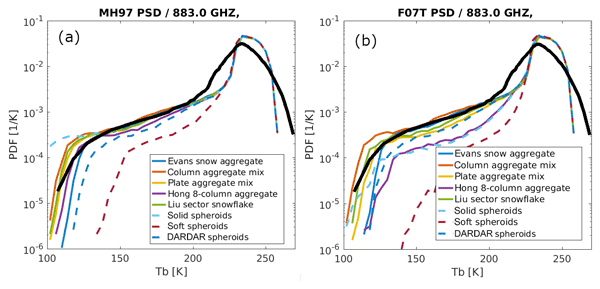
Launched from the International Space Station, the IceCube radiometer orbited the Earth for 15 months and collected the first spaceborne radiance measurements at 874–883 GHz. This channel is uniquely important to fill in the sensitivity gap between operational visible–infrared and microwave remote sensing for atmospheric cloud ice and snow. This paper delivers the IceCube Level 1 radiance data processing algorithm and provides a data quality evaluation and discussion on its scientific merit.
Ákos Horváth, David Adams, Jorge Díaz, Sam Rigby, Stefan Buehler, and Mirjana Sakradzija
EGUsphere, https://doi.org/10.5194/egusphere-2026-3997, https://doi.org/10.5194/egusphere-2026-3997, 2026
This preprint is open for discussion and under review for Atmospheric Chemistry and Physics (ACP).
Short summary
Short summary
The 2022 Hunga eruption generated a fast-moving pressure wave that warmed and cooled the air as it rippled through Earth’s atmosphere. Using video footage and satellite imagery, we show that these temperature variations periodically darkened and brightened liquid clouds as they shrank and expanded due to evaporation and condensation. Cloud brightness variations caused by the Hunga pressure wave remained globally detectable in satellite imagery for approximately six days after the eruption.
Lara Leko, Gunnar Behrens, Nils Müller, Adrià Amell, Axel Lauer, and Patrick Eriksson
EGUsphere, https://doi.org/10.5194/egusphere-2026-3869, https://doi.org/10.5194/egusphere-2026-3869, 2026
This preprint is open for discussion and under review for Atmospheric Chemistry and Physics (ACP).
Short summary
Short summary
We look at daily cycles of tropical ice clouds and their representation in models. New satellite data of ice clouds captures daily cycles over land and oceans, which was not possible yet. These are often shifted in time in reanalysis, and biased depending on the variable. High-resolution models show improvements but still have regional biases. We show that combining different satellite observations helps to understand daily cycles and improve the simulation of tropical ice clouds and rainfall.
Paulina Czarnecki and Manfred Brath
EGUsphere, https://doi.org/10.5194/egusphere-2026-2096, https://doi.org/10.5194/egusphere-2026-2096, 2026
This preprint is open for discussion and under review for Geoscientific Model Development (GMD).
Short summary
Short summary
Quantifying the way radiation flows through the atmosphere is computationally expensive, and most applications require fast approximation. Here, we further develop and test an alternative scheme, data-driven quadrature, which calculates radiative flux as a weighted sum at a small number of spectral points. In addition to thorough validation, we make available the spectral points and weights described as well as a code that can be used to generate new points and weights.
Hao Ding, Almuth Neuberger, Rahul Ranjan, Fredrik Mattsson, Liine Heikkinen, Karam Mansour, Stefano Decesari, Claudia Mohr, Alejandro Baró Pérez, Nazario Mastroianni, Paul Zieger, Ilona Riipinen, and Annica M. L. Ekman
Atmos. Chem. Phys., 26, 9721–9739, https://doi.org/10.5194/acp-26-9721-2026, https://doi.org/10.5194/acp-26-9721-2026, 2026
Short summary
Short summary
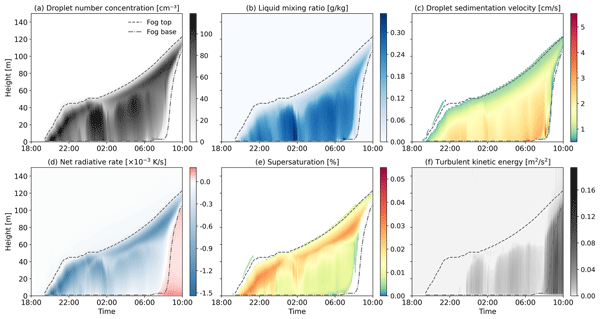
Fog poses numerous risks to society, yet it remains challenging to forecast. We use detailed numerical simulations based on fog observations in the Po Valley, Italy, to demonstrate that high concentrations of aerosol particles, as in polluted air, lead to an increase in droplet number, prolonged fog duration, and reduced visibility. The simulations also show the importance of accurately representing haze particles and the shape of the droplet size distribution for improved fog prediction.
Peter McEvoy, Eleanor May, and Patrick Eriksson
EGUsphere, https://doi.org/10.5194/egusphere-2026-2456, https://doi.org/10.5194/egusphere-2026-2456, 2026
Short summary
Short summary
Clouds containing ice play an important role in Earth's climate, yet measuring them from space remains challenging. Using a new weather satellite, we developed a method to measure the amount of atmospheric ice across the globe. Computer simulations are used to train a neural network, making all assumptions explicit. It matches the accuracy of specialised radar instruments, but covers a much larger area. With upcoming satellites, observations can continue until 2045, for long-term monitoring.
Hannah C. Frostenberg, Jessie M. Creamean, Erik S. Thomson, Heather Guy, Roman Pohorsky, Camille Mavis, Ian M. Brooks, Nicolas Fauré, Lea Haberstock, Julia Kojoj, Sonja Murto, Julia Schmale, Michael Tjernström, Paul Zieger, and Luisa Ickes
EGUsphere, https://doi.org/10.5194/egusphere-2026-2403, https://doi.org/10.5194/egusphere-2026-2403, 2026
Short summary
Short summary
Arctic low clouds containing both droplets and ice crystals strongly impact sea ice and therefore require accurate modeling. Using a high-resolution atmospheric model, we found that particle and ice concentrations, alongside ice crystal shape, strongly dictate the simulated cloud. Therefore, these specific properties should be prioritized during future Arctic observational campaigns. Furthermore, atmospheric models must be able to represent a variety of ice crystal shapes.
Timothy W. Juliano, Florian Tornow, Ann M. Fridlind, Andrew S. Ackerman, Gregory S. Elsaesser, Bart Geerts, Christian P. Lackner, David Painemal, Israel Silber, Mikhail Ovchinnikov, Gunilla Svensson, Michael Tjernström, Peng Wu, Alejandro Baró Pérez, Peter Bogenschutz, Dmitry Chechin, Kamal Kant Chandrakar, Jan Chylik, Andrey Debolskiy, Rostislav Fadeev, Anu Gupta, Luisa Ickes, Michail Karalis, Martin Köhler, Branko Kosovic, Peter Kuma, Weiwei Li, Evgeny Mortikov, Hugh Morrison, Roel A. J. Neggers, Anna Possner, Tomi Raatikainen, Lea Raillard, Sami Romakkaniemi, Niklas Schnierstein, Shin-ichiro Shima, Nikita Silin, Mikhail Tolstykh, Étienne Vignon, Lulin Xue, Meng Zhang, and Xue Zheng
EGUsphere, https://doi.org/10.5194/egusphere-2026-1237, https://doi.org/10.5194/egusphere-2026-1237, 2026
Short summary
Short summary
Models struggle to capture cloud and precipitation processes and their radiative effects in marine cold-air outbreaks. We use a quasi-Lagrangian framework to compare large-eddy simulation (LES) and single-column model (SCM) output with field and satellite observations. With fixed droplet and ice numbers, LES and SCM agree in liquid-only tests. In mixed-phase conditions, LES plausibly capture cloud thinning and breakup, while SCMs largely remain overcast and thereby miss cloud radiative effects.
Gabriella Wallentin, Luisa Ickes, Peggy Achtert, Matthias Tesche, and Corinna Hoose
Atmos. Chem. Phys., 26, 3069–3089, https://doi.org/10.5194/acp-26-3069-2026, https://doi.org/10.5194/acp-26-3069-2026, 2026
Short summary
Short summary
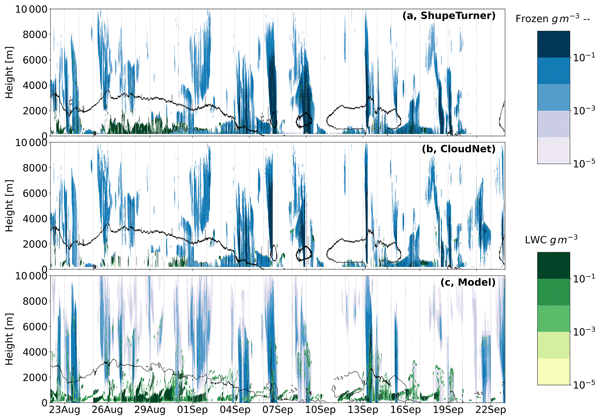
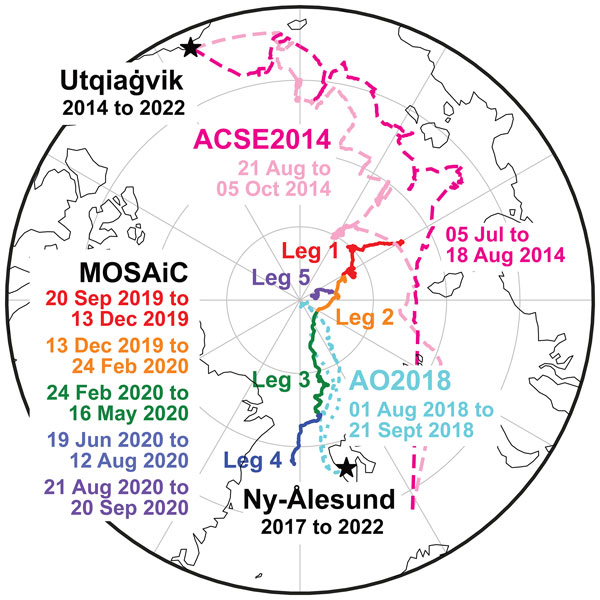
Multilayer clouds are cloud systems with two or more vertically stacked cloud layers. Using a weather prediction model, we simulate clouds in the Arctic during a month. The model is evaluated against observations collected during the ship campaign MOSAiC (Multidisciplinary Drifting Observatory for the Study of Arctic Climate). We find that multilayer clouds frequently occur in the region, in fact, they dominate the cloud occurrence. The study highlights the importance of representing these clouds in simulations over the Arctic.
Peggy Achtert, Torsten Seelig, Gabriella Wallentin, Luisa Ickes, Matthew D. Shupe, Corinna Hoose, and Matthias Tesche
Atmos. Chem. Phys., 26, 3049–3068, https://doi.org/10.5194/acp-26-3049-2026, https://doi.org/10.5194/acp-26-3049-2026, 2026
Short summary
Short summary
We quantify the occurrence of single- and multi-layer clouds in the Arctic based on combining soundings with cloud-radar observations. We also assess the rate of ice-crystal seeding in multi-layer cloud systems as this is an important initiator of glaciation in super-cooled liquid cloud layers. We find an abundance of multi-layer clouds in the Arctic with seeding in about half to two thirds of cases in which the gap between upper and lower layers ranges between 100 and 1000 m.
Timothy W. Juliano, Florian Tornow, Ann M. Fridlind, Andrew S. Ackerman, Gregory S. Elsaesser, Bart Geerts, Christian P. Lackner, David Painemal, Israel Silber, Mikhail Ovchinnikov, Gunilla Svensson, Michael Tjernström, Peng Wu, Alejandro Baró Pérez, Peter Bogenschutz, Dmitry Chechin, Kamal Kant Chandrakar, Jan Chylik, Andrey Debolskiy, Rostislav Fadeev, Anu Gupta, Luisa Ickes, Michail Karalis, Martin Köhler, Branko Kosović, Peter Kuma, Weiwei Li, Evgeny Mortikov, Hugh Morrison, Roel A. J. Neggers, Anna Possner, Tomi Raatikainen, Sami Romakkaniemi, Niklas Schnierstein, Shin-ichiro Shima, Nikita Silin, Mikhail Tolstykh, Lulin Xue, Meng Zhang, and Xue Zheng
EGUsphere, https://doi.org/10.5194/egusphere-2025-6217, https://doi.org/10.5194/egusphere-2025-6217, 2026
Preprint archived
Short summary
Short summary
Models struggle to capture cloud and precipitation processes and their radiative effects in marine cold-air outbreaks. We use a quasi-Lagrangian framework to compare large-eddy simulation (LES) and single-column model (SCM) output with field and satellite observations. With fixed droplet and ice numbers, LES and SCM agree in liquid-only tests. In mixed-phase conditions, LES plausibly capture cloud thinning and breakup, while SCMs largely remain overcast and thereby miss cloud radiative effects.
Eleanor May and Patrick Eriksson
Atmos. Meas. Tech., 18, 7243–7266, https://doi.org/10.5194/amt-18-7243-2025, https://doi.org/10.5194/amt-18-7243-2025, 2025
Short summary
Short summary
The vertical distribution of atmospheric ice impacts Earth's weather and climate. The Ice Cloud Imager (ICI) will measure at microwave and sub-millimetre frequencies, which are well suited to detect atmospheric ice. In this study, a machine learning model is trained on ICI simulations. Results show that the vertical distribution of ice can be derived from ICI observations, and that ICI could offer a valuable data source that complements existing radar- and lidar-based measurements.
Kaah P. Menang, Stefan A. Buehler, Lukas Kluft, Robin J. Hogan, and Florian E. Roemer
Atmos. Chem. Phys., 25, 11689–11701, https://doi.org/10.5194/acp-25-11689-2025, https://doi.org/10.5194/acp-25-11689-2025, 2025
Short summary
Short summary
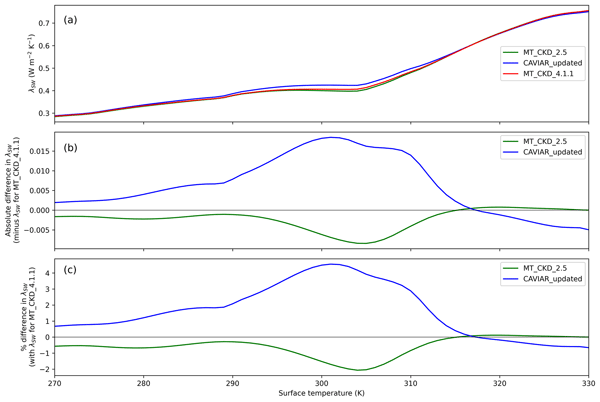
We investigated the impact of the shortwave water vapour continuum absorption on clear-sky shortwave radiative feedback. For current temperatures, the impact is modest (<2%). In a warmer world, continuum-induced uncertainty in estimated feedback would be up to ~5%. Representing continuum absorption with the widely used semi-empirical model in radiative transfer calculations leads to an underestimation of this feedback. Constraining the shortwave continuum will help reduce these discrepancies.
Patrick Eriksson, Anders Emrich, Kalle Kempe, Johan Riesbeck, Alhassan Aljarosha, Olivier Auriacombe, Joakim Kugelberg, Enne Hekma, Roland Albers, Axel Murk, Søren Møller Pedersen, Laurenz John, Jan Stake, Peter McEvoy, Bengt Rydberg, Adam Dybbroe, Anke Thoss, Alessio Canestri, Christophe Accadia, Paolo Colucci, Daniele Gherardi, and Ville Kangas
Atmos. Meas. Tech., 18, 4709–4729, https://doi.org/10.5194/amt-18-4709-2025, https://doi.org/10.5194/amt-18-4709-2025, 2025
Short summary
Short summary
The Arctic Weather Satellite (AWS), developed by the European Space Agency, highlights a new approach in satellite design, aiming to expand the network of operational microwave sensors cost-effectively. Launched in August 2024, AWS features a 19-channel microwave cross-track radiometer. Notably, it introduces groundbreaking channels at 325.15 GHz. In addition, AWS acts as the stepping stone to a suggested constellation of satellites, denoted as EUMETSAT Polar System Sterna.
Lukas Kluft, Bjorn Stevens, Manfred Brath, and Stefan A. Buehler
Atmos. Chem. Phys., 25, 9075–9084, https://doi.org/10.5194/acp-25-9075-2025, https://doi.org/10.5194/acp-25-9075-2025, 2025
Short summary
Short summary
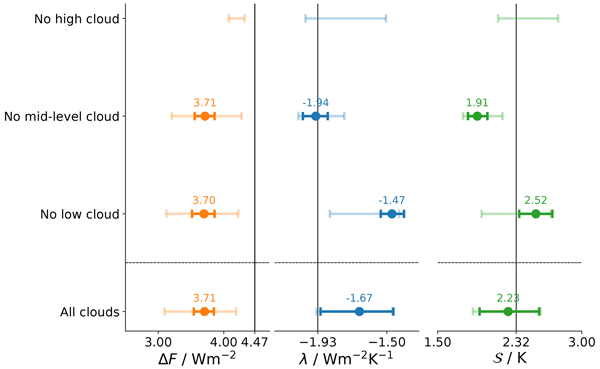
Using a single-column model, we investigate the effect of the vertical distribution of clouds on climate sensitivity. We show that, depending on their height, clouds can mask or unmask the radiative response of the clear-sky atmosphere. Our single-column model yields an all-sky climate sensitivity of 2.2 K, slightly less than the clear-sky value. This value can be interpreted as a baseline to which changes in surface albedo and an assumed reduction in cloud albedo would add.
Gabriella Wallentin, Annika Oertel, Luisa Ickes, Peggy Achtert, Matthias Tesche, and Corinna Hoose
Atmos. Chem. Phys., 25, 6607–6631, https://doi.org/10.5194/acp-25-6607-2025, https://doi.org/10.5194/acp-25-6607-2025, 2025
Short summary
Short summary
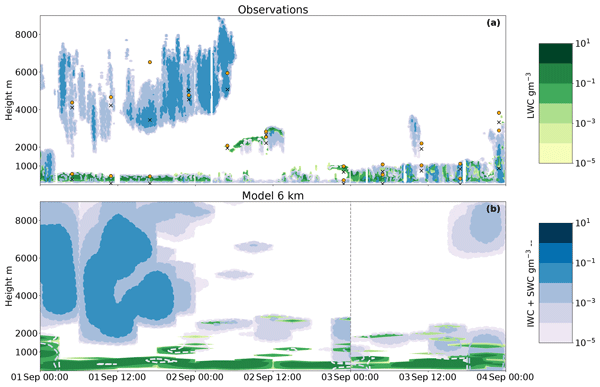
Multilayer clouds are common in the Arctic but remain underrepresented. We use an atmospheric model to simulate multilayer cloud cases from the Arctic expedition MOSAiC 2019/2020. We find that it is complex to accurately model these cloud layers due to the lack of correct temperature profiles. The model also struggles to capture the observed cloud phase and the relative concentration of cloud droplets and cloud ice. We constrain our model to measured aerosols to mitigate this issue.
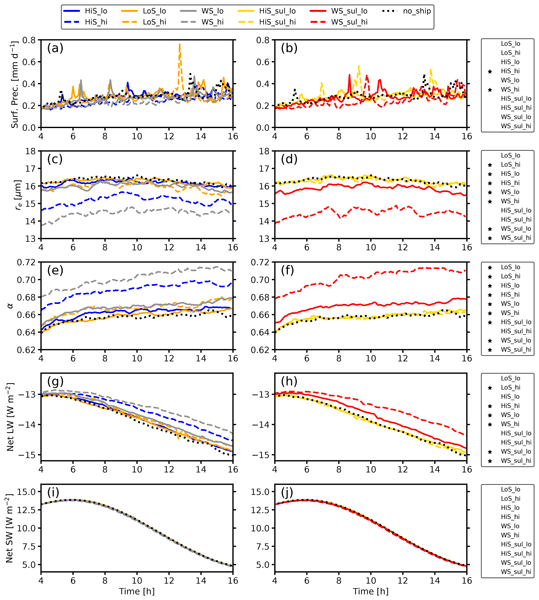
Luís Filipe Escusa dos Santos, Hannah C. Frostenberg, Alejandro Baró Pérez, Annica M. L. Ekman, Luisa Ickes, and Erik S. Thomson
Atmos. Chem. Phys., 25, 119–142, https://doi.org/10.5194/acp-25-119-2025, https://doi.org/10.5194/acp-25-119-2025, 2025
Short summary
Short summary
The Arctic is experiencing enhanced surface warming. The observed decline in Arctic sea-ice extent is projected to lead to an increase in Arctic shipping activity, which may lead to further climatic feedbacks. Using an atmospheric model and results from marine engine experiments that focused on fuel sulfur content reduction and exhaust wet scrubbing, we investigate how ship exhaust particles influence the properties of Arctic clouds. Implications for radiative surface processes are discussed.
Eleanor May, Bengt Rydberg, Inderpreet Kaur, Vinia Mattioli, Hanna Hallborn, and Patrick Eriksson
Atmos. Meas. Tech., 17, 5957–5987, https://doi.org/10.5194/amt-17-5957-2024, https://doi.org/10.5194/amt-17-5957-2024, 2024
Short summary
Short summary
The upcoming Ice Cloud Imager (ICI) mission is set to improve measurements of atmospheric ice through passive microwave and sub-millimetre wave observations. In this study, we perform detailed simulations of ICI observations. Machine learning is used to characterise the atmospheric ice present for a given simulated observation. This study acts as a final pre-launch assessment of ICI's capability to measure atmospheric ice, providing valuable information to climate and weather applications.
Adrià Amell, Simon Pfreundschuh, and Patrick Eriksson
Atmos. Meas. Tech., 17, 4337–4368, https://doi.org/10.5194/amt-17-4337-2024, https://doi.org/10.5194/amt-17-4337-2024, 2024
Short summary
Short summary
The representation of clouds in numerical weather and climate models remains a major challenge that is difficult to address because of the limitations of currently available data records of cloud properties. In this work, we address this issue by using machine learning to extract novel information on ice clouds from a long record of satellite observations. Through extensive validation, we show that this novel approach provides surprisingly accurate estimates of clouds and their properties.
Karina McCusker, Anthony J. Baran, Chris Westbrook, Stuart Fox, Patrick Eriksson, Richard Cotton, Julien Delanoë, and Florian Ewald
Atmos. Meas. Tech., 17, 3533–3552, https://doi.org/10.5194/amt-17-3533-2024, https://doi.org/10.5194/amt-17-3533-2024, 2024
Short summary
Short summary
Polarised radiative transfer simulations are performed using an atmospheric model based on in situ measurements. These are compared to large polarisation measurements to explore whether such measurements can provide information on cloud ice, e.g. particle shape and orientation. We find that using oriented particle models with shapes based on imagery generally allows for accurate simulations. However, results are sensitive to shape assumptions such as the choice of single crystals or aggregates.
Simon Pfreundschuh, Clément Guilloteau, Paula J. Brown, Christian D. Kummerow, and Patrick Eriksson
Atmos. Meas. Tech., 17, 515–538, https://doi.org/10.5194/amt-17-515-2024, https://doi.org/10.5194/amt-17-515-2024, 2024
Short summary
Short summary
The latest version of the GPROF retrieval algorithm that produces global precipitation estimates using observations from the Global Precipitation Measurement mission is validated against ground-based radars. The validation shows that the algorithm accurately estimates precipitation on scales ranging from continental to regional. In addition, we validate candidates for the next version of the algorithm and identify principal challenges for further improving space-borne rain measurements.
Michael Kiefer, Dale F. Hurst, Gabriele P. Stiller, Stefan Lossow, Holger Vömel, John Anderson, Faiza Azam, Jean-Loup Bertaux, Laurent Blanot, Klaus Bramstedt, John P. Burrows, Robert Damadeo, Bianca Maria Dinelli, Patrick Eriksson, Maya García-Comas, John C. Gille, Mark Hervig, Yasuko Kasai, Farahnaz Khosrawi, Donal Murtagh, Gerald E. Nedoluha, Stefan Noël, Piera Raspollini, William G. Read, Karen H. Rosenlof, Alexei Rozanov, Christopher E. Sioris, Takafumi Sugita, Thomas von Clarmann, Kaley A. Walker, and Katja Weigel
Atmos. Meas. Tech., 16, 4589–4642, https://doi.org/10.5194/amt-16-4589-2023, https://doi.org/10.5194/amt-16-4589-2023, 2023
Short summary
Short summary
We quantify biases and drifts (and their uncertainties) between the stratospheric water vapor measurement records of 15 satellite-based instruments (SATs, with 31 different retrievals) and balloon-borne frost point hygrometers (FPs) launched at 27 globally distributed stations. These comparisons of measurements during the period 2000–2016 are made using robust, consistent statistical methods. With some exceptions, the biases and drifts determined for most SAT–FP pairs are < 10 % and < 1 % yr−1.
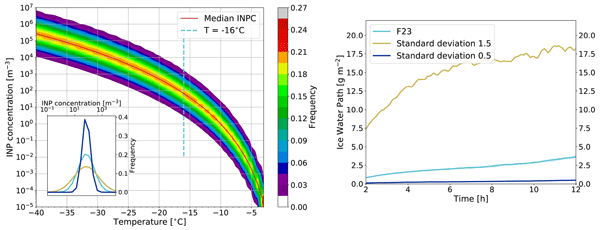
Hannah C. Frostenberg, André Welti, Mikael Luhr, Julien Savre, Erik S. Thomson, and Luisa Ickes
Atmos. Chem. Phys., 23, 10883–10900, https://doi.org/10.5194/acp-23-10883-2023, https://doi.org/10.5194/acp-23-10883-2023, 2023
Short summary
Short summary
Observations show that ice-nucleating particle concentrations (INPCs) have a large variety and follow lognormal distributions for a given temperature. We introduce a new immersion freezing parameterization that applies this lognormal behavior. INPCs are drawn randomly from a temperature-dependent lognormal distribution. We then show that the ice content of the modeled Arctic stratocumulus cloud is highly sensitive to the probability of drawing large INPCs.
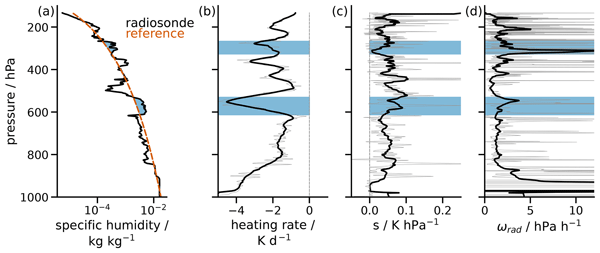
Marc Prange, Stefan A. Buehler, and Manfred Brath
Atmos. Chem. Phys., 23, 725–741, https://doi.org/10.5194/acp-23-725-2023, https://doi.org/10.5194/acp-23-725-2023, 2023
Short summary
Short summary
We investigate the representation of elevated moist layers (EMLs) in two satellite retrieval products and ERA5 reanalysis. EMLs occur in the vicinity of tropical convective storms and are thought to have an impact on their evolution through radiative heating. We provide a first dedicated assessment of EMLs in long-term data products in terms of moist layer strength, vertical thickness and altitude by comparing to collocated radiosondes over the western Pacific, a region where EMLs often occur.
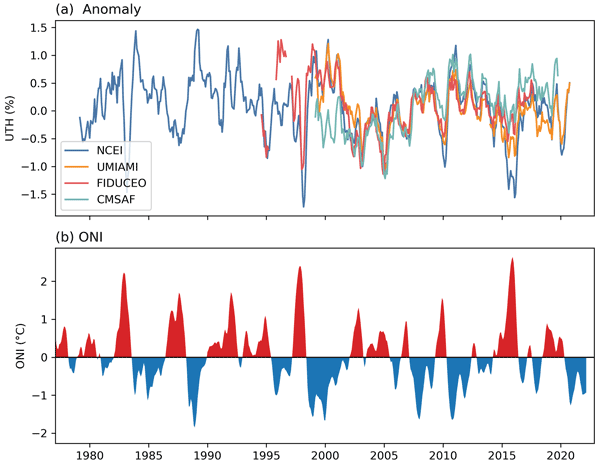
Lei Shi, Carl J. Schreck III, Viju O. John, Eui-Seok Chung, Theresa Lang, Stefan A. Buehler, and Brian J. Soden
Atmos. Meas. Tech., 15, 6949–6963, https://doi.org/10.5194/amt-15-6949-2022, https://doi.org/10.5194/amt-15-6949-2022, 2022
Short summary
Short summary
Four upper tropospheric humidity (UTH) datasets derived from satellite microwave and infrared sounders are evaluated to assess their consistency as part of the activities for the Global Energy and Water Exchanges (GEWEX) water vapor assessment project. The study shows that the four datasets are consistent in the interannual temporal and spatial variability of the tropics. However, differences are found in the magnitudes of the anomalies and in the changing rates during the common period.
Simon Pfreundschuh, Ingrid Ingemarsson, Patrick Eriksson, Daniel A. Vila, and Alan J. P. Calheiros
Atmos. Meas. Tech., 15, 6907–6933, https://doi.org/10.5194/amt-15-6907-2022, https://doi.org/10.5194/amt-15-6907-2022, 2022
Short summary
Short summary
We used methods from the field of artificial intelligence to train an algorithm to estimate rain from satellite observations. In contrast to other methods, our algorithm not only estimates rain, but also the uncertainty of the estimate. Using independent measurements from rain gauges, we show that our method performs better than currently available methods and that the provided uncertainty estimates are reliable. Our method makes satellite-based measurements of rain more accurate and reliable.
Adrià Amell, Patrick Eriksson, and Simon Pfreundschuh
Atmos. Meas. Tech., 15, 5701–5717, https://doi.org/10.5194/amt-15-5701-2022, https://doi.org/10.5194/amt-15-5701-2022, 2022
Short summary
Short summary
Geostationary satellites continuously image a given location on Earth, a feature that satellites designed to characterize atmospheric ice lack. However, the relationship between geostationary images and atmospheric ice is complex. Machine learning is used here to leverage such images to characterize atmospheric ice throughout the day in a probabilistic manner. Using structural information from the image improves the characterization, and this approach compares favourably to traditional methods.
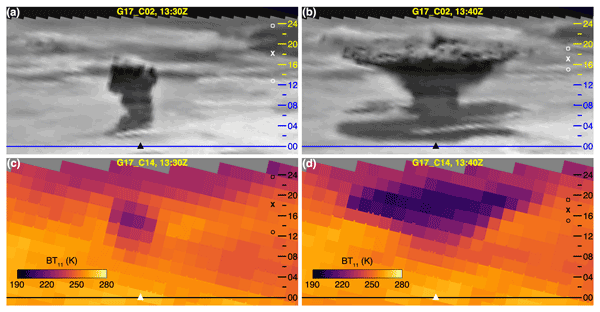
Ákos Horváth, James L. Carr, Dong L. Wu, Julia Bruckert, Gholam Ali Hoshyaripour, and Stefan A. Buehler
Atmos. Chem. Phys., 22, 12311–12330, https://doi.org/10.5194/acp-22-12311-2022, https://doi.org/10.5194/acp-22-12311-2022, 2022
Short summary
Short summary
We estimate plume heights for the April 2021 La Soufrière daytime eruptions using GOES-17 near-limb side views and GOES-16–MODIS stereo views. These geometric heights are then compared with brightness-temperature-based radiometric height estimates to characterize the biases of the latter. We also show that the side view method can be applied to infrared imagery and thus nighttime eruptions, albeit with larger uncertainty.
Simon Pfreundschuh, Paula J. Brown, Christian D. Kummerow, Patrick Eriksson, and Teodor Norrestad
Atmos. Meas. Tech., 15, 5033–5060, https://doi.org/10.5194/amt-15-5033-2022, https://doi.org/10.5194/amt-15-5033-2022, 2022
Short summary
Short summary
The Global Precipitation Measurement mission is an international satellite mission providing regular global rain measurements. We present two newly developed machine-learning-based implementations of one of the algorithms responsible for turning the satellite observations into rain measurements. We show that replacing the current algorithm with a neural network improves the accuracy of the measurements. A neural network that also makes use of spatial information unlocks further improvements.
William G. Read, Gabriele Stiller, Stefan Lossow, Michael Kiefer, Farahnaz Khosrawi, Dale Hurst, Holger Vömel, Karen Rosenlof, Bianca M. Dinelli, Piera Raspollini, Gerald E. Nedoluha, John C. Gille, Yasuko Kasai, Patrick Eriksson, Christopher E. Sioris, Kaley A. Walker, Katja Weigel, John P. Burrows, and Alexei Rozanov
Atmos. Meas. Tech., 15, 3377–3400, https://doi.org/10.5194/amt-15-3377-2022, https://doi.org/10.5194/amt-15-3377-2022, 2022
Short summary
Short summary
This paper attempts to provide an assessment of the accuracy of 21 satellite-based instruments that remotely measure atmospheric humidity in the upper troposphere of the Earth's atmosphere. The instruments made their measurements from 1984 to the present time; however, most of these instruments began operations after 2000, and only a few are still operational. The objective of this study is to quantify the accuracy of each satellite humidity data set.
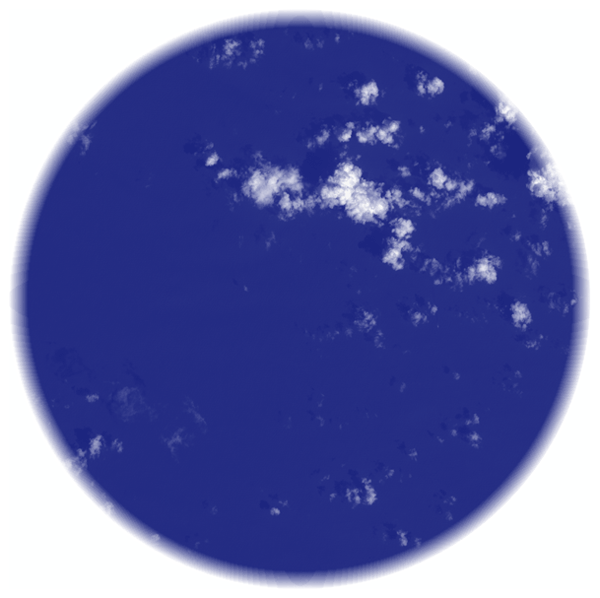
Theresa Mieslinger, Bjorn Stevens, Tobias Kölling, Manfred Brath, Martin Wirth, and Stefan A. Buehler
Atmos. Chem. Phys., 22, 6879–6898, https://doi.org/10.5194/acp-22-6879-2022, https://doi.org/10.5194/acp-22-6879-2022, 2022
Short summary
Short summary
The trades are home to a plethora of small cumulus clouds that are often barely visible to the human eye and difficult to detect with active and passive remote sensing methods. With the help of a new method and by means of high-resolution data we can detect small and particularly thin clouds. We find that optically thin clouds are a common phenomenon in the trades, covering a large area and influencing the radiative effect of clouds if they are undetected and contaminate the cloud-free signal.
Simon Pfreundschuh, Stuart Fox, Patrick Eriksson, David Duncan, Stefan A. Buehler, Manfred Brath, Richard Cotton, and Florian Ewald
Atmos. Meas. Tech., 15, 677–699, https://doi.org/10.5194/amt-15-677-2022, https://doi.org/10.5194/amt-15-677-2022, 2022
Short summary
Short summary
We test a novel method to remotely measure ice particles in clouds. This is important because such measurements are required to improve climate and weather models. The method combines a radar with newly developed sensors measuring microwave radiation at very short wavelengths. We use observations made from aircraft flying above the cloud and compare them to real measurements from inside the cloud. This works well given that one can model the ice particles in the cloud sufficiently well.
Alan J. Geer, Peter Bauer, Katrin Lonitz, Vasileios Barlakas, Patrick Eriksson, Jana Mendrok, Amy Doherty, James Hocking, and Philippe Chambon
Geosci. Model Dev., 14, 7497–7526, https://doi.org/10.5194/gmd-14-7497-2021, https://doi.org/10.5194/gmd-14-7497-2021, 2021
Short summary
Short summary
Satellite observations of radiation from the earth can have strong sensitivity to cloud and precipitation in the atmosphere, with applications in weather forecasting and the development of models. Computing the radiation received at the satellite sensor using radiative transfer theory requires a simulation of the optical properties of a volume containing a large number of cloud and precipitation particles. This article describes the physics used to generate these
bulkoptical properties.
Jie Gong, Dong L. Wu, and Patrick Eriksson
Earth Syst. Sci. Data, 13, 5369–5387, https://doi.org/10.5194/essd-13-5369-2021, https://doi.org/10.5194/essd-13-5369-2021, 2021
Short summary
Short summary
Launched from the International Space Station, the IceCube radiometer orbited the Earth for 15 months and collected the first spaceborne radiance measurements at 874–883 GHz. This channel is uniquely important to fill in the sensitivity gap between operational visible–infrared and microwave remote sensing for atmospheric cloud ice and snow. This paper delivers the IceCube Level 1 radiance data processing algorithm and provides a data quality evaluation and discussion on its scientific merit.
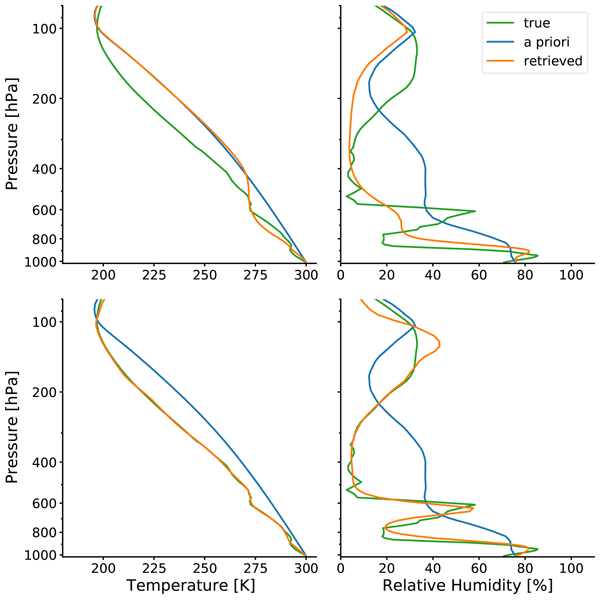
Marc Prange, Manfred Brath, and Stefan A. Buehler
Atmos. Meas. Tech., 14, 7025–7044, https://doi.org/10.5194/amt-14-7025-2021, https://doi.org/10.5194/amt-14-7025-2021, 2021
Short summary
Short summary
We investigate the ability of the hyperspectral infrared satellite instrument IASI to resolve moist layers in the tropical free troposphere in a model framework. Previous observational results indicated major deficiencies of passive satellite instruments in resolving moist layers around the freezing level. We conduct a first systematic hyperspectral infrared retrieval analysis of such moist layers and conclude that no inherent satellite blind spot for moist layers exists.
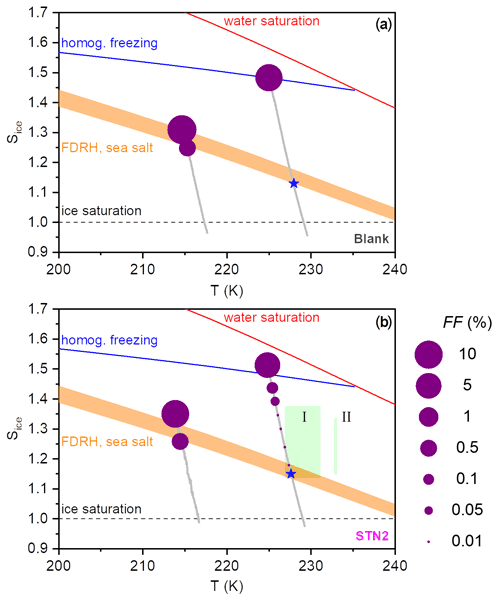
Robert Wagner, Luisa Ickes, Allan K. Bertram, Nora Els, Elena Gorokhova, Ottmar Möhler, Benjamin J. Murray, Nsikanabasi Silas Umo, and Matthew E. Salter
Atmos. Chem. Phys., 21, 13903–13930, https://doi.org/10.5194/acp-21-13903-2021, https://doi.org/10.5194/acp-21-13903-2021, 2021
Short summary
Short summary
Sea spray aerosol particles are a mixture of inorganic salts and organic matter from phytoplankton organisms. At low temperatures in the upper troposphere, both inorganic and organic constituents can induce the formation of ice crystals and thereby impact cloud properties and climate. In this study, we performed experiments in a cloud simulation chamber with particles produced from Arctic seawater samples to quantify the relative contribution of inorganic and organic species in ice formation.
Cited articles
Amell, A. and Pfreundschuh, S.: The Chalmers Cloud Ice Climatology, Amazon Web Sevices Open Data [data set], https://registry.opendata.aws/ccic (last access: 2 September 2025), 2025. a
Amell, A., Pfreundschuh, S., and Eriksson, P.: The Chalmers Cloud Ice Climatology: retrieval implementation and validation, Atmos. Meas. Tech., 17, 4337–4368, https://doi.org/10.5194/amt-17-4337-2024, 2024. a, b, c, d
Atlas, R. L., Bretherton, C. S., Sokol, A. B., Blossey, P. N., and Khairoutdinov, M. F.: Tropical cirrus are highly sensitive to ice microphysics within a nudged global storm-resolving model, Geophys. Res. Lett., 51, e2023GL105868, https://doi.org/10.1029/2023GL105868, 2024. a, b, c, d
Battaglia, A., Tanelli, S., Kobayashi, S., Zrnic, D., Hogan, R. J., and Simmer, C.: Multiple-scattering in radar systems: A review, J. Quant. Spectrosc. Radiat. Transfer, 111, 917–947, 2010. a
Baum, B. A., Heymsfield, A. J., Yang, P., and Bedka, S. T.: Bulk scattering properties for the remote sensing of ice clouds. Part I: Microphysical data and models, J. Appl. Meteorol. Clim., 44, 1885–1895, https://doi.org/10.1175/JAM2308.1, 2005. a
Berry, E. and Mace, G. G.: Cloud properties and radiative effects of the Asian summer monsoon derived from A-Train data, J. Geophys. Res., 119, 9492–9508, 2014. a
Bjordal, J., Storelvmo, T., Alterskjær, K., and Carlsen, T.: Equilibrium climate sensitivity above 5 C plausible due to state-dependent cloud feedback, Nature Geoscience, 13, 718–721, 2020. a
Bolot, M., Harris, L. M., Cheng, K.-Y., Merlis, T. M., Blossey, P. N., Bretherton, C. S., Clark, S. K., Kaltenbaugh, A., Zhou, L., and Fueglistaler, S.: Kilometer-scale global warming simulations and active sensors reveal changes in tropical deep convection, npj Climate and Atmospheric Science, 6, 209, https://doi.org/10.1038/s41612-023-00525-w, 2023. a
Bony, S., Stevens, B., Frierson, D. M., Jakob, C., Kageyama, M., Pincus, R., Shepherd, T. G., Sherwood, S. C., Siebesma, A. P., Sobel, A. H., Watanabe, M., and Webb, M. J.: Clouds, circulation and climate sensitivity, Nature Geoscience, 8, 261–268, 2015. a
Bony, S., Semie, A., Kramer, R. J., Soden, B., Tompkins, A. M., and Emanuel, K. A.: Observed modulation of the tropical radiation budget by deep convective organization and lower-tropospheric stability, AGU Advances, 1, e2019AV000155, https://doi.org/10.1029/2019AV000155, 2020. a
Brath, M., Ekelund, R., Eriksson, P., Lemke, O., and Buehler, S. A.: Microwave and submillimeter wave scattering of oriented ice particles, Atmos. Meas. Tech., 13, 2309–2333, https://doi.org/10.5194/amt-13-2309-2020, 2020. a
Buehler, S. A., Larsson, R., Lemke, O., Pfreundschuh, S., Brath, M., Adams, I., Fox, S., Roemer, F. E., Czarnecki, P., and Eriksson, P.: The atmospheric radiative transfer simulator ARTS, version 2.6 – Deep python integration, J. Quant. Spectrosc. Radiat. Transfer, p. 109443, https://doi.org/10.1016/j.jqsrt.2025.109443, 2025. a
Cazenave, Q., Ceccaldi, M., Delanoë, J., Pelon, J., Groß, S., and Heymsfield, A.: Evolution of DARDAR-CLOUD ice cloud retrievals: new parameters and impacts on the retrieved microphysical properties, Atmos. Meas. Tech., 12, 2819–2835, https://doi.org/10.5194/amt-12-2819-2019, 2019. a, b, c
Christensen, H. M. and Driver, O. G.: The fractal nature of clouds in global storm-resolving models, Geophys. Res. Lett., 48, e2021GL095746, https://doi.org/10.1029/2021GL095746, 2021. a
CMIP6 Data Request: 1.2 MIP Variable: [clivi] Ice Water Path, https://clipc-services.ceda.ac.uk/dreq/u/73c496f5669cc122cf1cddfe4df2a27a.html, last access: 18 February 2026. a
Ćorko, K., Burkhardt, U., Ewald, F., and Köhler, M.: Inter-model variability of tropical total ice water path simulated by the convection permitting DYAMOND models, J. Geophys. Res., 130, e2024JD041954, https://doi.org/10.1029/2024JD041954, 2025. a, b, c
Delanoë, J. and Hogan, R. J.: DARDAR-cloud V3-10, AERIS/ICARE Data and Services Center [data set], https://doi.org/10.25326/449, 2025. a
Delanoë, J. M. E., Heymsfield, A. J., Protat, A., Bansemer, A., and Hogan, R. J.: Normalized particle size distribution for remote sensing application, J. Geophys. Res., 119, 4204–4227, https://doi.org/10.1002/2013JD020700, 2014. a, b, c
Deng, M., Mace, G. G., Wang, Z., and Okamoto, H.: Tropical Composition, Cloud and Climate Coupling Experiment validation for cirrus cloud profiling retrieval using CloudSat radar and CALIPSO lidar, J. Geophys. Res., 115, https://doi.org/10.1029/2009JD013104, 2010. a, b
Deng, M., Mace, G. G., Wang, Z., and Lawson, R. P.: Evaluation of Several A-Train Ice Cloud Retrieval Products with In Situ Measurements Collected during the SPARTICUS Campaign, J. Appl. Meteorol. Clim., 52, 1014–1030, https://doi.org/10.1175/JAMC-D-12-054.1, 2013. a, b
Deng, M., Mace, G., Wang, Z., and Berry, E.: CloudSat 2C-ICE product update with a new Ze parameterization in lidar-only region, J. Geophys. Res., 120, 12198–12208, https://doi.org/10.1002/2015JD023600, 2015. a, b
Deng, M., Mace, G. G., Wang, Z., and Berry, E.: 2C-ICE P1_R05, CloudSat Dataprocessing Center [data set], https://www.cloudsat.cira.colostate.edu/data-products/2c-ice (last access: 2 September 2025), 2025. a
Deutloff, J., Buehler, S. A., Brath, M., and Naumann, A. K.: Insights on tropical high-cloud radiative effect from a new conceptual model, J. Adv. Model. Earth Syst., 17, e2024MS004615, https://doi.org/10.1029/2024MS004615, 2025. a
Duncan, D. I. and Eriksson, P.: An update on global atmospheric ice estimates from satellite observations and reanalyses, Atmos. Chem. Phys., 18, 11205–11219, https://doi.org/10.5194/acp-18-11205-2018, 2018. a, b, c
Ekelund, R., Eriksson, P., and Pfreundschuh, S.: Using passive and active observations at microwave and sub-millimetre wavelengths to constrain ice particle models, Atmos. Meas. Tech., 13, 501–520, https://doi.org/10.5194/amt-13-501-2020, 2020. a, b, c
Eliasson, S., Buehler, S. A., Milz, M., Eriksson, P., and John, V. O.: Assessing observed and modelled spatial distributions of ice water path using satellite data, Atmos. Chem. Phys., 11, 375–391, https://doi.org/10.5194/acp-11-375-2011, 2011. a, b, c, d
Eliasson, S., Holl, G., Buehler, S., Kuhn, T., Stengel, M., Iturbide-Sanchez, F., and Johnston, M.: Systematic and random errors between collocated satellite ice water path observations, J. Geophys. Res., 118, 2629–2642, 2013. a
Ellison, W.: Permittivity of pure water, at standard atmospheric pressure, over the frequency range – 25THz and the temperature range – 100° C, J. Phys. Chem. Ref. Data, 36, 1–18, 2007. a
Eriksson, P., Rydberg, B., Sagawa, H., Johnston, M. S., and Kasai, Y.: Overview and sample applications of SMILES and Odin-SMR retrievals of upper tropospheric humidity and cloud ice mass, Atmos. Chem. Phys., 14, 12613–12629, https://doi.org/10.5194/acp-14-12613-2014, 2014. a
Eriksson, P., Ekelund, R., Mendrok, J., Brath, M., Lemke, O., and Buehler, S. A.: A general database of hydrometeor single scattering properties at microwave and sub-millimetre wavelengths, Earth Syst. Sci. Data, 10, 1301–1326, https://doi.org/10.5194/essd-10-1301-2018, 2018. a, b
Eriksson, P., Rydberg, B., Mattioli, V., Thoss, A., Accadia, C., Klein, U., and Buehler, S. A.: Towards an operational Ice Cloud Imager (ICI) retrieval product, Atmos. Meas. Tech., 13, 53–71, https://doi.org/10.5194/amt-13-53-2020, 2020. a
Eriksson, P., Emrich, A., Kempe, K., Riesbeck, J., Aljarosha, A., Auriacombe, O., Kugelberg, J., Hekma, E., Albers, R., Murk, A., Møller Pedersen, S., John, L., Stake, J., McEvoy, P., Rydberg, B., Dybbroe, A., Thoss, A., Canestri, A., Accadia, C., Colucci, P., Gherardi, D., and Kangas, V.: The Arctic Weather Satellite radiometer, Atmos. Meas. Tech., 18, 4709–4729, https://doi.org/10.5194/amt-18-4709-2025, 2025. a
Eriksson, P., Baró Pérez, A., Müller, N., Hallborn, H., May, E., Brath, M., Buehler, S. A., and Ickes, L.: Advancements and continued challenges in observations and global modelling of atmospheric ice mass, Zenodo [code and data set], https://doi.org/10.5281/zenodo.18457489, 2026. a
ESA: EarthCARE CPR CLD Level 2A, (version BA), Earth Online [data set], https://doi.org/10.57780/eca-e6471c5, 2025. a
EUMETSAT: MWR-1B-RAD-G, EUMETSAT Data Store [data set], https://data.eumetsat.int/product/EO:EUM:DAT:0905# (last access: 2 September 2025), 2025. a
Evans, K. F. and Stephens, G. L.: Microwave radiative transfer through clouds composed of realistically shaped ice crystals. Part II. Remote sensing of ice clouds, J. Atmos. Sci., 52, 2058–2072, 1995. a
Eyring, V., Bony, S., Meehl, G. A., Senior, C. A., Stevens, B., Stouffer, R. J., and Taylor, K. E.: Overview of the Coupled Model Intercomparison Project Phase 6 (CMIP6) experimental design and organization, Geosci. Model Dev., 9, 1937–1958, https://doi.org/10.5194/gmd-9-1937-2016, 2016. a
Feng, Z., Prein, A. F., Kukulies, J., Fiolleau, T., Jones, W. K., Maybee, B., Moon, Z. L., Núñez Ocasio, K. M., Dong, W., Molina, M. J., Albright, M. G., Rajagopal, M., Robledo, V., Song, J., Song, F., Leung, L. R., Varble, A. C., Klein, C., Roca, R., Feng, R., and Mejia, J. F.: Mesoscale convective systems tracking method intercomparison (MCSMIP): Application to DYAMOND global km-scale simulations, J. Geophys. Res., 130, e2024JD042204, https://doi.org/10.1029/2024JD042204, 2025. a
Fox, S.: An evaluation of radiative transfer simulations of cloudy scenes from a numerical weather prediction model at sub-millimetre frequencies using airborne observations, Remote Sensing, 12, 2758, https://doi.org/10.3390/rs12172758, 2020. a
Gasparini, B., Atlas, R., Voigt, A., Krämer, M., and Blossey, P. N.: Tropical cirrus evolution in a kilometer-scale model with improved ice microphysics, Atmos. Chem. Phys., 25, 9957–9979, https://doi.org/10.5194/acp-25-9957-2025, 2025. a
Geer, A. J.: Physical characteristics of frozen hydrometeors inferred with parameter estimation, Atmos. Meas. Tech., 14, 5369–5395, https://doi.org/10.5194/amt-14-5369-2021, 2021. a
Gong, J. and Wu, D. L.: Microphysical properties of frozen particles inferred from Global Precipitation Measurement (GPM) Microwave Imager (GMI) polarimetric measurements, Atmos. Chem. Phys., 17, 2741–2757, https://doi.org/10.5194/acp-17-2741-2017, 2017. a
Haarsma, R. J., Roberts, M. J., Vidale, P. L., Senior, C. A., Bellucci, A., Bao, Q., Chang, P., Corti, S., Fučkar, N. S., Guemas, V., von Hardenberg, J., Hazeleger, W., Kodama, C., Koenigk, T., Leung, L. R., Lu, J., Luo, J.-J., Mao, J., Mizielinski, M. S., Mizuta, R., Nobre, P., Satoh, M., Scoccimarro, E., Semmler, T., Small, J., and von Storch, J.-S.: High Resolution Model Intercomparison Project (HighResMIP v1.0) for CMIP6, Geosci. Model Dev., 9, 4185–4208, https://doi.org/10.5194/gmd-9-4185-2016, 2016. a
Hersbach, H., Bell, B., Berrisford, P., Hirahara, S., Horányi, A., Muñoz-Sabater, J., Nicolas, J., Peubey, C., Radu, R., Schepers, D., Simmons, A., Soci, C., Abdalla, S., Abellan, X., Balsamo, G., Bechtold, P., Biavati, G., Bidlot, J., Bonavita, M., De Chiara, G., Dahlgren, P., Dee, D., Diamantakis, M., Dragani, R., Flemming, J., Forbes, R., Fuentes, M., Geer, A., Haimberger, L., Healy, S., Hogan, R. J., Hólm, E., Janisková, M., Keeley, S., Laloyaux, P., Lopez, P., Lupu, C., Radnoti, G., de Rosnay, P., Rozum, I., Vamborg, F., Villaume, S., and Thépaut, J.-N.: The ERA5 global reanalysis, Q. J. Roy. Meteor. Soc., 146, 1999–2049, 2020. a
Heymsfield, A., Krämer, M., Wood, N. B., Gettelman, A., Field, P. R., and Liu, G.: Dependence of the ice water content and snowfall rate on temperature, globally: Comparison of in situ observations, satellite active remote sensing retrievals, and global climate model simulations, J. Appl. Meteorol. Clim., 56, 189–215, 2017. a
Heymsfield, A. J., Protat, A., Bouniol, D., Austin, R. T., Hogan, R. J., Delanoë, J., Okamoto, H., Sato, K., van Zadelhoff, G.-J., Donovan, D. P., and Wang, Z.: Testing IWC retrieval methods using radar and ancillary measurements with in situ data, J. Appl. Meteorol. Clim., 47, 135–163, https://doi.org/10.1175/2007JAMC1606.1, 2008. a
Hogan, R. J., Field, P., Illingworth, A., Cotton, R., and Choularton, T.: Properties of embedded convection in warm-frontal mixed-phase cloud from aircraft and polarimetric radar, Q. J. R. Meteorol. Soc., 128, 451–476, 2002. a
Hogan, R. J., Mittermaier, M. P., and Illingworth, A. J.: The retrieval of ice water content from radar reflectivity factor and temperature and its use in evaluating a mesoscale model, J. Appl. Meteorol. Clim., 45, 301–317, 2006. a
Hogan, R. J., Tian, L., Brown, P. R. A., Westbrook, C. D., Heymsfield, A. J., and Eastment, J. D.: Radar scattering from ice aggregates using the horizontally aligned oblate spheroid approximation, J. Appl. Meteorol. Clim., 51, 655–671, 2012. a
Hong, G.: Radar backscattering properties of nonspherical ice crystals at 94 GHz, J. Geophys. Res., 112, https://doi.org/10.1029/2007JD008839, 2007. a
Hong, Y., Liu, G., and Li, J.-L.: Assessing the radiative effects of global ice clouds based on CloudSat and CALIPSO measurements, J. Climate, 29, 7651–7674, 2016. a
Janowiak, J. E., Joyce, R. J., and Yarosh, Y.: A real-time global half-hourly pixel-resolution infrared dataset and its applications, Bull. Amer. Met. Soc., 82, 205–218, 2001. a
Jeggle, K., Czerkawski, M., Serva, F., Le Saux, B., Neubauer, D., and Lohmann, U.: IceCloudNet: 3D reconstruction of cloud ice from Meteosat SEVIRI, Artificial Intelligence for the Earth Systems, 4, 240098, https://doi.org/10.1175/AIES-D-24-0098.1, 2025. a
Jiang, J. H., Su, H., Zhai, C., Perun, V. S., Del Genio, A., Nazarenko, L. S., Donner, L. J., Horowitz, L., Seman, C., Cole, J., Gettelman, A., Ringer, M. A., Rotstayn, L., Jeffrey, S., Wu, T., Brient, F., Dufresne, J.-L., Kawai, H., Koshiro, T., Watanabe, M., LÉcuyer, T. S., Volodin, E. M., Iversen, T., Drange, H., Mesquita, M. D. S., Read, W. G., Waters, J. W., Tian, B., Teixeira, J., and Stephens, G. L.: Evaluation of cloud and water vapor simulations in CMIP5 climate models using NASA “A-Train” satellite observations, J. Geophys. Res., 117, https://doi.org/10.1029/2011JD017237, 2012. a
Jimenez, C., Buehler, S. A., Rydberg, B., Eriksson, P., and Evans, K. F.: Performance simulations for a submillimetre wave cloud ice satellite instrument, Q. J. R. Meteorol. Soc., 133, 129–149, https://doi.org/10.1002/qj.134, 2007. a
Korolev, A., McFarquhar, G., Field, P. R., Franklin, C., Lawson, P., Wang, Z., Williams, E., Abel, S. J., Axisa, D., Borrmann, S., Crosier, J., Fugal, J., Krämer, M., Lohmann, U., Schlenczek, O.., Schnaiter, F. M., and Wendisch, M.: Mixed-phase clouds: Progress and challenges, Meteorological Monographs, 58, https://doi.org/10.1175/AMSMONOGRAPHS-D-17-0001.1, 2017. a
Kukulies, J., Pfreundschuh, S., Amell, A., Hallborn, H., May, E., Eriksson, P., Freeman, S., and Chase, R.: Off the beaten track – Tracking convective storms in satellite-retrieved ice water path fields, NASA-INCUS-GEWEX Cloud tracking workshop, Oxford, United Kingdom, https://doi.org/10.13140/RG.2.2.31791.80809, 2024a. a, b
Kukulies, J., Prein, A. F., and Morrison, H.: Simulating precipitation efficiency across the deep convective gray zone, J. Geophys. Res., 129, e2024JD041924, https://doi.org/10.1029/2024JD041924, 2024b. a
Lang, T., Naumann, A. K., Buehler, S. A., Stevens, B., Schmidt, H., and Aemisegger, F.: Sources of uncertainty in mid-tropospheric tropical humidity in global storm-resolving simulations, J. Adv. Model. Earth Syst., 15, e2022MS003443, https://doi.org/10.1029/2022MS003443, 2023. a
Lee, T.-Y. and Wing, A. A.: Satellite-based estimation of the role of cloud-radiative interaction in accelerating tropical cyclone development, J. Atmos. Sci., 81, 959–982, 2024. a
Leko, L.: The diurnal cycle of cloud ice water path, Master's thesis, Dept. Space, Earth and Environment, Chalmers University of Technology, http://hdl.handle.net/20.500.12380/309563 (last access: 18 February 2026), 2025. a
Li, J.-L., Waliser, D., Chen, W.-T., Guan, B., Kubar, T., Stephens, G., Ma, H.-Y., Deng, M., Donner, L., Seman, C., and Horowitz, L.: An observationally based evaluation of cloud ice water in CMIP3 and CMIP5 GCMs and contemporary reanalyses using contemporary satellite data, J. Geophys. Res., 117, https://doi.org/10.1029/2012JD017640, 2012. a
Li, J.-L., Xu, K.-M., Jiang, J., Lee, W.-L., Wang, L.-C., Yu, J.-Y., Stephens, G., Fetzer, E., and Wang, Y.-H.: An overview of CMIP5 and CMIP6 simulated cloud ice, radiation fields, surface wind stress, sea surface temperatures, and precipitation over tropical and subtropical oceans, J. Geophys. Res., 125, e2020JD032848, https://doi.org/10.1029/2020JD032848, 2020. a
Lonitz, K. and Geer, A. J.: Assessing the impact of different liquid water permittivity models on the fit between model and observations, Atmos. Meas. Tech., 12, 405–429, https://doi.org/10.5194/amt-12-405-2019, 2019. a
Marchand, R., Mace, G. G., Hallar, A. G., McCubbin, I. B., Matrosov, S. Y., and Shupe, M. D.: Enhanced radar backscattering due to oriented ice particles at 95 GHz during StormVEx, J. Atmos. Oceanic Technol., 30, 2336–2351, 2013. a
Mason, S. L., Hogan, R. J., Bozzo, A., and Pounder, N. L.: A unified synergistic retrieval of clouds, aerosols, and precipitation from EarthCARE: the ACM-CAP product, Atmos. Meas. Tech., 16, 3459–3486, https://doi.org/10.5194/amt-16-3459-2023, 2023. a, b, c
Matrosov, S. Y., Reinking, R. F., and Djalalova, I. V.: Inferring fall attitudes of pristine dendritic crystals from polarimetric radar data, J. Atmos. Sci., 62, 241–250, 2005. a
May, E., Rydberg, B., Kaur, I., Mattioli, V., Hallborn, H., and Eriksson, P.: The Ice Cloud Imager: retrieval of frozen water column properties, Atmos. Meas. Tech., 17, 5957–5987, https://doi.org/10.5194/amt-17-5957-2024, 2024. a, b, c
Morrison, H. and Milbrandt, J. A.: Parameterization of Cloud Microphysics Based on the Prediction of Bulk Ice Particle Properties. Part I: Scheme Description and Idealized Tests, J. Atmos. Sci., 72, 287–311, https://doi.org/10.1175/JAS-D-14-0065.1, 2015. a
Pfreundschuh, S., Eriksson, P., Duncan, D., Rydberg, B., Håkansson, N., and Thoss, A.: A neural network approach to estimating a posteriori distributions of Bayesian retrieval problems, Atmos. Meas. Tech., 11, 4627–4643, https://doi.org/10.5194/amt-11-4627-2018, 2018. a
Pritchard, M. S. and Somerville, R. C.: Assessing the diurnal cycle of precipitation in a multi-scale climate model, J. Adv. Model. Earth Syst., 1, https://doi.org/10.3894/JAMES.2009.1.12, 2009. a
Protat, A., Delanoë, J., Strapp, J., Fontaine, E., Leroy, D., Schwarzenboeck, A., Lilie, L., Davison, C., Dezitter, F., Grandin, A., and Weber, M.: The measured relationship between ice water content and cloud radar reflectivity in tropical convective clouds, J. Appl. Meteorol. Clim., 55, 1707–1729, 2016. a
Randall, D., Khairoutdinov, M., Arakawa, A., and Grabowski, W.: Breaking the Cloud Parameterization Deadlock, Bull. Amer. Met. Soc., 84, 1547–1564, https://doi.org/10.1175/BAMS-84-11-1547, 2003. a
Rodgers, C. D.: Inverse methods for atmospheric sounding: theory and practice, vol. 2, World scientific, https://doi.org/10.1142/3171, 2000. a, b
Sassen, K., Wang, Z., and Liu, D.: Global distribution of cirrus clouds from CloudSat/Cloud-Aerosol lidar and infrared pathfinder satellite observations (CALIPSO) measurements, J. Geophys. Res., 113, https://doi.org/10.1029/2008JD009972, 2008. a
Satoh, M., Matsuno, T., Tomita, H., Miura, H., Nasuno, T., and Iga, S.-I.: Nonhydrostatic icosahedral atmospheric model (NICAM) for global cloud resolving simulations, J. Comput. Phys., 227, 3486–3514, 2008. a
Sokol, A. B. and Hartmann, D. L.: Tropical anvil clouds: Radiative driving toward a preferred state, J. Geophys. Res., 125, e2020JD033107, https://doi.org/10.1029/2020JD033107, 2020. a, b, c
Sokol, A. B., Wall, C. J., and Hartmann, D. L.: Greater climate sensitivity implied by anvil cloud thinning, Nature Geoscience, 17, 398–403, 2024. a
Song, J., Song, F., Feng, Z., Leung, L. R., Li, C., and Wu, L.: Realistic precipitation diurnal cycle in global convection-permitting models by resolving mesoscale convective systems, Geophys. Res. Lett., 51, e2024GL109945, https://doi.org/10.1029/2024GL109945, 2024. a
Stephens, G. L., Vane, D. G., Tanelli, S., Im, E., Durden, S., Rokey, M., Reinke, D., Partain, P., Mace, G. G., Austin, R., L'Ecuyer, T., Haynes, J., Lebsock, M., Suzuki, K., Waliser, D., Wu, D., Kay, J., Gettelman, A., Wang, Z., and Marchand, R.: CloudSat mission: Performance and early science after the first year of operation, J. Geophys. Res., 113, https://doi.org/10.1029/2008JD009982, 2008. a
Stevens, B. and Bony, S.: What are climate models missing?, Science, 340, 1053–1054, https://doi.org/10.1126/science.1237554, 2013. a
Stevens, B., Satoh, M., Auger, L., Biercamp, J., Bretherton, C. S., Chen, X., Düben, P., Judt, F., Khairoutdinov, M., Klocke, D., Kodama, C., Kornblueh, L., Lin, S.-J., Neumann, P., Putman, W. M., Röber, N., Shibuya, R., Vanniere, B., Vidale, P. L., Wedi, N., and Zhou, L.: DYAMOND: the DYnamics of the Atmospheric general circulation Modeled On Non-hydrostatic Domains, Progress in Earth and Planetary Science, 6, 61, https://doi.org/10.1186/s40645-019-0304-z, 2019. a, b, c
Su, C.-Y., Chen, W.-T., Wu, C.-M., and Ma, H.-Y.: Object-based evaluation of tropical precipitation systems in DYAMOND simulations over the Maritime Continent, J. Meteorol. Soc. Jpn., 100, 647–659, https://doi.org/10.2151/jmsj.2022-033, 2022. a
Turbeville, S., Nugent, J., Ackerman, T., Bretherton, C., and Blossey, P.: Tropical cirrus in global storm-resolving models: 2. Cirrus life cycle and top-of-atmosphere radiative fluxes, Earth and Space Sci., 9, e2021EA001978, https://doi.org/10.1029/2021EA001978, 2022. a, b
Vérèmes, H., Listowski, C., Delanoë, J., Barthe, C., Tulet, P., Bonnardot, F., and Roy, D.: Spatial and seasonal variability of clouds over the southwest Indian Ocean based on the DARDAR mask product, Q. J. R. Meteorol. Soc., 145, 3561–3576, 2019. a
von Clarmann, T., Degenstein, D. A., Livesey, N. J., Bender, S., Braverman, A., Butz, A., Compernolle, S., Damadeo, R., Dueck, S., Eriksson, P., Funke, B., Johnson, M. C., Kasai, Y., Keppens, A., Kleinert, A., Kramarova, N. A., Laeng, A., Langerock, B., Payne, V. H., Rozanov, A., Sato, T. O., Schneider, M., Sheese, P., Sofieva, V., Stiller, G. P., von Savigny, C., and Zawada, D.: Overview: Estimating and reporting uncertainties in remotely sensed atmospheric composition and temperature, Atmos. Meas. Tech., 13, 4393–4436, https://doi.org/10.5194/amt-13-4393-2020, 2020. a
Waliser, D. E., Li, J.-L. F., Woods, C. P., Austin, R. T., Bacmeister, J., Chern, J., Del Genio, A., Jiang, J. H., Kuang, Z., Meng, H., Minnis, P., Platnick, S., Rossow, W. B., Stephens, G. L., Sun-Mack, S., Tao, W.-K., Tompkins, A. M., Vane, D. G., Walker, C., and Wu, D.: Cloud ice: A climate model challenge with signs and expectations of progress, J. Geophys. Res., 114, https://doi.org/10.1029/2008JD010015, 2009. a, b, c, d, e, f, g
Wehr, T., Kubota, T., Tzeremes, G., Wallace, K., Nakatsuka, H., Ohno, Y., Koopman, R., Rusli, S., Kikuchi, M., Eisinger, M., Tanaka, T., Taga, M., Deghaye, P., Tomita, E., and Bernaerts, D.: The EarthCARE mission – science and system overview, Atmos. Meas. Tech., 16, 3581–3608, https://doi.org/10.5194/amt-16-3581-2023, 2023. a
Winker, D., Cai, X., Vaughan, M., Garnier, A., Magill, B., Avery, M., and Getzewich, B.: A Level 3 monthly gridded ice cloud dataset derived from 12 years of CALIOP measurements, Earth Syst. Sci. Data, 16, 2831–2855, https://doi.org/10.5194/essd-16-2831-2024, 2024. a
Wu, D., Austin, R., Deng, M., Durden, S., Heymsfield, A., Jiang, J., Lambert, A., Li, J.-L., Livesey, N., McFarquhar, G., Pittman, J. V., Stephens, G. L., Tanelli, S., Vane, D. G., and Waliser, D. E.: Comparisons of global cloud ice from MLS, CloudSat, and correlative data sets, J. Geophys. Res., 114, https://doi.org/10.1029/2008JD009946, 2009. a
Short summary
Our study shows that accurately representing atmospheric ice mass remains a major challenge. We compared climate models to satellite data, finding that conventional models consistently underestimate the amount of ice. While new, higher-resolution models perform better, both models and observations still have significant discrepancies. These shortcomings limit our confidence in cloud-related climate feedbacks, which are critical for our predictions of the future climate.
Our study shows that accurately representing atmospheric ice mass remains a major challenge. We...


Altmetrics
Final-revised paper
Preprint