
Articles | Volume 26, issue 3
https://doi.org/10.5194/acp-26-2331-2026
© Author(s) 2026. This work is distributed under
the Creative Commons Attribution 4.0 License.
the Creative Commons Attribution 4.0 License.
https://doi.org/10.5194/acp-26-2331-2026
© Author(s) 2026. This work is distributed under
the Creative Commons Attribution 4.0 License.
the Creative Commons Attribution 4.0 License.
Research article
| 
16 Feb 2026
Research article |
| 16 Feb 2026
| 16 Feb 2026
Microphysics of Arctic Stratiform Boundary-layer Clouds during ARCSIX
Alexei V. Korolev
Environment and Climate Change Canada, 4905 Dufferin Street, Toronto, ON M3H 5T4, Canada

SPEC Incorporated, 3022 Sterling Circle, Suite 200, Boulder, Colorado, 80301, USA
Related authors
Zhipeng Qu, Cuong Nguyen, Howard W. Barker, Paloma Borque, Alexei Korolev, Meriem Kacimi, Jason N. S. Cole, Keyvan Ranjbar, Ivan Heckman, Kenny Bala, Natalia Bliankinshtein, Leonid Nichman, and Mengistu Wolde
EGUsphere, https://doi.org/10.5194/egusphere-2026-6216, https://doi.org/10.5194/egusphere-2026-6216, 2026
This preprint is open for discussion and under review for Atmospheric Measurement Techniques (AMT).
Short summary
Short summary
EarthCARE constructs three-dimensional atmospheric scenes around the satellite track to assess how well observed clouds and aerosols explain measured radiation. In this study, aircraft measurements collected during the ECALOT campaign are used to evaluate the quality of the scene construction. Comparisons using direct (in situ) cloud measurements and airborne radar show good overall performance, supporting its use in EarthCARE’s radiative closure assessment.
Zhipeng Qu, Cuong Nguyen, Paloma Borque, Alexei Korolev, Howard W. Barker, Keyvan Ranjbar, Lei Liu, Zen Mariani, Meriem Kacimi, Melissa Cholette, Ivan Heckman, Kenny Bala, Natalia Bliankinshtein, Leonid Nichman, Benjamin Riot-Bretêcher, Yi Huang, Jason N. S. Cole, Raphaël Peroni, Stephen Holden, Robert Reed, Robert Crawford, Daniel Michelson, Eve Bigras, Michael Wheeler, John Gyakum, Jason A. Milbrandt, Julie M. Thériault, Kaley A. Walker, Mengistu Wolde, Jean-Pierre Blanchet, Yann Blanchard, Jonas von Bismark, Rob Koopman, Montserrat Piñol Solé, Bernat Puigdomènech Treserras, Robin J. Hogan, and Shannon L. Mason
EGUsphere, https://doi.org/10.5194/egusphere-2026-5347, https://doi.org/10.5194/egusphere-2026-5347, 2026
Short summary
Short summary
The ECALOT campaign brought together aircraft and ground-based observations in the Ottawa–Montreal region to help evaluate the European Space Agency’s EarthCARE satellite, which studies clouds, aerosols, radiation, and their interactions. By comparing satellite measurements with multi-platform remote-sensing and in situ observations collected during the campaign, ECALOT provides an integrated approach to evaluating EarthCARE products at different stages of the data processing chain.
Robin J. Hogan, Bernat Puigdomenech Treserras, Shannon L. Mason, Alexei Korolev, Zhipeng Qu, Kamil Mroz, David P. Donovan, Pavlos Kollias, and Mark D. Fielding
EGUsphere, https://doi.org/10.5194/egusphere-2026-5054, https://doi.org/10.5194/egusphere-2026-5054, 2026
Short summary
Short summary
The EarthCARE satellite carries advanced instruments that allow it to accurately infer vertical profiles of the properties of ice clouds, important for understanding their role in the climate system. Here we use detailed observations from meteorological research aircraft flying underneath the satellite to evaluate EarthCARE’s estimates of the mass of ice in the clouds, the average particle size, and even how fast the air is rising and falling within the cloud due to atmospheric gravity waves.
Mélissa Cholette, Caroline Jouan, Hugh Morrison, Jason A. Milbrandt, Zhipeng Qu, Zane Dedekind, Alexei Korolev, and Zen Mariani
EGUsphere, https://doi.org/10.5194/egusphere-2026-4229, https://doi.org/10.5194/egusphere-2026-4229, 2026
Short summary
Short summary
This study implements prognostic aerosols in the P3 bulk microphysics scheme. Using aerosol awareness, the convection-permitting simulations of layered Arctic mixed-phase clouds are improved with more persistent supercooled liquid water and better agreement with EarthCARE and in situ observations. The new framework enhances the microphysics realism of aerosol–cloud interactions, which are critical for radiative balance and weather prediction in polar regions and elsewhere.
Patrick C. Taylor, Armin Sorooshian, Rei Ueyama, Sebastian Schmidt, Ihab Abboud, Quincy Allison, Kevin Barry, Sebastian Becker, Holly A. Bender, Joseph R. Bennett, James B. Blair, Niklas Bohn, Linette Boisvert, Matthew D. Brown, Roelof Bruintjes, Anthony Bucholtz, Megan Buzanowicz, Brian Cairns, Filippo Calì Quaglia, Eduard Chemyakin, Bo Chen, Gao Chen, Hong Chen, Yu-Wen Chen, Zezhen Cheng, Swarup China, Dan Chirica, Yonghoon Choi, Peter Colarco, Brian Collister, Ewan Crosbie, Maurice J. Cross, Janet Daniels, Paul DeMott, Joshua P. DiGangi, Alcide Giorgio di Sarra, Glenn S. Diskin, Erica K. Dolinar, Eva-Lou Edwards, Samuel Ephraim, Nikolaos Evangeliou, Romanos Foskinis, Francesca Gallo, Lan Gao, José Luis Gómez-Amo, Daisy Gonzalez, Christine Groot Zwaaftink, Pawan Gupta, Ivan Heckman, Michael Hendrickson, Miguel Ricardo A. Hilario, Ken Hirata, Michelle Hofton, Andrew L. Holen, Ulas Im, Alia L. Khan, Ralph Kahn, Alexei V. Korolev, Sonia Kreidenweis, Thomas Krumpen, Nathan Kurtz, Leslie Lait, Bradley Lamkin, Jack Landy, Nurun Nahar Lata, Paul Lawson, Samuel LeBlanc, Sean Leavor, Jing Li, Thorsten Markus, Hal Maring, Andreas H. Massling, Camille Mavis, Flynn McGinnity, Kerry Meyer, Gabriel Mojica, Richard H. Moore, Parker Morris, Giovanni Muscari, Vikas Nataraja, Amin R. Nehrir, Athanasios Nenes, Edward P. Nowottnick, Matteo Ottaviani, Chelsea Parker, Ryan Patnaude, Michael Perez, Russell J. Perkins, Colten Peterson, Alek Petty, Stevie Phothisane, Chris Polashenski, Kerri A. Pratt, Kayla M. Preisler, John Prytherch, David Rabine, Jens Redemann, Ju-Mee Ryoo, Joseph S. Schlosser, Vanessa Selimovic, Michael A. Shook, Morgan Silverman, Henrik Skov, Alexander Smirnov, Cassidy Soloff, Amy Solomon, Snorre Stamnes, Azusa Takeishi, David R. Thompson, K. Lee Thornhill, Rachel Tilling, Michael Tjernström, Monica Tosco, Pedro C. Valdelomar, David Van Gilst, Jian Wang, Zhien Wang, Andrzej Wasilewski, Manfred Wendisch, Brent Wilder, Edward L. Winstead, Albert Wu, Peng Xian, Lauren M. Zamora, Jiaoshi Zhang, Lei Zhang, Lu Zhang, Luke Ziemba, and Paquita Zuidema
Earth Syst. Sci. Data Discuss., https://doi.org/10.5194/essd-2026-241, https://doi.org/10.5194/essd-2026-241, 2026
Preprint under review for ESSD
Short summary
Short summary
This article summarizes the data sets collected during the Arctic Radiation Cloud aerosol Sea ice Interaction eXperiment (ARCSIX), NASA's most comprehensive Arctic field campaign to date. The overarching goal was to quantify the contributions of surface, clouds, aerosol particles, and precipitation to summer sea ice melt. This paper describes the ARCSIX implementation including the flight strategy, instruments, complementary data sets, access, and usage details.
Zane Dedekind, Alexei Korolev, and Jason A. Milbrandt
Atmos. Chem. Phys., 26, 4489–4508, https://doi.org/10.5194/acp-26-4489-2026, https://doi.org/10.5194/acp-26-4489-2026, 2026
Short summary
Short summary
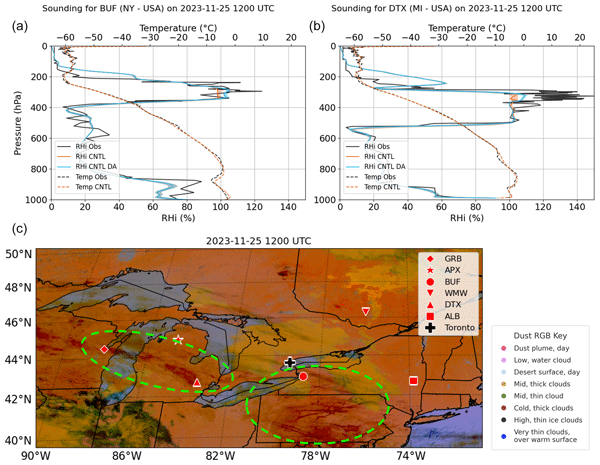
We studied how airplane contrails form and persist under cold, moist conditions. Using computer simulations and real observations, we found that weather predicting models often underestimate moisture levels, limiting accurate trail prediction. Adjusting how ice grows in clouds allowed us to better simulate these contrails. Improving moisture representation in models can help predict the climate effects of these clouds.
Zhipeng Qu, Alexei Korolev, Jason A. Milbrandt, Ivan Heckman, Mélissa Cholette, Cuong Nguyen, and Mengistu Wolde
Atmos. Chem. Phys., 25, 17845–17868, https://doi.org/10.5194/acp-25-17845-2025, https://doi.org/10.5194/acp-25-17845-2025, 2025
Short summary
Short summary
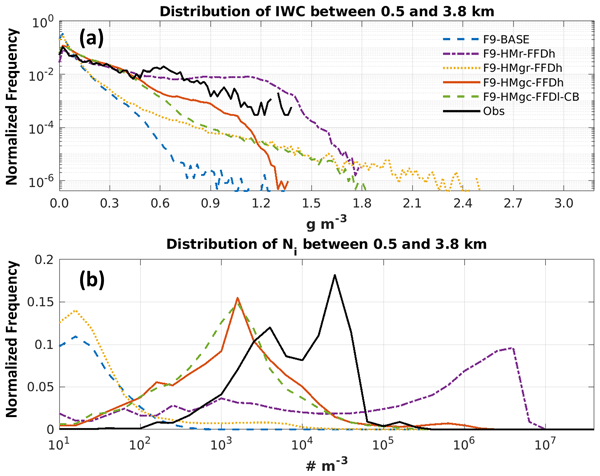
This study examines the impact of incorporating secondary ice production (SIP) parameterizations into high-resolution numerical weather prediction simulations for mid-latitude continental winter conditions. Aircraft in situ and remote sensing observations are used to evaluate the simulations. Results show that including SIP improves the representation of cloud and freezing rain properties, with its impact varying based on cloud regime, such as convective or stratiform.
Alexei Korolev, Zhipeng Qu, Jason Milbrandt, Ivan Heckman, Mélissa Cholette, Mengistu Wolde, Cuong Nguyen, Greg M. McFarquhar, Paul Lawson, and Ann M. Fridlind
Atmos. Chem. Phys., 24, 11849–11881, https://doi.org/10.5194/acp-24-11849-2024, https://doi.org/10.5194/acp-24-11849-2024, 2024
Short summary
Short summary
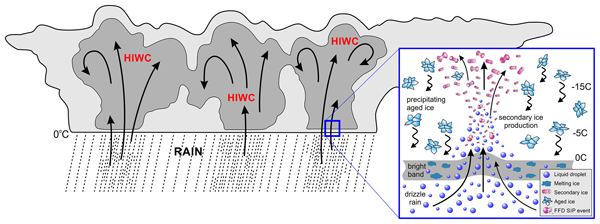
The phenomenon of high ice water content (HIWC) occurs in mesoscale convective systems (MCSs) when a large number of small ice particles with typical sizes of a few hundred micrometers is found at high altitudes. It was found that secondary ice production in the vicinity of the melting layer plays a key role in the formation and maintenance of HIWC. This study presents a conceptual model of the formation of HIWC in tropical MCSs based on in situ observations and numerical simulation.
Sergey Y. Matrosov, Alexei Korolev, Mengistu Wolde, and Cuong Nguyen
Atmos. Meas. Tech., 15, 6373–6386, https://doi.org/10.5194/amt-15-6373-2022, https://doi.org/10.5194/amt-15-6373-2022, 2022
Short summary
Short summary
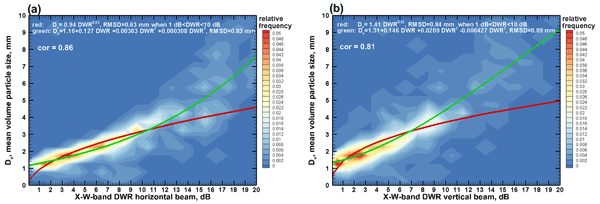
A remote sensing method to retrieve sizes of particles in ice clouds and precipitation from radar measurements at two wavelengths is described. This method is based on relating the particle size information to the ratio of radar signals at these two wavelengths. It is demonstrated that this ratio is informative about different characteristic particle sizes. Knowing atmospheric ice particle sizes is important for many applications such as precipitation estimation and climate modeling.
Alexei Korolev, Paul J. DeMott, Ivan Heckman, Mengistu Wolde, Earle Williams, David J. Smalley, and Michael F. Donovan
Atmos. Chem. Phys., 22, 13103–13113, https://doi.org/10.5194/acp-22-13103-2022, https://doi.org/10.5194/acp-22-13103-2022, 2022
Short summary
Short summary
The present study provides the first explicit in situ observation of secondary ice production at temperatures as low as −27 °C, which is well outside the range of the Hallett–Mossop process (−3 to −8 °C). This observation expands our knowledge of the temperature range of initiation of secondary ice in clouds. The obtained results are intended to stimulate laboratory and theoretical studies to develop physically based parameterizations for weather prediction and climate models.
Zhipeng Qu, Alexei Korolev, Jason A. Milbrandt, Ivan Heckman, Yongjie Huang, Greg M. McFarquhar, Hugh Morrison, Mengistu Wolde, and Cuong Nguyen
Atmos. Chem. Phys., 22, 12287–12310, https://doi.org/10.5194/acp-22-12287-2022, https://doi.org/10.5194/acp-22-12287-2022, 2022
Short summary
Short summary
Secondary ice production (SIP) is an important physical phenomenon that results in an increase in the cloud ice particle concentration and can have a significant impact on the evolution of clouds. Here, idealized simulations of a tropical convective system were conducted. Agreement between the simulations and observations highlights the impacts of SIP on the maintenance of tropical convection in nature and the importance of including the modelling of SIP in numerical weather prediction models.
Yongjie Huang, Wei Wu, Greg M. McFarquhar, Ming Xue, Hugh Morrison, Jason Milbrandt, Alexei V. Korolev, Yachao Hu, Zhipeng Qu, Mengistu Wolde, Cuong Nguyen, Alfons Schwarzenboeck, and Ivan Heckman
Atmos. Chem. Phys., 22, 2365–2384, https://doi.org/10.5194/acp-22-2365-2022, https://doi.org/10.5194/acp-22-2365-2022, 2022
Short summary
Short summary
Numerous small ice crystals in tropical convective storms are difficult to detect and could be potentially hazardous for commercial aircraft. Previous numerical simulations failed to reproduce this phenomenon and hypothesized that key microphysical processes are still lacking in current models to realistically simulate the phenomenon. This study uses numerical experiments to confirm the dominant role of secondary ice production in the formation of these large numbers of small ice crystals.
Zhipeng Qu, Cuong Nguyen, Howard W. Barker, Paloma Borque, Alexei Korolev, Meriem Kacimi, Jason N. S. Cole, Keyvan Ranjbar, Ivan Heckman, Kenny Bala, Natalia Bliankinshtein, Leonid Nichman, and Mengistu Wolde
EGUsphere, https://doi.org/10.5194/egusphere-2026-6216, https://doi.org/10.5194/egusphere-2026-6216, 2026
This preprint is open for discussion and under review for Atmospheric Measurement Techniques (AMT).
Short summary
Short summary
EarthCARE constructs three-dimensional atmospheric scenes around the satellite track to assess how well observed clouds and aerosols explain measured radiation. In this study, aircraft measurements collected during the ECALOT campaign are used to evaluate the quality of the scene construction. Comparisons using direct (in situ) cloud measurements and airborne radar show good overall performance, supporting its use in EarthCARE’s radiative closure assessment.
Zhipeng Qu, Cuong Nguyen, Paloma Borque, Alexei Korolev, Howard W. Barker, Keyvan Ranjbar, Lei Liu, Zen Mariani, Meriem Kacimi, Melissa Cholette, Ivan Heckman, Kenny Bala, Natalia Bliankinshtein, Leonid Nichman, Benjamin Riot-Bretêcher, Yi Huang, Jason N. S. Cole, Raphaël Peroni, Stephen Holden, Robert Reed, Robert Crawford, Daniel Michelson, Eve Bigras, Michael Wheeler, John Gyakum, Jason A. Milbrandt, Julie M. Thériault, Kaley A. Walker, Mengistu Wolde, Jean-Pierre Blanchet, Yann Blanchard, Jonas von Bismark, Rob Koopman, Montserrat Piñol Solé, Bernat Puigdomènech Treserras, Robin J. Hogan, and Shannon L. Mason
EGUsphere, https://doi.org/10.5194/egusphere-2026-5347, https://doi.org/10.5194/egusphere-2026-5347, 2026
Short summary
Short summary
The ECALOT campaign brought together aircraft and ground-based observations in the Ottawa–Montreal region to help evaluate the European Space Agency’s EarthCARE satellite, which studies clouds, aerosols, radiation, and their interactions. By comparing satellite measurements with multi-platform remote-sensing and in situ observations collected during the campaign, ECALOT provides an integrated approach to evaluating EarthCARE products at different stages of the data processing chain.
Robin J. Hogan, Bernat Puigdomenech Treserras, Shannon L. Mason, Alexei Korolev, Zhipeng Qu, Kamil Mroz, David P. Donovan, Pavlos Kollias, and Mark D. Fielding
EGUsphere, https://doi.org/10.5194/egusphere-2026-5054, https://doi.org/10.5194/egusphere-2026-5054, 2026
Short summary
Short summary
The EarthCARE satellite carries advanced instruments that allow it to accurately infer vertical profiles of the properties of ice clouds, important for understanding their role in the climate system. Here we use detailed observations from meteorological research aircraft flying underneath the satellite to evaluate EarthCARE’s estimates of the mass of ice in the clouds, the average particle size, and even how fast the air is rising and falling within the cloud due to atmospheric gravity waves.
McKenna Stanford, Alice Keinert, Ann Fridlind, Alexei Kiselev, Daniel Knopf, Andrew Ackerman, Thomas Leisner, and Paul Lawson
EGUsphere, https://doi.org/10.5194/egusphere-2026-4713, https://doi.org/10.5194/egusphere-2026-4713, 2026
Short summary
Short summary
Clouds containing a mixture of liquid and ice are poorly simulated because ice crystals multiply via poorly understood mechanisms. This study uses laboratory experiments to represent ice multiplication from freezing drops and evaluates that representation in high-resolution simulations against aircraft observations. Ice fragment production increases ice crystal numbers but is modulated by the evolution of raindrops prior to freezing, with direct implications for weather and climate models.
Mélissa Cholette, Caroline Jouan, Hugh Morrison, Jason A. Milbrandt, Zhipeng Qu, Zane Dedekind, Alexei Korolev, and Zen Mariani
EGUsphere, https://doi.org/10.5194/egusphere-2026-4229, https://doi.org/10.5194/egusphere-2026-4229, 2026
Short summary
Short summary
This study implements prognostic aerosols in the P3 bulk microphysics scheme. Using aerosol awareness, the convection-permitting simulations of layered Arctic mixed-phase clouds are improved with more persistent supercooled liquid water and better agreement with EarthCARE and in situ observations. The new framework enhances the microphysics realism of aerosol–cloud interactions, which are critical for radiative balance and weather prediction in polar regions and elsewhere.
Patrick C. Taylor, Armin Sorooshian, Rei Ueyama, Sebastian Schmidt, Ihab Abboud, Quincy Allison, Kevin Barry, Sebastian Becker, Holly A. Bender, Joseph R. Bennett, James B. Blair, Niklas Bohn, Linette Boisvert, Matthew D. Brown, Roelof Bruintjes, Anthony Bucholtz, Megan Buzanowicz, Brian Cairns, Filippo Calì Quaglia, Eduard Chemyakin, Bo Chen, Gao Chen, Hong Chen, Yu-Wen Chen, Zezhen Cheng, Swarup China, Dan Chirica, Yonghoon Choi, Peter Colarco, Brian Collister, Ewan Crosbie, Maurice J. Cross, Janet Daniels, Paul DeMott, Joshua P. DiGangi, Alcide Giorgio di Sarra, Glenn S. Diskin, Erica K. Dolinar, Eva-Lou Edwards, Samuel Ephraim, Nikolaos Evangeliou, Romanos Foskinis, Francesca Gallo, Lan Gao, José Luis Gómez-Amo, Daisy Gonzalez, Christine Groot Zwaaftink, Pawan Gupta, Ivan Heckman, Michael Hendrickson, Miguel Ricardo A. Hilario, Ken Hirata, Michelle Hofton, Andrew L. Holen, Ulas Im, Alia L. Khan, Ralph Kahn, Alexei V. Korolev, Sonia Kreidenweis, Thomas Krumpen, Nathan Kurtz, Leslie Lait, Bradley Lamkin, Jack Landy, Nurun Nahar Lata, Paul Lawson, Samuel LeBlanc, Sean Leavor, Jing Li, Thorsten Markus, Hal Maring, Andreas H. Massling, Camille Mavis, Flynn McGinnity, Kerry Meyer, Gabriel Mojica, Richard H. Moore, Parker Morris, Giovanni Muscari, Vikas Nataraja, Amin R. Nehrir, Athanasios Nenes, Edward P. Nowottnick, Matteo Ottaviani, Chelsea Parker, Ryan Patnaude, Michael Perez, Russell J. Perkins, Colten Peterson, Alek Petty, Stevie Phothisane, Chris Polashenski, Kerri A. Pratt, Kayla M. Preisler, John Prytherch, David Rabine, Jens Redemann, Ju-Mee Ryoo, Joseph S. Schlosser, Vanessa Selimovic, Michael A. Shook, Morgan Silverman, Henrik Skov, Alexander Smirnov, Cassidy Soloff, Amy Solomon, Snorre Stamnes, Azusa Takeishi, David R. Thompson, K. Lee Thornhill, Rachel Tilling, Michael Tjernström, Monica Tosco, Pedro C. Valdelomar, David Van Gilst, Jian Wang, Zhien Wang, Andrzej Wasilewski, Manfred Wendisch, Brent Wilder, Edward L. Winstead, Albert Wu, Peng Xian, Lauren M. Zamora, Jiaoshi Zhang, Lei Zhang, Lu Zhang, Luke Ziemba, and Paquita Zuidema
Earth Syst. Sci. Data Discuss., https://doi.org/10.5194/essd-2026-241, https://doi.org/10.5194/essd-2026-241, 2026
Preprint under review for ESSD
Short summary
Short summary
This article summarizes the data sets collected during the Arctic Radiation Cloud aerosol Sea ice Interaction eXperiment (ARCSIX), NASA's most comprehensive Arctic field campaign to date. The overarching goal was to quantify the contributions of surface, clouds, aerosol particles, and precipitation to summer sea ice melt. This paper describes the ARCSIX implementation including the flight strategy, instruments, complementary data sets, access, and usage details.
Zane Dedekind, Alexei Korolev, and Jason A. Milbrandt
Atmos. Chem. Phys., 26, 4489–4508, https://doi.org/10.5194/acp-26-4489-2026, https://doi.org/10.5194/acp-26-4489-2026, 2026
Short summary
Short summary
We studied how airplane contrails form and persist under cold, moist conditions. Using computer simulations and real observations, we found that weather predicting models often underestimate moisture levels, limiting accurate trail prediction. Adjusting how ice grows in clouds allowed us to better simulate these contrails. Improving moisture representation in models can help predict the climate effects of these clouds.
Zhipeng Qu, Alexei Korolev, Jason A. Milbrandt, Ivan Heckman, Mélissa Cholette, Cuong Nguyen, and Mengistu Wolde
Atmos. Chem. Phys., 25, 17845–17868, https://doi.org/10.5194/acp-25-17845-2025, https://doi.org/10.5194/acp-25-17845-2025, 2025
Short summary
Short summary
This study examines the impact of incorporating secondary ice production (SIP) parameterizations into high-resolution numerical weather prediction simulations for mid-latitude continental winter conditions. Aircraft in situ and remote sensing observations are used to evaluate the simulations. Results show that including SIP improves the representation of cloud and freezing rain properties, with its impact varying based on cloud regime, such as convective or stratiform.
Silvia M. Calderón, Noora Hyttinen, Harri Kokkola, Tomi Raatikainen, R. Paul Lawson, and Sami Romakkaniemi
Atmos. Chem. Phys., 25, 14479–14500, https://doi.org/10.5194/acp-25-14479-2025, https://doi.org/10.5194/acp-25-14479-2025, 2025
Short summary
Short summary
Field campaigns suggest secondary ice production (SIP) from mm-sized supercooled droplets drives rapid glaciation and precipitation development in summer cumulus congestus clouds lacking ice-nucleating particles. Our large-eddy simulations with sectional aerosol–hydrometeor microphysics support this, reproducing observed size distributions and showing how SIP accelerates aggregation, enhancing surface precipitation.
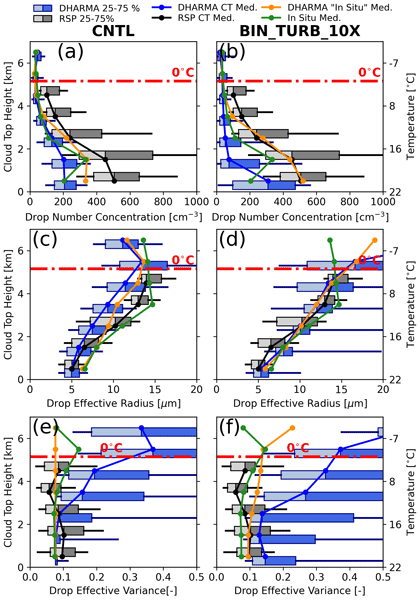
McKenna W. Stanford, Ann M. Fridlind, Andrew S. Ackerman, Bastiaan van Diedenhoven, Qian Xiao, Jian Wang, Toshihisa Matsui, Daniel Hernandez-Deckers, and Paul Lawson
Atmos. Chem. Phys., 25, 11199–11231, https://doi.org/10.5194/acp-25-11199-2025, https://doi.org/10.5194/acp-25-11199-2025, 2025
Short summary
Short summary
The evolution of cloud droplets, from the point they are activated by atmospheric aerosol to the formation of precipitation, is an important process relevant to understanding cloud–climate feedbacks. This study demonstrates a benchmark framework for using novel airborne measurements and retrievals to constrain high-resolution simulations of moderately deep cumulus clouds and pathways for scaling results to large-scale models and space-based observational platforms.
Alexei Korolev, Zhipeng Qu, Jason Milbrandt, Ivan Heckman, Mélissa Cholette, Mengistu Wolde, Cuong Nguyen, Greg M. McFarquhar, Paul Lawson, and Ann M. Fridlind
Atmos. Chem. Phys., 24, 11849–11881, https://doi.org/10.5194/acp-24-11849-2024, https://doi.org/10.5194/acp-24-11849-2024, 2024
Short summary
Short summary
The phenomenon of high ice water content (HIWC) occurs in mesoscale convective systems (MCSs) when a large number of small ice particles with typical sizes of a few hundred micrometers is found at high altitudes. It was found that secondary ice production in the vicinity of the melting layer plays a key role in the formation and maintenance of HIWC. This study presents a conceptual model of the formation of HIWC in tropical MCSs based on in situ observations and numerical simulation.
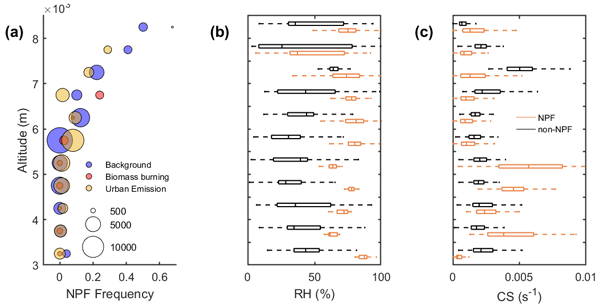
Qian Xiao, Jiaoshi Zhang, Yang Wang, Luke D. Ziemba, Ewan Crosbie, Edward L. Winstead, Claire E. Robinson, Joshua P. DiGangi, Glenn S. Diskin, Jeffrey S. Reid, K. Sebastian Schmidt, Armin Sorooshian, Miguel Ricardo A. Hilario, Sarah Woods, Paul Lawson, Snorre A. Stamnes, and Jian Wang
Atmos. Chem. Phys., 23, 9853–9871, https://doi.org/10.5194/acp-23-9853-2023, https://doi.org/10.5194/acp-23-9853-2023, 2023
Short summary
Short summary
Using recent airborne measurements, we show that the influences of anthropogenic emissions, transport, convective clouds, and meteorology lead to new particle formation (NPF) under a variety of conditions and at different altitudes in tropical marine environments. NPF is enhanced by fresh urban emissions in convective outflow but is suppressed in air masses influenced by aged urban emissions where reactive precursors are mostly consumed while particle surface area remains relatively high.
Sergey Y. Matrosov, Alexei Korolev, Mengistu Wolde, and Cuong Nguyen
Atmos. Meas. Tech., 15, 6373–6386, https://doi.org/10.5194/amt-15-6373-2022, https://doi.org/10.5194/amt-15-6373-2022, 2022
Short summary
Short summary
A remote sensing method to retrieve sizes of particles in ice clouds and precipitation from radar measurements at two wavelengths is described. This method is based on relating the particle size information to the ratio of radar signals at these two wavelengths. It is demonstrated that this ratio is informative about different characteristic particle sizes. Knowing atmospheric ice particle sizes is important for many applications such as precipitation estimation and climate modeling.
Alexei Korolev, Paul J. DeMott, Ivan Heckman, Mengistu Wolde, Earle Williams, David J. Smalley, and Michael F. Donovan
Atmos. Chem. Phys., 22, 13103–13113, https://doi.org/10.5194/acp-22-13103-2022, https://doi.org/10.5194/acp-22-13103-2022, 2022
Short summary
Short summary
The present study provides the first explicit in situ observation of secondary ice production at temperatures as low as −27 °C, which is well outside the range of the Hallett–Mossop process (−3 to −8 °C). This observation expands our knowledge of the temperature range of initiation of secondary ice in clouds. The obtained results are intended to stimulate laboratory and theoretical studies to develop physically based parameterizations for weather prediction and climate models.
Zhipeng Qu, Alexei Korolev, Jason A. Milbrandt, Ivan Heckman, Yongjie Huang, Greg M. McFarquhar, Hugh Morrison, Mengistu Wolde, and Cuong Nguyen
Atmos. Chem. Phys., 22, 12287–12310, https://doi.org/10.5194/acp-22-12287-2022, https://doi.org/10.5194/acp-22-12287-2022, 2022
Short summary
Short summary
Secondary ice production (SIP) is an important physical phenomenon that results in an increase in the cloud ice particle concentration and can have a significant impact on the evolution of clouds. Here, idealized simulations of a tropical convective system were conducted. Agreement between the simulations and observations highlights the impacts of SIP on the maintenance of tropical convection in nature and the importance of including the modelling of SIP in numerical weather prediction models.
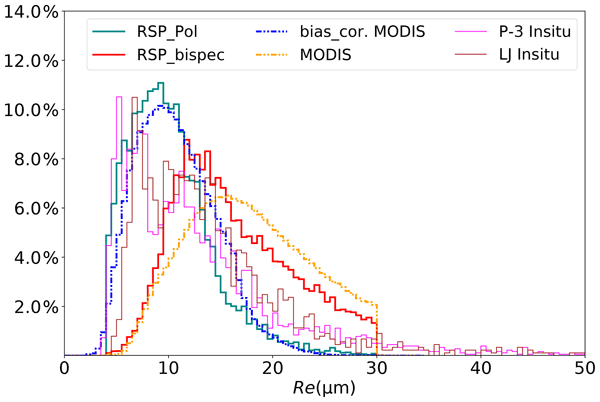
Dongwei Fu, Larry Di Girolamo, Robert M. Rauber, Greg M. McFarquhar, Stephen W. Nesbitt, Jesse Loveridge, Yulan Hong, Bastiaan van Diedenhoven, Brian Cairns, Mikhail D. Alexandrov, Paul Lawson, Sarah Woods, Simone Tanelli, Sebastian Schmidt, Chris Hostetler, and Amy Jo Scarino
Atmos. Chem. Phys., 22, 8259–8285, https://doi.org/10.5194/acp-22-8259-2022, https://doi.org/10.5194/acp-22-8259-2022, 2022
Short summary
Short summary
Satellite-retrieved cloud microphysics are widely used in climate research because of their central role in water and energy cycles. Here, we provide the first detailed investigation of retrieved cloud drop sizes from in situ and various satellite and airborne remote sensing techniques applied to real cumulus cloud fields. We conclude that the most widely used passive remote sensing method employed in climate research produces high biases of 6–8 µm (60 %–80 %) caused by 3-D radiative effects.
Yongjie Huang, Wei Wu, Greg M. McFarquhar, Ming Xue, Hugh Morrison, Jason Milbrandt, Alexei V. Korolev, Yachao Hu, Zhipeng Qu, Mengistu Wolde, Cuong Nguyen, Alfons Schwarzenboeck, and Ivan Heckman
Atmos. Chem. Phys., 22, 2365–2384, https://doi.org/10.5194/acp-22-2365-2022, https://doi.org/10.5194/acp-22-2365-2022, 2022
Short summary
Short summary
Numerous small ice crystals in tropical convective storms are difficult to detect and could be potentially hazardous for commercial aircraft. Previous numerical simulations failed to reproduce this phenomenon and hypothesized that key microphysical processes are still lacking in current models to realistically simulate the phenomenon. This study uses numerical experiments to confirm the dominant role of secondary ice production in the formation of these large numbers of small ice crystals.
Cited articles
Alkama, R., Koffi E. N, Vavrus, S. J, Diehl, T., Francis, J. A., Stroeve, J., Forzieri, G., Vihma, T., and Cescatti, A.: Wind amplifies the polar sea ice retreat, Environmental Research Letters, 15, 124022, https://doi.org/10.1088/1748-9326/abc379, 2020.
Baker, B. and Lawson, R. P.: Improvement in Determination of Ice Water Content from Two-Dimensional Particle Imagery. Part I: Image-to-Mass Relationships, 45, 1282–2111, https://doi.org/10.1175/JAM2398.1, 2006.
Bamber, J. L., Layberry, R. L., and Gogineni, S.: A new ice thickness and bed data set for the Greenland ice sheet 1. Measurement, data reduction, and errors, J. Geophys. Res.-Atmos., 106, 33773–33780, https://doi.org/10.1029/2001JD900054, 2001.
Barry, K. R., Hill, T. C. J., Levin, E. J. T., Twohy, C. H., Moore, K. A., Weller Z. D., Toohey, D. W., Reeves, M., Campos, T., Geiss R., Fischer, E. V., Kreidenweis, S. M., and DeMott, P. J.: Observations of ice nucleating particles in the free troposphere from western US wildfires, J. Geophys. Res., 126, e2020JD033752, https://doi.org/10.1029/2020JD033752, 2021.
Broecker, W. S., Bond, G., Klas, M., Bonani, G., and Wolfli, W.: A salt oscillator in the glacial Atlantic? 1. The Concept, Paleoceanography, 5, 469–477, https://doi.org/10.1029/PA005i004p00469, 1990.
Cooper, W. A.: A Possible Mechanism for Contact Nucleation, J. Atmos. Sci., 31, 1832–1837, https://doi.org/10.1175/1520-0469(1974)031<1832:APMFCN>2.0.CO;2, 1974.
Curry, J. A.: Interactions among Turbulence, Radiation and Microphysics in Arctic Stratus Clouds, J. Atmos. Sci., 43, 90–106, https://doi.org/10.1175/1520-0469(1986)043<0090:IATRAM>2.0.CO;2, 1986.
Curry, J. A. and Ebert, E. E.: Annual cycle of radiation fluxes over the Arctic Ocean: sensitivity to cloud optical properties. J. Clim. 5, 1267–1280, https://doi.org/10.1175/1520-0442(1992)005<1267:ACORFO>2.0.CO;2, 1992.
Curry, J. A., Hobbs, P. V., King, M. D., Randall, D. A., Minnis, P., Isaac, G. A., Pinto, J. O., Uttal, T., Bucholtz, A., Cripe, D. G., Gerber, H., Fairall, C. W., Garrett, T. J., Hudson, J., Intrieri, J. M., Jakob, C., Jensen, T., Lawson, P., Marcotte, D., Nguyen, L., Pilewskie, P., Rangno, A., Rogers, D. C., Strawbridge, K. B., Valero, F. P. J., Williams, A. G., and Wylie, D.: FIRE Arctic Clouds Experiment, Bull. Amer. Meteor. Soc., 81, 5–30, https://doi.org/10.1175/1520-0477(2000)081<0005:FACE>2.3.CO;2, 2000.
Creamean, J. M., Barry, K., Hill, T. C. J., Hume, C., DeMott, P. D., Shupe, M. D, Dahlke, S., Willmes, S., Schmale, J., Beck, I., Hoppe, C. J. M., Fong, A, Chamberlain, E, Bowman, J., Scharien, R., and Persson, O.: Annual cycle observations of aerosols capable of ice formation in central Arctic clouds, Nat. Commun., 13, 3537, https://doi.org/10.1038/s41467-022-31182-x, 2022.
Dergach, A. L., Zabrodsky, M., and Morachevsky, V. G.: The results of a complex investigation of the type st-sc clouds and fogs in the Arctic, Bull. Acad. Sci. USSR, Geophys. Ser., 1, 66–70, 1960.
Fan, J., Ovtchinnikov, M., Comstock, J. M., McFarlane, S. A., and Khain, A.: Ice formation in Arctic mixed-phase clouds: Insights from a 3-D cloud-resolving model with size-resolved aerosol and cloud microphysics, J. Geophys. Res., 114, 2008JD010782, https://doi.org/10.1029/2008JD010782, 2009.
Fournier D'Albe, E. M.: Some experiments on the condensation of water vapour at temperatures below 0 °C, Q. J. Roy. Meteor. Soc., 75, 1–14, https://doi.org/10.1002/qj.49707532302, 1949.
Fridlind, A. M. and Ackerman, A. S.: Simulations of Arctic mixed-phase boundary layer clouds: Advances in understanding and outstanding questions, C. Andronache, Ed., Elsevier, 153–183, https://doi.org/10.1016/B978-0-12-810549-8.00007-6, 2018.
Gayet, J., Treffeisen, R., Helbig, A., Bareiss, J., Matsuki, A., Herber, A., and Schwarzenboeck, A.: On the onset of the ice phase in boundary layer Arctic clouds, J. Geophys. Res., 114, 2008JD011348, https://doi.org/10.1029/2008JD011348, 2009.
Hallett, J. and Mossop, S. C.: Production of secondary ice particles during the riming process, Nature, 249, 26–28, https://doi.org/10.1038/249026a0, 1974.
Herman, G. F. and Curry, J. A.: Observational and Theoretical Studies of Solar Radiation in Arctic Stratus Clouds, J. Climate Appl. Meteor., 23, 5–24, https://doi.org/10.1175/1520-0450(1984)023<0005:OATSOS>2.0.CO;2, 1984.
Heymsfield, A. J.: Ice crystal terminal velocities, Journal of the Atmospheric Sciences, 29, 1348–1357, https://doi.org/10.1175/1520-0469(1972)029<1348:ICTV>2.0.CO;2, 1972.
Heymsfield, A. J. and Westbrook, C. D.: Advances in the Estimation of Ice Particle Fall Speeds Using Laboratory and Field Measurements, Journal of the Atmospheric Sciences, 67, 2469–2482, https://doi.org/10.1175/2010JAS3379.1, 2010.
Hobbs, P. V. and Rangno, A. L.: Microstructures of low and middle-level clouds over the Beaufort Sea, Quart. J. Royal Meteoro. Soc., 124, 2035–2071, https://doi.org/10.1002/qj.49712455012, 1998.
Intrieri, J., Shupe, M., Uttal, T., and McCarty, B.: An annual cycle of Arctic cloud characteristics observed by radar and lidar at SHEBA, J. Geophys. Res.-Oceans, 107, 8030, https://doi.org/10.1029/2000JC000423, 2002.
IPCC: Climate Change: The IPCC Scientific Assessment, edited by: Houghton, J. T., Jenkins, G. J., and Ephraums, J. J., Cambridge University Press, Cambridge, UK, and New York, NY, USA, ISBN-13 978-0521407205, 1990.
IPCC: Climate Change 1995: The Science of Climate Change, Contribution of Working Group I, edited by: Houghton, J. T., Meira Filho, L. G., Callander, B. A., and Harris, N., Cambridge University Press, Cambridge, UK, and New York, NY, USA, ISBN-13 978-0521564335, 1996.
IPCC: Climate Change 2001: The Scientific Basis, Contribution of Working Group I, edited by: Houghton, J. T., Ding, Y., Griggs, D. J., Noguer, M., and van der Linden, P. J., Cambridge University Press, Cambridge, United Kingdom and New York, NY, USA, 881 pp., ISBN-13 9780521705981, 2001.
IPCC: Climate Change 2007, Contribution of Working Group III, edited by: Metz, B., Davidson, O., Bosch, P., Dave, R., and Meyer, L., Cambridge University Press, Cambridge, United Kingdom and New York, NY, USA, ISBN-13 978-0511546013, 2007.
IPCC: Climate Change 2013: The Physical Science Basis, Contribution of Working Group I, edited by: Stocker, T. F., Qin, D., Plattner, G-K., Tignor, M. M. B., Allen, S. K., Boschung, J., Nauels, A., Xia, Y., Bex, V., and Midgley P. M., Cambridge University Press, Cambridge, United Kingdom and New York, NY, USA, https://doi.org/10.1017/CBO9781107415324, 2013.
IPCC: Climate Change 2023: Synthesis Report, Contribution of Working Groups I, II and III to the Sixth Assessment Report of the Intergovernmental Panel on Climate Change, edited by: Core Writing Team, Lee, H., and Romero, J., IPCC, Geneva, Switzerland, 35–115, https://doi.org/10.59327/IPCC/AR6-9789291691647, 2023.
Jahn, A., Kay, J. E., Holland, M. M., and Hall, D. M.: How predictable is the timing of a summer ice-free Arctic? Geophysical Research Letters, 43, 9113–9120, https://doi.org/10.1002/2016GL070067, 2016.
Järvinen, E., Nehlert, F., Xu, G., Waitz, F., Mioche, G., Dupuy, R., Jourdan, O., and Schnaiter, M.: Investigating the vertical extent and short-wave radiative effects of the ice phase in Arctic summertime low-level clouds, Atmos. Chem. Phys., 23, 7611–7633, https://doi.org/10.5194/acp-23-7611-2023, 2023.
Kanji, Z. A., Ladino, L. A., Wex, H., Boose, Y., Burkert-Kohn, M., Cziczo, D. J., and Krämer, M.: Overview of Ice Nucleating Particles, Meteorological Monographs, 58, 1.1–1.33, https://doi.org/10.1175/AMSMONOGRAPHS-D-16-0006.1, 2017.
Kay, J. E. and Gettelman, A.: Cloud influence on and response to seasonal Arctic sea ice loss, J. Geophys. Res., 114, D18204, https://doi.org/10.1029/2009JD011773, 2009.
Keinert, A., Spannagel, D., Leisner, T., and Kiselev, A.: Secondary Ice Production upon Freezing of Freely Falling Drizzle Droplets, Journal of the Atmospheric Sciences, 77, 2959–2967, https://doi.org/10.1175/JAS-D-20-0081.1, 2020.
Klein, S. A., Mccoy, R. B., Morrison, H., Ackerman, A. S., Avramov, A., Boer, G. D., Chen, M., Cole, J., Del Genio, A. D., Falk, M, Foster, M. J., Fridlind, A., Golaz, J.-C. Hashino, T., Harrington, J. Y., Hoose, C., Khairoutdinov, M. F., Larson, V. E., Liu, X., Luo, Y., McFarquhar, G. M., Menon, S., Neggers, R. A. J., Park, S., Poellot, M. R., Schmidt, J. M., Sednev, I., Shipway, B. J., Shupe, M. D., Spangenberg, D. A., Sud, Y. C., Turner, D. D., Veron, D. E., von Salzen K., Walker, G. K., Wang, Z., Wolf, A. B., Xie, S., Xu, K-M., Yang, F., and Zhang, G.: Intercomparison of model simulations of mixed-phase clouds observed during the ARM Mixed-Phase Arctic Cloud Experiment. I: single-layer cloud, Q. J. R. Meteorol. Soc. 135, 979–1002, https://doi.org/10.1002/qj.416, 2009.
Koenig, L. R.: The Glaciating Behavior of Small Cumulonimbus Clouds, J. Atmos. Sci., 20, 29–47, https://doi.org/10.1175/1520-0469(1963)020<0029:TGBOSC>2.0.CO;2, 1963.
Koptev, A. P. and Voskresenskii, A. I.: On the radiation properties of clouds, Proc. Arctic and Antarctic Res. Inst., 239, 39–47, 1962.
Korolev, A.: In-situ observation of Arctic mixed phase clouds during the ISDAC flight campaign (2010 – 13CldPhy13AtRad_13cldphy), MOCA Joint Symposium 09, Montreal, QC, 2010.
Korolev, A. and Leisner, T.: Review of experimental studies of secondary ice production, Atmos. Chem. Phys., 20, 11767–11797, https://doi.org/10.5194/acp-20-11767-2020, 2020.
Korolev, A. V., Emery, E. F., Strapp, J. W., Cober, S. G., Isaac, G. A., Wasey, M., and Marcotte, D.: Small Ice Particles in Tropospheric Clouds: Fact or Artifact? Airborne Icing Instrumentation Evaluation Experiment, Bulletin of the American Meteorological Society, 92, 967–973, https://doi.org/10.1175/2010BAMS3141.1, 2011.
Korolev, A., Heckman, I., Wolde, M., Ackerman, A. S., Fridlind, A. M., Ladino, L. A., Lawson, R. P., Milbrandt, J., and Williams, E.: A new look at the environmental conditions favorable to secondary ice production, Atmos. Chem. Phys., 20, 1391–1429, https://doi.org/10.5194/acp-20-1391-2020, 2020.
Korolev, A., Qu, Z., Milbrandt, J., Heckman, I., Cholette, M., Wolde, M., Nguyen, C., McFarquhar, G. M., Lawson, P., and Fridlind, A. M.: High ice water content in tropical mesoscale convective systems (a conceptual model), Atmos. Chem. Phys., 24, 11849–11881, https://doi.org/10.5194/acp-24-11849-2024, 2024.
Korolev, A. V., Strapp, J. W., Isaac, G. A., and Nevzorov, A. N.: The Nevzorov Airborne Hot-Wire LWC–TWC Probe: Principle of Operation and Performance Characteristics, J. Atmos. Oceanic Technol., 15, 1495–1510, https://doi.org/10.1175/1520-0426(1998)015<1495:TNAHWL>2.0.CO;2, 1998.
Kristjansson, J. E. and McInnes, H.: The impact of Greenland on cyclone evolution in the North Atlantic, Quart. J. Roy. Meteor. Soc., 125, 2819–2834, https://doi.org/10.1002/qj.49712556003, 1999.
Lawson, R. P. and Cooper, W. A.: Performance of Some Airborne Thermometers in Clouds, J. Atmos. Oceanic Technol., 7, 480–494, https://doi.org/10.1175/1520-0426(1990)007<0480:POSATI>2.0.CO;2, 1990.
Lawson, R. P., Baker, B. A., Schmitt, C. G., and Jensen, T. L.: An overview of microphysical properties of Arctic clouds observed in May and July 1998 during FIRE ACE, J. Geophys. Res., 106, 14989–15014, https://doi.org/10.1029/2000JD900789, 2001.
Lawson, R. P. and Baker, B. A.: Improvement in determination of ice water content from two-dimensional particle imagery. Part II: Applications to collected data, Journal of Applied Meteorology, 45, 1291–1303, 2006.
Lawson, P., Gurganus, C., Woods, S., and Bruintjes, R.: Aircraft Observations of Cumulus Microphysics Ranging from the Tropics to Midlatitudes: Implications for a “New” Secondary Ice Process, Journal of the Atmospheric Sciences, 74, 2899–2920, https://doi.org/10.1175/JAS-D-17-0033.1, 2017.
Lawson, R. P.: Effects of ice particles shattering on the 2D-S probe, Atmos. Meas. Tech., 4, 1361–1381, https://doi.org/10.5194/amt-4-1361-2011, 2011.
Lawson, R. P. and Zuidema, P.: Aircraft Microphysical and Surface-Based Radar Observations of Summertime Arctic Clouds, Journal of the Atmospheric Sciences, 66, 3505–3529, https://doi.org/10.1175/2009JAS3177.1, 2009.
Lawson, R. P., Stamnes, K., Stamnes, J., Zmarzly, P., Koskuliks, J., Roden, C., Mo, Q., Carrithers, M., and Bland, G. L.: Deployment of a Tethered-Balloon System for Microphysics and Radiative Measurements in Mixed-Phase Clouds at Ny-Ålesund and South Pole, Journal of Atmospheric and Oceanic Technology, 28, 656–670, https://doi.org/10.1175/2010JTECHA1439.1, 2011.
Lawson, R. P., Woods, S., and Morrison, H.: The Microphysics of Ice and Precipitation Development in Tropical Cumulus Clouds, Journal of the Atmospheric Sciences, 72, 2429–2445, https://doi.org/10.1175/JAS-D-14-0274.1, 2015.
Lawson, R. P., Bruintjes, R., Woods, S., and Gurganus, C.: Coalescence and Secondary Ice Development in Cumulus Congestus Clouds, Journal of the Atmospheric Sciences, 79, 953–972, https://doi.org/10.1175/JAS-D-21-0188.1, 2022.
Lawson, R. P., Korolev, A. V., DeMott, P. J., Heymsfield, A. J., Bruintjes, R. T., Wolff, C. A., Woods, S., Patnaude, R. J., Jensen, J. B., Moore, K. A., Heckman, I., Rosky, E., Haggerty, J., Perkins, R. J., Fisher, T., and Hill, T. C. J.: The Secondary Production of Ice in Cumulus Experiment (SPICULE), Bulletin of the American Meteorological Society, 104, E51–E76, https://doi.org/10.1175/BAMS-D-21-0209.1, 2023.
Lilie, L., Emery, E., Strapp, J., and Emery, J.: A Multiwire Hot-Wire Device for Measurment of Icing Severity, Total Water Content, Liquid Water Content, and Droplet Diameter, in: 43rd AIAA Aerospace Sciences Meeting and Exhibit, 43rd AIAA Aerospace Sciences Meeting and Exhibit, Reno, Nevada, https://doi.org/10.2514/6.2005-859, 2005.
Luke, E. P., Yang, F., Kollias, P., Vogelmann, A. M., and Maahn, M.: New insights into ice multiplication using remote-sensing observations of slightly supercooled mixed-phase clouds in the Arctic, Proc. Natl. Acad. Sci., 118, e2021387118, https://doi.org/10.1073/pnas.2021387118, 2021.
Marcolli, C.: Pre-activation of aerosol particles by ice preserved in pores, Atmos. Chem. Phys., 17, 1595–1622, https://doi.org/10.5194/acp-17-1595-2017, 2017.
McFarquhar, G. M., Ghan, S., Verlinde, J., Korolev, A., Strapp, J. W., Schmid, B., Tomlinson, J. M., Wolde, M., Brooks, S. D., Cziczo, D., Dubey, M. K., Fan, J., Flynn, C., Gultepe, I., Hubbe, J., Gilles, M. K., Laskin, A., Lawson, P., Leaitch, W. R., Liu, P., Liu, X., Lubin, D., Mazzoleni, C., Macdonald, A.-M., Moffet, R. C., Morrison, H., Ovchinnikov, M., Shupe, M. D., Turner, D. D., Xie, S., Zelenyuk, A., Bae, K., Freer, M., and Glen, A.: Indirect and Semi-direct Aerosol Campaign: The Impact of Arctic Aerosols on Clouds, Bull. Amer. Meteor. Soc., 92, 183–201, https://doi.org/10.1175/2010BAMS2935.1, 2011.
Meier, W. N., Fetterer, F., Savoie, M., Mallory, S., Duerr, R., and Stroeve, J.: NOAA/NSIDC Climate Data Record of Passive Microwave Sea Ice Concentration, (G02202, Version 3), Boulder, Colorado USA, National Snow and Ice Data Center [data Set], https://doi.org/10.7265/N59P2ZTG, 2017.
Meredith, M., Sommerkorn, M., Cassotta, S., Derksen, C., Ekaykin, A., Hollowed, A., Kofinas, G., Mackintosh, A., Melbourne-Thomas, J., Muelbert, M. M. C., Ottersen, G., Pritchard, H., and Schuur, E. A. G.: Polar Regions, in: IPCC Special Report on the Ocean and Cryosphere in a Changing Climate, edited by: Pörtner, H.-O., Roberts, D. C., MassonDelmotte, V., Zhai, P., Tignor, M., Poloczanska, E., Mintenbeck, K., Alegría, A., Nicolai, M., Okem, A., Petzold, J., Rama, B., and Weyer, N. M., Cambridge University Press, Cambridge, UK and New York, NY, USA, 203–320, https://doi.org/10.1017/9781009157964.005, 2019.
Mioche, G., Jourdan, O., Delanoë, J., Gourbeyre, C., Febvre, G., Dupuy, R., Monier, M., Szczap, F., Schwarzenboeck, A., and Gayet, J.-F.: Vertical distribution of microphysical properties of Arctic springtime low-level mixed-phase clouds over the Greenland and Norwegian seas, Atmos. Chem. Phys., 17, 12845–12869, https://doi.org/10.5194/acp-17-12845-2017, 2017.
Mitchell, D. L.: Use of Mass- and Area-Dimensional Power Laws for Determining Precipitation Particle Terminal Velocities, J. Atmos. Sci., 53, 1710–1723, https://doi.org/10.1175/1520-0469(1996)053<1710:UOMAAD>2.0.CO;2, 1996.
Morrison, H., de Boer, G., Feingold, G., Jerry Harrington, J., Shupe, M., and Sulia, K.: Resilience of persistent Arctic mixed-phase clouds. Nature Geosci.Rev., 5, 11–17, https://doi.org/10.1038/ngeo1332, 2012.
Mossop, S. C.: Sublimation nuclei, P. Phys. Soc. B, 69, 161–164, https://doi.org/10.1088/0370-1301/69/2/305, 1956.
Mossop, S., Ruskin, R., and Heffernan, K.: Glaciation of a cumulus at approximately- 4c, Journal of the Atmospheric Sciences, 25, 889–899, https://doi.org/10.1175/1520-0469(1968)025<0889:goacaa>2.0.co;2, 1968.
Mossop, S. C. and Hallett, J.: Ice Crystal Concentration in Cumulus Clouds: Influence of the Drop Spectrum, Science, 186, 632–634, https://doi.org/10.1126/science.186.4164.632, 1974.
Pazmany, A. L. and Haimov, S. J.: Coherent Power Measurements with a Compact Airborne Ka-Band Precipitation Radar, Journal of Atmospheric and Oceanic Technology, 35, 3–20, https://doi.org/10.1175/JTECH-D-17-0058.1, 2018.
Phillips, V. T. J., Patade, S., Gutierrez, J., and Bansemer, A.: Secondary Ice Production by Fragmentation of Freezing Drops: Formulation and Theory, Journal of the Atmospheric Sciences, 75, 3031–3070, https://doi.org/10.1175/JAS-D-17-0190.1, 2018.
Pruppacher, H. R. and Klett, J. D.: Microphysics of Clouds and Precipitation, Springer Science & Business Media, 975 pp., https://doi.org/10.1007/978-0-306-48100-0, 2010.
Sandvik, A., Biryulina, M., Kvamstø, N. G., Stamnes J. J., and Stamnes, K.: Observed and simulated composition of Arctic clouds: Data properties and model validation, J. Geophys. Res., 112, D05205, https://doi.org/10.1029/2006JD007351, 2007.
Saunders, C. P. R. and Hosseini, A. S.: A laboratory study of the effect of velocity on Hallett–Mossop ice crystal multiplication, Atmospheric Research, 59, 3–14, https://doi.org/10.1016/S0169-8095(01)00106-5, 2001.
Schweiger, A., Lindsay, R., Zhang, J., Steele, M., Stern, H., and Kwok, R.: Uncertainty in modeled arctic sea ice volume, J. Geophys. Res., https://doi.org/10.1029/2011JC007084, 2011.
Schweiger, A. J. and Key, J. R.: Arctic Ocean Radiative Fluxes and Cloud Forcing Estimated from the ISCCP C2 Cloud Dataset, 1983–1990, Journal of Applied Meteorology, 33, 948–963, https://doi.org/10.1175/1520-0450(1994)033<0948:AORFAC>2.0.CO;2, 1994.
Seidel, J. S., Kiselev, A. A., Keinert, A., Stratmann, F., Leisner, T., and Hartmann, S.: Secondary ice production – no evidence of efficient rime-splintering mechanism, Atmos. Chem. Phys., 24, 5247–5263, https://doi.org/10.5194/acp-24-5247-2024, 2024.
Serreze, M. C. and Barry, R. G.: Processes and impacts of Arctic amplification: A research synthesis, Global and Planetary Change, 77, 85–96, https://doi.org/10.1016/j.gloplacha.2011.03.004, 2011
Shupe, M. D., Walden, V. P., Eloranta, E., Uttal, T., Campbell, J. R., Starkweather, S. M., and Shiobara, M.: Clouds at Arctic Atmospheric Observatories, Part I: Occurrence and macrophysical properties, J. Appl. Meteor. Clim., 50, 626–644, 2011.
Shupe, M. D., Persson, P. O. G., Brooks, I. M., Tjernström, M., Sedlar, J., Mauritsen, T., Sjogren, S., and Leck, C.: Cloud and boundary layer interactions over the Arctic sea ice in late summer, Atmos. Chem. Phys., 13, 9379–9399, https://doi.org/10.5194/acp-13-9379-2013, 2013.
Shupe, M. D., Kollias, P., Persson, P. O. G., and McFarquhar, G. M.: Vertical Motions in Arctic Mixed-Phase Stratiform Clouds, Journal of the Atmospheric Sciences, 65, 1304–1322, https://doi.org/10.1175/2007JAS2479.1, 2008.
Solomon, A., Shupe, M. D., Persson, P. O. G., and Morrison, H.: Moisture and dynamical interactions maintaining decoupled Arctic mixed-phase stratocumulus in the presence of a humidity inversion, Atmos. Chem. Phys., 11, 10127–10148, https://doi.org/10.5194/acp-11-10127-2011, 2011.
Solomon, A., Feingold, G., and Shupe, M. D.: The role of ice nuclei recycling in the maintenance of cloud ice in Arctic mixed-phase stratocumulus, Atmos. Chem. Phys., 15, 10631–10643, https://doi.org/10.5194/acp-15-10631-2015, 2015.
Tsay, S.C., Stamnes, K., and Jayaweera, K.: Radiative energy balance in the cloudy and hazy arctic, J. Atmos. Sci., 46, 1002–1018, https://doi.org/10.1175/1520-0469(1989)046<1002:REBITC>2.0.CO;2, 1989.
Verlinde, J., Harrington, J. Y., McFarquhar, G. M., Yannuzzi, V. T., Avramov, A., Greenberg, S., Johnson, N., Zhang, G., Poellot, M. R., Mather, J. H., Turner, D. D., Eloranta, E. W., Zak, B. D., Prenni, A. J., Daniel, J. S., Kok, G. L., Tobin, D. C., Holz, R., Sassen, K., Spangenberg, D., Minnis, P., Tooman, T. P., Ivey, M. D., Richardson, S. J., Bahrmann, C. P., Shupe, M., DeMott, P. J., Heymsfield, A. J., and Schofield, R.: The Mixed-Phase Arctic Cloud Experiment, Bull. Amer. Meteor. Soc., 88, 205–222, https://doi.org/10.1175/BAMS-88-2-205, 2007.
Walsh, J. E. and Chapman, W. L.: Arctic cloud-radiation-temperature associations in observational data and atmospheric re-analyses, J. Clim., 11, 3030–3045, https://doi.org/10.1175/1520-0442(1998)011<3030:ACRTAI>2.0.CO;2, 1998.
Wang, Z., Geerts, B., French, J. R. , Burkhart, M., Mahon, N., Wechsler, P., Hardesty, M., Lundquist, J., Kittelman, S., Kasic, J., Summers, D., and Takeda, M.: Multi-functional Airborne Raman Lidar (MARLi) and 5-Beam Airborne Doppler Radar (ADL), https://www.eol.ucar.edu/sites/default/files/2023-12/WANG_MARLi_ADL_Wang.pdf (last access: 31 January 2026), 2023.
Wendisch, M., Macke, A., Ehrlich, A., Lüpkes, C., Mech, M., Chechin, D., Dethloff, K., Velasco, C. B., Bozem, H., Brückner, M., Clemen, H.-C., Crewell, S., Donth, T., Dupuy, R., Ebell, K., Egerer, U., Engelmann, R., Engler, C., Eppers, O., Gehrmann, M., Gong, X., Gottschalk, M., Gourbeyre, C., Griesche, H., Hartmann, J., Hartmann, M., Heinold, B., Herber, A., Herrmann, H., Heygster, G., Hoor, P., Jafariserajehlou, S., Jäkel, E., Järvinen, E., Jourdan, O., Kästner, U., Kecorius, S., Knudsen, E. M., Köllner, F., Kretzschmar, J., Lelli, L., Leroy, D., Maturilli, M., Mei, L., Mertes, S., Mioche, G., Neuber, R., Nicolaus, M., Nomokonova, T., Notholt, J., Palm, M., Van Pinxteren, M., Quaas, J., Richter, P., Ruiz-Donoso, E., Schäfer, M., Schmieder, K., Schnaiter, M., Schneider, J., Schwarzenböck, A., Seifert, P., Shupe, M. D., Siebert, H., Spreen, G., Stapf, J., Stratmann, F., Vogl, T., Welti, A., Wex, H., Wiedensohler, A., Zanatta, M., and Zeppenfeld, S.: The Arctic Cloud Puzzle: Using ACLOUD/PASCAL Multiplatform Observations to Unravel the Role of Clouds and Aerosol Particles in Arctic Amplification, Bulletin of the American Meteorological Society, 100, 841–871, https://doi.org/10.1175/BAMS-D-18-0072.1, 2019.
Yang, F., Ovchinnikov, M., and Shaw, R. A.: Long-lifetime ice particles in mixed-phase stratiform clouds: Quasi-steady and recycled growth, JGR Atmospheres, 120, https://doi.org/10.1002/2015JD023679, 2015.
Yang, J., Wang, Z., Heymsfield, A., DeMott, P. J., Twohy, C. H., Suski, K. J., and Toohey, D. W.: High ice, concentration observed in tropical maritime stratifrom mixed-phase clouds with top temperature warmer than -8C, Atmospheric Research, 233, https://doi.org/10.1016/j.atmosres.2019.104719, 2020.
Short summary
The International Panel on Climate Change has concluded that aerosols and clouds are significant contributors to the rate of warming in the Arctic, which is now shown to be more than twice that of the global average. Climate model predictions suggest that the Arctic Ocean will become ice-free sometime between 2030 and 2050. The research presented here increases our knowledge of how aerosols, clouds and surface properties contribute to warming and the melting of sea ice in the Arctic.
The International Panel on Climate Change has concluded that aerosols and clouds are significant...


Altmetrics
Final-revised paper
Preprint