
Articles | Volume 26, issue 3
https://doi.org/10.5194/acp-26-2027-2026
© Author(s) 2026. This work is distributed under
the Creative Commons Attribution 4.0 License.
the Creative Commons Attribution 4.0 License.
https://doi.org/10.5194/acp-26-2027-2026
© Author(s) 2026. This work is distributed under
the Creative Commons Attribution 4.0 License.
the Creative Commons Attribution 4.0 License.
Research article
| 
09 Feb 2026
Research article |
| 09 Feb 2026
European sulphate aerosols were a key driver of the early twentieth-century intensification of the Asian summer monsoon
Weihao Sun
East China Sea Forecasting and Disaster Reduction Center, Ministry of Natural Resources, Shanghai, China
Observation and Research Station of Huaniaoshan East China Sea Ocean-Atmosphere Integrated Ecosystem, Ministry of Natural Resources, Shanghai, China
Massimo A. Bollasina
CORRESPONDING AUTHOR

School of GeoSciences, University of Edinburgh, Edinburgh, UK
Ioana Colfescu
School of Mathematics and Statistics, University of St Andrews, St Andrews, UK
National Centre for Atmospheric Science, Leeds, UK
Guoxiong Wu
Key Laboratory of Earth System Numerical Modelling and Application, Institute of Atmospheric Physics, Chinese Academy of Sciences, Beijing, China
Yimin Liu
Key Laboratory of Earth System Numerical Modelling and Application, Institute of Atmospheric Physics, Chinese Academy of Sciences, Beijing, China
Related authors
No articles found.
Xiaocong Wang, Yanjie Liu, and Yimin Liu
Atmos. Chem. Phys., 26, 14471–14485, https://doi.org/10.5194/acp-26-14471-2026, https://doi.org/10.5194/acp-26-14471-2026, 2026
Short summary
Short summary
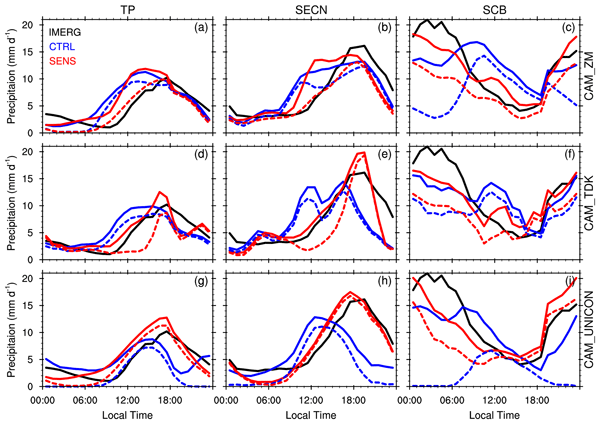
This study advances our understanding of the representation of the diurnal cycle of precipitation (DCP) in numerical models. By systematically comparing three convection schemes with different trigger and closure treatments using a single-column model, this study identifies the physical mechanisms responsible for these biases and evaluates the effectiveness of various modifications in improving DCP simulations over China.
Chang Su, Massimo Bollasina, James Weber, and David Stevenson
Atmos. Chem. Phys., 26, 14439–14469, https://doi.org/10.5194/acp-26-14439-2026, https://doi.org/10.5194/acp-26-14439-2026, 2026
Short summary
Short summary
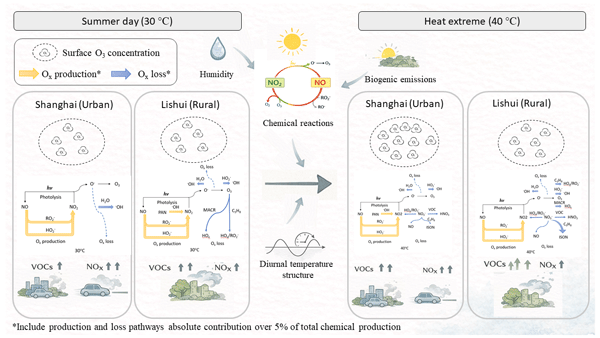
Hot weather can strongly increase surface ozone, a harmful air pollutant, but the reasons differ between urban and rural areas. We studied a large city and a nearby rural region in eastern China using air quality observations and simplified chemistry modelling. We found that heat-driven plant emissions dominate ozone increases in the city, while chemical nitrogen cycling is key in the rural area. Our results help identify heat-resilient air pollution control strategies under climate change.
Zhixiang Li, Jianhua Lu, and Yimin Liu
Weather Clim. Dynam., 7, 1821–1836, https://doi.org/10.5194/wcd-7-1821-2026, https://doi.org/10.5194/wcd-7-1821-2026, 2026
Short summary
Short summary
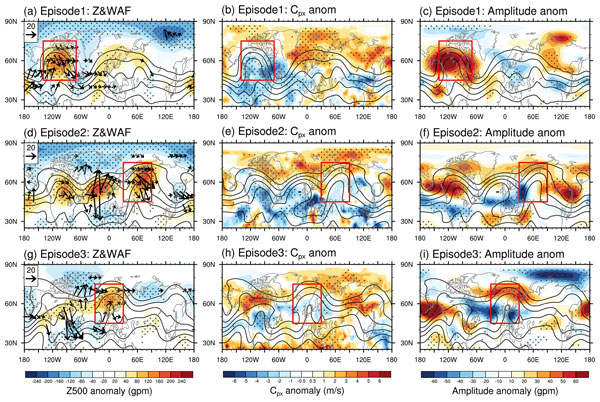
This work studies the dynamical linkages, local wave parameters, and subseasonal predictability of three successive blocking events that are associated with continual extreme events during May–June 2023. These blocks are interconnected via downstream Rossby wave energy dispersion and are dominated by the regime of slowly propagating, large-amplitude planetary-scale waves. Predictability beyond two weeks depends on capturing upstream quasi-stationary troughs and the associated energy dispersion.
Yiran Chen, Jiming Jin, Yimin Liu, Jannik Heusinger, Jesús Carrera, and Zeyu Zhou
Geosci. Model Dev., 19, 8515–8533, https://doi.org/10.5194/gmd-19-8515-2026, https://doi.org/10.5194/gmd-19-8515-2026, 2026
Short summary
Short summary
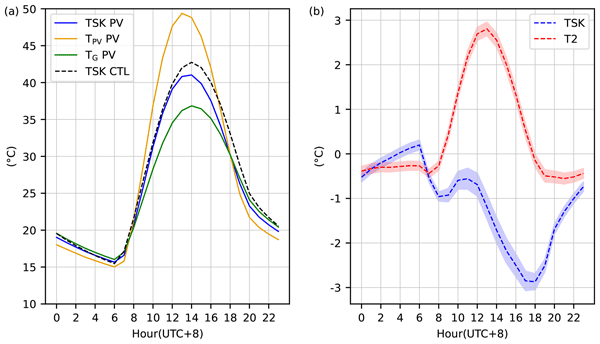
Solar power plants are expanding rapidly worldwide, but their impacts on local climate remain uncertain. In this study, we developed a coupled model that explicitly represents interactions between solar panels, land surface, and the atmosphere. Evaluation against satellite observations showed improved simulation of land surface temperature over solar farms. Simulations show that solar farms can cool the land surface, warm near-surface air, reduce incoming sunlight, and alter rainfall patterns.
Tianhui Zhou and Massimo A. Bollasina
EGUsphere, https://doi.org/10.5194/egusphere-2026-5006, https://doi.org/10.5194/egusphere-2026-5006, 2026
This preprint is open for discussion and under review for Weather and Climate Dynamics (WCD).
Short summary
Short summary
We compare two ways of estimating the climate effects of human-produced aerosols in a global climate model. The two methods give broadly similar results for the historical period, but diverge strongly in the future, especially for rainfall and atmospheric circulation over Asia and the Indo-Pacific. The differences arise because aerosols act within a changing climate shaped by rising greenhouse gases, showing that aerosol impacts depend on the background climate state.
Karen E. Helliesen, Bosi Sheng, and Massimo A. Bollasina
EGUsphere, https://doi.org/10.5194/egusphere-2026-3557, https://doi.org/10.5194/egusphere-2026-3557, 2026
Short summary
Short summary
Midlatitude storms follow preferred pathways known as storm tracks, which shift poleward and change in strength as the climate warms, affecting precipitation across the Northern Hemisphere. Winter changes are less certain due to natural climate fluctuations, while summer changes are more consistent. These findings have implications for regional storm track and rainfall projections and climate adaptation planning.
Tianhui Zhou, Massimo A. Bollasina, and David S. Stevenson
EGUsphere, https://doi.org/10.5194/egusphere-2026-3416, https://doi.org/10.5194/egusphere-2026-3416, 2026
Short summary
Short summary
Future drought risk will be shaped not only by greenhouse-gas-driven warming, but also by changes in air-pollution-related emissions. We examine how reducing non-methane short-lived climate forcers affects future droughts characteristics. The Sahel, Middle East, and Central Asia face substantially worsened drought conditions. Our findings show that air-pollution mitigation can substantially increase future drought risk and population exposure in vulnerable regions.
Ioana Colfescu
EGUsphere, https://doi.org/10.5194/egusphere-2026-2686, https://doi.org/10.5194/egusphere-2026-2686, 2026
Short summary
Short summary
Using a large ensemble and a hierarchy of physically constrained machine-learning models, we examine how NAO predictability evolves under SSP3-7.0. The internal SST–NAO teleconnection remains broadly stable, the externally forced SST–NAO relationship changes substantially and reverses sign by late century. The results suggest that future changes in the North Atlantic mean state may alter the basis of seasonal NAO predictability even if the underlying internal teleconnection remains intact.
Bosi Sheng, Massimo A. Bollasina, Alexandre S. Gagnon, Laura J. Wilcox, Thomas P. S. Reynolds, Christopher T. S. Beckett, Haolin Wang, Qingxiang Li, Pierre Nabat, Robert J. Allen, Bjørn H. Samset, Joonas Merikanto, Geeta G. Persad, Toshihiko Takemura, Kostas Tsigaridis, Sharar Ahmadi, Maxwell T. Elling, Knut von Salzen, Daniel M. Westervelt, Naga Oshima, and Tsuyoshi Koshiro
EGUsphere, https://doi.org/10.5194/egusphere-2026-2198, https://doi.org/10.5194/egusphere-2026-2198, 2026
Short summary
Short summary
Observational records indicate that austral summer rainfall over southern Africa experienced substantial wetting during the late 20th century, followed by pronounced drying over the past two decades. We show that East Asian sulphate aerosol emissions played a key role in shaping these rainfall trends. These findings have important implications for reducing uncertainties in regional rainfall projections and for understanding their links to ecosystem changes.
Yanjie Liu, Xiaocong Wang, Yimin Liu, Shuaiqi Tang, and Hao Miao
Atmos. Chem. Phys., 26, 6763–6779, https://doi.org/10.5194/acp-26-6763-2026, https://doi.org/10.5194/acp-26-6763-2026, 2026
Short summary
Short summary
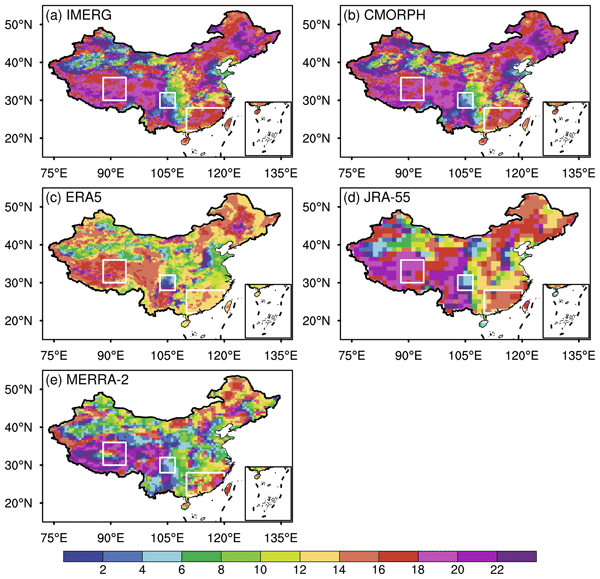
This study investigates how well operational models simulate the diurnal cycle of summer rainfall over China. Comparing three reanalyses shows all capture nocturnal precipitation peak but differ in afternoon rainfall timing: JRA‑55 and MERRA‑2 match observations better, while ERA5 exhibits a 3-hour phase advance. These differences are linked to how large-scale forcing is use in convection parameterization, underscoring the critical role of trigger on cumulus convection.
Mei Chong, Shengkai Wang, Xi Chen, Yuan Liang, Bing Pu, Shian-Jiann Lin, Zhi Liang, and Yimin Liu
Earth Syst. Sci. Data Discuss., https://doi.org/10.5194/essd-2025-628, https://doi.org/10.5194/essd-2025-628, 2026
Preprint under review for ESSD
Short summary
Short summary
The wind speed needed to lift dust from surfaces governs the highest uncertainty in emission models, making it the root cause of dust forecasting errors. We developed iDust-ut, a global threshold dataset by fusing ground observations, satellite data, and reanalysis products. Tests with the iDust model show doubled severe dust storm prediction accuracy. The dataset works directly in any model with built-in adaptation for wind biases, substantially improving operational dust forecasting worldwide.
Zixuan Jia, Massimo A. Bollasina, Wenjun Zhang, and Ying Xiang
Atmos. Chem. Phys., 25, 8805–8820, https://doi.org/10.5194/acp-25-8805-2025, https://doi.org/10.5194/acp-25-8805-2025, 2025
Short summary
Short summary
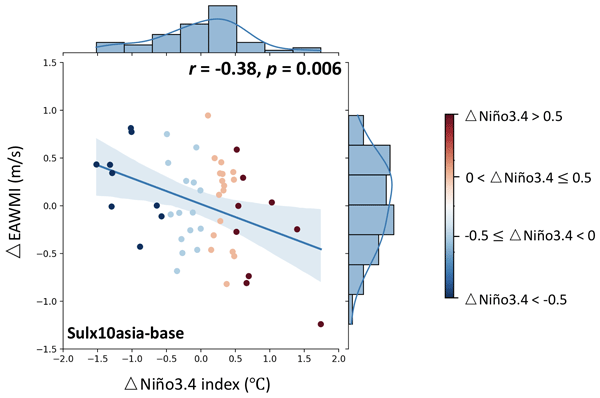
Using multi-model mean data from regional aerosol perturbation experiments, we find that increased Asian sulfate aerosols strengthen the link between ENSO (El Niño–Southern Oscillation) and the East Asian winter monsoon. In coupled simulations, aerosol-induced broad cooling increases the ENSO amplitude by affecting the tropical Pacific mean state, contributing to the increase in monsoon interannual variability. These results provide important implications to reduce uncertainties in future projections of regional extreme variability.
Duncan Watson-Parris, Laura J. Wilcox, Camilla W. Stjern, Robert J. Allen, Geeta Persad, Massimo A. Bollasina, Annica M. L. Ekman, Carley E. Iles, Manoj Joshi, Marianne T. Lund, Daniel McCoy, Daniel M. Westervelt, Andrew I. L. Williams, and Bjørn H. Samset
Atmos. Chem. Phys., 25, 4443–4454, https://doi.org/10.5194/acp-25-4443-2025, https://doi.org/10.5194/acp-25-4443-2025, 2025
Short summary
Short summary
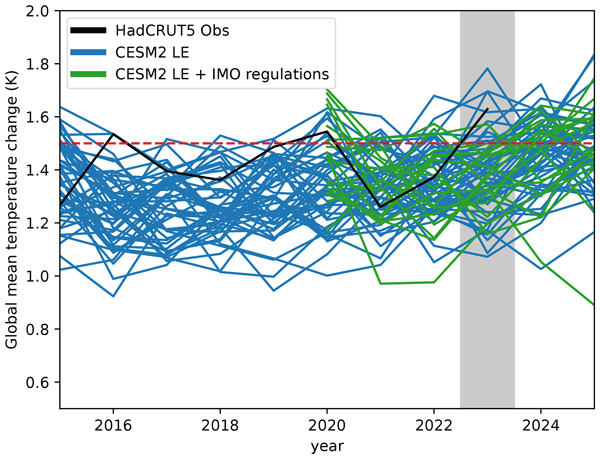
In 2020, regulations by the International Maritime Organization aimed to reduce aerosol emissions from ships. These aerosols previously had a cooling effect, which the regulations might reduce, revealing more greenhouse gas warming. Here we find that, while there is regional warming, the global 2020–2040 temperature rise is only +0.03 °C. This small change is difficult to distinguish from natural climate variability, indicating the regulations have had a limited effect on observed warming to date.
Yangke Liu, Qing Bao, Bian He, Xiaofei Wu, Jing Yang, Yimin Liu, Guoxiong Wu, Tao Zhu, Siyuan Zhou, Yao Tang, Ankang Qu, Yalan Fan, Anling Liu, Dandan Chen, Zhaoming Luo, Xing Hu, and Tongwen Wu
Geosci. Model Dev., 17, 6249–6275, https://doi.org/10.5194/gmd-17-6249-2024, https://doi.org/10.5194/gmd-17-6249-2024, 2024
Short summary
Short summary
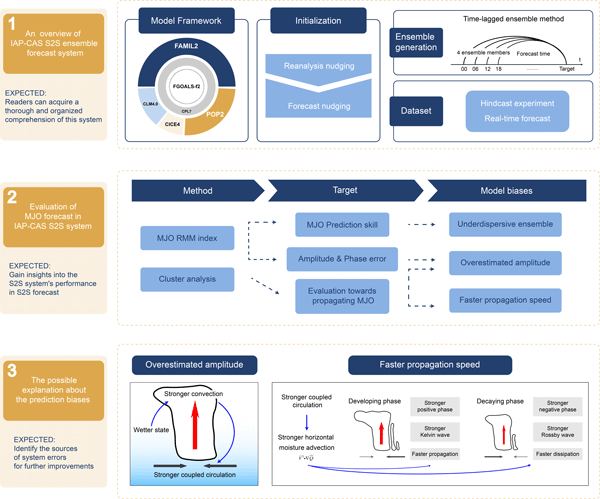
We give an overview of the Institute of Atmospheric Physics–Chinese Academy of Sciences subseasonal-to-seasonal ensemble forecasting system and Madden–Julian Oscillation forecast evaluation of the system. Compared to other S2S models, the IAP-CAS model has its benefits but also biases, i.e., underdispersive ensemble, overestimated amplitude, and faster propagation speed when forecasting MJO. We provide a reason for these biases and prospects for further improvement of this system in the future.
Zhen Liu, Massimo A. Bollasina, and Laura J. Wilcox
Atmos. Chem. Phys., 24, 7227–7252, https://doi.org/10.5194/acp-24-7227-2024, https://doi.org/10.5194/acp-24-7227-2024, 2024
Short summary
Short summary
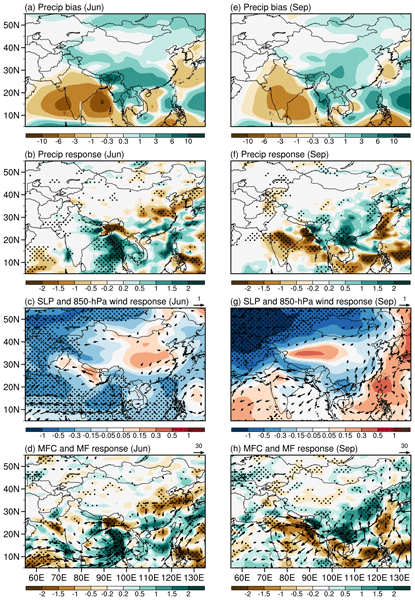
The aerosol impact on monsoon precipitation and circulation is strongly influenced by a model-simulated spatio-temporal variability in the climatological monsoon precipitation across Asia, which critically modulates the efficacy of aerosol–cloud–precipitation interactions, the predominant driver of the total aerosol response. There is a strong interplay between South Asia and East Asia monsoon precipitation biases and their relative predominance in driving the overall monsoon response.
Joseph Smith, Cathryn Birch, John Marsham, Simon Peatman, Massimo Bollasina, and George Pankiewicz
Nat. Hazards Earth Syst. Sci., 24, 567–582, https://doi.org/10.5194/nhess-24-567-2024, https://doi.org/10.5194/nhess-24-567-2024, 2024
Short summary
Short summary
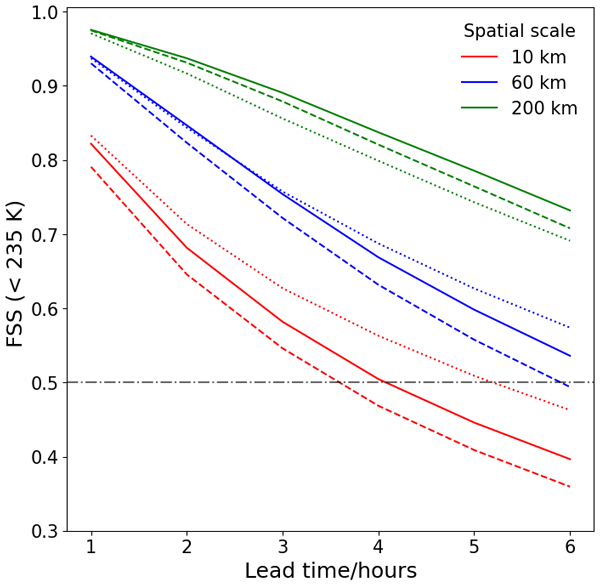
Nowcasting uses observations to make predictions of the atmosphere on short timescales and is particularly applicable to the Maritime Continent, where storms rapidly develop and cause natural disasters. This paper evaluates probabilistic and deterministic satellite nowcasting algorithms over the Maritime Continent. We show that the probabilistic approach is most skilful at small scales (~ 60 km), whereas the deterministic approach is most skilful at larger scales (~ 200 km).
Laura J. Wilcox, Robert J. Allen, Bjørn H. Samset, Massimo A. Bollasina, Paul T. Griffiths, James Keeble, Marianne T. Lund, Risto Makkonen, Joonas Merikanto, Declan O'Donnell, David J. Paynter, Geeta G. Persad, Steven T. Rumbold, Toshihiko Takemura, Kostas Tsigaridis, Sabine Undorf, and Daniel M. Westervelt
Geosci. Model Dev., 16, 4451–4479, https://doi.org/10.5194/gmd-16-4451-2023, https://doi.org/10.5194/gmd-16-4451-2023, 2023
Short summary
Short summary
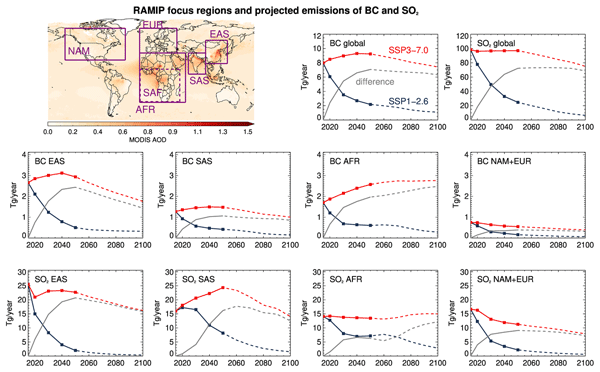
Changes in anthropogenic aerosol emissions have strongly contributed to global and regional climate change. However, the size of these regional impacts and the way they arise are still uncertain. With large changes in aerosol emissions a possibility over the next few decades, it is important to better quantify the potential role of aerosol in future regional climate change. The Regional Aerosol Model Intercomparison Project will deliver experiments designed to facilitate this.

Andrew P. Schurer, Gabriele C. Hegerl, Hugues Goosse, Massimo A. Bollasina, Matthew H. England, Michael J. Mineter, Doug M. Smith, and Simon F. B. Tett
Clim. Past, 19, 943–957, https://doi.org/10.5194/cp-19-943-2023, https://doi.org/10.5194/cp-19-943-2023, 2023
Short summary
Short summary
We adopt an existing data assimilation technique to constrain a model simulation to follow three important modes of variability, the North Atlantic Oscillation, El Niño–Southern Oscillation and the Southern Annular Mode. How it compares to the observed climate is evaluated, with improvements over simulations without data assimilation found over many regions, particularly the tropics, the North Atlantic and Europe, and discrepancies with global cooling following volcanic eruptions are reconciled.

Jacob T. Shaw, Amy Foulds, Shona Wilde, Patrick Barker, Freya A. Squires, James Lee, Ruth Purvis, Ralph Burton, Ioana Colfescu, Stephen Mobbs, Samuel Cliff, Stéphane J.-B. Bauguitte, Stuart Young, Stefan Schwietzke, and Grant Allen
Atmos. Chem. Phys., 23, 1491–1509, https://doi.org/10.5194/acp-23-1491-2023, https://doi.org/10.5194/acp-23-1491-2023, 2023
Short summary
Short summary
Flaring is used by the oil and gas sector to dispose of unwanted natural gas or for safety. However, few studies have assessed the efficiency with which the gas is combusted. We sampled flaring emissions from offshore facilities in the North Sea. Average measured flaring efficiencies were ~ 98 % but with a skewed distribution, including many flares of lower efficiency. NOx and ethane emissions were also measured. Inefficient flaring practices could be a target for mitigating carbon emissions.

Nora L. S. Fahrenbach and Massimo A. Bollasina
Atmos. Chem. Phys., 23, 877–894, https://doi.org/10.5194/acp-23-877-2023, https://doi.org/10.5194/acp-23-877-2023, 2023
Short summary
Short summary
We studied the monthly-scale climate response to COVID-19 aerosol emission reductions during January–May 2020 using climate models. Our results show global temperature and rainfall anomalies driven by circulation changes. The climate patterns reverse polarity from JF to MAM due to a shift in the main SO2 reduction region from China to India. This real-life example of rapid climate adjustments to abrupt, regional aerosol emission reduction has large implications for future climate projections.
Liang Guo, Laura J. Wilcox, Massimo Bollasina, Steven T. Turnock, Marianne T. Lund, and Lixia Zhang
Atmos. Chem. Phys., 21, 15299–15308, https://doi.org/10.5194/acp-21-15299-2021, https://doi.org/10.5194/acp-21-15299-2021, 2021
Short summary
Short summary
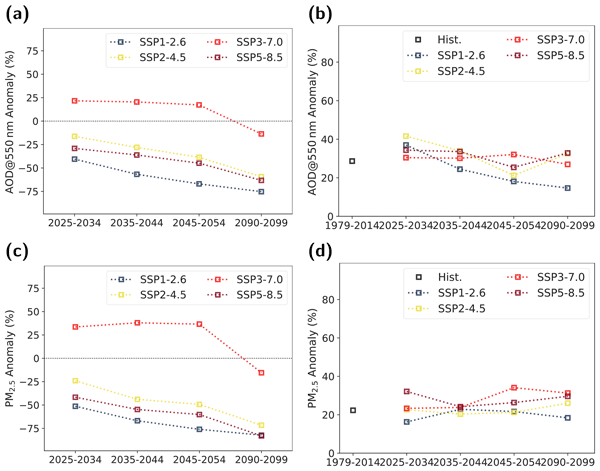
Severe haze remains serious over Beijing despite emissions decreasing since 2008. Future haze changes in four scenarios are studied. The pattern conducive to haze weather increases with the atmospheric warming caused by the accumulation of greenhouse gases. However, the actual haze intensity, measured by either PM2.5 or optical depth, decreases with aerosol emissions. We show that only using the weather pattern index to predict the future change of Beijing haze is insufficient.
Cited articles
Allan, R. and Ansell, T.: A New Globally Complete Monthly Historical Gridded Mean Sea Level Pressure Dataset (HadSLP2): 1850–2004, J. Climate, 19, https://doi.org/10.1175/JCLI3937.1, 2006.
Andrews, T. and Forster, P. M.: Energy budget constraints on historical radiative forcing, Nat. Clim. Chang., 10, https://doi.org/10.1038/s41558-020-0696-1, 2020.
Bartlett, R. E., Bollasina, M. A., Booth, B. B. B., Dunstone, N. J., Marenco, F., Messori, G., and Bernie, D. J.: Do differences in future sulfate emission pathways matter for near-term climate? A case study for the Asian monsoon, Clim. Dynam., 50, https://doi.org/10.1007/s00382-017-3726-6, 2018.
Bellouin, N., Quaas, J., Gryspeerdt, E., Kinne, S., Stier, P., Watson-Parris, D., Boucher, O., Carslaw, K. S., Christensen, M., Daniau, A.-L., Dufresne, J.-L., Feingold, G., Fiedler, S., Forster, P., Gettelman, A., Haywood, J. M., Lohmann, U., Malavelle, F., Mauritsen, T., McCoy, D. T., Myhre, G., Mülmenstädt, J., Neubauer, D., Possner, A., Rugenstein, M., Sato, Y., Schulz, M., Schwartz, S. E., Sourdeval, O., Storelvmo, T., Toll, V., Winker, D., and Stevens, B.: Bounding aerosol radiative forcing of climate change, Rev. Geophys., 58, https://doi.org/10.1029/2019RG000660, 2020.
Bollasina, M. A., Ming, Y., and Ramaswamy, V.: Anthropogenic aerosols and the weakening of the South Asian summer monsoon, Science, 334, https://doi.org/10.1126/science.1204994, 2011.
Bollasina, M. A., Ming, Y., Ramaswamy, V., Schwarzkopf, M. D., and Naik, V.: Contribution of local and remote anthropogenic aerosols to the twentieth century weakening of the South Asian monsoon, Geophys. Res. Lett., 41, https://doi.org/10.1002/2013GL058183, 2014.
Boucher, O., Randall, D., Artaxo, P., Bretherton, C., Feingold, G., Forster, P., Kerminen, V.-M., Kondo, Y., Liao, H., Lohmann, U., Rasch, P., Satheesh, S., Sherwood, S., Stevens, B., and Zhang, X.: Clouds and aerosols, in: Climate change 2013: The physical science basis. Contribution of Working Group I to the Fifth Assessment Report of the Intergovernmental Panel on Climate Change, edited by: Stocker, T., Qin, D., Plattner, G.-K., Tignor, M., Allen, S., Boschung, J., Nauels, A., Xia, Y., Bex, V., and Midgley, P., chap. 7, 571–658, Cambridge University Press, Cambridge, United Kingdom and New York, NY, USA, https://doi.org/10.1017/CBO9781107415324.016, 2013.
Cowan, T. and Cai, W.: The impact of Asian and non-Asian anthropogenic aerosols on 20th century Asian summer monsoon, Geophys. Res. Lett., 38, https://doi.org/10.1029/2011GL047268, 2011.
Deser, C., Phillips, A., Bourdette, V., and Teng, H.: Uncertainty in climate change projections: the role of internal variability, Clim. Dynam., 38, https://doi.org/10.1007/s00382-010-0977-x, 2012.
Dong, B., Sutton, R. T., Highwood, E. J., and Wilcox, L. J.: Preferred response of the East Asian summer monsoon to local and non-local anthropogenic sulphur dioxide emissions, Clim. Dynam., 46, https://doi.org/10.1007/s00382-015-2671-5, 2016.
Dong, B., Wilcox, L. J., Highwood, E. J., and Sutton, R. T.: Impacts of recent decadal changes in Asian aerosols on the East Asian summer monsoon: roles of aerosol–radiation and aerosol–cloud interactions, Clim. Dynam., 53, https://doi.org/10.1007/s00382-019-04698-0, 2019.
Enomoto, T., Hoskins, B. J., and Matsuda, Y.: The formation mechanism of the Bonin high in August, Q. J. Roy. Meteor. Soc., 129, https://doi.org/10.1256/qj.01.211, 2003.
Gadgil, S. and Rupa Kumar, K.: The Asian monsoon – agriculture and economy, in: The Asian Monsoon. Springer Praxis Books, Springer, Berlin, Heidelberg, https://doi.org/10.1007/3-540-37722-0_18, 2006.
Ghan, S. J., Liu, X., Easter, R. C., Zaveri, R., Rasch, P. J., Yoon, J.-H., and Eaton, B.: Toward a minimal representation of aerosols in climate models: Comparative decomposition of aerosol direct, semidirect, and indirect radiative forcing, J. Climate, 25, https://doi.org/10.1175/JCLI-D-11-00650.1, 2012.
Goswami, D. J., Ashok, K., and Goswami, B. N.: Local ocean–atmosphere interaction in Indian summer monsoon multi-decadal variability, Clim. Dynam., 60, https://doi.org/10.1007/s00382-022-06377-z, 2023.
Guo, L., Highwood, E. J., Shaffrey, L. C., and Turner, A. G.: The effect of regional changes in anthropogenic aerosols on rainfall of the East Asian Summer Monsoon, Atmos. Chem. Phys., 13, 1521–1534, https://doi.org/10.5194/acp-13-1521-2013, 2013.
Guo, L., Turner, A. G., and Highwood, E. J.: Impacts of 20th century aerosol emissions on the South Asian monsoon in the CMIP5 models, Atmos. Chem. Phys., 15, 6367–6378, https://doi.org/10.5194/acp-15-6367-2015, 2015.
Guo, L., Turner, A. G., and Highwood, E. J.: Local and Remote Impacts of Aerosol Species on Indian Summer Monsoon Rainfall in a GCM, J. Climate, 29, https://doi.org/10.1175/JCLI-D-15-0728.1, 2016.
Harris, I., Jones, P. D., Osborn, T. J., and Lister, D. H.: Updated high-resolution grids of monthly climatic observations – the CRU TS3.10 Dataset, Int. J. Climatol., 34, https://doi.org/10.1002/joc.3711, 2014.
He, L., Zhou, T., and Chen, X.: South Asian summer rainfall from CMIP3 to CMIP6 models: biases and improvements, Clim. Dynam., 61, https://doi.org/10.1007/s00382-022-06542-4, 2023.
Hegerl, G. C., Bronnimann, S., Cowan, T., Friedman, A. R., Hawkins, E., Iles, C., Müller, W., Schurer, A., and Undorf, S.: Causes of climate change over the historical record, Environ. Res. Lett., 14, https://doi.org/10.1088/1748-9326/ab4557, 2019.
Hersbach, H., Bell, B., Berrisford, P., Hirahara, S., Horányi, A., Sabater, J. M., Nicolas, J., Peubey, C., Radu, R., Schepers, D., Simmons, A., Soci, C., Abdalla, S., Abellan, X., Balsamo, G., Bechtold, P., Biavati, G., Bidlot, J., Bonavita, M., De Chiara, G., Dahlgren, P., Dee, D., Diamantakis, M., Dragani, R., Flemming, J., Forbes, R., Fuentes, M., Geer, A., Haimberger, L., Healy, S., Hogan, R. J., Hólm, E., Janisková, M., Keeley, S., Laloyaux, P., Lopez, P., Lupu, C., Radnoti, G., de Rosnay, P., Rozum, I., Vamborg, F., Villaume, S., and Thépaut, J.-N.: The ERA5 global reanalysis, Q. J. Roy. Meteor. Soc., 146, https://doi.org/10.1002/qj.3803, 2020.
Hoesly, R. M., Smith, S. J., Feng, L., Klimont, Z., Janssens-Maenhout, G., Pitkanen, T., Seibert, J. J., Vu, L., Andres, R. J., Bolt, R. M., Bond, T. C., Dawidowski, L., Kholod, N., Kurokawa, J.-I., Li, M., Liu, L., Lu, Z., Moura, M. C. P., O'Rourke, P. R., and Zhang, Q.: Historical (1750–2014) anthropogenic emissions of reactive gases and aerosols from the Community Emissions Data System (CEDS), Geosci. Model Dev., 11, 369–408, https://doi.org/10.5194/gmd-11-369-2018, 2018.
Huang, X., Zhou, T., Turner, A., Dai, A., Chen, X., Clark, R., Jiang, J., Man, W., Murphy, J., Rostron, J., Wu, B., Zhang, L., Zhang, W., and Zou, L.: The recent decline and recovery of Indian summer monsoon rainfall: relative roles of external forcing and internal variability, J. Climate, 33, https://doi.org/10.1175/JCLI-D-19-0833.1, 2020.
Hurrell, J. W., Holland, M. M., Gent, P. R., Ghan, S., Kay, J. E., Kushner, P. J., Lamarque, J.-F., Large, W. G., Lawrence, D., Lindsay, K., Lipscomb, W. H., Long, M. C., Mahowald, N., Marsh, D. R., Neale, R. B., Rasch, P., Vavrus, S., Vertenstein, M., Bader, D., Collins, W. D., Hack, J. J., Kiehl, J., and Marshall, S.: The Community Earth System Model, Bull. Amer. Met. Soc., 94, https://doi.org/10.1175/BAMS-D-12-00121.1, 2013.
Koffi, B., Dentener, F., Janssens-Maenhout, G., Guizzardi, D., Crippa, M., Dielhl, T., Galmarini, S., and Solazzo, E.: Hemispheric transport air pollution (HTAP): Specification of the HTAP2 experiments ensuring harmonized modelling (Tech. rep.) Luxembourg: Joint Research Centre JRC. https://doi.org/10.2788/725244, 2016.
Lau, W. K. M.: The aerosol-monsoon climate system of Asia: A new paradigm, J. Meteor. Res., 30, https://doi.org/10.1007/s13351-015-5999-1, 2016.
Li, J., Carlson, B. E., Yung, Y. L., Lv, D., Hansen, J., Penner, J. E., Liao, H., Ramaswamy, V., Kahn, R. A., Zhang, P., Dubovik, O., Ding, A., Lacis, A. A., Zhang, L., and Dong, Y.: Scattering and absorbing aerosols in the climate system, Nat. Rev. Earth Environ., 3, https://doi.org/10.1038/s43017-022-00296-7, 2022.
Li, X., Ting, M., Li, C., and Henderson, N.: Mechanisms of Asian summer monsoon changes in response to anthropogenic forcing in CMIP5 models, J. Climate, 28, https://doi.org/10.1175/JCLI-D-14-00559.1, 2015.
Li, X., Li, Q., Ding, Y., Yang, S., Dong, L., Yu, J., Shen, X., Wu, Q., and Sun, X.: Possible influence of the interdecadal variation of the extratropical southern Indian Ocean SST on East Asian summer monsoon precipitation, Atmos. Res., 288, https://doi.org/10.1016/j.atmosres.2023.106721, 2023.
Li, Z., Lau, W. K.-M., Ramanathan, V., Wu, G., Ding, Y., Manoj, M. G., Liu, J., Qian, Y., Li, J., Zhou, T., Fan, J., Rosenfeld, D., Ming, Y., Wang, Y., Huang, J., Wang, B., Xu, X., Lee, S.-S., Cribb, M., Zhang, F., Yang, X., Zhao, C., Takemura, T., Wang, K., Xia, X., Yin, Y., Zhang, H., Guo, J., Zhai, P. M., Sugimoto, N., Babu, S. S., and Brasseur, G. P.: Aerosol and monsoon climate interactions over Asia, Rev. Geophys., 54, https://doi.org/10.1002/2015RG000500, 2016.
Liu, L., Shawki, D., Voulgarakis, A., Kasoar, M., Samset, B. H., G. Myhre, Forster, P. M., Hodnebrog, Ø., Sillmann, J., Aalbergsjø, S. G., Boucher, O., Faluvegi, G., Iversen, T., Kirkevåg, A., Lamarque, J.-F., Olivié, D., Richardson, T., Shindell, D., and Takemura, T.: A PDRMIP Multimodel study on the impacts of regional aerosol forcings on global and regional precipitation, J. Climate, 31, https://doi.org/10.1175/JCLI-D-17-0439.1, 2018.
Liu, Y., Cai, W., Sun, C., Song, H., Cobb, K. M., Li, J., Leavitt, S. W., Wu, L., Cai, Q., Liu, R., Ng, B., Cherubini, P., Büntgen, U., and Song, Y.: Anthropogenic aerosols cause recent pronounced weakening of Asian summer monsoon relative to last four centuries, Geophys. Res. Lett., 46, 5469–5479, https://doi.org/10.1029/2019GL082497, 2019.
Liu, Z., Bollasina, M. A., and Wilcox, L. J.: Impact of Asian aerosols on the summer monsoon strongly modulated by regional precipitation biases, Atmos. Chem. Phys., 24, 7227–7252, https://doi.org/10.5194/acp-24-7227-2024, 2024.
Lu, R.-Y., Oh, J. H., and Kim, B. J.: A teleconnection pattern in upper-level meridional wind over the North African and Eurasian continent in summer, Tellus A, 54, https://doi.org/10.3402/tellusa.v54i1.12122, 2002.
Lund, M. T., Myhre, G., and Samset, B. H.: Anthropogenic aerosol forcing under the Shared Socioeconomic Pathways, Atmos. Chem. Phys., 19, 13827–13839, https://doi.org/10.5194/acp-19-13827-2019, 2019.
Meehl, G. A. and Arblaster, J. M.: GCM sensitivity experiments for the Indian monsoon and tropospheric biennial oscillation transition conditions, J. Climate, 15, https://doi.org/10.1175/1520-0442(2002)015<0923:imgset>2.0.co;2, 2002.
Meehl, G. A., Shields, C., Arblaster, J. M., Annamalai, H., and Neale, R.: Intraseasonal, seasonal, and interannual characteristics of regional monsoon simulations in CESM2, J. Adv. Model. Earth Sys., 12, https://doi.org/10.1029/2019MS001962, 2020.
Meehl, G. A., Shields, C. A., Arblaster, J. M., Fasullo, J., Rosenbloom, N., Hu, A., Neale, R., Capotondi, A., Golaz, J.-C., Van Roekel, L., and Annamalai, H.: Processes that contribute to future South Asian monsoon differences in E3SMv2 and CESM2, Geophys. Res. Lett., 51, https://doi.org/10.1029/2024GL109056, 2024.
Neale, R. B., Gettelman, A., Park, S., Chen, C.-C., Lauritzen, P. H., Williamson, D. L., Conley, A. J., Kinnison, D., Marsh, D., Smith, A. K., Vitt, F., Garcia, R., Lamarque, J.-F., Mills, M., Tilmes, S., Morrison, H., Cameron-Smith, P., Collins, W. D., Iacono, M. J., Easter, R. C., Liu, X., Ghan, S. J., Rasch, P. J., and Taylor, M. A.: Description of the NCAR Community Atmosphere Model (CAM 5.0), NCAR technical note, NCAR/TN-48, 274, https://doi.org/10.5065/D6N877R0, 2012.
Persad, G., Samset, B. H., Wilcox, L. J., Allen, R. J., Bollasina, M. A., Booth, B. B. B., Bonfils, C., Crocker, T., Joshi, M., Lund, M. T., Marvel, K., Merikanto, J., Nordling, K., Undorf, S., van Vuuren, D. P., Westervelt, D. M., and Zhao, A.: Rapidly evolving aerosol emissions are a dangerous omission from near-term climate risk assessments, Environ. Res. Climate, 2, https://doi.org/10.1088/2752-5295/acd6af, 2023.
Preethi, B., Mujumdar, M., Kripalani, R. H., Prabhu, A., and Krishnan, R.: Recent trends and tele-connections among South and East Asian summer monsoons in a warming environment, Clim. Dynam., 48, https://doi.org/10.1007/s00382-016-3218-0, 2017.
Rajesh, P. V. and Goswami, B. N.: Four-dimensional structure and sub-seasonal regulation of the Indian summer monsoon multi-decadal mode, Clim. Dynam., 55, https://doi.org/10.1007/s00382-020-05407-y, 2020.
Rao, S. A., Dhakate, A. R., Saha, S. K., Mahapatra, S., Chaudhari, H. S., Pokhrel, S., and Sahu, S. K.: Why is Indian Ocean warming consistently?, Climatic Change, 110, https://doi.org/10.1007/s10584-011-0121-x, 2012.
Rodwell, M. J. and Hoskins, B. J.: Subtropical anticyclones and summer monsoons, J. Climate, 14, https://doi.org/10.1175/1520-0442(2001)014<3192:SAASM>2.0.CO;2, 2001.
Roxy, M., Ritika, K., Terray, P., Murtugudde, R., Ashok, K., and Goswami, B. N.: Drying of Indian subcontinent by rapid Indian Ocean warming and a weakening land-sea thermal gradient, Nat. Commun., 6, https://doi.org/10.1038/ncomms8423, 2015.
Roxy, M. K., Ritika, K., Terray, P., and Masson, S.: The curious case of Indian Ocean warming, J. Climate, 27, https://doi.org/10.1175/JCLI-D-14-00471.1, 2014.
Saha, A. and Ghosh, S.: Can the weakening of the Indian Monsoon be attributed to anthropogenic aerosols?, Environ. Res. Commun., 1, https://doi.org/10.1088/2515-7620/ab2c65, 2019.
Salzmann, M. and Cherian, R.: On the enhancement of the Indian summer monsoon drying by Pacific multidecadal variability during the latter half of the twentieth century, J. Geophys. Res. Atmos., 120, https://doi.org/10.1002/2015JD023313, 2015.
Salzmann, M., Weser, H., and Cherian, R.: Robust response of Asian summer monsoon to anthropogenic aerosols in CMIP5 models, J. Geophys. Res. Atmos., 119, https://doi.org/10.1002/2014JD021783, 2014.
Samset, B. H., Sand, M., Smith, C. J., Bauer, S. E., Forster, P. M., Fuglestvedt, J. S., Osprey, S., and Schleussner, C.-F.: Climate impacts from a removal of anthropogenic aerosol emissions, Geophys. Res. Lett., 45, https://doi.org/10.1002/2017GL076079, 2018.
Samset, B. H., Lund, M. T., Bollasina, M., Myhre, G., and Wilcox, L.: Emerging Asian aerosol patterns, Nat. Geosci., 12, https://doi.org/10.1038/s41561-019-0424-5, 2019.
Schneider, U., Becker, A., Finger, P., Meyer-Christoffer, A., Ziese, M., and Rudolf, B.: GPCC's new land surface precipitation climatology based on quality-controlled in situ data and its role in quantifying the global water cycle, Theor. Appl. Climatol., 115, https://doi.org/10.1007/s00704-013-0860-x, 2014.
Shao, Z., Wang, H., Geng, Y. F., Diao, C., Xu, Y., and Zheng, X.-T.: East Asian summer monsoon response to anthropogenic aerosols redistribution: contrasting 1950–1980 and 1980–2010 to understand the role of non-Asian forcing, Clim. Dynam., 62, https://doi.org/10.1007/s00382-023-07016-x, 2024.
Shawki, D., Voulgarakis, A., Chakraborty, A., Kasoar, M., and Srinivasan, J.: The South Asian monsoon response to remote aerosols: Global and regional mechanisms, J. Geophys. Res., 123, https://doi.org/10.1029/2018JD028623, 2018.
Simpson, I. R., Rosenbloom, N., Danabasoglu, G., Deser, C., Yeager, S. G., McCluskey, C. S., Yamaguchi, R., Lamarque, J.-F., Tilmes, S., Mills, M. J., and Rodgers, K. B.: The CESM2 single-forcing large ensemble and comparison to CESM1: implications for experimental design, J. Climate, 36, https://doi.org/10.1175/JCLI-D-22-0666.1, 2023.
Smith, D., Gillett, N. P., Simpson, I. R., Athanasiadis, P. J., Baehr, J., Bethke, I., Tarkan, A., Bonnet, R., Boucher, O., Findell, K. L., Gastineau, G., Gualdi, S., Hermanson, L., Leung, L. R., Mignot, J., Müller, W. A., Osprey, S., Otterå, O. H., Persad, G. G., Scaife, A. A., Schmidt, G. A., Shiogama, H., Sutton, R. T., Swingedouw, D., Yang, S., Zhou, T., and Ziehn T.: Attribution of multi-annual to decadal changes in the climate system: The large ensemble single forcing model intercomparison project (LESFMIP), Front. Clim., 4, https://doi.org/10.3389/fclim.2022.955414, 2022.
Smith, S. J., van Aardenne, J., Klimont, Z., Andres, R. J., Volke, A., and Delgado Arias, S.: Anthropogenic sulfur dioxide emissions: 1850–2005, Atmos. Chem. Phys., 11, 1101–1116, https://doi.org/10.5194/acp-11-1101-2011, 2011.
Song, F., Zhou, T., and Qian, Y.: Responses of East Asian summer monsoon to natural and anthropogenic forcings in the 17 latest CMIP5 models, Geophys. Res. Lett., 41, https://doi.org/10.1002/2013GL058705, 2014.
Stier, P., van den Heever, S.C., Christensen, M.W., Gryspeerdt, E., Dagan, G., Saleeby, S. M., Bollasina, M., Donner, L., Emanuel, K., Ekman, A. M. L., Feingold, G., Field, P., Forster, P., Haywood, J., Kahn, R., Koren, I., Kummerow, C., L'Ecuyer, T., Lohmann, U., Ming, Y., Myhre, G., Quaas, J., Rosenfeld, D., Samset, B., Seifert, A., Stephens, G., and Tao, W.-K.: Multifaceted aerosol effects on precipitation, Nat. Geosci., 17, https://doi.org/10.1038/s41561-024-01482-6, 2024.
Swapna, P., Krishnan, R., and Wallace, J. M: Indian Ocean and monsoon coupled interactions in a warming environment, Clim. Dynam., 42, https://doi.org/10.1007/s00382-013-1787-8, 2014.
Szopa, S., Naik, V., Adhikary, B., Artaxo, P., Berntsen, T., Collins, W. D., Fuzzi, S., Gallardo, L., Kiendler-Scharr, A., Klimont, Z., Liao, H., Unger, N., and Zanis, P.: Short-Lived Climate Forcers, in: Climate Change 2021: The Physical Science Basis. Contribution of Working Group I to the Sixth Assessment Report of the Intergovernmental Panel on Climate Change, edited by: Masson-Delmotte, V., Zhai, P., Pirani, A., Connors, S. L., Péan, C., Berger, S., Caud, N., Chen, Y., Goldfarb, L., Gomis, M. I., Huang, M., Leitzell, K., Lonnoy, E., Matthews, J. B. R., Maycock, T. K., Waterfield, T., Yelekçi, O., Yu, R., and Zhou, B., Cambridge University Press, Cambridge, United Kingdom and New York, NY, USA, 817–922, https://doi.org/10.1017/9781009157896.008, 2021.
Takaya, K. and Nakamura, H.: A formulation of a phase-independent wave-activity flux for stationary and migratory quasigeostrophic eddies on a zonally varying basic flow, J. Atmos. Sci., 58, https://doi.org/10.1175/1520-0469(2001)058<0608:AFOAPI>2.0.CO;2, 2001.
Turner, A. and Annamalai, H.: Climate change and the South Asian summer monsoon, Nature Clim. Change, 2, https://doi.org/10.1038/nclimate1495, 2012.
Undorf, S., Bollasina, M., Booth, B., and Hegerl, G.: Contrasting the effects of the 1850–1975 increase in sulphate aerosols from North America and Europe on the Atlantic in the CESM, Geophys. Res. Lett., 45, https://doi.org/10.1029/2018GL079970, 2018a.
Undorf, S., Polson, D., Bollasina, M. A., Ming, Y., Schurer, A., and Hegerl, G. C.: Detectable impact of local and remote anthropogenic aerosols on the 20th century changes of West African and South Asian monsoon precipitation, J. Geophys. Res., 123, https://doi.org/10.1029/2017JD027711, 2018b.
Wang, B., Li, J., Cane, M. A., Liu, J., Webster, P. J., Xiang, B., Kim, H.-M., Cao, J., and Ha, K.-J.: Toward predicting changes in the land monsoon rainfall a decade in advance, J. Climate, 31, https://doi.org/10.1175/JCLI-D-17-0521.1, 2018.
Wang, Q., Wang, Z., and Zhang, H.: Impact of anthropogenic aerosols from global, East Asian, and non-East Asian sources on East Asian summer monsoon system, Atmos. Res., 183, https://doi.org/10.1016/j.atmosres.2016.08.023, 2017.
Wang, Z., Mu, J., Yang, M., and Yu, X.: Reexamining the mechanisms of East Asian summer monsoon changes in response to non–East Asian anthropogenic aerosol forcing, J. Climate, 33, https://doi.org/10.1175/JCLI-D-19-0550.1, 2020.
Wang, Z., Lin, L., Xu, Y., Che, H., Zhang, X., Zhang, H., Dong, W., Wang, C., Gui, K., and Xie, B.: Incorrect Asian aerosols affecting the attribution and projection of regional climate change in CMIP6 models, npj Clim. Atmos. Sci., 4, https://doi.org/10.1038/s41612-020-00159-2, 2021a.
Wang, Z., Feng, J., Diao, C., Li, Y., Lin, L., and Xu, Y.: Reduction in European anthropogenic aerosols and the weather conditions conducive to PM2.5 pollution in North China: a potential global teleconnection pathway, Environ. Res. Lett., 16, https://doi.org/10.1088/1748-9326/ac269d, 2021b.
Watanabe, M.: Asian jet waveguide and a downstream extension of the North Atlantic Oscillation, J. Climate, 17, https://doi.org/10.1175/JCLI-3228.1, 2004.
Westervelt, D. M., Conley, A. J., Fiore, A. M., Lamarque, J.-F., Shindell, D. T., Previdi, M., Mascioli, N. R., Faluvegi, G., Correa, G., and Horowitz, L. W.: Connecting regional aerosol emissions reductions to local and remote precipitation responses, Atmos. Chem. Phys., 18, 12461–12475, https://doi.org/10.5194/acp-18-12461-2018, 2018.
Wilcox, L. J., Liu, Z., Samset, B. H., Hawkins, E., Lund, M. T., Nordling, K., Undorf, S., Bollasina, M., Ekman, A. M. L., Krishnan, S., Merikanto, J., and Turner, A. G.: Accelerated increases in global and Asian summer monsoon precipitation from future aerosol reductions, Atmos. Chem. Phys., 20, 11955–11977, https://doi.org/10.5194/acp-20-11955-2020, 2020.
Wilcox, L. J., Allen, R. J., Samset, B. H., Bollasina, M. A., Griffiths, P. T., Keeble, J., Lund, M. T., Makkonen, R., Merikanto, J., O'Donnell, D., Paynter, D. J., Persad, G. G., Rumbold, S. T., Takemura, T., Tsigaridis, K., Undorf, S., and Westervelt, D. M.: The Regional Aerosol Model Intercomparison Project (RAMIP), Geosci. Model Dev., 16, https://doi.org/10.5194/gmd-16-4451-2023, 2023.
Willmott, C. J. and Matsuura, K.: Smart interpolation of annually averaged air temperature in the United States, J. Appl. Meteor. Climatol., 34, https://doi.org/10.1175/1520-0450(1995)034<2577:SIOAAA>2.0.CO;2, 1995.
Wu, G. X., Li, Z. Q., Fu, C. B., Zhang, X. Y., Zhang, R. Y., Zhang, R. H., Zhou, T., Li, J., Li, J., Zhou, D., Wu, L., Zhou, L., He, B., and Huang, R.: Advances in studying interactions between aerosols and monsoon in China, Science China Earth Sciences, 59, https://doi.org/10.1007/s11430-015-5198-z, 2016.
Xiang, B., Xie, S. P., Kang, S. M., and Kramer, R. J.: An emerging Asian aerosol dipole pattern reshapes the Asian summer monsoon and exacerbates northern hemisphere warming, npj Clim. Atmos. Sci., 6, https://doi.org/10.1038/s41612-023-00400-8, 2023.
Xie, P. and Arkin, P. A.: Global precipitation: A 17-Year monthly analysis based on gauge observations, satellite estimates, and numerical model outputs, Bull. Amer. Meteor. Soc., 78, https://doi.org/10.1175/1520-0477(1997)078<2539:GPAYMA>2.0.CO;2, 1997.
Zelinka, M. D., Andrews, T., Forster, P. M., and Taylor, K. E.: Quantifying components of aerosol-cloud-radiation interactions in climate models, J. Geophys. Res. Atmos., 119, https://doi.org/10.1002/2014JD021710, 2014.
Zelinka, M. D., Smith, C. J., Qin, Y., and Taylor, K. E.: Comparison of methods to estimate aerosol effective radiative forcings in climate models, Atmos. Chem. Phys., 23, 8879–8898, https://doi.org/10.5194/acp-23-8879-2023, 2023.
Zhang, L. and Zhou, T.: An assessment of monsoon precipitation changes during 1901–2001, Clim. Dynam., 37, https://doi.org/10.1007/s00382-011-0993-5, 2011.
Short summary
Observational records show that the Asian monsoon underwent substantial changes during the early 20th century, including a wetting trend over South Asia and a southward shift in rainfall over East Asia. We show that increasing European sulphate aerosol emissions played a crucial role in shaping the monsoon rainfall trends. This has important implications for reducing uncertainties in monsoon projections, particularly in light of the diverse future aerosol emission scenarios for the region.
Observational records show that the Asian monsoon underwent substantial changes during the early...
Altmetrics
Final-revised paper
Preprint