
Articles | Volume 26, issue 22
https://doi.org/10.5194/acp-26-16583-2026
© Author(s) 2026. This work is distributed under
the Creative Commons Attribution 4.0 License.
the Creative Commons Attribution 4.0 License.
https://doi.org/10.5194/acp-26-16583-2026
© Author(s) 2026. This work is distributed under
the Creative Commons Attribution 4.0 License.
the Creative Commons Attribution 4.0 License.
Research article
| 
20 Nov 2026
Research article |
| 20 Nov 2026
| 20 Nov 2026
Sea salt aerosols from blowing snow: contributions to radiative forcing

Finnish Meteorological Institute, Helsinki, Finland
Joonas Merikanto
Finnish Meteorological Institute, Helsinki, Finland
Petri Räisänen
Finnish Meteorological Institute, Helsinki, Finland
Arundathi Chandrasekharan
Finnish Meteorological Institute, Helsinki, Finland
Risto Makkonen
Finnish Meteorological Institute, Helsinki, Finland
Related authors
Arundathi Chandrasekharan, Tommi Bergman, Kalle Nordling, Meryem Bouchahmoud, Joonas Merikanto, and Risto Makkonen
EGUsphere, https://doi.org/10.5194/egusphere-2026-2122, https://doi.org/10.5194/egusphere-2026-2122, 2026
Short summary
Short summary
This study examines how well CMIP6 models and the chemistry transport model TM5 simulate Arctic aerosols, using data collected during the MOSAiC expedition. Additionally, the study includes a sensitivity analysis to identify the sources of any inaccuracies in the model results. The findings offer suggestions for improving model performance in the Arctic and highlight areas that need further research.
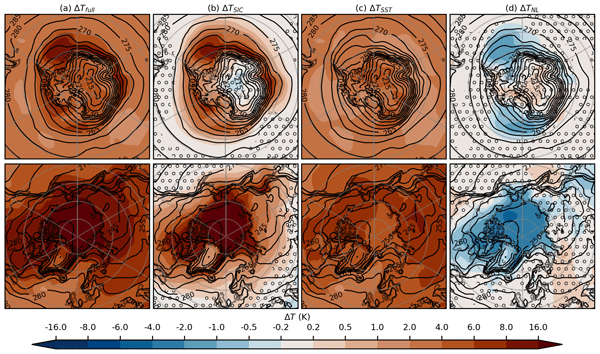
Tuomas Naakka, Daniel Köhler, Kalle Nordling, Petri Räisänen, Marianne Tronstad Lund, Risto Makkonen, Joonas Merikanto, Bjørn H. Samset, Victoria A. Sinclair, Jennie L. Thomas, and Annica M. L. Ekman
Atmos. Chem. Phys., 25, 8127–8145, https://doi.org/10.5194/acp-25-8127-2025, https://doi.org/10.5194/acp-25-8127-2025, 2025
Short summary
Short summary
The effects of warmer sea surface temperatures and decreasing sea ice cover on polar climates have been studied using four climate models with identical prescribed changes in sea surface temperatures and sea ice cover. The models predict similar changes in air temperature and precipitation in the polar regions in a warmer climate with less sea ice. However, the models disagree on how the atmospheric circulation, i.e. the large-scale winds, will change with warmer temperatures and less sea ice.
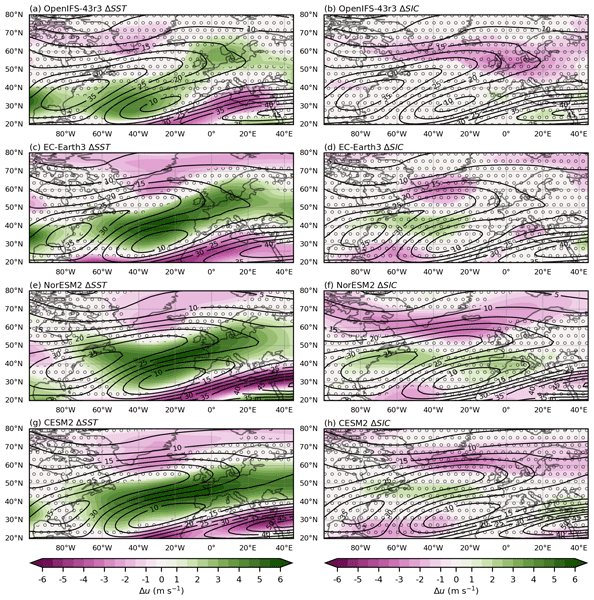
Daniel Köhler, Petri Räisänen, Tuomas Naakka, Kalle Nordling, and Victoria A. Sinclair
Weather Clim. Dynam., 6, 669–694, https://doi.org/10.5194/wcd-6-669-2025, https://doi.org/10.5194/wcd-6-669-2025, 2025
Short summary
Short summary
We study the impacts of globally increasing sea surface temperatures and sea ice loss on the atmosphere in wintertime. In future climates, the jet stream shifts southward over the North Atlantic and extends further over Europe. Increasing sea surface temperatures drives these changes. The region of high activity of low-pressure systems is projected to move east towards Europe. Future increasing sea surface temperatures and sea ice loss contribute with similar magnitude to the eastward shift.
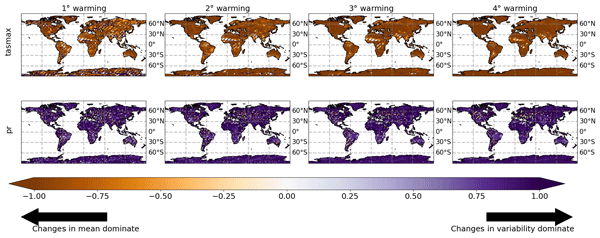
Kalle Nordling, Nora L. S. Fahrenbach, and Bjørn H. Samset
Atmos. Chem. Phys., 25, 1659–1684, https://doi.org/10.5194/acp-25-1659-2025, https://doi.org/10.5194/acp-25-1659-2025, 2025
Short summary
Short summary
People experience daily weather, not changes in monthly averages. We investigate the likelihood of events, which occurred once every 10 years in the pre-industrial era. We analyze how summertime precipitation and daily maximum temperature events evolve. Our focus is on understanding the role of day-to-day variability in the change in the number of extreme weather days. We find that in most regions, a change in variability is the primary driver for change in summertime extreme precipitation.
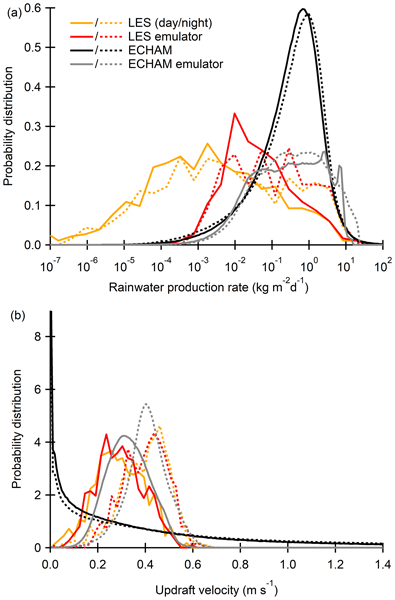
Kalle Nordling, Jukka-Pekka Keskinen, Sami Romakkaniemi, Harri Kokkola, Petri Räisänen, Antti Lipponen, Antti-Ilari Partanen, Jaakko Ahola, Juha Tonttila, Muzaffer Ege Alper, Hannele Korhonen, and Tomi Raatikainen
Atmos. Chem. Phys., 24, 869–890, https://doi.org/10.5194/acp-24-869-2024, https://doi.org/10.5194/acp-24-869-2024, 2024
Short summary
Short summary
Our results show that the global model is stable and it provides meaningful results. This way we can include a physics-based presentation of sub-grid physics (physics which happens on a 100 m scale) in the global model, whose resolution is on a 100 km scale.
Jaakko Ahola, Tomi Raatikainen, Muzaffer Ege Alper, Jukka-Pekka Keskinen, Harri Kokkola, Antti Kukkurainen, Antti Lipponen, Jia Liu, Kalle Nordling, Antti-Ilari Partanen, Sami Romakkaniemi, Petri Räisänen, Juha Tonttila, and Hannele Korhonen
Atmos. Chem. Phys., 22, 4523–4537, https://doi.org/10.5194/acp-22-4523-2022, https://doi.org/10.5194/acp-22-4523-2022, 2022
Short summary
Short summary
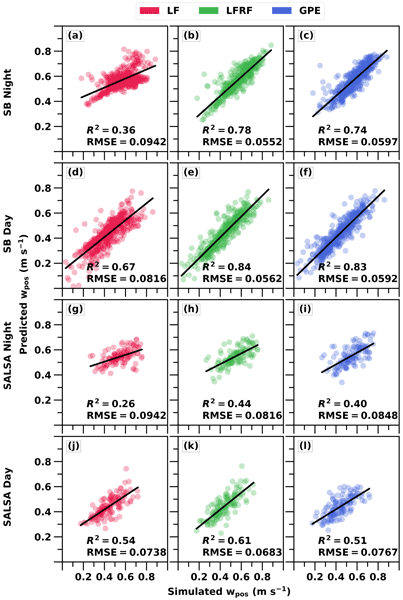
Clouds are important for the climate, and cloud droplets have a significant role in cloud properties. Cloud droplets form when air rises and cools and water vapour condenses on small particles that can be natural or of anthropogenic origin. Currently, the updraft velocity, meaning how fast the air rises, is poorly represented in global climate models. In our study, we show three methods that will improve the depiction of updraft velocity and which properties are vital to updrafts.
Zhi-Song Liu, Michael Boy, and Risto Makkonen
Earth Syst. Sci. Data Discuss., https://doi.org/10.5194/essd-2026-792, https://doi.org/10.5194/essd-2026-792, 2026
Preprint under review for ESSD
Short summary
Short summary
Weather forecasts are mostly judged on ordinary days, not on the rare heatwaves, cold spells, storms, downpours, and droughts that cause most harm. We built a global daily record of such unusual weather over land since 1981 and compared it with reported disasters. Rarer weather was more often linked to harm, but disaster records miss much of the world. Leading artificial intelligence forecasts often missed extremes, especially strong winds, so forecasts need testing on extremes everywhere.
Charlotte G. Stapleton, Mikko Sipilä, Arundathi Chandrasekharan, Joonas Merikanto, Kimmo Neitola, Tuomo Nieminen, Risto Makkonen, Jorma Joutsensaari, Aki Virkkula, and Antti-Pekka Hyvärinen
EGUsphere, https://doi.org/10.5194/egusphere-2026-5001, https://doi.org/10.5194/egusphere-2026-5001, 2026
This preprint is open for discussion and under review for Atmospheric Chemistry and Physics (ACP).
Short summary
Short summary
Article presents observations of cloud condensation nuclei (CCN) in the Finnish sub-Arctic. At Pallastunturi, aerosol-cloud interactions have been measured since 2005. Based on these measurements, a simple model was developed to predict the CCN at Värriö for 1998–2021. The CCN concentrations have decreased about 50 % during the measurement period, especially during early spring, when polluted air from the south reaches the Arctic. A global climate model reproduced the observed long-term trend.
Putian Zhou, Zeqi Cui, Petri Clusius, Risto Makkonen, Zihao Fu, Veli-Matti Kerminen, Markku Kulmala, and Michael Boy
EGUsphere, https://doi.org/10.5194/egusphere-2026-2381, https://doi.org/10.5194/egusphere-2026-2381, 2026
Short summary
Short summary
Tiny particles in the air affect climate by changing how much sun light reaches the ground and how clouds form. To understand it better, we developed an atmospheric computer model BoxMART to simulate how gases and particles interact in the air. It is flexible and easy to use, suitable for both research and teaching. It is validated by ten sets of cases from earlier studies. BoxMART provides a solid foundation for future work on air quality and climate change.
Bosi Sheng, Massimo A. Bollasina, Alexandre S. Gagnon, Laura J. Wilcox, Thomas P. S. Reynolds, Christopher T. S. Beckett, Haolin Wang, Qingxiang Li, Pierre Nabat, Robert J. Allen, Bjørn H. Samset, Joonas Merikanto, Geeta G. Persad, Toshihiko Takemura, Kostas Tsigaridis, Sharar Ahmadi, Maxwell T. Elling, Knut von Salzen, Daniel M. Westervelt, Naga Oshima, and Tsuyoshi Koshiro
EGUsphere, https://doi.org/10.5194/egusphere-2026-2198, https://doi.org/10.5194/egusphere-2026-2198, 2026
Short summary
Short summary
Observational records indicate that austral summer rainfall over southern Africa experienced substantial wetting during the late 20th century, followed by pronounced drying over the past two decades. We show that East Asian sulphate aerosol emissions played a key role in shaping these rainfall trends. These findings have important implications for reducing uncertainties in regional rainfall projections and for understanding their links to ecosystem changes.
Arundathi Chandrasekharan, Tommi Bergman, Kalle Nordling, Meryem Bouchahmoud, Joonas Merikanto, and Risto Makkonen
EGUsphere, https://doi.org/10.5194/egusphere-2026-2122, https://doi.org/10.5194/egusphere-2026-2122, 2026
Short summary
Short summary
This study examines how well CMIP6 models and the chemistry transport model TM5 simulate Arctic aerosols, using data collected during the MOSAiC expedition. Additionally, the study includes a sensitivity analysis to identify the sources of any inaccuracies in the model results. The findings offer suggestions for improving model performance in the Arctic and highlight areas that need further research.
Andrea Vajda, Hilppa Gregow, Natalia Korhonen, Jari Lavonen, Katja Anniina Lauri, Risto Makkonen, Joonas Merikanto, Antti Mäkelä, Petri Räisänen, Veli-Matti Vesterinen, Ilona Ylivinkka, Mikko Äijälä, Andrea Böhnisch, and Laura Riuttanen
EGUsphere, https://doi.org/10.5194/egusphere-2026-227, https://doi.org/10.5194/egusphere-2026-227, 2026
Short summary
Short summary
The paper describes the development of a new graduate course, Living with Changing Climate, designed to help future professionals apply climate information in real-world decisions. Created by experts from several fields, the course combines climate science, data use and real-word applications. Piloting with diverse students revealed challenges and improvements that strengthened the final course, showing how higher education can better prepare learners for climate adaptation and mitigation.
Chakradhar Reddy Malasani, Basudev Swain, Ankit Patel, Arundathi Chandrasekharan, Aishwarya Singh, Nidhi L. Anchan, Rui Song, Amit Sharma, and Sachin S. Gunthe
EGUsphere, https://doi.org/10.5194/egusphere-2025-4229, https://doi.org/10.5194/egusphere-2025-4229, 2025
Short summary
Short summary
This research provides a thorough evaluation of the MERRA-2 reanalysis dataset, which is widely used to investigate climatological phenomena. By comparing key meteorological variables such as temperature, water vapor, and wind components against observational and satellite data, this study quantifies the performance, limitations, and areas of high reliability within the dataset over the Indian subcontinent. This study is crucial for enhancing the accuracy of reanalysis models over the region.
Sara Tahvonen, Daniel Köhler, Petri Räisänen, and Victoria A. Sinclair
Weather Clim. Dynam., 6, 1299–1317, https://doi.org/10.5194/wcd-6-1299-2025, https://doi.org/10.5194/wcd-6-1299-2025, 2025
Short summary
Short summary
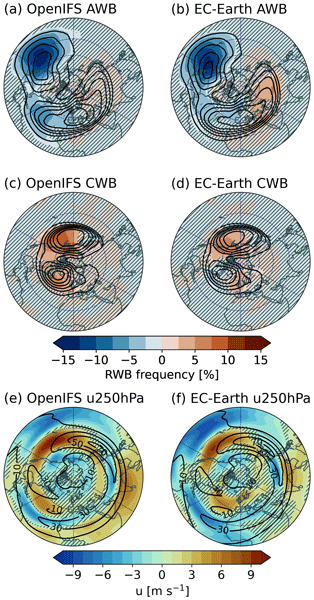
Rossby wave breaking (RWB) influences weather at a large scale and can contribute to extreme weather events, but it is not known if climate change will have an effect on where and how often RWB occurs. We investigate how extreme sea ice loss and warming of the sea surface effect RWB. Our results show that sea surface temperatures significantly change local RWB frequencies and the closely related upper atmospheric jet streams, but that sea ice changes have no noticeable effect in our experiments.
Tuomas Naakka, Daniel Köhler, Kalle Nordling, Petri Räisänen, Marianne Tronstad Lund, Risto Makkonen, Joonas Merikanto, Bjørn H. Samset, Victoria A. Sinclair, Jennie L. Thomas, and Annica M. L. Ekman
Atmos. Chem. Phys., 25, 8127–8145, https://doi.org/10.5194/acp-25-8127-2025, https://doi.org/10.5194/acp-25-8127-2025, 2025
Short summary
Short summary
The effects of warmer sea surface temperatures and decreasing sea ice cover on polar climates have been studied using four climate models with identical prescribed changes in sea surface temperatures and sea ice cover. The models predict similar changes in air temperature and precipitation in the polar regions in a warmer climate with less sea ice. However, the models disagree on how the atmospheric circulation, i.e. the large-scale winds, will change with warmer temperatures and less sea ice.
Daniel Köhler, Petri Räisänen, Tuomas Naakka, Kalle Nordling, and Victoria A. Sinclair
Weather Clim. Dynam., 6, 669–694, https://doi.org/10.5194/wcd-6-669-2025, https://doi.org/10.5194/wcd-6-669-2025, 2025
Short summary
Short summary
We study the impacts of globally increasing sea surface temperatures and sea ice loss on the atmosphere in wintertime. In future climates, the jet stream shifts southward over the North Atlantic and extends further over Europe. Increasing sea surface temperatures drives these changes. The region of high activity of low-pressure systems is projected to move east towards Europe. Future increasing sea surface temperatures and sea ice loss contribute with similar magnitude to the eastward shift.
Xinyang Li, Tuomo Nieminen, Rima Baalbaki, Putian Zhou, Pauli Paasonen, Risto Makkonen, Martha Arbayani Zaidan, Nina Sarnela, Chao Yan, Tuija Jokinen, Imre Salma, Máté Vörösmarty, Tuukka Petäjä, Veli-Matti Kerminen, Markku Kulmala, and Lubna Dada
Aerosol Research, 3, 271–291, https://doi.org/10.5194/ar-3-271-2025, https://doi.org/10.5194/ar-3-271-2025, 2025
Short summary
Short summary
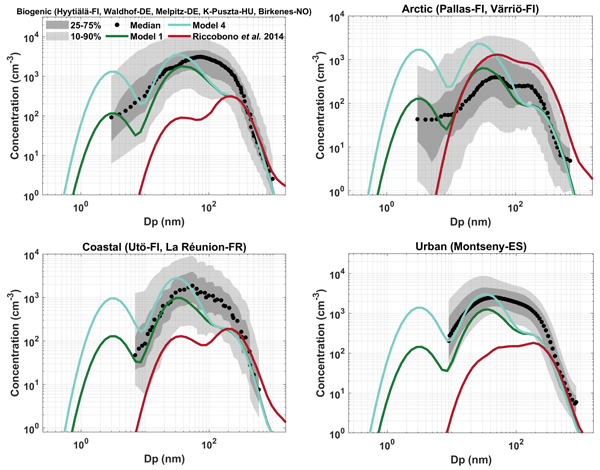
Particle formation rate is one of the key factors in studying the physical properties of aerosols. By developing powerful and simple semi-empirical particle formation rate models, we can predict particle formation rates and compare them with real-time measurements to aid in discovering hidden particle formation mechanisms as well as global simulations of particle population to fill the knowledge gap caused by the uncertainty in aerosol cooling effects on Earth's atmosphere.
Kalle Nordling, Nora L. S. Fahrenbach, and Bjørn H. Samset
Atmos. Chem. Phys., 25, 1659–1684, https://doi.org/10.5194/acp-25-1659-2025, https://doi.org/10.5194/acp-25-1659-2025, 2025
Short summary
Short summary
People experience daily weather, not changes in monthly averages. We investigate the likelihood of events, which occurred once every 10 years in the pre-industrial era. We analyze how summertime precipitation and daily maximum temperature events evolve. Our focus is on understanding the role of day-to-day variability in the change in the number of extreme weather days. We find that in most regions, a change in variability is the primary driver for change in summertime extreme precipitation.
Kalle Nordling, Jukka-Pekka Keskinen, Sami Romakkaniemi, Harri Kokkola, Petri Räisänen, Antti Lipponen, Antti-Ilari Partanen, Jaakko Ahola, Juha Tonttila, Muzaffer Ege Alper, Hannele Korhonen, and Tomi Raatikainen
Atmos. Chem. Phys., 24, 869–890, https://doi.org/10.5194/acp-24-869-2024, https://doi.org/10.5194/acp-24-869-2024, 2024
Short summary
Short summary
Our results show that the global model is stable and it provides meaningful results. This way we can include a physics-based presentation of sub-grid physics (physics which happens on a 100 m scale) in the global model, whose resolution is on a 100 km scale.
Putian Zhou, Zhengyao Lu, Jukka-Pekka Keskinen, Qiong Zhang, Juha Lento, Jianpu Bian, Twan van Noije, Philippe Le Sager, Veli-Matti Kerminen, Markku Kulmala, Michael Boy, and Risto Makkonen
Clim. Past, 19, 2445–2462, https://doi.org/10.5194/cp-19-2445-2023, https://doi.org/10.5194/cp-19-2445-2023, 2023
Short summary
Short summary
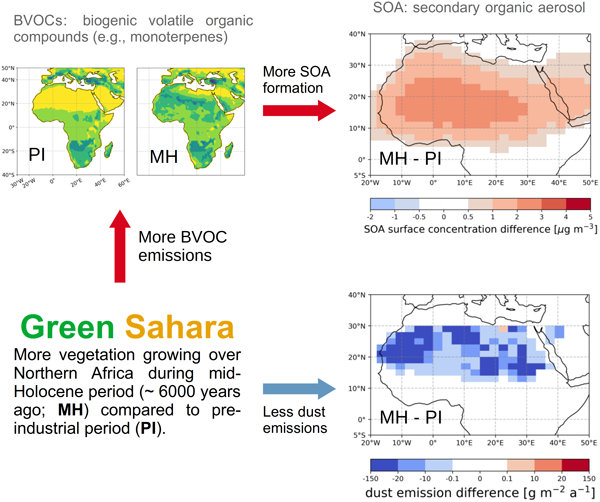
A Green Sahara with enhanced rainfall and larger vegetation cover existed in northern Africa about 6000 years ago. Biosphere–atmosphere interactions are found to be critical to explaining this wet period. Based on modeled vegetation reconstruction data, we simulated dust emissions and aerosol formation, which are key factors in biosphere–atmosphere interactions. Our results also provide a benchmark of aerosol climatology for future paleo-climate simulation experiments.
Markku Kulmala, Anna Lintunen, Hanna Lappalainen, Annele Virtanen, Chao Yan, Ekaterina Ezhova, Tuomo Nieminen, Ilona Riipinen, Risto Makkonen, Johanna Tamminen, Anu-Maija Sundström, Antti Arola, Armin Hansel, Kari Lehtinen, Timo Vesala, Tuukka Petäjä, Jaana Bäck, Tom Kokkonen, and Veli-Matti Kerminen
Atmos. Chem. Phys., 23, 14949–14971, https://doi.org/10.5194/acp-23-14949-2023, https://doi.org/10.5194/acp-23-14949-2023, 2023
Short summary
Short summary
To be able to meet global grand challenges, we need comprehensive open data with proper metadata. In this opinion paper, we describe the SMEAR (Station for Measuring Earth surface – Atmosphere Relations) concept and include several examples (cases), such as new particle formation and growth, feedback loops and the effect of COVID-19, and what has been learned from these investigations. The future needs and the potential of comprehensive observations of the environment are summarized.
Laura J. Wilcox, Robert J. Allen, Bjørn H. Samset, Massimo A. Bollasina, Paul T. Griffiths, James Keeble, Marianne T. Lund, Risto Makkonen, Joonas Merikanto, Declan O'Donnell, David J. Paynter, Geeta G. Persad, Steven T. Rumbold, Toshihiko Takemura, Kostas Tsigaridis, Sabine Undorf, and Daniel M. Westervelt
Geosci. Model Dev., 16, 4451–4479, https://doi.org/10.5194/gmd-16-4451-2023, https://doi.org/10.5194/gmd-16-4451-2023, 2023
Short summary
Short summary
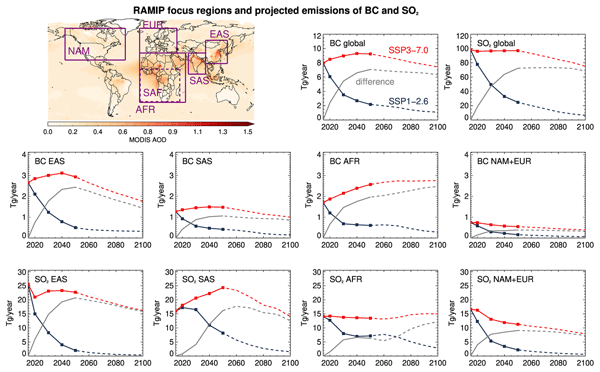
Changes in anthropogenic aerosol emissions have strongly contributed to global and regional climate change. However, the size of these regional impacts and the way they arise are still uncertain. With large changes in aerosol emissions a possibility over the next few decades, it is important to better quantify the potential role of aerosol in future regional climate change. The Regional Aerosol Model Intercomparison Project will deliver experiments designed to facilitate this.
Petri Räisänen, Joonas Merikanto, Risto Makkonen, Mikko Savolahti, Alf Kirkevåg, Maria Sand, Øyvind Seland, and Antti-Ilari Partanen
Atmos. Chem. Phys., 22, 11579–11602, https://doi.org/10.5194/acp-22-11579-2022, https://doi.org/10.5194/acp-22-11579-2022, 2022
Short summary
Short summary
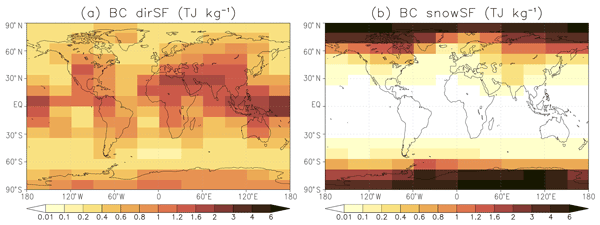
A climate model is used to evaluate how the radiative forcing (RF) associated with black carbon (BC) emissions depends on the latitude, longitude, and seasonality of emissions. It is found that both the direct RF (BC absorption of solar radiation in air) and snow RF (BC absorption in snow/ice) depend strongly on the emission region and season. The results suggest that, for a given mass of BC emitted, climatic impacts are likely to be largest for high-latitude emissions due to the large snow RF.
Ralf Döscher, Mario Acosta, Andrea Alessandri, Peter Anthoni, Thomas Arsouze, Tommi Bergman, Raffaele Bernardello, Souhail Boussetta, Louis-Philippe Caron, Glenn Carver, Miguel Castrillo, Franco Catalano, Ivana Cvijanovic, Paolo Davini, Evelien Dekker, Francisco J. Doblas-Reyes, David Docquier, Pablo Echevarria, Uwe Fladrich, Ramon Fuentes-Franco, Matthias Gröger, Jost v. Hardenberg, Jenny Hieronymus, M. Pasha Karami, Jukka-Pekka Keskinen, Torben Koenigk, Risto Makkonen, François Massonnet, Martin Ménégoz, Paul A. Miller, Eduardo Moreno-Chamarro, Lars Nieradzik, Twan van Noije, Paul Nolan, Declan O'Donnell, Pirkka Ollinaho, Gijs van den Oord, Pablo Ortega, Oriol Tintó Prims, Arthur Ramos, Thomas Reerink, Clement Rousset, Yohan Ruprich-Robert, Philippe Le Sager, Torben Schmith, Roland Schrödner, Federico Serva, Valentina Sicardi, Marianne Sloth Madsen, Benjamin Smith, Tian Tian, Etienne Tourigny, Petteri Uotila, Martin Vancoppenolle, Shiyu Wang, David Wårlind, Ulrika Willén, Klaus Wyser, Shuting Yang, Xavier Yepes-Arbós, and Qiong Zhang
Geosci. Model Dev., 15, 2973–3020, https://doi.org/10.5194/gmd-15-2973-2022, https://doi.org/10.5194/gmd-15-2973-2022, 2022
Short summary
Short summary
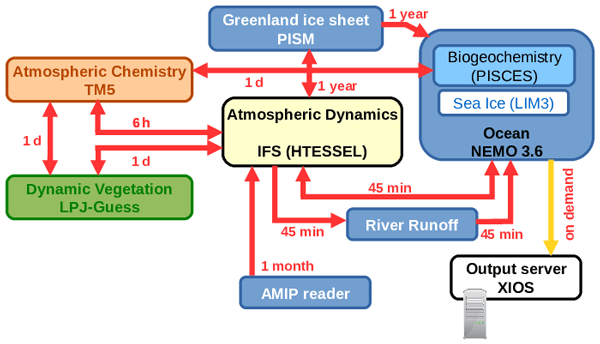
The Earth system model EC-Earth3 is documented here. Key performance metrics show physical behavior and biases well within the frame known from recent models. With improved physical and dynamic features, new ESM components, community tools, and largely improved physical performance compared to the CMIP5 version, EC-Earth3 represents a clear step forward for the only European community ESM. We demonstrate here that EC-Earth3 is suited for a range of tasks in CMIP6 and beyond.
Jaakko Ahola, Tomi Raatikainen, Muzaffer Ege Alper, Jukka-Pekka Keskinen, Harri Kokkola, Antti Kukkurainen, Antti Lipponen, Jia Liu, Kalle Nordling, Antti-Ilari Partanen, Sami Romakkaniemi, Petri Räisänen, Juha Tonttila, and Hannele Korhonen
Atmos. Chem. Phys., 22, 4523–4537, https://doi.org/10.5194/acp-22-4523-2022, https://doi.org/10.5194/acp-22-4523-2022, 2022
Short summary
Short summary
Clouds are important for the climate, and cloud droplets have a significant role in cloud properties. Cloud droplets form when air rises and cools and water vapour condenses on small particles that can be natural or of anthropogenic origin. Currently, the updraft velocity, meaning how fast the air rises, is poorly represented in global climate models. In our study, we show three methods that will improve the depiction of updraft velocity and which properties are vital to updrafts.
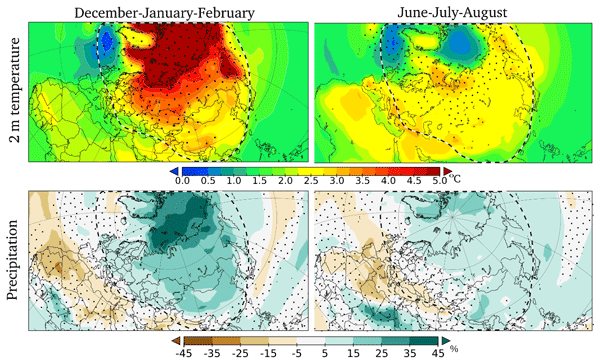
Hanna K. Lappalainen, Tuukka Petäjä, Timo Vihma, Jouni Räisänen, Alexander Baklanov, Sergey Chalov, Igor Esau, Ekaterina Ezhova, Matti Leppäranta, Dmitry Pozdnyakov, Jukka Pumpanen, Meinrat O. Andreae, Mikhail Arshinov, Eija Asmi, Jianhui Bai, Igor Bashmachnikov, Boris Belan, Federico Bianchi, Boris Biskaborn, Michael Boy, Jaana Bäck, Bin Cheng, Natalia Chubarova, Jonathan Duplissy, Egor Dyukarev, Konstantinos Eleftheriadis, Martin Forsius, Martin Heimann, Sirkku Juhola, Vladimir Konovalov, Igor Konovalov, Pavel Konstantinov, Kajar Köster, Elena Lapshina, Anna Lintunen, Alexander Mahura, Risto Makkonen, Svetlana Malkhazova, Ivan Mammarella, Stefano Mammola, Stephany Buenrostro Mazon, Outi Meinander, Eugene Mikhailov, Victoria Miles, Stanislav Myslenkov, Dmitry Orlov, Jean-Daniel Paris, Roberta Pirazzini, Olga Popovicheva, Jouni Pulliainen, Kimmo Rautiainen, Torsten Sachs, Vladimir Shevchenko, Andrey Skorokhod, Andreas Stohl, Elli Suhonen, Erik S. Thomson, Marina Tsidilina, Veli-Pekka Tynkkynen, Petteri Uotila, Aki Virkkula, Nadezhda Voropay, Tobias Wolf, Sayaka Yasunaka, Jiahua Zhang, Yubao Qiu, Aijun Ding, Huadong Guo, Valery Bondur, Nikolay Kasimov, Sergej Zilitinkevich, Veli-Matti Kerminen, and Markku Kulmala
Atmos. Chem. Phys., 22, 4413–4469, https://doi.org/10.5194/acp-22-4413-2022, https://doi.org/10.5194/acp-22-4413-2022, 2022
Short summary
Short summary
We summarize results during the last 5 years in the northern Eurasian region, especially from Russia, and introduce recent observations of the air quality in the urban environments in China. Although the scientific knowledge in these regions has increased, there are still gaps in our understanding of large-scale climate–Earth surface interactions and feedbacks. This arises from limitations in research infrastructures and integrative data analyses, hindering a comprehensive system analysis.
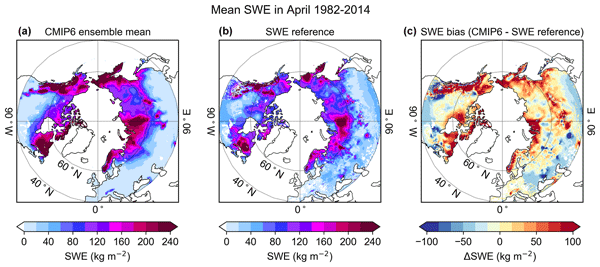
Kerttu Kouki, Petri Räisänen, Kari Luojus, Anna Luomaranta, and Aku Riihelä
The Cryosphere, 16, 1007–1030, https://doi.org/10.5194/tc-16-1007-2022, https://doi.org/10.5194/tc-16-1007-2022, 2022
Short summary
Short summary
We analyze state-of-the-art climate models’ ability to describe snow mass and whether biases in modeled temperature or precipitation can explain the discrepancies in snow mass. In winter, biases in precipitation are the main factor affecting snow mass, while in spring, biases in temperature becomes more important, which is an expected result. However, temperature or precipitation cannot explain all snow mass discrepancies. Other factors, such as models’ structural errors, are also significant.
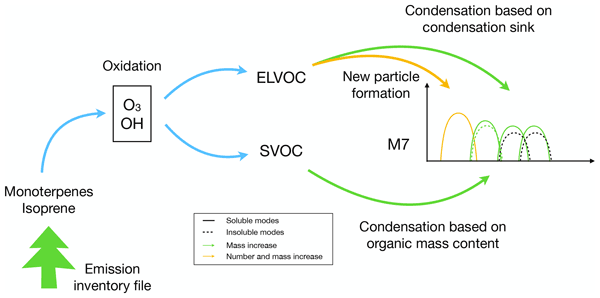
Tommi Bergman, Risto Makkonen, Roland Schrödner, Erik Swietlicki, Vaughan T. J. Phillips, Philippe Le Sager, and Twan van Noije
Geosci. Model Dev., 15, 683–713, https://doi.org/10.5194/gmd-15-683-2022, https://doi.org/10.5194/gmd-15-683-2022, 2022
Short summary
Short summary
We describe in this paper the implementation of a process-based secondary organic aerosol and new particle formation scheme within the chemistry transport model TM5-MP version 1.2. The performance of the model simulations for the year 2010 is evaluated against in situ observations, ground-based remote sensing and satellite retrievals. Overall, the simulated aerosol fields are improved, although in some areas the model shows a decline in performance.
Cited articles
Acosta Navarro, J. C., Varma, V., Riipinen, I., Seland, Ø., Kirkevåg, A., Struthers, H., Iversen, T., Hansson, H.-C., and Ekman, A. M. L.: Amplification of Arctic warming by past air pollution reductions in Europe, Nat. Geosci., 9, 277–281, https://doi.org/10.1038/ngeo2673, 2016. a
Beck, I., Quéléver, L., Laurila, T., Jokinen, T., and Schmale, J.: Continuous corrected particle number concentration data in 10 sec resolution, measured in the Swiss aerosol container during MOSAiC 2019/2020, PANGAEA [data set], https://doi.org/10.1594/PANGAEA.941886, 2022. a
Bergner, N., Heutte, B., Angot, H., Dada, L., Beck, I., Quéléver, L., Jokinen, T., Laurila, T., and Schmale, J.: Cloud Condensation Nuclei (CCN) concentrations measured in the Swiss container during MOSAiC 2019/2020, PANGAEA [data set], https://doi.org/10.1594/PANGAEA.961131, 2023. a
de Leeuw, G., Andreas, E. L., Anguelova, M. D., Fairall, C. W., Lewis, E. R., O'Dowd, C., Schulz, M., and Schwartz, S. E.: Production flux of sea spray aerosol, Rev. Geophysics, 49, https://doi.org/10.1029/2010RG000349, 2011. a
Döscher, R., Acosta, M., Alessandri, A., Anthoni, P., Arsouze, T., Bergman, T., Bernardello, R., Boussetta, S., Caron, L.-P., Carver, G., Castrillo, M., Catalano, F., Cvijanovic, I., Davini, P., Dekker, E., Doblas-Reyes, F. J., Docquier, D., Echevarria, P., Fladrich, U., Fuentes-Franco, R., Gröger, M., v. Hardenberg, J., Hieronymus, J., Karami, M. P., Keskinen, J.-P., Koenigk, T., Makkonen, R., Massonnet, F., Ménégoz, M., Miller, P. A., Moreno-Chamarro, E., Nieradzik, L., van Noije, T., Nolan, P., O'Donnell, D., Ollinaho, P., van den Oord, G., Ortega, P., Prims, O. T., Ramos, A., Reerink, T., Rousset, C., Ruprich-Robert, Y., Le Sager, P., Schmith, T., Schrödner, R., Serva, F., Sicardi, V., Sloth Madsen, M., Smith, B., Tian, T., Tourigny, E., Uotila, P., Vancoppenolle, M., Wang, S., Wårlind, D., Willén, U., Wyser, K., Yang, S., Yepes-Arbós, X., and Zhang, Q.: The EC-Earth3 Earth system model for the Coupled Model Intercomparison Project 6, Geosci. Model Dev., 15, 2973–3020, https://doi.org/10.5194/gmd-15-2973-2022, 2022. a
Emme, E. J. and Horowitz, H. M.: Impacts of sea ice leads on sea salt aerosols and atmospheric chemistry in the Arctic, Atmos. Chem. Phys., 25, 4531–4545, https://doi.org/10.5194/acp-25-4531-2025, 2025. a
Frey, M. M., Norris, S. J., Brooks, I. M., Anderson, P. S., Nishimura, K., Yang, X., Jones, A. E., Nerentorp Mastromonaco, M. G., Jones, D. H., and Wolff, E. W.: First direct observation of sea salt aerosol production from blowing snow above sea ice, Atmos. Chem. Phys., 20, 2549–2578, https://doi.org/10.5194/acp-20-2549-2020, 2020. a, b, c
Gates, W. L.: AN AMS CONTINUING SERIES: GLOBAL CHANGE–AMIP: The Atmospheric Model Intercomparison Project, B. Am. Meteorol. Soc., 73, 1962–1970, https://doi.org/10.1175/1520-0477(1992)073<1962:ATAMIP>2.0.CO;2, 1992. a
Gong, X., Zhang, J., Croft, B., Yang, X., Frey, M. M., Bergner, N., Chang, R. Y.-W., Creamean, J. M., Kuang, C., Martin, R. V., Ranjithkumar, A., Sedlacek, A. J., Uin, J., Willmes, S., Zawadowicz, M. A., Pierce, J. R., Shupe, M. D., Schmale, J., and Wang, J.: Arctic warming by abundant fine sea salt aerosols from blowing snow, Nat. Geosci., 16, 768–774, https://doi.org/10.1038/s41561-023-01254-8, 2023. a, b, c, d, e, f, g, h, i
Graham, R. M., Hudson, S. R., and Maturilli, M.: Improved Performance of ERA5 in Arctic Gateway Relative to Four Global Atmospheric Reanalyses, Geophys. Res. Lett., 46, 6138–6147, https://doi.org/10.1029/2019GL082781, 2019. a
Huang, J. and Jaeglé, L.: Wintertime enhancements of sea salt aerosol in polar regions consistent with a sea ice source from blowing snow, Atmos. Chem. Phys., 17, 3699–3712, https://doi.org/10.5194/acp-17-3699-2017, 2017. a
Huang, J., Jaeglé, L., and Shah, V.: Using CALIOP to constrain blowing snow emissions of sea salt aerosols over Arctic and Antarctic sea ice, Atmos. Chem. Phys., 18, 16253–16269, https://doi.org/10.5194/acp-18-16253-2018, 2018. a
Huang, J., Jaeglé, L., Chen, Q., Alexander, B., Sherwen, T., Evans, M. J., Theys, N., and Choi, S.: Evaluating the impact of blowing-snow sea salt aerosol on springtime BrO and O3 in the Arctic, Atmos. Chem. Phys., 20, 7335–7358, https://doi.org/10.5194/acp-20-7335-2020, 2020. a
Huijnen, V., Williams, J., van Weele, M., van Noije, T., Krol, M., Dentener, F., Segers, A., Houweling, S., Peters, W., de Laat, J., Boersma, F., Bergamaschi, P., van Velthoven, P., Le Sager, P., Eskes, H., Alkemade, F., Scheele, R., Nédélec, P., and Pätz, H.-W.: The global chemistry transport model TM5: description and evaluation of the tropospheric chemistry version 3.0, Geosci. Model Dev., 3, 445–473, https://doi.org/10.5194/gmd-3-445-2010, 2010. a, b
Krol, M., Houweling, S., Bregman, B., van den Broek, M., Segers, A., van Velthoven, P., Peters, W., Dentener, F., and Bergamaschi, P.: The two-way nested global chemistry-transport zoom model TM5: algorithm and applications, Atmos. Chem. Phys., 5, 417–432, https://doi.org/10.5194/acp-5-417-2005, 2005. a
Lapere, R., Thomas, J. L., Marelle, L., Ekman, A. M. L., Frey, M. M., Lund, M. T., Makkonen, R., Ranjithkumar, A., Salter, M. E., Samset, B. H., Schulz, M., Sogacheva, L., Yang, X., and Zieger, P.: The Representation of Sea Salt Aerosols and Their Role in Polar Climate Within CMIP6, J. Geophys. Res.-Atmos., 128, e2022JD038235, https://doi.org/10.1029/2022JD038235, 2023. a
Lapere, R., Marelle, L., Rampal, P., Brodeau, L., Melsheimer, C., Spreen, G., and Thomas, J. L.: Modeling the contribution of leads to sea spray aerosol in the high Arctic, Atmos. Chem. Phys., 24, 12107–12132, https://doi.org/10.5194/acp-24-12107-2024, 2024. a
Lewinschal, A., Ekman, A. M. L., Hansson, H.-C., Sand, M., Berntsen, T. K., and Langner, J.: Local and remote temperature response of regional SO2 emissions, Atmos. Chem. Phys., 19, 2385–2403, https://doi.org/10.5194/acp-19-2385-2019, 2019. a
Li, L. and Pomeroy, J. W.: Probability of occurrence of blowing snow, J. Geophys. Res.-Atmos., 102, 21955–21964, https://doi.org/10.1029/97JD01522, 1997. a
Mauritsen, T., Sedlar, J., Tjernström, M., Leck, C., Martin, M., Shupe, M., Sjogren, S., Sierau, B., Persson, P. O. G., Brooks, I. M., and Swietlicki, E.: An Arctic CCN-limited cloud-aerosol regime, Atmos. Chem. Phys., 11, 165–173, https://doi.org/10.5194/acp-11-165-2011, 2011. a
May, N. W., Quinn, P. K., McNamara, S. M., and Pratt, K. A.: Multiyear study of the dependence of sea salt aerosol on wind speed and sea ice conditions in the coastal Arctic, J. Geophys. Res.-Atmos., 121, 9208–9219, https://doi.org/10.1002/2016JD025273, 2016. a
Merikanto, J., Nordling, K., Räisänen, P., Räisänen, J., O'Donnell, D., Partanen, A.-I., and Korhonen, H.: How Asian aerosols impact regional surface temperatures across the globe, Atmos. Chem. Phys., 21, 5865–5881, https://doi.org/10.5194/acp-21-5865-2021, 2021. a
Naakka, T., Köhler, D., Nordling, K., Räisänen, P., Lund, M. T., Makkonen, R., Merikanto, J., Samset, B. H., Sinclair, V. A., Thomas, J. L., and Ekman, A. M. L.: Polar winter climate change: strong local effects from sea ice loss, widespread consequences from warming seas, Atmos. Chem. Phys., 25, 8127–8145, https://doi.org/10.5194/acp-25-8127-2025, 2025. a
Nordling, K.: kallenordling/blowing_from_snow: Codes for making figurse for blowinsnow paper, Version release, Zenodo [computer software], https://doi.org/10.5281/zenodo.23878577, 2026a.access: 20 March 2026 a
Nordling, K.: Sea Salt Aerosols from Blowing Snow: Contributions to Radiative Forcing, Zenodo [data set], https://doi.org/10.5281/zenodo.19327654, 2026b. a
Norwegian Institute for Air Research: EBAS Database, https://ebas.nilu.no/ (last access: 21 February 2025), 2024. a
Pithan, F. and Mauritsen, T.: Arctic amplification dominated by temperature feedbacks in contemporary climate models, Nat. Geosci., 7, 181–184, https://doi.org/10.1038/ngeo2071, 2014. a
Ranjithkumar, A., Duncan, E., Yang, X., Partridge, D. G., Lachlan-Cope, T., Gong, X., Nishimura, K., and Frey, M. M.: Direct observation of Arctic Sea salt aerosol production from blowing snow and modeling over a changing sea ice environment, Elementa: Science of the Anthropocene, 13, 00006, https://doi.org/10.1525/elementa.2024.00006, 2025. a, b, c, d, e, f, g
Rantanen, M., Karpechko, A. Y., Lipponen, A., Nordling, K., Hyvärinen, O., Ruosteenoja, K., Vihma, T., and Laaksonen, A.: The Arctic has warmed nearly four times faster than the globe since 1979, Communications Earth & Environment, 3, 168, https://doi.org/10.1038/s43247-022-00498-3, 2022. a
Sand, M., Samset, B. H., Balkanski, Y., Bauer, S., Bellouin, N., Berntsen, T. K., Bian, H., Chin, M., Diehl, T., Easter, R., Ghan, S. J., Iversen, T., Kirkevåg, A., Lamarque, J.-F., Lin, G., Liu, X., Luo, G., Myhre, G., Noije, T. V., Penner, J. E., Schulz, M., Seland, Ø., Skeie, R. B., Stier, P., Takemura, T., Tsigaridis, K., Yu, F., Zhang, K., and Zhang, H.: Aerosols at the poles: an AeroCom Phase II multi-model evaluation, Atmos. Chem. Phys., 17, 12197–12218, https://doi.org/10.5194/acp-17-12197-2017, 2017. a
Schmale, J., Zieger, P., and Ekman, A. M. L.: Aerosols in current and future Arctic climate, Nat. Clim. Change, 11, 95–105, https://doi.org/10.1038/s41558-020-00969-5, 2021. a, b
Serreze, M. C. and Barry, R. G.: Processes and impacts of Arctic amplification: A research synthesis, Global Planet. Change, 77, 85–96, https://doi.org/10.1016/j.gloplacha.2011.03.004, 2011. a
Shupe, M. D., Rex, M., Dethloff, K., Damm, E., Fong, A. A., Gradinger, R., Heuzé, C., Loose, B., Makarov, A., Maslowski, W., Nicolaus, M., Perovich, D., Rabe, B., Rinke, A., Sokolov, V., and Sommerfeld, A.: Arctic Report Card 2020: The MOSAiC Expedition: A Year Drifting with the Arctic Sea Ice, NOAA Arctic Report Card 2020, NOAA IR, https://doi.org/10.25923/9g3v-xh92, 2020. a
Swanson, W. F., Holmes, C. D., Simpson, W. R., Confer, K., Marelle, L., Thomas, J. L., Jaeglé, L., Alexander, B., Zhai, S., Chen, Q., Wang, X., and Sherwen, T.: Comparison of model and ground observations finds snowpack and blowing snow aerosols both contribute to Arctic tropospheric reactive bromine, Atmos. Chem. Phys., 22, 14467–14488, https://doi.org/10.5194/acp-22-14467-2022, 2022. a
Thornhill, G., Collins, W., Olivié, D., Skeie, R. B., Archibald, A., Bauer, S., Checa-Garcia, R., Fiedler, S., Folberth, G., Gjermundsen, A., Horowitz, L., Lamarque, J.-F., Michou, M., Mulcahy, J., Nabat, P., Naik, V., O'Connor, F. M., Paulot, F., Schulz, M., Scott, C. E., Séférian, R., Smith, C., Takemura, T., Tilmes, S., Tsigaridis, K., and Weber, J.: Climate-driven chemistry and aerosol feedbacks in CMIP6 Earth system models, Atmos. Chem. Phys., 21, 1105–1126, https://doi.org/10.5194/acp-21-1105-2021, 2021. a
van Noije, T., Bergman, T., Le Sager, P., O'Donnell, D., Makkonen, R., Gonçalves-Ageitos, M., Döscher, R., Fladrich, U., von Hardenberg, J., Keskinen, J.-P., Korhonen, H., Laakso, A., Myriokefalitakis, S., Ollinaho, P., Pérez García-Pando, C., Reerink, T., Schrödner, R., Wyser, K., and Yang, S.: EC-Earth3-AerChem: a global climate model with interactive aerosols and atmospheric chemistry participating in CMIP6 , Geosci. Model Dev., 14, 5637–5668, https://doi.org/10.5194/gmd-14-5637-2021, 2021. a
van Noije, T. P. C., Le Sager, P., Segers, A. J., van Velthoven, P. F. J., Krol, M. C., Hazeleger, W., Williams, A. G., and Chambers, S. D.: Simulation of tropospheric chemistry and aerosols with the climate model EC-Earth, Geosci. Model Dev., 7, 2435–2475, https://doi.org/10.5194/gmd-7-2435-2014, 2014. a
Venugopal, A. U., Bhatti, Y. A., Morgenstern, O., Williams, J., Edkins, N., Hardacre, C., Jones, A., and Revell, L. E.: Constraining the Uncertainty Associated With Sea Salt Aerosol Parameterizations in Global Models Using Nudged UKESM1-AMIP Simulations, J. Geophys. Res.-Atmos., 130, e2024JD041643, https://doi.org/10.1029/2024JD041643, 2025. a
Vignati, E., Wilson, J., and Stier, P.: M7: An efficient size-resolved aerosol microphysics module for large-scale aerosol transport models, J. Geophys. Res.-Atmos., 109, https://doi.org/10.1029/2003JD004485, 2004. a
Wendisch, M., Macke, A., Ehrlich, A., Lüpkes, C., Mech, M., Chechin, D., Dethloff, K., Velasco, C. B., Bozem, H., Brückner, M., Clemen, H.-C., Crewell, S., Donth, T., Dupuy, R., Ebell, K., Egerer, U., Engelmann, R., Engler, C., Eppers, O., Gehrmann, M., Gong, X., Gottschalk, M., Gourbeyre, C., Griesche, H., Hartmann, J., Hartmann, M., Heinold, B., Herber, A., Herrmann, H., Heygster, G., Hoor, P., Jafariserajehlou, S., Jäkel, E., Järvinen, E., Jourdan, O., Kästner, U., Kecorius, S., Knudsen, E. M., Köllner, F., Kretzschmar, J., Lelli, L., Leroy, D., Maturilli, M., Mei, L., Mertes, S., Mioche, G., Neuber, R., Nicolaus, M., Nomokonova, T., Notholt, J., Palm, M., van Pinxteren, M., Quaas, J., Richter, P., Ruiz-Donoso, E., Schäfer, M., Schmieder, K., Schnaiter, M., Schneider, J., Schwarzenböck, A., Seifert, P., Shupe, M. D., Siebert, H., Spreen, G., Stapf, J., Stratmann, F., Vogl, T., Welti, A., Wex, H., Wiedensohler, A., Zanatta, M., and Zeppenfeld, S.: The Arctic Cloud Puzzle: Using ACLOUD/PASCAL Multiplatform Observations to Unravel the Role of Clouds and Aerosol Particles in Arctic Amplification, B. Am. Meteorol. Soc., 100, 841–871, https://doi.org/10.1175/BAMS-D-18-0072.1, 2019. a
Williams, J. E., Boersma, K. F., Le Sager, P., and Verstraeten, W. W.: The high-resolution version of TM5-MP for optimized satellite retrievals: description and validation, Geosci. Model Dev., 10, 721–750, https://doi.org/10.5194/gmd-10-721-2017, 2017. a
Yang, X., Pyle, J. A., and Cox, R. A.: Sea salt aerosol production and bromine release: Role of snow on sea ice, Geophys. Res. Lett., 35, https://doi.org/10.1029/2008GL034536, 2008. a
Yang, X., Frey, M. M., Rhodes, R. H., Norris, S. J., Brooks, I. M., Anderson, P. S., Nishimura, K., Jones, A. E., and Wolff, E. W.: Sea salt aerosol production via sublimating wind-blown saline snow particles over sea ice: parameterizations and relevant microphysical mechanisms, Atmos. Chem. Phys., 19, 8407–8424, https://doi.org/10.5194/acp-19-8407-2019, 2019. a, b, c, d, e, f, g, h, i, j, k, l
Short summary
We implement a blowing-snow sea salt aerosol parameterization in the TM5 atmospheric chemistry transport model and the EC-Earth3 climate model, evaluating it against observations from the Multidisciplinary drifting Observatory for the Study of Arctic Climate (MOSAiC) expedition and Arctic stations. Blowing snow substantially increases polar sea salt aerosol concentrations, especially in Antarctica, improving model agreement with observations.
We implement a blowing-snow sea salt aerosol parameterization in the TM5 atmospheric chemistry...


Altmetrics
Final-revised paper
Preprint