
Articles | Volume 26, issue 22
https://doi.org/10.5194/acp-26-16225-2026
© Author(s) 2026. This work is distributed under
the Creative Commons Attribution 4.0 License.
the Creative Commons Attribution 4.0 License.
https://doi.org/10.5194/acp-26-16225-2026
© Author(s) 2026. This work is distributed under
the Creative Commons Attribution 4.0 License.
the Creative Commons Attribution 4.0 License.
Research article
| 
16 Nov 2026
Research article |
| 16 Nov 2026
| 16 Nov 2026
Meteorological conditions and aerosol-meteorology feedback drive divergent responses of co-occurring PM2.5 and O3 pollution to NOx–VOC perturbations in Beijing–Tianjin–Hebei–Shandong
Yi Gao
State Key Laboratory of Atmospheric Environment and Extreme Meteorology (AEEM), Institute of Atmospheric Physics, Chinese Academy of Sciences, Beijing 100029, China
Yu Zhao
State Key Laboratory of Atmospheric Environment and Extreme Meteorology (AEEM), Institute of Atmospheric Physics, Chinese Academy of Sciences, Beijing 100029, China
University of Chinese Academy of Sciences, Beijing 100049, China

Laboratory of Atmospheric Boundary Layer, Institute of Atmospheric Physics, Chinese Academy of Sciences, Beijing 100029, China
University of Chinese Academy of Sciences, Beijing 100049, China
Zining Yang
Deep Space Exploration Laboratory/School of Earth and Space Sciences/CMA-USTC Laboratory of Fengyun Remote Sensing/State Key Laboratory of Fire Science/Institute of Advanced Interdisciplinary Research on High-Performance Computing Systems and Software, University of Science and Technology of China, Hefei 230026, China
Related authors
No articles found.
Zilu Zhang, Libo Zhou, and Meigen Zhang
EGUsphere, https://doi.org/10.5194/egusphere-2026-4792, https://doi.org/10.5194/egusphere-2026-4792, 2026
Short summary
Short summary
Black carbon, a soot-like particle from burning fuels, can travel to the Arctic and settle on snow, making it darker. Darker snow absorbs more sunlight, warms the surface, and melts sooner. We used computer simulations to compare future pollution-control pathways. Stronger controls reduced this pollution, weakening snow darkening and spring melting. The benefits differed across the Arctic, showing that local snow and sunlight conditions matter when assessing cleaner-air policies.
Zihan Xia, Chun Zhao, Chen Jin, Xin Qu, Zining Yang, Ziyu Zhang, Qike Yang, Jun Gu, Gudongze Li, Jiawang Feng, Shen Du, and Jane Liu
EGUsphere, https://doi.org/10.5194/egusphere-2026-4483, https://doi.org/10.5194/egusphere-2026-4483, 2026
Short summary
Short summary
To study multiscale air pollution, we developed an online gas-phase chemistry framework in a global variable-resolution atmospheric model. Comparing simulations using a global 60km grid and a 4km refinement over North China, we found that regional refinement reverses nighttime ozone errors over complex terrain by capturing slope winds and local nitrogen oxide emissions. It also corrects daily ozone cycles, showing that mesh refinement alters coupled physical and chemical processes across scales.
Yibo Xue, Chun Zhao, Jiawang Feng, Xin Qu, Zihan Xia, Zining Yang, Xiaoxiao Zhang, Qike Yang, Gudongze Li, Ziyu Zhang, and Jianxi Zhang
EGUsphere, https://doi.org/10.5194/egusphere-2026-3149, https://doi.org/10.5194/egusphere-2026-3149, 2026
Short summary
Short summary
Dust storms can carry large amounts of particles across countries, affecting air quality and climate. We used a global model with finer grids over East Asian dust source regions to simulate a severe March 2021 dust storm. Finer grids better captured local winds, dust emission, transport, and removal by rain. The results show how model resolution can influence dust forecasts and help improve simulations of extreme dust events.
Zining Yang, Qike Yang, Chun Zhao, Zihan Xia, Qiuyan Du, Gudongze Li, Mingyue Xu, Zhiyuan Hu, Renmin Yuan, Jiawang Feng, Jun Gu, and Yubin Li
Atmos. Chem. Phys., 26, 7867–7894, https://doi.org/10.5194/acp-26-7867-2026, https://doi.org/10.5194/acp-26-7867-2026, 2026
Short summary
Short summary
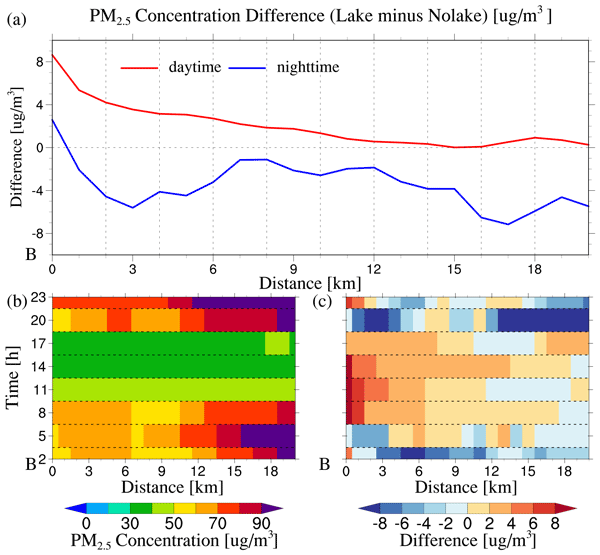
This study uses 1 km resolution Weather Research and Forecasting model coupled with
Chemistry (WRF-Chem) simulations to investigate how Lake Chaohu affects fine
particulate matter (PM2.5) in Hefei. The lake shows a diurnal reversal, increasing
daytime pollution by secondary aerosol formation and storage zones with suppressed
mixing and low deposition, while purifying urban air at night through enhanced vertical
mixing. Lake emission treatment affects lake-urban air quality assessments.
Qike Yang, Chun Zhao, Jiawang Feng, Gudongze Li, Jun Gu, Zihan Xia, Mingyue Xu, and Zining Yang
Geosci. Model Dev., 18, 5373–5396, https://doi.org/10.5194/gmd-18-5373-2025, https://doi.org/10.5194/gmd-18-5373-2025, 2025
Short summary
Short summary
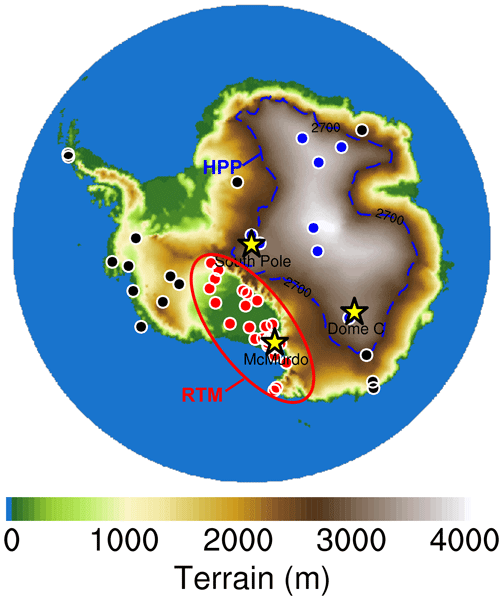
This study provides a comprehensive evaluation of unstructured meshes using the integrated Atmospheric Model Across Scales (iAMAS) over Antarctica, encompassing both surface and upper-level meteorological fields. Comparisons with the fifth-generation reanalysis (ERA5) from the European Centre for Medium-Range Weather Forecasts and observational data indicate that iAMAS performs well in simulating the Antarctic atmosphere.
Zining Yang, Qiuyan Du, Qike Yang, Chun Zhao, Gudongze Li, Zihan Xia, Mingyue Xu, Renmin Yuan, Yubin Li, Kaihui Xia, Jun Gu, and Jiawang Feng
Atmos. Chem. Phys., 25, 8831–8857, https://doi.org/10.5194/acp-25-8831-2025, https://doi.org/10.5194/acp-25-8831-2025, 2025
Short summary
Short summary
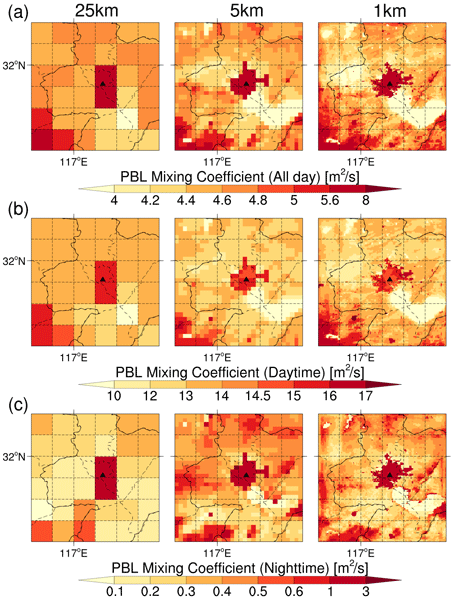
This study investigates the impact of turbulent mixing on black carbon (BC) concentrations in urban areas simulated at 25, 5, and 1 km resolutions. Significant variations in BC and turbulent mixing occur mainly at night. Higher resolutions reduce BC overestimation due to enhanced mixing coefficients and vertical wind fluxes. Small-scale eddies at higher resolutions increase the BC lifetime and column concentrations. Land use and terrain variations across multiple resolutions affect turbulent mixing.
Zihan Xia, Chun Zhao, Zining Yang, Qiuyan Du, Jiawang Feng, Chen Jin, Jun Shi, and Hong An
Atmos. Chem. Phys., 25, 6197–6218, https://doi.org/10.5194/acp-25-6197-2025, https://doi.org/10.5194/acp-25-6197-2025, 2025
Short summary
Short summary
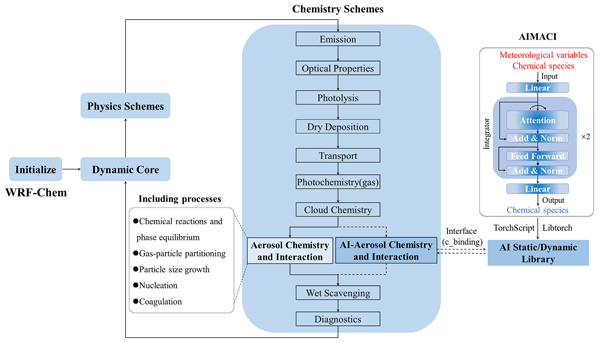
Traditional numerical schemes of aerosol chemistry and interactions (ACI) in atmospheric models are computationally costly and are often simplified or omitted, introducing uncertainties. We use an AI scheme to achieve fast, accurate, and stable end-to-end simulation for full ACI within an atmospheric model, replacing numerical schemes. This innovation is expected to enhance the accuracy and efficiency of ACI simulations in climate models that would otherwise neglect or simplify ACI processes.
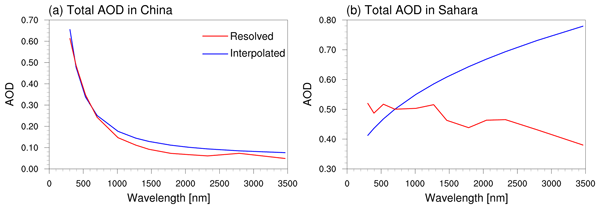
Jiawang Feng, Chun Zhao, Qiuyan Du, Zining Yang, and Chen Jin
Geosci. Model Dev., 18, 585–603, https://doi.org/10.5194/gmd-18-585-2025, https://doi.org/10.5194/gmd-18-585-2025, 2025
Short summary
Short summary
In this study, we improved the calculation of how aerosols in the air interact with radiation in WRF-Chem. The original model used a simplified method, but we developed a more accurate approach. We found that this method significantly changes the properties of the estimated aerosols and their effects on radiation, especially for dust aerosols. It also impacts the simulated weather conditions. Our work highlights the importance of correctly representing aerosol–radiation interactions in models.

Zilu Zhang, Libo Zhou, and Meigen Zhang
Atmos. Chem. Phys., 25, 1–25, https://doi.org/10.5194/acp-25-1-2025, https://doi.org/10.5194/acp-25-1-2025, 2025
Short summary
Short summary
By integrating the SNICAR model with Polar-WRF, we find that 50 ng g−1 black carbon (BC) deposition decreases snow albedo, increasing radiative forcing (RF) by 1–4 W m−2, especially in Greenland, Baffin Island, and eastern Siberia. The impact is strongly linked to BC mass, with deep snowpacks showing greater sensitivity. Snowmelt and land–atmosphere interactions are crucial. High-resolution modelling is necessary to better understand these effects on Arctic climate change.
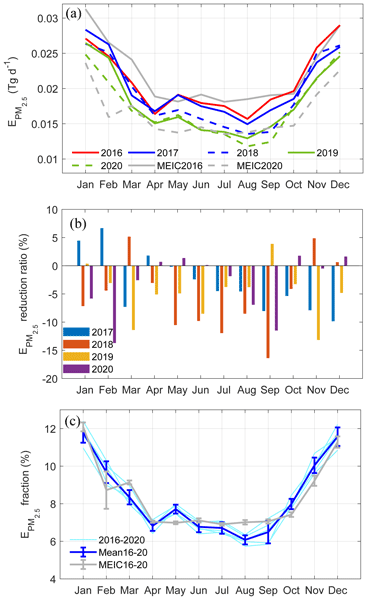
Zhen Peng, Lili Lei, Zhe-Min Tan, Meigen Zhang, Aijun Ding, and Xingxia Kou
Atmos. Chem. Phys., 23, 14505–14520, https://doi.org/10.5194/acp-23-14505-2023, https://doi.org/10.5194/acp-23-14505-2023, 2023
Short summary
Short summary
Annual PM2.5 emissions in China consistently decreased by about 3% to 5% from 2017 to 2020 with spatial variations and seasonal dependencies. High-temporal-resolution and dynamics-based PM2.5 emission estimates provide quantitative diurnal variations for each season. Significant reductions in PM2.5 emissions in the North China Plain and northeast of China in 2020 were caused by COVID-19.
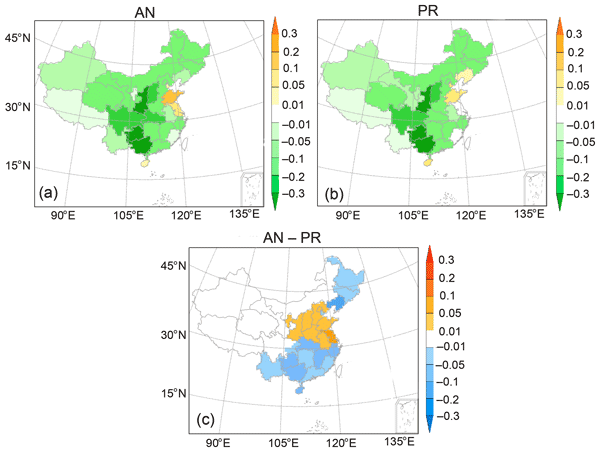
Xingxia Kou, Zhen Peng, Meigen Zhang, Fei Hu, Xiao Han, Ziming Li, and Lili Lei
Atmos. Chem. Phys., 23, 6719–6741, https://doi.org/10.5194/acp-23-6719-2023, https://doi.org/10.5194/acp-23-6719-2023, 2023
Short summary
Short summary
A CMAQ EnSRF-based regional inversion system was extended to resolve satellite retrievals into biogenic source–sink changes. The size of the assimilated biosphere sink in China inferred from GOSAT was −0.47 Pg C yr−1. The biosphere flux at the provincial scale was re-estimated following the refined description in the regional inversion.
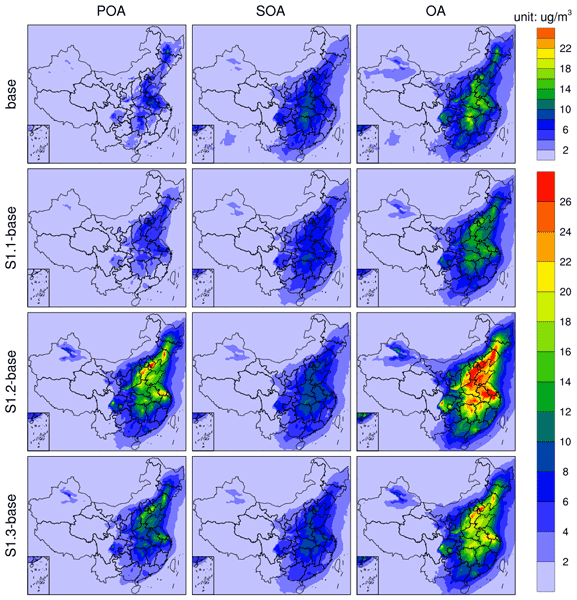
Mengying Li, Shaocai Yu, Xue Chen, Zhen Li, Yibo Zhang, Zhe Song, Weiping Liu, Pengfei Li, Xiaoye Zhang, Meigen Zhang, Yele Sun, Zirui Liu, Caiping Sun, Jingkun Jiang, Shuxiao Wang, Benjamin N. Murphy, Kiran Alapaty, Rohit Mathur, Daniel Rosenfeld, and John H. Seinfeld
Atmos. Chem. Phys., 22, 11845–11866, https://doi.org/10.5194/acp-22-11845-2022, https://doi.org/10.5194/acp-22-11845-2022, 2022
Short summary
Short summary
This study constructed an emission inventory of condensable particulate matter (CPM) in China with a focus on organic aerosols (OAs), based on collected CPM emission information. The results show that OA emissions are enhanced twofold for the years 2014 and 2017 after the inclusion of CPM in the new inventory. Sensitivity cases demonstrated the significant contributions of CPM emissions from stationary combustion and mobile sources to primary, secondary, and total OA concentrations.
Cited articles
Bennartz, R.: Global assessment of marine boundary layer cloud droplet number concentration from satellite, J. Geophys. Res., 112, D02208, https://doi.org/10.1029/2006JD007547, 2007.
Chen, F. and Dudhia, J.: Coupling an Advanced Land Surface–Hydrology Model with the Penn State–NCAR MM5 Modeling System, Part I: Model Implementation and Sensitivity, Mon. Weather Rev., 129, 569–585, https://doi.org/10.1175/1520-0493(2001)129<0569:CAALSH>2.0.CO;2, 2001.
Copernicus Climate Change Service: ERA5 hourly data on single levels from 1940 to present, Copernicus Climate Change Service (C3S) Climate Data Store (CDS) [data set], https://doi.org/10.24381/cds.adbb2d47, 2023.
Dai, H., Liao, H., Wang, Y., and Qian, J.: Co-occurrence of ozone and PM2.5 pollution in urban/non-urban areas in eastern China from 2013 to 2020: Roles of meteorology and anthropogenic emissions, Sci. Total Environ., 924, 171687, https://doi.org/10.1016/j.scitotenv.2024.171687, 2024.
Ding, D., Xing, J., Wang, S., Dong, Z., Zhang, F., Liu, S., and Hao, J.: Optimization of a NOx and VOC Cooperative Control Strategy Based on Clean Air Benefits, Environ. Sci. Technol., 56, 739–749, https://doi.org/10.1021/acs.est.1c04201, 2022.
Foken, T.: 50 Years of the Monin–Obukhov Similarity Theory, Bound.-Lay. Meteorol., 119, 431–447, https://doi.org/10.1007/s10546-006-9048-6, 2006.
Folorunsho, A., Dudhia, J., Sullivan, J., Walter, P., Flynn, J., Griggs, T., Sheesley, R., Usenko, S., Gronoff, G., Estes, M., and Li, Y.: High-Resolution WRF-LES-Chem Simulations to Investigate Ozone Formation Regimes in Houston, ACS ES&T Air 2, 1668–1683, https://doi.org/10.1021/acsestair.5c00109, 2025.
Freitas, S. R., Grell, G. A., Molod, A., Thompson, M. A., Putman, W. M., Santos e Silva, C. M., and Souza, E. P.: Assessing the Grell-Freitas Convection Parameterization in the NASA GEOS Modeling System, J. Adv. Model. Earth Sy., 10, 1266–1289, https://doi.org/10.1029/2017MS001251, 2018.
Geng, G., Liu, Y., Liu, Y., Liu, S., Cheng, J., Yan, L., Wu, N., Hu, H., Tong, D., Zheng, B., Yin, Z., He, K., and Zhang, Q.: Efficacy of China's clean air actions to tackle PM2.5 pollution between 2013 and 2020, Nat. Geosci., 17, 987–994, https://doi.org/10.1038/s41561-024-01540-z, 2024.
Gong, S. L., Barrie, L. A., and Blanchet, J.-P.: Modeling sea-salt aerosols in the atmosphere: 1. Model development, J. Geophys. Res., 102, 3805–3818, https://doi.org/10.1029/96JD02953, 1997.
Grell, G. A., Peckham, S. E., Schmitz, R., McKeen, S. A., Frost, G., Skamarock, W. C., and Eder, B.: Fully coupled ”online” chemistry within the WRF model, Atmos. Environ., 39, 6957–6975, https://doi.org/10.1016/j.atmosenv.2005.04.027, 2005.
Guenther, A., Karl, T., Harley, P., Wiedinmyer, C., Palmer, P. I., and Geron, C.: Estimates of global terrestrial isoprene emissions using MEGAN (Model of Emissions of Gases and Aerosols from Nature), Atmos. Chem. Phys., 6, 3181–3210, https://doi.org/10.5194/acp-6-3181-2006, 2006.
He, C., Liu, J., Zhou, Y., Zhou, J., Zhang, L., Wang, Y., Liu, L., and Peng, S.: Synergistic PM2.5 and O3 control to address the emerging global PM2.5-O3 compound pollution challenges, Eco-Environ. Health, 3, 325–337, https://doi.org/10.1016/j.eehl.2024.04.004, 2024.
Iacono, M. J., Delamere, J. S., Mlawer, E. J., Shephard, M. W., Clough, S. A., and Collins, W. D.: Radiative forcing by long-lived greenhouse gases: Calculations with the AER radiative transfer models, J. Geophys. Res., 113, D13103, https://doi.org/10.1029/2008JD009944, 2008.
Ivatt, P. D., Evans, M. J., and Lewis, A. C.: Suppression of surface ozone by an aerosol-inhibited photochemical ozone regime, Nat. Geosci., 15, 536–540, https://doi.org/10.1038/s41561-022-00972-9, 2022.
Janjić, Z. I.: The Step-Mountain Eta Coordinate Model: Further Developments of the Convection, Viscous Sublayer, and Turbulence Closure Schemes, Mon. Weathr Rev., 122, 927–945, https://doi.org/10.1175/1520-0493(1994)122<0927:TSMECM>2.0.CO;2, 1994.
Kusaka, H. and Kimura, F.: Coupling a Single-Layer Urban Canopy Model with a Simple Atmospheric Model: Impact on Urban Heat Island Simulation for an Idealized Case, J. Meteorol. Soc. Jpn, 82, 67–80, https://doi.org/10.2151/jmsj.82.67, 2004.
Kusaka, H., Kondo, H., Kikegawa, Y., and Kimura, F.: A Simple Single-Layer Urban Canopy Model For Atmospheric Models: Comparison With Multi-Layer And Slab Models, Bound.-Lay. Meteorol., 101, 329–358, https://doi.org/10.1023/A:1019207923078, 2001.
Li, H., Zhang, Q., Zheng, B., Chen, C., Wu, N., Guo, H., Zhang, Y., Zheng, Y., Li, X., and He, K.: Nitrate-driven urban haze pollution during summertime over the North China Plain, Atmos. Chem. Phys., 18, 5293–5306, https://doi.org/10.5194/acp-18-5293-2018, 2018.
Li, L., Guo, Y., Xu, J., Ye, X., Li, D., Liu, Z., Ti, C., Liu, X., and Zhang, L.: Opportunities to mitigate PM2.5 and nitrogen deposition through agricultural NH3 control strategies in China's Beijing–Tianjin–Hebei region, Environ. Sci. Technol., 59, 14572–14584, https://doi.org/10.1021/acs.est.5c02485, 2025.
Li, M., Liu, H., Geng, G., Hong, C., Liu, F., Song, Y., Tong, D., Zheng, B., Cui, H., Man, H., Zhang, Q., and He, K.: Anthropogenic emission inventories in China: a review, Nat. Sci. Rev., 4, 834–866, https://doi.org/10.1093/nsr/nwx150, 2017a.
Li, M., Zhang, Q., Kurokawa, J.-I., Woo, J.-H., He, K., Lu, Z., Ohara, T., Song, Y., Streets, D. G., Carmichael, G. R., Cheng, Y., Hong, C., Huo, H., Jiang, X., Kang, S., Liu, F., Su, H., and Zheng, B.: MIX: a mosaic Asian anthropogenic emission inventory under the international collaboration framework of the MICS-Asia and HTAP, Atmos. Chem. Phys., 17, 935–963, https://doi.org/10.5194/acp-17-935-2017, 2017b.
Li, X. and Rappenglueck, B.: A study of model nighttime ozone bias in air quality modeling, Atmos. Environ., 195, 210–228, https://doi.org/10.1016/j.atmosenv.2018.09.046, 2018.
Li, Y., Li, C., Li, Y., Wang, T., Li, M., Qu, Y., Wu, H., Xie, M., and Wang, Y.: Decadal evolution of aerosol-mediated ozone responses in Eastern China under clean air actions and carbon neutrality policies, Atmos. Chem. Phys., 26, 1301–1319, https://doi.org/10.5194/acp-26-1301-2026, 2026.
Liu, Z., Zhou, M., Chen, Y., Chen, D., Pan, Y., Song, T., Ji, D., Chen, Q., and Zhang, L.: The nonlinear response of fine particulate matter pollution to ammonia emission reductions in North China, Environ. Res. Lett., 16, 034014, https://doi.org/10.1088/1748-9326/abdf86, 2021a.
Liu, H., Gao, Y., Zhang, M., Han, X., Zhu, L., and Yang, J.: Episode analysis of the characteristics and causes of PM2.5 and ozone co-pollution in Tianjin, a coastal city in northern China, Atmos. Environ., 372, 121898, https://doi.org/10.1016/j.atmosenv.2026.121898, 2026.
Liu, Y., Geng, G., Cheng, J., Liu, Y., Xiao, Q., Liu, L., Shi, Q., Tong, D., He, K., and Zhang, Q.: Drivers of Increasing Ozone during the Two Phases of Clean Air Actions in China 2013–2020, Environ. Sci. Technol., 57, 8954–8964, https://doi.org/10.1021/acs.est.3c00054, 2023.
Liu, Z., An, X., Wang, C., Li, J., and Cui, M.: Sensitivity analysis of PM2.5 and O3 co-pollution in Beijing based on GRAPES-CUACE adjoint model, J. Environ. Sci., 158, 461–475, https://doi.org/10.1016/j.jes.2024.11.020, 2025.
Liu, Z., Doherty, R. M., Wild, O., Hollaway, M., and O’Connor, F. M.: Contrasting chemical environments in summertime for atmospheric ozone across major Chinese industrial regions: the effectiveness of emission control strategies, Atmos. Chem. Phys., 21, 10689–10706, https://doi.org/10.5194/acp-21-10689-2021, 2021b.
Lohmann, U. and Feichter, J.: Global indirect aerosol effects: a review, Atmos. Chem. Phys., 5, 715–737, https://doi.org/10.5194/acp-5-715-2005, 2005.
Lu, X., Hong, J., Zhang, L., Cooper, O.R., Schultz, M.G., Xu, X., Wang, T., Gao, M., Zhao, Y., and Zhang, Y.: Severe surface ozone pollution in China: A global perspective, Environ. Sci. Tech. Lett., 5, 487–494, https://doi.org/10.1021/acs.estlett.8b00366, 2018.
Lu, X., Zhang, S., Xing, J., Wang, Y., Chen, W., Ding, D., Wu, Y., Wang, S., Duan, L., and Hao, J.: Progress of air pollution control in China and its challenges and opportunities in the ecological civilization era, Engineering, 6, 1423–1431, https://doi.org/10.1016/j.eng.2020.03.014, 2020.
Luo, Y., Zhao, T., Yang, Y., Zong, L., Kumar, K.R., Wang, H., Meng, K., Zhang, L., Lu, S., and Xin, Y.: Seasonal changes in the recent decline of combined high PM2.5 and O3 pollution and associated chemical and meteorological drivers in the Beijing–Tianjin–Hebei region, China Sci. Tot. Env., 838, 156312, https://doi.org/10.1016/j.scitotenv.2022.156312, 2022.
Ma, X., Yin, Z., Cao, B., and Wang, H.: Meteorological influences on co-occurrence of O3 and PM2.5 pollution and implication for emission reductions in Beijing-Tianjin-Hebei, Sci. China Earth Sci., 66, 1258–1267, https://doi.org/10.1007/s11430-022-1070-y, 2023.
Morrison, H. and Gettelman, A.: A New Two-Moment Bulk Stratiform Cloud Microphysics Scheme in the Community Atmosphere Model, Version 3 (CAM3). Part I: Description and Numerical Tests, J. Climate, 21, 3642–3659, https://doi.org/10.1175/2008JCLI2105.1, 2008.
Qian, J. and Liao, H.: Effectiveness of precursor emission reductions for the control of summertime ozone and PM2.5 in the Beijing-Tianjin-Hebei region under different meteorological conditions, Adv. Atmos. Sci., 42, 653–669, https://doi.org/10.1007/s00376-024-4071-4, 2025.
Ren, J., Guo, F., and Xie, S.: Diagnosing ozone–NOx–VOC sensitivity and revealing causes of ozone increases in China based on 2013–2021 satellite retrievals, Atmos. Chem. Phys., 22, 15035–15047, https://doi.org/10.5194/acp-22-15035-2022, 2022.
Satheesh, S. K. and Krishna Moorthy, K.: Radiative effects of natural aerosols: A review, Atmos. Environ., 39, 2089–2110, https://doi.org/10.1016/j.atmosenv.2004.12.029, 2005.
Tonnesen, G. S. and Dennis, R. L.: Analysis of radical propagation efficiency to assess ozone sensitivity to hydrocarbons and NOx: 2. Long-lived species as indicators of ozone concentration sensitivity, J. Geophys. Res., 105, 9227–9241, https://doi.org/10.1029/1999JD900372, 2000.
Travis, K. R. and Jacob, D. J.: Systematic bias in evaluating chemical transport models with maximum daily 8 h average (MDA8) surface ozone for air quality applications: a case study with GEOS-Chem v9.02, Geosci. Model Dev., 12, 3641–3648, https://doi.org/10.5194/gmd-12-3641-2019, 2019.
Wang, F., Han, X., Xie, H., Gao, Y., Guan, X., and Zhang, M.: Investigating trends and causes of simultaneous high pollution from PM2.5 and ozone in China, 2015–2023, Atmos. Pollut. Res., 16, 102351, https://doi.org/10.1016/j.apr.2024.102351, 2025a.
Wang, W., Zhou, Y., Li, M., Lu, Y., Jiang, X., Wang, T., Zhuang, B., Li, S., Zhan, C., Sun, X., and Huang, X.: Large-scale synoptic and weather drivers for the co-occurrence of fine particulate matter and ozone extremes over China, Sci. China Earth Sci., 68, 1448–1457, https://doi.org/10.1007/s11430-024-1534-1, 2025b.
Wang, Y., Zhao, Y., Liu, Y., Jiang, Y., Zheng, B., Xing, J., Liu, Y., Wang, S., and Nielsen, C. P.: Sustained emission reductions have restrained the ozone pollution over China, Nat. Geosci., 16, 967–974, https://doi.org/10.1038/s41561-023-01284-2, 2023.
Wiedinmyer, C., Akagi, S. K., Yokelson, R. J., Emmons, L. K., Al-Saadi, J. A., Orlando, J. J., and Soja, A. J.: The Fire INventory from NCAR (FINN): a high resolution global model to estimate the emissions from open burning, Geosci. Model Dev., 4, 625–641, https://doi.org/10.5194/gmd-4-625-2011, 2011.
Wild, O., Zhu, X., and Prather, M. J.: Fast-J: Accurate Simulation of In- and Below-Cloud Photolysis in Tropospheric Chemical Models, J. Atmos. Chem., 37, 245–282, https://doi.org/10.1023/A:1006415919030, 2000.
Xia, Z., Zhao, C., Yang, Z., Du, Q., Jia, W., Jin, C., Shi, J., and An, H.: Source code for Hybrid WRFCHEM with Physics and AI Schemes (Aerosol Chemistry and Interactions) (Version v1.0), Zenodo [code], https://doi.org/10.5281/zenodo.15702248, 2024.
Xiong, Y., Yang, Q., Gao, Y., Li, K., Yang, Y., Lin, G., Lu, X., Wang, Z., Zhang, H., and Gao, M.: Modeling the formation of aerosols and their interactions with weather and climate: critical review and future perspectives, Front. Environ. Sci. Eng., 19, 143, https://doi.org/10.1007/s11783-025-2063-y, 2025.
Xu, X.: China Population Spatial Distribution Kilometer Grid Dataset, Resource and Environment Science Data Publishing and Registration System [data set], https://doi.org/10.12078/2017121101, 2017.
Yang, H., Chen, L., Liao, H., Zhu, J., Wang, W., and Li, X.: Weakened aerosol–radiation interaction exacerbating ozone pollution in eastern China since China's clean air actions, Atmos. Chem. Phys., 24, 4001–4015, https://doi.org/10.5194/acp-24-4001-2024, 2024.
Yang, Z., Du, Q., Yang, Q., Zhao, C., Li, G., Xia, Z., Xu, M., Yuan, R., Li, Y., Xia, K., Gu, J., and Feng, J.: Modeling urban pollutant transport at multiple resolutions: impacts of turbulent mixing, Atmos. Chem. Phys., 25, 8831–8857, https://doi.org/10.5194/acp-25-8831-2025, 2025.
Zang, L., Wang, Z., Zhu, B., and Zhang, Y.: Roles of relative humidity in aerosol pollution aggravation over central China during wintertime, Int. J. Environ. Res. Pub. He., 16, 4422, https://doi.org/10.3390/ijerph16224422, 2019.
Zaveri, R. A. and Peters, L. K.: A new lumped structure photochemical mechanism for large-scale applications, J. Geophys. Res., 104, 30387–30415, https://doi.org/10.1029/1999JD900876, 1999.
Zaveri, R. A., Easter, R. C., Fast, J. D., and Peters, L. K.: Model for simulating aerosol interactions and chemistry (MOSAIC), J. Geophys. Res.-Atmos., 113, D13204, https://doi.org/10.1029/2007JD008782, 2008.
Zeng, S., Riedi, J., Trepte, C. R., Winker, D. M., and Hu, Y.-X.: Study of global cloud droplet number concentration with A-Train satellites, Atmos. Chem. Phys., 14, 7125–7134, https://doi.org/10.5194/acp-14-7125-2014, 2014.
Zhan, Y., Xie, M., Zhuang, B., Gao, D., Zhu, K., Lu, H., Wang, T., Li, S., Li, M., Luo, Y., and Zhao, R.: Particle-ozone complex pollution under diverse synoptic weather patterns in the Yangtze River Delta region: synergistic relationships and the effects of meteorology and chemical compositions, Sci. Total Environ., 946, 174365, https://doi.org/10.1016/j.scitotenv.2024.174365, 2024.
Zhang, M., Zhao, C., Yang, Y., Du, Q., Shen, Y., Lin, S., Gu, D., Su, W., and Liu, C.: Modeling sensitivities of BVOCs to different versions of MEGAN emission schemes in WRF-Chem (v3.6) and its impacts over eastern China, Geosci. Model Dev., 14, 6155–6175, https://doi.org/10.5194/gmd-14-6155-2021, 2021.
Zhang, Q., Zheng, Y., Tong, D., Shao, M., Wang, S., Zhang, Y., Xu, X., Wang, J., He, H., Liu, W., Ding, Y., Lei, Y., Li, J., Wang, Z., Zhang, X., Wang, Y., Cheng, J., Liu, Y., Shi, Q., Yan, L., Geng, G., Hong, C., Li, M., Liu, F., Zheng, B., Cao, J., Ding, A., Gao, J., Fu, Q., Huo, J., Liu, B., Liu, Z., Yang, F., He, K., and Hao, J.: Drivers of improved PM2.5 air quality in China from 2013 to 2017, P. Natl. Acad. Sci. USA, 116, 24463–24469, https://doi.org/10.1073/pnas.1907956116, 2019.
Zhang, X., Zhang, Q., Hong, C., Zheng, Y., Geng, G., Tong, D., Zhang, Y., and Zhang, X. Y.: Enhancement of PM2.5 concentrations by aerosol-meteorology interactions over China, J. Geophys. Res.-Atmos., 123, 1179–1194, https://doi.org/10.1002/2017JD027524, 2018.
Zhao, B., Liou, K.-N., Gu, Y., Li, Q., Jiang, J. H., Su, H., He, C., Tseng, H.-L. R., Wang, S., Liu, R., Qi, L., Lee, W.-L., and Hao, J.: Enhanced PM2.5 pollution in China due to aerosol-cloud interactions, Sci. Rep., 7, 4453, https://doi.org/10.1038/s41598-017-04096-8, 2017.
Zhao, C., Chen, S., Leung, L. R., Qian, Y., Kok, J. F., Zaveri, R. A., and Huang, J.: Uncertainty in modeling dust mass balance and radiative forcing from size parameterization, Atmos. Chem. Phys., 13, 10733–10753, https://doi.org/10.5194/acp-13-10733-2013, 2013.
Zhao, C., Hu, Z., Qian, Y., Ruby Leung, L., Huang, J., Huang, M., Jin, J., Flanner, M. G., Zhang, R., Wang, H., Yan, H., Lu, Z., and Streets, D. G.: Simulating black carbon and dust and their radiative forcing in seasonal snow: a case study over North China with field campaign measurements, Atmos. Chem. Phys., 14, 11475–11491, https://doi.org/10.5194/acp-14-11475-2014, 2014.
Zhao, C., Huang, M., Fast, J. D., Berg, L. K., Qian, Y., Guenther, A., Gu, D., Shrivastava, M., Liu, Y., Walters, S., Pfister, G., Jin, J., Shilling, J. E., and Warneke, C.: Sensitivity of biogenic volatile organic compounds to land surface parameterizations and vegetation distributions in California, Geosci. Model Dev., 9, 1959–1976, https://doi.org/10.5194/gmd-9-1959-2016, 2016.
Zhao, H., Chen, K., Liu, Z., Zhang, Y., Shao, T., and Zhang, H.: Coordinated control of PM2.5 and O3 is urgently needed in China after implementation of the “air pollution prevention and control action plan”, Chemosphere, 270, 129441, https://doi.org/10.1016/j.chemosphere.2020.129441, 2021.
Zhao, X., Zhao, X., Liu, Z., Jia, L., and Hu, B.: Non-Ideal Treatment of Organic Aerosol Reveals Its Missing Sources and Improves PM2.5 Prediction, J. Geophys. Res.-Atmos., 131, e2025JD044333, https://doi.org/10.1029/2025JD044333, 2026a.
Zhao, Y., Gao, Y., Xu, L., and Zhang, M.: Numerical analysis of aerosol-radiation-cloud interactions impacts on surface ozone during PM2.5-O3 compound pollution episodes in the Beijing-Tianjin-Hebei and Yangtze River Delta, China, Atmos. Res., 336, 108859, https://doi.org/10.1016/j.atmosres.2026.108859, 2026b.
Zhao, Y., Zhang, L., Zhou, M., Chen, D., Lu, X., Tao, W., Liu, J., Tian, H., Ma, Y., and Fu, T.-M.: Influences of planetary boundary layer mixing parameterization on summertime surface ozone concentration and dry deposition over North China, Atmos. Environ., 218, 116950, https://doi.org/10.1016/j.atmosenv.2019.116950, 2019.
Zhu, J., Chen, L., Liao, H., Yang, H., Yang, Y., and Yue, X.: Enhanced PM2.5 Decreases and O3 Increases in China During COVID-19 Lockdown by Aerosol-Radiation Feedback, Geophys. Res. Lett., 48, e2020GL090260, https://doi.org/10.1029/2020GL090260, 2021.
Zong, L., Yang, Y., Gao, M., Wang, H., Wang, P., Zhang, H., Wang, L., Ning, G., Liu, C., Li, Y., and Gao, Z.: Large-scale synoptic drivers of co-occurring summertime ozone and PM2.5 pollution in eastern China, Atmos. Chem. Phys., 21, 9105–9124, https://doi.org/10.5194/acp-21-9105-2021, 2021.
Short summary
This study presented how NOx–VOC (volatile organic compound) emission reductions affected simultaneous PM2.5 and O3 pollution under different meteorological conditions classified based on boundary layer, temperature, and humidity in North China using a regional model. PM2.5 decreased most under warm humid and stable conditions and O3 decreased most under warm humid conditions. Aerosol-meteorology feedback enhanced PM2.5 reduction yet weakened O3 reduction under stable conditions with large NOx-only cuts.
This study presented how NOx–VOC (volatile organic compound) emission reductions affected...


Altmetrics
Final-revised paper
Preprint