
Articles | Volume 26, issue 20
https://doi.org/10.5194/acp-26-14843-2026
© Author(s) 2026. This work is distributed under
the Creative Commons Attribution 4.0 License.
the Creative Commons Attribution 4.0 License.
https://doi.org/10.5194/acp-26-14843-2026
© Author(s) 2026. This work is distributed under
the Creative Commons Attribution 4.0 License.
the Creative Commons Attribution 4.0 License.
Research article
| 
22 Oct 2026
Research article |
| 22 Oct 2026
| 22 Oct 2026
Western Arctic wintertime mixed-phase clouds: Observed modulation by sea ice conditions, long-term variabilities and trends
Pablo Saavedra Garfias
CORRESPONDING AUTHOR

Faculty of Physics and Earth System Sciences, Institute for Meteorology, Leipzig University, Leipzig, Germany
Leibniz Institute of Atmospheric Physics at the Universiy of Rostock, Kühlungsborn, Germany
Heike Kalesse-Los
Faculty of Physics and Earth System Sciences, Institute for Meteorology, Leipzig University, Leipzig, Germany
Related authors
Andreas Foth, Moritz Lochmann, Pablo Saavedra Garfias, and Heike Kalesse-Los
Atmos. Meas. Tech., 17, 7169–7181, https://doi.org/10.5194/amt-17-7169-2024, https://doi.org/10.5194/amt-17-7169-2024, 2024
Short summary
Short summary
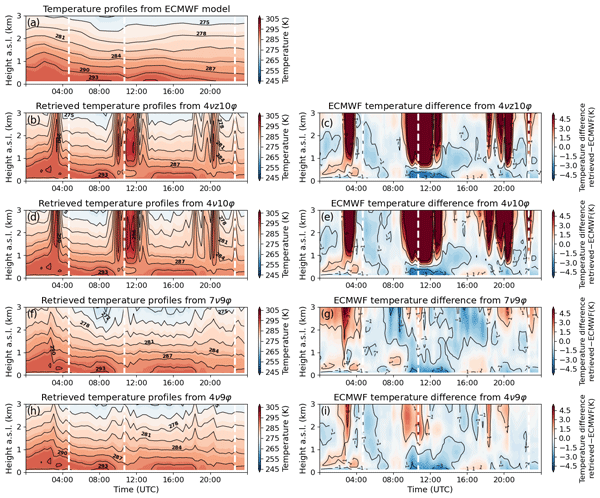
Microwave radiometers are usually not able to provide atmospheric quantities such as temperature profiles during rain. We present a method based on a selection of specific frequencies and elevation angles from microwave radiometer observations. A comparison with a numerical weather prediction model shows the presented method allows low-level temperature profiles during rain to be resolved, with rain rates of up to 2.5 mm h−1,, which was not possible before with state-of-the-art retrievals.
Pablo Saavedra Garfias, Heike Kalesse-Los, Luisa von Albedyll, Hannes Griesche, and Gunnar Spreen
Atmos. Chem. Phys., 23, 14521–14546, https://doi.org/10.5194/acp-23-14521-2023, https://doi.org/10.5194/acp-23-14521-2023, 2023
Short summary
Short summary
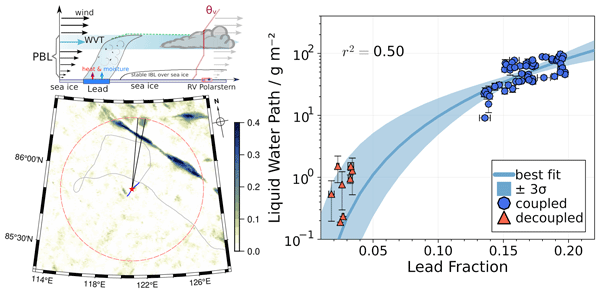
An important Arctic climate process is the release of heat fluxes from sea ice openings to the atmosphere that influence the clouds. The characterization of this process is the objective of this study. Using synergistic observations from the MOSAiC expedition, we found that single-layer cloud properties show significant differences when clouds are coupled or decoupled to the water vapour transport which is used as physical link between the upwind sea ice openings and the cloud under observation.
Olivia Linke, Johannes Quaas, Finja Baumer, Sebastian Becker, Jan Chylik, Sandro Dahlke, André Ehrlich, Dörthe Handorf, Christoph Jacobi, Heike Kalesse-Los, Luca Lelli, Sina Mehrdad, Roel A. J. Neggers, Johannes Riebold, Pablo Saavedra Garfias, Niklas Schnierstein, Matthew D. Shupe, Chris Smith, Gunnar Spreen, Baptiste Verneuil, Kameswara S. Vinjamuri, Marco Vountas, and Manfred Wendisch
Atmos. Chem. Phys., 23, 9963–9992, https://doi.org/10.5194/acp-23-9963-2023, https://doi.org/10.5194/acp-23-9963-2023, 2023
Short summary
Short summary
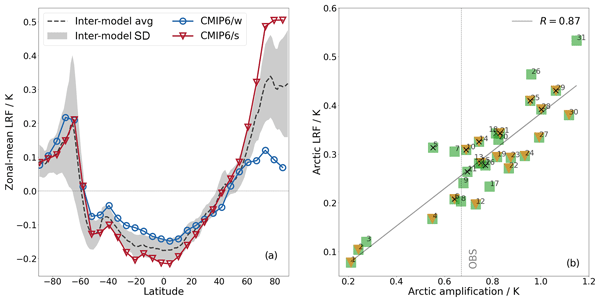
Lapse rate feedback (LRF) is a major driver of the Arctic amplification (AA) of climate change. It arises because the warming is stronger at the surface than aloft. Several processes can affect the LRF in the Arctic, such as the omnipresent temperature inversion. Here, we compare multimodel climate simulations to Arctic-based observations from a large research consortium to broaden our understanding of these processes, find synergy among them, and constrain the Arctic LRF and AA.
Willi Schimmel, Heike Kalesse-Los, Maximilian Maahn, Teresa Vogl, Andreas Foth, Pablo Saavedra Garfias, and Patric Seifert
Atmos. Meas. Tech., 15, 5343–5366, https://doi.org/10.5194/amt-15-5343-2022, https://doi.org/10.5194/amt-15-5343-2022, 2022
Short summary
Short summary
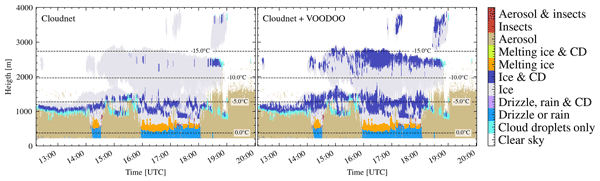
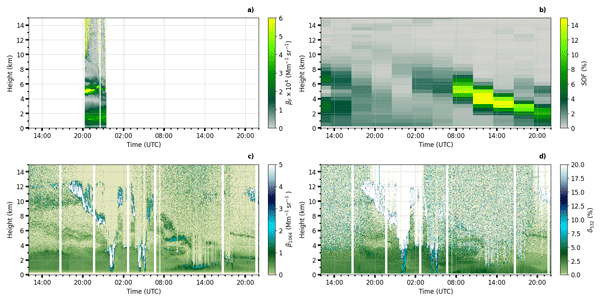
This study introduces the novel Doppler radar spectra-based machine learning approach VOODOO (reVealing supercOOled liquiD beyOnd lidar attenuatiOn). VOODOO is a powerful probability-based extension to the existing Cloudnet hydrometeor target classification, enabling the detection of liquid-bearing cloud layers beyond complete lidar attenuation via user-defined p* threshold. VOODOO performs best for (multi-layer) stratiform and deep mixed-phase clouds with liquid water path > 100 g m−2.
Johanna Roschke, Benedikt Gast, Martin Radenz, Albert Ansmann, Patric Seifert, George McCosh, and Heike Kalesse-Los
Geosci. Model Dev., 19, 9905–9934, https://doi.org/10.5194/gmd-19-9905-2026, https://doi.org/10.5194/gmd-19-9905-2026, 2026
Short summary
Short summary
This research introduces a new method that combines model simulations with satellite observations to attribute the influence of wildfire smoke on an airmass. By dynamically determining the height of smoke plumes, we overcome a key limitation of earlier fixed reception-height approaches. This advancement is crucial for improving our understanding of how wildfire emissions influence cloud formation and the broader Earth's climate system.
Anna Trosits, Andreas Foth, Allison A. Wing, Johanna Roschke, Moritz Haarig, Anton Kötsche, and Heike Kalesse-Los
EGUsphere, https://doi.org/10.5194/egusphere-2026-4385, https://doi.org/10.5194/egusphere-2026-4385, 2026
This preprint is open for discussion and under review for Atmospheric Chemistry and Physics (ACP).
Short summary
Short summary
This study shows the effect of air layers originating from the Saharan Desert on clouds over the tropical Atlantic observed during the ship-borne research campaign BOWTIE. These Saharan Air Layers (SAL) were analysed with data from several instruments providing atmospheric profiles and can be characterised by low moisture and dispersed mineral dust. The investigation suggests a suppression of vertical cloud development by the SAL, also affecting microphysical properties of the cloud.
Hans Segura, Allison A. Wing, Heike Kalesse-Los, Ruben Carrasco, James H. Ruppert Jr., Anna Trosits, Louise Nuijens, Felix Ament, Daniel Blandfort, Michael M. Bell, Pierre Bosser, Delián Colón-Burgos, Geet George, Joelle Habib, Jochen Horstmann, Friedhelm Jansen, Lukas Kluft, Robert Kopte, Klas Ove Möller, Peristera Paschou, Hauke Schmidt, Michael Schlundt, Ilya Serikov, Martin Stelzner, Elizabeth J. Thompson, Werenfrid Wimmer, Marcus Dengler, and Daniel Klocke
Earth Syst. Sci. Data Discuss., https://doi.org/10.5194/essd-2026-343, https://doi.org/10.5194/essd-2026-343, 2026
Revised manuscript accepted for ESSD
Short summary
Short summary
BOWTIE (Beobachtung von Ozean und Wolken - Das Trans ITCZ Experiment) was an observational campaign occurring in summer 2024, which intensively took measurements from the upper ocean to the upper troposphere in the wettest region of the tropical Atlantic. Here, we provide an overview of the measurements and instrumentation, including remote sensing and conventional, which targeted small-scale processes under different weather regimes, from calm doldrums to gusty, precipitating events.
Jonas Witthuhn, Hartwig Deneke, Andreas Macke, Oscar Ritter, Jens Redemann, Connor J. Flynn, Abdulamid A. Fakoya, Bradley F. Lamkin, Emily D. Lenhardt, Logan T. Mitchell, Emily K. West, David M. Romps, Rusen Öktem, and Heike Kalesse-Los
Atmos. Chem. Phys., 26, 5727–5745, https://doi.org/10.5194/acp-26-5727-2026, https://doi.org/10.5194/acp-26-5727-2026, 2026
Short summary
Short summary
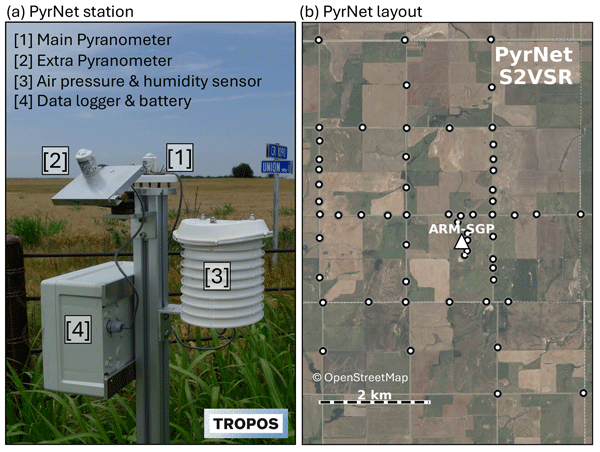
This study examines how solar irradiance changes when sunlight passes from clear sky into cloud shadows, focusing on 3‑D radiative effects of shallow cumulus clouds. Using data from a dense pyranometer network and cloud masks from cameras we found that irradiance can rise up to 20 % above clear‑sky levels near cloud edges. Key drivers include sun‑cloud geometry and microphysical cloud properties. The results highlight the need to incorporate such 3‑D effects in atmospheric models.
Anton Kötsche, Maximilian Maahn, Veronika Ettrichrätz, and Heike Kalesse-Los
Atmos. Chem. Phys., 26, 3277–3297, https://doi.org/10.5194/acp-26-3277-2026, https://doi.org/10.5194/acp-26-3277-2026, 2026
Short summary
Short summary
We studied how turbulence affects snowfall in the Colorado Rockies, focusing on a turbulent layer behind Gothic Mountain. Using radar and surface observations, we found turbulence enhances snow growth by causing snowflakes to stick and form extra ice via collisions. Liquid water at cold temperatures further boosts snow formation. This work shows how turbulence shapes mountain snowfall and demonstrates radar-based methods to study precipitation processes.
Kevin Ohneiser, Patric Seifert, Willi Schimmel, Fabian Senf, Tom Gaudek, Martin Radenz, Audrey Teisseire, Veronika Ettrichrätz, Teresa Vogl, Nina Maherndl, Nils Pfeifer, Jan Henneberger, Anna J. Miller, Nadja Omanovic, Christopher Fuchs, Huiying Zhang, Fabiola Ramelli, Robert Spirig, Anton Kötsche, Heike Kalesse-Los, Maximilian Maahn, Heather Corden, Alexis Berne, Majid Hajipour, Hannes Griesche, Julian Hofer, Ronny Engelmann, Annett Skupin, Albert Ansmann, and Holger Baars
Atmos. Chem. Phys., 25, 17363–17386, https://doi.org/10.5194/acp-25-17363-2025, https://doi.org/10.5194/acp-25-17363-2025, 2025
Short summary
Short summary
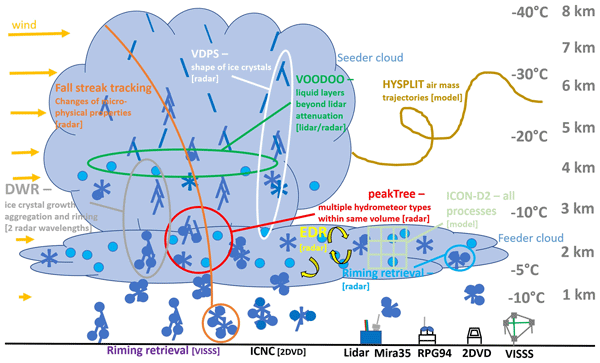
This study focuses on a seeder-feeder cloud system on 8 Jan 2024 in Eriswil, Switzerland. It is shown how the interaction of these cloud systems changes the cloud microphysical properties and the precipitation patterns. A big set of advanced remote-sensing techniques and retrieval algorithms are applied, so that a detailed view on the seeder-feeder cloud system is available. The gained knowledge can be used to improve weather models and weather forecasts.
Anton Kötsche, Alexander Myagkov, Leonie von Terzi, Maximilian Maahn, Veronika Ettrichrätz, Teresa Vogl, Alexander Ryzhkov, Petar Bukovcic, Davide Ori, and Heike Kalesse-Los
Atmos. Chem. Phys., 25, 14045–14070, https://doi.org/10.5194/acp-25-14045-2025, https://doi.org/10.5194/acp-25-14045-2025, 2025
Short summary
Short summary
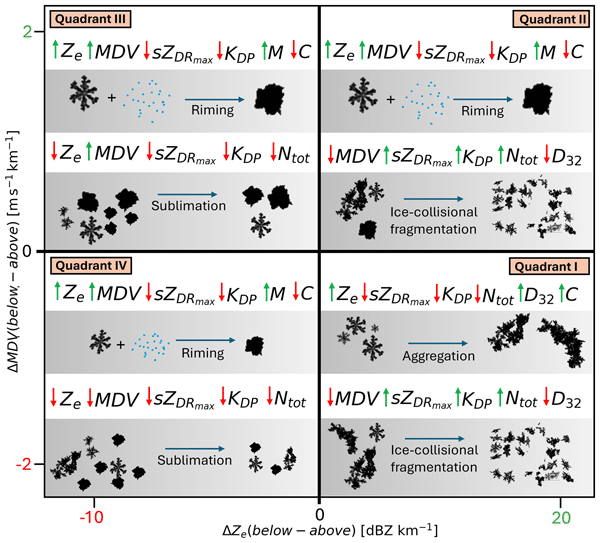
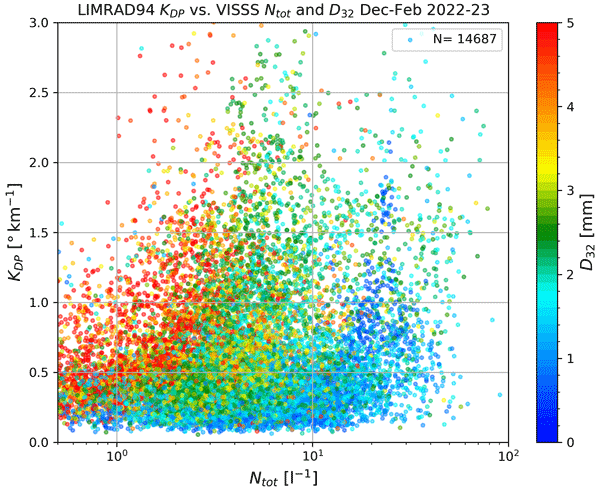
Our study combines radar observations of snow with snowfall camera observations on the ground to enhance our understanding of radar variables and snowfall properties. We found that values of an important radar variable (KDP) can be related to many different snow particle properties and number concentrations. We were able to constrain which particle sizes contribute to KDP by using computer models of snowflakes and showed which microphysical processes during snow formation can influence KDP.

Johanna Roschke, Jonas Witthuhn, Marcus Klingebiel, Moritz Haarig, Andreas Foth, Anton Kötsche, and Heike Kalesse-Los
Atmos. Meas. Tech., 18, 487–508, https://doi.org/10.5194/amt-18-487-2025, https://doi.org/10.5194/amt-18-487-2025, 2025
Short summary
Short summary
We present a technique to discriminate between the Cloudnet target classification of "drizzle or rain" and sea salt aerosols that is applicable to marine Cloudnet sites. The method is crucial for investigating the occurrence of precipitation and significantly improves the Cloudnet target classification scheme for measurements over the Barbados Cloud Observatory (BCO). A first-ever analysis of the Cloudnet product including the new "haze echo" target over 2 years at the BCO is presented.
Andreas Foth, Moritz Lochmann, Pablo Saavedra Garfias, and Heike Kalesse-Los
Atmos. Meas. Tech., 17, 7169–7181, https://doi.org/10.5194/amt-17-7169-2024, https://doi.org/10.5194/amt-17-7169-2024, 2024
Short summary
Short summary
Microwave radiometers are usually not able to provide atmospheric quantities such as temperature profiles during rain. We present a method based on a selection of specific frequencies and elevation angles from microwave radiometer observations. A comparison with a numerical weather prediction model shows the presented method allows low-level temperature profiles during rain to be resolved, with rain rates of up to 2.5 mm h−1,, which was not possible before with state-of-the-art retrievals.
Teresa Vogl, Martin Radenz, Fabiola Ramelli, Rosa Gierens, and Heike Kalesse-Los
Atmos. Meas. Tech., 17, 6547–6568, https://doi.org/10.5194/amt-17-6547-2024, https://doi.org/10.5194/amt-17-6547-2024, 2024
Short summary
Short summary
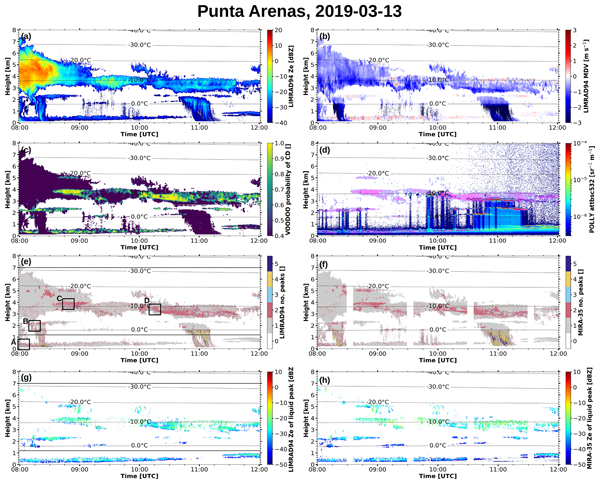
In this study, we present a toolkit of two Python algorithms to extract information from Doppler spectra measured by ground-based cloud radars. In these Doppler spectra, several peaks can be formed due to populations of droplets/ice particles with different fall velocities coexisting in the same measurement time and height. The two algorithms can detect peaks and assign them to certain particle types, such as small cloud droplets or fast-falling ice particles like graupel.
Sabrina Schnitt, Andreas Foth, Heike Kalesse-Los, Mario Mech, Claudia Acquistapace, Friedhelm Jansen, Ulrich Löhnert, Bernhard Pospichal, Johannes Röttenbacher, Susanne Crewell, and Bjorn Stevens
Earth Syst. Sci. Data, 16, 681–700, https://doi.org/10.5194/essd-16-681-2024, https://doi.org/10.5194/essd-16-681-2024, 2024
Short summary
Short summary
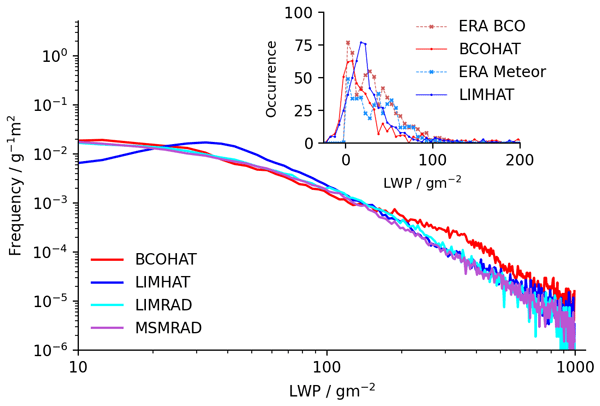
This publication describes the microwave radiometric measurements performed during the EUREC4A campaign at Barbados Cloud Observatory (BCO) and aboard RV Meteor and RV Maria S Merian. We present retrieved integrated water vapor (IWV), liquid water path (LWP), and temperature and humidity profiles as a unified, quality-controlled, multi-site data set on a 3 s temporal resolution for a core period between 19 January 2020 and 14 February 2020.
Pablo Saavedra Garfias, Heike Kalesse-Los, Luisa von Albedyll, Hannes Griesche, and Gunnar Spreen
Atmos. Chem. Phys., 23, 14521–14546, https://doi.org/10.5194/acp-23-14521-2023, https://doi.org/10.5194/acp-23-14521-2023, 2023
Short summary
Short summary
An important Arctic climate process is the release of heat fluxes from sea ice openings to the atmosphere that influence the clouds. The characterization of this process is the objective of this study. Using synergistic observations from the MOSAiC expedition, we found that single-layer cloud properties show significant differences when clouds are coupled or decoupled to the water vapour transport which is used as physical link between the upwind sea ice openings and the cloud under observation.
Olivia Linke, Johannes Quaas, Finja Baumer, Sebastian Becker, Jan Chylik, Sandro Dahlke, André Ehrlich, Dörthe Handorf, Christoph Jacobi, Heike Kalesse-Los, Luca Lelli, Sina Mehrdad, Roel A. J. Neggers, Johannes Riebold, Pablo Saavedra Garfias, Niklas Schnierstein, Matthew D. Shupe, Chris Smith, Gunnar Spreen, Baptiste Verneuil, Kameswara S. Vinjamuri, Marco Vountas, and Manfred Wendisch
Atmos. Chem. Phys., 23, 9963–9992, https://doi.org/10.5194/acp-23-9963-2023, https://doi.org/10.5194/acp-23-9963-2023, 2023
Short summary
Short summary
Lapse rate feedback (LRF) is a major driver of the Arctic amplification (AA) of climate change. It arises because the warming is stronger at the surface than aloft. Several processes can affect the LRF in the Arctic, such as the omnipresent temperature inversion. Here, we compare multimodel climate simulations to Arctic-based observations from a large research consortium to broaden our understanding of these processes, find synergy among them, and constrain the Arctic LRF and AA.
Samuel Kwakye, Heike Kalesse-Los, Maximilian Maahn, Patric Seifert, Roel van Klink, Christian Wirth, and Johannes Quaas
Atmos. Meas. Tech. Discuss., https://doi.org/10.5194/amt-2023-69, https://doi.org/10.5194/amt-2023-69, 2023
Publication in AMT not foreseen
Short summary
Short summary
Insect numbers in the atmosphere can be calculated using polarimetric weather radar but they have to be identified and separated from other echoes, especially weather phenomena. Here, the separation is demonstrated using three machine-learning algorithms and insect count data from suction traps and the nature of radar measurements of different radar echoes is revealed. Random forest is the best separating algorithm and insect echoes radar measurements are distinct.
Heike Kalesse-Los, Anton Kötsche, Andreas Foth, Johannes Röttenbacher, Teresa Vogl, and Jonas Witthuhn
Atmos. Meas. Tech., 16, 1683–1704, https://doi.org/10.5194/amt-16-1683-2023, https://doi.org/10.5194/amt-16-1683-2023, 2023
Short summary
Short summary
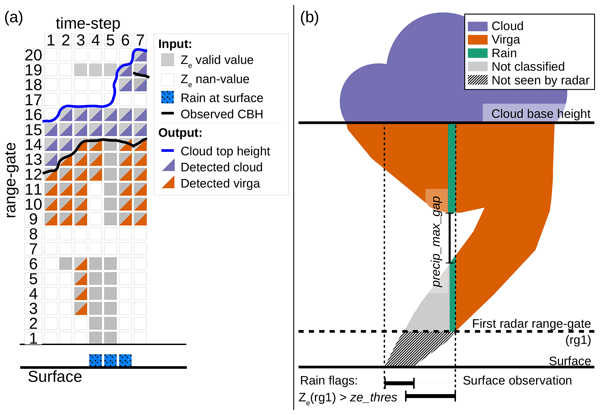
The Virga-Sniffer, a new modular open-source Python package tool to characterize full precipitation evaporation (so-called virga) from ceilometer cloud base height and vertically pointing cloud radar reflectivity time–height fields, is described. Results of its first application to RV Meteor observations during the EUREC4A field experiment in January–February 2020 are shown. About half of all detected clouds with bases below the trade inversion height were found to produce virga.
Willi Schimmel, Heike Kalesse-Los, Maximilian Maahn, Teresa Vogl, Andreas Foth, Pablo Saavedra Garfias, and Patric Seifert
Atmos. Meas. Tech., 15, 5343–5366, https://doi.org/10.5194/amt-15-5343-2022, https://doi.org/10.5194/amt-15-5343-2022, 2022
Short summary
Short summary
This study introduces the novel Doppler radar spectra-based machine learning approach VOODOO (reVealing supercOOled liquiD beyOnd lidar attenuatiOn). VOODOO is a powerful probability-based extension to the existing Cloudnet hydrometeor target classification, enabling the detection of liquid-bearing cloud layers beyond complete lidar attenuation via user-defined p* threshold. VOODOO performs best for (multi-layer) stratiform and deep mixed-phase clouds with liquid water path > 100 g m−2.

Teresa Vogl, Maximilian Maahn, Stefan Kneifel, Willi Schimmel, Dmitri Moisseev, and Heike Kalesse-Los
Atmos. Meas. Tech., 15, 365–381, https://doi.org/10.5194/amt-15-365-2022, https://doi.org/10.5194/amt-15-365-2022, 2022
Short summary
Short summary
We are using machine learning techniques, a type of artificial intelligence, to detect graupel formation in clouds. The measurements used as input to the machine learning framework were performed by cloud radars. Cloud radars are instruments located at the ground, emitting radiation with wavelenghts of a few millimeters vertically into the cloud and measuring the back-scattered signal. Our novel technique can be applied to different radar systems and different weather conditions.
Heike Kalesse-Los, Willi Schimmel, Edward Luke, and Patric Seifert
Atmos. Meas. Tech., 15, 279–295, https://doi.org/10.5194/amt-15-279-2022, https://doi.org/10.5194/amt-15-279-2022, 2022
Short summary
Short summary
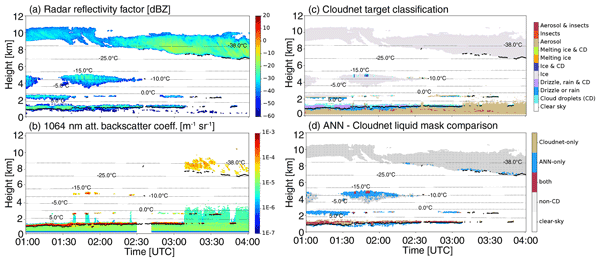
It is important to detect the vertical distribution of cloud droplets and ice in mixed-phase clouds. Here, an artificial neural network (ANN) previously developed for Arctic clouds is applied to a mid-latitudinal cloud radar data set. The performance of this technique is contrasted to the Cloudnet target classification. For thick/multi-layer clouds, the machine learning technique is better at detecting liquid than Cloudnet, but if lidar data are available Cloudnet is at least as good as the ANN.
Silke Trömel, Clemens Simmer, Ulrich Blahak, Armin Blanke, Sabine Doktorowski, Florian Ewald, Michael Frech, Mathias Gergely, Martin Hagen, Tijana Janjic, Heike Kalesse-Los, Stefan Kneifel, Christoph Knote, Jana Mendrok, Manuel Moser, Gregor Köcher, Kai Mühlbauer, Alexander Myagkov, Velibor Pejcic, Patric Seifert, Prabhakar Shrestha, Audrey Teisseire, Leonie von Terzi, Eleni Tetoni, Teresa Vogl, Christiane Voigt, Yuefei Zeng, Tobias Zinner, and Johannes Quaas
Atmos. Chem. Phys., 21, 17291–17314, https://doi.org/10.5194/acp-21-17291-2021, https://doi.org/10.5194/acp-21-17291-2021, 2021
Short summary
Short summary
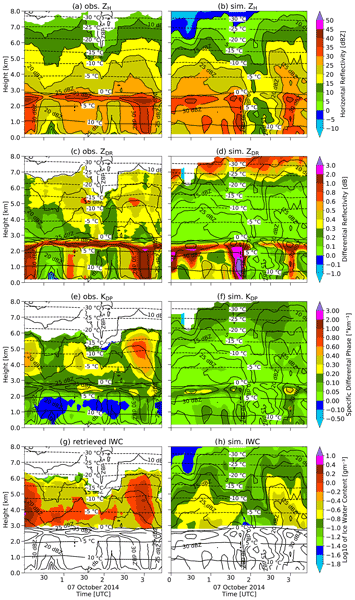
The article introduces the ACP readership to ongoing research in Germany on cloud- and precipitation-related process information inherent in polarimetric radar measurements, outlines pathways to inform atmospheric models with radar-based information, and points to remaining challenges towards an improved fusion of radar polarimetry and atmospheric modelling.
Cited articles
Andreas, E. L. and Cash, B. A.: Convective heat transfer over wintertime leads and polynyas, J. Geophys. Res.-Oceans, 104, 25721–25734, https://doi.org/10.1029/1999JC900241, 1999. a
Arrhenius, S.: On the influence of carbonic acid in the air upon the temperature of the Earth, Publ. Astron. Soc. Pac., 9, 14, https://doi.org/10.1086/121158, 1897. a
Cadeddu, M., Morris, V., and Tuftedal, M.: Microwave Radiometer (MWRLOS), Atmospheric Radiation Measurement (ARM) user facility, https://doi.org/10.5439/1999490, 2024. a
Cesana, G. V., Pierpaoli, O., Ottaviani, M., Vu, L., Jin, Z., and Silber, I.: The correlation between Arctic sea ice, cloud phase and radiation using A-Train satellites, Atmos. Chem. Phys., 24, 7899–7909, https://doi.org/10.5194/acp-24-7899-2024, 2024. a, b
Cesana, G. V., Roach, L. A., and Blanchard-Wrigglesworth, E.: Clouds Are Crucial to Capture Antarctic Sea Ice Variability, Geophys. Res. Lett., 52, e2024GL113322, https://doi.org/10.1029/2024GL113322, 2025. a, b, c
Chang, K.-L., Schultz, M. G., Lan, X., McClure-Begley, A., Petropavlovskikh, I., Xu, X., and Ziemke, J. R.: Trend detection of atmospheric time series: Incorporating appropriate uncertainty estimates and handling extreme events, Elementa: Science of the Anthropocene, 9, 00035, https://doi.org/10.1525/elementa.2021.00035, 2021. a
Cox, C. J., Walden, V. P., Rowe, P. M., and Shupe, M. D.: Humidity trends imply increased sensitivity to clouds in a warming Arctic, Nat. Commun., 6, 10117, https://doi.org/10.1038/ncomms10117, 2015. a
Deng, J. and Dai, A.: Arctic sea ice–air interactions weaken El Niño–Southern Oscillation, Sci. Adv., 10, eadk3990, https://doi.org/10.1126/sciadv.adk3990, 2024. a
Griesche, H. J., Seifert, P., Ansmann, A., Baars, H., Barrientos Velasco, C., Bühl, J., Engelmann, R., Radenz, M., Zhenping, Y., and Macke, A.: Application of the shipborne remote sensing supersite OCEANET for profiling of Arctic aerosols and clouds during Polarstern cruise PS106, Atmos. Meas. Tech., 13, 5335–5358, https://doi.org/10.5194/amt-13-5335-2020, 2020. a, b
Griesche, H. J., Barrientos-Velasco, C., Deneke, H., Hünerbein, A., Seifert, P., and Macke, A.: Low-level Arctic clouds: a blind zone in our knowledge of the radiation budget, Atmos. Chem. Phys., 24, 597–612, https://doi.org/10.5194/acp-24-597-2024, 2024. a
Hegerl, G. C.: Climate change is physics, Commun. Earth Environ., 3, 1–3, https://doi.org/10.1038/s43247-022-00342-8, 2022. a
Hofer, S., Hahn, L. C., Shaw, J. K., McGraw, Z. S., Bruno, O., Hellmuth, F., Pietschnig, M., Mostue, I. A., David, R. O., Carlsen, T., and Storelvmo, T.: Realistic representation of mixed-phase clouds increases projected climate warming, Commun. Earth Environ., 5, 1–12, https://doi.org/10.1038/s43247-024-01524-2, 2024. a
Illingworth, A. J., Hogan, R. J., O'Connor, E. J., Bouniol, D., Brooks, M. E., Delanoé, J., Donovan, D. P., Eastment, J. D., Gaussiat, N., Goddard, J. W. F., Haeffelin, M., Baltink, H. K., Krasnov, O. A., Pelon, J., Piriou, J.-M., Protat, A., Russchenberg, H. W. J., Seifert, A., Tompkins, A. M., van Zadelhoff, G.-J., Vinit, F., Willén, U., Wilson, D. R., and Wrench, C. L.: CloudnetContinuous Evaluation of Cloud Profiles in Seven Operational Models Using Ground-Based Observations, Bull. Amer. Meteor. Soc., 88, 883–898, https://doi.org/10.1175/BAMS-88-6-883, 2007. a
Jensen, M., Giangrande, S., Fairless, T., and Zhou, A.: Interpolated Sonde (INTERPOLATEDSONDE), Atmospheric Radiation Measurement (ARM) user facility, https://doi.org/10.5439/1095316, 2024. a
Johnson, K., Giangrande, S., and Toto, T.: Active Remote Sensing of CLouds (ARSCL) product using Ka-band ARM Zenith Radars (ARSCLKAZR1KOLLIAS), Atmospheric Radiation Measurement (ARM) user facility, https://doi.org/10.5439/1393437, 2024. a
JPL ENSO: El Niño Southern Oscillation index, Jet Propulsion Laboratory, California Institute of Technology, https://sealevel.jpl.nasa.gov/data/vital-signs/el-nino/ (last access: 30 April 2025), 2025. a
JPL PDO: Pacific Decadal Oscillation index, Jet Propulsion Laboratory, California Institute of Technology, https://sealevel.jpl.nasa.gov/data/vital-signs/pacific-decadal-oscillation (last access: 30 April 2025), 2025. a
Kalesse-Los, H., Schimmel, W., Luke, E., and Seifert, P.: Evaluating cloud liquid detection against Cloudnet using cloud radar Doppler spectra in a pre-trained artificial neural network, Atmos. Meas. Tech., 15, 279–295, https://doi.org/10.5194/amt-15-279-2022, 2022. a
Kodaira, T., Waseda, T., Nose, T., and Inoue, J.: Record high Pacific Arctic seawater temperatures and delayed sea ice advance in response to episodic atmospheric blocking, Sci. Rep., 10, 20830, https://doi.org/10.1038/s41598-020-77488-y, 2020. a, b
Korolev, A. and Milbrandt, J.: How are mixed-phase clouds mixed?, Geophys. Res. Lett., 49, e2022GL099578, https://doi.org/10.1029/2022GL099578, 2022. a
Lapere, R., Marelle, L., Rampal, P., Brodeau, L., Melsheimer, C., Spreen, G., and Thomas, J. L.: Modeling the contribution of leads to sea spray aerosol in the high Arctic, Atmos. Chem. Phys., 24, 12107–12132, https://doi.org/10.5194/acp-24-12107-2024, 2024. a
Li, X., Krueger, S. K., Strong, C., and Mace, G. G.: Relationship Between Wintertime Leads and Low Clouds in the Pan-Arctic, J. Geophys. Res.-Atmos., 125, e2020JD032595, https://doi.org/10.1029/2020JD032595, 2020a. a
Li, X., Krueger, S. K., Strong, C., Mace, G. G., and Benson, S.: Midwinter Arctic leads form and dissipate low clouds, Nat. Commun., 11, 206, https://doi.org/10.1038/s41467-019-14074-5, 2020b. a, b
Lubin, D., Zou, X., Mülmenstädt, J., Vogelmann, A., Cadeddu, M., and Zhang, D.: Surface radiation trends at North Slope of Alaska influenced by large-scale circulation and atmospheric rivers, Atmos. Chem. Phys., 26, 295–311, https://doi.org/10.5194/acp-26-295-2026, 2026. a
Manaster, A., O’Dell, C. W., and Elsaesser, G.: Evaluation of Cloud Liquid Water Path Trends Using a Multidecadal Record of Passive Microwave Observations, J. Climate, https://doi.org/10.1175/JCLI-D-16-0399.1, 2017. a
Mann, M. E., Steinman, B. A., and Miller, S. K.: Absence of internal multidecadal and interdecadal oscillations in climate model simulations, Nat. Commun., 11, 49, https://doi.org/10.1038/s41467-019-13823-w, 2020. a
Melsheimer, C. and Spreen, G.: AMSR-E ASI sea ice concentration data, Arctic, version 5.4 (NetCDF) (June 2002–September 2011), Pangaea, https://doi.org/10.1594/PANGAEA.899090, 2019. a, b, c, d
Morrison, H., de Boer, G., Feingold, G., Harrington, J., Shupe, M. D., and Sulia, K.: Resilience of persistent Arctic mixed-phase clouds, Nat. Geosci., 5, 11–17, https://doi.org/10.1038/ngeo1332, 2012. a
Nakanishi, M. and Michibata, T.: How Does Cloud Emissivity Feedback Affect Present and Future Arctic Warming?, Ocean-Land-Atmosphere Research, 4, 0089, https://doi.org/10.34133/olar.0089, 2025. a
NOAA AO: Artic Oscillation index, National Ocean and Atmospheric Administration, ftp://ftp.cpc.ncep.noaa.gov/cwlinks/norm.daily.ao.cdas.z1000.19500101_current.csv (last access: 30 April 2025), 2025. a
Notz, D. and and SIMIP Community: Arctic Sea Ice in CMIP6, Geophys. Res. Lett., 47, e2019GL086749, https://doi.org/10.1029/2019GL086749, 2020. a
Palm, S. P., Strey, S. T., Spinhirne, J., and Markus, T.: Influence of Arctic sea ice extent on polar cloud fraction and vertical structure and implications for regional climate, J. Geophys. Res.-Atmos., 115, https://doi.org/10.1029/2010JD013900, 2010. a, b
Papakonstantinou-Presvelou, I., Sourdeval, O., and Quaas, J.: Strong Ocean/Sea-Ice Contrasts Observed in Satellite-Derived Ice Crystal Number Concentrations in Arctic Ice Boundary-Layer Clouds, Geophys. Res. Lett., 49, e2022GL098207, https://doi.org/10.1029/2022GL098207, 2022. a
Pithan, F., Medeiros, B., and Mauritsen, T.: Mixed-phase clouds cause climate model biases in Arctic wintertime temperature inversions, Clim. Dynam., 43, 289–303, https://doi.org/10.1007/s00382-013-1964-9, 2014. a
Rantanen, M., Karpechko, A. Y., Lipponen, A., Nordling, K., Hyvärinen, O., Ruosteenoja, K., Vihma, T., and Laaksonen, A.: The Arctic has warmed nearly four times faster than the globe since 1979, Commun. Earth Environ., 3, 1–10, https://doi.org/10.1038/s43247-022-00498-3, 2022. a, b
Riihimaki, L., Zhang, D., and Gaustad, K.: Radiative Flux Analysis (RADFLUX1LONG), North Slope Alaska (NSA), Central Facility, Barrow AK (C1), Tech. rep., https://doi.org/10.5439/1395159, 2024. a
Rogers, R. and Yau, M.: A Short Course in Clouds Physics, Pergamon Press, 3rd edn., ISBN 0-08-034863-7, 1991. a
Saavedra Garfias, P.: CloudnetTools.jl: Julia toolbox to apply Cloudnet to data from the Atmospheric Radiation Measurement (ARM) facility, Zenodo [code], https://doi.org/10.5281/zenodo.7245670, 2022. a, b
Saavedra Garfias, P.: Source code for processing and long-term trend analysis of the interaction between mixed-phase clouds and sea ice at the ARM NSA site, Zenodo [code], https://doi.org/10.5281/zenodo.22871849, 2026a. a
Saavedra Garfias, P.: Wintertime Arctic cloud properties coupled to sea ice at the ARM NSA site from 2011 to 2025, Zenodo [data set], https://doi.org/10.5281/zenodo.22905666, 2026b. a
Saavedra Garfias, P. and Kalesse-Los, H.: Wintertime Arctic cloud properties coupled to sea ice leads during MOSAiC expedition, Harvard Dataverse, https://doi.org/10.7910/DVN/DZSUV7, 2023. a
Saavedra Garfias, P. and Kalesse-Los, H.: Long-term statistical analysis of wintertime cloud thermodynamic phase and micro-physical properties in relation to sea ice condition at NSA Utqiaǵvik site, ESS Open Archive, https://doi.org/10.22541/essoar.170516166.65463592/v1, 2024. a, b
Saavedra Garfias, P., Kalesse-Los, H., von Albedyll, L., Griesche, H., and Spreen, G.: Asymmetries in cloud microphysical properties ascribed to sea ice leads via water vapour transport in the central Arctic, Atmos. Chem. Phys., 23, 14521–14546, https://doi.org/10.5194/acp-23-14521-2023, 2023. a, b, c, d, e, f, g, h, i, j, k
Saavedra Garfias, P., Kalesse-Los, H., and Ebell, K.: Estimation of wintertime cloud radiative effects in the Western Arctic, a function of cloud-moisture-coupling and sea ice conditions, AIP Conference Proceedings, 2988, 070008, https://doi.org/10.1063/5.0182751, 2024. a
Schäfer, B., David, R. O., Hodnebrog, Ø., and Storelvmo, T.: Response of an Arctic Mixed-Phase Cloud to Ice-Nucleating Particle Perturbations and Warming, Geophys. Res. Lett., 52, e2024GL114467, https://doi.org/10.1029/2024GL114467, 2025. a
Schemann, V. and Ebell, K.: Simulation of mixed-phase clouds with the ICON large-eddy model in the complex Arctic environment around Ny-Ålesund, Atmos. Chem. Phys., 20, 475–485, https://doi.org/10.5194/acp-20-475-2020, 2020. a, b
Schimmel, W., Kalesse-Los, H., Maahn, M., Vogl, T., Foth, A., Garfias, P. S., and Seifert, P.: Identifying cloud droplets beyond lidar attenuation from vertically pointing cloud radar observations using artificial neural networks, Atmos. Meas. Tech., 15, 5343–5366, https://doi.org/10.5194/amt-15-5343-2022, 2022. a
Serreze, M. C. and Barry, R. G.: Processes and impacts of Arctic amplification: A research synthesis, Global Planet. Change, 77, 85–96, https://doi.org/10.1016/j.gloplacha.2011.03.004, 2011. a
Serreze, M. C. and Barry, R. G.: The Arctic climate system, Cambridge atmospheric and space science series, Cambridge university press, New York, 2nd edn., ISBN 9781107037175 9781139950367, 2014. a
Serreze, M. C. and Francis, J. A.: The Arctic Amplification Debate, Clim. Change, 76, 241–264, https://doi.org/10.1007/s10584-005-9017-y, 2006. a
Serreze, M. C., Box, J. E., Barry, R. G., and Walsh, J. E.: Characteristics of Arctic synoptic activity, 1952–1989, Meteorol. Atmos. Phys., 51, 147–164, https://doi.org/10.1007/BF01030491, 1993. a
Shi, Y., Howie, J., Goldberger, L., and Morris, V.: Infrared Thermometer (GNDIRT), North Slope Alaska (NSA), Central Facility, Barrow AK (C1), https://doi.org/10.5439/1366509, 2024. a
Shupe, M. D. and Intrieri, J. M.: Cloud Radiative Forcing of the Arctic Surface: The Influence of Cloud Properties, Surface Albedo, and Solar Zenith Angle, J. Climate, 17, 616–628, https://doi.org/10.1175/1520-0442(2004)017<0616:CRFOTA>2.0.CO;2, 2004. a, b
Shupe, M. D., Matrosov, S. Y., and Uttal, T.: Arctic mixed-phase cloud properties derived from surface-based sensors at SHEBA, J. Atmos. Sci., 63, 697–711, 2006. a
Shupe, M. D., Walden, V. P., Eloranta, E., Uttal, T., Campbell, J. R., Starkweather, S. M., and Shiobara, M.: Clouds at Arctic Atmospheric Observatories. Part I: Occurrence and Macrophysical Properties, J. Appl. Meteorol. Climatol., 50, 626–644, https://doi.org/10.1175/2010JAMC2467.1, 2011. a
Shupe, M. D., Rex, M., Blomquist, B., Persson, P. O. G., Schmale, J., Uttal, T., Althausen, D., Angot, H., Archer, S., Bariteau, L., Beck, I., Bilberry, J., Bucci, S., Buck, C., Boyer, M., Brasseur, Z., Brooks, I. M., Calmer, R., Cassano, J., Castro, V., Chu, D., Costa, D., Cox, C. J., Creamean, J., Crewell, S., Dahlke, S., Damm, E., de Boer, G., Deckelmann, H., Dethloff, K., Dütsch, M., Ebell, K., Ehrlich, A., Ellis, J., Engelmann, R., Fong, A. A., Frey, M. M., Gallagher, M. R., Ganzeveld, L., Gradinger, R., Graeser, J., Greenamyer, V., Griesche, H., Griffiths, S., Hamilton, J., Heinemann, G., Helmig, D., Herber, A., Heuzé, C., Hofer, J., Houchens, T., Howard, D., Inoue, J., Jacobi, H.-W., Jaiser, R., Jokinen, T., Jourdan, O., Jozef, G., King, W., Kirchgaessner, A., Klingebiel, M., Krassovski, M., Krumpen, T., Lampert, A., Landing, W., Laurila, T., Lawrence, D., Lonardi, M., Loose, B., Lüpkes, C., Maahn, M., Macke, A., Maslowski, W., Marsay, C., Maturilli, M., Mech, M., Morris, S., Moser, M., Nicolaus, M., Ortega, P., Osborn, J., Pätzold, F., Perovich, D. K., Petäjä, T., Pilz, C., Pirazzini, R., Posman, K., Powers, H., Pratt, K. A., Preußer, A., Quéléver, L., Radenz, M., Rabe, B., Rinke, A., Sachs, T., Schulz, A., Siebert, H., Silva, T., Solomon, A., Sommerfeld, A., Spreen, G., Stephens, M., Stohl, A., Svensson, G., Uin, J., Viegas, J., Voigt, C., von der Gathen, P., Wehner, B., Welker, J. M., Wendisch, M., Werner, M., Xie, Z., and Yue, F.:: Overview of the MOSAiC expedition – Atmosphere, Elementa: Science of the Anthropocene, 10, 00060, https://doi.org/10.1525/elementa.2021.00060, 2022. a
Spiess, A.-N. and Neumeyer, N.: An evaluation of R2 as an inadequate measure for nonlinear models in pharmacological and biochemical research: a Monte Carlo approach, BMC Pharmacol., 10, 6, https://doi.org/10.1186/1471-2210-10-6, 2010. a
Spreen, G., Kaleschke, L., and Heygster, G.: Sea ice remote sensing using AMSR-E 89-GHz channels, J. Geophys. Res.-Oceans, 113, https://doi.org/10.1029/2005JC003384, 2008. a, b
Tan, I. and Storelvmo, T.: Evidence of Strong Contributions From Mixed-Phase Clouds to Arctic Climate Change, Geophys. Res. Lett., 46, 2894–2902, https://doi.org/10.1029/2018GL081871, 2019. a
Tan, I., Sotiropoulou, G., Taylor, P. C., Zamora, L., and Wendisch, M.: A Review of the Factors Influencing Arctic Mixed-Phase Clouds: Progress and Outlook, Chap. 5, pp. 103–132, American Geophysical Union (AGU), ISBN 9781119700357, https://doi.org/10.1002/9781119700357.ch5, 2023. a, b
Tan, I., Zhou, C., Lamy, A., and Stauffer, C. L.: Moderate climate sensitivity due to opposing mixed-phase cloud feedbacks, npj Clim. Atmos. Sci., 8, 1–6, https://doi.org/10.1038/s41612-025-00948-7, 2025. a
Timmermann, A., An, S.-I., Kug, J.-S., Jin, F.-F., Cai, W., Capotondi, A., Cobb, K. M., Lengaigne, M., McPhaden, M. J., Stuecker, M. F., Stein, K., Wittenberg, A. T., Yun, K.-S., Bayr, T., Chen, H.-C., Chikamoto, Y., Dewitte, B., Dommenget, D., Grothe, P., Guilyardi, E., Ham, Y.-G., Hayashi, M., Ineson, S., Kang, D., Kim, S., Kim, W., Lee, J.-Y., Li, T., Luo, J.-J., McGregor, S., Planton, Y., Power, S., Rashid, H., Ren, H.-L., Santoso, A., Takahashi, K., Todd, A., Wang, G., Wang, G., Xie, R., Yang, W.-H., Yeh, S.-W., Yoon, J., Zeller, E., and Zhang, X.:: El Niño–Southern Oscillation complexity, Nature, 559, 535–545, https://doi.org/10.1038/s41586-018-0252-6, 2018. a, b
Tobo, Y., Adachi, K., Kawai, K., Matsui, H., Ohata, S., Oshima, N., Kondo, Y., Hermansen, O., Uchida, M., Inoue, J., and Koike, M.: Surface warming in Svalbard may have led to increases in highly active ice-nucleating particles, Commun. Earth Environ., 5, 516, https://doi.org/10.1038/s43247-024-01677-0, 2024. a
Toto, T. and Giangrande, S.: Ka-Band ARM Zenith RADAR (KAZR) CF-Radial, Corrected VAP (KAZRCFRCORGE), https://doi.org/10.5439/1560129, 2024. a
Tukiainen, S., O'Connor, E., and Korpinen, A.: CloudnetPy: A Python package for processing cloud remote sensing data, J. Open Source Softw., 5, 2123, https://doi.org/10.21105/joss.02123, 2020. a
von Albedyll, L., Hendricks, S., Hutter, N., Murashkin, D., Kaleschke, L., Willmes, S., Thielke, L., Tian-Kunze, X., Spreen, G., and Haas, C.: Lead fractions from SAR-derived sea ice divergence during MOSAiC, The Cryosphere, 18, 1259–1285, https://doi.org/10.5194/tc-18-1259-2024, 2024. a, b
Wendisch, M., Brückner, M., Crewell, S., Ehrlich, A., Notholt, J., Lüpkes, C., Macke, A., Burrows, J. P., Rinke, A., Quaas, J., Maturilli, M., Schemann, V., Shupe, M. D., Akansu, E. F., Barrientos-Velasco, C., Bärfuss, K., Blechschmidt, A.-M., Block, K., Bougoudis, I., Bozem, H., Böckmann, C., Bracher, A., Bresson, H., Bretschneider, L., Buschmann, M., Chechin, D. G., Chylik, J., Dahlke, S., Deneke, H., Dethloff, K., Donth, T., Dorn, W., Dupuy, R., Ebell, K., Egerer, U., Engelmann, R., Eppers, O., Gerdes, R., Gierens, R., Gorodetskaya, I. V., Gottschalk, M., Griesche, H., Gryanik, V. M., Handorf, D., Harm-Altstädter, B., Hartmann, J., Hartmann, M., Heinold, B., Herber, A., Herrmann, H., Heygster, G., Höschel, I., Hofmann, Z., Hölemann, J., Hünerbein, A., Jafariserajehlou, S., Jäkel, E., Jacobi, C., Janout, M., Jansen, F., Jourdan, O., Jurányi, Z., Kalesse-Los, H., Kanzow, T., Käthner, R., Kliesch, L. L., Klingebiel, M., Knudsen, E. M., Kovács, T., Körtke, W., Krampe, D., Kretzschmar, J., Kreyling, D., Kulla, B., Kunkel, D., Lampert, A., Lauer, M., Lelli, L., von Lerber, A., Linke, O., Löhnert, U., Lonardi, M., Losa, S. N., Losch, M., Maahn, M., Mech, M., Mei, L., Mertes, S., Metzner, E., Mewes, D., Michaelis, J., Mioche, G., Moser, M., Nakoudi, K., Neggers, R., Neuber, R., Nomokonova, T., Oelker, J., Papakonstantinou-Presvelou, I., Pätzold, F., Pefanis, V., Pohl, C., van Pinxteren, M., Radovan, A., Rhein, M., Rex, M., Richter, A., Risse, N., Ritter, C., Rostosky, P., Rozanov, V. V., Ruiz Donoso, E., Saavedra Garfias, P., Salzmann, M., Schacht, J., Schäfer, M., Schneider, J., Schnierstein, N., Seifert, P., Seo, S., Siebert, H., Soppa, M. A., Spreen, G., Stachlewska, I. S., Stapf, J., Stratmann, F., Tegen, I., Viceto, C., Voigt, C., Vountas, M., Walbröl, A., Walter, M., Wehner, B., Wex, H., Willmes, S., Zanatta, M., and Zeppenfeld, S.:: Atmospheric and Surface Processes, and Feedback Mechanisms Determining Arctic Amplification: A Review of First Results and Prospects of the (AC)3 Project, B. Am. Meteorol.l Soc., 104, E208–E242, https://doi.org/10.1175/BAMS-D-21-0218.1, 2023. a
Zhang, D.: MWR Retrievals (MWRRET1LILJCLOU), Atmospheric Radiation Measurement (ARM) user facility, https://doi.org/10.5439/1027369, 2024. a
Zhang, D., Morris, V., and Ermold, B.: Ceilometer (CEIL10M), North Slope Alaska (NSA), Central Facility, Barrow AK (C1), https://doi.org/10.5439/1497398, 2024. a
Zhang, P., Chen, G., Ting, M., Ruby Leung, L., Guan, B., and Li, L.: More frequent atmospheric rivers slow the seasonal recovery of Arctic sea ice, Nat. Clim. Change, 13, 266–273, https://doi.org/10.1038/s41558-023-01599-3, 2023. a, b
Zhang, Z. and Moore, J.: New significance test methods for Fourier analysis of geophysical time series, Nonlin. Processes Geophys., 18, 643–652, https://doi.org/10.5194/npg-18-643-2011, 2011. a
Zhong, W., Shi, Q., Yang, Q., Liu, J., and Yang, S.: Wintertime Arctic Sea-Ice Decline Related to Multi-Year La Niña Events, Adv. Atmos. Sci., 41, 1680–1690, https://doi.org/10.1007/s00376-024-3194-y, 2024. a
Short summary
Arctic low level mixed-phase clouds were analysed from 14 years of wintertime observations from the North Slope of Alaska. We found that Arctic cloud physical properties are in correlation with changes in upwind sea ice. The cloud liquid and ice water content increases as sea ice decreases, although not at the same magnitude. Moreover, we uncovered that cloud properties have oscillation properties along the years that resemble climate indicators like El Niño Southern Oscillation among others.
Arctic low level mixed-phase clouds were analysed from 14 years of wintertime observations from...


Altmetrics
Final-revised paper
Preprint