
Articles | Volume 26, issue 2
https://doi.org/10.5194/acp-26-1373-2026
© Author(s) 2026. This work is distributed under
the Creative Commons Attribution 4.0 License.
the Creative Commons Attribution 4.0 License.
https://doi.org/10.5194/acp-26-1373-2026
© Author(s) 2026. This work is distributed under
the Creative Commons Attribution 4.0 License.
the Creative Commons Attribution 4.0 License.
Research article
| 
27 Jan 2026
Research article |
| 27 Jan 2026
| 27 Jan 2026
Achieving consistency between in-situ and remotely sensed optical and microphysical properties of Arctic cirrus: the impact of far-infrared radiances
Gianluca Di Natale
CORRESPONDING AUTHOR

Consiglio Nazionale delle Ricerche, National Institute of Optics, Via Madonna del Piano, 10, Sesto Fiorentino, 19100, Firence, Italy
Helen Brindley
CORRESPONDING AUTHOR
Department of Physics and National Centre for Earth Observation, Imperial College, London, UK
Laura Warwick
ESA/ESTEC, Noordwijk, the Netherlands
Sanjeevani Panditharatne
Department of Physics and National Centre for Earth Observation, Imperial College, London, UK
RAL Space, Harwell Oxford, Chilton, UK
Ping Yang
Department of Atmospheric Sciences, Texas A&M University, College Station, TX 77843, USA
Robert Oscar David
Department of Geosciences, University of Oslo, Oslo, Norway
Tim Carlsen
Department of Geosciences, University of Oslo, Oslo, Norway
Sorin Nicolae Vâjâiac
National Institute for Aerospace Research “Elie Carafoli”, Bucharest, Romania
Alex Vlad
National Institute for Aerospace Research “Elie Carafoli”, Bucharest, Romania
Faculty of Physics, University of Bucharest, 405 Atomistilor, Magurele 077125, Romania
Sorin Ghemuleț
National Institute for Aerospace Research “Elie Carafoli”, Bucharest, Romania
Richard Bantges
Department of Physics and National Centre for Earth Observation, Imperial College, London, UK
Andreas Foth
Leipzig Institute for Meteorology, Leipzig University, Leipzig, Germany
Martin Flügge
Andøya Space, Andøya, Norway
Reidar Lyngra
Andøya Space, Andøya, Norway
Hilke Oetjen
ESA/ESTEC, Noordwijk, the Netherlands
Dirk Schuettemeyer
ESA/ESTEC, Noordwijk, the Netherlands
Luca Palchetti
Consiglio Nazionale delle Ricerche, National Institute of Optics, Via Madonna del Piano, 10, Sesto Fiorentino, 19100, Firence, Italy
Jonathan Murray
Department of Physics and National Centre for Earth Observation, Imperial College, London, UK
Related authors
Elisa Fabbri, Tiziano Maestri, Michele Martinazzo, Federico Donat, Giovanni Bianchini, Massimo Del Guasta, Gianluca Di Natale, Luca Palchetti, Guido Masiello, Giuliano Liuzzi, Tong Ren, and Ping Yang
EGUsphere, https://doi.org/10.5194/egusphere-2026-2806, https://doi.org/10.5194/egusphere-2026-2806, 2026
Short summary
Short summary
Nine years of ground-based far-infrared spectral observations and lidar measurements at Dome C, Antarctica, are used to investigate cloud occurrence and microphysical properties over the Antarctic Plateau. The study shows that Antarctic clouds are dominated by optically thin ice clouds and derives a new parameterization of ice crystal effective dimension specifically adapted to Antarctic conditions, providing improved observational constraints for climate and numerical weather prediction models.
Federico Donat, Tiziano Maestri, Elisa Fabbri, Michele Martinazzo, Giovanni Bianchini, Massimo Del Guasta, Gianluca Di Natale, Luca Palchetti, Guido Masiello, Carmine Serio, and Giuliano Liuzzi
EGUsphere, https://doi.org/10.5194/egusphere-2025-2793, https://doi.org/10.5194/egusphere-2025-2793, 2025
Short summary
Short summary
The cloud occurrence over the Antarctic Plateau is characterized using ground-based interferometric data from 2012 to 2020. The results show a yearly pattern, and a six-month cycle linked to atmospheric oscillations. The cloud radiative forcing at far infrared doubles during cloud occurrence oscillation peaks. Infrared Atmospheric Sounding Interferometer (IASI) Level 2 products are compared to ground data, showing an improved agreement in cloud identification from year 2020.
Gianluca Di Natale, Marco Ridolfi, and Luca Palchetti
Atmos. Meas. Tech., 17, 3171–3186, https://doi.org/10.5194/amt-17-3171-2024, https://doi.org/10.5194/amt-17-3171-2024, 2024
Short summary
Short summary
This work aims to define a new approach to retrieve the distribution of the main ice crystal shapes occurring inside ice and cirrus clouds from infrared spectral measurements. The capability of retrieving these shapes of the ice crystals from satellites will allow us to extend the currently available climatologies to be used as physical constraints in general circulation models. This could could allow us to improve their accuracy and prediction performance.
Claudio Belotti, Flavio Barbara, Marco Barucci, Giovanni Bianchini, Francesco D'Amato, Samuele Del Bianco, Gianluca Di Natale, Marco Gai, Alessio Montori, Filippo Pratesi, Markus Rettinger, Christian Rolf, Ralf Sussmann, Thomas Trickl, Silvia Viciani, Hannes Vogelmann, and Luca Palchetti
Atmos. Meas. Tech., 16, 2511–2529, https://doi.org/10.5194/amt-16-2511-2023, https://doi.org/10.5194/amt-16-2511-2023, 2023
Short summary
Short summary
FIRMOS (Far-Infrared Radiation Mobile Observation System) is a spectroradiometer measuring in the far-infrared, developed to support the preparation of the FORUM (Far-infrared Outgoing Radiation Understanding and Monitoring) satellite mission. In this paper, we describe the instrument, its data products, and the results of the comparison with a suite of observations made from a high-altitude site during a field campaign, in winter 2018–2019.
Gianluca Di Natale, David D. Turner, Giovanni Bianchini, Massimo Del Guasta, Luca Palchetti, Alessandro Bracci, Luca Baldini, Tiziano Maestri, William Cossich, Michele Martinazzo, and Luca Facheris
Atmos. Meas. Tech., 15, 7235–7258, https://doi.org/10.5194/amt-15-7235-2022, https://doi.org/10.5194/amt-15-7235-2022, 2022
Short summary
Short summary
In this paper, we describe a new approach to test the consistency of the precipitating ice cloud optical and microphysical properties in Antarctica, Dome C, retrieved from hyperspectral measurements in the far-infrared, with the reflectivity detected by a co-located micro rain radar operating at 24 GHz. The retrieved ice crystal sizes were found in accordance with the direct measurements of an optical imager, also installed at Dome C, which can collect the falling ice particles.
Luca Sgheri, Claudio Belotti, Maya Ben-Yami, Giovanni Bianchini, Bernardo Carnicero Dominguez, Ugo Cortesi, William Cossich, Samuele Del Bianco, Gianluca Di Natale, Tomás Guardabrazo, Dulce Lajas, Tiziano Maestri, Davide Magurno, Hilke Oetjen, Piera Raspollini, and Cristina Sgattoni
Atmos. Meas. Tech., 15, 573–604, https://doi.org/10.5194/amt-15-573-2022, https://doi.org/10.5194/amt-15-573-2022, 2022
Short summary
Short summary
The FORUM instrument will look at the Earth's atmosphere from a satellite, covering a spectral range responsible for about 95 % of the radiation lost by our planet. FORUM helps to measure the imbalance between incoming and outgoing radiation that is responsible for the increasing average temperatures on Earth. The end-to-end simulator is a chain of codes that simulates the FORUM measurement process. The goal of the project is to study how the instrument reacts to different retrieval conditions.
Gianluca Di Natale, Marco Barucci, Claudio Belotti, Giovanni Bianchini, Francesco D'Amato, Samuele Del Bianco, Marco Gai, Alessio Montori, Ralf Sussmann, Silvia Viciani, Hannes Vogelmann, and Luca Palchetti
Atmos. Meas. Tech., 14, 6749–6758, https://doi.org/10.5194/amt-14-6749-2021, https://doi.org/10.5194/amt-14-6749-2021, 2021
Short summary
Short summary
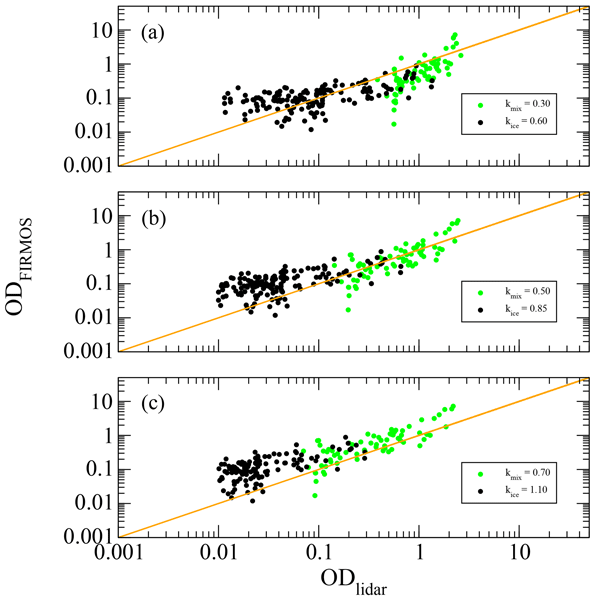
The importance of cirrus and mixed-phase clouds in the Earth radiation budget has been proven by many studies. In this paper the properties that characterize these clouds are retrieved from lidar and far-infrared spectral measurements performed in winter 2018/19 on the Zugspitze (Germany). The synergy of lidar and spectrometer measurements allowed us to assess the exponent k of the power-law relationship between the backscattering and the extinction coefficients.
William Cossich, Tiziano Maestri, Davide Magurno, Michele Martinazzo, Gianluca Di Natale, Luca Palchetti, Giovanni Bianchini, and Massimo Del Guasta
Atmos. Chem. Phys., 21, 13811–13833, https://doi.org/10.5194/acp-21-13811-2021, https://doi.org/10.5194/acp-21-13811-2021, 2021
Short summary
Short summary
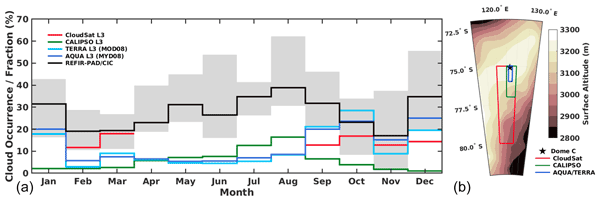
The presence of clouds over Concordia, in the Antarctic Plateau, is investigated. Results are obtained by applying a machine learning algorithm to measurements of the infrared radiation emitted by the atmosphere toward the surface. The clear-sky, ice cloud, and mixed-phase cloud occurrence at different timescales is studied. A comparison with satellite measurements highlights the ability of the algorithm to identify multiple cloud conditions and study their variability at different timescales.
Mélanie Ghysels, Luca Palchetti, Silvia Viciani, Claudio Belotti, Marco Barucci, Gwenaël Berthet, Elizabeth Asher, Emrys Hall, Alex Fritz, Armin Afchine, Christian Rolf, Thomas Kuhn, Chris Stopford, Alain Hauchecorne, Nadir Amarouche, Georges Durry, Jean-Christophe Samake, Lars E. Kalnajs, Terry Deshler, Samuele Del Bianco, and Paolo Pettinari
Earth Syst. Sci. Data Discuss., https://doi.org/10.5194/essd-2026-557, https://doi.org/10.5194/essd-2026-557, 2026
Preprint under review for ESSD
Short summary
Short summary
ATMOSFER, a CNES-supported 2024 balloon campaign in Kiruna, Sweden, prepared ESA’s FORUM mission by measuring far-infrared radiation, water vapor, clouds and aerosols in the UTLS. FIRMOS-B (balloon borne demonstrator of FORUM) showed excellent performance, while hygrometers agreed closely. The campaign observed cirrus clouds, ice crystals and stratospheric aerosol layers linked to wildfire and tropical air masses, improving climate observations and FORUM validation.
Daniel A. Potts, Harjinder Sembhi, Matthieu Dogniaux, Joannes D. Maasakkers, Berend J. Schuit, Dirk Schuettemeyer, Timon Hummel, Rocio Barrio Guillo, Oliver Schneising, Luis Guanter, and Ilse Aben
EGUsphere, https://doi.org/10.5194/egusphere-2026-3797, https://doi.org/10.5194/egusphere-2026-3797, 2026
This preprint is open for discussion and under review for Atmospheric Chemistry and Physics (ACP).
Short summary
Short summary
Routine monitoring of industrial emissions is vital to understand the location, frequency, and intensity of methane emissions. We used satellite and aircraft measurements to understand methane emissions from Madrid across various scales and sectors. Using a range of methods, we identify a clear gap between top-down and bottom-up approaches, discuss challenges associated with satellite interpretation, connect emissions to on-site practices, and make recommendations towards operational use.
Anna Trosits, Andreas Foth, Allison A. Wing, Johanna Roschke, Moritz Haarig, Anton Kötsche, and Heike Kalesse-Los
EGUsphere, https://doi.org/10.5194/egusphere-2026-4385, https://doi.org/10.5194/egusphere-2026-4385, 2026
This preprint is open for discussion and under review for Atmospheric Chemistry and Physics (ACP).
Short summary
Short summary
This study shows the effect of air layers originating from the Saharan Desert on clouds over the tropical Atlantic observed during the ship-borne research campaign BOWTIE. These Saharan Air Layers (SAL) were analysed with data from several instruments providing atmospheric profiles and can be characterised by low moisture and dispersed mineral dust. The investigation suggests a suppression of vertical cloud development by the SAL, also affecting microphysical properties of the cloud.
Elisa Fabbri, Tiziano Maestri, Michele Martinazzo, Federico Donat, Giovanni Bianchini, Massimo Del Guasta, Gianluca Di Natale, Luca Palchetti, Guido Masiello, Giuliano Liuzzi, Tong Ren, and Ping Yang
EGUsphere, https://doi.org/10.5194/egusphere-2026-2806, https://doi.org/10.5194/egusphere-2026-2806, 2026
Short summary
Short summary
Nine years of ground-based far-infrared spectral observations and lidar measurements at Dome C, Antarctica, are used to investigate cloud occurrence and microphysical properties over the Antarctic Plateau. The study shows that Antarctic clouds are dominated by optically thin ice clouds and derives a new parameterization of ice crystal effective dimension specifically adapted to Antarctic conditions, providing improved observational constraints for climate and numerical weather prediction models.
Benedict Pery, Helen Brindley, Jonathan Murray, Sophie Mosselmans, Sanjeevani Panditharatne, Laura Warwick, Robin Hogan, Yi Huang, Benjamin Riot-Bretêcher, Hilke Oetjen, Dirk Schuettemeyer, and Tristan L'Ecuyer
EGUsphere, https://doi.org/10.5194/egusphere-2026-2443, https://doi.org/10.5194/egusphere-2026-2443, 2026
Short summary
Short summary
The Polar Radiant Energy in the Far-InfraRed Experiment (PREFIRE) satellite mission measures the Earth in a rarely measured part of the electromagnetic spectrum. To build confidence in these new measurements, we test them with an experiment observing the same atmosphere as PREFIRE but from the ground. We find that the PREFIRE measurements agree with what we expect from our ground-based observations, with some unexplained differences needing further study.
Nina Elisabeth Larsgård, Tim Carlsen, Robert Oscar David, Filip Severin von der Lippe, Alfons Schwarzenboek, Harald Sodemann, and Trude Storelvmo
EGUsphere, https://doi.org/10.5194/egusphere-2026-1650, https://doi.org/10.5194/egusphere-2026-1650, 2026
Short summary
Short summary
In-situ data from multiple research flights are combined to investigate the cloud evolution of Arctic marine cold air outbreaks during the ISLAS2022 campaign. We observe a cloud development similar to what other studies have shown: More liquid at cloud top close to the sea ice, and increased glaciation as clouds mature and deepen. This composite approach can be used by the community to further understand mCAO cloud evolution with increased confidence compared to single-flight analysis.
Alena Dekhtyareva, Harald Sodemann, Tim Carlsen, Iris Thurnherr, Aina Johannessen, Andrew Seidl, David M. Chandler, Daniele Zannoni, Alexandra Touzeau, Marvin Kähnert, Astrid B. Gjelsvik, Franziska Hellmuth, Britta Schäfer, and Robert O. David
Earth Syst. Sci. Data, 18, 2573–2607, https://doi.org/10.5194/essd-18-2573-2026, https://doi.org/10.5194/essd-18-2573-2026, 2026
Short summary
Short summary
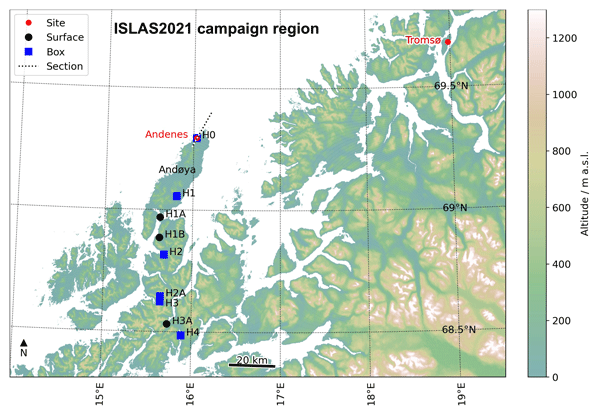
During a recent field campaign from 15 to 30 March 2021 at Andenes, Norway, we collected a set of observations that allows to better constrain how clouds and precipitation processes work. Frequent alternations between mid-latitude and arctic weather systems were encountered during the campaign. Our dataset is unique in combining measurements in both vapour and precipitation, aerosols, ice nucleating particles, and was made simultaneously at different elevations at a high latitude location.
Filip Severin von der Lippe, Tim Carlsen, Trude Storelvmo, and Robert Oscar David
Atmos. Chem. Phys., 26, 1565–1585, https://doi.org/10.5194/acp-26-1565-2026, https://doi.org/10.5194/acp-26-1565-2026, 2026
Short summary
Short summary
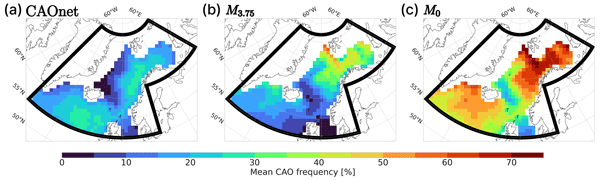
This paper investigates how clouds associated with Arctic marine cold air outbreaks (CAOs) respond to climate change. By utilizing machine learning methods and remote sensing data from the past 25 years, the study identifies trends indicating a shortening of the CAO season. This has implications for the Arctic energy balance, underscoring the importance of further investigating these clouds to understand the trajectory of future Arctic climate.
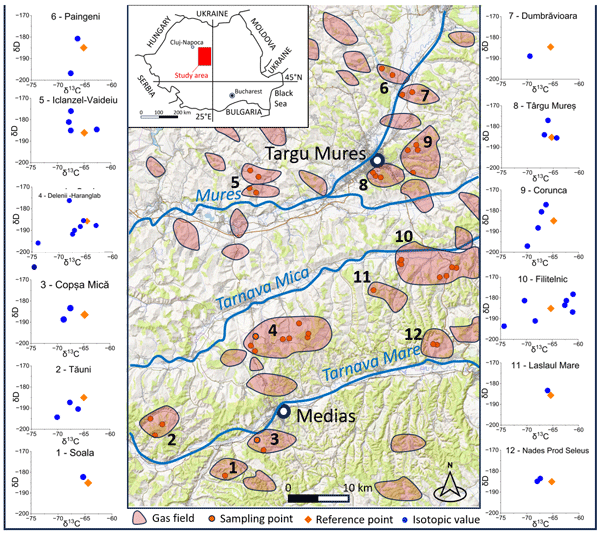
Thomas Röckmann, Malika Menoud, Jacoline van Es, Carina van der Veen, Hossein Maazallahi, Pawel Jagoda, Jaroslav M. Necki, Jakub Bartyzel, Piotr Korben, Sara Defratyka, Martina Schmidt, Marius Corbu, Sebastian Iancu, Andreea Calcan, Magdalena Ardelean, Sorin Ghemulet, Cristian Pop, Andrei Radovici, Alexandru Mereuta, Horatiu Stefanie, and Calin Baciu
Atmos. Chem. Phys., 26, 723–731, https://doi.org/10.5194/acp-26-723-2026, https://doi.org/10.5194/acp-26-723-2026, 2026
Short summary
Short summary
We report the isotopic composition of CH4 emitted from 48 installations in the gas production region of Transylvania, Romania which confirm the biogenic origin of the Transylvanian gas, produced by hydrogenotrophic CO2 reduction. This is similar to values reported previously from natural seeps and natural gas in a major city in the region. However, is more depleted in heavy isotopes than the oil-associated gas emitted in the Southern Romanian Plain, and gas leakages in the city of Bucharest.
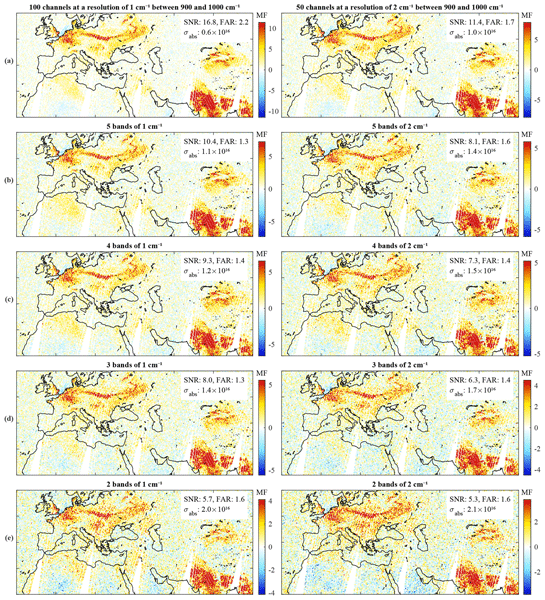
Lara Noppen, Lieven Clarisse, Frederik Tack, Thomas Ruhtz, Martin Van Damme, Michel Van Roozendael, Dirk Schuettemeyer, and Pierre Coheur
Atmos. Meas. Tech., 18, 4183–4205, https://doi.org/10.5194/amt-18-4183-2025, https://doi.org/10.5194/amt-18-4183-2025, 2025
Short summary
Short summary
Current infrared satellite sounders offer high spectral but low spatial resolution, limiting their ability to quantify atmospheric ammonia (NH3) at small scales. Through simulations and analysis of real data, we show that NH3 can be measured effectively from spectra with reduced resolution, either in a contiguous spectral range or in select well-chosen bands. This approach opens possibilities for the development of smaller dedicated instruments for observing NH3 at high spatial resolution.
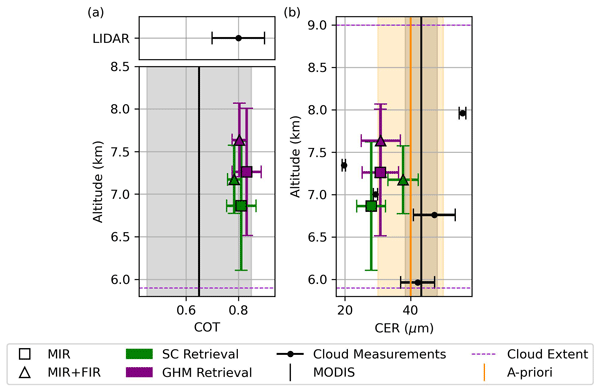
Sanjeevani Panditharatne, Caroline Cox, Rui Song, Richard Siddans, Richard Bantges, Jonathan Murray, Stuart Fox, Cathryn Fox, and Helen Brindley
Atmos. Chem. Phys., 25, 9981–9998, https://doi.org/10.5194/acp-25-9981-2025, https://doi.org/10.5194/acp-25-9981-2025, 2025
Short summary
Short summary
Upwelling radiation with wavelengths between 15 and 100 µm is theorised to be highly sensitive to the properties of ice clouds, particularly the shape of the ice crystals. We exploit this sensitivity and perform the first retrieval of ice cloud properties using these wavelengths from an observation taken on an aircraft and evaluate it against measurements of the cloud’s properties.
Federico Donat, Tiziano Maestri, Elisa Fabbri, Michele Martinazzo, Giovanni Bianchini, Massimo Del Guasta, Gianluca Di Natale, Luca Palchetti, Guido Masiello, Carmine Serio, and Giuliano Liuzzi
EGUsphere, https://doi.org/10.5194/egusphere-2025-2793, https://doi.org/10.5194/egusphere-2025-2793, 2025
Short summary
Short summary
The cloud occurrence over the Antarctic Plateau is characterized using ground-based interferometric data from 2012 to 2020. The results show a yearly pattern, and a six-month cycle linked to atmospheric oscillations. The cloud radiative forcing at far infrared doubles during cloud occurrence oscillation peaks. Infrared Atmospheric Sounding Interferometer (IASI) Level 2 products are compared to ground data, showing an improved agreement in cloud identification from year 2020.
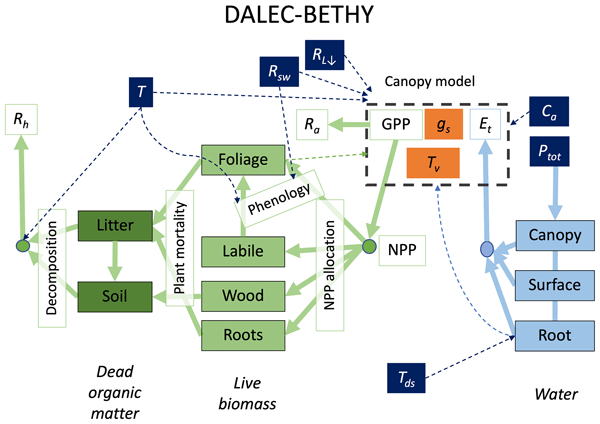
Wolfgang Knorr, Matthew Williams, Tea Thum, Thomas Kaminski, Michael Voßbeck, Marko Scholze, Tristan Quaife, T. Luke Smallman, Susan C. Steele-Dunne, Mariette Vreugdenhil, Tim Green, Sönke Zaehle, Mika Aurela, Alexandre Bouvet, Emanuel Bueechi, Wouter Dorigo, Tarek S. El-Madany, Mirco Migliavacca, Marika Honkanen, Yann H. Kerr, Anna Kontu, Juha Lemmetyinen, Hannakaisa Lindqvist, Arnaud Mialon, Tuuli Miinalainen, Gaétan Pique, Amanda Ojasalo, Shaun Quegan, Peter J. Rayner, Pablo Reyes-Muñoz, Nemesio Rodríguez-Fernández, Mike Schwank, Jochem Verrelst, Songyan Zhu, Dirk Schüttemeyer, and Matthias Drusch
Geosci. Model Dev., 18, 2137–2159, https://doi.org/10.5194/gmd-18-2137-2025, https://doi.org/10.5194/gmd-18-2137-2025, 2025
Short summary
Short summary
When it comes to climate change, the land surface is where the vast majority of impacts happen. The task of monitoring those impacts across the globe is formidable and must necessarily rely on satellites – at a significant cost: the measurements are only indirect and require comprehensive physical understanding. We have created a comprehensive modelling system that we offer to the research community to explore how satellite data can be better exploited to help us capture the changes that happen on our lands.
Hossein Maazallahi, Foteini Stavropoulou, Samuel Jonson Sutanto, Michael Steiner, Dominik Brunner, Mariano Mertens, Patrick Jöckel, Antoon Visschedijk, Hugo Denier van der Gon, Stijn Dellaert, Nataly Velandia Salinas, Stefan Schwietzke, Daniel Zavala-Araiza, Sorin Ghemulet, Alexandru Pana, Magdalena Ardelean, Marius Corbu, Andreea Calcan, Stephen A. Conley, Mackenzie L. Smith, and Thomas Röckmann
Atmos. Chem. Phys., 25, 1497–1511, https://doi.org/10.5194/acp-25-1497-2025, https://doi.org/10.5194/acp-25-1497-2025, 2025
Short summary
Short summary
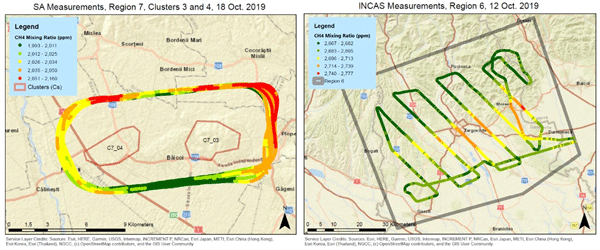
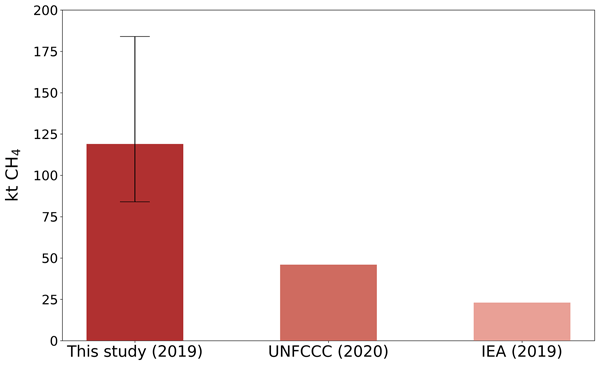
This article presents insights from airborne in situ measurements collected during the ROmanian Methane Emissions from Oil and gas (ROMEO) campaign supported by two models. Results reveal Romania's oil and gas methane emissions were significantly under-reported to the United Nations Framework Convention on Climate Change (UNFCCC) in 2019. A large underestimation was also found in the Emissions Database for Global Atmospheric Research (EDGAR) v7.0 for the study domain in the same year.
Sanjeevani Panditharatne, Helen Brindley, Caroline Cox, Richard Siddans, Jonathan Murray, Laura Warwick, and Stuart Fox
Atmos. Meas. Tech., 18, 717–735, https://doi.org/10.5194/amt-18-717-2025, https://doi.org/10.5194/amt-18-717-2025, 2025
Short summary
Short summary
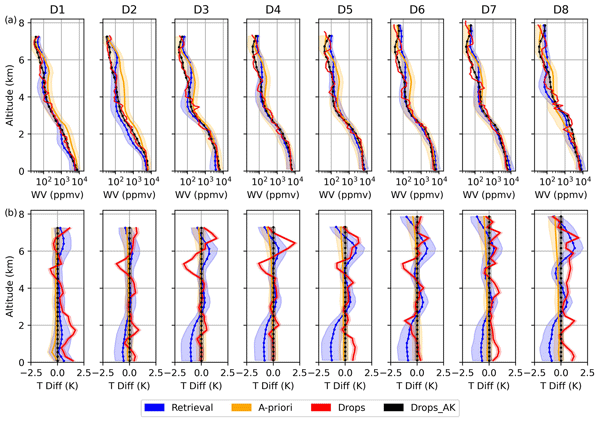
Observations from the upcoming European Space Agency’s Far-Infrared Outgoing Radiation Understanding and Monitoring (FORUM) satellite are theorised to be highly sensitive to distributions of water vapour within Earth’s atmosphere. We exploit this sensitivity and extend the Infrared Microwave Sounding retrieval scheme for use on observations from FORUM. This scheme is evaluated on both simulated and observed measurements and shows good agreement with references of the atmospheric state.
Astrid B. Gjelsvik, Robert O. David, Tim Carlsen, Franziska Hellmuth, Stefan Hofer, Zachary McGraw, Harald Sodemann, and Trude Storelvmo
Atmos. Chem. Phys., 25, 1617–1637, https://doi.org/10.5194/acp-25-1617-2025, https://doi.org/10.5194/acp-25-1617-2025, 2025
Short summary
Short summary
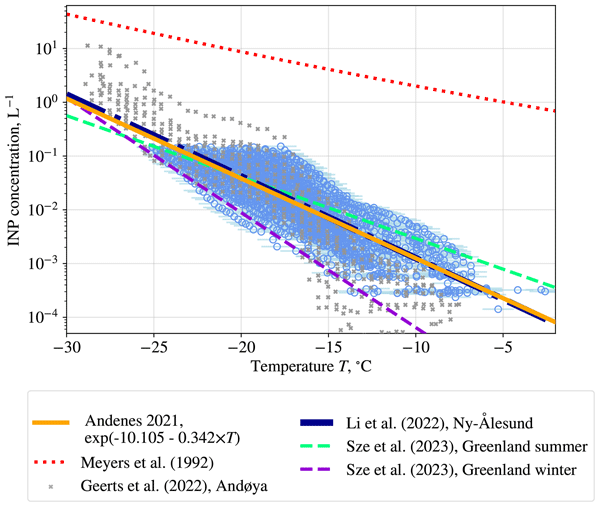
Ice formation in clouds has a substantial impact on radiation and precipitation and must be realistically simulated in order to understand present and future Arctic climate. Rare aerosols known as ice-nucleating particles can play an important role in cloud ice formation, but their representation in global climate models is not well suited for the Arctic. In this study, the simulation of cloud phase is improved when the representation of these particles is constrained by Arctic observations.
Franziska Hellmuth, Tim Carlsen, Anne Sophie Daloz, Robert Oscar David, Haochi Che, and Trude Storelvmo
Atmos. Chem. Phys., 25, 1353–1383, https://doi.org/10.5194/acp-25-1353-2025, https://doi.org/10.5194/acp-25-1353-2025, 2025
Short summary
Short summary
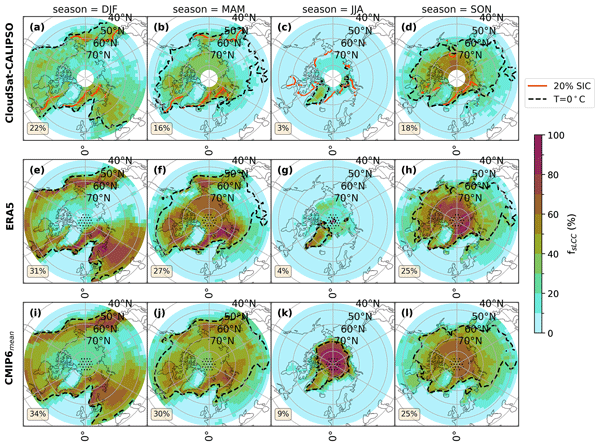
This article compares the occurrence of supercooled liquid-containing clouds (sLCCs) and their link to surface snowfall in CloudSat–CALIPSO, ERA5, and the CMIP6 models. Significant discrepancies were found, with ERA5 and CMIP6 consistently overestimating sLCC and snowfall frequency. This bias is likely due to cloud microphysics parameterization. This conclusion has implications for accurately representing cloud phase and snowfall in future climate projections.

Johanna Roschke, Jonas Witthuhn, Marcus Klingebiel, Moritz Haarig, Andreas Foth, Anton Kötsche, and Heike Kalesse-Los
Atmos. Meas. Tech., 18, 487–508, https://doi.org/10.5194/amt-18-487-2025, https://doi.org/10.5194/amt-18-487-2025, 2025
Short summary
Short summary
We present a technique to discriminate between the Cloudnet target classification of "drizzle or rain" and sea salt aerosols that is applicable to marine Cloudnet sites. The method is crucial for investigating the occurrence of precipitation and significantly improves the Cloudnet target classification scheme for measurements over the Barbados Cloud Observatory (BCO). A first-ever analysis of the Cloudnet product including the new "haze echo" target over 2 years at the BCO is presented.
Andreas Foth, Moritz Lochmann, Pablo Saavedra Garfias, and Heike Kalesse-Los
Atmos. Meas. Tech., 17, 7169–7181, https://doi.org/10.5194/amt-17-7169-2024, https://doi.org/10.5194/amt-17-7169-2024, 2024
Short summary
Short summary
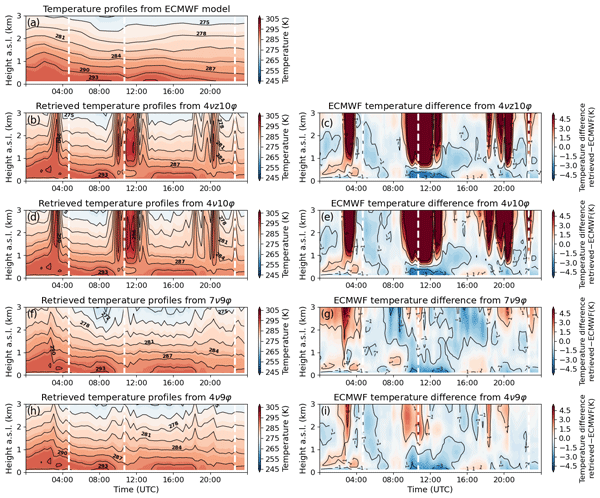
Microwave radiometers are usually not able to provide atmospheric quantities such as temperature profiles during rain. We present a method based on a selection of specific frequencies and elevation angles from microwave radiometer observations. A comparison with a numerical weather prediction model shows the presented method allows low-level temperature profiles during rain to be resolved, with rain rates of up to 2.5 mm h−1,, which was not possible before with state-of-the-art retrievals.
Huiying Zhang, Xia Li, Fabiola Ramelli, Robert O. David, Julie Pasquier, and Jan Henneberger
Atmos. Meas. Tech., 17, 7109–7128, https://doi.org/10.5194/amt-17-7109-2024, https://doi.org/10.5194/amt-17-7109-2024, 2024
Short summary
Short summary
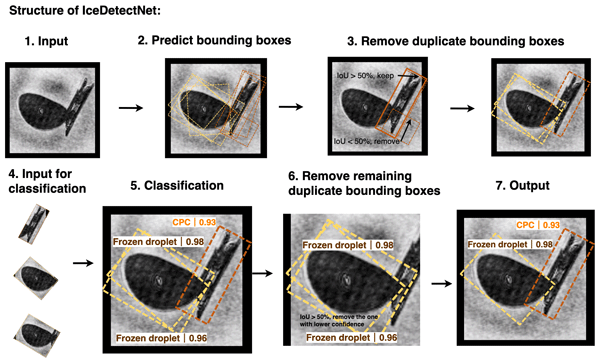
Our innovative IceDetectNet algorithm classifies each part of aggregated ice crystals, considering both their basic shape and physical processes. Trained on ice crystal images from the Arctic taken by a holographic camera, it correctly classifies over 92 % of the ice crystals. These more detailed insights into the components of aggregated ice crystals have the potential to improve our estimates of microphysical properties such as riming rate, aggregation rate, and ice water content.
Jacqueline E. Russell, Richard J. Bantges, Helen E. Brindley, and Alejandro Bodas-Salcedo
Earth Syst. Sci. Data, 16, 4243–4266, https://doi.org/10.5194/essd-16-4243-2024, https://doi.org/10.5194/essd-16-4243-2024, 2024
Short summary
Short summary
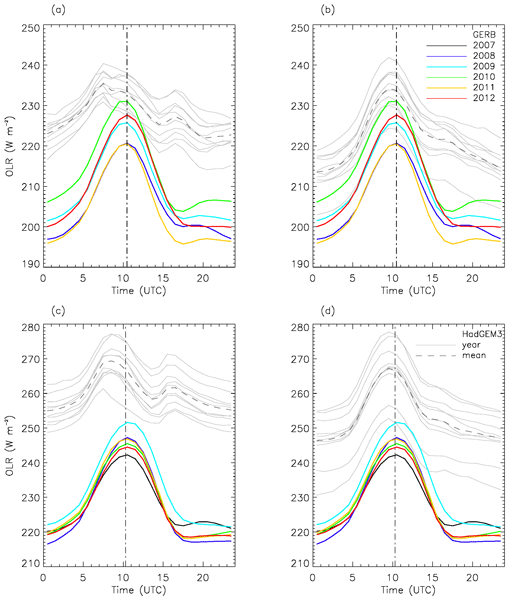
We present a dataset of top-of-atmosphere diurnally resolved reflected solar and emitted thermal energy for Earth system model evaluation. The multi-year, monthly hourly dataset, derived from observations made by the Geostationary Earth Radiation Budget instrument, covers the range 60° N–60° S, 60° E–60° W at 1° resolution. Comparison with two versions of the Hadley Centre Global Environmental Model highlight how the data can be used to assess updates to key model parameterizations.
Laura Warwick, Jonathan E. Murray, and Helen Brindley
Atmos. Meas. Tech., 17, 4777–4787, https://doi.org/10.5194/amt-17-4777-2024, https://doi.org/10.5194/amt-17-4777-2024, 2024
Short summary
Short summary
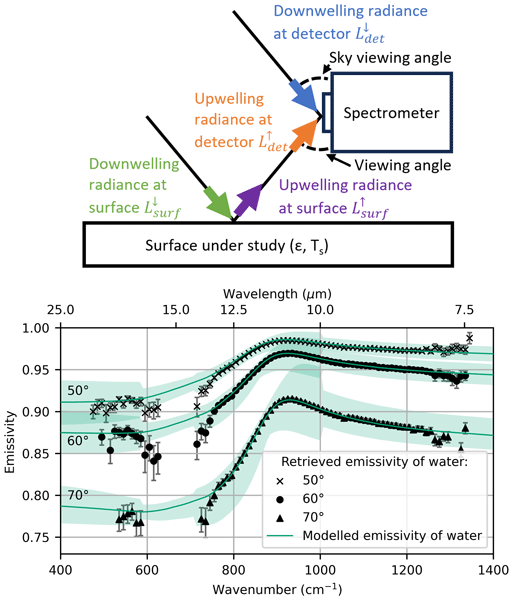
We describe a method for measuring the emissivity of natural surfaces using data from the new Far-INfrarEd Spectrometer for Surface Emissivity (FINESSE) instrument. We demonstrate our method by making measurements of the emissivity of water. We then compare our results to the emissivity predicted using a model and find good agreement. The observations from FINESSE are novel because they allow us to determine surface emissivity at longer wavelengths than have been routinely measured before.
Jonathan E. Murray, Laura Warwick, Helen Brindley, Alan Last, Patrick Quigley, Andy Rochester, Alexander Dewar, and Daniel Cummins
Atmos. Meas. Tech., 17, 4757–4775, https://doi.org/10.5194/amt-17-4757-2024, https://doi.org/10.5194/amt-17-4757-2024, 2024
Short summary
Short summary
The Far INfrarEd Spectrometer for Surface Emissivity, FINESSE, is designed to measure the ability of natural surfaces to emit infrared radiation. FINESSE combines a commercial instrument with custom-built optics to view a surface from different angles with complementary views of the sky. Its choice of internal components means it can cover a wide range of wavelengths, extending into the far-infrared. We characterize FINESSE’s uncertainty budget and provide examples of its measurement capability.
Britta Schäfer, Robert Oscar David, Paraskevi Georgakaki, Julie Thérèse Pasquier, Georgia Sotiropoulou, and Trude Storelvmo
Atmos. Chem. Phys., 24, 7179–7202, https://doi.org/10.5194/acp-24-7179-2024, https://doi.org/10.5194/acp-24-7179-2024, 2024
Short summary
Short summary
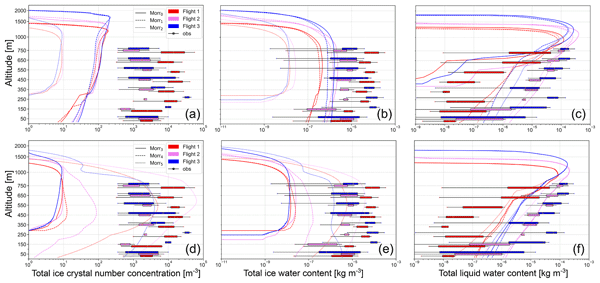
Mixed-phase clouds, i.e., clouds consisting of ice and supercooled water, are very common in the Arctic. However, how these clouds form is often not correctly represented in standard weather models. We show that both ice crystal concentrations in the cloud and precipitation from the cloud can be improved in the model when aerosol concentrations are prescribed from observations and when more processes for ice multiplication, i.e., the production of new ice particles from existing ice, are added.
Gianluca Di Natale, Marco Ridolfi, and Luca Palchetti
Atmos. Meas. Tech., 17, 3171–3186, https://doi.org/10.5194/amt-17-3171-2024, https://doi.org/10.5194/amt-17-3171-2024, 2024
Short summary
Short summary
This work aims to define a new approach to retrieve the distribution of the main ice crystal shapes occurring inside ice and cirrus clouds from infrared spectral measurements. The capability of retrieving these shapes of the ice crystals from satellites will allow us to extend the currently available climatologies to be used as physical constraints in general circulation models. This could could allow us to improve their accuracy and prediction performance.
Sabrina Schnitt, Andreas Foth, Heike Kalesse-Los, Mario Mech, Claudia Acquistapace, Friedhelm Jansen, Ulrich Löhnert, Bernhard Pospichal, Johannes Röttenbacher, Susanne Crewell, and Bjorn Stevens
Earth Syst. Sci. Data, 16, 681–700, https://doi.org/10.5194/essd-16-681-2024, https://doi.org/10.5194/essd-16-681-2024, 2024
Short summary
Short summary
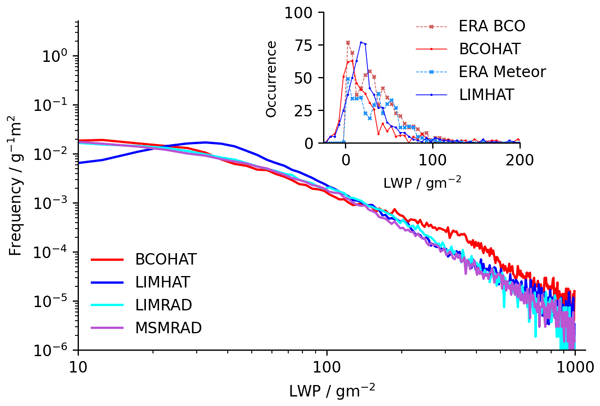
This publication describes the microwave radiometric measurements performed during the EUREC4A campaign at Barbados Cloud Observatory (BCO) and aboard RV Meteor and RV Maria S Merian. We present retrieved integrated water vapor (IWV), liquid water path (LWP), and temperature and humidity profiles as a unified, quality-controlled, multi-site data set on a 3 s temporal resolution for a core period between 19 January 2020 and 14 February 2020.
Ghislain Motos, Gabriel Freitas, Paraskevi Georgakaki, Jörg Wieder, Guangyu Li, Wenche Aas, Chris Lunder, Radovan Krejci, Julie Thérèse Pasquier, Jan Henneberger, Robert Oscar David, Christoph Ritter, Claudia Mohr, Paul Zieger, and Athanasios Nenes
Atmos. Chem. Phys., 23, 13941–13956, https://doi.org/10.5194/acp-23-13941-2023, https://doi.org/10.5194/acp-23-13941-2023, 2023
Short summary
Short summary
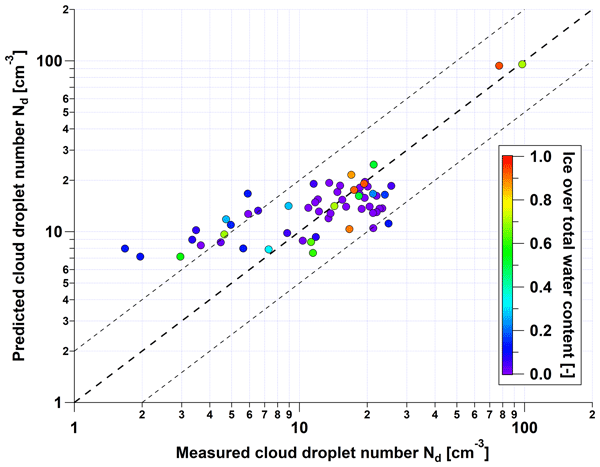
Low-altitude clouds play a key role in regulating the climate of the Arctic, a region that suffers from climate change more than any other on the planet. We gathered meteorological and aerosol physical and chemical data over a year and utilized them for a parameterization that help us unravel the factors driving and limiting the efficiency of cloud droplet formation. We then linked this information to the sources of aerosol found during each season and to processes of cloud glaciation.
Foteini Stavropoulou, Katarina Vinković, Bert Kers, Marcel de Vries, Steven van Heuven, Piotr Korbeń, Martina Schmidt, Julia Wietzel, Pawel Jagoda, Jaroslav M. Necki, Jakub Bartyzel, Hossein Maazallahi, Malika Menoud, Carina van der Veen, Sylvia Walter, Béla Tuzson, Jonas Ravelid, Randulph Paulo Morales, Lukas Emmenegger, Dominik Brunner, Michael Steiner, Arjan Hensen, Ilona Velzeboer, Pim van den Bulk, Hugo Denier van der Gon, Antonio Delre, Maklawe Essonanawe Edjabou, Charlotte Scheutz, Marius Corbu, Sebastian Iancu, Denisa Moaca, Alin Scarlat, Alexandru Tudor, Ioana Vizireanu, Andreea Calcan, Magdalena Ardelean, Sorin Ghemulet, Alexandru Pana, Aurel Constantinescu, Lucian Cusa, Alexandru Nica, Calin Baciu, Cristian Pop, Andrei Radovici, Alexandru Mereuta, Horatiu Stefanie, Alexandru Dandocsi, Bas Hermans, Stefan Schwietzke, Daniel Zavala-Araiza, Huilin Chen, and Thomas Röckmann
Atmos. Chem. Phys., 23, 10399–10412, https://doi.org/10.5194/acp-23-10399-2023, https://doi.org/10.5194/acp-23-10399-2023, 2023
Short summary
Short summary
In this study, we quantify CH4 emissions from onshore oil production sites in Romania at source and facility level using a combination of ground- and drone-based measurement techniques. We show that the total CH4 emissions in our studied areas are much higher than the emissions reported to UNFCCC, and up to three-quarters of the detected emissions are related to operational venting. Our results suggest that oil and gas production infrastructure in Romania holds a massive mitigation potential.
Lena Katharina Jänicke, Rene Preusker, Marco Celesti, Marin Tudoroiu, Jürgen Fischer, Dirk Schüttemeyer, and Matthias Drusch
Atmos. Meas. Tech., 16, 3101–3121, https://doi.org/10.5194/amt-16-3101-2023, https://doi.org/10.5194/amt-16-3101-2023, 2023
Short summary
Short summary
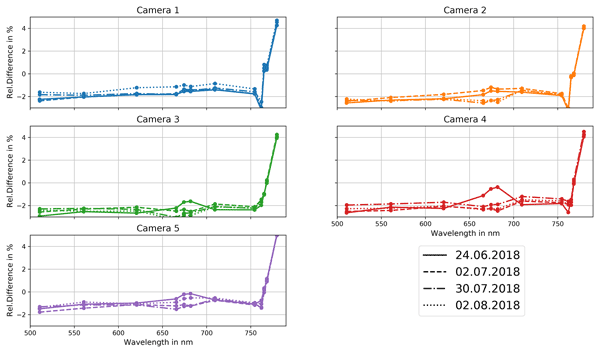
To compare two top-of-atmosphere radiances measured by instruments with different spectral characteristics, a transfer function has been developed. It is applied to a tandem data set of Sentinel-3A and B, for which OLCI-B mimicked the ESA’s eighth Earth Explorer FLEX. We found that OLCI-A measured radiances about 2 % brighter than OLCI-FLEX. Only at larger wavelengths were OLCI-A measurements about 5 % darker. The method is thus successful, being sensitive to calibration and processing issues.
Claudio Belotti, Flavio Barbara, Marco Barucci, Giovanni Bianchini, Francesco D'Amato, Samuele Del Bianco, Gianluca Di Natale, Marco Gai, Alessio Montori, Filippo Pratesi, Markus Rettinger, Christian Rolf, Ralf Sussmann, Thomas Trickl, Silvia Viciani, Hannes Vogelmann, and Luca Palchetti
Atmos. Meas. Tech., 16, 2511–2529, https://doi.org/10.5194/amt-16-2511-2023, https://doi.org/10.5194/amt-16-2511-2023, 2023
Short summary
Short summary
FIRMOS (Far-Infrared Radiation Mobile Observation System) is a spectroradiometer measuring in the far-infrared, developed to support the preparation of the FORUM (Far-infrared Outgoing Radiation Understanding and Monitoring) satellite mission. In this paper, we describe the instrument, its data products, and the results of the comparison with a suite of observations made from a high-altitude site during a field campaign, in winter 2018–2019.
Heike Kalesse-Los, Anton Kötsche, Andreas Foth, Johannes Röttenbacher, Teresa Vogl, and Jonas Witthuhn
Atmos. Meas. Tech., 16, 1683–1704, https://doi.org/10.5194/amt-16-1683-2023, https://doi.org/10.5194/amt-16-1683-2023, 2023
Short summary
Short summary
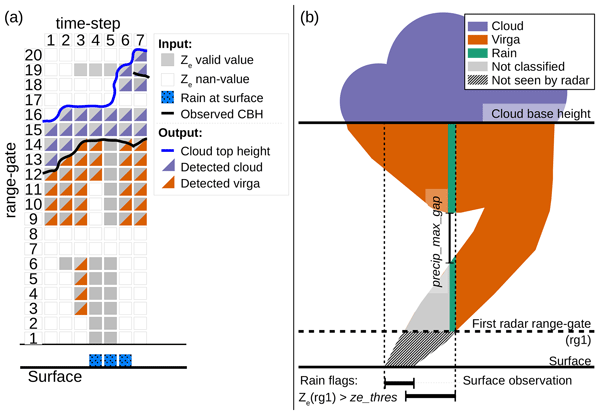
The Virga-Sniffer, a new modular open-source Python package tool to characterize full precipitation evaporation (so-called virga) from ceilometer cloud base height and vertically pointing cloud radar reflectivity time–height fields, is described. Results of its first application to RV Meteor observations during the EUREC4A field experiment in January–February 2020 are shown. About half of all detected clouds with bases below the trade inversion height were found to produce virga.
Kezia Lange, Andreas Richter, Anja Schönhardt, Andreas C. Meier, Tim Bösch, André Seyler, Kai Krause, Lisa K. Behrens, Folkard Wittrock, Alexis Merlaud, Frederik Tack, Caroline Fayt, Martina M. Friedrich, Ermioni Dimitropoulou, Michel Van Roozendael, Vinod Kumar, Sebastian Donner, Steffen Dörner, Bianca Lauster, Maria Razi, Christian Borger, Katharina Uhlmannsiek, Thomas Wagner, Thomas Ruhtz, Henk Eskes, Birger Bohn, Daniel Santana Diaz, Nader Abuhassan, Dirk Schüttemeyer, and John P. Burrows
Atmos. Meas. Tech., 16, 1357–1389, https://doi.org/10.5194/amt-16-1357-2023, https://doi.org/10.5194/amt-16-1357-2023, 2023
Short summary
Short summary
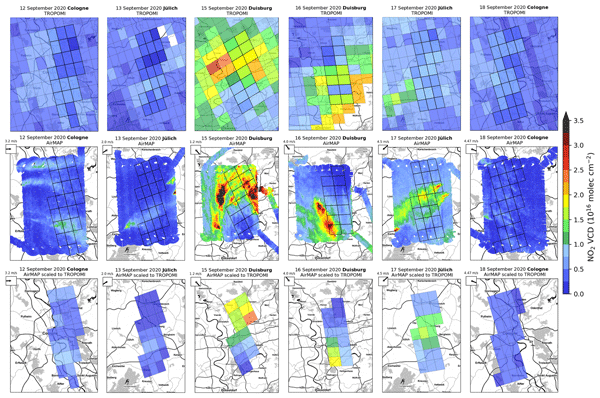
We present airborne imaging DOAS and ground-based stationary and car DOAS measurements conducted during the S5P-VAL-DE-Ruhr campaign in the Rhine-Ruhr region. The measurements are used to validate spaceborne NO2 data products from the Sentinel-5 Precursor TROPOspheric Monitoring Instrument (TROPOMI). Auxiliary data of the TROPOMI NO2 retrieval, such as spatially higher resolved a priori NO2 vertical profiles, surface reflectivity, and cloud treatment are investigated to evaluate their impact.
Gianluca Di Natale, David D. Turner, Giovanni Bianchini, Massimo Del Guasta, Luca Palchetti, Alessandro Bracci, Luca Baldini, Tiziano Maestri, William Cossich, Michele Martinazzo, and Luca Facheris
Atmos. Meas. Tech., 15, 7235–7258, https://doi.org/10.5194/amt-15-7235-2022, https://doi.org/10.5194/amt-15-7235-2022, 2022
Short summary
Short summary
In this paper, we describe a new approach to test the consistency of the precipitating ice cloud optical and microphysical properties in Antarctica, Dome C, retrieved from hyperspectral measurements in the far-infrared, with the reflectivity detected by a co-located micro rain radar operating at 24 GHz. The retrieved ice crystal sizes were found in accordance with the direct measurements of an optical imager, also installed at Dome C, which can collect the falling ice particles.
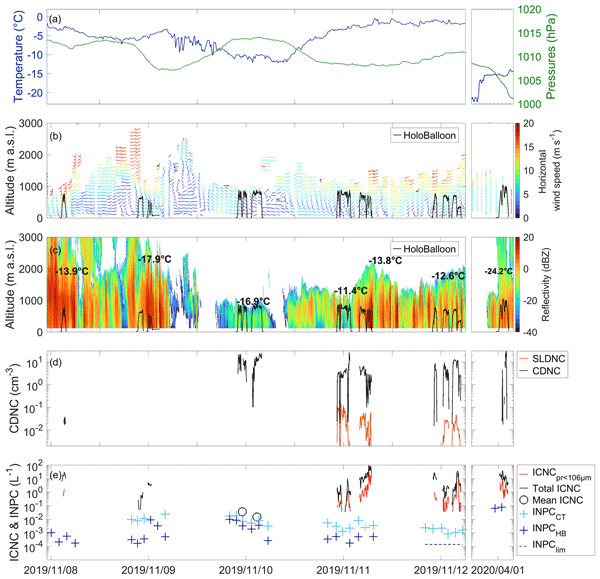
Julie Thérèse Pasquier, Jan Henneberger, Fabiola Ramelli, Annika Lauber, Robert Oscar David, Jörg Wieder, Tim Carlsen, Rosa Gierens, Marion Maturilli, and Ulrike Lohmann
Atmos. Chem. Phys., 22, 15579–15601, https://doi.org/10.5194/acp-22-15579-2022, https://doi.org/10.5194/acp-22-15579-2022, 2022
Short summary
Short summary
It is important to understand how ice crystals and cloud droplets form in clouds, as their concentrations and sizes determine the exact radiative properties of the clouds. Normally, ice crystals form from aerosols, but we found evidence for the formation of additional ice crystals from the original ones over a large temperature range within Arctic clouds. In particular, additional ice crystals were formed during collisions of several ice crystals or during the freezing of large cloud droplets.
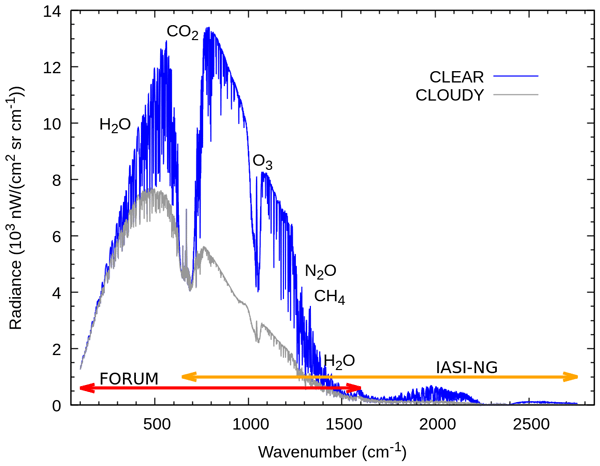
Marco Ridolfi, Cecilia Tirelli, Simone Ceccherini, Claudio Belotti, Ugo Cortesi, and Luca Palchetti
Atmos. Meas. Tech., 15, 6723–6737, https://doi.org/10.5194/amt-15-6723-2022, https://doi.org/10.5194/amt-15-6723-2022, 2022
Short summary
Short summary
Synergistic retrieval (SR) and complete data fusion (CDF) methods exploit the complementarity of coinciding remote-sensing measurements. We assess the performance of the SR and CDF methods on the basis of synthetic measurements of the FORUM and IASI-NG missions. In the case of perfectly matching measurements, SR and CDF results differ by less than 1 / 10 of the error due to measurement noise. In the case of a realistic mismatch, the two methods show differences in the order of their error bars.
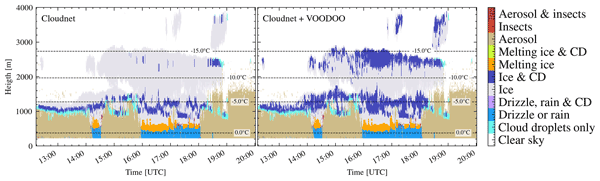
Willi Schimmel, Heike Kalesse-Los, Maximilian Maahn, Teresa Vogl, Andreas Foth, Pablo Saavedra Garfias, and Patric Seifert
Atmos. Meas. Tech., 15, 5343–5366, https://doi.org/10.5194/amt-15-5343-2022, https://doi.org/10.5194/amt-15-5343-2022, 2022
Short summary
Short summary
This study introduces the novel Doppler radar spectra-based machine learning approach VOODOO (reVealing supercOOled liquiD beyOnd lidar attenuatiOn). VOODOO is a powerful probability-based extension to the existing Cloudnet hydrometeor target classification, enabling the detection of liquid-bearing cloud layers beyond complete lidar attenuation via user-defined p* threshold. VOODOO performs best for (multi-layer) stratiform and deep mixed-phase clouds with liquid water path > 100 g m−2.
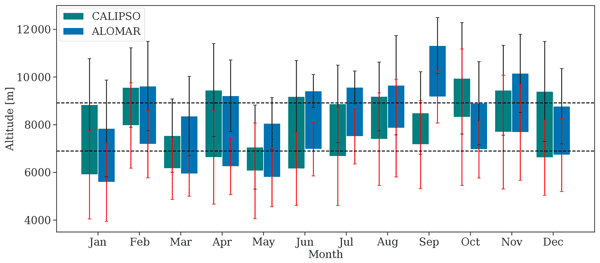
Britta Schäfer, Tim Carlsen, Ingrid Hanssen, Michael Gausa, and Trude Storelvmo
Atmos. Chem. Phys., 22, 9537–9551, https://doi.org/10.5194/acp-22-9537-2022, https://doi.org/10.5194/acp-22-9537-2022, 2022
Short summary
Short summary
Cloud properties are important for the surface radiation budget. This study presents cold-cloud observations based on lidar measurements from the Norwegian Arctic between 2011 and 2017. Using statistical assessments and case studies, we give an overview of the macro- and microphysical properties of these clouds and demonstrate the capabilities of long-term cloud observations in the Norwegian Arctic from the ground-based lidar at Andenes.
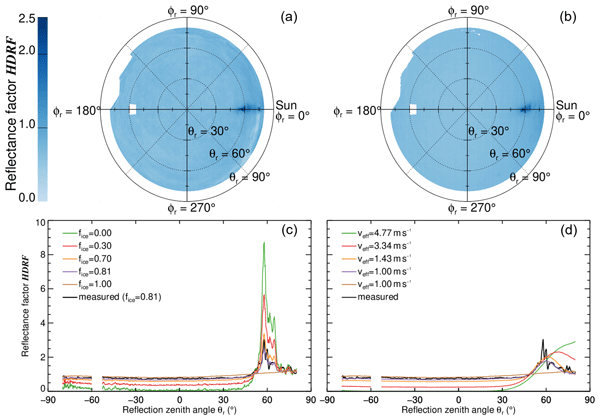
Sebastian Becker, André Ehrlich, Evelyn Jäkel, Tim Carlsen, Michael Schäfer, and Manfred Wendisch
Atmos. Meas. Tech., 15, 2939–2953, https://doi.org/10.5194/amt-15-2939-2022, https://doi.org/10.5194/amt-15-2939-2022, 2022
Short summary
Short summary
Airborne radiation measurements are used to characterize the solar directional reflection of a mixture of Arctic sea ice and open-ocean surfaces in the transition zone between both surface types. The mixture reveals reflection properties of both surface types. It is shown that the directional reflection of the mixture can be reconstructed from the directional reflection of the individual surfaces, accounting for the special conditions present in the transition zone.
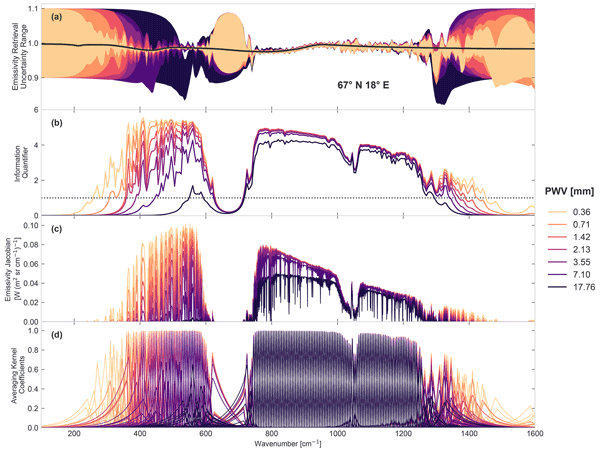
Maya Ben-Yami, Hilke Oetjen, Helen Brindley, William Cossich, Dulce Lajas, Tiziano Maestri, Davide Magurno, Piera Raspollini, Luca Sgheri, and Laura Warwick
Atmos. Meas. Tech., 15, 1755–1777, https://doi.org/10.5194/amt-15-1755-2022, https://doi.org/10.5194/amt-15-1755-2022, 2022
Short summary
Short summary
Spectral emissivity is a key property of the Earth's surface. Few measurements exist in the far-infrared, despite recent work showing that its contribution is important for accurate modelling of global climate. In preparation for ESA’s EE9 FORUM mission (launch in 2026), this study takes the first steps towards the development of an operational emissivity retrieval for FORUM by investigating the sensitivity of the emissivity product to different physical and operational parameters.
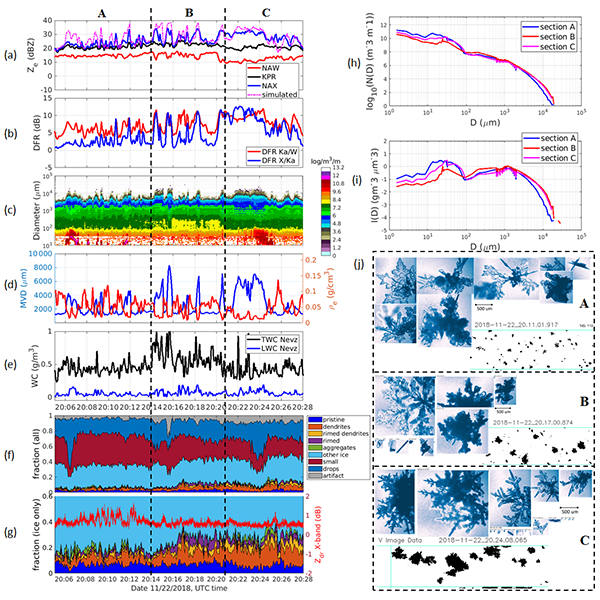
Cuong M. Nguyen, Mengistu Wolde, Alessandro Battaglia, Leonid Nichman, Natalia Bliankinshtein, Samuel Haimov, Kenny Bala, and Dirk Schuettemeyer
Atmos. Meas. Tech., 15, 775–795, https://doi.org/10.5194/amt-15-775-2022, https://doi.org/10.5194/amt-15-775-2022, 2022
Short summary
Short summary
An analysis of airborne triple-frequency radar and almost perfectly co-located coincident in situ data from an Arctic storm confirms the main findings of modeling work with radar dual-frequency ratios (DFRs) at different zones of the DFR plane associated with different ice habits. High-resolution CPI images provide accurate identification of rimed particles within the DFR plane. The relationships between the triple-frequency signals and cloud microphysical properties are also presented.
Luca Sgheri, Claudio Belotti, Maya Ben-Yami, Giovanni Bianchini, Bernardo Carnicero Dominguez, Ugo Cortesi, William Cossich, Samuele Del Bianco, Gianluca Di Natale, Tomás Guardabrazo, Dulce Lajas, Tiziano Maestri, Davide Magurno, Hilke Oetjen, Piera Raspollini, and Cristina Sgattoni
Atmos. Meas. Tech., 15, 573–604, https://doi.org/10.5194/amt-15-573-2022, https://doi.org/10.5194/amt-15-573-2022, 2022
Short summary
Short summary
The FORUM instrument will look at the Earth's atmosphere from a satellite, covering a spectral range responsible for about 95 % of the radiation lost by our planet. FORUM helps to measure the imbalance between incoming and outgoing radiation that is responsible for the increasing average temperatures on Earth. The end-to-end simulator is a chain of codes that simulates the FORUM measurement process. The goal of the project is to study how the instrument reacts to different retrieval conditions.
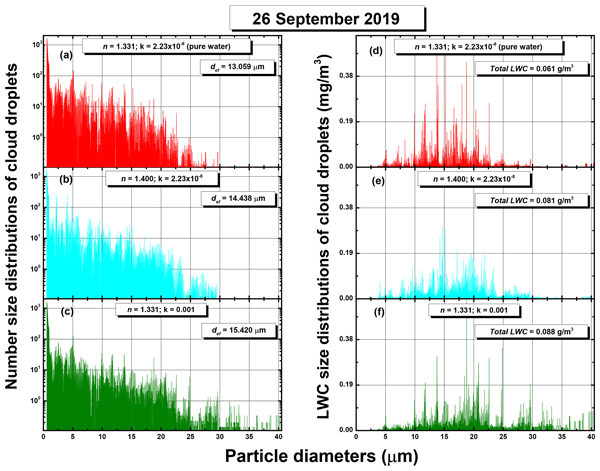
Sorin Nicolae Vâjâiac, Andreea Calcan, Robert Oscar David, Denisa-Elena Moacă, Gabriela Iorga, Trude Storelvmo, Viorel Vulturescu, and Valeriu Filip
Atmos. Meas. Tech., 14, 6777–6794, https://doi.org/10.5194/amt-14-6777-2021, https://doi.org/10.5194/amt-14-6777-2021, 2021
Short summary
Short summary
Warm clouds (with liquid droplets) play an important role in modulating the amount of incoming solar radiation to Earth’s surface and thus the climate. The most efficient way to study them is by in situ optical measurements. This paper proposes a new methodology for providing more detailed and reliable structural analyses of warm clouds through post-flight processing of collected data. The impact fine aerosol incorporation in water droplets might have on such measurements is also discussed.
Gianluca Di Natale, Marco Barucci, Claudio Belotti, Giovanni Bianchini, Francesco D'Amato, Samuele Del Bianco, Marco Gai, Alessio Montori, Ralf Sussmann, Silvia Viciani, Hannes Vogelmann, and Luca Palchetti
Atmos. Meas. Tech., 14, 6749–6758, https://doi.org/10.5194/amt-14-6749-2021, https://doi.org/10.5194/amt-14-6749-2021, 2021
Short summary
Short summary
The importance of cirrus and mixed-phase clouds in the Earth radiation budget has been proven by many studies. In this paper the properties that characterize these clouds are retrieved from lidar and far-infrared spectral measurements performed in winter 2018/19 on the Zugspitze (Germany). The synergy of lidar and spectrometer measurements allowed us to assess the exponent k of the power-law relationship between the backscattering and the extinction coefficients.
William Cossich, Tiziano Maestri, Davide Magurno, Michele Martinazzo, Gianluca Di Natale, Luca Palchetti, Giovanni Bianchini, and Massimo Del Guasta
Atmos. Chem. Phys., 21, 13811–13833, https://doi.org/10.5194/acp-21-13811-2021, https://doi.org/10.5194/acp-21-13811-2021, 2021
Short summary
Short summary
The presence of clouds over Concordia, in the Antarctic Plateau, is investigated. Results are obtained by applying a machine learning algorithm to measurements of the infrared radiation emitted by the atmosphere toward the surface. The clear-sky, ice cloud, and mixed-phase cloud occurrence at different timescales is studied. A comparison with satellite measurements highlights the ability of the algorithm to identify multiple cloud conditions and study their variability at different timescales.
Cited articles
Bantges, R. J., Brindley, H. E., Murray, J. E., Last, A. E., Russell, J. E., Fox, C., Fox, S., Harlow, C., O'Shea, S. J., Bower, K. N., Baum, B. A., Yang, P., Oetjen, H., and Pickering, J. C.: A test of the ability of current bulk optical models to represent the radiative properties of cirrus cloud across the mid- and far-infrared, Atmos. Chem. Phys., 20, 12889–12903, https://doi.org/10.5194/acp-20-12889-2020, 2020. a, b, c
Baran, A. J.: A review of the light scattering properties of cirrus, J. Quant. Spectrosc. Radit. Transfer, 110, 1239–1260, 2009. a
Baran, A. J., Hill, P., Furtado, K., Field, P., and Manners, J.: A Coupled Cloud Physics–Radiation Parameterization of the Bulk Optical Properties of Cirrus and Its Impact on the Met Office Unified Model Global Atmosphere 5.0 Configuration, Journal of Climate, 27, 7725–7752, https://doi.org/10.1175/JCLI-D-13-00700.1, 2014. a
Bell, B., Hersbach, H., Simmons, A., Berrisford, P., Dahlgren, P., Horányi, A., Muñoz-Sabater, J., Nicolas, J., Radu, R., Schepers, D., Soci, C., Villaume, S., Bidlot, J.-R., Haimberger, L., Woollen, J., Buontempo, C., and Thépaut, J.-N.: The ERA5 global reanalysis: Preliminary extension to 1950, Quarterly Journal of the Royal Meteorological Society, 147, 4186–4227, https://doi.org/10.1002/qj.4174, 2021. a
Belotti, C., Barbara, F., Barucci, M., Bianchini, G., D'Amato, F., Del Bianco, S., Di Natale, G., Gai, M., Montori, A., Pratesi, F., Rettinger, M., Rolf, C., Sussmann, R., Trickl, T., Viciani, S., Vogelmann, H., and Palchetti, L.: The Far-Infrared Radiation Mobile Observation System (FIRMOS) for spectral characterization of the atmospheric emission, Atmos. Meas. Tech., 16, 2511–2529, https://doi.org/10.5194/amt-16-2511-2023, 2023. a
Bianchini, G., Castagnoli, F., Di Natale, G., and Palchetti, L.: A Fourier transform spectroradiometer for ground-based remote sensing of the atmospheric downwelling long-wave radiance, Atmos. Meas. Tech., 12, 619–635, https://doi.org/10.5194/amt-12-619-2019, 2019. a
Bony, S., Stevens, B., Coppin, D., Becker, T., Reed, K. A., Voigt, A., and Medeiros, B.: Thermodynamic control of anvil cloud amount, Proceedings of the National Academy of Sciences, 113, 8927–8932, https://doi.org/10.1073/pnas.1601472113, 2016. a
Brindley, H. E. and Harries, J. E.: The impact of far i.r. absorption on clear sky greenhouse forcing: sensitivity studies at high spectral resolution, Journal of Quantitative Spectroscopy and Radiative Transfer, 60, 151–180, https://doi.org/10.1016/S0022-4073(97)00152-0, 1998. a
Chepfer, H., Minnis, P., Young, D., Nguyen, L., and Arduini, R. F.: Estimation of cirrus cloud effective ice crystal shapes using visible reflectances from dual-satellite measurements, Journal of Geophysical Research: Atmospheres, 107, AAC 21-1–AAC 21-16, https://doi.org/10.1029/2000JD000240, 2002. a
Choi, Y.-S. and Ho, C.-H.: Radiative effect of cirrus with different optical properties over the tropics in MODIS and CERES observations, Geophysical Research Letters, 33, https://doi.org/10.1029/2006GL027403, 2006. a
Clough, S. A., Shephard, M. W., Mlawer, E. J., Delamere, J. S., Iacono, M. J., Cady-Pereira, K., Boukabara, S., and Brown, P. D.: Atmospheric radiative transfer modeling: a summary of the AER codes, Short Communication, J. Quant. Spectrosc. Radiat. Transfer, 91, 233–244, 2005. a
Collins, W. D. and Mlynczak, M. G.: Prospects for measurement of far infrared tropospheric spectra: Implications for climate modeling, in: AGU Fall Meeting Abstracts, vol. 2001, GC32A–0210, https://ui.adsabs.harvard.edu/abs/2001AGUFMGC32A0210C (last access: 23 January 2026), 2001. a
Cox, C. V., Murray, J. E., Taylor, J. P., Green, P. D., Pickering, J. C., Harries, J. E., and Last, A. E.: Clear-sky far-infrared measurements observed with TAFTS during the EAQUATE campaign, September 2004, Quarterly Journal of the Royal Meteorological Society, 133, 273–283, https://doi.org/10.1002/qj.159, 2007. a
Davis, S. P., Abrams, M. C., and Brault, J. W.: in: Fourier Transform Spectrometry, edited by Davis, S. P., Abrams, M. C., and Brault, J. W., Academic Press, San Diego, ISBN 978-0-12-042510-5, https://doi.org/10.1016/B978-012042510-5/50009-3, 2001. a
Dawson, E. and Schiro, K. A.: Tropical High Cloud Feedback Relationships to Climate Sensitivity, Journal of Climate, 38, 583–596, https://doi.org/10.1175/JCLI-D-24-0218.1, 2025. a
Del Guasta, M.: ICE-CAMERA: a flatbed scanner to study inland Antarctic polar precipitation, Atmos. Meas. Tech., 15, 6521–6544, https://doi.org/10.5194/amt-15-6521-2022, 2022. a
Del Guasta, M., Morandi, M., Stefanutti, L., Brechet, J., and Piquad, J.: One year of cloud lidar data from Dumont d'Urville (Antarctica): 1. General overview of geometrical and optical properties, Journal of Geophysical Research: Atmospheres, 98, 18575–18587, https://doi.org/10.1029/93JD01476, 1993. a
Di Natale, G., Palchetti, L., Bianchini, G., and Ridolfi, M.: The two-stream δ-Eddington approximation to simulate the far infrared Earth spectrum for the simultaneous atmospheric and cloud retrieval, Journal of Quantitative Spectroscopy and Radiative Transfer, 246, 106927, https://doi.org/10.1016/j.jqsrt.2020.106927, 2020. a, b, c
Di Natale, G., Barucci, M., Belotti, C., Bianchini, G., D'Amato, F., Del Bianco, S., Gai, M., Montori, A., Sussmann, R., Viciani, S., Vogelmann, H., and Palchetti, L.: Comparison of mid-latitude single- and mixed-phase cloud optical depth from co-located infrared spectrometer and backscatter lidar measurements, Atmos. Meas. Tech., 14, 6749–6758, https://doi.org/10.5194/amt-14-6749-2021, 2021. a
Di Natale, G., Turner, D. D., Bianchini, G., Del Guasta, M., Palchetti, L., Bracci, A., Baldini, L., Maestri, T., Cossich, W., Martinazzo, M., and Facheris, L.: Consistency test of precipitating ice cloud retrieval properties obtained from the observations of different instruments operating at Dome C (Antarctica), Atmos. Meas. Tech., 15, 7235–7258, https://doi.org/10.5194/amt-15-7235-2022, 2022. a, b
Di Natale, G., Ridolfi, M., and Palchetti, L.: A new approach to crystal habit retrieval from far-infrared spectral radiance measurements, Atmos. Meas. Tech., 17, 3171–3186, https://doi.org/10.5194/amt-17-3171-2024, 2024. a
Dragani, R., Hersbach, H., Simmons, A., and Soci, C.: Preliminary assessement of the ERA5 ozone reanalysis, in: 5th International Conference on Reanalysis (ICR5), Rome, Italy, 1–15, https://climate.copernicus.eu/sites/default/files/repository/Events/ICR5/Talks/14.Dragani_C3S_ICR5_Nov2017.pdf (last access: 22 January 2026), 2017. a
Elouragini, S.: Useful Algorithms to Derive the Optical Properties of Clouds from a Back-scatter Lidar Return, Journal of Modern Optics, 42, 1439–1446, https://doi.org/10.1080/09500349514551261, 1995. a, b
Evans, K. F., Evans, A. H., Nolt, I. G., and Marshall, B. T.: The Prospect for Remote Sensing of Cirrus Clouds with a Submillimeter-Wave Spectrometer, Journal of Applied Meteorology, 38, 514–525, https://doi.org/10.1175/1520-0450(1999)038<0514:TPFRSO>2.0.CO;2, 1999. a
Field, P. R., Heymsfield, A. J., and Bansemer, A.: Shattering and Particle Interarrival Times Measured by Optical Array Probes in Ice Clouds, Journal of Atmospheric and Oceanic Technology, 23, 1357–1371, https://doi.org/10.1175/JTECH1922.1, 2006. a
Garrett, T. J. and Zhao, C.: Ground-based remote sensing of thin clouds in the Arctic, Atmos. Meas. Tech., 6, 1227–1243, https://doi.org/10.5194/amt-6-1227-2013, 2013. a
Gasparini, B., Mandorli, G., Stubenrauch, C., and Voigt, A.: Basic Physics Predicts Stronger High Cloud Radiative Heating With Warming, Geophysical Research Letters, 51, e2024GL111228, https://doi.org/10.1029/2024GL111228, 2024. a
Hartmann, D. L. and Larson, K.: An important constraint on tropical cloud – climate feedback, Geophysical Research Letters, 29, 12-1–12-4, https://doi.org/10.1029/2002GL015835, 2002. a
Hersbach, H., Bell, B., Berrisford, P., Hirahara, S., Horányi, A., Muñoz-Sabater, J., Nicolas, J., Peubey, C., Radu, R., Schepers, D., Simmons, A., Soci, C., Abdalla, S., Abellan, X., Balsamo, G., Bechtold, P., Biavati, G., Bidlot, J., Bonavita, M., De Chiara, G., Dahlgren, P., Dee, D., Diamantakis, M., Dragani, R., Flemming, J., Forbes, R., Fuentes, M., Geer, A., Haimberger, L., Healy, S., Hogan, R. J., Hólm, E., Janisková, M., Keeley, S., Laloyaux, P., Lopez, P., Lupu, C., Radnoti, G., de Rosnay, P., Rozum, I., Vamborg, F., Villaume, S., and Thépaut, J.-N.: The ERA5 global reanalysis, Quarterly Journal of the Royal Meteorological Society, 146, 1999–2049, 2020. a, b, c
Heymsfield, A. J. and Parrish, J. L.: A Computational Technique for Increasing the Effective Sampling Volume of the PMS Two-Dimensional Particle Size Spectrometer, Journal of Applied Meteorology and Climatology, 17, 1566– 1572, https://doi.org/10.1175/1520-0450(1978)017<1566:ACTFIT>2.0.CO;2, 1978. a
Klett, J. D.: Stable analytical inversion solution for processing lidar returns, Appl. Opt., 20, 211–220, https://doi.org/10.1364/AO.20.000211, 1981. a, b, c
Klett, J. D.: Lidar inversion with variable backscatter/extinction ratios, Appl. Opt., 24, 1638–1643, https://doi.org/10.1364/AO.24.001638, 1985. a
Lawson, R. P., Baker, B. A., Schmitt, C. G., and Jensen, T. L.: An overview of microphysical properties of Arctic clouds observed in May and July 1998 during FIRE ACE, Journal of Geophysical Research: Atmospheres, 106, 14989–15014, https://doi.org/10.1029/2000JD900789, 2001. a
Lawson, R. P., Baker, B. A., Zmarzly, P., O'Connor, D., Mo, Q., Gayet, J.-F., and Shcherbakov, V.: Microphysical and Optical Properties of Atmospheric Ice Crystals at South Pole Station, Journal of Applied Meteorology and Climatology, 45, 1505–1524, https://doi.org/10.1175/JAM2421.1, 2006. a
Löhnert, U. and Crewell, S.: Accuracy of cloud liquid water path from ground-based microwave radiometry 1. Dependency on cloud model statistics, Radio Science, 38, https://doi.org/10.1029/2002RS002654, 2003. a
Löhnert, U., Turner, D. D., and Crewell, S.: Ground-Based Temperature and Humidity Profiling Using Spectral Infrared and Microwave Observations. Part I: Simulated Retrieval Performance in Clear-Sky Conditions, Journal of Applied Meteorology and Climatology, 48, 1017–1032, https://doi.org/10.1175/2008JAMC2060.1, 2009. a
Lynch, D.: Cirrus clouds: Their role in climate and global change, Acta Astronautica, 38, 859–863, https://doi.org/10.1016/S0094-5765(96)00098-7, 1996. a
Maesh, A., Walden, V. P., and Warren, S. G.: Ground-Based Infrared Remote Sensing of Cloud Properties over the Antarctic Plateau. Part I: Cloud-Base Heights, Journal of Applied Meteorology, 40, 1265–1277, 2001a. a
Maesh, A., Walden, V. P., and Warren, S. G.: Ground-based remote sensing of cloud properties over the Antarctic Plateau: Part II: cloud optical depth and particle sizes, Journal of Applied Meteorology, 40, 1279–1294, 2001b. a
Maestri, T., Rizzi, R., Tosi, E., Veglio, P., Palchetti, L., Bianchini, G., Girolamo, P. D., Masiello, G., Serio, C., and Summa, D.: Analysis of cirrus cloud spectral signatures in the far infrared, Journal of Geophysical Research, 141, 49–64, 2014. a
Marquardt, D. W.: An algorithm for least-squares estimation of non-linear parameters, SIAM J. Appl. Math., 11, 431–441, 1963. a
Meyer, K., Platnick, S., Arnold, G. T., Holz, R. E., Veglio, P., Yorks, J., and Wang, C.: Cirrus cloud optical and microphysical property retrievals from eMAS during SEAC4RS using bi-spectral reflectance measurements within the 1.88 µm water vapor absorption band, Atmos. Meas. Tech., 9, 1743–1753, https://doi.org/10.5194/amt-9-1743-2016, 2016. a
Murray, J. E., Warwick, L., Brindley, H., Last, A., Quigley, P., Rochester, A., Dewar, A., and Cummins, D.: The Far-INfrarEd Spectrometer for Surface Emissivity (FINESSE) – Part 1: Instrument description and level 1 radiances, Atmos. Meas. Tech., 17, 4757–4775, https://doi.org/10.5194/amt-17-4757-2024, 2024. a, b, c, d
Palchetti, L., Bianchini, G., Natale, G. D., and Guasta, M. D.: Far-Infrared radiative properties of water vapor and clouds in Antarctica, B. Am. Meteorol. Soc., 96, 1505–1518, https://doi.org/10.1175/BAMS-D-13-00286.1, 2015. a
Palchetti, L., Natale, G. D., and Bianchini, G.: Remote sensing of cirrus microphysical properties using spectral measurements over the full range of their thermal emission, J. Geophys. Res., 121, 1–16, https://doi.org/10.1002/2016JD025162, 2016. a
Palchetti, L., Brindley, H., Bantges, R., Buehler, S. A., Camy-Peyret, C., Carli, B., Cortesi, U., Del Bianco, S., Di Natale, G., Dinelli, B. M., Feldman, D., Huang, X. L., C.-Labonnote, L., Libois, Q., Maestri, T., Mlynczak, M. G., Murray, J. E., Oetjen, H., Ridolfi, M., Riese, M., Russell, J., Saunders, R., and Serio, C.: FORUM: unique far-infrared satellite observations to better understand how Earth radiates energy to space, Bulletin of the American Meteorological Society, 1–52, https://doi.org/10.1175/BAMS-D-19-0322.1, 2020. a
Platnick, S., Meyer, K. G., King, M. D., Wind, G., Amarasinghe, N., Marchant, B., Arnold, G. T., Zhang, Z., Hubanks, P. A., Holz, R. E., Yang, P., Ridgway, W. L., and Riedi, J.: The MODIS Cloud Optical and Microphysical Products: Collection 6 Updates and Examples From Terra and Aqua, IEEE Transactions on Geoscience and Remote Sensing, 55, 502–525, https://doi.org/10.1109/TGRS.2016.2610522, 2017. a
Raghuraman, S. P., Medeiros, B., and Gettelman, A.: Observational Quantification of Tropical High Cloud Changes and Feedbacks, Journal of Geophysical Research: Atmospheres, 129, e2023JD039364, https://doi.org/10.1029/2023JD039364, 2024. a
Remedios, J. J., Leigh, R. J., Waterfall, A. M., Moore, D. P., Sembhi, H., Parkes, I., Greenhough, J., Chipperfield, M. P., and Hauglustaine, D.: MIPAS reference atmospheres and comparisons to V4.61/V4.62 MIPAS level 2 geophysical data sets, Atmos. Chem. Phys. Discuss., 7, 9973–10017, https://doi.org/10.5194/acpd-7-9973-2007, 2007. a, b
Shupe, M. D., Turner, D. D., Walden, V. P., Bennartz, R., Cadeddu, M. P., Castellani, B. B., Cox, C. J., Hudak, D. R., Kulie, M. S., Miller, N. B., Neely, R. R., Neff, W. D., and Rowe, P. M.: High and Dry: New Observations of Tropospheric and Cloud Properties above the Greenland Ice Sheet, Bulletin of the American Meteorological Society, 94, 169–186, https://doi.org/10.1175/BAMS-D-11-00249.1, 2013. a
Stackhouse, P. W. and Stephens, G. L.: A Theoretical and Observational Study of the Radiative Properties of Cirrus: Results from FIRE 1986, Journal of Atmospheric Sciences, 48, 2044–2059, https://doi.org/10.1175/1520-0469(1991)048<2044:ATAOSO>2.0.CO;2, 1991. a
Stephens, G. L., Tsay, S.-C., Stackhouse, P. W., and Flatau, P. J.: The Relevance of the Microphysical and Radiative Properties of Cirrus Clouds to Climate and Climatic Feedback, Journal of Atmospheric Sciences, 47, 1742–1754, https://doi.org/10.1175/1520-0469(1990)047<1742:TROTMA>2.0.CO;2, 1990. a
Turner, D. D. and Mlawer, E. J.: The Radiative Heating in Underexplored Bands Campaigns, Bulletin of the American Meteorological Society, 91, 911–924, https://doi.org/10.1175/2010BAMS2904.1, 2010. a
Turner, D. D., Ackerman, S. A., Baum, B. A., Revercomb, H. E., and Yang, P.: Cloud Phase Determination Using Ground-Based AERI Observations at SHEBA, Journal of Applied Meteorology, 42, 701–715, 2003. a
Vâjâiac, S. N., Calcan, A., David, R. O., Moacă, D.-E., Iorga, G., Storelvmo, T., Vulturescu, V., and Filip, V.: Post-flight analysis of detailed size distributions of warm cloud droplets, as determined in situ by cloud and aerosol spectrometers, Atmos. Meas. Tech., 14, 6777–6794, https://doi.org/10.5194/amt-14-6777-2021, 2021. a
Walbröl, A., Susanne, C., Ronny, E., Emiliano, O., Hannes, G., Martin, R., Julian, H., Dietrich, A., Marion, M., and Kerstin, E.: Atmospheric temperature, water vapour and liquid water path from two microwave radiometers during MOSAiC, Scientific Data, 9, https://doi.org/10.1038/s41597-022-01504-1, 2022. a
Woods, S., Lawson, R. P., Jensen, E., Bui, T. P., Thornberry, T., Rollins, A., Pfister, L., and Avery, M.: Microphysical Properties of Tropical Tropopause Layer Cirrus, Journal of Geophysical Research: Atmospheres, 123, 6053–6069, https://doi.org/10.1029/2017JD028068, 2018. a
Wu, W. and McFarquhar, G. M.: On the Impacts of Different Definitions of Maximum Dimension for Nonspherical Particles Recorded by 2D Imaging Probes, Journal of Atmospheric and Oceanic Technology, 33, 1057–1072, https://doi.org/10.1175/JTECH-D-15-0177.1, 2016. a
Yang, P., Huang, W. H., Baum, H.-L., Hu, B. A., Kattawar, Y. X., Mishchenko, G. W., I., M., and Fu, Q.: Scattering and absorption property database for nonspherical ice particles in the near-through far-infrared spectral region, Appl. Optics, 44, 5512–5523, 2005. a
Yang, P., Liou, K.-N., Bi, L., Liu, C., Yi, B., and Baum, B. A.: On the radiative properties of ice clouds: Light scattering, remote sensing, and radiation parameterization, Advances in Atmospheric Sciences, 32, 2127–2135, https://doi.org/10.1007/s00376-014-0011-z, 2015. a
Zhou, C., Dessler, A. E., Zelinka, M. D., Yang, P., and Wang, T.: Cirrus feedback on interannual climate fluctuations, Geophysical Research Letters, 41, 9166–9173, https://doi.org/10.1002/2014GL062095, 2014. a
Short summary
Cirrus clouds play a vital role in regulating Earth's energy balance. However, they remain incompletely understood, representing a major source of uncertainty in the predictive performance of climate models. We show that consistency between in situ measurements of cirrus cloud microphysics and ground-based remote sensing observations is achievable by simulating the emitted spectrum using current parameterizations of cirrus optical properties.
Cirrus clouds play a vital role in regulating Earth's energy balance. However, they remain...


Altmetrics
Final-revised paper
Preprint