
Articles | Volume 26, issue 17
https://doi.org/10.5194/acp-26-12837-2026
© Author(s) 2026. This work is distributed under
the Creative Commons Attribution 4.0 License.
the Creative Commons Attribution 4.0 License.
https://doi.org/10.5194/acp-26-12837-2026
© Author(s) 2026. This work is distributed under
the Creative Commons Attribution 4.0 License.
the Creative Commons Attribution 4.0 License.
Research article
| 
11 Sep 2026
Research article |
| 11 Sep 2026
| 11 Sep 2026
Evaluation of the vertical microphysical properties of fog as simulated by Meso-NH during the SOFOG3D experiment

Météo-France, CNRS, Univ. Toulouse, CNRM, Toulouse, France
Christine Lac
Météo-France, CNRS, Univ. Toulouse, CNRM, Toulouse, France
Frédéric Burnet
Météo-France, CNRS, Univ. Toulouse, CNRM, Toulouse, France
Benoît Vié
Météo-France, CNRS, Univ. Toulouse, CNRM, Toulouse, France
Marie Taufour
Météo-France, CNRS, Univ. Toulouse, CNRM, Toulouse, France
Théophane Costabloz
Météo-France, CNRS, Univ. Toulouse, CNRM, Toulouse, France
Salomé Antoine
Météo-France, CNRS, Univ. Toulouse, CNRM, Toulouse, France
Maroua Fathalli
Météo-France, CNRS, Univ. Toulouse, CNRM, Toulouse, France
Related authors
Pratapaditya Ghosh, Ian Boutle, Paul Field, Adrian Hill, Anthony Jones, Marie Mazoyer, Katherine J. Evans, Salil Mahajan, Hyun-Gyu Kang, Min Xu, Wei Zhang, Noah Asch, and Hamish Gordon
Atmos. Chem. Phys., 25, 11129–11156, https://doi.org/10.5194/acp-25-11129-2025, https://doi.org/10.5194/acp-25-11129-2025, 2025
Short summary
Short summary
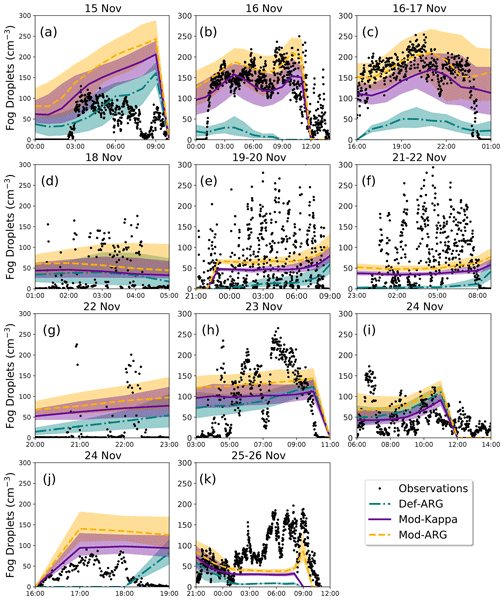
We study aerosol–fog interactions near Paris using a weather and climate model with high spatial resolution. We show that our model can simulate the fog life cycle effectively. We find that the fog droplet number concentrations, the amount of liquid water in the fog, and the vertical structure of the fog are highly sensitive to the parameterization that simulates droplet formation and growth. The changes we propose could improve fog forecasts significantly without increasing computational costs.
Pratapaditya Ghosh, Ian Boutle, Paul Field, Adrian Hill, Marie Mazoyer, Katherine J. Evans, Salil Mahajan, Hyun-Gyu Kang, Min Xu, Wei Zhang, and Hamish Gordon
Atmos. Chem. Phys., 25, 11157–11182, https://doi.org/10.5194/acp-25-11157-2025, https://doi.org/10.5194/acp-25-11157-2025, 2025
Short summary
Short summary
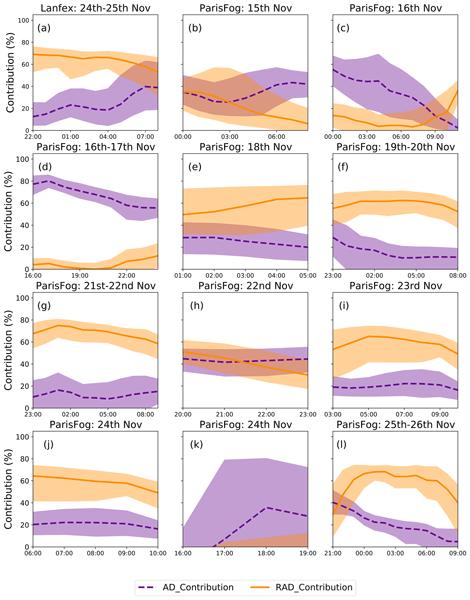
We study the life cycle of fog events in Europe using a weather and climate model. By incorporating droplet formation and growth driven by radiative cooling, our model better simulates the total liquid water in foggy atmospheric columns. We show that both adiabatic and radiative cooling play significant, often equally important, roles in driving droplet formation and growth. We discuss strategies to address droplet number overpredictions by improving model physics and addressing model artifacts.
Marie Mazoyer, Frédéric Burnet, and Cyrielle Denjean
Atmos. Chem. Phys., 22, 11305–11321, https://doi.org/10.5194/acp-22-11305-2022, https://doi.org/10.5194/acp-22-11305-2022, 2022
Short summary
Short summary
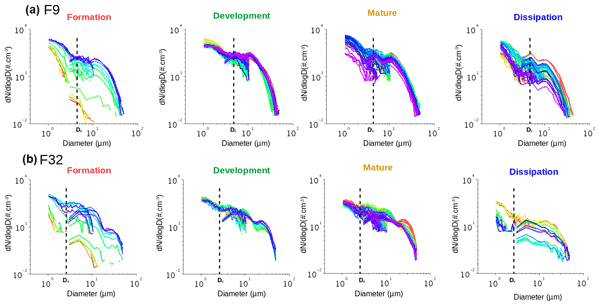
The evolution of the droplet size distribution during the fog life cycle remains poorly understood and progress is required to reduce the uncertainty of fog forecasts. To gain insights into the physical processes driving the microphysics, intensive field campaigns were conducted during three winters at the SIRTA site in the south of Paris. This study analyzed the variations in fog microphysical properties and their potential interactions at the different evolutionary stages of the fog events.
Adrien Marcel, Sébastien Riette, Didier Ricard, and Christine Lac
Atmos. Chem. Phys., 26, 3901–3932, https://doi.org/10.5194/acp-26-3901-2026, https://doi.org/10.5194/acp-26-3901-2026, 2026
Short summary
Short summary
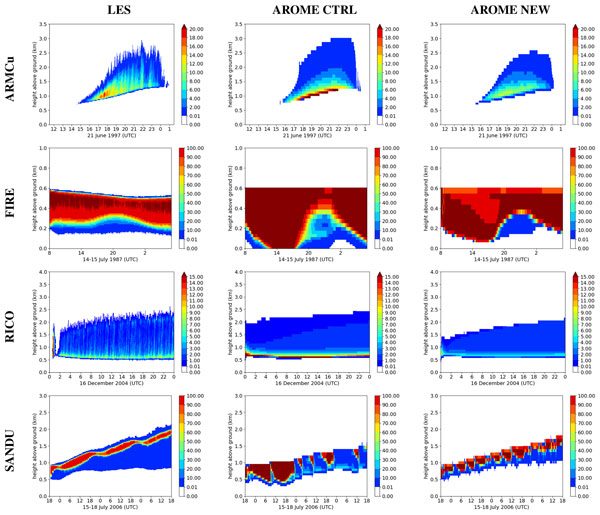
This paper provides substantial consistent updates to the atmospheric boundary layer schemes of the AROME model, yet they can be used for both forecasting and climate modelling. The study employs a single-column model versus large eddy simulations comparison and uses a machine learning tool to calibrate parameterizations. The model's ability to simulate shallow clouds has been enhanced, especially for shallow precipitating cumulus and stratocumulus clouds.
Gaston Bidou, Didier Ricard, and Christine Lac
EGUsphere, https://doi.org/10.5194/egusphere-2026-323, https://doi.org/10.5194/egusphere-2026-323, 2026
Short summary
Short summary
Thunderstorms are meteorological events whose impact ranges from mildly inconvenient to natural catastrophe. This intensity is dictated by the environment the storm takes place in. One such parameter is the vertical shear of low-altitude wind. With a set of high-resolution simulations, we quantified some of the effects of said wind shear on thunderstorms, such as increase in precipitation, storm intensity and organisation.
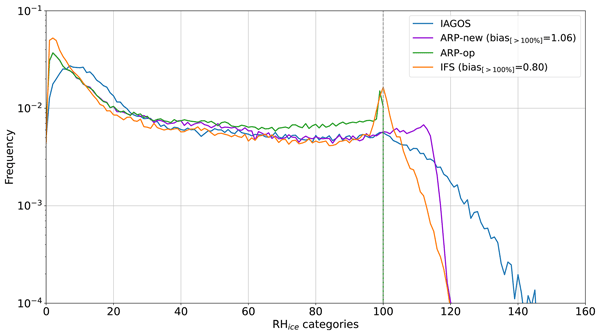
Sara Arriolabengoa, Pierre Crispel, Olivier Jaron, Yves Bouteloup, Benoît Vié, Yun Li, Andreas Petzold, and Matthieu Plu
Atmos. Chem. Phys., 25, 18051–18076, https://doi.org/10.5194/acp-25-18051-2025, https://doi.org/10.5194/acp-25-18051-2025, 2025
Short summary
Short summary
Aircraft condensation trails, also known as contrails, have a significant impact on the global climate when they persist. In this work, we present a modification to the Météo-France weather model ARPEGE (Action de Recherche Petite Echelle Grande Echelle) to improve the forecasting of areas favourable to the persistence of contrails. The spatial correspondence between observations and the modified model is demonstrated and evaluated by appropriate metrics. The modified model can therefore be used for further contrail climate impact applications.
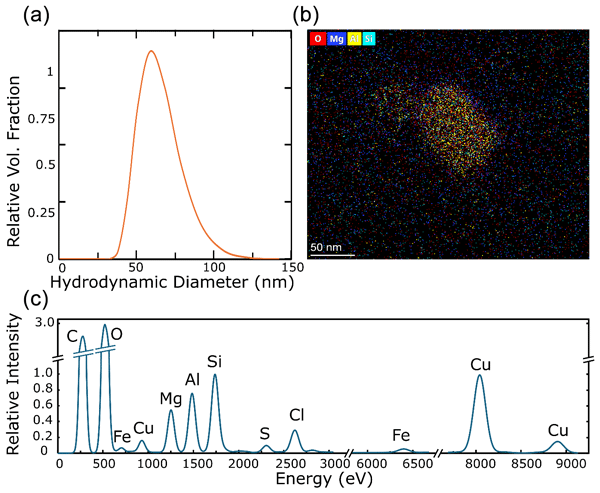
Chiara Giorio, Anne Monod, Valerio Di Marco, Pierre Herckes, Denise Napolitano, Amy Sullivan, Gautier Landrot, Daniel Warnes, Marika Nasti, Sara D'Aronco, Agathe Gérardin, Nicolas Brun, Karine Desboeufs, Sylvain Triquet, Servanne Chevaillier, Claudia Di Biagio, Francesco Battaglia, Frédéric Burnet, Stuart J. Piketh, Andreas Namwoonde, Jean-François Doussin, and Paola Formenti
Atmos. Chem. Phys., 25, 16107–16125, https://doi.org/10.5194/acp-25-16107-2025, https://doi.org/10.5194/acp-25-16107-2025, 2025
Short summary
Short summary
We present a comparison between concentrations of dissolved trace metals in pairs of total suspended particulate (TSP) and fog samples collected in Henties Bay, Namibia, during the AErosols, Radiation and CLOuds in southern Africa (AEROCLO-sA) field campaign. We found enhanced concentrations of dissolved metals in fog samples, which we attributed to metal–ligand complex formation in the early stages of particle activation into droplets that can then remain in a kinetically stable form in fog or lead to the formation of colloidal nanoparticles.
Pratapaditya Ghosh, Ian Boutle, Paul Field, Adrian Hill, Marie Mazoyer, Katherine J. Evans, Salil Mahajan, Hyun-Gyu Kang, Min Xu, Wei Zhang, and Hamish Gordon
Atmos. Chem. Phys., 25, 11157–11182, https://doi.org/10.5194/acp-25-11157-2025, https://doi.org/10.5194/acp-25-11157-2025, 2025
Short summary
Short summary
We study the life cycle of fog events in Europe using a weather and climate model. By incorporating droplet formation and growth driven by radiative cooling, our model better simulates the total liquid water in foggy atmospheric columns. We show that both adiabatic and radiative cooling play significant, often equally important, roles in driving droplet formation and growth. We discuss strategies to address droplet number overpredictions by improving model physics and addressing model artifacts.
Pratapaditya Ghosh, Ian Boutle, Paul Field, Adrian Hill, Anthony Jones, Marie Mazoyer, Katherine J. Evans, Salil Mahajan, Hyun-Gyu Kang, Min Xu, Wei Zhang, Noah Asch, and Hamish Gordon
Atmos. Chem. Phys., 25, 11129–11156, https://doi.org/10.5194/acp-25-11129-2025, https://doi.org/10.5194/acp-25-11129-2025, 2025
Short summary
Short summary
We study aerosol–fog interactions near Paris using a weather and climate model with high spatial resolution. We show that our model can simulate the fog life cycle effectively. We find that the fog droplet number concentrations, the amount of liquid water in the fog, and the vertical structure of the fog are highly sensitive to the parameterization that simulates droplet formation and growth. The changes we propose could improve fog forecasts significantly without increasing computational costs.
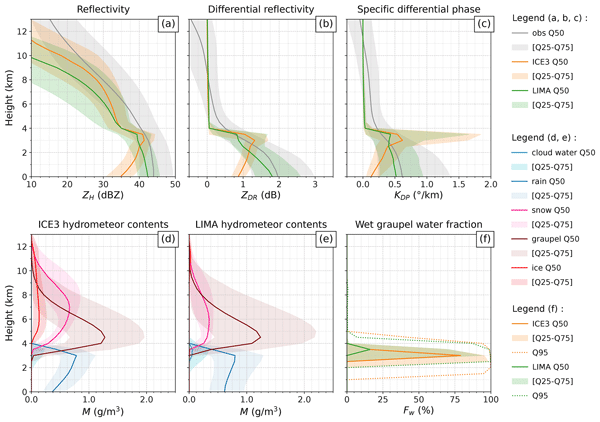
Cloé David, Clotilde Augros, Benoit Vié, François Bouttier, and Tony Le Bastard
Atmos. Meas. Tech., 18, 3715–3745, https://doi.org/10.5194/amt-18-3715-2025, https://doi.org/10.5194/amt-18-3715-2025, 2025
Short summary
Short summary
Simulations of storm characteristics and associated radar signatures were improved, especially under the freezing level, using an advanced cloud scheme. Discrepancies between observations and forecasts at and above the melting layer highlighted issues in both the radar forward operator and the microphysics. To overcome some of these issues, different parameterizations of the operator were suggested. This work aligns with the future integration of polarimetric data into assimilation systems.
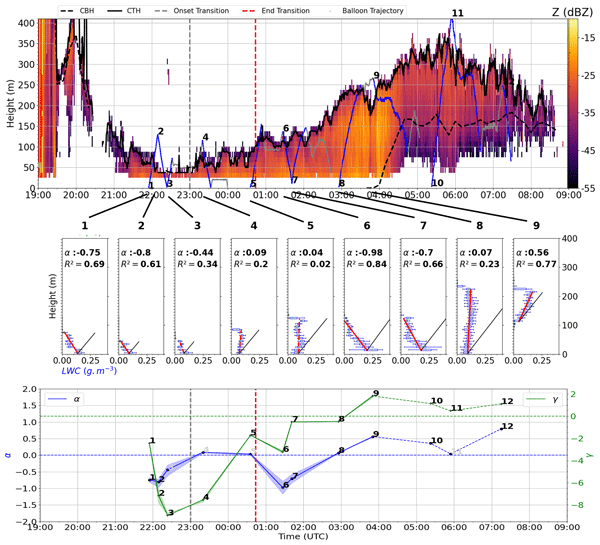
Théophane Costabloz, Frédéric Burnet, Christine Lac, Pauline Martinet, Julien Delanoë, Susana Jorquera, and Maroua Fathalli
Atmos. Chem. Phys., 25, 6539–6573, https://doi.org/10.5194/acp-25-6539-2025, https://doi.org/10.5194/acp-25-6539-2025, 2025
Short summary
Short summary
This study documents vertical profiles of liquid water content (LWC) in fogs from in situ measurements collected during the SOFOG3D field campaign in 2019–2020. The analysis of 140 vertical profiles reveals a reverse trend in LWC, maximum values at ground decreasing with height, during stable conditions in optically thin fogs, evolving towards quasi-adiabatic characteristics when fogs become thick. These results offer new perspectives for better constraining fog numerical simulations.
Marie Taufour, Jean-Pierre Pinty, Christelle Barthe, Benoît Vié, and Chien Wang
Geosci. Model Dev., 17, 8773–8798, https://doi.org/10.5194/gmd-17-8773-2024, https://doi.org/10.5194/gmd-17-8773-2024, 2024
Short summary
Short summary
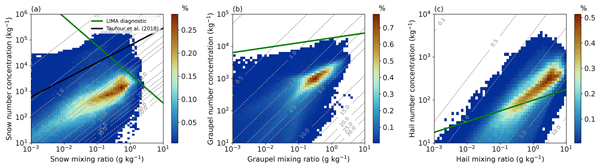
We have developed a complete two-moment version of the LIMA (Liquid Ice Multiple Aerosols) microphysics scheme. We have focused on collection processes, where the hydrometeor number transfer is often estimated in proportion to the mass transfer. The impact of these parameterizations on a convective system and the prospects for more realistic estimates of secondary parameters (reflectivity, hydrometeor size) are shown in a first test on an idealized case.
Lucas Pailler, Laurent Deguillaume, Hélène Lavanant, Isabelle Schmitz, Marie Hubert, Edith Nicol, Mickaël Ribeiro, Jean-Marc Pichon, Mickaël Vaïtilingom, Pamela Dominutti, Frédéric Burnet, Pierre Tulet, Maud Leriche, and Angelica Bianco
Atmos. Chem. Phys., 24, 5567–5584, https://doi.org/10.5194/acp-24-5567-2024, https://doi.org/10.5194/acp-24-5567-2024, 2024
Short summary
Short summary
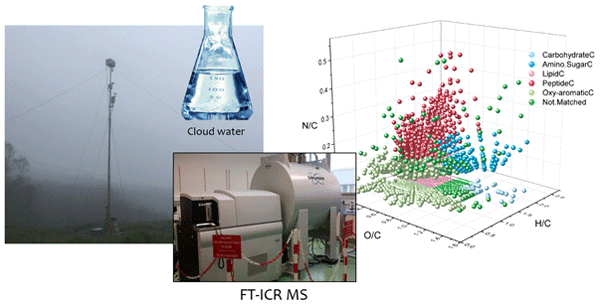
The composition of dissolved organic matter of cloud water has been investigated through non-targeted high-resolution mass spectrometry on only a few samples collected in the Northern Hemisphere. In this work, the chemical composition of samples collected at Réunion Island (SH) is investigated and compared to samples collected at Puy de Dôme (NH). Sampling, analysis and data treatment with the same methodology produced a unique dataset for investigating the molecular composition of clouds.
Maud Leriche, Pierre Tulet, Laurent Deguillaume, Frédéric Burnet, Aurélie Colomb, Agnès Borbon, Corinne Jambert, Valentin Duflot, Stéphan Houdier, Jean-Luc Jaffrezo, Mickaël Vaïtilingom, Pamela Dominutti, Manon Rocco, Camille Mouchel-Vallon, Samira El Gdachi, Maxence Brissy, Maroua Fathalli, Nicolas Maury, Bert Verreyken, Crist Amelynck, Niels Schoon, Valérie Gros, Jean-Marc Pichon, Mickael Ribeiro, Eric Pique, Emmanuel Leclerc, Thierry Bourrianne, Axel Roy, Eric Moulin, Joël Barrie, Jean-Marc Metzger, Guillaume Péris, Christian Guadagno, Chatrapatty Bhugwant, Jean-Mathieu Tibere, Arnaud Tournigand, Evelyn Freney, Karine Sellegri, Anne-Marie Delort, Pierre Amato, Muriel Joly, Jean-Luc Baray, Pascal Renard, Angelica Bianco, Anne Réchou, and Guillaume Payen
Atmos. Chem. Phys., 24, 4129–4155, https://doi.org/10.5194/acp-24-4129-2024, https://doi.org/10.5194/acp-24-4129-2024, 2024
Short summary
Short summary
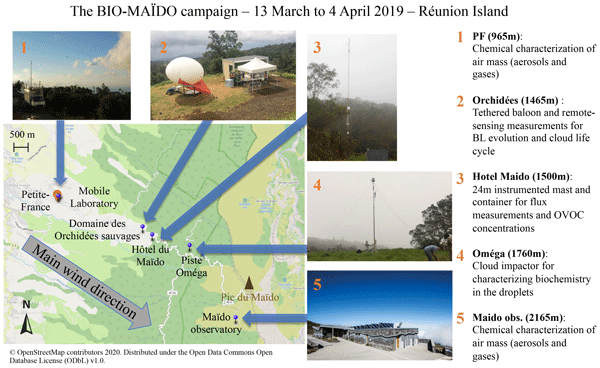
Aerosol particles in the atmosphere play a key role in climate change and air pollution. A large number of aerosol particles are formed from the oxidation of volatile organic compounds (VOCs and secondary organic aerosols – SOA). An important field campaign was organized on Réunion in March–April 2019 to understand the formation of SOA in a tropical atmosphere mostly influenced by VOCs emitted by forest and in the presence of clouds. This work synthesizes the results of this campaign.
Marie-Adèle Magnaldo, Quentin Libois, Sébastien Riette, and Christine Lac
Geosci. Model Dev., 17, 1091–1109, https://doi.org/10.5194/gmd-17-1091-2024, https://doi.org/10.5194/gmd-17-1091-2024, 2024
Short summary
Short summary
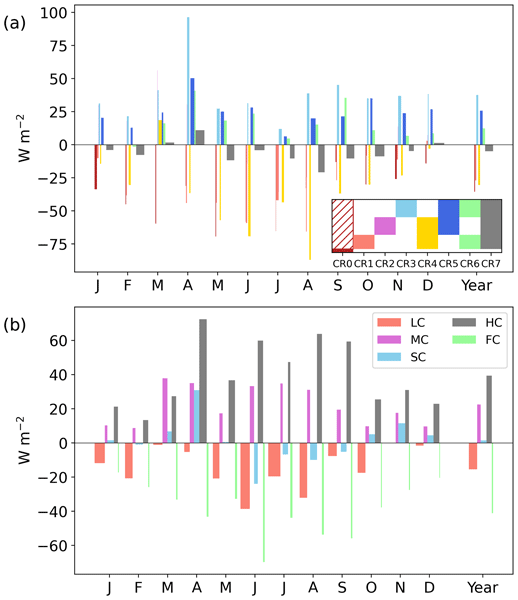
With the worldwide development of the solar energy sector, the need for reliable solar radiation forecasts has significantly increased. However, meteorological models that predict, among others things, solar radiation have errors. Therefore, we wanted to know in which situtaions these errors are most significant. We found that errors mostly occur in cloudy situations, and different errors were highlighted depending on the cloud altitude. Several potential sources of errors were identified.
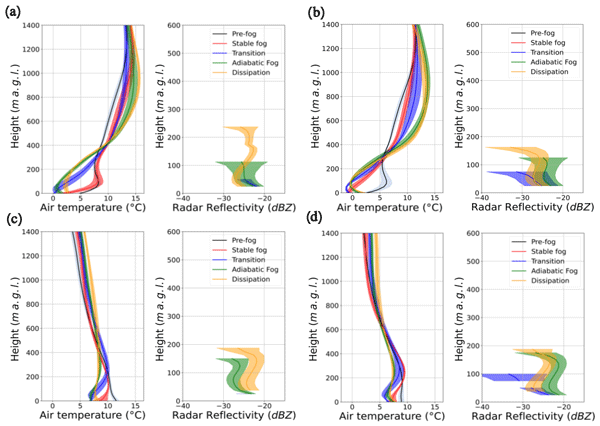
Cheikh Dione, Martial Haeffelin, Frédéric Burnet, Christine Lac, Guylaine Canut, Julien Delanoë, Jean-Charles Dupont, Susana Jorquera, Pauline Martinet, Jean-François Ribaud, and Felipe Toledo
Atmos. Chem. Phys., 23, 15711–15731, https://doi.org/10.5194/acp-23-15711-2023, https://doi.org/10.5194/acp-23-15711-2023, 2023
Short summary
Short summary
This paper documents the role of thermodynamics and turbulence in the fog life cycle over southwestern France. It is based on a unique dataset collected during the SOFOG3D field campaign in autumn and winter 2019–2020. The paper gives a threshold for turbulence driving the different phases of the fog life cycle and the role of advection in the night-time dissipation of fog. The results can be operationalised to nowcast fog and improve short-range forecasts in numerical weather prediction models.
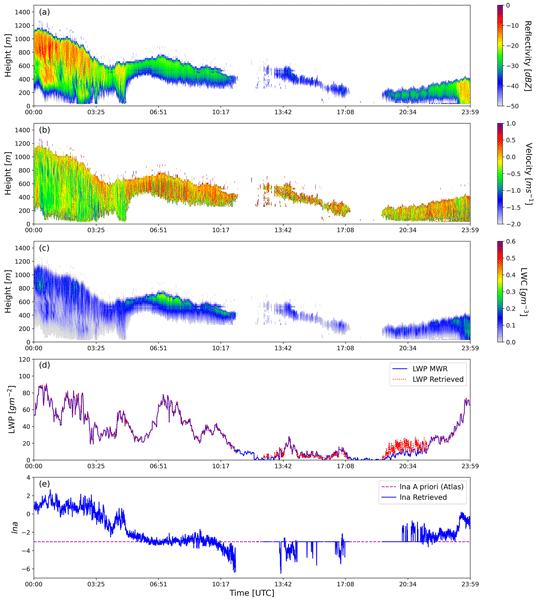
Pragya Vishwakarma, Julien Delanoë, Susana Jorquera, Pauline Martinet, Frederic Burnet, Alistair Bell, and Jean-Charles Dupont
Atmos. Meas. Tech., 16, 1211–1237, https://doi.org/10.5194/amt-16-1211-2023, https://doi.org/10.5194/amt-16-1211-2023, 2023
Short summary
Short summary
Cloud observations are necessary to characterize the cloud properties at local and global scales. The observations must be translated to cloud geophysical parameters. This paper presents the estimation of liquid water content (LWC) using radar and microwave radiometer (MWR) measurements. Liquid water path from MWR scales LWC and retrieves the scaling factor (ln a). The retrievals are compared with in situ observations. A climatology of ln a is built to estimate LWC using only radar information.
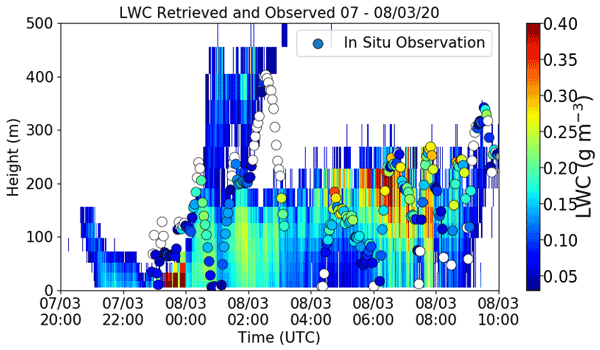
Alistair Bell, Pauline Martinet, Olivier Caumont, Frédéric Burnet, Julien Delanoë, Susana Jorquera, Yann Seity, and Vinciane Unger
Atmos. Meas. Tech., 15, 5415–5438, https://doi.org/10.5194/amt-15-5415-2022, https://doi.org/10.5194/amt-15-5415-2022, 2022
Short summary
Short summary
Cloud radars and microwave radiometers offer the potential to improve fog forecasts when assimilated into a high-resolution model. As this process can be complex, a retrieval of model variables is sometimes made as a first step. In this work, results from a 1D-Var algorithm for the retrieval of temperature, humidity and cloud liquid water content are presented. The algorithm is applied first to a synthetic dataset and then to a dataset of real measurements from a recent field campaign.
Marie Mazoyer, Frédéric Burnet, and Cyrielle Denjean
Atmos. Chem. Phys., 22, 11305–11321, https://doi.org/10.5194/acp-22-11305-2022, https://doi.org/10.5194/acp-22-11305-2022, 2022
Short summary
Short summary
The evolution of the droplet size distribution during the fog life cycle remains poorly understood and progress is required to reduce the uncertainty of fog forecasts. To gain insights into the physical processes driving the microphysics, intensive field campaigns were conducted during three winters at the SIRTA site in the south of Paris. This study analyzed the variations in fog microphysical properties and their potential interactions at the different evolutionary stages of the fog events.
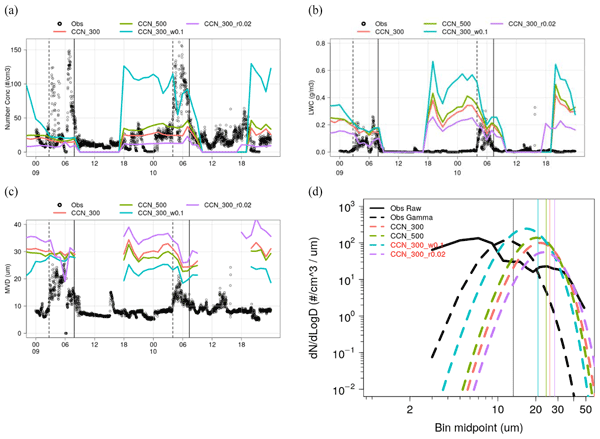
Michael John Weston, Stuart John Piketh, Frédéric Burnet, Stephen Broccardo, Cyrielle Denjean, Thierry Bourrianne, and Paola Formenti
Atmos. Chem. Phys., 22, 10221–10245, https://doi.org/10.5194/acp-22-10221-2022, https://doi.org/10.5194/acp-22-10221-2022, 2022
Short summary
Short summary
An aerosol-aware microphysics scheme is evaluated for fog cases in Namibia. AEROCLO-sA campaign observations are used to access and parameterise the model. The model cloud condensation nuclei activation is lower than the observations. The scheme is designed for clouds with updrafts, while fog typically forms in stable conditions. A pseudo updraft speed assigned to the lowest model levels helps achieve more realistic cloud droplet number concentration and size distribution in the model.
Pamela A. Dominutti, Pascal Renard, Mickaël Vaïtilingom, Angelica Bianco, Jean-Luc Baray, Agnès Borbon, Thierry Bourianne, Frédéric Burnet, Aurélie Colomb, Anne-Marie Delort, Valentin Duflot, Stephan Houdier, Jean-Luc Jaffrezo, Muriel Joly, Martin Leremboure, Jean-Marc Metzger, Jean-Marc Pichon, Mickaël Ribeiro, Manon Rocco, Pierre Tulet, Anthony Vella, Maud Leriche, and Laurent Deguillaume
Atmos. Chem. Phys., 22, 505–533, https://doi.org/10.5194/acp-22-505-2022, https://doi.org/10.5194/acp-22-505-2022, 2022
Short summary
Short summary
We present here the results obtained during an intensive field campaign conducted in March to April 2019 in Reunion. Our study integrates a comprehensive chemical and microphysical characterization of cloud water. Our investigations reveal that air mass history and cloud microphysical properties do not fully explain the variability observed in their chemical composition. This highlights the complexity of emission sources, multiphasic exchanges, and transformations in clouds.
Ian Boutle, Wayne Angevine, Jian-Wen Bao, Thierry Bergot, Ritthik Bhattacharya, Andreas Bott, Leo Ducongé, Richard Forbes, Tobias Goecke, Evelyn Grell, Adrian Hill, Adele L. Igel, Innocent Kudzotsa, Christine Lac, Bjorn Maronga, Sami Romakkaniemi, Juerg Schmidli, Johannes Schwenkel, Gert-Jan Steeneveld, and Benoît Vié
Atmos. Chem. Phys., 22, 319–333, https://doi.org/10.5194/acp-22-319-2022, https://doi.org/10.5194/acp-22-319-2022, 2022
Short summary
Short summary
Fog forecasting is one of the biggest problems for numerical weather prediction. By comparing many models used for fog forecasting with others used for fog research, we hoped to help guide forecast improvements. We show some key processes that, if improved, will help improve fog forecasting, such as how water is deposited on the ground. We also showed that research models were not themselves a suitable baseline for comparison, and we discuss what future observations are required to improve them.
Samira Khodayar, Silvio Davolio, Paolo Di Girolamo, Cindy Lebeaupin Brossier, Emmanouil Flaounas, Nadia Fourrie, Keun-Ok Lee, Didier Ricard, Benoit Vie, Francois Bouttier, Alberto Caldas-Alvarez, and Veronique Ducrocq
Atmos. Chem. Phys., 21, 17051–17078, https://doi.org/10.5194/acp-21-17051-2021, https://doi.org/10.5194/acp-21-17051-2021, 2021
Short summary
Short summary
Heavy precipitation (HP) constitutes a major meteorological threat in the western Mediterranean. Every year, recurrent events affect the area with fatal consequences. Despite this being a well-known issue, open questions still remain. The understanding of the underlying mechanisms and the modeling representation of the events must be improved. In this article we present the most recent lessons learned from the Hydrological Cycle in the Mediterranean Experiment (HyMeX).
Cited articles
Al Asmar, L., Musson-Genon, L., Dupont, E., Ferrand, M., and Sartelet, K.: Modeling the Contribution of Aerosols to Fog Evolution through Their Influence on Solar Radiation, Climate, 10, 61, https://doi.org/10.3390/cli10050061, 2022. a
Augros, C., Caumont, O., Ducrocq, V., Gaussiat, N., and Tabary, P.: Comparisons between S-, C- and X-band polarimetric radar observations and convective-scale simulations of the HyMeX first special observing period, Q. J. Roy. Meteor. Soc., 142, 347–362, 2016. a
Barahona, D., West, R. E. L., Stier, P., Romakkaniemi, S., Kokkola, H., and Nenes, A.: Comprehensively accounting for the effect of giant CCN in cloud activation parameterizations, Atmos. Chem. Phys., 10, 2467–2473, https://doi.org/10.5194/acp-10-2467-2010, 2010. a
Beard, K. V. and Ochs III, H. T.: Warm-rain initiation: An overview of microphysical mechanisms, J. Appl. Meteorol. Clim., 32, 608–625, 1993. a
Bell, A., Martinet, P., Caumont, O., Burnet, F., Delanoë, J., Jorquera, S., Seity, Y., and Unger, V.: An optimal estimation algorithm for the retrieval of fog and low cloud thermodynamic and micro-physical properties, Atmos. Meas. Tech., 15, 5415–5438, https://doi.org/10.5194/amt-15-5415-2022, 2022. a
Bergot, T. and Lestringant, R.: On the predictability of radiation fog formation in a mesoscale model: A case study in heterogeneous terrain, Atmosphere, 10, 165, https://doi.org/10.3390/atmos10040165, 2019. a
Berry, E. X. and Reinhardt, R. L.: An analysis of cloud drop growth by collection: Part I. Double distributions, J. Atmos. Sci., 31, 1814–1824, 1974. a
Bougeault, P. and Lacarrere, P.: Parameterization of orography-induced turbulence in a mesobeta–scale model, Mon. Weather Rev., 117, 1872–1890, 1989. a
Boutle, I., Price, J., Kudzotsa, I., Kokkola, H., and Romakkaniemi, S.: Aerosol–fog interaction and the transition to well-mixed radiation fog, Atmos. Chem. Phys., 18, 7827–7840, https://doi.org/10.5194/acp-18-7827-2018, 2018. a, b, c
Boutle, I., Angevine, W., Bao, J.-W., Bergot, T., Bhattacharya, R., Bott, A., Ducongé, L., Forbes, R., Goecke, T., Grell, E., Hill, A., Igel, A. L., Kudzotsa, I., Lac, C., Maronga, B., Romakkaniemi, S., Schmidli, J., Schwenkel, J., Steeneveld, G.-J., and Vié, B.: Demistify: a large-eddy simulation (LES) and single-column model (SCM) intercomparison of radiation fog, Atmos. Chem. Phys., 22, 319–333, https://doi.org/10.5194/acp-22-319-2022, 2022. a, b, c
Brousseau, P., Seity, Y., Ricard, D., and Léger, J.: Improvement of the forecast of convective activity from the AROME-France system, Q. J. Roy. Meteor. Soc., 142, 2231–2243, 2016. a
Burnet, F.: SOFOG3D_CHARBONNIERE_CNRM_TETHERED-BALLOON-CDP-10S_L2, https://doi.org/10.25326/689, Aeris [data set], 2024. a
Burnet, F., Lac, C., Martinet, P., Fourrié, N., Haeffelin, M., Delanoë, J., Price, J., Barrau, S., Canut, G., Cayez, G., Dabas, A., Denjean, C., Dupont, J.-C., Honnert, R., Mahfouf, J.-F., Montmerle, T., Roberts, G., Seity, Y., and Vié, B.: The SOuth west FOGs 3D experiment for processes study (SOFOG3D) project, EGU General Assembly 2020, Online, 4–8 May 2020, EGU2020-17836, https://doi.org/10.5194/egusphere-egu2020-17836, 2020. a, b
Canut, G.: SOFOG3D_CHARBONNIERE_CNRM_TETHERED-BALLOON-MTO-10S_L2, Aeris [data set], https://doi.org/10.25326/89, 2020. a
Choularton, T., Fullarton, G., Latham, J., Mill, C., Smith, M., and Stromberg, I.: A field study of radiation fog in Meppen, West Germany, Q. J. Roy. Meteor. Soc., 107, 381–394, 1981. a
Colella, P. and Woodward, P. R.: The piecewise parabolic method (PPM) for gas-dynamical simulations, J. Computat. Phys., 54, 174–201, 1984. a
Contreras Osorio, S., Martín Pérez, D., Ivarsson, K.-I., Nielsen, K. P., de Rooy, W. C., Gleeson, E., and McAufield, E.: Impact of the Microphysics in HARMONIE-AROME on Fog, Atmosphere, 13, 2127, https://doi.org/10.3390/atmos13122127, 2022. a, b
Costabloz, T.: Profils verticaux des propriétés microphysiques du brouillard et leur évolution au cours de son cycle de vie, PhD thesis, Université de Toulouse, https://doi.org/10.70675/0c833af6z5976z46e9z9e9aze16170a3377f, 2024. a
Costabloz, T., Burnet, F., Lac, C., Martinet, P., Delanoë, J., Jorquera, S., and Fathalli, M.: Vertical profiles of liquid water content in fog layers during the SOFOG3D experiment, Atmos. Chem. Phys., 25, 6539–6573, https://doi.org/10.5194/acp-25-6539-2025, 2025. a, b, c, d, e, f, g, h, i, j, k, l, m, n, o, p, q, r
Cuxart, J.: When can a high-resolution simulation over complex terrain be called LES?, Frontiers in Earth Science, 3, 87, https://doi.org/10.3389/feart.2015.00087, 2015. a
Cuxart, J., Bougeault, P., and Redelsperger, J.-L.: A turbulence scheme allowing for mesoscale and large-eddy simulations, Q. J. Roy. Meteor. Soc., 126, 1–30, 2000. a
de Rooy, W. C., Siebesma, P., Baas, P., Lenderink, G., de Roode, S. R., de Vries, H., van Meijgaard, E., Meirink, J. F., Tijm, S., and van 't Veen, B.: Model development in practice: a comprehensive update to the boundary layer schemes in HARMONIE-AROME cycle 40, Geosci. Model Dev., 15, 1513–1543, https://doi.org/10.5194/gmd-15-1513-2022, 2022. a
Deardorff, J. W.: Stratocumulus-capped mixed layers derived from a three-dimensional model, Bound.-Lay. Meteorol., 18, 495–527, 1980. a
Delanoë, J.: SOFOG3D_CHARBONNIERE_LATMOS_BASTA-vertical_L2a, Aeris [data set], https://doi.org/10.25326/134, 2020. a
Delanoë, J., Protat, A., Vinson, J.-P., Brett, W., Caudoux, C., Bertrand, F., Parent du Chatelet, J., Hallali, R., Barthes, L., Haeffelin, M., and Dupont, J.-C.: BASTA: A 95-GHz FMCW Doppler radar for cloud and fog studies, J. Atmos. Ocean. Tech., 33, 1023–1038, 2016. a
Dhangar, N. G., Lal, D., Ghude, S. D., Kulkarni, R., Parde, A. N., Pithani, P., Niranjan, K., Prasad, D. S., Jena, C., Sajjan, V. S., et al.: On the conditions for onset and development of fog over New Delhi: an observational study from the WiFEX, Pure and Applied Geophysics, 178, 3727–3746, 2021. a
Ding, Q., Sun, J., Huang, X., Ding, A., Zou, J., Yang, X., and Fu, C.: Impacts of black carbon on the formation of advection–radiation fog during a haze pollution episode in eastern China, Atmos. Chem. Phys., 19, 7759–7774, https://doi.org/10.5194/acp-19-7759-2019, 2019. a
Dione, C., Haeffelin, M., Burnet, F., Lac, C., Canut, G., Delanoë, J., Dupont, J.-C., Jorquera, S., Martinet, P., Ribaud, J.-F., and Toledo, F.: Role of thermodynamic and turbulence processes on the fog life cycle during SOFOG3D experiment, Atmos. Chem. Phys., 23, 15711–15731, https://doi.org/10.5194/acp-23-15711-2023, 2023. a, b, c, d, e, f, g, h, i, j
Dominutti, P. A., Renard, P., Vaïtilingom, M., Bianco, A., Baray, J.-L., Borbon, A., Bourianne, T., Burnet, F., Colomb, A., Delort, A.-M., Duflot, V., Houdier, S., Jaffrezo, J.-L., Joly, M., Leremboure, M., Metzger, J.-M., Pichon, J.-M., Ribeiro, M., Rocco, M., Tulet, P., Vella, A., Leriche, M., and Deguillaume, L.: Insights into tropical cloud chemistry in Réunion (Indian Ocean): results from the BIO-MAÏDO campaign, Atmos. Chem. Phys., 22, 505–533, https://doi.org/10.5194/acp-22-505-2022, 2022. a
Draxler, R. and Rolph, G.: HYSPLIT (HYbrid Single-Particle Lagrangian Integrated Trajectory) model, NOAA ARL READY, NOAA Air Resources Laboratory, Silver Spring, MD, http://ready.arl.noaa.gov/HYSPLIT.php (last access: 5 November 2024), 2010. a
Egli, S., Maier, F., Bendix, J., and Thies, B.: Vertical distribution of microphysical properties in radiation fogs – A case study, Atmos. Res., 151, 130–145, 2015. a
Field, P. R., Hill, A., Shipway, B., Furtado, K., Wilkinson, J., Miltenberger, A., Gordon, H., Grosvenor, D. P., Stevens, R., and Van Weverberg, K.: Implementation of a double moment cloud microphysics scheme in the UK met office regional numerical weather prediction model, Q. J. Roy. Meteor. Soc., 149, 703–739, 2023. a
Garcıa-Garcıa, F., Virafuentes, U., and Montero-Martınez, G.: Fine-scale measurements of fog-droplet concentrations: A preliminary assessment, Atmos. Res., 64, 179–189, 2002. a
Ghude, S. D., Jenamani, R., Kulkarni, R., Wagh, S., Dhangar, N. G., Parde, A. N., Acharja, P., Lonkar, P., Govardhan, G., Yadav, P., Vispute, A., Debnath, S., Lal, D. M., Bisht, D. S., Jena, C., Pawar, P. V., Dhankhar, S. S., Sinha, V., Chate, D. M., Safai, P. D., Nigam, N., Konwar, M., Hazra, A., Dharmaraj, T., Gopalkrishnan, V., Padmakumari, B., Gultepe, I., Biswas, M., Karipot, A. K., Prabhakaran, T., Nanjundiah, R. S., and Rajeevan, M.: WiFEX: walk into the warm fog over Indo-Gangetic Plain region, B. Am. Meteorol. Soc., 104, E980–E1005, 2023. a
Goodman, J.: The microstructure of California coastal fog and stratus, J. Appl. Meteorol. Clim., 16, 1056–1067, 1977. a
Grabowski, W. W. and Wang, L.-P.: Growth of cloud droplets in a turbulent environment, Annu. Rev. Fluid Mech., 45, 293–324, 2013. a
Gultepe, I., Tardif, R., Michaelides, S. C., Cermak, J., Bott, A., Bendix, J., Müller, M. D., Pagowski, M., Hansen, B., Ellrod, G., Jacobs, W., Toth, G., and Cober, S. G.: Fog research: A review of past achievements and future perspectives, Pure Appl. Geophys., 164, 1121–1159, 2007. a
Gultepe, I., Heymsfield, A. J., Fernando, H., Pardyjak, E., Dorman, C., Wang, Q., Creegan, E., Hoch, S., Flagg, D., Yamaguchi, R., Krishnamurthy, R., Gaberšek, S., Perrie, W., Perelet, A., Singh, D. K., Chang, R., Nagare, B., Wagh, S., and Wang, S.: A review of coastal fog microphysics during C-FOG, Bound.-Lay. Meteorol., 181, 227–265, 2021. a
Hogan, R. J. and Bozzo, A.: A flexible and efficient radiation scheme for the ECMWF model, J. Adv. Model. Earth Sy., 10, 1990–2008, 2018. a
Katata, G.: Fogwater deposition modeling for terrestrial ecosystems: A review of developments and measurements, J. Geophys. Res.-Atmos., 119, 8137–8159, 2014. a
Kollias, P., Rémillard, J., Luke, E., and Szyrmer, W.: Cloud radar Doppler spectra in drizzling stratiform clouds: 1. Forward modeling and remote sensing applications, J. Geophys. Res.-Atmos., 116, D13201, https://doi.org/10.1029/2010JD015237, 2011. a
Kumjian, M. R. and Prat, O. P.: The impact of raindrop collisional processes on the polarimetric radar variables, J. Atmos. Sci., 71, 3052–3067, 2014. a
Lábó, E. and Geresdi, I.: Study of longwave radiative transfer in stratocumulus clouds by using bin optical properties and bin microphysics scheme, Atmos. Res., 167, 61–76, 2016. a
Lac, C., Chaboureau, J.-P., Masson, V., Pinty, J.-P., Tulet, P., Escobar, J., Leriche, M., Barthe, C., Aouizerats, B., Augros, C., Aumond, P., Auguste, F., Bechtold, P., Berthet, S., Bielli, S., Bosseur, F., Caumont, O., Cohard, J.-M., Colin, J., Couvreux, F., Cuxart, J., Delautier, G., Dauhut, T., Ducrocq, V., Filippi, J.-B., Gazen, D., Geoffroy, O., Gheusi, F., Honnert, R., Lafore, J.-P., Lebeaupin Brossier, C., Libois, Q., Lunet, T., Mari, C., Maric, T., Mascart, P., Mogé, M., Molinié, G., Nuissier, O., Pantillon, F., Peyrillé, P., Pergaud, J., Perraud, E., Pianezze, J., Redelsperger, J.-L., Ricard, D., Richard, E., Riette, S., Rodier, Q., Schoetter, R., Seyfried, L., Stein, J., Suhre, K., Taufour, M., Thouron, O., Turner, S., Verrelle, A., Vié, B., Visentin, F., Vionnet, V., and Wautelet, P.: Overview of the Meso-NH model version 5.4 and its applications, Geosci. Model Dev., 11, 1929–1969, https://doi.org/10.5194/gmd-11-1929-2018, 2018. a, b, c
Mackowski, D. W. and Mishchenko, M. I.: Calculation of the T matrix and the scattering matrix for ensembles of spheres, J. Opt. Soc. Am. A, 13, 2266–2278, 1996. a
Marcel, A., Riette, S., Ricard, D., and Lac, C.: An update of shallow cloud parameterization in the AROME NWP model, Atmos. Chem. Phys., 26, 3901–3932, https://doi.org/10.5194/acp-26-3901-2026, 2026. a
Martín Pérez, D., Gleeson, E., Maalampi, P., and Rontu, L.: Use of CAMS near Real-Time Aerosols in the HARMONIE-AROME NWP Model, Meteorology, 3, 161–190, 2024. a
Martinet, P.: SOFOG3D_CHARBONNIERE_CNRM_MWR-HATPRO-LWP_L2, Aeris [data set], https://doi.org/10.25326/207, 2021. a
Martinet, P., Unger, V., Burnet, F., Georgis, J.-F., Hervo, M., Huet, T., Löhnert, U., Miller, E., Orlandi, E., Price, J., Schröder, M., and Thomas, G.: A dataset of temperature, humidity, and liquid water path retrievals from a network of ground-based microwave radiometers dedicated to fog investigation, Bulletin of Atmospheric Science and Technology, 3, 6, https://doi.org/10.1007/s42865-022-00049-w, 2022. a, b, c, d
Masson, V., Le Moigne, P., Martin, E., Faroux, S., Alias, A., Alkama, R., Belamari, S., Barbu, A., Boone, A., Bouyssel, F., Brousseau, P., Brun, E., Calvet, J.-C., Carrer, D., Decharme, B., Delire, C., Donier, S., Essaouini, K., Gibelin, A.-L., Giordani, H., Habets, F., Jidane, M., Kerdraon, G., Kourzeneva, E., Lafaysse, M., Lafont, S., Lebeaupin Brossier, C., Lemonsu, A., Mahfouf, J.-F., Marguinaud, P., Mokhtari, M., Morin, S., Pigeon, G., Salgado, R., Seity, Y., Taillefer, F., Tanguy, G., Tulet, P., Vincendon, B., Vionnet, V., and Voldoire, A.: The SURFEXv7.2 land and ocean surface platform for coupled or offline simulation of earth surface variables and fluxes, Geosci. Model Dev., 6, 929–960, https://doi.org/10.5194/gmd-6-929-2013, 2013. a
Matrosov, S. Y., Uttal, T., and Hazen, D. A.: Evaluation of radar reflectivity–based estimates of water content in stratiform marine clouds, J. Appl. Meteorol., 43, 405–419, 2004. a
Mazoyer, M., Lac, C., Thouron, O., Bergot, T., Masson, V., and Musson-Genon, L.: Large eddy simulation of radiation fog: impact of dynamics on the fog life cycle, Atmos. Chem. Phys., 17, 13017–13035, https://doi.org/10.5194/acp-17-13017-2017, 2017. a, b, c, d
Mazoyer, M., Burnet, F., Denjean, C., Roberts, G. C., Haeffelin, M., Dupont, J.-C., and Elias, T.: Experimental study of the aerosol impact on fog microphysics, Atmos. Chem. Phys., 19, 4323–4344, https://doi.org/10.5194/acp-19-4323-2019, 2019. a, b, c, d
Mazoyer, M., Ricard, D., Rivière, G., Delanoë, J., Riette, S., Augros, C., Borderies, M., and Vié, B.: Impact of mixed-phase cloud parameterization on warm conveyor belts and upper-tropospheric dynamics, Mon. Weather Rev., 151, 1073–1091, 2023. a
Milbrandt, J. and Yau, M.: A multimoment bulk microphysics parameterization. Part II: A proposed three-moment closure and scheme description, J. Atmos. Sci., 62, 3065–3081, 2005. a
Mlawer, E. J., Taubman, S. J., Brown, P. D., Iacono, M. J., and Clough, S. A.: Radiative transfer for inhomogeneous atmospheres: RRTM, a validated correlated-k model for the longwave, J. Geophys. Res.-Atmos., 102, 16663–16682, 1997. a
Noilhan, J. and Planton, S.: A simple parameterization of land surface processes for meteorological models, Mon. Weather Rev., 117, 536–549, 1989. a
Nurowska, K., Makuch, P., and Markowicz, K. M.: Measurement report: Microphysical and optical characteristics of radiation fog – a study using in situ, remote sensing, and balloon techniques, Atmos. Chem. Phys., 25, 13493–13525, https://doi.org/10.5194/acp-25-13493-2025, 2025. a
Peterka, A., Thompson, G., and Geresdi, I.: Numerical prediction of fog: A novel parameterization for droplet formation, Q. J. Roy. Meteor. Soc., 150, 2203–2222, https://doi.org/10.1002/qj.4704, 2024. a
Petters, M. D. and Kreidenweis, S. M.: A single parameter representation of hygroscopic growth and cloud condensation nucleus activity, Atmos. Chem. Phys., 7, 1961–1971, https://doi.org/10.5194/acp-7-1961-2007, 2007. a
Pilié, R., Mack, E., Kocmond, W., Eadie, W., and Rogers, C.: The life cycle of valley fog. Part II: Fog microphysics, J. Appl. Meteorol. Clim., 14, 364–374, 1975. a
Pinnick, R. G., Hoihjelle, D., Fernandez, G., Stenmark, E., Lindberg, J., Hoidale, G., and Jennings, S.: Vertical structure in atmospheric fog and haze and its effects on visible and infrared extinction, J. Atmos. Sci., 35, 2020–2032, 1978. a
Pinsky, M., Khain, A., and Shapiro, M.: Collision efficiency of drops in a wide range of Reynolds numbers: Effects of pressure on spectrum evolution, J. Atmos. Sci., 58, 742–764, 2001. a
Poku, C., Ross, A. N., Hill, A. A., Blyth, A. M., and Shipway, B.: Is a more physical representation of aerosol activation needed for simulations of fog?, Atmos. Chem. Phys., 21, 7271–7292, https://doi.org/10.5194/acp-21-7271-2021, 2021. a, b, c, d
Price, J.: Radiation fog. Part I: observations of stability and drop size distributions, Bound.-Lay. Meteorol., 139, 167–191, 2011. a
Price, J.: Observations and quantification of fog droplet deposition made during the SOFOG3D campaign, Q. J. Roy. Meteor. Soc., 151, e4908, https://doi.org/10.1002/qj.4908, 2025. a, b
Richter, D. H., MacMillan, T., and Wainwright, C.: A Lagrangian cloud model for the study of marine fog, Bound.-Lay. Meteorol., 181, 523–542, 2021. a
Roach, W., Brown, R., Caughey, S., Garland, J., and Readings, C.: The physics of radiation fog: I – a field study, Q. J. Roy. Meteor. Soc., 102, 313–333, 1976. a
Roberts, G. and Nenes, A.: A continuous-flow streamwise thermal-gradient CCN chamber for atmospheric measurements, Aerosol Sci. Tech., 39, 206–221, 2005. a
Rooy, W., Bruijn, C., Tijm, S., Neggers, R., Siebesma, P., and Barkmeijer, J.: Experiences with Harmonie at KNMI, HIRLAM Newsletter, 56, 21–29, 2010. a
Saleeby, S. M. and Cotton, W. R.: A large-droplet mode and prognostic number concentration of cloud droplets in the Colorado State University Regional Atmospheric Modeling System (RAMS). Part I: Module descriptions and supercell test simulations, J. Appl. Meteorol. Clim., 43, 182–195, 2004. a
Sant, V., Lohmann, U., and Seifert, A.: Performance of a triclass parameterization for the collision–coalescence process in shallow clouds, J. Atmos. Sci., 70, 1744–1767, 2013. a
Savijärvi, H., Arola, A., and Räisänen, P.: Short-wave optical properties of precipitating water clouds, Q. J. Roy. Meteor. Soc., 123, 883–899, 1997. a
Schwenkel, J. and Maronga, B.: Large-eddy simulation of radiation fog with comprehensive two-moment bulk microphysics: impact of different aerosol activation and condensation parameterizations, Atmos. Chem. Phys., 19, 7165–7181, https://doi.org/10.5194/acp-19-7165-2019, 2019. a
Shao, N., Lu, C., Li, Y., Jia, X., Wang, Y., Yin, Y., Zhu, B., Zhao, T., Liu, D., Niu, S., Fan, S., Yan, S., Lv, J., and Qu, X.: Impact of Improved Surface Flux Parameterization on Simulation of Radiation Fog Formation in the Yangtze River Delta, China, J. Geophys. Res.-Atmos., 130, e2024JD042345, https://doi.org/10.1029/2024JD042345, 2025. a
Smith, D. K., Renfrew, I. A., Dorling, S. R., Price, J. D., and Boutle, I. A.: Sub-km scale numerical weather prediction model simulations of radiation fog, Q. J. Roy. Meteor. Soc., 147, 746–763, 2021. a
Tardif, R. and Rasmussen, R. M.: Event-based climatology and typology of fog in the New York City region, J. Appl. Meteorol. Clim., 46, 1141–1168, 2007. a
Tav, J., Masson, O., Burnet, F., Paulat, P., Bourrianne, T., Conil, S., and Pourcelot, L.: Determination of fog-droplet deposition velocity from a simple weighing method, Aerosol Air Qual. Res., 18, 103–113, 2018. a
Thornton, J., Price, J., Burnet, F., and Lac, C.: Contrasting the evolution of radiation fog over a heterogeneous region in southwest France during the SOFOG3D campaign, Q. J. Roy. Meteor. Soc., 149, 3323–3341, 2023. a
Thouron, O., Brenguier, J.-L., and Burnet, F.: Supersaturation calculation in large eddy simulation models for prediction of the droplet number concentration, Geosci. Model Dev., 5, 761–772, https://doi.org/10.5194/gmd-5-761-2012, 2012. a, b, c
Turner, S., Brenguier, J.-L., and Lac, C.: A subgrid parameterization scheme for precipitation, Geosci. Model Dev., 5, 499–521, https://doi.org/10.5194/gmd-5-499-2012, 2012. a
Vaillancourt, P. A. and Yau, M.: Review of particle-turbulence interactions and consequences for cloud physics, B. Am. Meteorol. Soc., 81, 285–298, 2000. a
VanZanten, M., Stevens, B., Vali, G., and Lenschow, D.: Observations of drizzle in nocturnal marine stratocumulus, J. Atmos. Sci., 62, 88–106, 2005. a
Vié, B., Pinty, J.-P., Berthet, S., and Leriche, M.: LIMA (v1.0): A quasi two-moment microphysical scheme driven by a multimodal population of cloud condensation and ice freezing nuclei, Geosci. Model Dev., 9, 567–586, https://doi.org/10.5194/gmd-9-567-2016, 2016. a, b
Wærsted, E. G., Haeffelin, M., Dupont, J.-C., Delanoë, J., and Dubuisson, P.: Radiation in fog: quantification of the impact on fog liquid water based on ground-based remote sensing, Atmos. Chem. Phys., 17, 10811–10835, https://doi.org/10.5194/acp-17-10811-2017, 2017. a
Wagh, S., Kulkarni, R., Lonkar, P., Parde, A. N., Dhangar, N. G., Govardhan, G., Sajjan, V., Debnath, S., Gultepe, I., Rajeevan, M., and Ghude, S. D.: Development of visibility equation based on fog microphysical observations and its verification using the WRF model, Modeling Earth Systems and Environment, 9, 195–211, 2023. a
Xue, Y., Wang, L.-P., and Grabowski, W. W.: Growth of cloud droplets by turbulent collision-coalescence, J. Atmos. Sci., 65, 331–356, 2008. a
Yang, Y. and Gao, S.: The impact of turbulent diffusion driven by fog-top cooling on sea fog development, J. Geophys. Res.-Atmos., 125, e2019JD031562, https://doi.org/10.1029/2019JD031562, 2020. a
Yau, M. K. and Rogers, R. R.: A short course in cloud physics, Elsevier, ISBN 9780750632157, 1996. a
Zilitinkevich, S. S., Elperin, T., Kleeorin, N., Rogachevskii, I., Esau, I., Mauritsen, T., and Miles, M.: Turbulence energetics in stably stratified geophysical flows: Strong and weak mixing regimes, Q. J. Roy. Meteor. Soc., 134, 793–799, 2008. a
Short summary
Fog modelling remains a significant challenge due to the complex, interrelated physical processes involved, including microphysics. We evaluated the ability of an advanced microphysical scheme to reproduce the fog life cycle by comparing it with new vertical microphysical observations obtained using a tethered balloon during an extensive field campaign. Although realistic modelling performance was achieved, some biases remain that require further microphysics observations.
Fog modelling remains a significant challenge due to the complex, interrelated physical...


Altmetrics
Final-revised paper
Preprint