
Articles | Volume 26, issue 17
https://doi.org/10.5194/acp-26-12689-2026
© Author(s) 2026. This work is distributed under
the Creative Commons Attribution 4.0 License.
the Creative Commons Attribution 4.0 License.
https://doi.org/10.5194/acp-26-12689-2026
© Author(s) 2026. This work is distributed under
the Creative Commons Attribution 4.0 License.
the Creative Commons Attribution 4.0 License.
Research article
| Highlight paper
| 
08 Sep 2026
Research article | Highlight paper |
| 08 Sep 2026
| 08 Sep 2026
Cloud liquid water path at the North Slope of Alaska has minimal sensitivity to local meteorology in Arctic winter

Cooperative Institute for Research in Environmental Sciences, Boulder, CO, USA
National Snow and Ice Data Center, Boulder, CO, USA
John J. Cassano
Cooperative Institute for Research in Environmental Sciences, Boulder, CO, USA
National Snow and Ice Data Center, Boulder, CO, USA
Atmospheric and Oceanic Sciences Department, University of Colorado-Boulder, Boulder, CO, USA
Matthew D. Shupe
Cooperative Institute for Research in Environmental Sciences, Boulder, CO, USA
National Snow and Ice Data Center, Boulder, CO, USA
NOAA Physical Sciences Laboratory, Boulder, CO, USA
Amy Solomon
Cooperative Institute for Research in Environmental Sciences, Boulder, CO, USA
National Snow and Ice Data Center, Boulder, CO, USA
NOAA Physical Sciences Laboratory, Boulder, CO, USA
Related authors
No articles found.
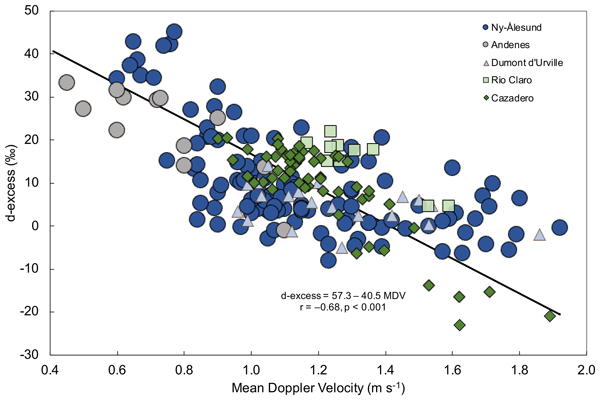
Pradeep K. Aggarwal, Courtney Schumacher, Frederick J. Longstaffe, Aaron Funk, and Matthew D. Shupe
Atmos. Chem. Phys., 26, 13661–13692, https://doi.org/10.5194/acp-26-13661-2026, https://doi.org/10.5194/acp-26-13661-2026, 2026
Short summary
Short summary
We show that in mixed-phase clouds, ice forming by riming, that is, freezing of supercooled liquid directly on ice particles, differs in its isotope composition than the liquid, contrary to the existing view in the literature. This isotopic change is the same for riming in tropical to polar precipitation. Our results provide a robust tool for cloud processes studies, for better understanding past climates from ice cores data, and for improving micro-physics schemes in climate models.
Patrick C. Taylor, Armin Sorooshian, Rei Ueyama, Sebastian Schmidt, Ihab Abboud, Quincy Allison, Kevin Barry, Sebastian Becker, Holly A. Bender, Joseph R. Bennett, James B. Blair, Niklas Bohn, Linette Boisvert, Matthew D. Brown, Roelof Bruintjes, Anthony Bucholtz, Megan Buzanowicz, Brian Cairns, Filippo Calì Quaglia, Eduard Chemyakin, Bo Chen, Gao Chen, Hong Chen, Yu-Wen Chen, Zezhen Cheng, Swarup China, Dan Chirica, Yonghoon Choi, Peter Colarco, Brian Collister, Ewan Crosbie, Maurice J. Cross, Janet Daniels, Paul DeMott, Joshua P. DiGangi, Alcide Giorgio di Sarra, Glenn S. Diskin, Erica K. Dolinar, Eva-Lou Edwards, Samuel Ephraim, Nikolaos Evangeliou, Romanos Foskinis, Francesca Gallo, Lan Gao, José Luis Gómez-Amo, Daisy Gonzalez, Christine Groot Zwaaftink, Pawan Gupta, Ivan Heckman, Michael Hendrickson, Miguel Ricardo A. Hilario, Ken Hirata, Michelle Hofton, Andrew L. Holen, Ulas Im, Alia L. Khan, Ralph Kahn, Alexei V. Korolev, Sonia Kreidenweis, Thomas Krumpen, Nathan Kurtz, Leslie Lait, Bradley Lamkin, Jack Landy, Nurun Nahar Lata, Paul Lawson, Samuel LeBlanc, Sean Leavor, Jing Li, Thorsten Markus, Hal Maring, Andreas H. Massling, Camille Mavis, Flynn McGinnity, Kerry Meyer, Gabriel Mojica, Richard H. Moore, Parker Morris, Giovanni Muscari, Vikas Nataraja, Amin R. Nehrir, Athanasios Nenes, Edward P. Nowottnick, Matteo Ottaviani, Chelsea Parker, Ryan Patnaude, Michael Perez, Russell J. Perkins, Colten Peterson, Alek Petty, Stevie Phothisane, Chris Polashenski, Kerri A. Pratt, Kayla M. Preisler, John Prytherch, David Rabine, Jens Redemann, Ju-Mee Ryoo, Joseph S. Schlosser, Vanessa Selimovic, Michael A. Shook, Morgan Silverman, Henrik Skov, Alexander Smirnov, Cassidy Soloff, Amy Solomon, Snorre Stamnes, Azusa Takeishi, David R. Thompson, K. Lee Thornhill, Rachel Tilling, Michael Tjernström, Monica Tosco, Pedro C. Valdelomar, David Van Gilst, Jian Wang, Zhien Wang, Andrzej Wasilewski, Manfred Wendisch, Brent Wilder, Edward L. Winstead, Albert Wu, Peng Xian, Lauren M. Zamora, Jiaoshi Zhang, Lei Zhang, Lu Zhang, Luke Ziemba, and Paquita Zuidema
Earth Syst. Sci. Data Discuss., https://doi.org/10.5194/essd-2026-241, https://doi.org/10.5194/essd-2026-241, 2026
Preprint under review for ESSD
Short summary
Short summary
This article summarizes the data sets collected during the Arctic Radiation Cloud aerosol Sea ice Interaction eXperiment (ARCSIX), NASA's most comprehensive Arctic field campaign to date. The overarching goal was to quantify the contributions of surface, clouds, aerosol particles, and precipitation to summer sea ice melt. This paper describes the ARCSIX implementation including the flight strategy, instruments, complementary data sets, access, and usage details.
Joseph Hung, Penny M. Rowe, Christopher J. Cox, Emily M. McCullough, Liam Kroll, Raia Ottenheimer, Matthew D. Shupe, Von P. Walden, and Kimberly Strong
EGUsphere, https://doi.org/10.5194/egusphere-2026-1906, https://doi.org/10.5194/egusphere-2026-1906, 2026
Short summary
Short summary
Climate models struggle to accurately represent polar regions largely due to challenges in modelling clouds. In this article, we sampled clouds at Arctic and Antarctic field sites, and found that Antarctic clouds generally featured lower temperatures, smaller liquid droplets, and are thinner because they have a higher proportion of ice than Arctic clouds. This knowledge improves our ability to monitor remote regions, and serves to improve our understanding of cloud processes.
Anne Sledd, Michael R. Gallagher, Matthew D. Shupe, Christopher J. Cox, Robert Hawley, Michael S. Town, Heather Guy, Hans-Peter Marshall, Ryan R. Neely III, Claire Pettersen, Von P. Walden, Catherine Hebson, Andrew Martin, Erik Olson, and Derek Pickell
EGUsphere, https://doi.org/10.5194/egusphere-2026-1842, https://doi.org/10.5194/egusphere-2026-1842, 2026
Short summary
Short summary
Understanding energetic processes at the surface is important for understanding how the Greenland ice sheet melts. However, most temperature observations of firn are insufficient for studying energetic processes near the surface where melt happens. In this work we present new ground observations of high-resolution temperature profiles in the top meter of firn near the southwest coast of Greenland. Using these observations we characterize how temperature and energy vary during the melt season.
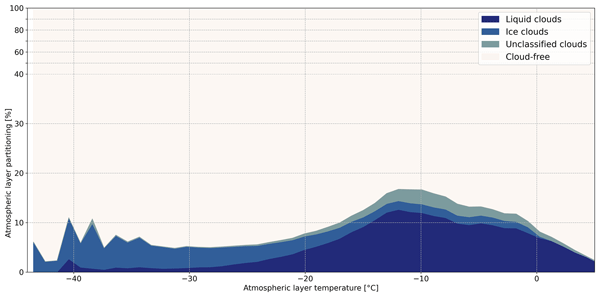
Jean Lac, Hélène Chepfer, Matthew D. Shupe, and Hannes Griesche
Atmos. Chem. Phys., 26, 4189–4213, https://doi.org/10.5194/acp-26-4189-2026, https://doi.org/10.5194/acp-26-4189-2026, 2026
Short summary
Short summary
Satellite observations show that Arctic spring experiences a rapid increase in liquid-containing clouds over sea ice. Our study shows that this transition is mostly driven by warmer temperatures in early spring than in late spring, favoring more liquid clouds formation, rather than a limited moisture source in early spring. It suggests that, in the future, this transition is likely to occur earlier in spring considering the rapid Arctic warming.
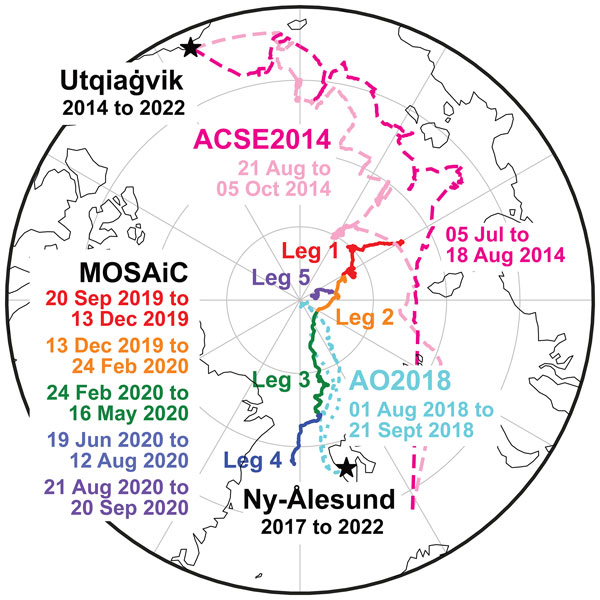
Peggy Achtert, Torsten Seelig, Gabriella Wallentin, Luisa Ickes, Matthew D. Shupe, Corinna Hoose, and Matthias Tesche
Atmos. Chem. Phys., 26, 3049–3068, https://doi.org/10.5194/acp-26-3049-2026, https://doi.org/10.5194/acp-26-3049-2026, 2026
Short summary
Short summary
We quantify the occurrence of single- and multi-layer clouds in the Arctic based on combining soundings with cloud-radar observations. We also assess the rate of ice-crystal seeding in multi-layer cloud systems as this is an important initiator of glaciation in super-cooled liquid cloud layers. We find an abundance of multi-layer clouds in the Arctic with seeding in about half to two thirds of cases in which the gap between upper and lower layers ranges between 100 and 1000 m.
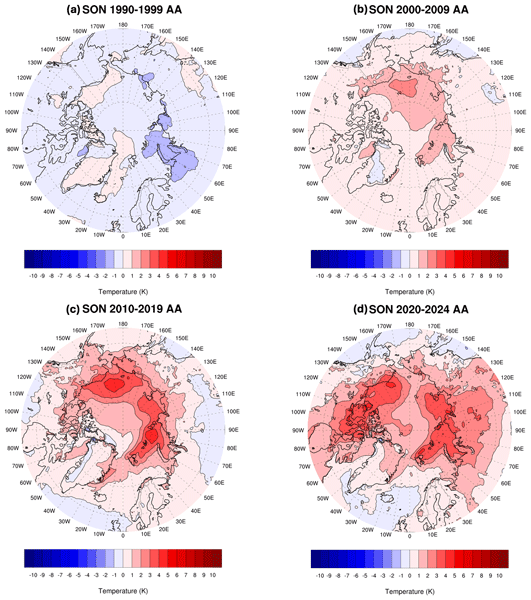
Mark C. Serreze, Elizabeth Cassano, Alex Crawford, John J. Cassano, and Chen Zhang
The Cryosphere, 20, 411–425, https://doi.org/10.5194/tc-20-411-2026, https://doi.org/10.5194/tc-20-411-2026, 2026
Short summary
Short summary
The outsized warming of the Arctic relative to the globe as a whole (Arctic Amplification, AA) is largest in in autumn and winter, consistent with large transfers of energy from growing areas of open water. Impacts of variable atmospheric circulation are also prominent. AA is small in summer due to the melting sea ice cover. Warming penetrates higher into the atmosphere in autumn compared to winter, but trends towards weaker stability could enable deeper heating as AA further evolves.
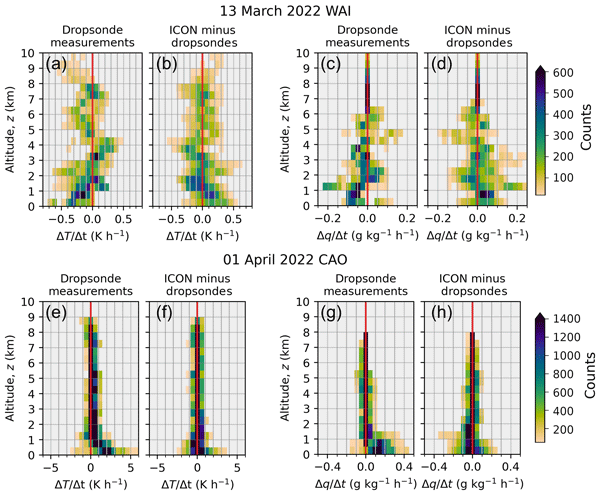
Manfred Wendisch, Benjamin Kirbus, Davide Ori, Matthew D. Shupe, Susanne Crewell, Harald Sodemann, and Vera Schemann
Atmos. Chem. Phys., 25, 15047–15076, https://doi.org/10.5194/acp-25-15047-2025, https://doi.org/10.5194/acp-25-15047-2025, 2025
Short summary
Short summary
Aircraft observations of air parcels moving into and out of the Arctic are reported. From the data, heating and cooling as well as drying and moistening of the air masses along their way into and out of the Arctic could be measured for the first time. These data are used to evaluate if weather prediction models are able to accurately represent these air mass transformations. This work helps to model the future Arctic climate changes, which may have an impact for mid-latitude weather as well.
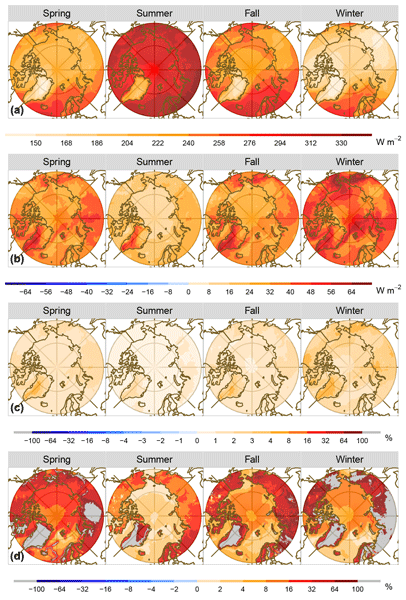
Chen Zhang, John J. Cassano, Mark W. Seefeldt, Hailong Wang, Weiming Ma, and Wen-wen Tung
The Cryosphere, 19, 4671–4699, https://doi.org/10.5194/tc-19-4671-2025, https://doi.org/10.5194/tc-19-4671-2025, 2025
Short summary
Short summary
An atmospheric river (AR) is a long, narrow corridor of moisture transport in the atmosphere. ARs are crucial for moisture and heat transport into the polar regions. Our study examines the role of ARs in the surface energy budget (SEB) in the Arctic. The results reveal distinct seasonality and land–sea–sea ice contrasts due to the impacts of ARs on the SEB. The conclusions provide greater insights into the current and future role of ARs in the Arctic climate system.
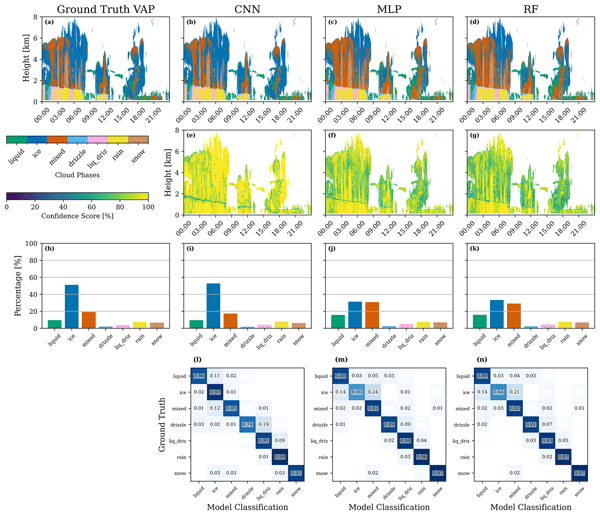
Lexie Goldberger, Maxwell Levin, Carlandra Harris, Andrew Geiss, Matthew D. Shupe, and Damao Zhang
Atmos. Meas. Tech., 18, 5393–5414, https://doi.org/10.5194/amt-18-5393-2025, https://doi.org/10.5194/amt-18-5393-2025, 2025
Short summary
Short summary
This study leverages machine learning models to classify cloud thermodynamic phases using multi-sensor remote sensing data collected at the Department of Energy Atmospheric Radiation Measurement North Slope of Alaska observatory. We evaluate model performance, feature importance, and application of the model to another observatory and quantify how the models respond to instrument outages.
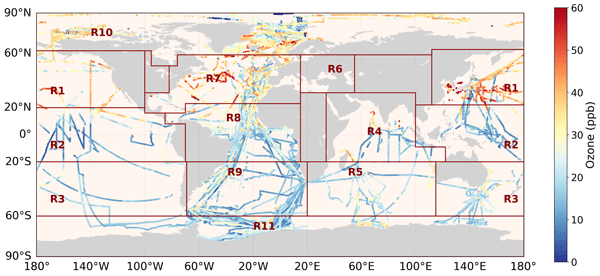
Yugo Kanaya, Roberto Sommariva, Alfonso Saiz-Lopez, Andrea Mazzeo, Theodore K. Koenig, Kaori Kawana, James E. Johnson, Aurélie Colomb, Pierre Tulet, Suzie Molloy, Ian E. Galbally, Rainer Volkamer, Anoop Mahajan, John W. Halfacre, Paul B. Shepson, Julia Schmale, Hélène Angot, Byron Blomquist, Matthew D. Shupe, Detlev Helmig, Junsu Gil, Meehye Lee, Sean C. Coburn, Ivan Ortega, Gao Chen, James Lee, Kenneth C. Aikin, David D. Parrish, John S. Holloway, Thomas B. Ryerson, Ilana B. Pollack, Eric J. Williams, Brian M. Lerner, Andrew J. Weinheimer, Teresa Campos, Frank M. Flocke, J. Ryan Spackman, Ilann Bourgeois, Jeff Peischl, Chelsea R. Thompson, Ralf M. Staebler, Amir A. Aliabadi, Wanmin Gong, Roeland Van Malderen, Anne M. Thompson, Ryan M. Stauffer, Debra E. Kollonige, Juan Carlos Gómez Martin, Masatomo Fujiwara, Katie Read, Matthew Rowlinson, Keiichi Sato, Junichi Kurokawa, Yoko Iwamoto, Fumikazu Taketani, Hisahiro Takashima, Mónica Navarro-Comas, Marios Panagi, and Martin G. Schultz
Earth Syst. Sci. Data, 17, 4901–4932, https://doi.org/10.5194/essd-17-4901-2025, https://doi.org/10.5194/essd-17-4901-2025, 2025
Short summary
Short summary
The first comprehensive dataset of tropospheric ozone over oceans/polar regions is presented, including 77 ship/buoy and 48 aircraft campaign observations (1977–2022, 0–5000 m altitude), supplemented by ozonesonde and surface data. Air masses isolated from land for 72+ hours are systematically selected as essentially oceanic. Among the 11 global regions, they show daytime decreases of 11–16 % in the tropics, while near-zero depletions are rare, unlike in the Arctic, implying different mechanisms.
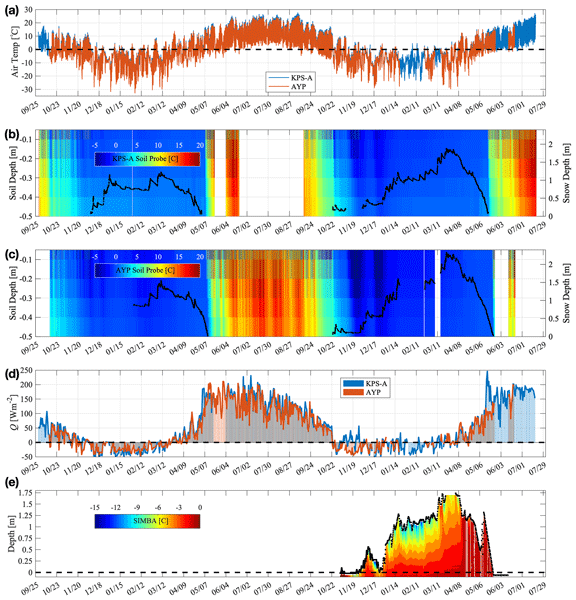
Christopher J. Cox, Janet M. Intrieri, Brian J. Butterworth, Gijs de Boer, Michael R. Gallagher, Jonathan Hamilton, Erik Hulm, Tilden Meyers, Sara M. Morris, Jackson Osborn, P. Ola G. Persson, Benjamin Schmatz, Matthew D. Shupe, and James M. Wilczak
Earth Syst. Sci. Data, 17, 1481–1499, https://doi.org/10.5194/essd-17-1481-2025, https://doi.org/10.5194/essd-17-1481-2025, 2025
Short summary
Short summary
Snow is an essential water resource in the intermountain western United States, and predictions are made using models. We made observations to validate, constrain, and develop the models. The data are from the Study of Precipitation, the Lower Atmosphere and Surface for Hydrometeorology (SPLASH) campaign in Colorado's East River valley, 2021–2023. The measurements include meteorology and variables that quantify energy transfer between the atmosphere and surface. The data are available publicly.
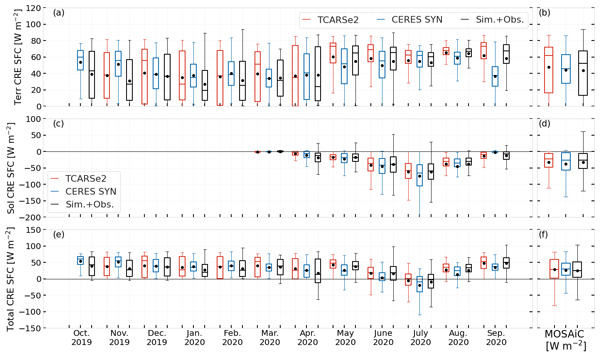
Carola Barrientos-Velasco, Christopher J. Cox, Hartwig Deneke, J. Brant Dodson, Anja Hünerbein, Matthew D. Shupe, Patrick C. Taylor, and Andreas Macke
Atmos. Chem. Phys., 25, 3929–3960, https://doi.org/10.5194/acp-25-3929-2025, https://doi.org/10.5194/acp-25-3929-2025, 2025
Short summary
Short summary
Understanding how clouds affect the climate, especially in the Arctic, is crucial. This study used data from the largest polar expedition in history, MOSAiC, and the CERES satellite to analyse the impact of clouds on radiation. Simulations showed accurate results, aligning with observations. Over the year, clouds caused the atmospheric surface system to lose 5.2 W m−² of radiative energy to space, while the surface gained 25 W m−² and the atmosphere cooled by 30.2 W m−².
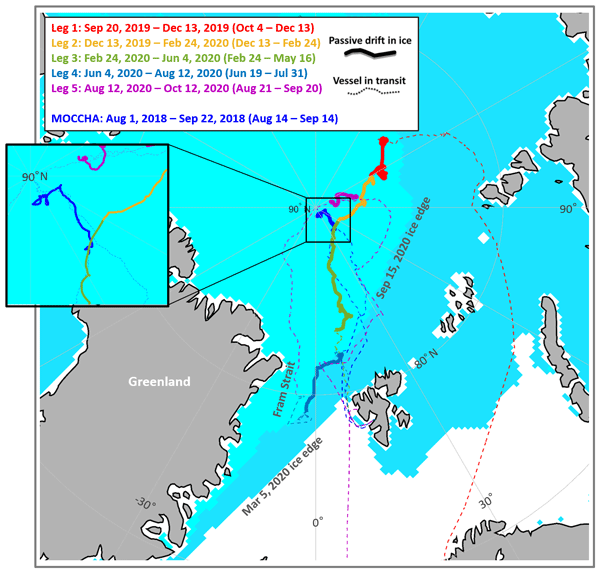
Benjamin Heutte, Nora Bergner, Hélène Angot, Jakob B. Pernov, Lubna Dada, Jessica A. Mirrielees, Ivo Beck, Andrea Baccarini, Matthew Boyer, Jessie M. Creamean, Kaspar R. Daellenbach, Imad El Haddad, Markus M. Frey, Silvia Henning, Tiia Laurila, Vaios Moschos, Tuukka Petäjä, Kerri A. Pratt, Lauriane L. J. Quéléver, Matthew D. Shupe, Paul Zieger, Tuija Jokinen, and Julia Schmale
Atmos. Chem. Phys., 25, 2207–2241, https://doi.org/10.5194/acp-25-2207-2025, https://doi.org/10.5194/acp-25-2207-2025, 2025
Short summary
Short summary
Limited aerosol measurements in the central Arctic hinder our understanding of aerosol–climate interactions in the region. Our year-long observations of aerosol physicochemical properties during the MOSAiC expedition reveal strong seasonal variations in aerosol chemical composition, where the short-term variability is heavily affected by storms in the Arctic. Local wind-generated particles are shown to be an important source of cloud seeds, especially in autumn.
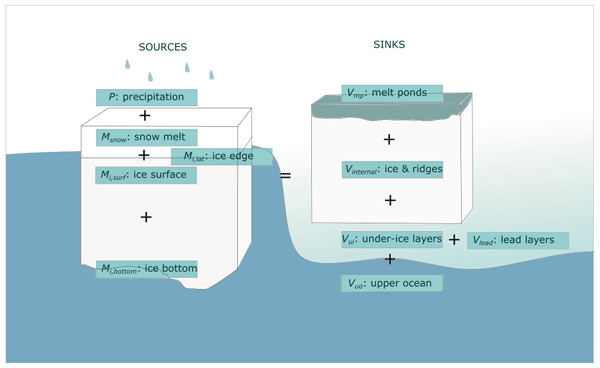
Madison M. Smith, Niels Fuchs, Evgenii Salganik, Donald K. Perovich, Ian Raphael, Mats A. Granskog, Kirstin Schulz, Matthew D. Shupe, and Melinda Webster
The Cryosphere, 19, 619–644, https://doi.org/10.5194/tc-19-619-2025, https://doi.org/10.5194/tc-19-619-2025, 2025
Short summary
Short summary
The fate of freshwater from Arctic sea ice and snowmelt impacts interactions of the atmosphere, sea ice, and ocean. We complete a comprehensive analysis of datasets from a 2020 central Arctic field campaign to understand the drivers of the sea ice freshwater budget and the fate of this water. Over half of the freshwater comes from surface melt, and a majority fraction is incorporated into the ocean. Results suggest that the representation of melt ponds is a key area for future development.
Johanna Tjernström, Michael Gallagher, Jareth Holt, Gunilla Svensson, Matthew D. Shupe, Jonathan J. Day, Lara Ferrighi, Siri Jodha Khalsa, Leslie M. Hartten, Ewan O'Connor, Zen Mariani, and Øystein Godøy
EGUsphere, https://doi.org/10.5194/egusphere-2024-2088, https://doi.org/10.5194/egusphere-2024-2088, 2024
Preprint archived
Short summary
Short summary
The value of numerical weather predictions can be enhanced in several ways, one is to improve the representations of small-scale processes in models. To understand what needs to be improved, the model results need to be evaluated. Following standardized principles, a file format has been defined to be as similar as possible for both observational and model data. Python packages and toolkits are presented as a community resource in the production of the files and evaluation analysis.
Jonathan J. Day, Gunilla Svensson, Barbara Casati, Taneil Uttal, Siri-Jodha Khalsa, Eric Bazile, Elena Akish, Niramson Azouz, Lara Ferrighi, Helmut Frank, Michael Gallagher, Øystein Godøy, Leslie M. Hartten, Laura X. Huang, Jareth Holt, Massimo Di Stefano, Irene Suomi, Zen Mariani, Sara Morris, Ewan O'Connor, Roberta Pirazzini, Teresa Remes, Rostislav Fadeev, Amy Solomon, Johanna Tjernström, and Mikhail Tolstykh
Geosci. Model Dev., 17, 5511–5543, https://doi.org/10.5194/gmd-17-5511-2024, https://doi.org/10.5194/gmd-17-5511-2024, 2024
Short summary
Short summary
The YOPP site Model Intercomparison Project (YOPPsiteMIP), which was designed to facilitate enhanced weather forecast evaluation in polar regions, is discussed here, focussing on describing the archive of forecast data and presenting a multi-model evaluation at Arctic supersites during February and March 2018. The study highlights an underestimation in boundary layer temperature variance that is common across models and a related inability to forecast cold extremes at several of the sites.
Shan Sun and Amy Solomon
The Cryosphere, 18, 3033–3048, https://doi.org/10.5194/tc-18-3033-2024, https://doi.org/10.5194/tc-18-3033-2024, 2024
Short summary
Short summary
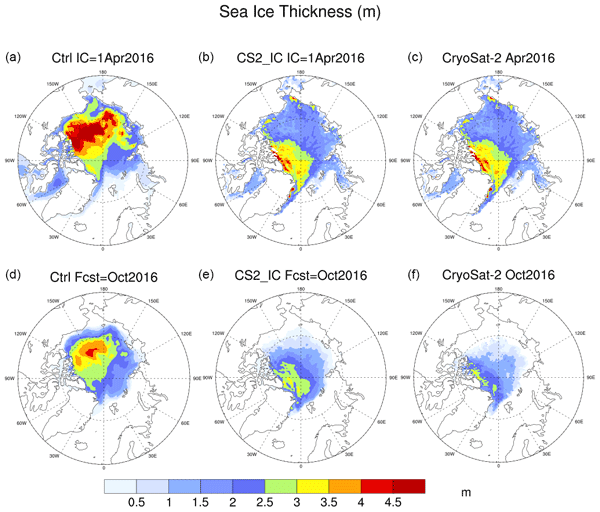
The study brings to light the suitability of CICE for seasonal prediction being contingent on several factors, such as initial conditions like sea ice coverage and thickness, as well as atmospheric and oceanic conditions including oceanic currents and sea surface temperature. We show there is potential to improve seasonal forecasting by using a more reliable sea ice thickness initialization. Thus, data assimilation of sea ice thickness is highly relevant for advancing seasonal prediction skills.
Mckenzie J. Dice, John J. Cassano, and Gina C. Jozef
Weather Clim. Dynam., 5, 369–394, https://doi.org/10.5194/wcd-5-369-2024, https://doi.org/10.5194/wcd-5-369-2024, 2024
Short summary
Short summary
This study aims to identify the main reasonings for changes in boundary layer stability, namely changes in radiative forcing or mechanical mixing (wind shear). Across the continent of Antarctica, varying stability in the boundary layer is affected by many different forces, and this study seeks to characterize the main forcing mechanisms for these variations in stability across Antarctica, annually and seasonally.
Michael Lonardi, Elisa F. Akansu, André Ehrlich, Mauro Mazzola, Christian Pilz, Matthew D. Shupe, Holger Siebert, and Manfred Wendisch
Atmos. Chem. Phys., 24, 1961–1978, https://doi.org/10.5194/acp-24-1961-2024, https://doi.org/10.5194/acp-24-1961-2024, 2024
Short summary
Short summary
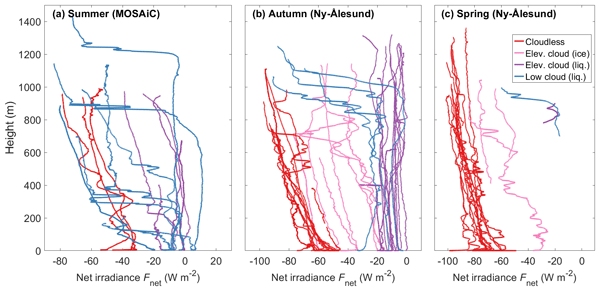
Profiles of thermal-infrared irradiance were measured at two Arctic sites. The presence or lack of clouds influences the vertical structure of these observations. In particular, the cloud top region is a source of radiative energy that can promote cooling and mixing in the cloud layer. Simulations are used to further characterize how the amount of water in the cloud modifies this forcing. A case study additionally showcases the evolution of the radiation profiles in a dynamic atmosphere.
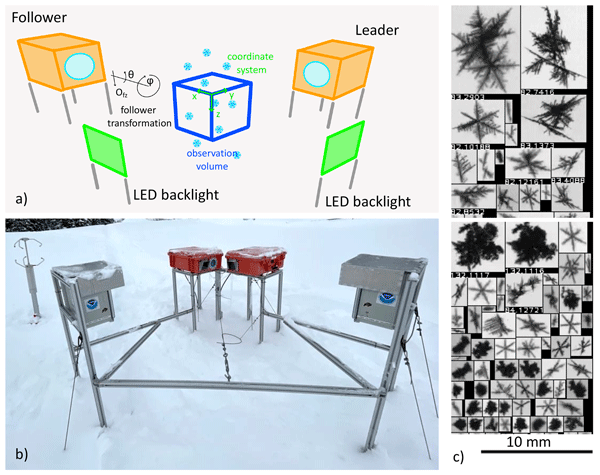
Maximilian Maahn, Dmitri Moisseev, Isabelle Steinke, Nina Maherndl, and Matthew D. Shupe
Atmos. Meas. Tech., 17, 899–919, https://doi.org/10.5194/amt-17-899-2024, https://doi.org/10.5194/amt-17-899-2024, 2024
Short summary
Short summary
The open-source Video In Situ Snowfall Sensor (VISSS) is a novel instrument for characterizing particle shape, size, and sedimentation velocity in snowfall. It combines a large observation volume with relatively high resolution and a design that limits wind perturbations. The open-source nature of the VISSS hardware and software invites the community to contribute to the development of the instrument, which has many potential applications in atmospheric science and beyond.
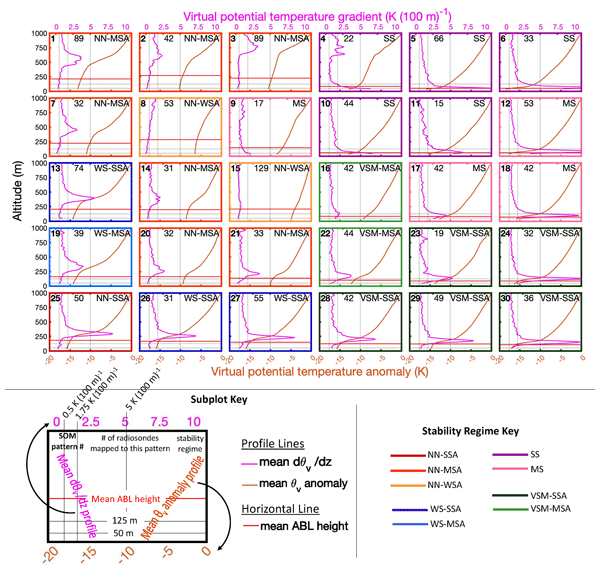
Gina C. Jozef, John J. Cassano, Sandro Dahlke, Mckenzie Dice, Christopher J. Cox, and Gijs de Boer
Atmos. Chem. Phys., 24, 1429–1450, https://doi.org/10.5194/acp-24-1429-2024, https://doi.org/10.5194/acp-24-1429-2024, 2024
Short summary
Short summary
Observations collected during MOSAiC were used to identify the range in vertical structure and stability of the central Arctic lower atmosphere through a self-organizing map analysis. Characteristics of wind features (such as low-level jets) and atmospheric moisture features (such as clouds) were analyzed in the context of the varying vertical structure and stability. Thus, the results of this paper give an overview of the thermodynamic and kinematic features of the central Arctic atmosphere.
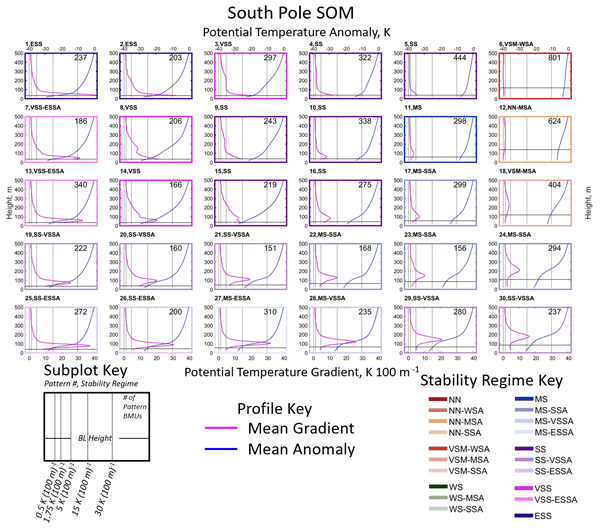
Mckenzie J. Dice, John J. Cassano, Gina C. Jozef, and Mark Seefeldt
Weather Clim. Dynam., 4, 1045–1069, https://doi.org/10.5194/wcd-4-1045-2023, https://doi.org/10.5194/wcd-4-1045-2023, 2023
Short summary
Short summary
This study documents boundary layer stability profiles, from the surface to 500 m above ground level, present in radiosonde observations across the Antarctic continent. A boundary layer stability definition method is developed and applied to the radiosonde observations to determine the frequency and seasonality of stability regimes. It is found that, in the continental interior, strong stability is dominant throughout most of the year, while stability is more varied at coastal locations.
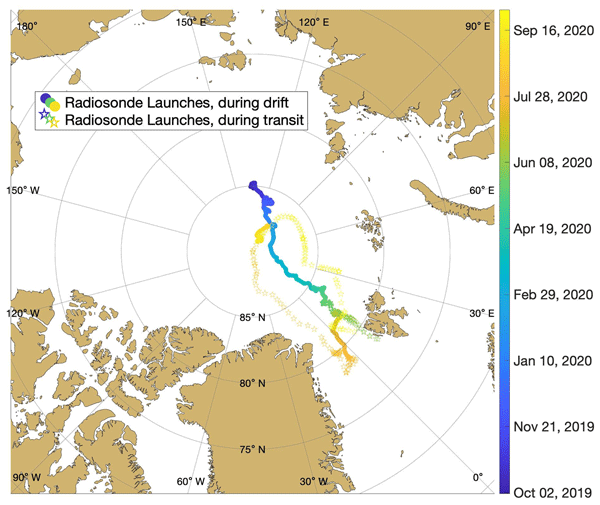
Gina C. Jozef, Robert Klingel, John J. Cassano, Björn Maronga, Gijs de Boer, Sandro Dahlke, and Christopher J. Cox
Earth Syst. Sci. Data, 15, 4983–4995, https://doi.org/10.5194/essd-15-4983-2023, https://doi.org/10.5194/essd-15-4983-2023, 2023
Short summary
Short summary
Observations from the MOSAiC expedition relating to lower-atmospheric temperature, wind, stability, moisture, and surface radiation budget from radiosondes, a meteorological tower, radiation station, and ceilometer were compiled to create a dataset which describes the thermodynamic and kinematic state of the central Arctic lower atmosphere between October 2019 and September 2020. This paper describes the methods used to develop this lower-atmospheric properties dataset.
Gina C. Jozef, John J. Cassano, Sandro Dahlke, Mckenzie Dice, Christopher J. Cox, and Gijs de Boer
Atmos. Chem. Phys., 23, 13087–13106, https://doi.org/10.5194/acp-23-13087-2023, https://doi.org/10.5194/acp-23-13087-2023, 2023
Short summary
Short summary
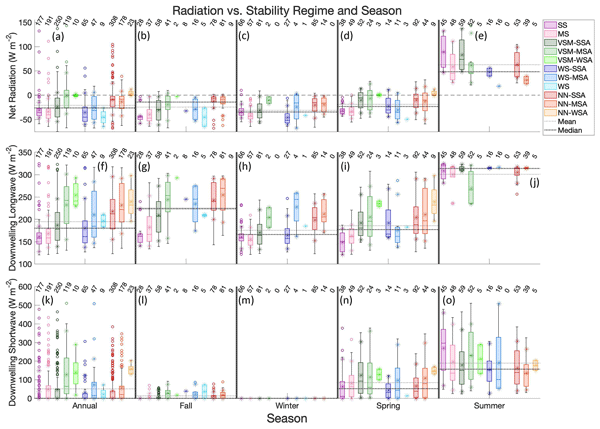
Observations from the Multidisciplinary drifting Observatory for the Study of Arctic Climate (MOSAiC) were used to determine the frequency of occurrence of various central Arctic lower atmospheric stability regimes and how the stability regimes transition between each other. Wind and radiation observations were analyzed in the context of stability regime and season to reveal the relationships between Arctic atmospheric stability and mechanically and radiatively driven turbulent forcings.
Olivia Linke, Johannes Quaas, Finja Baumer, Sebastian Becker, Jan Chylik, Sandro Dahlke, André Ehrlich, Dörthe Handorf, Christoph Jacobi, Heike Kalesse-Los, Luca Lelli, Sina Mehrdad, Roel A. J. Neggers, Johannes Riebold, Pablo Saavedra Garfias, Niklas Schnierstein, Matthew D. Shupe, Chris Smith, Gunnar Spreen, Baptiste Verneuil, Kameswara S. Vinjamuri, Marco Vountas, and Manfred Wendisch
Atmos. Chem. Phys., 23, 9963–9992, https://doi.org/10.5194/acp-23-9963-2023, https://doi.org/10.5194/acp-23-9963-2023, 2023
Short summary
Short summary
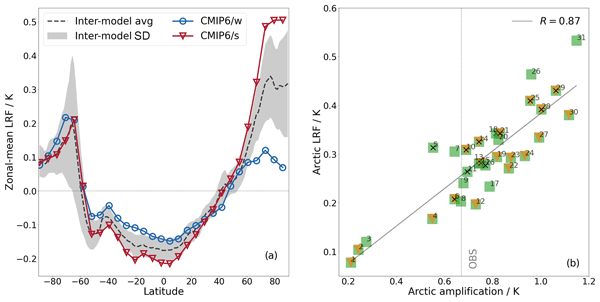
Lapse rate feedback (LRF) is a major driver of the Arctic amplification (AA) of climate change. It arises because the warming is stronger at the surface than aloft. Several processes can affect the LRF in the Arctic, such as the omnipresent temperature inversion. Here, we compare multimodel climate simulations to Arctic-based observations from a large research consortium to broaden our understanding of these processes, find synergy among them, and constrain the Arctic LRF and AA.
Manfred Wendisch, Johannes Stapf, Sebastian Becker, André Ehrlich, Evelyn Jäkel, Marcus Klingebiel, Christof Lüpkes, Michael Schäfer, and Matthew D. Shupe
Atmos. Chem. Phys., 23, 9647–9667, https://doi.org/10.5194/acp-23-9647-2023, https://doi.org/10.5194/acp-23-9647-2023, 2023
Short summary
Short summary
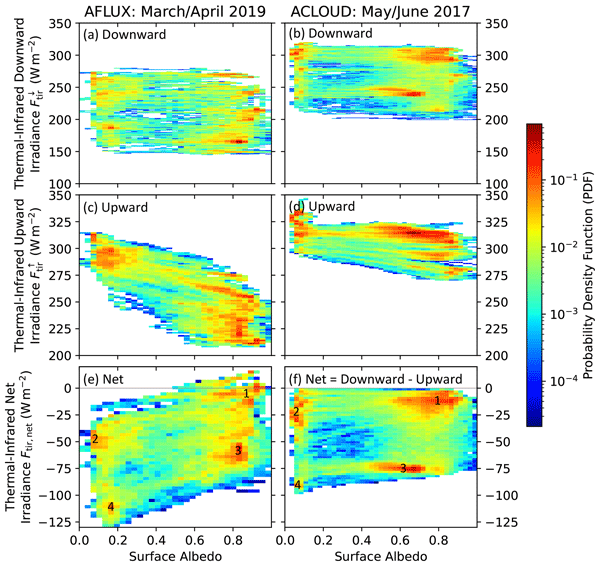
Atmospheric radiation measurements have been conducted during two field campaigns using research aircraft. The data are analyzed to see if the near-surface air in the Arctic is warmed or cooled if warm–humid air masses from the south enter the Arctic or cold–dry air moves from the north from the Arctic to mid-latitude areas. It is important to study these processes and to check if climate models represent them well. Otherwise it is not possible to reliably forecast the future Arctic climate.
Shijie Peng, Qinghua Yang, Matthew D. Shupe, Xingya Xi, Bo Han, Dake Chen, Sandro Dahlke, and Changwei Liu
Atmos. Chem. Phys., 23, 8683–8703, https://doi.org/10.5194/acp-23-8683-2023, https://doi.org/10.5194/acp-23-8683-2023, 2023
Short summary
Short summary
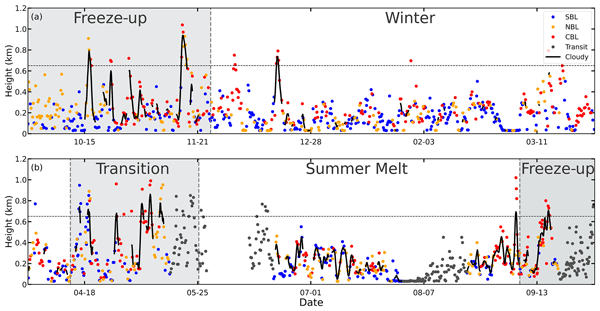
Due to a lack of observations, the structure of the Arctic atmospheric boundary layer (ABL) remains to be further explored. By analyzing a year-round radiosonde dataset collected over the Arctic sea-ice surface, we found the annual cycle of the ABL height (ABLH) is primarily controlled by the evolution of ABL thermal structure, and the surface conditions also show a high correlation with ABLH variation. In addition, the Arctic ABLH is found to be decreased in summer compared with 20 years ago.
Kameswara S. Vinjamuri, Marco Vountas, Luca Lelli, Martin Stengel, Matthew D. Shupe, Kerstin Ebell, and John P. Burrows
Atmos. Meas. Tech., 16, 2903–2918, https://doi.org/10.5194/amt-16-2903-2023, https://doi.org/10.5194/amt-16-2903-2023, 2023
Short summary
Short summary
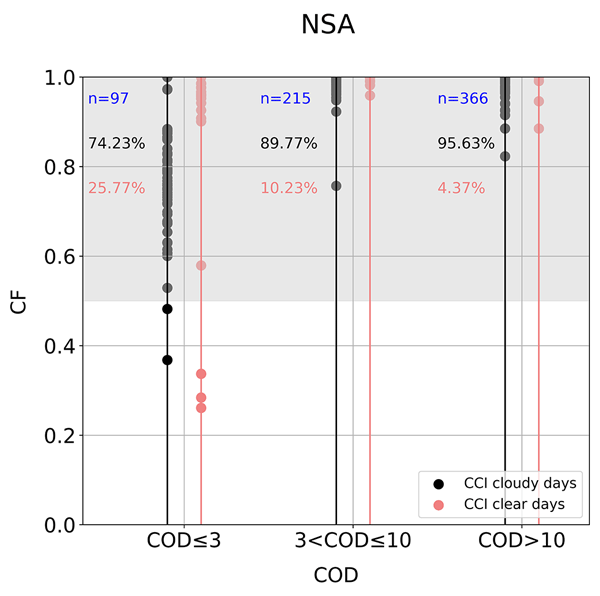
Clouds play an important role in Arctic amplification. Cloud data from ground-based sites are valuable but cannot represent the whole Arctic. Therefore the use of satellite products is a measure to cover the entire Arctic. However, the quality of such cloud measurements from space is not well known. The paper discusses the differences and commonalities between satellite and ground-based measurements. We conclude that the satellite dataset, with a few exceptions, can be used in the Arctic.

Ulrike Egerer, John J. Cassano, Matthew D. Shupe, Gijs de Boer, Dale Lawrence, Abhiram Doddi, Holger Siebert, Gina Jozef, Radiance Calmer, Jonathan Hamilton, Christian Pilz, and Michael Lonardi
Atmos. Meas. Tech., 16, 2297–2317, https://doi.org/10.5194/amt-16-2297-2023, https://doi.org/10.5194/amt-16-2297-2023, 2023
Short summary
Short summary
This paper describes how measurements from a small uncrewed aircraft system can be used to estimate the vertical turbulent heat energy exchange between different layers in the atmosphere. This is particularly important for the atmosphere in the Arctic, as turbulent exchange in this region is often suppressed but is still important to understand how the atmosphere interacts with sea ice. We present three case studies from the MOSAiC field campaign in Arctic sea ice in 2020.
Felix Pithan, Marylou Athanase, Sandro Dahlke, Antonio Sánchez-Benítez, Matthew D. Shupe, Anne Sledd, Jan Streffing, Gunilla Svensson, and Thomas Jung
Geosci. Model Dev., 16, 1857–1873, https://doi.org/10.5194/gmd-16-1857-2023, https://doi.org/10.5194/gmd-16-1857-2023, 2023
Short summary
Short summary
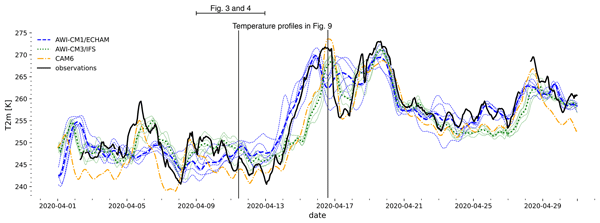
Evaluating climate models usually requires long observational time series, but we present a method that also works for short field campaigns. We compare climate model output to observations from the MOSAiC expedition in the central Arctic Ocean. All models show how the arrival of a warm air mass warms the Arctic in April 2020, but two models do not show the response of snow temperature to the diurnal cycle. One model has too little liquid water and too much ice in clouds during cold days.
Elina Valkonen, John Cassano, Elizabeth Cassano, and Mark Seefeldt
Weather Clim. Dynam. Discuss., https://doi.org/10.5194/wcd-2023-2, https://doi.org/10.5194/wcd-2023-2, 2023
Publication in WCD not foreseen
Short summary
Short summary
Arctic sea ice is melting fast. This rapid change in the Arctic climate system can also affect the storms in the region. The strong connection between Arctic storms and sea ice makes it an important research subject in warming climate. In this study we compared the results of multiple climate models and ERA5 reanalysis data to each other, with a focus on Arctic storms and declining sea ice.
Younjoo J. Lee, Wieslaw Maslowski, John J. Cassano, Jaclyn Clement Kinney, Anthony P. Craig, Samy Kamal, Robert Osinski, Mark W. Seefeldt, Julienne Stroeve, and Hailong Wang
The Cryosphere, 17, 233–253, https://doi.org/10.5194/tc-17-233-2023, https://doi.org/10.5194/tc-17-233-2023, 2023
Short summary
Short summary
During 1979–2020, four winter polynyas occurred in December 1986 and February 2011, 2017, and 2018 north of Greenland. Instead of ice melting due to the anomalous warm air intrusion, the extreme wind forcing resulted in greater ice transport offshore. Based on the two ensemble runs, representing a 1980s thicker ice vs. a 2010s thinner ice, a dominant cause of these winter polynyas stems from internal variability of atmospheric forcing rather than from the forced response to a warming climate.
Shan Sun and Amy Solomon
EGUsphere, https://doi.org/10.5194/egusphere-2022-1368, https://doi.org/10.5194/egusphere-2022-1368, 2022
Preprint archived
Short summary
Short summary
We evaluate sea ice prediction skill at seasonal time scales using the CICE sea ice model. It confirms the importance of the accuracy in ice thickness initialization for seasonal sea ice prediction. It suggests that there exists a potentially important source of additional skill in seasonal forecasting, namely, a more reliable sea ice thickness initialization. Hence, assimilation of sea ice thickness appears to be highly relevant for advancing seasonal prediction skill.
Océane Hames, Mahdi Jafari, David Nicholas Wagner, Ian Raphael, David Clemens-Sewall, Chris Polashenski, Matthew D. Shupe, Martin Schneebeli, and Michael Lehning
Geosci. Model Dev., 15, 6429–6449, https://doi.org/10.5194/gmd-15-6429-2022, https://doi.org/10.5194/gmd-15-6429-2022, 2022
Short summary
Short summary
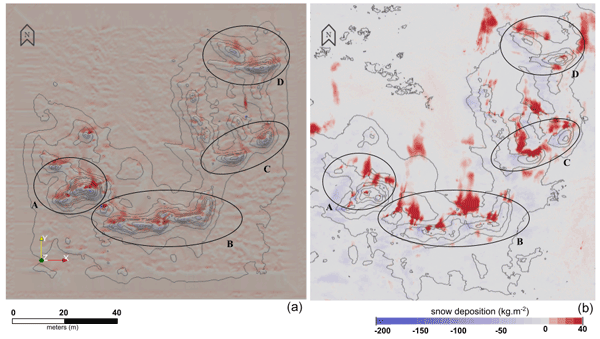
This paper presents an Eulerian–Lagrangian snow transport model implemented in the fluid dynamics software OpenFOAM, which we call snowBedFoam 1.0. We apply this model to reproduce snow deposition on a piece of ridged Arctic sea ice, which was produced during the MOSAiC expedition through scan measurements. The model appears to successfully reproduce the enhanced snow accumulation and deposition patterns, although some quantitative uncertainties were shown.
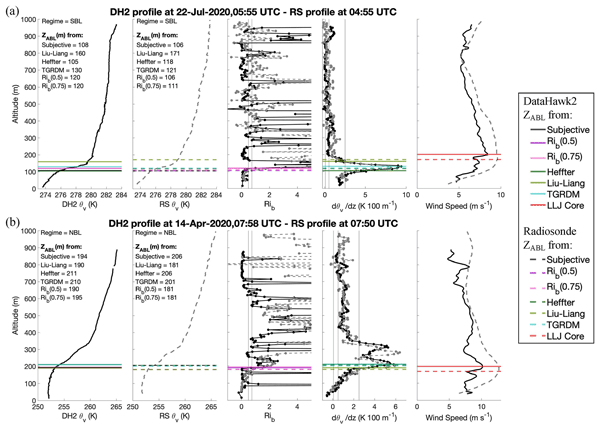
Gina Jozef, John Cassano, Sandro Dahlke, and Gijs de Boer
Atmos. Meas. Tech., 15, 4001–4022, https://doi.org/10.5194/amt-15-4001-2022, https://doi.org/10.5194/amt-15-4001-2022, 2022
Short summary
Short summary
During the MOSAiC expedition, meteorological conditions over the lowest 1 km of the atmosphere were sampled with the DataHawk2 uncrewed aircraft system. These data were used to identify the best method for atmospheric boundary layer height detection by comparing visually identified subjective boundary layer height to that identified by several objective automated detection methods. The results show a bulk Richardson number-based approach gives the best estimate of boundary layer height.
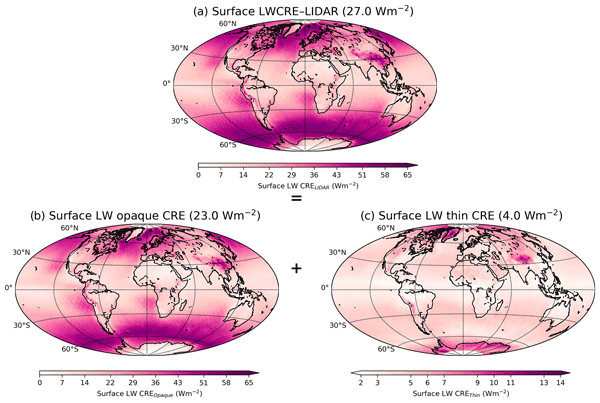
Assia Arouf, Hélène Chepfer, Thibault Vaillant de Guélis, Marjolaine Chiriaco, Matthew D. Shupe, Rodrigo Guzman, Artem Feofilov, Patrick Raberanto, Tristan S. L'Ecuyer, Seiji Kato, and Michael R. Gallagher
Atmos. Meas. Tech., 15, 3893–3923, https://doi.org/10.5194/amt-15-3893-2022, https://doi.org/10.5194/amt-15-3893-2022, 2022
Short summary
Short summary
We proposed new estimates of the surface longwave (LW) cloud radiative effect (CRE) derived from observations collected by a space-based lidar on board the CALIPSO satellite and radiative transfer computations. Our estimate appropriately captures the surface LW CRE annual variability over bright polar surfaces, and it provides a dataset more than 13 years long.
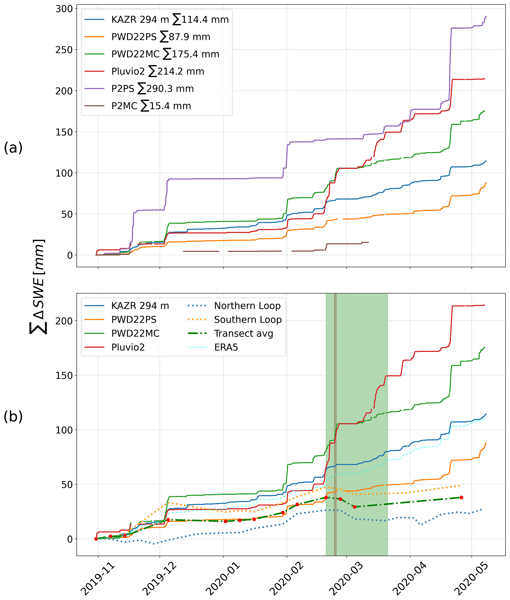
David N. Wagner, Matthew D. Shupe, Christopher Cox, Ola G. Persson, Taneil Uttal, Markus M. Frey, Amélie Kirchgaessner, Martin Schneebeli, Matthias Jaggi, Amy R. Macfarlane, Polona Itkin, Stefanie Arndt, Stefan Hendricks, Daniela Krampe, Marcel Nicolaus, Robert Ricker, Julia Regnery, Nikolai Kolabutin, Egor Shimanshuck, Marc Oggier, Ian Raphael, Julienne Stroeve, and Michael Lehning
The Cryosphere, 16, 2373–2402, https://doi.org/10.5194/tc-16-2373-2022, https://doi.org/10.5194/tc-16-2373-2022, 2022
Short summary
Short summary
Based on measurements of the snow cover over sea ice and atmospheric measurements, we estimate snowfall and snow accumulation for the MOSAiC ice floe, between November 2019 and May 2020. For this period, we estimate 98–114 mm of precipitation. We suggest that about 34 mm of snow water equivalent accumulated until the end of April 2020 and that at least about 50 % of the precipitated snow was eroded or sublimated. Further, we suggest explanations for potential snowfall overestimation.
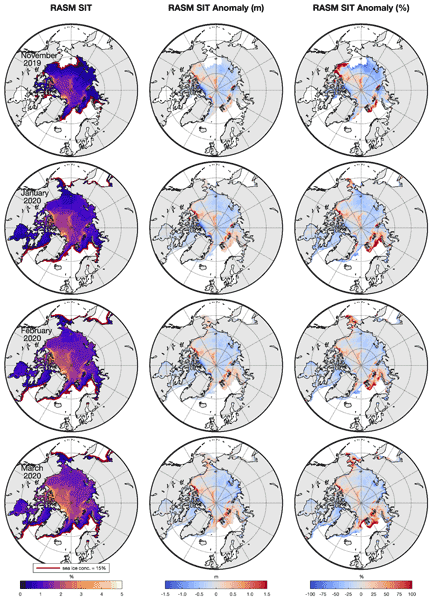
Klaus Dethloff, Wieslaw Maslowski, Stefan Hendricks, Younjoo J. Lee, Helge F. Goessling, Thomas Krumpen, Christian Haas, Dörthe Handorf, Robert Ricker, Vladimir Bessonov, John J. Cassano, Jaclyn Clement Kinney, Robert Osinski, Markus Rex, Annette Rinke, Julia Sokolova, and Anja Sommerfeld
The Cryosphere, 16, 981–1005, https://doi.org/10.5194/tc-16-981-2022, https://doi.org/10.5194/tc-16-981-2022, 2022
Short summary
Short summary
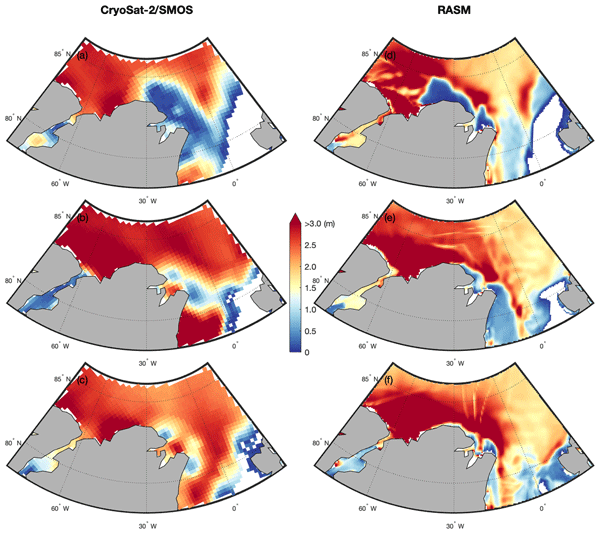
Sea ice thickness anomalies during the MOSAiC (Multidisciplinary drifting Observatory for the Study of Arctic Climate) winter in January, February and March 2020 were simulated with the coupled Regional Arctic climate System Model (RASM) and compared with CryoSat-2/SMOS satellite data. Hindcast and ensemble simulations indicate that the sea ice anomalies are driven by nonlinear interactions between ice growth processes and wind-driven sea-ice transports, with dynamics playing a dominant role.
Michael R. Gallagher, Matthew D. Shupe, Hélène Chepfer, and Tristan L'Ecuyer
The Cryosphere, 16, 435–450, https://doi.org/10.5194/tc-16-435-2022, https://doi.org/10.5194/tc-16-435-2022, 2022
Short summary
Short summary
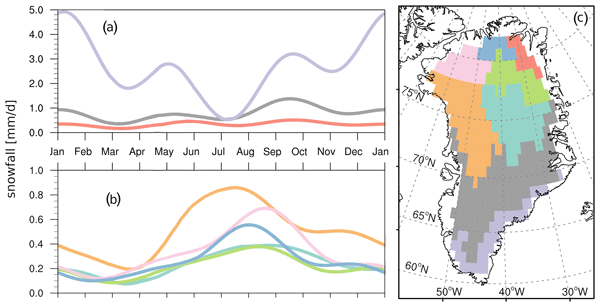
By using direct observations of snowfall and mass changes, the variability of daily snowfall mass input to the Greenland ice sheet is quantified for the first time. With new methods we conclude that cyclones west of Greenland in summer contribute the most snowfall, with 1.66 Gt per occurrence. These cyclones are contextualized in the broader Greenland climate, and snowfall is validated against mass changes to verify the results. Snowfall and mass change observations are shown to agree well.
Shan Sun and Amy Solomon
The Cryosphere Discuss., https://doi.org/10.5194/tc-2021-353, https://doi.org/10.5194/tc-2021-353, 2021
Preprint withdrawn
Short summary
Short summary
We validate the standalone CICE sea ice model for application in the seasonal forecast, before it is used in the coupled atmosphere-ocean-ice model. We found the model did a better job in forecasting Arctic sea ice extent in the warm season than in the cold season at the seasonal time scale. A higher forecast skill is achieved when the model is initialized with ice thickness from satellite observations, indicating the importance of the ice thickness initialization.
Cited articles
Achtert, P., Seelig, T., Wallentin, G., Ickes, L., Shupe, M. D., Hoose, C., and Tesche, M.: Occurrence of seeding multi-layer clouds in the Arctic from ground-based observations, Atmos. Chem. Phys., 26, 3049–3068, https://doi.org/10.5194/acp-26-3049-2026, 2026. a
Ali, S. M. and Pithan, F.: Following moist intrusions into the Arctic using SHEBA observations in a Lagrangian perspective, Q. J. Roy. Meteor. Soc., 146, 3522–3533, https://doi.org/10.1002/qj.3859, 2020. a
Bergeron, T.: Proces Verbaux de l'Association de Météorologie, International Union of Geodesy and Geophysics, 156–178, 1935. a
Bertossa, C. and L’Ecuyer, T.: Two Ubiquitous Radiative States Observed across the High Latitudes, J. Climate, 37, 2585–2610, https://doi.org/10.1175/JCLI-D-23-0553.1, 2024. a
Bertrand, L., Kay, J. E., and de Boer, G.: Increasing wintertime cloud opacity increases surface longwave radiation at a long-term Arctic observatory, Nat. Commun., 16, 9135, https://doi.org/10.1038/s41467-025-64441-8, 2025. a
Brodzik, M. J., Billingsley, B., Haran, T., Raup, B., and Savoie, M. H.: EASE-Grid 2.0: Incremental but Significant Improvements for Earth-Gridded Data Sets, ISPRS Int. J. Geo-Inf., 1, 32–45, https://doi.org/10.3390/ijgi1010032, 2012. a
C3S: ERA5 hourly data on single levels from 1940 to present, Copernicus Climate Change Service (C3S) Climate Data Store (CDS) [data set], https://doi.org/10.24381/CDS.ADBB2D47, 2018. a
Cadeddu, M. P., Turner, D. D., and Liljegren, J. C.: A Neural Network for Real-Time Retrievals of PWV and LWP From Arctic Millimeter-Wave Ground-Based Observations, IEEE T. Geosci. Remote, 47, 1887–1900, https://doi.org/10.1109/TGRS.2009.2013205, 2009. a
Cadeddu, M. P., Liljegren, J. C., and Turner, D. D.: The Atmospheric radiation measurement (ARM) program network of microwave radiometers: instrumentation, data, and retrievals, Atmos. Meas. Tech., 6, 2359–2372, https://doi.org/10.5194/amt-6-2359-2013, 2013. a
Cai, Z., You, Q., Wu, F., Chen, H. W., Chen, D., and Cohen, J.: Arctic Warming Revealed by Multiple CMIP6 Models: Evaluation of Historical Simulations and Quantification of Future Projection Uncertainties, J. Climate, 34, 4871–4892, https://doi.org/10.1175/JCLI-D-20-0791.1, 2021. a
Cassano, E. N., Lynch, A. H., Cassano, J. J., and Koslow, M. R.: Classification of synoptic patterns in the western Arctic associated with extreme events at Barrow, Alaska, USA, Clim. Res., 30, 83–97, https://doi.org/10.3354/cr030083, 2006. a
Cassano, E. N., Glisan, J. M., Cassano, J. J., Jr, W. J. G., and Seefeldt, M. W.: Self-organizing map analysis of widespread temperature extremes in Alaska and Canada, Clim. Res., 62, 199–218, https://doi.org/10.3354/cr01274, 2015. a, b, c, d
Cesana, G., Kay, J. E., Chepfer, H., English, J. M., and de Boer, G.: Ubiquitous low-level liquid-containing Arctic clouds: New observations and climate model constraints from CALIPSO-GOCCP, Geophys. Res. Lett., 39, https://doi.org/10.1029/2012GL053385, 2012. a, b
Cox, C. J., Walden, V. P., and Rowe, P. M.: A comparison of the atmospheric conditions at Eureka, Canada, and Barrow, Alaska (2006–2008), J. Geophys. Res.-Atmos., 117, https://doi.org/10.1029/2011JD017164, 2012. a
Creamean, J. M., Barry, K., Hill, T. C. J., Hume, C., DeMott, P. J., Shupe, M. D., Dahlke, S., Willmes, S., Schmale, J., Beck, I., Hoppe, C. J. M., Fong, A., Chamberlain, E., Bowman, J., Scharien, R., and Persson, O.: Annual cycle observations of aerosols capable of ice formation in central Arctic clouds, Nat. Commun., 13, 3537, https://doi.org/10.1038/s41467-022-31182-x, 2022. a, b
Cronin, T. W. and Tziperman, E.: Low clouds suppress Arctic air formation and amplify high-latitude continental winter warming, P. Natl. Acad. Sci. USA, 112, 11490–11495, https://doi.org/10.1073/pnas.1510937112, 2015. a
Curry, J. A., Ebert, E. E., and Herman, G. F.: Mean and turbulence structure of the summertime Arctic cloudy boundary layer, Q. J. Roy. Meteor. Soc., 114, 715–746, https://doi.org/10.1002/qj.49711448109, 1988. a
Davy, R. and Outten, S.: The Arctic Surface Climate in CMIP6: Status and Developments since CMIP5, J. Climate, 33, 8047–8068, https://doi.org/10.1175/JCLI-D-19-0990.1, 2020. a
de Boer, G., Morrison, H., Shupe, M. D., and Hildner, R.: Evidence of liquid dependent ice nucleation in high-latitude stratiform clouds from surface remote sensors, Geophys. Res. Lett., 38, https://doi.org/10.1029/2010GL046016, 2011. a
DeMott, P. J., Prenni, A. J., Liu, X., Kreidenweis, S. M., Petters, M. D., Twohy, C. H., Richardson, M. S., Eidhammer, T., and Rogers, D. C.: Predicting global atmospheric ice nuclei distributions and their impacts on climate, P. Natl. Acad. Sci. USA, 107, 11217–11222, https://doi.org/10.1073/pnas.0910818107, 2010. a
DeMott, P. J., Hill, T. C. J., McCluskey, C. S., Prather, K. A., Collins, D. B., Sullivan, R. C., Ruppel, M. J., Mason, R. H., Irish, V. E., Lee, T., Hwang, C. Y., Rhee, T. S., Snider, J. R., McMeeking, G. R., Dhaniyala, S., Lewis, E. R., Wentzell, J. J. B., Abbatt, J., Lee, C., Sultana, C. M., Ault, A. P., Axson, J. L., Diaz Martinez, M., Venero, I., Santos-Figueroa, G., Stokes, M. D., Deane, G. B., Mayol-Bracero, O. L., Grassian, V. H., Bertram, T. H., Bertram, A. K., Moffett, B. F., and Franc, G. D.: Sea spray aerosol as a unique source of ice nucleating particles, P. Natl. Acad. Sci. USA, 113, 5797–5803, https://doi.org/10.1073/pnas.1514034112, 2016. a
Doyle, J. G., Lesins, G., Thackray, C. P., Perro, C., Nott, G. J., Duck, T. J., Damoah, R., and Drummond, J. R.: Water vapor intrusions into the High Arctic during winter, Geophys. Res. Lett., 38, https://doi.org/10.1029/2011GL047493, 2011. a
Eytan, E., Koren, I., Altaratz, O., Pinsky, M., and Khain, A.: Revisiting adiabatic fraction estimations in cumulus clouds: high-resolution simulations with a passive tracer, Atmos. Chem. Phys., 21, 16203–16217, https://doi.org/10.5194/acp-21-16203-2021, 2021. a, b
Field, P. R., Lawson, R. P., Brown, P. R. A., Lloyd, G., Westbrook, C., Moisseev, D., Miltenberger, A., Nenes, A., Blyth, A., Choularton, T., Connolly, P., Buehl, J., Crosier, J., Cui, Z., Dearden, C., DeMott, P., Flossmann, A., Heymsfield, A., Huang, Y., Kalesse, H., Kanji, Z. A., Korolev, A., Kirchgaessner, A., Lasher-Trapp, S., Leisner, T., McFarquhar, G., Phillips, V., Stith, J., and Sullivan, S.: Secondary Ice Production: Current State of the Science and Recommendations for the Future, Meteorological Monographs, 58, 7.1–7.20, https://doi.org/10.1175/AMSMONOGRAPHS-D-16-0014.1, 2017. a, b
Findeisen, W.: Kolloid-meteorologische Vorgänge bei Niederschlagsbildung, Meteor. Z., 55, 121–133, 1938. a
Francis, J. A. and Hunter, E.: New insight into the disappearing Arctic sea ice, Eos Trans. AGU, 87, 509–511, https://doi.org/10.1029/2006EO460001, 2006. a
Gallagher, M. R., Shupe, M. D., and Miller, N. B.: Impact of Atmospheric Circulation on Temperature, Clouds, and Radiation at Summit Station, Greenland, with Self-Organizing Maps, J. Climate, 31, 8895–8915, https://doi.org/10.1175/JCLI-D-17-0893.1, 2018. a
Gjelsvik, A. B., David, R. O., Carlsen, T., Hellmuth, F., Hofer, S., McGraw, Z., Sodemann, H., and Storelvmo, T.: Using a region-specific ice-nucleating particle parameterization improves the representation of Arctic clouds in a global climate model, Atmos. Chem. Phys., 25, 1617–1637, https://doi.org/10.5194/acp-25-1617-2025, 2025. a
Graham, R. M., Rinke, A., Cohen, L., Hudson, S. R., Walden, V. P., Granskog, M. A., Dorn, W., Kayser, M., and Maturilli, M.: A comparison of the two Arctic atmospheric winter states observed during N-ICE2015 and SHEBA, J. Geophys. Res.-Atmos., 122, 5716–5737, https://doi.org/10.1002/2016JD025475, 2017. a, b, c
Hartig, K.: LWP_Insensitive_Figures, Zenodo [code and data set], https://doi.org/10.5281/zenodo.22055290, 2026. a
Herman, G. and Goody, R.: Formation and Persistence of Summertime Arctic Stratus Clouds, J. Atmos. Sci., 33, 1537–1553, https://doi.org/10.1175/1520-0469(1976)033<1537:FAPOSA>2.0.CO;2, 1976. a
Hersbach, H., Bell, B., Berrisford, P., Hirahara, S., Horányi, A., Muñoz-Sabater, J., Nicolas, J., Peubey, C., Radu, R., Schepers, D., Simmons, A., Soci, C., Abdalla, S., Abellan, X., Balsamo, G., Bechtold, P., Biavati, G., Bidlot, J., Bonavita, M., De Chiara, G., Dahlgren, P., Dee, D., Diamantakis, M., Dragani, R., Flemming, J., Forbes, R., Fuentes, M., Geer, A., Haimberger, L., Healy, S., Hogan, R. J., Hólm, E., Janisková, M., Keeley, S., Laloyaux, P., Lopez, P., Lupu, C., Radnoti, G., de Rosnay, P., Rozum, I., Vamborg, F., Villaume, S., and Thépaut, J.-N.: The ERA5 global reanalysis, Q. J. Roy. Meteor. Soc., 146, 1999–2049, https://doi.org/10.1002/qj.3803, 2020. a
Hewitson, B. C. and Crane, R. G.: Self-organizing maps: applications to synoptic climatology, Clim. Res., 22, 13–26, https://doi.org/10.3354/cr022013, 2002. a, b
Johnson, K., Toto, T., Jensen, M., and Giangrande, S.: KAZR Corrected Data (KAZRCORGE), 2011-11-11 to 2014-02-07, North Slope Alaska (NSA), Central Facility, Barrow AK (C1), ARM [data set], https://doi.org/10.5439/1228770, 2011. a
Johnson, K., Toto, T., and Giangrande, S.: KAZR Corrected Data (KAZRCORGE), 2014-02-08 to 2019-10-27, North Slope Alaska (NSA), Central Facility, Barrow AK (C1), ARM [data set], https://doi.org/10.5439/1389054, 2014. a
Keeler, E., Burk, K., and Kyrouac, J.: Balloon-Borne Sounding System (SONDEWNPN), 2011-01-01 to 2023-12-31, North Slope Alaska (NSA), Central Facility, Barrow AK (C1), ARM [data set], https://doi.org/10.5439/1595321, 2002. a
Kirbus, B., Tiedeck, S., Camplani, A., Chylik, J., Crewell, S., Dahlke, S., Ebell, K., Gorodetskaya, I., Griesche, H., Handorf, D., Höschel, I., Lauer, M., Neggers, R., Rückert, J., Shupe, M. D., Spreen, G., Walbröl, A., Wendisch, M., and Rinke, A.: Surface impacts and associated mechanisms of a moisture intrusion into the Arctic observed in mid-April 2020 during MOSAiC, Frontiers in Earth Science, 11, https://doi.org/10.3389/feart.2023.1147848, 2023. a
Kohonen, T.: The self-organizing map, P. IEEE, 78, 1464–1480, https://doi.org/10.1109/5.58325, 1990. a
Korolev, A. and Isaac, G.: Phase transformation of mixed‐phase clouds, Q. J. Roy. Meteor. Soc., 129, 19–38, https://doi.org/10.1256/qj.01.203, 2003. a
Korolev, A. and Leisner, T.: Review of experimental studies of secondary ice production, Atmos. Chem. Phys., 20, 11767–11797, https://doi.org/10.5194/acp-20-11767-2020, 2020. a, b, c
Korolev, A., McFarquhar, G., Field, P. R., Franklin, C., Lawson, P., Wang, Z., Williams, E., Abel, S. J., Axisa, D., Borrmann, S., Crosier, J., Fugal, J., Krämer, M., Lohmann, U., Schlenczek, O., Schnaiter, M., and Wendisch, M.: Mixed-Phase Clouds: Progress and Challenges, Meteorological Monographs, 58, 5.1–5.50, https://doi.org/10.1175/AMSMONOGRAPHS-D-17-0001.1, 2017. a
Lauber, A., Kiselev, A., Pander, T., Handmann, P., and Leisner, T.: Secondary Ice Formation during Freezing of Levitated Droplets, J. Atmos. Sci., 75, 2815–2826, https://doi.org/10.1175/JAS-D-18-0052.1, 2018. a
Lin, B., Minnis, P., and Fan, A.: Cloud liquid water path variations with temperature observed during the Surface Heat Budget of the Arctic Ocean (SHEBA) experiment, J. Geophys. Res.-Atmos., 108, https://doi.org/10.1029/2002JD002851, 2003. a
Liu, Y., Key, J. R., Vavrus, S., and Woods, C.: Time Evolution of the Cloud Response to Moisture Intrusions into the Arctic during Winter, J. Climate, 31, 9389–9405, https://doi.org/10.1175/JCLI-D-17-0896.1, 2018. a, b
Maahn, M., Turner, D. D., Löhnert, U., Posselt, D. J., Ebell, K., Mace, G. G., and Comstock, J. M.: Optimal Estimation Retrievals and Their Uncertainties: What Every Atmospheric Scientist Should Know, Bulletin of the American Meteor. Soc., 101, E1512–E1523, https://doi.org/10.1175/BAMS-D-19-0027.1, 2020. a
Maksimovich, E. and Vihma, T.: The effect of surface heat fluxes on interannual variability in the spring onset of snow melt in the central Arctic Ocean, J. Geophys. Res.-Oceans, 117, 2011JC007220, https://doi.org/10.1029/2011JC007220, 2012. a
Matrosov, S. Y.: Retrievals of vertical profiles of ice cloud microphysics from radar and IR measurements using tuned regressions between reflectivity and cloud parameters, J. Geophys. Res.-Atmos., 104, 16741–16753, https://doi.org/10.1029/1999JD900244, 1999. a
Medeiros, B., Deser, C., Tomas, R. A., and Kay, J. E.: Arctic Inversion Strength in Climate Models, J. Climate, 24, 4733–4740, https://doi.org/10.1175/2011JCLI3968.1, 2011. a
Mioche, G., Jourdan, O., Ceccaldi, M., and Delanoë, J.: Variability of mixed-phase clouds in the Arctic with a focus on the Svalbard region: a study based on spaceborne active remote sensing, Atmos. Chem. Phys., 15, 2445–2461, https://doi.org/10.5194/acp-15-2445-2015, 2015. a
Morrison, H., de Boer, G., Feingold, G., Harrington, J., Shupe, M. D., and Sulia, K.: Resilience of persistent Arctic mixed-phase clouds, Nat. Geosci., 5, 11–17, https://doi.org/10.1038/ngeo1332, 2012. a, b
Philipp, D., Stengel, M., and Ahrens, B.: Analyzing the Arctic Feedback Mechanism between Sea Ice and Low-Level Clouds Using 34 Years of Satellite Observations, J. Climate, 33, 7479–7501, https://doi.org/10.1175/JCLI-D-19-0895.1, 2020. a
Pithan, F. and Mauritsen, T.: Arctic amplification dominated by temperature feedbacks in contemporary climate models, Nat. Geosci., 7, 181–184, https://doi.org/10.1038/ngeo2071, 2014. a
Pithan, F., Svensson, G., Caballero, R., Chechin, D., Cronin, T. W., Ekman, A. M. L., Neggers, R., Shupe, M. D., Solomon, A., Tjernström, M., and Wendisch, M.: Role of air-mass transformations in exchange between the Arctic and mid-latitudes, Nat. Geosci., 11, 805–812, https://doi.org/10.1038/s41561-018-0234-1, 2018. a, b, c
Sedlar, J. and Tjernström, M.: Stratiform Cloud–Inversion Characterization During the Arctic Melt Season, Bound.-Lay. Meteorol., 132, 455–474, https://doi.org/10.1007/s10546-009-9407-1, 2009. a
Shupe, M. D.: Clouds at Arctic Atmospheric Observatories. Part II: Thermodynamic Phase Characteristics, J. Appl. Meteorol. Clim., 50, 645–661, https://doi.org/10.1175/2010JAMC2468.1, 2011. a
Shupe, M. D. and Intrieri, J. M.: Cloud Radiative Forcing of the Arctic Surface: The Influence of Cloud Properties, Surface Albedo, and Solar Zenith Angle, J. Climate, 17, 616–628, https://doi.org/10.1175/1520-0442(2004)017<0616:CRFOTA>2.0.CO;2, 2004. a, b
Shupe, M. D., Uttal, T., and Matrosov, S. Y.: Arctic Cloud Microphysics Retrievals from Surface-Based Remote Sensors at SHEBA, J. Appl. Meteorol. Clim., 44, 1544–1562, https://doi.org/10.1175/JAM2297.1, 2005. a
Shupe, M. D., Matrosov, S. Y., and Uttal, T.: Arctic Mixed-Phase Cloud Properties Derived from Surface-Based Sensors at SHEBA, J. Atmos. Sci., 63, 697–711, https://doi.org/10.1175/JAS3659.1, 2006. a
Shupe, M. D., Walden, V. P., Eloranta, E., Uttal, T., Campbell, J. R., Starkweather, S. M., and Shiobara, M.: Clouds at Arctic Atmospheric Observatories. Part I: Occurrence and Macrophysical Properties, J. Appl. Meteorol. Clim., 50, 626–644, https://doi.org/10.1175/2010JAMC2467.1, 2011. a, b
Shupe, M. D., Persson, P. O. G., Brooks, I. M., Tjernström, M., Sedlar, J., Mauritsen, T., Sjogren, S., and Leck, C.: Cloud and boundary layer interactions over the Arctic sea ice in late summer, Atmos. Chem. Phys., 13, 9379–9399, https://doi.org/10.5194/acp-13-9379-2013, 2013. a
Shupe, M. D., Persson, P. O. G., Cox, C. J., Gallagher, M. R., Solomon, A., Sledd, A., Blomquist, B., Brooks, I. M., Costa, D., Osborn, J., Perovich, D., Riihimaki, L. D., and Uttal, T.: The two radiative states of the Arctic atmosphere and their impacts on the surface energy budget of sea ice, Elementa: Science of the Anthropocene, 14, 00100, https://doi.org/10.1525/elementa.2025.00100, 2026. a, b
Silber, I. and Shupe, M. D.: Insights on sources and formation mechanisms of liquid-bearing clouds over MOSAiC examined from a Lagrangian framework, Elementa: Science of the Anthropocene, 10, 000071, https://doi.org/10.1525/elementa.2021.000071, 2022. a
Silber, I., Fridlind, A. M., Verlinde, J., Russell, L. M., and Ackerman, A. S.: Nonturbulent Liquid-Bearing Polar Clouds: Observed Frequency of Occurrence and Simulated Sensitivity to Gravity Waves, Geophys. Res. Lett., 47, e2020GL087099, https://doi.org/10.1029/2020GL087099, 2020. a, b
Silber, I., Fridlind, A. M., Verlinde, J., Ackerman, A. S., Cesana, G. V., and Knopf, D. A.: The prevalence of precipitation from polar supercooled clouds, Atmos. Chem. Phys., 21, 3949–3971, https://doi.org/10.5194/acp-21-3949-2021, 2021. a, b
Solomon, A., Shupe, M. D., Persson, P. O. G., and Morrison, H.: Moisture and dynamical interactions maintaining decoupled Arctic mixed-phase stratocumulus in the presence of a humidity inversion, Atmos. Chem. Phys., 11, 10127–10148, https://doi.org/10.5194/acp-11-10127-2011, 2011. a, b
Solomon, A., Shupe, M. D., Svensson, G., Barton, N. P., Batrak, Y., Bazile, E., Day, J. J., Doyle, J. D., Frank, H. P., Keeley, S., Remes, T., and Tolstykh, M.: The winter central Arctic surface energy budget: A model evaluation using observations from the MOSAiC campaign, Elementa: Science of the Anthropocene, 11, 00104, https://doi.org/10.1525/elementa.2022.00104, 2023. a, b
Stramler, K., Genio, A. D. D., and Rossow, W. B.: Synoptically Driven Arctic Winter States, J. Climate, 24, 1747–1762, https://doi.org/10.1175/2010JCLI3817.1, 2011. a, b, c
Toto, T. and Giangrande, S.: Cloud Radar (KAZR, KAZR2, or MWACR) Corrected VAP (KAZRCFRCORGE), 2019-10-28 to 2023-12-31, North Slope Alaska (NSA), Central Facility, Barrow AK (C1), ARM [data set], https://doi.org/10.5439/1560129, 2019. a
Turner, D. D., Clough, S. A., Liljegren, J. C., Clothiaux, E. E., Cady-Pereira, K. E., and Gaustad, K. L.: Retrieving Liquid Water Path and Precipitable Water Vapor From the Atmospheric Radiation Measurement (ARM) Microwave Radiometers, IEEE T. Geosci. Remote, 45, 3680–3690, https://doi.org/10.1109/TGRS.2007.903703, 2007. a, b, c
Verlinde, J., Harrington, J. Y., McFarquhar, G. M., Yannuzzi, V. T., Avramov, A., Greenberg, S., Johnson, N., Zhang, G., Poellot, M. R., Mather, J. H., Turner, D. D., Eloranta, E. W., Zak, B. D., Prenni, A. J., Daniel, J. S., Kok, G. L., Tobin, D. C., Holz, R., Sassen, K., Spangenberg, D., Minnis, P., Tooman, T. P., Ivey, M. D., Richardson, S. J., Bahrmann, C. P., Shupe, M., DeMott, P. J., Heymsfield, A. J., and Schofield, R.: The Mixed-Phase Arctic Cloud Experiment, B. Am. Meteorol. Soc., 88, 205–222, https://doi.org/10.1175/BAMS-88-2-205, 2007. a
Verlinde, J., Zak, B. D., Shupe, M. D., Ivey, M. D., and Stamnes, K.: The ARM North Slope of Alaska (NSA) Sites, Meteorological Monographs, 57, 8.1–8.13, https://doi.org/10.1175/AMSMONOGRAPHS-D-15-0023.1, 2016. a
Walsh, J. E. and Chapman, W. L.: Arctic Cloud–Radiation–Temperature Associations in Observational Data and Atmospheric Reanalyses, J. Climate, 11, 3030–3045, https://doi.org/10.1175/1520-0442(1998)011<3030:ACRTAI>2.0.CO;2, 1998. a
Wedum, A. E., Pettersen, C., Guy, H., Gallagher, M. R., Shupe, M. D., and Mattingly, K. S.: Impacts of Atmospheric Rivers in Central Greenland: Snowfall, Clouds, and Atmospheric State, J. Geophys. Res.-Atmos., 131, e2025JD044309, https://doi.org/10.1029/2025JD044309, 2026. a
Wegener, A.: Thermodynamik der Atmosphäre, JA Barth, 1911. a
Westwater, E. R., Han, Y., Shupe, M. D., and Matrosov, S. Y.: Analysis of integrated cloud liquid and precipitable water vapor retrievals from microwave radiometers during the Surface Heat Budget of the Arctic Ocean project, J. Geophys. Res.-Atmos., 106, 32019–32030, https://doi.org/10.1029/2000JD000055, 2001. a
Wex, H., Huang, L., Zhang, W., Hung, H., Traversi, R., Becagli, S., Sheesley, R. J., Moffett, C. E., Barrett, T. E., Bossi, R., Skov, H., Hünerbein, A., Lubitz, J., Löffler, M., Linke, O., Hartmann, M., Herenz, P., and Stratmann, F.: Annual variability of ice-nucleating particle concentrations at different Arctic locations, Atmos. Chem. Phys., 19, 5293–5311, https://doi.org/10.5194/acp-19-5293-2019, 2019. a
Woods, C. and Caballero, R.: The Role of Moist Intrusions in Winter Arctic Warming and Sea Ice Decline, J. Climate, 29, 4473–4485, https://doi.org/10.1175/JCLI-D-15-0773.1, 2016. a
Woods, C., Caballero, R., and Svensson, G.: Large-scale circulation associated with moisture intrusions into the Arctic during winter, Geophys. Res. Lett., 40, 4717–4721, https://doi.org/10.1002/grl.50912, 2013. a
You, C., Tjernström, M., and Devasthale, A.: Warm and moist air intrusions into the winter Arctic: a Lagrangian view on the near-surface energy budgets, Atmos. Chem. Phys., 22, 8037–8057, https://doi.org/10.5194/acp-22-8037-2022, 2022. a, b, c
Zhang, D.: MWR Retrievals (MWRRET1LILJCLOU), 2001-04-01 to 2023-12-31, North Slope Alaska (NSA), Central Facility, Barrow AK (C1), ARM [data set], https://doi.org/10.5439/1027369, 2001. a
Zhang, D., Ermold, B., and Morris, V.: Ceilometer (CEIL), 2000-01-01 to 2023-12-31, North Slope Alaska (NSA), Central Facility, Barrow AK (C1), ARM [data set], https://doi.org/10.5439/1181954, 1997. a
Zhang, T., Stamnes, K., and Bowling, S. A.: Impact of Clouds on Surface Radiative Fluxes and Snowmelt in the Arctic and Subarctic, J. Climate, 9, 2110–2123, https://doi.org/10.1175/1520-0442(1996)009<2110:IOCOSR>2.0.CO;2, 1996. a
Zhang, X., Schneider, T., and Kaul, C. M.: Sensitivity of idealized mixed‐phase stratocumulus to climate perturbations, Q. J. Roy. Meteor. Soc., 146, 3285–3305, https://doi.org/10.1002/qj.3846, 2020. a
Zuidema, P., Baker, B., Han, Y., Intrieri, J., Key, J., Lawson, P., Matrosov, S., Shupe, M., Stone, R., and Uttal, T.: An Arctic Springtime Mixed-Phase Cloudy Boundary Layer Observed during SHEBA, J. Atmos. Sci., 62, 160–176, https://doi.org/10.1175/JAS-3368.1, 2005. a
Editorial statement
This article provides substantial new insights into the meteorological processes responsible for liquid cloud formation in the Arctic, based on a decadal-scale climatology. Liquid clouds are found to be commonplace and surprisingly insensitive to the meteorological regime, including to moisture level and temperature. Various candidate mechanisms are proposed for liquid cloud formation with encouragement that the atmospheric sciences community determine which is most likely to be at play.
This article provides substantial new insights into the meteorological processes responsible...
Short summary
Liquid-containing Arctic clouds have a strong influence on surface temperature and sea ice extent in winter, but how weather conditions impact cloud cover remains a mystery. This study uses observations from northern Alaska to investigate this relationship. We find that, contrary to expectations, the amount of cloud liquid is remarkably insensitive to temperature, moisture, wind direction, and the large-scale atmospheric flow.
Liquid-containing Arctic clouds have a strong influence on surface temperature and sea ice...


Altmetrics
Final-revised paper
Preprint