
Articles | Volume 25, issue 24
https://doi.org/10.5194/acp-25-18617-2025
© Author(s) 2025. This work is distributed under
the Creative Commons Attribution 4.0 License.
the Creative Commons Attribution 4.0 License.
https://doi.org/10.5194/acp-25-18617-2025
© Author(s) 2025. This work is distributed under
the Creative Commons Attribution 4.0 License.
the Creative Commons Attribution 4.0 License.
Research article
| 
19 Dec 2025
Research article |
| 19 Dec 2025
| 19 Dec 2025
An updated microphysical model for particle activation in contrails: the role of volatile plume particles
Joel Ponsonby
Department of Civil and Environmental Engineering, Imperial College London, London, SW7 2AZ, United Kingdom
Roger Teoh
Department of Civil and Environmental Engineering, Imperial College London, London, SW7 2AZ, United Kingdom
Bernd Kärcher
Institute for Atmospheric Physics, DLR Oberpfaffenhofen, Weßling, Germany
Marc E. J. Stettler
CORRESPONDING AUTHOR

Department of Civil and Environmental Engineering, Imperial College London, London, SW7 2AZ, United Kingdom
Related authors
Jade Low, Roger Teoh, Joel Ponsonby, Edward Gryspeerdt, Marc Shapiro, and Marc E. J. Stettler
Atmos. Meas. Tech., 18, 37–56, https://doi.org/10.5194/amt-18-37-2025, https://doi.org/10.5194/amt-18-37-2025, 2025
Short summary
Short summary
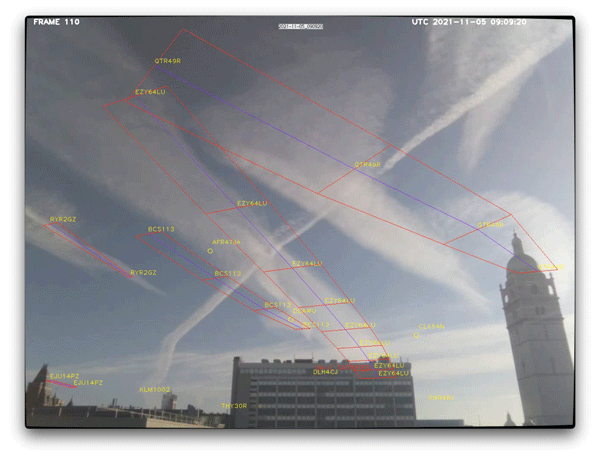
The radiative forcing due to contrails is of the same order of magnitude as aviation CO2 emissions but has a higher uncertainty. Observations are vital to improve our understanding of the contrail lifecycle, improve models, and measure the effect of mitigation action. Here, we use ground-based cameras combined with flight telemetry to track visible contrails and measure their lifetime and width. We evaluate model predictions and demonstrate the capability of this approach.
Joel Ponsonby, Leon King, Benjamin J. Murray, and Marc E. J. Stettler
Atmos. Chem. Phys., 24, 2045–2058, https://doi.org/10.5194/acp-24-2045-2024, https://doi.org/10.5194/acp-24-2045-2024, 2024
Short summary
Short summary
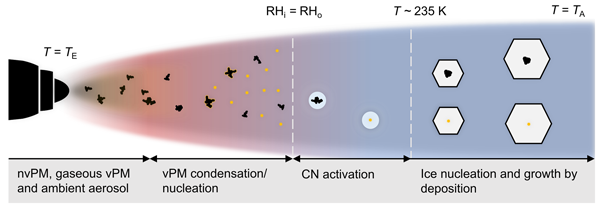
Aerosol emissions from aircraft engines contribute to the formation of contrails, which have a climate impact as important as that of aviation’s CO2 emissions. For the first time, we experimentally investigate the freezing behaviour of water droplets formed on jet lubrication oil aerosol. We show that they can activate to form water droplets and discuss their potential impact on contrail formation. Our study has implications for contrails produced by future aircraft engine and fuel technologies.
Dominik P. Nakoneczny, Jonathan P. Itcovitz, Denis Vida, Luc Busquin, Tristan H. Abbott, and Marc E. J. Stettler
EGUsphere, https://doi.org/10.5194/egusphere-2026-5251, https://doi.org/10.5194/egusphere-2026-5251, 2026
This preprint is open for discussion and under review for Atmospheric Measurement Techniques (AMT).
Short summary
Short summary
Contrails are ice clouds left by aircraft that persist in cold, humid air, adding a large fraction to aviation's climate impact. Testing and improving forecasts requires labelled datasets of contrail observations. We used ground camera images of contrails and matched them to their originating aircraft. Our "flight-first" method searches for contrails based on where they're predicted to be, making detections faster and more reliable. This scalable approach could help track contrails worldwide.
Sebastian David Eastham, Hamid Reza Abbasi, Marc E. J. Stettler, Tristan Abbott, and Zebediah Engberg
EGUsphere, https://doi.org/10.5194/egusphere-2026-4489, https://doi.org/10.5194/egusphere-2026-4489, 2026
This preprint is open for discussion and under review for Geoscientific Model Development (GMD).
Short summary
Short summary
Aircraft condensation trails (contrails) have been estimated as being responsible for up to half of aviation's overall climate impacts, but this is subject to high uncertainty and few contrail models are fast enough to support rapid exploration of the parameter space. We present CLAMP, a new contrail model designed to simulate a 12-hour contrail in less than a minute while providing results similar to higher-fidelity approaches.
Bernd Kärcher
EGUsphere, https://doi.org/10.5194/egusphere-2026-4317, https://doi.org/10.5194/egusphere-2026-4317, 2026
Short summary
Short summary
Cloud models rely on a faithful representation of vertical wind fluctuations due to gravity waves. This manuscript investigates methods that predict such wave activity and compares their statistical properties with those directly obtained from long-duration balloon measurements in the tropical tropopause layer.
Milena Corcos, Bernd Kärcher, Thomas Lesigne, Aurélien Podglajen, and Eric J. Jensen
EGUsphere, https://doi.org/10.5194/egusphere-2026-3112, https://doi.org/10.5194/egusphere-2026-3112, 2026
Short summary
Short summary
Thin ice clouds near the boundary between the troposphere and stratosphere affect Earth's climate by influencing radiation and the transport of water into the upper atmosphere. Using a model constrained by cloud observations, we investigated why some clouds disappear within hours while others persist much longer. We show that their lifetime depends on both rapid fluctuations and slower temperature changes. Long-lived clouds are rare but may have a disproportionate influence on climate.
Scott Geraedts, Aaron Sarna, Susanne Rohs, Roger Teoh, and Kevin McCloskey
J. Env. Com. Air Transp. Sys., 1, 2, https://doi.org/10.5194/jecats-1-2-2026, https://doi.org/10.5194/jecats-1-2-2026, 2026
Short summary
Short summary
It can be difficult to know if a given aircraft made a contrail. Existing methods that can be applied to any aircraft either use numerical weather data or satellite observations. In this work we create a new method by combining weather data and observations together. By comparison to in-situ measurements we show that the new method is superior to previous methods.
Tharun Sankar, Thomas Dean, Tristan Abbott, Jill Blickstein, Alejandra Martín Frías, Mark Galyen, Rebecca Grenham, Paul Hodgson, Kevin McCloskey, Alan Pechman, Tyler Robarge, Dinesh Sanekommu, Aaron Sarna, Aaron Sonabend-W, Marc Stettler, Raimund Zopp, and Scott Geraedts
J. Env. Com. Air Transp. Sys. Discuss., https://doi.org/10.5194/jecats-2026-4, https://doi.org/10.5194/jecats-2026-4, 2026
Revised manuscript under review for JECATS
Short summary
Short summary
This randomized control trial provides evidence for the efficacy of airline-led contrail avoidance to reduce aviation's climate impact. By integrating ML forecasts into standard flight planning, dispatchers routed flights to avoid warming contrails. Satellite validation showed an 11.6 % overall reduction in contrails, increasing to 62 % for flights strictly following the optimized paths, all with no significant fuel penalty.
Oliver G. A. Driver, Marc E. J. Stettler, and Edward Gryspeerdt
Atmos. Chem. Phys., 25, 16411–16433, https://doi.org/10.5194/acp-25-16411-2025, https://doi.org/10.5194/acp-25-16411-2025, 2025
Short summary
Short summary
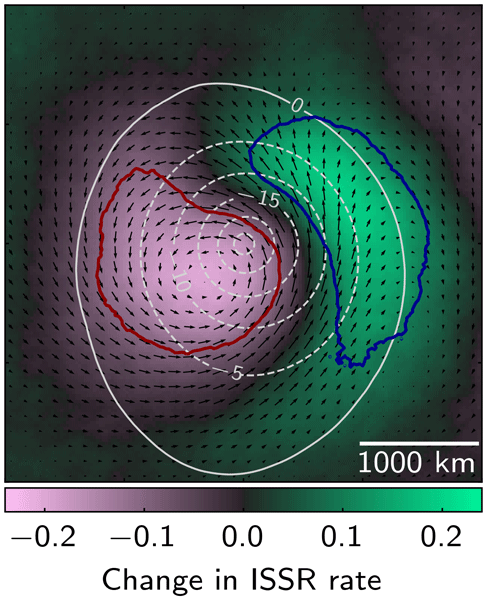
Contrails are ice clouds caused by planes. They have a warming effect, so are important to model. In humid (ice supersaturated) regions, ice crystals are stable so can persist. However, weather model data doesn't represent ice supersaturated regions well enough. We demonstrate that ice supersaturation modelling is structured by North Atlantic storm systems. Averaging many systems, we link the bias to underling processes being modelled, and gain insight into how the existing data could be used.
Kai Lyu, Xiaohong Liu, and Bernd Kärcher
Atmos. Chem. Phys., 25, 15369–15388, https://doi.org/10.5194/acp-25-15369-2025, https://doi.org/10.5194/acp-25-15369-2025, 2025
Short summary
Short summary
Two nucleation schemes are used to study ice nucleation, focusing on three ice sources: mountains, turbulence and anvils. Ice from mountains is concentrated in mid- and high-latitudes, while ice from turbulence and anvils is more common in low and mid-latitudes. Both schemes simulate orographic cirrus clouds, with mountain ice as the dominant source. The schemes differ in how they handle ice source competition, causing turbulence and anvils to influence clouds differently.
Oliver G. A. Driver, Marc E. J. Stettler, and Edward Gryspeerdt
Atmos. Meas. Tech., 18, 1115–1134, https://doi.org/10.5194/amt-18-1115-2025, https://doi.org/10.5194/amt-18-1115-2025, 2025
Short summary
Short summary
Contrails (clouds caused by planes) play a large role in the climate warming caused by aviation. Satellites are a good tool to validate modelled impact estimates. Many contrails are either too narrow or too disperse to detect. This work shows that only around half of contrails are observable but that the most climatically important are easier to detect. It supports the use of satellites for contrail observation but highlights the need for observability considerations for specific applications.
Zebediah Engberg, Roger Teoh, Tristan Abbott, Thomas Dean, Marc E. J. Stettler, and Marc L. Shapiro
Geosci. Model Dev., 18, 253–286, https://doi.org/10.5194/gmd-18-253-2025, https://doi.org/10.5194/gmd-18-253-2025, 2025
Short summary
Short summary
Contrails forming in some atmospheric conditions may persist and become strongly warming cirrus, while in other conditions may be neutral or cooling. We develop a contrail forecast model to predict contrail climate forcing for any arbitrary point in space and time and explore integration into flight planning and air traffic management. This approach enables contrail interventions to target high-probability high-climate-impact regions and reduce unintended consequences of contrail management.
Jade Low, Roger Teoh, Joel Ponsonby, Edward Gryspeerdt, Marc Shapiro, and Marc E. J. Stettler
Atmos. Meas. Tech., 18, 37–56, https://doi.org/10.5194/amt-18-37-2025, https://doi.org/10.5194/amt-18-37-2025, 2025
Short summary
Short summary
The radiative forcing due to contrails is of the same order of magnitude as aviation CO2 emissions but has a higher uncertainty. Observations are vital to improve our understanding of the contrail lifecycle, improve models, and measure the effect of mitigation action. Here, we use ground-based cameras combined with flight telemetry to track visible contrails and measure their lifetime and width. We evaluate model predictions and demonstrate the capability of this approach.

Audran Borella, Olivier Boucher, Keith P. Shine, Marc Stettler, Katsumasa Tanaka, Roger Teoh, and Nicolas Bellouin
Atmos. Chem. Phys., 24, 9401–9417, https://doi.org/10.5194/acp-24-9401-2024, https://doi.org/10.5194/acp-24-9401-2024, 2024
Short summary
Short summary
This work studies how to compare the climate impact of the CO2 emitted and contrails formed by a flight. This is applied to contrail avoidance strategies that would decrease climate impact of flights by changing the trajectory of aircraft to avoid persistent contrail formation, at the risk of increasing CO2 emissions. We find that different comparison methods lead to different quantification of the total climate impact of a flight but lead to similar decisions of whether to reroute an aircraft.
Roger Teoh, Zebediah Engberg, Ulrich Schumann, Christiane Voigt, Marc Shapiro, Susanne Rohs, and Marc E. J. Stettler
Atmos. Chem. Phys., 24, 6071–6093, https://doi.org/10.5194/acp-24-6071-2024, https://doi.org/10.5194/acp-24-6071-2024, 2024
Short summary
Short summary
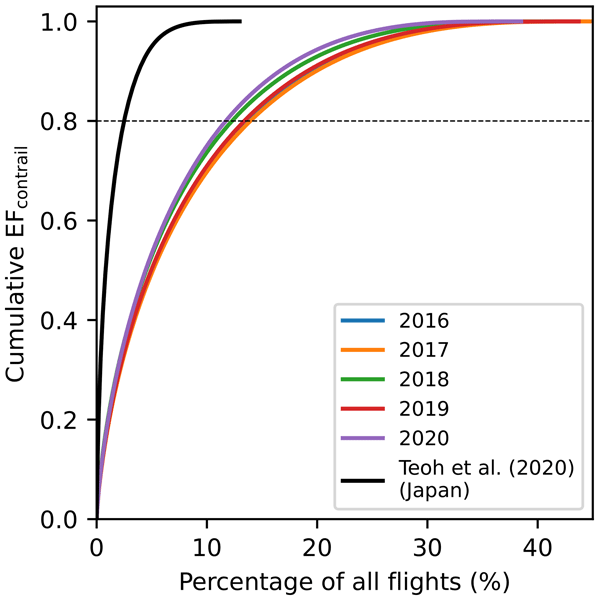
The radiative forcing (RF) due to aviation contrails is comparable to that caused by CO2. We estimate that global contrail net RF in 2019 was 62.1 mW m−2. This is ~1/2 the previous best estimate for 2018. Contrail RF varies regionally due to differences in conditions required for persistent contrails. COVID-19 reduced contrail RF by 54% in 2020 relative to 2019. Globally, 2 % of all flights account for 80 % of the annual contrail energy forcing, suggesting a opportunity to mitigate contrail RF.
Joel Ponsonby, Leon King, Benjamin J. Murray, and Marc E. J. Stettler
Atmos. Chem. Phys., 24, 2045–2058, https://doi.org/10.5194/acp-24-2045-2024, https://doi.org/10.5194/acp-24-2045-2024, 2024
Short summary
Short summary
Aerosol emissions from aircraft engines contribute to the formation of contrails, which have a climate impact as important as that of aviation’s CO2 emissions. For the first time, we experimentally investigate the freezing behaviour of water droplets formed on jet lubrication oil aerosol. We show that they can activate to form water droplets and discuss their potential impact on contrail formation. Our study has implications for contrails produced by future aircraft engine and fuel technologies.
Roger Teoh, Zebediah Engberg, Marc Shapiro, Lynnette Dray, and Marc E. J. Stettler
Atmos. Chem. Phys., 24, 725–744, https://doi.org/10.5194/acp-24-725-2024, https://doi.org/10.5194/acp-24-725-2024, 2024
Short summary
Short summary
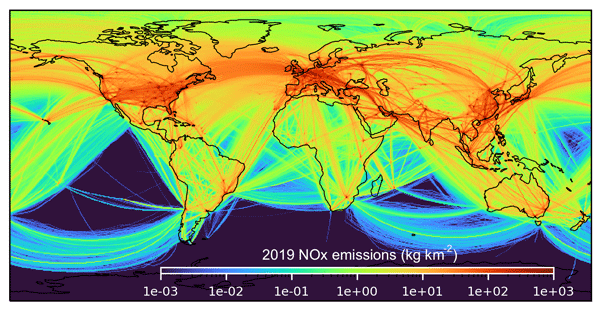
Emissions from aircraft contribute to climate change and degrade air quality. We describe an up-to-date 4D emissions inventory of global aviation from 2019 to 2021 based on actual flown trajectories. In 2019, 40.2 million flights collectively travelled 61 billion kilometres using 283 Tg of fuel. Long-haul flights were responsible for 43 % of CO2. The emissions inventory is made available for use in future studies to evaluate the negative externalities arising from global aviation.
Blaž Gasparini, Sylvia C. Sullivan, Adam B. Sokol, Bernd Kärcher, Eric Jensen, and Dennis L. Hartmann
Atmos. Chem. Phys., 23, 15413–15444, https://doi.org/10.5194/acp-23-15413-2023, https://doi.org/10.5194/acp-23-15413-2023, 2023
Short summary
Short summary
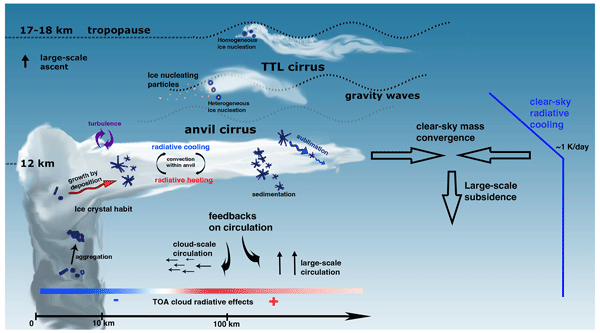
Tropical cirrus clouds are essential for climate, but our understanding of these clouds is limited due to their dependence on a wide range of small- and large-scale climate processes. In this opinion paper, we review recent advances in the study of tropical cirrus clouds, point out remaining open questions, and suggest ways to resolve them.
Roger Teoh, Ulrich Schumann, Edward Gryspeerdt, Marc Shapiro, Jarlath Molloy, George Koudis, Christiane Voigt, and Marc E. J. Stettler
Atmos. Chem. Phys., 22, 10919–10935, https://doi.org/10.5194/acp-22-10919-2022, https://doi.org/10.5194/acp-22-10919-2022, 2022
Short summary
Short summary
Aircraft condensation trails (contrails) contribute to over half of the climate forcing attributable to aviation. This study uses historical air traffic and weather data to simulate contrails in the North Atlantic over 5 years, from 2016 to 2021. We found large intra- and inter-year variability in contrail radiative forcing and observed a 66 % reduction due to COVID-19. Most warming contrails predominantly result from night-time flights in winter.
Bernd Kärcher and Claudia Marcolli
Atmos. Chem. Phys., 21, 15213–15220, https://doi.org/10.5194/acp-21-15213-2021, https://doi.org/10.5194/acp-21-15213-2021, 2021
Short summary
Short summary
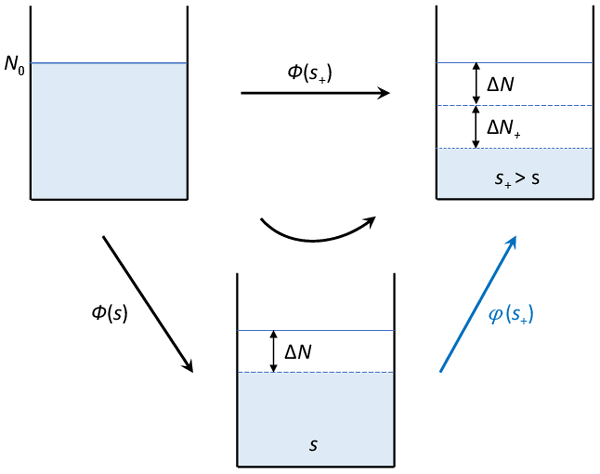
Aerosol–cloud interactions play an important role in climate change. Simulations of the competition between homogeneous solution droplet freezing and heterogeneous ice nucleation can be compromised by the misapplication of ice-active particle fractions frequently derived from laboratory measurements or parametrizations. Our study frames the problem and establishes a solution that is easy to implement in cloud models.
Cited articles
Airbus: Airbus Global Market Forecast 2025–2044, https://www.airbus.com/en/products-services/commercial-aircraft/global-market-forecast/ (last access: 14 October 2025), 2024.
Arnold, F., Kiendler, A., Wiedemer, V., Aberle, S., Stilp, T., and Busen, R.: Chemiion concentration measurements in jet engine exhaust at the ground: Implications for ion chemistry and aerosol formation in the wake of a jet aircraft, Geophysical Research Letters, 27, 1723–1726, https://doi.org/10.1029/1999GL011096, 2000.
Bier, A. and Burkhardt, U.: Impact of Parametrizing Microphysical Processes in the Jet and Vortex Phase on Contrail Cirrus Properties and Radiative Forcing, JGR Atmospheres, 127, e2022JD036677, https://doi.org/10.1029/2022JD036677, 2022.
Bier, A., Unterstrasser, S., and Vancassel, X.: Box model trajectory studies of contrail formation using a particle-based cloud microphysics scheme, Atmos. Chem. Phys., 22, 823–845, https://doi.org/10.5194/acp-22-823-2022, 2022.
Bier, A., Unterstrasser, S., Zink, J., Hillenbrand, D., Jurkat-Witschas, T., and Lottermoser, A.: Contrail formation on ambient aerosol particles for aircraft with hydrogen combustion: a box model trajectory study, Atmos. Chem. Phys., 24, 2319–2344, https://doi.org/10.5194/acp-24-2319-2024, 2024.
Bräuer, T., Voigt, C., Sauer, D., Kaufmann, S., Hahn, V., Scheibe, M., Schlager, H., Diskin, G. S., Nowak, J. B., DiGangi, J. P., Huber, F., Moore, R. H., and Anderson, B. E.: Airborne Measurements of Contrail Ice Properties – Dependence on Temperature and Humidity, Geophysical Research Letters, 48, e2020GL092166, https://doi.org/10.1029/2020GL092166, 2021.
Burkhardt, U., Bock, L., and Bier, A.: Mitigating the contrail cirrus climate impact by reducing aircraft soot number emissions, npj Clim Atmos Sci, 1, 37, https://doi.org/10.1038/s41612-018-0046-4, 2018.
Cantin, S., Chouak, M., and Garnier, F.: Effects of fuel sulfur content and nvPM emissions on contrail formation: A CFD-microphysics study including the role of organic compounds, Journal of Aerosol Science, 188, 106612, https://doi.org/10.2139/ssrn.5138455, 2025.
Cumpsty, N. A.: Jet propulsion: a simple guide to the aerodynamics and thermodynamic design and performance of jet engines, 2nd ed., Cambridge University Press, Cambridge, U.K., New York, NY, USA, 303 pp., 2003.
Decker, Z. C. J., Alpert, P. A., Ammann, M., Anet, J. G., Bauer, M., Cui, T., Durdina, L., Edebeli, J., Gysel-Beer, M., Prévôt, A. S. H., Qi, L., Slowik, J. G., Spirig, C., Tinorua, S., Ungeheuer, F., Vogel, A., Zhang, J., and Brem, B. T.: Emission and Formation of Aircraft Engine Oil Ultrafine Particles, ACS EST Air, 1, 1662–1672, https://doi.org/10.1021/acsestair.4c00184, 2024.
Dehghan, A., Hocking, W. K., and Srinivasan, R.: Comparisons between multiple in situ aircraft turbulence measurements and radar in the troposphere, Journal of Atmospheric and Solar-Terrestrial Physics, 118, 64–77, https://doi.org/10.1016/j.jastp.2013.10.009, 2014.
Durdina, L., Durand, E., Edebeli, J., Spirig, C., Brem, B. T., Elser, M., Siegerist, F., Johnson, M., Sevcenco, Y. A., and Crayford, A. P.: Characterizing and Predicting nvPM Size Distributions for Aviation Emission Inventories and Environmental Impact, Environ. Sci. Technol., 58, 10548–10557, https://doi.org/10.1021/acs.est.4c02538, 2024.
EASA: ICAO Aircraft Engine Emissions Databank, https://www.easa.europa.eu/en/domains/environment/icao-aircraft-engine-emissions-databank (last access date: 14 October 2025), 2025.
Ferreira, T., Alonso, J. J., and Gorlé, C.: Developing a Numerical Framework for the High-Fidelity Simulation of Contrails: Sensitivity Analysis for Conventional Contrails, in: AIAA AVIATION FORUM AND ASCEND 2024, AIAA AVIATION FORUM AND ASCEND 2024, Las Vegas, Nevada, https://doi.org/10.2514/6.2024-3775, 2024.
Grewe, V., Gangoli Rao, A., Grönstedt, T., Xisto, C., Linke, F., Melkert, J., Middel, J., Ohlenforst, B., Blakey, S., Christie, S., Matthes, S., and Dahlmann, K.: Evaluating the climate impact of aviation emission scenarios towards the Paris agreement including COVID-19 effects, Nat Commun, 12, 3841, https://doi.org/10.1038/s41467-021-24091-y, 2021.
Gryspeerdt, E., Stettler, M. E. J., Teoh, R., Burkhardt, U., Delovski, T., Driver, O. G. A., and Painemal, D.: Operational differences lead to longer lifetimes of satellite detectable contrails from more fuel efficient aircraft, Environ. Res. Lett., 19, 084059, https://doi.org/10.1088/1748-9326/ad5b78, 2024.
Gysel, M., Nyeki, S., Weingartner, E., Baltensperger, U., Giebl, H., Hitzenberger, R., Petzold, A., and Wilson, C. W.: Properties of jet engine combustion particles during the PartEmis experiment: Hygroscopicity at subsaturated conditions, Geophysical Research Letters, 30, 2003GL016896, https://doi.org/10.1029/2003GL016896, 2003.
Haverkamp, H., Wilhelm, S., Sorokin, A., and Arnold, F.: Positive and negative ion measurements in jet aircraft engine exhaust: concentrations, sizes and implications for aerosol formation, Atmospheric Environment, 38, 2879–2884, https://doi.org/10.1016/j.atmosenv.2004.02.028, 2004.
ICAO: Manual Of The Icao Standard Atmosphere – extended to 80 kilometres / 262,500 feet (Doc 7488), 3rd edn., https://store.icao.int/en/manual-of-the-icao-standard-atmosphere-extended-to-80-kilometres-262500-feet-doc-7488 (last access 14 October 2025), 1993.
ICAO: Manual on Implementation Vertical Separation (Doc 9574), 3rd edn., https://store.icao.int/en/manual-on-implementation-vertical-separation-doc-9574 (last access 14 October 2025), 2012.
IMO: Amendment MEPC.234(75) of the International Convention for the Prevention of Pollution from Ships (MARPOL) Annex VI: Regulations for the Prevention of Air Pollution from Ships, https://wwwcdn.imo.org/localresources/en/OurWork/Environment/Documents/Air pollution/MEPC.324(75).pdf (last access: 14 October 2025), 2022.
Jones, S. H. and Miake-Lye, R. C.: Parameterization of H2 SO4 and organic contributions to volatile PM in aircraft plumes at ground idle, Journal of the Air & Waste Management Association, 74, 490–510, https://doi.org/10.1080/10962247.2024.2354820, 2024.
Kärcher, B.: Formation and radiative forcing of contrail cirrus, Nat Commun, 9, 1824, https://doi.org/10.1038/s41467-018-04068-0, 2018.
Kärcher, B. and Fahey, D. W.: The role of sulfur emission in volatile particle formation in jet aircraft exhaust plumes, Geophysical Research Letters, 24, 389–392, https://doi.org/10.1029/97GL00119, 1997.
Kärcher, B. and Lohmann, U.: A Parameterization of cirrus cloud formation: Homogeneous freezing including effects of aerosol size, Journal of Geophysical Research: Atmospheres, 107, AAC 9-1–AAC 9-10, https://doi.org/10.1029/2001JD001429, 2002a.
Kärcher, B. and Lohmann, U.: A parameterization of cirrus cloud formation: Homogeneous freezing of supercooled aerosols, Journal of Geophysical Research: Atmospheres, 107, AAC 4-1–AAC 4-10, https://doi.org/10.1029/2001JD000470, 2002b.
Kärcher, B. and Yu, F.: Role of aircraft soot emissions in contrail formation, Geophysical Research Letters, 36, 2008GL036649, https://doi.org/10.1029/2008GL036649, 2009.
Kärcher, B., Turco, R. P., Yu, F., Danilin, M. Y., Weisenstein, D. K., Miake-Lye, R. C., and Busen, R.: A unified model for ultrafine aircraft particle emissions, J. Geophys. Res., 105, 29379–29386, https://doi.org/10.1029/2000JD900531, 2000.
Kärcher, B., Hendricks, J., and Lohmann, U.: Physically based parameterization of cirrus cloud formation for use in global atmospheric models, Journal of Geophysical Research: Atmospheres, 111, https://doi.org/10.1029/2005JD006219, 2006.
Kärcher, B., Burkhardt, U., Bier, A., Bock, L., and Ford, I. J.: The microphysical pathway to contrail formation, JGR Atmospheres, 120, 7893–7927, https://doi.org/10.1002/2015JD023491, 2015.
Kärcher, B., Marcolli, C., and Mahrt, F.: The Role of Mineral Dust Aerosol Particles in Aviation Soot-Cirrus Interactions, JGR Atmospheres, 128, e2022JD037881, https://doi.org/10.1029/2022JD037881, 2023.
Khou, J. C., Ghedhaïfi, W., Vancassel, X., Montreuil, E., and Garnier, F.: CFD simulation of contrail formation in the near field of a commercial aircraft: Effect of fuel sulfur content, metz, 26, 585–596, https://doi.org/10.1127/metz/2016/0761, 2017.
Khou, J.-C., Ghedhaïfi, W., Vancassel, X., and Garnier, F.: Spatial Simulation of Contrail Formation in Near-Field of Commercial Aircraft, Journal of Aircraft, 52, 1927–1938, https://doi.org/10.2514/1.C033101, 2015.
Koop, T., Luo, B., Tsias, A., and Peter, T.: Water activity as the determinant for homogeneous ice nucleation in aqueous solutions, Nature, 406, 611–614, https://doi.org/10.1038/35020537, 2000.
Korolev, A.: Limitations of the Wegener–Bergeron–Findeisen Mechanism in the Evolution of Mixed-Phase Clouds, Journal of the Atmospheric Sciences, 64, 3372–3375, https://doi.org/10.1175/JAS4035.1, 2007.
Korolev, A. V. and Mazin, I. P.: Supersaturation of Water Vapor in Clouds, Journal of the Atmospheric Sciences, 60, 2957–2974, https://doi.org/10.1175/1520-0469(2003)060<2957:SOWVIC>2.0.CO;2, 2003.
Kumar, P., Sokolik, I. N., and Nenes, A.: Parameterization of cloud droplet formation for global and regional models: including adsorption activation from insoluble CCN, Atmos. Chem. Phys., 9, 2517—2532, https://doi.org/10.5194/acp-9-2517-2009, 2009.
Lee, D. S., Fahey, D. W., Skowron, A., Allen, M. R., Burkhardt, U., Chen, Q., Doherty, S. J., Freeman, S., Forster, P. M., Fuglestvedt, J., Gettelman, A., De León, R. R., Lim, L. L., Lund, M. T., Millar, R. J., Owen, B., Penner, J. E., Pitari, G., Prather, M. J., Sausen, R., and Wilcox, L. J.: The contribution of global aviation to anthropogenic climate forcing for 2000 to 2018, Atmospheric Environment, 244, 117834, https://doi.org/10.1016/j.atmosenv.2020.117834, 2021.
Lewellen, D. C.: A Large-Eddy Simulation Study of Contrail Ice Number Formation, Journal of the Atmospheric Sciences, 77, 2585–2604, https://doi.org/10.1175/JAS-D-19-0322.1, 2020.
Lewellen, D. C., Meza, O., and Huebsch, W. W.: Persistent Contrails and Contrail Cirrus. Part I: Large-Eddy Simulations from Inception to Demise, Journal of the Atmospheric Sciences, 71, 4399–4419, https://doi.org/10.1175/JAS-D-13-0316.1, 2014.
Marcolli, C., Mahrt, F., and Kärcher, B.: Soot PCF: pore condensation and freezing framework for soot aggregates, Atmos. Chem. Phys., 21, 7791–7843, https://doi.org/10.5194/acp-21-7791-2021, 2021.
Märkl, R. S., Voigt, C., Sauer, D., Dischl, R. K., Kaufmann, S., Harlaß, T., Hahn, V., Roiger, A., Weiß-Rehm, C., Burkhardt, U., Schumann, U., Marsing, A., Scheibe, M., Dörnbrack, A., Renard, C., Gauthier, M., Swann, P., Madden, P., Luff, D., Sallinen, R., Schripp, T., and Le Clercq, P.: Powering aircraft with 100 % sustainable aviation fuel reduces ice crystals in contrails, Atmos. Chem. Phys., 24, 3813–3837, https://doi.org/10.5194/acp-24-3813-2024, 2024.
Moore, R. H., Thornhill, K. L., Weinzierl, B., Sauer, D., D'Ascoli, E., Kim, J., Lichtenstern, M., Scheibe, M., Beaton, B., Beyersdorf, A. J., Barrick, J., Bulzan, D., Corr, C. A., Crosbie, E., Jurkat, T., Martin, R., Riddick, D., Shook, M., Slover, G., Voigt, C., White, R., Winstead, E., Yasky, R., Ziemba, L. D., Brown, A., Schlager, H., and Anderson, B. E.: Biofuel blending reduces particle emissions from aircraft engines at cruise conditions, Nature, 543, 411–415, https://doi.org/10.1038/nature21420, 2017.
Murphy, D. M. and Koop, T.: Review of the vapour pressures of ice and supercooled water for atmospheric applications, Q. J. R. Meteorol. Soc., 131, 1539–1565, https://doi.org/10.1256/qj.04.94, 2005.
Murray, B. J., O'Sullivan, D., Atkinson, J. D., and Webb, M. E.: Ice nucleation by particles immersed in supercooled cloud droplets, Chem. Soc. Rev., 41, 6519, https://doi.org/10.1039/c2cs35200a, 2012.
Paoli, R., Nybelen, L., Picot, J., and Cariolle, D.: Effects of jet/vortex interaction on contrail formation in supersaturated conditions, Physics of Fluids, 25, 053305, https://doi.org/10.1063/1.4807063, 2013.
Petters, M. D. and Kreidenweis, S. M.: A single parameter representation of hygroscopic growth and cloud condensation nucleus activity, Atmos. Chem. Phys., 7, 1961–1971, https://doi.org/10.5194/acp-7-1961-2007, 2007.
Petzold, A., Fiebig, M., Fritzsche, L., Stein, C., Schumann, U., Wilson, C. W., Hurley, C. D., Arnold, F., Katragkou, E., Baltensperger, U., Gysel, M., Nyeki, S., Hitzenberger, R., Giebl, H., and Hughes, K.: Particle emissions from aircraft engines a survey of the European project PartEmis, metz, 14, 465–476, https://doi.org/10.1127/0941-2948/2005/0054, 2005.
Picot, J., Paoli, R., Thouron, O., and Cariolle, D.: Large-eddy simulation of contrail evolution in the vortex phase and its interaction with atmospheric turbulence, Atmos. Chem. Phys., 15, 7369–7389, https://doi.org/10.5194/acp-15-7369-2015, 2015.
Ponsonby, J.: jponvc/extended-K15-model: extended K15 model (v1.0), Zenodo [code], https://doi.org/10.5281/zenodo.16901290, 2025.
Ponsonby, J., King, L., Murray, B. J., and Stettler, M. E. J.: Jet aircraft lubrication oil droplets as contrail ice-forming particles, Atmos. Chem. Phys., 24, 2045–2058, https://doi.org/10.5194/acp-24-2045-2024, 2024.
Pruppacher, H. R. and Klett, J. D.: Microphysics of clouds and precipitation, in: Atmospheric and Oceanographic Sciences Library, 2nd edn., Springer Dordrecht, 714 pp., ISBN: 9780792342113, 2010.
Rogers, R. R. and Yau, M. K.: A short course in cloud physics, in: International Series in Natural Philosophy, 3rd edn., Butterworth-Heinemann, Burlington, Massachusetts, Vol. 113, ISBN: 9780750632157, 1996.
Rojo, C., Vancassel, X., Mirabel, P., Ponche, J.-L., and Garnier, F.: Impact of alternative jet fuels on aircraft-induced aerosols, Fuel, 144, 335–341, https://doi.org/10.1016/j.fuel.2014.12.021, 2015.
Rothenberg, D. and Wang, C.: Metamodeling of Droplet Activation for Global Climate Models, Journal of the Atmospheric Sciences, 73, 1255–1272, https://doi.org/10.1175/JAS-D-15-0223.1, 2016.
Rothenberg, D., Ponsonby, J., and lompar: jponvc/pyrcel-for-contrails: pyrcel for contrails (v1.0), Zenodo [code], https://doi.org/10.5281/zenodo.16901327, 2025.
Saffaripour, M., Thomson, K. A., Smallwood, G. J., and Lobo, P.: A review on the morphological properties of non-volatile particulate matter emissions from aircraft turbine engines, Journal of Aerosol Science, 139, 105467, https://doi.org/10.1016/j.jaerosci.2019.105467, 2020.
Schripp, T., Anderson, B. E., Bauder, U., Rauch, B., Corbin, J. C., Smallwood, G. J., Lobo, P., Crosbie, E. C., Shook, M. A., Miake-Lye, R. C., Yu, Z., Freedman, A., Whitefield, P. D., Robinson, C. E., Achterberg, S. L., Köhler, M., Oßwald, P., Grein, T., Sauer, D., Voigt, C., Schlager, H., and LeClercq, P.: Aircraft engine particulate matter emissions from sustainable aviation fuels: Results from ground-based measurements during the NASA/DLR campaign ECLIF2/ND-MAX, Fuel, 325, 124764, https://doi.org/10.1016/j.fuel.2022.124764, 2022.
Schumann, U.: On conditions for contrail formation from aircraft exhausts, Meteorologische Zeitschrift, 4–23, https://doi.org/10.1127/metz/5/1996/4, 1996.
Schumann, U.: Influence of propulsion efficiency on contrail formation, Aerospace Science and Technology, 4, 391–401, https://doi.org/10.1016/S1270-9638(00)01062-2, 2000.
Schumann, U., Arnold, F., Busen, R., Curtius, J., Kärcher, B., Kiendler, A., Petzold, A., Schlager, H., Schröder, F., and Wohlfrom, K.-H.: Influence of fuel sulfur on the composition of aircraft exhaust plumes: The experiments SULFUR 1–7, Journal of Geophysical Research: Atmospheres, 107, AAC 2-1–AAC 2-27, https://doi.org/10.1029/2001JD000813, 2002.
Schumann, U., Mayer, B., Graf, K., and Mannstein, H.: A Parametric Radiative Forcing Model for Contrail Cirrus, J. Appl. Meteorol. Climatol., 51, 1391–1406, https://doi.org/10.1175/JAMC-D-11-0242.1, 2012.
Schumann, U., Baumann, R., Baumgardner, D., Bedka, S. T., Duda, D. P., Freudenthaler, V., Gayet, J.-F., Heymsfield, A. J., Minnis, P., Quante, M., Raschke, E., Schlager, H., Vázquez-Navarro, M., Voigt, C., and Wang, Z.: Properties of individual contrails: a compilation of observations and some comparisons, Atmos. Chem. Phys., 17, 403–438, https://doi.org/10.5194/acp-17-403-2017, 2017.
Seinfeld, J. H. and Pandis, S. N.: Atmospheric chemistry and physics: from air pollution to climate change, 3rd edn., John Wiley & Sons, Inc, New York, 1326 pp., ISBN: 9781118947401, 2016.
Sorjamaa, R. and Laaksonen, A.: The effect of H2O adsorption on cloud drop activation of insoluble particles: a theoretical framework, Atmos. Chem. Phys., 7, 6175–6180, https://doi.org/10.5194/acp-7-6175-2007, 2007.
Sorokin, A. and Mirabel, P.: Ion recombination in aircraft exhaust plumes, Geophysical Research Letters, 28, 955–958, https://doi.org/10.1029/2000GL011801, 2001.
Sullivan, R. C., Moore, M. J. K., Petters, M. D., Kreidenweis, S. M., Roberts, G. C., and Prather, K. A.: Effect of chemical mixing state on the hygroscopicity and cloud nucleation properties of calcium mineral dust particles, Atmos. Chem. Phys., 9, 3303–3316, https://doi.org/10.5194/acp-9-3303-2009, 2009.
Teoh, R., Schumann, U., Gryspeerdt, E., Shapiro, M., Molloy, J., Koudis, G., Voigt, C., and Stettler, M. E. J.: Aviation contrail climate effects in the North Atlantic from 2016 to 2021, Atmos. Chem. Phys., 22, 10919–10935, https://doi.org/10.5194/acp-22-10919-2022, 2022.
Teoh, R., Engberg, Z., Schumann, U., Voigt, C., Shapiro, M., Rohs, S., and Stettler, M. E. J.: Global aviation contrail climate effects from 2019 to 2021, Atmos. Chem. Phys., 24, 6071–6093, https://doi.org/10.5194/acp-24-6071-2024, 2024.
Testa, B., Durdina, L., Alpert, P. A., Mahrt, F., Dreimol, C. H., Edebeli, J., Spirig, C., Decker, Z. C. J., Anet, J., and Kanji, Z. A.: Soot aerosols from commercial aviation engines are poor ice-nucleating particles at cirrus cloud temperatures, Atmos. Chem. Phys., 24, 4537–4567, https://doi.org/10.5194/acp-24-4537-2024, 2024.
Twomey, S.: The nuclei of natural cloud formation part II: The supersaturation in natural clouds and the variation of cloud droplet concentration, Geofisica Pura e Applicata, 43, 243–249, https://doi.org/10.1007/BF01993560, 1959.
Ungeheuer, F., Caudillo, L., Ditas, F., Simon, M., Van Pinxteren, D., Kýlýç, D., Rose, D., Jacobi, S., Kürten, A., Curtius, J., and Vogel, A. L.: Nucleation of jet engine oil vapours is a large source of aviation-related ultrafine particles, Commun Earth Environ, 3, 319, https://doi.org/10.1038/s43247-022-00653-w, 2022.
Voigt, C., Kleine, J., Sauer, D., Moore, R. H., Bräuer, T., Le Clercq, P., Kaufmann, S., Scheibe, M., Jurkat-Witschas, T., Aigner, M., Bauder, U., Boose, Y., Borrmann, S., Crosbie, E., Diskin, G. S., DiGangi, J., Hahn, V., Heckl, C., Huber, F., Nowak, J. B., Rapp, M., Rauch, B., Robinson, C., Schripp, T., Shook, M., Winstead, E., Ziemba, L., Schlager, H., and Anderson, B. E.: Cleaner burning aviation fuels can reduce contrail cloudiness, Commun Earth Environ, 2, 114, https://doi.org/10.1038/s43247-021-00174-y, 2021.
Voigt, C., Märkl, R., Sauer, D., Dischl, R., Kaufmann, S., Bräuer, T., Jurkat, T., Renard, C., Seeliger, K., Chenadec, G. L., Moreau, J., Yu, F., Bonne, N., Roche, A., Zelina, J., Dörnbrack, A., Eirenschmalz, L., Heckl, C., Horst, E., Lichtenstern, M., Marsing, A., Roiger, A., Scheibe, M., Stock, P., Giez, A., Eckel, G., Neumann, G., Vals, M., Requena-Esteban, E., and Clercq, P. L.: Substantial aircraft contrail formation at low soot emission levels, Nature Portfolio [preprint], https://doi.org/10.21203/rs.3.rs-6559440/v1, 9 May 2025.
Wolf, K., Bellouin, N., Boucher, O., Rohs, S., and Li, Y.: Correction of ERA5 temperature and relative humidity biases by bivariate quantile mapping for contrail formation analysis, Atmos. Chem. Phys., 25, 157–181, https://doi.org/10.5194/acp-25-157-2025, 2025.
Wong, H.-W., Jun, M., Peck, J., Waitz, I. A., and Miake-Lye, R. C.: Detailed Microphysical Modeling of the Formation of Organic and Sulfuric Acid Coatings on Aircraft Emitted Soot Particles in the Near Field, Aerosol Science and Technology, 48, 981–995, https://doi.org/10.1080/02786826.2014.953243, 2014.
Wong, H.-W., Jun, M., Peck, J., Waitz, I. A., and Miake-Lye, R. C.: Roles of Organic Emissions in the Formation of Near Field Aircraft-Emitted Volatile Particulate Matter: A Kinetic Microphysical Modeling Study, Journal of Engineering for Gas Turbines and Power, 137, 072606, https://doi.org/10.1115/1.4029366, 2015.
Yu, F. and Turco, R. P.: The role of ions in the formation and evolution of particles in aircraft plumes, Geophysical Research Letters, 24, 1927–1930, https://doi.org/10.1029/97GL01822, 1997.
Yu, F., Turco, R. P., Kärcher, B., and Schröder, F. P.: On the mechanisms controlling the formation and properties of volatile particles in aircraft wakes, Geophysical Research Letters, 25, 3839–3842, https://doi.org/10.1029/1998GL900012, 1998.
Yu, F., Turco, R. P., and Kärcher, B.: The possible role of organics in the formation and evolution of ultrafine aircraft particles, J. Geophys. Res., 104, 4079–4087, https://doi.org/10.1029/1998JD200062, 1999.
Yu, F., Kärcher, B., and Anderson, B. E.: Revisiting Contrail Ice Formation: Impact of Primary Soot Particle Sizes and Contribution of Volatile Particles, Environ. Sci. Technol., 58, 17650–17660, https://doi.org/10.1021/acs.est.4c04340, 2024.
Zhang, K., O'Donnell, D., Kazil, J., Stier, P., Kinne, S., Lohmann, U., Ferrachat, S., Croft, B., Quaas, J., Wan, H., Rast, S., and Feichter, J.: The global aerosol-climate model ECHAM-HAM, version 2: sensitivity to improvements in process representations, Atmos. Chem. Phys., 12, 8911–8949, https://doi.org/10.5194/acp-12-8911-2012, 2012.
Short summary
Aerosol emissions from aircraft engines contribute to the formation of contrails, which have a climate impact comparable to that of aviation’s CO2 emissions. We show that emissions of volatile particulate matter – from fuel sulphur, unburned fuel, and lubrication oil – can increase the number of ice particles formed within a contrail and therefore have an important role in the climate impacts of aviation. This has implications for emission regulation and climate mitigation strategies.
Aerosol emissions from aircraft engines contribute to the formation of contrails, which have a...


Altmetrics
Final-revised paper
Preprint