
Articles | Volume 26, issue 13
https://doi.org/10.5194/acp-26-9967-2026
© Author(s) 2026. This work is distributed under
the Creative Commons Attribution 4.0 License.
the Creative Commons Attribution 4.0 License.
https://doi.org/10.5194/acp-26-9967-2026
© Author(s) 2026. This work is distributed under
the Creative Commons Attribution 4.0 License.
the Creative Commons Attribution 4.0 License.
Research article
| 
15 Jul 2026
Research article |
| 15 Jul 2026
| 15 Jul 2026
Characterizing efflorescence regimes in organic–inorganic aerosols using thermodynamically modeled viscosity
Shanshan Chen
State Key Laboratory of Environment Characteristics and Effects for Near-space, School of Chemistry and Chemical Engineering, Beijing Institute of Technology, Beijing, 100081, China
State Key Laboratory of Environment Characteristics and Effects for Near-space, School of Chemistry and Chemical Engineering, Beijing Institute of Technology, Beijing, 100081, China
School of Environmental Science and Technology, Dalian University of Technology, Dalian, 1116024, China
Key Laboratory of Atmospheric Environment and Extreme Meteorology, Institute of Atmospheric Physics, Chinese Academy of Sciences, Beijing, 100029, China
Shu-Feng Pang
State Key Laboratory of Environment Characteristics and Effects for Near-space, School of Chemistry and Chemical Engineering, Beijing Institute of Technology, Beijing, 100081, China
Pai Liu
State Key Laboratory of Environment Characteristics and Effects for Near-space, School of Chemistry and Chemical Engineering, Beijing Institute of Technology, Beijing, 100081, China
Yun-Hong Zhang
State Key Laboratory of Environment Characteristics and Effects for Near-space, School of Chemistry and Chemical Engineering, Beijing Institute of Technology, Beijing, 100081, China
Related authors
No articles found.
Liping Guo, Shuping Shi, Ying Li, Martin Brüggemann, Mingyu Zhao, Hongyu Mu, Daniel M. Figueiredo, Junxue Wu, and Kai Wang
Atmos. Chem. Phys., 26, 2797–2811, https://doi.org/10.5194/acp-26-2797-2026, https://doi.org/10.5194/acp-26-2797-2026, 2026
Short summary
Short summary
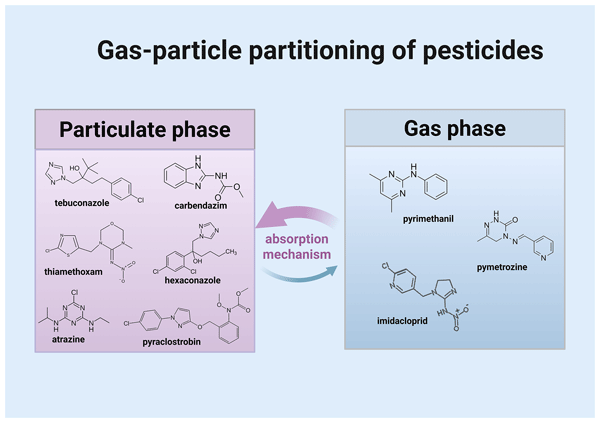
Gas-particle partitioning is critical to govern the environmental fate of atmospheric pesticides, yet it remains poorly studied. Our work investigated atmospheric pesticides in gas and particulate phases in the North China Plain and their gas-particle partitioning mechanism. Results revealed pesticides in particulate phase were dominant. Absorption is the main mechanism of gas-particle partitioning, indicating atmospheric pesticides were absorbed into the interior organic film of particles.
Atta Ullah, Ying Li, and Mijung Song
Atmos. Chem. Phys., 26, 2319–2329, https://doi.org/10.5194/acp-26-2319-2026, https://doi.org/10.5194/acp-26-2319-2026, 2026
Short summary
Short summary
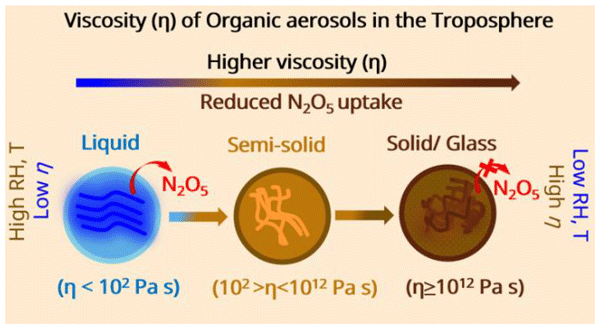
We investigated the temperature- and relative-humidity-dependent viscosity of organic aerosols using sucrose-water droplets as a model. The results show that particles remain liquid near the Earth’s surface but become semi-solid or glassy at higher altitudes. These viscosity changes influence chemical reactions such as nitrogen oxide uptake, improving understanding of air quality and climate processes.
Yu Li, Momei Qin, Weiwei Hu, Bin Zhao, Ying Li, Havala O. T. Pye, Jingyi Li, Linghan Zeng, Song Guo, Min Hu, and Jianlin Hu
Atmos. Chem. Phys., 26, 1001–1020, https://doi.org/10.5194/acp-26-1001-2026, https://doi.org/10.5194/acp-26-1001-2026, 2026
Short summary
Short summary
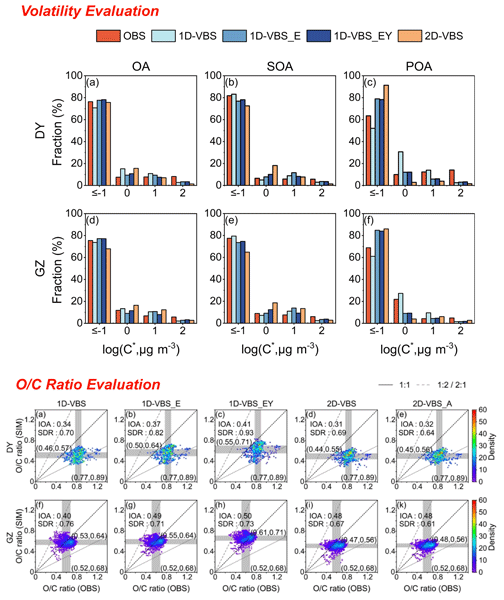
We evaluated how well a widely used air quality model simulates key properties of organic particles in the atmosphere, such as volatility and oxygen content, which influence how particles age, spread, and affect both air quality and climate. Using observations in eastern China, we found the model underestimated particle mass and misrepresented their properties. Our results highlight the need for improved emissions and chemical treatments to better predict air quality and climate impacts.
Jing Li, An Ning, Ling Liu, Fengyang Bai, Qishen Huang, Pai Liu, Xiucong Deng, Yunhong Zhang, and Xiuhui Zhang
Atmos. Chem. Phys., 25, 14237–14249, https://doi.org/10.5194/acp-25-14237-2025, https://doi.org/10.5194/acp-25-14237-2025, 2025
Short summary
Short summary
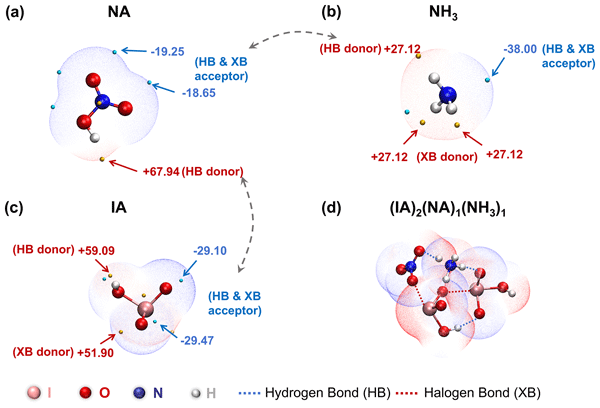
Iodic acid (IA) particles are frequently observed in the upper troposphere and lower stratosphere (UTLS), yet their formation mechanism remains unclear. Nitric acid (NA) and ammonia (NH3) are key nucleation precursors in the UTLS. This study investigates the IA–NA–NH3 system using a theoretical approach. Our proposed nucleation mechanism highlights the crucial role of NA in IA nucleation, providing molecular-level evidence for the missing sources of IA particles in the UTLS.
Tenglong Shi, Jiayao Wang, Daizhou Zhang, Jiecan Cui, Zihang Wang, Yue Zhou, Wei Pu, Yang Bai, Zhigang Han, Meng Liu, Yanbiao Liu, Hongbin Xie, Minghui Yang, Ying Li, Meng Gao, and Xin Wang
The Cryosphere, 19, 2821–2835, https://doi.org/10.5194/tc-19-2821-2025, https://doi.org/10.5194/tc-19-2821-2025, 2025
Short summary
Short summary
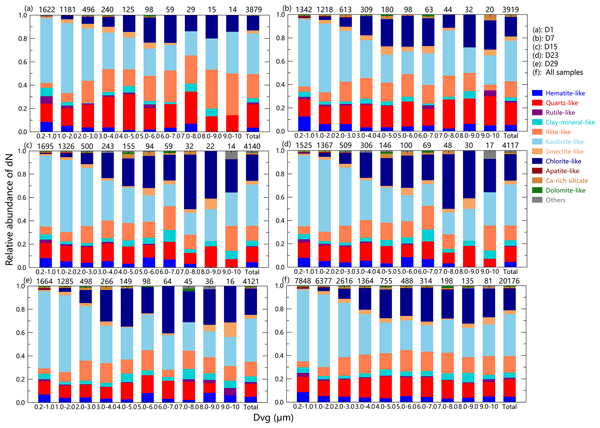
This study examines the properties of dust in snow in Changchun, China, using advanced technology to analyze its size, shape, and light absorption. We found that dust composition affects how much heat is absorbed by snow, with certain minerals, such as hematite, making snowmelt faster. Our research highlights the importance of creating clear standards for classifying dust, which could improve climate models and field observations. This work helps better understand dust's role in climate change.
Sara L. Farrell, Quazi Z. Rasool, Havala O. T. Pye, Yue Zhang, Ying Li, Yuzhi Chen, Chi-Tsan Wang, Haofei Zhang, Ryan Schmedding, Manabu Shiraiwa, Jaime Greene, Sri H. Budisulistiorini, Jose L. Jimenez, Weiwei Hu, Jason D. Surratt, and William Vizuete
EGUsphere, https://doi.org/10.5194/egusphere-2025-2253, https://doi.org/10.5194/egusphere-2025-2253, 2025
Short summary
Short summary
Fine particulate matter (PM2.5) has become increasingly important to regulate and model. In this study, we parameterize non-ideal aerosol mixing and phase state into the Community Multiscale Air Quality (CMAQ) model and analyze its impact on the formation of a globally important source of PM2.5, isoprene epoxydiol (IEPOX)-derived PM2.5. Incorporating these features furthers model bias in IEPOX-derived PM2.5, however, this work provides potential phase state bounds for future PM2.5 modeling work.
Zichen Wu, Xueshun Chen, Zifa Wang, Huansheng Chen, Zhe Wang, Qing Mu, Lin Wu, Wending Wang, Xiao Tang, Jie Li, Ying Li, Qizhong Wu, Yang Wang, Zhiyin Zou, and Zijian Jiang
Geosci. Model Dev., 17, 8885–8907, https://doi.org/10.5194/gmd-17-8885-2024, https://doi.org/10.5194/gmd-17-8885-2024, 2024
Short summary
Short summary
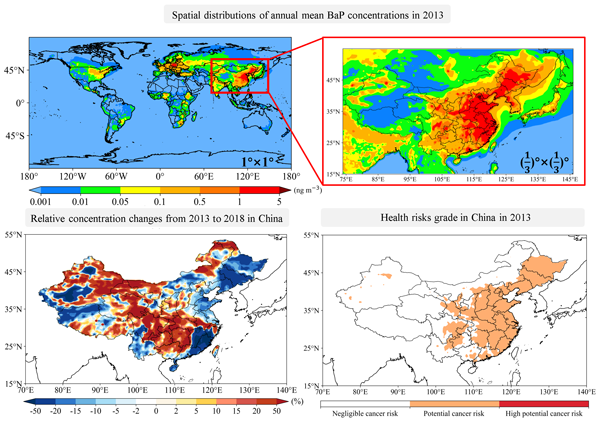
We developed a model to simulate polycyclic aromatic hydrocarbons (PAHs) from global to regional scales. The model can reproduce PAH distribution well. The concentration of BaP (indicator species for PAHs) could exceed the target values of 1 ng m-3 over some areas (e.g., in central Europe, India, and eastern China). The change in BaP is lower than that in PM2.5 from 2013 to 2018. China still faces significant potential health risks posed by BaP although the Action Plan has been implemented.
Hui Yang, Fengfeng Dong, Li Xia, Qishen Huang, Shufeng Pang, and Yunhong Zhang
Atmos. Chem. Phys., 24, 11619–11635, https://doi.org/10.5194/acp-24-11619-2024, https://doi.org/10.5194/acp-24-11619-2024, 2024
Short summary
Short summary
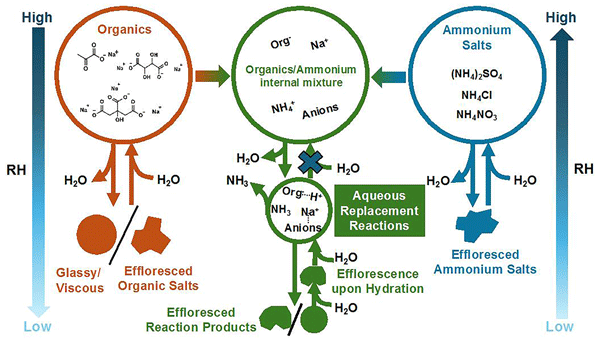
Atmospheric secondary aerosols, composed of organic and inorganic components, undergo complex reactions that impact their phase state. Using molecular spectroscopy, we showed that ammonium-promoted aqueous replacement reaction, unique to these aerosols, is closely linked to phase behavior. The interplay between reactions and aerosol phase state can cause atypical phase transition and irreversible changes in aerosol composition during hygroscopic cycles, further impacting atmospheric processes.
Zhiqiang Zhang, Ying Li, Haiyan Ran, Junling An, Yu Qu, Wei Zhou, Weiqi Xu, Weiwei Hu, Hongbin Xie, Zifa Wang, Yele Sun, and Manabu Shiraiwa
Atmos. Chem. Phys., 24, 4809–4826, https://doi.org/10.5194/acp-24-4809-2024, https://doi.org/10.5194/acp-24-4809-2024, 2024
Short summary
Short summary
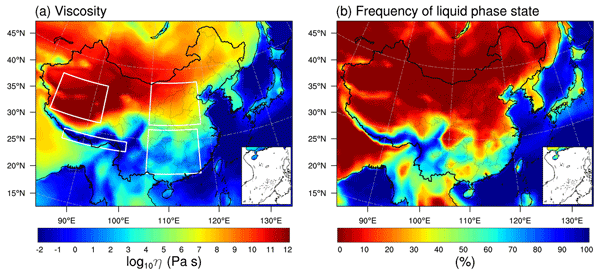
Secondary organic aerosols (SOAs) can exist in liquid, semi-solid, or amorphous solid states, which are rarely accounted for in current chemical transport models. We predict the phase state of SOA particles over China and find that in northwestern China SOA particles are mostly highly viscous or glassy solid. Our results indicate that the particle phase state should be considered in SOA formation in chemical transport models for more accurate prediction of SOA mass concentrations.
Shuaishuai Ma, Qiong Li, and Yunhong Zhang
Atmos. Chem. Phys., 22, 10955–10970, https://doi.org/10.5194/acp-22-10955-2022, https://doi.org/10.5194/acp-22-10955-2022, 2022
Short summary
Short summary
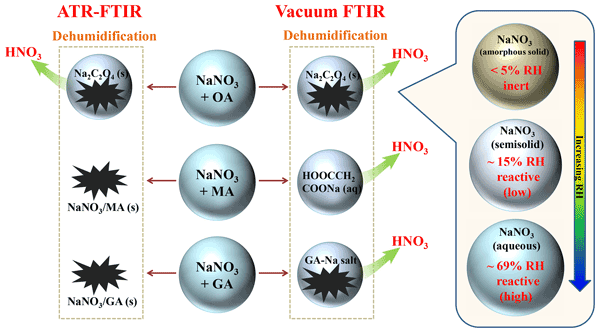
The nitrate phase state can play a critical role in determining the occurrence and extent of nitrate depletion in internally mixed NaNO3–DCA particles, which may be instructive for relevant aerosol reaction systems. Besides, organic acids have a potential to deplete nitrate based on the comprehensive consideration of acidity, particle-phase state, droplet water activity, and HNO3 gas-phase diffusion.
Qiaorong Xie, Sihui Su, Jing Chen, Yuqing Dai, Siyao Yue, Hang Su, Haijie Tong, Wanyu Zhao, Lujie Ren, Yisheng Xu, Dong Cao, Ying Li, Yele Sun, Zifa Wang, Cong-Qiang Liu, Kimitaka Kawamura, Guibin Jiang, Yafang Cheng, and Pingqing Fu
Atmos. Chem. Phys., 21, 11453–11465, https://doi.org/10.5194/acp-21-11453-2021, https://doi.org/10.5194/acp-21-11453-2021, 2021
Short summary
Short summary
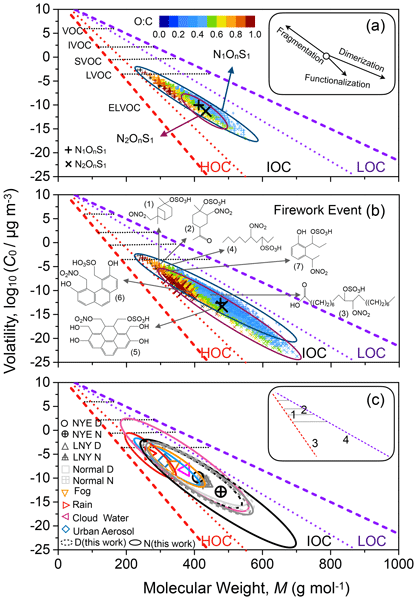
This study investigated the role of nighttime chemistry during Chinese New Year's Eve that enhances the formation of nitrooxy organosulfates in the aerosol phase. Results show that anthropogenic precursors, together with biogenic ones, considerably contribute to the formation of low-volatility nitrooxy OSs. Our study provides detailed molecular composition of firework-related aerosols, which gives new insights into the physicochemical properties and potential health effects of urban aerosols.
Cited articles
Armeli, G., Peters, J.-H., and Koop, T.: Machine-learning-based prediction of the glass transition temperature of organic compounds using experimental data, ACS Omega, 8, 12298–12309, https://doi.org/10.1021/acsomega.2c08146, 2023.
Berkemeier, T., Steimer, S. S., Krieger, U. K., Peter, T., Pöschl, U., Ammann, M., and Shiraiwa, M.: Ozone uptake on glassy, semi-solid and liquid organic matter and the role of reactive oxygen intermediates in atmospheric aerosol chemistry, Phys. Chem. Chem. Phys., 18, 12662–12674, https://doi.org/10.1039/C6CP00634E, 2016.
Bertram, A. K., Martin, S. T., Hanna, S. J., Smith, M. L., Bodsworth, A., Chen, Q., Kuwata, M., Liu, A., You, Y., and Zorn, S. R.: Predicting the relative humidities of liquid-liquid phase separation, efflorescence, and deliquescence of mixed particles of ammonium sulfate, organic material, and water using the organic-to-sulfate mass ratio of the particle and the oxygen-to-carbon elemental ratio of the organic component, Atmos. Chem. Phys., 11, 10995–11006, https://doi.org/10.5194/acp-11-10995-2011, 2011.
Boreddy, S. K. R., Kawamura, K., Mkoma, S., and Fu, P.: Hygroscopic behavior of water-soluble matter extracted from biomass burning aerosols collected at a rural site in Tanzania, East Africa, J. Geophys. Res.-Atmos., 119, 12233–12245, https://doi.org/10.1002/2014JD021546, 2014.
Bouzidi, H., Fayad, L., Coeur, C., Houzel, N., Petitprez, D., Faccinetto, A., Wu, J., Tomas, A., Ondráček, J., Schwarz, J., Ždímal, V., and Zuend, A.: Hygroscopic growth and CCN activity of secondary organic aerosol produced from dark ozonolysis of γ-terpinene, Sci. Total Environ., 817, 153010, https://doi.org/10.1016/j.scitotenv.2022.153010, 2022.
Braban, C. F. and Abbatt, J. P. D.: A study of the phase transition behavior of internally mixed ammonium sulfate – malonic acid aerosols, Atmos. Chem. Phys., 4, 1451–1459, https://doi.org/10.5194/acp-4-1451-2004, 2004.
Cai, C., Luan, Y.-M., Shi, X.-M., and Zhang, Y.: (NH4)2SO4 heterogeneous nucleation and glycerol evaporation of (NH4)2SO4-glycerol system in its dynamic efflorescence process, Chem. Phys., 483, 140–148, https://doi.org/10.1016/j.chemphys.2016.12.003, 2017.
Chang, P.: Study on single aerosol particle by spontaneous and stimulated Raman spectroscopy, PhD Dissertation, Beijing Institute of Technology, http://10.0.7.53:88/urmp/xwlwindex/index/detail_paper.do?RUID=15b6fd2a7205000&dmcode=870000&cxsid=xwlw (last access: 15 December 2025), 2020.
Choi, M. Y. and Chan, C. K.: The effects of organic species on the hygroscopic behaviors of inorganic aerosols, Environ. Sci. Technol., 36, 2422–2428, https://doi.org/10.1021/es0113293, 2002.
Ciobanu, V. G., Marcolli, C., Krieger, U. K., Zuend, A., and Peter, T.: Efflorescence of ammonium sulfate and coated ammonium sulfate particles: evidence for surface nucleation, J. Phys. Chem. A, 114, 9486–9495, https://doi.org/10.1021/jp103541w, 2010.
Cohen, M. D., Flagan, R. C., and Seinfeld, J. H.: Studies of concentrated electrolyte solutions using the electrodynamic balance. 3. Solute nucleation, J. Phys. Chem., 91, 4583–4590, https://doi.org/10.1021/j100301a031, 1987.
Davis, R. D., Lance, S., Gordon, J. A., Ushijima, S. B., and Tolbert, M. A.: Contact efflorescence as a pathway for crystallization of atmospherically relevant particles, P. Natl. Acad. Sci. USA, 112, 15815–15820, https://doi.org/10.1073/pnas.1522860113, 2015.
DeRieux, W.-S. W., Li, Y., Lin, P., Laskin, J., Laskin, A., Bertram, A. K., Nizkorodov, S. A., and Shiraiwa, M.: Predicting the glass transition temperature and viscosity of secondary organic material using molecular composition, Atmos. Chem. Phys., 18, 6331–6351, https://doi.org/10.5194/acp-18-6331-2018, 2018.
Dette, H. P. and Koop, T.: Glass formation processes in mixed inorganic/organic aerosol particles, J. Phys. Chem. A, 119, 4552–4561, https://doi.org/10.1021/jp5106967, 2015.
Donahue, N. M., Epstein, S. A., Pandis, S. N., and Robinson, A. L.: A two-dimensional volatility basis set: 1. organic-aerosol mixing thermodynamics, Atmos. Chem. Phys., 11, 3303–3318, https://doi.org/10.5194/acp-11-3303-2011, 2011.
Fan, J., Comstock, J. M., and Ovchinnikov, M.: The cloud condensation nuclei and ice nuclei effects on tropical anvil characteristics and water vapor of the tropical tropopause layer, Environ. Res. Lett., 5, 044005, https://doi.org/10.1088/1748-9326/5/4/044005, 2010.
Fard, M. M., Krieger, U. K., and Peter, T.: Shortwave radiative impact of liquid–liquid phase separation in brown carbon aerosols, Atmos. Chem. Phys., 18, 13511–13530, https://doi.org/10.5194/acp-18-13511-2018, 2018.
Fitzgerald, C., Hosny, N. A., Tong, H., Seville, P. C., Gallimore, P. J., Davidson, N. M., Athanasiadis, A., Botchway, S. W., Ward, A. D., Kalberer, M., Kuimova, M. K., and Pope, F. D.: Fluorescence lifetime imaging of optically levitated aerosol: a technique to quantitatively map the viscosity of suspended aerosol particles, Phys. Chem. Chem. Phys., 18, 21710–21719, https://doi.org/10.1039/c6cp03674k, 2016.
Fredenslund, A., Jones, R. L., and Prausnitz, J. M.: Group-contribution estimation of activity coefficients in nonideal liquid mixtures, AIChE J., 21, 1086–1099, https://doi.org/10.1002/aic.690210607, 1975.
Freedman, M. A., Huang, Q., and Pitta, K. R.: Phase transitions in organic and organic/inorganic aerosol particles, Annu. Rev. Phys. Chem., 75, 257–281, https://doi.org/10.1146/annurev-physchem-083122-115909, 2024.
Galeazzo, T. and Shiraiwa, M.: Predicting glass transition temperature and melting point of organic compounds via machine learning and molecular embeddings, Environ. Sci.: Atmos., 2, 362–374, https://doi.org/10.1039/D1EA00090J, 2022.
Gervasi, N. R., Topping, D. O., and Zuend, A.: A predictive group-contribution model for the viscosity of aqueous organic aerosol, Atmos. Chem. Phys., 20, 2987–3008, https://doi.org/10.5194/acp-20-2987-2020, 2020.
Ghorai, S., Wang, B., Tivanski, A., and Laskin, A.: Hygroscopic properties of internally mixed particles composed of NaCl and water-soluble organic acids, Environ. Sci. Technol., 48, 2234–2241, https://doi.org/10.1021/es404727u, 2014.
Gordon, M. and Taylor, J. S.: Ideal copolymers and the second-order transitions of synthetic rubbers, I. non-crystalline copolymers, J. Appl. Chem., 2, 493–500, https://doi.org/10.1002/jctb.5010020901, 1952.
Grayson, J. W., Song, M., Sellier, M., and Bertram, A. K.: Validation of the poke-flow technique combined with simulations of fluid flow for determining viscosities in samples with small volumes and high viscosities, Atmos. Meas. Tech., 8, 2463–2472, https://doi.org/10.5194/amt-8-2463-2015, 2015.
Guo, Y., Wang, N., Pang, S., and Zhang, Y.: Hygroscopic properties and compositional evolution of internally mixed sodium nitrate-amino acid aerosols, Atmos. Environ., 242, 117848, https://doi.org/10.1016/j.atmosenv.2020.117848, 2020.
Gupta, D., Kim, H., Park, G., Li, X., Eom, H.-J., and Ro, C.-U.: Hygroscopic properties of NaCl and NaNO3 mixture particles as reacted inorganic sea-salt aerosol surrogates, Atmos. Chem. Phys., 15, 3379–3393, https://doi.org/10.5194/acp-15-3379-2015, 2015.
Hallquist, M., Wenger, J. C., Baltensperger, U., Rudich, Y., Simpson, D., Claeys, M., Dommen, J., Donahue, N. M., George, C., Goldstein, A. H., Hamilton, J. F., Herrmann, H., Hoffmann, T., Iinuma, Y., Jang, M., Jenkin, M. E., Jimenez, J. L., Kiendler-Scharr, A., Maenhaut, W., McFiggans, G., Mentel, Th. F., Monod, A., Prévôt, A. S. H., Seinfeld, J. H., Surratt, J. D., Szmigielski, R., and Wildt, J.: The formation, properties and impact of secondary organic aerosol: current and emerging issues, Atmos. Chem. Phys., 9, 5155–5236, https://doi.org/10.5194/acp-9-5155-2009, 2009.
Hansen, H. K., Rasmussen, P., Fredenslund, A., Schiller, M., and Gmehling, J.: Vapor–liquid equilibria by UNIFAC group contribution. 5. Revision and extension, Ind. Eng. Chem. Res., 30, 2352–2355, https://doi.org/10.1021/ie00058a017, 1991.
Hodas, N., Zuend, A., Schilling, K., Berkemeier, T., Shiraiwa, M., Flagan, R. C., and Seinfeld, J. H.: Discontinuities in hygroscopic growth below and above water saturation for laboratory surrogates of oligomers in organic atmospheric aerosols, Atmos. Chem. Phys., 16, 12767–12792, https://doi.org/10.5194/acp-16-12767-2016, 2016.
Hollomon, J. H. and Turnbull, D.: Nucleation, Prog. Met. Phys., 4, 333–388, https://doi.org/10.1016/0502-8205(53)90020-3, 1953.
Hosny, N. A., Fitzgerald, C., Tong, C., Kalberer, M., Kuimova, M. K., and Pope, F. D.: Fluorescent lifetime imaging of atmospheric aerosols: a direct probe of aerosol viscosity, Faraday Discuss., 165, 343–356, https://doi.org/10.1039/C3FD00041A, 2013.
Hosny, N. A., Fitzgerald, C., Vyšniauskas, A., Athanasiadis, A., Berkemeier, T., Uygur, N., Pöschl, U., Shiraiwa, M., Kalberer, M., Pope, F. D., and Kuimova, M. K.: Direct imaging of changes in aerosol particle viscosity upon hydration and chemical aging, Chem. Sci., 7, 1357–1367, https://doi.org/10.1039/C5SC02959G, 2016.
Hu, S., Fan, R., Wu, L., Li, Y., Zhang, B., Yuan, Z., Li, Q., Ma, S., Zhao, Z., and Xu, T.: Influence of amorphous humic acid solids on the phase transition behavior of nitrate aerosols, J. Phys. Chem. A, 129, 5617–5627, https://doi.org/10.1021/acs.jpca.5c03039, 2025.
Huang, Q., Pitta, K. R., Constantini, K., Ott, E.-J. E., Zuend, A., and Freedman, M. A.: Experimental phase diagram and its temporal evolution for submicron 2-methylglutaric acid and ammonium sulfate aerosol particles, Phys. Chem. Chem. Phys., 26, 2887–2894, https://doi.org/10.1039/D3CP04411D, 2024.
Ji, Z.-R., Zhang, Y., Pang, S.-F., and Zhang, Y.-H.: Crystal nucleation and crystal growth and mass transfer in internally mixed sucrose/NaNO3 particles, J. Phys. Chem. A, 121, 7968–7975, https://doi.org/10.1021/acs.jpca.7b08004, 2017.
Kelton, K. F., Greer, A. L., and Thompson, C. V.: Transient nucleation in condensed systems, J. Chem. Phys., 79, 6261–6276, https://doi.org/10.1063/1.445731, 1983.
Knopf, D. A. and Alpert, P. A.: Atmospheric ice nucleation, Nat. Rev. Phys., 5, 203–217, https://doi.org/10.1038/s42254-023-00570-7, 2023.
Kohl, I., Bachmann, L., Hallbrucker, A., Mayer, E., and Loerting, T.: Liquid-like relaxation in hyperquenched water at≤140 K, Phys. Chem. Chem. Phys., 7, 3210–3220, https://doi.org/10.1039/B507651J, 2005.
Koop, T., Bookhold, J., Shiraiwa, M., and Pöschl, U.: Glass transition and phase state of organic compounds: dependency on molecular properties and implications for secondary organic aerosols in the atmosphere, Phys. Chem. Chem. Phys., 13, 19238–19255, https://doi.org/10.1039/C1CP22617G, 2011.
Kuwata, M. and Martin, S. T.: Phase of atmospheric secondary organic material affects its reactivity, P. Natl. Acad. Sci. USA, 109, 17354–17359, https://doi.org/10.1073/pnas.1209071109, 2012.
Laskina, O., Morris, H. S., Grandquist, J. R., Qin, Z., Stone, E. A., Tivanski, A. V., and Grassian, V. H.: Size matters in the water uptake and hygroscopic growth of atmospherically relevant multicomponent aerosol particles, J. Phys. Chem. A, 119, 4489–4497, https://doi.org/10.1021/jp510268p, 2015.
Li, Y., Pöschl, U., and Shiraiwa, M.: Molecular corridors and parameterizations of volatility in the chemical evolution of organic aerosols, Atmos. Chem. Phys., 16, 3327–3344, https://doi.org/10.5194/acp-16-3327-2016, 2016.
Li, Y., Day, D. A., Stark, H., Jimenez, J. L., and Shiraiwa, M.: Predictions of the glass transition temperature and viscosity of organic aerosols from volatility distributions, Atmos. Chem. Phys., 20, 8103–8122, https://doi.org/10.5194/acp-20-8103-2020, 2020.
Lilek, J. and Zuend, A.: A predictive viscosity model for aqueous electrolytes and mixed organic–inorganic aerosol phases, Atmos. Chem. Phys., 22, 3203–3233, https://doi.org/10.5194/acp-22-3203-2022, 2022.
Ma, S., Pang, S., Li, J., and Zhang, Y.: A review of efflorescence kinetics studies on atmospherically relevant particles, Chemosphere, 277, 130320, https://doi.org/10.1016/j.chemosphere.2021.130320, 2021a.
Ma, S., Chen, Z., Pang, S., and Zhang, Y.: Observations on hygroscopic growth and phase transitions of mixed 1, 2, 6−hexanetriol ∕ (NH4)2SO4 particles: investigation of the liquid–liquid phase separation (LLPS) dynamic process and mechanism and secondary LLPS during the dehumidification, Atmos. Chem. Phys., 21, 9705–9717, https://doi.org/10.5194/acp-21-9705-2021, 2021b.
Marcolli, C. and Krieger, U. K.: Phase changes during hygroscopic cycles of mixed organic/inorganic model systems of tropospheric aerosols, J. Phys. Chem. A, 110, 1881–1893, https://doi.org/10.1021/jp0556759, 2006.
Mikhailov, E., Vlasenko, S., Martin, S. T., Koop, T., and Pöschl, U.: Amorphous and crystalline aerosol particles interacting with water vapor: conceptual framework and experimental evidence for restructuring, phase transitions and kinetic limitations, Atmos. Chem. Phys., 9, 9491–9522, https://doi.org/10.5194/acp-9-9491-2009, 2009.
Novo, N., Carotenuto, A., Mensitieri, G., Fraldi, M., and Pugno, N.: Modeling of virus survival time in respiratory droplets on surfaces: a new rational approach for antivirus strategies, Frontiers in Materials, 8, 631723, https://doi.org/10.3389/fmats.2021.631723, 2021.
Oswin, H. P., Haddrell, A. E., Otero-Fernandez, M., Mann, J. F. S., Cogan, T. A., Hilditch, T. G., Tian, J., Hardy, D., Hill, D. J., Finn, A., Davidson, A. D., and Reid, J. P.: Reply to Klein et al.: the importance of aerosol pH for airborne respiratory virus transmission, P. Natl. Acad. Sci. USA, 119, e2212556119, https://doi.org/10.1073/pnas.2212556119, 2022.
Parsons, M. T., Knopf, D. A., and Bertram, A. K.: Deliquescence and crystallization of ammonium sulfate particles internally mixed with water-soluble organic compounds, J. Phys. Chem. A, 108, 11600–11608, https://doi.org/10.1021/jp0462862, 2004.
Pöschl, U.: Atmospheric aerosols: composition, transformation, climate and health effects, Angew. Chem. Int. Edit., 44, 7520–7540, https://doi.org/10.1002/anie.200501122, 2005.
Raes, F.: Formation and cycling of aerosols in the global troposphere, Atmos. Environ., 34, 4215–4240, https://doi.org/10.1016/S1352-2310(00)00239-9, 2000.
Reid, J. P., Power, R. M., Cai, C., Zhang, C., Mcgloin, D., and Mazilu, M.: Micro-rheology and interparticle interactions in aerosols probed with optical tweezers, P. Soc. Photo.-Opt. Ins., XI, 91641W, https://doi.org/10.1117/12.2061018, 2014.
Reid, J. P., Bertram, A. K., Topping, D. O., Laskin, A., Martin, S. T., Petters, M. D., Pope, F. D., and Rovelli, G.: The viscosity of atmospherically relevant organic particles, Nat. Commun., 9, 956, https://doi.org/10.1038/s41467-018-03027-z, 2018.
Renbaum-Wolff, L., Grayson, J. W., Bateman, A. P., Kuwata, M., Sellier, M., Murray, B. J., Shilling, J. E., Martin, S. T., and Bertram, A. K.: Viscosity of α -pinene secondary organic material and implications for particle growth and reactivity, P. Natl. Acad. Sci. USA, 110, 8014–8019, https://doi.org/10.1073/pnas.1219548110, 2013.
Saukko, E., Lambe, A. T., Massoli, P., Koop, T., Wright, J. P., Croasdale, D. R., Pedernera, D. A., Onasch, T. B., Laaksonen, A., Davidovits, P., Worsnop, D. R., and Virtanen, A.: Humidity-dependent phase state of SOA particles from biogenic and anthropogenic precursors, Atmos. Chem. Phys., 12, 7517–7529, https://doi.org/10.5194/acp-12-7517-2012, 2012.
Sheldon, C. S., Salazar, J., Palacios Diaz, T., Morton, K., Davis, R. D., and Davies, J. F.: Correlating the viscosity and rate of water diffusion in semisolid gel-forming aerosol particles, ACS Earth Space Chem., 7, 2311–2320, https://doi.org/10.1021/acsearthspacechem.3c00241, 2023.
Shi, X.-M., Wu, F.-M., Jing, B., Wang, N., Xu, L.-L., Pang, S.-F., and Zhang, Y.-H.: Hygroscopicity of internally mixed particles composed of (NH4)2SO4 and citric acid under pulsed RH change, Chemosphere, 188, 532–540, https://doi.org/10.1016/j.chemosphere.2017.09.024, 2017.
Shiraiwa, M., Zuend, A., Bertram, A. K., and Seinfeld, J. H.: Gas-article partitioning of atmospheric aerosols: interplay of physical state, non-ideal mixing and morphology, Phys. Chem. Chem. Phys., 15, 11441–11453, https://doi.org/10.1039/C3CP51595H, 2013.
Shiraiwa, M., Li, Y., Tsimpidi, A. P., Karydis, V. A., Berkemeier, T., Pandis, S. N., Lelieveld, J., Koop, T., and Pöschl, U.: Global distribution of particle phase state in atmospheric secondary organic aerosols, Nat. Commun., 8, 15002, https://doi.org/10.1038/ncomms15002, 2017.
Shrivastava, M., Cappa, C. D., Fan, J., Goldstein, A. H., Guenther, A. B., Jimenez, J. L., Kuang, C., Laskin, A., Martin, S. T., Ng, N. L., Petaja, T., Pierce, J. R., Rasch, P. J., Roldin, P., Seinfeld, J. H., Shilling, J., Smith, J. N., Thornton, J. A., Volkamer, R., Wang, J., Worsnop, D. R., Zaveri, R. A., Zelenyuk, A., and Zhang, Q.: Recent advances in understanding secondary organic aerosol: Implications for global climate forcing, Rev. Geophys., 55, 509–559, https://doi.org/10.1002/2016RG000540, 2017.
Smith, J. N., Draper, D. C., Chee, S., Dam, M., Glicker, H., Myers, D., Thomas, A. E., Lawler, M. J., and Myllys, N.: Atmospheric clusters to nanoparticles: Recent progress and challenges in closing the gap in chemical composition, J. Aerosol Sci., 153, 105733, https://doi.org/10.1016/j.jaerosci.2020.105733, 2021.
Song, M., Liu, P. F., Hanna, S. J., Zaveri, R. A., Potter, K., You, Y., Martin, S. T., and Bertram, A. K.: Relative humidity-dependent viscosity of secondary organic material from toluene photo-oxidation and possible implications for organic particulate matter over megacities, Atmos. Chem. Phys., 16, 8817–8830, https://doi.org/10.5194/acp-16-8817-2016, 2016a.
Song, Y. C., Haddrell, A. E., Bzdek, B. R., Reid, J. P., Bannan, T., Topping, D. O., Percival, C., and Cai, C.: Measurements and predictions of binary component aerosol particle viscosity, J. Phys. Chem. A, 120, 8123–8137, https://doi.org/10.1021/acs.jpca.6b07835, 2016b.
Song, Y.-C., Lilek, J., Lee, J. B., Chan, M. N., Wu, Z., Zuend, A., and Song, M.: Viscosity and phase state of aerosol particles consisting of sucrose mixed with inorganic salts, Atmos. Chem. Phys., 21, 10215–10228, https://doi.org/10.5194/acp-21-10215-2021, 2021.
Sun, J., Hu, Y., Cao, X., Pang, S.-F., Liu, P., Huang, Q., and Zhang, Y.-H.: Role of WSOCs and pH on ammonium nitrate aerosol efflorescence: insights into secondary aerosol formation, Environ. Sci. Technol., 57, 20074–20084, https://doi.org/10.1021/acs.est.3c07603, 2023.
Tong, H.-J., Reid, J. P., Bones, D. L., Luo, B. P., and Krieger, U. K.: Measurements of the timescales for the mass transfer of water in glassy aerosol at low relative humidity and ambient temperature, Atmos. Chem. Phys., 11, 4739–4754, https://doi.org/10.5194/acp-11-4739-2011, 2011.
Turnbull, D.: Under what conditions can a glass be formed?, Contemp. Phys., 10, 473–488, https://doi.org/10.1080/00107516908204405, 1969.
Ushijima, S. B., Huynh, E., Davis, R. D., and Tolbert, M. A.: Seeded crystal growth of internally mixed organic–inorganic aerosols: impact of organic phase state, J. Phys. Chem. A, 125, 8668–8679, https://doi.org/10.1021/acs.jpca.1c04471, 2021.
Virtanen, A., Joutsensaari, J., Koop, T., Kannosto, J., Yli-Pirilä, P., Leskinen, J., Mäkelä, J. M., Holopainen, J. K., Pöschl, U., Kulmala, M., Worsnop, D. R., and Laaksonen, A.: An amorphous solid state of biogenic secondary organic aerosol particles, Nature, 467, 824–827, https://doi.org/10.1038/nature09455, 2010.
Wang, L.-N., Cai, C., and Zhang, Y.-H.: Kinetically determined hygroscopicity and efflorescence of sucrose-ammonium sulfate aerosol droplets under lower relative humidity, J. Phys. Chem. B, 121, 8551–8557, https://doi.org/10.1021/acs.jpcb.7b05551, 2017.
Wang, X.: Study on the hygroscopicity of mixed aerosols composed of organic acids and inorganic salts by Raman spectroscopy, PhD Dissertation, Beijing Institute of Technology, http://10.0.7.53:88/urmp/xwlwindex/index/detail_paper.do?RUID=22ad63060003a0c351&dmcode=870000&cxsid=xwlw (last access: 12 December 2025), 2018.
Wu, F.: Thermodynamics and Kinetics Research of Mixed Inorganic/Glutaric acid Aerosols in the Hygroscopic Process, PhD Dissertation, Beijing Institute of Technology, http://10.0.7.53:88/urmp/xwlwindex/index/detail_paper.do?RUID=20d6b9b900036cc351&dmcode=870000&cxsid=xwlw (last access: 15 December 2025), 2017.
Xu, Y., Liu, P., Ma, S., Pei, W., Pang, S., and Zhang, Y.: Efflorescence kinetics of aerosols comprising internally-mixed ammonium sulfate and water-soluble organic compounds, Atmos. Environ., 274, 119007, https://doi.org/10.1016/j.atmosenv.2022.119007, 2022.
Yli-Juuti, T., Pajunoja, A., Tikkanen, O.-P., Buchholz, A., Faiola, C., Väisänen, O., Hao, L., Kari, E., Peräkylä, O., Garmash, O., Shiraiwa, M., Ehn, M., Lehtinen, K., and Virtanen, A.: Factors controlling the evaporation of secondary organic aerosol from α-pinene ozonolysis, Geophys. Res. Lett., 44, 2562–2570, https://doi.org/10.1002/2016GL072364, 2017.
Yu, J.-Y., Zhang, Y., Zeng, G., Zheng, C.-M., Liu, Y., and Zhang, Y.-H.: Suppression of NaNO3 crystal nucleation by glycerol: micro-raman observation on the efflorescence process of mixed glycerol/NaNO3/water droplets, J. Phys. Chem. B, 116, 1642–1650, https://doi.org/10.1021/jp210824e, 2012.
Yu, Z., Jang, M., and Madhu, A.: Prediction of phase state of secondary organic aerosol internally mixed with aqueous inorganic salts, J. Phys. Chem. A, 125, 10198–10206, https://doi.org/10.1021/acs.jpca.1c06773, 2021.
Zhang, R., Khalizov, A., Wang, L., Hu, M., and Xu, W.: Nucleation and growth of nanoparticles in the atmosphere, Chem. Rev., 112, 1957–2011, https://doi.org/10.1021/cr2001756, 2012.
Zhang, Y., Nichman, L., Spencer, P., Jung, J. I., Lee, A., Heffernan, B. K., Gold, A., Zhang, Z., Chen, Y., Canagaratna, M. R., Jayne, J. T., Worsnop, D. R., Onasch, T. B., Surratt, J. D., Chandler, D., Davidovits, P., and Kolb, C. E.: The cooling rate-and volatility-dependent glass-forming properties of organic aerosols measured by broadband dielectric spectroscopy, Environ. Sci. Technol., 53, 12366–12378, https://doi.org/10.1021/acs.est.9b03317, 2019.
Zhang, Z., Li, Y., Ran, H., An, J., Qu, Y., Zhou, W., Xu, W., Hu, W., Xie, H., Wang, Z., Sun, Y., and Shiraiwa, M.: Simulated phase state and viscosity of secondary organic aerosols over China, Atmos. Chem. Phys., 24, 4809–4826, https://doi.org/10.5194/acp-24-4809-2024, 2024.
Zobrist, B., Marcolli, C., Pedernera, D. A., and Koop, T.: Do atmospheric aerosols form glasses?, Atmos. Chem. Phys., 8, 5221–5244, https://doi.org/10.5194/acp-8-5221-2008, 2008.
Zobrist, B., Soonsin, V., Luo, B. P., Krieger, U. K., Marcolli, C., Peter, T., and Koop, T.: Ultra-slow water diffusion in aqueous sucrose glasses, Phys. Chem. Chem. Phys., 13, 3514–3526, https://doi.org/10.1039/C0CP01273D, 2011.
Zuend, A., Marcolli, C., Luo, B. P., and Peter, T.: A thermodynamic model of mixed organic-inorganic aerosols to predict activity coefficients, Atmos. Chem. Phys., 8, 4559–4593, https://doi.org/10.5194/acp-8-4559-2008, 2008.
Zuend, A., Marcolli, C., Booth, A. M., Lienhard, D. M., Soonsin, V., Krieger, U. K., Topping, D. O., McFiggans, G., Peter, T., and Seinfeld, J. H.: New and extended parameterization of the thermodynamic model AIOMFAC: calculation of activity coefficients for organic-inorganic mixtures containing carboxyl, hydroxyl, carbonyl, ether, ester, alkenyl, alkyl, and aromatic functional groups, Atmos. Chem. Phys., 11, 9155–9206, https://doi.org/10.5194/acp-11-9155-2011, 2011.
Short summary
Atmospheric aerosol efflorescence strongly influences their growth, optical properties, and chemical reactivity. By combining thermodynamic viscosity modeling with literature-reported laboratory data, we develop a viscosity–humidity framework that defines empirical boundaries separating aqueous, efflorescence, and non-efflorescence regions. This framework provides quantitative constraints on aerosol phase-transition behavior across diverse organic–inorganic aerosol systems.
Atmospheric aerosol efflorescence strongly influences their growth, optical properties, and...


Altmetrics
Final-revised paper
Preprint