
Articles | Volume 26, issue 13
https://doi.org/10.5194/acp-26-9809-2026
© Author(s) 2026. This work is distributed under
the Creative Commons Attribution 4.0 License.
the Creative Commons Attribution 4.0 License.
https://doi.org/10.5194/acp-26-9809-2026
© Author(s) 2026. This work is distributed under
the Creative Commons Attribution 4.0 License.
the Creative Commons Attribution 4.0 License.
Research article
| 
13 Jul 2026
Research article |
| 13 Jul 2026
| 13 Jul 2026
Development of iron-mediated molecular chlorine chemistry in GEOS-Chem: model description, evaluation and global atmospheric implication
Jing Chen
Institute of Environment and Ecology, Tsinghua Shenzhen International Graduate School, Tsinghua University, Shenzhen 518055, China
Xianyi Sun
Institute of Environment and Ecology, Tsinghua Shenzhen International Graduate School, Tsinghua University, Shenzhen 518055, China
Chuang Qin
Institute of Environment and Ecology, Tsinghua Shenzhen International Graduate School, Tsinghua University, Shenzhen 518055, China
Jie Li
Institute of Environment and Ecology, Tsinghua Shenzhen International Graduate School, Tsinghua University, Shenzhen 518055, China
Qianjie Chen
Department of Civil and Environmental Engineering, The Hong Kong Polytechnic University, Hong Kong SAR 999077, China

Institute of Environment and Ecology, Tsinghua Shenzhen International Graduate School, Tsinghua University, Shenzhen 518055, China
Related authors
No articles found.
Shengjin Xie, Xuelei Zhang, Aijun Xiu, Hong Qi, Shengrui Tong, Qianjie Chen, Chao Gao, Hongmei Zhao, Shichun Zhang, Stephen Dauda Yabo, Yiming Liu, Siting Li, and Mengduo Zhang
The Cryosphere, 20, 5435–5451, https://doi.org/10.5194/tc-20-5435-2026, https://doi.org/10.5194/tc-20-5435-2026, 2026
Short summary
Short summary
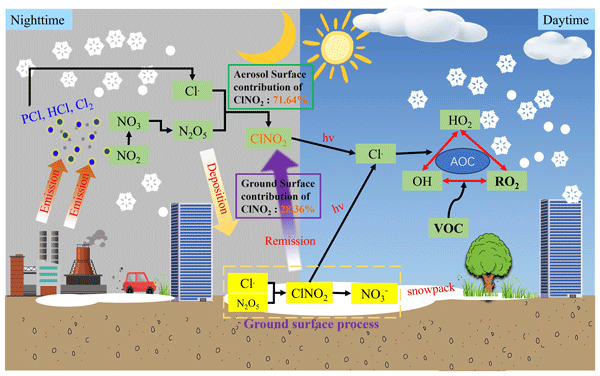
This study examines how snow-covered surfaces affect air pollution in Northeast China. Using numerical simulations, we explore chlorine-related chemical reactions that generate reactive species, enhancing fine particles and ozone. Results show that snow-surface reactions drive nighttime pollutant accumulation and notably improve model performance, providing new insights into how snow and surface chemistry influence regional air quality.
Zhouxing Zou, Tianshu Chen, Qianjie Chen, Weihang Sun, Shichun Han, Zhuoyue Ren, Xinyi Li, Wei Song, Aoqi Ge, Qi Wang, Xiao Tian, Chenglei Pei, Xinming Wang, Yanli Zhang, and Tao Wang
Atmos. Chem. Phys., 25, 8147–8161, https://doi.org/10.5194/acp-25-8147-2025, https://doi.org/10.5194/acp-25-8147-2025, 2025
Short summary
Short summary
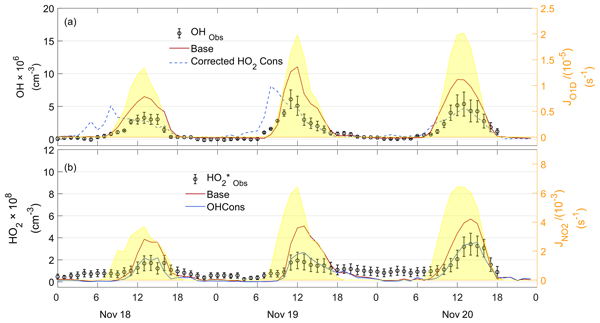
We measured ambient OH and HO2* (HO2 and contribution from RO2, organic peroxyl radicals) concentrations at a subtropical rural site and compared our observations with model results. During warm periods, the model overestimated concentrations of OH and HO2, leading to overestimation of ozone and nitric acid production. Our findings highlight the need to better understand how OH and HO2 are formed and removed, which is important for accurate air quality and climate predictions.
Ursula A. Jongebloed, Jacob I. Chalif, Linia Tashmim, William C. Porter, Kelvin H. Bates, Qianjie Chen, Erich C. Osterberg, Bess G. Koffman, Jihong Cole-Dai, Dominic A. Winski, David G. Ferris, Karl J. Kreutz, Cameron P. Wake, and Becky Alexander
Atmos. Chem. Phys., 25, 4083–4106, https://doi.org/10.5194/acp-25-4083-2025, https://doi.org/10.5194/acp-25-4083-2025, 2025
Short summary
Short summary
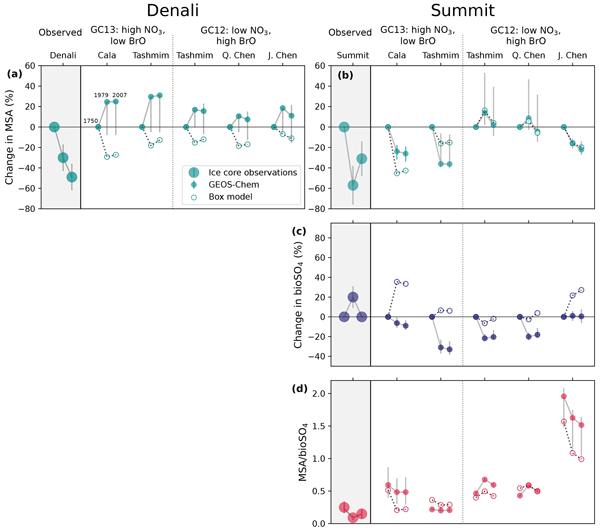
Marine phytoplankton emit dimethyl sulfide (DMS), which forms methanesulfonic acid (MSA) and sulfate. MSA concentrations in ice cores decreased over the industrial era, which has been attributed to pollution-driven changes in DMS chemistry. We use a model to investigate DMS chemistry compared to observations of DMS, MSA, and sulfate. We find that modeled DMS, MSA, and sulfate are influenced by pollution-sensitive oxidant concentrations, characterization of DMS chemistry, and other variables.
Linia Tashmim, William C. Porter, Qianjie Chen, Becky Alexander, Charles H. Fite, Christopher D. Holmes, Jeffrey R. Pierce, Betty Croft, and Sakiko Ishino
Atmos. Chem. Phys., 24, 3379–3403, https://doi.org/10.5194/acp-24-3379-2024, https://doi.org/10.5194/acp-24-3379-2024, 2024
Short summary
Short summary
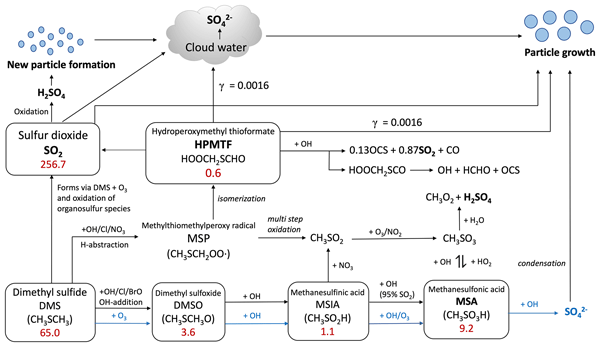
Dimethyl sulfide (DMS) is mostly emitted from ocean surfaces and represents the largest natural source of sulfur for the atmosphere. Once in the atmosphere, DMS forms stable oxidation products such as SO2 and H2SO4, which can subsequently contribute to airborne particle formation and growth. In this study, we update the DMS oxidation mechanism in the chemical transport model GEOS-Chem and describe resulting changes in particle growth as well as the overall global sulfur budget.
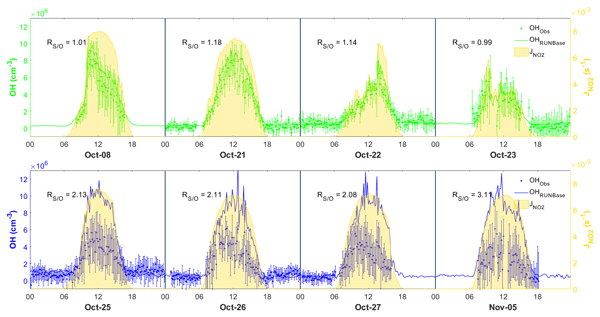
Zhouxing Zou, Qianjie Chen, Men Xia, Qi Yuan, Yi Chen, Yanan Wang, Enyu Xiong, Zhe Wang, and Tao Wang
Atmos. Chem. Phys., 23, 7057–7074, https://doi.org/10.5194/acp-23-7057-2023, https://doi.org/10.5194/acp-23-7057-2023, 2023
Short summary
Short summary
We present OH observation and model simulation results at a coastal site in Hong Kong. The model predicted the OH concentration under high-NOx well but overpredicted it under low-NOx conditions. This implies an insufficient understanding of OH chemistry under low-NOx conditions. We show evidence of missing OH sinks as a possible cause of the overprediction.

Qianjie Chen, Jessica A. Mirrielees, Sham Thanekar, Nicole A. Loeb, Rachel M. Kirpes, Lucia M. Upchurch, Anna J. Barget, Nurun Nahar Lata, Angela R. W. Raso, Stephen M. McNamara, Swarup China, Patricia K. Quinn, Andrew P. Ault, Aaron Kennedy, Paul B. Shepson, Jose D. Fuentes, and Kerri A. Pratt
Atmos. Chem. Phys., 22, 15263–15285, https://doi.org/10.5194/acp-22-15263-2022, https://doi.org/10.5194/acp-22-15263-2022, 2022
Short summary
Short summary
During a spring field campaign in the coastal Arctic, ultrafine particles were enhanced during high wind speeds, and coarse-mode particles were reduced during blowing snow. Calculated periods blowing snow were overpredicted compared to observations. Sea spray aerosols produced by sea ice leads affected the composition of aerosols and snowpack. An improved understanding of aerosol emissions from leads and blowing snow is critical for predicting the future climate of the rapidly warming Arctic.
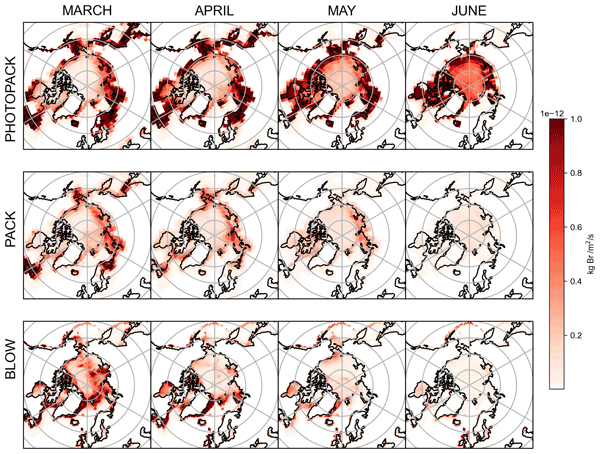
William F. Swanson, Chris D. Holmes, William R. Simpson, Kaitlyn Confer, Louis Marelle, Jennie L. Thomas, Lyatt Jaeglé, Becky Alexander, Shuting Zhai, Qianjie Chen, Xuan Wang, and Tomás Sherwen
Atmos. Chem. Phys., 22, 14467–14488, https://doi.org/10.5194/acp-22-14467-2022, https://doi.org/10.5194/acp-22-14467-2022, 2022
Short summary
Short summary
Radical bromine molecules are seen at higher concentrations during the Arctic spring. We use the global model GEOS-Chem to test whether snowpack and wind-blown snow sources can explain high bromine concentrations. We run this model for the entire year of 2015 and compare results to observations of bromine from floating platforms on the Arctic Ocean and at Utqiaġvik. We find that the model performs best when both sources are enabled but may overestimate bromine production in summer and fall.
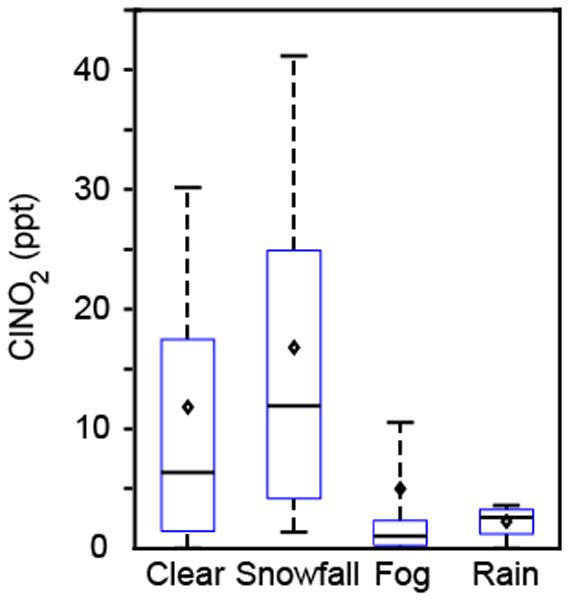
Kathryn D. Kulju, Stephen M. McNamara, Qianjie Chen, Hannah S. Kenagy, Jacinta Edebeli, Jose D. Fuentes, Steven B. Bertman, and Kerri A. Pratt
Atmos. Chem. Phys., 22, 2553–2568, https://doi.org/10.5194/acp-22-2553-2022, https://doi.org/10.5194/acp-22-2553-2022, 2022
Short summary
Short summary
N2O5 uptake by chloride-containing surfaces produces ClNO2, which photolyzes, producing NO2 and highly reactive Cl radicals that impact air quality. In the inland urban atmosphere, ClNO2 was elevated during lower air turbulence and over snow-covered ground, from snowpack ClNO2 production. N2O5 and ClNO2 levels were lowest, on average, during rainfall and fog because of scavenging, with N2O5 scavenging by fog droplets likely contributing to observed increased particulate nitrate concentrations.
Cited articles
Alexander, B., Park, R. J., Jacob, D. J., and Gong, S.: Transition metal-catalyzed oxidation of atmospheric sulfur: Global implications for the sulfur budget, J. Geophys. Res.-Atmos., 114, D02309, https://doi.org/10.1029/2008JD010486, 2009.
Baldo, C., Ito, A., Krom, M. D., Li, W., Jones, T., Drake, N., Ignatyev, K., Davidson, N., and Shi, Z.: Iron from coal combustion particles dissolves much faster than mineral dust under simulated atmospheric acidic conditions, Atmos. Chem. Phys., 22, 6045–6066, https://doi.org/10.5194/acp-22-6045-2022, 2022.
Bunnell, Z. B., Sieber, M., Hamilton, D. S., Marsay, C. M., Buck, C. S., Landing, W. M., John, S. G., and Conway, T. M.: The influence of natural, anthropogenic, and wildfire sources on iron and zinc aerosols delivered to the North Pacific Ocean, Geophys. Res. Lett., 52, e2024GL113877, https://doi.org/10.1029/2024gl113877, 2025.
Chang, D., Li, Q., Wang, Z., Dai, J., Fu, X., Guo, J., Zhu, L., Pu, D., Cuevas, C. A., Fernandez, R. P., Wang, W., Ge, M., Fung, J. C. H., Lau, A. K. H., Granier, C., Brasseur, G., Pozzer, A., Saiz-Lopez, A., Song, Y., and Wang, T.: Significant chlorine emissions from biomass burning affect the long-term atmospheric chemistry in Asia, Natl. Sci. Rev., 11, nwae285, https://doi.org/10.1093/nsr/nwae285, 2024.
Chen, G., Chen, Z., Zhang, Y., Fan, X., Xu, L., Lin, Z., Ji, X., and Chen, J.: Enhanced oxidation capacity driven by pollution-induced chlorine chemistry in the coastal atmosphere, npj Clim. Atmos. Sci., 8, https://doi.org/10.1038/s41612-025-01133-6, 2025a.
Chen, G. J., Fan, X. L., Lin, Z. Y., Ji, X. T., Chen, Z. Y., Xu, L. L., and Chen, J. S.: Driving factors and photochemical impacts of Cl2 in coastal atmosphere of Southeast China, npj Clim. Atmos. Sci., 8, 2397–3722, https://doi.org/10.1038/s41612-025-01022-y, 2025b.
Chen, G. J., Fan, X. L., Yu, S. C., Tham, Y. J., Lin, Z. Y., Ji, X. T., Xu, L. L., and Chen, J. S.: HOCl formation driven by photochemical processes enhanced atmospheric oxidation capacity in a coastal atmosphere, Environ. Sci. Technol., 59, 5164–5171, https://doi.org/10.1021/acs.est.5c01363, 2025c.
Chen, H. and Grassian, V.: Iron dissolution of dust source materials during simulated acidic processing: the effect of sulfuric, acetic, and oxalic acids, Environ. Sci. Technol., 47, 10312–10321, https://doi.org/10.1021/es401285s, 2013.
Chen, J.: Modified GEOS-Chem source-code files for iron dissolution and iron-mediated molecular chlorine formation, Zenodo [code], https://doi.org/10.5281/zenodo.20529218, 2026.
Chen, Q., Wang, X., Fu, X., Li, X., Alexander, B., Peng, X., Wang, W., Xia, M., Tan, Y., Gao, J., Chen, J., Mu, Y., Liu, P., and Wang, T.: Impact of molecular chlorine production from aerosol iron photochemistry on atmospheric oxidative capacity in North China, Environ. Sci. Technol., 58, 12585–12597, https://doi.org/10.1021/acs.est.4c02534, 2024.
Chen, Y. and Siefert, R. L.: Seasonal and spatial distributions and dry deposition fluxes of atmospheric total and labile iron over the tropical and subtropical North Atlantic Ocean, J. Geophys. Res.-Atmos., 109, D09305, https://doi.org/10.1029/2003jd003958, 2004.
Claquin, T., Schulz, M., and Balkanski, Y. J.: Modeling the mineralogy of atmospheric dust sources, J. Geophys. Res.-Atmos., 104, 22243–22256, https://doi.org/10.1029/1999jd900416, 1999.
Dai, J. N., Wang, T., Shen, H. Q., Xia, M., Sun, W. H., and Brasseur, G. P.: Significant impact of a daytime halogen oxidant on coastal air quality, Environ. Sci. Technol., 59, 2169–2180, https://doi.org/10.1021/acs.est.4c08360, 2025.
Demasy, C., Boye, M., Lai, B., Burckel, P., Feng, Y., Losno, R., Borensztajn, S., and Besson, P.: Iron dissolution from Patagonian dust in the Southern Ocean: under present and future conditions, Front. Mar. Sci., 11, 1363088, https://doi.org/10.3389/fmars.2024.1363088, 2024.
Dovrou, E., Bates, K. H., Moch, J. M., Mickley, L. J., Jacob, D. J., and Keutsch, F. N.: Catalytic role of formaldehyde in particulate matter formation, P. Natl. Acad. Sci. USA, 119, https://doi.org/10.1073/pnas.2113265119, 2022.
Duncan Fairlie, T., Jacob, D. J., and Park, R. J.: The impact of transpacific transport of mineral dust in the United States, Atmos. Environ., 41, 1251–1266, https://doi.org/10.1016/j.atmosenv.2006.09.048, 2007.
Faxon, C. B. and Allen, D. T.: Chlorine chemistry in urban atmospheres: a review, Environ. Chem., 10, 221–233, https://doi.org/10.1071/en13026, 2013.
Faxon, C. B., Bean, J., and Ruiz, L.: Inland concentrations of Cl2 and ClNO2 in southeast Texas suggest chlorine chemistry significantly contributes to atmospheric reactivity, Atmosphere, 6, 1487–1506, https://doi.org/10.3390/atmos6101487, 2015.
Feng, T., Bei, N., Zhao, S., Wu, J., Liu, S., Li, X., Liu, L., Wang, R., Zhang, X., Tie, X., and Li, G.: Nitrate debuts as a dominant contributor to particulate pollution in Beijing: Roles of enhanced atmospheric oxidizing capacity and decreased sulfur dioxide emission, Atmos. Environ., 244, 117995, https://doi.org/10.1016/j.atmosenv.2020.117995, 2021.
Fountoukis, C. and Nenes, A.: ISORROPIA II: a computationally efficient thermodynamic equilibrium model for K+-Ca2+-Mg2+-NH
Fu, X., Wang, T., Wang, S., Zhang, L., Cai, S., Xing, J., and Hao, J.: Anthropogenic emissions of hydrogen chloride and fine particulate chloride in china, Environ. Sci. Technol., 52, 1644–1654, https://doi.org/10.1021/acs.est.7b05030, 2018.
Fu, X., Wang, T., Gao, J., Wang, P., Liu, Y. M., Wang, S. X., Zhao, B., and Xue, L. K.: Persistent heavy winter nitrate pollution driven by increased photochemical oxidants in northern China, Environ. Sci. Technol., 54, 3881–3889, https://doi.org/10.1021/acs.est.9b07248, 2020.
Gao, J., Wang, H., Liu, W., Xu, H., Wei, Y., Tian, X., Feng, Y., Song, S., and Shi, G.: Hydrogen peroxide serves as pivotal fountainhead for aerosol aqueous sulfate formation from a global perspective, Nat. Commun., 15, 4625, https://doi.org/10.1038/s41467-024-48793-1, 2024.
Gassó, S. and Stein, A. F.: Does dust from Patagonia reach the sub-Antarctic Atlantic ocean?, Geophys. Res. Lett., 34, https://doi.org/10.1029/2006gl027693, 2007.
Ginoux, P., Prospero, J., Torres, O., and Chin, M.: Long-term simulation of global dust distribution with the GOCART model: correlation with North Atlantic Oscillation, Environ. Modell. Softw., 19, 113–128, https://doi.org/10.1016/s1364-8152(03)00114-2, 2004.
Gonçalves Ageitos, M., Obiso, V., Miller, R. L., Jorba, O., Klose, M., Dawson, M., Balkanski, Y., Perlwitz, J., Basart, S., Di Tomaso, E., Escribano, J., Macchia, F., Montané, G., Mahowald, N. M., Green, R. O., Thompson, D. R., and Pérez García-Pando, C.: Modeling dust mineralogical composition: sensitivity to soil mineralogy atlases and their expected climate impacts, Atmos. Chem. Phys., 23, 8623–8657, https://doi.org/10.5194/acp-23-8623-2023, 2023.
Gorham, K. A., Abernethy, S., Jones, T. R., Hess, P., Mahowald, N. M., Meidan, D., Johnson, M. S., van Herpen, M. M. J. W., Xu, Y., Saiz-Lopez, A., Röckmann, T., Brashear, C. A., Reinhardt, E., and Mann, D.: Opinion: A research roadmap for exploring atmospheric methane removal via iron salt aerosol, Atmos. Chem. Phys., 24, 5659–5670, https://doi.org/10.5194/acp-24-5659-2024, 2024.
Guenther, A. B., Jiang, X., Heald, C. L., Sakulyanontvittaya, T., Duhl, T., Emmons, L. K., and Wang, X.: The Model of Emissions of Gases and Aerosols from Nature version 2.1 (MEGAN2.1): an extended and updated framework for modeling biogenic emissions, Geosci. Model Dev., 5, 1471–1492, https://doi.org/10.5194/gmd-5-1471-2012, 2012.
Guo, Z., Lu, K., Qiu, P., Xu, M., and Guo, Z.: Quantifying SO2 oxidation pathways to atmospheric sulfate using stable sulfur and oxygen isotopes: laboratory simulation and field observation, Atmos. Chem. Phys., 24, 2195–2205, https://doi.org/10.5194/acp-24-2195-2024, 2024.
Hamilton, D. S., Scanza, R. A., Feng, Y., Guinness, J., Kok, J. F., Li, L., Liu, X., Rathod, S. D., Wan, J. S., Wu, M., and Mahowald, N. M.: Improved methodologies for Earth system modelling of atmospheric soluble iron and observation comparisons using the Mechanism of Intermediate complexity for Modelling Iron (MIMI v1.0), Geosci. Model Dev., 12, 3835–3862, https://doi.org/10.5194/gmd-12-3835-2019, 2019.
He, P. Z., Chi, X. Y., Zhang, B. H., Hua, C., Dao, X., Meng, X. Y., and Ma, T. M.: Exploring the formation of atmospheric nitrate and sulfate based on one-year observations in Beijing, Aerosol Sci. Eng., https://doi.org/10.1007/s41810-025-00361-w, 2025.
Hoesly, R. M., Smith, S. J., Feng, L., Klimont, Z., Janssens-Maenhout, G., Pitkanen, T., Seibert, J. J., Vu, L., Andres, R. J., Bolt, R. M., Bond, T. C., Dawidowski, L., Kholod, N., Kurokawa, J.-I., Li, M., Liu, L., Lu, Z., Moura, M. C. P., O'Rourke, P. R., and Zhang, Q.: Historical (1750–2014) anthropogenic emissions of reactive gases and aerosols from the Community Emissions Data System (CEDS), Geosci. Model Dev., 11, 369–408, https://doi.org/10.5194/gmd-11-369-2018, 2018.
Hossaini, R., Chipperfield, M. P., Saiz-Lopez, A., Fernandez, R., Monks, S., Feng, W. H., Brauer, P., and von Glasow, R.: A global model of tropospheric chlorine chemistry: Organic versus inorganic sources and impact on methane oxidation, J. Geophys. Res.-Atmos., 121, 14271–14297, https://doi.org/10.1002/2016jd025756, 2016.
Hu, L., Millet, D. B., Baasandorj, M., Griffis, T. J., Turner, P., Helmig, D., Curtis, A. J., and Hueber, J.: Isoprene emissions and impacts over an ecological transition region in the U.S. Upper Midwest inferred from tall tower measurements, J. Geophys. Res.-Atmos., 120, 3553–3571, https://doi.org/10.1002/2014jd022732, 2015.
Johnson, M. S. and Meskhidze, N.: Atmospheric dissolved iron deposition to the global oceans: effects of oxalate-promoted Fe dissolution, photochemical redox cycling, and dust mineralogy, Geosci. Model Dev., 6, 1137–1155, https://doi.org/10.5194/gmd-6-1137-2013, 2013.
Koster, R. D., Darmenov, A. S., and da Silva, A. M.: The Quick Fire Emissions Dataset (QFED): Documentation of Versions 2.1, 2.2 and 2.4, Technical Report Series on Global Modeling and Data Assimilation, NASA/TM-2015-104606/Vol.38, https://ntrs.nasa.gov/search.jsp?R=20180005253 (last access: 2 July 2026), 2015.
Lelieveld, J., Gromov, S., Pozzer, A., and Taraborrelli, D.: Global tropospheric hydroxyl distribution, budget and reactivity, Atmos. Chem. Phys., 16, 12477–12493, https://doi.org/10.5194/acp-16-12477-2016, 2016.
Li, F. B., Huang, D. D., Nie, W., Tham, Y. J., Lou, S. R., Li, Y. Y., Tian, L. H., Liu, Y. L., Zhou, M., Wang, H. C., Qiao, L. P., Wang, H. L., Wang, Z., Huang, C., and Li, Y. J.: Observation of nitrogen oxide-influenced chlorine chemistry and source analysis of Cl2 in the Yangtze River Delta, China, Atmos. Environ., 306, 119829, https://doi.org/10.1016/j.atmosenv.2023.119829, 2023a.
Li, Q. Y., Fernandez, R. P., Hossaini, R., Iglesias-Suarez, F., Cuevas, C. A., Apel, E. C., Kinnison, D. E., Lamarque, J. F., and Saiz-Lopez, A.: Reactive halogens increase the global methane lifetime and radiative forcing in the 21st century, Nat. Commun., 13, 2768, https://doi.org/10.1038/s41467-022-30456-8, 2022.
Li, Q. Y., Meidan, D., Hess, P., Añel, J. A., Cuevas, C. A., Doney, S., Fernandez, R. P., van Herpen, M., Höglund-Isaksson, L., Johnson, M. S., Kinnison, D. E., Lamarque, J. F., Röckmann, T., Mahowald, N. M., and Saiz-Lopez, A.: Global environmental implications of atmospheric methane removal through chlorine-mediated chemistry-climate interactions, Nat. Commun., 14, 4045, https://doi.org/10.1038/s41467-023-39794-7, 2023b.
Li, S., Wang, Y., Liu, Y., Cao, Q., Chen, G., Fan, X., Li, Q., Zhang, P., Hu, R., Tham, Y. J., He, X.-C., Chu, B., Ma, Q., Chen, J., and He, H.: Photolytic oxidation of ammonium chloride as a source of Cl2 in the atmosphere, Nat. Commun., 17, 4508, https://doi.org/10.1038/s41467-026-70941-y, 2026.
Li, W., Qi, Y., Liu, Y., Wu, G., Zhang, Y., Shi, J., Qu, W., Sheng, L., Wang, W., Zhang, D., and Zhou, Y.: Daytime and nighttime aerosol soluble iron formation in clean and slightly polluted moist air in a coastal city in eastern China, Atmos. Chem. Phys., 24, 6495–6508, https://doi.org/10.5194/acp-24-6495-2024, 2024.
Li, Y., Nie, W., Liu, Y., Huang, D., Xu, Z., Peng, X., George, C., Yan, C., Tham, Y. J., Yu, C., Xia, M., Fu, X., Wang, X., Xue, L., Wang, Z., Xu, Z., Chi, X., Wang, T., and Ding, A.: Photoinduced production of chlorine molecules from titanium dioxide surfaces containing chloride, Environ. Sci. Technol. Lett., 7, 70–75, https://doi.org/10.1021/acs.estlett.9b00704, 2020.
Liu, K. X., Wang, H. Q., Gong, X., Li, Y. F., Wang, J. S., Lu, M. M., Tang, X., Xue, C. F., Peng, J. F., Song, S. J., Zhang, Y. F., and Feng, Y. C.: Shifts of the three-dimensional O3 photochemical regime of the North China Plain within the boundary layer, Environ. Sci. Technol. Lett., 12, 1197–1204, https://doi.org/10.1021/acs.estlett.5c00741, 2025.
Liu, P., Ye, C., Xue, C., Zhang, C., Mu, Y., and Sun, X.: Formation mechanisms of atmospheric nitrate and sulfate during the winter haze pollution periods in Beijing: gas-phase, heterogeneous and aqueous-phase chemistry, Atmos. Chem. Phys., 20, 4153–4165, https://doi.org/10.5194/acp-20-4153-2020, 2020.
Liu, X., Qu, H., Huey, L. G., Wang, Y., Sjostedt, S., Zeng, L., Lu, K., Wu, Y., Hu, M., Shao, M., Zhu, T., and Zhang, Y.: High levels of daytime molecular chlorine and nitryl chloride at a rural site on the North China Plain, Environ. Sci. Technol., 51, 9588–9595, https://doi.org/10.1021/acs.est.7b03039, 2017.
Luo, C., Mahowald, N., Bond, T., Chuang, P. Y., Artaxo, P., Siefert, R., Chen, Y., and Schauer, J.: Combustion iron distribution and deposition, Global Biogeochem. Cy., 22, GB1012, https://doi.org/10.1029/2007gb002964, 2008.
Ma, T., Furutani, H., Duan, F., Kimoto, T., Jiang, J., Zhang, Q., Xu, X., Wang, Y., Gao, J., Geng, G., Li, M., Song, S., Ma, Y., Che, F., Wang, J., Zhu, L., Huang, T., Toyoda, M., and He, K.: Contribution of hydroxymethanesulfonate (HMS) to severe winter haze in the North China Plain, Atmos. Chem. Phys., 20, 5887–5897, https://doi.org/10.5194/acp-20-5887-2020, 2020.
Mahowald, N. M., Engelstaedter, S., Luo, C., Sealy, A., Artaxo, P., Benitez-Nelson, C., Bonnet, S., Chen, Y., Chuang, P. Y., Cohen, D. D., Dulac, F., Herut, B., Johansen, A. M., Kubilay, N., Losno, R., Maenhaut, W., Paytan, A., Prospero, J. M., Shank, L. M., and Siefert, R. L.: Atmospheric iron deposition: global distribution, variability, and human perturbations, Annu. Rev. Mar. Sci., 1, 245–278, https://doi.org/10.1146/annurev.marine.010908.163727, 2009.
Meidan, D., Li, Q. Y., Cuevas, C. A., Doney, S. C., Fernandez, R. P., van Herpen, M., Johnson, M. S., Kinnison, D. E., Li, L. L., Hamilton, D. S., Saiz-Lopez, A., Hess, P., and Mahowald, N. M.: Evaluating the potential of iron-based interventions in methane reduction and climate mitigation, Environ. Res. Lett., 19, https://doi.org/10.1088/1748-9326/ad3d72, 2024.
Meskhidze, N., Chameides, W. L., and Nenes, A.: Dust and pollution: A recipe for enhanced ocean fertilization?, J. Geophys. Res.-Atmos., 110, D03301, https://doi.org/10.1029/2004jd005082, 2005.
Myriokefalitakis, S., Ito, A., Kanakidou, M., Nenes, A., Krol, M. C., Mahowald, N. M., Scanza, R. A., Hamilton, D. S., Johnson, M. S., Meskhidze, N., Kok, J. F., Guieu, C., Baker, A. R., Jickells, T. D., Sarin, M. M., Bikkina, S., Shelley, R., Bowie, A., Perron, M. M. G., and Duce, R. A.: Reviews and syntheses: the GESAMP atmospheric iron deposition model intercomparison study, Biogeosciences, 15, 6659–6684, https://doi.org/10.5194/bg-15-6659-2018, 2018.
Nickovic, S., Vukovic, A., Vujadinovic, M., Djurdjevic, V., and Pejanovic, G.: Technical Note: High-resolution mineralogical database of dust-productive soils for atmospheric dust modeling, Atmos. Chem. Phys., 12, 845–855, https://doi.org/10.5194/acp-12-845-2012, 2012.
Pakkattil, A. and Ghude, S.: Tropospheric ozone precursors over the Indian region: Insights into the shift toward a highly NOx-limited regime, Atmos. Environ., 353, 121233, https://doi.org/10.1016/j.atmosenv.2025.121233, 2025.
Paparazzo, F., Crespi-Abril, A., Gonçalves, R., Barbieri, E., Gracia Villalobos, L., Solís, M., and Soria, G.: Patagonian dust as a source of macronutrients in the southwest Atlantic Ocean, Oceanography, 31, 33–39, https://doi.org/10.5670/oceanog.2018.408, 2018.
Paris, R., Desboeufs, K. V., Formenti, P., Nava, S., and Chou, C.: Chemical characterisation of iron in dust and biomass burning aerosols during AMMA-SOP0/DABEX: implication for iron solubility, Atmos. Chem. Phys., 10, 4273–4282, https://doi.org/10.5194/acp-10-4273-2010, 2010.
Pennacchio, L., van Herpen, M., Meidan, D., Saiz-Lopez, A., and Johnson, M. S.: Catalytic efficiencies for methane removal: Impact of HOx, NOx, and chemistry in the high-chlorine regime, ACS Earth Space Chem., 9, 504–512, https://doi.org/10.1021/acsearthspacechem.4c00283, 2025.
Peng, X., Wang, T., Wang, W., Ravishankara, A. R., George, C., Xia, M., Cai, M., Li, Q., Salvador, C. M., Lau, C., Lyu, X., Poon, C. N., Mellouki, A., Mu, Y., Hallquist, M., Saiz-Lopez, A., Guo, H., Herrmann, H., Yu, C., Dai, J., Wang, Y., Wang, X., Yu, A., Leung, K., Lee, S., and Chen, J.: Photodissociation of particulate nitrate as a source of daytime tropospheric Cl2, Nat. Commun., 13, https://doi.org/10.1038/s41467-022-28383-9, 2022.
Philip, S., Martin, R. V., Snider, G., Weagle, C. L., van Donkelaar, A., Brauer, M., Henze, D. K., Klimont, Z., Venkataraman, C., Guttikunda, S. K., and Zhang, Q.: Anthropogenic fugitive, combustion and industrial dust is a significant, underrepresented fine particulate matter source in global atmospheric models, Environ. Res. Lett., 12, 044018, https://doi.org/10.1088/1748-9326/aa65a4, 2017.
Priestley, M., le Breton, M., Bannan, T. J., Worrall, S. D., Bacak, A., Smedley, A. R. D., Reyes-Villegas, E., Mehra, A., Allan, J., Webb, A. R., Shallcross, D. E., Coe, H., and Percival, C. J.: Observations of organic and inorganic chlorinated compounds and their contribution to chlorine radical concentrations in an urban environment in northern Europe during the wintertime, Atmos. Chem. Phys., 18, 13481–13493, https://doi.org/10.5194/acp-18-13481-2018, 2018.
Rawat, P. and Naja, M.: Remote sensing study of ozone, NO2, and CO: some contrary effects of SARS-CoV-2 lockdown over India, Environ. Sci. Pollut. Res., 29, 22515–22530, https://doi.org/10.1007/s11356-021-17441-2, 2022.
Riedel, T. P., Wolfe, G. M., Danas, K. T., Gilman, J. B., Kuster, W. C., Bon, D. M., Vlasenko, A., Li, S.-M., Williams, E. J., Lerner, B. M., Veres, P. R., Roberts, J. M., Holloway, J. S., Lefer, B., Brown, S. S., and Thornton, J. A.: An MCM modeling study of nitryl chloride (ClNO2) impacts on oxidation, ozone production and nitrogen oxide partitioning in polluted continental outflow, Atmos. Chem. Phys., 14, 3789–3800, https://doi.org/10.5194/acp-14-3789-2014, 2014.
Röckmann, T., van Herpen, M., Brashear, C., van der Veen, C., Gromov, S., Li, Q. Y., Saiz-Lopez, A., Meidan, D., Barreto, A., Prats, N., Marmol, I., Ramos, R., Banos, I., Arrieta, J. M., Zaehnle, S., Jordan, A., Moossen, H., Timas, H., Young, D., Sperlich, P., Moss, R., and Johnson, M. S.: The use of δ13C in CO to determine removal of CH4 by Cl radicals in the atmosphere, Environ. Res. Lett., 19, https://doi.org/10.1088/1748-9326/ad4375, 2024.
Rodríguez, S., Prospero, J. M., López-Darias, J., García-Alvarez, M.-I., Zuidema, P., Nava, S., Lucarelli, F., Gaston, C. J., Galindo, L., and Sosa, E.: Tracking the changes of iron solubility and air pollutants traces as African dust transits the Atlantic in the Saharan dust outbreaks, Atmos. Environ., 246, 118092, https://doi.org/10.1016/j.atmosenv.2020.118092, 2021.
Saiz-Lopez, A. and von Glasow, R.: Reactive halogen chemistry in the troposphere, Chem. Soc. Rev., 41, 6448–6472, https://doi.org/10.1039/c2cs35208g, 2012.
Saiz-Lopez, A., Fernandez, R. P., Li, Q., Cuevas, C. A., Fu, X., Kinnison, D. E., Tilmes, S., Mahajan, A. S., Gómez Martín, J. C., Iglesias-Suarez, F., Hossaini, R., Plane, J. M. C., Myhre, G., and Lamarque, J.-F.: Natural short-lived halogens exert an indirect cooling effect on climate, Nature, 618, 967–973, https://doi.org/10.1038/s41586-023-06119-z, 2023.
Saiz-Lopez, A., Mahajan, A. S., Abbatt, J., Bobrowski, N., Brown, S. S., Burrows, J. P., Carpenter, L. J., Chipperfield, M. P., Cuevas, C. A., Fernandez, R. P., Hossaini, R., Kinnison, D. E., Lamarque, J. F., Finlayson-Pitts, B. J., Plane, J. M. C., Platt, U., Pratt, K. A., Ravishankara, A. R., Salawitch, R. J., Saltzman, E. S., Simpson, W. R., Solomon, S., Thornton, J. A., and Wang, T.: The influence of short-lived halogens on atmospheric chemistry and climate, Nature, 648, 289–299, https://doi.org/10.1038/s41586-025-09753-x, 2025.
Sakata, K., Takano, S., Matsuki, A., Takeichi, Y., Tanimoto, H., Sakaguchi, A., Kurisu, M., and Takahashi, Y.: Atmospheric chemistry in East Asia determines the iron solubility of aerosol particles supplied to the North Pacific Ocean, Atmos. Chem. Phys., 25, 11087–11107, https://doi.org/10.5194/acp-25-11087-2025, 2025.
Scanza, R. A., Hamilton, D. S., Perez Garcia-Pando, C., Buck, C., Baker, A., and Mahowald, N. M.: Atmospheric processing of iron in mineral and combustion aerosols: development of an intermediate-complexity mechanism suitable for Earth system models, Atmos. Chem. Phys., 18, 14175–14196, https://doi.org/10.5194/acp-18-14175-2018, 2018.
Scanza, R. A., Mahowald, N., Ghan, S., Zender, C. S., Kok, J. F., Liu, X., Zhang, Y., and Albani, S.: Modeling dust as component minerals in the Community Atmosphere Model: development of framework and impact on radiative forcing, Atmos. Chem. Phys., 15, 537–561, https://doi.org/10.5194/acp-15-537-2015, 2015.
Shao, Y., Wyrwoll, K.-H., Chappell, A., Huang, J., Lin, Z., McTainsh, G. H., Mikami, M., Tanaka, T. Y., Wang, X., and Yoon, S.: Dust cycle: An emerging core theme in earth system science, Aeolian Res., 2, 181–204, https://doi.org/10.1016/j.aeolia.2011.02.001, 2011.
Simpson, W. R., Brown, S. S., Saiz-Lopez, A., Thornton, J. A., and von Glasow, R.: Tropospheric halogen chemistry: Sources, cycling, and impacts, Chem. Rev., 115, 4035–4062, https://doi.org/10.1021/cr5006638, 2015.
Song, S., Gao, M., Xu, W., Sun, Y., Worsnop, D. R., Jayne, J. T., Zhang, Y., Zhu, L., Li, M., Zhou, Z., Cheng, C., Lv, Y., Wang, Y., Peng, W., Xu, X., Lin, N., Wang, Y., Wang, S., Munger, J. W., Jacob, D. J., and McElroy, M. B.: Possible heterogeneous chemistry of hydroxymethanesulfonate (HMS) in northern China winter haze, Atmos. Chem. Phys., 19, 1357–1371, https://doi.org/10.5194/acp-19-1357-2019, 2019.
Srinivas, B., Sarin, M. M., and Rengarajan, R.: Atmospheric transport of mineral dust from the Indo-Gangetic Plain: Temporal variability, acid processing, and iron solubility, Geochem. Geophy. Geosy., 15, 3226–3243, https://doi.org/10.1002/2014gc005395, 2014.
Stettler, M. E. J., Eastham, S., and Barrett, S. R. H.: Air quality and public health impacts of UK airports. Part I: Emissions, Atmos. Environ., 45, 5415–5424, https://doi.org/10.1016/j.atmosenv.2011.07.012, 2011.
Sun, Y. H., Xu, L., Li, J. L., Li, K., Tchinda, N. T., and Du, L.: Role of atomic chlorine in atmospheric volatile organic compound oxidation and secondary organic aerosol formation: a review, Environ. Sci.-Atmos., 6, 7–26, https://doi.org/10.1039/d5ea00101c, 2026.
Takahashi, Y., Higashi, M., Furukawa, T., and Mitsunobu, S.: Change of iron species and iron solubility in Asian dust during the long-range transport from western China to Japan, Atmos. Chem. Phys., 11, 11237–11252, https://doi.org/10.5194/acp-11-11237-2011, 2011.
Tang, W., Llort, J., Weis, J., Perron, M. M. G., Basart, S., Li, Z., Sathyendranath, S., Jackson, T., Sanz Rodriguez, E., Proemse, B. C., Bowie, A. R., Schallenberg, C., Strutton, P. G., Matear, R., and Cassar, N.: Widespread phytoplankton blooms triggered by 2019–2020 Australian wildfires, Nature, 597, 370–375, https://doi.org/10.1038/s41586-021-03805-8, 2021.
van Herpen, M., Li, Q. Y., Saiz-Lopez, A., Liisberg, J. B., Röckmann, T., Cuevas, C. A., Fernandez, R. P., Mak, J. E., Mahowald, N. M., Hess, P., Meidan, D., Stuut, J. B. W., and Johnson, M. S.: Photocatalytic chlorine atom production on mineral dust-sea spray aerosols over the North Atlantic, P. Natl. Acad. Sci. USA, 120, e2303974120, https://doi.org/10.1073/pnas.2303974120, 2023.
van Herpen, M., Pennacchio, L., Brashear, C., Mikkelsen, M. K., Saiz-Lopez, A., Röckmann, T., and Johnson, M. S.: Photocatalytic chlorine production from iron chlorides in atmospheric aerosols: Strategies for quantifying methane and tropospheric ozone control, J. Geophys. Res.-Atmos., 130, https://doi.org/10.1029/2024jd041156, 2025.
Wang, J. Q., Du, X. H., Wen, L., Che, F., Zhang, Y. C., and Gao, J.: Particulate nitrate pollution control in North China Plain and Northeastern United States: A comparison of formation mechanism and its response to gaseous pollutants, Environ. Pollut., 397, https://doi.org/10.1016/j.envpol.2026.127939, 2026.
Wang, T., Tang, J., Sun, M., Liu, X., Huang, Y., Huang, J., Han, Y., Cheng, Y., Huang, Z., and Li, J.: Identifying a transport mechanism of dust aerosols over South Asia to the Tibetan Plateau: A case study, Sci. Total Environ., 758, 143714, https://doi.org/10.1016/j.scitotenv.2020.143714, 2021a.
Wang, W. C., Luo, C. H., Sheng, L. F., Zhao, C. F., Zhou, Y., and Chen, Y. H.: Effects of biomass burning on chlorophyll-a concentration and particulate organic carbon in the subarctic North Pacific Ocean based on satellite observations and WRF-Chem model simulations: A case study, Atmos. Res., 254, 105526, https://doi.org/10.1016/j.atmosres.2021.105526, 2021b.
Wang, X., Jacob, D. J., Fu, X., Wang, T., Breton, M. L., Hallquist, M., Liu, Z., McDuffie, E. E., and Liao, H.: Effects of anthropogenic chlorine on PM2.5 and ozone air quality in China, Environ. Sci. Technol., 54, 9908–9916, https://doi.org/10.1021/acs.est.0c02296, 2020.
Wang, X., Jacob, D. J., Eastham, S. D., Sulprizio, M. P., Zhu, L., Chen, Q., Alexander, B., Sherwen, T., Evans, M. J., Lee, B. H., Haskins, J. D., Lopez-Hilfiker, F. D., Thornton, J. A., Huey, G. L., and Liao, H.: The role of chlorine in global tropospheric chemistry, Atmos. Chem. Phys., 19, 3981–4003, https://doi.org/10.5194/acp-19-3981-2019, 2019.
Wittmer, J. and Zetzsch, C.: Photochemical activation of chlorine by iron-oxide aerosol, J. Atmos. Chem., 74, 187–204, https://doi.org/10.1007/s10874-016-9336-6, 2017.
Wittmer, J., Bleicher, S., and Zetzsch, C.: Iron(III)-induced activation of chloride and bromide from modeled salt pans, J. Phys. Chem. A, 119, 4373–4385, https://doi.org/10.1021/jp508006s, 2015a.
Wittmer, J., Bleicher, S., Ofner, J., and Zetzsch, C.: Iron(III)-induced activation of chloride from artificial sea-salt aerosol, Environ. Chem., 12, 461–475, https://doi.org/10.1071/en14279, 2015b.
Wu, C., Lin, Z., Liu, X., Ji, D., Zhang, H., Li, C., and Lin, G.: Description of dust emission parameterization in CAS-ESM2 and its simulation of global dust cycle and East Asian dust events, J. Adv. Model. Earth Sy., 13, e2020MS002456, https://doi.org/10.1029/2020ms002456, 2021.
Wu, S. C., Kumar, R., Li, P. Y., Kotamarthi, R., Collis, S., Shams, S., and Sharma, A.: Sensitivity of regional WRF-Chem air quality and weather simulations to biomass-burning emission data sets: A case study of the impact of canadian wildfire on the US, J. Geophys. Res.-Atmos., 130, e2025JD043944, https://doi.org/10.1029/2025jd043944, 2025.
Xia, X., Zong, X., Cong, Z., Chen, H., Kang, S., and Wang, P.: Baseline continental aerosol over the central Tibetan plateau and a case study of aerosol transport from South Asia, Atmos. Environ., 45, 7370–7378, https://doi.org/10.1016/j.atmosenv.2011.07.067, 2011.
Yang, J., Kang, S., Hu, Y., Chen, X., and Rai, M.: Influence of south Asian biomass burning on ozone and aerosol concentrations over the Tibetan Plateau, Adv. Atmos. Sci., 39, 1184–1197, https://doi.org/10.1007/s00376-022-1197-0, 2022.
Yantosca, B., Sulprizio, M., Lundgren, L., Keller, C., kelvinhb, Fritz, T., Lin, H., 22degrees, Ridley, D., Bindle, L., michael-s-long, David, S., Eastham, tsherwen, Downs, W., Fisher, J., Thackray, C., Holmes, C., GanLuo, Zhuang, J., Murray, L., SpaceMouse, Estrada, L. A., Shutter, J., noelleselin, Long, M., nicholasbalasus, xin-chen-github, emily-ramnarine, gianga, and Haskins, J.: geoschem/geos-chem: GEOS-Chem (science codebase) 14.2.3, Version 14.2.3, Zenodo [code], https://doi.org/10.5281/zenodo.10246546, 2023.
Yao, T. E., Ye, H. X., Wang, Y. Q., Zhang, J. J., Guo, J. H., and Li, J.: Kolmogorov-Zurbenko filter coupled with machine learning to reveal multiple drivers of surface ozone pollution in China from 2015 to 2022, Sci. Total Environ., 949, https://doi.org/10.1016/j.scitotenv.2024.175093, 2024.
Yin, S., Yi, X., Li, L., Huang, L., Ooi, M. C. G., Wang, Y., Allen, D. T., and Streets, D. G.: An updated anthropogenic emission inventory of reactive chlorine precursors in China, ACS Earth Space Chem., 6, 1846–1857, https://doi.org/10.1021/acsearthspacechem.2c00096, 2022.
Zan, J., Maher, B. A., Fang, X., Stevens, T., Ning, W., Wu, F., Yang, Y., Kang, J., and Hu, Z.: Global dust impacts on biogeochemical cycles and climate, Nat. Rev. Earth Environ., 6, 789–807, https://doi.org/10.1038/s43017-025-00734-2, 2025.
Zang, H., Zhao, Y., Huo, J., Zhao, Q., Fu, Q., Duan, Y., Shao, J., Huang, C., An, J., Xue, L., Li, Z., Li, C., and Xiao, H.: High atmospheric oxidation capacity drives wintertime nitrate pollution in the eastern Yangtze River Delta of China, Atmos. Chem. Phys., 22, 4355–4374, https://doi.org/10.5194/acp-22-4355-2022, 2022.
Zender, C. S., Bian, H., and Newman, D.: Mineral Dust Entrainment and Deposition (DEAD) model: Description and 1990s dust climatology, J. Geophys. Res.-Atmos., 108, 4416, https://doi.org/10.1029/2002jd002775, 2003.
Zhang, B., Shen, H., Yun, X., Zhong, Q., Henderson, B. H., Wang, X., Shi, L., Gunthe, S. S., Huey, L. G., Tao, S., Russell, A. G., and Liu, P.: Global emissions of hydrogen chloride and particulate chloride from continental sources, Environ. Sci. Technol., 56, 3894–3904, https://doi.org/10.1021/acs.est.1c05634, 2022.
Zhang, H., Li, R., Dong, S., Wang, F., Zhu, Y., Meng, H., Huang, C., Ren, Y., Wang, X., Hu, X., Li, T., Peng, C., Zhang, G., Xue, L., Wang, X., and Tang, M.: Abundance and fractional solubility of aerosol iron during winter at a coastal city in Northern China: Similarities and contrasts between fine and coarse particles, J. Geophys. Res.-Atmos., 127, e2021JD036070, https://doi.org/10.1029/2021jd036070, 2021.
Zhang, H., Li, R., Huang, C., Li, X., Dong, S., Wang, F., Li, T., Chen, Y., Zhang, G., Ren, Y., Chen, Q., Huang, R., Chen, S., Xue, T., Wang, X., and Tang, M.: Seasonal variation of aerosol iron solubility in coarse and fine particles at an inland city in northwestern China, Atmos. Chem. Phys., 23, 3543–3559, https://doi.org/10.5194/acp-23-3543-2023, 2023.
Zhang, T. L. and Zheng, M.: Atmospheric iron in Chinese marginal seas and the Northwest Pacific: A review, China Environ. Sci., 44, 602–619, 2024.
Zhang, Z., Tao, J., Zhang, L., Hu, B., Liu, M., Nie, F., Lu, H., Chen, L., Wu, Y., Chen, D., Wang, B., and Che, H.: Influence of sources and atmospheric processes on metal solubility in PM2.5 in urban Guangzhou, South China, Sci. Total Environ., 951, 175807, https://doi.org/10.1016/j.scitotenv.2024.175807, 2024.
Zhi, M. K., Wang, G. C., Xu, L., Li, K. L., Nie, W., Niu, H. Y., Shao, L. Y., Liu, Z. R., Yi, Z. W., Wang, Y. T., Shi, Z. B., Ito, A., Zhai, S. X., and Li, W. J.: How acid iron dissolution in aged dust particles responds to the buffering capacity of carbonate minerals during Asian dust storms, Environ. Sci. Technol., 59, 6167–6178, https://doi.org/10.1021/acs.est.4c12370, 2025.
Zhu, H., Liu, Y., Yue, M., Feng, S., Fu, P., Huang, K., Dong, X., and Wang, M.: Trends and drivers of soluble iron deposition from East Asian dust to the Northwest Pacific: a springtime analysis (2001–2017), Atmos. Chem. Phys., 25, 5175–5197, https://doi.org/10.5194/acp-25-5175-2025, 2025.
Zhu, Y., Li, W., Lin, Q., Yuan, Q., Liu, L., Zhang, J., Zhang, Y., Shao, L., Niu, H., Yang, S., and Shi, Z.: Iron solubility in fine particles associated with secondary acidic aerosols in east China, Environ. Pollut., 264, 114769, https://doi.org/10.1016/j.envpol.2020.114769, 2020.
Short summary
By incorporating an iron-mediated molecular chlorine (Cl2) formation pathway into the GEOS-Chem global atmospheric chemistry transport model, simulated surface Cl2 concentrations align better with observations. Reactive chlorine species increase substantially, thereby altering atmospheric oxidative capacity. Stronger oxidation elevates PM2.5 levels in polluted regions, especially in winter, underscoring the need to consider iron–halogen coupling chemistry in future air-quality mitigation.
By incorporating an iron-mediated molecular chlorine (Cl2) formation pathway into the GEOS-Chem...


Altmetrics
Final-revised paper
Preprint