
Articles | Volume 26, issue 12
https://doi.org/10.5194/acp-26-8617-2026
© Author(s) 2026. This work is distributed under
the Creative Commons Attribution 4.0 License.
the Creative Commons Attribution 4.0 License.
Special issue:
https://doi.org/10.5194/acp-26-8617-2026
© Author(s) 2026. This work is distributed under
the Creative Commons Attribution 4.0 License.
the Creative Commons Attribution 4.0 License.
Research article
| 
22 Jun 2026
Research article |
| 22 Jun 2026
| 22 Jun 2026
Evaluating turbulent and microphysical schemes in ICON for deep convection over the Alps: a case study of vertical transport and model–observation comparison
Hemanth Kumar Alladi
CORRESPONDING AUTHOR

Institute for Atmospheric and Environmental Sciences, Goethe University Frankfurt, Frankfurt/Main, Germany
Julian Quimbayo-Duarte
Institute for Atmospheric and Environmental Sciences, Goethe University Frankfurt, Frankfurt/Main, Germany
Luca Bugliaro
Deutsches Zentrum für Luft- und Raumfahrt (DLR), Institut für Physik der Atmosphäre, 82234 Weßling, Germany
Johanna Mayer
Deutsches Zentrum für Luft- und Raumfahrt (DLR), Institut für Physik der Atmosphäre, 82234 Weßling, Germany
ESA/ESRIN, Frascati, Italy
Shweta Singh
German Meteorological Service (DWD), Offenbach am Main, Germany
Juerg Schmidli
Institute for Atmospheric and Environmental Sciences, Goethe University Frankfurt, Frankfurt/Main, Germany
Related authors
No articles found.
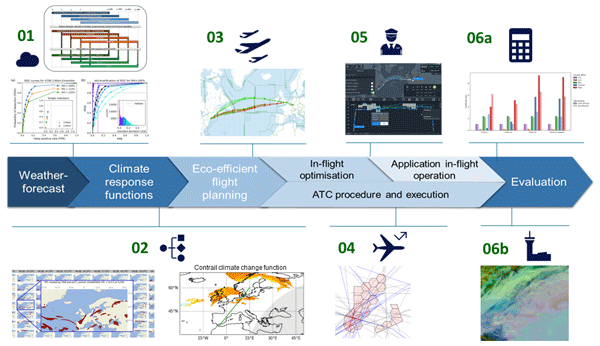
Sigrun Matthes, Klaus Gierens, Christine Frömming, Björn Beckmann, Luca Bugliaro, Katrin Dahlmann, Simone Dietmüller, Maleen Hanst, Sina Hofer, Julian Jene, Simon Kirschler, Carmen G. Köhler, Alexander Lau, Ralph Leemüller, Aline Liedtke, Maximilian Mendiguchia Meuser, Patrick Peter, Vanessa Santos Gabriel, Ines Köhler, Gerd Saueressig, Linda Schlemmer, Jonas Sperling, Swen Schlobach, Ralph Schultz, Kristina von Sack, Nathalie Waltenberg, and Zarah Zengerling
J. Env. Com. Air Transp. Sys., 1, 5, https://doi.org/10.5194/jecats-1-5-2026, https://doi.org/10.5194/jecats-1-5-2026, 2026
Short summary
Short summary
Operational strategies such as eco-efficient flight routing have potential to reduce aviation’s climate effect. A collaborative workflow integrating weather forecast, climate response modelling, flight planning, air traffic control, and climate assessment was developed and tested in D-KULT. Innovative developments demonstrate substantial progress on how to identify alternative trajectories, highlighting remaining challenges with uncertainties in weather forecast and non-CO2 climate effects.
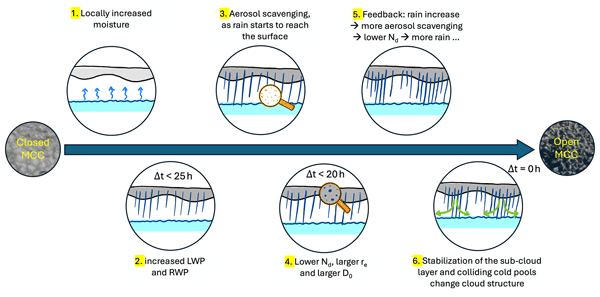
Johanna Mayer, Daniele Gasbarra, Robin J. Hogan, Edward Malina, Shannon L. Mason, and Blanka Piskala Gvozdikova
Atmos. Chem. Phys., 26, 14085–14110, https://doi.org/10.5194/acp-26-14085-2026, https://doi.org/10.5194/acp-26-14085-2026, 2026
Short summary
Short summary
We investigate transitions from closed to open stratocumulus cells using synergistic observations from the EarthCARE and GOES satellites. Microphysical changes and increasing rain up to 25 hours before transitions support a precipitation-driven pathway. These findings provide new observational constraints on the processes driving stratocumulus breakup and its radiative impact.
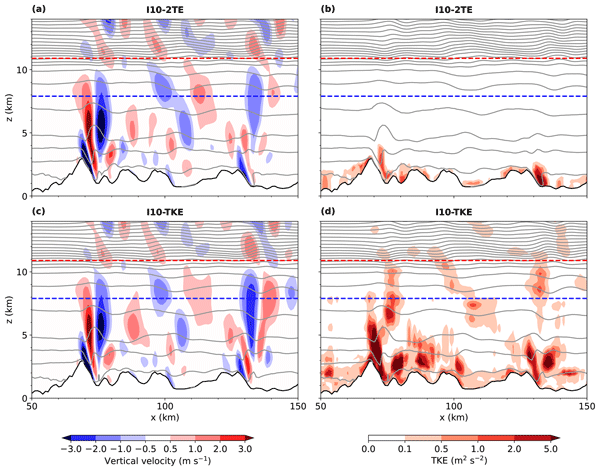
Roshny Siri Jagan and Juerg Schmidli
Atmos. Chem. Phys., 26, 13721–13741, https://doi.org/10.5194/acp-26-13721-2026, https://doi.org/10.5194/acp-26-13721-2026, 2026
Short summary
Short summary
Air flowing over mountains generates waves reaching high into the atmosphere, sometimes producing turbulence relevant to aircraft safety and forecasting. Using simulations tested against aircraft observations, we found that fine detail is needed to capture small-scale features realistically, while overall wave patterns emerge at coarser resolution regardless of turbulence scheme. This work can help improve flight safety and weather predictions by making turbulence forecasts more reliable.
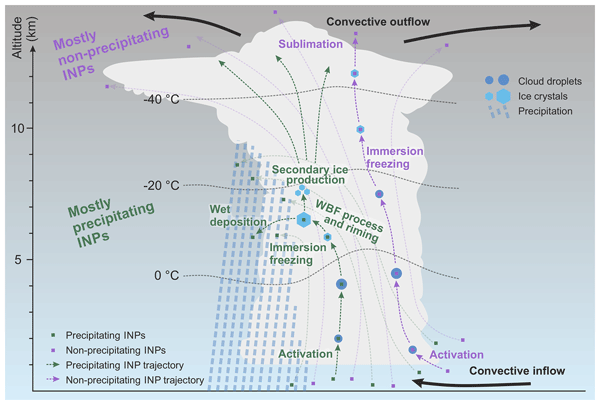
Jonas Schaefer, Sarah Grawe, Hans-Christian Clemen, Stephan Mertes, Johannes Schneider, Bruno Wetzel, Daniel Sauer, Jennifer Wolf, Laura Tomsche, Johanna Mayer, Roland Schrödner, Silvia Henning, Tina Jurkat-Witschas, Christiane Voigt, Helmut Ziereis, Theresa Harlaß, Mira Pöhlker, and Frank Stratmann
Atmos. Chem. Phys., 26, 12505–12520, https://doi.org/10.5194/acp-26-12505-2026, https://doi.org/10.5194/acp-26-12505-2026, 2026
Short summary
Short summary
Ice-nucleating particles (INP) are aerosol particles important for ice formation in clouds droplets and thereby influence climate. This study uses airborne measurements over Europe to show how INP are transported through thunderstorms. We show which particles are washed out and which are are transported into the higher troposphere, where they can again affect cloud ice formation. The findings improve understanding of atmospheric particle distribution and help refine climate models.
Blanka Piskala Gvoždíková, Johanna Mayer, Saskia Maria Brose, Edward Malina, Daniele Gasbarra, Anežka Doležalová, and Krasen Samardzhiev
Earth Syst. Sci. Data Discuss., https://doi.org/10.5194/essd-2026-470, https://doi.org/10.5194/essd-2026-470, 2026
Preprint under review for ESSD
Short summary
Short summary
This study introduces Lightning2EarthCARE, an open dataset linking satellite lightning observations with narrow vertical slices through storms from the Earth Cloud, Aerosol and Radiation Explorer mission. Covering August 2024 to January 2026, it includes more than 6000 storms available for case studies and broader analyses. The dataset can help reveal how lightning relates to cloud particles, precipitation, and storm motion, supporting better weather and climate models.
Sabrina Ries, Luca Bugliaro, Vanessa Santos Gabriel, Dennis Piontek, Matteo Aricò, and Christiane Voigt
EGUsphere, https://doi.org/10.5194/egusphere-2026-3046, https://doi.org/10.5194/egusphere-2026-3046, 2026
This preprint is open for discussion and under review for Atmospheric Measurement Techniques (AMT).
Short summary
Short summary
Persistent contrails from airplanes significantly contribute to climate warming. Modifying the flight route of aircraft to avoid contrail formation can help reducing this effect. We have developed an automated framework that derives contrail life cycles from satellite data and attributes them to a given flight. Each contrail is assigned a "matching score" that measures the plausibility of this classification. The method can be used to verify contrail avoidance flight trials.
Beate Geyer, Angelo Campanale, Evgenii Churiulin, Hendrik Feldmann, Klaus Goergen, Stefan Hagemann, Ha Thi Minh Ho-Hagemann, Muhammed Muhshif Karadan, Klaus Keuler, Pavel Khain, Divyaja Lawand, Patrick Ludwig, Vera Maurer, Sergei Petrov, Stefan Poll, Christopher Purr, Emmanuele Russo, Martina Schubert-Frisius, Jan-Peter Schulz, Shweta Singh, Christian Steger, Heimo Truhetz, and Andreas Will
Geosci. Model Dev., 19, 5439–5490, https://doi.org/10.5194/gmd-19-5439-2026, https://doi.org/10.5194/gmd-19-5439-2026, 2026
Short summary
Short summary
Complex models in environmental science typically have a lot of tuning parameters, which has to be set by the users depending on the application. This study presents a new method of objective tuning of a huge number of parameters, by combining expert judgement with automated tuning called Linear Meta-Model optimisation (LiMMo). The method is successfully applied to the regional climate model named ICON (Icosahedral Non-hydrostatic)-CLM (Climate Limited-area Modelling) over Europe.
Vanessa Santos Gabriel, Luca Bugliaro, Dennis Piontek, Sabrina Ries, and Christiane Voigt
Atmos. Meas. Tech., 19, 3271–3289, https://doi.org/10.5194/amt-19-3271-2026, https://doi.org/10.5194/amt-19-3271-2026, 2026
Short summary
Short summary
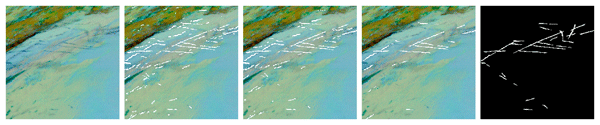
We present a new contrail detection algorithm for the geostationary Meteosat satellite, which outperforms other algorithms for this satellite. Contrails influence the climate but are hard to identify in geostationary satellite imagery with moderate spatial resolution. With this study, we enable the design and evaluation of contrail mitigation strategies, contributing to ongoing efforts in understanding, monitoring, and reducing the climate impact of aviation-induced cirrus.
Vanessa Santos Gabriel, Luca Bugliaro, Mara Montag, Sabrina Ries, Ziming Wang, Kai Widmaier, Matteo Arico, Simon Unterstrasser, Johanna Mayer, Deniz Menekay, Andreas Marsing, Elena de la Torre Castro, Liam Megill, Monika Scheibe, and Christiane Voigt
Earth Syst. Sci. Data, 18, 2397–2412, https://doi.org/10.5194/essd-18-2397-2026, https://doi.org/10.5194/essd-18-2397-2026, 2026
Short summary
Short summary
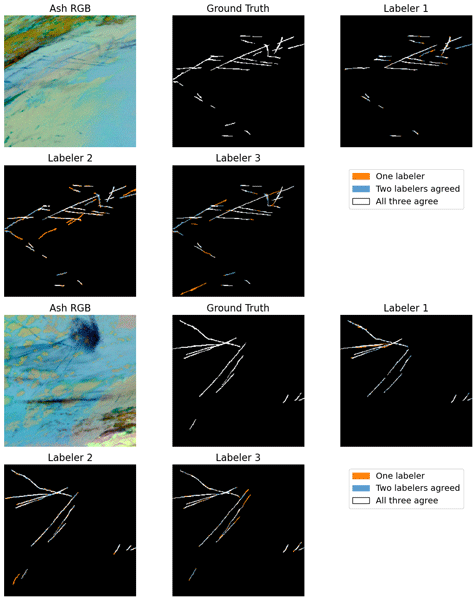
We provide observations of the geostationary Meteosat satellite with contrails labeled by three people complemented with detailed cloud information. Contrails influence climate but are hard to identify in satellite imagery. With this study, we support contrail detection development and evaluation, stress the subjectivity of human labeling and reveal which meteorological conditions highlight or hide contrails. This dataset contributes to a better understanding of aviation’s climate impact.
Ivan Basic, Harshwardhan Jadhav, Jaydeep Singh, and Juerg Schmidli
Atmos. Chem. Phys., 26, 2007–2025, https://doi.org/10.5194/acp-26-2007-2026, https://doi.org/10.5194/acp-26-2007-2026, 2026
Short summary
Short summary
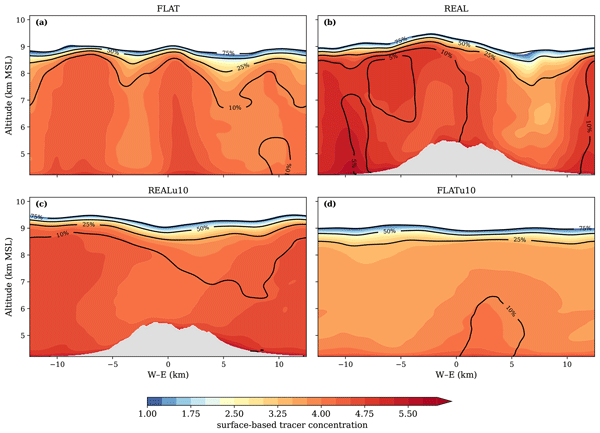
We studied how small mountains shape the daily growth of the lower atmosphere over the Tibetan Plateau, one of the highest regions on Earth. Using computer simulations, we compared flat terrain with realistic terrain and with added winds. We found that even modest hills make the air mix more quickly and rise higher, and winds further strengthen this effect. Our results show that overlooking small terrain features can lead to underestimating how strongly the atmosphere mixes over high plateaus.
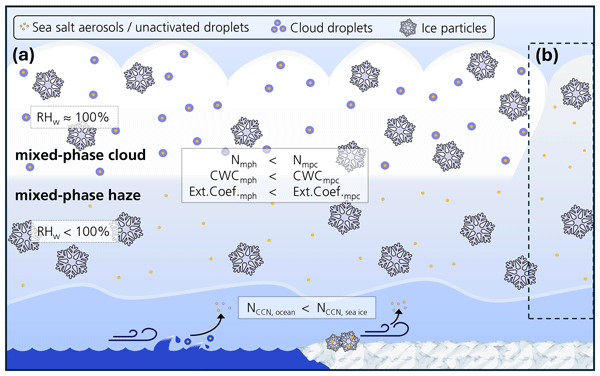
Manuel Moser, Christiane Voigt, Oliver Eppers, Johannes Lucke, Elena De La Torre Castro, Johanna Mayer, Regis Dupuy, Guillaume Mioche, Olivier Jourdan, Hans-Christian Clemen, Johannes Schneider, Philipp Joppe, Stephan Mertes, Bruno Wetzel, Stephan Borrmann, Marcus Klingebiel, Mario Mech, Christof Lüpkes, Susanne Crewell, André Ehrlich, Andreas Herber, and Manfred Wendisch
Atmos. Chem. Phys., 26, 1867–1887, https://doi.org/10.5194/acp-26-1867-2026, https://doi.org/10.5194/acp-26-1867-2026, 2026
Short summary
Short summary
In this study we analyzed Arctic mixed-phase clouds using airborne in-situ measurements in spring 2022. Based on microphysical properties, we show that within these clouds a distinction must be made between classic mixed-phase clouds and a mixed-phase haze regime. Instead of supercooled droplets, the haze regime contains large wet sea salt aerosols. These findings improve our understanding of Arctic low-level cloud processes.

Matteo Aricò, Dennis Piontek, Luca Bugliaro, Johanna Mayer, Richard Müller, Frank Kalinka, and Max Butter
Atmos. Meas. Tech., 18, 7129–7152, https://doi.org/10.5194/amt-18-7129-2025, https://doi.org/10.5194/amt-18-7129-2025, 2025
Short summary
Short summary
The goal is to assess the feasibility of an ice crystal icing detection algorithm based exclusively on remote sensing data. Active measurements are used to train and validate a newly developed random forest algorithm that is applied to passive satellite imagery to estimate the ice crystal icing conditions probability. 83 % of ice crystal icing conditions are correctly detected, showing potential for an operational implementation to mitigate its negative effects on the fleet.
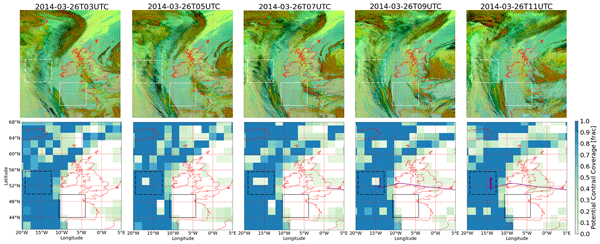
Patrick Peter, Sigrun Matthes, Christine Frömming, Patrick Jöckel, Luca Bugliaro, Andreas Giez, Martina Krämer, and Volker Grewe
Atmos. Chem. Phys., 25, 5911–5934, https://doi.org/10.5194/acp-25-5911-2025, https://doi.org/10.5194/acp-25-5911-2025, 2025
Short summary
Short summary
Our study examines how well the global climate model EMAC (ECHAM/MESSy Atmospheric Chemistry) predicts contrail formation by analysing temperature and humidity – two key factors for contrail development and persistence. The model underestimates temperature, leading to an overprediction of contrail formation and larger ice-supersaturated regions. Adjusting the model improves temperature accuracy but adds uncertainties. Better predictions of contrail formation areas can help optimise flight tracks to reduce aviation's climate effect.

André Ehrlich, Susanne Crewell, Andreas Herber, Marcus Klingebiel, Christof Lüpkes, Mario Mech, Sebastian Becker, Stephan Borrmann, Heiko Bozem, Matthias Buschmann, Hans-Christian Clemen, Elena De La Torre Castro, Henning Dorff, Regis Dupuy, Oliver Eppers, Florian Ewald, Geet George, Andreas Giez, Sarah Grawe, Christophe Gourbeyre, Jörg Hartmann, Evelyn Jäkel, Philipp Joppe, Olivier Jourdan, Zsófia Jurányi, Benjamin Kirbus, Johannes Lucke, Anna E. Luebke, Maximilian Maahn, Nina Maherndl, Christian Mallaun, Johanna Mayer, Stephan Mertes, Guillaume Mioche, Manuel Moser, Hanno Müller, Veronika Pörtge, Nils Risse, Greg Roberts, Sophie Rosenburg, Johannes Röttenbacher, Michael Schäfer, Jonas Schaefer, Andreas Schäfler, Imke Schirmacher, Johannes Schneider, Sabrina Schnitt, Frank Stratmann, Christian Tatzelt, Christiane Voigt, Andreas Walbröl, Anna Weber, Bruno Wetzel, Martin Wirth, and Manfred Wendisch
Earth Syst. Sci. Data, 17, 1295–1328, https://doi.org/10.5194/essd-17-1295-2025, https://doi.org/10.5194/essd-17-1295-2025, 2025
Short summary
Short summary
This paper provides an overview of the HALO–(AC)3 aircraft campaign data sets, the campaign-specific instrument operation, data processing, and data quality. The data set comprises in situ and remote sensing observations from three research aircraft: HALO, Polar 5, and Polar 6. All data are published in the PANGAEA database by instrument-separated data subsets. It is highlighted how the scientific analysis of the HALO–(AC)3 data benefits from the coordinated operation of three aircraft.
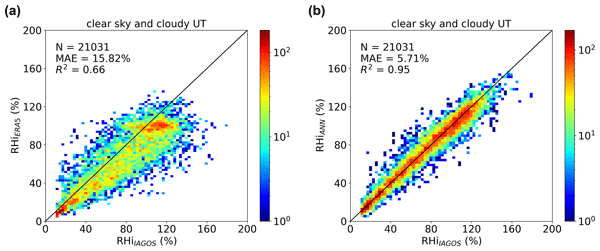
Ziming Wang, Luca Bugliaro, Klaus Gierens, Michaela I. Hegglin, Susanne Rohs, Andreas Petzold, Stefan Kaufmann, and Christiane Voigt
Atmos. Chem. Phys., 25, 2845–2861, https://doi.org/10.5194/acp-25-2845-2025, https://doi.org/10.5194/acp-25-2845-2025, 2025
Short summary
Short summary
Upper-tropospheric relative humidity bias in the ERA5 weather model is corrected by 10 % by an artificial neural network using aircraft in-service humidity data and thermodynamic and dynamical variables. The improved skills of the weather model will advance cirrus research, weather forecasts, and measures for contrail reduction.
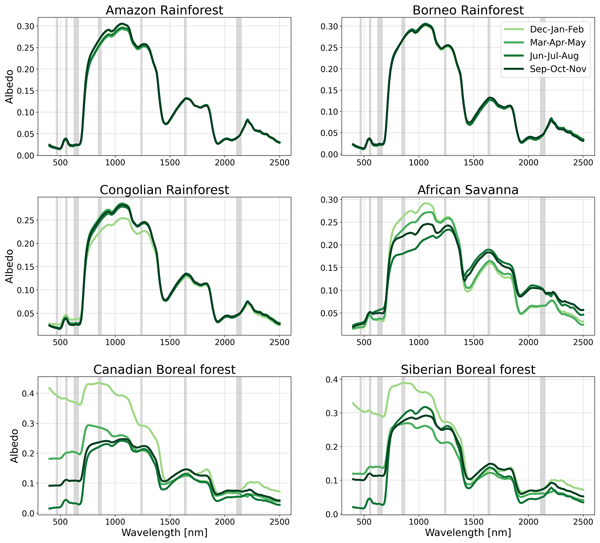
Giulia Roccetti, Luca Bugliaro, Felix Gödde, Claudia Emde, Ulrich Hamann, Mihail Manev, Michael Fritz Sterzik, and Cedric Wehrum
Atmos. Meas. Tech., 17, 6025–6046, https://doi.org/10.5194/amt-17-6025-2024, https://doi.org/10.5194/amt-17-6025-2024, 2024
Short summary
Short summary
The amount of sunlight reflected by the Earth’s surface (albedo) is vital for the Earth's radiative system. While satellite instruments offer detailed spatial and temporal albedo maps, they only cover seven wavelength bands. We generate albedo maps that fully span the visible and near-infrared range using a machine learning algorithm. These maps reveal how the reflectivity of different land surfaces varies throughout the year. Our dataset enhances the understanding of the Earth's energy balance.
Johanna Mayer, Bernhard Mayer, Luca Bugliaro, Ralf Meerkötter, and Christiane Voigt
Atmos. Meas. Tech., 17, 5161–5185, https://doi.org/10.5194/amt-17-5161-2024, https://doi.org/10.5194/amt-17-5161-2024, 2024
Short summary
Short summary
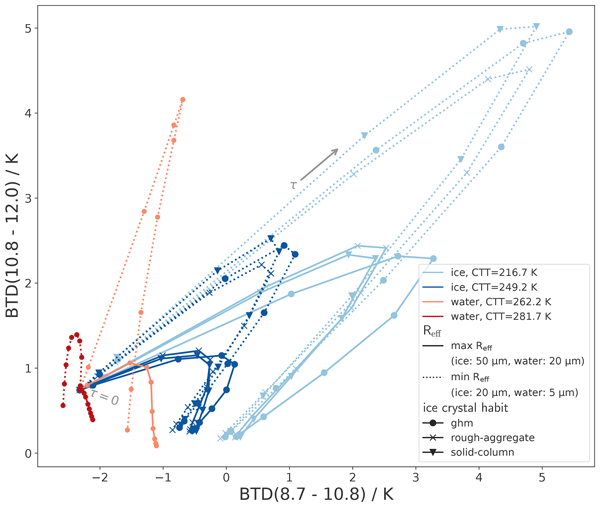
This study uses radiative transfer calculations to characterize the relation of two satellite channel combinations (namely infrared window brightness temperature differences – BTDs – of SEVIRI) to the thermodynamic cloud phase. A sensitivity analysis reveals the complex interplay of cloud parameters and their contribution to the observed phase dependence of BTDs. This knowledge helps to design optimal cloud-phase retrievals and to understand their potential and limitations.
Manfred Wendisch, Susanne Crewell, André Ehrlich, Andreas Herber, Benjamin Kirbus, Christof Lüpkes, Mario Mech, Steven J. Abel, Elisa F. Akansu, Felix Ament, Clémantyne Aubry, Sebastian Becker, Stephan Borrmann, Heiko Bozem, Marlen Brückner, Hans-Christian Clemen, Sandro Dahlke, Georgios Dekoutsidis, Julien Delanoë, Elena De La Torre Castro, Henning Dorff, Regis Dupuy, Oliver Eppers, Florian Ewald, Geet George, Irina V. Gorodetskaya, Sarah Grawe, Silke Groß, Jörg Hartmann, Silvia Henning, Lutz Hirsch, Evelyn Jäkel, Philipp Joppe, Olivier Jourdan, Zsofia Jurányi, Michail Karalis, Mona Kellermann, Marcus Klingebiel, Michael Lonardi, Johannes Lucke, Anna E. Luebke, Maximilian Maahn, Nina Maherndl, Marion Maturilli, Bernhard Mayer, Johanna Mayer, Stephan Mertes, Janosch Michaelis, Michel Michalkov, Guillaume Mioche, Manuel Moser, Hanno Müller, Roel Neggers, Davide Ori, Daria Paul, Fiona M. Paulus, Christian Pilz, Felix Pithan, Mira Pöhlker, Veronika Pörtge, Maximilian Ringel, Nils Risse, Gregory C. Roberts, Sophie Rosenburg, Johannes Röttenbacher, Janna Rückert, Michael Schäfer, Jonas Schaefer, Vera Schemann, Imke Schirmacher, Jörg Schmidt, Sebastian Schmidt, Johannes Schneider, Sabrina Schnitt, Anja Schwarz, Holger Siebert, Harald Sodemann, Tim Sperzel, Gunnar Spreen, Bjorn Stevens, Frank Stratmann, Gunilla Svensson, Christian Tatzelt, Thomas Tuch, Timo Vihma, Christiane Voigt, Lea Volkmer, Andreas Walbröl, Anna Weber, Birgit Wehner, Bruno Wetzel, Martin Wirth, and Tobias Zinner
Atmos. Chem. Phys., 24, 8865–8892, https://doi.org/10.5194/acp-24-8865-2024, https://doi.org/10.5194/acp-24-8865-2024, 2024
Short summary
Short summary
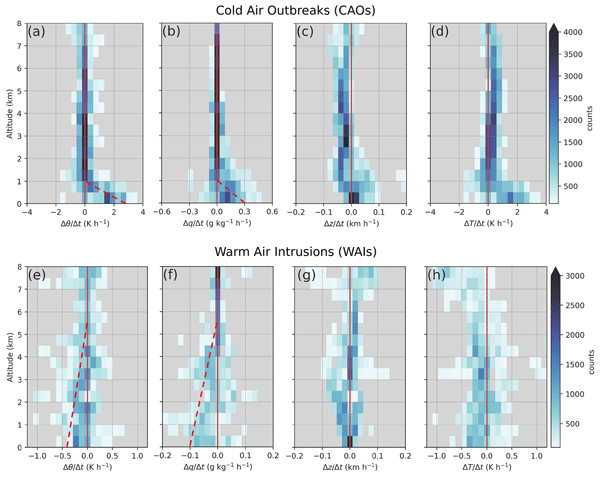
The Arctic is warming faster than the rest of the globe. Warm-air intrusions (WAIs) into the Arctic may play an important role in explaining this phenomenon. Cold-air outbreaks (CAOs) out of the Arctic may link the Arctic climate changes to mid-latitude weather. In our article, we describe how to observe air mass transformations during CAOs and WAIs using three research aircraft instrumented with state-of-the-art remote-sensing and in situ measurement devices.
Andreas Walbröl, Janosch Michaelis, Sebastian Becker, Henning Dorff, Kerstin Ebell, Irina Gorodetskaya, Bernd Heinold, Benjamin Kirbus, Melanie Lauer, Nina Maherndl, Marion Maturilli, Johanna Mayer, Hanno Müller, Roel A. J. Neggers, Fiona M. Paulus, Johannes Röttenbacher, Janna E. Rückert, Imke Schirmacher, Nils Slättberg, André Ehrlich, Manfred Wendisch, and Susanne Crewell
Atmos. Chem. Phys., 24, 8007–8029, https://doi.org/10.5194/acp-24-8007-2024, https://doi.org/10.5194/acp-24-8007-2024, 2024
Short summary
Short summary
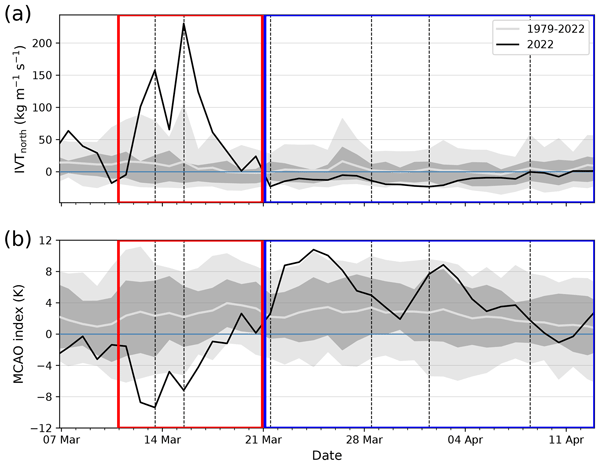
To support the interpretation of the data collected during the HALO-(AC)3 campaign, which took place in the North Atlantic sector of the Arctic from 7 March to 12 April 2022, we analyze how unusual the weather and sea ice conditions were with respect to the long-term climatology. From observations and ERA5 reanalysis, we found record-breaking warm air intrusions and a large variety of marine cold air outbreaks. Sea ice concentration was mostly within the climatological interquartile range.
Johanna Mayer, Luca Bugliaro, Bernhard Mayer, Dennis Piontek, and Christiane Voigt
Atmos. Meas. Tech., 17, 4015–4039, https://doi.org/10.5194/amt-17-4015-2024, https://doi.org/10.5194/amt-17-4015-2024, 2024
Short summary
Short summary
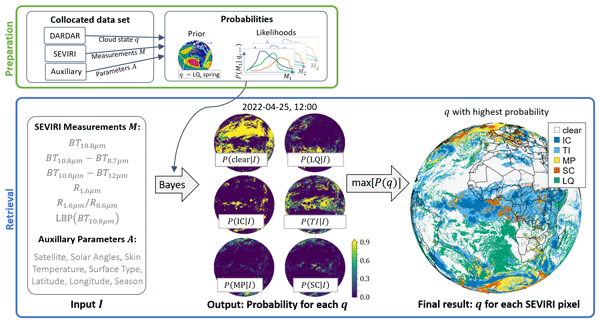
ProPS (PRObabilistic cloud top Phase retrieval for SEVIRI) is a method to detect clouds and their thermodynamic phase with a geostationary satellite, distinguishing between clear sky and ice, mixed-phase, supercooled and warm liquid clouds. It uses a Bayesian approach based on the lidar–radar product DARDAR. The method allows studying cloud phases, especially mixed-phase and supercooled clouds, rarely observed from geostationary satellites. This can be used for comparison with climate models.
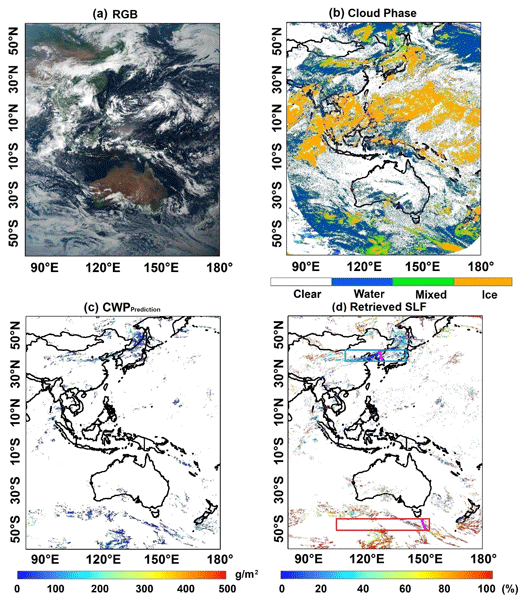
Ziming Wang, Husi Letu, Huazhe Shang, and Luca Bugliaro
Atmos. Chem. Phys., 24, 7559–7574, https://doi.org/10.5194/acp-24-7559-2024, https://doi.org/10.5194/acp-24-7559-2024, 2024
Short summary
Short summary
The supercooled liquid fraction (SLF) in mixed-phase clouds is retrieved for the first time using passive geostationary satellite observations based on differences in liquid droplet and ice particle radiative properties. The retrieved results are comparable to global distributions observed by active instruments, and the feasibility of the retrieval method to analyze the observed trends of the SLF has been validated.
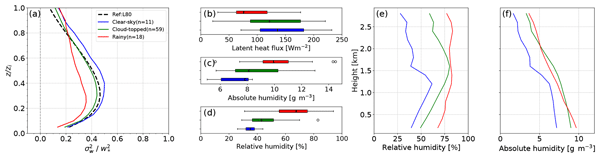
Noviana Dewani, Mirjana Sakradzija, Linda Schlemmer, Ronny Leinweber, and Juerg Schmidli
Atmos. Chem. Phys., 23, 4045–4058, https://doi.org/10.5194/acp-23-4045-2023, https://doi.org/10.5194/acp-23-4045-2023, 2023
Short summary
Short summary
A high daily variability of the normalized vertical velocity variance profiles in the convective boundary layer is observed using Doppler lidar data during the FESSTVaL campaign 2020–2021. The dependency of the normalized vertical velocity variance on several meteorological parameters explains that the moisture processes in the boundary layer contribute to the remaining variability. The finding suggests that a new vertical velocity scale that takes moist processes into account has to be defined.
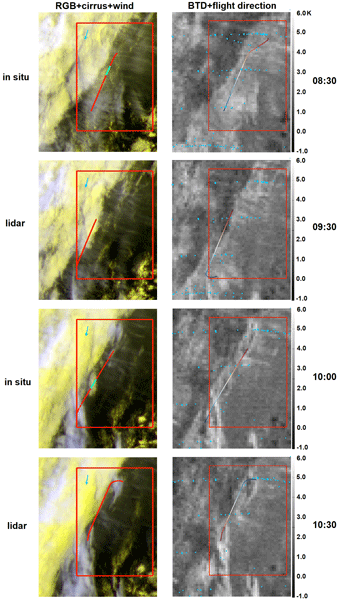
Ziming Wang, Luca Bugliaro, Tina Jurkat-Witschas, Romy Heller, Ulrike Burkhardt, Helmut Ziereis, Georgios Dekoutsidis, Martin Wirth, Silke Groß, Simon Kirschler, Stefan Kaufmann, and Christiane Voigt
Atmos. Chem. Phys., 23, 1941–1961, https://doi.org/10.5194/acp-23-1941-2023, https://doi.org/10.5194/acp-23-1941-2023, 2023
Short summary
Short summary
Differences in the microphysical properties of contrail cirrus and natural cirrus in a contrail outbreak situation during the ML-CIRRUS campaign over the North Atlantic flight corridor can be observed from in situ measurements. The cirrus radiative effect in the area of the outbreak, derived from satellite observation-based radiative transfer modeling, is warming in the early morning and cooling during the day.
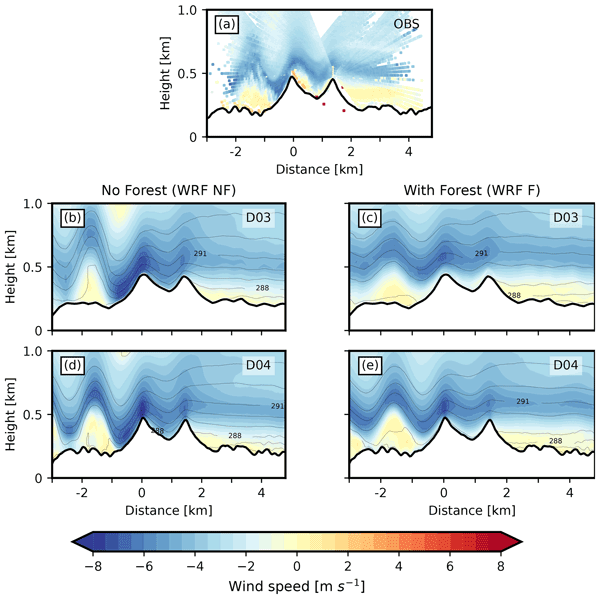
Julian Quimbayo-Duarte, Johannes Wagner, Norman Wildmann, Thomas Gerz, and Juerg Schmidli
Geosci. Model Dev., 15, 5195–5209, https://doi.org/10.5194/gmd-15-5195-2022, https://doi.org/10.5194/gmd-15-5195-2022, 2022
Short summary
Short summary
The ultimate objective of this model evaluation is to improve boundary layer flow representation over complex terrain. The numerical model is tested against observations retrieved during the Perdigão 2017 field campaign (moderate complex terrain). We observed that the inclusion of a forest parameterization in the numerical model significantly improves the representation of the wind field in the atmospheric boundary layer.
Mireia Papke Chica, Valerian Hahn, Tiziana Braeuer, Elena de la Torre Castro, Florian Ewald, Mathias Gergely, Simon Kirschler, Luca Bugliaro Goggia, Stefanie Knobloch, Martina Kraemer, Johannes Lucke, Johanna Mayer, Raphael Maerkl, Manuel Moser, Laura Tomsche, Tina Jurkat-Witschas, Martin Zoeger, Christian von Savigny, and Christiane Voigt
Atmos. Chem. Phys. Discuss., https://doi.org/10.5194/acp-2022-255, https://doi.org/10.5194/acp-2022-255, 2022
Preprint withdrawn
Short summary
Short summary
The mixed-phase temperature regime in convective clouds challenges our understanding of microphysical and radiative cloud properties. We provide a rare and unique dataset of aircraft in situ measurements in a strong mid-latitude convective system. We find that mechanisms initiating ice nucleation and growth strongly depend on temperature, relative humidity, and vertical velocity and variate within the measured system, resulting in altitude dependent changes of the cloud liquid and ice fraction.
Luca Bugliaro, Dennis Piontek, Stephan Kox, Marius Schmidl, Bernhard Mayer, Richard Müller, Margarita Vázquez-Navarro, Daniel M. Peters, Roy G. Grainger, Josef Gasteiger, and Jayanta Kar
Nat. Hazards Earth Syst. Sci., 22, 1029–1054, https://doi.org/10.5194/nhess-22-1029-2022, https://doi.org/10.5194/nhess-22-1029-2022, 2022
Short summary
Short summary
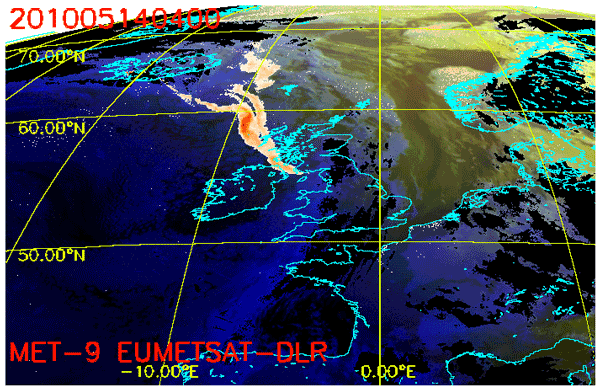
The monitoring of ash dispersion in the atmosphere is an important task for satellite remote sensing since ash represents a threat to air traffic. We present an AI-based method that retrieves the spatial extension and properties of volcanic ash clouds with high temporal resolution during day and night by means of geostationary satellite measurements. This algorithm, trained on realistic observations simulated with a radiative transfer model, runs operationally at the German Weather Service.
Ian Boutle, Wayne Angevine, Jian-Wen Bao, Thierry Bergot, Ritthik Bhattacharya, Andreas Bott, Leo Ducongé, Richard Forbes, Tobias Goecke, Evelyn Grell, Adrian Hill, Adele L. Igel, Innocent Kudzotsa, Christine Lac, Bjorn Maronga, Sami Romakkaniemi, Juerg Schmidli, Johannes Schwenkel, Gert-Jan Steeneveld, and Benoît Vié
Atmos. Chem. Phys., 22, 319–333, https://doi.org/10.5194/acp-22-319-2022, https://doi.org/10.5194/acp-22-319-2022, 2022
Short summary
Short summary
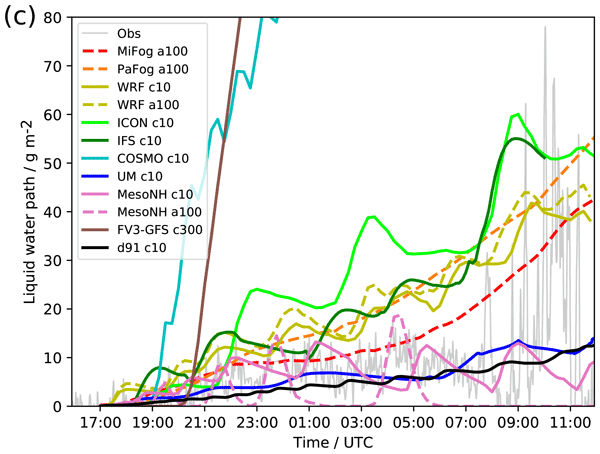
Fog forecasting is one of the biggest problems for numerical weather prediction. By comparing many models used for fog forecasting with others used for fog research, we hoped to help guide forecast improvements. We show some key processes that, if improved, will help improve fog forecasting, such as how water is deposited on the ground. We also showed that research models were not themselves a suitable baseline for comparison, and we discuss what future observations are required to improve them.
Matthieu Plu, Guillaume Bigeard, Bojan Sič, Emanuele Emili, Luca Bugliaro, Laaziz El Amraoui, Jonathan Guth, Beatrice Josse, Lucia Mona, and Dennis Piontek
Nat. Hazards Earth Syst. Sci., 21, 3731–3747, https://doi.org/10.5194/nhess-21-3731-2021, https://doi.org/10.5194/nhess-21-3731-2021, 2021
Short summary
Short summary
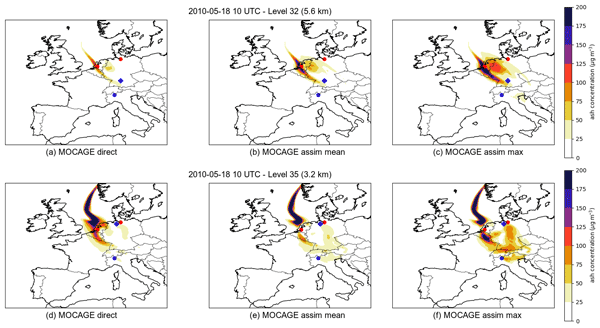
Volcanic eruptions that spread out ash over large areas, like Eyjafjallajökull in 2010, may have huge economic consequences due to flight cancellations. In this article, we demonstrate the benefits of source term improvement and of data assimilation for quantifying volcanic ash concentrations. The work, which was supported by the EUNADICS-AV project, is the first one, to our knowledge, that demonstrates the benefit of the assimilation of ground-based lidar data over Europe during an eruption.
Hugues Brenot, Nicolas Theys, Lieven Clarisse, Jeroen van Gent, Daniel R. Hurtmans, Sophie Vandenbussche, Nikolaos Papagiannopoulos, Lucia Mona, Timo Virtanen, Andreas Uppstu, Mikhail Sofiev, Luca Bugliaro, Margarita Vázquez-Navarro, Pascal Hedelt, Michelle Maree Parks, Sara Barsotti, Mauro Coltelli, William Moreland, Simona Scollo, Giuseppe Salerno, Delia Arnold-Arias, Marcus Hirtl, Tuomas Peltonen, Juhani Lahtinen, Klaus Sievers, Florian Lipok, Rolf Rüfenacht, Alexander Haefele, Maxime Hervo, Saskia Wagenaar, Wim Som de Cerff, Jos de Laat, Arnoud Apituley, Piet Stammes, Quentin Laffineur, Andy Delcloo, Robertson Lennart, Carl-Herbert Rokitansky, Arturo Vargas, Markus Kerschbaum, Christian Resch, Raimund Zopp, Matthieu Plu, Vincent-Henri Peuch, Michel Van Roozendael, and Gerhard Wotawa
Nat. Hazards Earth Syst. Sci., 21, 3367–3405, https://doi.org/10.5194/nhess-21-3367-2021, https://doi.org/10.5194/nhess-21-3367-2021, 2021
Short summary
Short summary
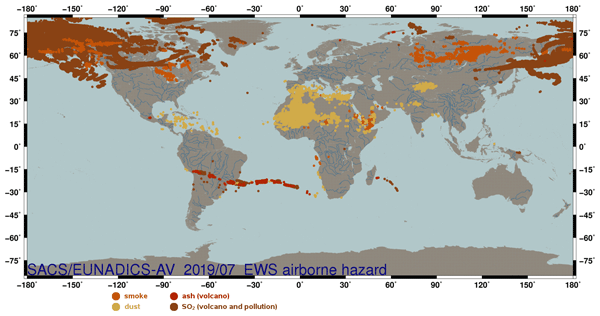
The purpose of the EUNADICS-AV (European Natural Airborne Disaster Information and Coordination System for Aviation) prototype early warning system (EWS) is to develop the combined use of harmonised data products from satellite, ground-based and in situ instruments to produce alerts of airborne hazards (volcanic, dust, smoke and radionuclide clouds), satisfying the requirement of aviation air traffic management (ATM) stakeholders (https://cordis.europa.eu/project/id/723986).
Cited articles
Aligo, E. A., Gallus, W. A., and Segal, M.: On the impact of WRF model vertical grid resolution on Midwest summer rainfall forecasts, Weather Forecast., 24, 575–594, https://doi.org/10.1175/2008WAF2007101.1, 2009. a
Alladi, H. K., Quimbayo-Duarte, J., Bugliaro, L., Mayer, J., Singh, S., and Schmidli, J.: ICON Deep Convection over the Alps: Dataset for Vertical Transport and Model–Observation Analysis of Turbulence and Microphysics Parameterizations, Zenodo [data set], https://doi.org/10.5281/zenodo.20386087, 2026. a
Auguste, F. and Chaboureau, J.-P.: Deep Convection as Inferred From the C2OMODO Concept of a Tandem of Microwave Radiometers, Front. Remote Sens., 3, 852610, https://doi.org/10.3389/frsen.2022.852610, 2022. a
Barthlott, C., Corsmeier, U., Meißner, C., Braun, F., and Kottmeier, C.: The influence of mesoscale circulation systems on triggering convective cells over complex terrain, Atmos. Res., 81, 150–175, https://doi.org/10.1016/j.atmosres.2005.11.010, 2006. a
Bašták Ďurán, I., Sakradzija, M., and Schmidli, J.: The Two-Energies Turbulence Scheme Coupled to the Assumed PDF Method, J. Adv. Model. Earth Sy., 14, e2021MS002922, https://doi.org/10.1029/2021MS002922, 2022. a
Basu, B. K.: Diurnal variation in precipitation over India during the summer monsoon season: Observed and model predicted, Mon. Weather Rev., 135, 2155–2167, https://doi.org/10.1175/MWR3355.1, 2007. a
Baum, B. A., Yang, P., Heymsfield, A. J., Bansemer, A., Cole, B. H., Merrelli, A., Schmitt, C., and Wang, C.: Ice cloud single-scattering property models with the full phase matrix at wavelengths from 0.2 to 100 µm, J. Quant. Spectrosc. Ra., 146, 123–139, https://doi.org/10.1016/j.jqsrt.2014.02.029, 2014. a
Bechtold, P., Köhler, M., Jung, T., Doblas-Reyes, F., Leutbecher, M., Rodwell, M. J., Vitart, F., and Balsamo, G.: Advances in simulating atmospheric variability with the ECMWF model: From synoptic to decadal time-scales, Q. J. Roy. Meteor. Soc., 134, 1337–1351, https://doi.org/10.1002/qj.289, 2008. a
Bedka, K., Brunner, J., Dworak, R., Feltz, W., Otkin, J., and Greenwald, T.: Objective satellite-based detection of overshooting tops using infrared window channel brightness temperature gradients, J. Appl. Meteor. Clim., 49, 181–202, https://doi.org/10.1175/2009JAMC2286.1, 2010. a, b, c
Bedka, K. M., Dworak, R., Brunner, J., and Feltz, W.: Validation of satellite-based objective overshooting cloud-top detection methods using CloudSat cloud profiling radar observations, J. Appl. Meteor. Clim., 51, 1811–1822, https://doi.org/10.1175/JAMC-D-11-0131.1, 2012. a
Benjamin, S. G., Brown, J. M., Brunet, G., Lynch, P., Saito, K., and Schlatter, T. W.: 100 years of progress in forecasting and NWP applications, Meteorol. Monogr., 59, 13–1, https://doi.org/10.1175/AMSMONOGRAPHS-D-18-0020.1, 2019. a
Betts, A. K., Ball, J. H., Beljaars, A., Miller, M., and Viterbo, P.: Coupling between land-surface boundary-layer parameterizations and rainfall on local and regional scales: Lessons from the wet summer of 1993, in: Fifth Symp. on Global Change Studies, 174–181, 1994. a
Bugliaro, L., Zinner, T., Keil, C., Mayer, B., Hollmann, R., Reuter, M., and Thomas, W.: Validation of cloud property retrievals with simulated satellite radiances: a case study for SEVIRI, Atmos. Chem. Phys., 11, 5603–5624, https://doi.org/10.5194/acp-11-5603-2011, 2011. a, b
Chen, S. S. and Houze Jr., R. A.: Diurnal variation and life-cycle of deep convective systems over the tropical Pacific warm pool, Q. J. Roy. Meteor. Soc., 123, 357–388, https://doi.org/10.1002/qj.49712353806, 1997. a
Cotton, W. R., Bryan, G., and van den Heever, S. C.: Cumulonimbus clouds and severe convective storms, Int. Geophys., 99, 315–454, https://doi.org/10.1016/S0074-6142(10)09914-6, 2011. a
de F. Forster, P. M. and Shine, K. P.: Stratospheric water vapour changes as a possible contributor to observed stratospheric cooling, Geophys. Res. Lett., 26, 3309–3312, https://doi.org/10.1029/1999GL010487, 1999. a
Deutscher Wetterdienst (DWD): Reports on ICON: ICON Description, Part 4 – The ICON Modelling Framework of DWD and MPI-M, Tech. Rep. 2019-04, Deutscher Wetterdienst (DWD), https://www.dwd.de/DE/leistungen/reports_on_icon/pdf_einzelbaende/2019_04.pdf (last access: 16 June 2026), 2019. a
Doms, G., Förstner, J., Heise, E., Herzog, H.-J., Mironov, D., Raschendorfer, M., Reinhardt, T., Ritter, B., Schrodin, R., Schulz, J.-P., and Vogel, G.: A Description of the Nonhydrostatic Regional COSMO Model, Part II: Physical Parameterization, Deutscher Wetterdienst, Offenbach, Germany, https://doi.org/10.5676/DWD_pub/nwv/cosmo-doc_5.05_II, 2011. a, b
Done, J., Davis, C. A., and Weisman, M.: The next generation of NWP: Explicit forecasts of convection using the Weather Research and Forecasting (WRF) model, Atmos. Sci. Lett., 5, 110–117, https://doi.org/10.1002/asl.72, 2004. a
Findell, K. L. and Eltahir, E. A. B.: Atmospheric controls on soil moisture–boundary layer interactions. Part I: Framework development, J. Hydrometeorol., 4, 552–569, https://doi.org/10.1175/1525-7541(2003)004<0552:ACOSML>2.0.CO;2, 2003. a
Fritz, S. and Laszlo, I.: Detection of water vapor in the stratosphere over very high clouds in the tropics, J. Geophys. Res.-Atmos., 98, 22959–22967, https://doi.org/10.1029/93JD01617, 1993. a
Fu, R., Hu, Y., Wright, J. S., Jiang, J. H., Dickinson, R. E., Chen, M., Filipiak, M., Read, W. G., Waters, J. W., and Wu, D. L.: Short circuit of water vapor and polluted air to the global stratosphere by convective transport over the Tibetan Plateau, P. Natl. Acad. Sci. USA, 103, 5664–5669, https://doi.org/10.1073/pnas.0601584103, 2006. a
Garratt, J. R.: The atmospheric boundary layer, Earth-Sci. Rev., 37, 89–134, https://doi.org/10.1016/0012-8252(94)90026-4, 1994. a
Gayatri, K., Malap, N., Murugavel, P., Karipot, A., and Prabhakaran, T.: Precursor boundary layer conditions for shallow and deep convection: inferences from CAIPEEX field measurements over the Indian Peninsula, Environ. Res. Commun., 6, 095025, https://doi.org/10.1088/2515-7620/ad78b9, 2024. a
Gentine, P., Holtslag, A. A. M., D'Andrea, F., and Ek, M.: Surface and atmospheric controls on the onset of moist convection over land, J. Hydrometeorol., 14, 1443–1462, https://doi.org/10.1175/JHM-D-12-0137.1, 2013. a
Gettelman, A., Forbes, R., Marchand, R., Chen, C.-C., and Fielding, M.: The impact of cloud microphysics and ice nucleation on Southern Ocean clouds assessed with single-column modeling and instrument simulators, Geosci. Model Dev., 17, 8069–8092, https://doi.org/10.5194/gmd-17-8069-2024, 2024. a, b
Hanley, K. E., Plant, R. S., Stein, T. H. M., Hogan, R. J., Nicol, J. C., Lean, H. W., Halliwell, C., and Clark, P. A.: Mixing-length controls on high-resolution simulations of convective storms, Q. J. Roy. Meteor. Soc., 141, 272–284, https://doi.org/10.1002/qj.2356, 2015. a, b
Hegglin, M. I., Plummer, D. A., Shepherd, T. G., Scinocca, J. F., Anderson, J., Froidevaux, L., Funke, B., Hurst, D., Rozanov, A., Urban, J., von Clarmann, T., Walker, K. A., Wang, H. J., Tegtmeier, S., and Weigel, K.: Vertical Structure of Stratospheric Water Vapour Trends Derived from Merged Satellite Data, Nat. Geosci., 7, 768–776, https://doi.org/10.1038/ngeo2236, 2014. a, b
Heise, E., Ritter, B., Schrodin, R., and Wetterdienst, D.: Operational implementation of the multilayer soil model, Citeseer, https://doi.org/10.5676/DWD_pub/nwv/cosmo-tr_9, 2006. a
Hogan, R. J. and Bozzo, A.: A flexible and efficient radiation scheme for the ECMWF model, J. Adv. Model. Earth Sy., 10, 1990–2008, https://doi.org/10.1029/2018MS001364, 2018. a
Holton, J. R., Haynes, P. H., McIntyre, M. E., Douglass, A. R., Rood, R. B., and Pfister, L.: Stratosphere-troposphere exchange, Rev. Geophys., 33, 403–439, https://doi.org/10.1029/95RG02097, 1995. a, b
Homeyer, C. R.: Numerical simulations of extratropical tropopause-penetrating convection: Sensitivities to grid resolution, J. Geophys. Res.-Atmos., 120, 7174–7188, https://doi.org/10.1002/2015JD023356, 2015. a, b, c
Homeyer, C. R., McAuliffe, J. D., and Bedka, K. M.: On the development of above-anvil cirrus plumes in extratropical convection, J. Atmos. Sci., 74, 1617–1633, https://doi.org/10.1175/JAS-D-16-0269.1, 2017. a
Hoskins, B. J., McIntyre, M. E., and Robertson, A. W.: On the use and significance of isentropic potential vorticity maps, Q. J. Roy. Meteor. Soc., 111, 877–946, https://doi.org/10.1002/qj.49711147002, 1985. a
Houze Jr., R. A.: Cloud dynamics, vol. 104, Academic press, ISBN 978-0-08-092146-4, 2014. a
Jenney, A. M., Ferretti, S. L., and Pritchard, M. S.: Vertical resolution impacts explicit simulation of deep convection, J. Adv. Model. Earth Sy., 15, e2022MS003444, https://doi.org/10.1029/2022MS003444, 2023. a
Kalthoff, N., Kohler, M., Barthlott, C., Adler, B., Mobbs, S. D., Corsmeier, U., Träumner, K., Foken, T., Eigenmann, R., Krauss, L., Khodayar, S., and Di Girolamo, P.: The dependence of convection-related parameters on surface and boundary-layer conditions over complex terrain, Q. J. Roy. Meteor. Soc., 137, 70–80, https://doi.org/10.1002/qj.686, 2011. a
Keller, M., Kröner, N., Fuhrer, O., Lüthi, D., Schmidli, J., Stengel, M., Stöckli, R., and Schär, C.: The sensitivity of Alpine summer convection to surrogate climate change: an intercomparison between convection-parameterizing and convection-resolving models, Atmos. Chem. Phys., 18, 5253–5264, https://doi.org/10.5194/acp-18-5253-2018, 2018. a
Kiladis, G. N.: Observations of Rossby waves linked to convection over the eastern tropical Pacific, J. Atmos. Sci., 55, 321–339, https://doi.org/10.1175/1520-0469(1998)055<0321:OORWLT>2.0.CO;2, 1998. a, b
Kottmeier, C., Kalthoff, N., Barthlott, C., Corsmeier, U., Van Baelen, J., Behrendt, A., Behrendt, R., Blyth, A., Coulter, R., Crewell, S., Di Girolamo, P., Dorninger, M., Flamant, C., Foken, T., Hagen, M., Hauck, C., Höller, H., Konow, H., Kunz, M., Mahlke, H., Mobbs, S., Richard, E., Steinacker, R., Weckwerth, T., Wieser, A., and Wulfmeyer, V.: Mechanisms Initiating Deep Convection over Complex Terrain during COPS, Meteorol. Z., 17, 931–948, https://doi.org/10.1127/0941-2948/2008/0348, 2008. a
Kumar, A. H. and Ratnam, M. V.: Variability in the UTLS chemical composition during different modes of the Asian Summer Monsoon Anti-cyclone, Atmos. Res., 260, 105700, https://doi.org/10.1016/j.atmosres.2021.105700, 2021. a
May, P. T., Long, C. N., and Protat, A.: The diurnal cycle of the boundary layer, convection, clouds, and surface radiation in a coastal monsoon environment (Darwin, Australia), J. Climate, 25, 5309–5326, https://doi.org/10.1175/JCLI-D-11-00538.1, 2012. a
Mellor, G. L. and Yamada, T.: Development of a turbulence closure model for geophysical fluid problems, Rev. Geophys., 20, 851–875, https://doi.org/10.1029/RG020i004p00851, 1982. a, b
Merk, D. and Zinner, T.: Detection of convective initiation using Meteosat SEVIRI: implementation in and verification with the tracking and nowcasting algorithm Cb-TRAM, Atmos. Meas. Tech., 6, 1903–1918, https://doi.org/10.5194/amt-6-1903-2013, 2013. a
Milbrandt, J. A. and Yau, M. K.: A multimoment bulk microphysics parameterization. Part I: Analysis of the role of the spectral shape parameter, J. Atmos. Sci., 62, 3051–3064, https://doi.org/10.1175/JAS3534.1, 2005. a
Moeng, C.-H.: A large-eddy-simulation model for the study of planetary boundary-layer turbulence, J. Atmos. Sci., 41, 2052–2062, https://doi.org/10.1175/1520-0469(1984)041<2052:ALESMF>2.0.CO;2, 1984. a
Morrison, H., Thompson, G., and Tatarskii, V.: Impact of cloud microphysics on the development of trailing stratiform precipitation in a simulated squall line: Comparison of one- and two-moment schemes, Mon. Weather Rev., 137, 991–1007, https://doi.org/10.1175/2008MWR2556.1, 2009. a
Mote, P. W., Rosenlof, K. H., McIntyre, M. E., Carr, E. S., Gille, J. C., Holton, J. R., Kinnersley, J. S., Pumphrey, H. C., Russell III, J. M., and Waters, J. W.: An atmospheric tape recorder: The imprint of tropical tropopause temperatures on stratospheric water vapor, J. Geophys. Res.-Atmos., 101, 3989–4006, https://doi.org/10.1029/95JD03422, 1996. a
Mullendore, G. L., Durran, D. R., and Holton, J. R.: Cross-tropopause tracer transport in midlatitude convection, J. Geophys. Res.-Atmos., 110, https://doi.org/10.1029/2004JD005059, 2005. a
Nakajima, T. and King, M. D.: Determination of the optical thickness and effective particle radius of clouds from reflected solar radiation measurements. Part I: Theory, J. Atmos. Sci., 47, 1878–1893, https://doi.org/10.1175/1520-0469(1990)047<1878:DOTOTA>2.0.CO;2, 1990. a
Noel, V., Chepfer, H., Chiriaco, M., and Yorks, J.: The diurnal cycle of cloud profiles over land and ocean between 51° S and 51° N, seen by the CATS spaceborne lidar from the International Space Station, Atmos. Chem. Phys., 18, 9457–9473, https://doi.org/10.5194/acp-18-9457-2018, 2018. a
Palmer, T.: Climate forecasting: Build high-resolution global climate models, Nature, 515, 338–339, https://doi.org/10.1038/515338a, 2014. a
Park, M., Randel, W. J., Gettelman, A., Massie, S. T., and Jiang, J. H.: Transport above the Asian summer monsoon anticyclone inferred from Aura Microwave Limb Sounder tracers, J. Geophys. Res.-Atmos., 112, https://doi.org/10.1029/2006JD008294, 2007. a
Pearson, K. J., Lister, G. M. S., Birch, C. E., Allan, R. P., Hogan, R. J., and Woolnough, S. J.: Modelling the diurnal cycle of tropical convection across the “grey zone”, Q. J. Roy. Meteor. Soc., 140, 491–499, https://doi.org/10.1002/qj.2145, 2014. a
Raschendorfer, M.: The new turbulence parameterization of LM. COSMO News, COSMO News, Letter No. 1,, 89–97, 2001. a
Röthlisberger, M., Scherrer, B., de Vries, A. J., and Portmann, R.: The role of cyclones and potential vorticity cutoffs for the occurrence of unusually long wet spells in Europe, Weather Clim. Dynam., 3, 733–754, https://doi.org/10.5194/wcd-3-733-2022, 2022. a
Rybka, H., Burkhardt, U., Köhler, M., Arka, I., Bugliaro, L., Görsdorf, U., Horváth, Á., Meyer, C. I., Reichardt, J., Seifert, A., and Strandgren, J.: The behavior of high-CAPE (convective available potential energy) summer convection in large-domain large-eddy simulations with ICON, Atmos. Chem. Phys., 21, 4285–4318, https://doi.org/10.5194/acp-21-4285-2021, 2021. a, b
Sanchez, P. A., Ahamed, S., Carré, F., Hartemink, A. E., Hempel, J., Huising, J., Lagacherie, P., McBratney, A. B., McKenzie, N. J., Mendonça-Santos, M. d. L., Minasny, B., Montanarella, L., Okoth, P., Palm, C. A., Sachs, J. D., Shepherd, K. D., Vågen, T.-G., Vanlauwe, B., Walsh, M. G., Winowiecki, L. A., and Zhang, G.-L.: Digital Soil Map of the World, Science, 325, 680–681, https://doi.org/10.1126/science.1175084, 2009. a
Saunders, R., Hocking, J., Turner, E., Rayer, P., Rundle, D., Brunel, P., Vidot, J., Roquet, P., Matricardi, M., Geer, A., Bormann, N., and Lupu, C.: An update on the RTTOV fast radiative transfer model (currently at version 12), Geosci. Model Dev., 11, 2717–2737, https://doi.org/10.5194/gmd-11-2717-2018, 2018. a
Schäfler, A. and Rautenhaus, M.: Interactive 3D Visual Analysis of Weather Prediction Data Reveals Midlatitude Overshooting Convection during the CIRRUS-HL Field Experiment, B. Am. Meteorol. Soc., 104, E1426–E1434, https://doi.org/10.1175/BAMS-D-22-0103.1, 2023. a
Schmetz, J., Tjemkes, S. A., Gube, M., and Van de Berg, L.: Monitoring deep convection and convective overshooting with METEOSAT, Adv. Space Res., 19, 433–441, https://doi.org/10.1016/S0273-1177(97)00051-3, 1997. a, b, c
Schmetz, J., Pili, P., Tjemkes, S., Just, D., Kerkmann, J., Rota, S., and Ratier, A.: An introduction to Meteosat second generation (MSG), B. Am. Meteorol. Soc., 83, 977–992, https://doi.org/10.1175/1520-0477(2002)083<0977:AITMSG>2.3.CO;2, 2002. a, b
Schrodin, R. and Heise, E.: The multi-layer version of the DWD soil model TERRA_LM, DWD, https://doi.org/10.5676/DWD_pub/nwv/cosmo-tr_2, 2001. a
Segal, M., Garratt, J. R., Kallos, G., and Pielke, R. A.: The Impact of Wet Soil and Canopy Temperatures on Daytime Boundary-Layer Growth, J. Atmos. Sci., 46, 3673–3684, https://doi.org/10.1175/1520-0469(1989)046<3673:TIOWSA>2.0.CO;2, 1989. a
Seifert, A. and Beheng, K. D.: A Two-Moment Cloud Microphysics Parameterization for Mixed-Phase Clouds. Part 1: Model Description, Meteorol. Atmos. Phys., 92, 45–66, https://doi.org/10.1007/s00703-005-0112-4, 2006. a, b
Setvák, M., Rabin, R. M., and Wang, P. K.: Contribution of the MODIS Instrument to Observations of Deep Convective Storms and Stratospheric Moisture Detection in GOES and MSG Imagery, Atmos. Res., 83, 505–518, https://doi.org/10.1016/j.atmosres.2005.09.015, 2007. a, b, c
Sherwood, S. C. and Dessler, A. E.: On the Control of Stratospheric Humidity, Geophys. Res. Lett., 27, 2513–2516, https://doi.org/10.1029/2000GL011438, 2000. a
Shi, X., Chow, F. K., Street, R. L., and Bryan, G. H.: Key Elements of Turbulence Closures for Simulating Deep Convection at Kilometer-Scale Resolution, J. Adv. Model. Earth Sy., 11, 818–838, https://doi.org/10.1029/2018MS001446, 2019. a
Shindell, D. T.: Climate and Ozone Response to Increased Stratospheric Water Vapor, Geophys. Res. Lett., 28, 1551–1554, https://doi.org/10.1029/1999GL011197, 2001. a
Skamarock, W. C., Powers, J. G., Barth, M., Dye, J. E., Matejka, T., Bartels, D., Baumann, K., Stith, J., Parrish, D. D., and Hubler, G.: Numerical Simulations of the July 10 Stratospheric-Tropospheric Experiment: Radiation, Aerosols, and Ozone/Deep Convection Experiment Convective System: Kinematics and Transport, J. Geophys. Res.-Atmos., 105, 19973–19990, https://doi.org/10.1029/2000JD900179, 2000. a
Skamarock, W. C., Snyder, C., Klemp, J. B., and Park, S.-H.: Vertical Resolution Requirements in Atmospheric Simulation, Mon. Weather Rev., 147, 2641–2656, https://doi.org/10.1175/MWR-D-19-0043.1, 2019. a
Solomon, S., Rosenlof, K. H., Portmann, R. W., Daniel, J. S., Davis, S. M., Sanford, T. J., and Plattner, G.-K.: Contributions of Stratospheric Water Vapor to Decadal Changes in the Rate of Global Warming, Science, 327, 1219–1223, https://doi.org/10.1126/science.1182488, 2010. a
Stein, T. H. M., Hogan, R. J., Clark, P. A., Halliwell, C. E., Hanley, K. E., Lean, H. W., Nicol, J. C., and Plant, R. S.: The DYMECS Project: A Statistical Approach for the Evaluation of Convective Storms in High-Resolution NWP Models, B. Am. Meteorol. Soc., 96, 939–951, https://doi.org/10.1175/BAMS-D-13-00279.1, 2015. a, b
Stenchikov, G., Dickerson, R., Pickering, K., Ellis Jr., W., Doddridge, B., Kondragunta, S., Poulida, O., Scala, J., and Tao, W.-K.: Stratosphere-Troposphere Exchange in a Midlatitude Mesoscale Convective Complex: 2. Numerical Simulations, J. Geophys. Res.-Atmos., 101, 6837–6851, https://doi.org/10.1029/95JD02468, 1996. a
Strandgren, J., Bugliaro, L., Sehnke, F., and Schröder, L.: Cirrus cloud retrieval with MSG/SEVIRI using artificial neural networks, Atmos. Meas. Tech., 10, 3547–3573, https://doi.org/10.5194/amt-10-3547-2017, 2017a. a, b
Strandgren, J., Fricker, J., and Bugliaro, L.: Characterisation of the artificial neural network CiPS for cirrus cloud remote sensing with MSG/SEVIRI, Atmos. Meas. Tech., 10, 4317–4339, https://doi.org/10.5194/amt-10-4317-2017, 2017b. a
Strauss, C., Ricard, D., Lac, C., and Verrelle, A.: Evaluation of Turbulence Parametrizations in Convective Clouds and Their Environment Based on a Large-Eddy Simulation, Q. J. Roy. Meteor. Soc., 145, 3195–3217, https://doi.org/10.1002/qj.3614, 2019. a
Stull, R. B.: Mean Boundary Layer Characteristics, in: An Introduction to Boundary Layer Meteorology, Springer, 1–27, https://doi.org/10.1007/978-94-009-3027-8_1, 1988. a
Tao, W.-K. and Moncrieff, M. W.: Multiscale Cloud System Modeling, Rev. Geophys., 47, https://doi.org/10.1029/2008RG000276, 2009. a
Thorpe, A. J.: The Cold Front of 13 January 1983, Weather, 40, 34–42, https://doi.org/10.1002/j.1477-8696.1985.tb06817.x, 1985. a
Tiedtke, M.: A Comprehensive Mass Flux Scheme for Cumulus Parameterization in Large-Scale Models, Mon. Weather Rev., 117, 1779–1800, https://doi.org/10.1175/1520-0493(1989)117<1779:ACMFSF>2.0.CO;2, 1989. a
Verrelle, A., Ricard, D., and Lac, C.: Evaluation and Improvement of Turbulence Parameterization inside Deep Convective Clouds at Kilometer-Scale Resolution, Mon. Weather Rev., 145, 3947–3967, https://doi.org/10.1175/MWR-D-16-0404.1, 2017. a
Wang, P. K., Setvák, M., Lyons, W. A., Schmid, W., and Lin, H.-M.: Further evidences of deep convective vertical transport of water vapor through the tropopause, Atmos. Res., 94, 400–408, https://doi.org/10.1016/j.atmosres.2009.06.018, 2009. a
Waugh, D. W. and Funatsu, B. M.: Intrusions into the Tropical Upper Troposphere: Three-Dimensional Structure and Accompanying Ozone and OLR Distributions, J. Atmos. Sci., 60, 637–653, https://doi.org/10.1175/1520-0469(2003)060<0637:IITTUT>2.0.CO;2, 2003. a
Weckwerth, T. M., Wilson, J. W., Hagen, M., Emerson, T. J., Pinto, J. O., Rife, D. L., and Grebe, L.: Radar Climatology of the COPS Region, Q. J. Roy. Meteor. Soc., 137, 31–41, https://doi.org/10.1002/qj.747, 2011. a
Weisman, M. L., Skamarock, W. C., and Klemp, J. B.: The Resolution Dependence of Explicitly Modeled Convective Systems, Mon. Weather Rev., 125, 527–548, https://doi.org/10.1175/1520-0493(1997)125<0527:TRDOEM>2.0.CO;2, 1997. a
Winker, D. M., Vaughan, M. A., Omar, A., Hu, Y., Powell, K. A., Liu, Z., Hunt, W. H., and Young, S. A.: Overview of the CALIPSO Mission and CALIOP Data Processing Algorithms, J. Atmos. Ocean. Tech., 26, 2310–2323, https://doi.org/10.1175/2009JTECHA1281.1, 2009. a
World Meteorological Organization: Meteorology – A three-dimensional science: Second session of the commission for aerology, WMO Bull., 4, 134–138, 1957. a
Wright, J. S., Fu, R., Fueglistaler, S., Liu, Y. S., and Zhang, Y.: The Influence of Summertime Convection over Southeast Asia on Water Vapor in the Tropical Stratosphere, J. Geophys. Res.-Atmos., 116, https://doi.org/10.1029/2010JD015416, 2011. a
Yamaguchi, Y., Kahle, A. B., Tsu, H., Kawakami, T., and Pniel, M.: Overview of Advanced Spaceborne Thermal Emission and Reflection Radiometer (ASTER), IEEE T. Geosci. Remote, 36, 1062–1071, https://doi.org/10.1109/36.700991, 1998. a
Zängl, G., Reinert, D., Rípodas, P., and Baldauf, M.: The ICON (ICOsahedral Non-hydrostatic) Modelling Framework of DWD and MPI-M: Description of the Non-hydrostatic Dynamical Core, Q. J. Roy. Meteor. Soc., 141, 563–579, https://doi.org/10.1002/qj.2378, 2015. a
Zemp, M., Eggleston, S., Míguez, B. M., Oakley, T., Rea, A., Robbez, M., and Tassone, C.: The status of the global climate observing system 2021: The GCOS status report, GCOS Report, 2021. a
Zinner, T., Mannstein, H., and Tafferner, A.: Cb-TRAM: Tracking and Monitoring Severe Convection from Onset over Rapid Development to Mature Phase Using Multi-Channel Meteosat-8 SEVIRI Data, Meteorol. Atmos. Phys., 101, 191–210, https://doi.org/10.1007/s00703-008-0290-y, 2008. a
Zinner, T., Forster, C., de Coning, E., and Betz, H.-D.: Validation of the Meteosat storm detection and nowcasting system Cb-TRAM with lightning network data – Europe and South Africa, Atmos. Meas. Tech., 6, 1567–1583, https://doi.org/10.5194/amt-6-1567-2013, 2013. a
Short summary
Thunderstorms can transport moisture into the lower stratosphere, affecting climate. Over mountains, models fail to represent them due to underrepresentation of turbulent mixing and cloud microphysics. This study evaluates the operational and new turbulence schemes, with single and double moment microphysics, in the ICOsahedral Nonhydrostatic (ICON) model against observations. The operational turbulence scheme enhances mixing, while double moment produces taller storms with more ice transport.
Thunderstorms can transport moisture into the lower stratosphere, affecting climate. Over...


Altmetrics
Final-revised paper
Preprint