
Articles | Volume 26, issue 11
https://doi.org/10.5194/acp-26-8355-2026
© Author(s) 2026. This work is distributed under
the Creative Commons Attribution 4.0 License.
the Creative Commons Attribution 4.0 License.
https://doi.org/10.5194/acp-26-8355-2026
© Author(s) 2026. This work is distributed under
the Creative Commons Attribution 4.0 License.
the Creative Commons Attribution 4.0 License.
Measurement report
| 
16 Jun 2026
Measurement report |
| 16 Jun 2026
| 16 Jun 2026
Measurement Report: Methane and NOx emissions from natural gas cooking stoves, the case of Chile and Colombia
Ricardo Morales-Betancourt
CORRESPONDING AUTHOR

Department of Civil and Environmental Engineering, Universidad de los Andes, Bogotá, 111711, Colombia
Cristóbal J. Galbán-Malagón
CORRESPONDING AUTHOR
Centro de Genómica, Ecología y Medio Ambiente (GEMA), Universidad Mayor, Santiago de Chile, Chile
Institute of Environment, Florida International University, Miami, FL, USA
Data Observatory Foundation, Santiago de Chile, Chile
Thalia Montejo-Barato
Department of Civil and Environmental Engineering, Universidad de los Andes, Bogotá, 111711, Colombia
Estela Blanco
College UC y Escuela de Salud Pública, Pontificia Universidad Católica de Chile, Santiago, Chile
Centro de Ciencia del Clima y la Resiliencia (CR2), Santiago de Chile, Chile
Paula Tapia-Pino
Centro de Genómica, Ecología y Medio Ambiente (GEMA), Universidad Mayor, Santiago de Chile, Chile
present address: Facultad de Biología, Pontificia Universidad Católica de Chile, Santiago, Chile
Rosario Vargas
Centro de Genómica, Ecología y Medio Ambiente (GEMA), Universidad Mayor, Santiago de Chile, Chile
Departamento de Biología, Facultad de Ciencias, Universidad de las Islas Baleares, Palma, Spain
Cynthia Cordova
Instituto de Salud Pública, Facultad de Medicina, Universidad Andrés Bello, Santiago de Chile, Chile
Escuela de Enfermería, Facultad de Salud y Ciencias Sociales, Universidad de las Américas, Santiago, Chile
Centro de Economía y Políticas Sociales, Facultad de Ciencias Sociales y Artes, Universidad Mayor, Santiago de Chile, Chile
Colin Finnegan
Earth System Science Department, Stanford University, 473 Via Ortega, Stanford, CA 94305, United States
Abenezer Shankute
Earth System Science Department, Stanford University, 473 Via Ortega, Stanford, CA 94305, United States
present address: Bay Area Air Quality Management District, San Francisco, CA, 94105, United States
Nicolas Huneeus
Centro de Ciencia del Clima y la Resiliencia (CR2), Santiago de Chile, Chile
Department of Geophysics, Universidad de Chile, Santiago, Chile
J. Sebastian Hernandez-Suarez
Department of Civil and Environmental Engineering, Universidad de los Andes, Bogotá, 111711, Colombia
Paola Valencia
EBP-Chile, Providencia, Santiago de Chile, Chile
Marcelo Mena-Carrasco
Escuela de Ingeniería Bioquímica, Pontificia Universidad Católica de Valparaíso, Valparaíso, Chile
Pontificia Universidad Católica de Valparaíso, Centro de Acción Climática, Valparaíso, Chile
Robert B. Jackson
Earth System Science Department, Stanford University, 473 Via Ortega, Stanford, CA 94305, United States
Woods Institute for the Environment and Precourt Institute for Energy, Stanford, CA 94305, United States
Related authors
Diego Roberto Rojas Neisa, Alejandro Piracoca-Mayorga, Sebastián Espitia-Cano, and Ricardo Morales Betancourt
EGUsphere, https://doi.org/10.5194/egusphere-2026-797, https://doi.org/10.5194/egusphere-2026-797, 2026
Short summary
Short summary
In this work, we explored the ability of simpler atmospheric models to analyze the effectiveness of reducing air pollutant emissions to improve air quality. We showed that, despite its simplicity, these models correctly estimate the areas where impacts will be felt the most, and therefore, can be used by decision makers to maximize the positive impacts of planned air quality improvements.
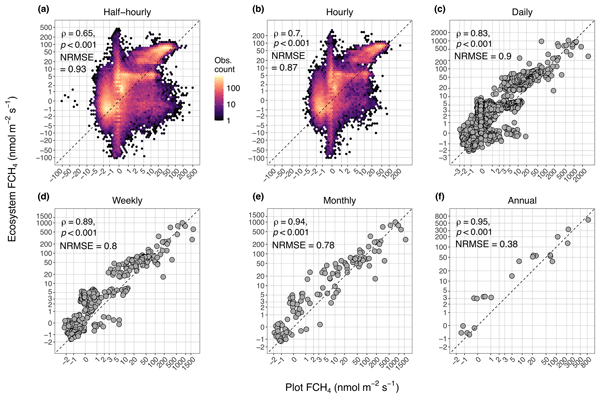
Tiia Määttä, Ankur R. Desai, Masahito Ueyama, Rodrigo Vargas, Eric J. Ward, Zhen Zhang, Gil Bohrer, Kyle Delwiche, Etienne Fluet-Chouinard, Järvi Järveoja, Sara H. Knox, Lulie Melling, Mats B. Nilsson, Matthias Peichl, Angela Che Ing Tang, Eeva-Stiina Tuittila, Jinsong Wang, Sheel Bansal, Sarah Feron, Manuel Helbig, Aino Korrensalo, Ken W. Krauss, Gavin McNicol, Shuli Niu, Zutao Ouyang, Kathleen Savage, Oliver Sonnentag, Robert Jackson, and Avni Malhotra
Biogeosciences, 23, 4379–4445, https://doi.org/10.5194/bg-23-4379-2026, https://doi.org/10.5194/bg-23-4379-2026, 2026
Short summary
Short summary
We compared ecosystem- and plot-scale methane fluxes across wetland and upland sites. Ecosystem-scale fluxes were higher than at plot scale, but differences were small. Vapor pressure deficit, atmospheric pressure, turbulence, and wind direction affected the differences. Both scales could be combined for improved methane flux estimates at coarser temporal scales.
Nikola Besic, Philippe Ciais, Fa Li, Robert Jackson, Kunxiaojia Yuan, Shushi Peng, Benjamin Poulter, Zhen Zhang, and Qing Zhu
EGUsphere, https://doi.org/10.5194/egusphere-2026-2604, https://doi.org/10.5194/egusphere-2026-2604, 2026
This preprint is open for discussion and under review for Geoscientific Model Development (GMD).
Short summary
Short summary
Wetlands are the largest natural source of methane, an important greenhouse gas, but current estimates of their emissions remain highly uncertain because models often disagree. We combined field measurements from wetlands around the world with advanced statistical methods to identify where different models perform best. Our results show that accounting for regional differences in model skill can substantially change local methane estimates and potentially improve future climate assessments.
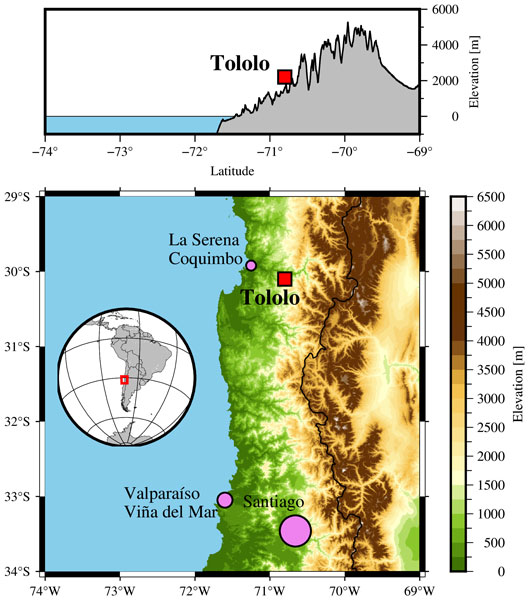
Laura Gallardo, Charlie Opazo, Camilo Menares, Kevin Basoa, Lucas Castillo, Nikos Daskalakis, Maria Kanakidou, Carmen Vega, Nicolás Huneeus, Roberto Rondanelli, and Rodrigo Seguel
Atmos. Chem. Phys., 26, 8783–8807, https://doi.org/10.5194/acp-26-8783-2026, https://doi.org/10.5194/acp-26-8783-2026, 2026
Short summary
Short summary
We assert the role of methane and other drivers of change in explaining the growing tropospheric ozone (O3) trend at Tololo (30.17° S, 70.80° W, 2154 m a.s.l.), and we quantify the contributions of biomass burning and stratospheric and upper tropospheric O3, particularly during the late winter and spring. These findings enhance understanding of O3 variability in the Southern Hemisphere free troposphere and underscore the importance of sustained observations at Tololo amid climate change.
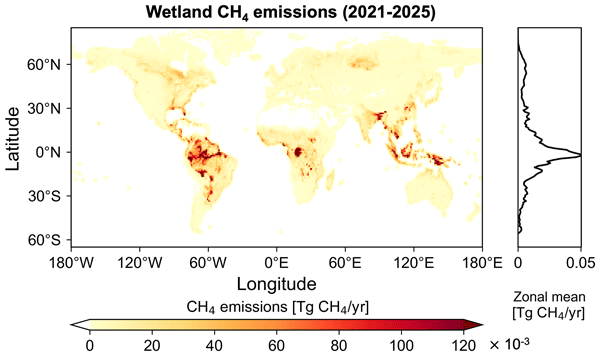
Mengze Li, Robert B. Jackson, Marielle Saunois, Philippe Ciais, Ben Poulter, Josep G. Canadell, Prabir K. Patra, Hanqin Tian, Zhen Zhang, Etienne Fluet-Chouinard, Zutao Ouyang, Ting Zhang, David J. Beerling, Dmitry A. Belikov, Philippe Bousquet, Danilo Custodio, Naveen Chandra, Xinyu Dou, Nicola Gedney, Peter O. Hopcroft, Alison M. Hoyt, Kazuhito Ichii, Akihito Ito, Atul K. Jain, Katherine Jensen, Fortunat Joos, Thomas Kleinen, Masayuki Kondo, Fa Li, Tingting Li, Xiangyu Liu, Shamil Maksyutov, Avni Malhotra, Adrien Martinez, Kyle McDonald, Joe R. Melton, Jurek Müller, Yosuke Niwa, Shufen Pan, Shushi Peng, Changhui Peng, Zhangcai Qin, Peter Raymond, William Riley, Arjo Segers, Rona L. Thompson, Aki Tsuruta, Yi Xi, Kunxiaojia Yuan, Wenxin Zhang, Bo Zheng, Qing Zhu, Qiuan Zhu, and Qianlai Zhuang
Earth Syst. Sci. Data, 18, 3507–3524, https://doi.org/10.5194/essd-18-3507-2026, https://doi.org/10.5194/essd-18-3507-2026, 2026
Short summary
Short summary
We proposed a framework that combines machine-learning and climate data to predict global natural vegetated wetland methane emissions for 2000–2025. We found that although total global emissions remained stable in the post-2020s, Northern Hemisphere emissions surged whilst tropical emissions fell. This approach allows us to rapidly monitor emissions and provides early warnings for climate impacts.
Diego Roberto Rojas Neisa, Alejandro Piracoca-Mayorga, Sebastián Espitia-Cano, and Ricardo Morales Betancourt
EGUsphere, https://doi.org/10.5194/egusphere-2026-797, https://doi.org/10.5194/egusphere-2026-797, 2026
Short summary
Short summary
In this work, we explored the ability of simpler atmospheric models to analyze the effectiveness of reducing air pollutant emissions to improve air quality. We showed that, despite its simplicity, these models correctly estimate the areas where impacts will be felt the most, and therefore, can be used by decision makers to maximize the positive impacts of planned air quality improvements.
Robert B. Jackson, Jeremy A. Irvin, Neel Ramachandran, Chenghao Wang, Zutao Ouyang, Paul A. Tulloch, Frankie Y. Liu, and Andrew Y. Ng
Earth Syst. Sci. Data Discuss., https://doi.org/10.5194/essd-2026-124, https://doi.org/10.5194/essd-2026-124, 2026
Revised manuscript accepted for ESSD
Short summary
Short summary
The MEthane Tracking Emissions Reference (METER) database hosts 12 million potential methane-emitting sources globally from 200+ countries. It includes oil and gas facilities, coal mines, and other sources. We used machine-learning and satellite data to map the first global landfill dataset (~13,000 landfills >2.5-ha in size). METER should improve inventories of methane emissions by enhancing infrastructure counts and provides locations for tasking satellite detections.
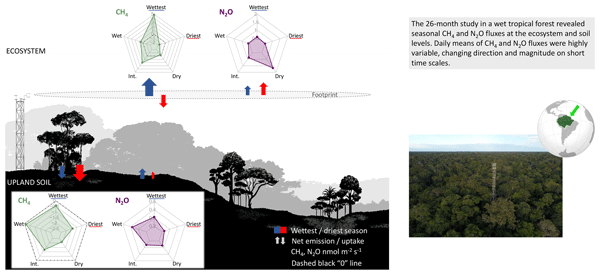
Laëtitia M. Bréchet, Mercedes Ibáñez, Robert B. Jackson, Benoît Burban, Clément Stahl, Damien Bonal, and Ivan A. Janssens
Biogeosciences, 22, 8031–8046, https://doi.org/10.5194/bg-22-8031-2025, https://doi.org/10.5194/bg-22-8031-2025, 2025
Short summary
Short summary
Net ecosystem and soil fluxes of the greenhouse gases methane (CH4) and nitrous oxide (N2O) were measured in a wet tropical forest. The measurements covered a 26-month period including contrasting seasons. The forest absorbed CH4 during the driest season, and emitted it during the wettest season, while consistently emitting N2O. The studied upland soils consistently absorb CH4 but emit N2O. Statistical models identified soil water content as one of the key drivers of these greenhouse gas fluxes.
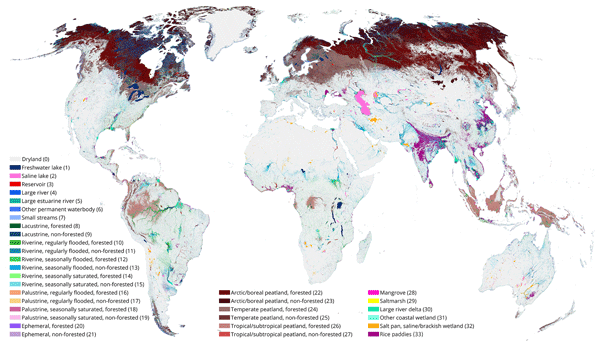
Bernhard Lehner, Mira Anand, Etienne Fluet-Chouinard, Florence Tan, Filipe Aires, George H. Allen, Philippe Bousquet, Josep G. Canadell, Nick Davidson, Meng Ding, C. Max Finlayson, Thomas Gumbricht, Lammert Hilarides, Gustaf Hugelius, Robert B. Jackson, Maartje C. Korver, Liangyun Liu, Peter B. McIntyre, Szabolcs Nagy, David Olefeldt, Tamlin M. Pavelsky, Jean-Francois Pekel, Benjamin Poulter, Catherine Prigent, Jida Wang, Thomas A. Worthington, Dai Yamazaki, Xiao Zhang, and Michele Thieme
Earth Syst. Sci. Data, 17, 2277–2329, https://doi.org/10.5194/essd-17-2277-2025, https://doi.org/10.5194/essd-17-2277-2025, 2025
Short summary
Short summary
The Global Lakes and Wetlands Database (GLWD) version 2 distinguishes a total of 33 non-overlapping wetland classes, providing a static map of the world’s inland surface waters. It contains cell fractions of wetland extents per class at a grid cell resolution of ~500 m. The total combined extent of all classes including all inland and coastal waterbodies and wetlands of all inundation frequencies – that is, the maximum extent – covers 18.2 × 10⁶ km2, equivalent to 13.4 % of total global land area.
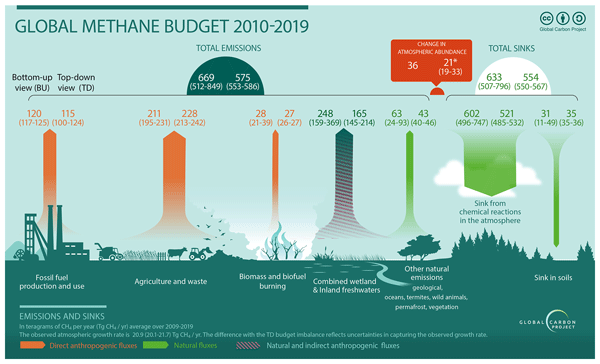
Marielle Saunois, Adrien Martinez, Benjamin Poulter, Zhen Zhang, Peter A. Raymond, Pierre Regnier, Josep G. Canadell, Robert B. Jackson, Prabir K. Patra, Philippe Bousquet, Philippe Ciais, Edward J. Dlugokencky, Xin Lan, George H. Allen, David Bastviken, David J. Beerling, Dmitry A. Belikov, Donald R. Blake, Simona Castaldi, Monica Crippa, Bridget R. Deemer, Fraser Dennison, Giuseppe Etiope, Nicola Gedney, Lena Höglund-Isaksson, Meredith A. Holgerson, Peter O. Hopcroft, Gustaf Hugelius, Akihiko Ito, Atul K. Jain, Rajesh Janardanan, Matthew S. Johnson, Thomas Kleinen, Paul B. Krummel, Ronny Lauerwald, Tingting Li, Xiangyu Liu, Kyle C. McDonald, Joe R. Melton, Jens Mühle, Jurek Müller, Fabiola Murguia-Flores, Yosuke Niwa, Sergio Noce, Shufen Pan, Robert J. Parker, Changhui Peng, Michel Ramonet, William J. Riley, Gerard Rocher-Ros, Judith A. Rosentreter, Motoki Sasakawa, Arjo Segers, Steven J. Smith, Emily H. Stanley, Joël Thanwerdas, Hanqin Tian, Aki Tsuruta, Francesco N. Tubiello, Thomas S. Weber, Guido R. van der Werf, Douglas E. J. Worthy, Yi Xi, Yukio Yoshida, Wenxin Zhang, Bo Zheng, Qing Zhu, Qiuan Zhu, and Qianlai Zhuang
Earth Syst. Sci. Data, 17, 1873–1958, https://doi.org/10.5194/essd-17-1873-2025, https://doi.org/10.5194/essd-17-1873-2025, 2025
Short summary
Short summary
Methane (CH4) is the second most important human-influenced greenhouse gas in terms of climate forcing after carbon dioxide (CO2). A consortium of multi-disciplinary scientists synthesise and update the budget of the sources and sinks of CH4. This edition benefits from important progress in estimating emissions from lakes and ponds, reservoirs, and streams and rivers. For the 2010s decade, global CH4 emissions are estimated at 575 Tg CH4 yr-1, including ~65 % from anthropogenic sources.
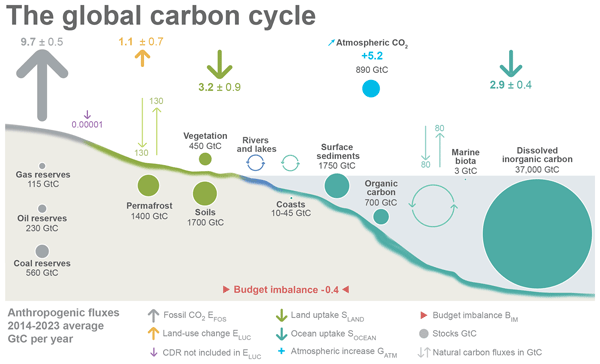
Pierre Friedlingstein, Michael O'Sullivan, Matthew W. Jones, Robbie M. Andrew, Judith Hauck, Peter Landschützer, Corinne Le Quéré, Hongmei Li, Ingrid T. Luijkx, Are Olsen, Glen P. Peters, Wouter Peters, Julia Pongratz, Clemens Schwingshackl, Stephen Sitch, Josep G. Canadell, Philippe Ciais, Robert B. Jackson, Simone R. Alin, Almut Arneth, Vivek Arora, Nicholas R. Bates, Meike Becker, Nicolas Bellouin, Carla F. Berghoff, Henry C. Bittig, Laurent Bopp, Patricia Cadule, Katie Campbell, Matthew A. Chamberlain, Naveen Chandra, Frédéric Chevallier, Louise P. Chini, Thomas Colligan, Jeanne Decayeux, Laique M. Djeutchouang, Xinyu Dou, Carolina Duran Rojas, Kazutaka Enyo, Wiley Evans, Amanda R. Fay, Richard A. Feely, Daniel J. Ford, Adrianna Foster, Thomas Gasser, Marion Gehlen, Thanos Gkritzalis, Giacomo Grassi, Luke Gregor, Nicolas Gruber, Özgür Gürses, Ian Harris, Matthew Hefner, Jens Heinke, George C. Hurtt, Yosuke Iida, Tatiana Ilyina, Andrew R. Jacobson, Atul K. Jain, Tereza Jarníková, Annika Jersild, Fei Jiang, Zhe Jin, Etsushi Kato, Ralph F. Keeling, Kees Klein Goldewijk, Jürgen Knauer, Jan Ivar Korsbakken, Xin Lan, Siv K. Lauvset, Nathalie Lefèvre, Zhu Liu, Junjie Liu, Lei Ma, Shamil Maksyutov, Gregg Marland, Nicolas Mayot, Patrick C. McGuire, Nicolas Metzl, Natalie M. Monacci, Eric J. Morgan, Shin-Ichiro Nakaoka, Craig Neill, Yosuke Niwa, Tobias Nützel, Lea Olivier, Tsuneo Ono, Paul I. Palmer, Denis Pierrot, Zhangcai Qin, Laure Resplandy, Alizée Roobaert, Thais M. Rosan, Christian Rödenbeck, Jörg Schwinger, T. Luke Smallman, Stephen M. Smith, Reinel Sospedra-Alfonso, Tobias Steinhoff, Qing Sun, Adrienne J. Sutton, Roland Séférian, Shintaro Takao, Hiroaki Tatebe, Hanqin Tian, Bronte Tilbrook, Olivier Torres, Etienne Tourigny, Hiroyuki Tsujino, Francesco Tubiello, Guido van der Werf, Rik Wanninkhof, Xuhui Wang, Dongxu Yang, Xiaojuan Yang, Zhen Yu, Wenping Yuan, Xu Yue, Sönke Zaehle, Ning Zeng, and Jiye Zeng
Earth Syst. Sci. Data, 17, 965–1039, https://doi.org/10.5194/essd-17-965-2025, https://doi.org/10.5194/essd-17-965-2025, 2025
Short summary
Short summary
The Global Carbon Budget 2024 describes the methodology, main results, and datasets used to quantify the anthropogenic emissions of carbon dioxide (CO2) and their partitioning among the atmosphere, land ecosystems, and the ocean over the historical period (1750–2024). These living datasets are updated every year to provide the highest transparency and traceability in the reporting of CO2, the key driver of climate change.
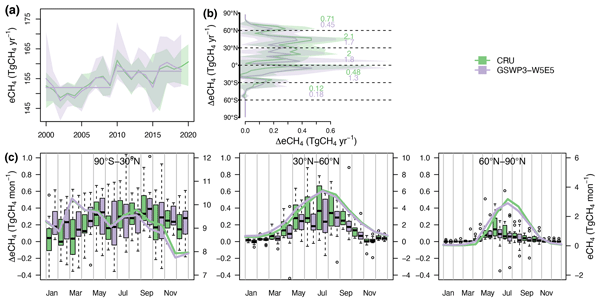
Zhen Zhang, Benjamin Poulter, Joe R. Melton, William J. Riley, George H. Allen, David J. Beerling, Philippe Bousquet, Josep G. Canadell, Etienne Fluet-Chouinard, Philippe Ciais, Nicola Gedney, Peter O. Hopcroft, Akihiko Ito, Robert B. Jackson, Atul K. Jain, Katherine Jensen, Fortunat Joos, Thomas Kleinen, Sara H. Knox, Tingting Li, Xin Li, Xiangyu Liu, Kyle McDonald, Gavin McNicol, Paul A. Miller, Jurek Müller, Prabir K. Patra, Changhui Peng, Shushi Peng, Zhangcai Qin, Ryan M. Riggs, Marielle Saunois, Qing Sun, Hanqin Tian, Xiaoming Xu, Yuanzhi Yao, Yi Xi, Wenxin Zhang, Qing Zhu, Qiuan Zhu, and Qianlai Zhuang
Biogeosciences, 22, 305–321, https://doi.org/10.5194/bg-22-305-2025, https://doi.org/10.5194/bg-22-305-2025, 2025
Short summary
Short summary
This study assesses global methane emissions from wetlands between 2000 and 2020 using multiple models. We found that wetland emissions increased by 6–7 Tg CH4 yr-1 in the 2010s compared to the 2000s. Rising temperatures primarily drove this increase, while changes in precipitation and CO2 levels also played roles. Our findings highlight the importance of wetlands in the global methane budget and the need for continuous monitoring to understand their impact on climate change.
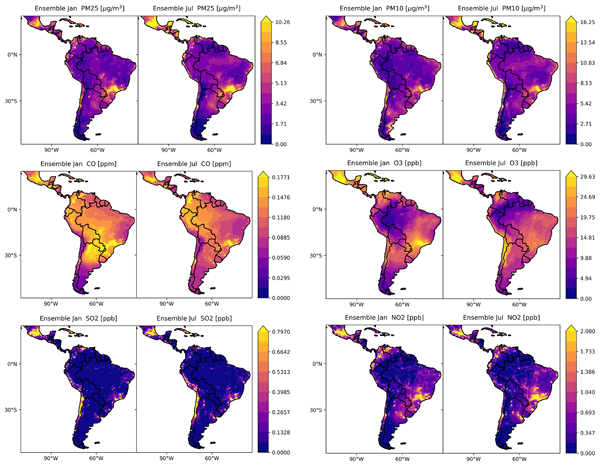
Jorge E. Pachón, Mariel A. Opazo, Pablo Lichtig, Nicolas Huneeus, Idir Bouarar, Guy Brasseur, Cathy W. Y. Li, Johannes Flemming, Laurent Menut, Camilo Menares, Laura Gallardo, Michael Gauss, Mikhail Sofiev, Rostislav Kouznetsov, Julia Palamarchuk, Andreas Uppstu, Laura Dawidowski, Nestor Y. Rojas, María de Fátima Andrade, Mario E. Gavidia-Calderón, Alejandro H. Delgado Peralta, and Daniel Schuch
Geosci. Model Dev., 17, 7467–7512, https://doi.org/10.5194/gmd-17-7467-2024, https://doi.org/10.5194/gmd-17-7467-2024, 2024
Short summary
Short summary
Latin America (LAC) has some of the most populated urban areas in the world, with high levels of air pollution. Air quality management in LAC has been traditionally focused on surveillance and building emission inventories. This study performed the first intercomparison and model evaluation in LAC, with interesting and insightful findings for the region. A multiscale modeling ensemble chain was assembled as a first step towards an air quality forecasting system.

Hanqin Tian, Naiqing Pan, Rona L. Thompson, Josep G. Canadell, Parvadha Suntharalingam, Pierre Regnier, Eric A. Davidson, Michael Prather, Philippe Ciais, Marilena Muntean, Shufen Pan, Wilfried Winiwarter, Sönke Zaehle, Feng Zhou, Robert B. Jackson, Hermann W. Bange, Sarah Berthet, Zihao Bian, Daniele Bianchi, Alexander F. Bouwman, Erik T. Buitenhuis, Geoffrey Dutton, Minpeng Hu, Akihiko Ito, Atul K. Jain, Aurich Jeltsch-Thömmes, Fortunat Joos, Sian Kou-Giesbrecht, Paul B. Krummel, Xin Lan, Angela Landolfi, Ronny Lauerwald, Ya Li, Chaoqun Lu, Taylor Maavara, Manfredi Manizza, Dylan B. Millet, Jens Mühle, Prabir K. Patra, Glen P. Peters, Xiaoyu Qin, Peter Raymond, Laure Resplandy, Judith A. Rosentreter, Hao Shi, Qing Sun, Daniele Tonina, Francesco N. Tubiello, Guido R. van der Werf, Nicolas Vuichard, Junjie Wang, Kelley C. Wells, Luke M. Western, Chris Wilson, Jia Yang, Yuanzhi Yao, Yongfa You, and Qing Zhu
Earth Syst. Sci. Data, 16, 2543–2604, https://doi.org/10.5194/essd-16-2543-2024, https://doi.org/10.5194/essd-16-2543-2024, 2024
Short summary
Short summary
Atmospheric concentrations of nitrous oxide (N2O), a greenhouse gas 273 times more potent than carbon dioxide, have increased by 25 % since the preindustrial period, with the highest observed growth rate in 2020 and 2021. This rapid growth rate has primarily been due to a 40 % increase in anthropogenic emissions since 1980. Observed atmospheric N2O concentrations in recent years have exceeded the worst-case climate scenario, underscoring the importance of reducing anthropogenic N2O emissions.
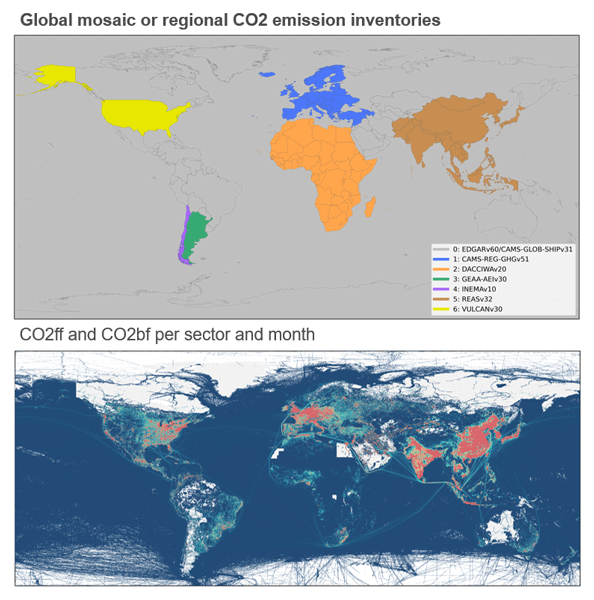
Ruben Urraca, Greet Janssens-Maenhout, Nicolás Álamos, Lucas Berna-Peña, Monica Crippa, Sabine Darras, Stijn Dellaert, Hugo Denier van der Gon, Mark Dowell, Nadine Gobron, Claire Granier, Giacomo Grassi, Marc Guevara, Diego Guizzardi, Kevin Gurney, Nicolás Huneeus, Sekou Keita, Jeroen Kuenen, Ana Lopez-Noreña, Enrique Puliafito, Geoffrey Roest, Simone Rossi, Antonin Soulie, and Antoon Visschedijk
Earth Syst. Sci. Data, 16, 501–523, https://doi.org/10.5194/essd-16-501-2024, https://doi.org/10.5194/essd-16-501-2024, 2024
Short summary
Short summary
CoCO2-MOSAIC 1.0 is a global mosaic of regional bottom-up inventories providing gridded (0.1×0.1) monthly emissions of anthropogenic CO2. Regional inventories include country-specific information and finer spatial resolution than global inventories. CoCO2-MOSAIC provides harmonized access to these datasets and can be considered as a regionally accepted reference to assess the quality of global inventories, as done in the current paper.
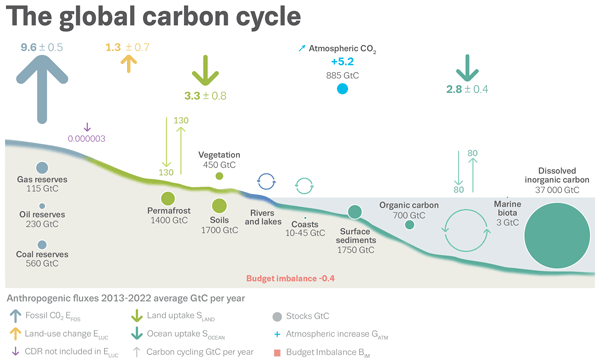
Pierre Friedlingstein, Michael O'Sullivan, Matthew W. Jones, Robbie M. Andrew, Dorothee C. E. Bakker, Judith Hauck, Peter Landschützer, Corinne Le Quéré, Ingrid T. Luijkx, Glen P. Peters, Wouter Peters, Julia Pongratz, Clemens Schwingshackl, Stephen Sitch, Josep G. Canadell, Philippe Ciais, Robert B. Jackson, Simone R. Alin, Peter Anthoni, Leticia Barbero, Nicholas R. Bates, Meike Becker, Nicolas Bellouin, Bertrand Decharme, Laurent Bopp, Ida Bagus Mandhara Brasika, Patricia Cadule, Matthew A. Chamberlain, Naveen Chandra, Thi-Tuyet-Trang Chau, Frédéric Chevallier, Louise P. Chini, Margot Cronin, Xinyu Dou, Kazutaka Enyo, Wiley Evans, Stefanie Falk, Richard A. Feely, Liang Feng, Daniel J. Ford, Thomas Gasser, Josefine Ghattas, Thanos Gkritzalis, Giacomo Grassi, Luke Gregor, Nicolas Gruber, Özgür Gürses, Ian Harris, Matthew Hefner, Jens Heinke, Richard A. Houghton, George C. Hurtt, Yosuke Iida, Tatiana Ilyina, Andrew R. Jacobson, Atul Jain, Tereza Jarníková, Annika Jersild, Fei Jiang, Zhe Jin, Fortunat Joos, Etsushi Kato, Ralph F. Keeling, Daniel Kennedy, Kees Klein Goldewijk, Jürgen Knauer, Jan Ivar Korsbakken, Arne Körtzinger, Xin Lan, Nathalie Lefèvre, Hongmei Li, Junjie Liu, Zhiqiang Liu, Lei Ma, Greg Marland, Nicolas Mayot, Patrick C. McGuire, Galen A. McKinley, Gesa Meyer, Eric J. Morgan, David R. Munro, Shin-Ichiro Nakaoka, Yosuke Niwa, Kevin M. O'Brien, Are Olsen, Abdirahman M. Omar, Tsuneo Ono, Melf Paulsen, Denis Pierrot, Katie Pocock, Benjamin Poulter, Carter M. Powis, Gregor Rehder, Laure Resplandy, Eddy Robertson, Christian Rödenbeck, Thais M. Rosan, Jörg Schwinger, Roland Séférian, T. Luke Smallman, Stephen M. Smith, Reinel Sospedra-Alfonso, Qing Sun, Adrienne J. Sutton, Colm Sweeney, Shintaro Takao, Pieter P. Tans, Hanqin Tian, Bronte Tilbrook, Hiroyuki Tsujino, Francesco Tubiello, Guido R. van der Werf, Erik van Ooijen, Rik Wanninkhof, Michio Watanabe, Cathy Wimart-Rousseau, Dongxu Yang, Xiaojuan Yang, Wenping Yuan, Xu Yue, Sönke Zaehle, Jiye Zeng, and Bo Zheng
Earth Syst. Sci. Data, 15, 5301–5369, https://doi.org/10.5194/essd-15-5301-2023, https://doi.org/10.5194/essd-15-5301-2023, 2023
Short summary
Short summary
The Global Carbon Budget 2023 describes the methodology, main results, and data sets used to quantify the anthropogenic emissions of carbon dioxide (CO2) and their partitioning among the atmosphere, land ecosystems, and the ocean over the historical period (1750–2023). These living datasets are updated every year to provide the highest transparency and traceability in the reporting of CO2, the key driver of climate change.
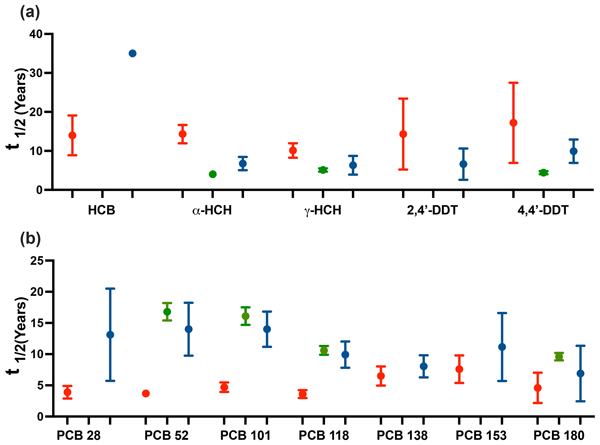
Thais Luarte, Victoria A. Gómez-Aburto, Ignacio Poblete-Castro, Eduardo Castro-Nallar, Nicolas Huneeus, Marco Molina-Montenegro, Claudia Egas, Germán Azcune, Andrés Pérez-Parada, Rainier Lohmann, Pernilla Bohlin-Nizzetto, Jordi Dachs, Susan Bengtson-Nash, Gustavo Chiang, Karla Pozo, and Cristóbal J. Galbán-Malagón
Atmos. Chem. Phys., 23, 8103–8118, https://doi.org/10.5194/acp-23-8103-2023, https://doi.org/10.5194/acp-23-8103-2023, 2023
Short summary
Short summary
In the last 40 years, different research groups have reported on the atmospheric concentrations of persistent organic pollutants in Antarctica. In the present work, we make a compilation to understand the historical trends and estimate the atmospheric half-life of each compound. Of the compounds studied, HCB was the only one that showed no clear trend, while the rest of the studied compounds showed a significant decrease over time. This is consistent with results for polar and sub-polar zones.

Rémy Lapere, Nicolás Huneeus, Sylvain Mailler, Laurent Menut, and Florian Couvidat
Atmos. Chem. Phys., 23, 1749–1768, https://doi.org/10.5194/acp-23-1749-2023, https://doi.org/10.5194/acp-23-1749-2023, 2023
Short summary
Short summary
Glaciers in the Andes of central Chile are shrinking rapidly in response to global warming. This melting is accelerated by the deposition of opaque particles onto snow and ice. In this work, model simulations quantify typical deposition rates of soot on glaciers in summer and winter months and show that the contribution of emissions from Santiago is not as high as anticipated. Additionally, the combination of regional- and local-scale meteorology explains the seasonality in deposition.

Yuanhong Zhao, Marielle Saunois, Philippe Bousquet, Xin Lin, Michaela I. Hegglin, Josep G. Canadell, Robert B. Jackson, and Bo Zheng
Atmos. Chem. Phys., 23, 789–807, https://doi.org/10.5194/acp-23-789-2023, https://doi.org/10.5194/acp-23-789-2023, 2023
Short summary
Short summary
The large uncertainties in OH simulated by atmospheric chemistry models hinder accurate estimates of CH4 chemical loss through the bottom-up method. This study presents a new approach based on OH precursor observations and a chemical box model to improve the tropospheric OH distributions simulated by atmospheric chemistry models. Through this approach, both the global OH burden and the corresponding methane chemical loss reach consistency with the top-down method based on MCF inversions.
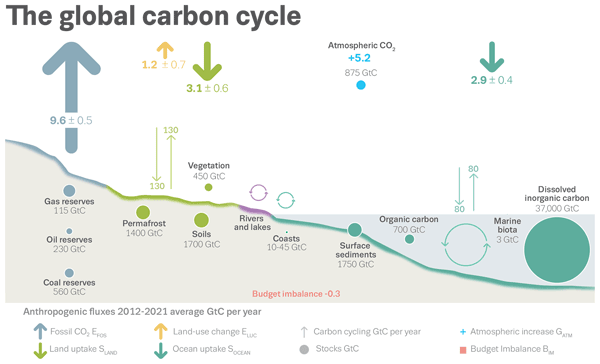
Pierre Friedlingstein, Michael O'Sullivan, Matthew W. Jones, Robbie M. Andrew, Luke Gregor, Judith Hauck, Corinne Le Quéré, Ingrid T. Luijkx, Are Olsen, Glen P. Peters, Wouter Peters, Julia Pongratz, Clemens Schwingshackl, Stephen Sitch, Josep G. Canadell, Philippe Ciais, Robert B. Jackson, Simone R. Alin, Ramdane Alkama, Almut Arneth, Vivek K. Arora, Nicholas R. Bates, Meike Becker, Nicolas Bellouin, Henry C. Bittig, Laurent Bopp, Frédéric Chevallier, Louise P. Chini, Margot Cronin, Wiley Evans, Stefanie Falk, Richard A. Feely, Thomas Gasser, Marion Gehlen, Thanos Gkritzalis, Lucas Gloege, Giacomo Grassi, Nicolas Gruber, Özgür Gürses, Ian Harris, Matthew Hefner, Richard A. Houghton, George C. Hurtt, Yosuke Iida, Tatiana Ilyina, Atul K. Jain, Annika Jersild, Koji Kadono, Etsushi Kato, Daniel Kennedy, Kees Klein Goldewijk, Jürgen Knauer, Jan Ivar Korsbakken, Peter Landschützer, Nathalie Lefèvre, Keith Lindsay, Junjie Liu, Zhu Liu, Gregg Marland, Nicolas Mayot, Matthew J. McGrath, Nicolas Metzl, Natalie M. Monacci, David R. Munro, Shin-Ichiro Nakaoka, Yosuke Niwa, Kevin O'Brien, Tsuneo Ono, Paul I. Palmer, Naiqing Pan, Denis Pierrot, Katie Pocock, Benjamin Poulter, Laure Resplandy, Eddy Robertson, Christian Rödenbeck, Carmen Rodriguez, Thais M. Rosan, Jörg Schwinger, Roland Séférian, Jamie D. Shutler, Ingunn Skjelvan, Tobias Steinhoff, Qing Sun, Adrienne J. Sutton, Colm Sweeney, Shintaro Takao, Toste Tanhua, Pieter P. Tans, Xiangjun Tian, Hanqin Tian, Bronte Tilbrook, Hiroyuki Tsujino, Francesco Tubiello, Guido R. van der Werf, Anthony P. Walker, Rik Wanninkhof, Chris Whitehead, Anna Willstrand Wranne, Rebecca Wright, Wenping Yuan, Chao Yue, Xu Yue, Sönke Zaehle, Jiye Zeng, and Bo Zheng
Earth Syst. Sci. Data, 14, 4811–4900, https://doi.org/10.5194/essd-14-4811-2022, https://doi.org/10.5194/essd-14-4811-2022, 2022
Short summary
Short summary
The Global Carbon Budget 2022 describes the datasets and methodology used to quantify the anthropogenic emissions of carbon dioxide (CO2) and their partitioning among the atmosphere, the land ecosystems, and the ocean. These living datasets are updated every year to provide the highest transparency and traceability in the reporting of CO2, the key driver of climate change.
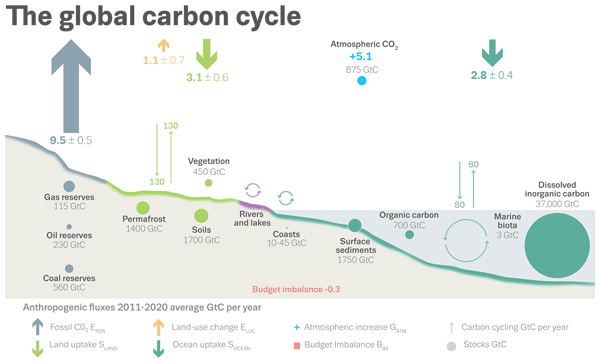
Pierre Friedlingstein, Matthew W. Jones, Michael O'Sullivan, Robbie M. Andrew, Dorothee C. E. Bakker, Judith Hauck, Corinne Le Quéré, Glen P. Peters, Wouter Peters, Julia Pongratz, Stephen Sitch, Josep G. Canadell, Philippe Ciais, Rob B. Jackson, Simone R. Alin, Peter Anthoni, Nicholas R. Bates, Meike Becker, Nicolas Bellouin, Laurent Bopp, Thi Tuyet Trang Chau, Frédéric Chevallier, Louise P. Chini, Margot Cronin, Kim I. Currie, Bertrand Decharme, Laique M. Djeutchouang, Xinyu Dou, Wiley Evans, Richard A. Feely, Liang Feng, Thomas Gasser, Dennis Gilfillan, Thanos Gkritzalis, Giacomo Grassi, Luke Gregor, Nicolas Gruber, Özgür Gürses, Ian Harris, Richard A. Houghton, George C. Hurtt, Yosuke Iida, Tatiana Ilyina, Ingrid T. Luijkx, Atul Jain, Steve D. Jones, Etsushi Kato, Daniel Kennedy, Kees Klein Goldewijk, Jürgen Knauer, Jan Ivar Korsbakken, Arne Körtzinger, Peter Landschützer, Siv K. Lauvset, Nathalie Lefèvre, Sebastian Lienert, Junjie Liu, Gregg Marland, Patrick C. McGuire, Joe R. Melton, David R. Munro, Julia E. M. S. Nabel, Shin-Ichiro Nakaoka, Yosuke Niwa, Tsuneo Ono, Denis Pierrot, Benjamin Poulter, Gregor Rehder, Laure Resplandy, Eddy Robertson, Christian Rödenbeck, Thais M. Rosan, Jörg Schwinger, Clemens Schwingshackl, Roland Séférian, Adrienne J. Sutton, Colm Sweeney, Toste Tanhua, Pieter P. Tans, Hanqin Tian, Bronte Tilbrook, Francesco Tubiello, Guido R. van der Werf, Nicolas Vuichard, Chisato Wada, Rik Wanninkhof, Andrew J. Watson, David Willis, Andrew J. Wiltshire, Wenping Yuan, Chao Yue, Xu Yue, Sönke Zaehle, and Jiye Zeng
Earth Syst. Sci. Data, 14, 1917–2005, https://doi.org/10.5194/essd-14-1917-2022, https://doi.org/10.5194/essd-14-1917-2022, 2022
Short summary
Short summary
The Global Carbon Budget 2021 describes the data sets and methodology used to quantify the emissions of carbon dioxide and their partitioning among the atmosphere, land, and ocean. These living data are updated every year to provide the highest transparency and traceability in the reporting of CO2, the key driver of climate change.
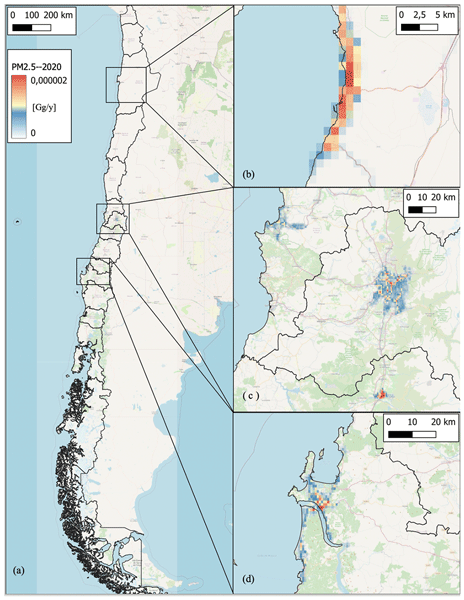
Mauricio Osses, Néstor Rojas, Cecilia Ibarra, Víctor Valdebenito, Ignacio Laengle, Nicolás Pantoja, Darío Osses, Kevin Basoa, Sebastián Tolvett, Nicolás Huneeus, Laura Gallardo, and Benjamín Gómez
Earth Syst. Sci. Data, 14, 1359–1376, https://doi.org/10.5194/essd-14-1359-2022, https://doi.org/10.5194/essd-14-1359-2022, 2022
Short summary
Short summary
This paper presents a detailed estimate of on-road vehicle emissions for Chile, between 1990–2020, and an analysis of emission trends for greenhouse gases and local pollutants. Data are disaggregated by type of vehicle and region at 0.01° × 0.01°. While the vehicle fleet grew 5-fold, CO2 emissions increased at a lower rate and local pollutants decreased. These trends can be explained by changes in improved vehicle technologies, better fuel quality and enforcement of emission standards.
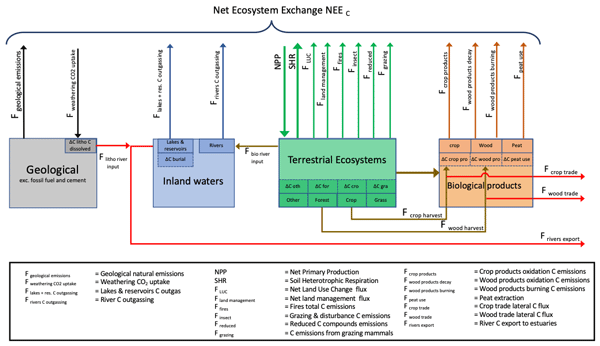
Philippe Ciais, Ana Bastos, Frédéric Chevallier, Ronny Lauerwald, Ben Poulter, Josep G. Canadell, Gustaf Hugelius, Robert B. Jackson, Atul Jain, Matthew Jones, Masayuki Kondo, Ingrid T. Luijkx, Prabir K. Patra, Wouter Peters, Julia Pongratz, Ana Maria Roxana Petrescu, Shilong Piao, Chunjing Qiu, Celso Von Randow, Pierre Regnier, Marielle Saunois, Robert Scholes, Anatoly Shvidenko, Hanqin Tian, Hui Yang, Xuhui Wang, and Bo Zheng
Geosci. Model Dev., 15, 1289–1316, https://doi.org/10.5194/gmd-15-1289-2022, https://doi.org/10.5194/gmd-15-1289-2022, 2022
Short summary
Short summary
The second phase of the Regional Carbon Cycle Assessment and Processes (RECCAP) will provide updated quantification and process understanding of CO2, CH4, and N2O emissions and sinks for ten regions of the globe. In this paper, we give definitions, review different methods, and make recommendations for estimating different components of the total land–atmosphere carbon exchange for each region in a consistent and complete approach.
Nicolás Álamos, Nicolás Huneeus, Mariel Opazo, Mauricio Osses, Sebastián Puja, Nicolás Pantoja, Hugo Denier van der Gon, Alejandra Schueftan, René Reyes, and Rubén Calvo
Earth Syst. Sci. Data, 14, 361–379, https://doi.org/10.5194/essd-14-361-2022, https://doi.org/10.5194/essd-14-361-2022, 2022
Short summary
Short summary
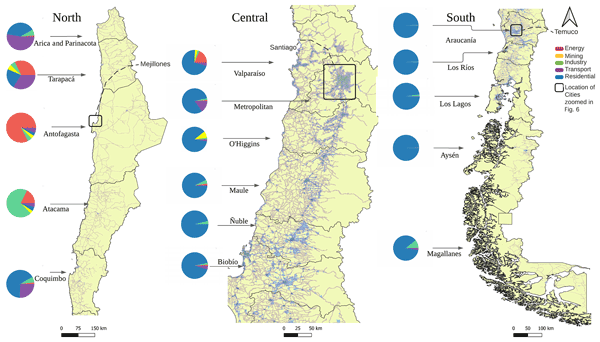
This study presents the first high-resolution national inventory of anthropogenic emissions for Chile (Inventario Nacional de Emisiones Antropogénicas, INEMA). Emissions for vehicular, industrial, energy, mining and residential sectors are estimated for the period 2015–2017 and spatially distributed onto a high-resolution grid (1 × 1 km). This inventory will support policies seeking to mitigate climate change and improve air quality by providing qualified scientific spatial emission information.
Paula Castesana, Melisa Diaz Resquin, Nicolás Huneeus, Enrique Puliafito, Sabine Darras, Darío Gómez, Claire Granier, Mauricio Osses Alvarado, Néstor Rojas, and Laura Dawidowski
Earth Syst. Sci. Data, 14, 271–293, https://doi.org/10.5194/essd-14-271-2022, https://doi.org/10.5194/essd-14-271-2022, 2022
Short summary
Short summary
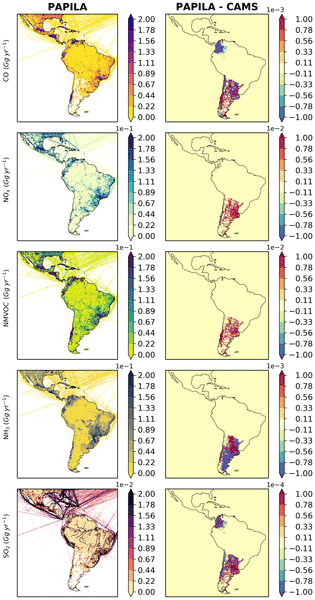
This work presents the results of the first joint effort of South American and European researchers to generate regional maps of emissions. The PAPILA dataset is a collection of annual emission inventories of reactive gases (CO, NOx, NMVOCs, NH3, and SO2) from anthropogenic sources in the region for the period 2014–2016. This was developed on the basis of the CAMS-GLOB-ANT v4.1 dataset, enriching it with derived data from locally available emission inventories for Argentina, Chile, and Colombia.
Cited articles
Alvarez, R. A., Pacala, S. W., Winebrake, J. J., Chameides, W. L., and Hamburg, S. P.: Greater focus needed on methane leakage from natural gas infrastructure, P. Natl. Acad. Sci. USA, 109, 6435–6440, 2012.
Balmes, J. R., Holm, S. M., McCormack, M. C., Hansel, N. N., Gerald, L. B., and Krishnan, J. A.: Cooking with natural gas: just the facts, please, Am. J. Respir. Crit. Care Med., 207, 996–997, https://doi.org/10.1164/rccm.202302-0278VP, 2023.
Barros, N. and Fontes, T.: Impact of kitchen natural gas use on indoor NO2 levels and human health: a case study in two European cities, Appl. Sci., 14, 8461, https://doi.org/10.3390/app14188461, 2024.
Boothroyd, I. M., Almond, S., Qassim, S. M., Worrall, F., and Davies, R. J.: Fugitive emissions of methane from abandoned decommissioned oil and gas wells, Sci. Total Environ., 547, 461–469, 2016.
Chan, S. H. and Wang, H. M.: Effect of natural gas composition on autothermal fuel reforming products, Fuel Process. Technol., 64, 221–239, 2000.
Comer, B., Beecken, J., Vermeulen, R., Sturrup, E., Paschinger, P., Osipova, L., Gore, K., Delahaye, A., Verhagen, V., Knudsen, B., Knudsen, J., and Verbeek, R.: Fugitive and unburned methane emissions from ships (FUMES): Characterizing methane emissions from LNG-fueled ships using drones, helicopters, and onboard measurements, International Council on Clean Transportation, Washington, DC, https://theicct.org/publication/ (last access: 22 August 2025), 2024.
Comisión Nacional de Energía (CNE): Fórmula de cálculo del factor de emisión del gas natural licuado (GNL), https://www.cne.cl/archivos_bajar/DS96_GNL_FEPCO.pdf (last access: 22 August 2025), 2009.
Comisión Nacional de Energía (CNE): Balance energético, Energía Abierta 2024, http://energiaabierta.cl/categorias-estadistica/balance-energetico/ (last access: 19 March 2026), 2025.
Cooper, C. D. and Alley, F. C.: Air Pollution Control: A Design Approach, 4th Edn., Waveland Press, Long Grove, IL, ISBN 157766678X, 2010.
Corporación de Desarrollo Tecnológico (CDT): Usos finales y curva de oferta de conservación de la energía en el sector residencial de Chile, 2018, Informe final, Ministerio de Energía, Chile, https://www.energia.gob.cl/sites/default/files/documentos/informe_final_caracterizacion_residencial_2018.pdf (last access: 20 September 2025), 2019.
EIA: Residential Energy Consumption Survey (RECS); U.S. Energy Information Administration, https://www.eia.gov/consumption/residential/data/2015/ (last access: 15 September 2025), 2015.
Fiscalía Nacional Económica (FNE): Estudio de Mercado del Gas (EM06-2020), División Estudios de Mercado, Santiago, Chile, https://www.fne.gob.cl/wp-content/uploads/2021/12/1.-Informe_Final_publicado.pdf (last access: 1 September 2025), 2021.
Hendrick, M. F., Ackley, R., Sanaie-Movahed, B., Tang, X., and Phillips, N. G.: Fugitive methane emissions from leak-prone natural gas distribution infrastructure in urban environments, Environ. Pollut., 213, 710–716, 2016.
Huangfu, P. and Atkinson, R.: Long-term exposure to NO2 and O3 and all-cause and respiratory mortality: a systematic review and meta-analysis, Environ. Int., 144, 105998, https://doi.org/10.1016/j.envint.2020.105998, 2020.
IEA: World Energy Outlook 2024, IEA, Paris, https://www.iea.org/reports/world-energy-outlook-2024 (last access: 5 April 2025), 2024.
IPCC: 2006 IPCC Guidelines for National Greenhouse Gas Inventories, edited by: Eggleston, H. S., Buendia, L., Miwa, K., Ngara, T., and Tanabe, K., IGES, Japan, https://www.ipcc-nggip.iges.or.jp/public/2006gl/ (last access: 15 May 2025), 2006.
IPCC: Climate Change 2021: The Physical Science Basis. Contribution of Working Group I to the Sixth Assessment Report of the Intergovernmental Panel on Climate Change, Cambridge University Press, https://doi.org/10.1017/9781009157896, 2021.
Kashtan, Y. S., Nicholson, M., Finnegan, C., Ouyang, Z., Lebel, E. D., Michanowicz, D. R., Shonkoff, S. B. C., and Jackson, R. B.: Gas and propane combustion from stoves emits benzene and increases indoor air pollution, Environ. Sci. Technol., 57, 9653–9663, https://doi.org/10.1021/acs.est.2c09289, 2023.
Lebel, E. D., Finnegan, C. J., Ouyang, Z., and Jackson, R. B.: Methane and NO? emissions from natural gas stoves, cooktops, and ovens in residential homes, Environ. Sci. Technol., 56, 2529–2539, 2022.
Levine, J. S. (Ed.): Biomass Burning and Global Change, Vol. 1: Remote Sensing, Modeling and Inventory Development, and Biomass Burning in Africa, The MIT Press, Cambridge, MA, ISBN 978-0-262-12201-6, 1996.
Merrin, Z. and Francisco, P. W.: Unburned methane emissions from residential natural gas appliances, Environ. Sci. Technol., 53, 5473–5482, 2019.
Ministerio del Medio Ambiente (MMA): Tercer informe bienal de actualización de Chile sobre cambio climático, Gobierno de Chile, https://mma.gob.cl/wp-content/uploads/2018 (last access: 12 February 2026), 2018.
Morales Betancourt, R., Galbán Malagón, C., Jackson, R., Shankute, A., Huneeus, N., Montejo-Barato, T., Tapia-Pino, P., Blanco, E., vargas, . rosario ., Cordova, C., Finnegan, C., Hernández-Suárez, S., Valencia, P., and Mena-Carrasco, M.: Meassurement Report: Methane and NOx emissions from natural gas cooking stoves: The case of Chile and Colombia, Zenodo [data set], https://doi.org/10.5281/zenodo.19545481, 2026.
Nisbet, E. G., Manning, M. R., Dlugokencky, E. J., Fisher, R. E., Lowry, D., Michel, S. E., and White, J. W.: Very strong atmospheric methane growth in the 4 years 2014–2017: implications for the Paris Agreement, Global Biogeochem. Cy., 33, 318–342, 2019.
Nisbet, E. G., Fisher, R. E., Lowry, D., France, J. L., Allen, G., Bakkaloglu, S., and Zazzeri, G.: Methane mitigation: methods to reduce emissions, on the path to the Paris Agreement, Rev. Geophys., 58, e2019RG000675, https://doi.org/10.1029/2019RG000675, 2020.
Orellano, P., Reynoso, J., Quaranta, N., Bardach, A., and Ciapponi, A.: Short-term exposure to PM10, PM2.5, NO2, and O3 and mortality: systematic review and meta-analysis, Environ. Int., 142, 105876, https://doi.org/10.1016/j.envint.2020.105876, 2020.
Quinn, A. K., Bruce, N., Puzzolo, E., Dickinson, K., Sturke, R., Jack, D. W., and Rosenthal, J. P.: An analysis of efforts to scale up clean household energy for cooking around the world, Energy Sustain. Dev., 46, 1–10, https://doi.org/10.1016/j.esd.2018.06.011, 2018.
Rowland, S. T., Lebel, E. D., Goldman, J. S. W., Domen, J. K., Bilsback, K. R., Ruiz, A., Jaeger, J. M., Hill, L. A. L., Kashtan, Y. S., Finnegan, C., Nicholson, M., Ouyang, Z., Jackson, R. B., Shonkoff, S. B. C., and Michanowicz, D. R.: Downstream natural gas composition across U.S. and Canada: implications for indoor methane leaks and hazardous air pollutant exposures, Environ. Res. Lett., 19, 064064, https://doi.org/10.1088/1748-9326/ad416c, 2024.
Shindell, D., Kuylenstierna, J. C., Vignati, E., van Dingenen, R., Amann, M., Klimont, Z., and Fowler, D.: Simultaneously mitigating near-term climate change and improving human health and food security, Science, 335, 183–189, 2012.
Smith, K. R., Khalil, M. A. K., Rasmussen, R. A., Thorneloe, S. A., Manegdeg, F., and Apte, M.: Greenhouse gases from biomass and fossil fuel stoves in developing countries: a Manila pilot study, Chemosphere, 26, 479–505, 1993.
Staniaszek, Z., Griffiths, P. T., Folberth, G. A., O’Connor, F. M., Luke Abraham, N., and Archibald, A. T.: The role of future anthropogenic methane emissions in air quality and climate, npj Clim. Atmos. Sci., 5, 21, https://doi.org/10.1038/s41612-022-00247-5, 2022.
Stoner, O., Lewis, J., Martínez, I. L., Gumy, S., Economou, T., and Adair-Rohani, H.: Household cooking fuel estimates at global and country level for 1990 to 2030, Nat. Commun., 12, 5793, https://doi.org/10.1038/s41467-021-26036-x, 2021.
United Nations Environment Programme (UNEP): UNEP Emissions Gap Report 2021: The Heat Is On – A World of Climate Promises Not Yet Delivered, United Nations Environment Programme, Nairobi, ISBN 978-92-807-3890-2, https://wedocs.unep.org/items/a72e3be5-2204-4590-a65d-ea8f64c588d7 (last access: 20 September 2025), 2021.
Unidad de Planeación Minero Energética (UPME): Consultoría técnica para el fortalecimiento y mejora de la base de datos de factores de emisión de los combustibles colombianos – FECOC, https://app.upme.gov.co/Calculadora_Emisiones1/new/Informe_Final_FECOC_Correcciones_UPME_FunNatura.pdf (last access: 8 April 2025), 2016.
West, J. J., Fiore, A. M., Horowitz, L. W., and Mauzerall, D. L.: Global health benefits of mitigating ozone pollution with methane emission controls, P. Natl. Acad. Sci. USA, 103, 3988–3993, https://doi.org/10.1073/pnas.0600201103, 2006.
World Health Organization (WHO): WHO guidelines for indoor air quality: household fuel combustion, World Health Organization, Geneva, Switzerland, ISBN 978-92-4-154888-5, https://iris.who.int/handle/10665/141496 (last access 22 October 2025), 2014
Zheng, X. Y., Orellano, P., Lin, H. L., Jiang, M., and Guan, W. J.: Short-term exposure to ozone, nitrogen dioxide, and sulphur dioxide and asthma hospital visits: a systematic review and meta-analysis, Environ. Int., 150, 106435, https://doi.org/10.1016/j.envint.2021.106435, 2021.
Short summary
We measured measured CH₄, CO₂, CO, and NOx emissions from household gas stoves in Chile and Colombia. We found that emissions are much higher than official estimates, mainly due to small leaks and ignition. These hidden emissions contribute to climate change and air pollution. Our work shows the need for better measurement, reporting, and appliance standards to reduce environmental impacts from everyday cooking.
We measured measured CH₄, CO₂, CO, and NOx emissions from household gas stoves in Chile and...


Altmetrics
Final-revised paper
Preprint