
Articles | Volume 26, issue 10
https://doi.org/10.5194/acp-26-7485-2026
© Author(s) 2026. This work is distributed under
the Creative Commons Attribution 4.0 License.
the Creative Commons Attribution 4.0 License.
https://doi.org/10.5194/acp-26-7485-2026
© Author(s) 2026. This work is distributed under
the Creative Commons Attribution 4.0 License.
the Creative Commons Attribution 4.0 License.
Research article
| 
29 May 2026
Research article |
| 29 May 2026
| 29 May 2026
Exploring the mechanisms of dust emission and transport based on observations and GEOS-Chem simulations
Peili Zou
China Meteorological Administration Aerosol-Cloud and Precipitation Key Laboratory, Nanjing University of Information Science and Technology, Nanjing 210044, China

China Meteorological Administration Aerosol-Cloud and Precipitation Key Laboratory, Nanjing University of Information Science and Technology, Nanjing 210044, China
Rong Tian
Key Laboratory of Global Change and Marine Atmospheric Chemistry, Third Institute of Oceanography, Ministry of Natural Resources of China, Xiamen, China
Jianqi Zhao
China Meteorological Administration Aerosol-Cloud and Precipitation Key Laboratory, Nanjing University of Information Science and Technology, Nanjing 210044, China
Tong Yang
China Meteorological Administration Aerosol-Cloud and Precipitation Key Laboratory, Nanjing University of Information Science and Technology, Nanjing 210044, China
Yingying Ku
China Meteorological Administration Aerosol-Cloud and Precipitation Key Laboratory, Nanjing University of Information Science and Technology, Nanjing 210044, China
Related authors
Jianqi Zhao, Xiaoyan Ma, Hailing Jia, Tong Yang, Peili Zou, and Yingying Ku
EGUsphere, https://doi.org/10.5194/egusphere-2026-3954, https://doi.org/10.5194/egusphere-2026-3954, 2026
Short summary
Short summary
We use a size-resolved aerosol-cloud model to analyze the effects of aerosol size and hygroscopicity in modulating marine liquid-phase cloud responses under the winter monsoon. Our findings highlight the environmental dependence of the impacts of aerosol physicochemical properties on aerosol-cloud interactions, their pronounced effects under specific conditions, and the relative contributions of aerosol size and hygroscopicity.
Jianqi Zhao, Xiaoyan Ma, Hailing Jia, Tong Yang, Peili Zou, and Yingying Ku
EGUsphere, https://doi.org/10.5194/egusphere-2026-3954, https://doi.org/10.5194/egusphere-2026-3954, 2026
Short summary
Short summary
We use a size-resolved aerosol-cloud model to analyze the effects of aerosol size and hygroscopicity in modulating marine liquid-phase cloud responses under the winter monsoon. Our findings highlight the environmental dependence of the impacts of aerosol physicochemical properties on aerosol-cloud interactions, their pronounced effects under specific conditions, and the relative contributions of aerosol size and hygroscopicity.
Jiehua Hu, Rong Tian, Jinpei Yan, Xiaoke Zhang, Shanshan Wang, Heng Sun, Hanyue Xu, Shiyu Shen, and Qisheng Zeng
Biogeosciences, 23, 5697–5714, https://doi.org/10.5194/bg-23-5697-2026, https://doi.org/10.5194/bg-23-5697-2026, 2026
Short summary
Short summary
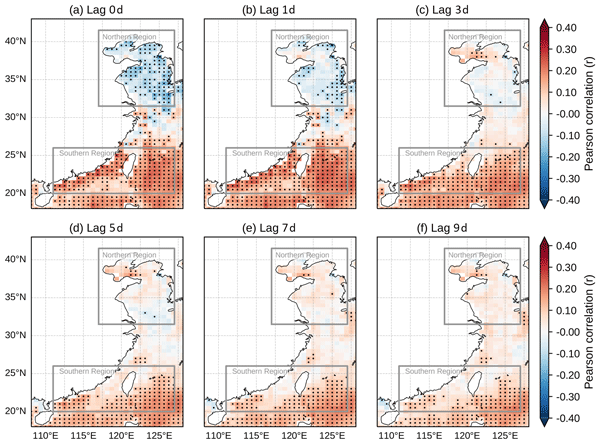
We study the response of Chl a to spring dust variability in the Chinese marginal seas over 2003–2023, revealing contrasting regional responses driven by distinct synoptic circulation patterns. Mongolian cyclones in the north and anticyclones in the south drive opposing air–sea heat flux anomalies and MLD adjustments that regulate Chl a on daily timescales. Our study highlights synoptic-scale atmospheric forcing and air–sea heat exchange as key pathways linking dust to phytoplankton variability.
Jianqi Zhao, Xiaoyan Ma, Johannes Quaas, and Tong Yang
Atmos. Chem. Phys., 25, 17701–17723, https://doi.org/10.5194/acp-25-17701-2025, https://doi.org/10.5194/acp-25-17701-2025, 2025
Short summary
Short summary
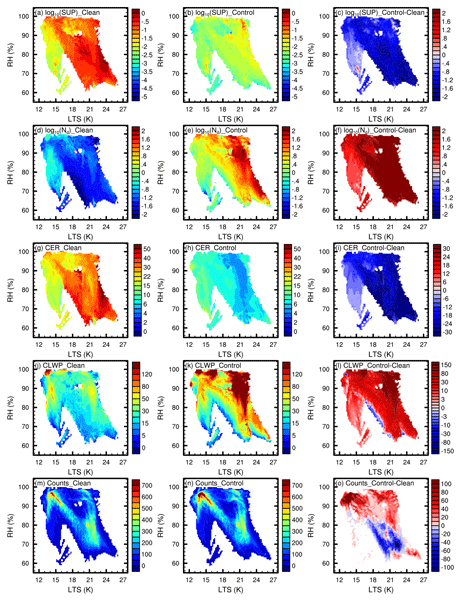
We use the chemistry version of the Weather Research and Forecasting model coupled with spectral bin microphysics to investigate how meteorological conditions impact aerosol–cloud interactions (ACI) under different pollution regimes. Our findings highlight the changes in aerosol effects on clouds and precipitation under varying thermodynamic conditions, as well as the sensitivity of ACI to meteorological conditions under different pollution regimes, which help to clarify the mechanisms behind the nonlinear variation of ACI with environmental conditions.
Hongli Chen, Pang-Chi Hsu, Anbao Zhu, and Xiaoyan Ma
Atmos. Chem. Phys., 25, 15765–15783, https://doi.org/10.5194/acp-25-15765-2025, https://doi.org/10.5194/acp-25-15765-2025, 2025
Short summary
Short summary
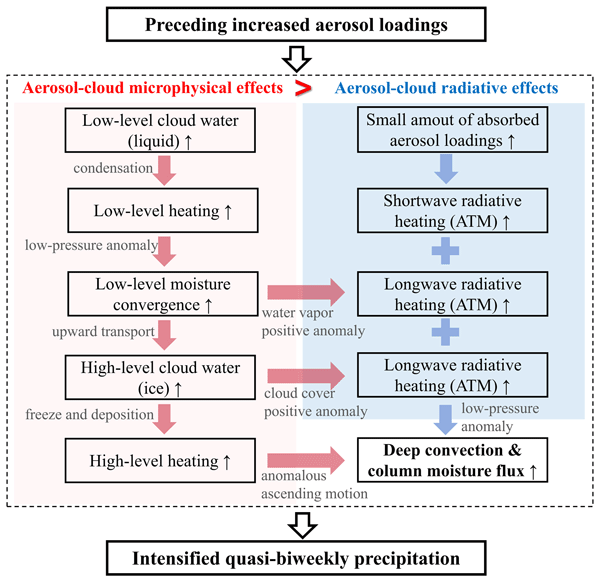
Previous studies mainly examined aerosol effects on short-term rainfall variations. Here we show, using observations and model experiments, that aerosols also intensify rainfall variability on two- to four-week timescales over South China primarily through cloud-microphysical processes, while radiative effects play a secondary role, thereby amplifying prolonged heavy rainfall events.
Xiaoke Zhang, Rong Tian, Jinpei Yan, Shanshan Wang, Shuhui Zhao, Hanyue Xu, Qisheng Zeng, Heng Sun, and Xia Sun
EGUsphere, https://doi.org/10.5194/egusphere-2025-3987, https://doi.org/10.5194/egusphere-2025-3987, 2025
Preprint archived
Short summary
Short summary
Ship observations revealed lower sea salt aerosol (SSA) concentrations during Southern Ocean cyclones than non-cyclones. GEOS-Chem modeling showed SSA concentrated northwest of the cyclone center. Cyclone-associated strong winds drove 63 % of total SSA emissions. The warm conveyor belt produced peak ascent at 450 m. Turbulent mixing dominated SSA distribution. Ship position relative to the cyclone explained observed low concentrations.
Miming Zhang, Haipeng Gao, Shanshan Wang, Yue Jia, Shibo Yan, Rong Tian, Jinpei Yan, and Yanfang Wu
EGUsphere, https://doi.org/10.5194/egusphere-2025-1622, https://doi.org/10.5194/egusphere-2025-1622, 2025
Preprint archived
Short summary
Short summary
Under cold and clean conditions in the free troposphere, oceanic dimethyl sulfide (DMS) can form new particles. Using data from the field observation and Lana climatology with the FLEXPART model, we evaluated DMS contribution from surface ocean to the free troposphere. We found that cyclone enhances the contribution of oceanic dimethyl sulfide to the free troposphere over the Southern Ocean, suggesting significant DMS-derived new particles likely occurred at high altitudes in the Southern Ocean.
Jianqi Zhao, Xiaoyan Ma, and Johannes Quaas
EGUsphere, https://doi.org/10.5194/egusphere-2024-3662, https://doi.org/10.5194/egusphere-2024-3662, 2024
Preprint archived
Short summary
Short summary
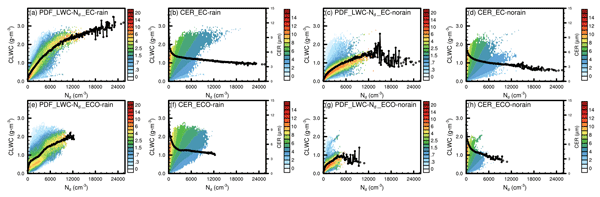
We conduct a comparative analysis of aerosol-cloud responses in liquid-phase clouds under different aerosol and meteorological conditions based on simulations using the WRF-Chem-SBM model. Our findings highlight the different effects of aerosols on clouds and precipitation, as well as variations in the roles of aerosol and meteorological factors influencing aerosol-cloud interactions, in different environment.
Jianqi Zhao, Xiaoyan Ma, Johannes Quaas, and Hailing Jia
Atmos. Chem. Phys., 24, 9101–9118, https://doi.org/10.5194/acp-24-9101-2024, https://doi.org/10.5194/acp-24-9101-2024, 2024
Short summary
Short summary
We explore aerosol–cloud interactions in liquid-phase clouds over eastern China and its adjacent ocean in winter based on the WRF-Chem–SBM model, which couples a spectral-bin microphysics scheme and an online aerosol module. Our study highlights the differences in aerosol–cloud interactions between land and ocean and between precipitation clouds and non-precipitation clouds, and it differentiates and quantifies their underlying mechanisms.
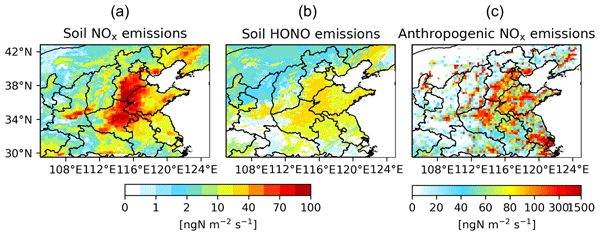
Tong Sha, Siyu Yang, Qingcai Chen, Liangqing Li, Xiaoyan Ma, Yan-Lin Zhang, Zhaozhong Feng, K. Folkert Boersma, and Jun Wang
Atmos. Chem. Phys., 24, 8441–8455, https://doi.org/10.5194/acp-24-8441-2024, https://doi.org/10.5194/acp-24-8441-2024, 2024
Short summary
Short summary
Using an updated soil reactive nitrogen emission scheme in the Unified Inputs for Weather Research and Forecasting coupled with Chemistry (UI-WRF-Chem) model, we investigate the role of soil NO and HONO (Nr) emissions in air quality and temperature in North China. Contributions of soil Nr emissions to O3 and secondary pollutants are revealed, exceeding effects of soil NOx or HONO emission. Soil Nr emissions play an important role in mitigating O3 pollution and addressing climate change.
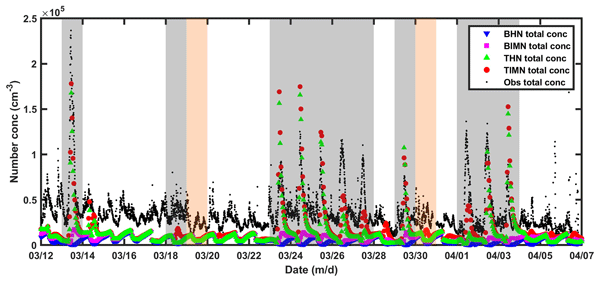
Kun Wang, Xiaoyan Ma, Rong Tian, and Fangqun Yu
Atmos. Chem. Phys., 23, 4091–4104, https://doi.org/10.5194/acp-23-4091-2023, https://doi.org/10.5194/acp-23-4091-2023, 2023
Short summary
Short summary
From 12 March to 6 April 2016 in Beijing, there were 11 typical new particle formation days, 13 non-event days, and 2 undefined days. We first analyzed the favorable background of new particle formation in Beijing and then conducted the simulations using four nucleation schemes based on a global chemistry transport model (GEOS-Chem) to understand the nucleation mechanism.
Jianqi Zhao, Xiaoyan Ma, Johannes Quaas, and Hailing Jia
EGUsphere, https://doi.org/10.5194/egusphere-2023-331, https://doi.org/10.5194/egusphere-2023-331, 2023
Preprint archived
Short summary
Short summary
We improve the ability of WRF-Chem model to simulate aerosol-cloud physical and chemical processes by coupling a spectral-bin cloud microphysics scheme and online aerosol module, and consequently explore the aerosol-cloud interactions over eastern China and its adjacent ocean in boreal winter. Our study highlights the differences in aerosol-cloud interactions between land and ocean, precipitation clouds and non-precipitation clouds, and differentiates and quantifies their underlying mechanisms.
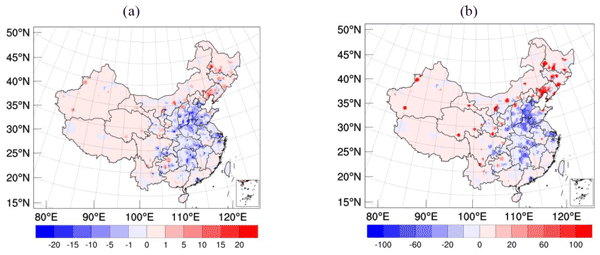
Yiwen Hu, Zengliang Zang, Xiaoyan Ma, Yi Li, Yanfei Liang, Wei You, Xiaobin Pan, and Zhijin Li
Atmos. Chem. Phys., 22, 13183–13200, https://doi.org/10.5194/acp-22-13183-2022, https://doi.org/10.5194/acp-22-13183-2022, 2022
Short summary
Short summary
This study developed a four-dimensional variational assimilation (4DVAR) system based on WRF–Chem to optimise SO2 emissions. The 4DVAR system was applied to obtain the SO2 emissions during the early period of the COVID-19 pandemic over China. The results showed that the 4DVAR system effectively optimised emissions to describe the actual changes in SO2 emissions related to the COVID lockdown, and it can thus be used to improve the accuracy of forecasts.
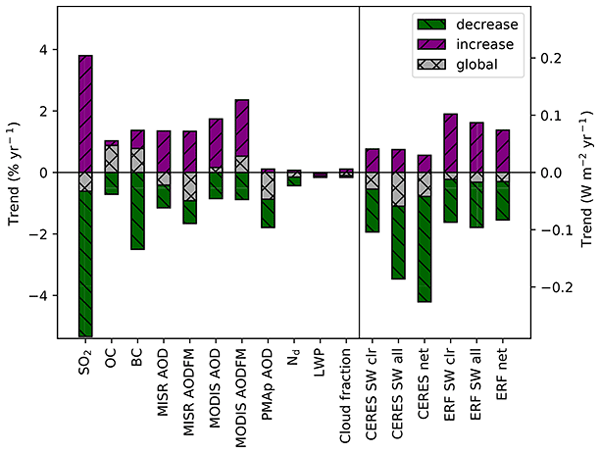
Johannes Quaas, Hailing Jia, Chris Smith, Anna Lea Albright, Wenche Aas, Nicolas Bellouin, Olivier Boucher, Marie Doutriaux-Boucher, Piers M. Forster, Daniel Grosvenor, Stuart Jenkins, Zbigniew Klimont, Norman G. Loeb, Xiaoyan Ma, Vaishali Naik, Fabien Paulot, Philip Stier, Martin Wild, Gunnar Myhre, and Michael Schulz
Atmos. Chem. Phys., 22, 12221–12239, https://doi.org/10.5194/acp-22-12221-2022, https://doi.org/10.5194/acp-22-12221-2022, 2022
Short summary
Short summary
Pollution particles cool climate and offset part of the global warming. However, they are washed out by rain and thus their effect responds quickly to changes in emissions. We show multiple datasets to demonstrate that aerosol emissions and their concentrations declined in many regions influenced by human emissions, as did the effects on clouds. Consequently, the cooling impact on the Earth energy budget became smaller. This change in trend implies a relative warming.
Cited articles
An, L. C., Che, H. Z., Xue, M., Zhang, T. H., Wang, H., Wang, Y. Q., Zhou, C. H., Zhao, H. J., Gui, K., Zheng, Y., Sun, T. Z., Liang, Y. X., Sun, E. W., Zhang, H. D., and Zhang, X. Y.: Temporal and spatial variations in sand and dust storm events in East Asia from 2007 to 2016: Relationships with surface conditions and climate change, Sci. Total Environ., 633, 452–462, https://doi.org/10.1016/j.scitotenv.2018.03.068, 2018.
Bao, C. L., Yong, M., Bi, L. G., Gao, H. L., Li, J., and Bao, Y. H.: Impacts of Underlying Surface on the Dusty Weather in Central Inner Mongolian Steppe, China, Earth Space Sci., 8, 17, https://doi.org/10.1029/2021ea001672, 2021.
Bergametti, G. and Forêt, G.: Dust deposition, in: Mineral dust: A key player in the earth system, Springer, 179–200, https://doi.org/10.1007/978-94-017-8978-3_8, 2014.
Borjigin, A., Bueh, C., Yong, M., Purevjav, G., and Xie, Z. W.: Cross-Border Sand and Dust Storms between Mongolia and Northern China in Spring and Their Driving Weather Systems, Remote Sens., 16, 22, https://doi.org/10.3390/rs16122164, 2024.
Chaibou, A. A. S., Ma, X., Kumar, K. R., Jia, H., Tang, Y., and Sha, T.: Evaluation of dust extinction and vertical profiles simulated by WRF-Chem with CALIPSO and AERONET over North Africa, J. Atmos. Sol.-Terr. Phy., 199, 105213, https://doi.org/10.1016/j.jastp.2020.105213, 2020.
Chen, S. Y., Huang, J. P., Li, J. X., Jia, R., Jiang, N. X., Kang, L. T., M., X. J., and Xie, T. T.: Comparison of dust emissions, transport, and deposition between the Taklimakan Desert and Gobi Desert from 2007 to 2011, Sci. China Earth Sci., 60, 1338–1355, https://doi.org/10.1007/s11430-016-9051-0, 2017.
Chepil, W.: Influence of moisture on erodibility of soil by wind, Soil Sci. Soc. Am. J., 20, 288–292, https://doi.org/10.2136/sssaj1956.03615995002000020033x, 1956.
Farmer, D. K., Boedicker, E. K., and DeBolt, H. M.: Dry Deposition of Atmospheric Aerosols: Approaches, Observations, and Mechanisms, in: Annual Review of Physical Chemistry, Vol. 72, edited by: Johnson, M. A. and Martinez, T. J., Annual Review of Physical Chemistry, Annual Reviews, Palo Alto, 375–397, https://doi.org/10.1146/annurev-physchem-090519-034936, 2021.
Field, J. P., Belnap, J., Breshears, D. D., Neff, J. C., Okin, G. S., Whicker, J. J., Painter, T. H., Ravi, S., Reheis, M. C., and Reynolds, R. L.: The ecology of dust, Front. Ecol. Environ., 8, 423–430, https://doi.org/10.1890/090050, 2010.
Filonchyk, M.: Characteristics of the severe March 2021 Gobi Desert dust storm and its impact on air pollution in China, Chemosphere, 287, 132219, https://doi.org/10.1016/j.chemosphere.2021.132219, 2022.
Filonchyk, M., Peterson, M. P., Zhang, L., and Yan, H.: An analysis of air pollution associated with the 2023 sand and dust storms over China: Aerosol properties and PM10 variability, Geosci. Front., 15, 101762, https://doi.org/10.1016/j.gsf.2023.101762, 2024.
Fu, X., Wang, S. X., Cheng, Z., Xing, J., Zhao, B., Wang, J. D., and Hao, J. M.: Source, transport and impacts of a heavy dust event in the Yangtze River Delta, China, in 2011, Atmos. Chem. Phys., 14, 1239–1254, https://doi.org/10.5194/acp-14-1239-2014, 2014.
Gao, H., Qi, J., Shi, J., Shi, G., and Feng, S.: Long-range Transport of Asian Dust and Its Effects on Ocean Ecosystem, Advances in Earth Science, 24, 1, http://www.adearth.ac.cn/EN/10.11867/j.issn.1001-8166.2009.01.0001 (last access: 23 May 2026), 2009.
Gassó, S., Grassian, V. H., and Miller, R. L.: Interactions between mineral dust, climate, and ocean ecosystems, Elements, 6, 247–252, https://doi.org/10.2113/gselements.6.4.247, 2010.
Griffin, D. W. and Kellogg, C. A.: Dust storms and their impact on ocean and human health: dust in Earth's atmosphere, EcoHealth, 1, 284–295, https://doi.org/10.1007/s10393-004-0120-8, 2004.
Guan, Q. Y., Sun, X. Z., Yang, J., Pan, B. T., Zhao, S. L., and Wang, L.: Dust Storms in Northern China: Long-Term Spatiotemporal Characteristics and Climate Controls, J. Climate, 30, 6683–6700, https://doi.org/10.1175/jcli-d-16-0795.1, 2017.
Guo, J., Lou, M., Miao, Y., Wang, Y., Zeng, Z., Liu, H., He, J., Xu, H., Wang, F., and Min, M.: Trans-Pacific transport of dust aerosols from East Asia: Insights gained from multiple observations and modeling, Environ. Pollut., 230, 1030–1039, https://doi.org/10.1016/j.envpol.2017.07.062, 2017.
Hu, Y., Chen, J., and Zuo, H.: Theorem of turbulent intensity and macroscopic mechanism of the turbulence development, Sci. China Ser. D, 50, 789–800, https://doi.org/10.1007/s11430-007-0002-3, 2007.
Huang, J., Wang, T., Wang, W., Li, Z., and Yan, H.: Climate effects of dust aerosols over East Asian arid and semiarid regions, J. Geophys. Res.-Atmos., 119, 11398–311416, https://doi.org/10.1002/2014JD021796, 2014.
Huang, J. P., Lin, B., Minnis, P., Wang, T. H., Wang, X., Hu, Y. X., Yi, Y. H., and Ayers, J. K.: Satellite-based assessment of possible dust aerosols semi-direct effect on cloud water path over East Asia, Geophys. Res. Lett., 33, 5, https://doi.org/10.1029/2006gl026561, 2006.
Husar, R. B., Tratt, D., Schichtel, B. A., Falke, S., Li, F., Jaffe, D., Gasso, S., Gill, T., Laulainen, N. S., and Lu, F.: Asian dust events of April 1998, J. Geophys. Res.-Atmos., 106, 18317–18330, https://doi.org/10.1029/2000jd900788, 2001.
Hussein, T., Karppinen, A., Kukkonen, J., Härkönen, J., Aalto, P. P., Hämeri, K., Kerminen, V.-M., and Kulmala, M.: Meteorological dependence of size-fractionated number concentrations of urban aerosol particles, Atmos. Environ., 40, 1427–1440, https://doi.org/10.1016/j.atmosenv.2005.10.061, 2006.
Idso, S. B.: Dust storms, Sci. Am., 235, 108–115, https://doi.org/10.1016/s0016-0032(35)90387-8, 1976.
Ishizuka, M., Mikami, M., Leys, J., Yamada, Y., Heidenreich, S., Shao, Y., and McTainsh, G.: Effects of soil moisture and dried raindroplet crust on saltation and dust emission, J. Geophys. Res.-Atmos., 113, https://doi.org/10.1029/2008jd009955, 2008.
Iwasaka, Y., Minoura, H., and Nagaya, K.: The transport and spacial scale of Asian dust-storm clouds: a case study of the dust-storm event of April 1979, Tellus B, 35, 189–196, https://doi.org/10.1111/j.1600-0889.1983.tb00023.x, 1983.
Kai, Z. and Huiwang, G.: The characteristics of Asian-dust storms during 2000–2002: From the source to the sea, Atmos. Environ., 41, 9136–9145, https://doi.org/10.1016/j.atmosenv.2007.08.007, 2007.
Kim, H. and Choi, M.: Impact of soil moisture on dust outbreaks in East Asia: Using satellite and assimilation data, Geophys. Res. Lett., 42, 2789–2796, https://doi.org/10.1002/2015gl063325, 2015.
Kim, J.: Transport routes and source regions of Asian dust observed in Korea during the past 40 years (1965–2004), Atmos. Environ., 42, 4778–4789, https://doi.org/10.1016/j.atmosenv.2008.01.040, 2008.
Knippertz, P. and Fink, A. H.: Synoptic and dynamic aspects of an extreme springtime Saharan dust outbreak, Q. J. Roy. Meteor. Soc., 132, 1153–1177, https://doi.org/10.1256/qj.05.109, 2006.
Lee, E.-H. and Sohn, B.-J.: Recent increasing trend in dust frequency over Mongolia and Inner Mongolia regions and its association with climate and surface condition change, Atmos. Environ., 45, 4611–4616, https://doi.org/10.1016/j.atmosenv.2011.05.065, 2011.
Pryor, S. and Binkowski, F.: An analysis of the time scales associated with aerosol processes during dry deposition, Aerosol Sci. Technol., 38, 1091–1098, https://doi.org/10.1080/027868290885827, 2004.
Liang, L., Han, Z., Li, J., Xia, X., Sun, Y., Liao, H., Liu, R., Liang, M., Gao, Y., and Zhang, R.: Emission, transport, deposition, chemical and radiative impacts of mineral dust during severe dust storm periods in March 2021 over East Asia, Sci. Total Environ., 852, 158459, https://doi.org/10.1016/j.scitotenv.2022.158459, 2022.
Liu, L., Wang, Z., Che, H., Wang, D., Gui, K., Liu, B., Ma, K., and Zhang, X.: Climate factors influencing springtime dust activities over Northern East Asia in 2021 and 2023, Atmos. Res., 303, 107342, https://doi.org/10.1016/j.atmosres.2024.107342, 2024.
Liu, T.-H., Tsai, F., Hsu, S.-C., Hsu, C.-W., Shiu, C.-J., Chen, W.-N., and Tu, J.-Y.: Southeastward transport of Asian dust: Source, transport and its contributions to Taiwan, Atmos. Environ., 43, 458–467, https://doi.org/10.1016/j.atmosenv.2008.07.066, 2009.
Liu, X., Yin, Z. Y., Zhang, X., and Yang, X.: Analyses of the spring dust storm frequency of northern China in relation to antecedent and concurrent wind, precipitation, vegetation, and soil moisture conditions, J. Geophys. Res.-Atmos., 109, https://doi.org/10.1029/2004JD004615, 2004.
Liu, Y. and Liu, R.: Climatology of dust storms in northern China and Mongolia: Results from MODIS observations during 2000–2010, J. Geogr. Sci., 25, 1298–1306, https://doi.org/10.1007/s11442-015-1235-2, 2015.
Liu, Z., Omar, A., Vaughan, M., Hair, J., Kittaka, C., Hu, Y., Powell, K., Trepte, C., Winker, D., and Hostetler, C.: CALIPSO lidar observations of the optical properties of Saharan dust: A case study of long-range transport, J. Geophys. Res.-Atmos., 113, https://doi.org/10.1029/2007jd008878, 2008.
Lu, H. and Shao, Y.: A new model for dust emission by saltation bombardment, J. Geophys. Res.-Atmos., 104, 16827–16842, https://doi.org/10.1029/1999jd900169, 1999.
Ma, X. and Von Salzen, K.: Dynamics of the sulphate aerosol size distribution on a global scale, J. Geophys. Res.-Atmos., 111, https://doi.org/10.1029/2005jd006620, 2006.
Ma, X., Bartlett, K., Harmon, K., and Yu, F.: Comparison of AOD between CALIPSO and MODIS: significant differences over major dust and biomass burning regions, Atmos. Meas. Tech., 6, 2391–2401, https://doi.org/10.5194/amt-6-2391-2013, 2013.
McKendry, I., Hacker, J., Stull, R., Sakiyama, S., Mignacca, D., and Reid, K.: Long-range transport of Asian dust to the lower Fraser Valley, British Columbia, Canada, J. Geophys. Res.-Atmos., 106, 18361–18370, https://doi.org/10.1029/2000JD900359, 2001.
Miri, A. and Middleton, N.: Long-term impacts of dust storms on transport systems in south-eastern Iran, Nat. Hazards, 114, 291–312, https://doi.org/10.1007/s11069-022-05390-z, 2022.
Munkhtsetseg, E., Shinoda, M., Gillies, J. A., Kimura, R., King, J., and Nikolich, G.: Relationships between soil moisture and dust emissions in a bare sandy soil of Mongolia, Particuology, 28, 131–137, https://doi.org/10.1016/j.partic.2016.03.001, 2016.
Park, S. and Allen, R. J.: Understanding influences of convective transport and removal processes on aerosol vertical distribution, Geophys. Res. Lett., 42, 10438–410444, https://doi.org/10.1002/2015gl066175, 2015.
Park, S.-U., Choe, A., and Park, M.-S.: Estimates of Asian dust deposition over the Asian region by using ADAM2 in 2007, Sci. Total Environ., 408, 2347–2356, https://doi.org/10.1016/j.scitotenv.2010.02.001, 2010.
Pryor, S. and Binkowski, F.: An analysis of the time scales associated with aerosol processes during dry deposition, Aerosol Sci. Technol., 38, 1091–1098, https://doi.org/10.1080/027868290885827, 2004.
Ravi, S., D'Odorico, P., Over, T. M., and Zobeck, T. M.: On the effect of air humidity on soil susceptibility to wind erosion: The case of air-dry soils, Geophys. Res. Lett., 31, https://doi.org/10.1029/2004gl019485, 2004.
Richter, D. and Chamecki, M.: Inertial effects on the vertical transport of suspended particles in a turbulent boundary layer, Bound.-Lay. Meteorol., 167, 235–256, https://doi.org/10.1007/s10546-017-0325-3, 2018.
Roth, M.: Review of atmospheric turbulence over cities, Q. J. Roy. Meteor. Soc., 126, 941–990, https://doi.org/10.1002/qj.49712656409, 2000.
Seinfeld, J. H., Carmichael, G. R., Arimoto, R., Conant, W. C., Brechtel, F. J., Bates, T. S., Cahill, T. A., Clarke, A. D., Doherty, S. J., and Flatau, P. J.: ACE-ASIA: Regional climatic and atmospheric chemical effects of Asian dust and pollution, B. Am. Meteorol. Soc., 85, 367–380, https://doi.org/10.1175/BAMS-85-3-367, 2004.
Shao, Y., Zhang, J., Ishizuka, M., Mikami, M., Leys, J., and Huang, N.: Dependency of particle size distribution at dust emission on friction velocity and atmospheric boundary-layer stability, Atmos. Chem. Phys., 20, 12939–12953, https://doi.org/10.5194/acp-20-12939-2020, 2020.
Sun, J., Zhang, M., and Liu, T.: Spatial and temporal characteristics of dust storms in China and its surrounding regions, 1960–1999: Relations to source area and climate, J. Geophys. Res.-Atmos., 106, 10325–10333, https://doi.org/10.1029/2000jd900665, 2001.
Tan, S.-C., Shi, G.-Y., and Wang, H.: Long-range transport of spring dust storms in Inner Mongolia and impact on the China seas, Atmos. Environ., 46, 299–308, https://doi.org/10.1016/j.atmosenv.2011.09.058, 2012.
Tan, S.-C., Li, J., Che, H., Chen, B., and Wang, H.: Transport of East Asian dust storms to the marginal seas of China and the southern North Pacific in spring 2010, Atmos. Environ., 148, 316–328, https://doi.org/10.1016/j.atmosenv.2016.10.054, 2017.
Takemi, T. and Seino, N.: Dust storms and cyclone tracks over the arid regions in east Asia in spring, J. Geophys. Res.-Atmos., 110, https://doi.org/10.1029/2004jd004698, 2005.
Tegen, I., Harrison, S. P., Kohfeld, K., Prentice, I. C., Coe, M., and Heimann, M.: Impact of vegetation and preferential source areas on global dust aerosol: Results from a model study, J. Geophys. Res.-Atmos., 107, AAC 14-11–AAC 14-27, https://doi.org/10.1029/2001jd000963, 2002.
The International GEOS-Chem User Community: geoschem/geos-chem: GEOS-Chem 12.6.0 (12.6.0), Zenodo [code], https://doi.org/10.5281/zenodo.3507501, 2019.
Tian, R., Ma, X., and Zhao, J.: A revised mineral dust emission scheme in GEOS-Chem: improvements in dust simulations over China, Atmos. Chem. Phys., 21, 4319–4337, https://doi.org/10.5194/acp-21-4319-2021, 2021.
Tsai, F., Chen, G. T. J., Liu, T. H., Lin, W. D., and Tu, J. Y.: Characterizing the transport pathways of Asian dust, J. Geophys. Res.-Atmos., 113, https://doi.org/10.1029/2007jd009674, 2008.
Tsedendamba, P., Dulam, J., Baba, K., Hagiwara, K., Noda, J., Kawai, K., Sumiya, G., McCarthy, C., Kai, K., and Hoshino, B.: Northeast Asian dust transport: A case study of a dust storm event from 28 March to 2 April 2012, Atmosphere, 10, 69, https://doi.org/10.3390/atmos10020069 2019.
Twomey, S.: The influence of pollution on the shortwave albedo of clouds, J. Atmos. Sci, 34, 1149–1152, https://doi.org/10.1175/1520-0469(1977)034<1149:TIOPOT>2.0.CO;2, 1977.
Uno, I., Yumimoto, K., Shimizu, A., Hara, Y., Sugimoto, N., Wang, Z., Liu, Z., and Winker, D.: 3D structure of Asian dust transport revealed by CALIPSO lidar and a 4DVAR dust model, Geophys. Res. Lett., 35, https://doi.org/10.1029/2007gl032329, 2008.
Wang, L.-P.: On the dispersion of heavy particles by turbulent motion, Washington State University, https://doi.org/10.1175/1520-0469(1993)050<1897:dohpbt>2.0.co;2, 1990.
Wang, S., Yu, Y., Zhang, X.-X., Lu, H., Zhang, X.-Y., and Xu, Z.: Weakened dust activity over China and Mongolia from 2001 to 2020 associated with climate change and land-use management, Environ. Res. Lett., 16, 124056, https://doi.org/10.1088/1748-9326/ac3b79, 2021.
Wang, W., Huang, J., Minnis, P., Hu, Y., Li, J., Huang, Z., Ayers, J. K., and Wang, T.: Dusty cloud properties and radiative forcing over dust source and downwind regions derived from A‐Train data during the Pacific Dust Experiment, J. Geophys. Res.-Atmos., 115,https://doi.org/10.1029/2010JD014109, 2010.
Wang, W., Sheng, L., Jin, H., and Han, Y.: Dust aerosol effects on cirrus and altocumulus clouds in Northwest China, J. Meteorol. Res., 29, 793–805, https://doi.org/10.1007/s13351-015-4116-9, 2015.
Wang, W., Samat, A., Abuduwaili, J., Ge, Y., De Meyer, P., and Van de Voorde, T.: Temporal characterization of sand and dust storm activity and its climatic and terrestrial drivers in the Aral Sea region, Atmos. Res., 275, 106242, https://doi.org/10.1016/j.atmosres.2022.106242, 2022.
Wang, X., Dong, Z., Zhang, J., and Liu, L.: Modern dust storms in China: an overview, J. Arid Environ., 58, 559–574, https://doi.org/10.1016/j.jaridenv.2003.11.009, 2004.
Wang, X., Oenema, O., Hoogmoed, W., Perdok, U., and Cai, D.: Dust storm erosion and its impact on soil carbon and nitrogen losses in northern China, Catena, 66, 221–227, https://doi.org/10.1016/j.catena.2006.02.006, 2006.
Xiong, J., Zhao, T., Bai, Y., Liu, Y., Han, Y., and Guo, C.: Climate characteristics of dust aerosol and its transport in major global dust source regions, J. Atmos. Sol.-Terr. Phy., 209, 105415, https://doi.org/10.1016/j.jastp.2020.105415, 2020.
Xu, X., Levy, J. K., Zhaohui, L., and Hong, C.: An investigation of sand–dust storm events and land surface characteristics in China using NOAA NDVI data, Global Planet. Change, 52, 182–196, https://doi.org/10.1016/j.gloplacha.2006.02.009, 2006.
Yang, H., Zhu, X., Qiu, D., Fang, Z., Hu, Y., and Li, X.: Research of two dust transport pollution in northern China in 2023: Perspectives from LiDAR and multi source data, Atmos. Pollut. Res., 16, 102441, https://doi.org/10.1016/j.apr.2025.102441, 2025.
Yang, X., Zhou, C., Huo, W., Yang, F., Liu, X., and Mamtimin, A.: A study on the effects of soil moisture, air humidity, and air temperature on wind speed threshold for dust emissions in the Taklimakan Desert, Nat. Hazards, 97, 1069–1081, https://doi.org/10.1007/s11069-019-03686-1, 2019.
Yang, Y. Q., Hou, Q., Zhou, C. H., Liu, H. L., Wang, Y. Q., and Niu, T.: Sand/dust storm processes in Northeast Asia and associated large-scale circulations, Atmos. Chem. Phys., 8, 25–33, https://doi.org/10.5194/acp-8-25-2008, 2008.
Yu, T., Xiaole, P., Yujie, J., Yuting, Z., Weijie, Y., Hang, L., Shandong, L., and Zifa, W.: East Asia dust storms in spring 2021: Transport mechanisms and impacts on China, Atmos. Res., 290, 106773, https://doi.org/10.1016/j.atmosres.2023.106773, 2023.
Zannetti, P.: Dry and wet deposition, in: Air Pollution Modeling: Theories, Computational Methods and Available Software, Springer, 249–262, https://doi.org/10.1007/978-1-4757-4465-1_10, 1990.
Zhang, L., Zhang, H., Li, Q., Cai, X., and Song, Y.: Vertical dispersion mechanism of long-range transported dust in Beijing: Effects of atmospheric turbulence, Atmos. Res., 269, 106033, https://doi.org/10.1016/j.atmosres.2022.106033, 2022.
Zhang, R., Han, Z., Wang, M., and Zhang, X.: Dust storm weather in China: New characteristics and origins, Quaternary Sciences, 22, 374–380, http://www.dsjyj.com.cn/en/article/id/dsjyj_9350 (last access: 23 May 2026), 2002.
Zhang, X.-Y., Gong, S., Zhao, T., Arimoto, R., Wang, Y., and Zhou, Z.: Sources of Asian dust and role of climate change versus desertification in Asian dust emission, Geophys. Res. Lett., 30, https://doi.org/10.1029/2003GL018206, 2003.
Zhao, C., Dabu, X., and Li, Y.: Relationship between climatic factors and dust storm frequency in Inner Mongolia of China, Geophys. Res. Lett., 31, https://doi.org/10.1029/2003gl018351, 2004.
Zhao, J., Ma, X., Wu, S., and Sha, T.: Dust emission and transport in Northwest China: WRF-Chem simulation and comparisons with multi-sensor observations, Atmos. Res., 241, 104978, https://doi.org/10.1016/j.atmosres.2020.104978, 2020.
Zhao, T. L., Gong, S. L., Zhang, X. Y., and Jaffe, D. A.: Asian dust storm influence on North American ambient PM levels: observational evidence and controlling factors, Atmos. Chem. Phys., 8, 2717–2728, https://doi.org/10.5194/acp-8-2717-2008, 2008.
Zhu, Q. and Liu, Y.: The dominant factor in extreme dust events over the Gobi Desert is shifting from extreme winds to extreme droughts, npj Climate and Atmospheric Science, 7, 141, https://doi.org/10.1038/s41612-024-00689-z, 2024.
Zou, X. K. and Zhai, P. M.: Relationship between vegetation coverage and spring dust storms over northern China, J. Geophys. Res.-Atmos., 109, https://doi.org/10.1029/2003jd003913, 2004.
Short summary
This study examines a severe dust event that occurred in western Inner Mongolia (WIM) on 11 April 2025, which reached Hainan by 13 April. Unlike the dust events in 2021 and 2023 that did not affect Hainan, this case was characterized by a south‑moving Mongolian cyclone. Sustained strong northerly winds pushed both the dust plume and the rainband southward; however, the dust remained positioned behind the rainband, thereby avoiding wet scavenging and facilitating its transport to Hainan.
This study examines a severe dust event that occurred in western Inner Mongolia (WIM) on 11...


Altmetrics
Final-revised paper
Preprint