
Articles | Volume 26, issue 9
https://doi.org/10.5194/acp-26-6541-2026
© Author(s) 2026. This work is distributed under
the Creative Commons Attribution 4.0 License.
the Creative Commons Attribution 4.0 License.
https://doi.org/10.5194/acp-26-6541-2026
© Author(s) 2026. This work is distributed under
the Creative Commons Attribution 4.0 License.
the Creative Commons Attribution 4.0 License.
Measurement report
| 
15 May 2026
Measurement report |
| 15 May 2026
| 15 May 2026
Measurement report: Optical properties of carbonaceous aerosols modulated by source variations of spring haze
Yuan Cheng
State Key Laboratory of Urban-rural Water Resource and Environment, School of Environment, Harbin Institute of Technology, Harbin, 150090, China

State Key Laboratory of Urban-rural Water Resource and Environment, School of Environment, Harbin Institute of Technology, Harbin, 150090, China
Xu-bing Cao
State Key Laboratory of Urban-rural Water Resource and Environment, School of Environment, Harbin Institute of Technology, Harbin, 150090, China
Yang-mei Guo
State Key Laboratory of Urban-rural Water Resource and Environment, School of Environment, Harbin Institute of Technology, Harbin, 150090, China
Ying-jie Zhong
State Key Laboratory of Urban-rural Water Resource and Environment, School of Environment, Harbin Institute of Technology, Harbin, 150090, China
Zhi-qing Zhang
State Key Laboratory of Urban-rural Water Resource and Environment, School of Environment, Harbin Institute of Technology, Harbin, 150090, China
Ke-bin He
State Key Laboratory of Regional Environment and Sustainability, School of Environment, Tsinghua University, Beijing, 100084, China
Related authors
Yuan Cheng, Ying-jie Zhong, Zhi-qing Zhang, Xu-bing Cao, and Jiu-meng Liu
Atmos. Chem. Phys., 25, 8493–8505, https://doi.org/10.5194/acp-25-8493-2025, https://doi.org/10.5194/acp-25-8493-2025, 2025
Short summary
Short summary
As an emerging hotspot of atmospheric sciences, northeastern China is distinct due to the frigid winter and the strong emissions from agricultural fires. Based on field campaigns conducted in Harbin, we successively identified the analytical method that could lead to proper results of organic and elemental carbon. Our results are believed to be a support for future efforts in the exploration of PM2.5 sources in northeastern China, which are essential for further improving the regional air quality.
Yuan Cheng, Xu-bing Cao, Sheng-qiang Zhu, Zhi-qing Zhang, Jiu-meng Liu, Hong-liang Zhang, Qiang Zhang, and Ke-bin He
Atmos. Chem. Phys., 24, 9869–9883, https://doi.org/10.5194/acp-24-9869-2024, https://doi.org/10.5194/acp-24-9869-2024, 2024
Short summary
Short summary
The agreement between observational and modeling results is essential for the development of efficient air pollution control strategies. Here we constrained the modeling results of carbonaceous aerosols by field observation in Northeast China, a historically overlooked but recently targeted region of national clean-air actions. Our study suggested that the simulation of agricultural fire emissions and secondary organic aerosols remains challenging.
Yuan Cheng, Xu-bing Cao, Jiu-meng Liu, Ying-jie Zhong, Qin-qin Yu, Qiang Zhang, and Ke-bin He
Atmos. Chem. Phys., 23, 6241–6253, https://doi.org/10.5194/acp-23-6241-2023, https://doi.org/10.5194/acp-23-6241-2023, 2023
Short summary
Short summary
Brown carbon (BrC) aerosols were explored in the northernmost megacity in China during a frigid winter and an agricultural-fire-impacted spring. BrC was more light absorbing at night for both seasons, with more pronounced diurnal variations in spring, and the dominant drivers were identified as regulations on heavy-duty diesel trucks and open burning, respectively. Agricultural fires resulted in unique absorption spectra of BrC, which were characterized by a distinct peak at ∼365 nm.
Xiao He, Xuan Zheng, Shaojun Zhang, Xuan Wang, Ting Chen, Xiao Zhang, Guanghan Huang, Yihuan Cao, Liqiang He, Xubing Cao, Yuan Cheng, Shuxiao Wang, and Ye Wu
Atmos. Chem. Phys., 22, 13935–13947, https://doi.org/10.5194/acp-22-13935-2022, https://doi.org/10.5194/acp-22-13935-2022, 2022
Short summary
Short summary
With the use of two-dimensional gas chromatography time-of-flight mass spectrometry (GC × GC ToF-MS), we successfully give a comprehensive characterization of particulate intermediate-volatility and semi-volatile organic compounds (I/SVOCs) emitted from heavy-duty diesel vehicles. I/SVOCs are speciated, identified, and quantified based on the patterns of the mass spectrum, and the gas–particle partitioning is fully addressed.

Yuan Cheng, Qin-qin Yu, Jiu-meng Liu, Xu-bing Cao, Ying-jie Zhong, Zhen-yu Du, Lin-lin Liang, Guan-nan Geng, Wan-li Ma, Hong Qi, Qiang Zhang, and Ke-bin He
Atmos. Chem. Phys., 21, 15199–15211, https://doi.org/10.5194/acp-21-15199-2021, https://doi.org/10.5194/acp-21-15199-2021, 2021
Short summary
Short summary
Open burning policies in Heilongjiang Province experienced a rapid transition during 2018 to 2020. This study evaluated the responses of PM2.5 pollution to this transition and suggested that neither of the policies could be considered successful. In addition, heterogeneous reactions were found to be at play in secondary aerosol formation, even in the frigid atmosphere in Heilongjiang. The unique haze in northeast China deserves more attention.
Yuan Cheng, Ying-jie Zhong, Zhi-qing Zhang, Xu-bing Cao, and Jiu-meng Liu
Atmos. Chem. Phys., 25, 8493–8505, https://doi.org/10.5194/acp-25-8493-2025, https://doi.org/10.5194/acp-25-8493-2025, 2025
Short summary
Short summary
As an emerging hotspot of atmospheric sciences, northeastern China is distinct due to the frigid winter and the strong emissions from agricultural fires. Based on field campaigns conducted in Harbin, we successively identified the analytical method that could lead to proper results of organic and elemental carbon. Our results are believed to be a support for future efforts in the exploration of PM2.5 sources in northeastern China, which are essential for further improving the regional air quality.
Yuan Cheng, Xu-bing Cao, Sheng-qiang Zhu, Zhi-qing Zhang, Jiu-meng Liu, Hong-liang Zhang, Qiang Zhang, and Ke-bin He
Atmos. Chem. Phys., 24, 9869–9883, https://doi.org/10.5194/acp-24-9869-2024, https://doi.org/10.5194/acp-24-9869-2024, 2024
Short summary
Short summary
The agreement between observational and modeling results is essential for the development of efficient air pollution control strategies. Here we constrained the modeling results of carbonaceous aerosols by field observation in Northeast China, a historically overlooked but recently targeted region of national clean-air actions. Our study suggested that the simulation of agricultural fire emissions and secondary organic aerosols remains challenging.
Yuan Cheng, Xu-bing Cao, Jiu-meng Liu, Ying-jie Zhong, Qin-qin Yu, Qiang Zhang, and Ke-bin He
Atmos. Chem. Phys., 23, 6241–6253, https://doi.org/10.5194/acp-23-6241-2023, https://doi.org/10.5194/acp-23-6241-2023, 2023
Short summary
Short summary
Brown carbon (BrC) aerosols were explored in the northernmost megacity in China during a frigid winter and an agricultural-fire-impacted spring. BrC was more light absorbing at night for both seasons, with more pronounced diurnal variations in spring, and the dominant drivers were identified as regulations on heavy-duty diesel trucks and open burning, respectively. Agricultural fires resulted in unique absorption spectra of BrC, which were characterized by a distinct peak at ∼365 nm.
Xiao He, Xuan Zheng, Shaojun Zhang, Xuan Wang, Ting Chen, Xiao Zhang, Guanghan Huang, Yihuan Cao, Liqiang He, Xubing Cao, Yuan Cheng, Shuxiao Wang, and Ye Wu
Atmos. Chem. Phys., 22, 13935–13947, https://doi.org/10.5194/acp-22-13935-2022, https://doi.org/10.5194/acp-22-13935-2022, 2022
Short summary
Short summary
With the use of two-dimensional gas chromatography time-of-flight mass spectrometry (GC × GC ToF-MS), we successfully give a comprehensive characterization of particulate intermediate-volatility and semi-volatile organic compounds (I/SVOCs) emitted from heavy-duty diesel vehicles. I/SVOCs are speciated, identified, and quantified based on the patterns of the mass spectrum, and the gas–particle partitioning is fully addressed.

Jerome D. Fast, David M. Bell, Gourihar Kulkarni, Jiumeng Liu, Fan Mei, Georges Saliba, John E. Shilling, Kaitlyn Suski, Jason Tomlinson, Jian Wang, Rahul Zaveri, and Alla Zelenyuk
Atmos. Chem. Phys., 22, 11217–11238, https://doi.org/10.5194/acp-22-11217-2022, https://doi.org/10.5194/acp-22-11217-2022, 2022
Short summary
Short summary
Recent aircraft measurements from the HI-SCALE campaign conducted over the Southern Great Plains (SGP) site in Oklahoma are used to quantify spatial variability of aerosol properties in terms of grid spacings typically used by weather and climate models. Surprisingly large horizontal gradients in aerosol properties were frequently observed in this rural area. This spatial variability can be used as an uncertainty range when comparing surface point measurements with model predictions.
Yuan Cheng, Qin-qin Yu, Jiu-meng Liu, Xu-bing Cao, Ying-jie Zhong, Zhen-yu Du, Lin-lin Liang, Guan-nan Geng, Wan-li Ma, Hong Qi, Qiang Zhang, and Ke-bin He
Atmos. Chem. Phys., 21, 15199–15211, https://doi.org/10.5194/acp-21-15199-2021, https://doi.org/10.5194/acp-21-15199-2021, 2021
Short summary
Short summary
Open burning policies in Heilongjiang Province experienced a rapid transition during 2018 to 2020. This study evaluated the responses of PM2.5 pollution to this transition and suggested that neither of the policies could be considered successful. In addition, heterogeneous reactions were found to be at play in secondary aerosol formation, even in the frigid atmosphere in Heilongjiang. The unique haze in northeast China deserves more attention.
Cited articles
Adachi, K., Sedlacek III, A. J., Kleinman, L., Chand, D., Hubbe, J. M., and Buseck, P. R.: Volume changes upon heating of aerosol particles from biomass burning using transmission electron microscopy, Aerosol Sci. Technol., 52, 46–56, https://doi.org/10.1080/02786826.2017.1373181, 2017.
Ahern, A. T., Goldberger, L., Jahl, L., Thornton, J., and Sullivan, R. C.: Production of N2O5 and ClNO2 through nocturnal processing of biomass-burning aerosol, Environ. Sci. Technol., 52, 550–559, https://doi.org/10.1021/acs.est.7b04386, 2018.
Anderson, L. D., Dix, B., Schnell, J., Yokelson, R., Veefkind, J. P., Ahmadov, R., and de Gouw, J.: Analyzing the impact of evolving combustion conditions on the composition of wildfire emissions using satellite data, Geophys. Res. Lett., 50, e2023GL105811, https://doi.org/10.1029/2023GL105811, 2023.
Andreae, M. O. and Gelencsér, A.: Black carbon or brown carbon? The nature of light-absorbing carbonaceous aerosols, Atmos. Chem. Phys., 6, 3131–3148, https://doi.org/10.5194/acp-6-3131-2006, 2006.
Atwi, K., Cheng, Z. Z., El Hajj, O., Perrie, C., and Saleh, R.: A dominant contribution to light absorption by methanol-insoluble brown carbon produced in the combustion of biomass fuels typically consumed in wildland fires in the United States, Environ. Sci. Atmos., 2, 182–191, https://doi.org/10.1039/d1ea00065a, 2022.
Bi, X., Dai, Q., Wu, J., Zhang, Q., Zhang, W., Luo, R., Cheng, Y., Zhang, J., Wang, L., Yu, Z., Zhang, Y., Tian, Y., and Feng, Y.: Characteristics of the main primary source profiles of particulate matter across China from 1987 to 2017, Atmos. Chem. Phys., 19, 3223–3243, https://doi.org/10.5194/acp-19-3223-2019, 2019.
Bond, T. C., Doherty, S. J., Fahey, D. W., Forster, P. M., Berntsen, T., DeAngelo, B. J., Flanner, M. G., Ghan, S., Kärcher, B., Koch, D., Kinne, S., Kondo, Y., Quinn, P. K., Sarofim, M. C., Schultz, M. G., Schulz, M., Venkataraman, C., Zhang, H., Zhang, S., Bellouin, N., Guttikunda, S. K., Hopke, P. K., Jacobson, M. Z., Kaiser, J. W., Klimont, Z., Lohmann, U., Schwarz, J. P., Shindell, D., Storelvmo, T., Warren, S. G., and Zender, C. S.: Bounding the role of black carbon in the climate system: a scientific assessment, J. Geophys. Res., 118, 5380–5552, https://doi.org/10.1002/jgrd.50171, 2013.
Cappa, C. D., Lim, C. Y., Hagan, D. H., Coggon, M., Koss, A., Sekimoto, K., de Gouw, J., Onasch, T. B., Warneke, C., and Kroll, J. H.: Biomass-burning-derived particles from a wide variety of fuels – Part 2: Effects of photochemical aging on particle optical and chemical properties, Atmos. Chem. Phys., 20, 8511–8532, https://doi.org/10.5194/acp-20-8511-2020, 2020.
Chang, X., Zhao, B., Zheng, H. T., Wang, S. X., Cai, S. Y., Guo, F. Q., Gui, P., Huang, G. H., Wu, D., Han, L. C., Xing, J., Man, H. Y., Hu, R. L., Liang, C. R., Xu, Q. C., Qiu, X. H., Ding, D., Liu, K. Y., Han, R., Robinson, A. L., and Donahue, N. M.: Full-volatility emission framework corrects missing and underestimated secondary organic aerosol sources, One Earth, 5, 403–412, 2022.
Chen, Q. C., Mu, Z., Song, W. H., Wang, Y. Q., Yang, Z. H., Zhang, L. X., and Zhang, Y. L.: Size-resolved characterization of the chromophores in atmospheric particulate matter from a typical coal-burning city in China, J. Geophys. Res.-Atmos., 124, 10546–10563, https://doi.org/10.1029/2019JD031149, 2019.
Chen, X. Y., Ching, J., Wu, F., Matsui, H., Jacobson, M. Z., Zhang, F., Wang, Y. Y., Zhang, Z. X., Liu, D. T., Zhu, S. P., Rudich, Y., Shi, Z. B., Yoo, H., Jeon, K. J., and Li, W. J.: Locating the missing absorption enhancement due to multi-core black carbon aerosols, Nat. Commun., 16, 10187, https://doi.org/10.1038/s41467-025-65079-2, 2025.
Cheng, Y.: Optical properties of carbonaceous aerosols modulated by source variations of spring haze, Zenodo [data set], https://doi.org/10.5281/zenodo.18898994, 2026.
Cheng, Y. and He, K. B.: Northeast China: an emerging hotspot of atmospheric sciences, Sci. Bull., 71, 64–66, https://doi.org/10.1016/j.scib.2025.06.023, 2026.
Cheng, Y., Yu, Q., Liu, J., Cao, X., Zhong, Y., Du, Z., Liang, L., Geng, G., Ma, W., Qi, H., Zhang, Q., and He, K.: Dramatic changes in Harbin aerosol during 2018–2020: the roles of open burning policy and secondary aerosol formation, Atmos. Chem. Phys., 21, 15199–15211, https://doi.org/10.5194/acp-21-15199-2021, 2021.
Cheng, Y., Cao, X., Liu, J., Zhong, Y., Yu, Q., Zhang, Q., and He, K.: Measurement report: Diurnal variations of brown carbon during two distinct seasons in a megacity in northeast China, Atmos. Chem. Phys., 23, 6241–6253, https://doi.org/10.5194/acp-23-6241-2023, 2023.
Collaud Coen, M., Weingartner, E., Apituley, A., Ceburnis, D., Fierz-Schmidhauser, R., Flentje, H., Henzing, J. S., Jennings, S. G., Moerman, M., Petzold, A., Schmid, O., and Baltensperger, U.: Minimizing light absorption measurement artifacts of the Aethalometer: evaluation of five correction algorithms, Atmos. Meas. Tech., 3, 457–474, https://doi.org/10.5194/amt-3-457-2010, 2010.
Decker, Z. C. J., Zarzana, K. J., Coggon, M., Min, K. E., Pollack, I., Ryerson, T. B., Peischl, J., Edwards, P., Dubé, W. P., Markovic, M. Z., Roberts, J. M., Veres, P. R., Graus, M., Warneke, C., de Gouw, J., Hatch, L. E., Barsanti, K. C., and Brown, S. S.: Nighttime chemical transformation in biomass burning plumes: a box model analysis initialized with aircraft observations, Environ. Sci. Technol., 53, 2529–2538, https://doi.org/10.1021/acs.est.8b05359, 2019.
Drinovec, L., Močnik, G., Zotter, P., Prévôt, A. S. H., Ruckstuhl, C., Coz, E., Rupakheti, M., Sciare, J., Müller, T., Wiedensohler, A., and Hansen, A. D. A.: The “dual-spot” Aethalometer: an improved measurement of aerosol black carbon with real-time loading compensation, Atmos. Meas. Tech., 8, 1965–1979, https://doi.org/10.5194/amt-8-1965-2015, 2015.
Duarte, R. M. B. O., Pio, C. A., and Duarte, A. C.: Spectroscopic study of the water-soluble organic matter isolated from atmospheric aerosols collected under different atmospheric conditions, Anal. Chim. Acta, 530, 7–14, https://doi.org/10.1016/j.aca.2004.08.049, 2005.
Ferrero, L., Bernardoni, V., Santagostini, L., Cogliati, S., Soldan, F., Valentini, S., Massabò, D., Močnik, G., Gregorič, A., Rigler, M., Prati, P., Bigogno, A., Losi, N., Valli, G., Vecchi, R., and Bolzacchini, E.: Consistent determination of the heating rate of light-absorbing aerosol using wavelength- and time-dependent Aethalometer multiple-scattering correction, Sci. Total Environ., 791, 148277, https://doi.org/10.1016/j.scitotenv.2021.148277, 2021.
Gao, C. Y., Heald, C. L., Katich, J. M., Luo, G., and Yu, F. Q.: Remote aerosol simulated during the Atmospheric Tomography (ATom) campaign and implications for aerosol lifetime, J. Geophys. Res.-Atmos., 127, e2022JD036524, https://doi.org/10.1029/2022JD036524, 2022.
Geng, G. N., Liu, Y. X., Liu, Y., Liu, S. G., Cheng, J., Yan, L., Wu, N. N., Hu, H. W., Tong, D., Zheng, B., Yin, Z. C., He, K. B., and Zhang, Q.: Efficacy of China's clean air actions to tackle PM2.5 pollution between 2013 and 2020, Nat. Geosci., 17, 987–994, https://doi.org/10.1038/s41561-024-01540-z, 2024.
Huang, X. F., Peng, Y., Wei, J., Peng, J. F., Lin, X. Y., Tang, M. X., Cheng, Y., Men, Z., Fang, T., Zhang, J. S., He, L. Y., Cao, L. M., Liu, C., Zhang, C. C., Mao, H. J., Seinfeld, J. H., and Wang, Y.: Microphysical complexity of black carbon particles restricts their warming potential, One Earth, 7, 136–145, https://doi.org/10.1016/j.oneear.2023.12.004, 2024.
Karanasiou, A., Diapouli, E., Cavalli, F., Eleftheriadis, K., Viana, M., Alastuey, A., Querol, X., and Reche, C.: On the quantification of atmospheric carbonate carbon by thermal/optical analysis protocols, Atmos. Meas. Tech., 4, 2409–2419, https://doi.org/10.5194/amt-4-2409-2011, 2011.
Kumar, N. K., Corbin, J. C., Bruns, E. A., Massabó, D., Slowik, J. G., Drinovec, L., Močnik, G., Prati, P., Vlachou, A., Baltensperger, U., Gysel, M., El-Haddad, I., and Prévôt, A. S. H.: Production of particulate brown carbon during atmospheric aging of residential wood-burning emissions, Atmos. Chem. Phys., 18, 17843–17861, https://doi.org/10.5194/acp-18-17843-2018, 2018.
Lack, D. A. and Langridge, J. M.: On the attribution of black and brown carbon light absorption using the Ångström exponent, Atmos. Chem. Phys., 13, 10535–10543, https://doi.org/10.5194/acp-13-10535-2013, 2013.
Lambe, A. T., Cappa, C. D., Massoli, P., Onasch, T. B., Forestieri, S. D., Martin, A. T., Cummings, M. J., Croasdale, D. R., Brune, W. H., Worsnop, D. R., and Davidovits, P.: Relationship between oxidation level and optical properties of secondary organic aerosol, Environ. Sci. Technol., 47, 6349–6357, https://doi.org/10.1021/es401043j, 2013.
Laskin, A., Laskin, J., and Nizkorodov, S. A.: Chemistry of atmospheric brown carbon, Chem. Rev., 115, 4335–4382, https://doi.org/10.1021/cr5006167, 2015.
Laskin, A., West, C. P., and Hettiyadura A. P. S.: Molecular insights into the composition, sources, and aging of atmospheric brown carbon, Chem. Soc. Rev., 54, 1583, https://doi.org/10.1039/d3cs00609c, 2025.
Liu, J., Bergin, M., Guo, H., King, L., Kotra, N., Edgerton, E., and Weber, R. J.: Size-resolved measurements of brown carbon in water and methanol extracts and estimates of their contribution to ambient fine-particle light absorption, Atmos. Chem. Phys., 13, 12389–12404, https://doi.org/10.5194/acp-13-12389-2013, 2013.
Liu, J., Lin, P., Laskin, A., Laskin, J., Kathmann, S. M., Wise, M., Caylor, R., Imholt, F., Selimovic, V., and Shilling, J. E.: Optical properties and aging of light-absorbing secondary organic aerosol, Atmos. Chem. Phys., 16, 12815–12827, https://doi.org/10.5194/acp-16-12815-2016, 2016.
Liu, S., Aiken, A. C., Gorkowski, K., Dubey, M. K., Cappa, C. D., Williams, L. R., Herndon, S. C., Massoli, P., Fortner, E. C., Chhabra, P. S., Brooks, W. A., Onasch, T. B., Jayne, J. T., Worsnop, D. R., China, S., Sharma, N., Mazzoleni, C., Xu, L., Ng, N. L., Liu, D., Allan, J. D., Lee, J. D., Fleming, Z. L., Mohr, C., Zotter, P., Szidat, S., and Prévôt, A. S. H.: Enhanced light absorption by mixed source black and brown carbon particles in UK winter, Nat. Commun., 6, 8435, https://doi.org/10.1038/ncomms9435, 2014.
MEE (Ministry of Ecology and Environment of China): Ambient air quality standards (GB 3095-2026), https://www.mee.gov.cn/ywgz/fgbz/bz/bzwb/dqhjbh/dqhjzlbz/202602/t20260225_1144419.shtml (last access: 14 May 2026), 2026.
Mo, Y., Li, J., Zhong, G., Zhu, S., Zhao, S., Tang, J., Jiang, H., Cheng, Z., Tian, C., Chen, Y., and Zhang, G.: The water-insoluble organic carbon in PM2.5 of typical Chinese urban areas: light-absorbing properties, potential sources, radiative forcing effects, and a possible light-absorbing continuum, Atmos. Chem. Phys., 24, 7755–7772, https://doi.org/10.5194/acp-24-7755-2024, 2024.
Petzold, A., Ogren, J. A., Fiebig, M., Laj, P., Li, S.-M., Baltensperger, U., Holzer-Popp, T., Kinne, S., Pappalardo, G., Sugimoto, N., Wehrli, C., Wiedensohler, A., and Zhang, X.-Y.: Recommendations for reporting ”black carbon” measurements, Atmos. Chem. Phys., 13, 8365–8379, https://doi.org/10.5194/acp-13-8365-2013, 2013.
Pileci, R. E., Modini, R. L., Bertò, M., Yuan, J., Corbin, J. C., Marinoni, A., Henzing, B., Moerman, M. M., Putaud, J. P., Spindler, G., Wehner, B., Müller, T., Tuch, T., Trentini, A., Zanatta, M., Baltensperger, U., and Gysel-Beer, M.: Comparison of co-located refractory black carbon (rBC) and elemental carbon (EC) mass concentration measurements during field campaigns at several European sites, Atmos. Meas. Tech., 14, 1379–1403, https://doi.org/10.5194/amt-14-1379-2021, 2021.
Pöschl, U.: Atmospheric aerosols: composition, transformation, climate and health effects, Angew. Chem. Int. Ed., 44, 7520–7540, https://doi.org/10.1002/anie.200501122, 2005.
Putaud, J. P., Van Dingenen, R., Alastuey, A., Bauer, H., Birmili, W., Cyrys, J., Flentje, H., Fuzzi, S., Gehrig, R., Hansson, H. C., Harrison, R. M., Herrmann, H., Hitzenberger, R., Hüglin, C., Jones, A. M., Kasper-Giebl, A., Kiss, G., Kousa, A., Kuhlbusch, T. A. J., Löschau, G., Maenhaut, W., Molnar, A., Moreno, T., Pekkanen, J., Perrino, C., Pitz, M., Puxbaum, H., Querol, X., Rodriguez, S., Salma, I., Schwarz, J., Smolik, J., Schneider, J., Spindler, G., ten Brink, H., Tursic, J., Viana, M., Wiedensohler, A., and Raes, F.: A European aerosol phenomenology-3: Physical and chemical characteristics of particulate matter from 60 rural, urban, and kerbside sites across Europe, Atmos. Environ., 44, 1308–1320, 2010.
Putaud, J. P., Cavalli, F., Yttri, K. E., Chow, J. C., Watson, J. G., Sinha, B., Venkataraman, C., Ikemori, F., Jaffrezo, J. L., Uzu, G., Moreno, I., Krejci, R., Laj, P., Gupta, T., Hu, M., Kim, S. W., Mayol-Bracero, O., Quinn, P., Aas, W., Alastuey, A., Andrade, M., Angelucci, M., Anurag, G., Beukes, J. P., Bhardwaj, A., Chatterjee, A., Chaudhary, P., Chhangani, A. K., Conil, S., Degorska, A., Devaliya, S., Dhandapani, A., Duhan, S. S., Dumka, U. C., Habib, G., Hamzavi, Z., Haswani, D., Herrmann, H., Holubova, A., Hueglin, C., Imran, M., Jehangir, A., Kapoor, T. S., Karanasiou, A., Khaiwal, R., Kim, J., Kolesa, T., Kozakiewicz, J., Kranjc, I., Laura, J. S., Lian, Y., Liu, J. W., Manwani, P., Mardoñez-Balderrama, V., Marticorena, B., Matsuki, A., Mor, S., Mukherjee, S., Murthy, S., Muthalagu, A., Najar, T. A., Kumar, R. N., Pandithurai, G., Perez, N., Phairuang, W., Phuleria, H. C., Poulain, L., Prasad, L., Pullokaran, D., Qadri, A. M., Qureshi, A., Ramírez, O., Roy, S., Rüdiger, J., Saikia, B. K., Saikia, P., Sauvage, S., Savvides, C., Sharma, R., Singh, T., Singh, G. K., Spoor, R., Srivastava, A. K., Raman, R. S., Van Zyl, P. G., Vecchiocattivi, M., Voiron, C., Xin, J. Y., and Yadav, K.: A worldwide aerosol phenomenology: elemental and organic carbon in PM2.5 and PM10, Atmos. Environ., 358, 121338, https://doi.org/10.1016/j.atmosenv.2025.121338, 2025.
Renzi, L., Di Biagio, C., Heuser, J., Zanatta, M., Cazaunau, M., Bergé, A., Pangui, E., Yon, J., Isolabella, T., Massabò, D., Vernocchi, V., Mazzini, M., Vogel, F., Yu, C., Formenti, P., Picquet-Varrault, B., Doussin, J.-F., and Marinoni, A.: The role of size in the multiple scattering correction C for dual-spot aethalometer: a field and laboratory investigation, Atmos. Meas. Tech., 19, 1365–1383, https://doi.org/10.5194/amt-19-1365-2026, 2026.
Samset, B. H., Myhre, G., Herber, A., Kondo, Y., Li, S.-M., Moteki, N., Koike, M., Oshima, N., Schwarz, J. P., Balkanski, Y., Bauer, S. E., Bellouin, N., Berntsen, T. K., Bian, H., Chin, M., Diehl, T., Easter, R. C., Ghan, S. J., Iversen, T., Kirkevåg, A., Lamarque, J.-F., Lin, G., Liu, X., Penner, J. E., Schulz, M., Seland, Ø., Skeie, R. B., Stier, P., Takemura, T., Tsigaridis, K., and Zhang, K.: Modelled black carbon radiative forcing and atmospheric lifetime in AeroCom Phase II constrained by aircraft observations, Atmos. Chem. Phys., 14, 12465–12477, https://doi.org/10.5194/acp-14-12465-2014, 2014.
Sedlacek III, A. J., Buseck, P. R., Adachi, K., Onasch, T. B., Springston, S. R., and Kleinman, L.: Formation and evolution of tar balls from northwestern US wildfires, Atmos. Chem. Phys., 18, 11289–11301, https://doi.org/10.5194/acp-18-11289-2018, 2018.
Snyder, D. C. and Schauer, J. J.: An inter-comparison of two black carbon aerosol instruments and a semi-continuous elemental carbon instrument in the urban environment, Aerosol Sci. Technol., 41, 463–474, https://doi.org/10.1080/02786820701222819, 2007.
Tinorua, S., Denjean, C., Nabat, P., Pont, V., Arnaud, M., Bourrianne, T., Dias Alves, M., and Gardrat, E.: A 2-year intercomparison of three methods for measuring black carbon concentration at a high-altitude research station in Europe, Atmos. Meas. Tech., 17, 3897–3915, https://doi.org/10.5194/amt-17-3897-2024, 2024.
Tuccella, P., Di Antonio, L., Di Muzio, A., Colaiuda, V., Lidori, R., Menut, L., Pitari, G., and Raparelli, E.: Modeling the black and brown carbon absorption and their radiative impact: the June 2023 intense Canadian boreal wildfires case study, J. Geophys. Res.-Atmos., 130, e2024JD042674, https://doi.org/10.1029/2024JD042674, 2025.
van der Velde, I. R., van der Werf, G. R., Houweling, S., Eskes, H. J., Veefkind, J. P., Borsdorff, T., and Aben, I.: Biomass burning combustion efficiency observed from space using measurements of CO and NO2 by the TROPOspheric Monitoring Instrument (TROPOMI), Atmos. Chem. Phys., 21, 597–616, https://doi.org/10.5194/acp-21-597-2021, 2021.
Wang, Y. Y., Zheng, Z. H., Sun, Y., Yao, Y., Ma, P. L., Zhang, A. X., Zhu, S. P., Zhang, Z. X., Chen, X. Y., Pang, Y. E., Wang, Q. Y., Che, H. Z., Ching, J., and Li, W. J.: Improved representation of black carbon mixing structures suggests stronger direct radiative heating, One Earth, 8, 101311, https://doi.org/10.1016/j.oneear.2025.101311, 2025.
Washenfelder, R. A., Attwood, A. R., Brock, C. A., Guo, H., Xu, L., Weber, R. J., Ng, N. L., Allen, H. M., Ayres, B. R., Baumann, K., Cohen, R. C., Draper, D. C., Duffey, K. C., Edgerton, E., Fry, J. L., Hu, W. W., Jimenez, J. L., Palm, B. B., Romer, P., Stone, E. A., Wooldridge, P. J., and Brown, S. S.: Biomass burning dominates brown carbon absorption in the rural southeastern United States, Geophys. Res. Lett., 42, 653–664, https://doi.org/10.1002/2014GL062444, 2015.
Weingartner, E., Saathoff, H., Schnaiter, M., Streit, N., Bitnar, B., and Baltensperger, U.: Absorption of light by soot particles: determination of the absorption coefficient by means of aethalometers, J. Aerosol Sci., 34, 1445–1463, https://doi.org/10.1016/S0021-8502(03)00359-8, 2003.
Winiger, P., Barrett, T. E., Sheesley, R. J., Huang, L., Sharma, S., Barrie, L. A., Yttri, K. E., Evangeliou, N., Eckhardt, S., Stohl, A., Klimont, Z., Heyes, C., Semiletov, I. P., Dudarev, O. V., Charkin, A., Shakhova, N., Holmstrand, H., Andersson, A., and Gustafsson, Ö.: Source apportionment of circum-Arctic atmospheric black carbon from isotopes and modeling, Sci. Adv., 5, eaau8052, https://doi.org/10.1126/sciadv.aau8052, 2019.
Wu, X., Cao, F., Haque, M., Fan, M. Y., Zhang, S. C., and Zhang, Y. L.: Molecular composition and source apportionment of fine organic aerosols in Northeast China, Atmos. Environ., 239, 117722, https://doi.org/10.1016/j.atmosenv.2020.117722, 2020.
Xiao, Q. Y., Geng, G. N., Xue, T., Liu, S. G., Cai, C. L., He, K. B., and Zhang, Q.: Tracking PM2.5 and O3 pollution and the related health burden in China 2013–2020, Environ. Sci. Technol., 56, 6922–6932, https://doi.org/10.1021/acs.est.1c04548, 2022.
Xie, X. C., Zhang, Y. Z., Liang, R. S., Chen, W., Zhang, P. X., Wang, X., Zhou, Y., Cheng, Y., and Liu, J. M.: Wintertime heavy haze episodes in Northeast China driven by agricultural fire emissions, Environ. Sci. Tech. Lett., 11, 150–157, https://doi.org/10.1021/acs.estlett.3c00940, 2024.
Yus-Díez, J., Bernardoni, V., Močnik, G., Alastuey, A., Ciniglia, D., Ivančič, M., Querol, X., Perez, N., Reche, C., Rigler, M., Vecchi, R., Valentini, S., and Pandolfi, M.: Determination of the multiple-scattering correction factor and its cross-sensitivity to scattering and wavelength dependence for different AE33 Aethalometer filter tapes: a multi-instrumental approach, Atmos. Meas. Tech., 14, 6335–6355, https://doi.org/10.5194/amt-14-6335-2021, 2021.
Yus-Díez, J., Drinovec, L., Alados-Arboledas, L., Titos, G., Bazo, E., Casans, A., Patrón, D., Querol, X., Gonzalez-Romero, A., Perez García-Pando, C., and Močnik, G.: Characterization of filter photometer artifacts in soot and dust measurements – laboratory and ambient experiments using a traceably calibrated aerosol absorption reference, Atmos. Meas. Tech., 18, 3073–3093, https://doi.org/10.5194/amt-18-3073-2025, 2025.
Zhang, J., Liu, L., Xu, L., Lin, Q., Zhao, H., Wang, Z., Guo, S., Hu, M., Liu, D., Shi, Z., Huang, D., and Li, W.: Exploring wintertime regional haze in northeast China: role of coal and biomass burning, Atmos. Chem. Phys., 20, 5355–5372, https://doi.org/10.5194/acp-20-5355-2020, 2020.
Zhang, X. L., Lin, Y. H., Surratt, J. D., Zotter, P., Prévôt, A. S. H., and Weber, R. J.: Light-absorbing soluble organic aerosol in Los Angeles and Atlanta: a contrast in secondary organic aerosol, Geophys. Res. Lett., 38, L21810, https://doi.org/10.1029/2011GL049385, 2011.
Zhong, Q. R., Schutgens, N., van der Werf, G. R., Takemura, T., van Noije, T., Mielonen, T., Checa-Garcia, R., Lohmann, U., Kirkevåg, A., Olivié, D. J. L., Kokkola, H., Matsui, H., Kipling, Z., Ginoux, P., Le Sager, P., Rémy, S., Bian, H. S., Chin, M., Zhang, K., Bauer, S. E., and Tsigaridis, K.: Threefold reduction of modeled uncertainty in direct radiative effects over biomass burning regions by constraining absorbing aerosols, Sci. Adv., 9, eadi3568, https://doi.org/10.1126/sciadv.adi3568, 2023.
Short summary
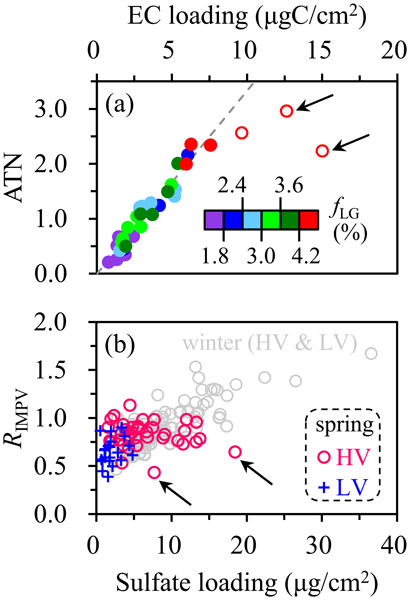
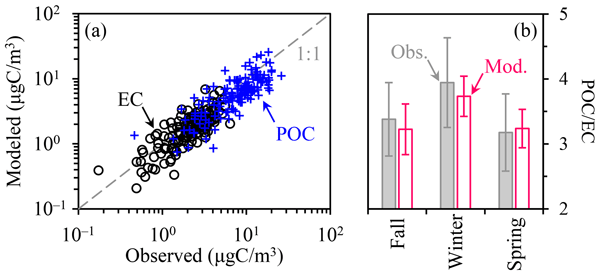
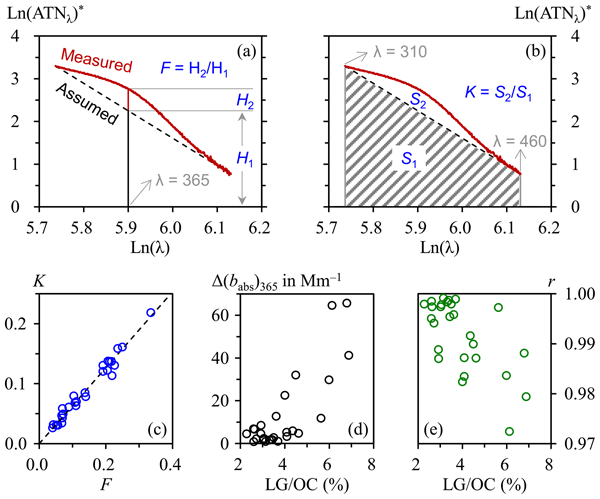
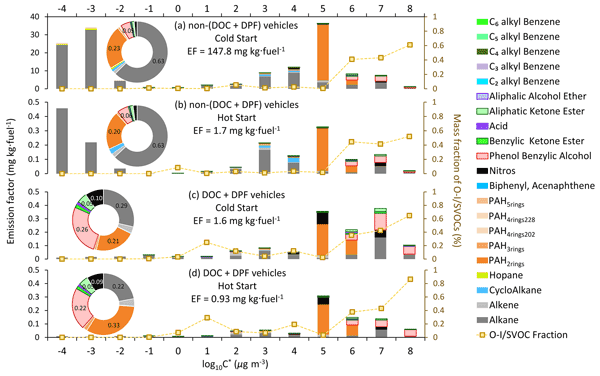
A field campaign was conducted in Northeast China to unfold the responses of aerosol optical properties to the variations of particle sources. We found that the light absorption capacities of brown and black carbon could be effectively enhanced by agricultural fire emissions and secondary aerosol production, respectively. Our results also revealed the distinctiveness of the low-efficiency fires, as such fires could emit special organics and lead to uncommon atmospheric reactions at night.
A field campaign was conducted in Northeast China to unfold the responses of aerosol optical...


Altmetrics
Final-revised paper
Preprint