
Articles | Volume 26, issue 9
https://doi.org/10.5194/acp-26-6507-2026
© Author(s) 2026. This work is distributed under
the Creative Commons Attribution 4.0 License.
the Creative Commons Attribution 4.0 License.
https://doi.org/10.5194/acp-26-6507-2026
© Author(s) 2026. This work is distributed under
the Creative Commons Attribution 4.0 License.
the Creative Commons Attribution 4.0 License.
Research article
| 
15 May 2026
Research article |
| 15 May 2026
| 15 May 2026
Machine-learning-based identification of influencing factors and synoptic patterns of foehn on the eastern foothills of the Taihang Mountains, China
Xinpeng Xu
Department of Atmospheric Sciences, School of Earth Sciences, Zhejiang University, Hangzhou, 310058, China
Shoujuan Shu
CORRESPONDING AUTHOR

Department of Atmospheric Sciences, School of Earth Sciences, Zhejiang University, Hangzhou, 310058, China
Guochen Wang
Department of Atmospheric Sciences, School of Earth Sciences, Zhejiang University, Hangzhou, 310058, China
Weijun Li
Department of Atmospheric Sciences, School of Earth Sciences, Zhejiang University, Hangzhou, 310058, China
Related authors
Jian Zhang, Zexuan Zhang, Keliang Li, Xiyao Chen, Xinpeng Xu, Yangmei Zhang, Anzhou Han, Yuanyuan Wang, Jing Ding, Liang Xu, Yinxiao Zhang, Hongya Niu, Shoujuan Shu, and Weijun Li
Atmos. Chem. Phys., 26, 2965–2984, https://doi.org/10.5194/acp-26-2965-2026, https://doi.org/10.5194/acp-26-2965-2026, 2026
Short summary
Short summary
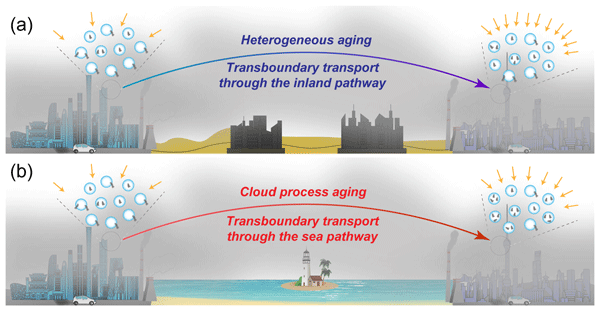
To explore the evolution mechanism and radiative absorption of soot particles during transboundary transport, we conducted field campaigns and simulated their optical properties. Our results reveal that soot particles transported over the sea undergo different aging processes compared to the inland, consequently leading to distinct radiative absorption. This study provides important information for refining mixing models of aged soot and improving their radiative effect simulations.
Jian Zhang, Zexuan Zhang, Keliang Li, Xiyao Chen, Xinpeng Xu, Yangmei Zhang, Anzhou Han, Yuanyuan Wang, Jing Ding, Liang Xu, Yinxiao Zhang, Hongya Niu, Shoujuan Shu, and Weijun Li
Atmos. Chem. Phys., 26, 2965–2984, https://doi.org/10.5194/acp-26-2965-2026, https://doi.org/10.5194/acp-26-2965-2026, 2026
Short summary
Short summary
To explore the evolution mechanism and radiative absorption of soot particles during transboundary transport, we conducted field campaigns and simulated their optical properties. Our results reveal that soot particles transported over the sea undergo different aging processes compared to the inland, consequently leading to distinct radiative absorption. This study provides important information for refining mixing models of aged soot and improving their radiative effect simulations.
Guochen Wang, Xuedong Cui, Bingye Xu, Can Wu, Minkang Zhi, Keliang Li, Liang Xu, Qi Yuan, Yuntao Wang, Yele Sun, Zongbo Shi, Akinori Ito, Shixian Zhai, and Weijun Li
Atmos. Chem. Phys., 26, 1483–1496, https://doi.org/10.5194/acp-26-1483-2026, https://doi.org/10.5194/acp-26-1483-2026, 2026
Short summary
Short summary
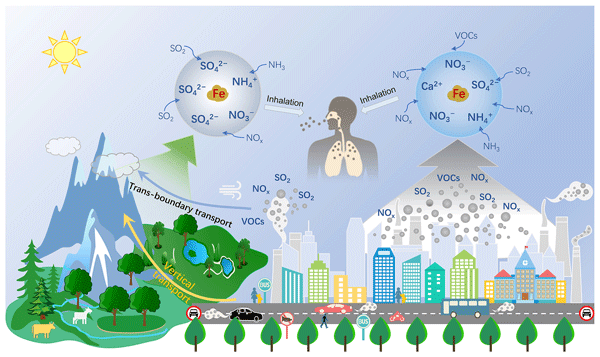
Iron acidification process is primarily driven by sulphuric acid in the upper mixing layer different from nitric acid at the ground-level. Enhanced atmospheric aging process contributes to high iron solubility in the upper mixing layer. Numerical models should consider vertical variations in iron dissolution to improve simulation accuracy.
Xiao-San Luo, Weijie Huang, Guofeng Shen, Yuting Pang, Mingwei Tang, Weijun Li, Zhen Zhao, Hanhan Li, Yaqian Wei, Longjiao Xie, and Tariq Mehmood
Atmos. Chem. Phys., 24, 1345–1360, https://doi.org/10.5194/acp-24-1345-2024, https://doi.org/10.5194/acp-24-1345-2024, 2024
Short summary
Short summary
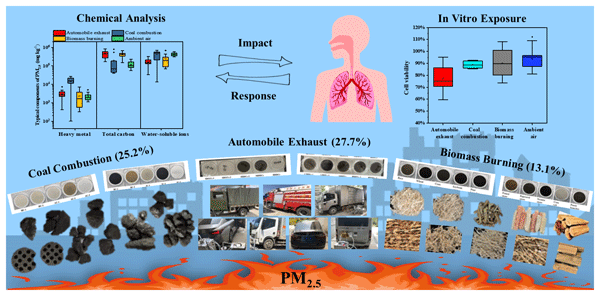
PM2.5 are air pollutants threatening health globally, but they are a mixture of chemical compositions from many sources and result in unequal toxicity. Which composition from which source of PM2.5 as the most hazardous object is a question hindering effective pollution control policy-making. With chemical and toxicity experiments, we found automobile exhaust and coal combustion to be priority emissions with higher toxic compositions for precise air pollution control, ensuring public health.
Qi Yuan, Yuanyuan Wang, Yixin Chen, Siyao Yue, Jian Zhang, Yinxiao Zhang, Liang Xu, Wei Hu, Dantong Liu, Pingqing Fu, Huiwang Gao, and Weijun Li
Atmos. Chem. Phys., 23, 9385–9399, https://doi.org/10.5194/acp-23-9385-2023, https://doi.org/10.5194/acp-23-9385-2023, 2023
Short summary
Short summary
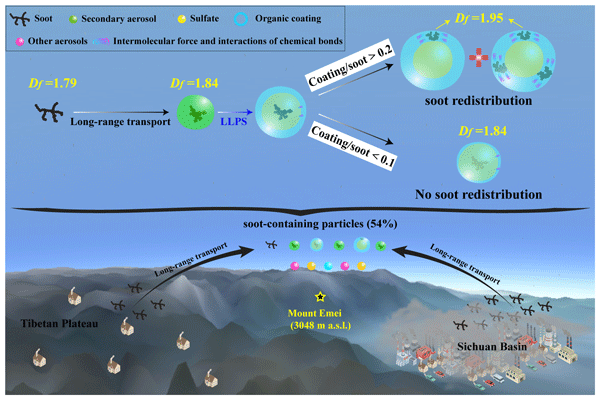
This study for the first time found large amounts of liquid–liquid phase separation particles with soot redistributing in organic coatings instead of sulfate cores in the eastern Tibetan Plateau atmosphere. The particle size and the ratio of the organic matter coating thickness to soot size are two of the major possible factors that likely affect the soot redistribution process. The soot redistribution process promoted the morphological compaction of soot particles.
Clarissa Baldo, Akinori Ito, Michael D. Krom, Weijun Li, Tim Jones, Nick Drake, Konstantin Ignatyev, Nicholas Davidson, and Zongbo Shi
Atmos. Chem. Phys., 22, 6045–6066, https://doi.org/10.5194/acp-22-6045-2022, https://doi.org/10.5194/acp-22-6045-2022, 2022
Short summary
Short summary
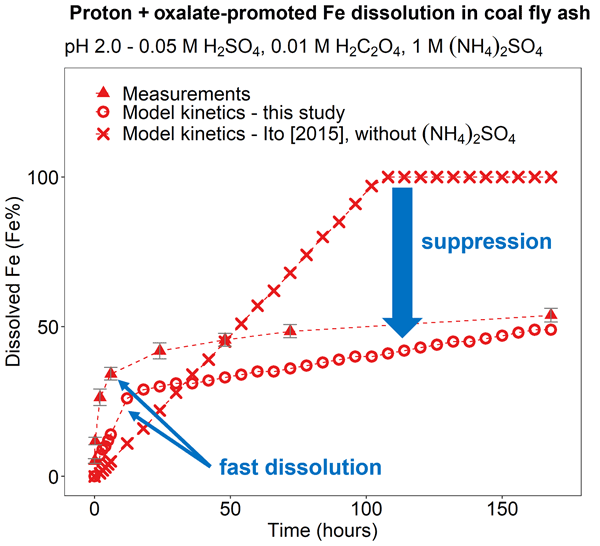
High ionic strength relevant to the aerosol-water enhanced proton-promoted dissolution of iron in coal fly ash (up to 7 times) but suppressed oxalate-promoted dissolution at low pH (< 3). Fe in coal fly ash dissolved up to 7 times faster than in Saharan dust at low pH. A global model with the updated dissolution rates of iron in coal fly ash suggested a larger contribution of pyrogenic dissolved Fe over regions with a strong impact from fossil fuel combustions.
Yanhong Zhu, Weijun Li, Yue Wang, Jian Zhang, Lei Liu, Liang Xu, Jingsha Xu, Jinhui Shi, Longyi Shao, Pingqing Fu, Daizhou Zhang, and Zongbo Shi
Atmos. Chem. Phys., 22, 2191–2202, https://doi.org/10.5194/acp-22-2191-2022, https://doi.org/10.5194/acp-22-2191-2022, 2022
Short summary
Short summary
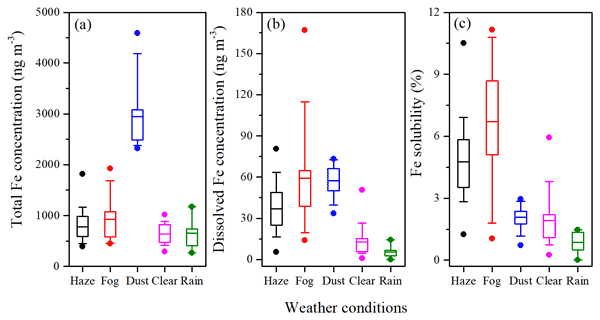
The solubilities of iron in fine particles in a megacity in Eastern China were studied under haze, fog, dust, clear, and rain weather conditions. For the first time, a receptor model was used to quantify the sources of dissolved and total iron aerosol. Microscopic analysis further confirmed the aging of iron aerosol during haze and fog conditions that facilitated dissolution of insoluble iron.
Liang Xu, Xiaohuan Liu, Huiwang Gao, Xiaohong Yao, Daizhou Zhang, Lei Bi, Lei Liu, Jian Zhang, Yinxiao Zhang, Yuanyuan Wang, Qi Yuan, and Weijun Li
Atmos. Chem. Phys., 21, 17715–17726, https://doi.org/10.5194/acp-21-17715-2021, https://doi.org/10.5194/acp-21-17715-2021, 2021
Short summary
Short summary
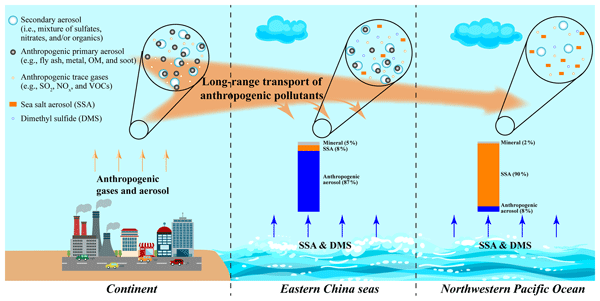
We quantified different types of marine aerosols and explored the Cl depletion of sea salt aerosol (SSA) in the eastern China seas and the northwestern Pacific Ocean. We found that anthropogenic acidic gases in the troposphere were transported longer distances compared to the anthropogenic aerosols and could significantly impact remote marine aerosols. Meanwhile, variations of chloride depletion in SSA can serve as a potential indicator for anthropogenic gaseous pollutants in remote marine air.
Cited articles
Aichinger-Rosenberger, M., Brockmann, E., Crocetti, L., Soja, B., and Moeller, G.: Machine learning-based prediction of Alpine foehn events using GNSS troposphere products: first results for Altdorf, Switzerland, Atmos. Meas. Tech., 15, 5821–5839, https://doi.org/10.5194/amt-15-5821-2022, 2022.
Ayitikan, M., Li, X., He, Q., Musha, Y., Tang, H., Li, S., Zhong, Y., and Ren, G.: Characteristics and Establishment of Objective Identification Criteria and Predictors for Foehn Winds in Urumqi, China, Atmos., 14, 1206, https://doi.org/10.3390/atmos14081206, 2023.
Beran, D. W.: Large Amplitude Lee Waves and Chinook Winds, J. Appl. Meteorol. Climatol., 6, 865–877, https://doi.org/10.1175/1520-0450(1967)006<0865:LALWAC>2.0.CO;2, 1967.
Bozkurt, D., Rondanelli, R., Marin, J. C., and Garreaud, R.: Foehn Event Triggered by an Atmospheric River Underlies Record-Setting Temperature Along Continental Antarctica, J. Geophys. Res.-Atmos., 123, 3871–3892, https://doi.org/10.1002/2017JD027796, 2018.
Breiman, L.: Random forests, Mach. Learn., 45, 5–32, https://doi.org/10.1023/A:1010933404324, 2001.
Cape, M. R., Vernet, M., Skvarca, P., Marinsek, S., Scambos, T., and Domack, E.: Foehn winds link climate-driven warming to ice shelf evolution in Antarctica, J. Geophys. Res.-Atmos., 120, 11037–11057, https://doi.org/10.1002/2015JD023465, 2015.
Chawla, N. V., Bowyer, K. W., Hall, L. O., and Kegelmeyer, W. P.: SMOTE: synthetic minority over-sampling technique, J. Artif. Intell. Res., 16, 321–357, https://doi.org/10.1613/jair.953, 2002.
Chen, R. and Lu, R. Y.: Comparisons of the Circulation Anomalies Associated with Extreme Heat in Different Regions of Eastern China, J. Clim., 28, 5830–5844, https://doi.org/10.1175/JCLI-D-14-00818.1, 2015.
Cover, T. M. and Hart, P. E.: Nearest Neighbor Pattern Classification, IEEE Trans. Inf. Theory, 13, 21, https://doi.org/10.1109/TIT.1967.1053964, 1967.
Durran, D. R.: Mountain Waves and Downslope Winds, in: Atmospheric Processes over Complex Terrain, edited by: Blumen, W., American Meteorological Society, Boston, MA, 59–81, https://doi.org/10.1007/978-1-935704-25-6_4, 1990.
ECMWF: ECMWF Reanalysis v5 | ECMWF, ECMWF, https://www.ecmwf.int/en/forecasts/dataset/ecmwf-reanalysis-v5 (last access: 1 June 2025), 2026.
Elvidge, A. D. and Renfrew, I. A.: The Causes of Foehn Warming in the Lee of Mountains, Bull. Am. Meteorol. Soc., 97, 455–466, https://doi.org/10.1175/BAMS-D-14-00194.1, 2016.
Elvidge, A. D., Kuipers Munneke, P., King, J. C., Renfrew, I. A., and Gilbert, E.: Atmospheric drivers of melt on Larsen C Ice Shelf: Surface energy budget regimes and the impact of foehn, J. Geophys. Res.-Atmos., 125, e2020JD032463, https://doi.org/10.1029/2020JD032463, 2020.
Francis, D., Fonseca, R., Mattingly, K. S., Lhermitte, S., and Walker, C.: Foehn winds at Pine Island Glacier and their role in ice changes, The Cryosphere, 17, 3041–3062, https://doi.org/10.5194/tc-17-3041-2023, 2023.
Freund, Y. and Schapire, R. E.: A decision-theoretic generalization of on-line learning and an application to boosting, J. Comput. Syst. Sci., 55, 119–139, https://doi.org/10.1006/jcss.1997.1504, 1997.
Gao, Y., Zhang, M., Liu, Z., Wang, L., Wang, P., Xia, X., Tao, M., and Zhu, L.: Modeling the feedback between aerosol and meteorological variables in the atmospheric boundary layer during a severe fog–haze event over the North China Plain, Atmos. Chem. Phys., 15, 4279–4295, https://doi.org/10.5194/acp-15-4279-2015, 2015.
Grajek, Z. and Bednorz, E.: Climatology and circulation conditions of potential foehn occurrence in the Polish Tatra Mountains, Acta Geophys., 73, 955–967, https://doi.org/10.1007/s11600-024-01372-w, 2025.
Huang, X., Ding, K., Liu, J., Wang, Z., Tang, R., Xue, L., Wang, H., Zhang, Q., Tan, Z.-M., Fu, C., Davis, S. J., Andreae, M. O., and Ding, A.: Smoke-weather interaction affects extreme wildfires in diverse coastal regions, Science, 379, 457–461, https://doi.org/10.1126/science.add9843, 2023.
Jansing, L., Papritz, L., Dürr, B., Gerstgrasser, D., and Sprenger, M.: Classification of Alpine south foehn based on 5 years of kilometre-scale analysis data, Weather Clim. Dyn., 3, 1113–1138, https://doi.org/10.5194/wcd-3-1113-2022, 2022.
Kleinbaum, D. G. a. K., M: Logistic Regression: A Self Learning Text, 3rd edn., Springer, New York, https://doi.org/10.1007/978-1-4419-1742-3, 2010.
Krizhevsky, A., Sutskever, I., and Hinton, G. E.: ImageNet Classification with Deep Convolutional Neural Networks, Commun. ACM, 60, 84–90, https://doi.org/10.1145/3065386, 2017.
Kusaka, H., Nishi, A., Kakinuma, A., Doan, Q.-V., Onodera, T., and Endo, S.: Japan's south foehn on the Toyama Plain: Dynamical or thermodynamical mechanisms?, Int. J. Climatol., 41, 5350–5367, https://doi.org/10.1002/joc.7133, 2021.
Laffin, M., Zender, C., Singh, S., Van Wessem, J., Smeets, C., and Reijmer, C.: Climatology and evolution of the Antarctic Peninsula föhn wind-induced melt regime from 1979–2018, J. Geophys. Res.-Atmos., 126, e2020JD033682, https://doi.org/10.1029/2020JD033682, 2021.
Lai, L. W.: The relationship between extreme weather events and crop losses in central Taiwan, Theor. Appl. Climatol., 134, 107–119, https://doi.org/10.1007/s00704-017-2261-z, 2018.
Li, K., Jacob, D. J., Shen, L., Lu, X., De Smedt, I., and Liao, H.: Increases in surface ozone pollution in China from 2013 to 2019: anthropogenic and meteorological influences, Atmos. Chem. Phys., 20, 11423–11433, https://doi.org/10.5194/acp-20-11423-2020, 2020a.
Li, W., Shao, L., Wang, W., Li, H., Wang, X., Li, Y., Li, W., Jones, T., and Zhang, D.: Air quality improvement in response to intensified control strategies in Beijing during 2013–2019, Sci. Total Environ., 744, 140776, https://doi.org/10.1016/j.scitotenv.2020.140776, 2020b.
Li, W. J., Ito, A., Wang, G. C., Zhi, M. K., Xu, L., Yuan, Q., Zhang, J., Liu, L., Wu, F., Laskin, A., Zhang, D. Z., Zhang, X. Y., Zhu, T., Chen, J. M., Mihalopoulos, N., Bougiatioti, A., Kanakidou, M., Wang, G. H., Hu, H. L., Zhao, Y., and Shi, Z. B.: Aqueous-phase secondary organic aerosol formation on mineral dust, Natl. Sci. Rev., 12, https://doi.org/10.1093/nsr/nwaf221, 2025.
Liu, B. and Tsoumakas, G.: Dealing with class imbalance in classifier chains via random undersampling, Knowledge-Based Syst., 192, 105292, https://doi.org/10.1016/j.knosys.2019.105292, 2020.
Liu, H., Lei, J., Liu, Y., Zhu, T., Chan, K., Chen, X., Wei, J., Deng, F., Li, G., Jiang, Y., Bai, L., Wang, K., Chen, J., Lan, Y., Xia, X., Wang, J., Wei, C., Li, Y., Chen, R., Gong, J., Duan, X., Zhang, K., Kan, H., Shi, X., Guo, X., and Wu, S.: Hospital admissions attributable to reduced air pollution due to clean-air policies in China, Nat. Med., 31, 1688–1697, https://doi.org/10.1038/s41591-025-03515-y, 2025.
Lundberg, S. M. and Lee, S.-I.: A Unified Approach to Interpreting Model Predictions, in: Advances in Neural Information Processing Systems (Nips 2017), 2, 847–856, https://doi.org/10.48550/arXiv.1705.07874, 2017.
Maier, P., Klisho, T., Formayer, H., and Lehner, F.: Analysing the future trends of foehn-enabling synoptic patterns over two valleys in the Eastern Alps in CMIP5 EURO-CORDEX models, Theor. Appl. Climatol., 156, 155, https://doi.org/10.1007/s00704-025-05365-7, 2025.
Mony, C.: Evaluating foehn development in a changing climate using machine learning and investigating the impact of foehn on forest fire occurrence and severity, ETH Zurich, https://doi.org/10.3929/ethz-b-000594509, 2020.
Ning, G. C., Yim, S. H. L., Wang, S. G., Duan, B. L., Nie, C. Q., Yang, X., Wang, J. Y., and Shang, K. Z.: Synergistic effects of synoptic weather patterns and topography on air quality: a case of the Sichuan Basin of China, Clim. Dyn., 53, 6729–6744, https://doi.org/10.1007/s00382-019-04954-3, 2019.
NOAA: Hourly/Sub-Hourly Observational Data, NOAA, https://www.ncei.noaa.gov/maps/hourly/ (last access: 1 June 2025), 2026.
Plavcan, D., Mayr, G. J., and Zeileis, A.: Automatic and probabilistic foehn diagnosis with a statistical mixture model, J. Appl. Meteorol. Climatol., 53, 652–659, https://doi.org/10.1175/JAMC-D-13-0267.1, 2014.
Prósper, M. A., Sosa Tinoco, I., Otero-Casal, C., and Miguez-Macho, G.: Downslope windstorms in the Isthmus of Tehuantepec during Tehuantepecer events: a numerical study with WRF high-resolution simulations, Earth Syst. Dynam., 10, 485–499, https://doi.org/10.5194/esd-10-485-2019, 2019.
Salzberg, S. L.: C4.5: Programs for Machine Learning by J. Ross Quinlan. Morgan Kaufmann Publishers, Inc., 1993, Mach. Learn., 16, 235–240, https://doi.org/10.1007/BF00993309, 1994.
Schneidewind, T., Lee, S., Vicedo-Cabrera, A. M., and Saucy, A.: The risk of hospitalization associated with foehn winds and temperature in the mountainous region of Switzerland, Environ. Epidemiol., 9, https://doi.org/10.1097/EE9.0000000000000418, 2025.
Seibert, P.: South Foehn Studies since the Alpex Experiment, Meteorol. Atmos. Phys., 43, 91–103, https://doi.org/10.1007/BF01028112, 1990.
Seluchi, M. E., Norte, F. A., Satyamurty, P., and Chou, S. C.: Analysis of three situations of the Foehn effect over the Andes (zonda wind) using the Eta-CPTEC regional model, Weather Forecast., 18, 481–501, https://doi.org/10.1175/1520-0434(2003)18<481:AOTSOT>2.0.CO;2, 2003.
Sharples, J. J., Mills, G. A., McRae, R. H. D., and Weber, R. O.: Foehn-Like Winds and Elevated Fire Danger Conditions in Southeastern Australia, J. Appl. Meteorol. Climatol., 49, 1067–1095, https://doi.org/10.1175/2010JAMC2219.1, 2010.
Shilin, Z., Rongke, W., Yanbo, G., Jianlong, T., and Zhizeng, S.: The Foehn in the Middle Range of Taihang Mountain, Meteorological Monthly, 3–6+29, http://qxqk.nmc.cn/qxen/article/abstract/19930201 (last access: 6 May 2026), 1993.
Smolarkiewicz, P. K. and Rotunno, R.: Low Froude Number Flow Past Three-Dimensional Obstacles. Part I: Baroclinically Generated Lee Vortices, J. Atoms. Sci., 46, 1154–1164, https://doi.org/10.1175/1520-0469(1989)046<1154:LFNFPT>2.0.CO;2, 1989.
Smolarkiewicz, P. K. and Rotunno, R.: Low Froude Number Flow Past Three-Dimensional Obstacles. Part II: Upwind Flow Reversal Zone, J. Atoms. Sci., 47, 1498–1511, https://doi.org/10.1175/1520-0469(1990)047<1498:LFNFPT>2.0.CO;2, 1990.
Speirs, J. C., Steinhoff, D. F., McGowan, H. A., Bromwich, D. H., and Monaghan, A. J.: Foehn Winds in the McMurdo Dry Valleys, Antarctica: The Origin of Extreme Warming Events, J. Clim., 23, 3577–3598, https://doi.org/10.1175/2010JCLI3382.1, 2010.
Stauffer, R., Zeileis, A., and Mayr, G. J.: Long-Term Foehn Reconstruction Combining Unsupervised and Supervised Learning, Int. J. Climatol., 44, 5890–5901, https://doi.org/10.1002/joc.8673, 2024.
Takane, Y. and Kusaka, H.: Formation Mechanisms of the Extreme High Surface Air Temperature of 40.9 °C Observed in the Tokyo Metropolitan Area: Considerations of Dynamic Foehn and Foehnlike Wind, J. Appl. Meteorol. Climatol., 50, 1827–1841, https://doi.org/10.1175/JAMC-D-10-05032.1, 2011.
Wang, H., Xue, M., Zhang, X. Y., Liu, H. L., Zhou, C. H., Tan, S. C., Che, H. Z., Chen, B., and Li, T.: Mesoscale modeling study of the interactions between aerosols and PBL meteorology during a haze episode in Jing–Jin–Ji (China) and its nearby surrounding region – Part 1: Aerosol distributions and meteorological features, Atmos. Chem. Phys., 15, 3257–3275, https://doi.org/10.5194/acp-15-3257-2015, 2015.
Wang, Z., Ding, Y., Zhang, Y., Wang, C., Li, J., and Gu, Y.: Feature and Mechanism of the Foehn Weather on East Slope Taihang Mountains?:Statistic Feature, Plateau Meteorol., 31, 547–554, http://www.gyqx.ac.cn/CN/Y2012/V31/I2/547 (last access: 6 May 2026), 2012.
Widmer, R.: Statistische Untersuchungen über den Föhn im Reusstal und Versuch einer objektiven Föhnprognose für die Station Altdorf, Dissertationsdruckerei Leemann, https://ngzh.ch/wp-content/uploads/2024/08/111_20.pdf (last access: 6 May 2026), 1966.
Wiesner, L., McGowan, H., Sturman, A., and Dale, T.: Subtropical Foehn Winds, Southeast Queensland, Australia, J. Geophys. Res.-Atmos., 129, e2023JD040410, https://doi.org/10.1029/2023JD040410, 2024.
Xianping, X., Shuyun, W., and Wei, Z.: Analysis of Foehn Characteristics in Middle Section of Taihang Mountains Based on Background Method, Meteorol. Sci. Technol., 48, 433–437, https://doi.org/10.19517/j.1671-6345.20190281, 2020.
Yan, H., Ding, Y., Li, P., Wang, Q., Xu, Y., and Zuo, W.: Mind the class weight bias: Weighted maximum mean discrepancy for unsupervised domain adaptation, Proc. Cvpr. IEEE, 2272–2281, https://doi.org/10.1109/CVPR.2017.107, 2017.
Zhang, J., Liu, L., Xu, L., Lin, Q., Zhao, H., Wang, Z., Guo, S., Hu, M., Liu, D., Shi, Z., Huang, D., and Li, W.: Exploring wintertime regional haze in northeast China: role of coal and biomass burning, Atmos. Chem. Phys., 20, 5355–5372, https://doi.org/10.5194/acp-20-5355-2020, 2020.
Zhang, Z., Xu, W., Zeng, S., Liu, Y., Liu, T., Zhang, Y., Du, A., Li, Y., Zhang, N., Wang, J., Aruffo, E., Han, P., Li, J., Wang, Z., and Sun, Y.: Secondary Organic Aerosol Formation from Ambient Air in Summer in Urban Beijing: Contribution of S/IVOCs and Impacts of Heat Waves, Environ. Sci. Technol. Lett., 11, 738–745, https://doi.org/10.1021/acs.estlett.4c00415, 2024.
Zhao, K., Li, N., Li, X., Sun, M., Shi, J., An, D., Pu, J., and Zheng, B.: Characteristic analysis of atmospheric diffusion conditions of winter foehn weather process in Urumqi City, Arid Land Geogr., 44, 1534–1544, https://doi.org/10.12118/j.issn.1000%E2%80%936060.2021.06.03, 2021.
Zhong, J., Zhang, X., Wang, Y., Wang, J., Shen, X., Zhang, H., Wang, T., Xie, Z., Liu, C., Zhang, H., Zhao, T., Sun, J., Fan, S., Gao, Z., Li, Y., and Wang, L.: The two-way feedback mechanism between unfavorable meteorological conditions and cumulative aerosol pollution in various haze regions of China, Atmos. Chem. Phys., 19, 3287–3306, https://doi.org/10.5194/acp-19-3287-2019, 2019.
Zhou, X., Li, M., Huang, X., Liu, T., Zhang, H., Qi, X., Wang, Z., Qin, Y., Geng, G., Wang, J., Chi, X., and Ding, A.: Urban meteorology–chemistry coupling in compound heat–ozone extremes, Nat. Cities, 847–856, https://doi.org/10.1038/s44284-025-00302-1, 2025.
Zumbrunnen, T., Bugmann, H., Conedera, M., and Bürgi, M.: Linking Forest Fire Regimes and Climate-A Historical Analysis in a Dry Inner Alpine Valley, Ecosystems, 12, 73–86, https://doi.org/10.1007/s10021-008-9207-3, 2009.
Short summary
We studied warm, dry winds called foehn on the east foothills of China’s Taihang Mountains, where over 30 million people live. Using synopic analysis and machine learning methods, we found these winds are driven mainly by surface conditions and the influence of them varies seasonally. These winds worsen pollution, heatwaves, and fire risk. Our findings help predict these events earlier, protecting health, crops, and air quality in a warming climate.
We studied warm, dry winds called foehn on the east foothills of China’s Taihang Mountains,...


Altmetrics
Final-revised paper
Preprint