
Articles | Volume 26, issue 9
https://doi.org/10.5194/acp-26-6223-2026
© Author(s) 2026. This work is distributed under
the Creative Commons Attribution 4.0 License.
the Creative Commons Attribution 4.0 License.
https://doi.org/10.5194/acp-26-6223-2026
© Author(s) 2026. This work is distributed under
the Creative Commons Attribution 4.0 License.
the Creative Commons Attribution 4.0 License.
Research article
| 
11 May 2026
Research article |
| 11 May 2026
| 11 May 2026
The role of chemical boundary conditions in simulating summer ozone and cross-boundary transport over China
Yunsong Du
College of carbon Neutrality Future Technology, Sichuan University, Chengdu 610065, China
Department of Environmental Science and Engineering, Sichuan University, Chengdu 610065, China
Fumo Yang
College of carbon Neutrality Future Technology, Sichuan University, Chengdu 610065, China
Sijia Lou
School of Atmospheric Sciences, Nanjing University, Nanjing 210023, China
Baolei Lyu
Huayun Sounding Meteorological Technology Co. Ltd., Beijing 100081, China
Ran Huang
Hangzhou AiMa Technologies, Hangzhou, Zhejiang 311121, China
Guangming Shi
College of carbon Neutrality Future Technology, Sichuan University, Chengdu 610065, China
Yongtao Hu
School of Civil and Environmental Engineering, Georgia Institute of Technology, Atlanta, Georgia 30332, USA
Yan Jiang
Sichuan Eco-environment Monitoring Station, Chengdu 610091, China

College of carbon Neutrality Future Technology, Sichuan University, Chengdu 610065, China
Related authors
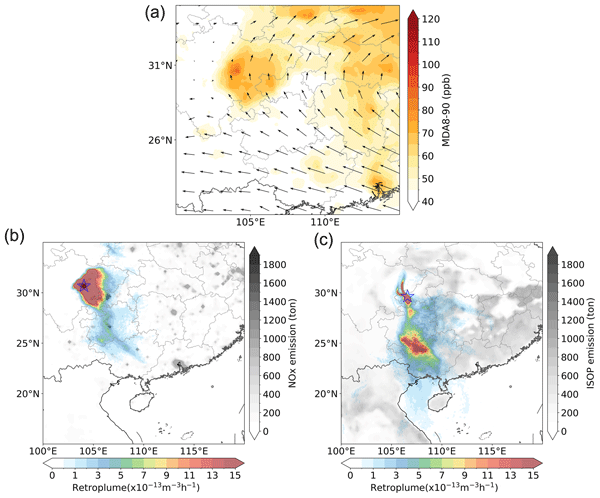
Nan Wang, Yunsong Du, Dongyang Chen, Haiyan Meng, Xi Chen, Li Zhou, Guangming Shi, Yu Zhan, Miao Feng, Wei Li, Mulan Chen, Zhenliang Li, and Fumo Yang
Atmos. Chem. Phys., 24, 3029–3042, https://doi.org/10.5194/acp-24-3029-2024, https://doi.org/10.5194/acp-24-3029-2024, 2024
Short summary
Short summary
In the scorching August 2022 heatwave, China's Sichuan Basin saw a stark contrast in ozone (O3) levels between Chengdu and Chongqing. The regional disparities were studied considering meteorology, precursors, photochemistry, and transportation. The study highlighted the importance of tailored pollution control measures and underlined the necessity for region-specific strategies to combat O3 pollution on a regional scale.
Tan Mi, Xueting Pu, Xi Zheng, Guangcheng Nie, Xinyi Liu, Han Zhang, Michael L. Grieneisen, Yu Zhan, Maohua Wang, and Fumo Yang
Earth Syst. Sci. Data Discuss., https://doi.org/10.5194/essd-2026-554, https://doi.org/10.5194/essd-2026-554, 2026
Preprint under review for ESSD
Short summary
Short summary
We present a temporally continuous hourly CO2 dataset for global GAW stations from 2000 to 2024. Gaps in the original hourly observations can bias daily, monthly, and annual mean CO2 estimates and obscure diurnal variability and short-lived events. The dataset enables improved estimates of global mean surface CO2, regional short-term CO2 variability, and regional carbon-emission inversions.
Jinpeng Lu, Sijia Lou, Wuke Wang, Jiankai Zhang, Ke Ding, Xin Huang, Yiquan Jiang, Tengyu Liu, Yawen Liu, Qingyan Xie, Lian Xue, Zilin Wang, Chen Zhou, Anbao Zhu, and Aijun Ding
EGUsphere, https://doi.org/10.5194/egusphere-2026-5104, https://doi.org/10.5194/egusphere-2026-5104, 2026
This preprint is open for discussion and under review for Atmospheric Chemistry and Physics (ACP).
Short summary
Short summary
The 2022 Hunga Tonga eruption injected sulfur gases and massive water vapor into the stratosphere. With observations and simulations, we assessed effects on the tropical quasi-biennial oscillation (QBO). Pollutants lingered over a year; the water-rich eruption notably altered QBO winds. Cooling from excess vapor and particles, concentrated south of 15° N, reshaped upper circulation and drove downward wind anomalies modulating the QBO, with April–October 2022 cooling causing more wind shifts.
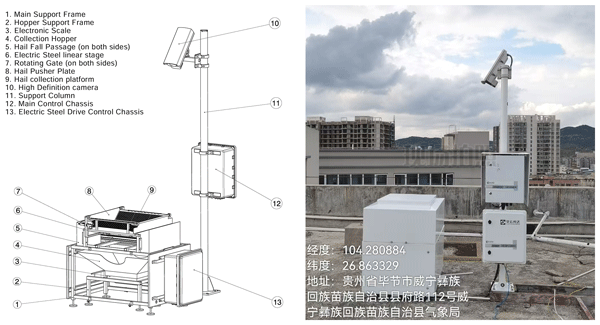
Baolei Lyu, Hui Wang, Tianlei Gao, Zhanfu Yin, Xiaofeng Lou, Yugang Duan, Yihang Huang, and Zhiqiang Zhao
Atmos. Meas. Tech., 19, 5525–5538, https://doi.org/10.5194/amt-19-5525-2026, https://doi.org/10.5194/amt-19-5525-2026, 2026
Short summary
Short summary
Hailstorms cause significant damage, yet measuring hail accurately remains difficult because current sensors have small sampling area and often confuse hail with rain. To solve this, we developed HailCam, a smart camera system, that counts and measures hail size every minute. Tests of the system prove that it is highly accurate and better than existing tools at ignoring rain. This technology is crucial to improve forecasts, warn communities earlier, and help scientists better understand storms.
Yuelin Liu, Yuanjun Gong, Nan Wang, Guangming Shi, Fumo Yang, Yuanhang Zhang, and Keding Lu
EGUsphere, https://doi.org/10.5194/egusphere-2026-1786, https://doi.org/10.5194/egusphere-2026-1786, 2026
Short summary
Short summary
Ozone pollution is difficult to predict because its formation depends on complex chemical reactions that vary under different pollution conditions. By comparing multiple modeling approaches during a pollution event in Chengdu, China, we examine how ozone formation and the underlying chemical processes, particularly radical-driven reactions, differ between low- and high-pollution environments.
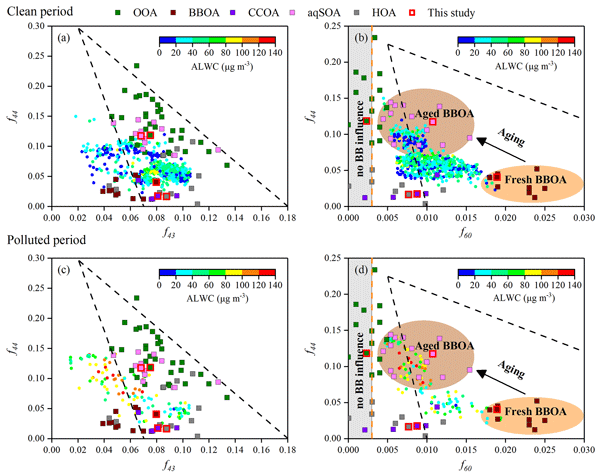
Chao Peng, Yan Ding, Zhenliang Li, Tianyu Zhai, Xinping Yang, Mi Tian, Yang Chen, Xin Long, Haohui Tang, Guangming Shi, Liuyi Zhang, Kangyin Zhang, Fumo Yang, and Chongzhi Zhai
Atmos. Chem. Phys., 26, 4131–4152, https://doi.org/10.5194/acp-26-4131-2026, https://doi.org/10.5194/acp-26-4131-2026, 2026
Short summary
Short summary
Organic aerosol is a dominant component of atmospheric aerosol worldwide, and it is recognized as a key factor affecting air quality and possibly climate. We revealed the aqueous secondary organic aerosol formation and brownness from aged biomass-burning emissions and highlighted the importance of aqueous-phase reactions on air quality and climate. The aqueous secondary organic aerosol from aged biomass-burning emissions should be taken into account in air quality and climate models.
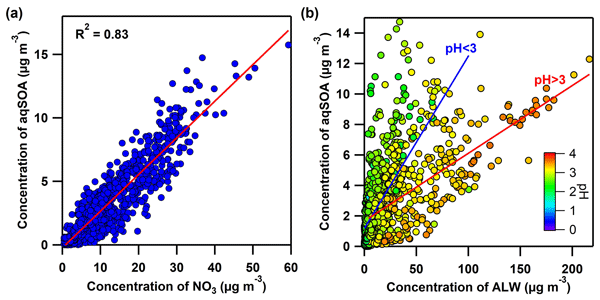
Qiu Wang, Tengyu Liu, Weiqi Xu, Jinbo Wang, Dafeng Ge, Caijun Zhu, Chuanhua Ren, Jiaping Wang, Qiaozhi Zha, Ximeng Qi, Wei Nie, Xuguang Chi, Sijia Lou, Xin Huang, and Aijun Ding
Atmos. Chem. Phys., 26, 3185–3194, https://doi.org/10.5194/acp-26-3185-2026, https://doi.org/10.5194/acp-26-3185-2026, 2026
Short summary
Short summary
The sources and formation mechanisms of aqueous secondary organic aerosol (aqSOA) remain unclear. This study investigates the characteristics and processing of aqSOA in polluted suburban environments in Eastern China. The results highlight the critical roles of nitrate, aerosol liquid water, acidity, and photochemistry in aqSOA formation and contribute to an improved understanding of aqSOA formation in polluted environments.
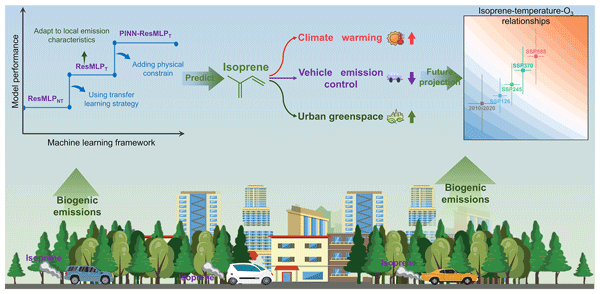
Song Liu, Xiaopu Lyu, Fumo Yang, Zongbo Shi, Xin Huang, Tengyu Liu, Hongli Wang, Mei Li, Jian Gao, Nan Chen, Guoliang Shi, Yu Zou, Chenglei Pei, Chengxu Tong, Xinyi Liu, Li Zhou, Alex B. Guenther, and Nan Wang
Atmos. Chem. Phys., 26, 635–646, https://doi.org/10.5194/acp-26-635-2026, https://doi.org/10.5194/acp-26-635-2026, 2026
Short summary
Short summary
We studied the invisible gas isoprene, which trees and vehicles release into the air and which can worsen urban smog. Using advanced computer learning trained on measurements from many cities, we uncovered how temperature, sunlight, and city greening shape isoprene levels. Comparing Hong Kong and London, we found climate warming boosts isoprene and future ozone pollution, but strong cuts in anthropogenic emission could limit this impact.
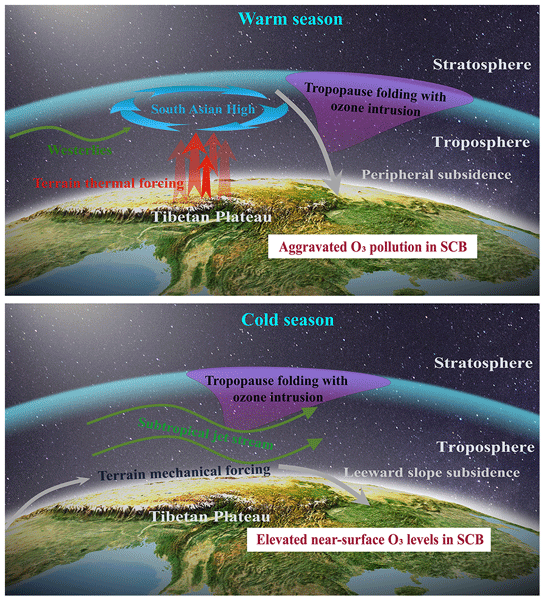
Zhuozhi Shu, Fumo Yang, Guangming Shi, Yuqing Zhang, Yongjie Huang, Xinning Yu, Baiwan Pan, and Tianliang Zhao
Atmos. Chem. Phys., 25, 15437–15451, https://doi.org/10.5194/acp-25-15437-2025, https://doi.org/10.5194/acp-25-15437-2025, 2025
Short summary
Short summary
We targeted four stratospheric intrusion episodes to investigate the impacts of cross-layer transport of stratospheric O3 on the near-surface environmental atmosphere over Sichuan Basin and uncover multi-scale atmospheric circulation coupling mechanisms with the seasonally discrepant terrain effects of Tibetan Plateau. Results provided the critical insights into understanding of regional O3 pollution genesis with the exceptional natural sources contribution derived from the stratosphere.
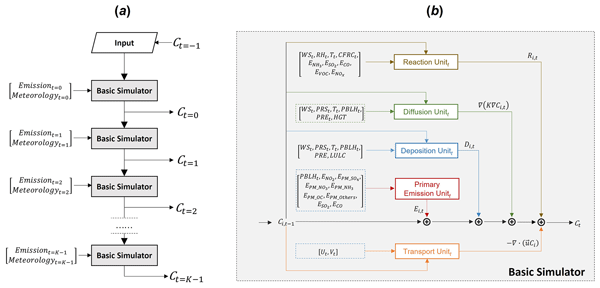
Baolei Lyu, Ran Huang, Xinlu Wang, Weiguo Wang, and Yongtao Hu
Geosci. Model Dev., 18, 6295–6312, https://doi.org/10.5194/gmd-18-6295-2025, https://doi.org/10.5194/gmd-18-6295-2025, 2025
Short summary
Short summary
FastCTM is a neural network model to simulate key criteria air pollution levels, offering an efficient alternative to traditional chemical transport models. Its structure is informed by the physical and chemical principles of the atmosphere, allowing it to learn and replicate complex atmospheric processes. FastCTM demonstrated matching accuracy to traditional models with less computational demand. It also provides analysis of how different atmospheric processes contribute to air quality changes.
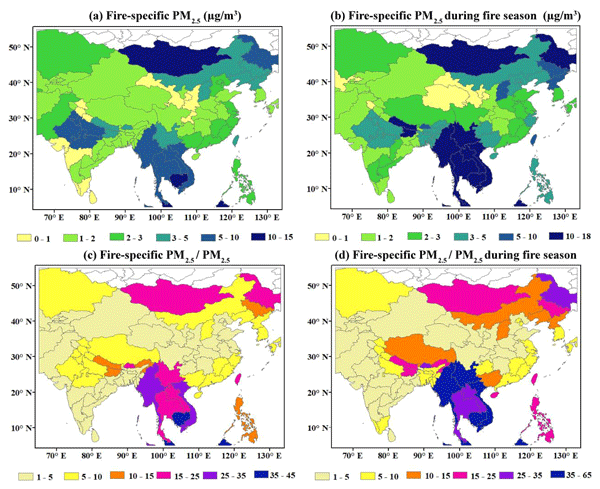
Hua Lu, Min Xie, Nan Wang, Bojun Liu, Jinyue Jiang, Bingliang Zhuang, Ying Zhang, Meixuan Wu, Jianfeng Yang, Kunqin Lv, and Danyang Ma
Atmos. Chem. Phys., 25, 10141–10158, https://doi.org/10.5194/acp-25-10141-2025, https://doi.org/10.5194/acp-25-10141-2025, 2025
Short summary
Short summary
Fires are important sources of air pollution in many regions. This study isolates fire-specific PM2.5 from observations, showing its increasing proportion in recent years. Our findings indicate that fire-specific PM2.5 disproportionately affects impoverished populations in the Asia Pacific. Furthermore, we suggest that, under future climate change, fire-specific PM2.5 will likely continue rising. This highlights the need for interventions to reduce fire-related air pollution and its health impacts.
Nan Wang, Song Liu, Jiawei Xu, Yanyu Wang, Chun Li, Yuning Xie, Hua Lu, and Fumo Yang
Atmos. Chem. Phys., 25, 8859–8870, https://doi.org/10.5194/acp-25-8859-2025, https://doi.org/10.5194/acp-25-8859-2025, 2025
Short summary
Short summary
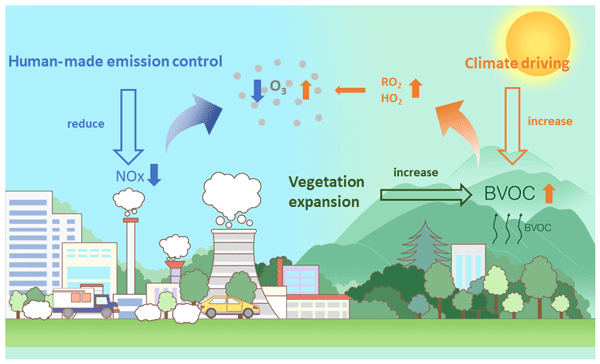
We found that climate warming and changes in vegetation have increased biogenic volatile organic compound emissions in the Pearl River Delta region. These increasing natural emissions, mainly due to climate warming, are weakening the benefits of reducing human-made emissions through control, leading to higher ozone levels. This work helps us understand how climate change influences air quality and provides important insights for improving pollution control strategies in the future.
Sijia Lou, Manish Shrivastava, Alexandre Albinet, Sophie Tomaz, Deepchandra Srivastava, Olivier Favez, Huizhong Shen, and Aijun Ding
Atmos. Chem. Phys., 25, 8163–8183, https://doi.org/10.5194/acp-25-8163-2025, https://doi.org/10.5194/acp-25-8163-2025, 2025
Short summary
Short summary
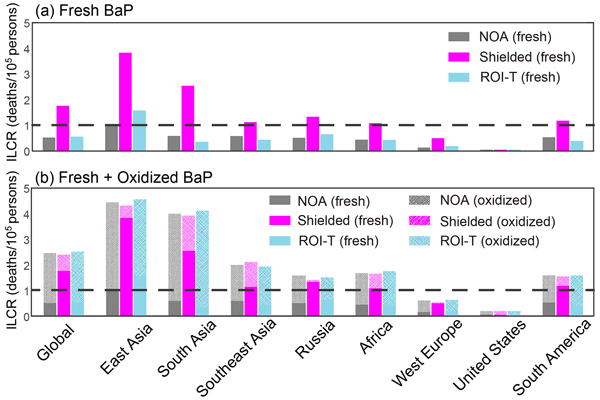
Polycyclic aromatic hydrocarbons (PAHs), emitted from incomplete combustion, pose serious health risks due to their carcinogenic properties. This research demonstrates that viscous organic aerosol coatings significantly hinder PAH oxidation, with spatial distributions sensitive to the degradation modeling approach. Our findings emphasize the need for accurate modeling of PAH oxidation processes in risk assessments, considering both fresh and oxidized PAHs in evaluating human health risks.
Jiemeng Bao, Xin Zhang, Zhenhai Wu, Li Zhou, Jun Qian, Qinwen Tan, Fumo Yang, Junhui Chen, Yunfeng Li, Hefan Liu, Liqun Deng, and Hong Li
Atmos. Chem. Phys., 25, 1899–1916, https://doi.org/10.5194/acp-25-1899-2025, https://doi.org/10.5194/acp-25-1899-2025, 2025
Short summary
Short summary
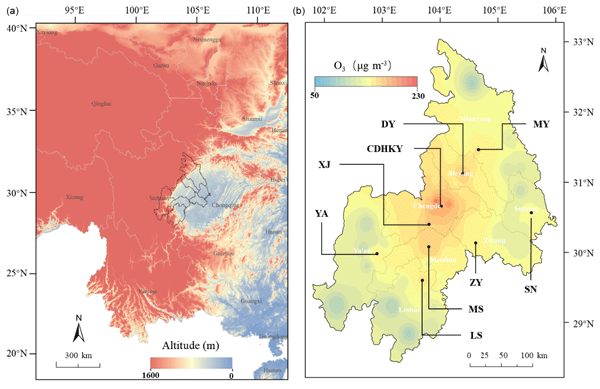
We studied carbonyl compounds' role in ozone pollution in the Chengdu Plain Urban Agglomeration, China. During heavy pollution in August 2019, we measured carbonyls at nine sites and analyzed their impact. Areas with higher carbonyl levels, like Chengdu, had worse ozone pollution. While their abundance matters, chemical reactions with other pollutants are the main drivers. Our findings show regional cooperation is vital to reducing ozone pollution effectively.
Rime El Asmar, Zongrun Li, David J. Tanner, Yongtao Hu, Susan O'Neill, L. Gregory Huey, M. Talat Odman, and Rodney J. Weber
Atmos. Chem. Phys., 24, 12749–12773, https://doi.org/10.5194/acp-24-12749-2024, https://doi.org/10.5194/acp-24-12749-2024, 2024
Short summary
Short summary
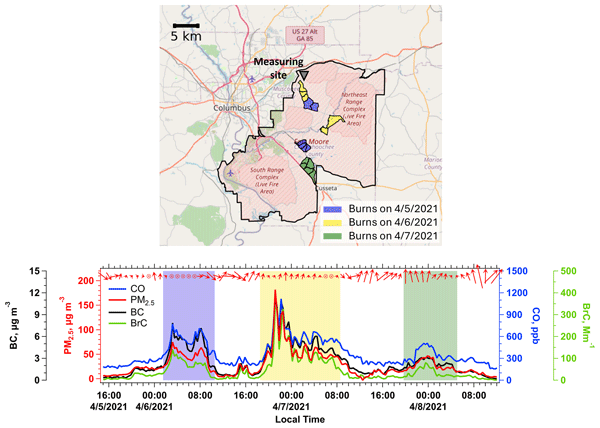
Prescribed burning is an important method for managing ecosystems and preventing wildfires. However, smoke from prescribed fires can have a significant impact on air quality. Here, using a network of fixed sites and sampling throughout an extended prescribed burning period in 2 different years, we characterize emissions and evolutions of up to 8 h of PM2.5 mass, black carbon (BC), and brown carbon (BrC) in smoke from burning of forested lands in the southeastern USA.
Shuzhuang Feng, Fei Jiang, Tianlu Qian, Nan Wang, Mengwei Jia, Songci Zheng, Jiansong Chen, Fang Ying, and Weimin Ju
Atmos. Chem. Phys., 24, 7481–7498, https://doi.org/10.5194/acp-24-7481-2024, https://doi.org/10.5194/acp-24-7481-2024, 2024
Short summary
Short summary
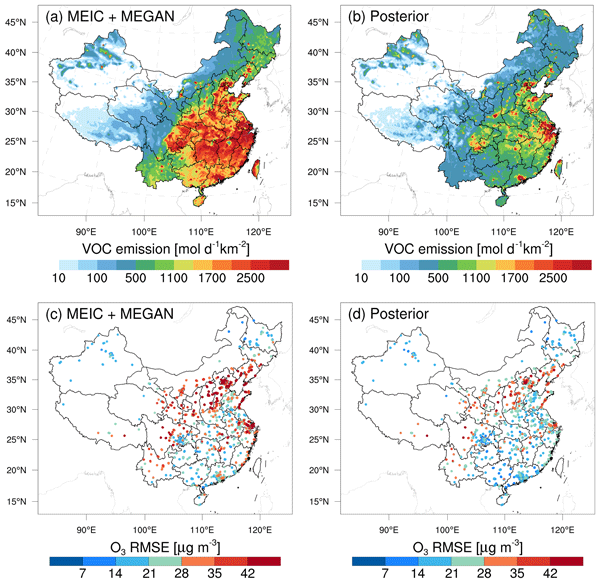
We developed a multi-air-pollutant inversion system to estimate non-methane volatile organic compound (NMVOC) emissions using TROPOMI formaldehyde retrievals. We found that the inversion significantly improved formaldehyde simulations and reduced NMVOC emission uncertainties. The optimized NMVOC emissions effectively corrected the overestimation of O3 levels, mainly by decreasing the rate of the RO2 + NO reaction and increasing the rate of the NO2 + OH reaction.
Wenxuan Hua, Sijia Lou, Xin Huang, Lian Xue, Ke Ding, Zilin Wang, and Aijun Ding
Atmos. Chem. Phys., 24, 6787–6807, https://doi.org/10.5194/acp-24-6787-2024, https://doi.org/10.5194/acp-24-6787-2024, 2024
Short summary
Short summary
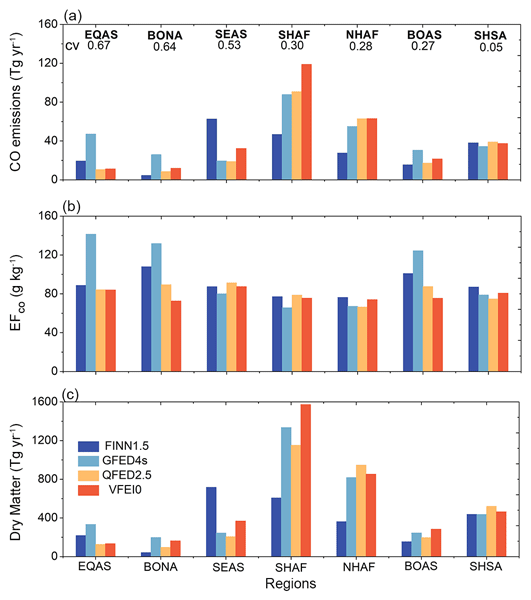
In this study, we diagnose uncertainties in carbon monoxide and organic carbon emissions from four inventories for seven major wildfire-prone regions. Uncertainties in vegetation classification methods, fire detection products, and cloud obscuration effects lead to bias in these biomass burning (BB) emission inventories. By comparing simulations with measurements, we provide certain inventory recommendations. Our study has implications for reducing uncertainties in emissions in further studies.
Nan Wang, Yunsong Du, Dongyang Chen, Haiyan Meng, Xi Chen, Li Zhou, Guangming Shi, Yu Zhan, Miao Feng, Wei Li, Mulan Chen, Zhenliang Li, and Fumo Yang
Atmos. Chem. Phys., 24, 3029–3042, https://doi.org/10.5194/acp-24-3029-2024, https://doi.org/10.5194/acp-24-3029-2024, 2024
Short summary
Short summary
In the scorching August 2022 heatwave, China's Sichuan Basin saw a stark contrast in ozone (O3) levels between Chengdu and Chongqing. The regional disparities were studied considering meteorology, precursors, photochemistry, and transportation. The study highlighted the importance of tailored pollution control measures and underlined the necessity for region-specific strategies to combat O3 pollution on a regional scale.
Shiyi Lai, Ximeng Qi, Xin Huang, Sijia Lou, Xuguang Chi, Liangduo Chen, Chong Liu, Yuliang Liu, Chao Yan, Mengmeng Li, Tengyu Liu, Wei Nie, Veli-Matti Kerminen, Tuukka Petäjä, Markku Kulmala, and Aijun Ding
Atmos. Chem. Phys., 24, 2535–2553, https://doi.org/10.5194/acp-24-2535-2024, https://doi.org/10.5194/acp-24-2535-2024, 2024
Short summary
Short summary
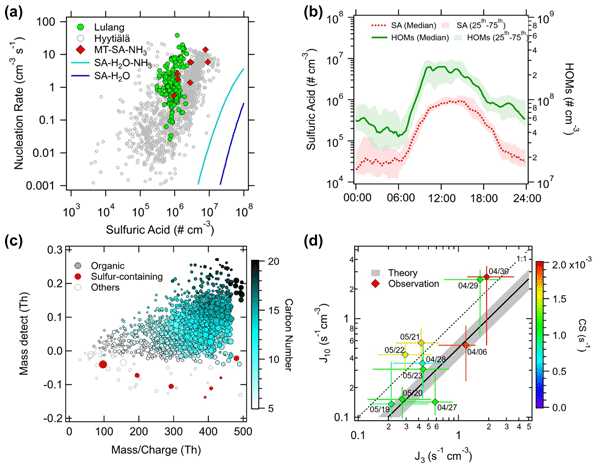
By combining in situ measurements and chemical transport modeling, this study investigates new particle formation (NPF) on the southeastern Tibetan Plateau. We found that the NPF was driven by the presence of biogenic gases and the transport of anthropogenic precursors. The NPF was vertically heterogeneous and shaped by the vertical mixing. This study highlights the importance of anthropogenic–biogenic interactions and meteorological dynamics in NPF in this climate-sensitive region.
Chen He, Hanxiong Che, Zier Bao, Yiliang Liu, Qing Li, Miao Hu, Jiawei Zhou, Shumin Zhang, Xiaojiang Yao, Quan Shi, Chunmao Chen, Yan Han, Lingshuo Meng, Xin Long, Fumo Yang, and Yang Chen
Atmos. Chem. Phys., 24, 1627–1639, https://doi.org/10.5194/acp-24-1627-2024, https://doi.org/10.5194/acp-24-1627-2024, 2024
Short summary
Short summary
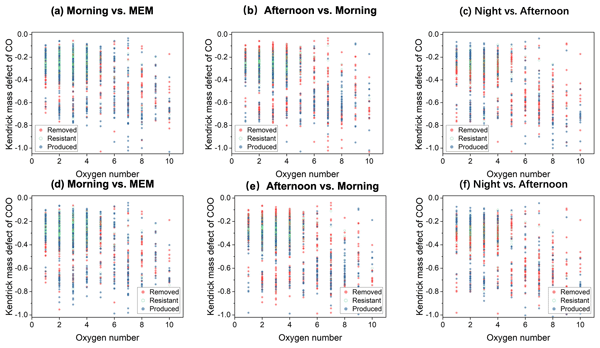
We examined the daily evolution of high molecular-weight organic compounds with a molecular weight of up to 1000 Da in order to comprehend their behaviors in the atmosphere under actual conditions. These compounds were proven to undergo multi-generation oxidation, carboxylation, and nitrification via both day- and nighttime chemistry.
Nan Wang, Hongyue Wang, Xin Huang, Xi Chen, Yu Zou, Tao Deng, Tingyuan Li, Xiaopu Lyu, and Fumo Yang
Atmos. Chem. Phys., 24, 1559–1570, https://doi.org/10.5194/acp-24-1559-2024, https://doi.org/10.5194/acp-24-1559-2024, 2024
Short summary
Short summary
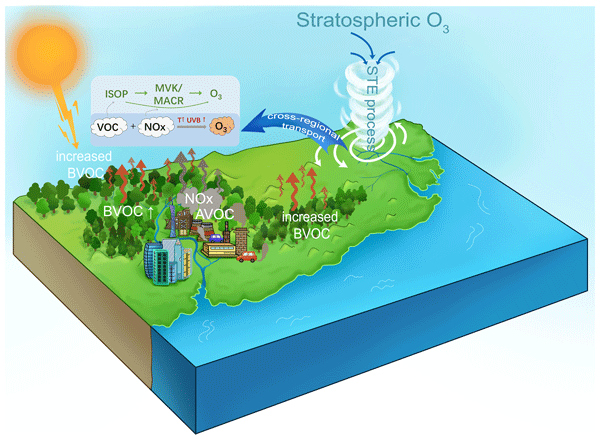
This study explores the influence of extreme-weather-induced natural processes on ozone pollution, which is often overlooked. By analyzing meteorological factors, natural emissions, chemistry pathways and atmospheric transport, we discovered that these natural processes could substantially exacerbate ozone pollution. The findings contribute to a deeper understanding of ozone pollution and offer valuable insights for controlling ozone pollution in the context of global warming.
Zhier Bao, Xinyi Zhang, Qing Li, Jiawei Zhou, Guangming Shi, Li Zhou, Fumo Yang, Shaodong Xie, Dan Zhang, Chongzhi Zhai, Zhenliang Li, Chao Peng, and Yang Chen
Atmos. Chem. Phys., 23, 1147–1167, https://doi.org/10.5194/acp-23-1147-2023, https://doi.org/10.5194/acp-23-1147-2023, 2023
Short summary
Short summary
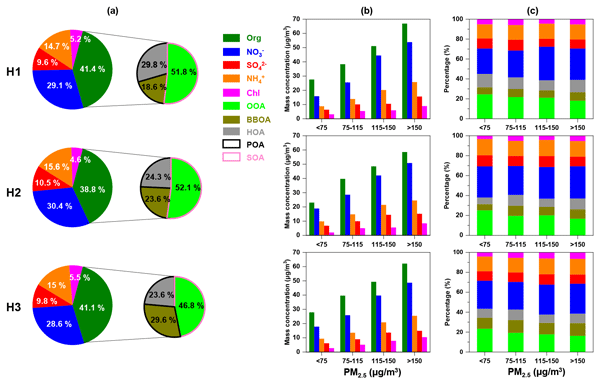
We characterised non-refractory fine particulate matter (PM2.5) during winter in the Sichuan Basin (SCB), Southwest China. The factors driving severe aerosol pollution were revealed, highlighting the importance of rapid nitrate formation and intensive biomass burning. Nitrate was primarily formed through gas-phase oxidation during daytime and aqueous-phase oxidation during nighttime. Controlling nitrate and biomass burning will benefit the mitigation of haze formation in the SCB.

Baolei Lyu, Ran Huang, Xinlu Wang, Weiguo Wang, and Yongtao Hu
Geosci. Model Dev., 15, 1583–1594, https://doi.org/10.5194/gmd-15-1583-2022, https://doi.org/10.5194/gmd-15-1583-2022, 2022
Short summary
Short summary
Data fusion is used to estimate spatially completed and smooth reanalysis fields from multiple data sources of observations and model simulations. We developed a well-designed deep-learning model framework to embed spatial correlation principles of atmospheric physics and chemical models. The deep-learning model has very high accuracy to predict reanalysis data fields from isolated observation data points. It is also feasible for operational applications due to computational efficiency.
Cited articles
Bai, L., Wang, J., Ma, X., and Lu, H.: Air pollution forecasts: An overview, Int. J. Env. Res. Pub. He., 15, 780, https://doi.org/10.3390/ijerph15040780, 2018.
Bai, Z.: Lhasa SWOP atmospheric composition comprehensive sounding data set (2019–2020), National Tibetan Plateau/Third Pole Environment Data Center [data set], https://doi.org/10.11888/Atmos.tpdc.300007, 2022.
Bai, Z. and Bian, J.: Golmud site SWOP atmospheric composition agent open line data (2020–2021), National Tibetan Plateau/Third Pole Environment Data Center [data set], https://doi.org/10.11888/Atmos.tpdc.300057, 2022a.
Bai, Z. and Bian, J.: Lijiang SWOP atmospheric composition comprehensive sounding data set (2021–2022), National Tibetan Plateau/Third Pole Environment Data Center [data set], https://doi.org/10.11888/Atmos.tpdc.300156, 2022b.
Byun, D. and Schere, K. L.: Review of the governing equations, computational algorithms, and other components of the Models-3 Community Multiscale Air Quality (CMAQ) modeling system, Appl. Mech. Rev., 59, 51–77, 2006.
Campbell, P. C., Bash, J. O., and Spero, T. L.: Updates to the Noah land surface model in WRF-CMAQ to improve simulated meteorology, air quality, and deposition, J. Adv. Model. Earth Sy., 11, 231–256, 2019.
Carter, W. P. and Heo, G.: Development of revised SAPRC aromatics mechanisms, Atmos. Environ., 77, 404–414, 2013.
Chiu, Y.-H. M., Wilson, A., Hsu, H.-H. L., Jamal, H., Mathews, N., Kloog, I., Schwartz, J., Bellinger, D. C., Xhani, N., and Wright, R. O.: Prenatal ambient air pollutant mixture exposure and neurodevelopment in urban children in the Northeastern United States, Environ. Res., 233, 116394, https://doi.org/10.1016/j.envres.2023.116394, 2023.
Dou, X., Yu, S., Li, J., Sun, Y., Song, Z., Yao, N., and Li, P.: The WRF-CMAQ Simulation of a Complex Pollution Episode with High-Level O3 and PM2.5 over the North China Plain: Pollution Characteristics and Causes, Atmosphere, 15, 198, https://doi.org/10.3390/atmos15020198, 2024.
Du, Y.: CBC-Prep-CMAQ: Preprocessing Scripts and Key Outputs for Chemical Boundary Condition Sensitivity Simulations of Summer Ozone over China, Zenodo [code], https://doi.org/10.5281/zenodo.19447294, 2026.
Eastham, S. D., Weisenstein, D. K., and Barrett, S. R.: Development and evaluation of the unified tropospheric–stratospheric chemistry extension (UCX) for the global chemistry-transport model GEOS-Chem, Atmos. Environ., 89, 52–63, 2014.
Foley, K. M., Pouliot, G. A., Eyth, A., Aldridge, M. F., Allen, C., Appel, K. W., Bash, J. O., Beardsley, M., Beidler, J., and Choi, D.: 2002–2017 anthropogenic emissions data for air quality modeling over the United States, Data in Brief, 47, 109022, https://doi.org/10.1016/j.dib.2023.109022, 2023.
Gao, C., Zhang, X., Xiu, A., Tong, Q., Zhao, H., Zhang, S., Yang, G., Zhang, M., and Xie, S.: Intercomparison of multiple two-way coupled meteorology and air quality models (WRF v4.1.1–CMAQ v5.3.1, WRF–Chem v4.1.1, and WRF v3.7.1–CHIMERE v2020r1) in eastern China, Geosci. Model Dev., 17, 2471–2492, https://doi.org/10.5194/gmd-17-2471-2024, 2024.
Geng, G., Liu, Y., Liu, Y., Liu, S., Cheng, J., Yan, L., Wu, N., Hu, H., Tong, D., and Zheng, B.: Efficacy of China's clean air actions to tackle PM2.5 pollution between 2013 and 2020, Nat. Geosci., 17, 987–994, 2024.
Godowitch, J. M., Gilliam, R. C., and Roselle, S. J.: Investigating the impact on modeled ozone concentrations using meteorological fields from WRF with an updated four–dimensional data assimilation approach, Atmos. Pollut. Res., 6, 305–311, 2015.
Goldberg, D. L., Vinciguerra, T. P., Hosley, K. M., Loughner, C. P., Canty, T. P., Salawitch, R. J., and Dickerson, R. R.: Evidence for an increase in the ozone photochemical lifetime in the eastern United States using a regional air quality model, J. Geophys. Res.-Atmos., 120, 12778–12793, 2015.
Grell, G. A., Peckham, S. E., Schmitz, R., McKeen, S. A., Frost, G., Skamarock, W. C., and Eder, B.: Fully coupled “online” chemistry within the WRF model, Atmos. Environ., 39, 6957–6975, 2005.
Hersbach, H., Bell, B., Berrisford, P., Biavati, G., Horányi, A., Muñoz Sabater, J., Nicolas, J., Peubey, C., Radu, R., Rozum, I., Schepers, D., Simmons, A., Soci, C., Dee, D., and Thépaut, J.-N.: ERA5 hourly data on single levels from 1940 to present, Copernicus Climate Change Service (C3S) Climate Data Store (CDS) [data set], https://doi.org/10.24381/cds.adbb2d47, 2023.
Hogrefe, C., Liu, P., Pouliot, G., Mathur, R., Roselle, S., Flemming, J., Lin, M., and Park, R. J.: Impacts of different characterizations of large-scale background on simulated regional-scale ozone over the continental United States, Atmos. Chem. Phys., 18, 3839–3864, https://doi.org/10.5194/acp-18-3839-2018, 2018.
Hu, J., Chen, J., Ying, Q., and Zhang, H.: One-year simulation of ozone and particulate matter in China using WRF/CMAQ modeling system, Atmos. Chem. Phys., 16, 10333–10350, https://doi.org/10.5194/acp-16-10333-2016, 2016.
Jacob, D. J.: The oxidizing power of the atmosphere, Handbook of weather, climate and water, 29–46, ISBN 978-0-471-21489-2, 2003.
Jerrett, M., Arain, A., Kanaroglou, P., Beckerman, B., Potoglou, D., Sahsuvaroglu, T., Morrison, J., and Giovis, C.: A review and evaluation of intraurban air pollution exposure models, J. Expo. Sci. Env. Epid., 15, 185–204, 2005.
Lei, Y., Wu, K., Zhang, X., Kang, P., Du, Y., Yang, F., Fan, J., and Hou, J.: Role of meteorology-driven regional transport on O3 pollution over the Chengdu Plain, southwestern China, Atmos. Res., 285, https://doi.org/10.1016/j.atmosres.2023.106619, 2023.
Li, M., Liu, H., Geng, G., Hong, C., Liu, F., Song, Y., Tong, D., Zheng, B., Cui, H., and Man, H.: Anthropogenic emission inventories in China: a review, Nat. Sci. Rev., 4, 834–866, 2017a.
Li, M., Zhang, Q., Kurokawa, J.-I., Woo, J.-H., He, K., Lu, Z., Ohara, T., Song, Y., Streets, D. G., Carmichael, G. R., Cheng, Y., Hong, C., Huo, H., Jiang, X., Kang, S., Liu, F., Su, H., and Zheng, B.: MIX: a mosaic Asian anthropogenic emission inventory under the international collaboration framework of the MICS-Asia and HTAP, Atmos. Chem. Phys., 17, 935–963, https://doi.org/10.5194/acp-17-935-2017, 2017b.
Liu, J., Strode, S. A., Liang, Q., Oman, L. D., Colarco, P. R., Fleming, E. L., Manyin, M. E., Douglass, A. R., Ziemke, J. R., and Lamsal, L. N.: Change in tropospheric ozone in the recent decades and its contribution to global total ozone, J. Geophys. Res.-Atmos., 127, e2022JD037170, https://doi.org/10.1029/2022JD037170, 2022.
Lu, X., Hong, J., Zhang, L., Cooper, O. R., Schultz, M. G., Xu, X., Wang, T., Gao, M., Zhao, Y., and Zhang, Y.: Severe surface ozone pollution in China: a global perspective, Environ. Sci. Technol. Lett., 5, 487-494, 2018.
Lu, X., Zhang, L., Wang, X., Gao, M., Li, K., Zhang, Y., Yue, X., and Zhang, Y.: Rapid increases in warm-season surface ozone and resulting health impact in China since 2013, Environ. Sci. Technol. Lett., 7, 240–247, 2020.
Mallard, M. S., Spero, T. L., and Taylor, S. M.: Examining WRF's sensitivity to contemporary land-use datasets across the contiguous United States Using Dynamical Downscaling, J. Appl. Meteorol. Clim., 57, 2561–2583, 2018.
Malley, C. S., Henze, D. K., Kuylenstierna, J. C., Vallack, H. W., Davila, Y., Anenberg, S. C., Turner, M. C., and Ashmore, M. R.: Updated global estimates of respiratory mortality in adults ≥ 30 years of age attributable to long-term ozone exposure, Environ. Health Persp., 125, 087021, https://doi.org/10.1289/EHP1390, 2017.
Mao, J., Fan, S., Jacob, D. J., and Travis, K. R.: Radical loss in the atmosphere from Cu-Fe redox coupling in aerosols, Atmos. Chem. Phys., 13, 509–519, https://doi.org/10.5194/acp-13-509-2013, 2013.
Mao, J., Li, L., Li, J., Sulaymon, I. D., Xiong, K., Wang, K., Zhu, J., Chen, G., Ye, F., and Zhang, N.: Evaluation of long-term modeling fine particulate matter and ozone in China during 2013–2019, Front. Environ. Sci., 10, 872249, https://doi.org/10.3389/fenvs.2022.872249, 2022a.
Mao, M., Rao, L., Jiang, H., He, S., and Zhang, X.: Air pollutants in metropolises of eastern coastal China, Int. J. Env. Res. Pub. He., 19, 15332, https://doi.org/10.3390/ijerph192215332, 2022b.
Monks, P. S., Archibald, A. T., Colette, A., Cooper, O., Coyle, M., Derwent, R., Fowler, D., Granier, C., Law, K. S., Mills, G. E., Stevenson, D. S., Tarasova, O., Thouret, V., von Schneidemesser, E., Sommariva, R., Wild, O., and Williams, M. L.: Tropospheric ozone and its precursors from the urban to the global scale from air quality to short-lived climate forcer, Atmos. Chem. Phys., 15, 8889–8973, https://doi.org/10.5194/acp-15-8889-2015, 2015.
Ni, R., Lin, J., Yan, Y., and Lin, W.: Foreign and domestic contributions to springtime ozone over China, Atmos. Chem. Phys., 18, 11447–11469, https://doi.org/10.5194/acp-18-11447-2018, 2018.
Park, R. J., Jacob, D. J., Field, B. D., Yantosca, R. M., and Chin, M.: Natural and transboundary pollution influences on sulfate-nitrate-ammonium aerosols in the United States: Implications for policy, J. Geophys. Res.-Atmos., 109, https://doi.org/10.1029/2003JD004473, 2004.
Parrella, J. P., Jacob, D. J., Liang, Q., Zhang, Y., Mickley, L. J., Miller, B., Evans, M. J., Yang, X., Pyle, J. A., Theys, N., and Van Roozendael, M.: Tropospheric bromine chemistry: implications for present and pre-industrial ozone and mercury, Atmos. Chem. Phys., 12, 6723–6740, https://doi.org/10.5194/acp-12-6723-2012, 2012.
Sahu, S. K., Liu, S., Liu, S., Ding, D., and Xing, J.: Ozone pollution in China: Background and transboundary contributions to ozone concentration & related health effects across the country, Sci. Total Environ., 761, 144131, https://doi.org/10.1016/j.scitotenv.2020.144131, 2021.
Shen, C., Shen, A., Cui, Y., Chen, X., Liu, Y., Fan, Q., Chan, P., Tian, C., Wang, C., and Lan, J.: Spatializing the roughness length of heterogeneous urban underlying surfaces to improve the WRF simulation-part 1: A review of morphological methods and model evaluation, Atmos. Environ., 270, 118874, https://doi.org/10.1016/j.atmosenv.2021.118874, 2022.
Shen, Y., Liu, J., Chen, Z., Yang, M., Shu, L., Gai, C., and Jiang, Y.: Influence of wind flows on surface O3 variation over a Coastal Province in Southeast China, Atmosphere, 15, 262, https://doi.org/10.3390/atmos15030262, 2024.
Siewert, J. and Kroszczynski, K.: Evaluation of high-resolution land cover geographical data for the WRF model simulations, Remote Sens., 15, 2389, https://doi.org/10.3390/rs15092389, 2023.
Solazzo, E., Bianconi, R., Vautard, R., Appel, K. W., Moran, M. D., Hogrefe, C., Bessagnet, B., Brandt, J., Christensen, J. H., Chemel, C., Coll, I., Denier van der Gon, H., Ferreira, J., Forkel, R., Francis, X. V., Grell, G., Grossi, P., Hansen, A. B., Jeričević, A., Kraljević, L., Miranda, A. I., Nopmongcol, U., Pirovano, G., Prank, M., Riccio, A., Sartelet, K. N., Schaap, M., Silver, J. D., Sokhi, R. S., Vira, J., Werhahn, J., Wolke, R., Yarwood, G., Zhang, J., Rao, S. T., and Galmarini, S.: Model evaluation and ensemble modelling of surface-level ozone in Europe and North America in the context of AQMEII, Atmos. Environ., 53, 60–74, https://doi.org/10.1016/j.atmosenv.2012.01.003, 2012.
Tarasick, D., Galbally, I. E., Cooper, O. R., Schultz, M. G., Ancellet, G., Leblanc, T., Wallington, T. J., Ziemke, J., Liu, X., and Steinbacher, M.: Tropospheric Ozone Assessment Report: Tropospheric ozone from 1877 to 2016, observed levels, trends and uncertainties, Elem. Sci. Anth., 7, 39, https://doi.org/10.1525/elementa.376, 2019.
Wang, K., Tong, Y., Gao, J., Gao, C., Wu, K., Yue, T., Qin, S., and Wang, C.: Impacts of LULC, FDDA, Topo-wind and UCM schemes on WRF-CMAQ over the Beijing-Tianjin-Hebei region, China, Atmos. Pollut. Res., 12, 292–304, 2021a.
Wang, N., Lyu, X., Deng, X., Huang, X., Jiang, F., and Ding, A.: Aggravating O3 pollution due to NOx emission control in eastern China, Sci. Total Environ., 677, 732–744, 2019.
Wang, N., Xu, J., Pei, C., Tang, R., Zhou, D., Chen, Y., Li, M., Deng, X., Deng, T., and Huang, X.: Air quality during COVID-19 lockdown in the Yangtze River Delta and the Pearl River Delta: Two different responsive mechanisms to emission reductions in China, Environ. Sci. Technol., 55, 5721–5730, 2021b.
Wang, N., Huang, X., Xu, J., Wang, T., Tan, Z.-M., and Ding, A.: Typhoon-boosted biogenic emission aggravates cross-regional ozone pollution in China, Sci. Adv., 8, eabl6166, https://doi.org/10.1126/sciadv.abl6166, 2022.
Wang, N., Du, Y., Chen, D., Meng, H., Chen, X., Zhou, L., Shi, G., Zhan, Y., Feng, M., Li, W., Chen, M., Li, Z., and Yang, F.: Spatial disparities of ozone pollution in the Sichuan Basin spurred by extreme, hot weather, Atmos. Chem. Phys., 24, 3029–3042, https://doi.org/10.5194/acp-24-3029-2024, 2024.
Wang, T., Xue, L., Brimblecombe, P., Lam, Y. F., Li, L., and Zhang, L.: Ozone pollution in China: A review of concentrations, meteorological influences, chemical precursors, and effects, Sci. Total Environ., 575, 1582–1596, 2017.
Wang, Y., Logan, J. A., and Jacob, D. J.: Global simulation of tropospheric O3-NOx-hydrocarbon chemistry: 2. Model evaluation and global ozone budget, J. Geophys. Res.-Atmos., 103, 10727–10755, 1998.
Wang, Y., Gao, W., Wang, S., Song, T., Gong, Z., Ji, D., Wang, L., Liu, Z., Tang, G., and Huo, Y.: Contrasting trends of PM2.5 and surface-ozone concentrations in China from 2013 to 2017, Nat. Sci. Rev., 7, 1331–1339, 2020.
WHO: Ambient air pollution: a global assessment of exposure and burden of disease, World Health Organization, Geneva, Switzerland, ISBN 9789241511353, 2016.
Willmott, C. J.: On the validation of models, Phys. Geogr., 2, 184–194, 1981.
Yahya, K., He, J., and Zhang, Y.: Multiyear applications of WRF/Chem over continental US: Model evaluation, variation trend, and impacts of boundary conditions, J. Geophys. Res.-Atmos., 120, 12748–12777, 2015.
Yarwood, G., Jung, J., Whitten, G. Z., Heo, G., Mellberg, J., and Estes, M.: Updates to the Carbon Bond mechanism for version 6 (CB6), 9th Annual CMAS Conference, Chapel Hill, NC, 11–13, https://www.cmascenter.org/conference/2010/abstracts/emery_updates_carbon_2010.pdf (last access: 9 May 2026), 2010.
Zhang, J., Wei, Y., and Fang, Z.: Ozone pollution: a major health hazard worldwide, Front. Immunol., 10, 2518, https://doi.org/10.3389/fimmu.2019.02518, 2019a.
Zhang, Q., Zheng, Y., Tong, D., Shao, M., Wang, S., Zhang, Y., Xu, X., Wang, J., He, H., and Liu, W.: Drivers of improved PM2.5 air quality in China from 2013 to 2017, P. Natl. Acad. Sci. USA, 116, 24463–24469, 2019b.
Zhao, F., Liu, C., Hu, Q., Xia, C., Zhang, C., and Su, W.: High Spatial Resolution Ozone Profiles Retrieved from the First Chinese Ultraviolet–Visible Hyperspectral Satellite Instrument, Engineering, 32, 106–115, 2024.
Zheng, B., Cheng, J., Geng, G., Wang, X., Li, M., Shi, Q., Qi, J., Lei, Y., Zhang, Q., and He, K.: Mapping anthropogenic emissions in China at 1 km spatial resolution and its application in air quality modeling, Sci. Bull., 66, 612–620, 2021.
Zhu, Q., Bi, J., Liu, X., Li, S., Wang, W., Zhao, Y., and Liu, Y.: Satellite-based long-term spatiotemporal patterns of surface ozone concentrations in China: 2005–2019, Environ. Health Persp., 130, 027004, https://doi.org/10.1289/ehp9406, 2022.
Zhu, Y., Liu, Y., Li, S., Wang, H., Lu, X., Wang, H., Shen, C., Chen, X., Chan, P., Shen, A., Wang, H., Jin, Y., Xu, Y., Fan, S., and Fan, Q.: Assessment of tropospheric ozone simulations in a regional chemical transport model using GEOS-Chem outputs as chemical boundary conditions, Sci. Total Environ., 906, 167485, https://doi.org/10.1016/j.scitotenv.2023.167485, 2024.
Short summary
This study shows that using dynamically changing chemical boundary conditions is essential for accurately simulating summer ozone pollution in China. By integrating real-time global data, we improve model performance and reveal how large-scale weather patterns drive cross-border and stratospheric transport. These results support more reliable ozone forecasting and pollution mitigation.
This study shows that using dynamically changing chemical boundary conditions is essential for...


Altmetrics
Final-revised paper
Preprint