
Articles | Volume 26, issue 8
https://doi.org/10.5194/acp-26-5185-2026
© Author(s) 2026. This work is distributed under
the Creative Commons Attribution 4.0 License.
the Creative Commons Attribution 4.0 License.
https://doi.org/10.5194/acp-26-5185-2026
© Author(s) 2026. This work is distributed under
the Creative Commons Attribution 4.0 License.
the Creative Commons Attribution 4.0 License.
Research article
| 
20 Apr 2026
Research article |
| 20 Apr 2026
| 20 Apr 2026
Validation of TROPOMI and WRF-Chem NO2 across seasons using SWING+ and surface observations over Bucharest
Antoine Pasternak
CORRESPONDING AUTHOR

Atmospheric Composition Department, Royal Belgian Institute for Space Aeronomy (BIRA-IASB), Avenue Circulaire 3, 1180 Brussels, Belgium
Jean-François Müller
Atmospheric Composition Department, Royal Belgian Institute for Space Aeronomy (BIRA-IASB), Avenue Circulaire 3, 1180 Brussels, Belgium
Catalina Poraicu
Atmospheric Composition Department, Royal Belgian Institute for Space Aeronomy (BIRA-IASB), Avenue Circulaire 3, 1180 Brussels, Belgium
Alexis Merlaud
Atmospheric Composition Department, Royal Belgian Institute for Space Aeronomy (BIRA-IASB), Avenue Circulaire 3, 1180 Brussels, Belgium
Frederik Tack
Atmospheric Composition Department, Royal Belgian Institute for Space Aeronomy (BIRA-IASB), Avenue Circulaire 3, 1180 Brussels, Belgium
Trissevgeni Stavrakou
Atmospheric Composition Department, Royal Belgian Institute for Space Aeronomy (BIRA-IASB), Avenue Circulaire 3, 1180 Brussels, Belgium
Related authors
No articles found.
Gytha Mettepenningen, Caroline Fayt, Cato Van Doorne, Aurélien Aubry, Sophie Berkenbosch, Martine De Mazière, Filip Desmet, Lars Jacobs, Eddy Neefs, Frederik Tack, Timo Van Laar, Clemens Mensink, and Michel Van Roozendael
EGUsphere, https://doi.org/10.5194/egusphere-2026-3783, https://doi.org/10.5194/egusphere-2026-3783, 2026
This preprint is open for discussion and under review for Atmospheric Measurement Techniques (AMT).
Short summary
Short summary
Pollution from ships impacts air quality in dense coastal regions of the North Sea. SEMPAS (Ship Emission Monitoring with Passive Absorption Spectroscopy) remotely monitors the emissions of ships passing by. Without ships nearby, SEMPAS is used for atmospheric research in a marine environment. This study presents the instrument’s development. Tests in the Belgian port of Zeebrugge show strong variations in ship emissions, while atmospheric measurements agree well with satellite observations.
Wenfu Sun, Frederik Tack, Lieven Clarisse, and Michel Van Roozendael
Atmos. Chem. Phys., 26, 7741–7764, https://doi.org/10.5194/acp-26-7741-2026, https://doi.org/10.5194/acp-26-7741-2026, 2026
Short summary
Short summary
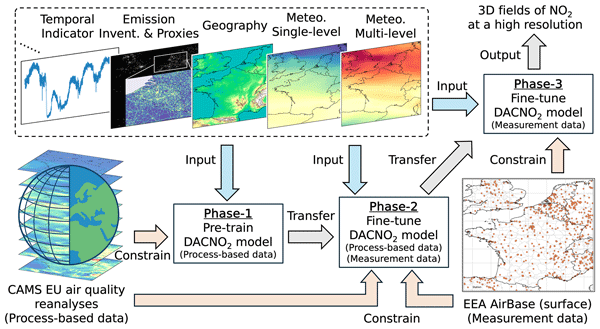
Accurate maps of nitrogen dioxide pollution at fine scales are essential for assessing air quality and protecting public health. We developed a machine learning model that produces daily high-resolution 3D nitrogen dioxide fields across Western Europe by combining large-scale atmospheric simulations with ground-based measurements. This approach outperforms traditional methods, especially over cities and complex terrain, and can enhance satellite-based air quality monitoring.
Glenn-Michael Oomen, Jean-François Müller, Trissevgeni Stavrakou, Isabelle De Smedt, Vincent Huijnen, Flora Kluge, Antje Inness, and Johannes Flemming
EGUsphere, https://doi.org/10.5194/egusphere-2026-2362, https://doi.org/10.5194/egusphere-2026-2362, 2026
Short summary
Short summary
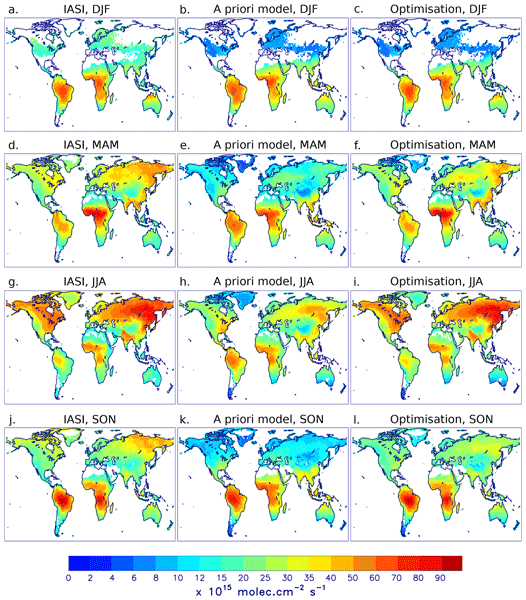
Isoprene is a commonly emitted organic gas emitted by trees. In this work, we strongly simplified the chemical mechanism through parametric fitting, which helps scientists study air pollution and climate more efficiently. By comparing it with a detailed model and satellite observations, we show that the simplified version produces very similar results. This means faster calculations are possible without losing accuracy, improving studies of emissions and air quality worldwide.
Jean-François Müller, Trissevgeni Stavrakou, Bruno Franco, Lieven Clarisse, Crist Amelynck, Niels Schoon, Bert W. D. Verreyken, Beata Opacka, Corinne Vigouroux, Alex B. Guenther, Emmanuel Mahieu, Maria Makarova, and Kimberly Strong
Atmos. Chem. Phys., 26, 5375–5406, https://doi.org/10.5194/acp-26-5375-2026, https://doi.org/10.5194/acp-26-5375-2026, 2026
Short summary
Short summary
We use an atmospheric model and aircraft measurements to evaluate methanol measurements from satellite sensors. The spaceborne data are found to be too low over source regions. Next, we use the model and the bias-corrected satellite data to derive improved terrestrial emissions of methanol between 2008 and 2019, and we evaluate the results against aircraft and ground-based measurements. This work shows that biogenic emissions of methanol might be ~ 60 % larger than previously estimated.
Yasmine Sfendla, Trissevgeni Stavrakou, Jean-François Müller, Glenn-Michael Oomen, Beata Opacka, Thomas Danckaert, Isabelle De Smedt, and Christophe Lerot
Atmos. Chem. Phys., 26, 733–767, https://doi.org/10.5194/acp-26-733-2026, https://doi.org/10.5194/acp-26-733-2026, 2026
Short summary
Short summary
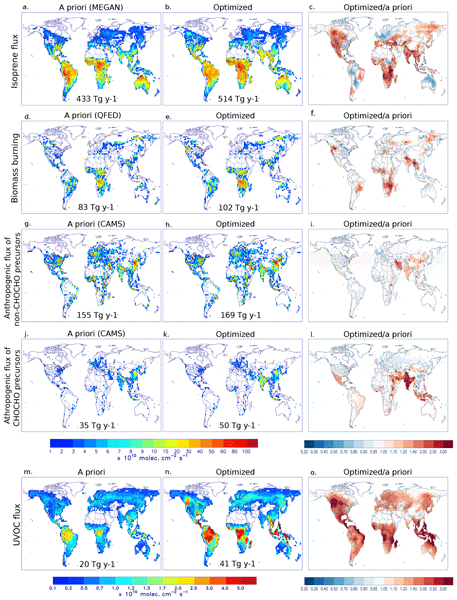
Volatile organic compounds (VOC) emitted from industry, wildfires, fuel use and vegetation impact the climate and are detrimental to human health. To guide regulation aimed at mitigating their impacts, it is important to know their emissions. We used satellite observations of formaldehyde and glyoxal, combined with a chemical transport model, and demonstrate that VOC emissions are about 20 % larger than expected; furthermore, unknown chemical pathways must be invoked to explain the observations.
Lara Noppen, Lieven Clarisse, Frederik Tack, Thomas Ruhtz, Martin Van Damme, Michel Van Roozendael, Dirk Schuettemeyer, and Pierre Coheur
Atmos. Meas. Tech., 18, 4183–4205, https://doi.org/10.5194/amt-18-4183-2025, https://doi.org/10.5194/amt-18-4183-2025, 2025
Short summary
Short summary
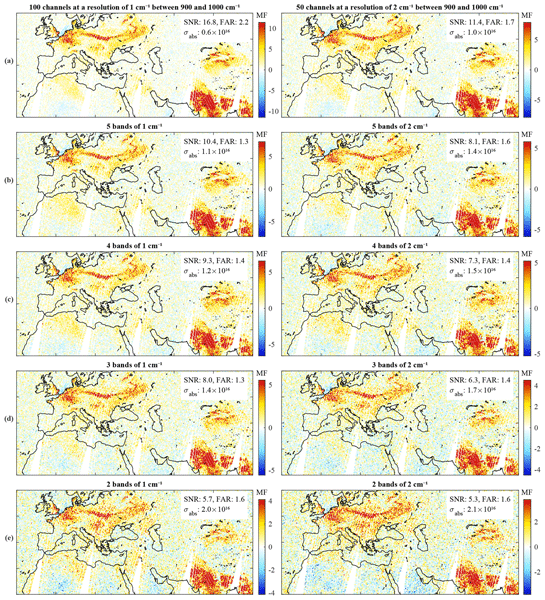
Current infrared satellite sounders offer high spectral but low spatial resolution, limiting their ability to quantify atmospheric ammonia (NH3) at small scales. Through simulations and analysis of real data, we show that NH3 can be measured effectively from spectra with reduced resolution, either in a contiguous spectral range or in select well-chosen bands. This approach opens possibilities for the development of smaller dedicated instruments for observing NH3 at high spatial resolution.
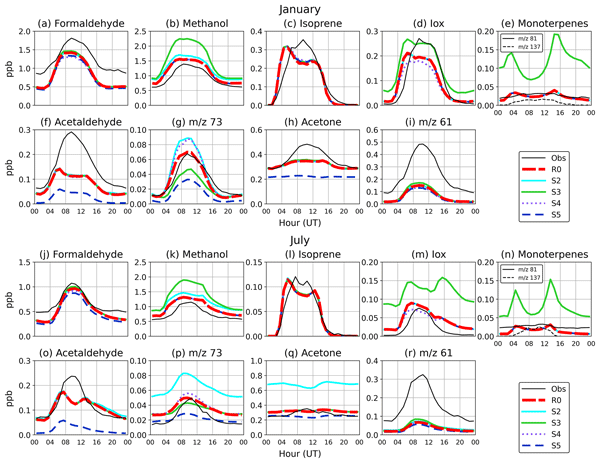
Catalina Poraicu, Jean-François Müller, Trissevgeni Stavrakou, Crist Amelynck, Bert W. D. Verreyken, Niels Schoon, Corinne Vigouroux, Nicolas Kumps, Jérôme Brioude, Pierre Tulet, and Camille Mouchel-Vallon
Atmos. Chem. Phys., 25, 6903–6941, https://doi.org/10.5194/acp-25-6903-2025, https://doi.org/10.5194/acp-25-6903-2025, 2025
Short summary
Short summary
We investigated the sources and impacts of nitrogen oxides and organic compounds over a remote tropical island. Simulations of the high-resolution Weather Research and Forecasting model coupled with chemistry (WRF-Chem) were evaluated using in situ Fourier transform infrared spectroscopy (FTIR) and satellite measurements. This work highlights gaps in current models, like missing sources of key organic compounds and inaccuracies in emission inventories, emphasizing the importance of improving chemical and dynamical processes in atmospheric modelling for budget estimates in tropical regions.
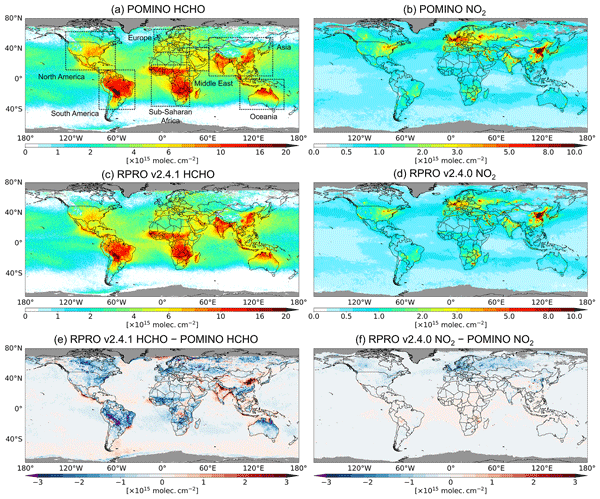
Yuhang Zhang, Huan Yu, Isabelle De Smedt, Jintai Lin, Nicolas Theys, Michel Van Roozendael, Gaia Pinardi, Steven Compernolle, Ruijing Ni, Fangxuan Ren, Sijie Wang, Lulu Chen, Jos Van Geffen, Mengyao Liu, Alexander M. Cede, Martin Tiefengraber, Alexis Merlaud, Martina M. Friedrich, Andreas Richter, Ankie Piters, Vinod Kumar, Vinayak Sinha, Thomas Wagner, Yongjoo Choi, Hisahiro Takashima, Yugo Kanaya, Hitoshi Irie, Robert Spurr, Wenfu Sun, and Lorenzo Fabris
Atmos. Meas. Tech., 18, 1561–1589, https://doi.org/10.5194/amt-18-1561-2025, https://doi.org/10.5194/amt-18-1561-2025, 2025
Short summary
Short summary
We developed an advanced algorithm for global retrieval of TROPOspheric Monitoring Instrument (TROPOMI) HCHO and NO2 vertical column densities with much improved consistency. Sensitivity tests demonstrate the complexity and nonlinear interactions of auxiliary parameters in the air mass factor calculation. An improved agreement is found with measurements from a global ground-based instrument network. The scientific retrieval provides a useful source of information for studies combining HCHO and NO2.
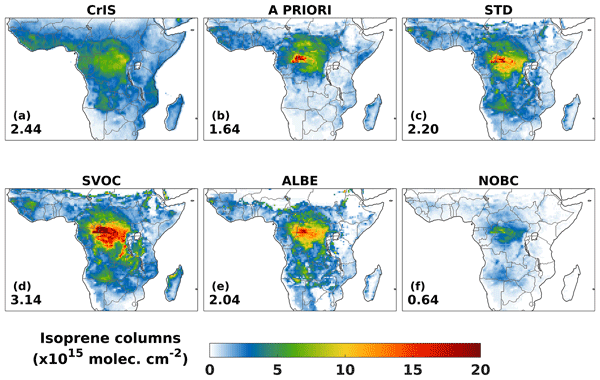
Beata Opacka, Trissevgeni Stavrakou, Jean-François Müller, Isabelle De Smedt, Jos van Geffen, Eloise A. Marais, Rebekah P. Horner, Dylan B. Millet, Kelly C. Wells, and Alex B. Guenther
Atmos. Chem. Phys., 25, 2863–2894, https://doi.org/10.5194/acp-25-2863-2025, https://doi.org/10.5194/acp-25-2863-2025, 2025
Short summary
Short summary
Vegetation releases biogenic volatile organic compounds, while soils and lightning contribute to the natural emissions of nitrogen oxides into the atmosphere. These gases interact in complex ways. Using satellite data and models, we developed a new method to simultaneously optimize these natural emissions over Africa in 2019. Our approach resulted in an increase in natural emissions, supported by independent data indicating that current estimates are underestimated.
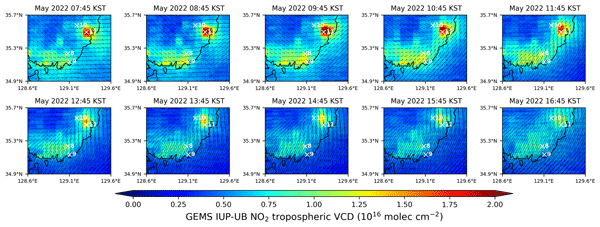
Kezia Lange, Andreas Richter, Tim Bösch, Bianca Zilker, Miriam Latsch, Lisa K. Behrens, Chisom M. Okafor, Hartmut Bösch, John P. Burrows, Alexis Merlaud, Gaia Pinardi, Caroline Fayt, Martina M. Friedrich, Ermioni Dimitropoulou, Michel Van Roozendael, Steffen Ziegler, Simona Ripperger-Lukosiunaite, Leon Kuhn, Bianca Lauster, Thomas Wagner, Hyunkee Hong, Donghee Kim, Lim-Seok Chang, Kangho Bae, Chang-Keun Song, Jong-Uk Park, and Hanlim Lee
Atmos. Meas. Tech., 17, 6315–6344, https://doi.org/10.5194/amt-17-6315-2024, https://doi.org/10.5194/amt-17-6315-2024, 2024
Short summary
Short summary
Instruments for air quality observations on geostationary satellites provide multiple observations per day and allow for the analysis of the diurnal variation of important air pollutants such as nitrogen dioxide (NO2) over large areas. The South Korean instrument GEMS, launched in February 2020, is the first instrument in geostationary orbit and covers a large part of Asia. Our investigations show the observed diurnal evolution of NO2 at different measurement sites.
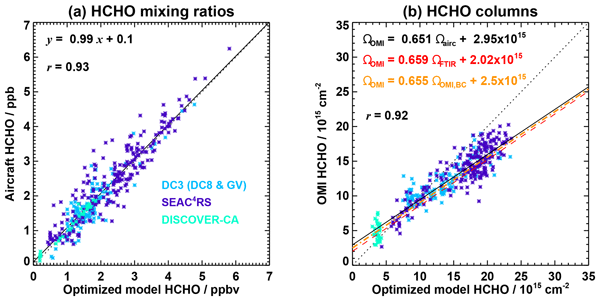
Jean-François Müller, Trissevgeni Stavrakou, Glenn-Michael Oomen, Beata Opacka, Isabelle De Smedt, Alex Guenther, Corinne Vigouroux, Bavo Langerock, Carlos Augusto Bauer Aquino, Michel Grutter, James Hannigan, Frank Hase, Rigel Kivi, Erik Lutsch, Emmanuel Mahieu, Maria Makarova, Jean-Marc Metzger, Isamu Morino, Isao Murata, Tomoo Nagahama, Justus Notholt, Ivan Ortega, Mathias Palm, Amelie Röhling, Wolfgang Stremme, Kimberly Strong, Ralf Sussmann, Yao Té, and Alan Fried
Atmos. Chem. Phys., 24, 2207–2237, https://doi.org/10.5194/acp-24-2207-2024, https://doi.org/10.5194/acp-24-2207-2024, 2024
Short summary
Short summary
Formaldehyde observations from satellites can be used to constrain the emissions of volatile organic compounds, but those observations have biases. Using an atmospheric model, aircraft and ground-based remote sensing data, we quantify these biases, propose a correction to the data, and assess the consequence of this correction for the evaluation of emissions.
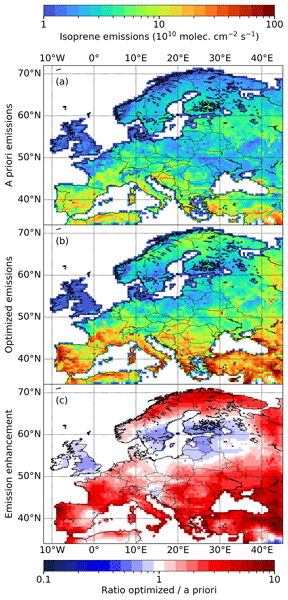
Glenn-Michael Oomen, Jean-François Müller, Trissevgeni Stavrakou, Isabelle De Smedt, Thomas Blumenstock, Rigel Kivi, Maria Makarova, Mathias Palm, Amelie Röhling, Yao Té, Corinne Vigouroux, Martina M. Friedrich, Udo Frieß, François Hendrick, Alexis Merlaud, Ankie Piters, Andreas Richter, Michel Van Roozendael, and Thomas Wagner
Atmos. Chem. Phys., 24, 449–474, https://doi.org/10.5194/acp-24-449-2024, https://doi.org/10.5194/acp-24-449-2024, 2024
Short summary
Short summary
Natural emissions from vegetation have a profound impact on air quality for their role in the formation of harmful tropospheric ozone and organic aerosols, yet these emissions are highly uncertain. In this study, we quantify emissions of organic gases over Europe using high-quality satellite measurements of formaldehyde. These satellite observations suggest that emissions from vegetation are much higher than predicted by models, especially in southern Europe.
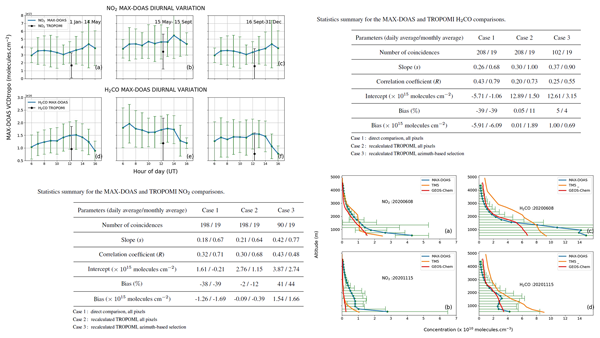
Rodriguez Yombo Phaka, Alexis Merlaud, Gaia Pinardi, Martina M. Friedrich, Michel Van Roozendael, Jean-François Müller, Trissevgeni Stavrakou, Isabelle De Smedt, François Hendrick, Ermioni Dimitropoulou, Richard Bopili Mbotia Lepiba, Edmond Phuku Phuati, Buenimio Lomami Djibi, Lars Jacobs, Caroline Fayt, Jean-Pierre Mbungu Tsumbu, and Emmanuel Mahieu
Atmos. Meas. Tech., 16, 5029–5050, https://doi.org/10.5194/amt-16-5029-2023, https://doi.org/10.5194/amt-16-5029-2023, 2023
Short summary
Short summary
We present air quality measurements in Kinshasa, Democratic Republic of the Congo, performed with a newly developed instrument which was installed on a roof of the University of Kinshasa in November 2019. The instrument records spectra of the scattered sunlight, from which we derive the abundances of nitrogen dioxide and formaldehyde, two important pollutants. We compare our ground-based measurements with those of the TROPOspheric Monitoring Instrument (TROPOMI).
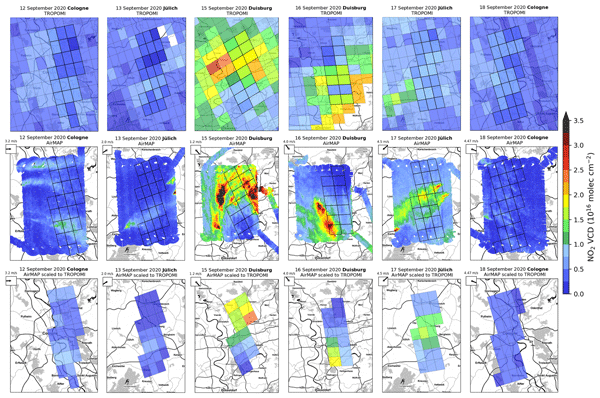
Kezia Lange, Andreas Richter, Anja Schönhardt, Andreas C. Meier, Tim Bösch, André Seyler, Kai Krause, Lisa K. Behrens, Folkard Wittrock, Alexis Merlaud, Frederik Tack, Caroline Fayt, Martina M. Friedrich, Ermioni Dimitropoulou, Michel Van Roozendael, Vinod Kumar, Sebastian Donner, Steffen Dörner, Bianca Lauster, Maria Razi, Christian Borger, Katharina Uhlmannsiek, Thomas Wagner, Thomas Ruhtz, Henk Eskes, Birger Bohn, Daniel Santana Diaz, Nader Abuhassan, Dirk Schüttemeyer, and John P. Burrows
Atmos. Meas. Tech., 16, 1357–1389, https://doi.org/10.5194/amt-16-1357-2023, https://doi.org/10.5194/amt-16-1357-2023, 2023
Short summary
Short summary
We present airborne imaging DOAS and ground-based stationary and car DOAS measurements conducted during the S5P-VAL-DE-Ruhr campaign in the Rhine-Ruhr region. The measurements are used to validate spaceborne NO2 data products from the Sentinel-5 Precursor TROPOspheric Monitoring Instrument (TROPOMI). Auxiliary data of the TROPOMI NO2 retrieval, such as spatially higher resolved a priori NO2 vertical profiles, surface reflectivity, and cloud treatment are investigated to evaluate their impact.
Catalina Poraicu, Jean-François Müller, Trissevgeni Stavrakou, Dominique Fonteyn, Frederik Tack, Felix Deutsch, Quentin Laffineur, Roeland Van Malderen, and Nele Veldeman
Geosci. Model Dev., 16, 479–508, https://doi.org/10.5194/gmd-16-479-2023, https://doi.org/10.5194/gmd-16-479-2023, 2023
Short summary
Short summary
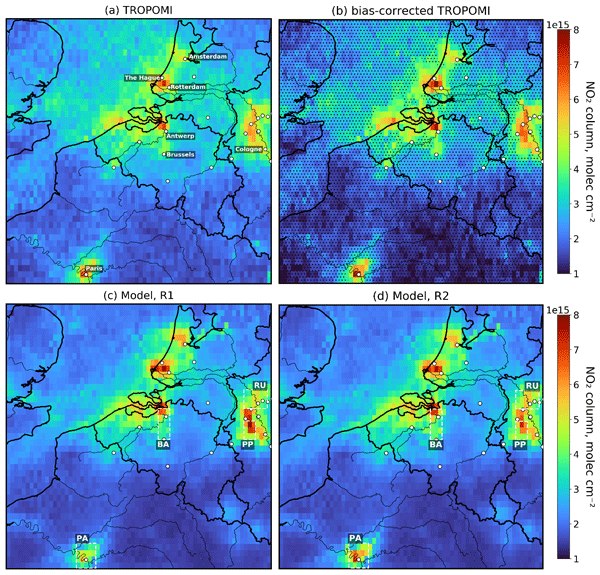
High-resolution WRF-Chem simulations are conducted over Antwerp, Belgium, in June 2019 and evaluated using meteorological data and in situ, airborne, and spaceborne NO2 measurements. An intercomparison of model, aircraft, and TROPOMI NO2 columns is conducted to characterize biases in versions 1.3.1 and 2.3.1 of the satellite product. A mass balance method is implemented to provide improved emissions for simulating NO2 distribution over the study area.
Pieternel F. Levelt, Deborah C. Stein Zweers, Ilse Aben, Maite Bauwens, Tobias Borsdorff, Isabelle De Smedt, Henk J. Eskes, Christophe Lerot, Diego G. Loyola, Fabian Romahn, Trissevgeni Stavrakou, Nicolas Theys, Michel Van Roozendael, J. Pepijn Veefkind, and Tijl Verhoelst
Atmos. Chem. Phys., 22, 10319–10351, https://doi.org/10.5194/acp-22-10319-2022, https://doi.org/10.5194/acp-22-10319-2022, 2022
Short summary
Short summary
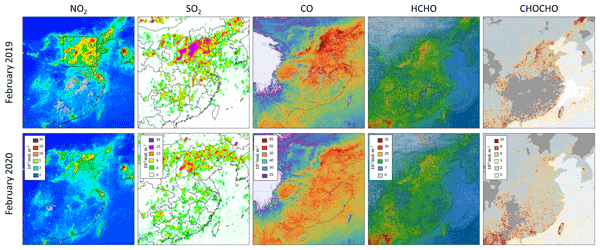
Using the COVID-19 lockdown periods as an example, we show how Sentinel-5P/TROPOMI trace gas data (NO2, SO2, CO, HCHO and CHOCHO) can be used to understand impacts on air quality for regions and cities around the globe. We also provide information for both experienced and inexperienced users about how we created the data using state-of-the-art algorithms, where to get the data, methods taking meteorological and seasonal variability into consideration, and insights for future studies.
Ermioni Dimitropoulou, François Hendrick, Martina Michaela Friedrich, Frederik Tack, Gaia Pinardi, Alexis Merlaud, Caroline Fayt, Christian Hermans, Frans Fierens, and Michel Van Roozendael
Atmos. Meas. Tech., 15, 4503–4529, https://doi.org/10.5194/amt-15-4503-2022, https://doi.org/10.5194/amt-15-4503-2022, 2022
Short summary
Short summary
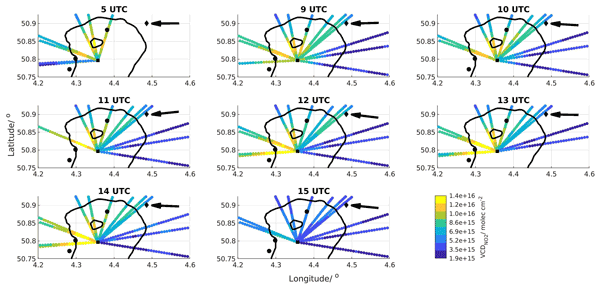
A total of 2 years of dual-scan ground-based MAX-DOAS measurements of tropospheric NO2 and aerosols in Uccle (Belgium) have been used to develop a new optimal-estimation-based inversion approach to retrieve horizontal profiles of surface NO2 concentration and aerosol extinction profiles. We show that the combination of an appropriate sampling of TROPOMI pixels by ground-based measurements and an adequate a priori NO2 profile shape in TROPOMI retrievals improves the agreement between datasets.
Christophe Lerot, François Hendrick, Michel Van Roozendael, Leonardo M. A. Alvarado, Andreas Richter, Isabelle De Smedt, Nicolas Theys, Jonas Vlietinck, Huan Yu, Jeroen Van Gent, Trissevgeni Stavrakou, Jean-François Müller, Pieter Valks, Diego Loyola, Hitoshi Irie, Vinod Kumar, Thomas Wagner, Stefan F. Schreier, Vinayak Sinha, Ting Wang, Pucai Wang, and Christian Retscher
Atmos. Meas. Tech., 14, 7775–7807, https://doi.org/10.5194/amt-14-7775-2021, https://doi.org/10.5194/amt-14-7775-2021, 2021
Short summary
Short summary
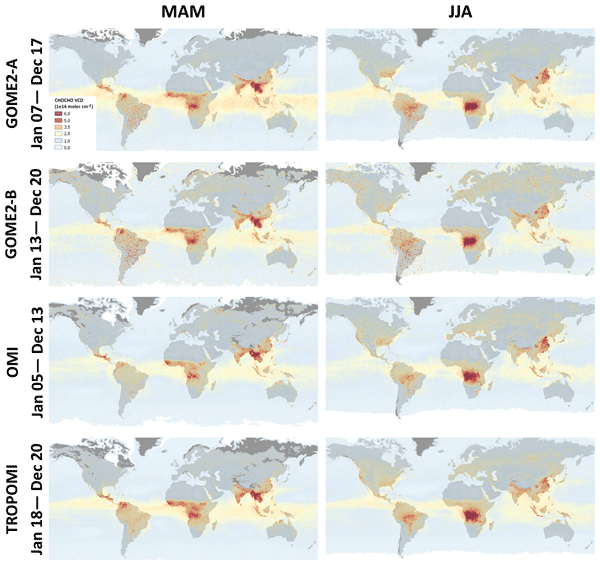
Global measurements of glyoxal tropospheric columns from the satellite instrument TROPOMI are presented. Such measurements can contribute to the estimation of atmospheric emissions of volatile organic compounds. This new glyoxal product has been fully characterized with a comprehensive error budget, with comparison with other satellite data sets as well as with validation based on independent ground-based remote sensing glyoxal observations.
Sharmine Akter Simu, Yuzo Miyazaki, Eri Tachibana, Henning Finkenzeller, Jérôme Brioude, Aurélie Colomb, Olivier Magand, Bert Verreyken, Stephanie Evan, Rainer Volkamer, and Trissevgeni Stavrakou
Atmos. Chem. Phys., 21, 17017–17029, https://doi.org/10.5194/acp-21-17017-2021, https://doi.org/10.5194/acp-21-17017-2021, 2021
Short summary
Short summary
The tropical Indian Ocean (IO) is expected to be a significant source of water-soluble organic carbon (WSOC), which is relevant to cloud formation. Our study showed that marine secondary organic formation dominantly contributed to the aerosol WSOC mass at the high-altitude observatory in the southwest IO in the wet season in both marine boundary layer and free troposphere (FT). This suggests that the effect of marine secondary sources is important up to FT, a process missing in climate models.
Cited articles
Arakawa, A.: The Cumulus Parameterization Problem: Past, Present, and Future, J. Climate, 17, 2493–2525, https://doi.org/10.1175/1520-0442(2004)017%3C2493:RATCPP%3E2.0.CO;2, 2004. a
Boersma, K. F., Eskes, H. J., Veefkind, J. P., Brinksma, E. J., van der A, R. J., Sneep, M., van den Oord, G. H. J., Levelt, P. F., Stammes, P., Gleason, J. F., and Bucsela, E. J.: Near-real time retrieval of tropospheric NO2 from OMI, Atmos. Chem. Phys., 7, 2103–2118, https://doi.org/10.5194/acp-7-2103-2007, 2007. a
Boersma, K. F., Jacob, D. J., Trainic, M., Rudich, Y., DeSmedt, I., Dirksen, R., and Eskes, H. J.: Validation of urban NO2 concentrations and their diurnal and seasonal variations observed from the SCIAMACHY and OMI sensors using in situ surface measurements in Israeli cities, Atmos. Chem. Phys., 9, 3867–3879, https://doi.org/10.5194/acp-9-3867-2009, 2009. a
Boggs, P. T., Byrd, R. H., Rogers, J. E., and Schnabel, R. B.: User’s Reference Guide for ODRPACK Version 2.01: Software for Weighted Orthogonal Distance Regression, Tech. Rep. NISTIR 4834, Computing and Applied Mathematics Laboratory, Applied and Computational Mathematics Division, National Institute of Standards and Technology, Technology Administration, U.S. Department of Commerce, https://static.scipy.org/doc/external/odrpack_guide.pdf (last access: 15 April 2026), 1992. a
Bovensmann, H., Burrows, J. P., Buchwitz, M., Frerick, J., Noël, S., Rozanov, V. V., Chance, V., and Goede, A. P. H.: SCIAMACHY: Mission Objectives and Measurement Modes, J. Atmos. Sci., 56, 127–150, https://doi.org/10.1175/1520-0469(1999)056%3C0127:SMOAMM%3E2.0.CO;2, 1999. a
Burkholder, J. B., Sander, S. P., Abbatt, J., Barker, J. R., Cappa, C., Crounse, J. D., Dibble, T. S., Huie, R. E., Kolb, C. E., Kurylo, M. J., Orkin, V. L., Percival, C. J., Wilmouth, D. M., and Wine, P. H.: Chemical Kinetics and Photochemical Data for Use in Atmospheric Studies, Evaluation No. 19, JPL Publication 19-5, Jet Propulsion Laboratory, http://jpldataeval.jpl.nasa.gov (last access: 15 April 2026), 2019. a
Burrows, J. P., Weber, M., Buchwitz, M., Rozanov, V., Ladstätter-Weißenmayer, A., Richter, A., DeBeek, R., Hoogen, R., Bramstedt, K., Eichmann, K.-U., Eisinger, M., and Perner, D.: The Global Ozone Monitoring Experiment (GOME): Mission Concept and First Scientific Results, J. Atmos. Sci., 56, 151–175, https://doi.org/10.1175/1520-0469(1999)056%3C0151:TGOMEG%3E2.0.CO;2, 1999. a
Cai, K., Li, S., Lai, J., Xia, Y., Wang, Y., Hu, X., and Li, A.: Evaluation of TROPOMI and OMI Tropospheric NO2 Products Using Measurements from MAX-DOAS and State-Controlled Stations in the Jiangsu Province of China, Atmosphere, 13, https://doi.org/10.3390/atmos13060886, 2022. a
Cao, C., Xiong, J., Blonski, S., Liu, Q., Uprety, S., Shao, X., Bai, Y., and Weng, F.: Suomi NPP VIIRS sensor data record verification, validation, and long-term performance monitoring, J. Geophys. Res.-Atmos., 118, 11664–11678, https://doi.org/10.1002/2013JD020418, 2013. a
Carstea, E., Fragkos, K., and Pirloaga, S.: Basic measurements of radiation at station Magurele (2021-05 et seq), PANGAEA [data set], https://doi.org/10.1594/PANGAEA.946380, 2025. a, b
Chan, A. W. H., Chan, M. N., Surratt, J. D., Chhabra, P. S., Loza, C. L., Crounse, J. D., Yee, L. D., Flagan, R. C., Wennberg, P. O., and Seinfeld, J. H.: Role of aldehyde chemistry and NOx concentrations in secondary organic aerosol formation, Atmos. Chem. Phys., 10, 7169–7188, https://doi.org/10.5194/acp-10-7169-2010, 2010. a
Chan, K. L., Wiegner, M., van Geffen, J., De Smedt, I., Alberti, C., Cheng, Z., Ye, S., and Wenig, M.: MAX-DOAS measurements of tropospheric NO2 and HCHO in Munich and the comparison to OMI and TROPOMI satellite observations, Atmos. Meas. Tech., 13, 4499–4520, https://doi.org/10.5194/amt-13-4499-2020, 2020. a, b, c
Chin, M., Rood, R. B., Lin, S. J., Müller, J.-F., and Thompson, A.-M.: Atmospheric sulfur cycle simulated in the global model GOCART: Model description and global properties, J. Geophys. Res.-Atmos., 105, 24671–24687, https://doi.org/10.1029/2000JD900384, 2000. a
Colette, A., Collin, G., Besson, F., Blot, E., Guidard, V., Meleux, F., Royer, A., Petiot, V., Miller, C., Fermond, O., Jeant, A., Adani, M., Arteta, J., Benedictow, A., Bergström, R., Bowdalo, D., Brandt, J., Briganti, G., Carvalho, A. C., Christensen, J. H., Couvidat, F., D'Elia, I., D'Isidoro, M., Denier van der Gon, H., Descombes, G., Di Tomaso, E., Douros, J., Escribano, J., Eskes, H., Fagerli, H., Fatahi, Y., Flemming, J., Friese, E., Frohn, L., Gauss, M., Geels, C., Guarnieri, G., Guevara, M., Guion, A., Guth, J., Hänninen, R., Hansen, K., Im, U., Janssen, R., Jeoffrion, M., Joly, M., Jones, L., Jorba, O., Kadantsev, E., Kahnert, M., Kaminski, J. W., Kouznetsov, R., Kranenburg, R., Kuenen, J., Lange, A. C., Langner, J., Lannuque, V., Macchia, F., Manders, A., Mircea, M., Nyiri, A., Olid, M., Pérez García-Pando, C., Palamarchuk, Y., Piersanti, A., Raux, B., Razinger, M., Robertson, L., Segers, A., Schaap, M., Siljamo, P., Simpson, D., Sofiev, M., Stangel, A., Struzewska, J., Tena, C., Timmermans, R., Tsikerdekis, T., Tsyro, S., Tyuryakov, S., Ung, A., Uppstu, A., Valdebenito, A., van Velthoven, P., Vitali, L., Ye, Z., Peuch, V.-H., and Rouïl, L.: Copernicus Atmosphere Monitoring Service – Regional Air Quality Production System v1.0, Geosci. Model Dev., 18, 6835–6883, https://doi.org/10.5194/gmd-18-6835-2025, 2025. a
Cooper, M., Martin, R. V., Padmanabhan, A., and Henze, D. K.: Comparing mass balance and adjoint methods for inverse modeling of nitrogen dioxide columns for global nitrogen oxide emissions, J. Geophys. Res.-Atmos., 122, 4718–4734, https://doi.org/10.1002/2016JD025985, 2017. a
de Haan, J. F., Bosma, P. B., and Hovenier, J. W.: The adding method for multiple scattering calculations of polarized light, Astron. Astrophys., 183, 371–391, 1987. a
Denier van der Gon, H., Hendriks, C., Kuenen, J., Segers, A., and Visschedijk, A.: Description of current temporal emission patterns and sensitivity of predicted AQ for temporal emission patterns, Tech. rep., TNO, Princetonlaan 6, 3584 CB Utrecht, the Netherlands, https://atmosphere.copernicus.eu/sites/default/files/2019-07/MACC_TNO_del_1_3_v2.pdf (last access: 15 April 2026), 2011. a
Dimitropoulou, E., Hendrick, F., Pinardi, G., Friedrich, M. M., Merlaud, A., Tack, F., De Longueville, H., Fayt, C., Hermans, C., Laffineur, Q., Fierens, F., and Van Roozendael, M.: Validation of TROPOMI tropospheric NO2 columns using dual-scan multi-axis differential optical absorption spectroscopy (MAX-DOAS) measurements in Uccle, Brussels, Atmos. Meas. Tech., 13, 5165–5191, https://doi.org/10.5194/amt-13-5165-2020, 2020. a, b, c, d, e
Douros, J., Eskes, H., van Geffen, J., Boersma, K. F., Compernolle, S., Pinardi, G., Blechschmidt, A.-M., Peuch, V.-H., Colette, A., and Veefkind, P.: Comparing Sentinel-5P TROPOMI NO2 column observations with the CAMS regional air quality ensemble, Geosci. Model Dev., 16, 509–534, https://doi.org/10.5194/gmd-16-509-2023, 2023. a, b, c, d, e
Dudhia, J.: A Multi-Layer Soil Temperature Model for MM5, Sixth PSU/NCAR Mesoscale Model Users’ Workshop, 49–50, https://www2.mmm.ucar.edu/wrf/site_linked_files/phys_refs/land_surface/5_layer_thermal.pdf (last access: 15 April 2026), 1996. a
Emmons, L. K., Walters, S., Hess, P. G., Lamarque, J.-F., Pfister, G. G., Fillmore, D., Granier, C., Guenther, A., Kinnison, D., Laepple, T., Orlando, J., Tie, X., Tyndall, G., Wiedinmyer, C., Baughcum, S. L., and Kloster, S.: Description and evaluation of the Model for Ozone and Related chemical Tracers, version 4 (MOZART-4), Geosci. Model Dev., 3, 43–67, https://doi.org/10.5194/gmd-3-43-2010, 2010. a
Eskes, H., van Geffen, J., Boersma, F., Eichmann, K.-U., Apituley, A., Pedergnana, M., Sneep, M., Veefkind, J. P., and Loyola, D.: Sentinel-5 precursor/TROPOMI Level 2 Product User Manual Nitrogendioxide, Tech. Rep. S5P-KNMI-L2-0021-MA 4.4.0, Royal Netherlands Meteorological Institute, https://sentinels.copernicus.eu/documents/247904/2474726/Sentinel-5P-Level-2-Product-User-Manual-Nitrogen-Dioxide.pdf (last access: 15 April 2026), 2024. a
European Environment Agency: Air quality in Europe 2022, 05, ISBN 9789294805157, https://doi.org/10.2800/488115, 2022. a
Fairall, C. W., Bradley, E. F., Hare, J. E., Grachev, A. A., and Edson, J. B.: Bulk Parameterization of Air–Sea Fluxes: Updates and Verification for the COARE Algorithm, J. Climate, 16, 571–591, https://doi.org/10.1175/1520-0442(2003)016%3C0571:BPOASF%3E2.0.CO;2, 2003. a
Feng, S., Lauvaux, T., Newman, S., Rao, P., Ahmadov, R., Deng, A., Díaz-Isaac, L. I., Duren, R. M., Fischer, M. L., Gerbig, C., Gurney, K. R., Huang, J., Jeong, S., Li, Z., Miller, C. E., O'Keeffe, D., Patarasuk, R., Sander, S. P., Song, Y., Wong, K. W., and Yung, Y. L.: Los Angeles megacity: a high-resolution land–atmosphere modelling system for urban CO2 emissions, Atmos. Chem. Phys., 16, 9019–9045, https://doi.org/10.5194/acp-16-9019-2016, 2016. a, b
Gettelman, A., Mills, M. J., Kinnison, D. E., Garcia, R. R., Smith, A. K., Marsh, D. R., Tilmes, S., Vitt, F., Bardeen, C. G., McInerny, J., Liu, H.-L., Solomon, S. C., Polvani, L. M., Emmons, L. K., Lamarque, J.-F., Richter, J. H., Glanville, A. S., Bacmeister, J. T., Phillips, A. S., Neale, R. B., Simpson, I. R., DuVivier, A. K., Hodzic, A., and Randel, W. J.: The Whole Atmosphere Community Climate Model Version 6 (WACCM6), J. Geophys. Res.-Atmos., 124, 12380–12403, https://doi.org/10.1029/2019JD030943, 2019. a
Grell, G. A. and Freitas, S. R.: A scale and aerosol aware stochastic convective parameterization for weather and air quality modeling, Atmos. Chem. Phys., 14, 5233–5250, https://doi.org/10.5194/acp-14-5233-2014, 2014. a
Grell, G. A., Peckham, S. E., Schmitz, R., McKeen, S. A., Frost, G., Skamarock, W. C., and Eder, B.: Fully coupled “online” chemistry within the WRF model, Atmos. Environ., 39, 6957–6975, https://doi.org/10.1016/j.atmosenv.2005.04.027, 2005. a, b
Griffin, D., Zhao, X., McLinden, C. A., Boersma, F., Bourassa, A., Dammers, E., Degenstein, D., Eskes, H., Fehr, L., Fioletov, V., Hayden, K., Kharol, S. K., Li, S.-M., Makar, P., Martin, R. V., Mihele, C., Mittermeier, R. L., Krotkov, N., Sneep, M., Lamsal, L. N., ter Linden, M., van Geffen, J., Veefkind, P., and Wolde, M.: High-Resolution Mapping of Nitrogen Dioxide With TROPOMI: First Results and Validation Over the Canadian Oil Sands, Geophys. Res. Lett., 46, 1049–1060, https://doi.org/10.1029/2018GL081095, 2019. a, b, c
Guenther, A., Karl, T., Harley, P., Wiedinmyer, C., Palmer, P. I., and Geron, C.: Estimates of global terrestrial isoprene emissions using MEGAN (Model of Emissions of Gases and Aerosols from Nature), Atmos. Chem. Phys., 6, 3181–3210, https://doi.org/10.5194/acp-6-3181-2006, 2006. a
Guevara, M., Jorba, O., Tena, C., Denier van der Gon, H., Kuenen, J., Elguindi, N., Darras, S., Granier, C., and Pérez García-Pando, C.: Copernicus Atmosphere Monitoring Service TEMPOral profiles (CAMS-TEMPO): global and European emission temporal profile maps for atmospheric chemistry modelling, Earth Syst. Sci. Data, 13, 367–404, https://doi.org/10.5194/essd-13-367-2021, 2021. a
Herman, J., Cede, A., Spinei, E., Mount, G., Tzortziou, M., and Abuhassan, N.: NO2 column amounts from ground-based Pandora and MFDOAS spectrometers using the direct-sun DOAS technique: Intercomparisons and application to OMI validation, J. Geophys. Res.-Atmos., 114, https://doi.org/10.1029/2009JD011848, 2009. a
Hersbach, H., Bell, B., Berrisford, P., Biavati, G., Horányii, A., Muñoz Sabater, J., Nicolas, J., Peubey, C., Radu, R., Rozum, I., Schepers, D., Simmons, A., Soci, C., Dee, D., and Thépaut, J.-N.: ERA5 hourly data on pressure levels from 1940 to present, Copernicus Climate Change Service (C3S) Climate Data Store (CDS) [data set], https://doi.org/10.24381/cds.bd0915c6, 2023a. a, b
Hersbach, H., Bell, B., Berrisford, P., Biavati, G., Horányii, A., Muñoz Sabater, J., Nicolas, J., Peubey, C., Radu, R., Rozum, I., Schepers, D., Simmons, A., Soci, C., Dee, D., and Thépaut, J.-N.: ERA5 hourly data on single levels from 1940 to present, Copernicus Climate Change Service (C3S) Climate Data Store (CDS) [data set], https://doi.org/10.24381/cds.adbb2d47, 2023b. a, b, c
Hohenberger, T. L., Malki, M. E., Visschedijk, A., Guevara, M., Ramacher, P., Marongiu, A., Lanzani, G. G., Fossati, G., Kousa, A., Athanasopoulou, E., Kakouri, A., and Kuenen, J.: Link-based European road transport emissions for CAMS-REG v8.1 and a comparison to city inventories, Earth Syst. Sci. Data Discuss. [preprint], https://doi.org/10.5194/essd-2025-428, in review, 2025. a
Hong, S.-Y., Noh, Y., and Dudhia, J.: A New Vertical Diffusion Package with an Explicit Treatment of Entrainment Processes, Mon. Weather Rev., 134, 2318–2341, https://doi.org/10.1175/MWR3199.1, 2006. a
Hönninger, G., von Friedeburg, C., and Platt, U.: Multi axis differential optical absorption spectroscopy (MAX-DOAS), Atmos. Chem. Phys., 4, 231–254, https://doi.org/10.5194/acp-4-231-2004, 2004. a
Iacono, M. J., Delamere, J. S., Mlawer, E. J., Shephard, M. W., Clough, S. A., and Collins, W. D.: Radiative forcing by long-lived greenhouse gases: Calculations with the AER radiative transfer models, J. Geophys. Res.-Atmos., 113, https://doi.org/10.1029/2008JD009944, 2008. a
Ilie, A., Vasilescu, J., Talianu, C., Iojă, C., and Nemuc, A.: Spatiotemporal Variability of Urban Air Pollution in Bucharest City, Atmosphere, 14, https://doi.org/10.3390/atmos14121759, 2023. a, b
Iriza, A., Stefan, S., and Dumitrache, R.: Numerical Simulation of the Bucharest Urban Heat Island with the WRF Modelling System Using Different Land-Use Data, Rom. J. Phys., 62, https://rjp.nipne.ro/2017_62_7-8/RomJPhys.62.810.pdf (last access: 15 April 2026), 2017. a
Jiménez, P. A., Dudhia, J., González-Rouco, J. F., Navarro, J., Montávez, J. P., and García-Bustamante, E.: A Revised Scheme for the WRF Surface Layer Formulation, Mon. Weather Rev., 140, 898–918, https://doi.org/10.1175/MWR-D-11-00056.1, 2012. a
Johnson, M. S., Souri, A. H., Philip, S., Kumar, R., Naeger, A., Geddes, J., Judd, L., Janz, S., Chong, H., and Sullivan, J.: Satellite remote-sensing capability to assess tropospheric-column ratios of formaldehyde and nitrogen dioxide: case study during the Long Island Sound Tropospheric Ozone Study 2018 (LISTOS 2018) field campaign, Atmos. Meas. Tech., 16, 2431–2454, https://doi.org/10.5194/amt-16-2431-2023, 2023. a
Judd, L. M., Al-Saadi, J. A., Szykman, J. J., Valin, L. C., Janz, S. J., Kowalewski, M. G., Eskes, H. J., Veefkind, J. P., Cede, A., Mueller, M., Gebetsberger, M., Swap, R., Pierce, R. B., Nowlan, C. R., Abad, G. G., Nehrir, A., and Williams, D.: Evaluating Sentinel-5P TROPOMI tropospheric NO2 column densities with airborne and Pandora spectrometers near New York City and Long Island Sound, Atmos. Meas. Tech., 13, 6113–6140, https://doi.org/10.5194/amt-13-6113-2020, 2020. a, b, c
Kim, Y., Sartelet, K., Raut, J.-C., and P., C.: Evaluation of the Weather Research and Forecast/Urban Model Over Greater Paris, Bound.-Lay. Meteorol., 105–132, https://doi.org/10.1007/s10546-013-9838-6, 2013. a, b
Kuenen, J., Dellaert, S., Visschedijk, A., Jalkanen, J.-P., Super, I., and Denier van der Gon, H.: CAMS-REG-v4: a state-of-the-art high-resolution European emission inventory for air quality modelling, Earth Syst. Sci. Data, 14, 491–515, https://doi.org/10.5194/essd-14-491-2022, 2022. a, b, c
Kuhn, L., Beirle, S., Kumar, V., Osipov, S., Pozzer, A., Bösch, T., Kumar, R., and Wagner, T.: On the influence of vertical mixing, boundary layer schemes, and temporal emission profiles on tropospheric NO2 in WRF-Chem – comparisons to in situ, satellite, and MAX-DOAS observations, Atmos. Chem. Phys., 24, 185–217, https://doi.org/10.5194/acp-24-185-2024, 2024. a
Lambert, J.-C., Keppens, A., Compernolle, S., Eichmann, K.-U., de Graaf, M., Hubert, D., Langerock, B., Sha, M. K., van der Plas, E., Verhoelst, T., Wagner, T., Ahn, C., Argyrouli, A., Balis, D., Chan, K. L., Coldewey-Egbers, M., De Smedt, I., Eskes, H., Fjæraa, A. M., Garane, K., Gleason, J. F., Granville, J., Hedelt, P., Heue, K.-P., Jaross, G., Koukouli, M. L., Loots, E., Lutz, R., Martinez Velarte, M., Michailidis, K., Pseftogkas, A., Nanda, S., Niemeijer, S., Pazmiño, A., Pinardi, G., Richter, A., Rozemeijer, N., Sneep, M., Stein Zweers, D., Theys, N., Tilstra, G., Torres, O., Valks, P., van Geffen, J., Vigouroux, C., Wang, P., and Weber, M.: Quarterly Validation Report of the Copernicus Sentinel-5 Precursor Operational Data Products, Issue 26: April 2018–February 2025, S5P MPC Routine Operations Consolidated Validation Report series, https://s5p-mpc-vdaf.aeronomie.be/ProjectDir/reports//pdf/S5P-MPC-IASB-ROCVR-26.01.00_FINAL.pdf (last access: 15 April 2026), 2025. a, b, c, d, e
Lamsal, L. N., Martin, R. V., van Donkelaar, A., Steinbacher, M., Celarier, E. A., Bucsela, E., Dunlea, E. J., and Pinto, J. P.: Ground-level nitrogen dioxide concentrations inferred from the satellite-borne Ozone Monitoring Instrument, J. Geophys. Res.-Atmos., 113, https://doi.org/10.1029/2007JD009235, 2008. a, b
Lange, K., Richter, A., Schönhardt, A., Meier, A. C., Bösch, T., Seyler, A., Krause, K., Behrens, L. K., Wittrock, F., Merlaud, A., Tack, F., Fayt, C., Friedrich, M. M., Dimitropoulou, E., Van Roozendael, M., Kumar, V., Donner, S., Dörner, S., Lauster, B., Razi, M., Borger, C., Uhlmannsiek, K., Wagner, T., Ruhtz, T., Eskes, H., Bohn, B., Santana Diaz, D., Abuhassan, N., Schüttemeyer, D., and Burrows, J. P.: Validation of Sentinel-5P TROPOMI tropospheric NO2 products by comparison with NO2 measurements from airborne imaging DOAS, ground-based stationary DOAS, and mobile car DOAS measurements during the S5P-VAL-DE-Ruhr campaign, Atmos. Meas. Tech., 16, 1357–1389, https://doi.org/10.5194/amt-16-1357-2023, 2023. a, b, c, d
Laughner, J. L. and Cohen, R. C.: Direct observation of changing NOx lifetime in North American cities, Science, 366, 723–727, https://doi.org/10.1126/science.aax6832, 2019. a
Levelt, P. F., van den Oord, G. H. J., Dobber, M. R., Mälkki, A., Visser, H., de Vries, J., Stammes, P., Lundell, J. O. V., and Saari, H.: The Ozone Monitoring Instrument, IEEE T. Geosci. Remote, 44, 1093–1101, https://doi.org/10.1109/TGRS.2006.872333, 2006. a
Lin, X., van der A, R., de Laat, J., Huijnen, V., Mijling, B., Ding, J., Eskes, H., Douros, J., Liu, M., Zhang, X., and Liu, Z.: European Soil NOx Emissions Derived From Satellite NO2 Observations, J. Geophys. Res.-Atmos., 129, e2024JD041492, https://doi.org/10.1029/2024JD041492, 2024. a
Maco, B. A., Ionac, N., and Tudorache, G.: Numerical prognosis of dispersion and transport of pollutants in Romania, based on emissions of pollutants, Present Environment and Sustainable Development, 1, 191–200, https://doi.org/10.2478/pesd-2019-0015, 2019. a
Merlaud, A., Tack, F., Constantin, D., Georgescu, L., Maes, J., Fayt, C., Mingireanu, F., Schuettemeyer, D., Meier, A. C., Schönardt, A., Ruhtz, T., Bellegante, L., Nicolae, D., Den Hoed, M., Allaart, M., and Van Roozendael, M.: The Small Whiskbroom Imager for atmospheric compositioN monitorinG (SWING) and its operations from an unmanned aerial vehicle (UAV) during the AROMAT campaign, Atmos. Meas. Tech., 11, 551–567, https://doi.org/10.5194/amt-11-551-2018, 2018. a, b
Merlaud, A., Belegante, L., Constantin, D.-E., Den Hoed, M., Meier, A. C., Allaart, M., Ardelean, M., Arseni, M., Bösch, T., Brenot, H., Calcan, A., Dekemper, E., Donner, S., Dörner, S., Balanica Dragomir, M. C., Georgescu, L., Nemuc, A., Nicolae, D., Pinardi, G., Richter, A., Rosu, A., Ruhtz, T., Schönhardt, A., Schuettemeyer, D., Shaiganfar, R., Stebel, K., Tack, F., Nicolae Vâjâiac, S., Vasilescu, J., Vanhamel, J., Wagner, T., and Van Roozendael, M.: Satellite validation strategy assessments based on the AROMAT campaigns, Atmos. Meas. Tech., 13, 5513–5535, https://doi.org/10.5194/amt-13-5513-2020, 2020. a, b
Moran, M., Ménard, S., Talbot, D., Huang, P., Makar, P., Gong, W., Landry, H., Gravel, S., Gong, S., Crevier, L., and A., K.: Particulate-matter forecasting with GEM-MACH15, a new Canadian air-quality forecast model, in: Air Pollution Modeling and its Application XX, edited by: Steyn, D. G. and Rao, S. T., Springer, 289–293, https://doi.org/10.1007/978-90-481-3812-8, 2010. a
Morrison, H., Thompson, G., and Tatarskii, V.: Impact of Cloud Microphysics on the Development of Trailing Stratiform Precipitation in a Simulated Squall Line: Comparison of One- and Two-Moment Schemes, Mon. Weather Rev., 137, 991–1007, https://doi.org/10.1175/2008MWR2556.1, 2009. a
Nemuc, A., Andrei, S., Vasilescu, J., Belegante, L., Constantin, D., Iancu, S., Radu, C., Piroloaga, R., Merlaud, A., Ilie, A., and Nicolae, D.: Final report, RAMOS, Technical Assistance for a Romanian Atmospheric Mobile Observation System, Tech. rep., European Space Agency, https://doi.org/10.18758/kdyhicr2, 2023. a
Nemuc, A., Schonardt, A., Lange, K., Richter, A., Ruhtz, T., Hase, F., Sha, M., D'Amato, F., Tack, F., and Iancu, S.: Final report, QA4EO, Atmospheric Composition Uncertainty Field Studies, Tech. rep., European Space Agency, https://doi.org/10.18758/49dj1t6q, 2024. a
Pendlebury, D., Gravel, S., Moran, M. D., and Lupu, A.: Impact of chemical lateral boundary conditions in a regional air quality forecast model on surface ozone predictions during stratospheric intrusions, Atmos. Environ., 174, 148–170, https://doi.org/10.1016/j.atmosenv.2017.10.052, 2018. a
Platt, U. and Stutz, J.: Differential Optical Absorption Spectroscopy: Principles and Applications, Physics of Earth and Space Environments, Springer, Berlin, ISBN 978-3-540-75776-4, https://doi.org/10.1007/978-3-540-75776-4, 2008. a
Poraicu, C., Müller, J.-F., Stavrakou, T., Fonteyn, D., Tack, F., Deutsch, F., Laffineur, Q., Van Malderen, R., and Veldeman, N.: Cross-evaluating WRF-Chem v4.1.2, TROPOMI, APEX, and in situ NO2 measurements over Antwerp, Belgium, Geosci. Model Dev., 16, 479–508, https://doi.org/10.5194/gmd-16-479-2023, 2023. a, b, c, d, e, f, g, h, i, j, k, l, m, n
Poraicu, C., Müller, J.-F., Stavrakou, T., Amelynck, C., Verreyken, B. W. D., Schoon, N., Vigouroux, C., Kumps, N., Brioude, J., Tulet, P., and Mouchel-Vallon, C.: Constraining the budget of NOx and volatile organic compounds at a remote tropical island using multi-platform observations and WRF-Chem model simulations, Atmos. Chem. Phys., 25, 6903–6941, https://doi.org/10.5194/acp-25-6903-2025, 2025. a
Price, C. and Rind, D.: A simple lightning parameterization for calculating global lightning distributions, J. Geophys. Res.-Atmos., 97, 9919–9933, https://doi.org/10.1029/92JD00719, 1992. a
Schaaf, C. and Wang, Z.: MCD43A3 MODIS/Terra+Aqua BRDF/Albedo Daily L3 Global – 500m V006, NASA Land Processes Distributed Active Archive Center [data set], https://doi.org/10.5067/MODIS/MCD43A3.006, 2015. a
Seinfeld, J. H. and Pandis, S. N.: Atmospheric Chemistry and Physics: From Air Pollution to Climate Change, 3rd edn., John Wiley and Sons, New York, ISBN 978-1-118-94740-1, 2016. a
Sen, P. K.: Estimates of the Regression Coefficient Based on Kendall's Tau, J. Am. Stat. Assoc., 63, 1379–1389, https://doi.org/10.1080/01621459.1968.10480934, 1968. a, b
Sillman, S., Logan, J. A., and Wofsy, S. C.: The sensitivity of ozone to nitrogen oxides and hydrocarbons in regional ozone episodes, J. Geophys. Res.-Atmos., 95, 1837–1851, https://doi.org/10.1029/JD095iD02p01837, 1990. a
Skamarock, W., Klemp, J., Dudhia, J., Gill, D. O., Liu, Z., Berner, J., Wang, W., Powers, J. G., Duda, M. G., Barker, D., and Huang, X.-Y.: A Description of the Advanced Research WRF Model Version 4.1, Tech. rep., https://doi.org/10.5065/1dfh-6p97, 2019. a, b, c
Spurr, R.: LIDORT and VLIDORT: Linearized pseudo-spherical scalar and vector discrete ordinate radiative transfer models for use in remote sensing retrieval problems, Springer Berlin Heidelberg, Berlin, Heidelberg, ISBN 978-3-540-48546-9, https://doi.org/10.1007/978-3-540-48546-9_7, 2008. a
Stajner, I., Davidson, P., Byun, D., McQueen, J., Draxler, R., Dickerson, P., and Meagher, J.: US National Air Quality Forecast Capability: Expanding Coverage to Include Particulate Matter, Air Pollution Modeling and its Application XXI, Springer, 379–384, https://doi.org/10.1007/978-94-007-1359-8, 2011. a
Stammes, P.: Spectral radiance modeling in the UV-visible range, IRS 2000: Current Problems in Atmospheric Radiation, 385–388, ISBN 0937194433, 2001. a
Tack, F., Merlaud, A., Iordache, M.-D., Danckaert, T., Yu, H., Fayt, C., Meuleman, K., Deutsch, F., Fierens, F., and Van Roozendael, M.: High-resolution mapping of the NO2 spatial distribution over Belgian urban areas based on airborne APEX remote sensing, Atmos. Meas. Tech., 10, 1665–1688, https://doi.org/10.5194/amt-10-1665-2017, 2017. a
Tack, F., Merlaud, A., Meier, A. C., Vlemmix, T., Ruhtz, T., Iordache, M.-D., Ge, X., van der Wal, L., Schuettemeyer, D., Ardelean, M., Calcan, A., Constantin, D., Schönhardt, A., Meuleman, K., Richter, A., and Van Roozendael, M.: Intercomparison of four airborne imaging DOAS systems for tropospheric NO2 mapping – the AROMAPEX campaign, Atmos. Meas. Tech., 12, 211–236, https://doi.org/10.5194/amt-12-211-2019, 2019. a, b, c
Tack, F., Merlaud, A., Iordache, M.-D., Pinardi, G., Dimitropoulou, E., Eskes, H., Bomans, B., Veefkind, P., and Van Roozendael, M.: Assessment of the TROPOMI tropospheric NO2 product based on airborne APEX observations, Atmos. Meas. Tech., 14, 615–646, https://doi.org/10.5194/amt-14-615-2021, 2021. a, b, c, d
Talianu, C., Vasilescu, J., Nicolae, D., Ilie, A., Dandocsi, A., Nemuc, A., and Belegante, L.: High-resolution air quality maps for Bucharest using a mixed-effects modeling framework, Atmos. Chem. Phys., 25, 4639–4654, https://doi.org/10.5194/acp-25-4639-2025, 2025. a
van der A, R. J., Ding, J., and Eskes, H.: Monitoring European anthropogenic NOx emissions from space, Atmos. Chem. Phys., 24, 7523–7534, https://doi.org/10.5194/acp-24-7523-2024, 2024. a
van Geffen, J., Boersma, K. F., Eskes, H., Sneep, M., ter Linden, M., Zara, M., and Veefkind, J. P.: S5P TROPOMI NO2 slant column retrieval: method, stability, uncertainties and comparisons with OMI, Atmos. Meas. Tech., 13, 1315–1335, https://doi.org/10.5194/amt-13-1315-2020, 2020. a
van Geffen, J., Eskes, H., Compernolle, S., Pinardi, G., Verhoelst, T., Lambert, J.-C., Sneep, M., ter Linden, M., Ludewig, A., Boersma, K. F., and Veefkind, J. P.: Sentinel-5P TROPOMI NO2 retrieval: impact of version v2.2 improvements and comparisons with OMI and ground-based data, Atmos. Meas. Tech., 15, 2037–2060, https://doi.org/10.5194/amt-15-2037-2022, 2022. a
van Geffen, J. H. G. M., Eskes, H. J., Boersma, K. F., and Veefkind, J. P.: TROPOMI ATBD of the total and tropospheric NO2 data products, Tech. Rep. S5P-KNMI-L2-0005-RP 2.8.0, Royal Netherlands Meteorological Institute, https://sentiwiki.copernicus.eu/__attachments/1673595/S5P-KNMI-L2-0005-RP%20-%20Sentinel-5P%20TROPOMI%20ATBD%20NO2%20data%20products%202024%20-%202.8.0.pdf (last access: 15 April 2026), 2024. a, b, c
Veefkind, J., Aben, I., McMullan, K., Förster, H., de Vries, J., Otter, G., Claas, J., Eskes, H., de Haan, J., Kleipool, Q., van Weele, M., Hasekamp, O., Hoogeveen, R., Landgraf, J., Snel, R., Tol, P., Ingmann, P., Voors, R., Kruizinga, B., Vink, R., Visser, H., and Levelt, P.: TROPOMI on the ESA Sentinel-5 Precursor: A GMES mission for global observations of the atmospheric composition for climate, air quality and ozone layer applications, Remote Sens. Environ., 120, 70–83, https://doi.org/10.1016/j.rse.2011.09.027, 2012. a, b, c, d
Verhoelst, T., Compernolle, S., Pinardi, G., Lambert, J.-C., Eskes, H. J., Eichmann, K.-U., Fjæraa, A. M., Granville, J., Niemeijer, S., Cede, A., Tiefengraber, M., Hendrick, F., Pazmiño, A., Bais, A., Bazureau, A., Boersma, K. F., Bognar, K., Dehn, A., Donner, S., Elokhov, A., Gebetsberger, M., Goutail, F., Grutter de la Mora, M., Gruzdev, A., Gratsea, M., Hansen, G. H., Irie, H., Jepsen, N., Kanaya, Y., Karagkiozidis, D., Kivi, R., Kreher, K., Levelt, P. F., Liu, C., Müller, M., Navarro Comas, M., Piters, A. J. M., Pommereau, J.-P., Portafaix, T., Prados-Roman, C., Puentedura, O., Querel, R., Remmers, J., Richter, A., Rimmer, J., Rivera Cárdenas, C., Saavedra de Miguel, L., Sinyakov, V. P., Stremme, W., Strong, K., Van Roozendael, M., Veefkind, J. P., Wagner, T., Wittrock, F., Yela González, M., and Zehner, C.: Ground-based validation of the Copernicus Sentinel-5P TROPOMI NO2 measurements with the NDACC ZSL-DOAS, MAX-DOAS and Pandonia global networks, Atmos. Meas. Tech., 14, 481–510, https://doi.org/10.5194/amt-14-481-2021, 2021. a, b
Wilcox, R.: Fundamentals of Modern Statistical Methods: Substantially Improving Power and Accuracy, Springer, New York, NY, https://doi.org/10.1007/978-1-4419-5525-8, 2010. a
Williams, J. E., Boersma, K. F., Le Sager, P., and Verstraeten, W. W.: The high-resolution version of TM5-MP for optimized satellite retrievals: description and validation, Geosci. Model Dev., 10, 721–750, https://doi.org/10.5194/gmd-10-721-2017, 2017. a, b
Yombo Phaka, R., Merlaud, A., Pinardi, G., Friedrich, M. M., Van Roozendael, M., Müller, J.-F., Stavrakou, T., De Smedt, I., Hendrick, F., Dimitropoulou, E., Bopili Mbotia Lepiba, R., Phuku Phuati, E., Djibi, B. L., Jacobs, L., Fayt, C., Mbungu Tsumbu, J.-P., and Mahieu, E.: Ground-based Multi-AXis Differential Optical Absorption Spectroscopy (MAX-DOAS) observations of NO2 and H2CO at Kinshasa and comparisons with TROPOMI observations, Atmos. Meas. Tech., 16, 5029–5050, https://doi.org/10.5194/amt-16-5029-2023, 2023. a, b, c
Zhao, X., Griffin, D., Fioletov, V., McLinden, C., Cede, A., Tiefengraber, M., Müller, M., Bognar, K., Strong, K., Boersma, F., Eskes, H., Davies, J., Ogyu, A., and Lee, S. C.: Assessment of the quality of TROPOMI high-spatial-resolution NO2 data products in the Greater Toronto Area, Atmos. Meas. Tech., 13, 2131–2159, https://doi.org/10.5194/amt-13-2131-2020, 2020. a, b
Zhu, L., Jacob, D. J., Kim, P. S., Fisher, J. A., Yu, K., Travis, K. R., Mickley, L. J., Yantosca, R. M., Sulprizio, M. P., De Smedt, I., González Abad, G., Chance, K., Li, C., Ferrare, R., Fried, A., Hair, J. W., Hanisco, T. F., Richter, D., Jo Scarino, A., Walega, J., Weibring, P., and Wolfe, G. M.: Observing atmospheric formaldehyde (HCHO) from space: validation and intercomparison of six retrievals from four satellites (OMI, GOME2A, GOME2B, OMPS) with SEAC4RS aircraft observations over the southeast US, Atmos. Chem. Phys., 16, 13477–13490, https://doi.org/10.5194/acp-16-13477-2016, 2016. a
Zhu, L., González Abad, G., Nowlan, C. R., Chan Miller, C., Chance, K., Apel, E. C., DiGangi, J. P., Fried, A., Hanisco, T. F., Hornbrook, R. S., Hu, L., Kaiser, J., Keutsch, F. N., Permar, W., St. Clair, J. M., and Wolfe, G. M.: Validation of satellite formaldehyde (HCHO) retrievals using observations from 12 aircraft campaigns, Atmos. Chem. Phys., 20, 12329–12345, https://doi.org/10.5194/acp-20-12329-2020, 2020. a
Short summary
Nitrogen dioxide (NO₂) is a major air pollutant with strong spatial variability near urban sources. We use a regional chemical transport model to simulate NO₂ levels over Bucharest and compare the results with in situ, aircraft, and satellite measurements. We find that emissions of nitrogen oxides are likely underestimated and that the accuracy of the satellite instrument varies with pollution levels. Our results improve the interpretation of satellite data for air quality monitoring.
Nitrogen dioxide (NO₂) is a major air pollutant with strong spatial variability near urban...


Altmetrics
Final-revised paper
Preprint