
Articles | Volume 26, issue 7
https://doi.org/10.5194/acp-26-5039-2026
© Author(s) 2026. This work is distributed under
the Creative Commons Attribution 4.0 License.
the Creative Commons Attribution 4.0 License.
https://doi.org/10.5194/acp-26-5039-2026
© Author(s) 2026. This work is distributed under
the Creative Commons Attribution 4.0 License.
the Creative Commons Attribution 4.0 License.
Research article
| 
16 Apr 2026
Research article |
| 16 Apr 2026
| 16 Apr 2026
Identifying regions that can constrain anthropogenic Hg emissions uncertainties through modelling
Charikleia Gournia
CORRESPONDING AUTHOR

Jožef Stefan International Postgraduate School, Ljubljana, Slovenia
Department of Earth, Atmospheric and Planetary Sciences, Massachusetts Institute of Technology, Cambridge, MA, USA
Institute for Data, Systems, and Society, Massachusetts Institute of Technology, Cambridge, MA, USA
Aryeh Feinberg
Department of Atmospheric Chemistry and Climate, Institute of Physical Chemistry Blas Cabrera, CSIC, Madrid, Spain
Related authors
Ashu Dastoor, Hélène Angot, Johannes Bieser, Flora Brocza, Brock Edwards, Aryeh Feinberg, Xinbin Feng, Benjamin Geyman, Charikleia Gournia, Yipeng He, Ian M. Hedgecock, Ilia Ilyin, Jane Kirk, Che-Jen Lin, Igor Lehnherr, Robert Mason, David McLagan, Marilena Muntean, Peter Rafaj, Eric M. Roy, Andrei Ryjkov, Noelle E. Selin, Francesco De Simone, Anne L. Soerensen, Frits Steenhuisen, Oleg Travnikov, Shuxiao Wang, Xun Wang, Simon Wilson, Rosa Wu, Qingru Wu, Yanxu Zhang, Jun Zhou, Wei Zhu, and Scott Zolkos
Geosci. Model Dev., 18, 2747–2860, https://doi.org/10.5194/gmd-18-2747-2025, https://doi.org/10.5194/gmd-18-2747-2025, 2025
Short summary
Short summary
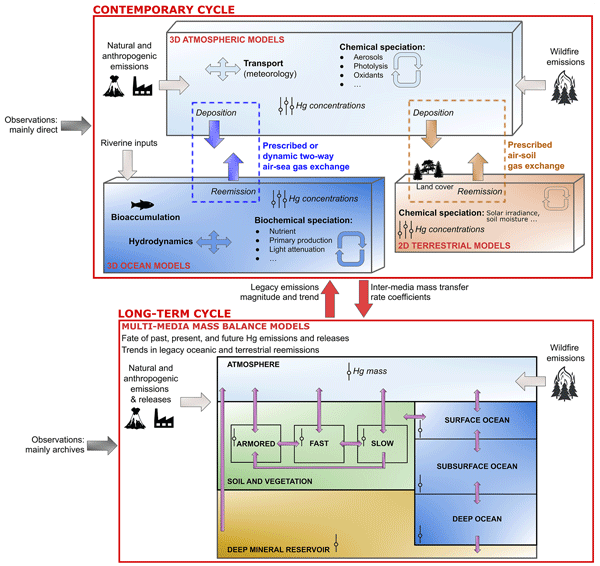
This paper introduces the Multi-Compartment Mercury (Hg) Modeling and Analysis Project (MCHgMAP) aimed at informing the effectiveness evaluations of two multilateral environmental agreements: the Minamata Convention on Mercury and the Convention on Long-Range Transboundary Air Pollution. The experimental design exploits a variety of models (atmospheric, land, oceanic ,and multimedia mass balance models) to assess the short- and long-term influences of anthropogenic Hg releases into the environment.
Rafael P. Fernandez, Carlos A. Cuevas, Julián Villamayor, Aryeh Feinberg, Douglas E. Kinnison, Francis Vitt, Adriana Bossolasco, Javier A. Barrera, Amelia Reynoso, Orlando G. Tomazzeli, Qinyi Li, and Alfonso Saiz-Lopez
Geosci. Model Dev., 19, 9325–9376, https://doi.org/10.5194/gmd-19-9325-2026, https://doi.org/10.5194/gmd-19-9325-2026, 2026
Short summary
Short summary
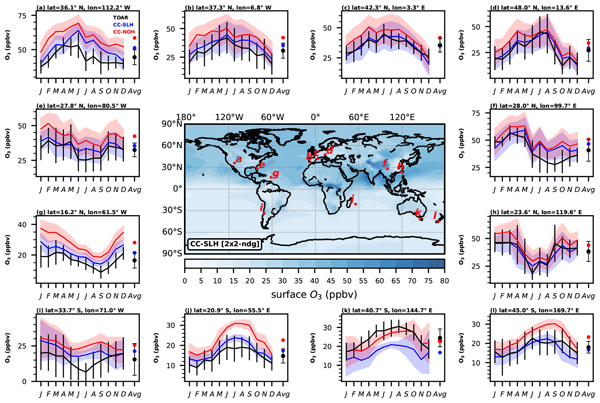
In this work we summarize 15 years of research and developments of short-lived halogens (SLH) using the Community Earth System Model (CESM) and present a complete description of the implementation and capabilities achieved with the latest version v2. The CESM2-SLH release includes specific namelist options, input files and technical notes detailing the most important SLH updates that must be considered for the different model configurations and resolutions.
Anthony Y. H. Wong, Sebastian D. Eastham, Erwan Monier, and Noelle E. Selin
Geosci. Model Dev., 19, 3335–3360, https://doi.org/10.5194/gmd-19-3335-2026, https://doi.org/10.5194/gmd-19-3335-2026, 2026
Short summary
Short summary
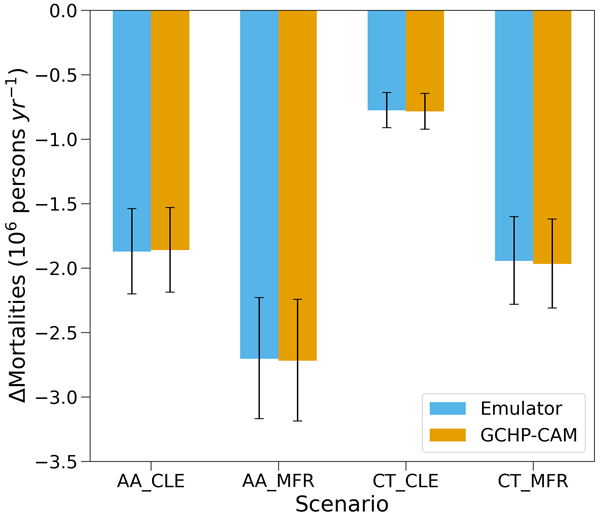
We developed a fast and accurate computer tool that predicts how air pollution will change around the world under different climate and policy choices. Using machine learning and real model data, our tool can estimate changes in harmful fine particulate pollution in seconds instead of thousands of hours. This makes it easier for researchers and policymakers to explore future air quality and health impacts under a wide range of scenarios.
Christopher B. Womack, Glenn Flierl, Shahine Bouabid, Andre N. Souza, Paolo Giani, Sebastian D. Eastham, and Noelle E. Selin
Earth Syst. Dynam., 17, 107–139, https://doi.org/10.5194/esd-17-107-2026, https://doi.org/10.5194/esd-17-107-2026, 2026
Short summary
Short summary
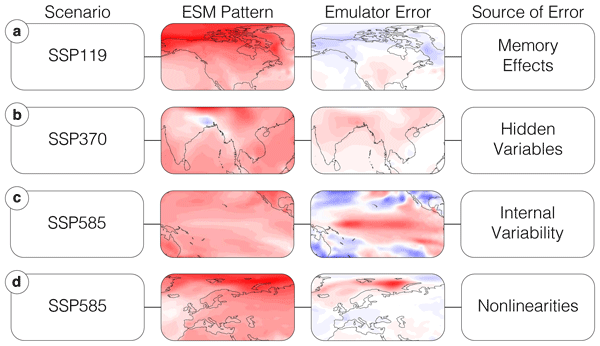
Climate emulators allow for rapid projections without the computational costs associated with full-scale climate models. Here, we outline a framework to compare a variety of emulation techniques both theoretically and practically through a series of stress tests that expose common sources of emulator error. Our results help clarify which emulators are best suited for different tasks and show how future climate scenarios can be used to support emulator design.
Ashu Dastoor, Hélène Angot, Johannes Bieser, Flora Brocza, Brock Edwards, Aryeh Feinberg, Xinbin Feng, Benjamin Geyman, Charikleia Gournia, Yipeng He, Ian M. Hedgecock, Ilia Ilyin, Jane Kirk, Che-Jen Lin, Igor Lehnherr, Robert Mason, David McLagan, Marilena Muntean, Peter Rafaj, Eric M. Roy, Andrei Ryjkov, Noelle E. Selin, Francesco De Simone, Anne L. Soerensen, Frits Steenhuisen, Oleg Travnikov, Shuxiao Wang, Xun Wang, Simon Wilson, Rosa Wu, Qingru Wu, Yanxu Zhang, Jun Zhou, Wei Zhu, and Scott Zolkos
Geosci. Model Dev., 18, 2747–2860, https://doi.org/10.5194/gmd-18-2747-2025, https://doi.org/10.5194/gmd-18-2747-2025, 2025
Short summary
Short summary
This paper introduces the Multi-Compartment Mercury (Hg) Modeling and Analysis Project (MCHgMAP) aimed at informing the effectiveness evaluations of two multilateral environmental agreements: the Minamata Convention on Mercury and the Convention on Long-Range Transboundary Air Pollution. The experimental design exploits a variety of models (atmospheric, land, oceanic ,and multimedia mass balance models) to assess the short- and long-term influences of anthropogenic Hg releases into the environment.
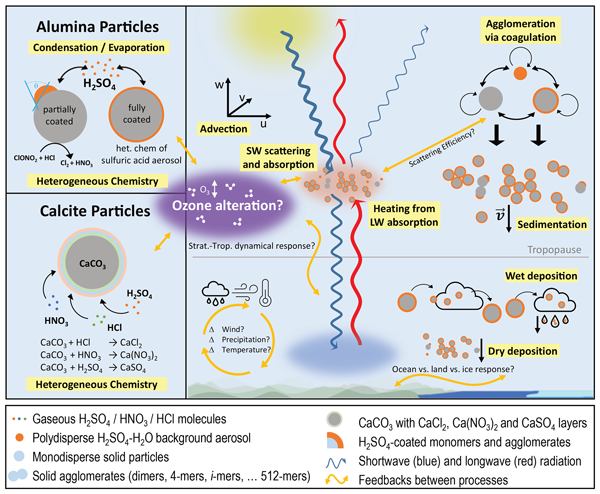
Sandro Vattioni, Rahel Weber, Aryeh Feinberg, Andrea Stenke, John A. Dykema, Beiping Luo, Georgios A. Kelesidis, Christian A. Bruun, Timofei Sukhodolov, Frank N. Keutsch, Thomas Peter, and Gabriel Chiodo
Geosci. Model Dev., 17, 7767–7793, https://doi.org/10.5194/gmd-17-7767-2024, https://doi.org/10.5194/gmd-17-7767-2024, 2024
Short summary
Short summary
We quantified impacts and efficiency of stratospheric solar climate intervention via solid particle injection. Microphysical interactions of solid particles with the sulfur cycle were interactively coupled to the heterogeneous chemistry scheme and the radiative transfer code of an aerosol–chemistry–climate model. Compared to injection of SO2 we only find a stronger cooling efficiency for solid particles when normalizing to the aerosol load but not when normalizing to the injection rate.
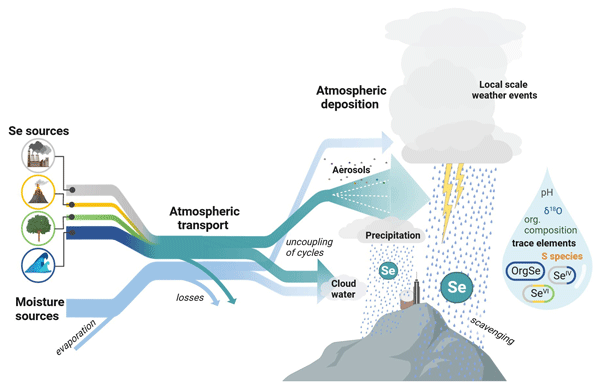
Esther S. Breuninger, Julie Tolu, Iris Thurnherr, Franziska Aemisegger, Aryeh Feinberg, Sylvain Bouchet, Jeroen E. Sonke, Véronique Pont, Heini Wernli, and Lenny H. E. Winkel
Atmos. Chem. Phys., 24, 2491–2510, https://doi.org/10.5194/acp-24-2491-2024, https://doi.org/10.5194/acp-24-2491-2024, 2024
Short summary
Short summary
Atmospheric deposition is an important source of selenium (Se) and other health-relevant trace elements in surface environments. We found that the variability in elemental concentrations in atmospheric deposition reflects not only changes in emission sources but also weather conditions during atmospheric removal. Depending on the sources and if Se is derived more locally or from further away, the Se forms can be different, affecting the bioavailability of Se atmospherically supplied to soils.
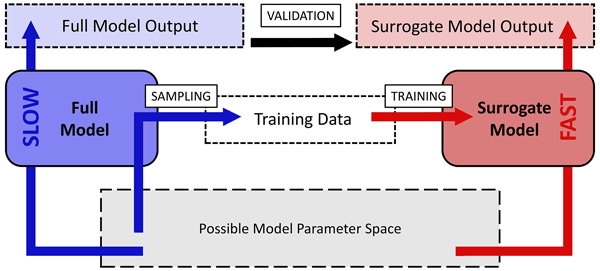
Thomas Berkemeier, Matteo Krüger, Aryeh Feinberg, Marcel Müller, Ulrich Pöschl, and Ulrich K. Krieger
Geosci. Model Dev., 16, 2037–2054, https://doi.org/10.5194/gmd-16-2037-2023, https://doi.org/10.5194/gmd-16-2037-2023, 2023
Short summary
Short summary
Kinetic multi-layer models (KMs) successfully describe heterogeneous and multiphase atmospheric chemistry. In applications requiring repeated execution, however, these models can be too expensive. We trained machine learning surrogate models on output of the model KM-SUB and achieved high correlations. The surrogate models run orders of magnitude faster, which suggests potential applicability in global optimization tasks and as sub-modules in large-scale atmospheric models.

William Atkinson, Sebastian D. Eastham, Y.-H. Henry Chen, Jennifer Morris, Sergey Paltsev, C. Adam Schlosser, and Noelle E. Selin
Geosci. Model Dev., 15, 7767–7789, https://doi.org/10.5194/gmd-15-7767-2022, https://doi.org/10.5194/gmd-15-7767-2022, 2022
Short summary
Short summary
Understanding policy effects on human-caused air pollutant emissions is key for assessing related health impacts. We develop a flexible scenario tool that combines updated emissions data sets, long-term economic modeling, and comprehensive technology pathways to clarify the impacts of climate and air quality policies. Results show the importance of both policy levers in the future to prevent long-term emission increases from offsetting near-term air quality improvements from existing policies.
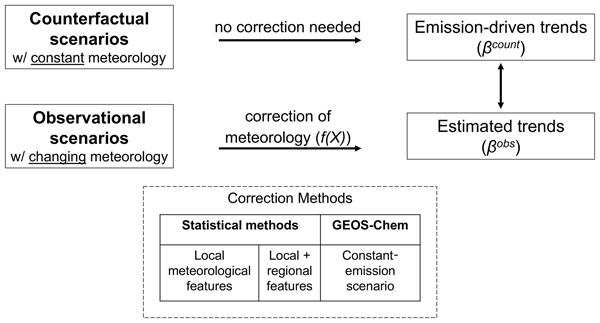
Minghao Qiu, Corwin Zigler, and Noelle E. Selin
Atmos. Chem. Phys., 22, 10551–10566, https://doi.org/10.5194/acp-22-10551-2022, https://doi.org/10.5194/acp-22-10551-2022, 2022
Short summary
Short summary
Evaluating impacts of emission changes on air quality requires accounting for meteorological variability. Many studies use simple regression methods to correct for meteorology, but little is known about their performance. Using cases in the US and China, we show that widely used regression models do not perform well and can lead to biased estimates of emission-driven trends. We propose a novel machine learning method with lower bias and provide recommendations to policymakers and researchers.
Cited articles
Acosta Navarro, J. C. and Toreti, A.: Exploiting the signal-to-noise ratio in multi-system predictions of boreal summer precipitation and temperature, Weather Clim. Dynam., 4, 823–831, https://doi.org/10.5194/wcd-4-823-2023, 2023. a
Agarwalla, H., Senapati, R. N., and Das, T. B.: Mercury emissions and partitioning from Indian coal-fired power plants, J. Environ. Sci., 100, 28–33, https://doi.org/10.1016/j.jes.2020.06.035, 2021. a
Ahmed, S., Thomas, J. L., Angot, H., Dommergue, A., Archer, S. D., Bariteau, L., Beck, I., Benavent, N., Blechschmidt, A.-M., Blomquist, B., Boyer, M., Christensen, J. H., Dahlke, S., Dastoor, A., Helmig, D., Howard, D., Jacobi, H.-W., Jokinen, T., Lapere, R., Laurila, T., Quéléver, L. L. J., Richter, A., Ryjkov, A., Mahajan, A. S., Marelle, L., Pfaffhuber, K. A., Posman, K., Rinke, A., Saiz-Lopez, A., Schmale, J., Skov, H., Steffen, A., Stupple, G., Stutz, J., Travnikov, O., and Zilker, B.: Modelling the coupled mercury-halogen-ozone cycle in the central Arctic during spring, Elementa, 11, 00129, https://doi.org/10.1525/elementa.2022.00129, 2023. a
AMAP/UNEP: Technical Background Report for the Global Mercury Assessment 2013, Arctic Monitoringand Assessment Programme, Oslo, Norway/UNEP ChemicalsBranch, Geneva, Switzerland, vi + 263 pp., https://www.amap.no/documents/doc/technical-background-report-for-the-global-mercury-assessment-2013/848 (last access: 15 April 2026), 2013. a
AMAP/UNEP: Technical Background Report for the Global Mercury Assessment 2018, Arctic Monitoring and Assessment Programme, Oslo, Norway/United Nations Environment Programme, Chemicals and Health Branch, Geneva, Switzerland, viii + 426 pp. including E-Annexes, https://www.unep.org/globalmercurypartnership/resources/report/technical-background-report-global-mercury-assessment-2018 (last access: 15 April 2026), 2019. a, b, c, d, e, f, g
Angot, H., Barret, M., Magand, O., Ramonet, M., and Dommergue, A.: A 2-year record of atmospheric mercury species at a background Southern Hemisphere station on Amsterdam Island, Atmos. Chem. Phys., 14, 11461–11473, https://doi.org/10.5194/acp-14-11461-2014, 2014. a
Angot, H., Dastoor, A., De Simone, F., Gårdfeldt, K., Gencarelli, C. N., Hedgecock, I. M., Langer, S., Magand, O., Mastromonaco, M. N., Nordstrøm, C., Pfaffhuber, K. A., Pirrone, N., Ryjkov, A., Selin, N. E., Skov, H., Song, S., Sprovieri, F., Steffen, A., Toyota, K., Travnikov, O., Yang, X., and Dommergue, A.: Chemical cycling and deposition of atmospheric mercury in polar regions: review of recent measurements and comparison with models, Atmos. Chem. Phys., 16, 10735–10763, https://doi.org/10.5194/acp-16-10735-2016, 2016a. a, b
Angot, H., Dion, I., Vogel, N., Legrand, M., Magand, O., and Dommergue, A.: Multi-year record of atmospheric mercury at Dumont d'Urville, East Antarctic coast: continental outflow and oceanic influences, Atmos. Chem. Phys., 16, 8265–8279, https://doi.org/10.5194/acp-16-8265-2016, 2016b. a
Angot, H., Magand, O., Helmig, D., Ricaud, P., Quennehen, B., Gallée, H., Del Guasta, M., Sprovieri, F., Pirrone, N., Savarino, J., and Dommergue, A.: New insights into the atmospheric mercury cycling in central Antarctica and implications on a continental scale, Atmos. Chem. Phys., 16, 8249–8264, https://doi.org/10.5194/acp-16-8249-2016, 2016c. a
Araujo, B. F., Osterwalder, S., Szponar, N., Lee, D., Petrova, M. V., Pernov, J. B., Ahmed, S., Heimbürger-Boavida, L.-E., Laffont, L., Teisserenc, R., Tananaev, N., Nordstrom, C., Magand, O., Stupple, G., Skov, H., Steffen, A., Bergquist, B., Pfaffhuber, K. A., Thomas, J. L., Scheper, S., Petäjä, T., Dommergue, A., and Sonke, J. E.: Mercury isotope evidence for Arctic summertime re-emission of mercury from the cryosphere, Nat. Commun., 13, 4956, https://doi.org/10.1038/s41467-022-32440-8, 2022. a
Ariya, P. A., Dastroor, A. P., Amyot, M., Schroeder, W. H., Barrie, L., Anlauf, K., Raofie, F., Ryzhkov, A., Davignon, D., Lalonde, J., and Steffen, A.: The Arctic: a sink for mercury, Tellus B, 56, 397–403, https://doi.org/10.3402/tellusb.v56i5.16458, 2004. a
Ariya, P. A., Amyot, M., Dastoor, A., Deeds, D., Feinberg, A., Kos, G., Poulain, A., Ryjkov, A., Semeniuk, K., Subir, M., and Toyota, K.: Mercury Physicochemical and Biogeochemical Transformation in the Atmosphere and at Atmospheric Interfaces: A Review and Future Directions, Chem. Rev., 115, 3760–3802, https://doi.org/10.1021/cr500667e, 2015. a
Artisanal Gold Council: Global Database on Mercury Emissions from Artisanal and Small Scale Mining (ASGM), https://mercurywatch.org/ (last access: 21 August 2025), 2010. a
Bich Thao, P. T., Pimonsree, S., Suppoung, K., Bonnet, S., Junpen, A., and Garivait, S.: Development of an anthropogenic atmospheric mercury emissions inventory in Thailand in 2018, Atmos. Pollut. Res., 12, 101170, https://doi.org/10.1016/j.apr.2021.101170, 2021. a
Bieser, J., Slemr, F., Ambrose, J., Brenninkmeijer, C., Brooks, S., Dastoor, A., DeSimone, F., Ebinghaus, R., Gencarelli, C. N., Geyer, B., Gratz, L. E., Hedgecock, I. M., Jaffe, D., Kelley, P., Lin, C.-J., Jaegle, L., Matthias, V., Ryjkov, A., Selin, N. E., Song, S., Travnikov, O., Weigelt, A., Luke, W., Ren, X., Zahn, A., Yang, X., Zhu, Y., and Pirrone, N.: Multi-model study of mercury dispersion in the atmosphere: vertical and interhemispheric distribution of mercury species, Atmos. Chem. Phys., 17, 6925–6955, https://doi.org/10.5194/acp-17-6925-2017, 2017. a
Bieser, J., Angot, H., Slemr, F., and Martin, L.: Atmospheric mercury in the Southern Hemisphere – Part 2: Source apportionment analysis at Cape Point station, South Africa, Atmos. Chem. Phys., 20, 10427–10439, https://doi.org/10.5194/acp-20-10427-2020, 2020. a
Bruno, D. E., De Simone, F., Cinnirella, S., Hedgecock, I. M., D'Amore, F., and Pirrone, N.: Reducing Mercury Emission Uncertainty from Artisanal and Small-Scale Gold Mining Using Bootstrap Confidence Intervals: An Assessment of Emission Reduction Scenarios, Atmosphere, 14, https://doi.org/10.3390/atmos14010062, 2023. a
Bullock Jr., O. R., Atkinson, D., Braverman, T., Civerolo, K., Dastoor, A., Davignon, D., Ku, J.-Y., Lohman, K., Myers, T. C., Park, R. J., Seigneur, C., Selin, N. E., Sistla, G., and Vijayaraghavan, K.: An analysis of simulated wet deposition of mercury from the North American Mercury Model Intercomparison Study, J. Geophys. Res.-Atmos., 114, https://doi.org/10.1029/2008JD011224, 2009. a
Castro, P., Kellö, V., Cernušák, I., and Dibble, T.: Together, not separately, OH and O3 oxidize Hg(0) to Hg(II) in the atmosphere, ChemRxiv, Cambridge Open Engage, Cambridge, https://doi.org/10.1021/acs.jpca.2c04364, 2022. a
Cement Sustainability Initiative: Getting the numbers right (GNR) database, Cement Sustainability Initiative, http://www.wbcsdcement.org/GNR-2012/index.html (last access: 21 August 2025), 2016. a
Cinnirella, S. and Pirrone, N.: An uncertainty estimate of global mercury emissions using the Monte Carlo technique, E3S Web of Conferences, 1, 07006, https://doi.org/10.1051/e3sconf/20130107006, 2013. a
Corbitt, E. S., Jacob, D. J., Holmes, C. D., Streets, D. G., and Sunderland, E. M.: Global Source–Receptor Relationships for Mercury Deposition Under Present-Day and 2050 Emissions Scenarios, Environ. Sci. Technol., 45, 10477–10484, https://doi.org/10.1021/es202496y, 2011. a
Cui, Y., Wu, Q., Wang, S., Liu, K., Li, S., Shi, Z., Ouyang, D., Li, Z., Chen, Q., Lü, C., Xie, F., Tang, Y., Wang, Y., and Hao, J.: Integrating point sources to map anthropogenic atmospheric mercury emissions in China, 1978–2021, Earth Syst. Sci. Data, 17, 3315–3328, https://doi.org/10.5194/essd-17-3315-2025, 2025. a
Dastoor, A., Ryzhkov, A., Durnford, D., Lehnherr, I., Steffen, A., and Morrison, H.: Atmospheric mercury in the Canadian Arctic. Part II: Insight from modeling, Sci. Total Environ., 509–510, 16–27, https://doi.org/10.1016/j.scitotenv.2014.10.112, 2015. a
Dastoor, A., Wilson, S. J., Travnikov, O., Ryjkov, A., Angot, H., Christensen, J. H., Steenhuisen, F., and Muntean, M.: Arctic atmospheric mercury: Sources and changes, Sci. Total Environ., 839, 156213, https://doi.org/10.1016/j.scitotenv.2022.156213, 2022. a
Dastoor, A., Angot, H., Bieser, J., Brocza, F., Edwards, B., Feinberg, A., Feng, X., Geyman, B., Gournia, C., He, Y., Hedgecock, I. M., Ilyin, I., Kirk, J., Lin, C.-J., Lehnherr, I., Mason, R., McLagan, D., Muntean, M., Rafaj, P., Roy, E. M., Ryjkov, A., Selin, N. E., De Simone, F., Soerensen, A. L., Steenhuisen, F., Travnikov, O., Wang, S., Wang, X., Wilson, S., Wu, R., Wu, Q., Zhang, Y., Zhou, J., Zhu, W., and Zolkos, S.: The Multi-Compartment Hg Modeling and Analysis Project (MCHgMAP): mercury modeling to support international environmental policy, Geosci. Model Dev., 18, 2747–2860, https://doi.org/10.5194/gmd-18-2747-2025, 2025. a, b
De Simone, F., Hedgecock, I. M., Carbone, F., Cinnirella, S., Sprovieri, F., and Pirrone, N.: Estimating Uncertainty in Global Mercury Emission Source and Deposition Receptor Relationships, Atmosphere, 8, https://doi.org/10.3390/atmos8120236, 2017. a
Dlamini, T.: Assessing the role of top-down techniques for improving regional estimates of artisanal and small-scale gold mining mercury emissions, Massachusetts Institute of Technology, https://dspace.mit.edu/handle/1721.1/147481 (last access: 15 April 2026), 2022. a
Doi, T., Nonaka, M., and Behera, S.: Can signal-to-noise ratio indicate prediction skill? Based on skill assessment of 1-month lead prediction of monthly temperature anomaly over Japan, Front. Clim., 4, https://doi.org/10.3389/fclim.2022.887782, 2022. a
Dommergue, A., Sprovieri, F., Pirrone, N., Ebinghaus, R., Brooks, S., Courteaud, J., and Ferrari, C. P.: Overview of mercury measurements in the Antarctic troposphere, Atmos. Chem. Phys., 10, 3309–3319, https://doi.org/10.5194/acp-10-3309-2010, 2010. a
Dommergue, A., Ferrari, C. P., Magand, O., Barret, M., Gratz, L. E., Pirrone, N., and Sprovieri, F.: Monitoring of gaseous elemental mercury in central Antarctica at Dome Concordia, E3S Web Conf., 1, 17003, https://doi.org/10.1051/e3sconf/20130117003, 2013. a
Driscoll, C. T., Mason, R. P., Chan, H. M., Jacob, D. J., and Pirrone, N.: Mercury as a Global Pollutant: Sources, Pathways, and Effects, Environ. Sci. Technol., 47, 4967–4983, https://doi.org/10.1021/es305071v, 2013. a
Durnford, D. and Dastoor, A.: The behavior of mercury in the cryosphere: A review of what we know from observations, J. Geophys. Res.-Atmos., 116, https://doi.org/10.1029/2010JD014809, 2011. a
Durnford, D., Dastoor, A., Figueras-Nieto, D., and Ryjkov, A.: Long range transport of mercury to the Arctic and across Canada, Atmos. Chem. Phys., 10, 6063–6086, https://doi.org/10.5194/acp-10-6063-2010, 2010. a
EMEP/EEA: European Monitoring and Evaluation Programme/European Environment Agency, Air pollutant emission inventory guidebook, Technical report No 12/2013, https://www.eea.europa.eu/en/analysis/publications/emep-eea-guidebook-2013 (last access: 15 April 2026), 2013. a
Falkena, S. K., de Wiljes, J., Weisheimer, A., and Shepherd, T. G.: Detection of interannual ensemble forecast signals over the North Atlantic and Europe using atmospheric circulation regimes, Q. J. Roy. Meteorol. Soc., 148, 434–453, https://doi.org/10.1002/qj.4213, 2022. a
FAO: Food and agriculture organization of the United Nations, http://www.fao.org (last access: 15 April 2026), 2015. a
Feinberg, A., Dlamini, T., Jiskra, M., Shah, V., and Selin, N. E.: Evaluating atmospheric mercury (Hg) uptake by vegetation in a chemistry-transport model, Environ. Sci.: Proc. Imp., 24, 1303–1318, https://doi.org/10.1039/D2EM00032F, 2022. a
Feinberg, A., Jiskra, M., Borrelli, P., Biswakarma, J., and Selin, N. E.: Deforestation as an Anthropogenic Driver of Mercury Pollution, Environ. Sci. Technol., 58, 3246–3257, https://doi.org/10.1021/acs.est.3c07851, 2024a. a, b
Feinberg, A., Selin, N. E., Braban, C. F., Chang, K.-L., Custódio, D., Jaffe, D. A., Kyllönen, K., Landis, M. S., Leeson, S. R., Luke, W., Molepo, K. M., Murovec, M., Mastromonaco, M. G. N., Pfaffhuber, K. A., Rüdiger, J., Sheu, G.-R., and Louis, V. L. S.: Unexpected anthropogenic emission decreases explain recent atmospheric mercury concentration declines, P. Natl. Acad. Sci. USA, 121, e2401950121, https://doi.org/10.1073/pnas.2401950121, 2024b. a
Fisher, J. A., Jacob, D. J., Soerensen, A. L., Amos, H. M., Steffen, A., and Sunderland, E. M.: Riverine source of Arctic Ocean mercury inferred from atmospheric observations, Nat. Geosci., 5, 499–504, https://doi.org/10.1038/ngeo1478, 2012. a
Fu, X., Yang, X., Lang, X., Zhou, J., Zhang, H., Yu, B., Yan, H., Lin, C.-J., and Feng, X.: Atmospheric wet and litterfall mercury deposition at urban and rural sites in China, Atmos. Chem. Phys., 16, 11547–11562, https://doi.org/10.5194/acp-16-11547-2016, 2016. a
Gabay, M., Raveh-Rubin, S., Peleg, M., Fredj, E., and Tas, E.: Is oxidation of atmospheric mercury controlled by different mechanisms in the polluted continental boundary layer vs. remote marine boundary layer?, Environ. Res. Lett., 15, 064026, https://doi.org/10.1088/1748-9326/ab7b26, 2020. a
Guo, J., Liu, L., Zhang, G., Yue, R., Wang, T., Zhang, X., Yang, S., Zhang, Y., Wang, K., Long, H., Feng, Q., and Chen, Y.: Temporal and spatial analysis of anthropogenic mercury and CO2 emissions from municipal solid waste incineration in China: Implications for mercury and climate change mitigation, Environ. Int., 178, 108068, https://doi.org/10.1016/j.envint.2023.108068, 2023. a
Gustin, M. S., Bank, M. S., Bishop, K., Bowman, K., Branfireun, B., Chételat, J., Eckley, C. S., Hammerschmidt, C. R., Lamborg, C., Lyman, S., Martínez-Cortizas, A., Sommar, J., Tsui, M. T.-K., and Zhang, T.: Mercury biogeochemical cycling: A synthesis of recent scientific advances, T Sci. Total Environ., 737, 139619, https://doi.org/10.1016/j.scitotenv.2020.139619, 2020. a
Gustin, M. S., Dunham-Cheatham, S. M., Huang, J., Lindberg, S., and Lyman, S. N.: Development of an Understanding of Reactive Mercury in Ambient Air: A Review, Atmosphere, 12, https://doi.org/10.3390/atmos12010073, 2021. a
Hamilton, R. J. and Hart, M.: Development and verification of the signal to noise ratio for a layer of turbulence in a multi-layer atmosphere, J. Opt. Soc. Am. A, 40, 573–582, 2023. a
Hasselmann, K.: On the signal-to-noise problem in atmospheric response studies, https://pure.mpg.de/view/item_3030122 (last access: 15 April 2026), 1979. a
Holmes, C. D., Jacob, D. J., Corbitt, E. S., Mao, J., Yang, X., Talbot, R., and Slemr, F.: Global atmospheric model for mercury including oxidation by bromine atoms, Atmos. Chem. Phys., 10, 12037–12057, https://doi.org/10.5194/acp-10-12037-2010, 2010. a
Horowitz, H. M., Jacob, D. J., Amos, H. M., Streets, D. G., and Sunderland, E. M.: Historical Mercury Releases from Commercial Products: Global Environmental Implications, Environ. Sci. Technol., 48, 10242–10250, https://doi.org/10.1021/es501337j, 2014. a
Horowitz, H. M., Jacob, D. J., Zhang, Y., Dibble, T. S., Slemr, F., Amos, H. M., Schmidt, J. A., Corbitt, E. S., Marais, E. A., and Sunderland, E. M.: A new mechanism for atmospheric mercury redox chemistry: implications for the global mercury budget, Atmos. Chem. Phys., 17, 6353–6371, https://doi.org/10.5194/acp-17-6353-2017, 2017. a, b, c, d
Huang, S., Yuan, T., Song, Z., Chang, R., Peng, D., Zhang, P., Li, L., Wu, P., Zhou, G., Yue, F., Xie, Z., Wang, F., and Zhang, Y.: Oceanic evasion fuels Arctic summertime rebound of atmospheric mercury and drives transport to Arctic terrestrial ecosystems, Nat. Commun., 16, 903, https://doi.org/10.1038/s41467-025-56300-3, 2025. a
Huang, Y., Deng, M., Li, T., Japenga, J., Chen, Q., Yang, X., and He, Z.: Anthropogenic mercury emissions from 1980 to 2012 in China, Environ. Pollut., 226, 230–239, https://doi.org/10.1016/j.envpol.2017.03.059, 2017. a
Joy, A. and Qureshi, A.: Reducing mercury emissions from coal-fired power plants in India: Possibilities and challenges, Ambio, 52, 242–252, https://doi.org/10.1007/s13280-022-01773-5, 2023. a
Kogut, K., Górecki, J., and Burmistrz, P.: Opportunities for reducing mercury emissions in the cement industry, J. Clean. Product., 293, 126053, https://doi.org/10.1016/j.jclepro.2021.126053, 2021. a
Kosai, S., Nakajima, K., and Yamasue, E.: Mercury mitigation and unintended consequences in artisanal and small-scale gold mining, Resour. Conserv. Recycl., 188, 106708, https://doi.org/10.1016/j.resconrec.2022.106708, 2023. a
Kwon, S. Y. and Selin, N. E.: Uncertainties in Atmospheric Mercury Modeling for Policy Evaluation, Curr. Pollut. Rep., 2, 103–114, https://doi.org/10.1007/s40726-016-0030-8, 2016. a, b
Lindberg, S., Bullock, R., Ebinghaus, R., Engstrom, D., Feng, X., Fitzgerald, W., Pirrone, N., Prestbo, E., and Seigneur, C.: A Synthesis of Progress and Uncertainties in Attributing the Sources of Mercury in Deposition, AMBIO, 36, 19–33, https://doi.org/10.1579/0044-7447(2007)36[19:ASOPAU]2.0.CO;2, 2007. a
Liu, H., Jacob, D. J., Bey, I., and Yantosca, R. M.: Constraints from 210Pb and 7Be on wet deposition and transport in a global three-dimensional chemical tracer model driven by assimilated meteorological fields, J. Geophys. Res.-Atmos., 106, 12109–12128, https://doi.org/10.1029/2000JD900839, 2001. a
Liu, K., Wu, Q., Wang, L., Wang, S., Liu, T., Ding, D., Tang, Y., Li, G., Tian, H., Duan, L., Wang, X., Fu, X., Feng, X., and Hao, J.: Measure-Specific Effectiveness of Air Pollution Control on China's Atmospheric Mercury Concentration and Deposition during 2013–2017, Environ. Sci. Technol., 53, 8938–8946, https://doi.org/10.1021/acs.est.9b02428, 2019. a
MacFarlane, S., Fisher, J. A., Horowitz, H. M., and Shah, V.: Two decades of changing anthropogenic mercury emissions in Australia: inventory development, trends, and atmospheric implications, Environ. Sci.: Proc. Imp., 24, 1474–1493, https://doi.org/10.1039/D2EM00019A, 2022. a
Mao, H., Cheng, I., and Zhang, L.: Current understanding of the driving mechanisms for spatiotemporal variations of atmospheric speciated mercury: a review, Atmos. Chem. Phys., 16, 12897–12924, https://doi.org/10.5194/acp-16-12897-2016, 2016. a
Matthias, V., Aulinger, A., Bieser, J., and Quante, M.: Regional modeling of atmospheric mercury: impact of meteorological variables, https://api.semanticscholar.org/CorpusID:98545374 (last access: 15 April 2026), 2013. a
Mulvaney, K. M., Selin, N. E., Giang, A., Muntean, M., Li, C.-T., Zhang, D., Angot, H., Thackray, C. P., and Karplus, V. J.: Mercury Benefits of Climate Policy in China: Addressing the Paris Agreement and the Minamata Convention Simultaneously, Environ. Sci. Technol., 54, 1326–1335, 2020. a
Muntean, M., Janssens-Maenhout, G., Song, S., Selin, N. E., Olivier, J. G., Guizzardi, D., Maas, R., and Dentener, F.: Trend analysis from 1970 to 2008 and model evaluation of EDGARv4 global gridded anthropogenic mercury emissions, Sci. Total Environ., 494-495, 337–350, https://doi.org/10.1016/j.scitotenv.2014.06.014, 2014. a
Muntean, M., Janssens-Maenhout, G., Song, S., Giang, A., Selin, N. E., Zhong, H., Zhao, Y., Olivier, J. G., Guizzardi, D., Crippa, M., Schaaf, E., and Dentener, F.: Evaluating EDGARv4.tox2 speciated mercury emissions ex-post scenarios and their impacts on modelled global and regional wet deposition patterns, Atmos. Environ., 184, 56–68, https://doi.org/10.1016/j.atmosenv.2018.04.017, 2018. a, b, c, d
Muntean, M., Crippa, M., Guizzardi, D., Pagani, F., Becker, W., Banja, M., Schaaf, E., and Simonati, A.: EDGAR v8.1 Global Mercury Emissions, European Commission [data set], https://doi.org/10.2905/83b507d7-5218-4dc5-95f9-0ec36f073204, 2024. a
Pacyna, J. M., Travnikov, O., De Simone, F., Hedgecock, I. M., Sundseth, K., Pacyna, E. G., Steenhuisen, F., Pirrone, N., Munthe, J., and Kindbom, K.: Current and future levels of mercury atmospheric pollution on a global scale, Atmos. Chem. Phys., 16, 12495–12511, https://doi.org/10.5194/acp-16-12495-2016, 2016. a
Qiu, X., Liu, M., Zhang, Y., Zhang, Q., Lin, H., Cai, X., Li, J., Dai, R., Zheng, S., Wang, J., Zhu, Y., Shen, H., Shen, G., Wang, X., and Tao, S.: Declines in anthropogenic mercury emissions in the Global North and China offset by the Global South, Nat. Commun., 16, 1179, https://doi.org/10.1038/s41467-025-56274-2, 2025. a
Qureshi, A., MacLeod, M., and Hungerbühler, K.: Quantifying uncertainties in the global mass balance of mercury, Global Biogeochem. Cy., 25, https://doi.org/10.1029/2011GB004068, 2011. a
Ryaboshapko, A., Bullock, O. R., Christensen, J., Cohen, M., Dastoor, A., Ilyin, I., Petersen, G., Syrakov, D., Artz, R. S., Davignon, D., Draxler, R. R., and Munthe, J.: Intercomparison study of atmospheric mercury models: 1. Comparison of models with short-term measurements, Sci. Total Environ., 376, 228–240, https://doi.org/10.1016/j.scitotenv.2007.01.072, 2007. a
Saiz-Lopez, A., Travnikov, O., Sonke, J. E., Thackray, C. P., Jacob, D. J., Carmona-García, J., Francés-Monerris, A., Roca-Sanjuán, D., Acuña, A. U., Dávalos, J. Z., Cuevas, C. A., Jiskra, M., Wang, F., Bieser, J., Plane, J. M. C., and Francisco, J. S.: Photochemistry of oxidized Hg(I) and Hg(II) species suggests missing mercury oxidation in the troposphere, P. Natl. Acad. Sci. USA, 117, 30949–30956, https://doi.org/10.1073/pnas.1922486117, 2020. a
Saiz-Lopez, A., Mahajan, A. S., Abbatt, J., Bobrowski, N., Brown, S. S., Burrows, J. P., Carpenter, L. J., Chipperfield, M. P., Cuevas, C. A., Fernandez, R. P., Hossaini, R., Kinnison, D. E., Lamarque, J.-F., Finlayson-Pitts, B. J., Plane, J. M. C., Platt, U., Pratt, K. A., Ravishankara, A. R., Salawitch, R. J., Saltzman, E. S., Simpson, W. R., Solomon, S., Thornton, J. A., and Wang, T.: The influence of short-lived halogens on atmospheric chemistry and climate, Nature, 648, 289–299, https://doi.org/10.1038/s41586-025-09753-x, 2025. a, b
Schmidt, J. A., Jacob, D. J., Horowitz, H. M., Hu, L., Sherwen, T., Evans, M. J., Liang, Q., Suleiman, R. M., Oram, D. E., Le Breton, M., Percival, C. J., Wang, S., Dix, B., and Volkamer, R.: Modeling the observed tropospheric BrO background: Importance of multiphase chemistry and implications for ozone, OH, and mercury, J. Geophys. Res.-Atmos., 121, 11819–11835, https://doi.org/10.1002/2015JD024229, 2016. a
Schneider, L., Fisher, J. A., Diéguez, M. C., Fostier, A.-H., Guimaraes, J. R. D., Leaner, J. J., and Mason, R.: A synthesis of mercury research in the Southern Hemisphere, part 1: Natural processes, Ambio, 52, 897–917, https://doi.org/10.1007/s13280-023-01832-5, 2023. a, b
Selin, N. E., Jacob, D. J., Yantosca, R. M., Strode, S., Jaeglé, L., and Sunderland, E. M.: Global 3-D land-ocean-atmosphere model for mercury: Present-day versus preindustrial cycles and anthropogenic enrichment factors for deposition, Global Biogeochem. Cy., 22, https://doi.org/10.1029/2007GB003040, 2008. a, b
Shah, V., Jacob, D. J., Thackray, C. P., Wang, X., Sunderland, E. M., Dibble, T. S., Saiz-Lopez, A., Černušák, I., Kellö, V., Castro, P. J., Wu, R., and Wang, C.: Improved Mechanistic Model of the Atmospheric Redox Chemistry of Mercury, Environ. Sci. Technol., https://doi.org/10.1021/acs.est.1c03160, 2021. a, b, c, d, e
Simone, F. D., Gencarelli, C. N., Hedgecock, I. M., and Pirrone, N.: A Modeling Comparison of Mercury Deposition from Current Anthropogenic Mercury Emission Inventories, Environ. Sci. Technol., 50, 5154–5162, https://doi.org/10.1021/acs.est.6b00691, 2016. a
Skov, H., Christensen, J. H., Goodsite, M. E., Heidam, N. Z., Jensen, B., Wåhlin, P., and Geernaert, G.: Fate of Elemental Mercury in the Arctic during Atmospheric Mercury Depletion Episodes and the Load of Atmospheric Mercury to the Arctic, Environ. Sci. Technol., 38, 2373–2382, https://doi.org/10.1021/es030080h, 2004. a
Skov, H., Hjorth, J., Nordstrøm, C., Jensen, B., Christoffersen, C., Bech Poulsen, M., Baldtzer Liisberg, J., Beddows, D., Dall'Osto, M., and Christensen, J. H.: Variability in gaseous elemental mercury at Villum Research Station, Station Nord, in North Greenland from 1999 to 2017, Atmos. Chem. Phys., 20, 13253–13265, https://doi.org/10.5194/acp-20-13253-2020, 2020. a
Slemr, F., Martin, L., Labuschagne, C., Mkololo, T., Angot, H., Magand, O., Dommergue, A., Garat, P., Ramonet, M., and Bieser, J.: Atmospheric mercury in the Southern Hemisphere – Part 1: Trend and inter-annual variations in atmospheric mercury at Cape Point, South Africa, in 2007–2017, and on Amsterdam Island in 2012–2017, Atmos. Chem. Phys., 20, 7683–7692, https://doi.org/10.5194/acp-20-7683-2020, 2020. a
Song, S., Selin, N. E., Soerensen, A. L., Angot, H., Artz, R., Brooks, S., Brunke, E.-G., Conley, G., Dommergue, A., Ebinghaus, R., Holsen, T. M., Jaffe, D. A., Kang, S., Kelley, P., Luke, W. T., Magand, O., Marumoto, K., Pfaffhuber, K. A., Ren, X., Sheu, G.-R., Slemr, F., Warneke, T., Weigelt, A., Weiss-Penzias, P., Wip, D. C., and Zhang, Q.: Top-down constraints on atmospheric mercury emissions and implications for global biogeochemical cycling, Atmos. Chem. Phys., 15, 7103–7125, https://doi.org/10.5194/acp-15-7103-2015, 2015. a
Sprovieri, F., Pirrone, N., Hedgecock, I. M., Landis, M. S., and Stevens, R. K.: Intensive atmospheric mercury measurements at Terra Nova Bay in Antarctica during November and December 2000, J. Geophys. Res.-Atmos., 107, ACH 20-1–ACH 20-8, https://doi.org/10.1029/2002JD002057, 2002. a
Sprovieri, F., Pirrone, N., Bencardino, M., D'Amore, F., Angot, H., Barbante, C., Brunke, E.-G., Arcega-Cabrera, F., Cairns, W., Comero, S., Diéguez, M. D. C., Dommergue, A., Ebinghaus, R., Feng, X. B., Fu, X., Garcia, P. E., Gawlik, B. M., Hageström, U., Hansson, K., Horvat, M., Kotnik, J., Labuschagne, C., Magand, O., Martin, L., Mashyanov, N., Mkololo, T., Munthe, J., Obolkin, V., Ramirez Islas, M., Sena, F., Somerset, V., Spandow, P., Vardè, M., Walters, C., Wängberg, I., Weigelt, A., Yang, X., and Zhang, H.: Five-year records of mercury wet deposition flux at GMOS sites in the Northern and Southern hemispheres, Atmos. Chem. Phys., 17, 2689–2708, https://doi.org/10.5194/acp-17-2689-2017, 2017. a
Steenhuisen, F. and Wilson, S.: Development and application of an updated geospatial distribution model for gridding 2015 global mercury emissions, Atmos. Environ., 211, 138–150, https://doi.org/10.1016/j.atmosenv.2019.05.003, 2019. a, b
Steenhuisen, F. and Wilson, S.: Geospatially Distributed (Gridded) Global Mercury Emissions to Air from Anthropogenic Sources in 2015, Dataverse [data set], https://doi.org/10.34894/SZ2KOI, 2022. a, b, c
Steffen, A., Douglas, T., Amyot, M., Ariya, P., Aspmo, K., Berg, T., Bottenheim, J., Brooks, S., Cobbett, F., Dastoor, A., Dommergue, A., Ebinghaus, R., Ferrari, C., Gardfeldt, K., Goodsite, M. E., Lean, D., Poulain, A. J., Scherz, C., Skov, H., Sommar, J., and Temme, C.: A synthesis of atmospheric mercury depletion event chemistry in the atmosphere and snow, Atmos. Chem. Phys., 8, 1445–1482, https://doi.org/10.5194/acp-8-1445-2008, 2008. a
Streets, D. G., Zhang, Q., and Wu, Y.: Projections of Global Mercury Emissions in 2050, Environ. Sci. Technol., 43, 2983–2988, https://doi.org/10.1021/es802474j, 2009. a
Streets, D. G., Horowitz, H. M., Lu, Z., Levin, L., Thackray, C. P., and Sunderland, E. M.: Global and regional trends in mercury emissions and concentrations, 2010–2015, Atmos. Environ., 201, 417–427, https://doi.org/10.1016/j.atmosenv.2018.12.031, 2019. a, b, c, d
Subir, M., Ariya, P. A., and Dastoor, A. P.: A review of the sources of uncertainties in atmospheric mercury modeling II. Mercury surface and heterogeneous chemistry – A missing link, Atmos. Environ., 46, 1–10, https://doi.org/10.1016/j.atmosenv.2011.07.047, 2012. a
Temme, C., Einax, J. W., Ebinghaus, R., and Schroeder, W. H.: Measurements of Atmospheric Mercury Species at a Coastal Site in the Antarctic and over the South Atlantic Ocean during Polar Summer, Environ. Sci. Technol., 37, 22–31, https://doi.org/10.1021/es025884w, 2003. a
Travnikov, O., Angot, H., Artaxo, P., Bencardino, M., Bieser, J., D'Amore, F., Dastoor, A., De Simone, F., Diéguez, M. D. C., Dommergue, A., Ebinghaus, R., Feng, X. B., Gencarelli, C. N., Hedgecock, I. M., Magand, O., Martin, L., Matthias, V., Mashyanov, N., Pirrone, N., Ramachandran, R., Read, K. A., Ryjkov, A., Selin, N. E., Sena, F., Song, S., Sprovieri, F., Wip, D., Wängberg, I., and Yang, X.: Multi-model study of mercury dispersion in the atmosphere: atmospheric processes and model evaluation, Atmos. Chem. Phys., 17, 5271–5295, https://doi.org/10.5194/acp-17-5271-2017, 2017. a, b, c, d
UNEP: United Nations Environment Programme: Hemispheric Transport of Air Pollution, Part B: Mercury, https://wedocs.unep.org/20.500.11822/12326 (last access: 15 April 2026), 2010. a
UNEP: United Nations Environment Programme Basel Convention Regional Centre For South East Asia, Mercury Emissions for Coal-Fired Power Plants in Indonesia, https://wedocs.unep.org/handle/20.500.11822/25565 (last access: 15 April 2026), 2017a. a
UNEP: United Nations Environment Programme: Global Mercury Supply, Trade and Demand, https://www.unep.org/resources/report/global-mercury-supply-trade-and-demand (last access: 15 April 2026), 2017b. a
United Nations Environment Programme: Indicators (Addendum 1 to document COP.5/16), https://minamataconvention.org/sites/default/files/documents/working_document/UNEP-MC-COP.5-16-Add.1-Indicators_English.pdf (last access: 9 Augst 2025), 2023. a
USGS: United States Geological Survey, Commodity statistics and information, http:// minerals.usgs.gov/minerals/pubs/commodity/ (last access: 21 August 2025), 2015. a
Wang, F., Saiz-Lopez, A., Mahajan, A. S., Gómez Martín, J. C., Armstrong, D., Lemes, M., Hay, T., and Prados-Roman, C.: Enhanced production of oxidised mercury over the tropical Pacific Ocean: a key missing oxidation pathway, Atmos. Chem. Phys., 14, 1323–1335, https://doi.org/10.5194/acp-14-1323-2014, 2014. a
Wang, J., Liu, L., Li, S., Chen, Y., Wang, T., and Zhang, Y.: Mercury emissions and distribution in a waste incineration plant based on the 30B and Ontario Hydro methods, J. Clean. Product., 328, 129663, https://doi.org/10.1016/j.jclepro.2021.129663, 2021. a
Welvaert, M. and Rosseel, Y.: On the definition of signal-to-noise ratio and contrast-to-noise ratio for FMRI data, PloS one, 8, e77089, https://doi.org/10.1371/journal.pone.0077089, 2013. a
Wesely, M. L.: Parameterization of surface resistances to gaseous dry deposition in regional-scale numerical models, Atmos. Environ., 23, 1293–1304, https://doi.org/10.1016/0004-6981(89)90153-4, 1989. a
Wu, Q., Wang, S., Li, G., Liang, S., Lin, C.-J., Wang, Y., Cai, S., Liu, K., and Hao, J.: Temporal Trend and Spatial Distribution of Speciated Atmospheric Mercury Emissions in China During 1978–2014, Environ. Sci. Technol., 50, 13428–13435, https://doi.org/10.1021/acs.est.6b04308, 2016. a
Wu, W., Lynch, A. H., and Rivers, A.: Estimating the Uncertainty in a Regional Climate Model Related to Initial and Lateral Boundary Conditions, J. Climate, 18, 917–933, https://doi.org/10.1175/JCLI-3293.1, 2005. a
Wu, Y., Streets, D. G., Wang, S. X., and Hao, J. M.: Uncertainties in estimating mercury emissions from coal-fired power plants in China, Atmos. Chem. Phys., 10, 2937–2946, https://doi.org/10.5194/acp-10-2937-2010, 2010. a
Xu, J.-H., Fleiter, T., Fan, Y., and Eichhammer, W.: CO2 emissions reduction potential in China's cement industry compared to IEA’s Cement Technology Roadmap up to 2050, Appl. Energy, 130, 592–602, https://doi.org/10.1016/j.apenergy.2014.03.004, 2014. a
Xu, Z., Chen, L., Zhang, Y., Han, G., Chen, Q., Chu, Z., Zhang, Y., Li, C., Yang, Y., and Wang, X.: Meteorological Drivers of Atmospheric Mercury Seasonality in the Temperate Northern Hemisphere, Geophys. Res. Lett., 49, e2022GL100120, https://doi.org/10.1029/2022GL100120, 2022. a
Yang, M., Wang, S., Zhang, L., Wu, Q., Wang, F., Hui, M., Yang, H., and Hao, J.: Mercury emission and speciation from industrial gold production using roasting process, J. Geochem. Expl., 170, 72–77, https://doi.org/10.1016/j.gexplo.2016.08.014, 2016. a
Yoshimura, A., Suemasu, K., and Veiga, M. M.: Estimation of Mercury Losses and Gold Production by Artisanal and Small-Scale Gold Mining (ASGM), J. Sustain. Metal., 7, 1045–1059, https://doi.org/10.1007/s40831-021-00394-8, 2021. a
Yu, B., Li, G., Chen, S., and Lin, H.: The role of internal variability in climate change projections of North American surface air temperature and temperature extremes in CanESM2 large ensemble simulations, Clim. Dynam., 55, 869–885, https://doi.org/10.1007/s00382-020-05296-1, 2020. a
Yue, F., Angot, H., Blomquist, B., Schmale, J., Hoppe, C. J. M., Lei, R., Shupe, M. D., Zhan, L., Ren, J., Liu, H., Beck, I., Howard, D., Jokinen, T., Laurila, T., Quéléver, L., Boyer, M., Petäjä, T., Archer, S., Bariteau, L., Helmig, D., Hueber, J., Jacobi, H.-W., Posman, K., and Xie, Z.: The marginal ice zone as a dominant source region of atmospheric mercury during central Arctic summertime, Nat. Commun., 14, 4887, https://doi.org/10.1038/s41467-023-40660-9, 2023. a
Zhang, L., Wang, S., Wang, L., Wu, Y., Duan, L., Wu, Q., Wang, F., Yang, M., Yang, H., Hao, J., and Liu, X.: Updated Emission Inventories for Speciated Atmospheric Mercury from Anthropogenic Sources in China, Environ. Sci. Technol., 49, 3185–3194, https://doi.org/10.1021/es504840m, 2015. a, b
Zhang, L., Zhou, P., Cao, S., and Zhao, Y.: Atmospheric mercury deposition over the land surfaces and the associated uncertainties in observations and simulations: a critical review, Atmos. Chem. Phys., 19, 15587–15608, https://doi.org/10.5194/acp-19-15587-2019, 2019. a
Zhang, P. and Zhang, Y.: Earth system modeling of mercury using CESM2 – Part 1: Atmospheric model CAM6-Chem/Hg v1.0, Geosci. Model Dev., 15, 3587–3601, https://doi.org/10.5194/gmd-15-3587-2022, 2022. a
Zhang, Y., Jacob, D. J., Horowitz, H. M., Chen, L., Amos, H. M., Krabbenhoft, D. P., Slemr, F., St. Louis, V. L., and Sunderland, E. M.: Observed decrease in atmospheric mercury explained by global decline in anthropogenic emissions, P. Natl. Acad. Sci. USA, 113, 526–531, https://doi.org/10.1073/pnas.1516312113, 2016. a, b, c, d
Zhang, Y., Zhang, L., Cao, S., Liu, X., Jin, J., and Zhao, Y.: Improved Anthropogenic Mercury Emission Inventories for China from 1980 to 2020: Toward More Accurate Effectiveness Evaluation for the Minamata Convention, Environ. Sci. Technol., 57, 8660–8670, https://doi.org/10.1021/acs.est.3c01065, 2023. a, b
Zhao, Y., Wang, S., Duan, L., Lei, Y., Cao, P., and Hao, J.: Primary air pollutant emissions of coal-fired power plants in China: Current status and future prediction, Atmos. Environ., 42, 8442–8452, https://doi.org/10.1016/j.atmosenv.2008.08.021, 2008. a
Zhao, Y., Zhong, H., Zhang, J., and Nielsen, C. P.: Evaluating the effects of China's pollution controls on inter-annual trends and uncertainties of atmospheric mercury emissions, Atmos. Chem. Phys., 15, 4317–4337, https://doi.org/10.5194/acp-15-4317-2015, 2015. a
Zyśk, J., Roustan, Y., and Wyrwa, A.: Modelling of the atmospheric dispersion of mercury emitted from the power sector in Poland, Atmos. Environ., 112, 246–256, https://doi.org/10.1016/j.atmosenv.2015.04.040, 2015. a
Short summary
Human activities release mercury into the air, but current estimates of these emissions vary widely. Our study examines how the uncertainty in global anthropogenic mercury emission estimates impacts the model's ability to reproduce observations. We found that differences in emissions inventories significantly change results, especially in Asia. The work highlights where increased monitoring is needed to improve estimates and better inform global mercury reduction policies.
Human activities release mercury into the air, but current estimates of these emissions vary...


Altmetrics
Final-revised paper
Preprint