
Articles | Volume 26, issue 6
https://doi.org/10.5194/acp-26-4275-2026
© Author(s) 2026. This work is distributed under
the Creative Commons Attribution 4.0 License.
the Creative Commons Attribution 4.0 License.
https://doi.org/10.5194/acp-26-4275-2026
© Author(s) 2026. This work is distributed under
the Creative Commons Attribution 4.0 License.
the Creative Commons Attribution 4.0 License.
Research article
| 
27 Mar 2026
Research article |
| 27 Mar 2026
| 27 Mar 2026
The variability of Antarctic fast ice extent related to tropical sea surface temperature anomalies
Chen Jiang
College of Underwater Acoustic Engineering, Harbin Engineering University, Qingdao, 266400, China
Laboratory for Regional Oceanography and Numerical Modeling, Qingdao Marine Science and Technology Center, Qingdao, 266400, China
Lejiang Yu
CORRESPONDING AUTHOR

MNR Key Laboratory for Polar Science, Polar Research Institute of China, Shanghai, China
Timo Vihma
Finnish Meteorological Institute, Helsinki, Finland
First Institute of Oceanography, Ministry of Natural Resources, Qingdao, 266400, China
UN Ocean Decade Collaborative Centre on Ocean-Climate Nexus and Coordination amongst Decade Implementing Partners in P.R. China (DCC-OCC), Qingdao, 266400, China
Laboratory for Regional Oceanography and Numerical Modeling, Qingdao Marine Science and Technology Center, Qingdao, 266400, China
Related authors
No articles found.
Tuomas Naakka, Sonja Murto-Menger, Timo Vihma, and Michael Tjernström
EGUsphere, https://doi.org/10.5194/egusphere-2026-5666, https://doi.org/10.5194/egusphere-2026-5666, 2026
This preprint is open for discussion and under review for Weather and Climate Dynamics (WCD).
Short summary
Short summary
A west-east orientated jet stream and large temperature difference in north-south direction prevents cyclone driven moisture transport to the central Arctic because of moisture condensation caused by cooling warm airmass due to lifting of it above the cold air mass on frontal zones between warm and cold air associated with closure of the warm sector of a cyclone. This kind of conditions caused dry condition in the Fram Strait during the first half of the ARTofMELT-expedition in May 2023.
Lejiang Yu, Shiyuan Zhong, Timo Vihma, and Jinlun Zhang
EGUsphere, https://doi.org/10.5194/egusphere-2026-4204, https://doi.org/10.5194/egusphere-2026-4204, 2026
This preprint is open for discussion and under review for The Cryosphere (TC).
Short summary
Short summary
Sea ice in the Weddell Sea, east of the Antarctic Peninsula, is an important part of the global climate system. Summertime sea-ice concentration variability has increased in the northern Weddell Sea but decreased in the southern Weddell Sea. These opposite changes are partly linked to large-scale atmospheric patterns connected to tropical regions near Australia and the Indian Ocean.
Tereza Uhlíková, Timo Vihma, Alexey Yu Karpechko, and Petteri Uotila
The Cryosphere, 20, 4585–4604, https://doi.org/10.5194/tc-20-4585-2026, https://doi.org/10.5194/tc-20-4585-2026, 2026
Short summary
Short summary
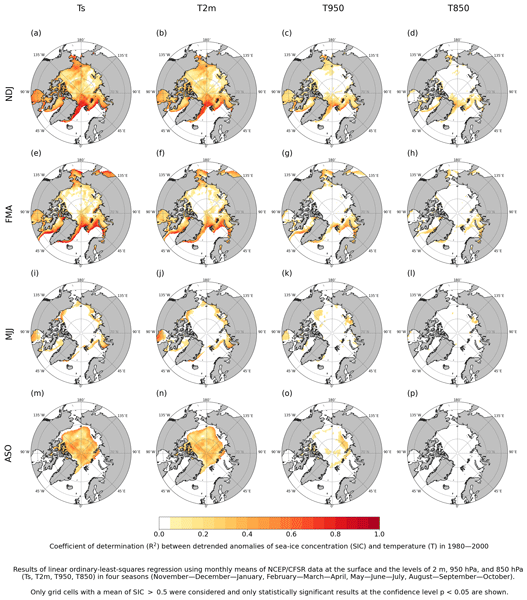
Understanding of the local effects of sea-ice concentration variations on the Arctic atmosphere is a prerequisite for assessing the role of Arctic sea-ice decline in the climate system, including its influence on mid-latitudes. In our study, using data from atmospheric reanalysis, we present how the relationships of sea-ice concentration, temperature, and specific humidity and their direction change depending on region and season over the Arctic.
Elena Shevnina, Timo Vihma, Miguel Potes, and Tuomas Naakka
Hydrol. Earth Syst. Sci., 30, 4721–4739, https://doi.org/10.5194/hess-30-4721-2026, https://doi.org/10.5194/hess-30-4721-2026, 2026
Short summary
Short summary
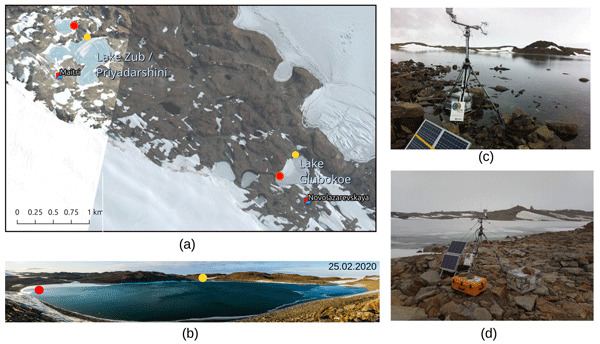
The study first estimated the summertime evaporation over lakes located in coastal Antarctica with direct (eddy-covariance) measurements collected during two austral summers (December–January) in 2017–2018 and 2019–2020. The lake evaporation was on average 1.6 mm d-1 in the ice break-up period, and it doubled in the ice free period. The bulk aerodynamic method with a site-specific transfer coefficient of moisture well reproduced the observed day-to-day variations in evaporation over lakes.
Yubing Cheng, Bin Cheng, Roberta Pirazzini, Amy R. Macfarlane, Timo Vihma, Wolfgang Dorn, Ruzica Dadic, Martin Schneebeli, Stefanie Arndt, and Annette Rinke
The Cryosphere, 19, 6001–6021, https://doi.org/10.5194/tc-19-6001-2025, https://doi.org/10.5194/tc-19-6001-2025, 2025
Short summary
Short summary
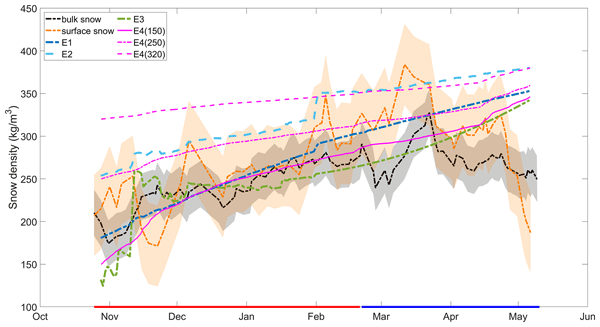
We study snow density from the MOSAiC expedition. Several snow density schemes were tested and compared with observation. A thermodynamic ice model was employed to assess the impact of snow density and precipitation on the thermal regime of sea ice. The parameterized mean snow densities are consistent with observations. Increased snow density reduces snow and ice temperatures, promoting ice growth, while increased precipitation leads to warmer snow and ice temperatures and reduced ice thickness.
Fangru Mu, Chengfei Jiang, Bin Cheng, Keguang Wang, Caixin Wang, Yuhan Chen, Zhiyuan Shao, and Jiechen Zhao
EGUsphere, https://doi.org/10.5194/egusphere-2025-3214, https://doi.org/10.5194/egusphere-2025-3214, 2025
Preprint archived
Short summary
Short summary
Icebergs pose risks to ships and are an important part of the polar environment. We developed an iceberg detection algorithm based on the Swin transformer model (IDAS-Transformer). The IDAS-Transformer is capable of handling complex surface characteristic mixtures, including fast ice, pack ice, and open water, to identify icebergs.
Tereza Uhlíková, Timo Vihma, Alexey Yu Karpechko, and Petteri Uotila
The Cryosphere, 19, 1031–1046, https://doi.org/10.5194/tc-19-1031-2025, https://doi.org/10.5194/tc-19-1031-2025, 2025
Short summary
Short summary
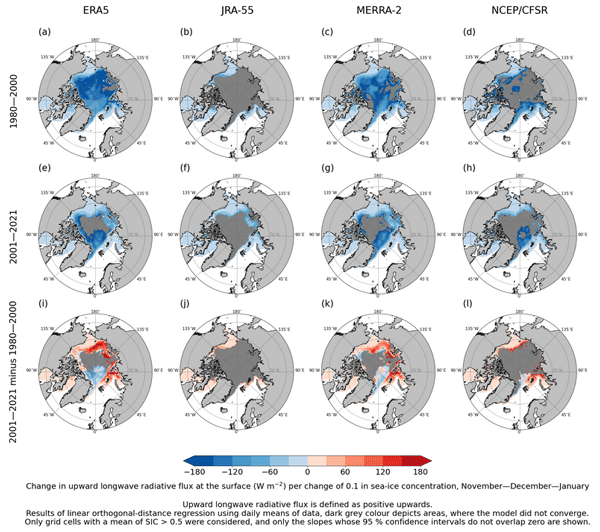
To better understand the local, regional, and global impacts of the recent rapid sea-ice decline in the Arctic, one of the key issues is to quantify the effects of sea-ice concentration on the surface radiative fluxes. We analyse these effects utilising four data sets called atmospheric reanalyses, and we evaluate uncertainties in these effects arising from inter-reanalysis differences in the sensitivity of the surface radiative fluxes to sea-ice concentration.
Manfred Wendisch, Susanne Crewell, André Ehrlich, Andreas Herber, Benjamin Kirbus, Christof Lüpkes, Mario Mech, Steven J. Abel, Elisa F. Akansu, Felix Ament, Clémantyne Aubry, Sebastian Becker, Stephan Borrmann, Heiko Bozem, Marlen Brückner, Hans-Christian Clemen, Sandro Dahlke, Georgios Dekoutsidis, Julien Delanoë, Elena De La Torre Castro, Henning Dorff, Regis Dupuy, Oliver Eppers, Florian Ewald, Geet George, Irina V. Gorodetskaya, Sarah Grawe, Silke Groß, Jörg Hartmann, Silvia Henning, Lutz Hirsch, Evelyn Jäkel, Philipp Joppe, Olivier Jourdan, Zsofia Jurányi, Michail Karalis, Mona Kellermann, Marcus Klingebiel, Michael Lonardi, Johannes Lucke, Anna E. Luebke, Maximilian Maahn, Nina Maherndl, Marion Maturilli, Bernhard Mayer, Johanna Mayer, Stephan Mertes, Janosch Michaelis, Michel Michalkov, Guillaume Mioche, Manuel Moser, Hanno Müller, Roel Neggers, Davide Ori, Daria Paul, Fiona M. Paulus, Christian Pilz, Felix Pithan, Mira Pöhlker, Veronika Pörtge, Maximilian Ringel, Nils Risse, Gregory C. Roberts, Sophie Rosenburg, Johannes Röttenbacher, Janna Rückert, Michael Schäfer, Jonas Schaefer, Vera Schemann, Imke Schirmacher, Jörg Schmidt, Sebastian Schmidt, Johannes Schneider, Sabrina Schnitt, Anja Schwarz, Holger Siebert, Harald Sodemann, Tim Sperzel, Gunnar Spreen, Bjorn Stevens, Frank Stratmann, Gunilla Svensson, Christian Tatzelt, Thomas Tuch, Timo Vihma, Christiane Voigt, Lea Volkmer, Andreas Walbröl, Anna Weber, Birgit Wehner, Bruno Wetzel, Martin Wirth, and Tobias Zinner
Atmos. Chem. Phys., 24, 8865–8892, https://doi.org/10.5194/acp-24-8865-2024, https://doi.org/10.5194/acp-24-8865-2024, 2024
Short summary
Short summary
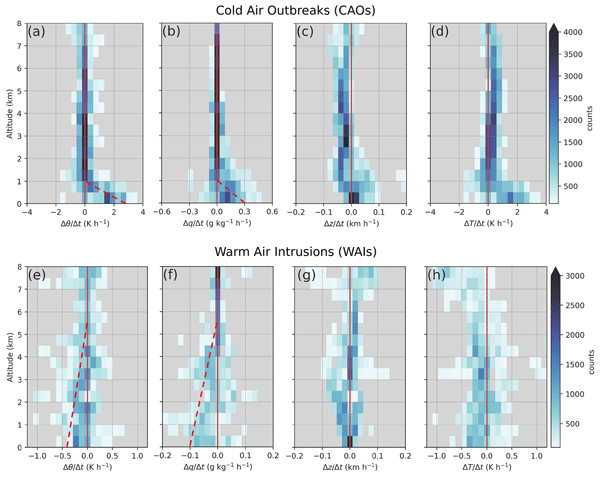
The Arctic is warming faster than the rest of the globe. Warm-air intrusions (WAIs) into the Arctic may play an important role in explaining this phenomenon. Cold-air outbreaks (CAOs) out of the Arctic may link the Arctic climate changes to mid-latitude weather. In our article, we describe how to observe air mass transformations during CAOs and WAIs using three research aircraft instrumented with state-of-the-art remote-sensing and in situ measurement devices.
Di Chen, Qizhen Sun, and Timo Vihma
EGUsphere, https://doi.org/10.5194/egusphere-2024-2359, https://doi.org/10.5194/egusphere-2024-2359, 2024
Preprint archived
Short summary
Short summary
We investigates the variations and trends in Arctic sea ice during summer and autumn, focusing on the impacts of sea surface temperature (SST) and surface air temperature (SAT). Both SST and SAT significantly influence Arctic sea ice concentration. SST affects both interannual variations and decadal trends, while SAT primarily influences interannual variations. Additionally, SAT's impact on sea ice concentration leads by seven months, due to a stronger warming trend in winter than in summer.
Tereza Uhlíková, Timo Vihma, Alexey Yu Karpechko, and Petteri Uotila
The Cryosphere, 18, 957–976, https://doi.org/10.5194/tc-18-957-2024, https://doi.org/10.5194/tc-18-957-2024, 2024
Short summary
Short summary
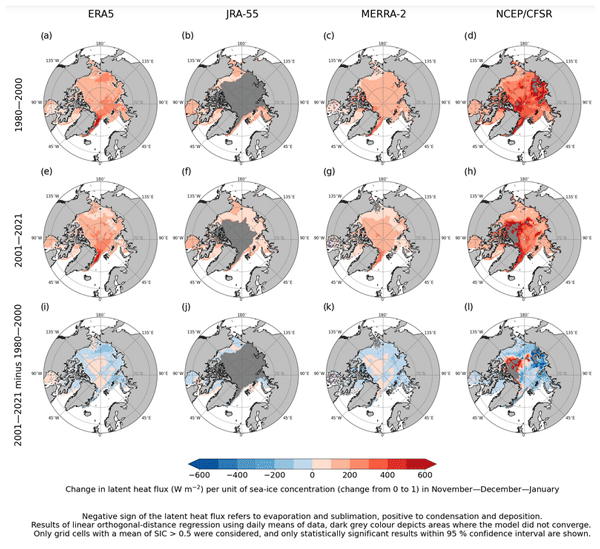
A prerequisite for understanding the local, regional, and hemispherical impacts of Arctic sea-ice decline on the atmosphere is to quantify the effects of sea-ice concentration (SIC) on the sensible and latent heat fluxes in the Arctic. We analyse these effects utilising four data sets called atmospheric reanalyses, and we evaluate uncertainties in these effects arising from inter-reanalysis differences in SIC and in the sensitivity of the latent and sensible heat fluxes to SIC.
Lejiang Yu, Shiyuan Zhong, Timo Vihma, Cuijuan Sui, and Bo Sun
EGUsphere, https://doi.org/10.5194/egusphere-2023-2436, https://doi.org/10.5194/egusphere-2023-2436, 2023
Preprint archived
Short summary
Short summary
In contrary to the current understanding, there can be a strong connection between ENSO and the South Atlantic Subtropical Dipole (SASD). It is highly probable that the robust inverse correlation between ENSO and SASD will persist in the future. The ENSO-SASD correlation exhibits substantial multi-decadal variability over the course of a century. The change in the ENSO-SASD relation can be linked to changes in ENSO regime and convective activities over the central South Pacific Ocean.
Tiina Nygård, Lukas Papritz, Tuomas Naakka, and Timo Vihma
Weather Clim. Dynam., 4, 943–961, https://doi.org/10.5194/wcd-4-943-2023, https://doi.org/10.5194/wcd-4-943-2023, 2023
Short summary
Short summary
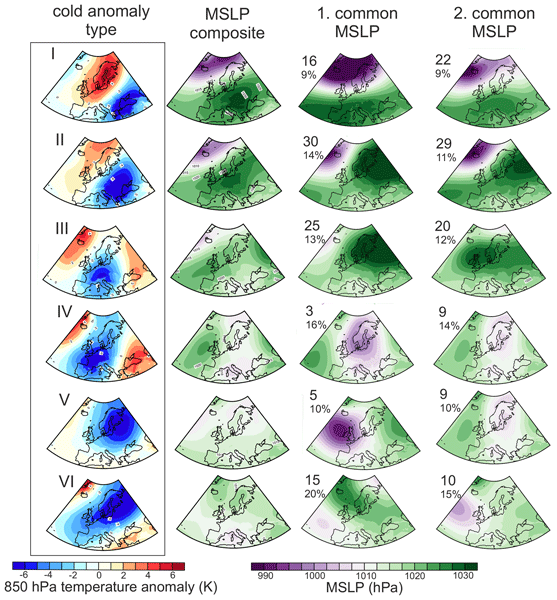
Despite the general warming trend, wintertime cold-air outbreaks in Europe have remained nearly as extreme and as common as decades ago. In this study, we identify six principal cold anomaly types over Europe in 1979–2020. We show the origins of various physical processes and their contributions to the formation of cold wintertime air masses.
Haihan Hu, Jiechen Zhao, Petra Heil, Zhiliang Qin, Jingkai Ma, Fengming Hui, and Xiao Cheng
The Cryosphere, 17, 2231–2244, https://doi.org/10.5194/tc-17-2231-2023, https://doi.org/10.5194/tc-17-2231-2023, 2023
Short summary
Short summary
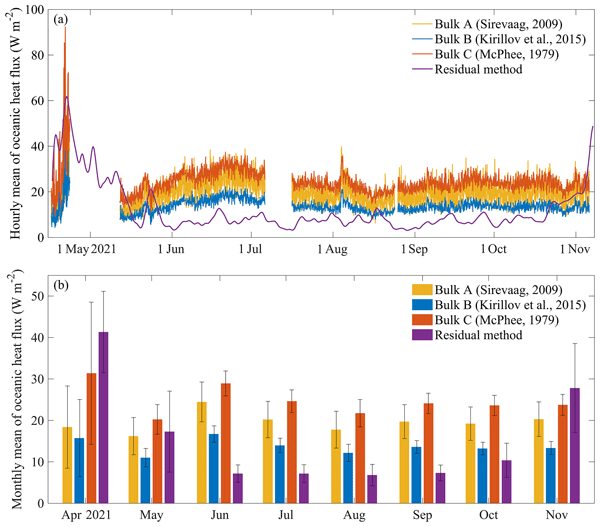
The oceanic characteristics beneath sea ice significantly affect ice growth and melting. The high-frequency and long-term observations of oceanic variables allow us to deeply investigate their diurnal and seasonal variation and evaluate their influences on sea ice evolution. The large-scale sea ice distribution and ocean circulation contributed to the seasonal variation of ocean variables, revealing the important relationship between large-scale and local phenomena.
Lejiang Yu, Shiyuan Zhong, Timo Vihma, Cuijuan Sui, and Bo Sun
Atmos. Chem. Phys., 23, 345–353, https://doi.org/10.5194/acp-23-345-2023, https://doi.org/10.5194/acp-23-345-2023, 2023
Short summary
Short summary
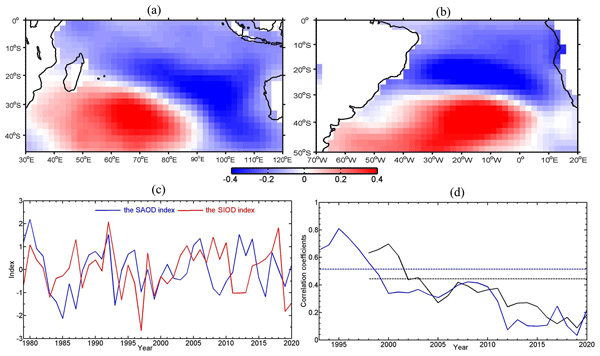
Previous studies have noted a significant relationship between the Subtropical Indian Ocean Dipole and the South Atlantic Ocean Dipole indices, but little is known about the stability of their relationship. We found a significant positive correlation between the two indices prior to the year 2000 but an insignificant correlation afterwards.
Elena Shevnina, Miguel Potes, Timo Vihma, Tuomas Naakka, Pankaj Ramji Dhote, and Praveen Kumar Thakur
The Cryosphere, 16, 3101–3121, https://doi.org/10.5194/tc-16-3101-2022, https://doi.org/10.5194/tc-16-3101-2022, 2022
Short summary
Short summary
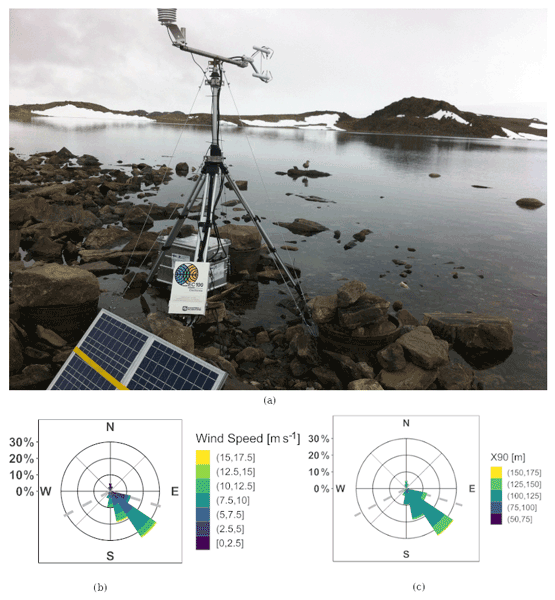
The evaporation over an ice-free glacial lake was measured in January 2018, and the uncertainties inherent to five indirect methods were quantified. Results show that in summer up to 5 mm of water evaporated daily from the surface of the lake located in Antarctica. The indirect methods underestimated the evaporation over the lake's surface by up to 72 %. The results are important for estimating the evaporation over polar regions where a growing number of glacial lakes have recently been evident.
Janosch Michaelis, Amelie U. Schmitt, Christof Lüpkes, Jörg Hartmann, Gerit Birnbaum, and Timo Vihma
Earth Syst. Sci. Data, 14, 1621–1637, https://doi.org/10.5194/essd-14-1621-2022, https://doi.org/10.5194/essd-14-1621-2022, 2022
Short summary
Short summary
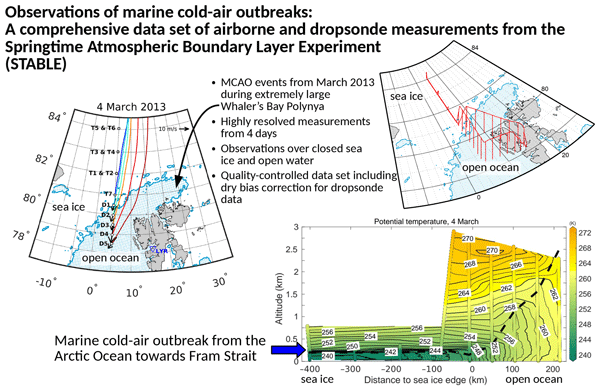
A major goal of the Springtime Atmospheric Boundary Layer Experiment (STABLE) aircraft campaign was to observe atmospheric conditions during marine cold-air outbreaks (MCAOs) originating from the sea-ice-covered Arctic ocean. Quality-controlled measurements of several meteorological variables collected during 15 vertical aircraft profiles and by 22 dropsondes are presented. The comprehensive data set may be used for validating model results to improve the understanding of future trends in MCAOs.
Hanna K. Lappalainen, Tuukka Petäjä, Timo Vihma, Jouni Räisänen, Alexander Baklanov, Sergey Chalov, Igor Esau, Ekaterina Ezhova, Matti Leppäranta, Dmitry Pozdnyakov, Jukka Pumpanen, Meinrat O. Andreae, Mikhail Arshinov, Eija Asmi, Jianhui Bai, Igor Bashmachnikov, Boris Belan, Federico Bianchi, Boris Biskaborn, Michael Boy, Jaana Bäck, Bin Cheng, Natalia Chubarova, Jonathan Duplissy, Egor Dyukarev, Konstantinos Eleftheriadis, Martin Forsius, Martin Heimann, Sirkku Juhola, Vladimir Konovalov, Igor Konovalov, Pavel Konstantinov, Kajar Köster, Elena Lapshina, Anna Lintunen, Alexander Mahura, Risto Makkonen, Svetlana Malkhazova, Ivan Mammarella, Stefano Mammola, Stephany Buenrostro Mazon, Outi Meinander, Eugene Mikhailov, Victoria Miles, Stanislav Myslenkov, Dmitry Orlov, Jean-Daniel Paris, Roberta Pirazzini, Olga Popovicheva, Jouni Pulliainen, Kimmo Rautiainen, Torsten Sachs, Vladimir Shevchenko, Andrey Skorokhod, Andreas Stohl, Elli Suhonen, Erik S. Thomson, Marina Tsidilina, Veli-Pekka Tynkkynen, Petteri Uotila, Aki Virkkula, Nadezhda Voropay, Tobias Wolf, Sayaka Yasunaka, Jiahua Zhang, Yubao Qiu, Aijun Ding, Huadong Guo, Valery Bondur, Nikolay Kasimov, Sergej Zilitinkevich, Veli-Matti Kerminen, and Markku Kulmala
Atmos. Chem. Phys., 22, 4413–4469, https://doi.org/10.5194/acp-22-4413-2022, https://doi.org/10.5194/acp-22-4413-2022, 2022
Short summary
Short summary
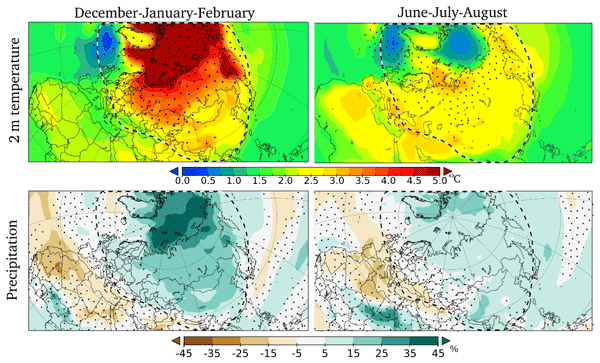
We summarize results during the last 5 years in the northern Eurasian region, especially from Russia, and introduce recent observations of the air quality in the urban environments in China. Although the scientific knowledge in these regions has increased, there are still gaps in our understanding of large-scale climate–Earth surface interactions and feedbacks. This arises from limitations in research infrastructures and integrative data analyses, hindering a comprehensive system analysis.
Cited articles
Aoki, S.: Breakup of land-fast sea ice in Lützow–Holm Bay, East Antarctica, and its teleconnection to tropical Pacific sea surface temperatures, Geophys. Res. Lett., 44, 3219–3227, https://doi.org/10.1002/2017GL072835, 2017.
Arndt, S., Hoppmann, M., Schmithüsen, H., Fraser, A. D., and Nicolaus, M.: Seasonal and interannual variability of landfast sea ice in Atka Bay, Weddell Sea, Antarctica, The Cryosphere, 14, 2775–2793, https://doi.org/10.5194/tc-14-2775-2020, 2020.
Baba, K. and Renwick, J.: Aspects of intraseasonal variability of Antarctic sea ice in austral winter related to ENSO and SAM events, J. Glaciol., 63, 838–846, https://doi.org/10.1017/jog.2017.49, 2017.
Bennetts, L. G. and Teder, N. J.: Fast ice: The last line of defence for weakened Antarctic ice shelves, Nat. Geosci., 18, 574–575, https://doi.org/10.1038/s41561-025-01714-3, 2025.
Bluhm, B., Swadling, K., and Gradinger, R.: Sea ice as a habitat for macrograzers, Sea ice, 3rd edn., edited by: Thomas, D., John Wiley & Sons, Ltd., https://doi.org/10.1002/9781118778371.ch16, 2017.
Brett, G. M., Irvin, A., Rack, W., Hass, C., Langhome, P. J., and Leonard, G. H.: Variability in the distribution of fast ice and the sub-ice platelet layer near McMurdo ice shelf, J. Geophys. Res.-Oceans, 125, e2019JC015678, https://doi.org/10.1029/2019JC015678, 2020.
Chung, E.-S., Kim, S.-J., Timmermann, A., Ha, K.-J., Lee, S.-K., Stuecker, M. F., Rodgers, K. B., Lee, S.-S., and Huang, L.: Antarctic sea-ice expansion and Southern Ocean cooling linked to tropical variability, Nat. Clim. Change, 12, 461–468, https://doi.org/10.1038/s41558-022-01339-z, 2022.
Clem, K. R. and Fogt, R. L.: Varying roles of ENSO and SAM on the Antarctic Peninsula climate in austral spring, J. Geophys. Res.-Atmos., 118, 11481–11492, https://doi.org/10.1002/jgrd.50860, 2013.
Clem, K. R., Renwick, J. A., and McGregor, J.: Large-Scale Forcing of the Amundsen Sea Low and Its Influence on Sea Ice and West Antarctic Temperature, J. Climate, 30, https://doi.org/10.1175/JCLI-D-16-0891.1,2017.
Coggins, J. H. J. and McDonald, A. J.: The influence of the Amundsen Sea Low on the winds in the Ross Sea and surroundings: Insights from a synoptic climatology, J. Geophys. Res.-Atmos., 120, 2167–2189, https://doi.org/10.1002/2014JD022830, 2015.
Crocker, G. B. and Wadhams, P.: Breakup of Antarctic fast ice, Cold Reg. Sci. Technol., 17, 61–76, https://doi.org/10.1038/s41561-025-01714-3, 1989.
Fedotov, V., Cherepanov, N., and Tyshko, K.: Some features of the growth, structure and metamorphism of East Antarctic landfast sea ice, Antarctic research series: Antarctic sea ice: Physical processes, interactions and variability, 1st edn., edited by: Jeffries, M., American Geophysical Union, 343–354, https://doi.org/10.1029/AR074p0343, 1998.
Fogt, R. L., Wovrosh, A. J., Ryan, A. L., and Simmonds, I.: The characteristic variability and connection to the underlying synoptic activity of the Amundsen-Bellingshausen Seas Low, J. Geophys. Res.-Atmos., 117, 7111, https://doi.org/10.1029/2011JD017337, 2012.
Fraser, A. D. and Massom, R.: Circum-Antarctic landfast sea ice extent, 2000–2018, Ver. 2.2, Australian Antarctic Data Centre [data set], https://doi.org/10.26179/5d267d1ceb60c, 2020.
Fraser, A. D., Massom, R. A., Michael, K. J., Galton-Fenzi, B. K., and Lieser, J. L.: East Antarctic landfast sea ice distribution and variability, 2000–08, J. Climate, 25, 1137–1156, https://doi.org/10.1175/JCLI-D-10-05032.1, 2012.
Fraser, A. D., Ohshima, K. I., Nihashi, S., Massom, R. A., Tamura, T., Nakata, K., Williams, G., Carpentier, S., and Willmes, S.: Landfast ice controls on sea-ice production in the Cape Darnley Polynya: A case study, Remote Sens. Environ., 233, 111315, https://doi.org/10.1016/j.rse.2019.111315, 2019.
Fraser, A. D., Massom, R. A., Handcock, M. S., Reid, P., Ohshima, K. I., Raphael, M. N., Cartwright, J., Klekociuk, A. R., Wang, Z., and Porter-Smith, R.: Eighteen-year record of circum-Antarctic landfast-sea-ice distribution allows detailed baseline characterisation and reveals trends and variability, The Cryosphere, 15, 5061–5077, https://doi.org/10.5194/tc-15-5061-2021, 2021.
Grotti, M., Soggia, F., Ianni, C., and Frache, R.: Trace metals distributions in coastal sea ice of Terra Nova Bay, Ross Sea, Antarctica, Antarct. Sci., 17, 289–300, https://doi.org/10.1017/S0954102005002695, 2005.
Heil, P.: Atmospheric conditions and fast ice at Davis, East Antarctica: A case study, J. Geophys. Res., 111, C05009, https://doi.org/10.1029/2005JC002904, 2006.
Herman, A., Wenta, M., and Cheng, S.: Sizes and shapes of sea ice floes broken by waves – A case study from the East Antarctic coast, Front. Earth Sci., 9, 655977, https://doi.org/10.3389/feart.2021.655977, 2021.
Hersbach, H., Bell, B., Berrisford, P., Hirahara, S., Horányi, A., Muñoz-Sabater, J., Nicolas, J., Peubey, C., Radu, R., Schepers, D., Simmons, A., Soci, C., Abdalla, S., Abellan, X., Balsamo, G., Bechtold, P., Biavati, G., Bidlot, J., Bonavita, M., De Chiara, G., Dahlgren, P., Dee, D., Diamantakis, M., Dragani, R., Flemming, J., Forbes, R., Fuentes, M., Geer, A., Haimberger, L., Healy, S., Hogan, R. J., Hólm, E., Janisková, M., Keeley, S., Laloyaux, P., Lopez, P., Lupu, C., Radnoti, G., de Rosnay, P., Rozum, I., Vamborg, F., Villaume, S., and Thépaut J.-N.: The ERA5 global reanalysis, Q. J. Roy. Meteor. Soc., 146, 1999–2049, https://doi.org/10.1002/qj.3803, 2020.
Hersbach, H., Bell, B., Berrisford, P., Biavati, G., Horányi, A., Muñoz Sabater, J., Nicolas, J., Peubey, C., Radu, R., Rozum, I., Schepers, D., Simmons, A., Soci, C., Dee, D., and Thépaut, J.-N.: ERA5 monthly averaged data on single levels from 1940 to present, Copernicus Climate Change Service (C3S) Climate Data Store (CDS) [data set], https://doi.org/10.24381/cds.f17050d7, 2023.
Hoffmann, L. and Spang, R.: An assessment of tropopause characteristics of the ERA5 and ERA-Interim meteorological reanalyses, Atmos. Chem. Phys., 22, 4019–4046, https://doi.org/10.5194/acp-22-4019-2022, 2022.
Hu, H., Zhao, J., Heil, P., Qin, Z., Ma, J., Hui, F., and Cheng, X.: Annual evolution of the ice–ocean interaction beneath landfast ice in Prydz Bay, East Antarctica, The Cryosphere, 17, 2231–2244, https://doi.org/10.5194/tc-17-2231-2023, 2023.
Inall, M., Brearley, A., Henley, S., Fraser, A. D., and Reed, S.: Landfast ice controls on turbulence in Antarctic coastal seas, J. Geophys. Res.-Oceans, 127, e2021JC017963, https://doi.org/10.1029/2021JC017963, 2022.
Irving, D. and Simmonds, I.: A Novel Approach to Diagnosing Southern Hemisphere Planetary Wave Activity and Its Influence on Regional Climate Variability, J. Climate, 28, 9041–9057, https://doi.org/10.1175/JCLI-D-15-0287.1, 2015.
Irving, D. and Simmonds, I.: A New Method for Identifying the Pacific–South American Pattern and Its Influence on Regional Climate Variability, J. Climate, 29, https://doi.org/10.1175/JCLI-D-15-0843.1, 2016.
Kawamura, T., Ohshima, K. I., Takizawa, T., and Ushio, S.: Physical, structural, and isotopic characteristics and growth processes of fast sea ice in Lützow–Holm Bay, Antarctica, J. Geophys. Res., 102, 3345–3355, https://doi.org/10.1029/96JC03206, 1997.
Kharitonov, V. V. and Borodkin, V. A.: Texture features of multi-year fresh ice in the Transcription bay, East Antarctica, in the period of summer melting, Led i Sneg, Ice and Snow, 62, 275–286, https://doi.org/10.31857/s2076673422020132, 2022.
Kusahara, K., Hirano, D., Fujii, M., Fraser, A. D., and Tamura, T.: Modeling intensive ocean–cryosphere interactions in Lützow–Holm Bay, East Antarctica, The Cryosphere, 15, 1697–1717, https://doi.org/10.5194/tc-15-1697-2021, 2021.
Leonard, G. H., Turner, K. E., Richter, M. E., Whittaker, M. S., and Smith, I. J.: Brief communication: The anomalous winter 2019 sea-ice conditions in McMurdo Sound, Antarctica, The Cryosphere, 15, 4999–5006, https://doi.org/10.5194/tc-15-4999-2021, 2021.
Li, N., Lei, R., Heil, P., Cheng, B., Ding, M., Tian, Z., and Li, B.: Seasonal and interannual variability of the landfast ice mass balance between 2009 and 2018 in Prydz Bay, East Antarctica, The Cryosphere, 17, 917–937, https://doi.org/10.5194/tc-17-917-2023, 2023.
Li, X., Shokre, M., Hui, F., Chi, Z., Heil, P., Chen, Z., Yu, Y., Zhai, M., and Cheng, X.: The spatio-temporal patterns of landfast ice in Antarctica during 2006–2011 and 2016–2017 using high-resolution SAR imagery, Remote Sens. Environ., 242, 111736, https://doi.org/10.1016/j.rse.2020.111736, 2020.
Liu, J., Li, X., Wang, S., Wei, Z., Hui, F., and Cheng, X.: Analysis of fast ice anomalies and their causes in 2023 in Prydz Bay, East Antarctica, Advances in Climate Change Research, 2024, 784–797, https://doi.org/10.1016/j.accre.2024.09.002, 2024.
Maksym, T.: Arctic and Antarctic Sea Ice Change: Contrasts, Commonalities, and Causes, Annu. Rev. Mar. Sci., 11, 187–213, https://doi.org/10.1146/annurev-marine-010816-060610, 2019.
Massom, R. A., Scambos, T. A., Bennetts, L. G., Reid, P., Squire, V. A., and Stammerjohn, S. E.: Antarctic ice shelf disintegration triggered by sea ice loss and ocean swell, Nature, 558, 383–389, https://doi.org/10.1038/s41586-018-0212-1, 2018.
McErlich, C., McDonald, A., Renwick, J., and Schuddeboom, A.: An assessment of Southern Hemisphere extratropical cyclones in ERA5 using WindSat. J. Geophys. Res.-Atmos., 128, e2023JD038554, https://doi.org/10.1029/2023JD038554, 2023.
Meehl, G. A., Arblaster, J. M., Bitz, C. M., Chung, C. T. Y., and Teng, H.: Antarctic sea-ice expansion between 2000 and 2014 driven by tropical Pacific decadal climate variability, Nat. Geosci., 9, 590–595, https://doi.org/10.1038/ngeo2751, 2016.
Meiners, K. M., Vancoppenolle, M., Carnat, G., Castellani, G., Delille, B., Delille, D., Dieckmann, G. S., Flores, H., Fripiat, F., Grotti, M., Lange, B. A., Lannuzel, D., Martin, A., McMinn, A., Nomura, D., Peeken, I., Rivaro, P., Ryan, K. G., Stefels, J., Swadling, K. M., Thomas, D. N., Tison, J.-L., van der Merwe, P., van Leeuwe, M. A., Weldrick, C., and Yang, E. J.: Chlorophyll-a in Antarctic landfast sea ice: A first synthesis of historical ice core data, J. Geophys. Res.-Oceans, 123, 8444–8459, https://doi.org/10.1029/2018JC014245, 2018.
Murphy, E. J., Clarke, A., Abram, N. J., and Turner, J.: Variability of sea-ice in the northern Weddell Sea during the 20th century, J. Geophys. Res.-Oceans, 119, 4549–4572, https://doi.org/10.1002/2013JC009511, 2014.
Ohshima, K. I., Fukamachi, Y., Williams, G. D., Nihashi, S., Roquet, F., Kitade, Y., Tamura, T., Hirano, D., Herraiz-Borreguero, L., Field, I., Hindell, M., Aoki, S., and Wakatsuchi, M.: Antarctic Bottom Water production by intense sea-ice formation in the Cape Darnley polynya, Nat. Geosci., 6, 235–240, https://doi.org/10.1038/ngeo1738, 2013.
Porter-Smith, R., McKinlay, J., Fraser, A. D., and Massom, R. A.: Coastal complexity of the Antarctic continent, Earth Syst. Sci. Data, 13, 3103–3114, https://doi.org/10.5194/essd-13-3103-2021, 2021.
Simmonds, I. and Li, M.: Trends and variability in polar sea ice, global atmospheric circulations, and baroclinicity, Ann. NY Acad. Sci., 167–186, https://doi.org/10.1111/nyas.14673, 2021.
Squire, V. A.: Ocean wave interactions with sea ice: A reappraisal, Annu. Rev. Fluid Mech., 52, 37–60, https://doi.org/10.1146/annurev-fluid-010719-060301, 2020.
Teder, N. J., Bennetts, L. G., Reid, P. A., Massom, R. A., Pitt, J. P. A., Scambos, T. A., and Fraser, A. D.: Large-scale ice-shelf calving events follow prolonged amplifications in flexure, Nat. Geosci., 18, 599–606, https://doi.org/10.1038/s41561-025-01713-4, 2025.
Uotila, P., Vihma, T., and Tsukernik, M.: Close interactions between the Antarctic cyclone budget and large-scale atmospheric circulation, Geophys. Res. Lett., 40, https://doi.org/10.1002/grl.50560, 2013.
Ushio, S.: Factors affecting fast-ice break-up frequency in Lützow–Holm Bay, Antarcticaa, Ann. Glaciol., 44, 177–182, https://doi.org/10.3189/172756406781811835, 2006.
Voermans, J. J., Liu, Q., Marchenko, A., Rabault, J., Filchuk, K., Ryzhov, I., Heil, P., Waseda, T., Nose, T., Kodaira, T., Li, J., and Babanin, A. V.: Wave dispersion and dissipation in landfast ice: comparison of observations against models, The Cryosphere, 15, 5557–5575, https://doi.org/10.5194/tc-15-5557-2021, 2021.
Wei, L. and Qin, T.: Characteristics of cyclone climatology and variability in the Southern Ocean, Acta Oceanol. Sin., 35, 59–67, https://doi.org/10.1007/s13131-016-0913-y, 2016.
Wille, J. D., Favier, V., Jourdain, N. C., Kittel, C., Turton, J. V., Agosta, C., Gorodetskaya, I. V., Picard, G., Codron, F., Santos, C. L., Amory, C., Fettweis, X., Blanchet, J., Jomelli, V., and Berchet, A.: Intense atmospheric rivers can weaken ice shelf stability at the Antarctic Peninsula, Communications Earth and Environment, 3, 90, https://doi.org/10.1038/s43247-022-00422-9, 2022.
Xie, P., Wu, S., and Guo, Y.: CPC Daily Blended Outgoing Longwave Radiation (OLR) V1 data, https://www.psl.noaa.gov/data/gridded/data.cpc_blended_olr-2.5deg.html (last access: 14 June 2024), 2023.
Yu, L., Yang, Q., Zhou, M., Lenschow, D. H., Wang, X., Zhao, J., Sun, Q., Tian, Z., Shen, H., and Zhang, L.: The variability of surface radiation fluxes over landfast sea ice near Zhongshan station, east Antarctica during austral spring, Int. J. Digit. Earth, 12, 1–18, https://doi.org/10.1016/j.scitotenv.2019.02.264, 2017.
Yu, L., Zhong, S., Vihma, T., Sui, C., and Sun, B.: Linking the Antarctic sea ice extent changes during 1979–2020 to seasonal modes of Antarctic sea ice variability, Environ. Res. Lett., 17, 114026, https://doi.org/10.1088/1748-9326/ac9c73, 2022.
Zhai, M., Zhao, T., Hui, F., Cheng, X., Liu, A., Yuam, J., Yu, Y., and Ding, M.: Anomalous extensive landfast sea ice in the vicinity of inexpressible Island, Antarctica, Adv. Polar. Sci., 30, 406–411, https://doi.org/10.13679/j.advps.2018.0044, 2019.
Zhao, J., Cheng, B., Vihma, T., Yang, Q., Hui, F., Zhao, B., Hao, G., Shen, H., and Zhang, L.: Observation and thermodynamic modeling of the influence of snow cover on landfast sea ice thickness in Prydz Bay, East Antarctica, Cold Reg. Sci. Technol., 168, 102869, https://doi.org/10.1016/j.coldregions.2019.102869, 2019.
Zhao, J., Cheng, B., Vihma, T., Lu, P., Han, H., and Shu, Q.: The internal melting of landfast sea ice in Prydz Bay, East Antarctica, Environ. Res. Lett., 17, 074012, https://doi.org/10.1088/1748-9326/ac76d9, 2022.
Short summary
This study analyzes the spatial and temporal trends of Antarctic fast ice extent from 2000 to 2018. We also investigate the physical processes through which mid- and low-latitude sea surface temperature anomalies affect fast ice via atmospheric planetary waves, along with seasonal variations in climate forcing mechanisms.
This study analyzes the spatial and temporal trends of Antarctic fast ice extent from 2000 to...


Altmetrics
Final-revised paper
Preprint