
Articles | Volume 26, issue 5
https://doi.org/10.5194/acp-26-3765-2026
© Author(s) 2026. This work is distributed under
the Creative Commons Attribution 4.0 License.
the Creative Commons Attribution 4.0 License.
https://doi.org/10.5194/acp-26-3765-2026
© Author(s) 2026. This work is distributed under
the Creative Commons Attribution 4.0 License.
the Creative Commons Attribution 4.0 License.
Research article
| 
17 Mar 2026
Research article |
| 17 Mar 2026
| 17 Mar 2026
The role of dust mineral composition in atmospheric radiation and pollution in North China: new insights from EMIT and two-way coupled modeling
Chao Gao
State Key Laboratory of Black Soils Conservation and Utilization, Northeast Institute of Geography and Agroecology, Chinese Academy of Sciences, Changchun, 130102, China

State Key Laboratory of Black Soils Conservation and Utilization, Northeast Institute of Geography and Agroecology, Chinese Academy of Sciences, Changchun, 130102, China
School of Geographical Sciences, Liaoning Normal University, Dalian, 116029, China
Hu Yang
State Key Laboratory of Black Soils Conservation and Utilization, Northeast Institute of Geography and Agroecology, Chinese Academy of Sciences, Changchun, 130102, China
Ling Huang
School of Environmental and Chemical Engineering, Shanghai University, Shanghai 200444, China
Hongmei Zhao
State Key Laboratory of Black Soils Conservation and Utilization, Northeast Institute of Geography and Agroecology, Chinese Academy of Sciences, Changchun, 130102, China
Shichun Zhang
State Key Laboratory of Black Soils Conservation and Utilization, Northeast Institute of Geography and Agroecology, Chinese Academy of Sciences, Changchun, 130102, China
Aijun Xiu
State Key Laboratory of Black Soils Conservation and Utilization, Northeast Institute of Geography and Agroecology, Chinese Academy of Sciences, Changchun, 130102, China
Related authors
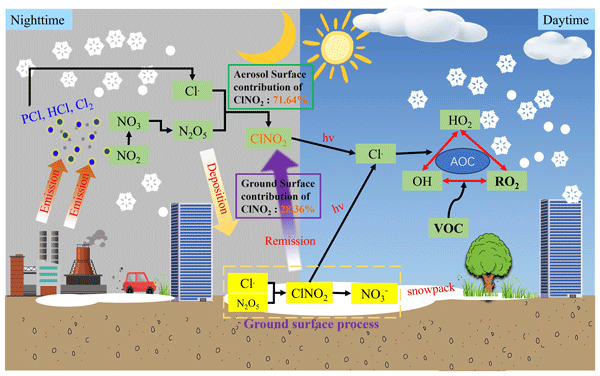
Shengjin Xie, Xuelei Zhang, Aijun Xiu, Hong Qi, Shengrui Tong, Qianjie Chen, Chao Gao, Hongmei Zhao, Shichun Zhang, Stephen Dauda Yabo, Yiming Liu, Siting Li, and Mengduo Zhang
The Cryosphere, 20, 5435–5451, https://doi.org/10.5194/tc-20-5435-2026, https://doi.org/10.5194/tc-20-5435-2026, 2026
Short summary
Short summary
This study examines how snow-covered surfaces affect air pollution in Northeast China. Using numerical simulations, we explore chlorine-related chemical reactions that generate reactive species, enhancing fine particles and ozone. Results show that snow-surface reactions drive nighttime pollutant accumulation and notably improve model performance, providing new insights into how snow and surface chemistry influence regional air quality.
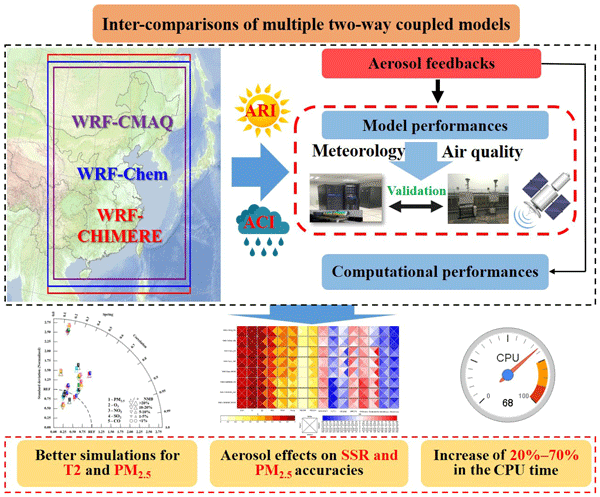
Chao Gao, Xuelei Zhang, Aijun Xiu, Qingqing Tong, Hongmei Zhao, Shichun Zhang, Guangyi Yang, Mengduo Zhang, and Shengjin Xie
Geosci. Model Dev., 17, 2471–2492, https://doi.org/10.5194/gmd-17-2471-2024, https://doi.org/10.5194/gmd-17-2471-2024, 2024
Short summary
Short summary
A comprehensive comparison study is conducted targeting the performances of three two-way coupled meteorology and air quality models (WRF-CMAQ, WRF-Chem, and WRF-CHIMERE) for eastern China during 2017. The impacts of aerosol–radiation–cloud interactions on these models’ results are evaluated against satellite and surface observations. Further improvements to the calculation of aerosol–cloud interactions in these models are crucial to ensure more accurate and timely air quality forecasts.
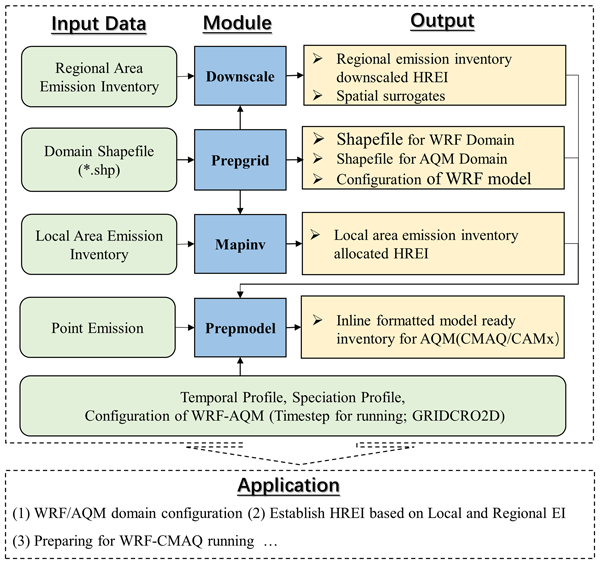
Kun Wang, Chao Gao, Kai Wu, Kaiyun Liu, Haofan Wang, Mo Dan, Xiaohui Ji, and Qingqing Tong
Geosci. Model Dev., 16, 1961–1973, https://doi.org/10.5194/gmd-16-1961-2023, https://doi.org/10.5194/gmd-16-1961-2023, 2023
Short summary
Short summary
This study establishes an easy-to-use and integrated framework for a model-ready emission inventory for the Weather Research and Forecasting (WRF)–Air Quality Numerical Model (AQM). A free tool called the ISAT (Inventory Spatial Allocation Tool) was developed based on this framework. ISAT helps users complete the workflow from the WRF nested-domain configuration to a model-ready emission inventory for AQM with a regional emission inventory and a shapefile for the target region.
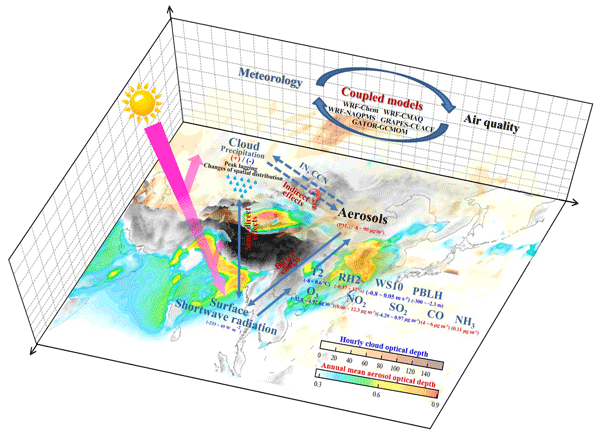
Chao Gao, Aijun Xiu, Xuelei Zhang, Qingqing Tong, Hongmei Zhao, Shichun Zhang, Guangyi Yang, and Mengduo Zhang
Atmos. Chem. Phys., 22, 5265–5329, https://doi.org/10.5194/acp-22-5265-2022, https://doi.org/10.5194/acp-22-5265-2022, 2022
Short summary
Short summary
With ever-growing applications of two-way coupled meteorology and air quality models in Asia over the past decade, this paper summarizes the current status and research focuses, as well as how aerosol effects impact model performance, meteorology, and air quality. These models enable investigations of ARI and ACI effects induced by natural and anthropogenic aerosols in Asia, which has serious air pollution problems. The current gaps and perspectives are also presented and discussed.
Shengjin Xie, Xuelei Zhang, Aijun Xiu, Hong Qi, Shengrui Tong, Qianjie Chen, Chao Gao, Hongmei Zhao, Shichun Zhang, Stephen Dauda Yabo, Yiming Liu, Siting Li, and Mengduo Zhang
The Cryosphere, 20, 5435–5451, https://doi.org/10.5194/tc-20-5435-2026, https://doi.org/10.5194/tc-20-5435-2026, 2026
Short summary
Short summary
This study examines how snow-covered surfaces affect air pollution in Northeast China. Using numerical simulations, we explore chlorine-related chemical reactions that generate reactive species, enhancing fine particles and ozone. Results show that snow-surface reactions drive nighttime pollutant accumulation and notably improve model performance, providing new insights into how snow and surface chemistry influence regional air quality.
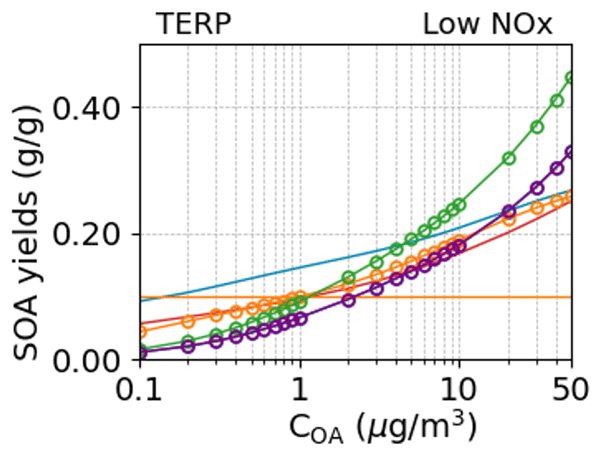
Ling Huang, Benjie Chen, Zi'ang Wu, Katie Tuite, Pradeepa Vennam, Greg Yarwood, and Li Li
Atmos. Chem. Phys., 26, 7895–7915, https://doi.org/10.5194/acp-26-7895-2026, https://doi.org/10.5194/acp-26-7895-2026, 2026
Short summary
Short summary
Secondary organic aerosol (SOA) constitutes a major component of atmospheric aerosol that models must account for to assess how human activities influence air quality, climate, and public health. We find substantial differences in how current air quality models represent SOA highlighting a lack of consensus within the modelling community. Our findings emphasize the need to recognize the limitations of current SOA schemes in the context of air quality management and policy development.
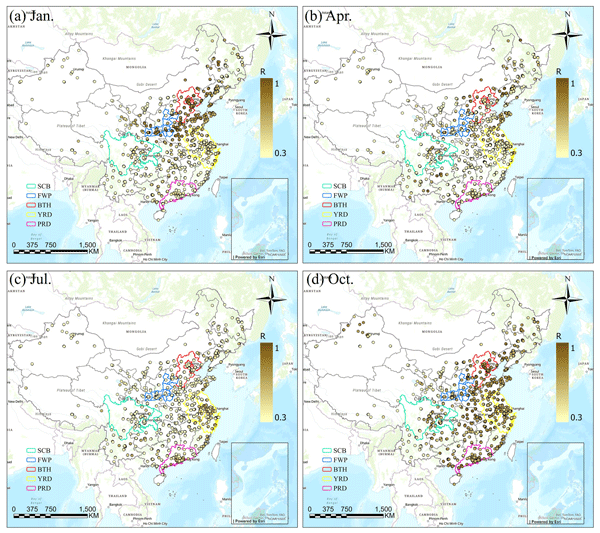
Qingfang Su, Yifei Chen, Yangjun Wang, David C. Wong, Havala O. T. Pye, Ling Huang, Golam Sarwar, Benjamin Murphy, Bryan Place, and Li Li
Geosci. Model Dev., 19, 2531–2550, https://doi.org/10.5194/gmd-19-2531-2026, https://doi.org/10.5194/gmd-19-2531-2026, 2026
Short summary
Short summary
This study evaluated the PM2.5 simulation by the latest Community Regional Atmospheric Chemistry Multiphase Mechanism (CRACMM) mechanism coupled with the Community Multiscale Air Quality (CMAQ) model, covering different seasons and specific regions over China. Modelling results derived by CRACMM are compared with two well-established chemical mechanisms. The research findings provide a solid foundation for the further application of CRACMM in understanding and regulating air pollution globally.
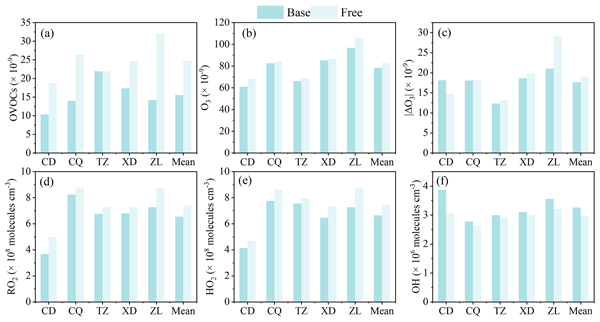
Jingwen Dai, Kun Zhang, Yanli Feng, Xin Yi, Rui Li, Jin Xue, Qing Li, Lishu Shi, Jiaqiang Liao, Yanan Yi, Fangting Wang, Liumei Yang, Hui Chen, Ling Huang, Jiani Tan, Yangjun Wang, and Li Li
Atmos. Chem. Phys., 25, 7467–7484, https://doi.org/10.5194/acp-25-7467-2025, https://doi.org/10.5194/acp-25-7467-2025, 2025
Short summary
Short summary
Oxygenated volatile organic compounds (OVOCs) are important ozone (O3) precursors. However, most O3 formation analysis based on the box model (OBM) does not include any OVOC constraint. To access the interference of OVOCs with O3 simulation, this study presents results from a field campaign and OBM analysis. Our results indicate that no OVOC constraint in the OBM can lead to overestimation of OVOCs, free radicals, and O3.
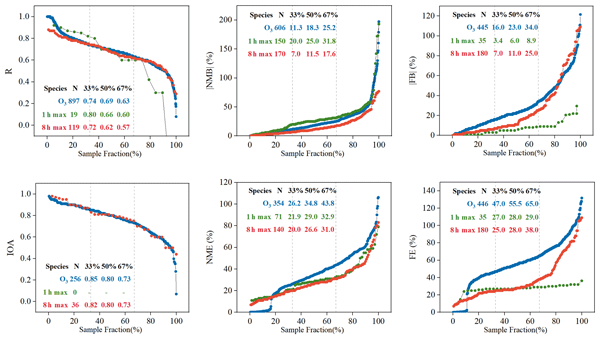
Ling Huang, Xinxin Zhang, Chris Emery, Qing Mu, Greg Yarwood, Hehe Zhai, Zhixu Sun, Shuhui Xue, Yangjun Wang, Joshua S. Fu, and Li Li
Atmos. Chem. Phys., 25, 4233–4249, https://doi.org/10.5194/acp-25-4233-2025, https://doi.org/10.5194/acp-25-4233-2025, 2025
Short summary
Short summary
Ground-level ozone pollution has emerged as a significant air pollutant in China. Chemical transport models (CTMs) serve as crucial tools in addressing ozone pollution. This study reviews CTM applications for simulating ozone in China and proposes goal and criteria benchmark values for evaluating ozone. Along with prior work on PM₂₅ and other pollutants, this effort establishes a comprehensive framework for evaluating CTM performance in China.
Chao Gao, Xuelei Zhang, Aijun Xiu, Qingqing Tong, Hongmei Zhao, Shichun Zhang, Guangyi Yang, Mengduo Zhang, and Shengjin Xie
Geosci. Model Dev., 17, 2471–2492, https://doi.org/10.5194/gmd-17-2471-2024, https://doi.org/10.5194/gmd-17-2471-2024, 2024
Short summary
Short summary
A comprehensive comparison study is conducted targeting the performances of three two-way coupled meteorology and air quality models (WRF-CMAQ, WRF-Chem, and WRF-CHIMERE) for eastern China during 2017. The impacts of aerosol–radiation–cloud interactions on these models’ results are evaluated against satellite and surface observations. Further improvements to the calculation of aerosol–cloud interactions in these models are crucial to ensure more accurate and timely air quality forecasts.
Ling Huang, Jiong Fang, Jiaqiang Liao, Greg Yarwood, Hui Chen, Yangjun Wang, and Li Li
Atmos. Chem. Phys., 23, 14919–14932, https://doi.org/10.5194/acp-23-14919-2023, https://doi.org/10.5194/acp-23-14919-2023, 2023
Short summary
Short summary
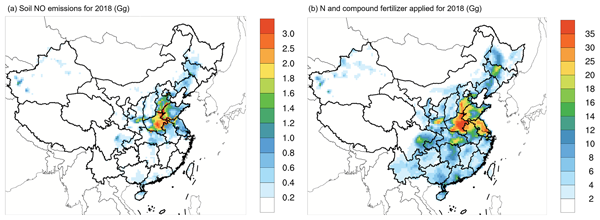
Surface ozone concentrations have emerged as a major environmental issue in China. Although control strategies aimed at reducing NOx emissions from conventional combustion sources are widely recognized, soil NOx emissions have received little attention. The impact of soil NO emissions on ground-level ozone concentration is yet to be evaluated. In this study, we estimated the soil NO emissions and evaluated its impact on ozone formation in China.
Kun Wang, Chao Gao, Kai Wu, Kaiyun Liu, Haofan Wang, Mo Dan, Xiaohui Ji, and Qingqing Tong
Geosci. Model Dev., 16, 1961–1973, https://doi.org/10.5194/gmd-16-1961-2023, https://doi.org/10.5194/gmd-16-1961-2023, 2023
Short summary
Short summary
This study establishes an easy-to-use and integrated framework for a model-ready emission inventory for the Weather Research and Forecasting (WRF)–Air Quality Numerical Model (AQM). A free tool called the ISAT (Inventory Spatial Allocation Tool) was developed based on this framework. ISAT helps users complete the workflow from the WRF nested-domain configuration to a model-ready emission inventory for AQM with a regional emission inventory and a shapefile for the target region.
Rui Li, Kun Zhang, Qing Li, Liumei Yang, Shunyao Wang, Zhiqiang Liu, Xiaojuan Zhang, Hui Chen, Yanan Yi, Jialiang Feng, Qiongqiong Wang, Ling Huang, Wu Wang, Yangjun Wang, Jian Zhen Yu, and Li Li
Atmos. Chem. Phys., 23, 3065–3081, https://doi.org/10.5194/acp-23-3065-2023, https://doi.org/10.5194/acp-23-3065-2023, 2023
Short summary
Short summary
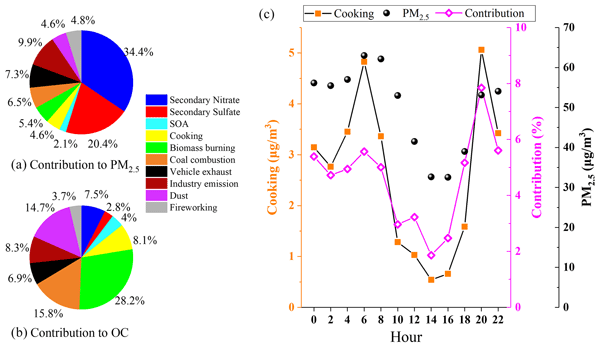
Molecular markers in organic aerosol (OA) provide specific source information on PM2.5, and the contribution of cooking emissions to OA is significant, especially in urban environments. This study investigates the variation in concentrations and oxidative degradation of fatty acids and corresponding oxidation products in ambient air, which can be a guide for the refinement of aerosol source apportionment and provide scientific support for the development of emission source control policies.
Ling Huang, Hanqing Liu, Greg Yarwood, Gary Wilson, Jun Tao, Zhiwei Han, Dongsheng Ji, Yangjun Wang, and Li Li
EGUsphere, https://doi.org/10.5194/egusphere-2022-1502, https://doi.org/10.5194/egusphere-2022-1502, 2023
Preprint archived
Short summary
Short summary
Secondary organic aerosols are an important component of PM2.5, with contributions from anthropogenic, biogenic volatile organic compounds, semi- and intermediate volatility organic compounds. Policy makers need to know which SOA precursors are important. We investigated the role of different SOA precursors and SOA algorithms by applying two commonly used models, CAMx and CMAQ. Suggestions for SOA modelling and control are provided.
Chao Gao, Aijun Xiu, Xuelei Zhang, Qingqing Tong, Hongmei Zhao, Shichun Zhang, Guangyi Yang, and Mengduo Zhang
Atmos. Chem. Phys., 22, 5265–5329, https://doi.org/10.5194/acp-22-5265-2022, https://doi.org/10.5194/acp-22-5265-2022, 2022
Short summary
Short summary
With ever-growing applications of two-way coupled meteorology and air quality models in Asia over the past decade, this paper summarizes the current status and research focuses, as well as how aerosol effects impact model performance, meteorology, and air quality. These models enable investigations of ARI and ACI effects induced by natural and anthropogenic aerosols in Asia, which has serious air pollution problems. The current gaps and perspectives are also presented and discussed.
Kun Zhang, Zhiqiang Liu, Xiaojuan Zhang, Qing Li, Andrew Jensen, Wen Tan, Ling Huang, Yangjun Wang, Joost de Gouw, and Li Li
Atmos. Chem. Phys., 22, 4853–4866, https://doi.org/10.5194/acp-22-4853-2022, https://doi.org/10.5194/acp-22-4853-2022, 2022
Short summary
Short summary
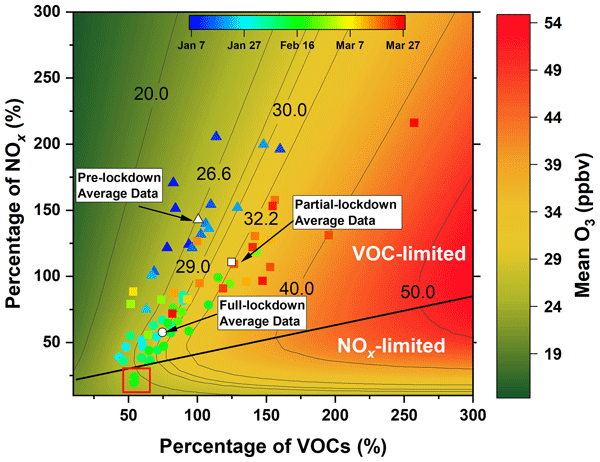
A significant increase in O3 concentrations was found during the lockdown period of COVID-19 in most areas of China. By field measurements coupled with machine learning, an observation-based model (OBM) and sensitivity analysis, we found the changes in the NOx / VOC ratio were a key reason for the significant rise in O3. To restrain O3 pollution, more efforts should be devoted to the control of anthropogenic OVOCs, alkenes and aromatics.
Siqi Ma, Daniel Tong, Lok Lamsal, Julian Wang, Xuelei Zhang, Youhua Tang, Rick Saylor, Tianfeng Chai, Pius Lee, Patrick Campbell, Barry Baker, Shobha Kondragunta, Laura Judd, Timothy A. Berkoff, Scott J. Janz, and Ivanka Stajner
Atmos. Chem. Phys., 21, 16531–16553, https://doi.org/10.5194/acp-21-16531-2021, https://doi.org/10.5194/acp-21-16531-2021, 2021
Short summary
Short summary
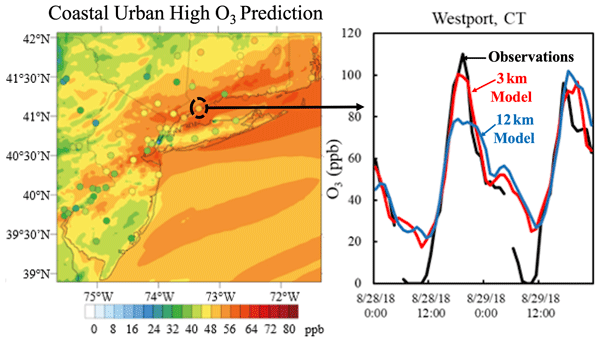
Predicting high ozone gets more challenging as urban emissions decrease. How can different techniques be used to foretell the quality of air to better protect human health? We tested four techniques with the CMAQ model against observations during a field campaign over New York City. The new system proves to better predict the magnitude and timing of high ozone. These approaches can be extended to other regions to improve the predictability of high-O3 episodes in contemporary urban environments.
Cited articles
Adebiyi, A., Kok, J. F., Murray, B. J., Ryder, C. L., Stuut, J.-B. W., Kahn, R. A., Knippertz, P., Formenti, P., Mahowald, N. M., and García-Pando, C. P.: A review of coarse mineral dust in the Earth system, Aeolian Res., 60, 100849, https://doi.org/10.1016/j.aeolia.2022.100849, 2023.
Alapaty, K., Herwehe, J. A., Otte, T. L., Nolte, C. G., Bullock, O. R., Mallard, M. S., Kain, J. S., and Dudhia, J.: Introducing subgrid-scale cloud feedbacks to radiation for regional meteorological and climate modeling, Geophys. Res. Lett., 39, https://doi.org/10.1029/2012GL054031, 2012.
Alfaro, S., Lafon, S., Rajot, J., Formenti, P., Gaudichet, A., and Maille, M.: Iron oxides and light absorption by pure desert dust: An experimental study, J. Geophys. Res.-Atmos., 109, https://doi.org/10.1029/2003JD004374, 2004.
Atkinson, J. D., Murray, B. J., Woodhouse, M. T., Whale, T. F., Baustian, K. J., Carslaw, K. S., Dobbie, S., O'Sullivan, D., and Malkin, T. L.: The importance of feldspar for ice nucleation by mineral dust in mixed-phase clouds, Nature, 498, 355–358, https://doi.org/10.1038/nature12278, 2013.
Balkanski, Y., Bonnet, R., Boucher, O., Checa-Garcia, R., and Servonnat, J.: Better representation of dust can improve climate models with too weak an African monsoon, Atmos. Chem. Phys., 21, 11423–11435, https://doi.org/10.5194/acp-21-11423-2021, 2021.
Briant, R., Tuccella, P., Deroubaix, A., Khvorostyanov, D., Menut, L., Mailler, S., and Turquety, S.: Aerosol–radiation interaction modelling using online coupling between the WRF 3.7.1 meteorological model and the CHIMERE 2016 chemistry-transport model, through the OASIS3-MCT coupler, Geosci. Model Dev., 10, 927–944, https://doi.org/10.5194/gmd-10-927-2017, 2017.
Castellanos, P., Colarco, P., Espinosa, W. R., Guzewich, S. D., Levy, R. C., Miller, R. L., Chin, M., Kahn, R. A., Kemppinen, O., and Moosmüller, H.: Mineral dust optical properties for remote sensing and global modeling: A review, Remote Sens. Environ., 303, 113982, https://doi.org/10.1016/j.rse.2023.113982, 2024.
Chatziparaschos, M., Daskalakis, N., Myriokefalitakis, S., Kalivitis, N., Nenes, A., Gonçalves Ageitos, M., Costa-Surós, M., Pérez García-Pando, C., Zanoli, M., Vrekoussis, M., and Kanakidou, M.: Role of K-feldspar and quartz in global ice nucleation by mineral dust in mixed-phase clouds, Atmos. Chem. Phys., 23, 1785–1801, https://doi.org/10.5194/acp-23-1785-2023, 2023.
Choobari, O. A., Zawar-Reza, P., and Sturman, A.: The global distribution of mineral dust and its impacts on the climate system: A review, Atmos. Res., 138, 152–165, https://doi.org/10.1016/j.atmosres.2013.11.007, 2014.
Claquin, T., Schulz, M., and Balkanski, Y.: Modeling the mineralogy of atmospheric dust sources, J. Geophys. Res.-Atmos., 104, 22243–22256, https://doi.org/10.1029/1999JD900416, 1999.
Connelly, D. S., Thompson, D. R., Mahowald, N. M., Li, L., Carmon, N., Okin, G. S., and Green, R. O.: The EMIT mission information yield for mineral dust radiative forcing, Remote Sens. Environ., 258, 112380, https://doi.org/10.1016/j.rse.2021.112380, 2021.
Cwiertny, D. M., Young, M. A., and Grassian, V. H.: Chemistry and photochemistry of mineral dust aerosol, Annu. Rev. Phys. Chem., 59, 27–51, https://doi.org/10.1146/annurev.physchem.59.032607.093630, 2008.
Duniway, M. C., Pfennigwerth, A. A., Fick, S. E., Nauman, T. W., Belnap, J., and Barger, N. N.: Wind erosion and dust from US drylands: a review of causes, consequences, and solutions in a changing world, Ecosphere, 10, e02650, https://doi.org/10.1002/ecs2.2650, 2019.
Fécan, F., Marticorena, B., and Bergametti, G.: Parametrization of the increase of the aeolian erosion threshold wind friction velocity due to soil moisture for arid and semi-arid areas, Ann. Geophys., 17, 149–157, https://doi.org/10.1007/s00585-999-0149-7, 1998.
Formenti, P., Caquineau, S., Desboeufs, K., Klaver, A., Chevaillier, S., Journet, E., and Rajot, J. L.: Mapping the physico-chemical properties of mineral dust in western Africa: mineralogical composition, Atmos. Chem. Phys., 14, 10663–10686, https://doi.org/10.5194/acp-14-10663-2014, 2014.
Gao, C., Xiu, A., Zhang, X., Tong, Q., Zhao, H., Zhang, S., Yang, G., and Zhang, M.: Two-way coupled meteorology and air quality models in Asia: a systematic review and meta-analysis of impacts of aerosol feedbacks on meteorology and air quality, Atmos. Chem. Phys., 22, 5265–5329, https://doi.org/10.5194/acp-22-5265-2022, 2022.
Gao, C., Zhang, X., Xiu, A., Tong, Q., Zhao, H., Zhang, S., Yang, G., Zhang, M., and Xie, S.: Intercomparison of multiple two-way coupled meteorology and air quality models (WRF v4.1.1–CMAQ v5.3.1, WRF–Chem v4.1.1, and WRF v3.7.1–CHIMERE v2020r1) in eastern China, Geosci. Model Dev., 17, 2471–2492, https://doi.org/10.5194/gmd-17-2471-2024, 2024.
Gao, C., Zhang, X., Yang, H., Huang, L., Zhao, H., Zhang, S., and Xiu, A.: The role of dust mineral composition in atmospheric radiation and pollution in North China: new insights from EMIT and two-way coupled modeling for JGR-Atmosphere paper (0.0.1), Zenodo [data set], https://doi.org/10.5281/zenodo.14728874, 2025a.
Gao, C., Zhang, X., Yang, H., Huang, L., Zhao, H., Zhang, S., and Xiu, A.: The role of dust mineral composition in atmospheric radiation and pollution in North China: new insights from EMIT and two-way coupled modeling for JGR-atmosphere paper (0.0.1), Zenodo [code], https://doi.org/10.5281/zenodo.14729124, 2025b.
Gómez Maqueo Anaya, S., Althausen, D., Faust, M., Baars, H., Heinold, B., Hofer, J., Tegen, I., Ansmann, A., Engelmann, R., Skupin, A., Heese, B., and Schepanski, K.: The implementation of dust mineralogy in COSMO5.05-MUSCAT, Geosci. Model Dev., 17, 1271–1295, https://doi.org/10.5194/gmd-17-1271-2024, 2024.
Gonçalves Ageitos, M., Obiso, V., Miller, R. L., Jorba, O., Klose, M., Dawson, M., Balkanski, Y., Perlwitz, J., Basart, S., Di Tomaso, E., Escribano, J., Macchia, F., Montané, G., Mahowald, N. M., Green, R. O., Thompson, D. R., and Pérez García-Pando, C.: Modeling dust mineralogical composition: sensitivity to soil mineralogy atlases and their expected climate impacts, Atmos. Chem. Phys., 23, 8623–8657, https://doi.org/10.5194/acp-23-8623-2023, 2023.
Green, R. O., Mahowald, N., Ung, C., Thompson, D. R., Bator, L., Bennet, M., Bernas, M., Blackway, N., Bradley, C., and Cha, J.: The Earth surface mineral dust source investigation: An Earth science imaging spectroscopy mission, 2020 IEEE aerospace conference, 1–15, https://doi.org/10.1109/AERO47225.2020.9172731, 2020.
Harrison, A. D., Whale, T. F., Carpenter, M. A., Holden, M. A., Neve, L., O'Sullivan, D., Vergara Temprado, J., and Murray, B. J.: Not all feldspars are equal: a survey of ice nucleating properties across the feldspar group of minerals, Atmos. Chem. Phys., 16, 10927–10940, https://doi.org/10.5194/acp-16-10927-2016, 2016.
Journet, E., Balkanski, Y., and Harrison, S. P.: A new data set of soil mineralogy for dust-cycle modeling, Atmos. Chem. Phys., 14, 3801–3816, https://doi.org/10.5194/acp-14-3801-2014, 2014.
Ke, Z., Liu, X., Wu, M., Shan, Y., and Shi, Y.: Improved dust representation and impacts on dust transport and radiative effect in CAM5, J. Adv. Model. Earth Sy., 14, e2021MS002845, https://doi.org/10.1029/2021MS002845, 2022.
Kim, H. and Choi, M.: Impact of soil moisture on dust outbreaks in East Asia: Using satellite and assimilation data, Geophys. Res. Lett., 42, 2789–2796, https://doi.org/10.1002/2015GL063325, 2015.
Klingmüller, K., Lelieveld, J., Karydis, V. A., and Stenchikov, G. L.: Direct radiative effect of dust–pollution interactions, Atmos. Chem. Phys., 19, 7397–7408, https://doi.org/10.5194/acp-19-7397-2019, 2019.
Kok, J. F., Mahowald, N. M., Fratini, G., Gillies, J. A., Ishizuka, M., Leys, J. F., Mikami, M., Park, M.-S., Park, S.-U., Van Pelt, R. S., and Zobeck, T. M.: An improved dust emission model – Part 1: Model description and comparison against measurements, Atmos. Chem. Phys., 14, 13023–13041, https://doi.org/10.5194/acp-14-13023-2014, 2014.
Kok, J. F., Ridley, D. A., Zhou, Q., Miller, R. L., Zhao, C., Heald, C. L., Ward, D. S., Albani, S., and Haustein, K.: Smaller desert dust cooling effect estimated from analysis of dust size and abundance, Nat. Geosci., 10, 274–278, https://doi.org/10.1038/ngeo2912, 2017.
Kok, J. F., Storelvmo, T., Karydis, V. A., Adebiyi, A. A., Mahowald, N. M., Evan, A. T., He, C., and Leung, D. M.: Mineral dust aerosol impacts on global climate and climate change, Nature Reviews Earth & Environment, 4, 71–86, https://doi.org/10.1038/s43017-022-00379-5, 2023.
Kumar, A., Marcolli, C., Luo, B., and Peter, T.: Ice nucleation activity of silicates and aluminosilicates in pure water and aqueous solutions – Part 1: The K-feldspar microcline, Atmos. Chem. Phys., 18, 7057–7079, https://doi.org/10.5194/acp-18-7057-2018, 2018.
Lafon, S., Sokolik, I. N., Rajot, J. L., Caquineau, S., and Gaudichet, A.: Characterization of iron oxides in mineral dust aerosols: Implications for light absorption, J. Geophys. Res.-Atmos., 111, https://doi.org/10.1029/2005JD007016, 2006.
Li, L. and Sokolik, I. N.: The dust direct radiative impact and Its sensitivity to the land surface state and key minerals in the WRF-Chem-DuMo Model: a case study of dust storms in Central Asia, J. Geophys. Res.-Atmos., 123, 4564–4582, https://doi.org/10.1029/2017JD027667, 2018.
Li, L., Mahowald, N. M., Miller, R. L., Pérez García-Pando, C., Klose, M., Hamilton, D. S., Gonçalves Ageitos, M., Ginoux, P., Balkanski, Y., Green, R. O., Kalashnikova, O., Kok, J. F., Obiso, V., Paynter, D., and Thompson, D. R.: Quantifying the range of the dust direct radiative effect due to source mineralogy uncertainty, Atmos. Chem. Phys., 21, 3973–4005, https://doi.org/10.5194/acp-21-3973-2021, 2021.
Li, L., Mahowald, N. M., Kok, J. F., Liu, X., Wu, M., Leung, D. M., Hamilton, D. S., Emmons, L. K., Huang, Y., Sexton, N., Meng, J., and Wan, J.: Importance of different parameterization changes for the updated dust cycle modeling in the Community Atmosphere Model (version 6.1), Geosci. Model Dev., 15, 8181–8219, https://doi.org/10.5194/gmd-15-8181-2022, 2022.
Li, L., Mahowald, N. M., Gonçalves Ageitos, M., Obiso, V., Miller, R. L., Pérez García-Pando, C., Di Biagio, C., Formenti, P., Brodrick, P. G., and Clark, R. N.: Improved constraints on hematite refractive index for estimating climatic effects of dust aerosols, Communications Earth & Environment, 5, 295, https://doi.org/10.1038/s43247-024-01441-4, 2024.
Ma, Q., Zhong, C., Ma, J., Ye, C., Zhao, Y., Liu, Y., Zhang, P., Chen, T., Liu, C., and Chu, B.: Comprehensive study about the photolysis of nitrates on mineral oxides, Environ. Sci. Technol., 55, 8604–8612, https://doi.org/10.1021/acs.est.1c02182, 2021.
Maher, B. A., Prospero, J. M., Mackie, D., Gaiero, D., Hesse, P. P., and Balkanski, Y.: Global connections between aeolian dust, climate and ocean biogeochemistry at the present day and at the last glacial maximum, Earth-Sci. Rev., 99, 61–97, https://doi.org/10.1016/j.earscirev.2009.12.001, 2010.
Menut, L., Siour, G., Bessagnet, B., Couvidat, F., Journet, E., Balkanski, Y., and Desboeufs, K.: Modelling the mineralogical composition and solubility of mineral dust in the Mediterranean area with CHIMERE 2017r4, Geosci. Model Dev., 13, 2051–2071, https://doi.org/10.5194/gmd-13-2051-2020, 2020.
Menut, L., Bessagnet, B., Cholakian, A., Siour, G., Mailler, S., and Pennel, R.: What is the relative impact of nudging and online coupling on meteorological variables, pollutant concentrations and aerosol optical properties?, Geosci. Model Dev., 17, 3645–3665, https://doi.org/10.5194/gmd-17-3645-2024, 2024.
Nickovic, S., Vukovic, A., Vujadinovic, M., Djurdjevic, V., and Pejanovic, G.: Technical Note: High-resolution mineralogical database of dust-productive soils for atmospheric dust modeling, Atmos. Chem. Phys., 12, 845–855, https://doi.org/10.5194/acp-12-845-2012, 2012.
Obiso, V., Gonçalves Ageitos, M., Pérez García-Pando, C., Perlwitz, J. P., Schuster, G. L., Bauer, S. E., Di Biagio, C., Formenti, P., Tsigaridis, K., and Miller, R. L.: Observationally constrained regional variations of shortwave absorption by iron oxides emphasize the cooling effect of dust, Atmos. Chem. Phys., 24, 5337–5367, https://doi.org/10.5194/acp-24-5337-2024, 2024.
Pang, M., Jin, J., Segers, A., Jiang, H., Han, W., Buyantogtokh, B., Xia, J., Fang, L., Li, J., Lin, H. X., and Liao, H.: Valid time shifting ensemble Kalman filter (VTS-EnKF) for dust storm forecasting, Geosci. Model Dev., 17, 8223–8242, https://doi.org/10.5194/gmd-17-8223-2024, 2024.
Panta, A., Kandler, K., Alastuey, A., González-Flórez, C., González-Romero, A., Klose, M., Querol, X., Reche, C., Yus-Díez, J., and Pérez García-Pando, C.: Insights into the single-particle composition, size, mixing state, and aspect ratio of freshly emitted mineral dust from field measurements in the Moroccan Sahara using electron microscopy, Atmos. Chem. Phys., 23, 3861–3885, https://doi.org/10.5194/acp-23-3861-2023, 2023.
Ryder, C. L., McQuaid, J. B., Flamant, C., Rosenberg, P. D., Washington, R., Brindley, H. E., Highwood, E. J., Marsham, J. H., Parker, D. J., Todd, M. C., Banks, J. R., Brooke, J. K., Engelstaedter, S., Estelles, V., Formenti, P., Garcia-Carreras, L., Kocha, C., Marenco, F., Sodemann, H., Allen, C. J. T., Bourdon, A., Bart, M., Cavazos-Guerra, C., Chevaillier, S., Crosier, J., Darbyshire, E., Dean, A. R., Dorsey, J. R., Kent, J., O'Sullivan, D., Schepanski, K., Szpek, K., Trembath, J., and Woolley, A.: Advances in understanding mineral dust and boundary layer processes over the Sahara from Fennec aircraft observations, Atmos. Chem. Phys., 15, 8479–8520, https://doi.org/10.5194/acp-15-8479-2015, 2015.
Scanza, R. A., Mahowald, N., Ghan, S., Zender, C. S., Kok, J. F., Liu, X., Zhang, Y., and Albani, S.: Modeling dust as component minerals in the Community Atmosphere Model: development of framework and impact on radiative forcing, Atmos. Chem. Phys., 15, 537–561, https://doi.org/10.5194/acp-15-537-2015, 2015.
Schepanski, K.: Transport of mineral dust and its impact on climate, Geosciences, 8, 151, https://doi.org/10.3390/geosciences8050151, 2018.
Shao, Y. and Lu, H.: A simple expression for wind erosion threshold friction velocity, J. Geophys. Res.-Atmos., 105, 22437–22443, https://doi.org/10.1029/2000JD900304, 2000.
Shao, Y., Wyrwoll, K.-H., Chappell, A., Huang, J., Lin, Z., McTainsh, G. H., Mikami, M., Tanaka, T. Y., Wang, X., and Yoon, S.: Dust cycle: An emerging core theme in Earth system science, Aeolian Res., 2, 181–204, https://doi.org/10.1016/j.aeolia.2011.02.001, 2011.
Sokolik, I. N. and Toon, O. B.: Incorporation of mineralogical composition into models of the radiative properties of mineral aerosol from UV to IR wavelengths, J. Geophys. Res., 104, 9423–9444, https://doi.org/10.1029/1998JD200048, 1999.
Solomos, S., Spyrou, C., Bartsotas, N. S., Sykioti, O., Amiridis, V., Gkikas, A., Marinou, E., Katsafados, P., Tsarpalis, K., and Pejanovic, G.: The Development of a Dust Mineralogy Map from Satellite Retrievals and Implementation in WRF-Chem, Environmental Sciences Proceedings, 26, 54, https://doi.org/10.3390/environsciproc2023026054, 2023a.
Solomos, S., Spyrou, C., Barreto, A., Rodríguez, S., González, Y., Neophytou, M. K., Mouzourides, P., Bartsotas, N. S., Kalogeri, C., and Nickovic, S.: The development of METAL-WRF Regional Model for the Description of Dust Mineralogy in the Atmosphere, Atmosphere-Basel, 14, 1615, https://doi.org/10.3390/atmos14111615, 2023b.
Song, Q., Ginoux, P., Gonçalves Ageitos, M., Miller, R. L., Obiso, V., and Pérez García-Pando, C.: Modeling impacts of dust mineralogy on fast climate response, Atmos. Chem. Phys., 24, 7421–7446, https://doi.org/10.5194/acp-24-7421-2024, 2024.
Su, L. and Fung, J. C.: Sensitivities of WRF-Chem to dust emission schemes and land surface properties in simulating dust cycles during springtime over East Asia, J. Geophys. Res.-Atmos., 120, 11–215, https://doi.org/10.1002/2015JD023446, 2015.
Tang, W., Yang, K., Qin, J., Li, X., and Niu, X.: A 16 year dataset (2000–2015) of high-resolution (3 h, 10 km) global surface solar radiation, Earth Syst. Sci. Data, 11, 1905–1915, https://doi.org/10.5194/essd-11-1905-2019, 2019.
Tong, D. Q., Gill, T. E., Sprigg, W. A., Van Pelt, R. S., Baklanov, A. A., Barker, B. M., Bell, J. E., Castillo, J., Gassó, S., and Gaston, C. J.: Health and safety effects of airborne soil dust in the Americas and beyond, Rev. Geophys., 61, e2021RG000763, https://doi.org/10.1029/2021RG000763, 2023.
Tuccella, P., Menut, L., Briant, R., Deroubaix, A., Khvorostyanov, D., Mailler, S., Siour, G., and Turquety, S.: Implementation of Aerosol-Cloud Interaction within WRF-CHIMERE Online Coupled Model: Evaluation and Investigation of the Indirect Radiative Effect from Anthropogenic Emission Reduction on the Benelux Union, Atmosphere-Basel, 10, 20, https://doi.org/10.3390/atmos10010020, 2019.
Usher, C. R., Michel, A. E., and Grassian, V. H.: Reactions on mineral dust, Chem. Rev., 103, 4883–4940, https://doi.org/10.1021/cr020657y, 2003.
Wang, X., Zhang, L., and Moran, M. D.: Development of a new semi-empirical parameterization for below-cloud scavenging of size-resolved aerosol particles by both rain and snow, Geosci. Model Dev., 7, 799–819, https://doi.org/10.5194/gmd-7-799-2014, 2014.
Willis, P. T. and Tattelman, P.: Drop-size distributions associated with intense rainfall, J. Appl. Meteorol. Clim., 28, 3–15, https://doi.org/10.1175/1520-0450(1989)028<0003:DSDAWI>2.0.CO;2, 1989.
Zhang, L., Gong, S., Padro, J., and Barrie, L.: A size-segregated particle dry deposition scheme for an atmospheric aerosol module, Atmos. Environ., 35, 549–560, https://doi.org/10.1016/S1352-2310(00)00326-5, 2001.
Zuo, X., Zhang, C., Zhang, X., Wang, R., Zhao, J., and Li, W.: Wind tunnel simulation of wind erosion and dust emission processes, and the influences of soil texture, International Soil and Water Conservation Research, 12, 455–466, https://doi.org/10.1016/j.iswcr.2023.08.005, 2024.
Short summary
Mineral dust impacts climate and air quality, varying by composition. This study examined its effects on radiation and pollution during a North China dust storm using WRF-CHIMERE and three dust atlases. Bulk dust had a shortwave radiative forcing of -5.72 W/m², while mineral-specific effects increased it by +0.10 W/m². Aerosol-radiation interactions raised PM₁₀ to 1189.48 μg/m³. Accurate mineral data is essential for improving dust-related climate and air quality simulations.
Mineral dust impacts climate and air quality, varying by composition. This study examined its...


Altmetrics
Final-revised paper
Preprint