
Articles | Volume 26, issue 4
https://doi.org/10.5194/acp-26-3107-2026
© Author(s) 2026. This work is distributed under
the Creative Commons Attribution 4.0 License.
the Creative Commons Attribution 4.0 License.
https://doi.org/10.5194/acp-26-3107-2026
© Author(s) 2026. This work is distributed under
the Creative Commons Attribution 4.0 License.
the Creative Commons Attribution 4.0 License.
Research article
| 
02 Mar 2026
Research article |
| 02 Mar 2026
| 02 Mar 2026
In-tandem multi-waveband particulate absorption and size observations yield substantial changes in radiative forcing over industrial Central China
Luoyao Guan
Jiangsu Key Laboratory of Coal-Based Greenhouse Gas Control and Utilization, School of Environment and Spatial Informatics, China University of Mining and Technology, Xuzhou, China

Jiangsu Key Laboratory of Coal-Based Greenhouse Gas Control and Utilization, School of Environment and Spatial Informatics, China University of Mining and Technology, Xuzhou, China
Shuo Wang
Jiangsu Key Laboratory of Coal-Based Greenhouse Gas Control and Utilization, School of Environment and Spatial Informatics, China University of Mining and Technology, Xuzhou, China
Carbon Neutrality Institute, China University of Mining and Technology, Xuzhou, China
Pravash Tiwari
Jiangsu Key Laboratory of Coal-Based Greenhouse Gas Control and Utilization, School of Environment and Spatial Informatics, China University of Mining and Technology, Xuzhou, China
Zhewen Liu
Jiangsu Key Laboratory of Coal-Based Greenhouse Gas Control and Utilization, School of Environment and Spatial Informatics, China University of Mining and Technology, Xuzhou, China
Zhengqiang Li
State Environmental Protection Key Laboratory of Satellite Remote Sensing & Key Laboratory of Remote Sensing and Digital Earth, Aerospace Information Research Institute, Chinese Academy of Sciences, Beijing, China
Jiangsu Key Laboratory of Coal-Based Greenhouse Gas Control and Utilization, School of Environment and Spatial Informatics, China University of Mining and Technology, Xuzhou, China
Related authors
Zhewen Liu, Jason B. Cohen, Pravash Tiwari, Luoyao Guan, Shuo Wang, Zhengqiang Li, and Kai Qin
Earth Syst. Sci. Data, 18, 507–533, https://doi.org/10.5194/essd-18-507-2026, https://doi.org/10.5194/essd-18-507-2026, 2026
Short summary
Short summary
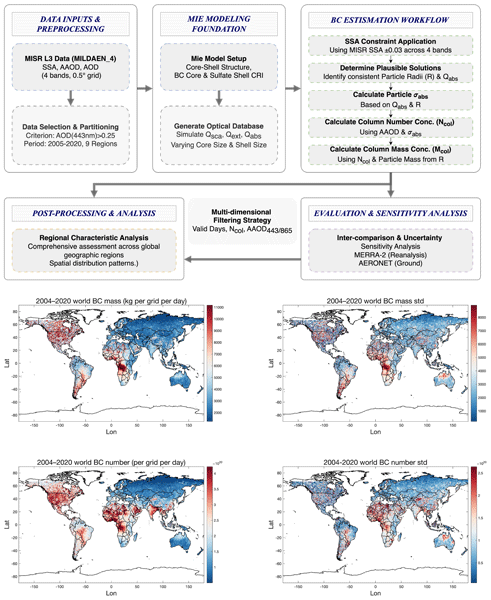
Black carbon (BC), emitted from fires, industry, and fossil fuels, warms the climate and worsens air quality. Due to complex physical and optical properties, BC remains poorly constrained. We combined satellite observations with physical models to build a daily, high-resolution, decadal global dataset of BC mass, number, size, and mixing details. The data contains both known sources and new hotspots. These results can support climate models, satellite products, and pollution mitigation.
Wei Hu, Jason Blake Cohen, Lingxiao Lu, Bo Zheng, Pravash Tiwari, Simone Lolli, Andrea Garzelli, Jun Li, and Kai Qin
EGUsphere, https://doi.org/10.5194/egusphere-2026-4468, https://doi.org/10.5194/egusphere-2026-4468, 2026
This preprint is open for discussion and under review for Atmospheric Chemistry and Physics (ACP).
Short summary
Short summary
This study presents a perturbation experiment to investigate the impact of satellite data uncertainty which are not fully removed using a fast and physically-based divergence operator. The shape of the uncertainty distribution governs error propagation and thus effects the stability of derived fluxes. Coal-based emissions sources are reliably captured. These results provide a practical, uncertainty‑aware filter for satellite‑derived methane emissions.
Xinqi Wei, Qin He, and Kai Qin
Int. Arch. Photogramm. Remote Sens. Spatial Inf. Sci., XLIX-B3-2026, 1477–1485, https://doi.org/10.5194/isprs-archives-XLIX-B3-2026-1477-2026, https://doi.org/10.5194/isprs-archives-XLIX-B3-2026-1477-2026, 2026
Huiru Zhong, Lu Shen, Fengwei Wan, Meng Qu, and Kai Qin
Atmos. Meas. Tech., 19, 4759–4778, https://doi.org/10.5194/amt-19-4759-2026, https://doi.org/10.5194/amt-19-4759-2026, 2026
Short summary
Short summary
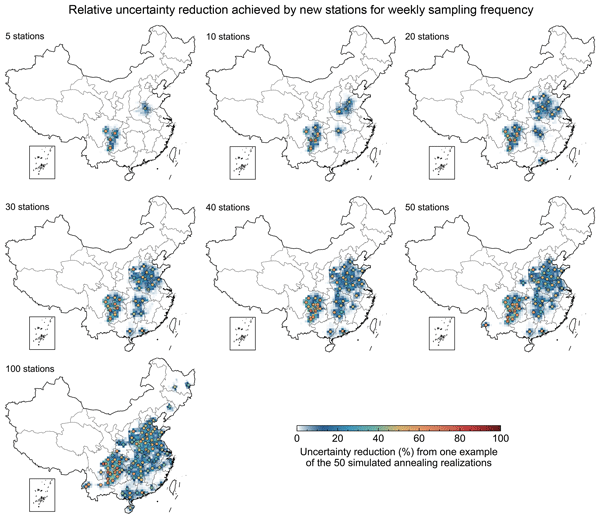
Methane is a potent greenhouse gas, yet existing satellite and ground observations in China are too sparse to accurately quantify emissions, highlighting the need for an expanded ground network. Using Bayesian inversion and simulated annealing, we identify optimal locations for new sites. Results show that prioritizing stations in eastern and southwestern China would be most effective. Expanding the network with 50 stations could nearly double the current emission constraint capability.
Zihan Zhang and Zhengqiang Li
ISPRS Ann. Photogramm. Remote Sens. Spatial Inf. Sci., XI-3-2026, 989–994, https://doi.org/10.5194/isprs-annals-XI-3-2026-989-2026, https://doi.org/10.5194/isprs-annals-XI-3-2026-989-2026, 2026
Xinran Jiang, Gerrit de Leeuw, Cheng Fan, Jeon-Teo Dong, and Zhengqiang Li
EGUsphere, https://doi.org/10.5194/egusphere-2026-3382, https://doi.org/10.5194/egusphere-2026-3382, 2026
Short summary
Short summary
Evaluation of satellite greenhouse gas data is crucial for climate monitoring and mitigation. We assessed four XCO2 Proxy XCH4 results using Hefei and Xianghe TCCON sites in China. We found that the accuracy of retrieval products varies between both sites. Fundamental assumption of Proxy method leaves uncertainties. Independent XCO2 proxy comparison with TCCON data show discrepancies requiring continuous evaluation for proper determination of XCH4.
Pravash Tiwari, Jason Blake Cohen, Hongrui Gao, Lingxiao Lu, Jun Wang, Oleg Dubovik, and Kai Qin
Atmos. Chem. Phys., 26, 9149–9180, https://doi.org/10.5194/acp-26-9149-2026, https://doi.org/10.5194/acp-26-9149-2026, 2026
Short summary
Short summary
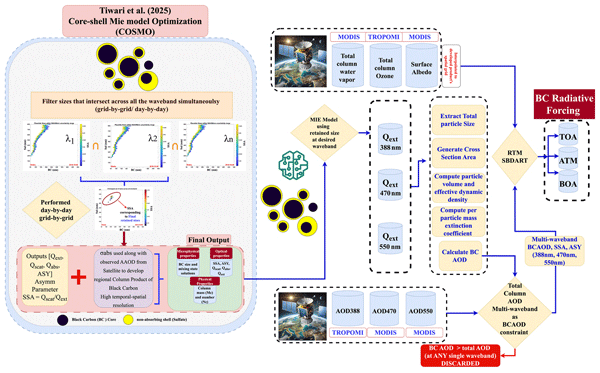
Black carbon's climate impact is highly uncertain because its radiative effect depends on particle size, mixing state, and column loading. This study combines satellite data, physics-based simulations, and machine learning to estimate black carbon forcing across contrasting regions. The same black carbon amount can warm or cool the atmosphere depending on local aerosol properties. The machine learning framework provides a fast, transferable tool for regional climate assessment.
Hongrui Gao, Qin He, Kai Qin, Jhoon Kim, Diego Loyola, Pravash Tiwari, Lingxiao Lu, and Jason Blake Cohen
Earth Syst. Sci. Data Discuss., https://doi.org/10.5194/essd-2026-443, https://doi.org/10.5194/essd-2026-443, 2026
Revised manuscript accepted for ESSD
Short summary
Short summary
There are always gaps in satellite records of air pollution because of factors such as clouds and operating conditions. We used a physics-aware deep learning method, producing a gapless 0.05° hourly dataset of tropospheric nitrogen dioxide over Asian pollution hotspots from 2019 to 2024. The dataset can capture sub-daily changes, revealing how traffic, industry, and clean-air policies shaped pollution, supporting health and environment studies.
Xingyu Yao, Ying Zhang, Xiaofan Li, Gerrit de Leeuw, Cheng Fan, Yuanxun Zhang, Zhanshan Wang, Yongjie Wei, and Zhengqiang Li
EGUsphere, https://doi.org/10.5194/egusphere-2026-2619, https://doi.org/10.5194/egusphere-2026-2619, 2026
Short summary
Short summary
Cities are major sources of carbon emissions, but measuring them accurately remains challenging. This study combines satellite observations with atmospheric modeling to estimate city-scale carbon dioxide emissions. Tests in three Chinese cities show that observation uncertainty and total error strongly influence emission estimates and their spatial patterns. The results are consistent with existing datasets and support improved urban emission monitoring.
Bo Zheng, Jason Blake Cohen, Lingxiao Lu, Wei Hu, Pravash Tiwari, Simone Lolli, Andrea Garzelli, Hui Su, and Kai Qin
Atmos. Chem. Phys., 26, 1931–1946, https://doi.org/10.5194/acp-26-1931-2026, https://doi.org/10.5194/acp-26-1931-2026, 2026
Short summary
Short summary
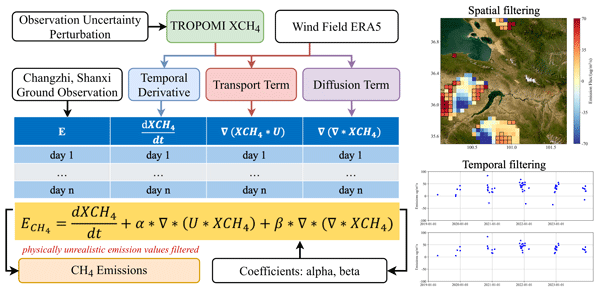
This study provides TROPOMI (TROPOspheric Monitoring Instrument) with a new methane emission estimation method that can accurately identify emission sources. Our results generate non-negative emission datasets using objective selection and filtering methods. The results include lower minimum emission thresholds for all power grids and fewer false positives. The new method provides more robust emission quantification in the face of data uncertainty, going beyond traditional plume identification and background subtraction.
Zhewen Liu, Jason B. Cohen, Pravash Tiwari, Luoyao Guan, Shuo Wang, Zhengqiang Li, and Kai Qin
Earth Syst. Sci. Data, 18, 507–533, https://doi.org/10.5194/essd-18-507-2026, https://doi.org/10.5194/essd-18-507-2026, 2026
Short summary
Short summary
Black carbon (BC), emitted from fires, industry, and fossil fuels, warms the climate and worsens air quality. Due to complex physical and optical properties, BC remains poorly constrained. We combined satellite observations with physical models to build a daily, high-resolution, decadal global dataset of BC mass, number, size, and mixing details. The data contains both known sources and new hotspots. These results can support climate models, satellite products, and pollution mitigation.
Ye Feng, Jason Blake Cohen, Xiaolu Li, Lingxiao Lu, Zhewen Liu, Lei Wang, Jian Liu, and Kai Qin
EGUsphere, https://doi.org/10.5194/egusphere-2025-5890, https://doi.org/10.5194/egusphere-2025-5890, 2026
Short summary
Short summary
Carbon monoxide emissions in Central Asia's coal-heavy regions, like Xinjiang Province and Kazakhstan, are poorly tracked. Using satellite data and a new approach, this study maps daily emissions (2019–2024) while addressing measurement errors. About 69 % of estimates were unreliable. Underground coal fires, often ignored, emit as much CO as power plants. Emissions peaked in 2019, dropped until 2022, then rose again, linking to policy changes and economic shifts.
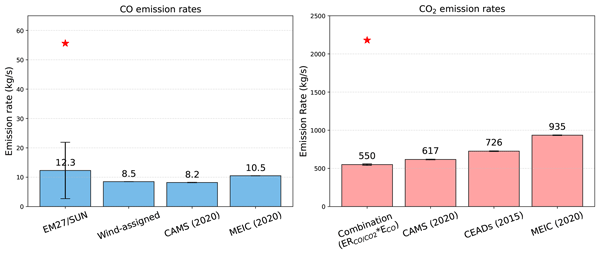
Qiansi Tu, Frank Hase, Ying Zhang, Jiaxin Fang, Yanwu Jiang, Xiaofan Li, Matthias Schneider, Zhuolin Yang, Xin Zhang, and Zhengqiang Li
Atmos. Chem. Phys., 25, 17779–17796, https://doi.org/10.5194/acp-25-17779-2025, https://doi.org/10.5194/acp-25-17779-2025, 2025
Short summary
Short summary
Understanding greenhouse gas and air pollutant concentrations and emissions characteristics in the Qinghai-Tibetan Plateau cities remains limited. We present the first CO2, CH4 and CO abundances using a portal Fourier-transform infrared (FTIR) spectrometer in Xining. Ground-based data exceeded satellite/model estimates, indicating higher local emissions. Strong CO discrepancies and ∆XCO–∆XCO2 correlation under easterly winds highlight the value of portable FTIR for urban emission studies.
Yan Wang, Yujia Cao, Haixiao Yu, Shuo Wang, Qiaoyun Hu, Yuyang Chang, Chun Zhao, Zhengqiang Li, and Cheng Chen
EGUsphere, https://doi.org/10.5194/egusphere-2025-5076, https://doi.org/10.5194/egusphere-2025-5076, 2025
Preprint archived
Short summary
Short summary
Pyrocumulonimbus (PyroCb) convection during the August 2024 North American wildfires injected smoke aerosols into the upper troposphere and lower stratosphere, altering cloud microphysics. These aerosols induced warming near fire sources and downwind over Western Europe, while producing contrasting effects over fire-source regions, cooling along the US West Coast and warming across North America, demonstrating strong wildfire-aerosol-cloud-radiation feedbacks with transcontinental impacts.
Zhe Ji, Zhengqiang Li, Gerrit de Leeuw, Zihan Zhang, Yan Ma, Zheng Shi, Cheng Fan, and Qian Yao
Atmos. Meas. Tech., 18, 5783–5803, https://doi.org/10.5194/amt-18-5783-2025, https://doi.org/10.5194/amt-18-5783-2025, 2025
Short summary
Short summary
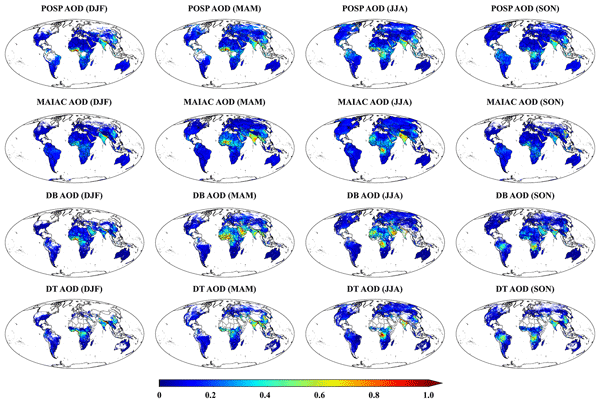
A global AOD product from Particulate Observing Scanning Polarimeter (POSP) has been proposed and validated using Aerosol Robotic Network (AERONET). Results show a high accuracy, with correlation coefficients (R) of 0.914, a root mean square error (RMSE) of 0.085, outperforming Moderate Resolution Imaging Spectroradiometer (MODIS). Error analysis reveals seasonal variation with lower accuracy in autumn/winter, and increased uncertainty with lower Normalized Difference Vegetation Index NDVI.
Cheng Fan, Gerrit de Leeuw, Xiaoxi Yan, Jiantao Dong, Hanqing Kang, Chengwei Fang, Zhengqiang Li, and Ying Zhang
Atmos. Chem. Phys., 25, 11951–11973, https://doi.org/10.5194/acp-25-11951-2025, https://doi.org/10.5194/acp-25-11951-2025, 2025
Short summary
Short summary
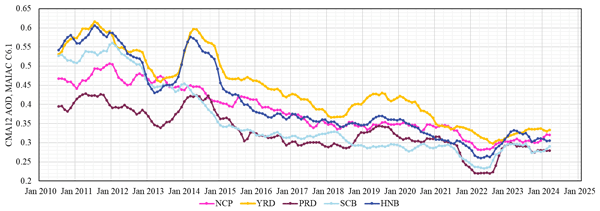
This study describes the analysis of time series of the MODIS-derived aerosol optical depth (AOD) over China between 2010 and 2024. Emission reduction policies were effective with respect to reducing the AOD until 2018. Thereafter, the overall reduction until the end of the study was very small due to unfavorable meteorological factors cancelling favorable anthropogenic effects and resulting in an AOD increase during extended periods. The variations over different areas in China are discussed.
Ying Zhang, Yuanyuan Wei, Gerrit de Leeuw, Ouyang Liu, Yu Chen, Yang Lv, Yuanxun Zhang, and Zhengqiang Li
Atmos. Chem. Phys., 25, 10643–10660, https://doi.org/10.5194/acp-25-10643-2025, https://doi.org/10.5194/acp-25-10643-2025, 2025
Short summary
Short summary
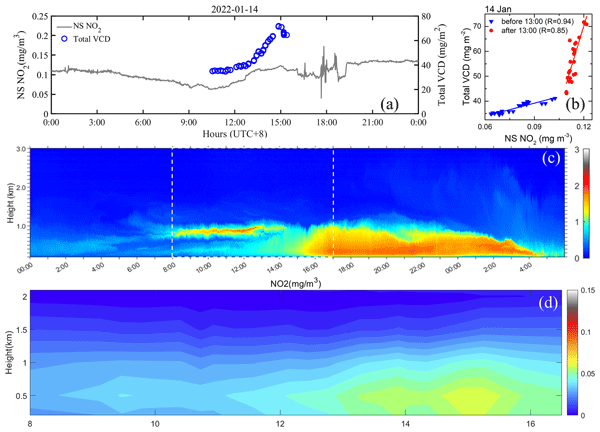
Nitrogen dioxide (NO2) is a major pollutant that, at high concentrations, may affect human health. We evaluated the remote sensing column NO2 in relation to near-surface concentrations throughout the day and found that the prohibition of vertical transport in the morning and the mixing in the afternoon resulted in different relations between the near-surface (NS) and total column NO2 concentrations. These different relationships have consequences for the use of satellite remote sensing to estimate NS NO2 concentrations.
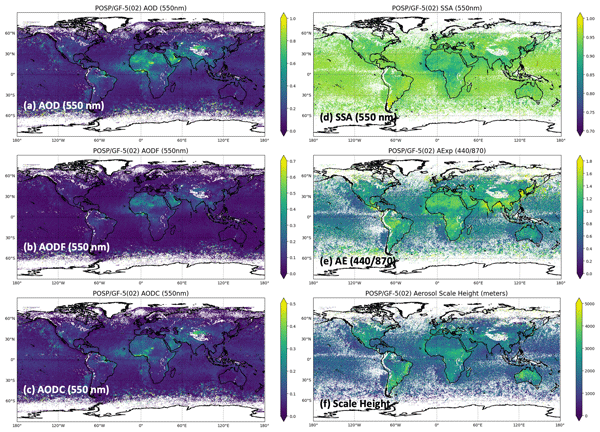
Cheng Chen, Xuefeng Lei, Zhenhai Liu, Haorang Gu, Oleg Dubovik, Pavel Litvinov, David Fuertes, Yujia Cao, Haixiao Yu, Guangfeng Xiang, Binghuan Meng, Zhenwei Qiu, Xiaobing Sun, Jin Hong, and Zhengqiang Li
Earth Syst. Sci. Data, 17, 3497–3519, https://doi.org/10.5194/essd-17-3497-2025, https://doi.org/10.5194/essd-17-3497-2025, 2025
Short summary
Short summary
Particulate Observing Scanning Polarization (POSP) on board the second GaoFen-5 (GF-5(02)) satellite is the first space-borne ultraviolet–visible–near-infrared–shortwave-infrared (UV–VIS–NIR–SWIR) multi-spectral cross-track scanning polarimeter. Due to its wide spectral range and polarimetric capabilities, POSP measurements provide rich information for aerosol and surface characterization. We present the detailed aerosol/surface products generated from POSP's first 18 months of operation, including spectral aerosol optical depth, aerosol-size-/absorption-related properties, surface black-sky and white-sky albedos, etc.
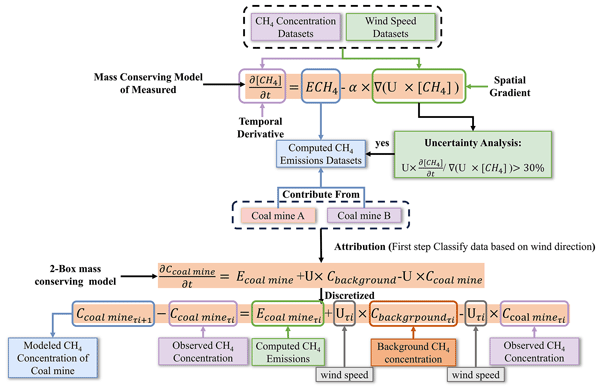
Fan Lu, Kai Qin, Jason Blake Cohen, Qin He, Pravash Tiwari, Wei Hu, Chang Ye, Yanan Shan, Qing Xu, Shuo Wang, and Qiansi Tu
Atmos. Chem. Phys., 25, 5837–5856, https://doi.org/10.5194/acp-25-5837-2025, https://doi.org/10.5194/acp-25-5837-2025, 2025
Short summary
Short summary
This work describes a field campaign and new fast emissions estimation approach to attribute methane from a large known and previously unknown coal mine in Shanxi, China. The emissions computed are shown to be larger than known oil and gas sources, indicating that methane from coal mines may play a larger role in the global methane budget. The results are found to be slightly larger than or similar to satellite observational campaigns over the same region.
Lingxiao Lu, Jason Blake Cohen, Kai Qin, Xiaolu Li, and Qin He
Atmos. Chem. Phys., 25, 2291–2309, https://doi.org/10.5194/acp-25-2291-2025, https://doi.org/10.5194/acp-25-2291-2025, 2025
Short summary
Short summary
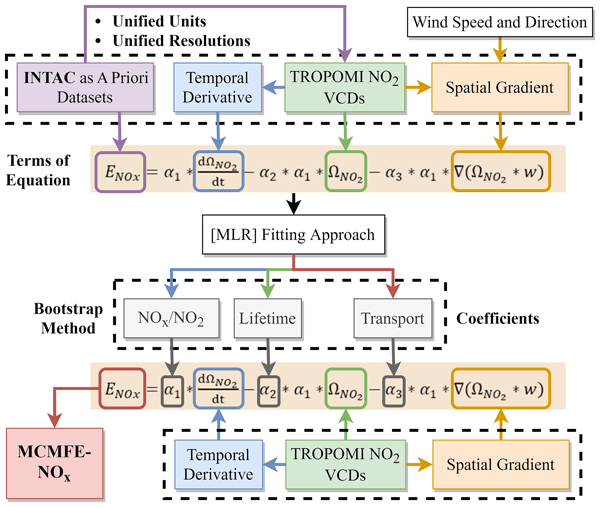
This study applies an approach that assimilates NO2 vertical column densities from TROPOMI in a mass-conserving manner and inverts daily NOx emissions, presented over rapidly changing regions in China. Source attribution is quantified by the local thermodynamics of the combustion temperature (NOx/NO2). Emission results identify sources which do not exist in the a priori datasets, especially medium industrial sources located next to the Yangtze River.
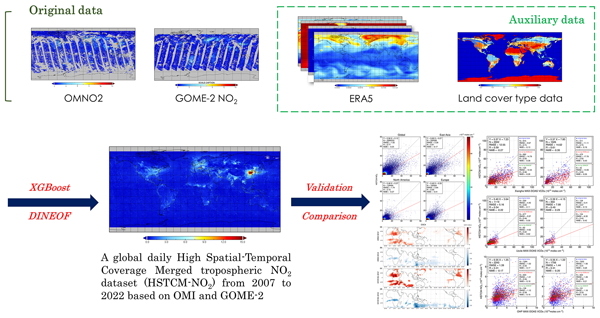
Kai Qin, Hongrui Gao, Xuancen Liu, Qin He, Pravash Tiwari, and Jason Blake Cohen
Earth Syst. Sci. Data, 16, 5287–5310, https://doi.org/10.5194/essd-16-5287-2024, https://doi.org/10.5194/essd-16-5287-2024, 2024
Short summary
Short summary
Satellites have brought new opportunities for monitoring atmospheric NO2, although the results are limited by clouds and other factors, resulting in missing data. This work proposes a new process to obtain reliable data products with high coverage by reconstructing the raw data from multiple satellites. The results are validated in terms of traditional methods as well as variance maximization and demonstrate a good ability to reproduce known polluted and clean areas around the world.
Wenxin Zhao, Yu Zhao, Yu Zheng, Dong Chen, Jinyuan Xin, Kaitao Li, Huizheng Che, Zhengqiang Li, Mingrui Ma, and Yun Hang
Atmos. Chem. Phys., 24, 6593–6612, https://doi.org/10.5194/acp-24-6593-2024, https://doi.org/10.5194/acp-24-6593-2024, 2024
Short summary
Short summary
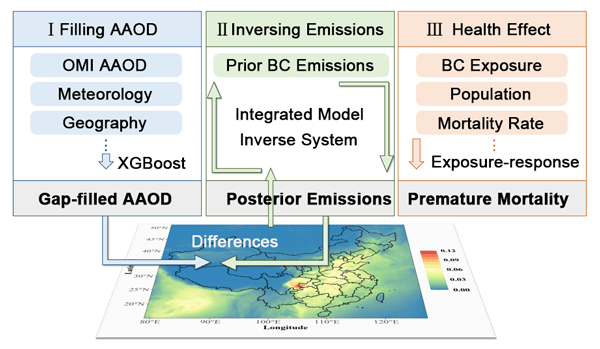
We evaluate the long-term (2000–2020) variabilities of aerosol absorption optical depth, black carbon emissions, and associated health risks in China with an integrated framework that combines multiple observations and modeling techniques. We demonstrate the remarkable emission abatement resulting from the implementation of national pollution controls and show how human activities affected the emissions with a spatiotemporal heterogeneity, thus supporting differentiated policy-making by region.
Kaixu Bai, Ke Li, Liuqing Shao, Xinran Li, Chaoshun Liu, Zhengqiang Li, Mingliang Ma, Di Han, Yibing Sun, Zhe Zheng, Ruijie Li, Ni-Bin Chang, and Jianping Guo
Earth Syst. Sci. Data, 16, 2425–2448, https://doi.org/10.5194/essd-16-2425-2024, https://doi.org/10.5194/essd-16-2425-2024, 2024
Short summary
Short summary
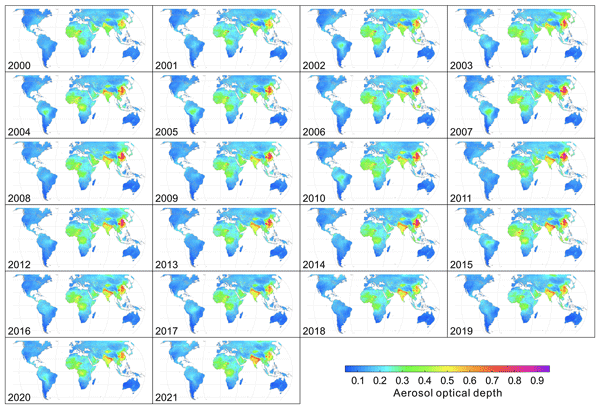
A global gap-free high-resolution air pollutant dataset (LGHAP v2) was generated to provide spatially contiguous AOD and PM2.5 concentration maps with daily 1 km resolution from 2000 to 2021. This gap-free dataset has good data accuracies compared to ground-based AOD and PM2.5 concentration observations, which is a reliable database to advance aerosol-related studies and trigger multidisciplinary applications for environmental management, health risk assessment, and climate change analysis.
Qiansi Tu, Frank Hase, Kai Qin, Jason Blake Cohen, Farahnaz Khosrawi, Xinrui Zou, Matthias Schneider, and Fan Lu
Atmos. Chem. Phys., 24, 4875–4894, https://doi.org/10.5194/acp-24-4875-2024, https://doi.org/10.5194/acp-24-4875-2024, 2024
Short summary
Short summary
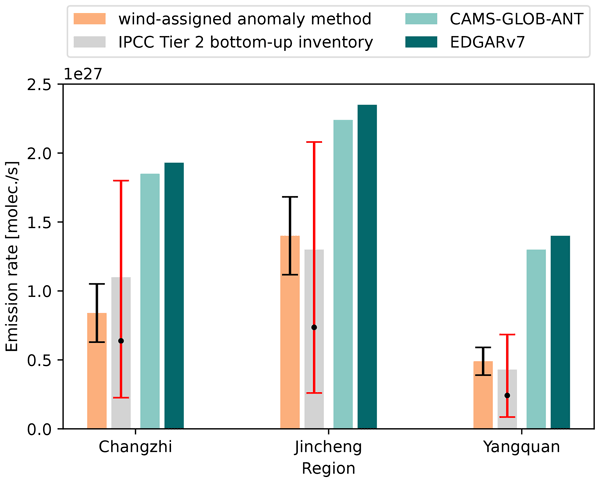
Four-year satellite observations of XCH4 are used to derive CH4 emissions in three regions of China’s coal-rich Shanxi province. The wind-assigned anomalies for two opposite wind directions are calculated, and the estimated emission rates are comparable to the current bottom-up inventory but lower than the CAMS and EDGAR inventories. This research enhances the understanding of emissions in Shanxi and supports climate mitigation strategies by validating emission inventories.
Kai Qin, Wei Hu, Qin He, Fan Lu, and Jason Blake Cohen
Atmos. Chem. Phys., 24, 3009–3028, https://doi.org/10.5194/acp-24-3009-2024, https://doi.org/10.5194/acp-24-3009-2024, 2024
Short summary
Short summary
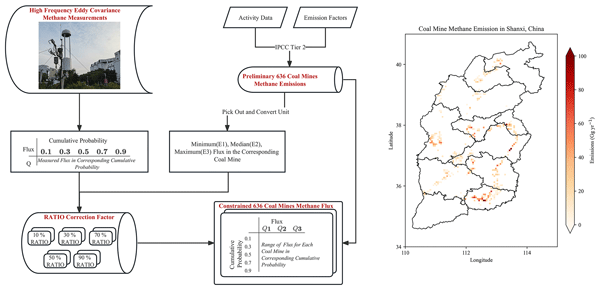
We compute CH4 emissions and uncertainty on a mine-by-mine basis, including underground, overground, and abandoned mines. Mine-by-mine gas and flux data and 30 min observations from a flux tower located next to a mine shaft are integrated. The observed variability and bias correction are propagated over the emissions dataset, demonstrating that daily observations may not cover the range of variability. Comparisons show both an emissions magnitude and spatial mismatch with current inventories.
Ouyang Liu, Zhengqiang Li, Yangyan Lin, Cheng Fan, Ying Zhang, Kaitao Li, Peng Zhang, Yuanyuan Wei, Tianzeng Chen, Jiantao Dong, and Gerrit de Leeuw
Atmos. Meas. Tech., 17, 377–395, https://doi.org/10.5194/amt-17-377-2024, https://doi.org/10.5194/amt-17-377-2024, 2024
Short summary
Short summary
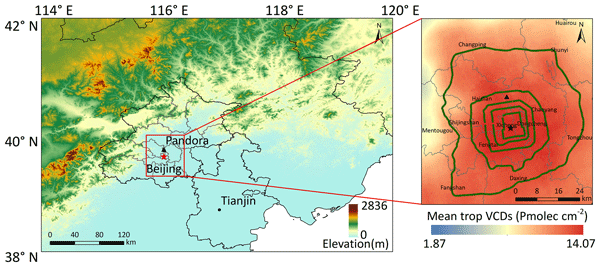
Nitrogen dioxide (NO2) is a trace gas which is important for atmospheric chemistry and may affect human health. To understand processes leading to harmful concentrations, it is important to monitor NO2 concentrations near the surface and higher up. To this end, a Pandora instrument has been installed in Beijing. An overview of the first year of data shows the large variability on diurnal to seasonal timescales and how this is affected by wind speed and direction and chemistry.
Jianping Guo, Jian Zhang, Jia Shao, Tianmeng Chen, Kaixu Bai, Yuping Sun, Ning Li, Jingyan Wu, Rui Li, Jian Li, Qiyun Guo, Jason B. Cohen, Panmao Zhai, Xiaofeng Xu, and Fei Hu
Earth Syst. Sci. Data, 16, 1–14, https://doi.org/10.5194/essd-16-1-2024, https://doi.org/10.5194/essd-16-1-2024, 2024
Short summary
Short summary
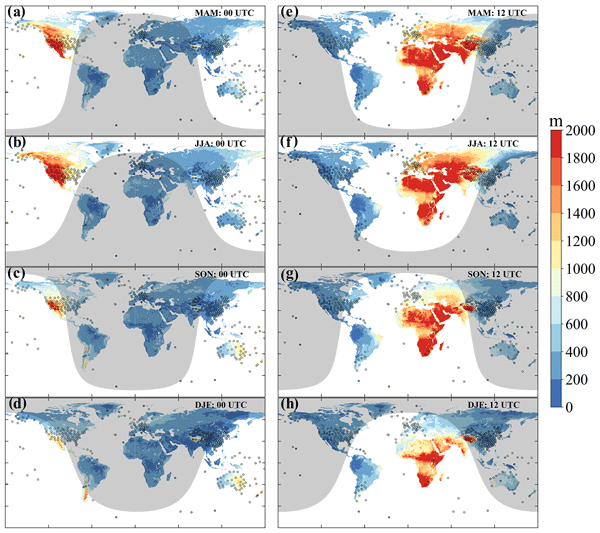
A global continental merged high-resolution (PBLH) dataset with good accuracy compared to radiosonde is generated via machine learning algorithms, covering the period from 2011 to 2021 with 3-hour and 0.25º resolution in space and time. The machine learning model takes parameters derived from the ERA5 reanalysis and GLDAS product as input, with PBLH biases between radiosonde and ERA5 as the learning targets. The merged PBLH is the sum of the predicted PBLH bias and the PBLH from ERA5.
Yuhang Zhang, Jintai Lin, Jhoon Kim, Hanlim Lee, Junsung Park, Hyunkee Hong, Michel Van Roozendael, Francois Hendrick, Ting Wang, Pucai Wang, Qin He, Kai Qin, Yongjoo Choi, Yugo Kanaya, Jin Xu, Pinhua Xie, Xin Tian, Sanbao Zhang, Shanshan Wang, Siyang Cheng, Xinghong Cheng, Jianzhong Ma, Thomas Wagner, Robert Spurr, Lulu Chen, Hao Kong, and Mengyao Liu
Atmos. Meas. Tech., 16, 4643–4665, https://doi.org/10.5194/amt-16-4643-2023, https://doi.org/10.5194/amt-16-4643-2023, 2023
Short summary
Short summary
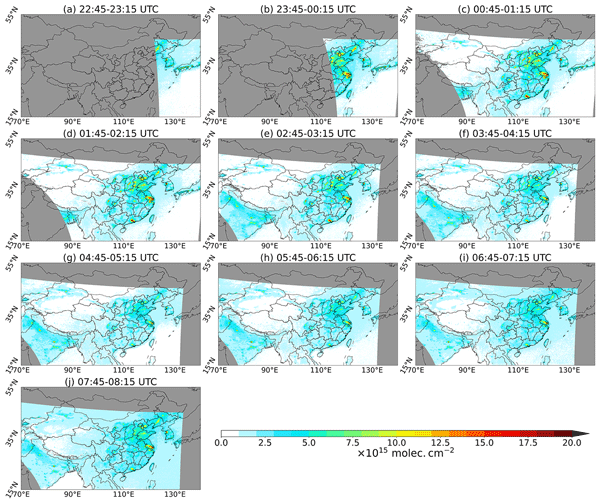
Our tropospheric NO2 vertical column density product with high spatiotemporal resolution is based on the Geostationary Environment Monitoring Spectrometer (GEMS) and named POMINO–GEMS. Strong hotspot signals and NO2 diurnal variations are clearly seen. Validations with multiple satellite products and ground-based, mobile car and surface measurements exhibit the overall great performance of the POMINO–GEMS product, indicating its capability for application in environmental studies.
Xiaolu Li, Jason Blake Cohen, Kai Qin, Hong Geng, Xiaohui Wu, Liling Wu, Chengli Yang, Rui Zhang, and Liqin Zhang
Atmos. Chem. Phys., 23, 8001–8019, https://doi.org/10.5194/acp-23-8001-2023, https://doi.org/10.5194/acp-23-8001-2023, 2023
Short summary
Short summary
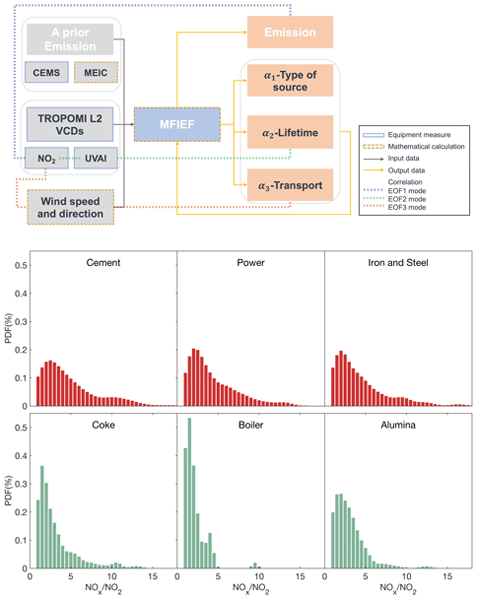
Remotely sensed NO2 and surface NOx are combined with a mathematical method to estimate daily NOx emissions. The results identify new sources and improve existing estimates. The estimation is driven by three flexible factors: thermodynamics of combustion, chemical loss, and atmospheric transport. The thermodynamic term separates power, iron, and cement from coking, boilers, and aluminum. This work finds three causes for the extremes: emissions, UV radiation, and transport.
Qiansi Tu, Frank Hase, Zihan Chen, Matthias Schneider, Omaira García, Farahnaz Khosrawi, Shuo Chen, Thomas Blumenstock, Fang Liu, Kai Qin, Jason Cohen, Qin He, Song Lin, Hongyan Jiang, and Dianjun Fang
Atmos. Meas. Tech., 16, 2237–2262, https://doi.org/10.5194/amt-16-2237-2023, https://doi.org/10.5194/amt-16-2237-2023, 2023
Short summary
Short summary
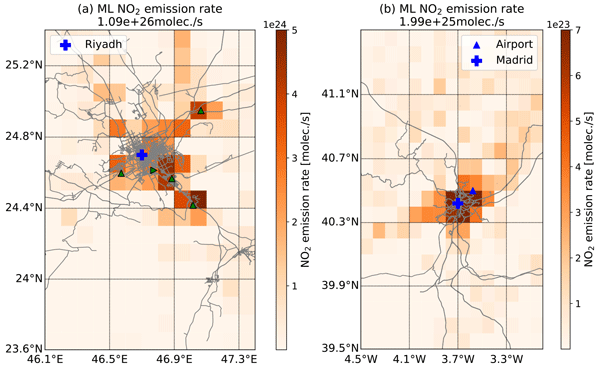
Four-year TROPOMI observations are used to derive tropospheric NO2 emissions in two mega(cities) with high anthropogenic activity. Wind-assigned anomalies are calculated, and the emission rates and spatial patterns are estimated based on a machine learning algorithm. The results are in reasonable agreement with previous studies and the inventory. Our method is quite robust and can be used as a simple method to estimate the emissions of NO2 as well as other gases in other regions.
Zexia Duan, Zhiqiu Gao, Qing Xu, Shaohui Zhou, Kai Qin, and Yuanjian Yang
Earth Syst. Sci. Data, 14, 4153–4169, https://doi.org/10.5194/essd-14-4153-2022, https://doi.org/10.5194/essd-14-4153-2022, 2022
Short summary
Short summary
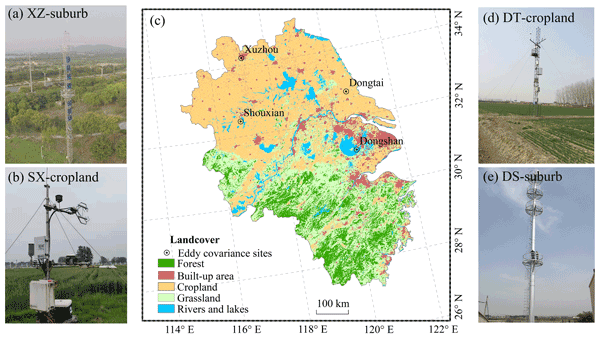
Land–atmosphere interactions over the Yangtze River Delta (YRD) in China are becoming more varied and complex, as the area is experiencing rapid land use changes. In this paper, we describe a dataset of microclimate and eddy covariance variables at four sites in the YRD. This dataset has potential use cases in multiple research fields, such as boundary layer parametrization schemes, evaluation of remote sensing algorithms, and development of climate models in typical East Asian monsoon regions.
Jie Luo, Zhengqiang Li, Chenchong Zhang, Qixing Zhang, Yongming Zhang, Ying Zhang, Gabriele Curci, and Rajan K. Chakrabarty
Atmos. Chem. Phys., 22, 7647–7666, https://doi.org/10.5194/acp-22-7647-2022, https://doi.org/10.5194/acp-22-7647-2022, 2022
Short summary
Short summary
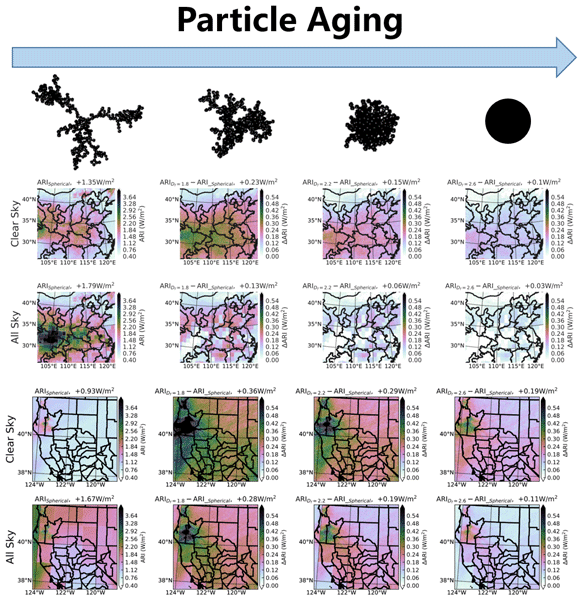
The fractal black carbon was applied to re-evaluate the regional impacts of morphologies on aerosol–radiation interactions (ARIs), and the effects were compared between the US and China. The regional-mean clear-sky ARI is significantly affected by the BC morphology, and relative differences of 17.1 % and 38.7 % between the fractal model with a Df of 1.8 and the spherical model were observed in eastern China and the northwest US, respectively.
Jie Luo, Zhengqiang Li, Cheng Fan, Hua Xu, Ying Zhang, Weizhen Hou, Lili Qie, Haoran Gu, Mengyao Zhu, Yinna Li, and Kaitao Li
Atmos. Meas. Tech., 15, 2767–2789, https://doi.org/10.5194/amt-15-2767-2022, https://doi.org/10.5194/amt-15-2767-2022, 2022
Short summary
Short summary
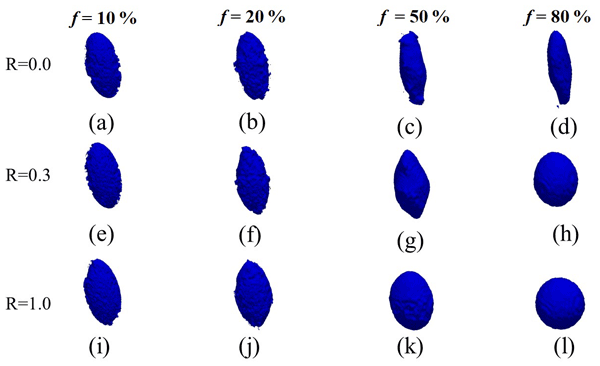
A single model is difficult to represent various shapes of dust. We proposed a tunable model to represent dust with various shapes. Two tunable parameters were used to represent the effects of the erosion degree and binding forces from the mass center. Thus, the model can represent various dust shapes by adjusting the tunable parameters. Besides, the applicability of the spheroid model in calculating the optical properties and polarimetric characteristics is evaluated.
Kaixu Bai, Ke Li, Mingliang Ma, Kaitao Li, Zhengqiang Li, Jianping Guo, Ni-Bin Chang, Zhuo Tan, and Di Han
Earth Syst. Sci. Data, 14, 907–927, https://doi.org/10.5194/essd-14-907-2022, https://doi.org/10.5194/essd-14-907-2022, 2022
Short summary
Short summary
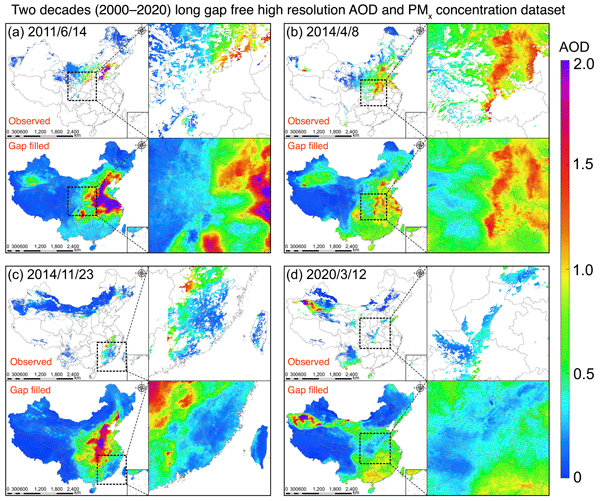
The Long-term Gap-free High-resolution Air Pollutant concentration dataset, providing gap-free aerosol optical depth (AOD) and PM2.5 and PM10 concentration with a daily 1 km resolution for 2000–2020 in China, is generated and made publicly available. This is the first long-term gap-free high-resolution aerosol dataset in China and has great potential to trigger multidisciplinary applications in Earth observations, climate change, public health, ecosystem assessment, and environment management.
Cited articles
Bao, F., Li, Y., Cheng, T., Gao, J., and Yuan, S.: Estimating the columnar concentrations of black carbon aerosols in China using MODIS products, Environ. Sci. Technol., 54, 11025–11036, 2020.
Bellouin, N., Quaas, J., Gryspeerdt, E., Kinne, S., Stier, P., Watson-Parris, D., Boucher, O., Carslaw, K. S., Christensen, M., Daniau, A. L., Dufresne, J. L., Feingold, G., Fiedler, S., Forster, P., Gettelman, A., Haywood, J. M., Lohmann, U., Malavelle, F., Mauritsen, T., McCoy, D. T., Myhre, G., Mülmenstädt, J., Neubauer, D., Possner, A., Rugenstein, M., Sato, Y., Schulz, M., Schwartz, S. E., Sourdeval, O., Storelvmo, T., Toll, V., Winker, D., and Stevens, B.: Bounding Global Aerosol Radiative Forcing of Climate Change, Rev. Geophys., 58, e2019RG000660, https://doi.org/10.1029/2019RG000660, 2020.
Bibi, S., Alam, K., Chishtie, F., Bibi, H., and Rahman, S.: Observations of black carbon aerosols characteristics over an urban environment: Radiative forcing and related implications, Sci. Total Environ., 603–604, 319–329, https://doi.org/10.1016/j.scitotenv.2017.06.082, 2017.
Bond, T. C. and Bergstrom, R. W.: Light absorption by carbonaceous particles: An investigative review, Aerosol Sci. Tech., 40, 27–67, 2006.
Bond, T. C., Doherty, S. J., Fahey, D. W., Forster, P. M., Berntsen, T., DeAngelo, B. J., Flanner, M. G., Ghan, S., Kärcher, B., and Koch, D.: Bounding the role of black carbon in the climate system: A scientific assessment, J. Geophys. Res.-Atmos., 118, 5380–5552, 2013.
Brown, H., Liu, X., Pokhrel, R., Murphy, S., Lu, Z., Saleh, R., Mielonen, T., Kokkola, H., Bergman, T., Myhre, G., Skeie, R. B., Watson-Paris, D., Stier, P., Johnson, B., Bellouin, N., Schulz, M., Vakkari, V., Beukes, J. P., van Zyl, P. G., Liu, S., and Chand, D.: Biomass burning aerosols in most climate models are too absorbing, Nat. Commun., 12, 277, https://doi.org/10.1038/s41467-020-20482-9, 2021.
Chen, A., Zhao, C., and Fan, T.: Spatio-temporal distribution of aerosol direct radiative forcing over mid-latitude regions in north hemisphere estimated from satellite observations, Atmos. Res., 266, 105938, https://doi.org/10.1016/j.atmosres.2021.105938, 2022a.
Chen, A., Zhao, C., Zhang, H., Yang, Y., and Li, J.: Surface albedo regulates aerosol direct climate effect, Nat. Commun., 15, 7816, https://doi.org/10.1038/s41467-024-52255-z, 2024.
Chen, C., Dubovik, O., Schuster, G. L., Chin, M., Henze, D. K., Lapyonok, T., Li, Z., Derimian, Y., and Zhang, Y.: Multi-angular polarimetric remote sensing to pinpoint global aerosol absorption and direct radiative forcing, Nat. Commun., 13, 7459, https://doi.org/10.1038/s41467-022-35147-y, 2022b.
Chung, S. H. and Seinfeld, J. H.: Climate response of direct radiative forcing of anthropogenic black carbon, J. Geophys. Res.-Atmos., 110, https://doi.org/10.1029/2004JD005441, 2005.
Cohen, J. B. and Wang, C.: Estimating global black carbon emissions using a top-down Kalman Filter approach, J. Geophys. Res.-Atmos., 119, 307–323, 2014.
Cohen, J. B., Prinn, R. G., and Wang, C.: The impact of detailed urban-scale processing on the composition, distribution, and radiative forcing of anthropogenic aerosols, Geophys. Res. Lett., 38, L10808, https://doi.org/10.1029/2011GL047417, 2011.
Cohen, J. B., Ng, D. H. L., Lim, A. W. L., and Chua, X. R.: Vertical distribution of aerosols over the Maritime Continent during El Niño, Atmos. Chem. Phys., 18, 7095–7108, https://doi.org/10.5194/acp-18-7095-2018, 2018.
Copernicus Climate Change Service, Climate Data Store: ERA5 hourly data on pressure levels from 1940 to present, Copernicus Climate Change Service (C3S) Climate Data Store (CDS) [data set], https://doi.org/10.24381/cds.bd0915c6, 2023.
Croft, B., Martin, R. V., Chang, R. Y. W., Bindle, L., Eastham, S. D., Estrada, L. A., Ford, B., Li, C., Long, M. S., and Lundgren, E. W.: Toward fine horizontal resolution global simulations of aerosol sectional microphysics: Advances enabled by GCHP-TOMAS, J. Adv. Model. Earth Syst., 16, e2023MS004094, https://doi.org/10.1029/2023ms004094, 2024.
Dubovik, O. and King, M. D.: A flexible inversion algorithm for retrieval of aerosol optical properties from Sun and sky radiance measurements, J. Geophys. Res.-Atmos., 105, 20673–20696, https://doi.org/10.1029/2000JD900282, 2000.
Dubovik, O., Smirnov, A., Holben, B., King, M., Kaufman, Y., Eck, T., and Slutsker, I.: Accuracy assessments of aerosol optical properties retrieved from Aerosol Robotic Network (AERONET) Sun and sky radiance measurements, J. Geophys. Res.-Atmos., 105, 9791–9806, 2000.
Fillmore, D. W., Rutan, D. A., Kato, S., Rose, F. G., and Caldwell, T. E.: Evaluation of aerosol optical depths and clear-sky radiative fluxes of the CERES Edition 4.1 SYN1deg data product, Atmos. Chem. Phys., 22, 10115–10137, https://doi.org/10.5194/acp-22-10115-2022, 2022.
Fu, D., Liu, M., Yang, D., Che, H., and Xia, X.: Influences of atmospheric reanalysis on the accuracy of clear-sky irradiance estimates: Comparing MERRA-2 and CAMS, Atmos. Environ., 277, 119080, https://doi.org/10.1016/j.atmosenv.2022.119080, 2022.
Garrett, T. J. and Zhao, C.: Increased Arctic cloud longwave emissivity associated with pollution from mid-latitudes, Nature, 440, 787–789, https://doi.org/10.1038/nature04636, 2006.
Gaydos, T. M., Pinder, R., Koo, B., Fahey, K. M., Yarwood, G., and Pandis, S. N.: Development and application of a three-dimensional aerosol chemical transport model, PMCAMx, Atmos. Environ., 41, 2594–2611, 2007.
Guan, L. and Cohen, J. B.: In-Tandem Multi-Waveband Particulate Absorption and Size Observations Yield Substantial Changes in Radiative Forcing over Industrial Central China, figshare [code and data set], https://doi.org/10.6084/m9.figshare.26335159, 2026.
Guo, Y., Zhang, L., Winiwarter, W., van Grinsven, H. J. M., Wang, X., Li, K., Pan, D., Liu, Z., and Gu, B.: Ambitious nitrogen abatement is required to mitigate future global PM2.5 air pollution toward the World Health Organization targets, One Earth, 7, 1600–1613, https://doi.org/10.1016/j.oneear.2024.08.007, 2024.
Hansen, J. E. and Travis, L. D.: Light scattering in planetary atmospheres, Space Sci. Rev., 16, 527–610, 1974.
Helin, A., Virkkula, A., Backman, J., Pirjola, L., Sippula, O., Aakko-Saksa, P., Väätäinen, S., Mylläri, F., Järvinen, A., and Bloss, M.: Variation of absorption Ångström exponent in aerosols from different emission sources, J. Geophys. Res.-Atmos., 126, e2020JD034094, https://doi.org/10.1029/2020JD034094, 2021.
Hersbach, H., Bell, B., Berrisford, P., Hirahara, S., Horányi, A., Muñoz-Sabater, J., Nicolas, J., Peubey, C., Radu, R., Schepers, D., Simmons, A., Soci, C., Abdalla, S., Abellan, X., Balsamo, G., Bechtold, P., Biavati, G., Bidlot, J., Bonavita, M., De Chiara, G., Dahlgren, P., Dee, D., Diamantakis, M., Dragani, R., Flemming, J., Forbes, R., Fuentes, M., Geer, A., Haimberger, L., Healy, S., Hogan, R. J., Hólm, E., Janisková, M., Keeley, S., Laloyaux, P., Lopez, P., Lupu, C., Radnoti, G., de Rosnay, P., Rozum, I., Vamborg, F., Villaume, S., and Thépaut, J.-N.: The ERA5 global reanalysis, Q. J. Roy. Meteorol. Soc., 146, 1999–2049, https://doi.org/10.1002/qj.3803, 2020.
Holben, B. N., Eck, T. F., Slutsker, I., Tanré, D., Buis, J. P., Setzer, A., Vermote, E., Reagan, J. A., Kaufman, Y. J., Nakajima, T., Lavenu, F., Jankowiak, I., and Smirnov, A.: AERONET – A Federated Instrument Network and Data Archive for Aerosol Characterization, Remote Sens. Environ., 66, 1–16, https://doi.org/10.1016/S0034-4257(98)00031-5, 1998.
Hu, W., Qin, K., Lu, F., Li, D., and Cohen, J. B.: Merging TROPOMI and eddy covariance observations to quantify 5-years of daily CH4 emissions over coal-mine dominated region, Int. J. Coal Sci. Technol., 11, 56, https://doi.org/10.1007/s40789-024-00700-1, 2024.
Huang, X.-F., Peng, Y., Wei, J., Peng, J., Lin, X.-Y., Tang, M.-X., Cheng, Y., Men, Z., Fang, T., and Zhang, J.: Microphysical complexity of black carbon particles restricts their warming potential, One Earth, 7, 136–145, 2024.
Ichoku, C., Levy, R., Kaufman, Y. J., Remer, L. A., Li, R.-R., Martins, V. J., Holben, B. N., Abuhassan, N., Slutsker, I., Eck, T. F., and Pietras, C.: Analysis of the performance characteristics of the five-channel Microtops II Sun photometer for measuring aerosol optical thickness and precipitable water vapor, J. Geophys. Res.- Atmos., 107, AAC 5-1–AAC 5-17, https://doi.org/10.1029/2001JD001302, 2002.
Jacobson, M. Z.: Strong radiative heating due to the mixing state of black carbon in atmospheric aerosols, Nature, 409, 695–697, 2001.
Kahn, R. A., Andrews, E., Brock, C. A., Chin, M., Feingold, G., Gettelman, A., Levy, R. C., Murphy, D. M., Nenes, A., and Pierce, J. R.: Reducing aerosol forcing uncertainty by combining models with satellite and within-the-atmosphere observations: a three-way street, Rev. Geophys., 61, e2022RG000796, https://doi.org/10.1029/2022RG000796, 2023.
Kayetha, V., Torres, O., and Jethva, H.: Retrieval of UV–visible aerosol absorption using AERONET and OMI–MODIS synergy: spatial and temporal variability across major aerosol environments, Atmos. Meas. Tech., 15, 845–877, https://doi.org/10.5194/amt-15-845-2022, 2022.
Khan, A. L., Dierssen, H., Schwarz, J. P., Schmitt, C., Chlus, A., Hermanson, M., Painter, T. H., and McKnight, D. M.: Impacts of coal dust from an active mine on the spectral reflectance of Arctic surface snow in Svalbard, Norway, J. Geophys. Res.-Atmos., 122, 1767–1778, https://doi.org/10.1002/2016JD025757, 2017.
Kim, D., Wang, C., Ekman, A. M., Barth, M. C., and Rasch, P. J.: Distribution and direct radiative forcing of carbonaceous and sulfate aerosols in an interactive size-resolving aerosol–climate model, J. Geophys. Res.-Atmos., 113, D16309, https://doi.org/10.1029/2007JD009756, 2008.
Kokkola, H., Kühn, T., Laakso, A., Bergman, T., Lehtinen, K. E. J., Mielonen, T., Arola, A., Stadtler, S., Korhonen, H., Ferrachat, S., Lohmann, U., Neubauer, D., Tegen, I., Siegenthaler-Le Drian, C., Schultz, M. G., Bey, I., Stier, P., Daskalakis, N., Heald, C. L., and Romakkaniemi, S.: SALSA2.0: The sectional aerosol module of the aerosol–chemistry–climate model ECHAM6.3.0-HAM2.3-MOZ1.0, Geosci. Model Dev., 11, 3833–3863, https://doi.org/10.5194/gmd-11-3833-2018, 2018.
Lack, D. A., Cappa, C. D., Cross, E. S., Massoli, P., Ahern, A. T., Davidovits, P., and Onasch, T. B.: Absorption Enhancement of Coated Absorbing Aerosols: Validation of the Photo-Acoustic Technique for Measuring the Enhancement, Aerosol Sci. Tech., 43, 1006–1012, https://doi.org/10.1080/02786820903117932, 2009.
Lesins, G., Chylek, P., and Lohmann, U.: A study of internal and external mixing scenarios and its effect on aerosol optical properties and direct radiative forcing, J. Geophys. Res.-Atmos., 107, AAC 5-1–AAC 5-12, 2002.
Li, J., Zhao, C., Sun, Y., Zhao, X., Yang, J., Yang, Y., Chen, A., and Zhou, Y.: Distinct aerosol impacts on local scale convective rainfall between Sichuan basin and north China plain regions in China, J. Geophys. Res.-Atmos., 130, e2024JD042649, https://doi.org/10.1029/2024JD042649, 2025.
Li, X., Cohen, J. B., Qin, K., Geng, H., Wu, X., Wu, L., Yang, C., Zhang, R., and Zhang, L.: Remotely sensed and surface measurement- derived mass-conserving inversion of daily NOx emissions and inferred combustion technologies in energy-rich northern China, Atmos. Chem. Phys., 23, 8001–8019, https://doi.org/10.5194/acp-23-8001-2023, 2023.
Liu, B., Gong, W., Ma, Y., Zhang, M., Yang, J., and Zhang, M.: Surface aerosol optical properties during high and low pollution periods at an urban site in central China, Aerosol Air Qual. Res., 18, 3035–3046, 2018.
Liu, D., He, C., Schwarz, J. P., and Wang, X.: Lifecycle of light-absorbing carbonaceous aerosols in the atmosphere, npj Clim. Atmos. Sci., 3, 40, https://doi.org/10.1038/s41612-020-00145-8, 2020.
Liu, J., Scheuer, E., Dibb, J., Diskin, G. S., Ziemba, L. D., Thornhill, K. L., Anderson, B. E., Wisthaler, A., Mikoviny, T., Devi, J. J., Bergin, M., Perring, A. E., Markovic, M. Z., Schwarz, J. P., Campuzano-Jost, P., Day, D. A., Jimenez, J. L., and Weber, R. J.: Brown carbon aerosol in the North American continental troposphere: sources, abundance, and radiative forcing, Atmos. Chem. Phys., 15, 7841–7858, https://doi.org/10.5194/acp-15-7841-2015, 2015.
Liu, J., Cohen, J. B., Tiwari, P., Liu, Z., Yim, S. H.-L., Gupta, P., and Qin, K.: New top-down estimation of daily mass and number column density of black carbon driven by OMI and AERONET observations, Remote Sens. Environ., 315, 114436, https://doi.org/10.1016/j.rse.2024.114436, 2024a.
Liu, Z., Cohen, J. B., Wang, S., Wang, X., Tiwari, P., and Qin, K.: Remotely sensed BC columns over rapidly changing Western China show significant decreases in mass and inconsistent changes in number, size, and mixing properties due to policy actions, npj Clim. Atmos. Sci., 7, 124, https://doi.org/10.1038/s41612-024-00663-9, 2024b.
Loh, N., Hampton, C. Y., Martin, A. V., Starodub, D., Sierra, R. G., Barty, A., Aquila, A., Schulz, J., Lomb, L., and Steinbrener, J.: Fractal morphology, imaging and mass spectrometry of single aerosol particles in flight, Nature, 486, 513–517, 2012.
Lu, F., Qin, K., Cohen, J. B., He, Q., Tiwari, P., Hu, W., Ye, C., Shan, Y., Xu, Q., Wang, S., and Tu, Q.: Surface-observation-constrained high-frequency coal mine methane emissions in Shanxi, China, reveal more emissions than inventories, consistent with satellite inversion, Atmos. Chem. Phys., 25, 5837–5856, https://doi.org/10.5194/acp-25-5837-2025, 2025a.
Lu, L., Cohen, J. B., Qin, K., Li, X., and He, Q.: Identifying missing sources and reducing NOx emissions uncertainty over China using daily satellite data and a mass-conserving method, Atmos. Chem. Phys., 25, 2291–2309, https://doi.org/10.5194/acp-25-2291-2025, 2025b.
Ma, Y., Xin, J., Zhang, W., Gong, C., Wen, T., Wu, X., Wang, Y., Wang, L., Wu, F., and Ding, X.: Uncertainties of Simulated Aerosol Direct Radiative Effect Induced by Aerosol Chemical Components: A Measurement-Based Perspective From Urban-Forest Transition Region in East China, J. Geophys. Res.-Atmos., 126, e2020JD033688, https://doi.org/10.1029/2020JD033688, 2021.
Matsui, H., Hamilton, D. S., and Mahowald, N. M.: Black carbon radiative effects highly sensitive to emitted particle size when resolving mixing-state diversity, Nat. Commun., 9, 3446, https://doi.org/10.1038/s41467-018-05635-1, 2018.
Mehrotra, B. J., Srivastava, A. K., Singh, A., Parashar, D., Majumder, N., Singh, R., Choudhary, A., and Srivastava, M. K.: Long-term trend in Black Carbon mass concentration over Central Indo-Gangetic Plain location: Understanding the implied change in radiative forcing, J. Geophys. Res.-Atmos., 129, e2024JD040754, https://doi.org/10.1029/2024JD04075, 2024.
Mishchenko, M. I., Travis, L. D., Kahn, R. A., and West, R. A.: Modeling phase functions for dustlike tropospheric aerosols using a shape mixture of randomly oriented polydisperse spheroids, J. Geophys. Res.-Atmos., 102, 16831–16847, https://doi.org/10.1029/96JD02110, 1997.
Moosmüller, H., Chakrabarty, R. K., Ehlers, K. M., and Arnott, W. P.: Absorption Ångström coefficient, brown carbon, and aerosols: basic concepts, bulk matter, and spherical particles, Atmos. Chem. Phys., 11, 1217–1225, hthttps://doi.org/10.5194/acp-11-1217-2011, 2011.
Myhre, G., Shindell, D., Bréon, F.-M., Collins, W., Fuglestvedt, J., Huang, J., Koch, D., Lamarque, J.-F., Lee, D., Mendoza, B., Nakajima, T., Robock, A., Stephens, G., Takemura, T., and Zhang, H.: Anthropogenic and Natural Radiative Forcing, in: Climate Change 2013 – The Physical Science Basis, Cambridge University Press, Cambridge, 659–740, https://doi.org/10.1017/CBO9781107415324.018, 2014.
Pei, Q., Zhao, C., Yang, Y., Chen, A., Cong, Z., Wan, X., Zhang, H., and Wu, G.: Wildfires heat the middle troposphere over the Himalayas and Tibetan Plateau during the peak of fire season, Atmos. Chem. Phys., 25, 10443–10456, https://doi.org/10.5194/acp-25-10443-2025, 2025.
Peng, J., Hu, M., Guo, S., Du, Z., Zheng, J., Shang, D., Levy Zamora, M., Zeng, L., Shao, M., Wu, Y.-S., Zheng, J., Wang, Y., Glen, C. R., Collins, D. R., Molina, M. J., and Zhang, R.: Markedly enhanced absorption and direct radiative forcing of black carbon under polluted urban environments, P. Natl. Acad. Sci. USA, 113, 4266–4271, https://doi.org/10.1073/pnas.1602310113, 2016.
Prats, N., Cachorro, V. E., Berjón, A., Toledano, C., and De Frutos, A. M.: Column-integrated aerosol microphysical properties from AERONET Sun photometer over southwestern Spain, Atmos. Chem. Phys., 11, 12535–12547, https://doi.org/10.5194/acp-11-12535-2011, 2011.
Qin, K., Lu, L., Liu, J., He, Q., Shi, J., Deng, W., Wang, S., and Cohen, J. B.: Model-free daily inversion of NOx emissions using TROPOMI (MCMFE-NOx) and its uncertainty: Declining regulated emissions and growth of new sources, Remote Sens. Environ., 295, 113720, https://doi.org/10.1016/j.rse.2023.113720, 2023.
Ramachandran, S., Rupakheti, M., Cherian, R., and Lawrence, M. G.: Aerosols heat up the Himalayan climate, Sci. Total Environ., 894, 164733, https://doi.org/10.1016/j.scitotenv.2023.164733, 2023.
Ramanathan, V., Crutzen, P. J., Kiehl, J. T., and Rosenfeld, D.: Aerosols, Climate, and the Hydrological Cycle, Science, 294, 2119–2124, https://doi.org/10.1126/science.1064034, 2001.
Randles, C., Colarco, P., and Da Silva, A.: Direct and semi-direct aerosol effects in the NASA GEOS-5 AGCM: Aerosol-climate interactions due to prognostic versus prescribed aerosols, J. Geophys. Res.-Atmos., 118, 149–169, 2013.
Randles, C. A., da Silva, A. M., Buchard, V., Colarco, P. R., Darmenov, A., Govindaraju, R., Smirnov, A., Holben, B., Ferrare, R., Hair, J., Shinozuka, Y., and Flynn, C. J.: The MERRA-2 Aerosol Reanalysis, 1980 Onward. Part I: System Description and Data Assimilation Evaluation, J. Climate, 30, 6823–6850, https://doi.org/10.1175/JCLI-D-16-0609.1, 2017.
Reddington, C. L., McMeeking, G., Mann, G. W., Coe, H., Frontoso, M. G., Liu, D., Flynn, M., Spracklen, D. V., and Carslaw, K. S.: The mass and number size distributions of black carbon aerosol over Europe, Atmos. Chem. Phys., 13, 4917–4939, https://doi.org/10.5194/acp-13-4917-2013, 2013.
Ricchiazzi, P., Yang, S., Gautier, C., and Sowle, D.: SBDART: A research and teaching software tool for plane-parallel radiative transfer in the Earth's atmosphere, B. Am. Meteorol. Soc., 79, 2101–2114, 1998.
Romshoo, B., Pöhlker, M., Wiedensohler, A., Pfeifer, S., Saturno, J., Nowak, A., Ciupek, K., Quincey, P., Vasilatou, K., Ess, M. N., Gini, M., Eleftheriadis, K., Robins, C., Gaie-Levrel, F., and Müller, T.: Importance of size representation and morphology in modelling optical properties of black carbon: comparison between laboratory measurements and model simulations, Atmos. Meas. Tech., 15, 6965–6989, https://doi.org/10.5194/amt-15-6965-2022, 2022.
Saarikoski, S., Niemi, J. V., Aurela, M., Pirjola, L., Kousa, A., Rönkkö, T., and Timonen, H.: Sources of black carbon at residential and traffic environments obtained by two source apportionment methods, Atmos. Chem. Phys., 21, 14851–14869, https://doi.org/10.5194/acp-21-14851-2021, 2021.
Savadkoohi, M., Pandolfi, M., Favez, O., Putaud, J.-P., Eleftheriadis, K., Fiebig, M., Hopke, P. K., Laj, P., Wiedensohler, A., Alados-Arboledas, L., Bastian, S., Chazeau, B., María, Á. C., Colombi, C., Costabile, F., Green, D. C., Hueglin, C., Liakakou, E., Luoma, K., Listrani, S., Mihalopoulos, N., Marchand, N., Močnik, G., Niemi, J. V., Ondráček, J., Petit, J.-E., Rattigan, O. V., Reche, C., Timonen, H., Titos, G., Tremper, A. H., Vratolis, S., Vodička, P., Funes, E. Y., Zíková, N., Harrison, R. M., Petäjä, T., Alastuey, A., and Querol, X.: Recommendations for reporting equivalent black carbon (eBC) mass concentrations based on long-term pan-European in-situ observations, Environ. Int., 185, 108553, https://doi.org/10.1016/j.envint.2024.108553, 2024.
Schuster, G. L., Dubovik, O., Holben, B. N., and Clothiaux, E. E.: Inferring black carbon content and specific absorption from Aerosol Robotic Network (AERONET) aerosol retrievals, J. Geophys. Res.-Atmos., 110, https://doi.org/10.1029/2004JD004548, 2005.
Seinfeld, J. H., Kleindienst, T. E., Edney, E. O., and Cohen, J. B.: Aerosol Growth in a Steady-State, Continuous Flow Chamber: Application to Studies of Secondary Aerosol Formation, Aerosol Sci. Tech., 37, 728–734, https://doi.org/10.1080/02786820300915, 2003.
Shen, Y., Virkkula, A., Ding, A., Luoma, K., Keskinen, H., Aalto, P. P., Chi, X., Qi, X., Nie, W., Huang, X., Petäjä, T., Kulmala, M., and Kerminen, V. M.: Estimating cloud condensation nuclei number concentrations using aerosol optical properties: role of particle number size distribution and parameterization, Atmos. Chem. Phys., 19, 15483–15502, https://doi.org/10.5194/acp-19-15483-2019, 2019.
Srivastava, A. K., Ram, K., Pant, P., Hegde, P., and Joshi, H.: Black carbon aerosols over Manora Peak in the Indian Himalayan foothills: implications for climate forcing, Environ. Res. Lett., 7, 014002, https://doi.org/10.1088/1748-9326/7/1/014002, 2012.
Tian, P., Liu, D., Zhao, D., Yu, C., Liu, Q., Huang, M., Deng, Z., Ran, L., Wu, Y., Ding, S., Hu, K., Zhao, G., Zhao, C., and Ding, D.: In situ vertical characteristics of optical properties and heating rates of aerosol over Beijing, Atmos. Chem. Phys., 20, 2603–2622, https://doi.org/10.5194/acp-20-2603-2020, 2020.
Tiwari, P., Cohen, J. B., Wang, X., Wang, S., and Qin, K.: Radiative forcing bias calculation based on COSMO (Core-Shell Mie model Optimization) and AERONET data, npj Clim. Atmos. Sci., 6, 193, https://doi.org/10.1038/s41612-023-00520-1, 2023.
Tiwari, P., Cohen, J. B., Lu, L., Wang, S., Li, X., Guan, L., Liu, Z., Li, Z., and Qin, K.: Multi-platform observations and constraints reveal overlooked urban sources of black carbon in Xuzhou and Dhaka, Commun. Earth Environ., 6, 38, https://doi.org/10.1038/s43247-025-02012-x, 2025.
Vignati, E., Wilson, J., and Stier, P.: M7: An efficient size-resolved aerosol microphysics module for large-scale aerosol transport models, J. Geophys. Res.-Atmos., 109, D22202, https://doi.org/10.1029/2003JD004485, 2004.
Wang, J. and Martin, S. T.: Satellite characterization of urban aerosols: Importance of including hygroscopicity and mixing state in the retrieval algorithms, J. Geophys. Res.-Atmos., 112, D17203, https://doi.org/10.1029/2006JD008078, 2007.
Wang, J., Wang, J., Cai, R., Liu, C., Jiang, J., Nie, W., Wang, J., Moteki, N., Zaveri, R. A., and Huang, X.: Unified theoretical framework for black carbon mixing state allows greater accuracy of climate effect estimation, Nat. Commun., 14, 2703, https://doi.org/10.1038/s41467-023-38330-x, 2023a.
Wang, L., Li, Z., Tian, Q., Ma, Y., Zhang, F., Zhang, Y., Li, D., Li, K., and Li, L.: Estimate of aerosol absorbing components of black carbon, brown carbon, and dust from ground-based remote sensing data of sun-sky radiometers, J. Geophys. Res.-Atmos., 118, 6534–6543, 2013.
Wang, Q., Liu, H., Ye, J., Tian, J., Zhang, T., Zhang, Y., Liu, S., and Cao, J.: Estimating Absorption Ångström Exponent of Black Carbon Aerosol by Coupling Multiwavelength Absorption with Chemical Composition, Environ. Sci. Technol. Lett., 8, 121–127, 2020a.
Wang, S., Cohen, J. B., Lin, C., and Deng, W.: Constraining the relationships between aerosol height, aerosol optical depth and total column trace gas measurements using remote sensing and models, Atmos. Chem. Phys., 20, 15401–15426, https://doi.org/10.5194/acp-20-15401-2020, 2020b.
Wang, S., Wang, X., Cohen, J. B., and Qin, K.: Inferring polluted Asian absorbing aerosol properties using decadal scale AERONET measurements and a MIE model, Geophys. Res. Lett., 48, e2021GL094300, https://doi.org/10.1029/2021GL094300, 2021a.
Wang, S., Cohen, J. B., Wang, X., Chen, W., Deng, W., Tiwari, P., Yang, Y., and Lolli, S.: Observationally constrained mass balance box model analysis of aerosol mitigation potential using fan powered filters, Environ. Res. Commun., 5, 125012, https://doi.org/10.1088/2515-7620/ad1422, 2023b.
Wang, S., Cohen, J. B., Guan, L., Lu, L., Tiwari, P., and Qin, K.: Observationally constrained global NOx and CO emissions variability reveals sources which contribute significantly to CO2 emissions, npj Clim. Atmos. Sci., 8, 87, https://doi.org/10.1038/s41612-025-00977-2, 2025.
Wang, Y., Pang, Y., Huang, J., Bi, L., Che, H., Zhang, X., and Li, W.: Constructing Shapes and Mixing Structures of Black Carbon Particles With Applications to Optical Calculations, J. Geophys. Res.-Atmos., 126, e2021JD034620, https://doi.org/10.1029/2021JD034620, 2021b.
Wei, X., Cui, Q., Ma, L., Zhang, F., Li, W., and Liu, P.: Global aerosol-type classification using a new hybrid algorithm and Aerosol Robotic Network data, Atmos. Chem. Phys., 24, 5025–5045, https://doi.org/10.5194/acp-24-5025-2024, 2024.
Yang, M., Howell, S. G., Zhuang, J., and Huebert, B. J.: Attribution of aerosol light absorption to black carbon, brown carbon, and dust in China – interpretations of atmospheric measurements during EAST-AIRE, Atmos. Chem. Phys., 9, 2035–2050, https://doi.org/10.5194/acp-9-2035-2009, 2009.
Yu, F., Luo, G., and Ma, X.: Regional and global modeling of aerosol optical properties with a size, composition, and mixing state resolved particle microphysics model, Atmos. Chem. Phys., 12, 5719–5736, https://doi.org/10.5194/acp-12-5719-2012, 2012.
Yuan, Q., Xu, J., Wang, Y., Zhang, X., Pang, Y., Liu, L., Bi, L., Kang, S., and Li, W.: Mixing state and fractal dimension of soot particles at a remote site in the southeastern Tibetan Plateau, Environ. Sci. Technol., 53, 8227–8234, 2019.
Short summary
This study examines how black carbon particles from the coal industry influence regional climate by absorbing sunlight. Based on ground measurements and modeling, we find that conventional approaches, which oversimplify particle size and structure, which could leading a bias in terms of their warming effect. Our results highlight that more realistic particle characterizations are crucial for improving climate predictions in industrial regions.
This study examines how black carbon particles from the coal industry influence regional climate...


Altmetrics
Final-revised paper
Preprint