
Articles | Volume 26, issue 1
https://doi.org/10.5194/acp-26-295-2026
© Author(s) 2026. This work is distributed under
the Creative Commons Attribution 4.0 License.
the Creative Commons Attribution 4.0 License.
https://doi.org/10.5194/acp-26-295-2026
© Author(s) 2026. This work is distributed under
the Creative Commons Attribution 4.0 License.
the Creative Commons Attribution 4.0 License.
Research article
| 
07 Jan 2026
Research article |
| 07 Jan 2026
| 07 Jan 2026
Surface radiation trends at North Slope of Alaska influenced by large-scale circulation and atmospheric rivers
Dan Lubin
CORRESPONDING AUTHOR

Scripps Institution of Oceanography, University of California San Diego, La Jolla, CA 93093, USA
Scripps Institution of Oceanography, University of California San Diego, La Jolla, CA 93093, USA
Johannes Mülmenstädt
Scripps Institution of Oceanography, University of California San Diego, La Jolla, CA 93093, USA
now at: Pacific Northwest National Laboratory, Richland, WA 99354, USA
Andrew Vogelmann
Brookhaven National Laboratory, Upton, NY 11973, USA
Maria Cadeddu
Argonne National Laboratory, Lemont, IL 60439, USA
Damao Zhang
Pacific Northwest National Laboratory, Richland, WA 99354, USA
Related authors
Veronica Z. Berta, Lynn Monica Russell, Abigail S. Williams, Jeramy L. Dedrick, Sanghee Han, Dan Lubin, Ryan N. Farley, Allison C. Aiken, Jeremy Wentzell, and John Liggio
EGUsphere, https://doi.org/10.5194/egusphere-2026-4695, https://doi.org/10.5194/egusphere-2026-4695, 2026
Short summary
Short summary
This study examines different formation pathways for various types of organic aerosol using one year of aerosol mass spectrometry measurements from the Eastern Pacific Cloud Aerosol Precipitation Experiment (EPCAPE) in La Jolla, California. The results show that photochemical, cloud and aerosol water aqueous reactions, and combustion emissions contribute differently to organic aerosol across seasons, with in-cloud aqueous reactions most strongly associated with highly oxidized organic aerosol.
Kristopher Scarci, Ryan C. Scott, Madison L. Ghiz, Andrew M. Vogelmann, and Dan Lubin
Atmos. Chem. Phys., 24, 6681–6697, https://doi.org/10.5194/acp-24-6681-2024, https://doi.org/10.5194/acp-24-6681-2024, 2024
Short summary
Short summary
We demonstrate what can be learned about an Antarctic region's climate from basic atmospheric irradiance measurements made by broadband and filter radiometers, instruments suitable for deployment at very remote sites, assisted by meteorological reanalysis and satellite remote sensing. Analysis of shortwave and longwave irradiance reveals subtle contrasts between meteorological regimes favoring cloud ice versus liquid water, relevant to onset versus inhibition of surface melt over ice shelves.
Jeramy L. Dedrick, Georges Saliba, Abigail S. Williams, Lynn M. Russell, and Dan Lubin
Atmos. Meas. Tech., 15, 4171–4194, https://doi.org/10.5194/amt-15-4171-2022, https://doi.org/10.5194/amt-15-4171-2022, 2022
Short summary
Short summary
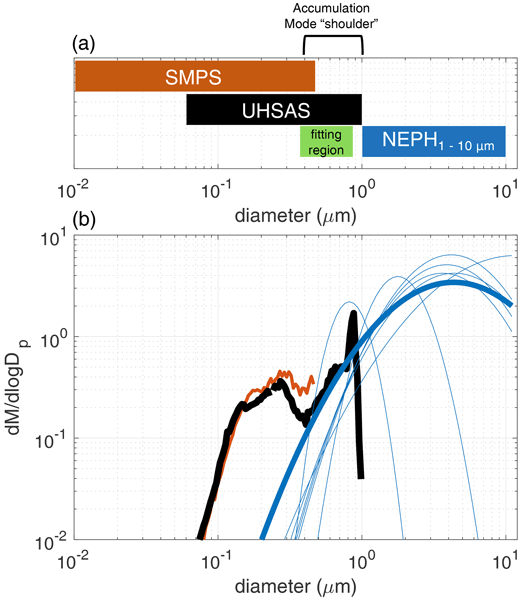
A new method is presented to retrieve the sea spray aerosol size distribution by combining submicron size and nephelometer scattering based on Mie theory. Using available sea spray tracers, we find that this approach serves as a comparable substitute to supermicron size distribution measurements, which are limited in availability at marine sites. Application of this technique can expand sea spray observations and improve the characterization of marine aerosol impacts on clouds and climate.
Fan Mei, Jian Wang, Israel Silber, Nurun Nahar Lata, Gregory W. Vandergrift, Jing Li, Bo Chen, Sarah D. Brooks, Michael P. Jensen, Min Deng, Damao Zhang, Darielle Dexheimer, Beat Schmid, Zezhen Cheng, and Swarup China
Atmos. Chem. Phys., 26, 13885–13908, https://doi.org/10.5194/acp-26-13885-2026, https://doi.org/10.5194/acp-26-13885-2026, 2026
Short summary
Short summary
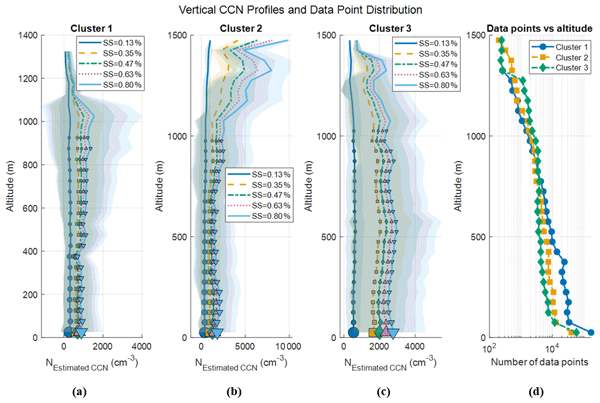
Tethered balloon measurements from 149 flights during DOE ARM TRACER over Houston characterize vertical aerosol and CCN structure. Back-trajectory clustering identifies three air mass types – marine, mixed, and urban – with distinct profiles shaped by boundary-layer depth and coastal circulations. A case study shows mesoscale advection simultaneously transforms thermodynamic and aerosol conditions, underscoring the need to constrain meteorology before attributing cloud changes to aerosol forcing.
Veronica Z. Berta, Lynn Monica Russell, Abigail S. Williams, Jeramy L. Dedrick, Sanghee Han, Dan Lubin, Ryan N. Farley, Allison C. Aiken, Jeremy Wentzell, and John Liggio
EGUsphere, https://doi.org/10.5194/egusphere-2026-4695, https://doi.org/10.5194/egusphere-2026-4695, 2026
Short summary
Short summary
This study examines different formation pathways for various types of organic aerosol using one year of aerosol mass spectrometry measurements from the Eastern Pacific Cloud Aerosol Precipitation Experiment (EPCAPE) in La Jolla, California. The results show that photochemical, cloud and aerosol water aqueous reactions, and combustion emissions contribute differently to organic aerosol across seasons, with in-cloud aqueous reactions most strongly associated with highly oxidized organic aerosol.
McKenna Stanford, Naser Mahfouz, Johannes Muelmenstaedt, August Mikkelsen, and Susannah Burrows
EGUsphere, https://doi.org/10.5194/egusphere-2026-4488, https://doi.org/10.5194/egusphere-2026-4488, 2026
Short summary
Short summary
A key challenge in calibrating climate models is equifinality, where models get the right answer for the wrong reasons. We show that matching Earth's energy balance alone is insufficient to constrain the radiative response to aerosol-cloud interactions. Constraining the cloud state helps but is fragile under large uncertainty. The most robust approach targets the physical processes forming clouds and rain, establishing that we must validate not just what a model produces, but how it produces it.
Jingjing Tian, Gourihar Kulkarni, Jennifer M. Comstock, John E. Shilling, Damao Zhang, Peng Wu, and Fan Mei
Atmos. Meas. Tech., 19, 5051–5069, https://doi.org/10.5194/amt-19-5051-2026, https://doi.org/10.5194/amt-19-5051-2026, 2026
Short summary
Short summary
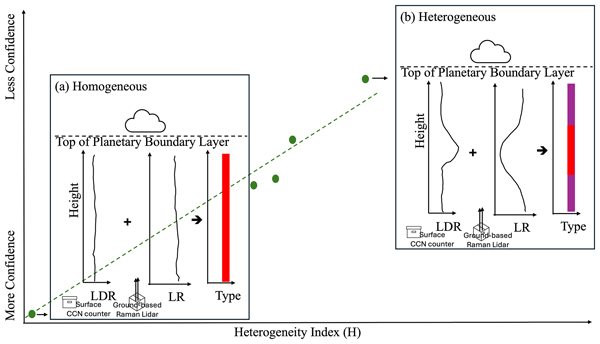
Cloud condensation nuclei are tiny particles that attract water vapor and help form clouds. A ground-based lidar method can estimate their number at different heights, but assumes the aerosol type does not change with height. Comparisons with aircraft data show good agreement of this method when aerosols are well mixed, but larger errors when stacked layers occur. We also developed an index to flag these complex conditions and indicate when this estimation method is more reliable.
Andrew Geiss, Johannes Mülmenstädt, Adam C. Varble, Matthew W. Christensen, and Heng Xiao
EGUsphere, https://doi.org/10.5194/egusphere-2026-4426, https://doi.org/10.5194/egusphere-2026-4426, 2026
Short summary
Short summary
Cloud droplet and liquid water concentrations change in response to atmospheric aerosols, affecting cloud brightness, lifetime, and ultimately the Earth's climate. This study examines how the relationship between droplet number and liquid water concentrations varies by cloud type. We find that cloud type can be used to explain most variance in liquid water between satellite-observed cloud scenes, but the influence of droplet concentration on water content is largely independent of cloud type.
Sophie Wynn, Duncan Watson-Parris, Brandon M. Duran, and Johannes Mülmenstädt
EGUsphere, https://doi.org/10.5194/egusphere-2026-2811, https://doi.org/10.5194/egusphere-2026-2811, 2026
Short summary
Short summary
Climate models use uncertain parameters to represent aerosol–cloud processes. To identify which parameters are most important, commonly scientists a multitude of simulations where these parameters are varied uniformly. We show that restricting our analysis to simulations matching the base cloud state gives a different and more meaningful answer about which parameters drive the forcing related to aerosol-cloud interactions.
Sudhakar Dipu, Johannes Mülmenstädt, and Johannes Quaas
Atmos. Chem. Phys., 26, 7917–7931, https://doi.org/10.5194/acp-26-7917-2026, https://doi.org/10.5194/acp-26-7917-2026, 2026
Short summary
Short summary
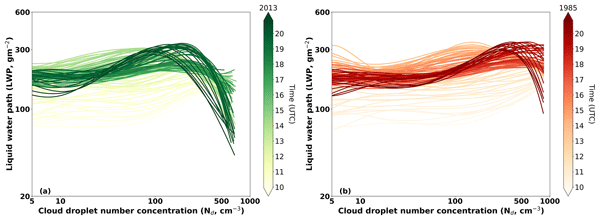
High-resolution Large-Eddy Simulations (LES) are used to examine how aerosols affect liquid water path (LWP) sensitivity in non-precipitating liquid clouds. Two cases, 1985 (high aerosol) and 2013 (low aerosol), show a non-linear Nd–LWP relationship with a shift from positive to negative sensitivity at higher Nd under high aerosol loading. Enhanced cloud-top entrainment, evaporation, and heating drive this shift, highlighting aerosol impact on cloud microphysics and thermodynamics.
Johannes Mülmenstädt and Po-Lun Ma
EGUsphere, https://doi.org/10.5194/egusphere-2026-748, https://doi.org/10.5194/egusphere-2026-748, 2026
Short summary
Short summary
Aerosols emitted by human activities change the planetary energy budget by, among other mechanisms, changing how much liquid water is contained in clouds and thus their reflectance. Different lines of evidence (observations and models) disagree on the sign of the liquid water change even though they agree on the sign of the correlation between aerosols and liquid water in present-day internal variability. We show one way that observations can constrain models to resolve this disagreement.
Andrew M. Sayer, Brian Cairns, Kirk D. Knobelspiesse, Luca Lelli, Chamara Rajapakshe, Scott E. Giangrande, Gareth E. Thomas, and Damao Zhang
Atmos. Meas. Tech., 18, 6681–6703, https://doi.org/10.5194/amt-18-6681-2025, https://doi.org/10.5194/amt-18-6681-2025, 2025
Short summary
Short summary
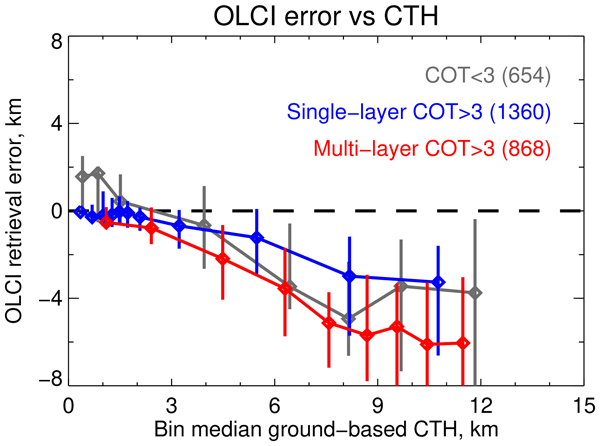
Satellites can estimate cloud height in several ways: two include a thermal technique (colder clouds being higher up), and another looking at colours of light that oxygen in the atmosphere absorbs (darker clouds being lower down). It can also be measured (from ground or space) by radar and lidar. We compare satellite data we developed using the oxygen method with other estimates to help us refine our technique.
Naser Mahfouz, Hassan Beydoun, Johannes Mülmenstädt, Noel Keen, Adam C. Varble, Luca Bertagna, Peter Bogenschutz, Andrew Bradley, Matthew W. Christensen, T. Conrad Clevenger, Aaron Donahue, Jerome Fast, James Foucar, Jean-Christophe Golaz, Oksana Guba, Walter Hannah, Benjamin Hillman, Robert Jacob, Wuyin Lin, Po-Lun Ma, Yun Qian, Balwinder Singh, Christopher Terai, Hailong Wang, Mingxuan Wu, Kai Zhang, Andrew Gettelman, Mark Taylor, L. Ruby Leung, Peter Caldwell, and Susannah Burrows
Atmos. Chem. Phys., 25, 15105–15120, https://doi.org/10.5194/acp-25-15105-2025, https://doi.org/10.5194/acp-25-15105-2025, 2025
Short summary
Short summary
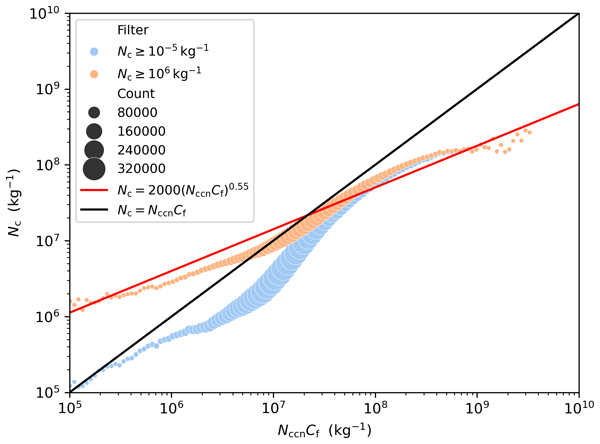
Our study assesses the aerosol effective radiative forcing in a global cloud-resolving atmosphere model at ultra-high resolution. We demonstrate that global aerosol forcing signal can be robustly reproduced across resolutions when aerosol activation processes are carefully parameterized. Further, we argue that simplified prescribed aerosol schemes will open the door for further process/mechanism studies under controlled conditions.
Lexie Goldberger, Maxwell Levin, Carlandra Harris, Andrew Geiss, Matthew D. Shupe, and Damao Zhang
Atmos. Meas. Tech., 18, 5393–5414, https://doi.org/10.5194/amt-18-5393-2025, https://doi.org/10.5194/amt-18-5393-2025, 2025
Short summary
Short summary
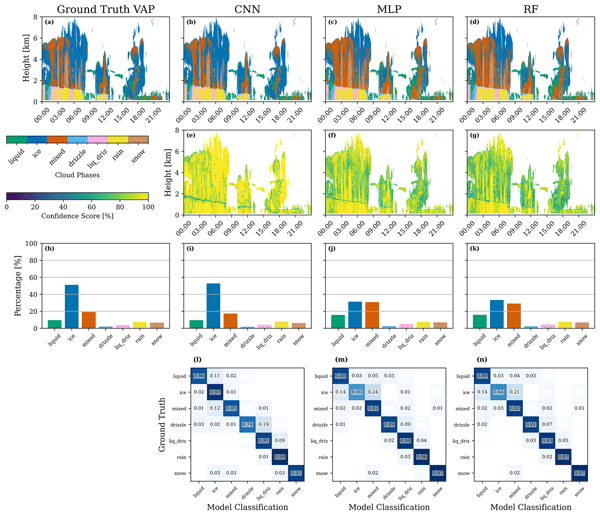
This study leverages machine learning models to classify cloud thermodynamic phases using multi-sensor remote sensing data collected at the Department of Energy Atmospheric Radiation Measurement North Slope of Alaska observatory. We evaluate model performance, feature importance, and application of the model to another observatory and quantify how the models respond to instrument outages.

David D. Turner, Maria P. Cadeddu, Julia M. Simonson, and Timothy J. Wagner
Atmos. Meas. Tech., 18, 3533–3546, https://doi.org/10.5194/amt-18-3533-2025, https://doi.org/10.5194/amt-18-3533-2025, 2025
Short summary
Short summary
When deriving a geophysical variable from remote sensors, the uncertainty and information content are critical. The latter quantify specifies what fraction of a real perturbation would be observed in the derived variable. This paper outlines, for the first time, a methodology for propagating the information content from multiple remote sensors into a derived product using horizontal advection as an example.

Damao Zhang, Jennifer Comstock, Chitra Sivaraman, Kefei Mo, Raghavendra Krishnamurthy, Jingjing Tian, Tianning Su, Zhanqing Li, and Natalia Roldán-Henao
Atmos. Meas. Tech., 18, 3453–3475, https://doi.org/10.5194/amt-18-3453-2025, https://doi.org/10.5194/amt-18-3453-2025, 2025
Short summary
Short summary
Planetary boundary layer height (PBLHT) is an important parameter in atmospheric process studies and numerical model simulations. We use machine learning methods to produce a best-estimate planetary boundary layer height (PBLHT-BE-ML) by integrating four PBLHT estimates derived from remote sensing measurements. We demonstrated that PBLHT-BE-ML greatly improved the comparisons against sounding-derived PBLHT.
David Bromwich, Sheng-Hung Wang, Xun Zou, and Alexandra Ensign
Earth Syst. Sci. Data, 17, 2953–2962, https://doi.org/10.5194/essd-17-2953-2025, https://doi.org/10.5194/essd-17-2953-2025, 2025
Short summary
Short summary
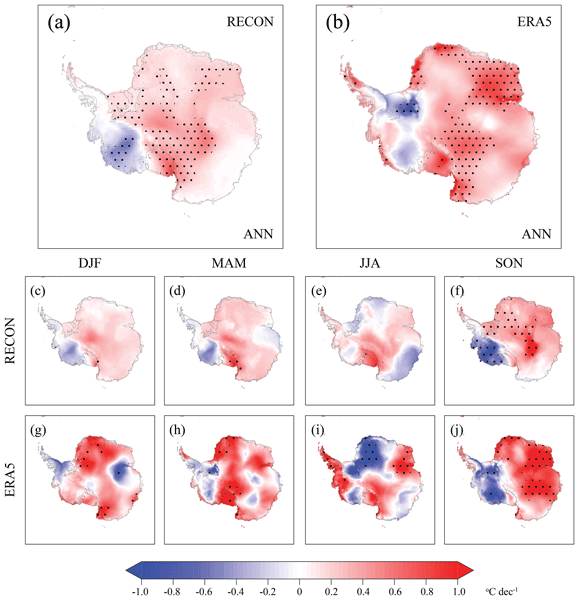
Antarctica is a major player in Earth’s climate, with the most direct influence arising from its potential to raise the global sea level by 1 m or more in the coming decades. Near-surface air temperature is the primary variable used to monitor the climate of this remote but important region. Continent-wide direct but sparse measurements that started around 1958 are used to construct a monthly air temperature dataset for all of Antarctica, spanning the period from 1958 to 2022.
Fan Mei, Qi Zhang, Damao Zhang, Jerome D. Fast, Gourihar Kulkarni, Mikhail S. Pekour, Christopher R. Niedek, Susanne Glienke, Israel Silber, Beat Schmid, Jason M. Tomlinson, Hardeep S. Mehta, Xena Mansoura, Zezhen Cheng, Gregory W. Vandergrift, Nurun Nahar Lata, Swarup China, and Zihua Zhu
Atmos. Chem. Phys., 25, 3425–3444, https://doi.org/10.5194/acp-25-3425-2025, https://doi.org/10.5194/acp-25-3425-2025, 2025
Short summary
Short summary
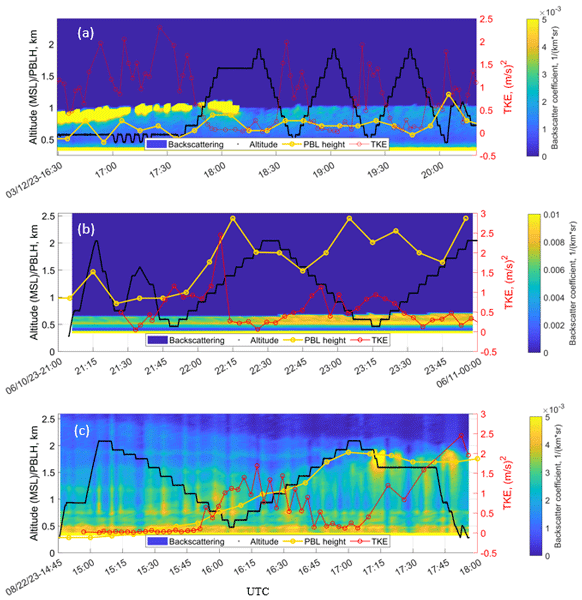
This study highlights the unique capability of the ArcticShark, an uncrewed aerial system, in measuring vertically resolved atmospheric properties. Data from 32 research flights in 2023 reveal seasonal patterns and correlations with conventional measurements. The consistency and complementarity of in situ and remote sensing methods are highlighted. The study demonstrates the ArcticShark’s versatility in bridging data gaps and improving the understanding of vertical atmospheric structures.
Johannes Mülmenstädt, Andrew S. Ackerman, Ann M. Fridlind, Meng Huang, Po-Lun Ma, Naser Mahfouz, Susanne E. Bauer, Susannah M. Burrows, Matthew W. Christensen, Sudhakar Dipu, Andrew Gettelman, L. Ruby Leung, Florian Tornow, Johannes Quaas, Adam C. Varble, Hailong Wang, Kai Zhang, and Youtong Zheng
Atmos. Chem. Phys., 24, 13633–13652, https://doi.org/10.5194/acp-24-13633-2024, https://doi.org/10.5194/acp-24-13633-2024, 2024
Short summary
Short summary
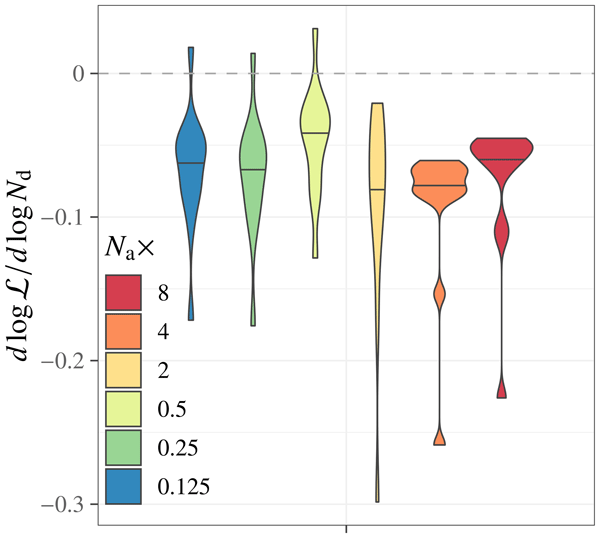
Stratocumulus clouds play a large role in Earth's climate by reflecting incoming solar energy back to space. Turbulence at stratocumulus cloud top mixes in dry, warm air, which can lead to cloud dissipation. This process is challenging for coarse-resolution global models to represent. We show that global models nevertheless agree well with our process understanding. Global models also think the process is less important for the climate than other lines of evidence have led us to conclude.
Fan Mei, Jennifer M. Comstock, Mikhail S. Pekour, Jerome D. Fast, Krista L. Gaustad, Beat Schmid, Shuaiqi Tang, Damao Zhang, John E. Shilling, Jason M. Tomlinson, Adam C. Varble, Jian Wang, L. Ruby Leung, Lawrence Kleinman, Scot Martin, Sebastien C. Biraud, Brian D. Ermold, and Kenneth W. Burk
Earth Syst. Sci. Data, 16, 5429–5448, https://doi.org/10.5194/essd-16-5429-2024, https://doi.org/10.5194/essd-16-5429-2024, 2024
Short summary
Short summary
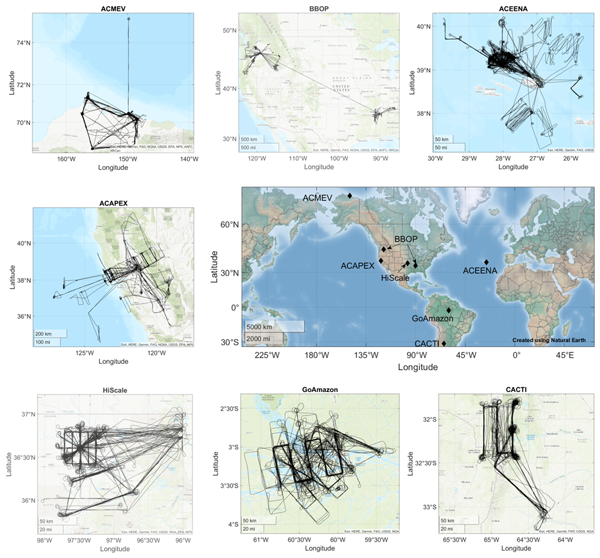
Our study explores a comprehensive dataset from airborne field studies (2013–2018) conducted using the US Department of Energy's Gulfstream 1 (G-1). The 236 flights span diverse regions, including the Arctic, US Southern Great Plains, US West Coast, eastern North Atlantic, Amazon Basin in Brazil, and Sierras de Córdoba range in Argentina. This dataset provides unique insights into atmospheric dynamics, aerosols, and clouds and makes data available in a more accessible format.
Zhenhai Zhang, F. Martin Ralph, Xun Zou, Brian Kawzenuk, Minghua Zheng, Irina V. Gorodetskaya, Penny M. Rowe, and David H. Bromwich
The Cryosphere, 18, 5239–5258, https://doi.org/10.5194/tc-18-5239-2024, https://doi.org/10.5194/tc-18-5239-2024, 2024
Short summary
Short summary
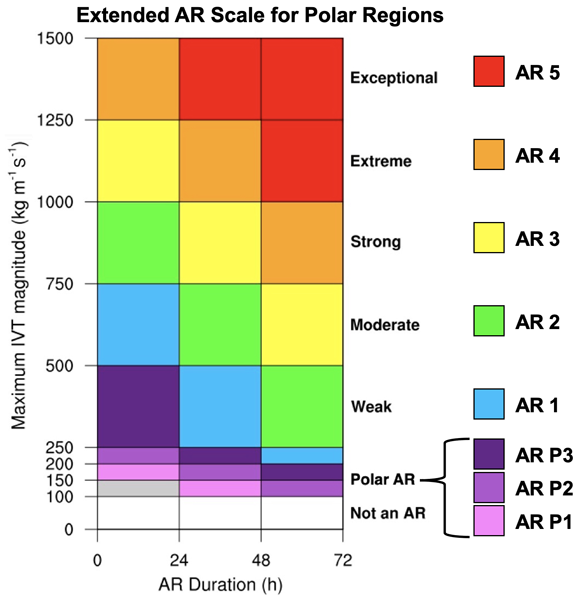
Atmospheric rivers (ARs) are long, narrow corridors of strong water vapor transport in the atmosphere. ARs play an important role in extreme weather in polar regions, including heavy rain and/or snow, heat waves, and surface melt. The standard AR scale is developed based on the midlatitude climate and is insufficient for polar regions. This paper introduces an extended version of the AR scale tuned to polar regions, aiming to quantify polar ARs objectively based on their strength and impact.
Johannes Mülmenstädt, Edward Gryspeerdt, Sudhakar Dipu, Johannes Quaas, Andrew S. Ackerman, Ann M. Fridlind, Florian Tornow, Susanne E. Bauer, Andrew Gettelman, Yi Ming, Youtong Zheng, Po-Lun Ma, Hailong Wang, Kai Zhang, Matthew W. Christensen, Adam C. Varble, L. Ruby Leung, Xiaohong Liu, David Neubauer, Daniel G. Partridge, Philip Stier, and Toshihiko Takemura
Atmos. Chem. Phys., 24, 7331–7345, https://doi.org/10.5194/acp-24-7331-2024, https://doi.org/10.5194/acp-24-7331-2024, 2024
Short summary
Short summary
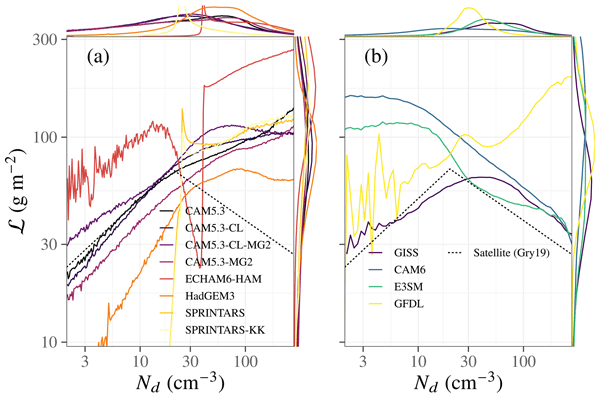
Human activities release copious amounts of small particles called aerosols into the atmosphere. These particles change how much sunlight clouds reflect to space, an important human perturbation of the climate, whose magnitude is highly uncertain. We found that the latest climate models show a negative correlation but a positive causal relationship between aerosols and cloud water. This means we need to be very careful when we interpret observational studies that can only see correlation.
Naser Mahfouz, Johannes Mülmenstädt, and Susannah Burrows
Atmos. Chem. Phys., 24, 7253–7260, https://doi.org/10.5194/acp-24-7253-2024, https://doi.org/10.5194/acp-24-7253-2024, 2024
Short summary
Short summary
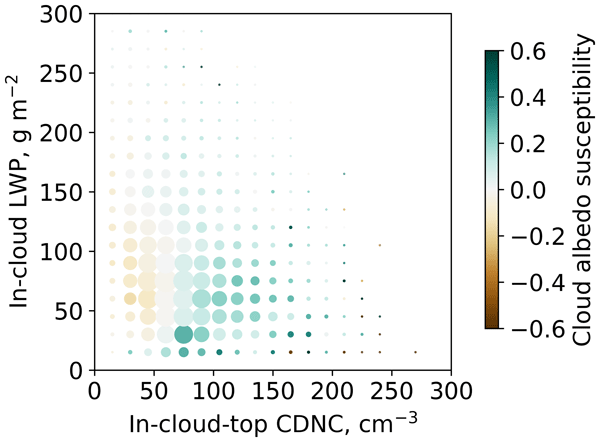
Climate models are our primary tool to probe past, present, and future climate states unlike the more recent observation record. By constructing a hypothetical model configuration, we show that present-day correlations are insufficient to predict a persistent uncertainty in climate projection (how much sun because clouds will reflect in a changing climate). We hope our result will contribute to the scholarly conversation on better utilizing observations to constrain climate uncertainties.
Nicolaj Hansen, Andrew Orr, Xun Zou, Fredrik Boberg, Thomas J. Bracegirdle, Ella Gilbert, Peter L. Langen, Matthew A. Lazzara, Ruth Mottram, Tony Phillips, Ruth Price, Sebastian B. Simonsen, and Stuart Webster
The Cryosphere, 18, 2897–2916, https://doi.org/10.5194/tc-18-2897-2024, https://doi.org/10.5194/tc-18-2897-2024, 2024
Short summary
Short summary
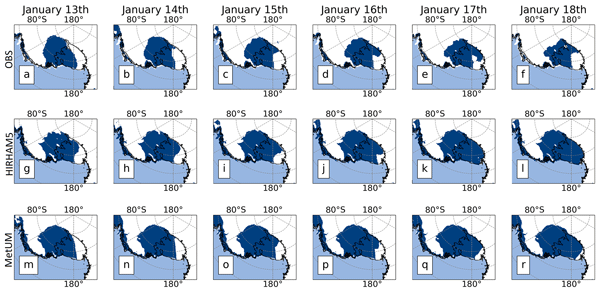
We investigated a melt event over the Ross Ice Shelf. We use regional climate models and a firn model to simulate the melt and compare the results with satellite data. We find that the firn model aligned well with observed melt days in certain parts of the ice shelf. The firn model had challenges accurately simulating the melt extent in the western sector. We identified potential reasons for these discrepancies, pointing to limitations in the models related to representing the cloud properties.
Kristopher Scarci, Ryan C. Scott, Madison L. Ghiz, Andrew M. Vogelmann, and Dan Lubin
Atmos. Chem. Phys., 24, 6681–6697, https://doi.org/10.5194/acp-24-6681-2024, https://doi.org/10.5194/acp-24-6681-2024, 2024
Short summary
Short summary
We demonstrate what can be learned about an Antarctic region's climate from basic atmospheric irradiance measurements made by broadband and filter radiometers, instruments suitable for deployment at very remote sites, assisted by meteorological reanalysis and satellite remote sensing. Analysis of shortwave and longwave irradiance reveals subtle contrasts between meteorological regimes favoring cloud ice versus liquid water, relevant to onset versus inhibition of surface melt over ice shelves.
Charlotte M. Beall, Po-Lun Ma, Matthew W. Christensen, Johannes Mülmenstädt, Adam Varble, Kentaroh Suzuki, and Takuro Michibata
Atmos. Chem. Phys., 24, 5287–5302, https://doi.org/10.5194/acp-24-5287-2024, https://doi.org/10.5194/acp-24-5287-2024, 2024
Short summary
Short summary
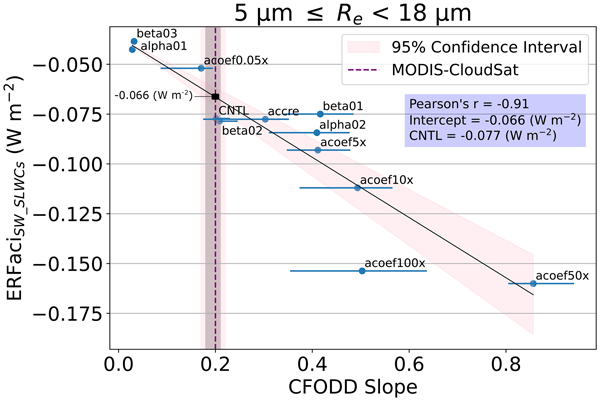
Single-layer warm liquid clouds cover nearly one-third of the Earth's surface, and uncertainties regarding the impact of aerosols on their radiative properties pose a significant challenge to climate prediction. Here, we demonstrate how satellite observations can be used to constrain Earth system model estimates of the radiative forcing from the interactions of aerosols with clouds due to warm rain processes.
Damao Zhang, Andrew M. Vogelmann, Fan Yang, Edward Luke, Pavlos Kollias, Zhien Wang, Peng Wu, William I. Gustafson Jr., Fan Mei, Susanne Glienke, Jason Tomlinson, and Neel Desai
Atmos. Meas. Tech., 16, 5827–5846, https://doi.org/10.5194/amt-16-5827-2023, https://doi.org/10.5194/amt-16-5827-2023, 2023
Short summary
Short summary
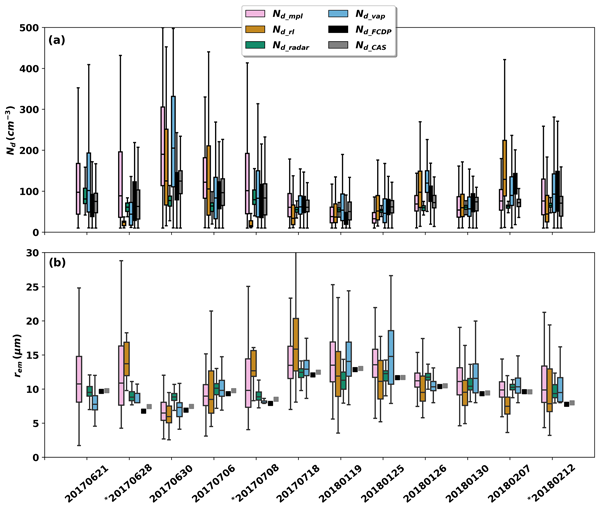
Cloud droplet number concentration can be retrieved from remote sensing measurements. Aircraft measurements are used to validate four ground-based retrievals of cloud droplet number concentration. We demonstrate that retrieved cloud droplet number concentrations align well with aircraft measurements for overcast clouds, but they may substantially differ for broken clouds. The ensemble of various retrievals can help quantify retrieval uncertainties and identify reliable retrieval scenarios.
Adam C. Varble, Po-Lun Ma, Matthew W. Christensen, Johannes Mülmenstädt, Shuaiqi Tang, and Jerome Fast
Atmos. Chem. Phys., 23, 13523–13553, https://doi.org/10.5194/acp-23-13523-2023, https://doi.org/10.5194/acp-23-13523-2023, 2023
Short summary
Short summary
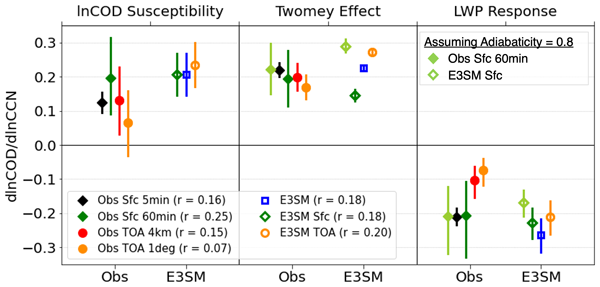
We evaluate how clouds change in response to changing atmospheric particle (aerosol) concentrations in a climate model and find that the model-predicted cloud brightness increases too much as aerosols increase because the cloud drop number increases too much. Excessive drizzle in the model mutes this difference. Many differences between observational and model estimates are explained by varying assumptions of how much liquid has been lost in clouds, which impacts the estimated cloud drop number.
McKenna W. Stanford, Ann M. Fridlind, Israel Silber, Andrew S. Ackerman, Greg Cesana, Johannes Mülmenstädt, Alain Protat, Simon Alexander, and Adrian McDonald
Atmos. Chem. Phys., 23, 9037–9069, https://doi.org/10.5194/acp-23-9037-2023, https://doi.org/10.5194/acp-23-9037-2023, 2023
Short summary
Short summary
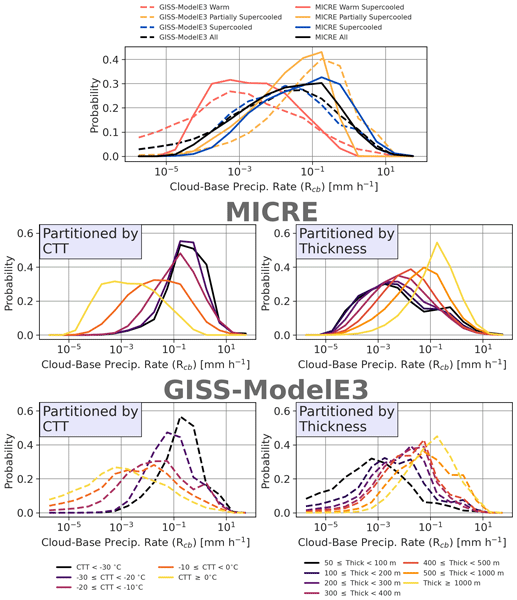
Clouds play an important role in the Earth’s climate system as they modulate the amount of radiation that either reaches the surface or is reflected back to space. This study demonstrates an approach to robustly evaluate surface-based observations against a large-scale model. We find that the large-scale model precipitates too infrequently relative to observations, contrary to literature documentation suggesting otherwise based on satellite measurements.
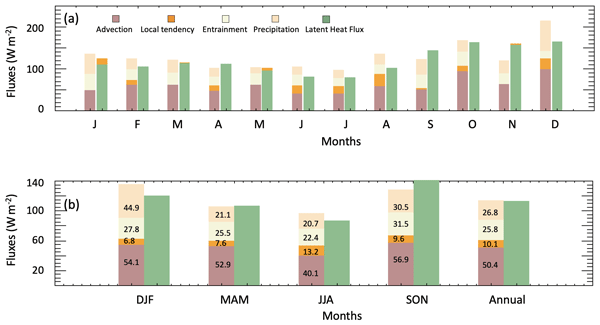
Maria P. Cadeddu, Virendra P. Ghate, David D. Turner, and Thomas E. Surleta
Atmos. Chem. Phys., 23, 3453–3470, https://doi.org/10.5194/acp-23-3453-2023, https://doi.org/10.5194/acp-23-3453-2023, 2023
Short summary
Short summary
We analyze the variability in marine boundary layer moisture at the Eastern North Atlantic site on a monthly and daily temporal scale and examine its fundamental role in the control of boundary layer cloudiness and precipitation. The study also highlights the complex interaction between large-scale and local processes controlling the boundary layer moisture and the importance of the mesoscale spatial distribution of vapor to support convection and precipitation.

Matthew W. Christensen, Po-Lun Ma, Peng Wu, Adam C. Varble, Johannes Mülmenstädt, and Jerome D. Fast
Atmos. Chem. Phys., 23, 2789–2812, https://doi.org/10.5194/acp-23-2789-2023, https://doi.org/10.5194/acp-23-2789-2023, 2023
Short summary
Short summary
An increase in aerosol concentration (tiny airborne particles) is shown to suppress rainfall and increase the abundance of droplets in clouds passing over Graciosa Island in the Azores. Cloud drops remain affected by aerosol for several days across thousands of kilometers in satellite data. Simulations from an Earth system model show good agreement, but differences in the amount of cloud water and its extent remain despite modifications to model parameters that control the warm-rain process.
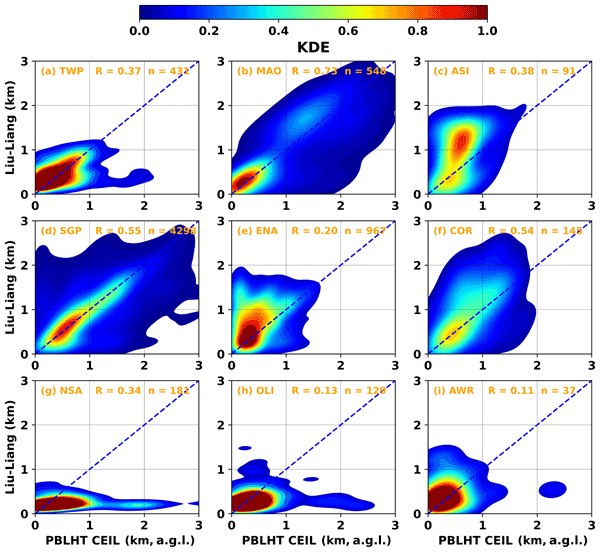
Damao Zhang, Jennifer Comstock, and Victor Morris
Atmos. Meas. Tech., 15, 4735–4749, https://doi.org/10.5194/amt-15-4735-2022, https://doi.org/10.5194/amt-15-4735-2022, 2022
Short summary
Short summary
The planetary boundary layer is the lowest part of the atmosphere. Its structure and depth (PBLHT) significantly impact air quality, global climate, land–atmosphere interactions, and a wide range of atmospheric processes. To test the robustness of the ceilometer-estimated PBLHT under different atmospheric conditions, we compared ceilometer- and radiosonde-estimated PBLHTs using multiple years of U.S. DOE ARM measurements at various ARM observatories located around the world.
Jeramy L. Dedrick, Georges Saliba, Abigail S. Williams, Lynn M. Russell, and Dan Lubin
Atmos. Meas. Tech., 15, 4171–4194, https://doi.org/10.5194/amt-15-4171-2022, https://doi.org/10.5194/amt-15-4171-2022, 2022
Short summary
Short summary
A new method is presented to retrieve the sea spray aerosol size distribution by combining submicron size and nephelometer scattering based on Mie theory. Using available sea spray tracers, we find that this approach serves as a comparable substitute to supermicron size distribution measurements, which are limited in availability at marine sites. Application of this technique can expand sea spray observations and improve the characterization of marine aerosol impacts on clouds and climate.
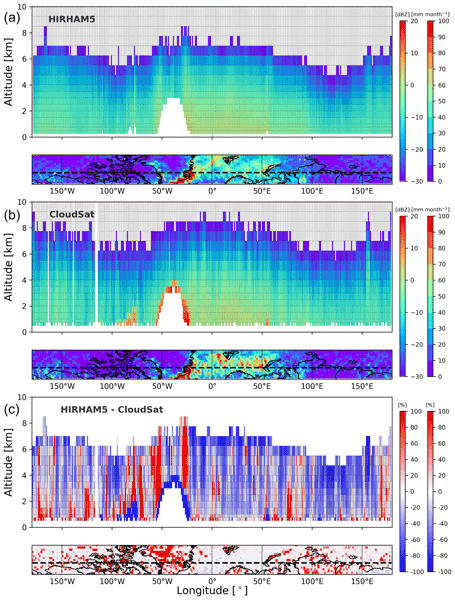
Annakaisa von Lerber, Mario Mech, Annette Rinke, Damao Zhang, Melanie Lauer, Ana Radovan, Irina Gorodetskaya, and Susanne Crewell
Atmos. Chem. Phys., 22, 7287–7317, https://doi.org/10.5194/acp-22-7287-2022, https://doi.org/10.5194/acp-22-7287-2022, 2022
Short summary
Short summary
Snowfall is an important climate indicator. However, microphysical snowfall processes are challenging for atmospheric models. In this study, the performance of a regional climate model is evaluated in modeling the spatial and temporal distribution of Arctic snowfall when compared to CloudSat satellite observations. Excellent agreement in averaged annual snowfall rates is found, and the shown methodology offers a promising diagnostic tool to investigate the shown differences further.
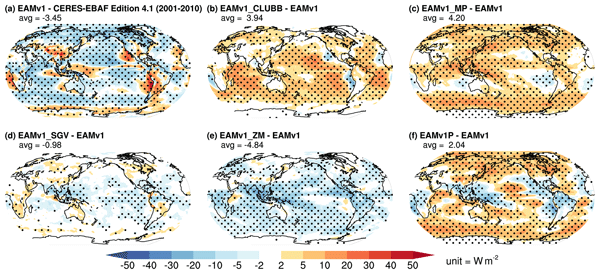
Po-Lun Ma, Bryce E. Harrop, Vincent E. Larson, Richard B. Neale, Andrew Gettelman, Hugh Morrison, Hailong Wang, Kai Zhang, Stephen A. Klein, Mark D. Zelinka, Yuying Zhang, Yun Qian, Jin-Ho Yoon, Christopher R. Jones, Meng Huang, Sheng-Lun Tai, Balwinder Singh, Peter A. Bogenschutz, Xue Zheng, Wuyin Lin, Johannes Quaas, Hélène Chepfer, Michael A. Brunke, Xubin Zeng, Johannes Mülmenstädt, Samson Hagos, Zhibo Zhang, Hua Song, Xiaohong Liu, Michael S. Pritchard, Hui Wan, Jingyu Wang, Qi Tang, Peter M. Caldwell, Jiwen Fan, Larry K. Berg, Jerome D. Fast, Mark A. Taylor, Jean-Christophe Golaz, Shaocheng Xie, Philip J. Rasch, and L. Ruby Leung
Geosci. Model Dev., 15, 2881–2916, https://doi.org/10.5194/gmd-15-2881-2022, https://doi.org/10.5194/gmd-15-2881-2022, 2022
Short summary
Short summary
An alternative set of parameters for E3SM Atmospheric Model version 1 has been developed based on a tuning strategy that focuses on clouds. When clouds in every regime are improved, other aspects of the model are also improved, even though they are not the direct targets for calibration. The recalibrated model shows a lower sensitivity to anthropogenic aerosols and surface warming, suggesting potential improvements to the simulated climate in the past and future.

Matthew W. Christensen, Andrew Gettelman, Jan Cermak, Guy Dagan, Michael Diamond, Alyson Douglas, Graham Feingold, Franziska Glassmeier, Tom Goren, Daniel P. Grosvenor, Edward Gryspeerdt, Ralph Kahn, Zhanqing Li, Po-Lun Ma, Florent Malavelle, Isabel L. McCoy, Daniel T. McCoy, Greg McFarquhar, Johannes Mülmenstädt, Sandip Pal, Anna Possner, Adam Povey, Johannes Quaas, Daniel Rosenfeld, Anja Schmidt, Roland Schrödner, Armin Sorooshian, Philip Stier, Velle Toll, Duncan Watson-Parris, Robert Wood, Mingxi Yang, and Tianle Yuan
Atmos. Chem. Phys., 22, 641–674, https://doi.org/10.5194/acp-22-641-2022, https://doi.org/10.5194/acp-22-641-2022, 2022
Short summary
Short summary
Trace gases and aerosols (tiny airborne particles) are released from a variety of point sources around the globe. Examples include volcanoes, industrial chimneys, forest fires, and ship stacks. These sources provide opportunistic experiments with which to quantify the role of aerosols in modifying cloud properties. We review the current state of understanding on the influence of aerosol on climate built from the wide range of natural and anthropogenic laboratories investigated in recent decades.
Cited articles
Barrientos-Velasco, C., Deneke, H., Hünerbein, A., Griesche, H. J., Seifert, P., and Macke, A.: Radiative closure and cloud effects on the radiation budget based on satellite and shipborne observations during the Arctic summer research cruise, PS106, Atmos. Chem. Phys., 22, 9313–9348, https://doi.org/10.5194/acp-22-9313-2022, 2022.
Bennartz, R., Shupe, M. D., Turner, D. D., Walden, V. P., Steffen, K., Cox, C. J., Kulie, M. S., Miller, N. B., and Pettersen, C.: July 2012 Greenland melt enhanced by low-level liquid clouds, Nature, 496, 83–86, https://doi.org/10.1038/nature12002, 2013.
Bromwich, D. H., Gorodetskaya, I. V., Carpentier, S., Alexander, S., Bazile, E., Heinrich, V. J., Massonnet, F., Powers, J. G., Carrasco, J. F., Cayette, A., Choi, T., Chyhareva, A., Colwell, S. R., Cordeira, J. M., Cordero, R. R., Doerenbecher, A., Durán-Alarcón, C., French, W. J. R., Gonzalez-Herrero, S., Guyot, A., Haiden, T., Hirasawa, N., Rodriguez Imazio, P., Kawzenuk, B., Krakovska, S., Lazzara, M. A., Litell, M. F., Manning, K. W., Norris, K., Park, S.-J., Ralph, F. M., Rowe, P. M., Sun, Q., Vitale, V., Wille, J. D., Zhang, Z., and Zou, X.: Winter targeted observing periods during the Year of Prediction in the Southern Hemisphere (YOPP-SH), B. Am. Meteor. Soc., 105, E1662–E1684, https://doi.org/10.1175/BAMS-D-22-0249.1, 2024.
Bush, B. C., Valero, F. P. J., Simpson, A. S., and Bignone, L: Characterization of thermal effects in pyranometers: A data correction algorithm for improved measurement of surface insolation, J. Atmos. Ocean. Tech., 17, 165–175, https://doi.org/10.1175/1520-0426(2000)017<0165:COTEIP>2.0.CO;2, 2000.
Cadeddu, M. P., Liljegren, J. C., and Turner, D. D.: The Atmospheric radiation measurement (ARM) program network of microwave radiometers: instrumentation, data, and retrievals, Atmos. Meas. Tech., 6, 2359–2372, https://doi.org/10.5194/amt-6-2359-2013, 2013.
Cesana, G. V., Pierpaoli, O., Ottaviani, M., Vu, L., Jin, Z., and Silber, I.: The correlation between Arctic sea ice, cloud phase and radiation using A-Train satellites, Atmos. Chem. Phys., 24, 7899–7909, https://doi.org/10.5194/acp-24-7899-2024, 2024.
Comiso, J. C. and Hall, D. K.: Climate trends in the Arctic as observed from space, WIREs Climate Change, 5, 389–409, https://doi.org/10.1002/wcc.277, 2014.
Desai, N., Diao, M., Shi, Y., and Liu, X.: A comparative study of cloud properties between northern and southern high latitudes based on ARM observations and EAMv2 simulations, J. Geophys. Res.-Atmos., 130, e2024JD041588, https://doi.org/10.1029/2024JD041588, 2024.
Di Biagio, C., Pelon, J., Blanchard, Y., Loyer, L., Hudson, S. R., Walden, V. P., Raut, J.-C., Kato, S., Mariage, V., and Granskog, M. A.: Toward a better surface radiation budget analysis over sea ice in the high Arctic Ocean: A comparative study between satellite, reanalysis, and local-scale observations, J. Geophys. Res.-Atmos., 126, e2020JD032555, https://doi.org/10.1029/2020JD032555, 2020.
Ding, Q., Wallace, J. M., Battisti, D. S., Steig, E. J., Gallant, A. J. E., Kim, H.-J., and Geng, L.: Tropical forcing of recent rapid Arctic warming in northeastern Canada and Greenland, Nature, 509, 209–212, https://doi.org/10.1038/nature13260, 2014.
Dong, X. and Mace, G. G.: Arctic stratus cloud properties and radiative forcing derived from ground-based data collected at Barrow, Alaska, J. Climate, 16, 445–461, https://doi.org/10.1175/1520-0442(2003)016<0445:ASCPAR>2.0.CO;2, 2003.
Esau, I., Pettersson, L. H., Cancet, H., Chapron, B., Chernokulsky, A., Donlon, C., Sizov, O., Soromotin, A., and Johannesen, J. A.: The Arctic amplification and its impact: A synthesis through satellite observations, Remote Sens., 15, 1354, https://doi.org/10.3390/rs15051354, 2023.
Fereday, D. R., Knight, J. R., Acaife, A. A., and Folland, C. K.: Cluster analysis or North Atlantic – European circulation types and links with tropical Pacific sea surface temperatures, J. Climate, 21, 3687–3703, https://doi.org/10.1175/2007JCLI1875.1, 2008.
Guan, B. and Waliser, D.: Detection of atmospheric rivers: Evaluation and application of an algorithm for global studies, J. Geophys. Res.-Atmos., 129, 12514–12535, https://doi.org/10.1002/2015JD024257, 2015.
Hersbach, H., Bell, B., Berrisford, P., Hirahara, S., Horányi, A., Muñoz-Sabater, J., Nicolas, J., Peubey, C., Radu, R., Schepers, D., Simmons, A., Soci, C., Abdalla, S., Abella, X., Balsamo, G., Bechtold, P., Biavati, G., Bidlot, J., Bonavita, M., De Chiara, G., Dahlgren, P., Dee, D., Diamantakis, M., Dragani, R., Flemming, J., Forbes, R., Fuentes, M., Geer, A., Haimburger, L., Healy, S., Hogan, R. J., Hólm, E., Janisková, M., Keeley, S., Laloyaux, P., Lopez, P., Lupu, C., Radnoti, G., de Rosnay, P., Rozum, I., Vamborg, F., Villaume, S., and Thépaut, J.-N.: The ERA5 global reanalysis, Q. J. Roy. Meteorol. Soc. A, 146, 1–51, https://doi.org/10.1002/qj.3803, 2020.
Hersbach, H., Bell, B., Berrisford, P., Biavati, G., Horányi, A., Muñoz Sabater, J., Nicolas, J., Peubey, C., Radu, R., Rozum, I., Schepers, D., Simmons, A., Soci, C., Dee, D., and Thépaut, J.-N.: ERA5 hourly data on pressure levels from 1940 to present. Copernicus Climate Change Service (C3S) Climate Data Store (CDS) [data set], https://doi.org/10.24381/cds.bd0915c6, 2023a.
Hersbach, H., Bell, B., Berrisford, P., Biavati, G., Horányi, A., Muñoz Sabater, J., Nicolas, J., Peubey, C., Radu, R., Rozum, I., Schepers, D., Simmons, A., Soci, C., Dee, D., and Thépaut, J.-N.: ERA5 hourly data on single levels from 1940 to present. Copernicus Climate Change Service (C3S) Climate Data Store (CDS) [data set], https://doi.org/10.24381/cds.adbb2d47, 2023b.
Huang, Y., Dong, X., Xi, B., Dolinar, E. K., and Stanfield, R. E.: The footprints of 16 year trends of Arctic springtime cloud and radiation properties on September sea ice retreat, J. Geophys. Res.-Atmos., 122, 2179–2193, https://doi.org/10.1002/2016JD026020, 2017.
Intrieri, J. M., Shupe, M. D., Uttal, T., and McCarty, B. J.: An annual cycle of Arctic cloud characteristics observed by radar and lidar at SHEBA, J. Geophys. Res.-Oceans, 107, 8030, https://doi.org/10.1029/2000JC000423, 2002.
Lee, K.-H., Lee, K.-T., Zo, I.-S., Jee, J.-B., Kim, K., and Lee, D.: Evolving patterns of arctic aerosols and the influence of regional variations over two decades, Sci. Total Environ., 957, 177465, https://doi.org/10.1016/j.scitotenv.2024.177465, 2024.
Lelli, L., Vountas, M., Khosravi, N., and Burrows, J. P.: Satellite remote sensing of regional and seasonal Arctic cooling showing a multi-decadal trend towards brighter and more liquid clouds, Atmos. Chem. Phys., 23, 2579–2611, https://doi.org/10.5194/acp-23-2579-2023, 2023.
Liu, Y., Key, J. R., and Wang, X.: The influence of changes in cloud cover on recent surface temperature trends in the Arctic, J. Climate, 21, 705–715, https://doi.org/10.1175/2007JCLI1681.1, 2008.
Lubin, D. and Vogelmann, A. M.: The influence of mixed-phase clouds on surface shortwave irradiance during the Arctic spring, J. Geophys. Res.-Atmos., 116, D00T05, https://doi.org/10.1029/2011JD015761, 2011.
Mattingly, K. S., Mote, T. L., Fettweis, X., van As, D., Van Tricht, K., Lhermitte, S., Pettersen, C., and Fausto, R. S.: Strong summer atmospheric rivers trigger Greenland Ice Sheet melt through spatially varying surface energy balance and cloud regimes, J. Climate, 33, 6809–6832, https://doi.org/10.1175/JCLI-D-19-0835.1, 2020.
Maturilli, M., Herber, A., and König-Langlo, G.: Surface radiation climatology for Ny-Ålesund, Svalbard (78.9° N), basic observations for trend detection, Theor. Appl. Climatol., 120, 331–339, https://doi.org/10.1007/s00704-014-1173-4, 2015.
Michalsky, J. J. and Long, C. N.: ARM solar and infrared broadband and filter radiometry, Meteor. Mon., 57, 16.1–16.15, https://doi.org/10.1175/AMSMONOGRAPHS-D-15-0031.1, 2016.
Miller, N. B., Shupe, M. D., Cox, C. J., Noone, D., Persson, P. O. G., and Steffen, K.: Surface energy budget responses to radiative forcing at Summit, Greenland, The Cryosphere, 11, 497–516, https://doi.org/10.5194/tc-11-497-2017, 2017.
Mülmenstädt, J., Lubin, D., Russell, L. M., and Vogelmann, A. M.: Cloud properties over the North Slope of Alaska: Identifying the prevailing meteorological regimes, J. Climate, 25, 8238–8257, https://doi.org/10.1175/JCLI-D-11-00636.1, 2012.
Newman, M., Kiladis, G. N., Weickmann, K. M., Ralph, F. M., and Sardeshmukh, P. D.: Relative contributions of synoptic and low-frequency eddies to time-mean atmospheric moisture transport, including the role of atmospheric rivers, J. Climate, 25, 7341–7361, https://doi.org/10.1175/JCLI-D-11-00665.1, 2012.
Pettersen, C., Bennartz, R., Merrelli, A. J., Shupe, M. D., Turner, D. D., and Walden, V. P.: Precipitation regimes over central Greenland inferred from 5 years of ICECAPS observations, Atmos. Chem. Phys., 18, 4715–4735, https://doi.org/10.5194/acp-18-4715-2018, 2018.
Ralph, F. M., Dettinger, M. D., Cairns, M. M., Galarneau, T. J., and Eylander, J.: Defining “atmospheric river”: How the Glossary of Meteorology helped resolve a debate, B. Am. Meteorol. Soc., 99, 837–839, https://doi.org/10.1175/BAMS-D-17-0157.1, 2018.
Ralph, F. M., Rutz, J. J., Cordeira, J. M., Dettinger, M., Anderson, M., Reynolds, D., Schick, L. J., and Smallcomb, C.: A scale to characterize the strength and impacts of atmospheric rivers, B. Am. Meteorol. Soc., 100, 269–289, https://doi.org/10.1175/BAMS-D-18-0023.1, 2019.
Riihelä, A., Key, J. R., Meirink, J. F., Kuipers Munneke, P., Palo, T., and Karlsson, K-G.: An intercomparison and validation of satellite-based surface radiative energy flux estimates over the Arctic, J. Geophys. Res.-Atmos., 122, 4829–4848, https://doi.org/10.1002/2016JD026443, 2017.
Schmale, J., Sharma, S., Decesari, S., Pernov, J., Massling, A., Hansson, H.-C., von Salzen, K., Skov, H., Andrews, E., Quinn, P. K., Upchurch, L. M., Eleftheriadis, K., Traversi, R., Gilardoni, S., Mazzola, M., Laing, J., and Hopke, P.: Pan-Arctic seasonal cycles and long-term trends of aerosol properties from 10 observatories, Atmos. Chem. Phys., 22, 3067–3096, https://doi.org/10.5194/acp-22-3067-2022, 2022.
Serreze, M. C. and Barry, R. G.: Processes and impacts of Arctic amplification: A research synthesis, Global Planet. Change, 77, 85–96, https://doi.org/10.1016/j.gloplacha.2011.03.004, 2011.
Serreze, M. C. and Barry, R. G.: The Arctic Climate System, Cambridge University Press, New York, NY, 404 pp., ISBN 9781107037175, 2014.
Serreze, M. C., Box, J. E., Barry, R. G., and Walsh, J. E.: Characteristics of Arctic synoptic activity, 1952–1989, Meteor. Atmos. Phys., 51, 147–164, https://doi.org/10.1007/BF01030491, 1993.
Shi, X., Wild, M., and Lettenmaier, D. P.: Surface radiative fluxes over the pan-Arctic land region: Variability and trends, J. Geophys. Res.-Atmos., 115, D22104, https://doi.org/10.1029/2010JD014402, 2010.
Shupe, M. D., Turner, D. D., Walden, V. P., Bennartz, R., Cadeddu, M. P., Castellani, B. B., Cox, C. J., Hudak, D. R., Kulie, M. S., Miller, N. B., Neely III, R. R., Neff, W. D., and Rowe, P. M.: High and dry: New observations of tropospheric and cloud properties over the Greenland Ice Sheet, B. Am. Meteorol. Soc., 95, 170–186, https://doi.org/10.1175/BAMS-D-11-00249.1, 2013.
Sledd, A. and L'Ecuyer, T. S.: Emerging trends in Arctic solar absorption, Geophys. Res. Lett., 48, e2021GL095813, https://doi.org/10.1029/2021GL095813, 2021.
Smith, W. L., Hansen, C., Bucholtz, A., Anderson, B. E., Beckley, M., Corbett, J. G., Cullather, R. I., Hines, K. M., Hofton, M., Kato, S., Lubin, D., Moore, R. H., Segal Rosenhaimer, M., Redemann, J., Schmidt, S., Scott, R. Song, S., Barrick, J. D., Blair, J. B., Bromwich, D. H., Brooks, C., Chen, G., Cornejo, H., Corr, C. A., Ham, S.-H., Kittelman, S., Knappmiller, S., LeBlanc, S., Loeb, N. G., Miller, C., Nguyen, L., Palikonda, R., Rabine, D., Reid, E. A., Richter-Menge, J. A., Pilewskie, P., Shinozuka, Y., Spangenberg, D., Stackhouse, P., Taylor, P., Thornhill, K. L., van Gilst, D., and Winstead, E.: Arctic Radiation-IceBridge Sea and Ice Experiment: The Arctic radiant energy system during the critical seasonal ice transition, B. Am. Meteorol. Soc., 98, 1399–1426, https://doi.org/10.1175/BAMS-D-14-00277.1, 2017.
Stauffer, C. L., Tan, I., and Matrosov, S. Y.: Aerosol and meteorological influences on mixed-phase stratiform clouds at the North Slope of Alaska, Geophys. Res. Lett., 52, e2025GL114815, https://doi.org/10.1029/2025GL114815, 2025.
Swain, B., Vountas, M., Deroubaix, A., Lelli, L., Ziegler, Y., Jafariserajehlou, S., Gunthe, S. S., Herber, A., Ritter, C., Bösch, H., and Burrows, J. P.: Retrieval of aerosol optical depth over the Arctic cryosphere during spring and summer using satellite observations, Atmos. Meas. Tech., 17, 359–375, https://doi.org/10.5194/amt-17-359-2024, 2024.
Tan, I. and Storelvmo, T.: Evidence of strong contributions from mixed-phase clouds to Arctic climate change, Geophys. Res. Lett., 46, 2894–2902, https://doi.org/10.1029/2018GL081871, 2019.
Tan, I., Zhou, C., Lamy, A., and Stauffer, C. L.: Moderate climate sensitivity due to opposing mixed-phase cloud feedbacks, Clim. Atmos. Sci., 8, 86, https://doi.org/10.1038/s41612-025-00948-7, 2025.
Taylor, P. C., Boeke, R. C., Boisvert, L. N., Feldl, N., Henry, M., Huang, Y., Langen, P. L., Liu, W., Pithan, F., Sejas, S. A., and Tan, I.: Process drivers, inter-model spread, and the path forward: A review of amplified Arctic warming, Front. Earth. Sci., 9, 758361, https://doi.org/10.3389/feart.2021.758361, 2022.
Taylor, P. C., Boeke, R. C., and Bodas-Salcedo, A.: Influence of parameterization changes on Arctic low cloud properties and cloud radiative effects in two versions of the HadGEM3 atmospheric model: GA7.1 and GA6, Earth Space Sci., 11, e2024EA003579, https://doi.org/10.1029/2024EA003579, 2024.
Tjernström, M., Leck, C., Birch, C. E., Bottenheim, J. W., Brooks, B. J., Brooks, I. M., Bäcklin, L., Chang, R. Y.-W., de Leeuw, G., Di Liberto, L., de la Rosa, S., Granath, E., Graus, M., Hansel, A., Heintzenberg, J., Held, A., Hind, A., Johnston, P., Knulst, J., Martin, M., Matrai, P. A., Mauritsen, T., Müller, M., Norris, S. J., Orellana, M. V., Orsini, D. A., Paatero, J., Persson, P. O. G., Gao, Q., Rauschenberg, C., Ristovski, Z., Sedlar, J., Shupe, M. D., Sierau, B., Sirevaag, A., Sjogren, S., Stetzer, O., Swietlicki, E., Szczodrak, M., Vaattovaara, P., Wahlberg, N., Westberg, M., and Wheeler, C. R.: The Arctic Summer Cloud Ocean Study (ASCOS): overview and experimental design, Atmos. Chem. Phys., 14, 2823–2869, https://doi.org/10.5194/acp-14-2823-2014, 2014.
Turner, D. D.: Improved ground-based liquid water path retrievals using a combined infrared and microwave approach, J. Geophys. Res.-Atmos., 112, D15204, https://doi.org/10.1029/2007JD008530, 2007.
Van Tricht, K., Lhermitte, S., Lenaerts, J. T. M., Gorodetskaya, I. V., L'Ecuyer, T. S., Noël, B., van den Broeke, Turner, D. D., and van Lipzig, N. P. M.: Clouds enhance Greenland ice sheet meltwater runoff, Nat. Commun., 7, 10266, https://doi.org/10.1038/ncomms10266, 2016.
Verlinde, J., Zak, B. D., Shupe, M. D., Ivey, M. D., and Stamnes, K.: The ARM North Slope of Alaska sites, Meteorol. Mon., 57, 8.1–8.13, https://doi.org/10.1175/AMSMONOGRAPHS-D-15-0023.1, 2016.
Wang, K. and Dickinson, R. E.: Global atmospheric downward longwave radiation at the surface from ground-based observations, satellite retrieval, and reanalyses, Rev. Geophys., 51, 150–185, https://doi.org/10.1002/rog.20009, 2013.
Wang, X. and Key, J. R.: Arctic surface, cloud, and radiation properties based on the AVHRR Polar Pathfinder dataset. Part II: Recent trends, J. Climate, 18, 2575–2593, https://doi.org/10.1175/JCLI3438.1, 2005.
Wang, X.,, Key, J., Liu, Y., Fowler, C., Maslanik, J., and Tschudi, M.: Arctic climate variability and trends from satellite observations, Adv. Meteorol., 2012, 505613, https://doi.org/10.1155/2012/505613, 2012.
Wang, X., Liu, J., Yang, B., Bao, Y., Petropoulos, G. P., Liu, H., and Hu, B.: Seasonal trends in clouds and radiation over Arctic seas from satellite observations during 1982–2019, Remote Sens., 13, 3201, https://doi.org/10.3390/rs13163201, 2021.
Wendisch, M., Stapf, J., Becker, S., Ehrlich, A., Jäkel, E., Klingebiel, M., Lüpkes, C., Schäfer, M., and Shupe, M. D.: Effects of variable ice–ocean surface properties and air mass transformation on the Arctic radiative energy budget, Atmos. Chem. Phys., 23, 9647–9667, https://doi.org/10.5194/acp-23-9647-2023, 2023b.
Weston, S. T., Bailey, W. G., McArthur, L. J. B., and Hertzman, O.: Interannual solar and net radiation trends in the Canadian Arctic, J. Geophys. Res.-Atmos., 112, D10105, https://doi.org/10.1029/2006JD008000, 2007.
Wille, J. D., Favier, V., Dufour, A., Gorodetskaya, I. V., Turner, J., Agosta, C., and Codron, F.: West Antarctic surface melt triggered by atmospheric rivers, Nat. Geosci., 12, 911–916, https://doi.org/10.1038/s41561-019-0460-1, 2019.
Zhang, D., Vogelmann, A., Kollias, P., Luke, E., Yang, F., Lubin, D., and Wang, Z.: Comparison of Antarctic and Arctic single-layer stratiform mixed-phase cloud properties using ground-based remote sensing measurements, J. Geophys. Res.-Atmos., 124, 10186–10204, https://doi.org/10.1029/2019JD030673, 2019.
Zhang, Z., Ralph, F. M., Zou, X., Kawzenuk, B., Zheng, M., Gorodetskaya, I. V., Rowe, P. M., and Bromwich, D. H.: Extending the Center for Western Weather and Water Extremes (CW3E) atmospheric river scale to the polar regions, The Cryosphere, 18, 5239–5258, https://doi.org/10.5194/tc-18-5239-2024, 2024.
Short summary
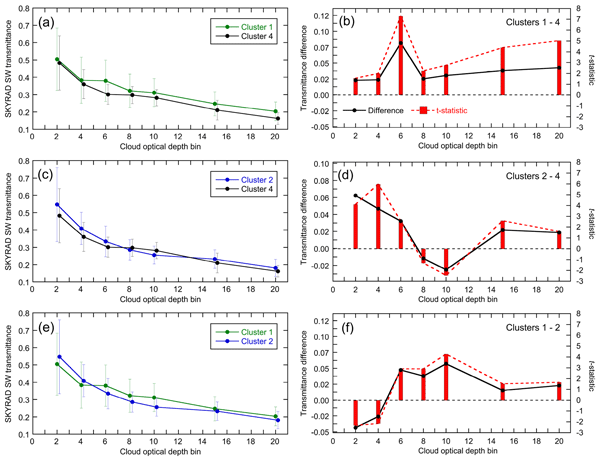
The US Department of Energy Atmospheric Radiation Measurement (ARM) North Slope of Alaska Facility has measured solar and atmospheric infrared radiation, and cloud properties, for the past 25 years. Statistically significant trends are emerging, including increasing infrared radiation due to a warming atmosphere, and decreasing solar radiation due to increasing liquid water content in clouds. These trends are influenced by large-scale atmospheric circulation patterns and by atmospheric rivers.
The US Department of Energy Atmospheric Radiation Measurement (ARM) North Slope of Alaska...


Altmetrics
Final-revised paper
Preprint