
Articles | Volume 26, issue 4
https://doi.org/10.5194/acp-26-2465-2026
© Author(s) 2026. This work is distributed under
the Creative Commons Attribution 4.0 License.
the Creative Commons Attribution 4.0 License.
https://doi.org/10.5194/acp-26-2465-2026
© Author(s) 2026. This work is distributed under
the Creative Commons Attribution 4.0 License.
the Creative Commons Attribution 4.0 License.
Research article
| 
17 Feb 2026
Research article |
| 17 Feb 2026
| 17 Feb 2026
Low and consistent asymmetry parameters in Arctic and mid-latitude cirrus

Institute for Atmospheric and Environmental Research, University of Wuppertal, Wuppertal, Germany
Franz Martin Schnaiter
Institute for Atmospheric and Environmental Research, University of Wuppertal, Wuppertal, Germany
schnaiTEC GmbH, Wuppertal, Germany
Related authors
Harry Ballington, Martin Schnaiter, and Emma Järvinen
EGUsphere, https://doi.org/10.5194/egusphere-2026-4436, https://doi.org/10.5194/egusphere-2026-4436, 2026
This preprint is open for discussion and under review for Atmospheric Chemistry and Physics (ACP).
Short summary
Short summary
High altitude clouds known as cirrus cover about one third of the planet and strongly influence global climate. Our understanding of how they scatter light is poorly understood because ice crystals are highly varied and it is impossible to account for them all individually. We combine measurements from the new EarthCARE satellite with in-situ aircraft data and with computer simulations to determine which crystal shapes best match observations.
Aymeric Dziduch, Antoine Baudoux, Guillaume Mioche, Antoine Canzi, Benjamin Doiteau, Manuel Moser, Emma Järvinen, Étienne Vignon, Jean-Christophe Raut, Régis Dupuy, Christophe Gourbeyre, Jean-Luc Baray, Marie Monier, Frédéric Szczap, Guillaume Penide, Julien Delanoë, Odran Sourdeval, Alfons Schwarzenboeck, Stephan Mertes, Franz Martin Schnaiter, Christiane Voigt, Mario Mech, Susanne Crewell, Andreas Herber, Christof Lüpkes, André Ehrlich, Manfred Wendisch, and Olivier Jourdan
EGUsphere, https://doi.org/10.5194/egusphere-2026-3265, https://doi.org/10.5194/egusphere-2026-3265, 2026
This preprint is open for discussion and under review for Atmospheric Chemistry and Physics (ACP).
Short summary
Short summary
This study examines the microphysical properties and ice crystal habits of low-level Arctic mixed-phase clouds around Svalbard. Using airborne in situ observations from four campaigns, we show that cloud microphysical structure and ice crystal habits are influenced by weather conditions and surface type. These results provide quantitative observations to better understand low-level Arctic clouds, their ice formation processes, and their influence on the Arctic atmosphere and climate system.
Tomi Raatikainen, Silvia Calderón, Emma Järvinen, Marje Prank, and Sami Romakkaniemi
Atmos. Chem. Phys., 26, 5019–5038, https://doi.org/10.5194/acp-26-5019-2026, https://doi.org/10.5194/acp-26-5019-2026, 2026
Short summary
Short summary
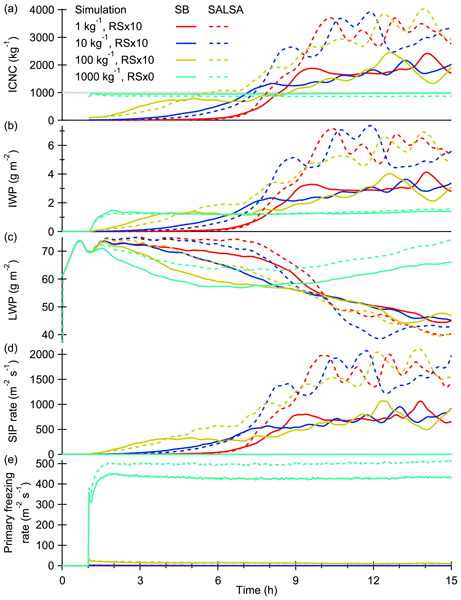
We used high-resolution simulations to examine if secondary ice production could explain the high ice particle concentrations observed during an airborne Arctic cloud study. For these clouds, the dominating secondary ice production process was rime splintering. It can produce high ice concentrations, but some model adjustments may be needed. Clouds in our simulations reached realistic steady states where rime splintering became a self-sustaining process.
Adrian Hamel, Martin Schnaiter, Masanori Saito, Robert Wagner, and Emma Järvinen
Atmos. Chem. Phys., 26, 1277–1300, https://doi.org/10.5194/acp-26-1277-2026, https://doi.org/10.5194/acp-26-1277-2026, 2026
Short summary
Short summary
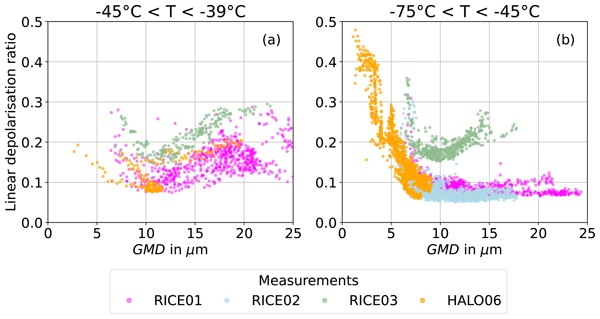
The depolarisation ratio of ice clouds is commonly measured by satellites and ground-based instruments to learn about ice particle shapes. In our cloud chamber experiments, we found that for small ice crystals, the depolarisation ratio is more strongly influenced by particle size than by nano-scale structure. The measured trends could be reproduced with numerical simulations. This result helps improve the interpretation of remote sensing data and the accuracy of light scattering models.
Adrian Hamel, Massimo del Guasta, Carl Schmitt, Christophe Genthon, Emma Järvinen, and Martin Schnaiter
Atmos. Chem. Phys., 26, 1211–1228, https://doi.org/10.5194/acp-26-1211-2026, https://doi.org/10.5194/acp-26-1211-2026, 2026
Short summary
Short summary
Size and shape of small ice particles in the dry and cold atmosphere of inland Antarctica were measured. We observed that particles originating near the surface are smaller than those falling from higher altitudes. Inland Antarctic particles of frozen fog occur at lower concentrations and are less complex than those observed in an urban, polluted environment. These findings can help to improve Antarctic climate models and to accurately interpret satellite observations of the polar atmosphere.
Shawn W. Wagner, Martin Schnaiter, Guanglang Xu, Franziska Rogge, and Emma Järvinen
Atmos. Chem. Phys., 25, 8785–8804, https://doi.org/10.5194/acp-25-8785-2025, https://doi.org/10.5194/acp-25-8785-2025, 2025
Short summary
Short summary
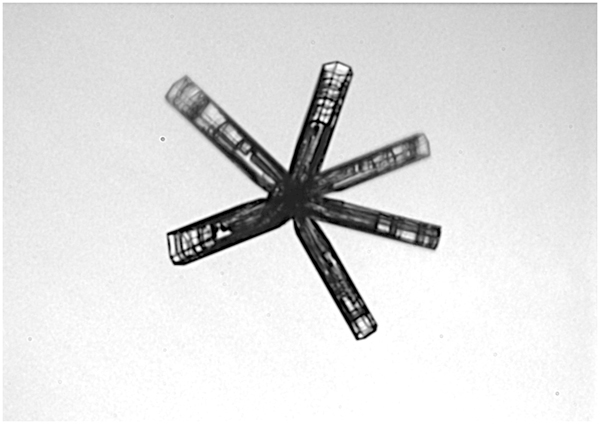
Understanding the interaction between cirrus clouds and solar radiation is critical for modeling the Earth's climate. A common crystal type found in cirrus clouds is the bullet rosette. Here, atmospheric bullet rosettes measured from jet aircraft are analyzed for their morphological and radiative properties. Atmospheric bullet rosettes are found to be more morphologically complex than previously assumed. This complexity has a significant impact on their radiative properties.
Marco Zanatta, Stephan Mertes, Olivier Jourdan, Regis Dupuy, Emma Järvinen, Martin Schnaiter, Oliver Eppers, Johannes Schneider, Zsófia Jurányi, and Andreas Herber
Atmos. Chem. Phys., 23, 7955–7973, https://doi.org/10.5194/acp-23-7955-2023, https://doi.org/10.5194/acp-23-7955-2023, 2023
Short summary
Short summary
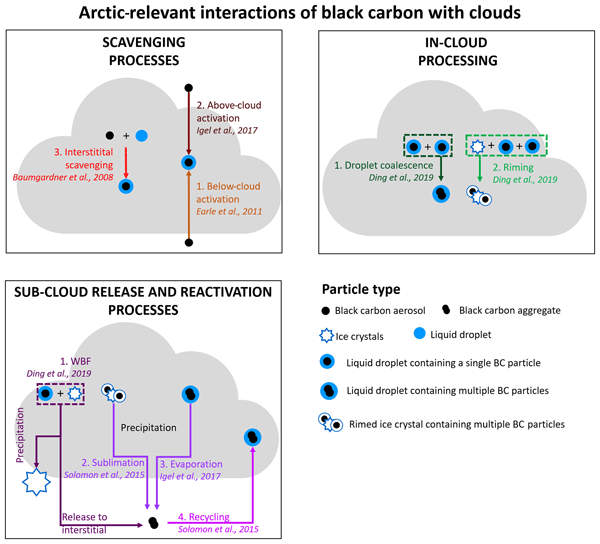
Black carbon (BC) particles influence the Arctic radiative balance. Vertical measurements of black carbon were conducted during the ACLOUD campaign in the European Arctic to study the interaction of BC with clouds. This study shows that clouds influence the vertical variability of BC properties across the inversion layer and that multiple activation and transformation mechanisms of BC may occur in the presence of low-level, persistent, mixed-phase clouds.
Emma Järvinen, Franziska Nehlert, Guanglang Xu, Fritz Waitz, Guillaume Mioche, Regis Dupuy, Olivier Jourdan, and Martin Schnaiter
Atmos. Chem. Phys., 23, 7611–7633, https://doi.org/10.5194/acp-23-7611-2023, https://doi.org/10.5194/acp-23-7611-2023, 2023
Short summary
Short summary
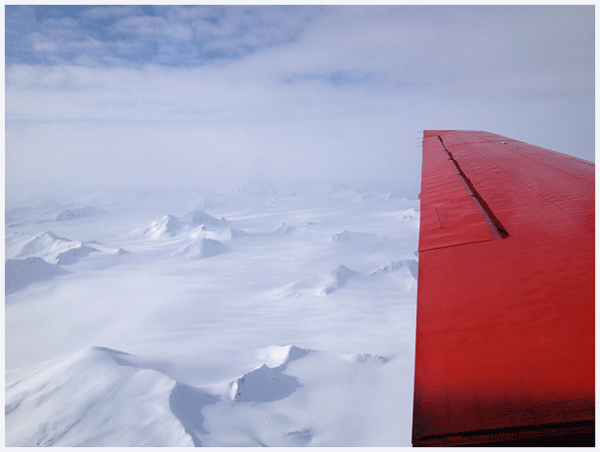
The Arctic is warming faster than other regions. Arctic low-level mixed-phase clouds, where ice crystals and liquid droplets co-exist, are thought to have an important role in Arctic warming. Here we show airborne measurements of vertical distribution of liquid and ice particles and their relative abundance. Ice particles are found in relative warm clouds, which can be explained by multiplication of existing ice crystals. However, the role of ice particles in redistributing sun light is minimal.
Franz Martin Schnaiter, Claudia Linke, Eija Asmi, Henri Servomaa, Antti-Pekka Hyvärinen, Sho Ohata, Yutaka Kondo, and Emma Järvinen
Atmos. Meas. Tech., 16, 2753–2769, https://doi.org/10.5194/amt-16-2753-2023, https://doi.org/10.5194/amt-16-2753-2023, 2023
Short summary
Short summary
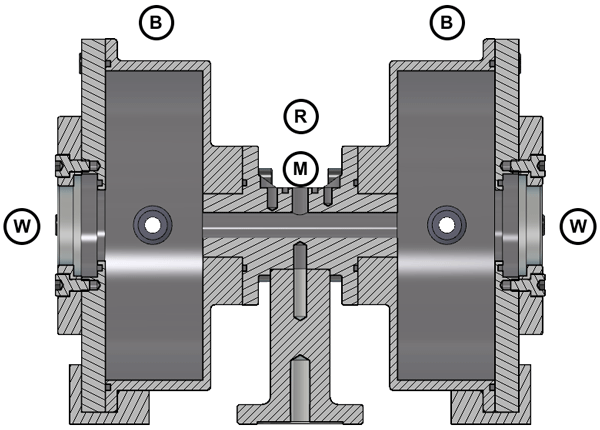
Light-absorbing particles from combustion processes are important contributors to climate warming. Their highly variable spectral light absorption properties need to be monitored in the field. Commonly used methods show measurement artefacts that are difficult to correct. We introduce a new instrument that is based on the photoacoustic effect. Long-term operation in the Finnish Arctic demonstrates the applicability of the new instrument for unattended light absorption monitoring.

Fritz Waitz, Martin Schnaiter, Thomas Leisner, and Emma Järvinen
Atmos. Chem. Phys., 22, 7087–7103, https://doi.org/10.5194/acp-22-7087-2022, https://doi.org/10.5194/acp-22-7087-2022, 2022
Short summary
Short summary
Riming, i.e., the accretion of small droplets on the surface of ice particles via collision, is one of the major uncertainties in model prediction of mixed-phase clouds. We discuss the occurrence (up to 50% of particles) and aging of rimed ice particles and show correlations of the occurrence and the degree of riming with ambient meteorological parameters using data gathered by the Particle Habit Imaging and Polar Scattering (PHIPS) probe during three airborne in situ field campaigns.
Harry Ballington, Martin Schnaiter, and Emma Järvinen
EGUsphere, https://doi.org/10.5194/egusphere-2026-4436, https://doi.org/10.5194/egusphere-2026-4436, 2026
This preprint is open for discussion and under review for Atmospheric Chemistry and Physics (ACP).
Short summary
Short summary
High altitude clouds known as cirrus cover about one third of the planet and strongly influence global climate. Our understanding of how they scatter light is poorly understood because ice crystals are highly varied and it is impossible to account for them all individually. We combine measurements from the new EarthCARE satellite with in-situ aircraft data and with computer simulations to determine which crystal shapes best match observations.
Aymeric Dziduch, Antoine Baudoux, Guillaume Mioche, Antoine Canzi, Benjamin Doiteau, Manuel Moser, Emma Järvinen, Étienne Vignon, Jean-Christophe Raut, Régis Dupuy, Christophe Gourbeyre, Jean-Luc Baray, Marie Monier, Frédéric Szczap, Guillaume Penide, Julien Delanoë, Odran Sourdeval, Alfons Schwarzenboeck, Stephan Mertes, Franz Martin Schnaiter, Christiane Voigt, Mario Mech, Susanne Crewell, Andreas Herber, Christof Lüpkes, André Ehrlich, Manfred Wendisch, and Olivier Jourdan
EGUsphere, https://doi.org/10.5194/egusphere-2026-3265, https://doi.org/10.5194/egusphere-2026-3265, 2026
This preprint is open for discussion and under review for Atmospheric Chemistry and Physics (ACP).
Short summary
Short summary
This study examines the microphysical properties and ice crystal habits of low-level Arctic mixed-phase clouds around Svalbard. Using airborne in situ observations from four campaigns, we show that cloud microphysical structure and ice crystal habits are influenced by weather conditions and surface type. These results provide quantitative observations to better understand low-level Arctic clouds, their ice formation processes, and their influence on the Arctic atmosphere and climate system.
Tomi Raatikainen, Silvia Calderón, Emma Järvinen, Marje Prank, and Sami Romakkaniemi
Atmos. Chem. Phys., 26, 5019–5038, https://doi.org/10.5194/acp-26-5019-2026, https://doi.org/10.5194/acp-26-5019-2026, 2026
Short summary
Short summary
We used high-resolution simulations to examine if secondary ice production could explain the high ice particle concentrations observed during an airborne Arctic cloud study. For these clouds, the dominating secondary ice production process was rime splintering. It can produce high ice concentrations, but some model adjustments may be needed. Clouds in our simulations reached realistic steady states where rime splintering became a self-sustaining process.
Adrian Hamel, Martin Schnaiter, Masanori Saito, Robert Wagner, and Emma Järvinen
Atmos. Chem. Phys., 26, 1277–1300, https://doi.org/10.5194/acp-26-1277-2026, https://doi.org/10.5194/acp-26-1277-2026, 2026
Short summary
Short summary
The depolarisation ratio of ice clouds is commonly measured by satellites and ground-based instruments to learn about ice particle shapes. In our cloud chamber experiments, we found that for small ice crystals, the depolarisation ratio is more strongly influenced by particle size than by nano-scale structure. The measured trends could be reproduced with numerical simulations. This result helps improve the interpretation of remote sensing data and the accuracy of light scattering models.
Adrian Hamel, Massimo del Guasta, Carl Schmitt, Christophe Genthon, Emma Järvinen, and Martin Schnaiter
Atmos. Chem. Phys., 26, 1211–1228, https://doi.org/10.5194/acp-26-1211-2026, https://doi.org/10.5194/acp-26-1211-2026, 2026
Short summary
Short summary
Size and shape of small ice particles in the dry and cold atmosphere of inland Antarctica were measured. We observed that particles originating near the surface are smaller than those falling from higher altitudes. Inland Antarctic particles of frozen fog occur at lower concentrations and are less complex than those observed in an urban, polluted environment. These findings can help to improve Antarctic climate models and to accurately interpret satellite observations of the polar atmosphere.
Marco Zanatta, Pia Bogert, Patrick Ginot, Yiwei Gong, Gholam Ali Hoshyaripour, Yaqiong Hu, Feng Jiang, Paolo Laj, Yanxia Li, Claudia Linke, Ottmar Möhler, Harald Saathoff, Martin Schnaiter, Nsikanabasi Silas Umo, Franziska Vogel, and Robert Wagner
Aerosol Research, 3, 477–502, https://doi.org/10.5194/ar-3-477-2025, https://doi.org/10.5194/ar-3-477-2025, 2025
Short summary
Short summary
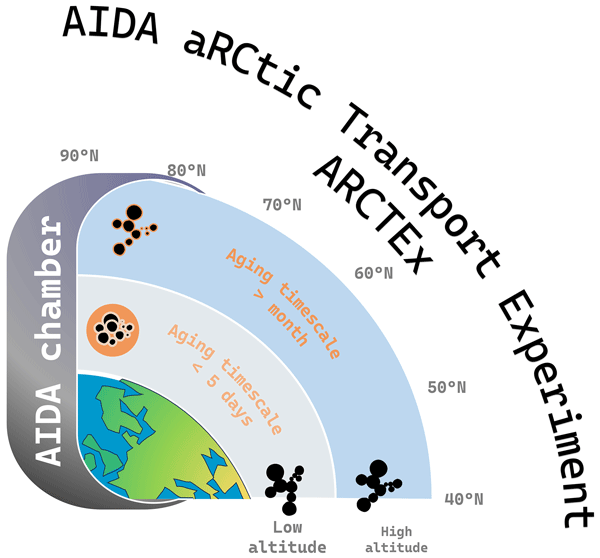
Back carbon is an atmospheric pollutant from combustion and contributes to the Arctic warming. However, its properties change as it travels through the atmosphere, affecting its impact. We recreated Arctic transport conditions in a laboratory to study how black carbon evolves over time. Our findings show that temperature and altitude strongly influence its transformation, providing key insights for improving climate models and understanding Arctic pollution.
Shawn W. Wagner, Martin Schnaiter, Guanglang Xu, Franziska Rogge, and Emma Järvinen
Atmos. Chem. Phys., 25, 8785–8804, https://doi.org/10.5194/acp-25-8785-2025, https://doi.org/10.5194/acp-25-8785-2025, 2025
Short summary
Short summary
Understanding the interaction between cirrus clouds and solar radiation is critical for modeling the Earth's climate. A common crystal type found in cirrus clouds is the bullet rosette. Here, atmospheric bullet rosettes measured from jet aircraft are analyzed for their morphological and radiative properties. Atmospheric bullet rosettes are found to be more morphologically complex than previously assumed. This complexity has a significant impact on their radiative properties.
Marco Zanatta, Stephan Mertes, Olivier Jourdan, Regis Dupuy, Emma Järvinen, Martin Schnaiter, Oliver Eppers, Johannes Schneider, Zsófia Jurányi, and Andreas Herber
Atmos. Chem. Phys., 23, 7955–7973, https://doi.org/10.5194/acp-23-7955-2023, https://doi.org/10.5194/acp-23-7955-2023, 2023
Short summary
Short summary
Black carbon (BC) particles influence the Arctic radiative balance. Vertical measurements of black carbon were conducted during the ACLOUD campaign in the European Arctic to study the interaction of BC with clouds. This study shows that clouds influence the vertical variability of BC properties across the inversion layer and that multiple activation and transformation mechanisms of BC may occur in the presence of low-level, persistent, mixed-phase clouds.
Emma Järvinen, Franziska Nehlert, Guanglang Xu, Fritz Waitz, Guillaume Mioche, Regis Dupuy, Olivier Jourdan, and Martin Schnaiter
Atmos. Chem. Phys., 23, 7611–7633, https://doi.org/10.5194/acp-23-7611-2023, https://doi.org/10.5194/acp-23-7611-2023, 2023
Short summary
Short summary
The Arctic is warming faster than other regions. Arctic low-level mixed-phase clouds, where ice crystals and liquid droplets co-exist, are thought to have an important role in Arctic warming. Here we show airborne measurements of vertical distribution of liquid and ice particles and their relative abundance. Ice particles are found in relative warm clouds, which can be explained by multiplication of existing ice crystals. However, the role of ice particles in redistributing sun light is minimal.
Robert Wagner, Alexander D. James, Victoria L. Frankland, Ottmar Möhler, Benjamin J. Murray, John M. C. Plane, Harald Saathoff, Ralf Weigel, and Martin Schnaiter
Atmos. Chem. Phys., 23, 6789–6811, https://doi.org/10.5194/acp-23-6789-2023, https://doi.org/10.5194/acp-23-6789-2023, 2023
Short summary
Short summary
Polar stratospheric clouds (PSCs) play an important role in the depletion of stratospheric ozone. They can consist of different chemical species, including crystalline nitric acid hydrates. We found that mineral dust or meteoric ablation material can efficiently catalyse the formation of a specific phase of nitric acid dihydrate crystals. We determined predominant particle shapes and infrared optical properties of these crystals, which are important inputs for remote sensing detection of PSCs.
Franz Martin Schnaiter, Claudia Linke, Eija Asmi, Henri Servomaa, Antti-Pekka Hyvärinen, Sho Ohata, Yutaka Kondo, and Emma Järvinen
Atmos. Meas. Tech., 16, 2753–2769, https://doi.org/10.5194/amt-16-2753-2023, https://doi.org/10.5194/amt-16-2753-2023, 2023
Short summary
Short summary
Light-absorbing particles from combustion processes are important contributors to climate warming. Their highly variable spectral light absorption properties need to be monitored in the field. Commonly used methods show measurement artefacts that are difficult to correct. We introduce a new instrument that is based on the photoacoustic effect. Long-term operation in the Finnish Arctic demonstrates the applicability of the new instrument for unattended light absorption monitoring.
Fritz Waitz, Martin Schnaiter, Thomas Leisner, and Emma Järvinen
Atmos. Chem. Phys., 22, 7087–7103, https://doi.org/10.5194/acp-22-7087-2022, https://doi.org/10.5194/acp-22-7087-2022, 2022
Short summary
Short summary
Riming, i.e., the accretion of small droplets on the surface of ice particles via collision, is one of the major uncertainties in model prediction of mixed-phase clouds. We discuss the occurrence (up to 50% of particles) and aging of rimed ice particles and show correlations of the occurrence and the degree of riming with ambient meteorological parameters using data gathered by the Particle Habit Imaging and Polar Scattering (PHIPS) probe during three airborne in situ field campaigns.
Cited articles
Abdelmonem, A., Järvinen, E., Duft, D., Hirst, E., Vogt, S., Leisner, T., and Schnaiter, M.: PHIPS–HALO: the airborne Particle Habit Imaging and Polar Scattering probe – Part 1: Design and operation, Atmos. Meas. Tech., 9, 3131–3144, https://doi.org/10.5194/amt-9-3131-2016, 2016. a
Auriol, F., Gayet, J.-F., Febvre, G., Jourdan, O., Labonnote, L., and Brogniez, G.: In situ observation of cirrus scattering phase functions with 22° and 46° halos: cloud field study on 19 February 1998, J. Atmos. Sci., 58, 3376–3390, https://doi.org/10.1175/1520-0469(2001)058<3376:ISOOCS>2.0.CO;2, 2001. a, b
Baker, B. and Lawson, R. P.: Improvement in determination of ice water content from two-dimensional particle imagery. Part I: Image-to-mass relationships, J. Appl. Meteorol., 45, 1282–1290, https://doi.org/10.1175/JAM2398.1, 2006. a
Barahona, D., Molod, A., and Kalesse, H.: Direct estimation of the global distribution of vertical velocity within cirrus clouds, Sci. Rep., 7, 6840, https://doi.org/10.1038/s41598-017-07038-6, 2017. a
Baran, A. J., Manners, J., Field, P. R., Furtado, K., and Hill, A.: A consistent coupling of two-moment microphysics and bulk ice optical properties, and its impact on radiation in a regional weather model, Q. J. Roy. Meteor. Soc., 151, e5025, https://doi.org/10.1002/qj.5025, 2025. a
Bohren, C. F. and Huffman, D. R.: Absorption and Scattering of Light by Small Particles, Wiley-VCH, Weinheim, Germany, ISBN 0-471-05772-X, 1983. a
Chunlei, L. and Keya, Y.: Calculation of ice crystal diffraction, Adv. Atmos. Sci., 13, 340–348, https://doi.org/10.1007/BF02656851, 1996. a
Cole, B. H., Yang, P., Baum, B. A., Riedi, J., C.-Labonnote, L., Thieuleux, F., and Platnick, S.: Comparison of PARASOL observations with polarized reflectances simulated using different ice habit mixtures, J. Appl. Meteorol., 52, 186–196, https://doi.org/10.1175/JAMC-D-12-097.1, 2013. a, b
Cole, B. H., Yang, P., Baum, B. A., Riedi, J., and C.-Labonnote, L.: Ice particle habit and surface roughness derived from PARASOL polarization measurements, Atmos. Chem. Phys., 14, 3739–3750, https://doi.org/10.5194/acp-14-3739-2014, 2014. a, b
De La Torre Castro, E., Jurkat-Witschas, T., Afchine, A., Grewe, V., Hahn, V., Kirschler, S., Krämer, M., Lucke, J., Spelten, N., Wernli, H., Zöger, M., and Voigt, C.: Differences in microphysical properties of cirrus at high and mid-latitudes, Atmos. Chem. Phys., 23, 13167–13189, https://doi.org/10.5194/acp-23-13167-2023, 2023. a, b, c, d
Febvre, G., Gayet, J.-F., Minikin, A., Schlager, H., Shcherbakov, V., Jourdan, O., Busen, R., Fiebig, M., Kärcher, B., and Schumann, U.: On optical and microphysical characteristics of contrails and cirrus, J. Geophys. Res.-Atmos., 114, https://doi.org/10.1029/2008JD010184, 2009. a, b, c, d
Forster, L. and Mayer, B.: Ice crystal characterization in cirrus clouds III: retrieval of ice crystal shape and roughness from observations of halo displays, Atmos. Chem. Phys., 22, 15179–15205, https://doi.org/10.5194/acp-22-15179-2022, 2022. a
Fu, Q.: An accurate parameterization of the solar radiative properties of cirrus clouds for climate models, J. Climate, 9, 2058–2082, https://doi.org/10.1175/1520-0442(1996)009<2058:AAPOTS>2.0.CO;2, 1996. a, b, c
Garrett, T. J., Gerber, H., Baumgardner, D. G., Twohy, C. H., and Weinstock, E. M.: Small, highly reflective ice crystals in low-latitude cirrus, Geophys. Res. Lett., 30, https://doi.org/10.1029/2003GL018153, 2003. a, b, c
Gayet, J.-F., Auriol, F., Oshchepkov, S., Schröder, F., Duroure, C., Febvre, G., Fournol, J.-F., Crépel, O., Personne, P., and Daugereon, D.: In situ measurements of the scattering phase function of stratocumulus, contrails and cirrus, Geophys. Res. Lett., 25, 971–974, https://doi.org/10.1029/98GL00541, 1998. a
Gayet, J.-F., Ovarlez, J., Shcherbakov, V., Ström, J., Schumann, U., Minikin, A., Auriol, F., Petzold, A., and Monier, M.: Cirrus cloud microphysical and optical properties at southern and northern midlatitudes during the INCA experiment, J. Geophys. Res.-Atmos., 109, https://doi.org/10.1029/2004JD004803, 2004. a, b, c, d, e
Gayet, J.-F., Shcherbakov, V., Mannstein, H., Minikin, A., Schumann, U., Ström, J., Petzold, A., Ovarlez, J., and Immler, F.: Microphysical and optical properties of midlatitude cirrus clouds observed in the southern hemisphere during INCA, Q. J. Roy. Meteor. Soc., 132, 2719–2748, https://doi.org/10.1256/qj.05.162, 2006. a, b, c
Gayet, J.-F., Mioche, G., Bugliaro, L., Protat, A., Minikin, A., Wirth, M., Dörnbrack, A., Shcherbakov, V., Mayer, B., Garnier, A., and Gourbeyre, C.: On the observation of unusual high concentration of small chain-like aggregate ice crystals and large ice water contents near the top of a deep convective cloud during the CIRCLE-2 experiment, Atmos. Chem. Phys., 12, 727–744, https://doi.org/10.5194/acp-12-727-2012, 2012. a, b, c
Gerber, H., Takano, Y., Garrett, T. J., and Hobbs, P. V.: Nephelometer measurements of the asymmetry parameter, volume extinction coefficient, and backscatter ratio in Arctic clouds, J. Atmos. Sci., 57, 3021–3034, https://doi.org/10.1175/1520-0469(2000)057<3021:NMOTAP>2.0.CO;2, 2000. a, b, c
Gil-Díaz, C., Sicard, M., Sourdeval, O., Saiprakash, A., Muñoz-Porcar, C., Comerón, A., Rodríguez-Gómez, A., and Oliveira, D. C. F. D. S.: Study of optical scattering properties and direct radiative effects of high-altitude cirrus clouds in Barcelona, Spain, with 4 years of lidar measurements, Atmos. Chem. Phys., 25, 3445–3464, https://doi.org/10.5194/acp-25-3445-2025, 2025. a
Hesse, E.: Modelling diffraction during ray tracing using the concept of energy flow lines, J. Quant. Spectrosc. Ra., 109, 1374–1383, https://doi.org/10.1016/j.jqsrt.2007.11.002, 2008. a
Heymsfield, A. J., Krämer, M., Luebke, A., Brown, P., Cziczo, D. J., Franklin, C., Lawson, P., Lohmann, U., McFarquhar, G., Ulanowski, Z., and Tricht, K. V.: Cirrus clouds, Meteor. Mon., 58, 2.1–2.26, https://doi.org/10.1175/AMSMONOGRAPHS-D-16-0010.1, 2017. a, b, c
Hong, Y., Liu, G., and Li, J.-L. F.: Assessing the radiative effects of global ice clouds based on CloudSat and CALIPSO measurements, J. Climate, 29, 7651–7674, https://doi.org/10.1175/JCLI-D-15-0799.1, 2016. a
Hu, Y.-X., Wielicki, B., Lin, B., Gibson, G., Tsay, S.-C., Stamnes, K., and Wong, T.: δ-Fit: a fast and accurate treatment of particle scattering phase functions with weighted singular-value decomposition least-squares fitting, J. Quant. Spectrosc. Ra., 65, 681–690, https://doi.org/10.1016/S0022-4073(99)00147-8, 2000. a
Iaquinta, J., Isaka, H., and Personne, P.: Scattering phase function of bullet rosette ice crystals, J. Atmos. Sci., 52, 1401–1413, https://doi.org/10.1175/1520-0469(1995)052<1401:SPFOBR>2.0.CO;2, 1995. a, b, c
Järvinen, E. and Schnaiter, M.: PHIPS Single-Particle and Bulk Optical Properties of Cirrus Ice Crystals from the CIRRUS-HL Campaign, in: Atmospheric Chemistry and Physics, Zenodo [data set], https://doi.org/10.5281/zenodo.18459504, 2026. a
Järvinen, E., Jourdan, O., Neubauer, D., Yao, B., Liu, C., Andreae, M. O., Lohmann, U., Wendisch, M., McFarquhar, G. M., Leisner, T., and Schnaiter, M.: Additional global climate cooling by clouds due to ice crystal complexity, Atmos. Chem. Phys., 18, 15767–15781, https://doi.org/10.5194/acp-18-15767-2018, 2018. a, b, c
Järvinen, E., Nehlert, F., Xu, G., Waitz, F., Mioche, G., Dupuy, R., Jourdan, O., and Schnaiter, M.: Investigating the vertical extent and short-wave radiative effects of the ice phase in Arctic summertime low-level clouds, Atmos. Chem. Phys., 23, 7611–7633, https://doi.org/10.5194/acp-23-7611-2023, 2023a. a
Järvinen, E., van Diedenhoven, B., Magee, N., Neshyba, S., Schnaiter, M., Xu, G., Jourdan, O., Delene, D., Waitz, F., Lolli, S., and Kato, S.: Ice Crystal Complexity and Link to the Cirrus Cloud Radiative Effect, Chap. 3, American Geophysical Union (AGU), https://doi.org/10.1002/9781119700357.ch3, 47–85, 2023b. a
Jeggle, K., Neubauer, D., Binder, H., and Lohmann, U.: Cirrus formation regimes – data-driven identification and quantification of mineral dust effect, Atmos. Chem. Phys., 25, 7227–7243, https://doi.org/10.5194/acp-25-7227-2025, 2025. a
Jurkat-Witschas, T., Voigt, C., Groß, S., Kaufmann, S., Sauer, D., De la Torre Castro, E., Krämer, M., Schäfler, A., Afchine, A., Attinger, R., Bartolome Garcia, I., Beer, C. G., Bugliaro, L., Clemen, H.-C., Dekoutsidis, G., Ehrlich, A., Grawe, S., Hahn, V., Hendricks, J., Järvinen, E., Klimach, T., Krüger, K., Krüger, O., Lucke, J., Luebke, A. E., Marsing, A., Mayer, B., Mayer, J., Mertes, S., Moser, M., Müller, H., Nenakhov, V., Pöhlker, M., Pöschl, U., Pörtge, V., Rautenhaus, M., Righi, M., Röttenbacher, J., Rubin-Zuzic, M., Schaefer, J., Schnaiter, M., Schneider, J., Schumann, U., Spelten, N., Stratmann, F., Tomsche, L., Wagner, S., Wang, Z., Weber, A., Wendisch, M., Wernli, H., Wetzel, B., Wirth, M., Zahn, A., Ziereis, H., and Zöger, M.: Picturing High- and Midlatitude Summer Cirrus and Contrail Cirrus above Europe with Airborne Measurements aboard the Research Aircraft HALO, B. Am. Meteorol. Soc., 106, E2300–E2327, https://doi.org/10.1175/BAMS-D-23-0270.1, 2025. a, b
Krämer, M., Rolf, C., Luebke, A., Afchine, A., Spelten, N., Costa, A., Meyer, J., Zöger, M., Smith, J., Herman, R. L., Buchholz, B., Ebert, V., Baumgardner, D., Borrmann, S., Klingebiel, M., and Avallone, L.: A microphysics guide to cirrus clouds – Part 1: Cirrus types, Atmos. Chem. Phys., 16, 3463–3483, https://doi.org/10.5194/acp-16-3463-2016, 2016. a
Kristjánsson, J. E., Edwards, J. M., and Mitchell, D. L.: Impact of a new scheme for optical properties of ice crystals on climates of two GCMs, J. Geophys. Res.-Atmos., 105, 10063–10079, https://doi.org/10.1029/2000JD900015, 2000. a
Lawson, R. P., Woods, S., Jensen, E., Erfani, E., Gurganus, C., Gallagher, M., Connolly, P., Whiteway, J., Baran, A. J., May, P., Heymsfield, A., Schmitt, C. G., McFarquhar, G., Um, J., Protat, A., Bailey, M., Lance, S., Muehlbauer, A., Stith, J., Korolev, A., Toon, O. B., and Krämer, M.: A review of ice particle shapes in cirrus formed in situ and in anvils, J. Geophys. Res.-Atmos., 124, 10049–10090, https://doi.org/10.1029/2018JD030122, 2019. a, b
Lehmkuhl, F., Schüttrumpf, H., Schwarzbauer, J., Brüll, C., Dietze, M., Letmathe, P., Völker, C., and Hollert, H.: Assessment of the 2021 summer flood in Central Europe, Environmental Sciences Europe, 34, 107, https://doi.org/10.1186/s12302-022-00685-1, 2022. a
Loeb, N. G., Johnson, G. C., Thorsen, T. J., Lyman, J. M., Rose, F. G., and Kato, S.: Satellite and ocean data reveal marked increase in Earth's heating rate, Geophys. Res. Lett., 48, e2021GL093047, https://doi.org/10.1029/2021GL093047, 2021. a
Luebke, A. E., Afchine, A., Costa, A., Grooß, J.-U., Meyer, J., Rolf, C., Spelten, N., Avallone, L. M., Baumgardner, D., and Krämer, M.: The origin of midlatitude ice clouds and the resulting influence on their microphysical properties, Atmos. Chem. Phys., 16, 5793–5809, https://doi.org/10.5194/acp-16-5793-2016, 2016. a, b, c
L'Ecuyer, T. S., Hang, Y., Matus, A. V., and Wang, Z.: Reassessing the effect of cloud type on Earth's energy balance in the age of active spaceborne observations. Part I: Top of atmosphere and surface, J. Climate, 32, 6197–6217, https://doi.org/10.1175/JCLI-D-18-0753.1, 2019. a
Macke, A., Mishchenko, M. I., and Cairns, B.: The influence of inclusions on light scattering by large ice particles, J. Geophys. Res.-Atmos., 101, 23311–23316, https://doi.org/10.1029/96JD02364, 1996a. a, b
Macke, A., Francis, P. N., McFarquhar, G. M., and Kinne, S.: The role of ice particle shapes and size distributions in the single scattering properties of cirrus clouds, J. Atmos. Sci., 55, 2874–2883, https://doi.org/10.1175/1520-0469(1998)055<2874:TROIPS>2.0.CO;2, 1998. a
Magee, N., Boaggio, K., Staskiewicz, S., Lynn, A., Zhao, X., Tusay, N., Schuh, T., Bandamede, M., Bancroft, L., Connelly, D., Hurler, K., Miner, B., and Khoudary, E.: Captured cirrus ice particles in high definition, Atmos. Chem. Phys., 21, 7171–7185, https://doi.org/10.5194/acp-21-7171-2021, 2021. a
Mauritsen, T., Stevens, B., Roeckner, E., Crueger, T., Esch, M., Giorgetta, M., Haak, H., Jungclaus, J., Klocke, D., Matei, D., Mikolajewicz, U., Notz, D., Pincus, R., Schmidt, H., and Tomassini, L.: Tuning the climate of a global model, J. Adv. Model. Earth Sy., 4, https://doi.org/10.1029/2012MS000154, 2012. a
Meador, W. E. and Weaver, W. R.: Two-stream approximations to radiative transfer in planetary atmospheres: a unified description of existing methods and a new improvement, J. Atmos. Sci., 37, 630–643, https://doi.org/10.1175/1520-0469(1980)037<0630:TSATRT>2.0.CO;2, 1980. a
Mishchenko, M. I., Rossow, W. B., Macke, A., and Lacis, A. A.: Sensitivity of cirrus cloud albedo, bidirectional reflectance and optical thickness retrieval accuracy to ice particle shape, J. Geophys. Res.-Atmos., 101, 16973–16985, https://doi.org/10.1029/96JD01155, 1996. a
Pincus, R. and Stevens, B.: Paths to accuracy for radiation parameterizations in atmospheric models, J. Adv. Model. Earth Sy., 5, 225–233, https://doi.org/10.1002/jame.20027, 2013. a, b
Platnick, S., Meyer, K. G., King, M. D., Wind, G., Amarasinghe, N., Marchant, B., Arnold, G. T., Zhang, Z., Hubanks, P. A., Holz, R. E., Yang, P., Ridgway, W. L., and Riedi, J.: The MODIS cloud optical and microphysical products: collection 6 updates and examples from Terra and Aqua, IEEE T. Geosci. Remote, 55, 502–525, 2016. a, b
Ren, T., Yang, P., Loeb, N. G., Smith Jr., W. L., and Minnis, P.: On the consistency of ice cloud optical models for spaceborne remote sensing applications and broadband radiative transfer simulations, J. Geophys. Res.-Atmos., 128, e2023JD038747, https://doi.org/10.1029/2023JD038747, 2023. a
Schmitt, C. G., Iaquinta, J., and Heymsfield, A. J.: The asymmetry parameter of cirrus clouds composed of hollow bullet rosette–shaped ice crystals from ray-tracing calculations, J. Appl. Meteorol., 45, 973–981, https://doi.org/10.1175/JAM2384.1, 2006. a
Schnaiter, M., Järvinen, E., Abdelmonem, A., and Leisner, T.: PHIPS-HALO: the airborne particle habit imaging and polar scattering probe – Part 2: Characterization and first results, Atmos. Meas. Tech., 11, 341–357, https://doi.org/10.5194/amt-11-341-2018, 2018. a, b
Schäfler, A. and Rautenhaus, M.: Interactive 3D visual analysis of weather prediction data reveals midlatitude overshooting convection during the CIRRUS-HL field experiment, B. Am. Meteorol. Soc., 104, E1426 – E1434, https://doi.org/10.1175/BAMS-D-22-0103.1, 2023. a
Schön, R., Schnaiter, M., Ulanowski, Z., Schmitt, C., Benz, S., Möhler, O., Vogt, S., Wagner, R., and Schurath, U.: Particle habit imaging using incoherent light: a first step toward a novel instrument for cloud microphysics, J. Atmos. Ocean. Tech., 28, 493–512, https://doi.org/10.1175/2011JTECHA1445.1, 2011. a
Sourdeval, O., Gryspeerdt, E., Krämer, M., Goren, T., Delanoë, J., Afchine, A., Hemmer, F., and Quaas, J.: Ice crystal number concentration estimates from lidar–radar satellite remote sensing – Part 1: Method and evaluation, Atmos. Chem. Phys., 18, 14327–14350, https://doi.org/10.5194/acp-18-14327-2018, 2018. a
Stephens, G. L., Tsay, S.-C., Stackhouse, P. W., and Flatau, P. J.: The relevance of the microphysical and radiative properties of cirrus clouds to climate and climatic feedback, J. Atmos. Sci., 47, 1742–1754, https://doi.org/10.1175/1520-0469(1990)047<1742:TROTMA>2.0.CO;2, 1990. a
Stubenrauch, C. J., Rossow, W. B., Kinne, S., Ackerman, S., Cesana, G., Chepfer, H., Girolamo, L. D., Getzewich, B., Guignard, A., Heidinger, A., Maddux, B. C., Menzel, W. P., Minnis, P., Pearl, C., Platnick, S., Poulsen, C., Riedi, J., Sun-Mack, S., Walther, A., Winker, D., Zeng, S., and Zhao, G.: Assessment of global cloud datasets from satellites: project and database initiated by the GEWEX radiation panel, B. Am. Meteorol. Soc., 94, 1031–1049, https://doi.org/10.1175/BAMS-D-12-00117.1, 2013. a
Takano, Y. and Liou, K.-N.: Solar radiative transfer in cirrus clouds. Part I: Single-scattering and optical properties of hexagonal ice crystals, J. Atmos. Sci., 46, 3–19, https://doi.org/10.1175/1520-0469(1989)046<0003:SRTICC>2.0.CO;2, 1989. a, b
Travis, L., Mishchenko, M. I., and Lacis, A. A.: Scattering, Absorption, and Emission of Light by Small Particles, Cambridge University Press, 462 pp., ISBN-10 052178252X, 2002. a
Um, J. and McFarquhar, G. M.: Single-scattering properties of aggregates of bullet rosettes in cirrus, J. Appl. Meteorol., 46, 757–775, https://doi.org/10.1175/JAM2501.1, 2007. a
van Diedenhoven, B.: Variation of ice microphysical properties with temperature and humidity at tops of convective clouds, Geophys. Res. Lett., 48, e2021GL093673, https://doi.org/10.1029/2021GL093673, 2021. a
van Diedenhoven, B., Cairns, B., Fridlind, A. M., Ackerman, A. S., and Garrett, T. J.: Remote sensing of ice crystal asymmetry parameter using multi-directional polarization measurements – Part 2: Application to the Research Scanning Polarimeter, Atmos. Chem. Phys., 13, 3185–3203, https://doi.org/10.5194/acp-13-3185-2013, 2013. a, b
van Diedenhoven, B., Ackerman, A. S., Cairns, B., and Fridlind, A. M.: A flexible parameterization for shortwave optical properties of ice crystals, J. Atmos. Sci., 71, 1763–1782, https://doi.org/10.1175/JAS-D-13-0205.1, 2014a. a
van Diedenhoven, B., Fridlind, A. M., Cairns, B., and Ackerman, A. S.: Variation of ice crystal size, shape, and asymmetry parameter in tops of tropical deep convective clouds, J. Geophys. Res.-Atmos., 119, 11809–11825, https://doi.org/10.1002/2014JD022385, 2014b. a
Vogelmann, A. M. and Ackerman, T. P.: Relating cirrus cloud properties to observed fluxes: a critical assessment, J. Atmos. Sci., 52, 4285–4301, https://doi.org/10.1175/1520-0469(1995)052<4285:RCCPTO>2.0.CO;2, 1995. a
Wagner, S. W., Schnaiter, M., Xu, G., Rogge, F., and Järvinen, E.: Light scattering and microphysical properties of atmospheric bullet rosette ice crystals, Atmos. Chem. Phys., 25, 8785–8804, https://doi.org/10.5194/acp-25-8785-2025, 2025. a, b, c
Waitz, F., Schnaiter, M., Leisner, T., and Järvinen, E.: PHIPS-HALO: the airborne Particle Habit Imaging and Polar Scattering probe – Part 3: Single-particle phase discrimination and particle size distribution based on the angular-scattering function, Atmos. Meas. Tech., 14, 3049–3070, https://doi.org/10.5194/amt-14-3049-2021, 2021. a, b, c
Wang, C., Yang, P., Dessler, A., Baum, B. A., and Hu, Y.: Estimation of the cirrus cloud scattering phase function from satellite observations, J. Quant. Spectrosc. Ra., 138, 36–49, https://doi.org/10.1016/j.jqsrt.2014.02.001, 2014. a
Wang, Y., Hioki, S., Yang, P., King, M. D., Di Girolamo, L., Fu, D., and Baum, B. A.: Inference of an optimal ice particle model through latitudinal analysis of MISR and MODIS data, Remote Sens., 10, https://doi.org/10.3390/rs10121981, 2018. a
Weigel, R., Spichtinger, P., Mahnke, C., Klingebiel, M., Afchine, A., Petzold, A., Krämer, M., Costa, A., Molleker, S., Reutter, P., Szakáll, M., Port, M., Grulich, L., Jurkat, T., Minikin, A., and Borrmann, S.: Thermodynamic correction of particle concentrations measured by underwing probes on fast-flying aircraft, Atmos. Meas. Tech., 9, 5135–5162, https://doi.org/10.5194/amt-9-5135-2016, 2016. a
Wiscombe, W. J.: The Delta–M method: rapid yet accurate radiative flux calculations for strongly asymmetric phase functions, J. Atmos. Sci., 34, 1408–1422, https://doi.org/10.1175/1520-0469(1977)034<1408:TDMRYA>2.0.CO;2, 1977. a
Woods, S., Lawson, R. P., Jensen, E., Bui, T., Thornberry, T., Rollins, A., Pfister, L., and Avery, M.: Microphysical properties of tropical tropopause layer cirrus, J. Geophys. Res.-Atmos., 123, 6053–6069, 2018. a
Yang, P. and Liou, K. N.: Geometric-optics–integral-equation method for light scattering by nonspherical ice crystals, Appl. Optics, 35, 6568–6584, https://doi.org/10.1364/AO.35.006568, 1996. a
Yang, P., Gao, B.-C., Baum, B. A., Wiscombe, W. J., Hu, Y. X., Nasiri, S. L., Soulen, P. F., Heymsfield, A. J., McFarquhar, G. M., and Miloshevich, L. M.: Sensitivity of cirrus bidirectional reflectance to vertical inhomogeneity of ice crystal habits and size distributions for two Moderate-Resolution Imaging Spectroradiometer (MODIS) bands, J. Geophys. Res.-Atmos., 106, 17267–17291, https://doi.org/10.1029/2000JD900618, 2001. a
Yang, P., Zhang, Z., Kattawar, G. W., Warren, S. G., Baum, B. A., Huang, H.-L., Hu, Y. X., Winker, D., and Iaquinta, J.: Effect of cavities on the optical properties of bullet rosettes: implications for active and passive remote sensing of ice cloud properties, J. Appl. Meteorol., 47, 2311–2330, https://doi.org/10.1175/2008JAMC1905.1, 2008. a, b, c
Yang, P., Bi, L., Baum, B. A., Liou, K.-N., Kattawar, G. W., Mishchenko, M. I., and Cole, B.: Spectrally consistent scattering, absorption, and polarization properties of atmospheric ice crystals at wavelengths from 0.2 to 100 µm, J. Atmos. Sci., 70, 330–347, https://doi.org/10.1175/JAS-D-12-039.1, 2013. a
Yi, B.: Diverse cloud radiative effects and global surface temperature simulations induced by different ice cloud optical property parameterizations, Sci. Rep., 12, 10539, https://doi.org/10.1038/s41598-022-14608-w, 2022. a
Yi, B., Yang, P., Baum, B. A., L'Ecuyer, T., Oreopoulos, L., Mlawer, E. J., Heymsfield, A. J., and Liou, K.-N.: Influence of ice particle surface roughening on the global cloud radiative effect, J. Atmos. Sci., 70, 2794–2807, https://doi.org/10.1175/JAS-D-13-020.1, 2013. a, b
Yi, B., Rapp, A. D., Yang, P., Baum, B. A., and King, M. D.: A comparison of Aqua MODIS ice and liquid water cloud physical and optical properties between collection 6 and collection 5.1: pixel-to-pixel comparisons, J. Geophys. Res.-Atmos., 122, 4528–4549, https://doi.org/10.1002/2016JD025586, 2017a. a, b, c
Yi, B., Rapp, A. D., Yang, P., Baum, B. A., and King, M. D.: A comparison of Aqua MODIS ice and liquid water cloud physical and optical properties between collection 6 and collection 5.1: cloud radiative effects, J. Geophys. Res.-Atmos., 122, 4550–4564, https://doi.org/10.1002/2016JD025654, 2017b. a, b, c
Zhang, Y., Macke, A., and Albers, F.: Effect of crystal size spectrum and crystal shape on stratiform cirrus radiative forcing, Atmos. Res., 52, 59–75, https://doi.org/10.1016/S0169-8095(99)00026-5, 1999. a
Short summary
Ice clouds in the Arctic and mid-latitudes were investigated using in situ aircraft observations combining single-particle imaging with simultaneous light-scattering measurements. The joint characterisation of ice particle size, shape, and optical response shows that these clouds reflect substantially more solar radiation than is typically represented in models. The observations provide an empirical basis for improving the physical realism of ice cloud optical properties in climate models.
Ice clouds in the Arctic and mid-latitudes were investigated using in situ aircraft observations...


Altmetrics
Final-revised paper
Preprint