
Articles | Volume 26, issue 3
https://doi.org/10.5194/acp-26-1931-2026
© Author(s) 2026. This work is distributed under
the Creative Commons Attribution 4.0 License.
the Creative Commons Attribution 4.0 License.
https://doi.org/10.5194/acp-26-1931-2026
© Author(s) 2026. This work is distributed under
the Creative Commons Attribution 4.0 License.
the Creative Commons Attribution 4.0 License.
Research article
| 
06 Feb 2026
Research article |
| 06 Feb 2026
| 06 Feb 2026
How can we trust TROPOMI based methane emissions estimation: calculating emissions over unidentified source regions
Bo Zheng
School of Environment and Spatial Informatics, China University of Mining and Technology, Xuzhou 221116, China
Jason Blake Cohen
CORRESPONDING AUTHOR

School of Environment and Spatial Informatics, China University of Mining and Technology, Xuzhou 221116, China
Shanxi Key Laboratory of Environmental Remote Sensing Applications, China University of Mining and Technology, Xuzhou 221116, China
Lingxiao Lu
School of Environment and Spatial Informatics, China University of Mining and Technology, Xuzhou 221116, China
School of Environment and Spatial Informatics, China University of Mining and Technology, Xuzhou 221116, China
Pravash Tiwari
School of Environment and Spatial Informatics, China University of Mining and Technology, Xuzhou 221116, China
Simone Lolli
CNR-Institute of Methodologies for Environmental Analysis (IMAA), Contrada S. Loja, Tito Scalo, 85050, Italy
Andrea Garzelli
Department of Information Engineering and Mathematics, University of Siena, 53100 Siena, Italy
Hui Su
Department of Civil and Environmental Engineering, Space Science and Technology Institute, The Hong Kong University of Science and Technology, Clear Water Bay, Hong Kong SAR, China
School of Environment and Spatial Informatics, China University of Mining and Technology, Xuzhou 221116, China
Shanxi Key Laboratory of Environmental Remote Sensing Applications, China University of Mining and Technology, Xuzhou 221116, China
Related authors
Wei Hu, Jason Blake Cohen, Lingxiao Lu, Bo Zheng, Pravash Tiwari, Simone Lolli, Andrea Garzelli, Jun Li, and Kai Qin
EGUsphere, https://doi.org/10.5194/egusphere-2026-4468, https://doi.org/10.5194/egusphere-2026-4468, 2026
This preprint is open for discussion and under review for Atmospheric Chemistry and Physics (ACP).
Short summary
Short summary
This study presents a perturbation experiment to investigate the impact of satellite data uncertainty which are not fully removed using a fast and physically-based divergence operator. The shape of the uncertainty distribution governs error propagation and thus effects the stability of derived fluxes. Coal-based emissions sources are reliably captured. These results provide a practical, uncertainty‑aware filter for satellite‑derived methane emissions.
Wei Hu, Jason Blake Cohen, Lingxiao Lu, Bo Zheng, Pravash Tiwari, Simone Lolli, Andrea Garzelli, Jun Li, and Kai Qin
EGUsphere, https://doi.org/10.5194/egusphere-2026-4468, https://doi.org/10.5194/egusphere-2026-4468, 2026
This preprint is open for discussion and under review for Atmospheric Chemistry and Physics (ACP).
Short summary
Short summary
This study presents a perturbation experiment to investigate the impact of satellite data uncertainty which are not fully removed using a fast and physically-based divergence operator. The shape of the uncertainty distribution governs error propagation and thus effects the stability of derived fluxes. Coal-based emissions sources are reliably captured. These results provide a practical, uncertainty‑aware filter for satellite‑derived methane emissions.
Antonio Mazza, Benedetto De Rosa, Ilaria Gandolfi, Emilio Lapenna, Simone Lolli, Fabrizio Marra, Lucia Mona, Ermann Ripepi, Marco Rosoldi, Gemine Vivone, and Giuseppe D'Amico
EGUsphere, https://doi.org/10.5194/egusphere-2026-4448, https://doi.org/10.5194/egusphere-2026-4448, 2026
This preprint is open for discussion and under review for Atmospheric Measurement Techniques (AMT).
Short summary
Short summary
We developed and tested a new method to estimate the height of the atmospheric boundary layer, the lowest part of the atmosphere where pollutants and heat are mixed. We applied it to three widely used ceiometers and compared the results with radiosonde observations. The method produced reliable estimates and can be used with existing observation networks, supporting improved monitoring of air quality and atmospheric processes.
Carina I. Argañaraz, Andreu Salcedo-Bosch, Simone Lolli, and Gabriele Curci
Atmos. Meas. Tech., 19, 5697–5715, https://doi.org/10.5194/amt-19-5697-2026, https://doi.org/10.5194/amt-19-5697-2026, 2026
Short summary
Short summary
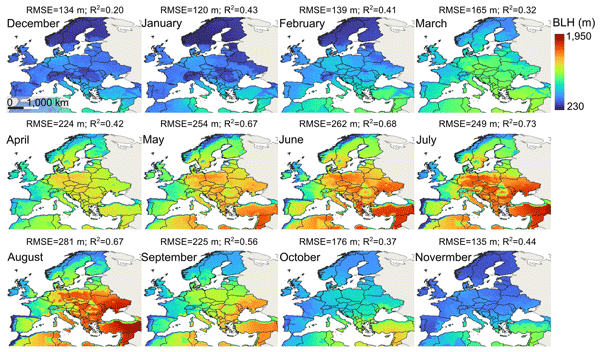
In this study, maps of the planetary boundary layer over Europe were generated by integrating multiple data sources. The results show higher accuracy compared with the widely used ERA5 reanalysis. The proposed regression kriging method performed well in estimating the height of the boundary layer at 12:00 UTC, and to a lesser extent at 00:00 UTC.
Fu Luo, Yuanjian Yang, Ting Sun, Zuofang Zheng, Xueyan Bi, Guoyu Ren, and Simone Lolli
EGUsphere, https://doi.org/10.5194/egusphere-2026-3392, https://doi.org/10.5194/egusphere-2026-3392, 2026
Short summary
Short summary
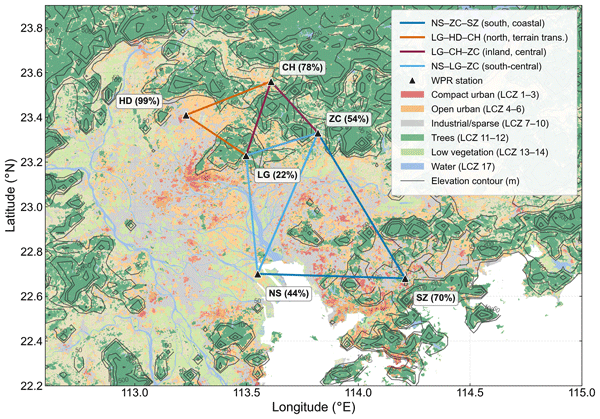
Cities are hotter than surrounding countryside, and heatwaves intensify this contrast. How combined warming reshapes air above different urban areas remains unclear. Using a high-resolution model, we examined two 2020 heatwaves over Guangzhou, China, finding extra warming strongest above densely built neighbourhoods and weakest over open low-rise areas. Dense areas retain heat overnight, adding to next-day warming and showing how urban form shapes extreme heat from surface to lower atmosphere.
Wanju Li, Lifang Sheng, Xueyan Bi, Zehao Huang, Yali Luo, Shiqi Xiao, Chao Liu, Yang Yang, Jiandong Wang, Yuanjian Yang, and Simone Lolli
Atmos. Chem. Phys., 26, 11943–11965, https://doi.org/10.5194/acp-26-11943-2026, https://doi.org/10.5194/acp-26-11943-2026, 2026
Short summary
Short summary
Heavy rain in South China often strikes suddenly far from weather fronts and is hard to forecast. Using five years of radar wind data and rainfall records from Guangdong, we studied 226 events and found warning signs one to four hours before onset that differ by region. In the west, strengthening low-level winds drive the rain; in the Pearl River Delta, friction reshapes the surface wind; in the east, warm surface air stores energy that fuels the storm.
Pingping Rong and Hui Su
EGUsphere, https://doi.org/10.5194/egusphere-2026-4830, https://doi.org/10.5194/egusphere-2026-4830, 2026
This preprint is open for discussion and under review for Atmospheric Measurement Techniques (AMT).
Short summary
Short summary
We developed the Adapted Analytic CO₂ Flux Inversion Model (AACO₂FIM) from the Integrated Methane Inversion system to evaluate how inversion results align with prior and observation-determined states. Under a quasi-linear assumption, this isolates uncertainty arising solely from cost-function minimization. Concurrently, we assessed spatiotemporal coverage impacts on the results by running inversions using both a satellite track and an hourly global grid configuration.
Jiesheng Xue, Yuanjian Yang, Guoyu Ren, and Simone Lolli
Atmos. Chem. Phys., 26, 11543–11560, https://doi.org/10.5194/acp-26-11543-2026, https://doi.org/10.5194/acp-26-11543-2026, 2026
Short summary
Short summary
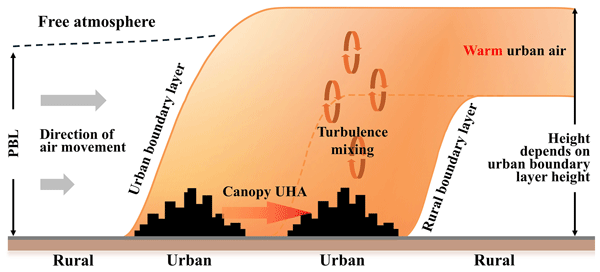
With the reduction in inter-city distances, the wind carries heat downstream to neighboring cities. Focusing on the urban agglomeration area in China, we demonstrate the spatiotemporal variations of this heat transfer process, the moderating influence of meteorological factors, and quantify its effect on the intensity of the urban heat island in downstream cities. The results highlight the necessity of considering inter-city heat interactions in thermal risk management.
Xinqi Wei, Qin He, and Kai Qin
Int. Arch. Photogramm. Remote Sens. Spatial Inf. Sci., XLIX-B3-2026, 1477–1485, https://doi.org/10.5194/isprs-archives-XLIX-B3-2026-1477-2026, https://doi.org/10.5194/isprs-archives-XLIX-B3-2026-1477-2026, 2026
Huiru Zhong, Lu Shen, Fengwei Wan, Meng Qu, and Kai Qin
Atmos. Meas. Tech., 19, 4759–4778, https://doi.org/10.5194/amt-19-4759-2026, https://doi.org/10.5194/amt-19-4759-2026, 2026
Short summary
Short summary
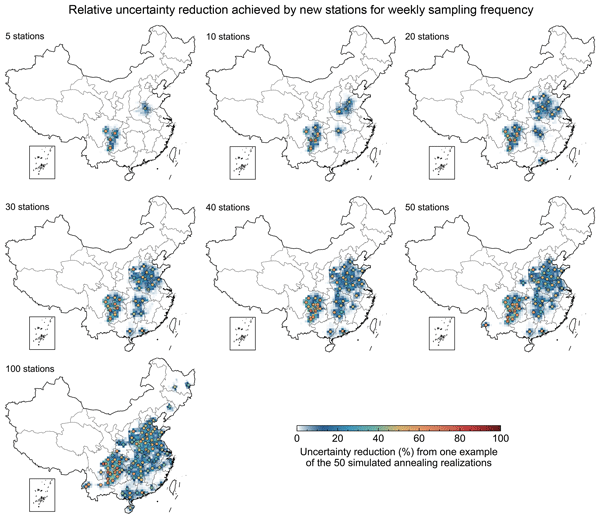
Methane is a potent greenhouse gas, yet existing satellite and ground observations in China are too sparse to accurately quantify emissions, highlighting the need for an expanded ground network. Using Bayesian inversion and simulated annealing, we identify optimal locations for new sites. Results show that prioritizing stations in eastern and southwestern China would be most effective. Expanding the network with 50 stations could nearly double the current emission constraint capability.
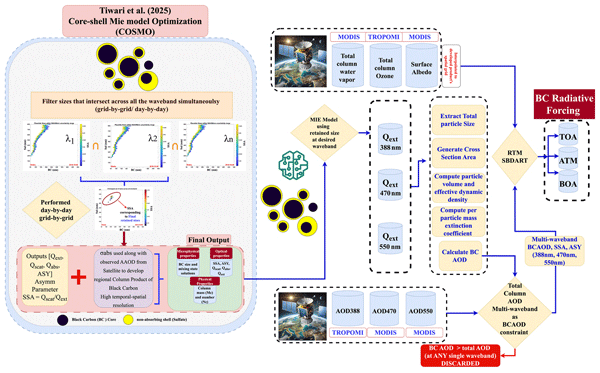
Pravash Tiwari, Jason Blake Cohen, Hongrui Gao, Lingxiao Lu, Jun Wang, Oleg Dubovik, and Kai Qin
Atmos. Chem. Phys., 26, 9149–9180, https://doi.org/10.5194/acp-26-9149-2026, https://doi.org/10.5194/acp-26-9149-2026, 2026
Short summary
Short summary
Black carbon's climate impact is highly uncertain because its radiative effect depends on particle size, mixing state, and column loading. This study combines satellite data, physics-based simulations, and machine learning to estimate black carbon forcing across contrasting regions. The same black carbon amount can warm or cool the atmosphere depending on local aerosol properties. The machine learning framework provides a fast, transferable tool for regional climate assessment.
Hongrui Gao, Qin He, Kai Qin, Jhoon Kim, Diego Loyola, Pravash Tiwari, Lingxiao Lu, and Jason Blake Cohen
Earth Syst. Sci. Data Discuss., https://doi.org/10.5194/essd-2026-443, https://doi.org/10.5194/essd-2026-443, 2026
Revised manuscript accepted for ESSD
Short summary
Short summary
There are always gaps in satellite records of air pollution because of factors such as clouds and operating conditions. We used a physics-aware deep learning method, producing a gapless 0.05° hourly dataset of tropospheric nitrogen dioxide over Asian pollution hotspots from 2019 to 2024. The dataset can capture sub-daily changes, revealing how traffic, industry, and clean-air policies shaped pollution, supporting health and environment studies.
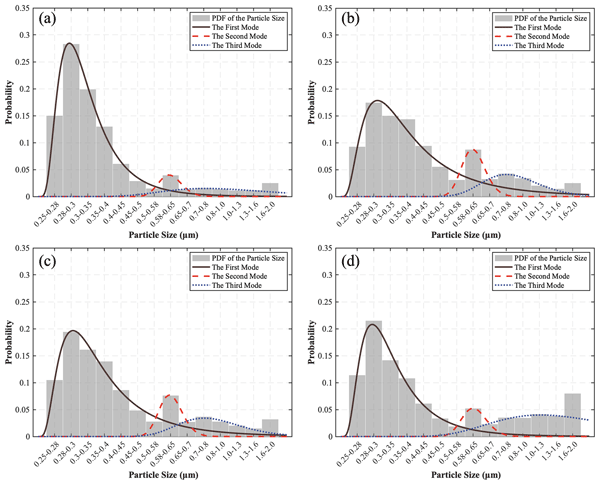
Luoyao Guan, Jason Blake Cohen, Shuo Wang, Pravash Tiwari, Zhewen Liu, Zhengqiang Li, and Kai Qin
Atmos. Chem. Phys., 26, 3107–3123, https://doi.org/10.5194/acp-26-3107-2026, https://doi.org/10.5194/acp-26-3107-2026, 2026
Short summary
Short summary
This study examines how black carbon particles from the coal industry influence regional climate by absorbing sunlight. Based on ground measurements and modeling, we find that conventional approaches, which oversimplify particle size and structure, which could leading a bias in terms of their warming effect. Our results highlight that more realistic particle characterizations are crucial for improving climate predictions in industrial regions.
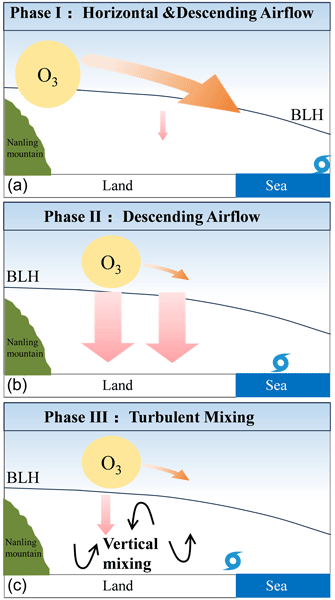
Yuanjian Yang, Chenjie Qian, Minxuan Zhang, Chenchao Zhan, Zhenxin Liu, Pak Wai Chan, Xueyan Bi, Meng Gao, and Simone Lolli
Atmos. Meas. Tech., 19, 1345–1363, https://doi.org/10.5194/amt-19-1345-2026, https://doi.org/10.5194/amt-19-1345-2026, 2026
Short summary
Short summary
Up to ~ 40 % of ozone pollution in the Greater Bay Area of China is related to tropical cyclones. The O3 pollution was found to be transported from inland areas to coastal areas. The transport process can be roughly divided into three phases: downdraft control, horizontal transport, and vertical mixing.
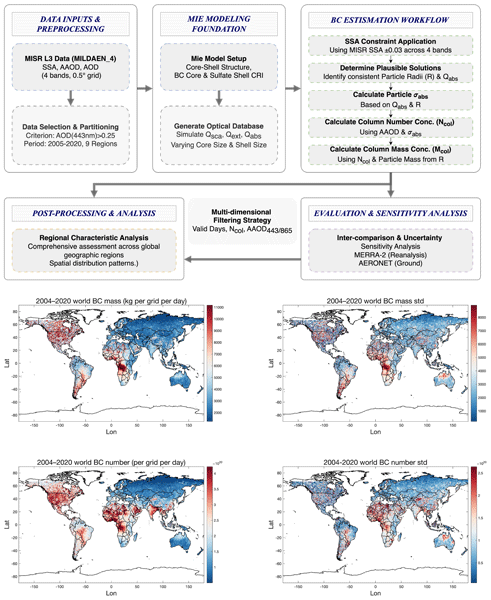
Zhewen Liu, Jason B. Cohen, Pravash Tiwari, Luoyao Guan, Shuo Wang, Zhengqiang Li, and Kai Qin
Earth Syst. Sci. Data, 18, 507–533, https://doi.org/10.5194/essd-18-507-2026, https://doi.org/10.5194/essd-18-507-2026, 2026
Short summary
Short summary
Black carbon (BC), emitted from fires, industry, and fossil fuels, warms the climate and worsens air quality. Due to complex physical and optical properties, BC remains poorly constrained. We combined satellite observations with physical models to build a daily, high-resolution, decadal global dataset of BC mass, number, size, and mixing details. The data contains both known sources and new hotspots. These results can support climate models, satellite products, and pollution mitigation.
Simone Lolli, Erica K. Dolinar, Jasper R. Lewis, Andreu Salcedo-Bosch, James R. Campbell, and Ellsworth J. Welton
Atmos. Chem. Phys., 26, 411–426, https://doi.org/10.5194/acp-26-411-2026, https://doi.org/10.5194/acp-26-411-2026, 2026
Short summary
Short summary
Over the past twenty years, continuous lidar observations at NASA's Goddard Space Flight Center have assessed the radiative impact of cirrus clouds on the Earth–atmosphere system. Findings show these clouds increasingly trap heat as surface reflectivity drops with less snow and ice, contributing to local warming. Continued cirrus monitoring is crucial to refine climate forecasts and support effective climate action.
Ye Feng, Jason Blake Cohen, Xiaolu Li, Lingxiao Lu, Zhewen Liu, Lei Wang, Jian Liu, and Kai Qin
EGUsphere, https://doi.org/10.5194/egusphere-2025-5890, https://doi.org/10.5194/egusphere-2025-5890, 2026
Short summary
Short summary
Carbon monoxide emissions in Central Asia's coal-heavy regions, like Xinjiang Province and Kazakhstan, are poorly tracked. Using satellite data and a new approach, this study maps daily emissions (2019–2024) while addressing measurement errors. About 69 % of estimates were unreliable. Underground coal fires, often ignored, emit as much CO as power plants. Emissions peaked in 2019, dropped until 2022, then rose again, linking to policy changes and economic shifts.
Tao Shi, Yuanjian Yang, Gaopeng Lu, Zuofang Zheng, Yucheng Zi, Ye Tian, Lei Liu, and Simone Lolli
Atmos. Chem. Phys., 25, 9219–9234, https://doi.org/10.5194/acp-25-9219-2025, https://doi.org/10.5194/acp-25-9219-2025, 2025
Short summary
Short summary
The city significantly influences thunderstorm and lightning activity, yet the potential mechanisms remain largely unexplored. Our study has revealed that both city size and building density play pivotal roles in modulating thunderstorm and lightning activity. This research not only deepens our understanding of urban meteorology but also lays an important foundation for developing accurate and targeted urban thunderstorm risk prediction models.
Fan Lu, Kai Qin, Jason Blake Cohen, Qin He, Pravash Tiwari, Wei Hu, Chang Ye, Yanan Shan, Qing Xu, Shuo Wang, and Qiansi Tu
Atmos. Chem. Phys., 25, 5837–5856, https://doi.org/10.5194/acp-25-5837-2025, https://doi.org/10.5194/acp-25-5837-2025, 2025
Short summary
Short summary
This work describes a field campaign and new fast emissions estimation approach to attribute methane from a large known and previously unknown coal mine in Shanxi, China. The emissions computed are shown to be larger than known oil and gas sources, indicating that methane from coal mines may play a larger role in the global methane budget. The results are found to be slightly larger than or similar to satellite observational campaigns over the same region.
Tao Shi, Yuanjian Yang, Lian Zong, Min Guo, Ping Qi, and Simone Lolli
Atmos. Chem. Phys., 25, 4989–5007, https://doi.org/10.5194/acp-25-4989-2025, https://doi.org/10.5194/acp-25-4989-2025, 2025
Short summary
Short summary
Our study explored the daily temperature patterns in urban areas of the Yangtze River Delta, focusing on how weather and human activities impact these patterns. We found that temperatures were higher at night, and weather patterns had a bigger impact during the day, while human activities mattered more at night. This helps us understand and address urban overheating.
Tianwen Wei, Mengya Wang, Kenan Wu, Jinlong Yuan, Haiyun Xia, and Simone Lolli
Atmos. Meas. Tech., 18, 1841–1857, https://doi.org/10.5194/amt-18-1841-2025, https://doi.org/10.5194/amt-18-1841-2025, 2025
Short summary
Short summary
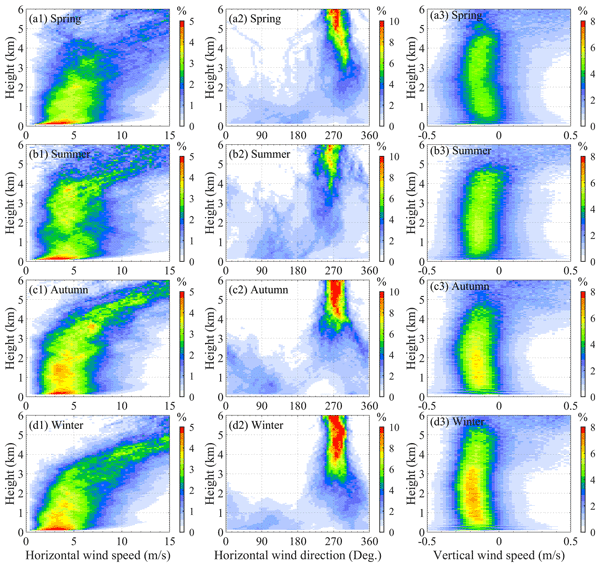
This study analyzes three years of wind lidar measurements to explore the dynamics of the urban planetary boundary layer in Hefei, China. Results reveal that nocturnal low-level jets are most frequent in spring and intensify in summer, significantly enhancing turbulence and shear near the surface, particularly at night. Additionally, cloud cover raises the mixing layer height by approximately 100 m at night due to the greenhouse effect but reduces it by up to 200 m in the afternoon.
Lingxiao Lu, Jason Blake Cohen, Kai Qin, Xiaolu Li, and Qin He
Atmos. Chem. Phys., 25, 2291–2309, https://doi.org/10.5194/acp-25-2291-2025, https://doi.org/10.5194/acp-25-2291-2025, 2025
Short summary
Short summary
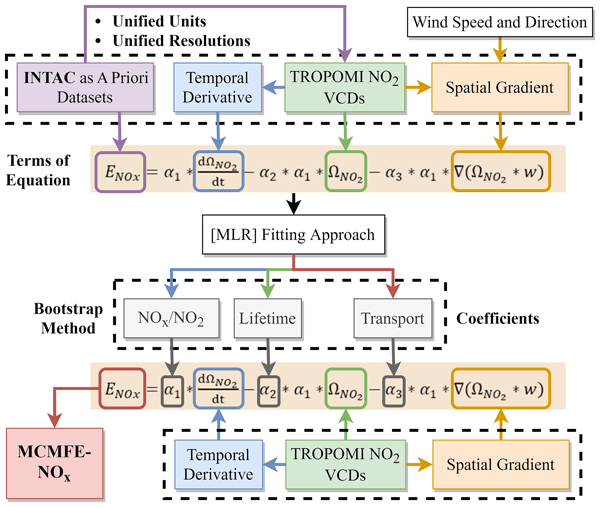
This study applies an approach that assimilates NO2 vertical column densities from TROPOMI in a mass-conserving manner and inverts daily NOx emissions, presented over rapidly changing regions in China. Source attribution is quantified by the local thermodynamics of the combustion temperature (NOx/NO2). Emission results identify sources which do not exist in the a priori datasets, especially medium industrial sources located next to the Yangtze River.
Fengjiao Chen, Yuanjian Yang, Lu Yu, Yang Li, Weiguang Liu, Yan Liu, and Simone Lolli
Atmos. Chem. Phys., 25, 1587–1601, https://doi.org/10.5194/acp-25-1587-2025, https://doi.org/10.5194/acp-25-1587-2025, 2025
Short summary
Short summary
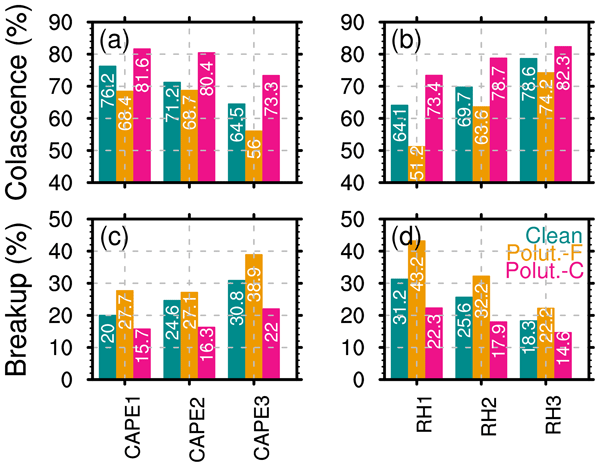
The microphysical mechanisms of precipitation responsible for the varied impacts of aerosol particles on shallow precipitation remain unclear. This study reveals that coarse aerosol particles invigorate shallow rainfall through enhanced coalescence processes, whereas fine aerosol particles suppress shallow rainfall through intensified microphysical breaks. These impacts are independent of thermodynamic environments but are more significant in low-humidity conditions.
Tao Shi, Yuanjian Yang, Ping Qi, and Simone Lolli
Atmos. Chem. Phys., 24, 12807–12822, https://doi.org/10.5194/acp-24-12807-2024, https://doi.org/10.5194/acp-24-12807-2024, 2024
Short summary
Short summary
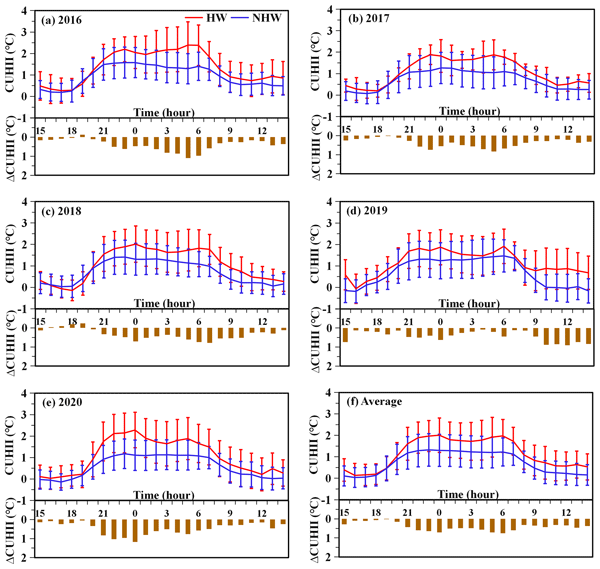
This paper explored the formation mechanisms of the amplified canopy urban heat island intensity (ΔCUHII) during heat wave (HW) periods in the megacity of Beijing from the perspectives of mountain–valley breeze and urban morphology. During the mountain breeze phase, high-rise buildings with lower sky view factors (SVFs) had a pronounced effect on the ΔCUHII. During the valley breeze phase, high-rise buildings exerted a dual influence on the ΔCUHII.
Kai Qin, Hongrui Gao, Xuancen Liu, Qin He, Pravash Tiwari, and Jason Blake Cohen
Earth Syst. Sci. Data, 16, 5287–5310, https://doi.org/10.5194/essd-16-5287-2024, https://doi.org/10.5194/essd-16-5287-2024, 2024
Short summary
Short summary
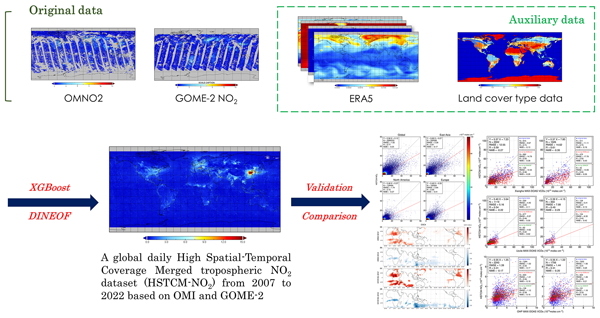
Satellites have brought new opportunities for monitoring atmospheric NO2, although the results are limited by clouds and other factors, resulting in missing data. This work proposes a new process to obtain reliable data products with high coverage by reconstructing the raw data from multiple satellites. The results are validated in terms of traditional methods as well as variance maximization and demonstrate a good ability to reproduce known polluted and clean areas around the world.
Qiansi Tu, Frank Hase, Kai Qin, Jason Blake Cohen, Farahnaz Khosrawi, Xinrui Zou, Matthias Schneider, and Fan Lu
Atmos. Chem. Phys., 24, 4875–4894, https://doi.org/10.5194/acp-24-4875-2024, https://doi.org/10.5194/acp-24-4875-2024, 2024
Short summary
Short summary
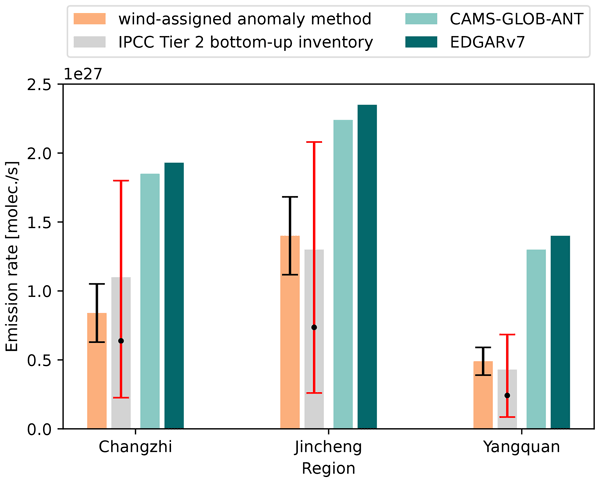
Four-year satellite observations of XCH4 are used to derive CH4 emissions in three regions of China’s coal-rich Shanxi province. The wind-assigned anomalies for two opposite wind directions are calculated, and the estimated emission rates are comparable to the current bottom-up inventory but lower than the CAMS and EDGAR inventories. This research enhances the understanding of emissions in Shanxi and supports climate mitigation strategies by validating emission inventories.
Kai Qin, Wei Hu, Qin He, Fan Lu, and Jason Blake Cohen
Atmos. Chem. Phys., 24, 3009–3028, https://doi.org/10.5194/acp-24-3009-2024, https://doi.org/10.5194/acp-24-3009-2024, 2024
Short summary
Short summary
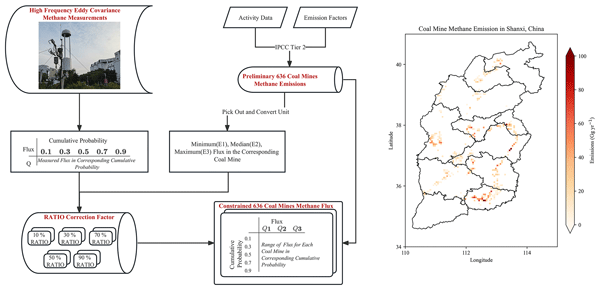
We compute CH4 emissions and uncertainty on a mine-by-mine basis, including underground, overground, and abandoned mines. Mine-by-mine gas and flux data and 30 min observations from a flux tower located next to a mine shaft are integrated. The observed variability and bias correction are propagated over the emissions dataset, demonstrating that daily observations may not cover the range of variability. Comparisons show both an emissions magnitude and spatial mismatch with current inventories.
Cristina Gil-Díaz, Michäel Sicard, Adolfo Comerón, Daniel Camilo Fortunato dos Santos Oliveira, Constantino Muñoz-Porcar, Alejandro Rodríguez-Gómez, Jasper R. Lewis, Ellsworth J. Welton, and Simone Lolli
Atmos. Meas. Tech., 17, 1197–1216, https://doi.org/10.5194/amt-17-1197-2024, https://doi.org/10.5194/amt-17-1197-2024, 2024
Short summary
Short summary
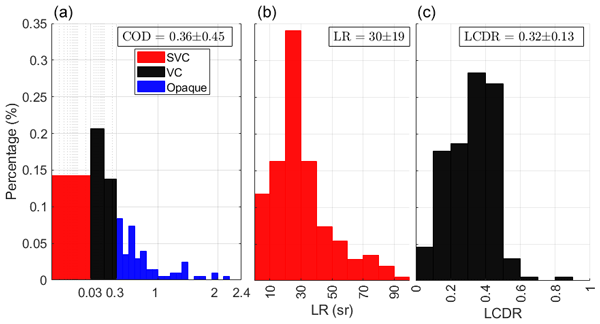
In this paper, a statistical study of cirrus geometrical and optical properties based on 4 years of continuous ground-based lidar measurements with the Barcelona (Spain) Micro Pulse Lidar (MPL) is analysed. The cloud optical depth, effective column lidar ratio and linear cloud depolarisation ratio have been calculated by a new approach to the two-way transmittance method, which is valid for both ground-based and spaceborne lidar systems. Their associated errors are also provided.
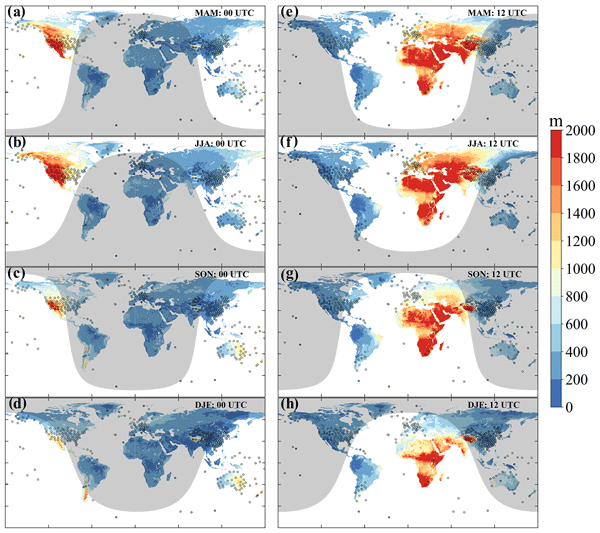
Jianping Guo, Jian Zhang, Jia Shao, Tianmeng Chen, Kaixu Bai, Yuping Sun, Ning Li, Jingyan Wu, Rui Li, Jian Li, Qiyun Guo, Jason B. Cohen, Panmao Zhai, Xiaofeng Xu, and Fei Hu
Earth Syst. Sci. Data, 16, 1–14, https://doi.org/10.5194/essd-16-1-2024, https://doi.org/10.5194/essd-16-1-2024, 2024
Short summary
Short summary
A global continental merged high-resolution (PBLH) dataset with good accuracy compared to radiosonde is generated via machine learning algorithms, covering the period from 2011 to 2021 with 3-hour and 0.25º resolution in space and time. The machine learning model takes parameters derived from the ERA5 reanalysis and GLDAS product as input, with PBLH biases between radiosonde and ERA5 as the learning targets. The merged PBLH is the sum of the predicted PBLH bias and the PBLH from ERA5.
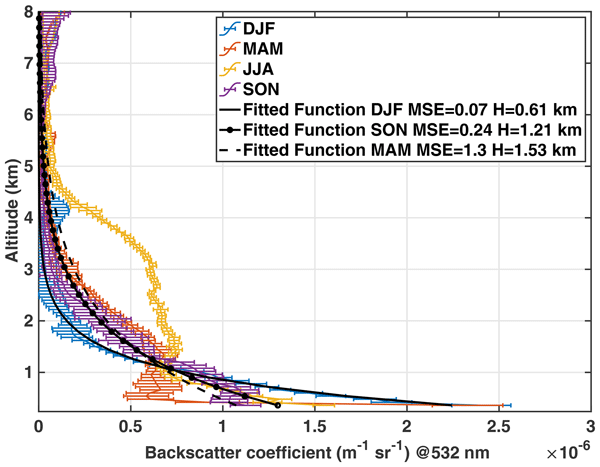
Simone Lolli, Michaël Sicard, Francesco Amato, Adolfo Comeron, Cristina Gíl-Diaz, Tony C. Landi, Constantino Munoz-Porcar, Daniel Oliveira, Federico Dios Otin, Francesc Rocadenbosch, Alejandro Rodriguez-Gomez, Andrés Alastuey, Xavier Querol, and Cristina Reche
Atmos. Chem. Phys., 23, 12887–12906, https://doi.org/10.5194/acp-23-12887-2023, https://doi.org/10.5194/acp-23-12887-2023, 2023
Short summary
Short summary
We evaluated the long-term trends and seasonal variability of the vertically resolved aerosol properties over the past 17 years in Barcelona. Results shows that air quality is improved, with a consistent drop in PM concentrations at the surface, as well as the column aerosol optical depth. The results also show that natural dust outbreaks are more likely in summer, with aerosols reaching an altitude of 5 km, while in winter, aerosols decay as an exponential with a scale height of 600 m.
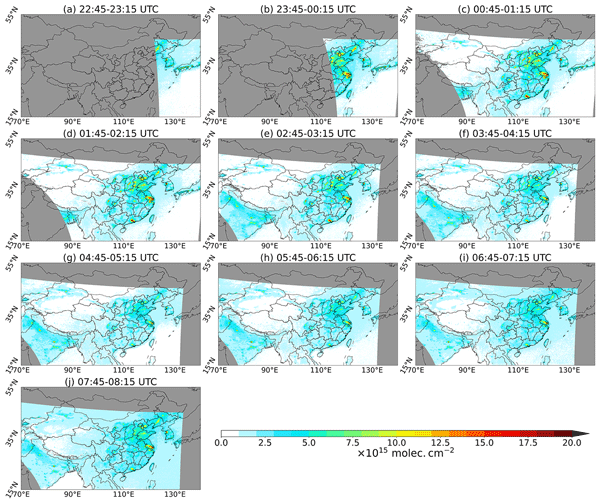
Yuhang Zhang, Jintai Lin, Jhoon Kim, Hanlim Lee, Junsung Park, Hyunkee Hong, Michel Van Roozendael, Francois Hendrick, Ting Wang, Pucai Wang, Qin He, Kai Qin, Yongjoo Choi, Yugo Kanaya, Jin Xu, Pinhua Xie, Xin Tian, Sanbao Zhang, Shanshan Wang, Siyang Cheng, Xinghong Cheng, Jianzhong Ma, Thomas Wagner, Robert Spurr, Lulu Chen, Hao Kong, and Mengyao Liu
Atmos. Meas. Tech., 16, 4643–4665, https://doi.org/10.5194/amt-16-4643-2023, https://doi.org/10.5194/amt-16-4643-2023, 2023
Short summary
Short summary
Our tropospheric NO2 vertical column density product with high spatiotemporal resolution is based on the Geostationary Environment Monitoring Spectrometer (GEMS) and named POMINO–GEMS. Strong hotspot signals and NO2 diurnal variations are clearly seen. Validations with multiple satellite products and ground-based, mobile car and surface measurements exhibit the overall great performance of the POMINO–GEMS product, indicating its capability for application in environmental studies.
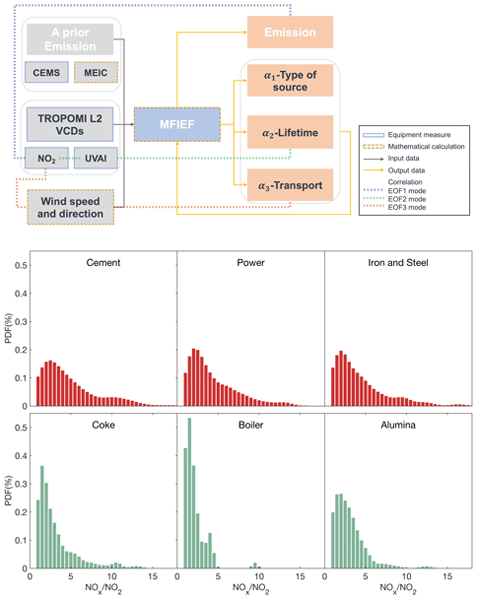
Xiaolu Li, Jason Blake Cohen, Kai Qin, Hong Geng, Xiaohui Wu, Liling Wu, Chengli Yang, Rui Zhang, and Liqin Zhang
Atmos. Chem. Phys., 23, 8001–8019, https://doi.org/10.5194/acp-23-8001-2023, https://doi.org/10.5194/acp-23-8001-2023, 2023
Short summary
Short summary
Remotely sensed NO2 and surface NOx are combined with a mathematical method to estimate daily NOx emissions. The results identify new sources and improve existing estimates. The estimation is driven by three flexible factors: thermodynamics of combustion, chemical loss, and atmospheric transport. The thermodynamic term separates power, iron, and cement from coking, boilers, and aluminum. This work finds three causes for the extremes: emissions, UV radiation, and transport.
Qiansi Tu, Frank Hase, Zihan Chen, Matthias Schneider, Omaira García, Farahnaz Khosrawi, Shuo Chen, Thomas Blumenstock, Fang Liu, Kai Qin, Jason Cohen, Qin He, Song Lin, Hongyan Jiang, and Dianjun Fang
Atmos. Meas. Tech., 16, 2237–2262, https://doi.org/10.5194/amt-16-2237-2023, https://doi.org/10.5194/amt-16-2237-2023, 2023
Short summary
Short summary
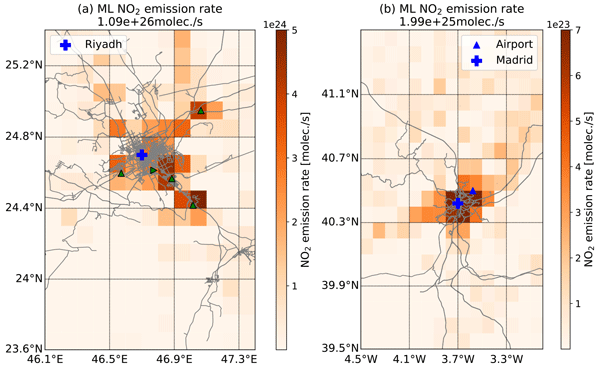
Four-year TROPOMI observations are used to derive tropospheric NO2 emissions in two mega(cities) with high anthropogenic activity. Wind-assigned anomalies are calculated, and the emission rates and spatial patterns are estimated based on a machine learning algorithm. The results are in reasonable agreement with previous studies and the inventory. Our method is quite robust and can be used as a simple method to estimate the emissions of NO2 as well as other gases in other regions.
Zexia Duan, Zhiqiu Gao, Qing Xu, Shaohui Zhou, Kai Qin, and Yuanjian Yang
Earth Syst. Sci. Data, 14, 4153–4169, https://doi.org/10.5194/essd-14-4153-2022, https://doi.org/10.5194/essd-14-4153-2022, 2022
Short summary
Short summary
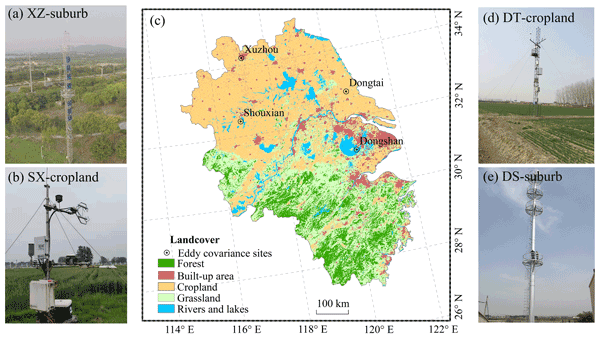
Land–atmosphere interactions over the Yangtze River Delta (YRD) in China are becoming more varied and complex, as the area is experiencing rapid land use changes. In this paper, we describe a dataset of microclimate and eddy covariance variables at four sites in the YRD. This dataset has potential use cases in multiple research fields, such as boundary layer parametrization schemes, evaluation of remote sensing algorithms, and development of climate models in typical East Asian monsoon regions.
Lian Zong, Yuanjian Yang, Haiyun Xia, Meng Gao, Zhaobin Sun, Zuofang Zheng, Xianxiang Li, Guicai Ning, Yubin Li, and Simone Lolli
Atmos. Chem. Phys., 22, 6523–6538, https://doi.org/10.5194/acp-22-6523-2022, https://doi.org/10.5194/acp-22-6523-2022, 2022
Short summary
Short summary
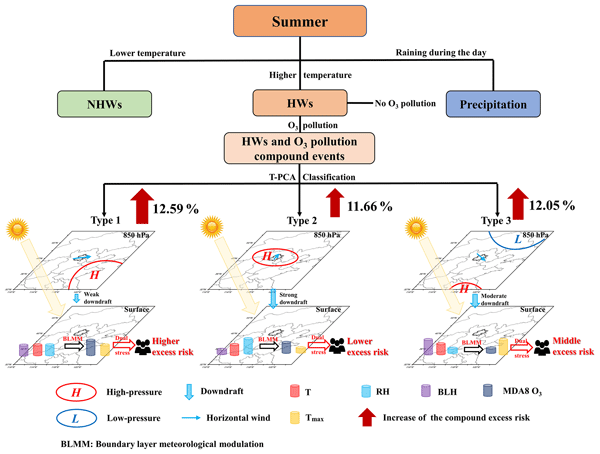
Heatwaves (HWs) paired with higher ozone (O3) concentration at surface level pose a serious threat to human health. Taking Beijing as an example, three unfavorable synoptic weather patterns were identified to dominate the compound HW and O3 pollution events. Under the synergistic stress of HWs and O3 pollution, public mortality risk increased, and synoptic patterns and urbanization enhanced the compound risk of events in Beijing by 33.09 % and 18.95 %, respectively.
Cited articles
Balasus, N., Jacob, D. J., Lorente, A., Maasakkers, J. D., Parker, R. J., Boesch, H., Chen, Z., Kelp, M. M., Nesser, H., and Varon, D. J.: A blended TROPOMI + GOSAT satellite data product for atmospheric methane using machine learning to correct retrieval biases, Atmos. Meas. Tech., 16, 3787–3807, https://doi.org/10.5194/amt-16-3787-2023, 2023.
Boersma, K. F., Eskes, H. J., Richter, A., De Smedt, I., Lorente, A., Beirle, S., van Geffen, J. H. G. M., Zara, M., Peters, E., Van Roozendael, M., Wagner, T., Maasakkers, J. D., van der A, R. J., Nightingale, J., De Rudder, A., Irie, H., Pinardi, G., Lambert, J.-C., and Compernolle, S. C.: Improving algorithms and uncertainty estimates for satellite NO2 retrievals: results from the quality assurance for the essential climate variables (QA4ECV) project, Atmos. Meas. Tech., 11, 6651–6678, https://doi.org/10.5194/amt-11-6651-2018, 2018.
Chen, C., Dubovik, O., Schuster, G. L., Chin, Mian., Henze, D. K., Lapyonok, T., Li, Z., Derimian, Y., and Zhang, Y.: Multi-angular polarimetric remote sensing to pinpoint global aerosol absorption and direct radiative forcing, Nat. Commun., 13, 7459, https://doi.org/10.1038/s41467-022-35147-y, 2022.
Chen, L., Song, Z., Yao, N., Xi, H., Li, J., Gao, P., Chen, Y., Su, H., Sun, Y., Jiang, B., Chen, J., Zhang, Y., Zhu, Y., Li, P., Pang, X., and Yu, S.: Photostationary state assumption seriously underestimates NOx emissions near large point sources at 10 to 60 m pixel resolution, Proc. Natl. Acad. Sci, 122, e2423915122, https://doi.org/10.1073/pnas.2423915122, 2025.
Cohen, J. B. and Prinn, R. G.: Development of a fast, urban chemistry metamodel for inclusion in global models, Atmos. Chem. Phys., 11, 7629–7656, https://doi.org/10.5194/acp-11-7629-2011, 2011.
Cohen, J. B., Prinn, R. G., and Wang, C.: The impact of detailed urban-scale processing on the composition, distribution, and radiative forcing of anthropogenic aerosols, Geophys. Res. Lett., 38, L10808, https://doi.org/10.1029/2011GL047417, 2011.
Crippa, M., Guizzardi, D., Pagani, F., Schiavina, M., Melchiorri, M., Pisoni, E., Graziosi, F., Muntean, M., Maes, J., Dijkstra, L., Van Damme, M., Clarisse, L., and Coheur, P.: Insights into the spatial distribution of global, national, and subnational greenhouse gas emissions in the Emissions Database for Global Atmospheric Research (EDGAR v8.0), Earth Syst. Sci. Data, 16, 2811–2830, https://doi.org/10.5194/essd-16-2811-2024, 2024.
Cusworth, D. H., Duren, R. M., Thorpe, A. K., Olson-Duvall, W., Heckler, J., Chapman, J. W., Eastwood, M. L., Helmlinger, M. C., Green, R. O., Asner, G. P., Dennison, P. E., and Miller, C. E.: Intermittency of Large Methane Emitters in the Permian Basin, Environ. Sci. Technol. Lett, 8, 7, 567–573, https://doi.org/10.1021/acs.estlett.1c00173, 2021.
Cusworth, D. H., Thorpe, A. T., Ayasse, A. K., Stepp, D., Heckler, J., Asner, G. P., Miller, C. E., Yadav, V., Chapman, J. 2., Eastwood, M. L., Green, R. O., Hmiel, B., Lyon, D. R., and Duren, R. M.: Strong methane point sources contribute a disproportionate fraction of total emissions across multiple basins in the United States, Proc. Natl. Acad. Sci, 119, e2202338119, https://doi.org/10.1073/pnas.2202338119, 2022.
Erland, B. M., Thorpe, A. K., and Gamon, J. A.: Recent Advances Toward Transparent Methane Emissions Monitoring: A Review, Environ. Sci. Technol., 56, 16567–16581, https://doi.org/10.1021/acs.est.2c02136, 2022.
Frankenberg, C., Meirink, J. F., Weele, M. V., Platt, U., and Wagner, T.: Assessing Methane Emissions from Global Space-Borne Observations, Science, 308, 1010–1014, https://doi.org/10.1126/science.1106644, 2005.
Frankenberg, C., Thorpe, A. K., Thompson, D. R., Hulley, G., Kort, E. A., Vance, N., Borchardt, J., Krings, T., Gerilowski, K., Sweeney, C., Conley, S., Bue, B. D., Aubrey, A. D., Hook, S., and Green, R. O.: Airborne methane remote measurements reveal heavy-tail flux distribution in Four Corners region, Proc. Natl. Acad. Sci., 113, 9734–9739, https://doi.org/10.1073/pnas.1605617113, 2016.
Gao, M., Xing, Z., Vollrath, C., Hugenholtz, C. H., and Barchyn, T. E.: Global observational coverage of onshore oil and gas methane sources with TROPOMI, Sci. Rep.-UK, 13, 16759, https://doi.org/10.1038/s41598-023-41914-8, 2023.
Gaubert, B., Arellano Jr., A. F., Barré, J., Worden, H. M., Emmons, L. K., Tilmes, S., Buchholz, R. R., Vitt, F., Raeder, K., Collins, N., Anderson, J. L., Wiedinmyer, C., Martinez Alonso, S., Edwards, D. P., Andreae, M. O., Hannigan, J. W., Petri, C., Strong, K., and Jones, N.: Toward a chemical reanalysis in a coupled chemistry-climate model: An evaluation of MOPITT CO assimilation and its impact on tropospheric composition, J. Geophys. Res. Atmos, 121, 7310–7343, https://doi.org/10.1002/2016JD024863, 2016.
Gaubert, B., Worden, H. M., Arellano, A. F. J., Emmons, L. K., Tilmes, S., Barré, J., Martinez Alonso, S., Vitt, F., Anderson, J. L., Alkemade, F., Houweling, S., and Edwards, D. P.: Chemical feedback from decreasing carbon monoxide emissions, Geophys. Res. Lett., 44, 9985–9995, https://doi.org/10.1002/2017GL074987, 2017.
Hachmeister, J., Schneising, O., Buchwitz, M., Lorente, A., Borsdorff, T., Burrows, J. P., Notholt, J., and Buschmann, M.: On the influence of underlying elevation data on Sentinel-5 Precursor TROPOMI satellite methane retrievals over Greenland, Atmos. Meas. Tech., 15, 4063–4074, https://doi.org/10.5194/amt-15-4063-2022, 2022.
Hancock, S. E., Jacob, D. J., Chen, Z., Nesser, H., Davitt, A., Varon, D. J., Sulprizio, M. P., Balasus, N., Estrada, L. A., Cazorla, M., Dawidowski, L., Diez, S., East, J. D., Penn, E., Randles, C. A., Worden, J., Aben, I., Parker, R. J., and Maasakkers, J. D.: Satellite quantification of methane emissions from South American countries: a high-resolution inversion of TROPOMI and GOSAT observations, Atmos. Chem. Phys., 25, 797–817, https://doi.org/10.5194/acp-25-797-2025, 2025.
He, Q., Qin, K., Cohen, J. B., Li, D., and Kim, J.: Quantifying Uncertainty in ML-derived Atmosphere Remote Sensing: Hourly Surface NO2 Estimation with GEMS, Geophys. Res. Lett., 18, e2024GL110468, 2024.
Hemati, M., Mahdianpari, M., Nassar, R., Shiri, H., and Mohammadimanesh, F.: Urban methane emission monitoring across North America using TROPOMI data: an analytical inversion approach, Sci. Rep.-UK, 14, 9041, https://doi.org/10.1038/s41598-024-58995-8, 2024.
Hersbach, H., Bell, B., Berrisford, P., Biavati, G., Horányi, A., Muñoz Sabater, J., Nicolas, J., Peubey, C., Radu, R., Rozum, I., Schepers, D., Simmons, A., Soci, C., Dee, D., and Thépaut, J.-N.: ERA5 hourly data on pressure levels from 1940 to present, Copernicus Climate Change Service (C3S) Climate Data Store (CDS) [data set], https://doi.org/10.24381/cds.bd0915c6, 2023.
Hu, H., Hasekamp, O., Butz, A., Galli, A., Landgraf, J., Aan de Brugh, J., Borsdorff, T., Scheepmaker, R., and Aben, I.: The operational methane retrieval algorithm for TROPOMI, Atmos. Meas. Tech., 9, 5423–5440, https://doi.org/10.5194/amt-9-5423-2016, 2016.
Hu, H., Landgraf, J., Detmers, R., Borsdorff, T., Aan De Brugh, J., Aben, I., Butz, A., and Hasekamp, O.: Toward global mapping of methane with TROPOMI: First results and intersatellite comparison to GOSAT, Geophys. Res. Lett., 45, 3682–3689, https://doi.org/10.1002/2018GL077259, 2018.
Hu, W., Qin, K., Lu, F., Li, D., and Cohen, J. B.: Merging TROPOMI and eddy covariance observations to quantify 5 years of daily CH4 emissions over coal-mine dominated region, Int. J. Coal Sci. Technol., 11, 56, https://doi.org/10.1007/s40789-024-00700-1, 2024.
Kahn, R. A., Andrews, E., Brock, C. A., Chin, M., Feingold, G., Gettelman, A., Levy, R. C., Murphy, D. M., Nenes, A., Pierce, J. R., Popp, T., Redemann, J., Sayer, A. M., da Silva, A. M., Sogacheva, L., and Stier, P.: Reducing Aerosol Forcing Uncertainty by Combining Models With Satellite and Within-The-Atmosphere Observations: A Three-Way Street, Rev. Geophys., 61, e2022RG000796, https://doi.org/10.1029/2022RG000796, 2023.
Kuhlmann, G., Stavropoulou, F., Schwietzke, S., Zavala-Araiza, D., Thorpe, A., Hueni, A., Emmenegger, L., Calcan, A., Röckmann, T., and Brunner, D.: Evidence of successful methane mitigation in one of Europe's most important oil production region, Atmos. Chem. Phys., 25, 5371–5385, https://doi.org/10.5194/acp-25-5371-2025, 2025.
Li, K., Bai, K., Jiao, P., Chen, H., He, H., Shao, L., Sun, Y., Zheng, Z., Li, R., and Chang, N.: Developing unbiased estimation of atmospheric methane via machine learning and multiobjective programming based on TROPOMI and GOSAT data, Remote Sens. Environ., 304, 114039, https://doi.org/10.1016/j.rse.2024.114039, 2024.
Li, X., Cohen, J. B., Qin, K., Geng, H., Wu, X., Wu, L., Yang, C., Zhang, R., and Zhang, L.: Remotely sensed and surface measurement- derived mass-conserving inversion of daily NOx emissions and inferred combustion technologies in energy-rich northern China, Atmos. Chem. Phys., 23, 8001–8019, https://doi.org/10.5194/acp-23-8001-2023, 2023.
Li, X., Cohen, J. B., Tiwari, P., Wu, L., Wang, S., He, Q., Yang, H and Qin, K.: Space-based inversion reveals underestimated carbon monoxide emissions over Shanxi, Commun. Earth Environment, 6, 357, https://doi.org/10.1038/s43247-025-02301-5, 2025.
Liang, R., Zhang, Y., Chen, W., Zhang, P., Liu, J., Chen, C., Mao, H., Shen, G., Qu, Z., Chen, Z., Zhou, M., Wang, P., Parker, R. J., Boesch, H., Lorente, A., Maasakkers, J. D., and Aben, I.: East Asian methane emissions inferred from high-resolution inversions of GOSAT and TROPOMI observations: a comparative and evaluative analysis, Atmos. Chem. Phys., 23, 8039–8057, https://doi.org/10.5194/acp-23-8039-2023, 2023.
Liu, J., Cohen, J. B., He, Q., Tiwari, P., and Qin, K.: Accounting for NOx emissions from biomass burning and urbanization doubles existing inventories over South, Southeast and East Asia, Communications Earth and Environment, 5, 255, https://doi.org/10.1038/s43247-024-01424-5, 2024a.
Liu, J., Cohen, J. B., Tiwari, P., Liu, Z., Yim, S. H. L., Gupta, P., and Qin, K.: New top-down estimation of daily mass and number column density of black carbon driven by OMI and AERONET observations, Remote Sens. Environ., 315, 114436, https://doi.org/10.1016/j.rse.2024.114436, 2024b.
Liu, M., van der A, R., van Weele, M., Bryan, L., Eskes, H., Veefkind, P., Liu, Y., Lin, X., de Laat, J., and Ding, J.: Current potential of CH4 emission estimates using TROPOMI in the Middle East, Atmos. Meas. Tech., 17, 5261–5277, https://doi.org/10.5194/amt-17-5261-2024, 2024a.
Liu, M., van der A, R., van Weele, M., Eskes, H., Lu, X., Veefkind, P., de Laat, J., Kong, H., Wang, J., Sun, J., Ding, J., Zhao, Y., and Weng, H.: A New Divergence Method to Quantify Methane Emissions Using Observations of Sentinel-5P TROPOMI, Geophys. Res. Lett., 48, e2021GL094151, https://doi.org/10.1029/2021GL094151, 2021.
Liu, S., Fang, S., Liu, P., Liang, M., Guo, M., and Feng, Z.: Measurement report: Changing characteristics of atmospheric CH4 in the Tibetan Plateau: records from 1994 to 2019 at the Mount Waliguan station, Atmos. Chem. Phys., 21, 393–413, https://doi.org/10.5194/acp-21-393-2021, 2021.
Liu, Z., Cohen, J. B., Tiwari, P., Guan, L., Wang, S., Li, Z., and Qin, K.: A global black carbon dataset of column concentration and microphysical information derived from MISR multi-band observations and Mie scattering simulations, Earth Syst. Sci. Data, 18, 507–533, https://doi.org/10.5194/essd-18-507-2026, 2026.
Liu, Z., Cohen, J. B., Wang, S., Wang, X., Tiwari, P., and Qin, K.: Remotely sensed BC columns over rapidly changing Western China show significant decreases in mass and inconsistent changes in number, size, and mixing properties due to policy actions, npj Clim. Atmos. Sci., 7, 124, https://doi.org/10.1038/s41612-024-00663-9, 2024b.
Lorente, A., Borsdorff, T., Butz, A., Hasekamp, O., aan de Brugh, J., Schneider, A., Wu, L., Hase, F., Kivi, R., Wunch, D., Pollard, D. F., Shiomi, K., Deutscher, N. M., Velazco, V. A., Roehl, C. M., Wennberg, P. O., Warneke, T., and Landgraf, J.: Methane retrieved from TROPOMI: improvement of the data product and validation of the first 2 years of measurements, Atmos. Meas. Tech., 14, 665–684, https://doi.org/10.5194/amt-14-665-2021, 2021.
NASA/LARC/SD/ASDC: MISR Level 3 Component Global Aerosol product in netCDF format covering a month V004, ASDC [data set], https://doi.org/10.5067/Terra/MISR/MIL3MAEN_L3.004, 2008.
Nesser, H., Jacob, D. J., Maasakkers, J. D., Lorente, A., Chen, Z., Lu, X., Shen, L., Qu, Z., Sulprizio, M. P., Winter, M., Ma, S., Bloom, A. A., Worden, J. R., Stavins, R. N., and Randles, C. A.: High-resolution US methane emissions inferred from an inversion of 2019 TROPOMI satellite data: contributions from individual states, urban areas, and landfills, Atmos. Chem. Phys., 24, 5069–5091, https://doi.org/10.5194/acp-24-5069-2024, 2024.
Parker, P., Boesch, H., Cogan, A., Fraser, A., Feng, L., Palmer, P. I., Messerschmidt, J., Deutscher, N., Griffith, D. W. T., Notholt, J., Wennberg, P. O., and Wuch, D.: Methane observations from the Greenhouse Gases Observing SATellite: Comparison to ground-based TCCON data and model calculations, Geophys. Res. Lett., 38, https://doi.org/10.1029/2011GL047871, 2011.
Pollard, D. F., Hase, F., Sha, M. K., Dubravica, D., Alberti, C., and Smale, D.: Retrievals of
Prinn, R. G., Huang, J., Weiss, R. F., Cunnold, D. M., Fraser, P. J., Simmonds, P. G., Mcculloch, A., Harth, C., Salameh, P., O'doherty, S., Wang, R. H. J., Porter, L., and Miller, B. R.: Evidence for Substantial Variations of Atmospheric Hydroxyl Radicals in the Past Two Decades, Science, 292, 1882–1888, https://doi.org/10.1126/science.1058673, 2001.
Qin, K., Lu, L., Liu, J., He, Q., Shi, J., Deng, W., Wang, S., and Cohen, J. B.: Model-free daily inversion of NOx emissions using TROPOMI (MCMFE-NOx) and its uncertainty: Declining regulated emissions and growth of new sources, Remote Sens. Environ., 295, 113720, https://doi.org/10.1016/j.rse.2023.113720, 2023.
Qu, Z., Jacob, D. J., Shen, L., Lu, X., Zhang, Y., Scarpelli, T. R., Nesser, H., Sulprizio, M. P., Maasakkers, J. D., Bloom, A. A., Worden, J. R., Parker, R. J., and Delgado, A. L.: Global distribution of methane emissions: a comparative inverse analysis of observations from the TROPOMI and GOSAT satellite instruments, Atmos. Chem. Phys., 21, 14159–14175, https://doi.org/10.5194/acp-21-14159-2021, 2021.
Sadavarte, P., Pandey, S., Maasakkers, J. D., Lorente, A., Borsdorff, T., van der Gon, H. D., Houweling, S., and Aben, I.: Methane Emissions from Superemitting Coal Mines in Australia Quantified Using TROPOMI Satellite Observations, Environ. Sci. Technol, 55, 24, 16573–16580, https://doi.org/10.1021/acs.est.1c03976, 2021.
Schneising, O., Buchwitz, M., Hachmeister, J., Vanselow, S., Reuter, M., Buschmann, M., Bovensmann, H., and Burrows, J. P.: Advances in retrieving XCH4 and XCO from Sentinel-5 Precursor: improvements in the scientific TROPOMI/WFMD algorithm, Atmos. Meas. Tech., 16, 669–694, https://doi.org/10.5194/amt-16-669-2023, 2023.
Schneising, O., Buchwitz, M., Reuter, M., Vanselow, S., Bovensmann, H., and Burrows, J. P.: Remote sensing of methane leakage from natural gas and petroleum systems revisited, Atmos. Chem. Phys., 20, 9169–9182, https://doi.org/10.5194/acp-20-9169-2020, 2020.
Sha, M. K., Langerock, B., Blavier, J.-F. L., Blumenstock, T., Borsdorff, T., Buschmann, M., Dehn, A., De Mazière, M., Deutscher, N. M., Feist, D. G., García, O. E., Griffith, D. W. T., Grutter, M., Hannigan, J. W., Hase, F., Heikkinen, P., Hermans, C., Iraci, L. T., Jeseck, P., Jones, N., Kivi, R., Kumps, N., Landgraf, J., Lorente, A., Mahieu, E., Makarova, M. V., Mellqvist, J., Metzger, J.-M., Morino, I., Nagahama, T., Notholt, J., Ohyama, H., Ortega, I., Palm, M., Petri, C., Pollard, D. F., Rettinger, M., Robinson, J., Roche, S., Roehl, C. M., Röhling, A. N., Rousogenous, C., Schneider, M., Shiomi, K., Smale, D., Stremme, W., Strong, K., Sussmann, R., Té, Y., Uchino, O., Velazco, V. A., Vigouroux, C., Vrekoussis, M., Wang, P., Warneke, T., Wizenberg, T., Wunch, D., Yamanouchi, S., Yang, Y., and Zhou, M.: Validation of methane and carbon monoxide from Sentinel-5 Precursor using TCCON and NDACC-IRWG stations, Atmos. Meas. Tech., 14, 6249–6304, https://doi.org/10.5194/amt-14-6249-2021, 2021.
Tao, M., Cai, Z., Zhu, S., Liu, Y., Feng, L., Fang, S., Yi, Y., and Bian, J.: New evidence for CH4 enhancement in the upper troposphere associated with the Asian summer monsoon, Environ. Res. Lett., 19, 034033, https://doi.org/10.1088/1748-9326/ad2738, 2024.
Tian, X., Wang, Y., Beirle, S., Xie, P., Wagner, T., Xu, J., Li, A., Dörner, S., Ren, B., and Li, X.: Technical note: Evaluation of profile retrievals of aerosols and trace gases for MAX-DOAS measurements under different aerosol scenarios based on radiative transfer simulations, Atmos. Chem. Phys., 21, 12867–12894, https://doi.org/10.5194/acp-21-12867-2021, 2021.
Tiwari, P., Cohen, J. B., Lu, L., Wang, S., Li, X., Guan, L., Liu, Z., Li, Z., and Qin, K.: Multi-platform observations and constraints reveal overlooked urban sources of black car bon in Xuzhou and Dhaka, Commun. Earth. Environ, 6, 38, https://doi.org/10.1038/s43247-025-02012-x, 2025.
Tiwari, P., Cohen, J. B., Wang, X., Wang, S., and Qin, K.: Radiative forcing bias calculation based on COSMO (Core-Shell Mie model Optimization) and AERONET data, npj Clim. Atmos. Sci., 6, 193, https://doi.org/10.1038/s41612-023-00520-1, 2023.
Torres, O., Jethva, H., Ahn, C., Jaross, G., and Loyola, D. G.: TROPOMI aerosol products: evaluation and observations of synoptic-scale carbonaceous aerosol plumes during 2018–2020, Atmos. Meas. Tech., 13, 6789–6806, https://doi.org/10.5194/amt-13-6789-2020, 2020.
Vanselow, S., Schneising, O., Buchwitz, M., Reuter, M., Bovensmann, H., Boesch, H., and Burrows, J. P.: Automated detection of regions with persistently enhanced methane concentrations using Sentinel-5 Precursor satellite data, Atmos. Chem. Phys., 24, 10441–10473, https://doi.org/10.5194/acp-24-10441-2024, 2024.
Varon, D. J., Jacob, D. J., Estrada, L. A., Balasus, N., East, J., Pendergrass, D. C., Chen, Z., Sulprizio, M., Omara, M., Gautam, R., Barkley, Z. R., Cardoso Saldaña, F. J., Reidy, E. K., Kamdar, H., Sherwin, E. D., Biraud, S. C., Jervis, D., Pandey, S., Worden, J. R., Bowman, K, W., Maasakkers, J. D., and Kleinberg, R. L.: Seasonality and Declining Intensity of Methane Emissions from the Permian and Nearby US Oil and Gas Basins, Environmental Science & Technology, 60, 425–435, https://doi.org/10.1021/acs.est.5c08745, 2025.
Varon, D. J., Jacob, D. J., Hmiel, B., Gautam, R., Lyon, D. R., Omara, M., Sulprizio, M., Shen, L., Pendergrass, D., Nesser, H., Qu, Z., Barkley, Z. R., Miles, N. L., Richardson, S. J., Davis, K. J., Pandey, S., Lu, X., Lorente, A., Borsdorff, T., Maasakkers, J. D., and Aben, I.: Continuous weekly monitoring of methane emissions from the Permian Basin by inversion of TROPOMI satellite observations, Atmos. Chem. Phys., 23, 7503–7520, https://doi.org/10.5194/acp-23-7503-2023, 2023.
Veefkind, J. P., Serrano-Calvo, R., de Gouw, J., Dix, B., Schneising, O., Buchwitz, M., Barré, J., van der A, R. J., Liu, M., and Levelt, P. F.: Widespread frequent methane emissions from the oil and gas industry in the Permian basin, J. Geophys. Res.-Atmospheres, 128, e2022JD037479, https://doi.org/10.1029/2022JD037479, 2023.
Vignati, E., Karl, M., Krol, M., Wilson, J., Stier, P., and Cavalli, F.: Sources of uncertainties in modelling black carbon at the global scale, Atmos. Chem. Phys., 10, 2595–2611, https://doi.org/10.5194/acp-10-2595-2010, 2010.
Wang, S., Cohen, J. B., Guan, L., Lu, L., Tiwari, P., and Qin, K.: Observationally constrained global NOx and CO emissions variability reveals sources which contribute significantly to CO2 emissions, npj Clim. Atmos. Sci., 8, 87, https://doi.org/10.1038/s41612-025-00977-2, 2025.
Webb, E. K., Pearman, G. I., and Leuning, R.: Correction of flux measurements for density effects due to heat and water vapour transfer, Q. J. Roy. Meteor. Soc., 106, 85–100, https://doi.org/10.1002/qj.49710644707, 1980.
Yang, G., Zheng, Z., Abbott, B. W., Olefeldt, D., Knoblauch, C., Song, Y., Kang, L., Qin, S., Peng, Y., and Yang, Y.: Characteristics of methane emissions from alpine thermokarst lakes on the Tibetan Plateau, Nat. Commun., 14, 3121, https://doi.org/10.1038/s41467-023-38907-6, 2023.
Yu, X., Millet, D. B., Henze, D. K., Turner, A. J., Delgado, A. L., Bloom, A. A., and Sheng, J.: A high-resolution satellite-based map of global methane emissions reveals missing wetland, fossil fuel, and monsoon sources, Atmos. Chem. Phys., 23, 3325–3346, https://doi.org/10.5194/acp-23-3325-2023, 2023.
Zhang, L., Xia, X., Liu, S., Zhang, S., Li, S., Wang, J., Wang, G., Gao, H., Zhang, Z., Wang, Q., Wen, W., Liu, R., Yang, Z., Stanley, E. H., and Raymond, P. A.: Significant methane ebullition from alpine permafrost rivers on the East Qinghai–Tibet Plateau, Nat. Geosci., 13, 349–354, https://doi.org/10.1038/s41561-020-0571-8, 2020.
Zheng, B., Cohen, J. B., Lu, L., Hu, W., Tiwari, P., Lolli, S., Garzelli, A., Su, H., and Qin, K.: How can we trust TROPOMI based Methane Emissions Estimation: Calculating Emissions over Unidentified Source Regions, Figshare [data set], https://doi.org/10.6084/m9.figshare.30635951, 2025.
Zhou, L., Worthy, D. E. J., Lang, P. M., Ernst, M. K., Zhang, X. C., Wen, Y. P., and Li, J. L.: Ten years of atmospheric methane observations at a high elevation site in Western China, Atmos. Environ., 38, 7040–7054, https://doi.org/10.1016/j.atmosenv.2004.02.072, 2004.
Short summary
This study provides TROPOMI (TROPOspheric Monitoring Instrument) with a new methane emission estimation method that can accurately identify emission sources. Our results generate non-negative emission datasets using objective selection and filtering methods. The results include lower minimum emission thresholds for all power grids and fewer false positives. The new method provides more robust emission quantification in the face of data uncertainty, going beyond traditional plume identification and background subtraction.
This study provides TROPOMI (TROPOspheric Monitoring Instrument) with a new methane emission...


Altmetrics
Final-revised paper
Preprint