
Articles | Volume 26, issue 3
https://doi.org/10.5194/acp-26-1907-2026
© Author(s) 2026. This work is distributed under
the Creative Commons Attribution 4.0 License.
the Creative Commons Attribution 4.0 License.
https://doi.org/10.5194/acp-26-1907-2026
© Author(s) 2026. This work is distributed under
the Creative Commons Attribution 4.0 License.
the Creative Commons Attribution 4.0 License.
Research article
| 
06 Feb 2026
Research article |
| 06 Feb 2026
| 06 Feb 2026
Sensitivity of photochemical surface ozone formation regimes to emissions and meteorology in India
Gopalakrishna Pillai Gopikrishnan
CORAL, Indian Institute of Technology Kharagpur, Kharagpur 721302, India
Lamont-Doherty Earth Observatory, Columbia University, New York 10964, NY, USA
Daniel M. Westervelt
CORRESPONDING AUTHOR

Lamont-Doherty Earth Observatory, Columbia University, New York 10964, NY, USA
Jayanarayanan Kuttippurath
CORRESPONDING AUTHOR
CORAL, Indian Institute of Technology Kharagpur, Kharagpur 721302, India
Related authors
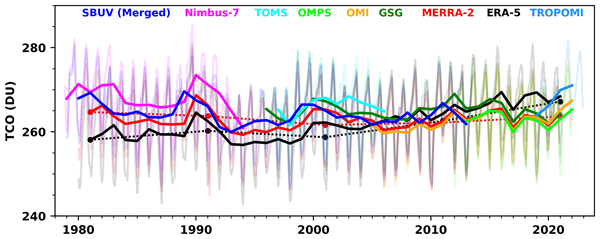
Jayanarayanan Kuttippurath, Gopalakrishna Pillai Gopikrishnan, Rolf Müller, Sophie Godin-Beekmann, and Jerome Brioude
Atmos. Chem. Phys., 24, 6743–6756, https://doi.org/10.5194/acp-24-6743-2024, https://doi.org/10.5194/acp-24-6743-2024, 2024
Short summary
Short summary
The current understanding and observational evidence do not provide any support for the possibility of an ozone hole occurring outside Antarctica today with respect to the present-day stratospheric halogen levels.
Abhishek Anand, Joe A. Amooli, Selina Amoah, Esi Nerquaye Tetteh, Nana Ama Browne Klutse, Clement Mensah Ackaah, Benjamin Essien, Mawuli Kingsley Amegah, and Daniel M. Westervelt
EGUsphere, https://doi.org/10.31223/X5KR3D, https://doi.org/10.31223/X5KR3D, 2026
Short summary
Short summary
Air pollution remains poorly characterized across much of sub-Saharan Africa because of sparse monitoring infrastructure. By developing a multi-model machine learning framework to generate a 21-year high-resolution dataset for fine particulate matter in Ghana, this study reveals persistent geographic disparities in exposure and provides information needed to support air-quality management, health assessments, and environmental policy in data-sparse regions.
Bosi Sheng, Massimo A. Bollasina, Alexandre S. Gagnon, Laura J. Wilcox, Thomas P. S. Reynolds, Christopher T. S. Beckett, Haolin Wang, Qingxiang Li, Pierre Nabat, Robert J. Allen, Bjørn H. Samset, Joonas Merikanto, Geeta G. Persad, Toshihiko Takemura, Kostas Tsigaridis, Sharar Ahmadi, Maxwell T. Elling, Knut von Salzen, Daniel M. Westervelt, Naga Oshima, and Tsuyoshi Koshiro
EGUsphere, https://doi.org/10.5194/egusphere-2026-2198, https://doi.org/10.5194/egusphere-2026-2198, 2026
Short summary
Short summary
Observational records indicate that austral summer rainfall over southern Africa experienced substantial wetting during the late 20th century, followed by pronounced drying over the past two decades. We show that East Asian sulphate aerosol emissions played a key role in shaping these rainfall trends. These findings have important implications for reducing uncertainties in regional rainfall projections and for understanding their links to ecosystem changes.
Samuel Bartusek, Yutian Wu, Mingfang Ting, Arlene Fiore, and Daniel M. Westervelt
EGUsphere, https://doi.org/10.5194/egusphere-2025-4874, https://doi.org/10.5194/egusphere-2025-4874, 2025
Short summary
Short summary
Air pollution and extreme humid heat are both significant hazards, but their co-occurrence remains unstudied on a global scale. Using chemical and meteorological reanalyses, we find that in many areas, accounting for much of the global population, more humid heat tends to correspond with worse pollution than drier heat. We identify hotspots and study the mechanisms of this co-occurrence; our results imply it may be driven by more urban background chemistry and air stagnation during humid heat.
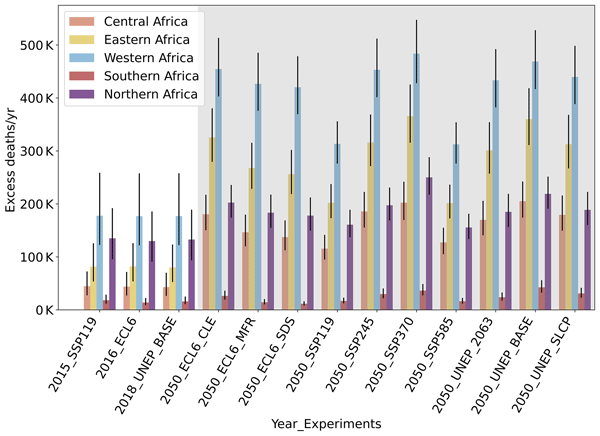
Joe Adabouk Amooli, Marianne T. Lund, Sourangsu Chowdhury, Gunnar Myhre, Ane N. Johansen, Bjørn H. Samset, and Daniel M. Westervelt
Atmos. Chem. Phys., 25, 11611–11632, https://doi.org/10.5194/acp-25-11611-2025, https://doi.org/10.5194/acp-25-11611-2025, 2025
Short summary
Short summary
We analyze various projections of African aerosol emissions and their potential impacts on climate and public health. We find that future emissions vary widely across emission projections, with differences in sectoral emission distributions. Using the Oslo chemical transport model, we show that air pollution exposure in some regions of Africa could increase significantly by 2050, increasing pollution-related deaths, with most scenarios projecting aerosol-induced warming over sub-Saharan Africa.
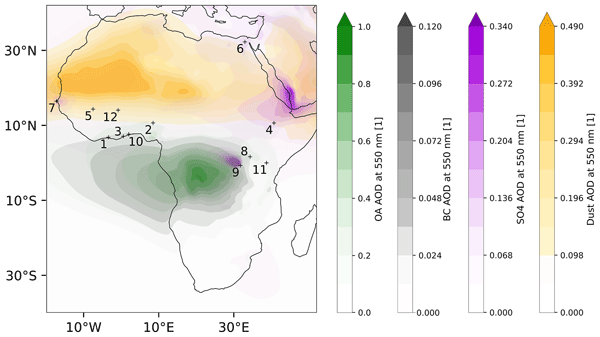
Catherine A. Toolan, Joe Adabouk Amooli, Laura J. Wilcox, Bjørn H. Samset, Andrew G. Turner, and Daniel M. Westervelt
Atmos. Chem. Phys., 25, 10523–10557, https://doi.org/10.5194/acp-25-10523-2025, https://doi.org/10.5194/acp-25-10523-2025, 2025
Short summary
Short summary
Our research explores how well air pollution and rainfall patterns in Africa are represented in current climate models by comparing model data to observations from 1981 to 2023. While most models capture seasonal air quality changes well, they struggle to replicate the distribution of non-dust pollutants and certain rainfall patterns, especially over east Africa. Improving these models is crucial for better climate predictions and preparing for future risks.
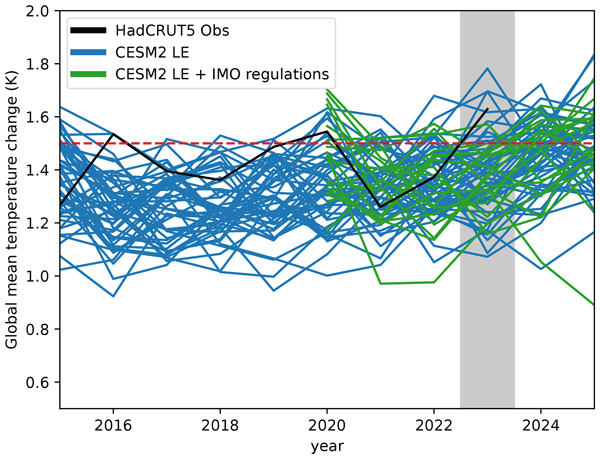
Duncan Watson-Parris, Laura J. Wilcox, Camilla W. Stjern, Robert J. Allen, Geeta Persad, Massimo A. Bollasina, Annica M. L. Ekman, Carley E. Iles, Manoj Joshi, Marianne T. Lund, Daniel McCoy, Daniel M. Westervelt, Andrew I. L. Williams, and Bjørn H. Samset
Atmos. Chem. Phys., 25, 4443–4454, https://doi.org/10.5194/acp-25-4443-2025, https://doi.org/10.5194/acp-25-4443-2025, 2025
Short summary
Short summary
In 2020, regulations by the International Maritime Organization aimed to reduce aerosol emissions from ships. These aerosols previously had a cooling effect, which the regulations might reduce, revealing more greenhouse gas warming. Here we find that, while there is regional warming, the global 2020–2040 temperature rise is only +0.03 °C. This small change is difficult to distinguish from natural climate variability, indicating the regulations have had a limited effect on observed warming to date.
Jayanarayanan Kuttippurath, Gopalakrishna Pillai Gopikrishnan, Rolf Müller, Sophie Godin-Beekmann, and Jerome Brioude
Atmos. Chem. Phys., 24, 6743–6756, https://doi.org/10.5194/acp-24-6743-2024, https://doi.org/10.5194/acp-24-6743-2024, 2024
Short summary
Short summary
The current understanding and observational evidence do not provide any support for the possibility of an ozone hole occurring outside Antarctica today with respect to the present-day stratospheric halogen levels.
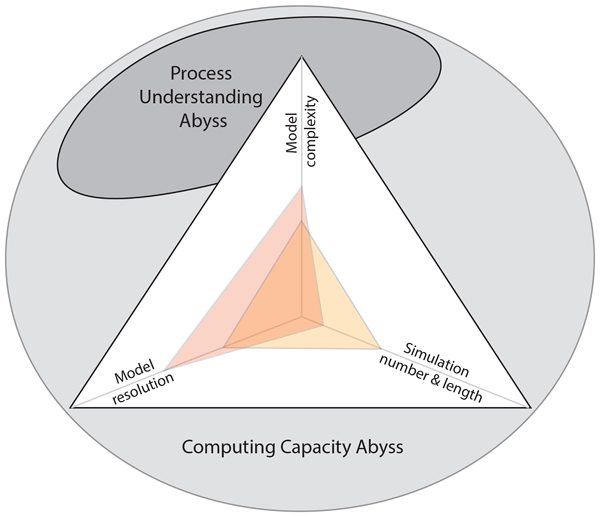
Stephanie Fiedler, Vaishali Naik, Fiona M. O'Connor, Christopher J. Smith, Paul Griffiths, Ryan J. Kramer, Toshihiko Takemura, Robert J. Allen, Ulas Im, Matthew Kasoar, Angshuman Modak, Steven Turnock, Apostolos Voulgarakis, Duncan Watson-Parris, Daniel M. Westervelt, Laura J. Wilcox, Alcide Zhao, William J. Collins, Michael Schulz, Gunnar Myhre, and Piers M. Forster
Geosci. Model Dev., 17, 2387–2417, https://doi.org/10.5194/gmd-17-2387-2024, https://doi.org/10.5194/gmd-17-2387-2024, 2024
Short summary
Short summary
Climate scientists want to better understand modern climate change. Thus, climate model experiments are performed and compared. The results of climate model experiments differ, as assessed in the latest Intergovernmental Panel on Climate Change (IPCC) assessment report. This article gives insights into the challenges and outlines opportunities for further improving the understanding of climate change. It is based on views of a group of experts in atmospheric composition–climate interactions.
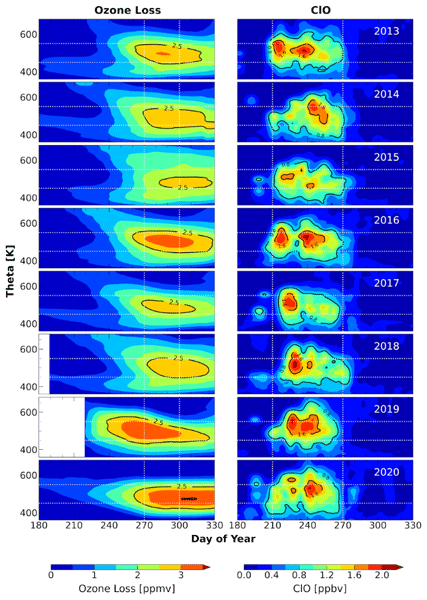
Raina Roy, Pankaj Kumar, Jayanarayanan Kuttippurath, and Franck Lefevre
Atmos. Chem. Phys., 24, 2377–2386, https://doi.org/10.5194/acp-24-2377-2024, https://doi.org/10.5194/acp-24-2377-2024, 2024
Short summary
Short summary
We assess the interannual variability of ozone loss and chlorine activation in the Antarctic winters of 2013–2020. The analysis shows significant interannual variability in the Antarctic ozone during this period as compared to the previous decade (2000–2010). Dynamics and chemistry of the winters play their respective roles in the ozone loss process. The winter of 2019 is an example of favourable chemistry helping in the large loss of ozone, though the dynamical conditions were unfavourable.
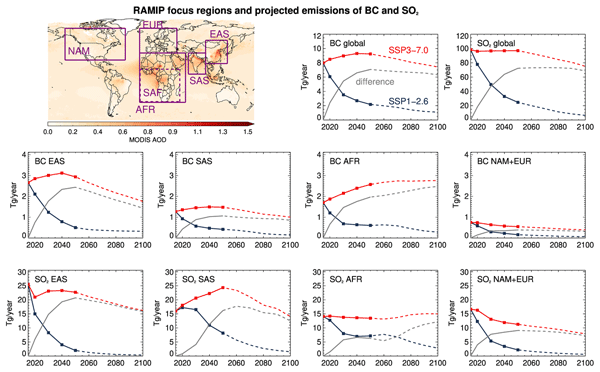
Laura J. Wilcox, Robert J. Allen, Bjørn H. Samset, Massimo A. Bollasina, Paul T. Griffiths, James Keeble, Marianne T. Lund, Risto Makkonen, Joonas Merikanto, Declan O'Donnell, David J. Paynter, Geeta G. Persad, Steven T. Rumbold, Toshihiko Takemura, Kostas Tsigaridis, Sabine Undorf, and Daniel M. Westervelt
Geosci. Model Dev., 16, 4451–4479, https://doi.org/10.5194/gmd-16-4451-2023, https://doi.org/10.5194/gmd-16-4451-2023, 2023
Short summary
Short summary
Changes in anthropogenic aerosol emissions have strongly contributed to global and regional climate change. However, the size of these regional impacts and the way they arise are still uncertain. With large changes in aerosol emissions a possibility over the next few decades, it is important to better quantify the potential role of aerosol in future regional climate change. The Regional Aerosol Model Intercomparison Project will deliver experiments designed to facilitate this.
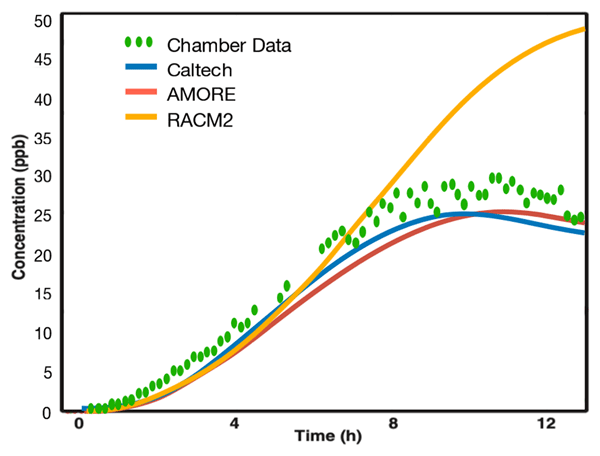
Forwood Wiser, Bryan K. Place, Siddhartha Sen, Havala O. T. Pye, Benjamin Yang, Daniel M. Westervelt, Daven K. Henze, Arlene M. Fiore, and V. Faye McNeill
Geosci. Model Dev., 16, 1801–1821, https://doi.org/10.5194/gmd-16-1801-2023, https://doi.org/10.5194/gmd-16-1801-2023, 2023
Short summary
Short summary
We developed a reduced model of atmospheric isoprene oxidation, AMORE-Isoprene 1.0. It was created using a new Automated Model Reduction (AMORE) method designed to simplify complex chemical mechanisms with minimal manual adjustments to the output. AMORE-Isoprene 1.0 has improved accuracy and similar size to other reduced isoprene mechanisms. When included in the CRACMM mechanism, it improved the accuracy of EPA’s CMAQ model predictions for the northeastern USA compared to observations.

Mathew Sebastian, Sobhan Kumar Kompalli, Vasudevan Anil Kumar, Sandhya Jose, S. Suresh Babu, Govindan Pandithurai, Sachchidanand Singh, Rakesh K. Hooda, Vijay K. Soni, Jeffrey R. Pierce, Ville Vakkari, Eija Asmi, Daniel M. Westervelt, Antti-Pekka Hyvärinen, and Vijay P. Kanawade
Atmos. Chem. Phys., 22, 4491–4508, https://doi.org/10.5194/acp-22-4491-2022, https://doi.org/10.5194/acp-22-4491-2022, 2022
Short summary
Short summary
Characteristics of particle number size distributions and new particle formation in six locations in India were analyzed. New particle formation occurred frequently during the pre-monsoon (spring) season and it significantly modulates the shape of the particle number size distributions. The contribution of newly formed particles to cloud condensation nuclei concentrations was ~3 times higher in urban locations than in mountain background locations.
Cited articles
Adhikary, M., Mal, P., and Saikia, N.: Exploring the link between particulate matter pollution and acute respiratory infection risk in children using generalized estimating equations analysis: a robust statistical approach, Environmental Health, 23, 12, https://doi.org/10.1186/s12940-024-01049-3, 2024.
Aher, G. R., Pawar, G. V., Gupta, P., and Devara, P. C. S.: Effect of major dust storm on optical, physical, and radiative properties of aerosols over coastal and urban environments in Western India, Int. J. Remote Sens., 35, 871–903, https://doi.org/10.1080/01431161.2013.873153, 2014.
Aladwani, S. M., Almutairi, A., Alolayan, M. A., Abdullah, H., and Abraham, L. M.: Prediction of solar radiation as a function of particulate matter pollution and meteorological data using machine learning models, Journal of Engineering Research, https://doi.org/10.1016/j.jer.2024.11.005, 2024.
Alves, C. A., Evtyugina, M., Vicente, A. M. P., Vicente, E. D., Nunes, T. V., Silva, P. M. A., Duarte, M. A. C., Pio, C. A., Amato, F., and Querol, X.: Chemical profiling of PM10 from urban road dust, Sci. Total Environ., 634, 41–51, https://doi.org/10.1016/j.scitotenv.2018.03.338, 2018.
Anagha, K. S., Kuttippurath, J., Sharma, M., and Cuesta, J.: A comprehensive assessment of yield loss in rice due to surface ozone pollution in India during 2005–2020: A great concern for food security, Agr. Syst., 215, 103849, https://doi.org/10.1016/j.agsy.2023.103849, 2024.
Anderson, H. R., Atkinson, R. W., Bremner, S. A., Carrington, J., and Peacock, J.: Quantitative systematic review of short term associations between ambient air pollution (particulate matter, ozone, nitrogen dioxide, sulphur dioxide and carbon monoxide), and mortality and morbidity, Report to Department of Health revised following first review, https://assets.publishing.service.gov.uk/media/5a7507c2e5274a3cb2869199/dh_121202.pdf (last access: 15 February 2025), 2007.
Anurose, T. J., Jayakumar, A., Sandhya, M., Gordon, H., Aryasree, S., Mohandas, S., Bhati, S., and Prasad, V. S.: Unraveling the Mechanism of the Holes in the Blanket of Fog Over the Indo-Gangetic Plains: Are They Driven by Urban Heat Islands or Aerosol?, Geophys. Res. Lett., 51, e2023GL107252, https://doi.org/10.1029/2023GL107252, 2024.
Austin, E., Zanobetti, A., Coull, B., Schwartz, J., Gold, D. R., and Koutrakis, P.: Ozone trends and their relationship to characteristic weather patterns, Journal of Exposure Science and Environmental Epidemiology, 25, 532–542, https://doi.org/10.1038/jes.2014.45, 2015.
Avnery, S., Mauzerall, D. L., Liu, J., and Horowitz, L. W.: Global crop yield reductions due to surface ozone exposure: 2. Year 2030 potential crop production losses and economic damage under two scenarios of O3 pollution, Atmos. Environ., 45, 2297–2309, https://doi.org/10.1016/j.atmosenv.2011.01.002, 2011.
Badarinath, K. V. S., Sharma, A. R., Kharol, S. K., and Prasad, V. K.: Variations in CO, O3 and black carbon aerosol mass concentrations associated with planetary boundary layer (PBL) over tropical urban environment in India, J. Atmos. Chem., 62, 73–86, https://doi.org/10.1007/s10874-009-9137-2, 2009.
Badarinath, K. V. S., Kharol, S. K., Kaskaoutis, D. G., Sharma, A. R., Ramaswamy, V., and Kambezidis, H. D.: Long-range transport of dust aerosols over the Arabian Sea and Indian region – A case study using satellite data and ground-based measurements, Global Planet. Change, 72, 164–181, https://doi.org/10.1016/j.gloplacha.2010.02.003, 2010.
Bates, K., Evans, M., Henderson, B., and Jacob, D.: Impacts of updated reaction kinetics on the global GEOS-Chem simulation of atmospheric chemistry, EGUsphere [preprint], https://doi.org/10.5194/egusphere-2023-1374, 2023.
Bey, I., Jacob, D. J., Yantosca, R. M., Logan, J. A., Field, B. D., Fiore, A. M., Li, Q., Liu, H. Y., Mickley, L. J., and Schultz, M. G.: Global modeling of tropospheric chemistry with assimilated meteorology: Model description and evaluation, J. Geophys. Res., 106, 23073–23095, 2001.
Bhuvaneshwari, S., Hettiarachchi, H., and Meegoda, J. N.: Crop residue burning in India: policy challenges and potential solutions, International journal of Environ. Res. and public health, 16, 832, https://doi.org/10.3390/ijerph16050832, 2019.
Bian, H. and Zender, C. S.: Mineral dust and global tropospheric chemistry: Relative roles of photolysis and heterogeneous uptake, J. Geophys. Res.-Atmos., 108, https://doi.org/10.1029/2002JD003143, 2003.
Bian, H., Han, S., Tie, X., Sun, M., and Liu, A.: Evidence of impact of aerosols on surface ozone concentration in Tianjin, China, Atmos. Environ., 41, 4672–4681, https://doi.org/10.1016/j.atmosenv.2007.03.041, 2007.
Bonasoni, P., Cristofanelli, P., Calzolari, F., Bonafè, U., Evangelisti, F., Stohl, A., Zauli Sajani, S., van Dingenen, R., Colombo, T., and Balkanski, Y.: Aerosol-ozone correlations during dust transport episodes, Atmos. Chem. Phys., 4, 1201–1215, https://doi.org/10.5194/acp-4-1201-2004, 2004.
Budakoti, S. and Singh, C.: Examining the characteristics of planetary boundary layer height and its relationship with atmospheric parameters over Indian sub-continent, Atmos. Res., 264, 105854, https://doi.org/10.1016/j.atmosres.2021.105854, 2021.
Chanana, I., Sharma, A., Kumar, P., Kumar, L., Kulshreshtha, S., Kumar, S., and Patel, S. K. S.: Combustion and stubble burning: A major concern for the environment and Human Health, Fire, 6, 79, https://doi.org/10.3390/fire6020079, 2023.
Chen, Y., Beig, G., Archer-Nicholls, S., Drysdale, W., Acton, W. J. F., Lowe, D., Nelson, B., Lee, J., Ran, L., Wang, Y., and Wu, Z.: Avoiding high ozone pollution in Delhi, India, Faraday Discuss., 226, 502–514, https://doi.org/10.1039/D0FD00079E, 2021.
Christian, K. E., Brune, W. H., Mao, J., and Ren, X.: Global sensitivity analysis of GEOS-Chem modeled ozone and hydrogen oxides during the INTEX campaigns, Atmos. Chem. Phys., 18, 2443–2460, https://doi.org/10.5194/acp-18-2443-2018, 2018.
Christiansen, A., Mickley, L. J., Liu, J., Oman, L. D., and Hu, L.: Multidecadal increases in global tropospheric ozone derived from ozonesonde and surface site observations: can models reproduce ozone trends?, Atmos. Chem. Phys., 22, 14751–14782, https://doi.org/10.5194/acp-22-14751-2022, 2022.
Coker, E. and Kizito, S.: A narrative review on the human health effects of ambient air pollution in Sub-Saharan Africa: an urgent need for health effects studies, International Journal of Environmental Research and Public Health, 15, 427, https://doi.org/10.3390/ijerph15030427, 2018.
Crutzen, P. J., Grooß, J. U., Brühl, C., Müller, R., and Russell III, J. M.: A reevaluation of the ozone budget with HALOE UARS data: No evidence for the ozone deficit, Science, 268, 705–708, https://doi.org/10.1126/science.268.5211.705, 1995.
Damian, V., Sandu, A., Damian, M., Potra, F., and Carmichael, G. R.: The kinetic preprocessor KPP-a software environment for solving chemical kinetics, Computers & Chemical Engineering, 26, 1567–1579, https://doi.org/10.1016/S0098-1354(02)00128-X, 2002.
David, L. M. and Nair, P. R.: Diurnal and seasonal variability of surface ozone and NOx at a tropical coastal site: Association with mesoscale and synoptic meteorological conditions, J. Geophys. Res.-Atmos., 116, https://doi.org/10.1029/2010JD015076, 2011.
David, L. M. and Ravishankara, A. R.: Boundary layer ozone across the Indian subcontinent: Who influences whom?, Geophys. Res. Lett., 46, 10008–10014, https://doi.org/10.1029/2019GL082416, 2019.
David, L. M., Ravishankara, A. R., Brewer, J. F., Sauvage, B., Thouret, V., Venkataramani, S., and Sinha, V.: Tropospheric ozone over the Indian subcontinent from 2000 to 2015: Data set and simulation using GEOS-Chem chemical transport model, Atmos. Environ., 219, 117039, https://doi.org/10.1016/j.atmosenv.2019.117039, 2019.
Devi, N. L., Kumar, A., and Yadav, I. C.: PM10 and PM2.5 in Indo-Gangetic Plain (IGP) of India: Chemical characterization, source analysis, and transport pathways, Urban Climate, 33, 100663, https://doi.org/10.1016/j.uclim.2020.100663, 2020.
Devi, N. L., Chandra Yadav, I., and Kumar, A.: Estimation of Particulate Matter (PM10) Over Middle Indo-Gangetic Plain (Patna) of India: Seasonal Variation and Source Apportionment, Atmosphere, 15, https://doi.org/10.1016/j.uclim.2020.100663, 2024.
Dhanurkar, T., Budamala, V., and Bhowmik, R. D.: Understanding the association between global forest fire products and hydrometeorological variables, Sci. Total Environ., 945, 173911, https://doi.org/10.1016/j.scitotenv.2024.173911, 2024.
Dyson, J. E., Whalley, L. K., Slater, E. J., Woodward-Massey, R., Ye, C., Lee, J. D., Squires, F., Hopkins, J. R., Dunmore, R. E., Shaw, M., Hamilton, J. F., Lewis, A. C., Worrall, S. D., Bacak, A., Mehra, A., Bannan, T. J., Coe, H., Percival, C. J., Ouyang, B., Hewitt, C. N., Jones, R. L., Crilley, L. R., Kramer, L. J., Acton, W. J. F., Bloss, W. J., Saksakulkrai, S., Xu, J., Shi, Z., Harrison, R. M., Kotthaus, S., Grimmond, S., Sun, Y., Xu, W., Yue, S., Wei, L., Fu, P., Wang, X., Arnold, S. R., and Heard, D. E.: Impact of HO2 aerosol uptake on radical levels and O3 production during summertime in Beijing, Atmos. Chem. Phys., 23, 5679–5697, https://doi.org/10.5194/acp-23-5679-2023, 2023.
Eastham, S. D., Weisenstein, D. K., and Barrett, S. R. H.: Development and evaluation of the unified tropospheric–stratospheric chemistry extension (UCX) for the global chemistry-transport model GEOS-Chem, Atmos. Environ., 89, 52–63, 2014.
Fairlie, D. T., Jacob, D. J., and Park, R. J.: The impact of transpacific transport of mineral dust in the United States, Atmos. Environ., 41, 1251–1266, 2007.
Feng, T., Bei, N., Huang, R.-J., Cao, J., Zhang, Q., Zhou, W., Tie, X., Liu, S., Zhang, T., Su, X., Lei, W., Molina, L. T., and Li, G.: Summertime ozone formation in Xi'an and surrounding areas, China, Atmos. Chem. Phys., 16, 4323–4342, https://doi.org/10.5194/acp-16-4323-2016, 2016.
Fiore, A. M., Jacob, D. J., Bey, I., Yantosca, R. M., Field, B. D., Fusco, A. C., and Wilkinson, J. G.: Background ozone over the United States in summer: Origin, trend, and contribution to pollution episodes, J. Geophys. Res.-Atmos., 107, ACH 11-1–ACH 11-25, https://doi.org/10.1029/2001JD000982, 2002.
Fountoukis, C. and Nenes, A.: ISORROPIA II: a computationally efficient thermodynamic equilibrium model for K+–Ca2+–Mg2+–
Fritz, T. M., Eastham, S. D., Emmons, L. K., Lin, H., Lundgren, E. W., Goldhaber, S., Barrett, S. R. H., and Jacob, D. J.: Implementation and evaluation of the GEOS-Chem chemistry module version 13.1.2 within the Community Earth System Model v2.1, Geosci. Model Dev., 15, 8669–8704, https://doi.org/10.5194/gmd-15-8669-2022, 2022
Galbally, I. E. and Roy, C. R.: Destruction of ozone at the earth's surface, Q. J. Roy. Meteor. Soc., 106, 599–620, https://doi.org/10.1002/qj.49710644915, 1980.
Gao, J., Zhu, B., Xiao, H., Kang, H., Pan, C., Wang, D., and Wang, H.: Effects of black carbon and boundary layer interaction on surface ozone in Nanjing, China, Atmos. Chem. Phys., 18, 7081–7094, https://doi.org/10.5194/acp-18-7081-2018, 2018.
Gao, M., Gao, J., Zhu, B., Kumar, R., Lu, X., Song, S., Zhang, Y., Jia, B., Wang, P., Beig, G., Hu, J., Ying, Q., Zhang, H., Sherman, P., and McElroy, M. B.: Ozone pollution over China and India: seasonality and sources, Atmos. Chem. Phys., 20, 4399–4414, https://doi.org/10.5194/acp-20-4399-2020, 2020.
Garg, A. and Gupta, N. C.: The great smog month and spatial and monthly variation in air quality in ambient air in Delhi, India, Journal of Health and Pollution, 10, 200910, https://doi.org/10.5696/2156-9614-10.27.200910, 2020.
Ge, Y., Solberg, S., Heal, M. R., Reimann, S., van Caspel, W., Hellack, B., Salameh, T., and Simpson, D.: Evaluation of modelled versus observed non-methane volatile organic compounds at European Monitoring and Evaluation Programme sites in Europe, Atmos. Chem. Phys., 24, 7699–7729, https://doi.org/10.5194/acp-24-7699-2024, 2024.
George, I. J. and Abbatt, J. P. D.: Heterogeneous oxidation of atmospheric aerosol particles by gas-phase radicals, Nature Chemistry, 2, 713–722, https://doi.org/10.1038/nchem.806, 2010.
George, K. V., Patil, D. D., Anil, M. N., Kamal, N., Alappat, B. J., and Kumar, P.: Evaluation of coarse and fine particles in diverse Indian environments, Environ. Sci. Pollut. R., 24, 3363–3374, https://doi.org/10.1007/s11356-016-8049-3, 2017.
GEOS-Chem Support Team: Particulate matter in GEOS-Chem: PM2.5
Giglio, L., Randerson, J. T., and Van Der Werf, G. R.: Analysis of daily, monthly, and annual burned area using the fourth-generation global fire emissions database (GFED4), J. Geophys. Res.-Biogeo., 118, 317–328, https://doi.org/10.1002/jgrg.20042, 2013.
Ginoux, P., Prospero, J. M., Gill, T. E., Hsu, N. C., and Zhao, M.: Global-scale attribution of anthropogenic and natural dust sources and their emission rates based on MODIS Deep Blue aerosol products, Rev. Geophys., 50, https://doi.org/10.1029/2012RG000388, 2012.
Gopikrishnan, G. S. and Kuttippurath, J.: Global tropical and extra-tropical tropospheric ozone trends and radiative forcing deduced from satellite and ozonesonde measurements for the period 2005–2020, Environ. Pollut., 361, 124869, https://doi.org/10.1016/j.envpol.2024.124869, 2024.
Gopikrishnan, G. S. and Kuttippurath, J.: Impact of the National Clean Air Programme (NCAP) on the particulate matter pollution and associated reduction in human mortalities in Indian cities, Science of the Total Environment, 968, 178787, https://doi.org/10.1016/j.scitotenv.2025.178787, 2025.
Gopikrishnan, G. S., Kuttippurath, J., Raj, S., Singh, A., and Abbhishek, K.: Air quality during the COVID-19 lockdown and unlock periods in India analyzed using satellite and ground-based measurements, Environmental Processes, 9, 28, https://doi.org/10.1007/s40710-022-00585-9, 2022.
Gopikrishnan, G. S., Ardra, T. S., and Kuttippurath, J.: Exposure to surface ozone and its associated health effects and economic burden in India, Global Transitions, 7, 148–158, https://doi.org/10.1016/j.glt.2025.03.002, 2025.
Guenther, A. B., Jiang, X., Heald, C. L., Sakulyanontvittaya, T., Duhl, T., Emmons, L. K., and Wang, X.: The Model of Emissions of Gases and Aerosols from Nature version 2.1 (MEGAN2.1): an extended and updated framework for modeling biogenic emissions, Geosci. Model Dev., 5, 1471–1492, https://doi.org/10.5194/gmd-5-1471-2012, 2012.
Guil-López, R., Mota, N., Llorente, J., Millán, E., Pawelec, B., Fierro, J. L. G., and Navarro, R. M.: Methanol synthesis from CO2: a review of the latest developments in heterogeneous catalysis, Materials, 12, 3902, https://doi.org/10.3390/ma12233902. 2019.
Guttikunda, S. and Nishadh, K. A.: Evolution of India's PM2.5 pollution between 1998 and 2020 using global reanalysis fields coupled with satellite observations and fuel consumption patterns, Environmental Science: Atmospheres, 2, 1502–1515, https://doi.org/10.1039/D2EA00027J, 2022.
Harrison, R. M.: Principles of environmental chemistry, Royal Society of Chemistry, https://doi.org/10.1039/9781847557780, 2007.
Hassan, M. A., Mehmood, T., Liu, J., Luo, X., Li, X., Tanveer, M., Faheem, M., Shakoor, A., Dar, A. A., and Abid, M.: A review of particulate pollution over Himalaya region: Characteristics and salient factors contributing ambient PM pollution, Atmos. Environ., 294, 119472, https://doi.org/10.1016/j.atmosenv.2022.119472, 2023.
Hoesly, R. M., Smith, S. J., Feng, L., Klimont, Z., Janssens-Maenhout, G., Pitkanen, T., Seibert, J. J., Vu, L., Andres, R. J., Bolt, R. M., Bond, T. C., Dawidowski, L., Kholod, N., Kurokawa, J.-I., Li, M., Liu, L., Lu, Z., Moura, M. C. P., O'Rourke, P. R., and Zhang, Q.: Historical (1750–2014) anthropogenic emissions of reactive gases and aerosols from the Community Emissions Data System (CEDS), Geosci. Model Dev., 11, 369–408, https://doi.org/10.5194/gmd-11-369-2018, 2018.
Horowitz, H. M., Jacob, D. J., Zhang, Y., Dibble, T. S., Slemr, F., Amos, H. M., Schmidt, J. A., Corbitt, E. S., Marais, E. A., and Sunderland, E. M.: A new mechanism for atmospheric mercury redox chemistry: implications for the global mercury budget, Atmos. Chem. Phys., 17, 6353–6371, https://doi.org/10.5194/acp-17-6353-2017, 2017.
Hudman, R. C., Moore, N. E., Mebust, A. K., Martin, R. V., Russell, A. R., Valin, L. C., and Cohen, R. C.: Steps towards a mechanistic model of global soil nitric oxide emissions: implementation and space based-constraints, Atmos. Chem. Phys., 12, 7779–7795, https://doi.org/10.5194/acp-12-7779-2012, 2012.
Ivatt, P. D., Evans, M. J., and Lewis, A.C: Suppression of surface ozone by an aerosol-inhibited photochemical ozone regime, Nat. Geosci., 15, 536–540, https://doi.org/10.1038/s41561-022-00972-9, 2022.
Jacob, D. J., Horowitz, L. W., Munger, J. W., Heikes, B. G., Dickerson, R. R., Artz, R. S., and Keene, W. C.: Seasonal transition from NOx- to hydrocarbon-limited conditions for ozone production over the eastern United States in September, J. Geophys. Res.-Atmos., 100, 9315–9324, https://doi.org/10.1029/94JD03125, 1995.
Jacob, D. J.: Heterogeneous chemistry and tropospheric ozone, Atmos. Environ., 34, 2131–2159, https://doi.org/10.1016/S1352-2310(99)00462-8, 2000.
Jaeglé, L., Quinn, P. K., Bates, T. S., Alexander, B., and Lin, J.-T.: Global distribution of sea salt aerosols: new constraints from in situ and remote sensing observations, Atmos. Chem. Phys., 11, 3137–3157, https://doi.org/10.5194/acp-11-3137-2011, 2011.
Jayachandran, V. and Rao, T. N.: Long-term regional air pollution characteristics in and around Hyderabad, India: Effects of natural and anthropogenic sources, Atmos. Environ. X, 22, 100254, https://doi.org/10.1016/j.aeaoa.2024.100254, 2024.
Jia, M., Zhao, T., Cheng, X., Gong, S., Zhang, X., Tang, L., Liu, D., Wu, X., Wang, L., and Chen, Y.: Inverse relations of PM2.5 and O3 in air compound pollution between cold and hot seasons over an urban area of east China, Atmosphere, 8, 59, https://doi.org/10.3390/atmos8030059, 2017.
Karambelas, A., Fiore, A. M., Westervelt, D. M., McNeill, V. F., Randles, C. A., Venkataraman, C., Pierce, J. R., Bilsback, K. R., and Milly, G. P.: Investigating drivers of particulate matter pollution over India and the implications for radiative forcing with GEOS-Chem-TOMAS15. J. Geophys. Res.-Atmos., 127, e2021JD036195, https://doi.org/10.1029/2021JD036195, 2022.
Kashyap, R., Kuttippurath, J., and Patel, V. K.: Agriculture intensification and moisture-induced Thar desert greening: implications for energy balance, socio-economy, and biodiversity, GIScience & Remote Sensing, 62, 2483458, https://doi.org/10.1080/15481603.2025.2483458, 2025.
Keerthi Lakshmi, K. A., Nishanth, T., Satheesh Kumar, M. K., and Valsaraj, K. T.: A comprehensive review of surface ozone variations in several indian hotspots, Atmosphere, 15, 852, https://doi.org/10.3390/atmos15070852, 2024.
Keller, C. A., Long, M. S., Yantosca, R. M., Da Silva, A. M., Pawson, S., and Jacob, D. J.: HEMCO v1.0: a versatile, ESMF-compliant component for calculating emissions in atmospheric models, Geosci. Model Dev., 7, 1409–1417, https://doi.org/10.5194/gmd-7-1409-2014, 2014.
Kim, J., Cho, H. K., Mok, J., Yoo, H. D., and Cho, N.: Effects of ozone and aerosol on surface UV radiation variability, Journal of Photochemistry and Photobiology B: Biology, 119, 46–51, https://doi.org/10.1016/j.jphotobiol.2012.11.007, 2013.
Kim, P. S., Jacob, D. J., Fisher, J. A., Travis, K., Yu, K., Zhu, L., Yantosca, R. M., Sulprizio, M. P., Jimenez, J. L., Campuzano-Jost, P., Froyd, K. D., Liao, J., Hair, J. W., Fenn, M. A., Butler, C. F., Wagner, N. L., Gordon, T. D., Welti, A., Wennberg, P. O., Crounse, J. D., St. Clair, J. M., Teng, A. P., Millet, D. B., Schwarz, J. P., Markovic, M. Z., and Perring, A. E.: Sources, seasonality, and trends of southeast US aerosol: an integrated analysis of surface, aircraft, and satellite observations with the GEOS-Chem chemical transport model, Atmos. Chem. Phys., 15, 10411–10433, https://doi.org/10.5194/acp-15-10411-2015, 2015.
Koch, D., Schulz, M., Kinne, S., McNaughton, C., Spackman, J. R., Balkanski, Y., Bauer, S., Berntsen, T., Bond, T. C., Boucher, O., Chin, M., Clarke, A., De Luca, N., Dentener, F., Diehl, T., Dubovik, O., Easter, R., Fahey, D. W., Feichter, J., Fillmore, D., Freitag, S., Ghan, S., Ginoux, P., Gong, S., Horowitz, L., Iversen, T., Kirkevåg, A., Klimont, Z., Kondo, Y., Krol, M., Liu, X., Miller, R., Montanaro, V., Moteki, N., Myhre, G., Penner, J. E., Perlwitz, J., Pitari, G., Reddy, S., Sahu, L., Sakamoto, H., Schuster, G., Schwarz, J. P., Seland, Ø., Stier, P., Takegawa, N., Takemura, T., Textor, C., van Aardenne, J. A., and Zhao, Y.: Evaluation of black carbon estimations in global aerosol models, Atmos. Chem. Phys., 9, 9001–9026, https://doi.org/10.5194/acp-9-9001-2009, 2009.
Kolb, C. E., Cox, R. A., Abbatt, J. P. D., Ammann, M., Davis, E. J., Donaldson, D. J., Garrett, B. C., George, C., Griffiths, P. T., Hanson, D. R., Kulmala, M., McFiggans, G., Pöschl, U., Riipinen, I., Rossi, M. J., Rudich, Y., Wagner, P. E., Winkler, P. M., Worsnop, D. R., and O' Dowd, C. D.: An overview of current issues in the uptake of atmospheric trace gases by aerosols and clouds, Atmos. Chem. Phys., 10, 10561–10605, https://doi.org/10.5194/acp-10-10561-2010, 2010.
Kumar, R., Barth, M. C., Nair, V. S., Pfister, G. G., Suresh Babu, S., Satheesh, S. K., Krishna Moorthy, K., Carmichael, G. R., Lu, Z., and Streets, D. G.: Sources of black carbon aerosols in South Asia and surrounding regions during the Integrated Campaign for Aerosols, Gases and Radiation Budget (ICARB), Atmos. Chem. Phys., 15, 5415–5428, https://doi.org/10.5194/acp-15-5415-2015, 2015.
Kumari, S., Radhadevi, L., Gujre, N., Rao, N., and Bandaru, M.: Assessing the impact of forest fires on air quality in Northeast India, Environmental Science: Atmospheres, 5, 82–93, https://doi.org/10.1039/D4EA00107A, 2025.
Kutal, G., Kolhe, A., Mahajan, C., Varpe, S., Patil, R., Singh, P., and Aher, G. R.: Characteristics of Surface ozone levels at climatologically and topographically distinct Metropolitan cities in India, Asian Journal of Atmospheric Environment, 16, 2022004, https://doi.org/10.5572/ajae.2022.004, 2022.
Kuttippurath, J., Singh, A., Dash, S. P., Mallick, N., Clerbaux, C., Van Damme, M., Clarisse, L., Coheur, P. F., Raj, S., Abbhishek, K., and Varikoden, H.: Record high levels of atmospheric ammonia over India: Spatial and temporal analyses, Sci. Total Environ., 740, 139986, https://doi.org/10.1016/j.scitotenv.2020.139986, 2020.
Kuttippurath, J., Abbhishek, K., Gopikrishnan, G. S., and Pathak, M.: Investigation of long-term trends and major sources of atmospheric HCHO over India, Environmental Challenges, 7, 100477, https://doi.org/10.1016/j.envc.2022.100477, 2022.
Lakey, P. S. J., Berkemeier, T., Baeza-Romero, M. T., Pöschl, U., Shiraiwa, M., and Heard, D. E.: Towards a better understanding of the HO2 uptake coefficient to aerosol particles measured during laboratory experiments, Environmental Science: Atmospheres, 4, 813–829, https://doi.org/10.1039/D4EA00025K, 2024.
Lakshmi, K. K., Nishanth, T., Kumar, M. S., and Valsaraj, K. T.: A comprehensive review of surface ozone variations in several indian hotspots, Atmosphere, 15, 852, https://doi.org/10.3390/atmos15070852, 2024.
Lal, S., Venkataramani, S., Chandra, N., Cooper, O. R., Brioude, J., and Naja, M.: Transport effects on the vertical distribution of tropospheric ozone over western India, J. Geophys. Res.-Atmos., 119, 10012–10026, https://doi.org/10.1002/2014JD021854, 2014.
Lane, T. E., Donahue, N. M., and Pandis, S. N.: Simulating secondary organic aerosol formation using the volatility basis-set approach in a chemical transport model, Atmos. Environ., 42, 7439–7451, https://doi.org/10.1016/j.atmosenv.2008.06.026, 2008.
Lavanyaa, V. P., Harshitha, K. M., Beig, G., and Srikanth, R.: Background and baseline levels of PM2.5 and PM10 pollution in major cities of peninsular India, Urban Climate, 48, 101407, https://doi.org/10.1016/j.uclim.2023.101407, 2023.
Li, J., Chen, X., Wang, Z., Du, H., Yang, W., Sun, Y., Hu, B., Li, J., Wang, W., Wang, T., and Fu, P.: Radiative and heterogeneous chemical effects of aerosols on ozone and inorganic aerosols over East Asia, Sci. Total Environ., 622, 1327–1342, https://doi.org/10.1016/j.scitotenv.2017.12.041, 2018.
Li, K., Jacob, D. J., Liao, H., Shen, L., Zhang, Q., and Bates, K. H.: Anthropogenic drivers of 2013–2017 trends in summer surface ozone in China, P. Natl. Acad. Sci. USA, 116, 422–427, https://doi.org/10.1073/pnas.1812168116, 2019a.
Li, Q., Borge, R., Sarwar, G., de la Paz, D., Gantt, B., Domingo, J., Cuevas, C. A., and Saiz-Lopez, A.: Impact of halogen chemistry on summertime air quality in coastal and continental Europe: application of the CMAQ model and implications for regulation, Atmos. Chem. Phys., 19, 15321–15337, https://doi.org/10.5194/acp-19-15321-2019, 2019b.
Li, X., Wang, W., Yang, S., Cheng, Y., Zeng, L., Yu, X., Lu, S., Liu, Y., Hu, M., Xie, S., and Huang, X.: Ozone sensitivity regimes vary at different heights in the planetary boundary layer, Sci. Total Environ., 944, 173712, https://doi.org/10.1016/j.scitotenv.2024.173712, 2024.
Li, Z., Lau, W. M., Ramanathan, V., Wu, G., Ding, Y., Manoj, M. G., Liu, J., Qian, Y., Li, J., Zhou, T., and Fan, J.: Aerosol and monsoon climate interactions over Asia, Rev. Geophys., 54, 866–929, https://doi.org/10.1002/2015RG000500, 2016.
Li, Z., Guo, J., Ding, A., Liao, H., Liu, J., Sun, Y., Wang, T., Xue, H., Zhang, H., and Zhu, B.: Aerosol and boundary-layer interactions and impact on air quality, National Science Review, 4, 810–833, https://doi.org/10.1093/nsr/nwx117, 2017.
Liao, H., Yung, Y. L., and Seinfeld, J. H.: Effects of aerosols on tropospheric photolysis rates in clear and cloudy atmospheres, J. Geophys. Res.-Atmos., 104, 23697–23707, https://doi.org/10.1029/1999JD900409, 1999.
Lin, J. T., Youn, D., Liang, X. Z., and Wuebbles, D. J.: Global model simulation of summertime US ozone diurnal cycle and its sensitivity to PBL mixing, spatial resolution, and emissions, Atmos. Environ., 42, 8470–8483, https://doi.org/10.1016/j.atmosenv.2008.08.012, 2008.
Liu, M., Wang, X., and Wang, Y.: Interactions between aerosols and surface ozone in arid and semi-arid regions of China, Environ. Monit. Assess., 196, 390, https://doi.org/10.1007/s10661-024-12555-9, 2024.
Logan, J. A.: Tropospheric ozone: Seasonal behavior, trends, and anthropogenic influence, J. Geophys. Res.-Atmos., 90, 10463–10482, https://doi.org/10.1029/JD090iD06p10463, 1985.
Lokhande, S. V. and Khan, A.: Assessment of Impact of Vehicular Pollution on Ambient Air Quality A Case Study of Nagpur City, International Journal of Engineering Research and Technology (IJERT), 10, https://www.ijert.org/research/assessment-of-impact-of-vehicular-pollution-on-ambient-air-quality-a-case-study-of-nagpur-city-IJERTV10IS060206.pdf (last access: 15 February 2025), 2021.
Lu, H., Lyu, X., Cheng, H., Ling, Z., and Guo, H.: Overview on the spatial–temporal characteristics of the ozone formation regime in China, Environmental Science: Processes and Impacts, 21, 916–929, https://pubs.rsc.org/en/content/articlelanding/2019/em/c9em00098d (last access: 25 February 2025), 2019.
Lu, X., Zhang, L., Liu, X., Gao, M., Zhao, Y., and Shao, J.: Lower tropospheric ozone over India and its linkage to the South Asian monsoon, Atmos. Chem. Phys., 18, 3101–3118, https://doi.org/10.5194/acp-18-3101-2018, 2018.
Lucchesi, R.: File specification for GEOS-5 FP (Forward processing) (No. GSFC-E-DAA-TN19791), https://ntrs.nasa.gov/api/citations/20150001437/downloads/20150001437.pdf (last access: 10 February 2025), 2013.
Macintyre, H. L. and Evans, M. J.: Parameterisation and impact of aerosol uptake of HO2 on a global tropospheric model, Atmos. Chem. Phys., 11, 10965–10974, https://doi.org/10.5194/acp-11-10965-2011, 2011.
Mahilang, M., Deb, M. K., Pervez, S., Tiwari, S., and Jain, V. K.: Biogenic secondary organic aerosol formation in an urban area of eastern central India: Seasonal variation, size distribution and source characterization, Environ. Res., 195, 110802, https://doi.org/10.1016/j.envres.2021.110802, 2021.
Maji, S. and Sonwani, S.: Nature of Sand and Dust Storm in South Asian Region: Extremities and Environmental Impacts, in: Extremes in Atmospheric Processes and Phenomenon: Assessment, Impacts and Mitigation, Springer Nature Singapore, Singapore, 113–139, https://doi.org/10.1007/978-981-16-7727-4_6, 2022.
Manisalidis, I., Stavropoulou, E., Stavropoulos, A., and Bezirtzoglou, E.: Environmental and health impacts of air pollution: a review, Frontiers in Public Health, 8, 14, https://doi.org/10.3389/fpubh.2020.00014, 2020.
Mao, Y. H., Shang, Y., Liao, H., Cao, H., Qu, Z., and Henze, D. K.: Sensitivities of ozone to its precursors during heavy ozone pollution events in the Yangtze River Delta using the adjoint method, Sci. Total Environ., 925, 171585, https://doi.org/10.1016/j.scitotenv.2024.171585, 2024.
Mhawish, A., Banerjee, T., Sorek-Hamer, M., Bilal, M., Lyapustin, A. I., Chatfield, R., and Broday, D. M.: Estimation of high-resolution PM2.5 over the Indo-Gangetic Plain by fusion of satellite data, meteorology, and land use variables, Environ. Sci. Technol., 54, 7891–7900. https://doi.org/10.1021/acs.est.0c01769, 2020.
Mills, G., Buse, A., Gimeno, B., Bermejo, V., Holland, M., Emberson, L., and Pleijel, H.: A synthesis of AOT40-based response functions and critical levels of ozone for agricultural and horticultural crops, Atmos. Environ., 41, 2630–2643, https://doi.org/10.1016/j.atmosenv.2006.11.016, 2007.
Misra, P., Takigawa, M., Khatri, P., Dhaka, S. K., Dimri, A. P., Yamaji, K., Kajino, M., Takeuchi, W., Imasu, R., Nitta, K., and Patra, P. K.: Nitrogen oxides concentration and emission change detection during COVID-19 restrictions in North India, Scientific Reports, 11, 9800, https://doi.org/10.1038/s41598-021-87673-2, 2021.
Mogno, C., Palmer, P. I., Knote, C., Yao, F., and Wallington, T. J.: Seasonal distribution and drivers of surface fine particulate matter and organic aerosol over the Indo-Gangetic Plain, Atmos. Chem. Phys., 21, 10881–10909, https://doi.org/10.5194/acp-21-10881-2021, 2021.
NAAQS: Guidelines for the Measurement of Ambient Air Pollutants: Volume-II, https://cpcb.nic.in/openpdffile.php?id=UHVibGljYXRpb25GaWxlLzk5OV8xNzM1NjIyNTA0X21lZGlhcGhvdG8xNjkzMC5wZGY= (last access: 15 February 2025), 2023.
NCAP: National Clean Air Programme (NCAP) to improve air quality in 131 cities by engaging all stakeholders, https://www.pib.gov.in/PressReleaseIframePage.aspx?PRID=1909910®=3&lang=2 (last access: 25 February 2025), 2023.
Nilaya, M., Vaibhavi, V., Agrawal, S., and Gupta, L.: Analysing the anomalous relationship between precipitation and PM10 concentrations in Peninsular India, in: E3S Web of Conferences, vol. 559, 04011, EDP Sciences, https://doi.org/10.1051/e3sconf/202455904011, 2024.
Ojha, N., Girach, I., Soni, M., and Singh, N.: Distribution of reactive trace gases over South Asia: Observations and modeling, in: Asian Atmospheric Pollution, Elsevier, 147–169, https://doi.org/10.1016/B978-0-12-816693-2.00022-6, 2022.
Pai, S. J., Heald, C. L., Coe, H., Brooks, J., Shephard, M. W., Dammers, E., Apte, J. S., Luo, G., Yu, F., Holmes, C. D., and Venkataraman, C.: Compositional constraints are vital for atmospheric PM2.5 source attribution over India, ACS Earth and Space Chemistry, 6, 2432–2445, https://doi.org/10.1021/acsearthspacechem.2c00150, 2022.
Pallavi, Sinha, B., and Sinha, V.: Source apportionment of volatile organic compounds in the northwest Indo-Gangetic Plain using a positive matrix factorization model, Atmos. Chem. Phys., 19, 15467–15482, https://doi.org/10.5194/acp-19-15467-2019, 2019.
Pandya, S., Gadekallu, T. R., Maddikunta, P. K. R., and Sharma, R.: A study of the impacts of air pollution on the agricultural community and yield crops (Indian context), Sustainability, 14, 13098, https://doi.org/10.3390/su142013098, 2022.
Park, R. J.: Natural and transboundary pollution influences on sulfate-nitrate-ammonium aerosols in the United States: Implications for policy, J. Geophys. Res., 109, 13791, https://doi.org/10.1029/2003JD004473, 2004.
Pathak, M. and Kuttippurath, J.: Air quality trends in rural India: analysis of NO2 pollution using satellite measurements, Environmental Science: Processes and Impacts, 24, 2437–2449, https://doi.org/10.1039/D2EM00293K, 2022.
Pathak, M. and Kuttippurath, J.: Elucidating the changing particulate matter pollution and associated health effects in rural India during 2000–2019. Environ. Pollut., 348, 123830, https://doi.org/10.1016/j.envpol.2024.123830, 2024.
Pathak, M., Kuttippurath, J., and Kumar, R.: Long-term changes in black carbon aerosols and their health effects in rural India during the past two decades (2000–2019), Journal of Hazardous Materials Advances, 16, 100519, https://doi.org/10.1016/j.hazadv.2024.100519, 2024.
Patil, S. D., Preethi, B., Bansod, S. D., Singh, H. N., Revadekar, J. V., and Munot, A. A.: On the association between pre-monsoon aerosol and all-India summer monsoon rainfall, J. Atmos. Sol.-Terr. Phy., 102, 1–7, https://doi.org/10.1016/j.jastp.2013.04.006, 2013.
Paulot, F., Naik, V., and W. Horowitz, L.: Reduction in Near-Surface Wind Speeds With Increasing CO2 May Worsen Winter Air Quality in the Indo-Gangetic Plain, Geophys. Res. Lett., 49, e2022GL099039, https://doi.org/10.1029/2022GL099039, 2022.
Payra, S., Gupta, P., Sarkar, A., Bhatla, R., and Verma, S.: Changes in tropospheric ozone concentration over Indo-Gangetic Plains: the role of meteorological parameters, Meteorol. Atmos. Phys., 134, 96, https://doi.org/10.1007/s00703-022-00932-3, 2022.
Phanikumar, D. V., Kumar, K. N., Bhattacharjee, S., Naja, M., Girach, I. A., Nair, P. R., and Kumari, S.: Unusual enhancement in tropospheric and surface ozone due to orography induced gravity waves, Remote Sens. Environ., 199, 256–264, https://doi.org/10.1016/j.rse.2017.07.011, 2017.
Pio, C. A., Legrand, M., Alves, C. A., Oliveira, T., Afonso, J., Caseiro, A., Puxbaum, H., Sánchez-Ochoa, A., and Gelencsér, A.: Chemical composition of atmospheric aerosols during the 2003 summer intense forest fire period, Atmos. Environ., 42, 7530–7543, https://doi.org/10.1016/j.atmosenv.2008.05.032, 2008.
Pye, H. O. T., Chan, A. W. H., Barkley, M. P., and Seinfeld, J. H.: Global modeling of organic aerosol: the importance of reactive nitrogen (NOx and NO3), Atmos. Chem. Phys., 10, 11261–11276, https://doi.org/10.5194/acp-10-11261-2010, 2010.
Rathore, A., Gopikrishnan, G. S., and Kuttippurath, J.: Changes in tropospheric ozone over India: Variability, long-term trends and climate forcing, Atmos. Environ., 309, 119959, https://doi.org/10.1016/j.atmosenv.2023.119959, 2023.
Romer, P. S., Duffey, K. C., Wooldridge, P. J., Edgerton, E., Baumann, K., Feiner, P. A., Miller, D. O., Brune, W. H., Koss, A. R., de Gouw, J. A., Misztal, P. K., Goldstein, A. H., and Cohen, R. C.: Effects of temperature-dependent NOx emissions on continental ozone production, Atmos. Chem. Phys., 18, 2601–2614, https://doi.org/10.5194/acp-18-2601-2018, 2018.
Saikia, A.: The Burning Issue: Why it's so urgent to stop burning agricultural residues in the Indo-Gangetic Plain and Himalayan Foothills of South Asia, https://blog.icimod.org/clean-air/the-burning-issue-why-its-so-urgent-to-stop-burning-agricultural-residues-in-the-indo-gangetic-plain-and-himalayan-foothills-of-south-asia/ (last access: 25 February 2025), 2025.
Saini, D., Lataye, D., and Motghare, V.: Studies on the variation in concentrations of respirable suspended particulate matter (PM10), NO2 and SO2 in and around Nagpur, MAUSAM, 74, 761–786, https://doi.org/10.54302/mausam.v74i3.828, 2023.
Santra, P., Kumar, S., and Roy, M. M.: Thar Desert: Source for dust storm, in: Natural hazards, CRC Press, 233–252, https://doi.org/10.1201/9781315166841-11, 2018.
Saxena, H. and Pandey, V. K.: Towards an Improved Representation of Dust Aerosol–Rainfall Relationship Influenced by 2018 Dust Event over Indian Region by Using Regional Climate Model: Impact of Horizontal Resolution, Aerosol. Sci. Eng., 9, 224–243, https://doi.org/10.1007/s41810-024-00256-2, 2025.
Sen, A., Abdelmaksoud, A. S., Ahammed, Y. N., Banerjee, T., Bhat, M. A., Chatterjee, A., Choudhuri, A. K., Das, T., Dhir, A., Dhyani, P. P., and Gadi, R.: Variations in particulate matter over Indo-Gangetic Plains and Indo-Himalayan Range during four field campaigns in winter monsoon and summer monsoon: role of pollution pathways, Atmos. Environ., 154, 200–224, https://doi.org/10.1016/j.atmosenv.2016.12.054, 2017.
Sheehy, P. M., Volkamer, R., Molina, L. T., and Molina, M. J.: Oxidative capacity of the Mexico City atmosphere – Part 2: A ROx radical cycling perspective, Atmos. Chem. Phys., 10, 6993–7008, https://doi.org/10.5194/acp-10-6993-2010, 2010.
Sicard, P., Khaniabadi, Y. O., Leca, S., and De Marco, A.: Relationships between ozone and particles during air pollution episodes in arid continental climate, Atmospheric Pollution Research, 14, 101838, https://doi.org/10.1016/j.apr.2023.101838, 2023.
Singh, N., Banerjee, T., Raju, M. P., Deboudt, K., Sorek-Hamer, M., Singh, R. S., and Mall, R. K.: Aerosol chemistry, transport, and climatic implications during extreme biomass burning emissions over the Indo-Gangetic Plain, Atmos. Chem. Phys., 18, 14197–14215, https://doi.org/10.5194/acp-18-14197-2018, 2018.
Singh, T., Matsumi, Y., Nakayama, T., Hayashida, S., Patra, P. K., Yasutomi, N., Kajino, M., Yamaji, K., Khatri, P., Takigawa, M., and Araki, H.: Very high particulate pollution over northwest India captured by a high-density in situ sensor network, Scientific Reports, 13, 13201, https://doi.org/10.1038/s41598-023-39471-1, 2023.
Singh, T., Matsumi, Y., Nakayama, T., Hayashida, S., Patra, P. K., Yasutomi, N., Kajino, M., Yamaji, K., Khatri, P., Takigawa, M., and Araki, H.: Very high particulate pollution over northwest India captured by a high-density in situ sensor network, Scientific Reports, 13, 13201, https://doi.org/10.1038/s41598-023-39471-1, 2023.
Sinha, V., Kumar, V., and Sarkar, C.: Chemical composition of pre-monsoon air in the Indo-Gangetic Plain measured using a new air quality facility and PTR-MS: high surface ozone and strong influence of biomass burning, Atmos. Chem. Phys., 14, 5921–5941, https://doi.org/10.5194/acp-14-5921-2014, 2014.
Smith, S. J., Pitcher, H., and Wigley, T. M.: Global and regional anthropogenic sulfur dioxide emissions, Global Planet. Change, 29, 99–119, https://doi.org/10.1016/S0921-8181(00)00057-6, 2001.
Song, H., Lu, K., Dong, H., Tan, Z., Chen, S., Zeng, L., and Zhang, Y.: Reduced aerosol uptake of hydroperoxyl radical may increase the sensitivity of ozone production to volatile organic compounds, Environ. Sci. Technol. Lett., 9, 22–29, https://doi.org/10.1021/acs.estlett.1c00893, 2021.
Song, Z., Wang, M., and Yang, H.: Quantification of the impact of fine particulate matter on solar energy resources and energy performance of different photovoltaic technologies, ACS Environmental Au, 2, 275–286, https://doi.org/10.1021/acsenvironau.1c00048, 2022.
Stavrakou, T., Müller, J.-F., Boersma, K. F., van der A, R. J., Kurokawa, J., Ohara, T., and Zhang, Q.: Key chemical NOx sink uncertainties and how they influence top-down emissions of nitrogen oxides, Atmos. Chem. Phys., 13, 9057–9082, https://doi.org/10.5194/acp-13-9057-2013, 2013.
The International GEOS-Chem User Community: GEOS-Chem Classic (GCClassic) v14.4.3, Zenodo [code], https://doi.org/10.5281/zenodo.13314490, 2024.
Torres-Vazquez, A., Pleim, J., Gilliam, R., and Pouliot, G.: Performance evaluation of the meteorology and air quality conditions from multiscale WRF-CMAQ simulations for the Long Island Sound Tropospheric Ozone Study (LISTOS), J. Geophys. Res.-Atmos., 127, e2021JD035890, https://doi.org/10.1029/2021JD035890, 2022.
Travis, K. R. and Jacob, D. J.: Systematic bias in evaluating chemical transport models with maximum daily 8 h average (MDA8) surface ozone for air quality applications: a case study with GEOS-Chem v9.02, Geosci. Model Dev., 12, 3641–3648, https://doi.org/10.5194/gmd-12-3641-2019, 2019.
Tripathi, T., Kale, A., Anand, M., Satsangi, P. G., and Taneja, A.: Variability of Fine Particulate Matter (PM1.0 and PM2.5) and its Oxidative Potential at Different Locations in the Northern Part of India, Aerosol. Sci. Eng., 9, 427–438, https://doi.org/10.1007/s41810-024-00269-x, 2025.
Tyagi, B., Singh, J., and Beig, G.: Seasonal progression of surface ozone and NOx concentrations over three tropical stations in North-East India, Environ. Pollut., 258, 113662, https://doi.org/10.1016/j.envpol.2019.113662, 2020.
UNESCAP: Key Initiatives of Government of India on “Low Carbon Transport”, https://www.unescap.org/sites/default/d8files/event-documents/16%20Key%20Initiatives%20on%20Low%20Carbon%20Transport%2C%20India.pdf (last access: 20 February 2025), 2022.
Usmani, M., Kondal, A., Wang, J., and Jutla, A.: Environmental association of burning agricultural biomass in the Indus River basin, GeoHealth, 4, e2020GH000281, https://doi.org/10.1029/2020GH000281, 2020.
Vadrevu, K. P., Ellicott, E., Giglio, L., Badarinath, K. V. S., Vermote, E., Justice, C., and Lau, W. K.: Vegetation fires in the himalayan region – Aerosol load, black carbon emissions and smoke plume heights, Atmos. Environ., 47, 241–251, https://doi.org/10.1016/j.atmosenv.2011.11.009, 2012.
Wang, H., Lu, X., Jacob, D. J., Cooper, O. R., Chang, K.-L., Li, K., Gao, M., Liu, Y., Sheng, B., Wu, K., Wu, T., Zhang, J., Sauvage, B., Nédélec, P., Blot, R., and Fan, S.: Global tropospheric ozone trends, attributions, and radiative impacts in 1995–2017: an integrated analysis using aircraft (IAGOS) observations, ozonesonde, and multi-decadal chemical model simulations, Atmos. Chem. Phys., 22, 13753–13782, https://doi.org/10.5194/acp-22-13753-2022, 2022.
Wang, K., Kang, S., Lin, M., Chen, P., Li, C., Yin, X., Hattori, S., Jackson, T. L., Yang, J., Liu, Y., and Yoshida, N.: Himalayas as a global hot spot of springtime stratospheric intrusions: Insight from isotopic signatures in sulfate aerosols, Research in Cold and Arid Regions, 16, 5–13, https://doi.org/10.1016/j.rcar.2024.03.002, 2024a.
Wang, L., Qin, K., and Zhao, B.: Spatiotemporal variations in the association between PM2.5 and ozone in the yangtze river economic belt: Impacts of meteorological and emissions factors, Atmos. Environ., 329, 120534, https://doi.org/10.1016/j.atmosenv.2024.120534, 2024b.
Wang, P., Chen, Y., Hu, J., Zhang, H., and Ying, Q.: Attribution of tropospheric ozone to NOx and VOC emissions: considering ozone formation in the transition regime, Environ. Sci. Technol., 53, 1404–1412, https://doi.org/10.1021/acs.est.8b05981, 2018.
Wang, W., Li, X., Shao, M., Hu, M., Zeng, L., Wu, Y., and Tan, T.: The impact of aerosols on photolysis frequencies and ozone production in Beijing during the 4-year period 2012–2015, Atmos. Chem. Phys., 19, 9413–9429, https://doi.org/10.5194/acp-19-9413-2019, 2019a.
Wang, X., Jacob, D. J., Eastham, S. D., Sulprizio, M. P., Zhu, L., Chen, Q., Alexander, B., Sherwen, T., Evans, M. J., Lee, B. H., Haskins, J. D., Lopez-Hilfiker, F. D., Thornton, J. A., Huey, G. L., and Liao, H.: The role of chlorine in global tropospheric chemistry, Atmos. Chem. Phys., 19, 3981–4003, https://doi.org/10.5194/acp-19-3981-2019, 2019b.
Wang, Y., Gao, W., Wang, S., Song, T., Gong, Z., Ji, D., Wang, L., Liu, Z., Tang, G., Huo, Y., and Tian, S.: Contrasting trends of PM2.5 and surface-ozone concentrations in China from 2013 to 2017, National Science Review, 7, 1331–1339, https://doi.org/10.1093/nsr/nwaa032, 2020.
Westervelt, D. M., Ma, C. T., He, M. Z., Fiore, A. M., Kinney, P. L., Kioumourtzoglou, M. A., Wang, S., Xing, J., Ding, D., and Correa, G.: Mid-21st century ozone air quality and health burden in China under emissions scenarios and climate change, Environmental Research Letters, 14, 074030, https://doi.org/10.1088/1748-9326/ab260b, 2019.
Wu, J., Bei, N., Hu, B., Liu, S., Wang, Y., Shen, Z., Li, X., Liu, L., Wang, R., Liu, Z., and Cao, J.: Aerosol–photolysis interaction reduces particulate matter during wintertime haze events, P. Natl. Acad. Sci. USA, 117, 9755–9761, https://doi.org/10.1073/pnas.1916775117, 2020.
Yadav, R., Vyas, P., Kumar, P., Sahu, L. K., Pandya, U., Tripathi, N., Gupta, M., Singh, V., Dave, P. N., Rathore, D. S., and Beig, G.: Particulate Matter Pollution in Urban Cities of India During Unusually Restricted Anthropogenic Activities, Frontiers in Sustainable Cities, 4, 792507, https://doi.org/10.3389/frsc.2022.792507, 2022.
Yadav, R. K., Gadhavi, H., Arora, A., Mohbey, K. K., Kumar, S., Lal, S., and Mallik, C.: Relation between PM2.5 and O3 over different urban environmental regimes in India, Urban Science, 7, 9, https://doi.org/10.3390/urbansci7010009, 2023.
Yang, L. H., Jacob, D. J., Colombi, N. K., Zhai, S., Bates, K. H., Shah, V., Beaudry, E., Yantosca, R. M., Lin, H., Brewer, J. F., Chong, H., Travis, K. R., Crawford, J. H., Lamsal, L. N., Koo, J.-H., and Kim, J.: Tropospheric NO2 vertical profiles over South Korea and their relation to oxidant chemistry: implications for geostationary satellite retrievals and the observation of NO2 diurnal variation from space, Atmos. Chem. Phys., 23, 2465–2481, https://doi.org/10.5194/acp-23-2465-2023, 2023.
Yu, W., Ye, T., Zhang, Y., Xu, R., Lei, Y., Chen, Z., Yang, Z., Zhang, Y., Song, J., Yue, X., and Li, S.: Global estimates of daily ambient fine particulate matter concentrations and unequal spatiotemporal distribution of population exposure: a machine learning modelling study, The Lancet Planetary Health, 7, e209–e218, https://www.thelancet.com/journals/lanplh/article/PIIS2542-5196(23)00008-6/fulltext (last access: 15 February 2025), 2023.
Zhang, L., Jacob, D. J., Downey, N. V., Wood, D. A., Blewitt, D., Carouge, C. C., van Donkelaar, A., Jones, D. B., Murray, L. T., and Wang, Y.: Improved estimate of the policy-relevant background ozone in the United States using the GEOS-Chem global model with
Zhang, X., Xiao, X., Wang, F., Yang, Y., Liao, H., Wang, S., and Gao, M.: Discordant future climate-driven changes in winter PM2.5 pollution across India under a warming climate, Elementa: Science of the Anthropocene, 11, https://doi.org/10.1525/elementa.2022.00149, 2023.
Zhao, K., Yuan, Z., Wu, Y., Huang, J., Yang, F., Zhang, X., Huang, D., and Jiang, R.: Identification of synergistic control for ozone and PM2.5 pollution during a large-scale emission reduction in China, Atmos. Res., 295, 107025, https://doi.org/10.1016/j.atmosres.2023.107025, 2023.
Zhu, L., Jacob, D. J., Eastham, S. D., Sulprizio, M. P., Wang, X., Sherwen, T., Evans, M. J., Chen, Q., Alexander, B., Koenig, T. K., Volkamer, R., Huey, L. G., Le Breton, M., Bannan, T. J., and Percival, C. J.: Effect of sea salt aerosol on tropospheric bromine chemistry, Atmos. Chem. Phys., 19, 6497–6507, https://doi.org/10.5194/acp-19-6497-2019, 2019.
Zou, J., Sun, J., Ding, A., Wang, M., Guo, W., and Fu, C.: Observation-based estimation of aerosol-induced reduction of planetary boundary layer height, Adv. Atmos. Sci., 34, 1057–1068, https://doi.org/10.1007/s00376-016-6259-8, 2017.
Short summary
This study examines the inverse effect of aerosol surface area and particulate matter (PM) reduction on air quality and atmospheric chemistry, particularly on surface ozone levels. Aerosols act as surfaces for the uptake of hydroxyl radicals (HO2), which are essential for controlling ozone formation. Reducing aerosols and PM may enhance surface ozone formation, thus worsening air quality. However, further efforts to decrease NOx emissions could mitigate this rise in surface ozone levels.
This study examines the inverse effect of aerosol surface area and particulate matter (PM)...


Altmetrics
Final-revised paper
Preprint