
Articles | Volume 26, issue 22
https://doi.org/10.5194/acp-26-16837-2026
© Author(s) 2026. This work is distributed under
the Creative Commons Attribution 4.0 License.
https://doi.org/10.5194/acp-26-16837-2026
© Author(s) 2026. This work is distributed under
the Creative Commons Attribution 4.0 License.
Measurement report
| Highlight paper
| 
25 Nov 2026
Measurement report | Highlight paper |
| 25 Nov 2026
Measurement report: Geostationary satellite and ground-based video observations of cloud brightness variations triggered by the 2022 Hunga Lamb wave

Institute of Meteorology and Climate Research – Troposphere Research (IMKTRO), Karlsruhe Institute of Technology (KIT), Karlsruhe, Germany
David K. Adams
El Instituto de Ciencias de la Atmósfera y Cambio Climático, Universidad Nacional Autónoma de México, Mexico City, Mexico
Jorge S. Díaz
Department of Physics, Indiana University, Bloomington, Indiana, USA
Sam E. Rigby
School of Mechanical, Aerospace and Civil Engineering, University of Sheffield, Sheffield, UK
Stefan A. Buehler
Department of Earth System Sciences, University of Hamburg, Hamburg, Germany
Mirjana Sakradzija
Department of Geography, Ludwig-Maximilians Universität, München, Germany
Related authors
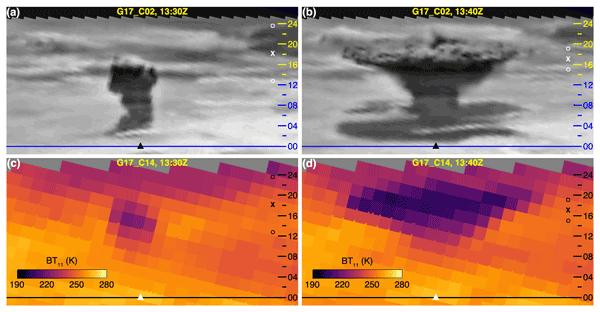
Ákos Horváth, James L. Carr, Dong L. Wu, Julia Bruckert, Gholam Ali Hoshyaripour, and Stefan A. Buehler
Atmos. Chem. Phys., 22, 12311–12330, https://doi.org/10.5194/acp-22-12311-2022, https://doi.org/10.5194/acp-22-12311-2022, 2022
Short summary
Short summary
We estimate plume heights for the April 2021 La Soufrière daytime eruptions using GOES-17 near-limb side views and GOES-16–MODIS stereo views. These geometric heights are then compared with brightness-temperature-based radiometric height estimates to characterize the biases of the latter. We also show that the side view method can be applied to infrared imagery and thus nighttime eruptions, albeit with larger uncertainty.

Julia Bruckert, Gholam Ali Hoshyaripour, Ákos Horváth, Lukas O. Muser, Fred J. Prata, Corinna Hoose, and Bernhard Vogel
Atmos. Chem. Phys., 22, 3535–3552, https://doi.org/10.5194/acp-22-3535-2022, https://doi.org/10.5194/acp-22-3535-2022, 2022
Short summary
Short summary
Volcanic emissions endanger aviation and public health and also influence weather and climate. Forecasting the volcanic-plume dispersion is therefore a critical yet sophisticated task. Here, we show that explicit treatment of volcanic-plume dynamics and eruption source parameters significantly improves volcanic-plume dispersion forecasts. We further demonstrate the lofting of the SO2 due to a heating of volcanic particles by sunlight with major implications for volcanic aerosol research.
Ulrich Löhnert, Maike Ahlgrimm, Felix Ament, Jens Bange, Kjell zum Berge, Birger Bohn, Yann Büchau, Leonie Esters, Lars van Gelder, Yohanes R. S. Ginting, Luise Helmstreit, Tobias Marke, Marcus G. Müller, Patrizia Ney, Anika Obermann-Hellhund, Andreas Platis, Bernhard Pospichal, Alexander Pschera, Anja Rapmund, Mirjana Sakradzija, Martin Schön, Jan H. Schween, Maria Toporov, and Andreas Wieser
Earth Syst. Sci. Data Discuss., https://doi.org/10.5194/essd-2026-784, https://doi.org/10.5194/essd-2026-784, 2026
Preprint under review for ESSD
Short summary
Short summary
Accurate weather forecasts require detailed measurements of temperature, humidity and wind. During a two-week campaign in Germany, we tested innovative instruments against established measurement techniques and satellite observations. Most ground-based instruments met international performance requirements and successfully captured daily atmospheric changes. The publicly available dataset supports improved weather forecasting and the development of future weather observation networks.
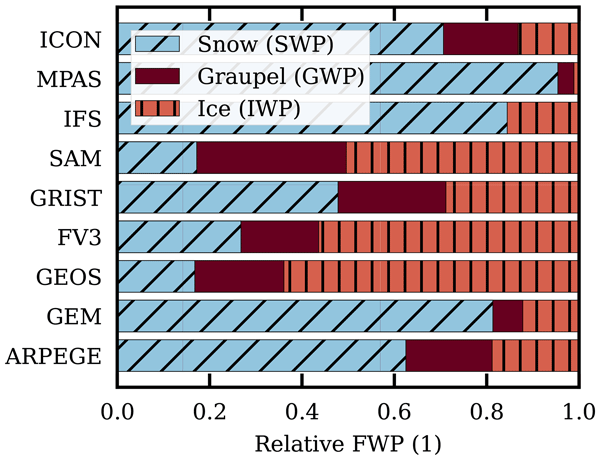
Patrick Eriksson, Alejandro Baró Pérez, Nils Müller, Hanna Hallborn, Eleanor May, Manfred Brath, Stefan A. Buehler, and Luisa Ickes
Atmos. Chem. Phys., 26, 2741–2768, https://doi.org/10.5194/acp-26-2741-2026, https://doi.org/10.5194/acp-26-2741-2026, 2026
Short summary
Short summary
Our study shows that accurately representing atmospheric ice mass remains a major challenge. We compared climate models to satellite data, finding that conventional models consistently underestimate the amount of ice. While new, higher-resolution models perform better, both models and observations still have significant discrepancies. These shortcomings limit our confidence in cloud-related climate feedbacks, which are critical for our predictions of the future climate.
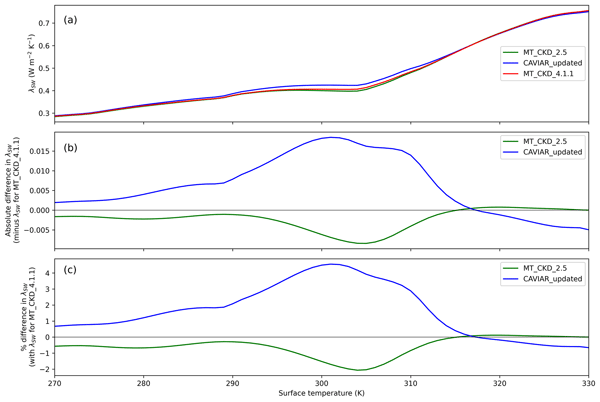
Kaah P. Menang, Stefan A. Buehler, Lukas Kluft, Robin J. Hogan, and Florian E. Roemer
Atmos. Chem. Phys., 25, 11689–11701, https://doi.org/10.5194/acp-25-11689-2025, https://doi.org/10.5194/acp-25-11689-2025, 2025
Short summary
Short summary
We investigated the impact of the shortwave water vapour continuum absorption on clear-sky shortwave radiative feedback. For current temperatures, the impact is modest (<2%). In a warmer world, continuum-induced uncertainty in estimated feedback would be up to ~5%. Representing continuum absorption with the widely used semi-empirical model in radiative transfer calculations leads to an underestimation of this feedback. Constraining the shortwave continuum will help reduce these discrepancies.
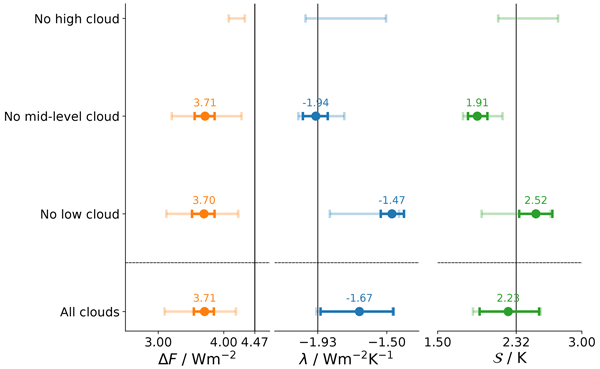
Lukas Kluft, Bjorn Stevens, Manfred Brath, and Stefan A. Buehler
Atmos. Chem. Phys., 25, 9075–9084, https://doi.org/10.5194/acp-25-9075-2025, https://doi.org/10.5194/acp-25-9075-2025, 2025
Short summary
Short summary
Using a single-column model, we investigate the effect of the vertical distribution of clouds on climate sensitivity. We show that, depending on their height, clouds can mask or unmask the radiative response of the clear-sky atmosphere. Our single-column model yields an all-sky climate sensitivity of 2.2 K, slightly less than the clear-sky value. This value can be interpreted as a baseline to which changes in surface albedo and an assumed reduction in cloud albedo would add.
Leandro Alex Moreira Viscardi, Giuseppe Torri, David K. Adams, and Henrique de Melo Jorge Barbosa
Atmos. Chem. Phys., 24, 8529–8548, https://doi.org/10.5194/acp-24-8529-2024, https://doi.org/10.5194/acp-24-8529-2024, 2024
Short summary
Short summary
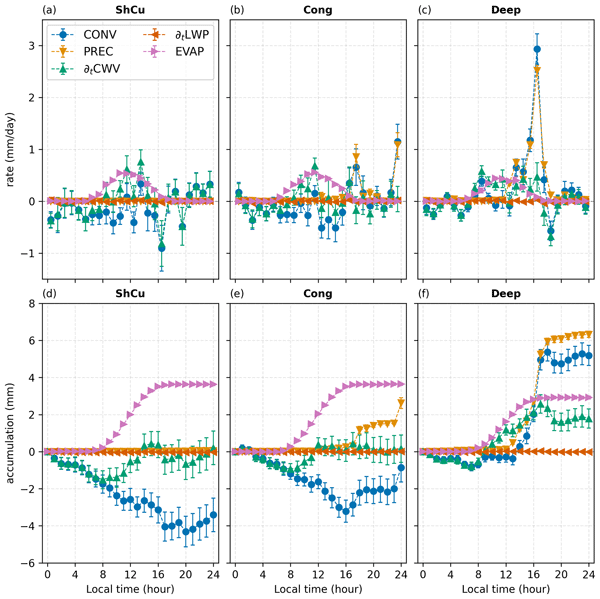
We evaluate the environmental conditions that control how clouds grow from fair weather cumulus into severe thunderstorms during the Amazonian wet season. Days with rain clouds begin with more moisture in the air and have strong convergence in the afternoon, while precipitation intensity increases with large-scale vertical velocity, moisture, and low-level wind. These results contribute to understanding how clouds form over the rainforest.
Marc Prange, Stefan A. Buehler, and Manfred Brath
Atmos. Chem. Phys., 23, 725–741, https://doi.org/10.5194/acp-23-725-2023, https://doi.org/10.5194/acp-23-725-2023, 2023
Short summary
Short summary
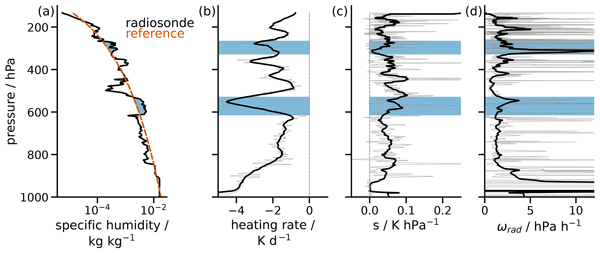
We investigate the representation of elevated moist layers (EMLs) in two satellite retrieval products and ERA5 reanalysis. EMLs occur in the vicinity of tropical convective storms and are thought to have an impact on their evolution through radiative heating. We provide a first dedicated assessment of EMLs in long-term data products in terms of moist layer strength, vertical thickness and altitude by comparing to collocated radiosondes over the western Pacific, a region where EMLs often occur.
Lei Shi, Carl J. Schreck III, Viju O. John, Eui-Seok Chung, Theresa Lang, Stefan A. Buehler, and Brian J. Soden
Atmos. Meas. Tech., 15, 6949–6963, https://doi.org/10.5194/amt-15-6949-2022, https://doi.org/10.5194/amt-15-6949-2022, 2022
Short summary
Short summary
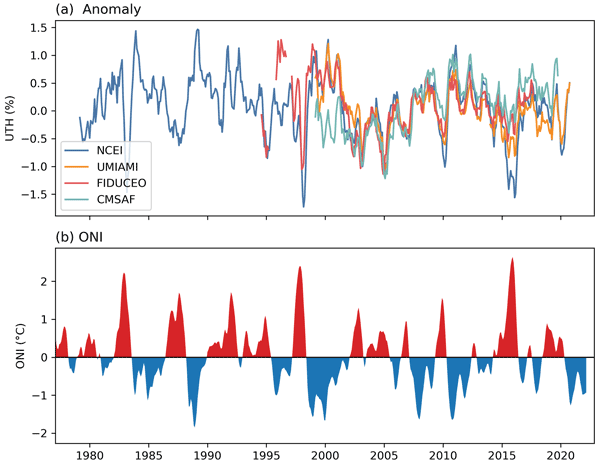
Four upper tropospheric humidity (UTH) datasets derived from satellite microwave and infrared sounders are evaluated to assess their consistency as part of the activities for the Global Energy and Water Exchanges (GEWEX) water vapor assessment project. The study shows that the four datasets are consistent in the interannual temporal and spatial variability of the tropics. However, differences are found in the magnitudes of the anomalies and in the changing rates during the common period.
Ákos Horváth, James L. Carr, Dong L. Wu, Julia Bruckert, Gholam Ali Hoshyaripour, and Stefan A. Buehler
Atmos. Chem. Phys., 22, 12311–12330, https://doi.org/10.5194/acp-22-12311-2022, https://doi.org/10.5194/acp-22-12311-2022, 2022
Short summary
Short summary
We estimate plume heights for the April 2021 La Soufrière daytime eruptions using GOES-17 near-limb side views and GOES-16–MODIS stereo views. These geometric heights are then compared with brightness-temperature-based radiometric height estimates to characterize the biases of the latter. We also show that the side view method can be applied to infrared imagery and thus nighttime eruptions, albeit with larger uncertainty.
Theresa Mieslinger, Bjorn Stevens, Tobias Kölling, Manfred Brath, Martin Wirth, and Stefan A. Buehler
Atmos. Chem. Phys., 22, 6879–6898, https://doi.org/10.5194/acp-22-6879-2022, https://doi.org/10.5194/acp-22-6879-2022, 2022
Short summary
Short summary
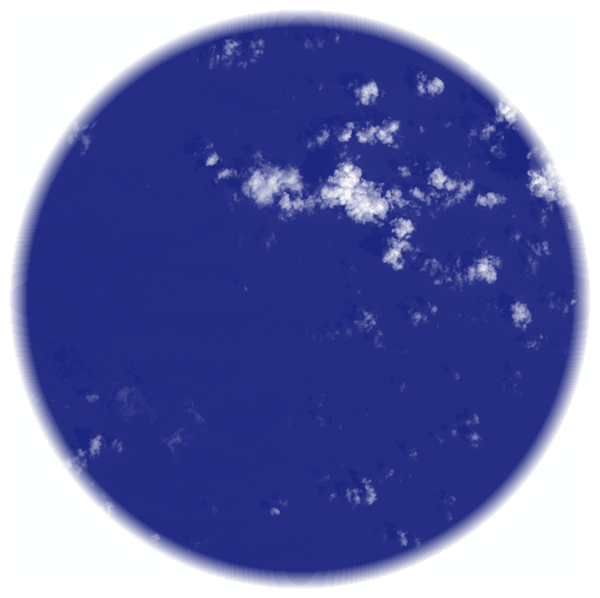
The trades are home to a plethora of small cumulus clouds that are often barely visible to the human eye and difficult to detect with active and passive remote sensing methods. With the help of a new method and by means of high-resolution data we can detect small and particularly thin clouds. We find that optically thin clouds are a common phenomenon in the trades, covering a large area and influencing the radiative effect of clouds if they are undetected and contaminate the cloud-free signal.
Julia Bruckert, Gholam Ali Hoshyaripour, Ákos Horváth, Lukas O. Muser, Fred J. Prata, Corinna Hoose, and Bernhard Vogel
Atmos. Chem. Phys., 22, 3535–3552, https://doi.org/10.5194/acp-22-3535-2022, https://doi.org/10.5194/acp-22-3535-2022, 2022
Short summary
Short summary
Volcanic emissions endanger aviation and public health and also influence weather and climate. Forecasting the volcanic-plume dispersion is therefore a critical yet sophisticated task. Here, we show that explicit treatment of volcanic-plume dynamics and eruption source parameters significantly improves volcanic-plume dispersion forecasts. We further demonstrate the lofting of the SO2 due to a heating of volcanic particles by sunlight with major implications for volcanic aerosol research.
Simon Pfreundschuh, Stuart Fox, Patrick Eriksson, David Duncan, Stefan A. Buehler, Manfred Brath, Richard Cotton, and Florian Ewald
Atmos. Meas. Tech., 15, 677–699, https://doi.org/10.5194/amt-15-677-2022, https://doi.org/10.5194/amt-15-677-2022, 2022
Short summary
Short summary
We test a novel method to remotely measure ice particles in clouds. This is important because such measurements are required to improve climate and weather models. The method combines a radar with newly developed sensors measuring microwave radiation at very short wavelengths. We use observations made from aircraft flying above the cloud and compare them to real measurements from inside the cloud. This works well given that one can model the ice particles in the cloud sufficiently well.
Cited articles
Abyssius (@abyssius2838): Volcano Eruption in Papua New Guinea, YouTube [video], available at: https://youtu.be/BUREX8aFbMs (last access: 4 July 2026), 2014.
Adushkin, V. V., Rybnov, Y. S., and Spivak A. A.: Geophysical effects of the eruption of Hunga-Tonga-Hunga-Ha'apai Volcano on January 15, 2022, Dokl. Earth Sci., 504, 362–367, https://doi.org/10.1134/s1028334X22060034, 2022.
afarTV (@afartv): Nov 24, 2025: Lava, Shockwave, Pyroclastic Flow at Fuego Volcano, Guatemala, YouTube [video], available at: https://youtu.be/eRJOIzZg78o (last access: 4 July 2026), 2025.
APARC: The Hunga Volcanic Eruption Atmospheric Impacts Report, edited by: Yunqian Z., Mann, G., Newman, P. A., and Randel, W., APARC Report No. 11, WCRP Report No. 10/2025, https://doi.org/10.34734/FZJ-2025-05237, https://aparc-climate.org/publications/aparc-report-no-11/ (last access: 18 November 2026), 2025.
ArchiveRandom (@ArhiveRandom): Volcanic Shockwave from Mt. Dukono in Indonesia, YouTube [video], https://youtube.com/watch?v=Eru3_hf61RY (last access: 4 July 2026), 2025.
ASOS: Index of /data/automated-surface-observing-system-one-minute-pg2/, National Centers for Environmental Information (NCEI), https://www.ncei.noaa.gov/access/search/datasets/auto-surf-obs-sys-1-min-pg2/ (last access: 18 November 2026),
atomcentral (@atomcentral): Crossroads Baker, YouTube [video], https://youtu.be/gy6-ZKWCoH0 (last access: 4 July 2026), 2016.
Barnaboule69: Very rare video of the ash plume from the 2022 Hunga Tonga eruption seen at ocean level, Reddit/ r/Volcanoes [video], https://www.reddit.com/r/Volcanoes/s/iJXM6U60MG (last access: 4 July 2026), 2022.
Bonner, J., Waxler, R., Gitterman, Y., and Hofstetter, R.: Seismo-acoustic energy partitioning at near-source and local distances from the 2011 Sayarim explosions in the Negev Desert, Israel, Bull. Seismol. Soc. Am., 103, 741–758, https://doi.org/10.1785/0120120181, 2013.
Bretherton, F. P.: Lamb waves in a nearly isothermal atmosphere, Q. J. R. Meteorol. Soc, 95, 754–757, https://doi.org/10.1002/qj.49709540608, 1969.
Britannica Editors: Krakatoa | Volcano, Geology, Eruptions, & Anak Krakatau | Britannica, Encyclopedia Britannica, https://www.britannica.com/place/Krakatoa (last access: 4 July 2026), 2026.
Brune, J. N., Nafe, J. E., and Alsop, L. E.: The polar phase shift of surface waves on a sphere, Bull. Seismol. Soc. Am., 51, 247–257, https://doi.org/10.1785/BSSA0510020247, 1961.
Carpenter, E., Harwood, G., and Whiteside, T.: Microbarograph records from the Russian large nuclear explosions, Nature, 192, 857, https://doi.org/10.1038/192857a0, 1961.
Carr, J. L., Horváth, Á., Wu, D. L., and Friberg, M. D.: Stereo plume height and motion retrievals for the record-setting Hunga Tonga-Hunga Ha'apai eruption of 15 January 2022, Geophys. Res. Lett., 49, e2022GL098131, https://doi.org/10.1029/2022GL098131, 2022.
Chen, H., Zhang, D., Carton, J., and Atlas, R.: On the rapid intensification of Hurricane Wilma (2005). Part I: Model prediction and structural changes, Wea. Forecasting, 26, 885–901, https://doi.org/10.1175/WAF-D-11-00001.1, 2011.
Coleman, K. D., Project Officers, and Commanders of Task Units: Operation CASTLE. Summary Report of the Commander, Task Unit 13. Military Effects, Programs 1–9, Defense Technical Information Center (DTIC), Report No. WT-934 / Accession ID: ADA995123, https://rminucleardocs.icaad.ngo/en/entity/njum5hp2op/ (last access: 4 July 2026), 1954.
Czarnecki, A. J., Czarnecki, A., Secrist, R., and Willsey, J.: Shock Wave in the Beirut Explosion: Theory and Video Analysis, arXiv [preprint], https://doi.org/10.48550/arXiv.2510.24742, 2026.
Dalal, P., Kundu, B., Panda, J., and Jin, S.: Atmospheric Lamb wave pulse and volcanic explosivity index following the 2022 Hunga Tonga (South Pacific) eruption, Front. Earth Sci., 10:931545, https://doi.org/10.3389/feart.2022.931545, 2023.
Díaz, J. S.: Explosion analysis from images: Trinity and Beirut, Eur. J. Phys., 42, 035803, https://doi.org/10.1088/1361-6404/abe131, 2021.
Díaz, J. S. and Rigby, S. E.: Blast wave kinematics: theory, experiments, and applications, Shock Waves, 32, 405–415, https://doi.org/10.1007/s00193-022-01089-z, 2022a.
Díaz, J. S. and Rigby, S. E.: Energetic output of the 2022 Hunga Tonga–Hunga Ha`apai volcanic eruption from pressure measurements, Shock Waves, 32, 553–561, https://doi.org/10.1007/s00193-022-01092-4, 2022b.
Donn, W. L. and Ewing, M.: Atmospheric waves from nuclear explosions – Part II: The Soviet test of 30 October 1961, J. Atmos. Sci., 19, 264–273, https://doi.org/10.1175/1520-0469(1962)019<0264:AWFNEI>2.0.CO;2., 1962.
EUMETSAT: High Rate SEVIRI Level 1.5 Image Data – MSG – 0 degree, ID: EO:EUM:DAT:MSG:HRSEVIRI, EUMETSAT Data Store [data set], https://data.eumetsat.int/product/EO:EUM:DAT:MSG:HRSEVIRI (last access: 4 July 2026), 2009.
Evers, L. G. and Haak, H. W.: Listening to sounds from an exploding meteor and oceanic waves, Geophys. Res. Lett., 28, 4385–4388, https://doi.org/10.1029/2000GL011859, 2001.
Fee, D., Waxler, R., Assink, J., Gitterman, Y., Given, J., Coyne, J., Mialle, P., Garces, M., Drob, D., Kleinert, D., Hofstetter, R., and Grenard, P.: Overview of the 2009 and 2011 Sayarim infrasound calibration experiments, J. Geophys. Res.-Atmos., 118, 6122–6143, https://doi.org/10.1002/jgrd.50398, 2013.
Gabrielson, T. B.: Krakatoa and The Royal Society: The Krakatoa explosion of 1883, Acoustics Today, 6, 14–19, https://acousticstoday.org/issues/2010AT/Apr2010/ (last access: 4 July 2026), 2010.
Garrett, C. J. R.: Atmospheric edge waves, Q. J. R. Meteorol. Soc., 95, 731–753, https://doi.org/10.1002/qj.49709540607, 1969.
Genco, R., Ripepe, M., Marchetti, E., Bonadonna, C., and Biass, S.: Acoustic wavefield and Mach wave radiation of flashing arcs in strombolian explosion measured by image luminance, Geophys. Res. Lett., 41, 7135–7142, https://doi.org/10.1002/2014GL061597, 2014.
GOES-R: GOES-R Calibration Working Group and GOES-R Series Program, NOAA GOES-R Series Advanced Baseline Imager (ABI) Level 1b Radiances [data set], https://doi.org/10.7289/V5BV7DSR, 2017.
Gupta, A. K., Bennartz, R., Fauria, K .E., and Mittal, T.: Eruption chronology of the December 2021 to January 2022 Hunga Tonga-Hunga Ha'apai eruption sequence, Commun. Earth Environ., 3, 314, https://doi.org/10.1038/s43247-022-00606-3, 2022.
Gusman, A. R. and Tanioka, Y.: Atmospheric Lamb wave inversion from the 2022 Hunga Tonga–Hunga Ha'apai eruption for tsunami prediction, Geosci. Lett., 12, 32, https://doi.org/10.1186/s40562-025-00404-7, 2025.
Harding, B. J., Wu, Y.-J. J., Alken, P., Yamazaki, Y., Triplett, C. C., Immel, T. J., Gasque, L. C, Mende, S. B., and Xiong, C.: Impacts of the January 2022 Tonga volcanic eruption on the ionospheric dynamo: ICON-MIGHTI and swarm observations of extreme neutral winds and currents, Geophys. Res. Lett., 49, e2022GL098577, https://doi.org/10.1029/2022GL098577, 2022.
Harkrider, D. and Press, F.: The Krakatoa air-sea waves: An example of pulse propagation in coupled systems, Geophys. J. Int., 13, 149–159, https://doi.org/10.1111/j.1365-246X.1967.tb02150.x, 1967.
Hoarau, K.: Supertyphoon Forrest (September 1983): The overlooked record holder of intensification in 24, 36, and 48 h, Wea. Forecasting, 15, 357–360, https://doi.org/10.1175/1520-0434(2000)015<0357:SFSTOR>2.0.CO;2, 2000.
Holasek, R. E., Self, S., and Woods, A. W.: Satellite observations and interpretation of the 1991 Mount Pinatubo eruption plumes, J. Geophys. Res., 101, 27635–27655, https://doi.org/10.1029/96JB01179, 1996.
Horváth, Á., Vadas, S. L., Stephan, C. C., and Buehler, S. A.: One-minute resolution GOES-R observations of Lamb and gravity waves triggered by the Hunga Tonga-Hunga Ha'apai eruptions on 15 January 2022, J. Geophys. Res.-Atmos., 129, e2023JD039329, https://doi.org/10.1029/2023JD039329, 2024.
Horváth, Á., Adams, D. K., Liu, M., Sepúlveda, I., Sakradzija, M., and Buehler, S. A.: Transient darkening of low-level liquid clouds by the 2022 Hunga Lamb wave observed in GOES-R imagery, Geophys. Res. Lett., 52, e2025GL115935, https://doi.org/10.1029/2025GL115935, 2025.
Horváth, Á., Adams, D. K., Diaz, J. S., Rigby, S., Buehler, S. A., and Sakradzija, M.: Animations, video footage, and Coconut Point pressure data for “Measurement report: Geostationary satellite and ground-based video observations of cloud brightness variations triggered by the 2022 Hunga Lamb wave”, Zenodo [video supplement], https://doi.org/10.5281/zenodo.20591199, 2026.
Kinney, G. F. and K. J. Graham: Explosive Shocks in Air, 2nd edn., Springer-Verlag, New York, NY, https://doi.org/10.1007/978-3-642-86682-1, 1985.
Korea Meteorological Administration: Geo-KOMPSAT-2A (GK2A) Advanced Meteorological Imager (AMI) Meteorological Satellite Data, KMA Weather Data Open Portal [data set], https://data.kma.go.kr/data/rmt/rmtList.do?code=21&pgmNo=683 (last access: 4 July 2026), 2019.
Kubota, T., Saito, T., and Nishida, K.: Global fast-traveling tsunamis driven by atmospheric Lamb waves on the 2022 Tonga eruption, Science, 377, 91–94, https://doi.org/10.1126/science.abo4364, 2022.
Lamb, H.: Hydrodynamics, 6th edn., Dover Publications, New York, NY, https://archive.org/details/hydrodynamics00lamb (last access: 4 July 2026), 1932.
Le Pichon, A., Blanc, E., and Hauchecorne, A. (Eds.): Infrasound Monitoring for Atmospheric Studies, 2nd edn., Springer Cham, https://doi.org/10.1007/978-3-319-75140-5, 2019.
Lindzen, R. S. and Blake, D.: Lamb waves in the presence of realistic distributions of temperature and dissipation, J. Geophys. Res., 77, 2166–2176, https://doi.org/10.1029/JC077i012p02166, 1972.
MacDonald, B. M. (@MolisiDelmar): Extended footage – Tongas Jan15th volcanic eruption Hunga Tonga Hunga Ha'apai as seen from the ground, YouTube [video], https://youtu.be/3US-AxvGfE4 (last access: 4 July 2026), 2022.
MacFerrin, M., Amante, C., Carignan, K., Love, M., and Lim, E.: The Earth Topography 2022 (ETOPO 2022) global DEM dataset, Earth Syst. Sci. Data, 17, 1835–1849, https://doi.org/10.5194/essd-17-1835-2025, 2025.
Mastin, L. G., Van Eaton, A. R., and Cronin, S. J.: Did steam boost the height and growth rate of the giant Hunga eruption plume?, Bull. Volcanol., 86, 64, https://doi.org/10.1007/s00445-024-01749-1, 2024.
Matoza, R. S., Fee, D., Assink, J. D., Iezzi, A. M., Green, D. N., Kim, K., Toney, L., Lecocq, T., Krishnamoorthy, S., Lalande, J.-M., Nishida, K., Gee, K. L., Haney, M. M., Ortiz, H. D., Brissaud, Q., Martire, L., Rolland, L., Vergados, P., Nippress, A., Park, J., Shani-Kadmiel, S., Witsil, A., Arrowsmith, S., Caudron, C., Watada, S., Perttu, A. B., Taisne, B., Mialle, P., Le Pichon, A., Vergoz, J., Hupe, P., Blom, P. S., Waxler, R., De Angelis, S., Snively, J. B., Ringler, A. T., Anthony, R. E., Jolly, A. D., Kilgour, G., Averbuch, G., Ripepe, M., Ichihara, M., Arciniega-Ceballos, A., Astafyeva, E., Ceranna, L., Cevuard, S., Che, I.-Y., De Negri, R., Ebeling, C. W., Evers, L. G., Franco-Marin, L. E., Gabrielson, T. B., Hafner, K., Harrison, R. G., Komjathy, A., Lacanna, G., Lyons, J., Macpherson, K. A., Marchetti, E., McKee, K. F., Mellors, R. J., Mendo-Pérez, G., Mikesell, T. D., Munaibari, E., Oyola-Merced, M., Park, I., Pilger, C., Ramos, C., Ruiz, M. C., Sabatini, R., Schwaiger, H. F., Tailpied, D., Talmadge, C., Vidot, J., Webster, J., and Wilson, D. C.: Atmospheric waves and global seismoacoustic observations of the January 2022 Hunga eruption, Tonga, Science, 377, 95–100, https://doi.org/10.1126/science.abo7063, 2022.
McCorkel, J., Van Naarden, J., Lindsey, D., Efremova, B., Coakley, M., Black, M., and Krimchansky, A.: GOES-17 advanced baseline imager performance recovery summary, In Proceedings of IGARSS 2019 – IEEE International Geoscience and Remote Sensing Symposium, https://doi.org/10.1109/igarss40859.2019.9044466, 2019.
McNutt, S. R., Williams, E. R., Spera, F. J., and Scruggs, M. A.: Estimates of condensed water in and energetics of the Hunga volcanic plume on 15 January 2022, Bull. Volcanol., 88, 67, https://doi.org/10.1007/s00445-026-01978-6, 2026.
Millán, L., Santee, M. L., Lambert, A., Livesey, N. J., Werner, F., Schwartz, M. J., Pumphrey, H. C., Manney, G. L., Wang, Y., Su, H., Wu, L., Read, W. G., and Froidevaux, L.: The Hunga Tonga-Hunga Ha'apai hydration of the stratosphere, Geophys. Res. Lett., 49, e2022GL099381, https://doi.org/10.1029/2022GL099381, 2022.
Nairn, I. A.: Atmospheric shock waves and condensation clouds from Ngauruhoe explosive eruptions, Nature, 259, 190–192, https://doi.org/10.1038/259190a0, 1976.
NOAA: NOAA National Weather Service, U.S. Federal Aviation Administration, U.S. Department of Defense, NOAA National Centers for Environmental Information, 1-Minute Page 2 Surface Weather Observations from the Automated Surface Observing Systems (ASOS) Network, NCEI DSI 6406_02 [data set], https://www.ncei.noaa.gov/access/search/datasets/auto-surf-obs-sys-1-min-pg2/ (last access: 4 July 2026), 2005.
Otsuka, S.: Visualizing Lamb waves from a volcanic eruption using meteorological satellite Himawari-8, Geophys. Res. Lett., 49, e2022GL098324, https://doi.org/10.1029/2022GL098324, 2022.
Pekeris, C. L.: Atmospheric oscillations, Proc. R. Soc. Lond. A, 158A, 650–671, https://doi.org/10.1098/rspa.1937.0046, 1937.
Pekeris, C. L.: The propagation of a pulse in the atmosphere, Proc. R. Soc. Lond. A, 171, 434–449, https://doi.org/10.1098/rspa.1939.0076, 1939.
Pekeris, C. L.: The propagation of a pulse in the atmosphere, Part II, Phys. Rev., 73, 145–154, https://doi.org/10.1103/PhysRev.73.145, 1948.
Prata, A. T., Grainger, R. G., Taylor, I. A., and Lambert, A.: Transient ice ring observed during the 15 January 2022 eruption of Hunga volcano, Commun. Earth Environ., 6, 901, https://doi.org/10.1038/s43247-025-02875-0, 2025.
Proud, S. R., Prata, A. T., and Schmauss, S.: The January 2022 eruption of Hunga Tonga-Hunga Ha'apai volcano reached the mesosphere, Science, 378, 554–557, https://doi.org/10.1126/science.abo4076, 2022.
Purkis, S. J., Ward, S. N., Fitzpatrick, N. M., Garvin, J. B., Slayback, D., Cronin, S. J., Palaseanu-Lovejoy, M., and Dempsey, A.: The 2022 Hunga-Tonga megatsunami: Near-field simulation of a once-in-a-century event, Sci. Adv., 9, eadf5493, https://doi.org/10.1126/sciadv.adf5493, 2023.
Reed, J. W.: Air pressure waves from Mount St. Helens eruptions, J. Geophys. Res., 92, 11979–11992, https://doi.org/10.1029/JD092iD10p11979, 1987.
Salby, M. L.: On the solution of the homogeneous vertical structure problem for long-period oscillations, J. Atmos. Sci., 36, 2350–2359, https://doi.org/10.1175/1520-0469(1979)036<2350:OTSOTH>2.0.CO;2, 1979.
Schindelin, J., Arganda-Carreras, I., Frise, E., Kaynig, V., Longair, M., Pietzsch, T., Preibisch, S., Rueden, C., Saalfeld, S., Schmid, B., Tinevez, J. Y., White, D. J., Hartenstein, V., Eliceiri, K., Tomancak, P., and Cardona, A.: Fiji: an open-source platform for biological-image analysis, Nat. Methods, 9, 676–682, https://doi.org/10.1038/nmeth.2019, 2012.
Sedov, L. I.: Similarity and Dimensional Methods in Mechanics, 10th edn., CRC Press, Boca Raton, FL, https://doi.org/10.1201/9780203739730, 1993.
Sepúlveda, I., Carvajal, M., and Agnew, D. C.: Global winds shape planetary-scale Lamb waves, Geophys. Res. Lett., 50, e2023GL106097, https://doi.org/10.1029/2023GL106097, 2023.
Sublette, C.: Big Ivan, The Tsar Bomba, Nuclear weapon archive, https://nuclearweaponarchive.org/Russia/TsarBomba.html (last access 4 July 2026), 2007.
Symons, G. J. (Ed.): The Eruption of Krakatoa, and Subsequent Phenomena: Report of the Krakatoa Committee of the Royal Society, Trübner & Co., London, https://archive.org/details/eruptionkrakato00whipgoog (last access: 4 July 2026), 1888.
Tahira, M., Nomura, M., Sawada, Y., and Kamo, K.: Infrasonic and acoustic-gravity waves generated by the Mount Pinatubo eruption of June 15, 1991, in: Fire and mud: Eruptions and lahars of Mount Pinatubo, Philippines, edited by: Newhall, C. G. and Punongbayan, R. S (Eds.), University of Washington Press, Seattle, London, https://pubs.usgs.gov/pinatubo/tahira/ (last access: 4 July 2026), 1996.
Taylor, G. I.: The formation of a blast wave by a very intense explosion. – II. The atomic explosion of 1945, Proc. R. Soc. Lond. A, 201, 175–186, https://doi.org/10.1098/rspa.1950.0050, 1950.
The GIMP Development Team: GIMP – GNU Image Manipulation Program, Version 3.2.4, Community Free Software (license GPLv3) [code], https://gimp.org/ (last access: 4 July 2026), 2026.
Tölle, M. H. and Krueger, S. K.: Effects of entrainment and mixing on droplet size distributions in warm cumulus clouds, J. Adv. Model. Earth Syst., 6, 281–299, https://doi.org/10.1002/2012MS000209, 2014.
Vadas, S. L., Figueiredo, C., Becker, E., Huba, J. D., Themens, D. R., Hindley, N. P., Mrak, S., Galkin, I., and Bossert, K.: Traveling ionospheric disturbances induced by the secondary gravity waves from the Tonga eruption on 15 January 2022: Modeling with MESORAC/HIAMCM/Sami3 and comparison with GPS/TEC and ionosonde data, J. Geophys. Res. Space Phys., 128, e2023JA031408, https://doi.org/10.1029/2023JA031408, 2023.
Várnai T., Marshak A., and Kostinski, A.: Statistics of glinting clouds observed by DSCOVR and geostationary satellites, Front. Remote Sens., 6, 1696519, https://doi.org/10.3389/frsen.2025.1696519, 2026.
Vergoz, J., Hupe, P., Listowski, C., Le Pichon, A., Garcés, M. A., Marchetti, E., Labazuy, P., Ceranna, L., Pilger, C., Gaebler, P., Näsholm, S. P., Brissaud, Q., Poli, P., Shapiro, N., De Negri, R., and Mialle, P.: IMS observations of infrasound and acoustic-gravity waves produced by the January 2022 volcanic eruption of Hunga, Tonga: A global analysis, Earth Planet. Sci. Lett., 591, 117639, https://doi.org/10.1016/j.epsl.2022.117639, 2022.
von Neumann, J.: The point source solution, In: Collected Works, Vol. VI.: Theory of Games, Astrophysics, Hydrodynamics and Meteorology, Pergamon Press, New York, NY, 219–237, https://z-library.sk/book/VJvekNawRE/collected-works-vol-6-theory-of-games-astrophysics (last access: 8 October 2026), 1963.
Waltz, R. E.: Wilson cloud formation by low-altitude nuclear explosions, J. Fluid Mech., 85, 787–794, https://doi.org/10.1017/S0022112078000932, 1978.
Watada, S. and Kanamori, H.: Acoustic resonant oscillations between the atmosphere and the solid earth during the 1991 Mt. Pinatubo eruption, J. Geophys. Res.-Solid Earth, 115, B12319, https://doi.org/10.1029/2010JB007747, 2010.
Watanabe, S., Hamilton, K., Sakazaki, T., and Nakano, M.: First detection of the Pekeris internal global atmospheric resonance: Evidence from the 2022 Tonga eruption and from global reanalysis data, J. Atmos. Sci., 79, 3027–3043, https://doi.org/10.1175/JAS-D-22-0078.1, 2022.
Watada, S., Imanishi, Y., and Tanaka, K.: Detection of air temperature and wind changes synchronized with the Lamb wave from the 2022 Tonga volcanic eruption, Geophys. Res. Lett., 50, e2022GL100884, https://doi.org/10.1029/2022GL100884, 2023.
Wellerstein, A.: An unearthly spectacle: The untold story of the world's biggest nuclear bomb, Bull. At. Sci., https://thebulletin.org/2021/11/the-untold-story-of-the-worlds-biggest-nuclear-bomb/ (last access: 4 July 2026), 2021.
Whitham, G. B.: The flow pattern of a supersonic projectile, Comm. Pure Appl. Math., 5, 301–348, https://doi.org/10.1002/cpa.3160050305, 1952.
Wielandt, E.: First-order asymptotic theory of the polar phase shift of Rayleigh waves, Pure Appl. Geophys., 118, 1214–1227, https://doi.org/10.1007/BF01593062, 1980.
Wright, C. J., Hindley, N. P., Alexander, M. J., Barlow, M., Hoffmann, L., Mitchell, C. N., Prata, F., Bouillon, M., Carstens, J., Clerbaux, C., Osprey, S. M., Powell, N., Randall, C. E., and Yue, J.: Surface-to-space atmospheric waves from Hunga Tonga–Hunga Ha'apai eruption, Nature, 609, 741–746, https://doi.org/10.1038/s41586-022-05012-5, 2022.
Yokoyama, I.: A geophysical interpretation of the 1883 Krakatau eruption, J. Volcanol. Geotherm. Res., 9, 359–378, https://doi.org/10.1016/0377-0273(81)90044-5, 1981.
Zéhil, G. P.: Investigating the blast shielding effect of the Beirut silos, Shock Waves, 34, 227–235, https://doi.org/10.1007/s00193-024-01189-y, 2024.
Editorial statement
The manuscript describes the Hunga volcano, an event that was observed by satellites around the world, The study combines ground-based videos, surface pressure records, and geostationary satellite imagery. It connects rapid cloud evaporation and condensation to a globe-circling pressure wave whose effects on cloud brightness remained detectable for approximately six days. By connecting data sets, a multi-scale observational link is provided that advances our understanding of the connection of atmospheric dynamics to clouds. The originality of the analysis sets a new benchmark for how we study acoustic-gravity wave impacts on clouds.
The manuscript describes the Hunga volcano, an event that was observed by satellites around the...
Short summary
The 2022 Hunga eruption generated a fast-moving pressure wave, warming and cooling the air, as it rippled through Earth’s atmosphere. Video footage and satellite imagery reveal that these temperature variations periodically darkened and brightened liquid clouds as they shrank and expanded due to evaporation and condensation. Cloud brightness variations caused by the Hunga pressure wave remained globally detectable in satellite imagery for approximately six days after the eruption.
The 2022 Hunga eruption generated a fast-moving pressure wave, warming and cooling the air, as...


Altmetrics
Final-revised paper
Preprint