
Articles | Volume 26, issue 22
https://doi.org/10.5194/acp-26-16125-2026
© Author(s) 2026. This work is distributed under
the Creative Commons Attribution 4.0 License.
the Creative Commons Attribution 4.0 License.
https://doi.org/10.5194/acp-26-16125-2026
© Author(s) 2026. This work is distributed under
the Creative Commons Attribution 4.0 License.
the Creative Commons Attribution 4.0 License.
Research article
| 
16 Nov 2026
Research article |
| 16 Nov 2026
| 16 Nov 2026
Physics-constrained inverse neural estimation (PINE) of NOx emission spatial patterns from TROPOMI NO2 columns over the North China Plain
Yinan Wang
Key Laboratory of Middle Atmosphere and Global Environment Observation, Institute of Atmospheric Physics, Chinese Academy of Sciences, Beijing, China

Institute of Urban Meteorology, China Meteorological Administration (CMA), Beijing, China
Daren Lyu
Key Laboratory of Middle Atmosphere and Global Environment Observation, Institute of Atmospheric Physics, Chinese Academy of Sciences, Beijing, China
Related authors
Yongheng Bi, Yinan Wang, Rui Qi, Linjun Pan, Ming Li, Yufang Tian, Wei Zhao, Juan Huo, and Daren Lyu
EGUsphere, https://doi.org/10.5194/egusphere-2026-5816, https://doi.org/10.5194/egusphere-2026-5816, 2026
This preprint is open for discussion and under review for Atmospheric Measurement Techniques (AMT).
Short summary
Short summary
Clouds over the Tibetan Plateau are difficult to observe continuously, yet they strongly influence weather, water, and climate. We developed and tested a ground-based system combining two cloud radars with a thermal infrared radiometer. Long-term observations show reliable operation and high sensitivity to weak clouds, while synchronized measurements provide complementary views of cloud structure and thermal emission. The system supports studies of clouds and precipitation over the plateau.
Yinan Wang, Hongxia Cui, Wei Zhao, Yongheng Bi, Tianqi Wang, and Daren Lu
Earth Syst. Sci. Data Discuss., https://doi.org/10.5194/essd-2026-552, https://doi.org/10.5194/essd-2026-552, 2026
Revised manuscript under review for ESSD
Short summary
Short summary
We present the first openly archived multi-year, multi-wavelength Raman-lidar aerosol dataset from the clean interior Tibetan Plateau (Yangbajing, 4284 m; 2021–2024): quality-controlled profiles of backscatter, extinction, depolarisation and water vapour, with uncertainties and flags. The pristine site makes aerosol largely detection-limited. It gives a ground-truth reference for spaceborne-lidar evaluation, reanalysis and model assessment, and dust and radiative studies over the Third Pole.
Tianle Zhang, Yaxin Xiang, Bingxing Zhu, Xiaohong Yao, Xuehua Fan, Yinan Wang, Yuntao Wang, Shuangling Chen, Shunyao Wang, Yan Zhang, Fei Chai, and Mei Zheng
Atmos. Chem. Phys., 26, 3001–3024, https://doi.org/10.5194/acp-26-3001-2026, https://doi.org/10.5194/acp-26-3001-2026, 2026
Short summary
Short summary
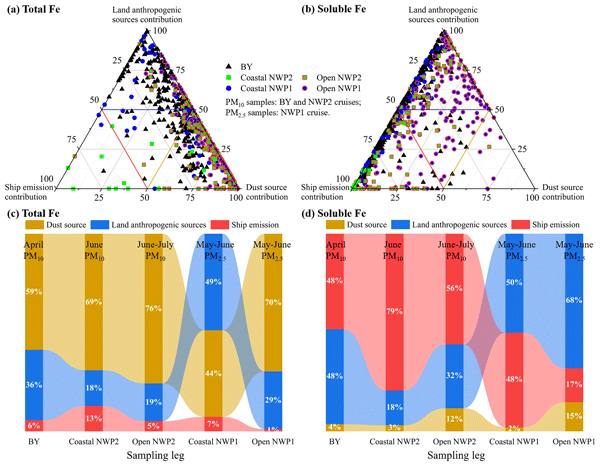
Based on high-time-resolution shipborne measurements, this study examines the sources of iron in aerosols over the Northwest Pacific. We found that non-dust emissions from ships and land-based activities contribute the majority of soluble iron capable of enhancing marine primary productivity, with particularly pronounced contributions in coastal regions and during the summer season. These findings provide improved insight into the influence of human activities on oceanic nutrient supply.
Linjun Pan, Yinan Wang, and Yongheng Bi
Atmos. Meas. Tech., 18, 6361–6370, https://doi.org/10.5194/amt-18-6361-2025, https://doi.org/10.5194/amt-18-6361-2025, 2025
Short summary
Short summary
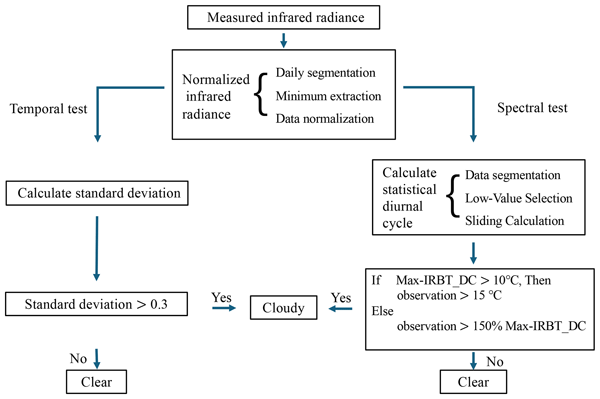
Ground-based infrared radiometers provide low-cost cloud monitoring. Existing methods require supporting data from other instruments – making them unusable in remote regions like the Tibetan Plateau. Our innovation enables fully independent cloud identification using only the radiometer's data. This self-contained solution eliminates dependencies on external equipment or historical datasets, providing a practical cloud monitoring method for isolated sites where conventional approaches fail.
Jingxuan Luo, Yubing Pan, Debin Su, Jinhua Zhong, Lingxiao Wu, Wei Zhao, Xiaoru Hu, Zhengchao Qi, Daren Lu, and Yinan Wang
Atmos. Meas. Tech., 17, 3765–3781, https://doi.org/10.5194/amt-17-3765-2024, https://doi.org/10.5194/amt-17-3765-2024, 2024
Short summary
Short summary
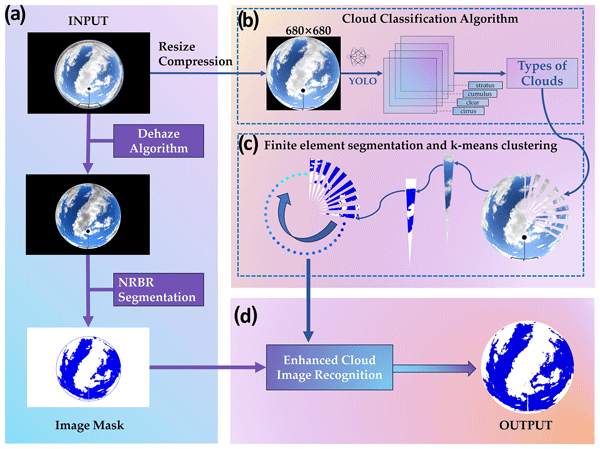
Accurate cloud quantification is critical for climate research. We developed a novel computer vision framework using deep neural networks and clustering algorithms for cloud classification and segmentation from ground-based all-sky images. After a full year of observational training, our model achieves over 95 % accuracy on four cloud types. The framework enhances quantitative analysis to support climate research by providing reliable cloud data.
Xue Wu, Lars Hoffmann, Corwin J. Wright, Neil P. Hindley, M. Joan Alexander, Silvio Kalisch, Xin Wang, Bing Chen, Yinan Wang, and Daren Lyu
EGUsphere, https://doi.org/10.5194/egusphere-2023-3008, https://doi.org/10.5194/egusphere-2023-3008, 2024
Preprint archived
Short summary
Short summary
This study identified a noteworthy time-lagged correlation between hurricane intensity and stratospheric gravity wave intensities during hurricane intensification. Meanwhile, the study reveals distinct frequencies, horizontal wavelengths, and vertical wavelengths in the inner core region during hurricane intensification, offering essential insights for monitoring hurricane intensity via satellite observations of stratospheric gravity waves.
Ze Chen, Yufang Tian, Yinan Wang, Yongheng Bi, Xue Wu, Juan Huo, Linjun Pan, Yong Wang, and Daren Lü
Atmos. Meas. Tech., 15, 4785–4800, https://doi.org/10.5194/amt-15-4785-2022, https://doi.org/10.5194/amt-15-4785-2022, 2022
Short summary
Short summary
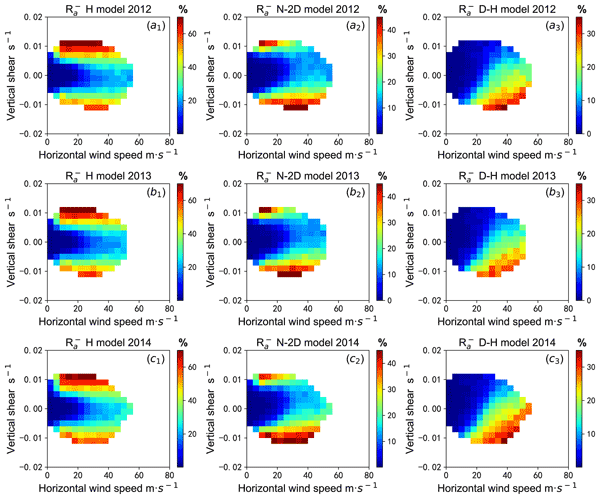
Small-scale turbulence plays a vital role in the vertical exchange of heat, momentum and mass in the atmosphere. There are currently three models that can use spectrum width data of MST radar to calculate turbulence parameters. However, few studies have explored the applicability of the three calculation models. We compared and analysed the turbulence parameters calculated by three models. These results can provide a reference for the selection of models for calculating turbulence parameters.
Yongheng Bi, Yinan Wang, Rui Qi, Linjun Pan, Ming Li, Yufang Tian, Wei Zhao, Juan Huo, and Daren Lyu
EGUsphere, https://doi.org/10.5194/egusphere-2026-5816, https://doi.org/10.5194/egusphere-2026-5816, 2026
This preprint is open for discussion and under review for Atmospheric Measurement Techniques (AMT).
Short summary
Short summary
Clouds over the Tibetan Plateau are difficult to observe continuously, yet they strongly influence weather, water, and climate. We developed and tested a ground-based system combining two cloud radars with a thermal infrared radiometer. Long-term observations show reliable operation and high sensitivity to weak clouds, while synchronized measurements provide complementary views of cloud structure and thermal emission. The system supports studies of clouds and precipitation over the plateau.
Yinan Wang, Hongxia Cui, Wei Zhao, Yongheng Bi, Tianqi Wang, and Daren Lu
Earth Syst. Sci. Data Discuss., https://doi.org/10.5194/essd-2026-552, https://doi.org/10.5194/essd-2026-552, 2026
Revised manuscript under review for ESSD
Short summary
Short summary
We present the first openly archived multi-year, multi-wavelength Raman-lidar aerosol dataset from the clean interior Tibetan Plateau (Yangbajing, 4284 m; 2021–2024): quality-controlled profiles of backscatter, extinction, depolarisation and water vapour, with uncertainties and flags. The pristine site makes aerosol largely detection-limited. It gives a ground-truth reference for spaceborne-lidar evaluation, reanalysis and model assessment, and dust and radiative studies over the Third Pole.
Xiaoxue Liu, Pengkun Ma, Yubing Pan, Qianqian Wang, Pengfei Tian, Lei Zhang, and Jiannong Quan
Atmos. Chem. Phys., 26, 9981–9995, https://doi.org/10.5194/acp-26-9981-2026, https://doi.org/10.5194/acp-26-9981-2026, 2026
Short summary
Short summary
Regional transport is a systemic environmental challenge governed by multiple processes. Observations from a unique 528-m tower in Beijing reveal that aerosols vary among air masses originating from different directions, influenced by regional emission sources and reactions during transport. A comparison of pollutants between the 528-m layer and ground level confirms that transported pollutants are mixed down to the surface during daytime, governed primarily by planetary boundary layer process.
Tianle Zhang, Yaxin Xiang, Bingxing Zhu, Xiaohong Yao, Xuehua Fan, Yinan Wang, Yuntao Wang, Shuangling Chen, Shunyao Wang, Yan Zhang, Fei Chai, and Mei Zheng
Atmos. Chem. Phys., 26, 3001–3024, https://doi.org/10.5194/acp-26-3001-2026, https://doi.org/10.5194/acp-26-3001-2026, 2026
Short summary
Short summary
Based on high-time-resolution shipborne measurements, this study examines the sources of iron in aerosols over the Northwest Pacific. We found that non-dust emissions from ships and land-based activities contribute the majority of soluble iron capable of enhancing marine primary productivity, with particularly pronounced contributions in coastal regions and during the summer season. These findings provide improved insight into the influence of human activities on oceanic nutrient supply.
Linjun Pan, Yinan Wang, and Yongheng Bi
Atmos. Meas. Tech., 18, 6361–6370, https://doi.org/10.5194/amt-18-6361-2025, https://doi.org/10.5194/amt-18-6361-2025, 2025
Short summary
Short summary
Ground-based infrared radiometers provide low-cost cloud monitoring. Existing methods require supporting data from other instruments – making them unusable in remote regions like the Tibetan Plateau. Our innovation enables fully independent cloud identification using only the radiometer's data. This self-contained solution eliminates dependencies on external equipment or historical datasets, providing a practical cloud monitoring method for isolated sites where conventional approaches fail.
Jingxuan Luo, Yubing Pan, Debin Su, Jinhua Zhong, Lingxiao Wu, Wei Zhao, Xiaoru Hu, Zhengchao Qi, Daren Lu, and Yinan Wang
Atmos. Meas. Tech., 17, 3765–3781, https://doi.org/10.5194/amt-17-3765-2024, https://doi.org/10.5194/amt-17-3765-2024, 2024
Short summary
Short summary
Accurate cloud quantification is critical for climate research. We developed a novel computer vision framework using deep neural networks and clustering algorithms for cloud classification and segmentation from ground-based all-sky images. After a full year of observational training, our model achieves over 95 % accuracy on four cloud types. The framework enhances quantitative analysis to support climate research by providing reliable cloud data.
Zhiheng Liao, Meng Gao, Jinqiang Zhang, Jiaren Sun, Jiannong Quan, Xingcan Jia, Yubing Pan, and Shaojia Fan
Atmos. Chem. Phys., 24, 3541–3557, https://doi.org/10.5194/acp-24-3541-2024, https://doi.org/10.5194/acp-24-3541-2024, 2024
Short summary
Short summary
This study collected 1897 ozonesondes from two Chinese megacities (Beijing and Hong Kong) in 2000–2022 to investigate the climatological vertical heterogeneity of lower-tropospheric ozone distribution with a mixing-layer-height-referenced (h-referenced) vertical coordinate system. This vertical coordinate system highlighted O3 stratification features existing at the mixing layer–free troposphere interface and provided a better understanding of O3 pollution in urban regions.
Xue Wu, Lars Hoffmann, Corwin J. Wright, Neil P. Hindley, M. Joan Alexander, Silvio Kalisch, Xin Wang, Bing Chen, Yinan Wang, and Daren Lyu
EGUsphere, https://doi.org/10.5194/egusphere-2023-3008, https://doi.org/10.5194/egusphere-2023-3008, 2024
Preprint archived
Short summary
Short summary
This study identified a noteworthy time-lagged correlation between hurricane intensity and stratospheric gravity wave intensities during hurricane intensification. Meanwhile, the study reveals distinct frequencies, horizontal wavelengths, and vertical wavelengths in the inner core region during hurricane intensification, offering essential insights for monitoring hurricane intensity via satellite observations of stratospheric gravity waves.
Zhiheng Liao, Jinqiang Zhang, Yubin Pan, Xingcan Jia, Pengkun Ma, Qianqian Wang, Zhigang Cheng, Lindong Dai, and Jiannong Quan
EGUsphere, https://doi.org/10.5194/egusphere-2023-1393, https://doi.org/10.5194/egusphere-2023-1393, 2023
Preprint withdrawn
Short summary
Short summary
This study presents the first systematic assessment of observationally constrained UTLS O3 variability over the Northeast Asia region in the framework of upper-level circulation pattern classification. The results indicate that lower-stratospheric O3 exhibits a far stronger sensitivity to upper-level circulation patterns when compared with upper-tropospheric O3. The progression of the East Asian Trough plays a critical role in determining the location and intensity of O3 enhancements.
Ze Chen, Yufang Tian, Yinan Wang, Yongheng Bi, Xue Wu, Juan Huo, Linjun Pan, Yong Wang, and Daren Lü
Atmos. Meas. Tech., 15, 4785–4800, https://doi.org/10.5194/amt-15-4785-2022, https://doi.org/10.5194/amt-15-4785-2022, 2022
Short summary
Short summary
Small-scale turbulence plays a vital role in the vertical exchange of heat, momentum and mass in the atmosphere. There are currently three models that can use spectrum width data of MST radar to calculate turbulence parameters. However, few studies have explored the applicability of the three calculation models. We compared and analysed the turbulence parameters calculated by three models. These results can provide a reference for the selection of models for calculating turbulence parameters.
Lu Yao, Yi Liu, Dongxu Yang, Zhaonan Cai, Jing Wang, Chao Lin, Naimeng Lu, Daren Lyu, Longfei Tian, Maohua Wang, Zengshan Yin, Yuquan Zheng, and Sisi Wang
Atmos. Meas. Tech., 15, 2125–2137, https://doi.org/10.5194/amt-15-2125-2022, https://doi.org/10.5194/amt-15-2125-2022, 2022
Short summary
Short summary
A physics-based SIF retrieval algorithm, IAPCAS/SIF, is introduced and applied to OCO-2 and TanSat measurements. The strong linear relationship between OCO-2 SIF retrieved by IAPCAS/SIF and the official product indicates the algorithm's reliability. The good consistency in the spatiotemporal patterns and magnitude of the OCO-2 and TanSat SIF products suggests that the combinative usage of multi-satellite products has potential and that such work would contribute to further research.
Cited articles
Arellano, A. F. and Hess, P. G.: Sensitivity of top-down estimates of CO sources to GCTM transport, Geophys. Res. Lett., 33, L21807, https://doi.org/10.1029/2006GL027371, 2006.
Beirle, S., Boersma, K. F., Platt, U., Lawrence, M. G., and Wagner, T.: Megacity Emissions and Lifetimes of Nitrogen Oxides Probed from Space, Science, 333, 1737–1739, https://doi.org/10.1126/science.1207824, 2011.
Beirle, S., Borger, C., Dörner, S., Li, A., Hu, Z., Liu, F., Wang, Y., and Wagner, T.: Pinpointing nitrogen oxide emissions from space, Sci. Adv., 5, eaax9800, https://doi.org/10.1126/sciadv.aax9800, 2019.
Beirle, S., Borger, C., Dörner, S., Eskes, H., Kumar, V., de Laat, A., and Wagner, T.: Catalog of NOx emissions from point sources as derived from the divergence of the NO2 flux for TROPOMI, Earth Syst. Sci. Data, 13, 2995–3012, https://doi.org/10.5194/essd-13-2995-2021, 2021.
Boersma, K. F., Eskes, H. J., and Brinksma, E. J.: Error analysis for tropospheric NO2 retrieval from space, J. Geophys. Res., 109, https://doi.org/10.1029/2003JD003962, 2004.
Boersma, K. F., Eskes, H. J., Richter, A., De Smedt, I., Lorente, A., Beirle, S., van Geffen, J. H. G. M., Zara, M., Peters, E., Van Roozendael, M., Wagner, T., Maasakkers, J. D., van der A, R. J., Nightingale, J., De Rudder, A., Irie, H., Pinardi, G., Lambert, J.-C., and Compernolle, S. C.: Improving algorithms and uncertainty estimates for satellite NO2 retrievals: results from the quality assurance for the essential climate variables (QA4ECV) project, Atmos. Meas. Tech., 11, 6651–6678, https://doi.org/10.5194/amt-11-6651-2018, 2018.
Chen, L., Cai, Z., Sun, K., Liu, Y., Yang, D., Li, M., and Zhu, L.: Deriving regional and point source nitrogen oxides emissions in China from TROPOMI using the directional derivative approach with nonlinear chemical lifetime fitting, Earth Syst. Sci. Data, 18, 2749–2767, https://doi.org/10.5194/essd-18-2749-2026, 2026.
Cohen, J. B. and Wang, C.: Estimating global black carbon emissions using a top-down Kalman Filter approach, J. Geophys. Res.-Atmos., 119, 307–323, https://doi.org/10.1002/2013JD019912, 2014.
Cooper, M., Martin, R. V., Padmanabhan, A., and Henze, D. K.: Comparing mass balance and adjoint methods for inverse modeling of nitrogen dioxide columns for global nitrogen oxide emissions, J. Geophys. Res., 122, 4718–4734, https://doi.org/10.1002/2016JD025985, 2017.
Cranmer, K., Brehmer, J., and Louppe, G.: The frontier of simulation-based inference, P. Natl. Acad. Sci. USA, 117, 30055–30062, https://doi.org/10.1073/pnas.1912789117, 2020.
Crippa, M., Guizzardi, D., Pagani, F., Banja, M., Muntean, M., Schaaf, E., Becker, W., Monforti-Ferrario, F., Quadrelli, R., Risquez Martin, A., Grassi, G., Rossi, S., Brandao De Melo, J., Jacome Felix Oom, D., Branco, A., San-Miguel, J., and Vignati, E.: EDGAR v8.1 Global Air Pollutant Emissions, European Commission, Joint Research Centre [data set], https://doi.org/10.2905/JRC.E1ZGQER, 2026.
de Foy, B., Lu, Z., Streets, D. G., Lamsal, L. N., and Duncan, B. N.: Estimates of power plant NOx emissions and lifetimes from OMI NO2 satellite retrievals, Atmos. Environ., 116, 1–11, https://doi.org/10.1016/j.atmosenv.2015.05.056, 2015.
Dubovik, O., Lapyonok, T., Kaufman, Y. J., Chin, M., Ginoux, P., Kahn, R. A., and Sinyuk, A.: Retrieving global aerosol sources from satellites using inverse modeling, Atmos. Chem. Phys., 8, 209–250, https://doi.org/10.5194/acp-8-209-2008, 2008.
Fioletov, V. E., McLinden, C. A., Krotkov, N., Li, C., Joiner, J., Theys, N., Carn, S., and Moran, M. D.: A global catalogue of large SO2 sources and emissions derived from the Ozone Monitoring Instrument, Atmos. Chem. Phys., 16, 11497–11519, https://doi.org/10.5194/acp-16-11497-2016, 2016.
Geng, G., Zheng, Y., Zhang, Q., Xue, T., Zhao, H., Tong, D., Zheng, B., Li, M., Liu, F., Hong, C., He, K., and Davis, S. J.: Drivers of PM2.5 air pollution deaths in China 2002–2017, Nat. Geosci., 14, 645–650, https://doi.org/10.1038/s41561-021-00792-3, 2021.
Goldberg, D. L., Lu, Z., Streets, D. G., de Foy, B., Griffin, D., McLinden, C. A., Lamsal, L. N., Krotkov, N. A., and Eskes, H.: Enhanced Capabilities of TROPOMI NO2: Estimating NOx from North American Cities and Power Plants, Environ. Sci. Technol., 53, 12594–12601, https://doi.org/10.1021/acs.est.9b04488, 2019.
Goldberg, D. L., Anenberg, S. C., Griffin, D., McLinden, C. A., Lu, Z., and Streets, D. G.: Disentangling the Impact of the COVID-19 Lockdowns on Urban NO 2 From Natural Variability, Geophys. Res. Lett., 47, e2020GL089269, https://doi.org/10.1029/2020GL089269, 2020.
Goldberg, D. L., Harkey, M., de Foy, B., Judd, L., Johnson, J., Yarwood, G., and Holloway, T.: Evaluating NOx emissions and their effect on O3 production in Texas using TROPOMI NO2 and HCHO, Atmos. Chem. Phys., 22, 10875–10900, https://doi.org/10.5194/acp-22-10875-2022, 2022.
He, Q., Qin, K., Gao, H., Wong, M. S., and Cohen, J. B.: Revealing spatiotemporal NOx emission dynamics in the Yangtze River Delta using physics-informed neural networks and TROPOMI observations, Environ. Res., 310, 125952, https://doi.org/10.1016/j.envres.2026.125952, 2026.
Hersbach, H., Bell, B., Berrisford, P., Hirahara, S., Horányi, A., Muñoz-Sabater, J., Nicolas, J., Peubey, C., Radu, R., Schepers, D., Simmons, A., Soci, C., Abdalla, S., Abellan, X., Balsamo, G., Bechtold, P., Biavati, G., Bidlot, J., Bonavita, M., Chiara, G. de, Dahlgren, P., Dee, D., Diamantakis, M., Dragani, R., Flemming, J., Forbes, R., Fuentes, M., Geer, A., Haimberger, L., Healy, S., Hogan, R. J., Hólm, E., Janisková, M., Keeley, S., Laloyaux, P., Lopez, P., Lupu, C., Radnoti, G., Rosnay, P. de, Rozum, I., Vamborg, F., Villaume, S., and Thépaut, J.-N.: The ERA5 global reanalysis, Q. J. Roy. Meteor. Soc., 146, 1999–2049, https://doi.org/10.1002/qj.3803, 2020.
Hua, J., Zhang, Y., de Foy, B., Mei, X., Shang, J., and Feng, C.: Competing PM2.5 and NO2 holiday effects in the Beijing area vary locally due to differences in residential coal burning and traffic patterns, Sci. Total Environ., 750, 141575, https://doi.org/10.1016/j.scitotenv.2020.141575, 2021.
Jiang, Z., Jones, D. B. A., Kopacz, M., Liu, J., Henze, D. K., and Heald, C.: Quantifying the impact of model errors on top-down estimates of carbon monoxide emissions using satellite observations, J. Geophys. Res., 116, D15306, https://doi.org/10.1029/2010JD015282, 2011.
Jin, X. and Holloway, T.: Spatial and temporal variability of ozone sensitivity over China observed from the Ozone Monitoring Instrument, J. Geophys. Res., 120, 7229–7246, https://doi.org/10.1002/2015JD023250, 2015.
Karniadakis, G. E., Kevrekidis, I. G., Lu, L., Perdikaris, P., Wang, S., and Yang, L.: Physics-informed machine learning, Nat. Rev. Phys., 3, 422–440, https://doi.org/10.1038/s42254-021-00314-5, 2021.
Kingma, D. P. and Ba, J.: Adam: A Method for Stochastic Optimization, in: Proceedings of the International Conference on Learning Representations (ICLR), San Diego, CA, USA, 7–9 May 2015, https://doi.org/10.48550/arXiv.1412.6980, 2015.
Kong, H., Lin, J., Zhang, R., Liu, M., Weng, H., Ni, R., Chen, L., Wang, J., Yan, Y., and Zhang, Q.: High-resolution (0.05°×0.05°) NOx emissions in the Yangtze River Delta inferred from OMI, Atmos. Chem. Phys., 19, 12835–12856, https://doi.org/10.5194/acp-19-12835-2019, 2019.
Laughner, J. L. and Cohen, R. C.: Direct observation of changing NOx lifetime in North American cities, Science, 366, 723–727, https://doi.org/10.1126/science.aax6832, 2019.
Leitão, J., Richter, A., Vrekoussis, M., Kokhanovsky, A., Zhang, Q. J., Beekmann, M., and Burrows, J. P.: On the improvement of NO2 satellite retrievals – aerosol impact on the airmass factors, Atmos. Meas. Tech., 3, 475–493, https://doi.org/10.5194/amt-3-475-2010, 2010.
Li, D., Wu, Q., Wang, H., Xiao, H., Xu, Q., Wang, L., Feng, J., Yang, X., Cheng, H., Wang, L., and Sun, Y.: The Spring Festival Effect: The change in NO2 column concentration in China caused by the migration of human activities, Atmos. Pollut. Res., 12, 101232, https://doi.org/10.1016/j.apr.2021.101232, 2021.
Li, M., Zhang, Q., Kurokawa, J.-I., Woo, J.-H., He, K., Lu, Z., Ohara, T., Song, Y., Streets, D. G., Carmichael, G. R., Cheng, Y., Hong, C., Huo, H., Jiang, X., Kang, S., Liu, F., Su, H., and Zheng, B.: MIX: a mosaic Asian anthropogenic emission inventory under the international collaboration framework of the MICS-Asia and HTAP, Atmos. Chem. Phys., 17, 935–963, https://doi.org/10.5194/acp-17-935-2017, 2017.
Li, X., Cohen, J. B., Tiwari, P., Wu, L., Wang, S., He, Q., Yang, H., and Qin, K.: Space-based inversion reveals underestimated carbon monoxide emissions over Shanxi, Commun. Earth Environ., 6, 357, https://doi.org/10.1038/s43247-025-02301-5, 2025.
Li, Z., Kovachki, N., Azizzadenesheli, K., Liu, B., Bhattacharya, K., Stuart, A., and Anandkumar, A.: Fourier Neural Operator for Parametric Partial Differential Equations, arXiv [preprint], https://doi.org/10.48550/arXiv.2010.08895, 2020.
Lin, C., Cohen, J. B., Wang, S., Lan, R., and Deng, W.: A new perspective on the spatial, temporal, and vertical distribution of biomass burning: quantifying a significant increase in CO emissions, Environ. Res. Lett., 15, 104091, https://doi.org/10.1088/1748-9326/abaa7a, 2020.
Liu, F., Beirle, S., Zhang, Q., Dörner, S., He, K., and Wagner, T.: NOx lifetimes and emissions of cities and power plants in polluted background estimated by satellite observations, Atmos. Chem. Phys., 16, 5283–5298, https://doi.org/10.5194/acp-16-5283-2016, 2016.
Liu, J., Cohen, J. B., He, Q., Tiwari, P., and Qin, K.: Accounting for NOx emissions from biomass burning and urbanization doubles existing inventories over South, Southeast and East Asia, Commun. Earth Environ., 5, 255, https://doi.org/10.1038/s43247-024-01424-5, 2024.
Liu, M., Lin, J., Boersma, K. F., Pinardi, G., Wang, Y., Chimot, J., Wagner, T., Xie, P., Eskes, H., Van Roozendael, M., Hendrick, F., Wang, P., Wang, T., Yan, Y., Chen, L., and Ni, R.: Improved aerosol correction for OMI tropospheric NO2 retrieval over East Asia: constraint from CALIOP aerosol vertical profile, Atmos. Meas. Tech., 12, 1–21, https://doi.org/10.5194/amt-12-1-2019, 2019.
Liu, M., Lin, J., Kong, H., Boersma, K. F., Eskes, H., Kanaya, Y., He, Q., Tian, X., Qin, K., Xie, P., Spurr, R., Ni, R., Yan, Y., Weng, H., and Wang, J.: A new TROPOMI product for tropospheric NO2 columns over East Asia with explicit aerosol corrections, Atmos. Meas. Tech., 13, 4247–4259, https://doi.org/10.5194/amt-13-4247-2020, 2020.
Lorente, A., Folkert Boersma, K., Yu, H., Dörner, S., Hilboll, A., Richter, A., Liu, M., Lamsal, L. N., Barkley, M., De Smedt, I., Van Roozendael, M., Wang, Y., Wagner, T., Beirle, S., Lin, J.-T., Krotkov, N., Stammes, P., Wang, P., Eskes, H. J., and Krol, M.: Structural uncertainty in air mass factor calculation for NO2 and HCHO satellite retrievals, Atmos. Meas. Tech., 10, 759–782, https://doi.org/10.5194/amt-10-759-2017, 2017.
Lu, L., Cohen, J. B., Qin, K., Li, X., and He, Q.: Identifying missing sources and reducing NOx emissions uncertainty over China using daily satellite data and a mass-conserving method, Atmos. Chem. Phys., 25, 2291–2309, https://doi.org/10.5194/acp-25-2291-2025, 2025.
Lu, X., Zhang, L., Chen, Y., Zhou, M., Zheng, B., Li, K., Liu, Y., Lin, J., Fu, T.-M., and Zhang, Q.: Exploring 2016–2017 surface ozone pollution over China: source contributions and meteorological influences, Atmos. Chem. Phys., 19, 8339–8361, https://doi.org/10.5194/acp-19-8339-2019, 2019.
Martin, R. V., Jacob, D. J., Chance, K., Kurosu, T. P., Palmer, P. I., and Evans, M. J.: Global inventory of nitrogen oxide emissions constrained by space-based observations of NO2 columns, J. Geophys. Res., 108, https://doi.org/10.1029/2003JD003453, 2003.
McLinden, C. A., Fioletov, V., Shephard, M. W., Krotkov, N., Li, C., Martin, R. V., Moran, M. D., and Joiner, J.: Space-based detection of missing sulfur dioxide sources of global air pollution, Nat. Geosci., 9, 496–500, https://doi.org/10.1038/ngeo2724, 2016.
Mijling, B., van der A, R. J., and Zhang, Q.: Regional nitrogen oxides emission trends in East Asia observed from space, Atmos. Chem. Phys., 13, 12003–12012, https://doi.org/10.5194/acp-13-12003-2013, 2013.
Miyazaki, K., Eskes, H. J., and Sudo, K.: Global NOx emission estimates derived from an assimilation of OMI tropospheric NO2 columns, Atmos. Chem. Phys., 12, 2263–2288, https://doi.org/10.5194/acp-12-2263-2012, 2012.
Miyazaki, K., Bowman, K., Sekiya, T., Takigawa, M., Neu, J. L., Sudo, K., Osterman, G., and Eskes, H.: Global tropospheric ozone responses to reduced NOx emissions linked to the COVID-19 worldwide lockdowns, Sci. Adv., 7, https://doi.org/10.1126/sciadv.abf7460, 2021.
Poraicu, C., Müller, J.-F., Stavrakou, T., Fonteyn, D., Tack, F., Deutsch, F., Laffineur, Q., Van Malderen, R., and Veldeman, N.: Cross-evaluating WRF-Chem v4.1.2, TROPOMI, APEX, and in situ NO2 measurements over Antwerp, Belgium, Geosci. Model Dev., 16, 479–508, https://doi.org/10.5194/gmd-16-479-2023, 2023.
Qin, K., Lu, L., Liu, J., He, Q., Shi, J., Deng, W., Wang, S., and Cohen, J. B.: Model-free daily inversion of NOx emissions using TROPOMI (MCMFE-NOx) and its uncertainty: Declining regulated emissions and growth of new sources, Remote Sens. Environ., 295, 113720, https://doi.org/10.1016/j.rse.2023.113720, 2023.
Raissi, M., Perdikaris, P., and Karniadakis, G. E.: Physics-informed neural networks: A deep learning framework for solving forward and inverse problems involving nonlinear partial differential equations, J. Comput. Phys., 378, 686–707, https://doi.org/10.1016/j.jcp.2018.10.045, 2019.
Ronneberger, O., Fischer, P., and Brox, T.: U-Net: Convolutional Networks for Biomedical Image Segmentation, in: Proceedings of the International Conference on Medical Image Computing and Computer-Assisted Intervention, Munich, Germany, 5–9 October 2015, 234–241, https://doi.org/10.1007/978-3-319-24574-4_28, 2015.
Seinfeld, J. H. and Pandis, S. N.: Atmospheric Chemistry and Physics: From Air Pollution to Climate Change, 3rd edn., John Wiley & Sons, Hoboken, NJ, USA, ISBN 978-1-118-94740-1, 2016.
Shah, V., Jacob, D. J., Li, K., Silvern, R. F., Zhai, S., Liu, M., Lin, J., and Zhang, Q.: Effect of changing NOx lifetime on the seasonality and long-term trends of satellite-observed tropospheric NO2 columns over China, Atmos. Chem. Phys., 20, 1483–1495, https://doi.org/10.5194/acp-20-1483-2020, 2020.
Shen, H., Shen, G., Chen, Y., Russell, A. G., Hu, Y., Duan, X., Meng, W., Xu, Y., Yun, X., Lyu, B., Zhao, S., Hakami, A., Guo, J., Tao, S., and Smith, K. R.: Increased air pollution exposure among the Chinese population during the national quarantine in 2020, Nat. Hum. Behav., 5, 239–246, https://doi.org/10.1038/s41562-020-01018-z, 2021.
Souri, A. H., Nowlan, C. R., González Abad, G., Zhu, L., Blake, D. R., Fried, A., Weinheimer, A. J., Wisthaler, A., Woo, J.-H., Zhang, Q., Chan Miller, C. E., Liu, X., and Chance, K.: An inversion of NOx and non-methane volatile organic compound (NMVOC) emissions using satellite observations during the KORUS-AQ campaign and implications for surface ozone over East Asia, Atmos. Chem. Phys., 20, 9837–9854, https://doi.org/10.5194/acp-20-9837-2020, 2020.
Stavrakou, T., Müller, J.-F., Boersma, K. F., van der A, R. J., Kurokawa, J., Ohara, T., and Zhang, Q.: Key chemical NOx sink uncertainties and how they influence top-down emissions of nitrogen oxides, Atmos. Chem. Phys., 13, 9057–9082, https://doi.org/10.5194/acp-13-9057-2013, 2013.
Streets, D. G., Canty, T., Carmichael, G. R., Foy, B. de, Dickerson, R. R., Duncan, B. N., Edwards, D. P., Haynes, J. A., Henze, D. K., Houyoux, M. R., Jacob, D. J., Krotkov, N. A., Lamsal, L. N., Liu, Y., Lu, Z., Martin, R. V., Pfister, G. G., Pinder, R. W., Salawitch, R. J., and Wecht, K. J.: Emissions estimation from satellite retrievals: A review of current capability, Atmos. Environ., 77, 1011–1042, https://doi.org/10.1016/j.atmosenv.2013.05.051, 2013.
Sun, K., Zhu, L., Cady-Pereira, K., Chan Miller, C., Chance, K., Clarisse, L., Coheur, P.-F., González Abad, G., Huang, G., Liu, X., Van Damme, M., Yang, K., and Zondlo, M.: A physics-based approach to oversample multi-satellite, multispecies observations to a common grid, Atmos. Meas. Tech., 11, 6679–6701, https://doi.org/10.5194/amt-11-6679-2018, 2018.
Turner, A. J. and Jacob, D. J.: Balancing aggregation and smoothing errors in inverse models, Atmos. Chem. Phys., 15, 7039–7048, https://doi.org/10.5194/acp-15-7039-2015, 2015.
Valin, L. C., Russell, A. R., Hudman, R. C., and Cohen, R. C.: Effects of model resolution on the interpretation of satellite NO2 observations, Atmos. Chem. Phys., 11, 11647–11655, https://doi.org/10.5194/acp-11-11647-2011, 2011.
Valin, L. C., Russell, A. R., and Cohen, R. C.: Variations of OH radical in an urban plume inferred from NO2 column measurements, Geophys. Res. Lett., 40, 1856–1860, https://doi.org/10.1002/grl.50267, 2013.
van der A, R. J., Mijling, B., Ding, J., Koukouli, M. E., Liu, F., Li, Q., Mao, H., and Theys, N.: Cleaning up the air: effectiveness of air quality policy for SO2 and NOx emissions in China, Atmos. Chem. Phys., 17, 1775–1789, https://doi.org/10.5194/acp-17-1775-2017, 2017.
van Geffen, J., Eskes, H., Compernolle, S., Pinardi, G., Verhoelst, T., Lambert, J.-C., Sneep, M., ter Linden, M., Ludewig, A., Boersma, K. F., and Veefkind, J. P.: Sentinel-5P TROPOMI NO2 retrieval: impact of version v2.2 improvements and comparisons with OMI and ground-based data, Atmos. Meas. Tech., 15, 2037–2060, https://doi.org/10.5194/amt-15-2037-2022, 2022.
Veefkind, J. P., Aben, I., McMullan, K., Förster, H., Vries, J. de, Otter, G., Claas, J., Eskes, H. J., Haan, J. F. de, Kleipool, Q., van Weele, M., Hasekamp, O., Hoogeveen, R., Landgraf, J., Snel, R., Tol, P., Ingmann, P., Voors, R., Kruizinga, B., Vink, R., Visser, H., and Levelt, P. F.: TROPOMI on the ESA Sentinel-5 Precursor: A GMES mission for global observations of the atmospheric composition for climate, air quality and ozone layer applications, Remote Sens. Environ., 120, 70–83, https://doi.org/10.1016/j.rse.2011.09.027, 2012.
Verhoelst, T., Compernolle, S., Pinardi, G., Lambert, J.-C., Eskes, H. J., Eichmann, K.-U., Fjæraa, A. M., Granville, J., Niemeijer, S., Cede, A., Tiefengraber, M., Hendrick, F., Pazmiño, A., Bais, A., Bazureau, A., Boersma, K. F., Bognar, K., Dehn, A., Donner, S., Elokhov, A., Gebetsberger, M., Goutail, F., Grutter de la Mora, M., Gruzdev, A., Gratsea, M., Hansen, G. H., Irie, H., Jepsen, N., Kanaya, Y., Karagkiozidis, D., Kivi, R., Kreher, K., Levelt, P. F., Liu, C., Müller, M., Navarro Comas, M., Piters, A. J. M., Pommereau, J.-P., Portafaix, T., Prados-Roman, C., Puentedura, O., Querel, R., Remmers, J., Richter, A., Rimmer, J., Rivera Cárdenas, C., Saavedra de Miguel, L., Sinyakov, V. P., Stremme, W., Strong, K., Van Roozendael, M., Veefkind, J. P., Wagner, T., Wittrock, F., Yela González, M., and Zehner, C.: Ground-based validation of the Copernicus Sentinel-5P TROPOMI NO2 measurements with the NDACC ZSL-DOAS, MAX-DOAS and Pandonia global networks, Atmos. Meas. Tech., 14, 481–510, https://doi.org/10.5194/amt-14-481-2021, 2021.
Wang, Y., Pan, Y., and Lyu, D.: Physics-constrained inverse neural estimation (PINE) of NOx emission spatial patterns from TROPOMI NO2 columns over the North China Plain: data, model and figure scripts (Version 3) [Dataset]. Zenodo [code and data set], https://doi.org/10.5281/zenodo.23681855, 2026.
Woo, S., Park, J., Lee, J.-Y., and Kweon, I. S.: CBAM: Convolutional Block Attention Module, in: Proceedings of the European Conference on Computer Vision (ECCV), Munich, Germany, 8–14 September 2018, 3–19, https://doi.org/10.1007/978-3-030-01234-2_1, 2018.
Xing, J., Li, S., Zheng, S., Liu, C., Wang, X., Huang, L., Song, G., He, Y., Wang, S., Sahu, S. K., Zhang, J., Bian, J., Zhu, Y., Liu, T.-Y., and Hao, J.: Rapid inference of nitrogen oxide emissions based on a top-down method with a physically informed variational autoencoder, Environ. Sci. Technol., 56, 9903–9914, https://doi.org/10.1021/acs.est.1c08337, 2022.
Zhang, Q., Zheng, Y., Tong, D., Shao, M., Wang, S., Zhang, Y., Xu, X., Wang, J., He, H., Liu, W., Ding, Y., Lei, Y., Li, J., Wang, Z., Zhang, X., Wang, Y., Cheng, J., Liu, Y., Shi, Q., Yan, L., Geng, G., Hong, C., Li, M., Liu, F., Zheng, B., Cao, J., Ding, A., Gao, J., Fu, Q., Huo, J., Liu, B., Liu, Z., Yang, F., He, K., and Hao, J.: Drivers of improved PM2.5 air quality in China from 2013–2017, P. Natl. Acad. Sci. USA, 116, 24463–24469, https://doi.org/10.1073/pnas.1907956116, 2019.
Zhang, Q., Boersma, K. F., Zhao, B., Eskes, H., Chen, C., Zheng, H., and Zhang, X.: Quantifying daily NOx and CO2 emissions from Wuhan using satellite observations from TROPOMI and OCO-2, Atmos. Chem. Phys., 23, 551–563, https://doi.org/10.5194/acp-23-551-2023, 2023.
Zheng, B., Tong, D., Li, M., Liu, F., Hong, C., Geng, G., Li, H., Li, X., Peng, L., Qi, J., Yan, L., Zhang, Y., Zhao, H., Zheng, Y., He, K., and Zhang, Q.: Trends in China's anthropogenic emissions since 2010 as the consequence of clean air actions, Atmos. Chem. Phys., 18, 14095–14111, https://doi.org/10.5194/acp-18-14095-2018, 2018.
Short summary
Satellite columns of nitrogen dioxide show where and when NOₓ is emitted, but converting them into emissions has needed heavy computer models. Over the polluted North China Plain, we let a neural network infer emissions straight from the satellite data, with built-in physics of how the gas disperses and decays. It recovers day-by-day emission patterns adjusted by the observations around an existing inventory, offering a fast way to track emissions from space.
Satellite columns of nitrogen dioxide show where and when NOₓ is emitted, but converting them...


Altmetrics
Final-revised paper
Preprint