
Articles | Volume 26, issue 2
https://doi.org/10.5194/acp-26-1565-2026
© Author(s) 2026. This work is distributed under
the Creative Commons Attribution 4.0 License.
the Creative Commons Attribution 4.0 License.
https://doi.org/10.5194/acp-26-1565-2026
© Author(s) 2026. This work is distributed under
the Creative Commons Attribution 4.0 License.
the Creative Commons Attribution 4.0 License.
Research article
| 
29 Jan 2026
Research article |
| 29 Jan 2026
| 29 Jan 2026
Shortening of the Arctic cold air outbreak season detected by a phenomenological machine learning approach
Filip Severin von der Lippe
CORRESPONDING AUTHOR

Department of Geosciences, University of Oslo, 0371 Oslo, Norway
Tim Carlsen
Department of Geosciences, University of Oslo, 0371 Oslo, Norway
Trude Storelvmo
Department of Geosciences, University of Oslo, 0371 Oslo, Norway
Robert Oscar David
Department of Geosciences, University of Oslo, 0371 Oslo, Norway
Related authors
No articles found.
Ragnhild Bieltvedt Skeie, Terje K. Berntsen, Ada Gjermundsen, Ragnar Bang Huseby, Gunnar Myhre, Dirk Olivié, and Trude Storelvmo
EGUsphere, https://doi.org/10.5194/egusphere-2026-4634, https://doi.org/10.5194/egusphere-2026-4634, 2026
This preprint is open for discussion and under review for Earth System Dynamics (ESD).
Short summary
Short summary
Climate sensitivity is a key quantity in climate science. We tested an observation-based method for estimating climate sensitivity by replacing observations with historical climate model simulations. Estimates varied substantially among simulations of the same model where only the initial conditions differed. Since the historical climate is only one realization of the Earth’s climate, this highlights that natural variability is an important source of uncertainty in observation-based estimates.
Nina Elisabeth Larsgård, Tim Carlsen, Robert Oscar David, Filip Severin von der Lippe, Alfons Schwarzenboek, Harald Sodemann, and Trude Storelvmo
EGUsphere, https://doi.org/10.5194/egusphere-2026-1650, https://doi.org/10.5194/egusphere-2026-1650, 2026
Short summary
Short summary
In-situ data from multiple research flights are combined to investigate the cloud evolution of Arctic marine cold air outbreaks during the ISLAS2022 campaign. We observe a cloud development similar to what other studies have shown: More liquid at cloud top close to the sea ice, and increased glaciation as clouds mature and deepen. This composite approach can be used by the community to further understand mCAO cloud evolution with increased confidence compared to single-flight analysis.
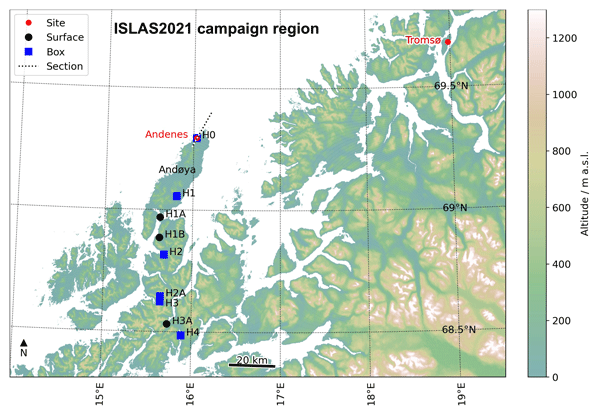
Alena Dekhtyareva, Harald Sodemann, Tim Carlsen, Iris Thurnherr, Aina Johannessen, Andrew Seidl, David M. Chandler, Daniele Zannoni, Alexandra Touzeau, Marvin Kähnert, Astrid B. Gjelsvik, Franziska Hellmuth, Britta Schäfer, and Robert O. David
Earth Syst. Sci. Data, 18, 2573–2607, https://doi.org/10.5194/essd-18-2573-2026, https://doi.org/10.5194/essd-18-2573-2026, 2026
Short summary
Short summary
During a recent field campaign from 15 to 30 March 2021 at Andenes, Norway, we collected a set of observations that allows to better constrain how clouds and precipitation processes work. Frequent alternations between mid-latitude and arctic weather systems were encountered during the campaign. Our dataset is unique in combining measurements in both vapour and precipitation, aerosols, ice nucleating particles, and was made simultaneously at different elevations at a high latitude location.
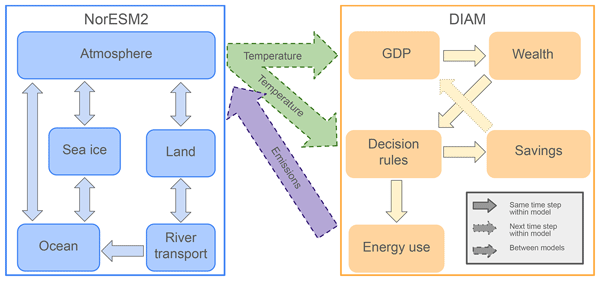
Jenny Bjordal, Anthony A. Smith Jr., Henri Cornec, and Trude Storelvmo
Geosci. Model Dev., 19, 1337–1365, https://doi.org/10.5194/gmd-19-1337-2026, https://doi.org/10.5194/gmd-19-1337-2026, 2026
Short summary
Short summary
We introduce NorESM2-DIAM (Norwegian Earth System Model version 2-Disaggregated Integrated Assessment Model), a first-of-its-kind tool linking a climate model with a high-resolution economic model to study how climate change, internal variability, and economic activity interact across the world. The model reveals strong regional differences and large annual swings in economic impacts, offers insights for climate policy discussions, and provides a strong foundation for future model development.
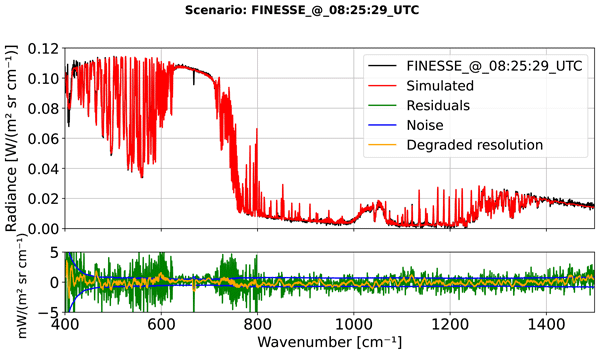
Gianluca Di Natale, Helen Brindley, Laura Warwick, Sanjeevani Panditharatne, Ping Yang, Robert Oscar David, Tim Carlsen, Sorin Nicolae Vâjâiac, Alex Vlad, Sorin Ghemuleț, Richard Bantges, Andreas Foth, Martin Flügge, Reidar Lyngra, Hilke Oetjen, Dirk Schuettemeyer, Luca Palchetti, and Jonathan Murray
Atmos. Chem. Phys., 26, 1373–1394, https://doi.org/10.5194/acp-26-1373-2026, https://doi.org/10.5194/acp-26-1373-2026, 2026
Short summary
Short summary
Cirrus clouds play a vital role in regulating Earth's energy balance. However, they remain incompletely understood, representing a major source of uncertainty in the predictive performance of climate models. We show that consistency between in situ measurements of cirrus cloud microphysics and ground-based remote sensing observations is achievable by simulating the emitted spectrum using current parameterizations of cirrus optical properties.
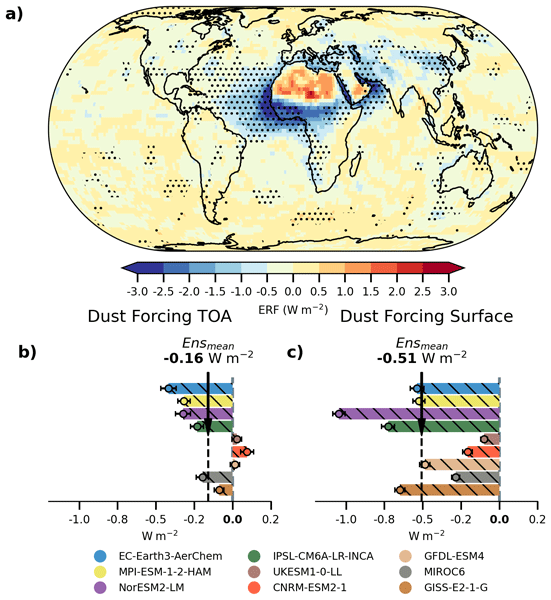
Ove W. Haugvaldstad, Dirk Olivié, Trude Storelvmo, and Michael Schulz
Atmos. Chem. Phys., 25, 13199–13219, https://doi.org/10.5194/acp-25-13199-2025, https://doi.org/10.5194/acp-25-13199-2025, 2025
Short summary
Short summary
Our study examines what would happen if desert dust in the atmosphere doubled, motivated by dust sedimentation records showing a large increase in dust levels since industrialization began. Using climate model simulations, we assess how more dust affects Earth's energy balance and rainfall. We found that models disagree on whether more dust overall cools or warms the planet. Additionally, more dust tends to reduce rainfall because it absorbs radiation and encourages the formation of ice clouds.
Lise Seland Graff, Jerry Tjiputra, Ada Gjermundsen, Andreas Born, Jens Boldingh Debernard, Heiko Goelzer, Yan-Chun He, Petra Margaretha Langebroek, Aleksi Nummelin, Dirk Olivié, Øyvind Seland, Trude Storelvmo, Mats Bentsen, Chuncheng Guo, Andrea Rosendahl, Dandan Tao, Thomas Toniazzo, Camille Li, Stephen Outten, and Michael Schulz
Earth Syst. Dynam., 16, 1671–1698, https://doi.org/10.5194/esd-16-1671-2025, https://doi.org/10.5194/esd-16-1671-2025, 2025
Short summary
Short summary
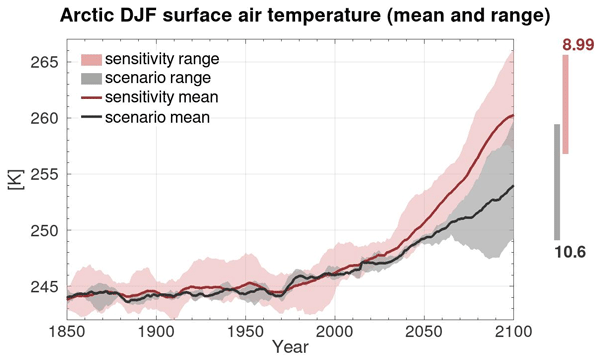
The magnitude of future Arctic amplification is highly uncertain. Using the Norwegian Earth System Model, we explore the effect of improving the representation of clouds, ocean eddies, the Greenland ice sheet, sea ice, and ozone on the projected Arctic winter warming in a coordinated experiment set. These improvements all lead to enhanced projected Arctic warming, with the largest changes found in the sea ice retreat regions and the largest uncertainty found on the Atlantic side.
Tómas Zoëga, Trude Storelvmo, and Kirstin Krüger
Atmos. Chem. Phys., 25, 2989–3010, https://doi.org/10.5194/acp-25-2989-2025, https://doi.org/10.5194/acp-25-2989-2025, 2025
Short summary
Short summary
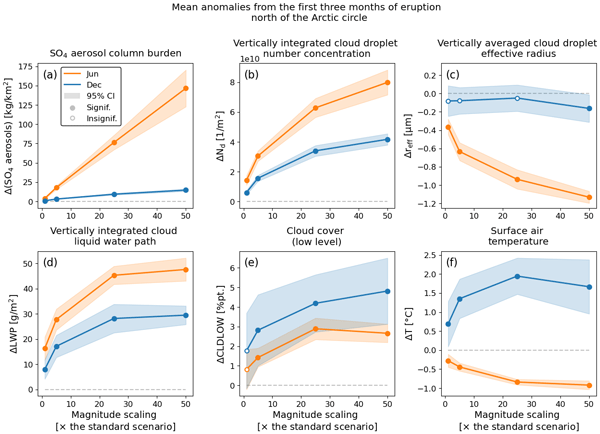
We use an Earth system model to systematically investigate the climate response to high-latitude effusive volcanic eruptions as a function of eruption season and size, with a focus on the Arctic. We find that different seasons strongly modulate the climate response, with Arctic surface warming observed in winter and cooling in summer. Additionally, as eruptions increase in terms of sulfur dioxide emissions, the climate response becomes increasingly insensitive to variations in emission strength.
Astrid B. Gjelsvik, Robert O. David, Tim Carlsen, Franziska Hellmuth, Stefan Hofer, Zachary McGraw, Harald Sodemann, and Trude Storelvmo
Atmos. Chem. Phys., 25, 1617–1637, https://doi.org/10.5194/acp-25-1617-2025, https://doi.org/10.5194/acp-25-1617-2025, 2025
Short summary
Short summary
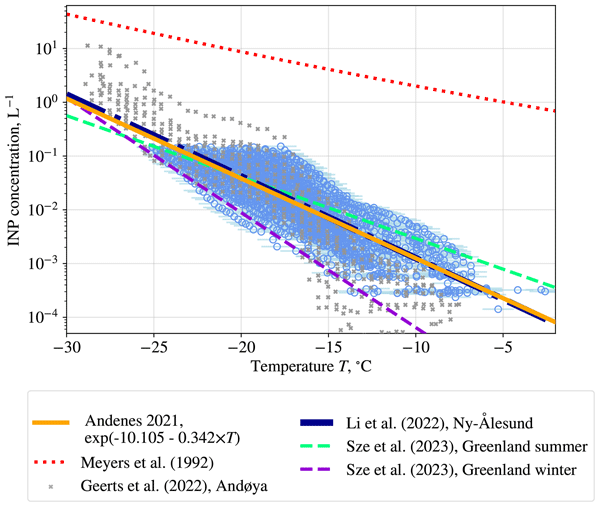
Ice formation in clouds has a substantial impact on radiation and precipitation and must be realistically simulated in order to understand present and future Arctic climate. Rare aerosols known as ice-nucleating particles can play an important role in cloud ice formation, but their representation in global climate models is not well suited for the Arctic. In this study, the simulation of cloud phase is improved when the representation of these particles is constrained by Arctic observations.
Franziska Hellmuth, Tim Carlsen, Anne Sophie Daloz, Robert Oscar David, Haochi Che, and Trude Storelvmo
Atmos. Chem. Phys., 25, 1353–1383, https://doi.org/10.5194/acp-25-1353-2025, https://doi.org/10.5194/acp-25-1353-2025, 2025
Short summary
Short summary
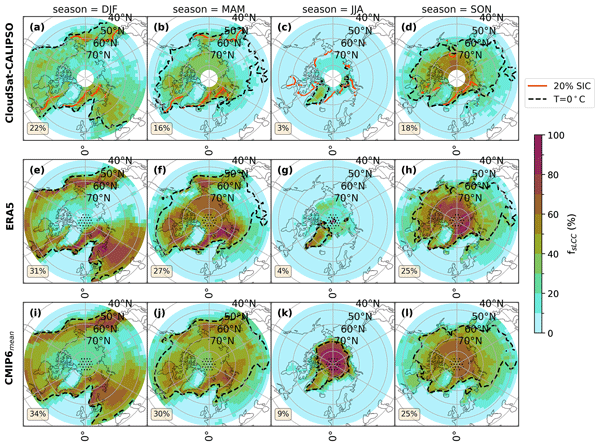
This article compares the occurrence of supercooled liquid-containing clouds (sLCCs) and their link to surface snowfall in CloudSat–CALIPSO, ERA5, and the CMIP6 models. Significant discrepancies were found, with ERA5 and CMIP6 consistently overestimating sLCC and snowfall frequency. This bias is likely due to cloud microphysics parameterization. This conclusion has implications for accurately representing cloud phase and snowfall in future climate projections.
Huiying Zhang, Xia Li, Fabiola Ramelli, Robert O. David, Julie Pasquier, and Jan Henneberger
Atmos. Meas. Tech., 17, 7109–7128, https://doi.org/10.5194/amt-17-7109-2024, https://doi.org/10.5194/amt-17-7109-2024, 2024
Short summary
Short summary
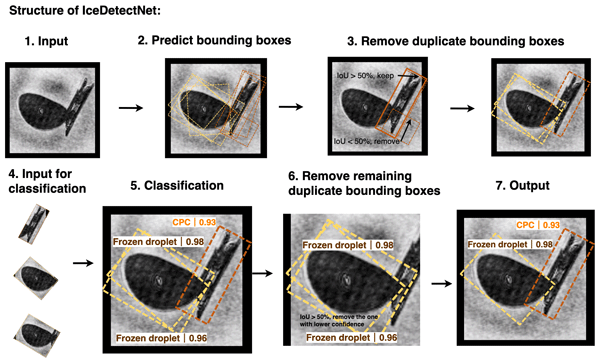
Our innovative IceDetectNet algorithm classifies each part of aggregated ice crystals, considering both their basic shape and physical processes. Trained on ice crystal images from the Arctic taken by a holographic camera, it correctly classifies over 92 % of the ice crystals. These more detailed insights into the components of aggregated ice crystals have the potential to improve our estimates of microphysical properties such as riming rate, aggregation rate, and ice water content.
Ragnhild Bieltvedt Skeie, Magne Aldrin, Terje K. Berntsen, Marit Holden, Ragnar Bang Huseby, Gunnar Myhre, and Trude Storelvmo
Earth Syst. Dynam., 15, 1435–1458, https://doi.org/10.5194/esd-15-1435-2024, https://doi.org/10.5194/esd-15-1435-2024, 2024
Short summary
Short summary
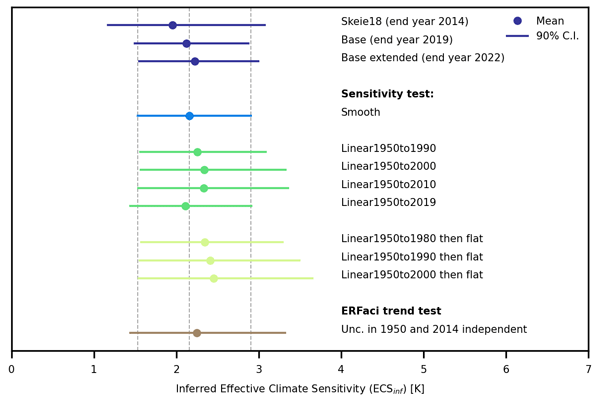
Climate sensitivity and aerosol forcing are central quantities in climate science that are uncertain and contribute to the spread in climate projections. To constrain them, we use observations of temperature and ocean heat content as well as prior knowledge of radiative forcings over the industrialized period. The estimates are sensitive to how aerosol cooling evolved over the latter part of the 20th century, and a strong aerosol forcing trend in the 1960s–1970s is not supported by our analysis.
Britta Schäfer, Robert Oscar David, Paraskevi Georgakaki, Julie Thérèse Pasquier, Georgia Sotiropoulou, and Trude Storelvmo
Atmos. Chem. Phys., 24, 7179–7202, https://doi.org/10.5194/acp-24-7179-2024, https://doi.org/10.5194/acp-24-7179-2024, 2024
Short summary
Short summary
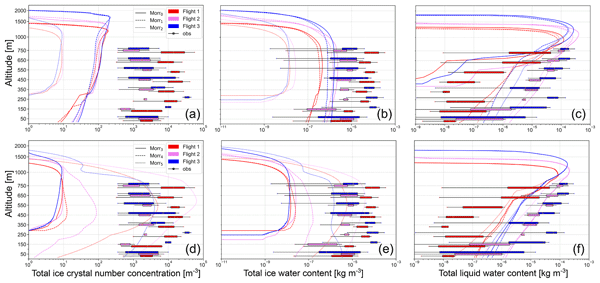
Mixed-phase clouds, i.e., clouds consisting of ice and supercooled water, are very common in the Arctic. However, how these clouds form is often not correctly represented in standard weather models. We show that both ice crystal concentrations in the cloud and precipitation from the cloud can be improved in the model when aerosol concentrations are prescribed from observations and when more processes for ice multiplication, i.e., the production of new ice particles from existing ice, are added.
Idunn Aamnes Mostue, Stefan Hofer, Trude Storelvmo, and Xavier Fettweis
The Cryosphere, 18, 475–488, https://doi.org/10.5194/tc-18-475-2024, https://doi.org/10.5194/tc-18-475-2024, 2024
Short summary
Short summary
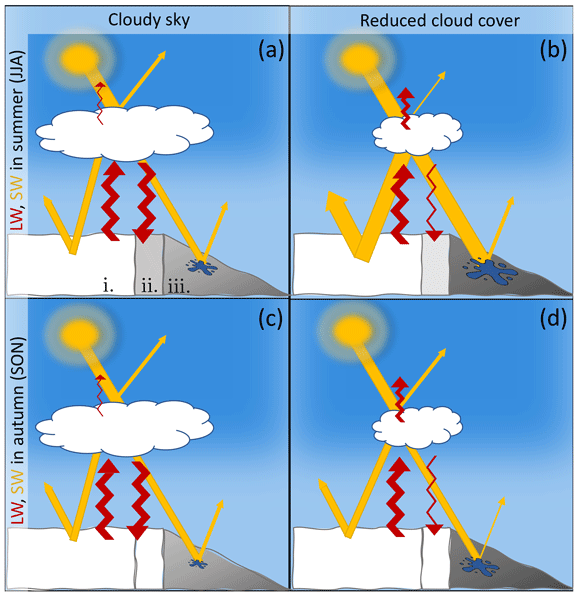
The latest generation of climate models (Coupled Model Intercomparison Project Phase 6 – CMIP6) warm more over Greenland and the Arctic and thus also project a larger mass loss from the Greenland Ice Sheet (GrIS) compared to the previous generation of climate models (CMIP5). Our work suggests for the first time that part of the greater mass loss in CMIP6 over the GrIS is driven by a difference in the surface mass balance sensitivity from a change in cloud representation in the CMIP6 models.
Ghislain Motos, Gabriel Freitas, Paraskevi Georgakaki, Jörg Wieder, Guangyu Li, Wenche Aas, Chris Lunder, Radovan Krejci, Julie Thérèse Pasquier, Jan Henneberger, Robert Oscar David, Christoph Ritter, Claudia Mohr, Paul Zieger, and Athanasios Nenes
Atmos. Chem. Phys., 23, 13941–13956, https://doi.org/10.5194/acp-23-13941-2023, https://doi.org/10.5194/acp-23-13941-2023, 2023
Short summary
Short summary
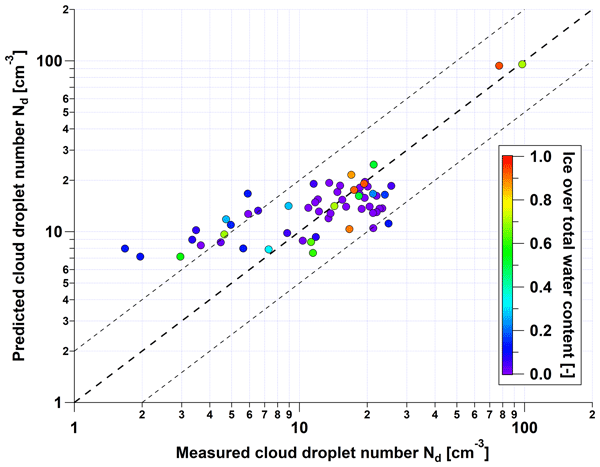
Low-altitude clouds play a key role in regulating the climate of the Arctic, a region that suffers from climate change more than any other on the planet. We gathered meteorological and aerosol physical and chemical data over a year and utilized them for a parameterization that help us unravel the factors driving and limiting the efficiency of cloud droplet formation. We then linked this information to the sources of aerosol found during each season and to processes of cloud glaciation.
Casey J. Wall, Trude Storelvmo, and Anna Possner
Atmos. Chem. Phys., 23, 13125–13141, https://doi.org/10.5194/acp-23-13125-2023, https://doi.org/10.5194/acp-23-13125-2023, 2023
Short summary
Short summary
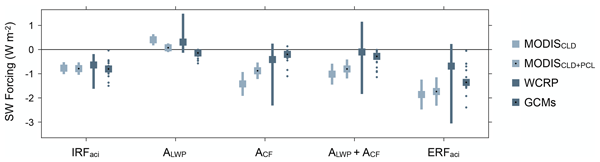
Interactions between aerosol pollution and liquid clouds are one of the largest sources of uncertainty in the effective radiative forcing of climate over the industrial era. We use global satellite observations to decompose the forcing into components from changes in cloud-droplet number concentration, cloud water content, and cloud amount. Our results reduce uncertainty in these forcing components and clarify their relative importance.
Andrew Gettelman, Hugh Morrison, Trude Eidhammer, Katherine Thayer-Calder, Jian Sun, Richard Forbes, Zachary McGraw, Jiang Zhu, Trude Storelvmo, and John Dennis
Geosci. Model Dev., 16, 1735–1754, https://doi.org/10.5194/gmd-16-1735-2023, https://doi.org/10.5194/gmd-16-1735-2023, 2023
Short summary
Short summary
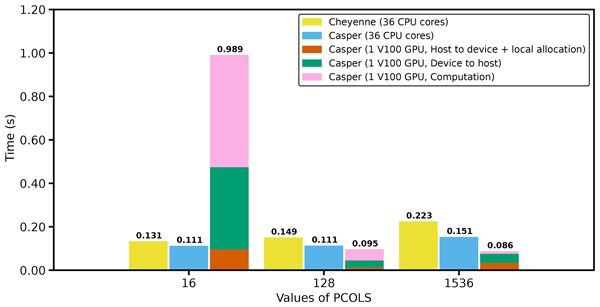
Clouds are a critical part of weather and climate prediction. In this work, we document updates and corrections to the description of clouds used in several Earth system models. These updates include the ability to run the scheme on graphics processing units (GPUs), changes to the numerical description of precipitation, and a correction to the ice number. There are big improvements in the computational performance that can be achieved with GPU acceleration.
Julie Thérèse Pasquier, Jan Henneberger, Fabiola Ramelli, Annika Lauber, Robert Oscar David, Jörg Wieder, Tim Carlsen, Rosa Gierens, Marion Maturilli, and Ulrike Lohmann
Atmos. Chem. Phys., 22, 15579–15601, https://doi.org/10.5194/acp-22-15579-2022, https://doi.org/10.5194/acp-22-15579-2022, 2022
Short summary
Short summary
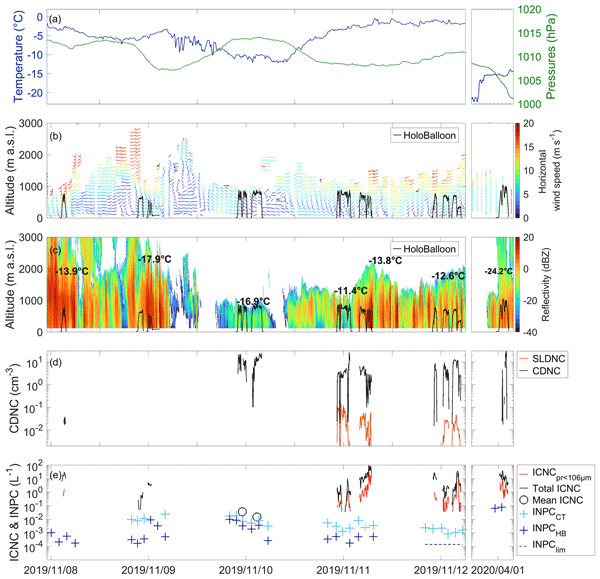
It is important to understand how ice crystals and cloud droplets form in clouds, as their concentrations and sizes determine the exact radiative properties of the clouds. Normally, ice crystals form from aerosols, but we found evidence for the formation of additional ice crystals from the original ones over a large temperature range within Arctic clouds. In particular, additional ice crystals were formed during collisions of several ice crystals or during the freezing of large cloud droplets.
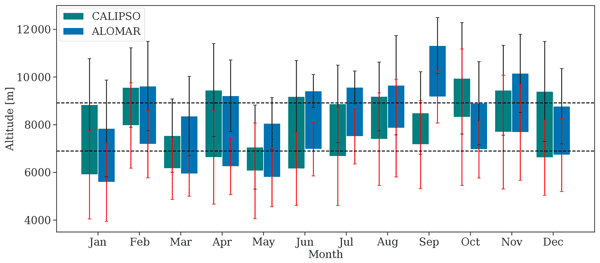
Britta Schäfer, Tim Carlsen, Ingrid Hanssen, Michael Gausa, and Trude Storelvmo
Atmos. Chem. Phys., 22, 9537–9551, https://doi.org/10.5194/acp-22-9537-2022, https://doi.org/10.5194/acp-22-9537-2022, 2022
Short summary
Short summary
Cloud properties are important for the surface radiation budget. This study presents cold-cloud observations based on lidar measurements from the Norwegian Arctic between 2011 and 2017. Using statistical assessments and case studies, we give an overview of the macro- and microphysical properties of these clouds and demonstrate the capabilities of long-term cloud observations in the Norwegian Arctic from the ground-based lidar at Andenes.
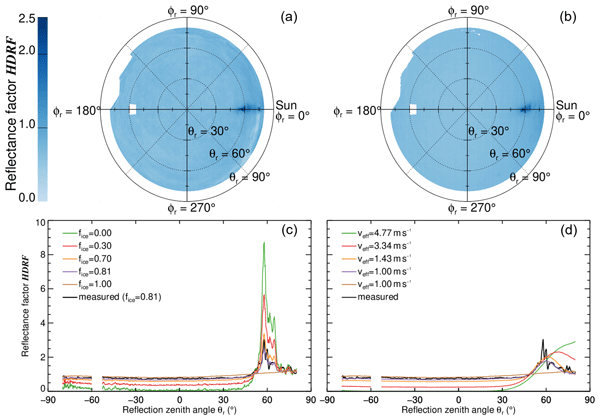
Sebastian Becker, André Ehrlich, Evelyn Jäkel, Tim Carlsen, Michael Schäfer, and Manfred Wendisch
Atmos. Meas. Tech., 15, 2939–2953, https://doi.org/10.5194/amt-15-2939-2022, https://doi.org/10.5194/amt-15-2939-2022, 2022
Short summary
Short summary
Airborne radiation measurements are used to characterize the solar directional reflection of a mixture of Arctic sea ice and open-ocean surfaces in the transition zone between both surface types. The mixture reveals reflection properties of both surface types. It is shown that the directional reflection of the mixture can be reconstructed from the directional reflection of the individual surfaces, accounting for the special conditions present in the transition zone.
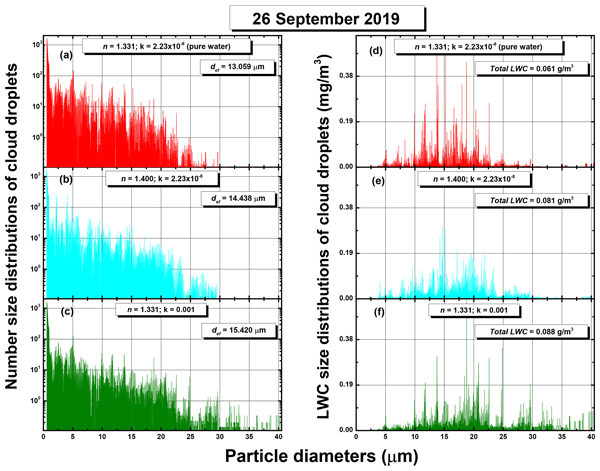
Sorin Nicolae Vâjâiac, Andreea Calcan, Robert Oscar David, Denisa-Elena Moacă, Gabriela Iorga, Trude Storelvmo, Viorel Vulturescu, and Valeriu Filip
Atmos. Meas. Tech., 14, 6777–6794, https://doi.org/10.5194/amt-14-6777-2021, https://doi.org/10.5194/amt-14-6777-2021, 2021
Short summary
Short summary
Warm clouds (with liquid droplets) play an important role in modulating the amount of incoming solar radiation to Earth’s surface and thus the climate. The most efficient way to study them is by in situ optical measurements. This paper proposes a new methodology for providing more detailed and reliable structural analyses of warm clouds through post-flight processing of collected data. The impact fine aerosol incorporation in water droplets might have on such measurements is also discussed.
Cited articles
Abel, S. J., Boutle, I. A., Waite, K., Fox, S., Brown, P. R. A., Cotton, R., Lloyd, G., Choularton, T. W., and Bower, K. N.: The Role of Precipitation in Controlling the Transition from Stratocumulus to Cumulus Clouds in a Northern Hemisphere Cold-Air Outbreak, Journal of the Atmospheric Sciences, 74, 2293–2314, https://doi.org/10.1175/JAS-D-16-0362.1, 2017. a, b, c, d, e
Alexeev, V. A., Esau, I., Polyakov, I. V., Byam, S. J., and Sorokina, S.: Vertical structure of recent Arctic warming from observed data and reanalysis products, Climatic Change, 111, 215–239, https://doi.org/10.1007/s10584-011-0192-8, 2012. a
Benjamini, Y. and Hochberg, Y.: Controlling the False Discovery Rate: A Practical and Powerful Approach to Multiple Testing, Journal of the Royal Statistical Society Series B, 57, 289–300, https://doi.org/10.1111/j.2517-6161.1995.tb02031.x, 1995. a
Bretherton, C. S. and Wyant, M. C.: Moisture transport, lower-tropospheric stability, and decoupling of cloud-topped boundary layers, Journal of the atmospheric sciences, 54, 148–167, https://doi.org/10.1175/1520-0469(1997)054<0148:MTLTSA>2.0.CO;2, 1997. a
Brümmer, B.: Roll and Cell Convection in Wintertime Arctic Cold-Air Outbreaks, Journal of the Atmospheric Sciences, 56, https://doi.org/10.1175/1520-0469(1999)056<2613:racciw>2.0.co;2, 1999. a, b
Chylek, P., Folland, C. K., Lesins, G., Dubey, M. K., and Wang, M.: Arctic air temperature change amplification and the Atlantic Multidecadal Oscillation, Geophysical Research Letters, 36, https://doi.org/10.1029/2009GL038777, 2009. a
Collaud Coen, M., Andrews, E., Bigi, A., Martucci, G., Romanens, G., Vogt, F. P., and Vuilleumier, L.: Effects of the prewhitening method, the time granularity, and the time segmentation on the Mann–Kendall trend detection and the associated Sen's slope, Atmospheric Measurement Techniques, 13, 6945–6964, https://doi.org/10.5194/amt-13-6945-2020, 2020. a, b
Dahlke, S., Solbès, A., and Maturilli, M.: Cold air outbreaks in Fram Strait: Climatology, trends, and observations during an extreme season in 2020, Journal of Geophysical Research: Atmospheres, 127, e2021JD035741, https://doi.org/10.1029/2021JD035741, 2022. a, b, c, d
DeRepentigny, P., Tremblay, L. B., Newton, R., and Pfirman, S.: Patterns of sea ice retreat in the transition to a seasonally ice-free Arctic, Journal of Climate, 29, 6993–7008, https://doi.org/10.1175/JCLI-D-15-0733.1, 2016. a
DiGirolamo, N., Parkinson, C., Cavalieri, D., Gloersen, P., and Zwally, H.: Sea Ice Concentrations from Nimbus-7 SMMR and DMSP SSM/I-SSMIS Passive Microwave Data [data set], https://doi.org/10.5067/MPYG15WAA4WX, 2022. a, b
Eastman, R., McCoy, I. L., and Wood, R.: Wind, Rain, and the Closed to Open Cell Transition in Subtropical Marine Stratocumulus, Journal of Geophysical Research: Atmospheres, 127, e2022JD036795, https://doi.org/10.1029/2022JD036795, 2022. a
Fletcher, J. K., Mason, S., and Jakob, C.: A climatology of clouds in marine cold air outbreaks in both hemispheres, Journal of Climate, 29, 6677–6692, https://doi.org/10.1175/JCLI-D-15-0783.1, 2016b. a
Frey, R. A., Ackerman, S. A., Liu, Y., Strabala, K. I., Zhang, H., Key, J. R., and Wang, X.: Cloud detection with MODIS, Part I: Improvements in the MODIS cloud mask for collection 5, Journal of Atmospheric and Oceanic Technology, 25, 1057–1072, https://doi.org/10.1175/2008JTECHA1052.1, 2008. a
Garcia-Soto, C., Cheng, L., Caesar, L., Schmidtko, S., Jewett, E. B., Cheripka, A., Rigor, I., Caballero, A., Chiba, S., Báez, J. C., Zielinski, T., and Abraham, J. P.: An Overview of Ocean Climate Change Indicators: Sea Surface Temperature, Ocean Heat Content, Ocean pH, Dissolved Oxygen Concentration, Arctic Sea Ice Extent, Thickness and Volume, Sea Level and Strength of the AMOC (Atlantic Meridional Overturning Circulation), Frontiers in Marine Science, 8, https://doi.org/10.3389/fmars.2021.642372, 2021. a
Geerts, B., Giangrande, S. E., McFarquhar, G. M., Xue, L., Abel, S. J., Comstock, J. M., Crewell, S., DeMott, P. J., Ebell, K., Field, P., Hill, T. C. J., Hunzinger, A., Jensen, M. P., Johnson, K. L., Juliano, T. W., Kollias, P., Kosovic, B., Lackner, C., Luke, E., Lüpkes, C., Matthews, A. A., Neggers, R., Ovchinnikov, M., Powers, H., Shupe, M. D., Spengler, T., Swanson, B. E., Tjernström, M., Theisen, A. K., Wales, N. A., Wang, Y., Wendisch, M., and Wu, P.: The COMBLE Campaign: A Study of Marine Boundary Layer Clouds in Arctic Cold-Air Outbreaks, Bulletin of the American Meteorological Society, 103, E1371–E1389, https://doi.org/10.1175/BAMS-D-21-0044.1, 2022. a, b
Gelaro, R., McCarty, W., Suárez, M. J., Todling, R., Molod, A., Takacs, L., Randles, C. A., Darmenov, A., Bosilovich, M. G., Reichle, R., Wargan, K., Coy, L., Cullather, R., Draper, C., Akella, S., Buchard, V., Conaty, A., Silva, A. M. d., Gu, W., Kim, G.-K., Koster, R., Lucchesi, R., Merkova, D., Nielsen, J. E., Partyka, G., Pawson, S., Putman, W., Rienecker, M., Schubert, S. D., Sienkiewicz, M., and Zhao, B.: The Modern-Era Retrospective Analysis for Research and Applications, Version 2 (MERRA-2), Journal of Climate, 30, 5419–5454, https://doi.org/10.1175/JCLI-D-16-0758.1, 2017. a
Gilbert, R. O.: Statistical methods for environmental pollution monitoring, John Wiley & Sons, ISBN 0-471-28878-0, 1987. a
Global Modeling and Assimilation Office (GMAO): MERRA-2 tavg1_2d_slv_Nx: 2d,1-Hourly, Time-Averaged, Single-Level, Assimilation, Single-Level Diagnostics V5.12.4 [data set], https://doi.org/10.5067/VJAFPLI1CSIV, 2015. a
Graversen, R. G., Mauritsen, T., Tjernström, M., Källén, E., and Svensson, G.: Vertical structure of recent Arctic warming, Nature, 451, 53–56, https://doi.org/10.1038/nature06502, 2008. a
Hartmann, J., Kottmeier, C., and Raasch, S.: Roll vortices and boundary-layer development during a cold air outbreak, Boundary-Layer Meteorology, 84, 45–65, https://doi.org/10.1023/A:1000392931768, 1997. a
He, K., Zhang, X., Ren, S., and Sun, J.: Deep Residual Learning for Image Recognition, CoRR, abs/1512.03385, arXiv: 1512.03385, http://arxiv.org/abs/1512.03385 (last access: 13 August 2025), 2015. a
Hinton, G. E. and Zemel, R.: Autoencoders, minimum description length and Helmholtz free energy, Advances in Neural Information Processing Systems, 6, 3–10, 1993. a
Hirsch, R. M., Slack, J. R., and Smith, R. A.: Techniques of trend analysis for monthly water quality data, Water Resources Research, 18, 107–121, https://doi.org/10.1029/WR018i001p00107, 1982. a
Johannessen, O. M., Kuzmina, S. I., Bobylev, L. P., and Miles, M. W.: Surface air temperature variability and trends in the Arctic: new amplification assessment and regionalisation, Tellus A, 68, 28234, https://doi.org/10.3402/tellusa.v68.28234, 2016. a
Kendall, M. G.: Rank Correlation Methods, 4th Edition, Charles Griffin, London, 1975. a
King, M. D., Kaufman, Y. J., Menzel, W. P., and Tanre, D.: Remote sensing of cloud, aerosol, and water vapor properties from the moderate resolution imaging spectrometer(MODIS), IEEE Transactions on Geoscience and Remote Sensing, 30, 2–27, https://doi.org/10.1109/36.124212, 1992. a
Kolstad, E. W. and Bracegirdle, T. J.: Marine cold-air outbreaks in the future: an assessment of IPCC AR4 model results for the Northern Hemisphere, Climate Dynamics, 30, 871–885, https://doi.org/10.1007/s00382-007-0331-0, 2008. a, b
Kolstad, E. W., Bracegirdle, T. J., and Seierstad, I. A.: Marine cold-air outbreaks in the North Atlantic: Temporal distribution and associations with large-scale atmospheric circulation, Climate Dynamics, 33, 187–197, https://doi.org/10.1007/s00382-008-0431-5, 2009. a
Landgren, O. A., Seierstad, I. A., and Iversen, T.: Projected future changes in marine cold-air outbreaks associated with polar lows in the northern North-Atlantic Ocean, Climate Dynamics, 53, 2573–2585, https://doi.org/10.1007/s00382-019-04642-2, 2019. a
Maas, A. L., Hannun, A. Y., and Ng, A. Y.: Rectifier Nonlinearities Improve Neural Network Acoustic Models, in: Proceedings of the 30th International Conference on Machine Learning, International Conference on Machine Learning, Atlanta, Georgia, USA, 17–19 June 2013, 28, 3, ISSN 2640-3498, 2013. a
Mann, H. B.: Nonparametric tests against trend, Econometrica, Journal of the Econometric Society, 13, 245–259, https://doi.org/10.2307/1907187, 1945. a
McCoy, I. L., Wood, R., and Fletcher, J. K.: Identifying meteorological controls on open and closed mesoscale cellular convection associated with marine cold air outbreaks, Journal of Geophysical Research: Atmospheres, 122, 11–678, https://doi.org/10.1002/2017JD027031, 2017. a, b, c
MODIS Characterization Support Team (MCST): MODIS 1 km Calibrated Radiances Product, https://doi.org/10.5067/MODIS/MOD021KM.061, 2017. a
Murray-Watson, R. J. and Gryspeerdt, E.: Air mass history linked to the development of Arctic mixed-phase clouds, Atmospheric Chemistry and Physics, 24, 11115–11132, https://doi.org/10.5194/acp-24-11115-2024, 2024. a, b, c
Murray-Watson, R. J., Gryspeerdt, E., and Goren, T.: Investigating the development of clouds within marine cold-air outbreaks, Atmospheric Chemistry and Physics, 23, 9365–9383, https://doi.org/10.5194/acp-23-9365-2023, 2023. a, b, c, d
Rantanen, M., Karpechko, A. Y., Lipponen, A., Nordling, K., Hyvärinen, O., Ruosteenoja, K., Vihma, T., and Laaksonen, A.: The Arctic has warmed nearly four times faster than the globe since 1979, Communications Earth & Environment, 3, 168, https://doi.org/10.1038/s43247-022-00498-3, 2022. a, b, c
Sandu, I. and Stevens, B.: On the factors modulating the stratocumulus to cumulus transitions, Journal of the Atmospheric Sciences, 68, 1865–1881, https://doi.org/10.1175/2011JAS3614.1, 2011. a
Sen, P. K.: Estimates of the regression coefficient based on Kendall's tau, Journal of the American Statistical Association, 63, 1379–1389, https://doi.org/10.1080/01621459.1968.10480934, 1968. a
Serreze, M. C. and Barry, R. G.: Processes and impacts of Arctic amplification: A research synthesis, Global and Planetary Change, 77, 85–96, https://doi.org/10.1016/j.gloplacha.2011.03.004, 2011. a
Shupe, M. D. and Intrieri, J. M.: Cloud radiative forcing of the Arctic surface: The influence of cloud properties, surface albedo, and solar zenith angle, Journal of Climate, 17, 616–628, https://doi.org/10.1175/1520-0442(2004)017<0616:CRFOTA>2.0.CO;2, 2004. a
Stevens, B., Cotton, W. R., Feingold, G., and Moeng, C.-H.: Large-eddy simulations of strongly precipitating, shallow, stratocumulus-topped boundary layers, Journal of the Atmospheric Sciences, 55, 3616–3638, https://doi.org/10.1175/1520-0469(1998)055<3616:LESOSP>2.0.CO;2, 1998. a
Stevens, B., Bony, S., Brogniez, H., Hentgen, L., Hohenegger, C., Kiemle, C., L'Ecuyer, T. S., Naumann, A. K., Schulz, H., Siebesma, P. A., Vial, J., Winker, D. M., and Zuidema, P: Sugar, gravel, fish and flowers: Mesoscale cloud patterns in the trade winds, Quarterly Journal of the Royal Meteorological Society, 146, 141–152, https://doi.org/10.1002/qj.3662, 2020. a, b
Theil, H.: A rank-invariant method of linear and polynomial regression analysis, Proc. K. Ned. Akad. Wet., 53, 386–392, 521–525, 1397–1412, 1950. a
Tornow, F., Ackerman, A. S., and Fridlind, A. M.: Preconditioning of overcast-to-broken cloud transitions by riming in marine cold air outbreaks, Atmospheric Chemistry and Physics, 21, 12049–12067, https://doi.org/10.5194/acp-21-12049-2021, 2021. a, b
von der Lippe, F. S.: Shortening Arctic cold air outbreak season (0.2), Zenodo [data set], https://doi.org/10.5281/zenodo.18352136, 2026. a
von der Lippe, F. S., Carlsen, T., Storelvmo, T., and David, R. O.: Shortening of the Arctic cold air outbreak season detected by a phenomenological machine learning approach, EGUsphere [preprint], https://doi.org/10.5194/egusphere-2025-3711, 2025. a
Wielicki, B. A., Barkstrom, B. R., Harrison, E. F., Lee, R. B., Smith, G. L., and Cooper, J. E.: Clouds and the Earth's Radiant Energy System (CERES): An Earth Observing System Experiment, Bulletin of the American Meteorological Society, 77, 853–868, https://doi.org/10.1175/1520-0477(1996)077<0853:CATERE>2.0.CO;2, 1996. a
Wilks, D. S.: The Stippling Shows Statistically Significant Grid Points: How Research Results are Routinely Overstated and Overinterpreted, and What to Do about It, Bulletin of the American Meteorological Society, 97, 2263–2273, https://doi.org/10.1175/BAMS-D-15-00267.1, 2016. a
Wood, R. and Hartmann, D. L.: Spatial variability of liquid water path in marine low cloud: The importance of mesoscale cellular convection, Journal of Climate, 19, 1748–1764, https://doi.org/10.1175/JCLI3702.1, 2006. a
Wu, P. and Ovchinnikov, M.: Cloud morphology evolution in Arctic cold-air outbreak: Two cases during COMBLE period, Journal of Geophysical Research: Atmospheres, 127, e2021JD035966, https://doi.org/10.1029/2021JD035966, 2022. a
Yamaguchi, T., Feingold, G., and Kazil, J.: Stratocumulus to cumulus transition by drizzle, Journal of Advances in Modeling Earth Systems, 9, 2333–2349, https://doi.org/10.1002/2017MS001104, 2017. a, b
Yue, S., Pilon, P., Phinney, B., and Cavadias, G.: The influence of autocorrelation on the ability to detect trend in hydrological series, Hydrological Processes, 16, 1807–1829, https://doi.org/10.1002/hyp.1095, 2002. a, b, c
Short summary
This paper investigates how clouds associated with Arctic marine cold air outbreaks (CAOs) respond to climate change. By utilizing machine learning methods and remote sensing data from the past 25 years, the study identifies trends indicating a shortening of the CAO season. This has implications for the Arctic energy balance, underscoring the importance of further investigating these clouds to understand the trajectory of future Arctic climate.
This paper investigates how clouds associated with Arctic marine cold air outbreaks (CAOs)...


Altmetrics
Final-revised paper
Preprint