
Articles | Volume 26, issue 20
https://doi.org/10.5194/acp-26-15037-2026
© Author(s) 2026. This work is distributed under
the Creative Commons Attribution 4.0 License.
the Creative Commons Attribution 4.0 License.
https://doi.org/10.5194/acp-26-15037-2026
© Author(s) 2026. This work is distributed under
the Creative Commons Attribution 4.0 License.
the Creative Commons Attribution 4.0 License.
Research article
| 
27 Oct 2026
Research article |
| 27 Oct 2026
| 27 Oct 2026
Contrasting impacts of Asian sulfate aerosols on regional summer extreme precipitation under different climate backgrounds
Feifei Luo
CORRESPONDING AUTHOR

School of Atmospheric Sciences, Chengdu University of Information Technology, Chengdu, China
Manoj Joshi
Climatic Research Unit, School of Environmental Sciences, University of East Anglia, Norwich, UK
Bjørn H. Samset
CICERO Center for International Climate Research, Oslo, Norway
Laura J. Wilcox
National Centre for Atmospheric Science, University of Reading, Reading, UK
Camilla W. Stjern
CICERO Center for International Climate Research, Oslo, Norway
Robert J. Allen
Department of Earth and Planetary Sciences, University of California Riverside, Riverside, CA, USA
Yan-Ning Kuo
Department of Earth and Atmospheric Sciences, Cornell University, Ithaca, NY, USA
Wei Hua
School of Atmospheric Sciences, Chengdu University of Information Technology, Chengdu, China
Shuanglin Li
Climate Change Research Center, Institute of Atmospheric Physics, Chinese Academy of Sciences, Beijing, China
Department of Atmospheric Science, China University of Geoscience, Wuhan, China
Related authors
Feifei Luo, Bjørn H. Samset, Camilla W. Stjern, Manoj Joshi, Laura J. Wilcox, Robert J. Allen, Wei Hua, and Shuanglin Li
Atmos. Chem. Phys., 25, 7647–7667, https://doi.org/10.5194/acp-25-7647-2025, https://doi.org/10.5194/acp-25-7647-2025, 2025
Short summary
Short summary
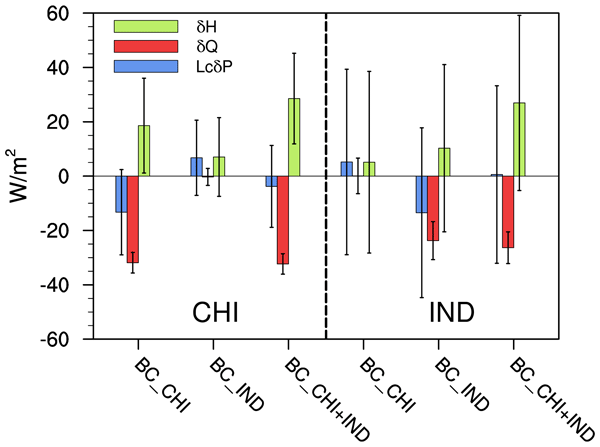
Black carbon (BC) aerosol is emitted from the incomplete combustion of biomass and fossil fuels. We found that Asian BC leads to strong local cooling and drying. Reductions in precipitation primarily depend on the thermodynamic effects due to solar radiation absorption by BC. The combined thermodynamic and dynamic effects shape the spatial pattern of precipitation responses to Asian BC. These results help us further understand the impact of emissions of anthropogenic aerosols on Asian climate.
Connor Robbins, Amee Gollop, Manoj Joshi, David P. Stevens, Mark J. Webb, Adam T. Blaker, and Robin Chadwick
EGUsphere, https://doi.org/10.5194/egusphere-2026-5372, https://doi.org/10.5194/egusphere-2026-5372, 2026
This preprint is open for discussion and under review for Geoscientific Model Development (GMD).
Short summary
Short summary
We describe FORTE 3.0 – an intermediate resolution coupled climate model. It consists of an atmospheric model with 35 layers, coupled to a 2°x2° ocean with 15 z layer depth levels. It is capable of producing a stable climate for long integrations without the need for flux adjustments. FORTE 3.0 has an climate response that is more consistent with CMIP5/6 GCMs. We use the model to conduct simulations in order to better understand how the Pacific Ocean responds to climate change.
Wah Kin Michael Lai, Jon Robson, Laura Wilcox, Nick Dunstone, and Rowan Sutton
Atmos. Chem. Phys., 26, 11255–11279, https://doi.org/10.5194/acp-26-11255-2026, https://doi.org/10.5194/acp-26-11255-2026, 2026
Short summary
Short summary
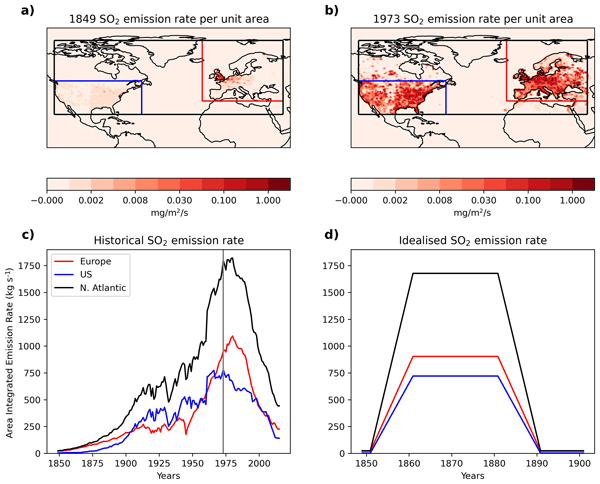
In a climate model at two different resolutions, sulphate aerosols are shown to induce a fast cooling followed by a delayed warming in the subpolar North Atlantic. The delayed warming is stronger at higher resolution due to a stronger Atlantic Meridional Overturning Circulation (AMOC) response. This difference is due to the lower resolution model having more sea ice which insulates the ocean, showing that the North Atlantic response to external forcing is sensitive to regional differences.
Alkiviadis Kalisoras, Prodromos Zanis, Aristeidis K. Georgoulias, Dimitris Akritidis, Robert J. Allen, and Vaishali Naik
Atmos. Chem. Phys., 26, 9413–9441, https://doi.org/10.5194/acp-26-9413-2026, https://doi.org/10.5194/acp-26-9413-2026, 2026
Short summary
Short summary
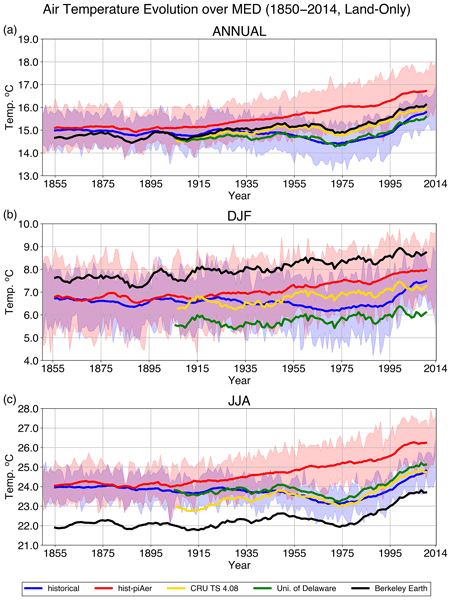
The Mediterranean region has experienced enhanced warming in the last decades resulting from emission changes of anthropogenic aerosols. In this work, we investigate changes in near-surface temperature over the Mediterranean throughout 1850–2014 using climate model simulations and try to connect them with changes in the Earth's radiative budget and atmospheric circulation.
Bosi Sheng, Massimo A. Bollasina, Alexandre S. Gagnon, Laura J. Wilcox, Thomas P. S. Reynolds, Christopher T. S. Beckett, Haolin Wang, Qingxiang Li, Pierre Nabat, Robert J. Allen, Bjørn H. Samset, Joonas Merikanto, Geeta G. Persad, Toshihiko Takemura, Kostas Tsigaridis, Sharar Ahmadi, Maxwell T. Elling, Knut von Salzen, Daniel M. Westervelt, Naga Oshima, and Tsuyoshi Koshiro
EGUsphere, https://doi.org/10.5194/egusphere-2026-2198, https://doi.org/10.5194/egusphere-2026-2198, 2026
Short summary
Short summary
Observational records indicate that austral summer rainfall over southern Africa experienced substantial wetting during the late 20th century, followed by pronounced drying over the past two decades. We show that East Asian sulphate aerosol emissions played a key role in shaping these rainfall trends. These findings have important implications for reducing uncertainties in regional rainfall projections and for understanding their links to ecosystem changes.
Stephanie Fiedler, Fiona M. O'Connor, Duncan Watson-Parris, Robert J. Allen, William J. Collins, Paul T. Griffiths, Matthew Kasoar, Jarmo Kikstra, Jasper F. Kok, Lee T. Murray, Fabien Paulot, Maria Sand, Steven T. Turnock, James Weber, Laura J. Wilcox, and Vaishali Naik
Geosci. Model Dev., 19, 3477–3508, https://doi.org/10.5194/gmd-19-3477-2026, https://doi.org/10.5194/gmd-19-3477-2026, 2026
Short summary
Short summary
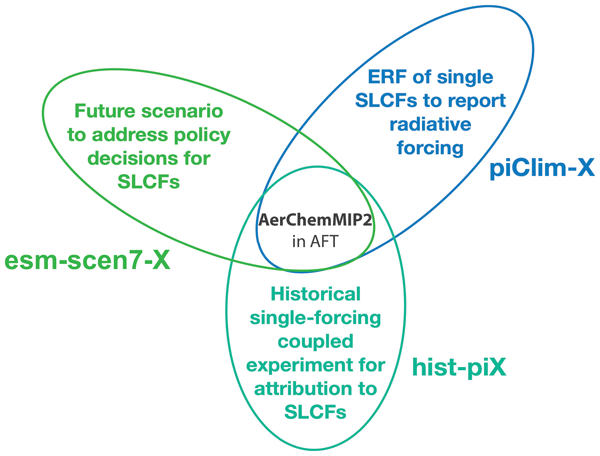
The Aerosol and Chemistry Model Intercomparison Project phase two (AerChemMIP2) allows the community to compare results from contemporary Earth system models. AerChemMIP2 is asking modelling centres to perform experiments following the same protocol. It includes experiments for enabling new science and for tracking progress. Model output will be used for addressing research and policy questions about anthropogenic and natural drivers of climate change, and the impacts on air quality.
Yan-Ning Kuo, Riley Culberg, and Flavio Lehner
The Cryosphere, 20, 2317–2329, https://doi.org/10.5194/tc-20-2317-2026, https://doi.org/10.5194/tc-20-2317-2026, 2026
Short summary
Short summary
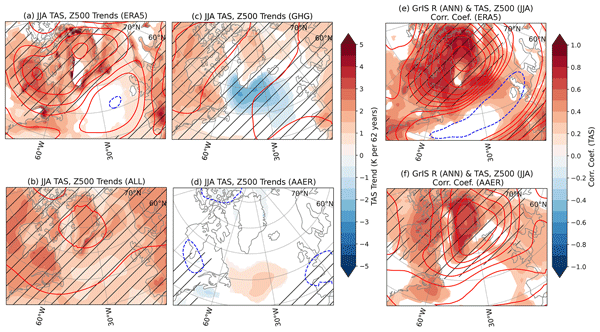
We attribute historical Greenland surface mass balance changes to greenhouse gases and anthropogenic aerosols through their impacts on runoff changes. Greenhouse gases induce runoff increase by long-term warming, and anthropogenic aerosols induce runoff by a decadal phase change in circulation pattern of Greenland blocking. We also highlight runoff responses in a climate model are state dependent, potentially contributing to the lower signal-to-noise ratio attributing to anthropogenic aerosols.
Beth Dingley, James A. Anstey, Marta Abalos, Carsten Abraham, Tommi Bergman, Lisa Bock, Sonya Fiddes, Birgit Hassler, Ryan J. Kramer, Fei Luo, Fiona M. O'Connor, Petr Šácha, Isla R. Simpson, Laura J. Wilcox, and Mark D. Zelinka
Geosci. Model Dev., 19, 2945–2984, https://doi.org/10.5194/gmd-19-2945-2026, https://doi.org/10.5194/gmd-19-2945-2026, 2026
Short summary
Short summary
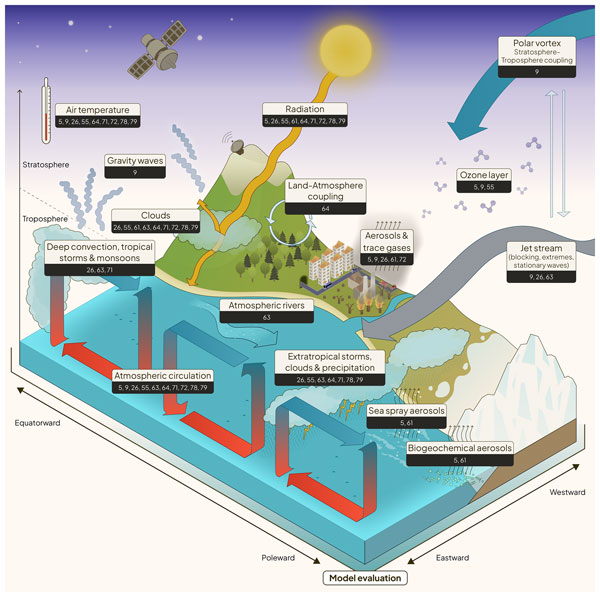
This manuscript defines as a list of variables and scientific opportunities which are requested from the Coupled Model Intercomparison Project Phase 7 (CMIP7) Assessment Fast Track to address open atmospheric science questions. The list reflects the output of a large public community engagement effort, coordinated across autumn 2025 through to summer 2025.
Birthe Marie Steensen, Gunnar Myhre, Rachael Byrom, Ada Gjermundsen, Caroline Jouan, and Camilla Weum Stjern
Atmos. Chem. Phys., 26, 2041–2054, https://doi.org/10.5194/acp-26-2041-2026, https://doi.org/10.5194/acp-26-2041-2026, 2026
Short summary
Short summary
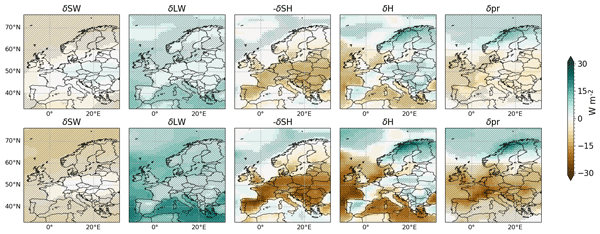
In this study we analyze summer precipitation within a regional atmospheric budget framework over Europe. We identify the terms with the largest uncertainties for current change and future projections that cause the large spread in precipitation change, as sensible heat and dry static energy flux divergence in Earth System models. However, the Earth System models show consistent agreement that there will be an increase in drying over continental Europe with global warming.
Siyu Meng, Xun Gong, Benjamin G. M. Webber, Manoj Joshi, Xiaokun Ding, Xiang Gong, Mingliang Gu, and Huiwang Gao
Biogeosciences, 23, 867–879, https://doi.org/10.5194/bg-23-867-2026, https://doi.org/10.5194/bg-23-867-2026, 2026
Short summary
Short summary
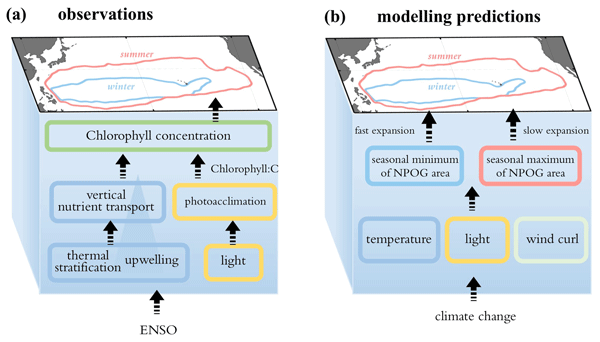
The North Pacific oligotrophic ocean gyre (NPOG), with low phytoplankton biomass, covers about 40 % of the North Pacific. The variations in NPOG seasonal cycle, which have a greater impact than its annual mean changes, are influenced by the El Niño-Southern Oscillation from 1998 to 2021. However, from 2021 to 2100, a weakened NPOG seasonal cycle is expected due to climate change. These changes in NPOG seasonal cycle could affect fisheries and marine ecosystems.
Peter W. Thorne, John M. Nicklas, John J. Kennedy, Bruce Calvert, Baylor Fox-Kemper, Mark T. Richardson, Adrian Simmons, Ed Hawkins, Robert Rhode, Kathryn Cowtan, Nerilie J. Abram, Axel Andersson, Simon Noone, Phillipe Marbaix, Nathan Lenssen, Dirk Olonscheck, Tristram Walsh, Stephen Outten, Ingo Bethke, Bjorn H. Samset, Chris Smith, Anna Pirani, Jan Fuglestvedt, Lavanya Rajamani, Richard A. Betts, Elizabeth C. Kent, Blair Trewin, Colin Morice, Tim Osborn, Samantha N. Burgess, Oliver Geden, Andrew Parnell, Piers M. Forster, Chris Hewitt, Zeke Hausfather, Valerie Masson-Delmotte, Jochem Marotzke, Nathan Gillett, Sonia I. Seneviratne, Gavin A. Schmidt, Duo Chan, Stefan Brönnimann, Andy Reisinger, Matthew Menne, Maisa Rojas Corradi, Christopher Kadow, Peter Huybers, David B. Stephenson, Emily Wallis, Joeri Rogelj, Andrew Schurer, Karen McKinnon, Panmao Zhai, Fatima Driouech, Wilfran Moufouma Okia, Saeed Vazifehkhah, Sophie Szopa, Christopher J. Merchant, Shoji Hirahara, Masayoshi Ishii, Francois A. Engelbrecht, Qingxiang Li, June-Yi Lee, Alex J. Cannon, Christophe Cassou, Karina von Schuckmann, Amir H. Delju, and Ellie Murtagh
Earth Syst. Sci. Data Discuss., https://doi.org/10.5194/essd-2025-825, https://doi.org/10.5194/essd-2025-825, 2026
Short summary
Short summary
We reassess the basis for determining the present level of long-term global warming. Unbiased estimates of both realised warming and anthropogenic warming are possible that approximate a 20-year retrospective mean. Our resulting estimates of 1.40 [1.23–1.58] °C (realised) and 1.34 [1.18–1.50] °C (anthropogenic) as at end of 2024 highlight the urgency of immediate, far-reaching and sustained climate mitigation actions if we are to meet the long term temperature goal of the Paris Agreement.
Benjamin M. Sanderson, Susanne Baur, Carl-Freidrich Schleussner, Glen P. Peters, Shivika Mittal, Marit Sandstad, Steffen Kallbekken, Chris Smith, Sabine Fuss, Bas van Ruijven, Rosie A. Fisher, Joeri Rogelj, Roland Séférian, Bjørn Samset, Norman J. Steinert, Laurent Terray, and Jan Fuglestvedt
EGUsphere, https://doi.org/10.5194/egusphere-2026-28, https://doi.org/10.5194/egusphere-2026-28, 2026
Preprint archived
Short summary
Short summary
Solar Radiation Modification by adding aerosols to the stratosphere could rapidly and temporarily cool the Earth, but this speed creates unprecedented risks. Fast climate responses coupled with political instability create risks of failure to decarbonise, super-rapid climate change, and conflict. Idealized scenarios or conventional modeling tools could lead to systematic ignorance of these risks. We thus introduce a framework outlining what must be represented in future modeling and assessment.
Carley E. Iles, Bjørn H. Samset, and Marianne T. Lund
Earth Syst. Dynam., 16, 2253–2272, https://doi.org/10.5194/esd-16-2253-2025, https://doi.org/10.5194/esd-16-2253-2025, 2025
Short summary
Short summary
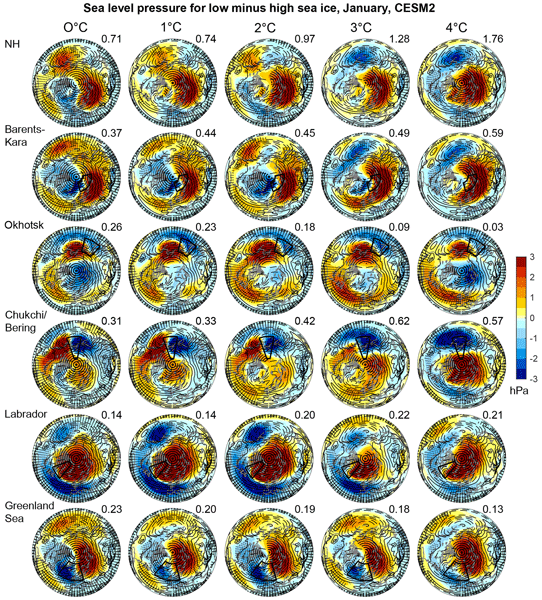
Polar sea ice changes and midlatitude weather affect each other, but how these teleconnections play out differ between the poles and between sea ice regions. Knowing how they interact is important for climate risk assessments, but few studies have investigated how the teleconnections evolve with global warming. Using large ensembles of climate model simulations, we find teleconnections patterns that differ between sea ice regions, but are quite robust to changes in global surface temperature.
Joe Adabouk Amooli, Marianne T. Lund, Sourangsu Chowdhury, Gunnar Myhre, Ane N. Johansen, Bjørn H. Samset, and Daniel M. Westervelt
Atmos. Chem. Phys., 25, 11611–11632, https://doi.org/10.5194/acp-25-11611-2025, https://doi.org/10.5194/acp-25-11611-2025, 2025
Short summary
Short summary
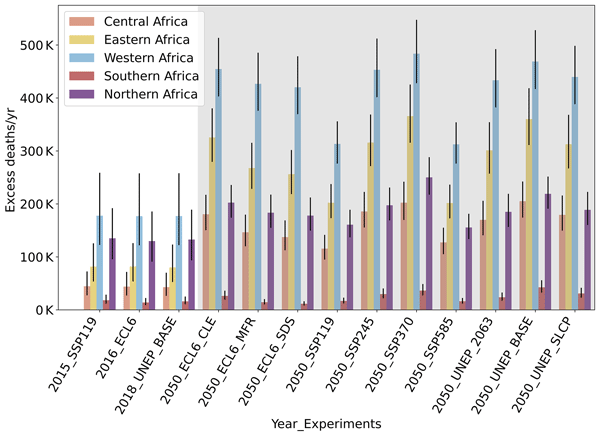
We analyze various projections of African aerosol emissions and their potential impacts on climate and public health. We find that future emissions vary widely across emission projections, with differences in sectoral emission distributions. Using the Oslo chemical transport model, we show that air pollution exposure in some regions of Africa could increase significantly by 2050, increasing pollution-related deaths, with most scenarios projecting aerosol-induced warming over sub-Saharan Africa.
Catherine A. Toolan, Joe Adabouk Amooli, Laura J. Wilcox, Bjørn H. Samset, Andrew G. Turner, and Daniel M. Westervelt
Atmos. Chem. Phys., 25, 10523–10557, https://doi.org/10.5194/acp-25-10523-2025, https://doi.org/10.5194/acp-25-10523-2025, 2025
Short summary
Short summary
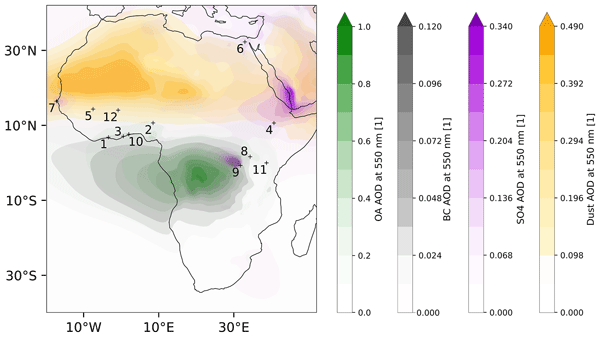
Our research explores how well air pollution and rainfall patterns in Africa are represented in current climate models by comparing model data to observations from 1981 to 2023. While most models capture seasonal air quality changes well, they struggle to replicate the distribution of non-dust pollutants and certain rainfall patterns, especially over east Africa. Improving these models is crucial for better climate predictions and preparing for future risks.
Robert J. Allen
Atmos. Chem. Phys., 25, 10361–10378, https://doi.org/10.5194/acp-25-10361-2025, https://doi.org/10.5194/acp-25-10361-2025, 2025
Short summary
Short summary
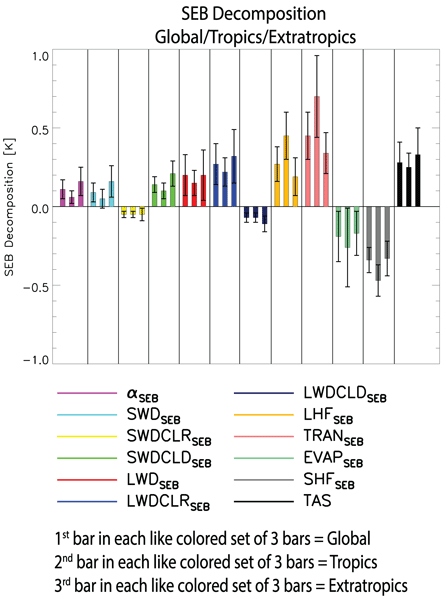
Climate models are analyzed to quantify the biogeophysical and biogeochemical effects of carbon fertilization at the time of atmospheric carbon dioxide quadrupling under both a preindustrial and a warmer background climate. The biogeophysical effects lead to relatively weak warming largely due to reduced canopy transpiration. Biogeochemical cooling associated with enhanced land carbon storage dominates. Similar results are obtained under both background climates but with some nuances.
Paul T. Griffiths, Laura J. Wilcox, Robert J. Allen, Vaishali Naik, Fiona M. O'Connor, Michael Prather, Alex Archibald, Florence Brown, Makoto Deushi, William Collins, Stephanie Fiedler, Naga Oshima, Lee T. Murray, Bjørn H. Samset, Chris Smith, Steven Turnock, Duncan Watson-Parris, and Paul J. Young
Atmos. Chem. Phys., 25, 8289–8328, https://doi.org/10.5194/acp-25-8289-2025, https://doi.org/10.5194/acp-25-8289-2025, 2025
Short summary
Short summary
The Aerosol Chemistry Model Intercomparison Project (AerChemMIP) aimed to quantify the climate and air quality impacts of aerosols and chemically reactive gases. We review its contribution to AR6 (Sixth Assessment Report of the Intergovernmental Panel on Climate Change) and the wider understanding of the role of these species in climate and climate change. We identify challenges and provide recommendations to improve the utility and uptake of climate model data, detailed summary tables of CMIP6 models, experiments, and emergent diagnostics.
Tuomas Naakka, Daniel Köhler, Kalle Nordling, Petri Räisänen, Marianne Tronstad Lund, Risto Makkonen, Joonas Merikanto, Bjørn H. Samset, Victoria A. Sinclair, Jennie L. Thomas, and Annica M. L. Ekman
Atmos. Chem. Phys., 25, 8127–8145, https://doi.org/10.5194/acp-25-8127-2025, https://doi.org/10.5194/acp-25-8127-2025, 2025
Short summary
Short summary
The effects of warmer sea surface temperatures and decreasing sea ice cover on polar climates have been studied using four climate models with identical prescribed changes in sea surface temperatures and sea ice cover. The models predict similar changes in air temperature and precipitation in the polar regions in a warmer climate with less sea ice. However, the models disagree on how the atmospheric circulation, i.e. the large-scale winds, will change with warmer temperatures and less sea ice.
Feifei Luo, Bjørn H. Samset, Camilla W. Stjern, Manoj Joshi, Laura J. Wilcox, Robert J. Allen, Wei Hua, and Shuanglin Li
Atmos. Chem. Phys., 25, 7647–7667, https://doi.org/10.5194/acp-25-7647-2025, https://doi.org/10.5194/acp-25-7647-2025, 2025
Short summary
Short summary
Black carbon (BC) aerosol is emitted from the incomplete combustion of biomass and fossil fuels. We found that Asian BC leads to strong local cooling and drying. Reductions in precipitation primarily depend on the thermodynamic effects due to solar radiation absorption by BC. The combined thermodynamic and dynamic effects shape the spatial pattern of precipitation responses to Asian BC. These results help us further understand the impact of emissions of anthropogenic aerosols on Asian climate.
Duncan Watson-Parris, Laura J. Wilcox, Camilla W. Stjern, Robert J. Allen, Geeta Persad, Massimo A. Bollasina, Annica M. L. Ekman, Carley E. Iles, Manoj Joshi, Marianne T. Lund, Daniel McCoy, Daniel M. Westervelt, Andrew I. L. Williams, and Bjørn H. Samset
Atmos. Chem. Phys., 25, 4443–4454, https://doi.org/10.5194/acp-25-4443-2025, https://doi.org/10.5194/acp-25-4443-2025, 2025
Short summary
Short summary
In 2020, regulations by the International Maritime Organization aimed to reduce aerosol emissions from ships. These aerosols previously had a cooling effect, which the regulations might reduce, revealing more greenhouse gas warming. Here we find that, while there is regional warming, the global 2020–2040 temperature rise is only +0.03 °C. This small change is difficult to distinguish from natural climate variability, indicating the regulations have had a limited effect on observed warming to date.
Kalle Nordling, Nora L. S. Fahrenbach, and Bjørn H. Samset
Atmos. Chem. Phys., 25, 1659–1684, https://doi.org/10.5194/acp-25-1659-2025, https://doi.org/10.5194/acp-25-1659-2025, 2025
Short summary
Short summary
People experience daily weather, not changes in monthly averages. We investigate the likelihood of events, which occurred once every 10 years in the pre-industrial era. We analyze how summertime precipitation and daily maximum temperature events evolve. Our focus is on understanding the role of day-to-day variability in the change in the number of extreme weather days. We find that in most regions, a change in variability is the primary driver for change in summertime extreme precipitation.
Alcide Zhao, Laura J. Wilcox, and Claire L. Ryder
Atmos. Chem. Phys., 24, 13385–13402, https://doi.org/10.5194/acp-24-13385-2024, https://doi.org/10.5194/acp-24-13385-2024, 2024
Short summary
Short summary
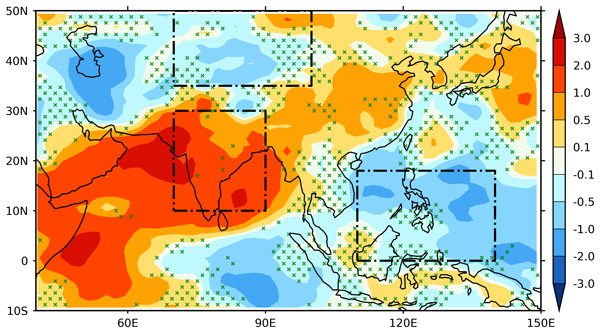
Climate models include desert dust aerosols, which cause atmospheric heating and can change circulation patterns. We assess the effect of dust on the Indian and east Asian summer monsoons through multi-model experiments isolating the effect of dust in current climate models for the first time. Dust atmospheric heating results in a southward shift of western Pacific equatorial rainfall and an enhanced Indian summer monsoon. This shows the importance of accurate dust representation in models.
Benjamin M. Sanderson, Ben B. B. Booth, John Dunne, Veronika Eyring, Rosie A. Fisher, Pierre Friedlingstein, Matthew J. Gidden, Tomohiro Hajima, Chris D. Jones, Colin G. Jones, Andrew King, Charles D. Koven, David M. Lawrence, Jason Lowe, Nadine Mengis, Glen P. Peters, Joeri Rogelj, Chris Smith, Abigail C. Snyder, Isla R. Simpson, Abigail L. S. Swann, Claudia Tebaldi, Tatiana Ilyina, Carl-Friedrich Schleussner, Roland Séférian, Bjørn H. Samset, Detlef van Vuuren, and Sönke Zaehle
Geosci. Model Dev., 17, 8141–8172, https://doi.org/10.5194/gmd-17-8141-2024, https://doi.org/10.5194/gmd-17-8141-2024, 2024
Short summary
Short summary
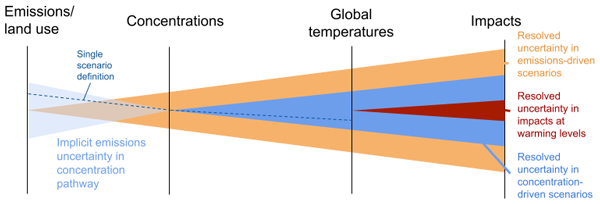
We discuss how, in order to provide more relevant guidance for climate policy, coordinated climate experiments should adopt a greater focus on simulations where Earth system models are provided with carbon emissions from fossil fuels together with land use change instructions, rather than past approaches that have largely focused on experiments with prescribed atmospheric carbon dioxide concentrations. We discuss how these goals might be achieved in coordinated climate modeling experiments.
Robert J. Allen, Xueying Zhao, Cynthia A. Randles, Ryan J. Kramer, Bjørn H. Samset, and Christopher J. Smith
Atmos. Chem. Phys., 24, 11207–11226, https://doi.org/10.5194/acp-24-11207-2024, https://doi.org/10.5194/acp-24-11207-2024, 2024
Short summary
Short summary
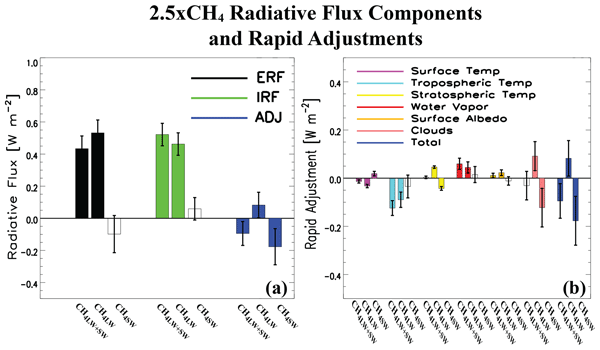
Present-day methane shortwave absorption mutes 28% (7–55%) of the surface warming associated with its longwave absorption. The precipitation increase associated with the longwave radiative effects of the present-day methane perturbation is also muted by shortwave absorption but not significantly so. Methane shortwave absorption also impacts the magnitude of its climate feedback parameter, largely through the cloud feedback.

Marit Sandstad, Borgar Aamaas, Ane Nordlie Johansen, Marianne Tronstad Lund, Glen Philip Peters, Bjørn Hallvard Samset, Benjamin Mark Sanderson, and Ragnhild Bieltvedt Skeie
Geosci. Model Dev., 17, 6589–6625, https://doi.org/10.5194/gmd-17-6589-2024, https://doi.org/10.5194/gmd-17-6589-2024, 2024
Short summary
Short summary
The CICERO-SCM has existed as a Fortran model since 1999 that calculates the radiative forcing and concentrations from emissions and is an upwelling diffusion energy balance model of the ocean that calculates temperature change. In this paper, we describe an updated version ported to Python and publicly available at https://github.com/ciceroOslo/ciceroscm (https://doi.org/10.5281/zenodo.10548720). This version contains functionality for parallel runs and automatic calibration.
Alkiviadis Kalisoras, Aristeidis K. Georgoulias, Dimitris Akritidis, Robert J. Allen, Vaishali Naik, Chaincy Kuo, Sophie Szopa, Pierre Nabat, Dirk Olivié, Twan van Noije, Philippe Le Sager, David Neubauer, Naga Oshima, Jane Mulcahy, Larry W. Horowitz, and Prodromos Zanis
Atmos. Chem. Phys., 24, 7837–7872, https://doi.org/10.5194/acp-24-7837-2024, https://doi.org/10.5194/acp-24-7837-2024, 2024
Short summary
Short summary
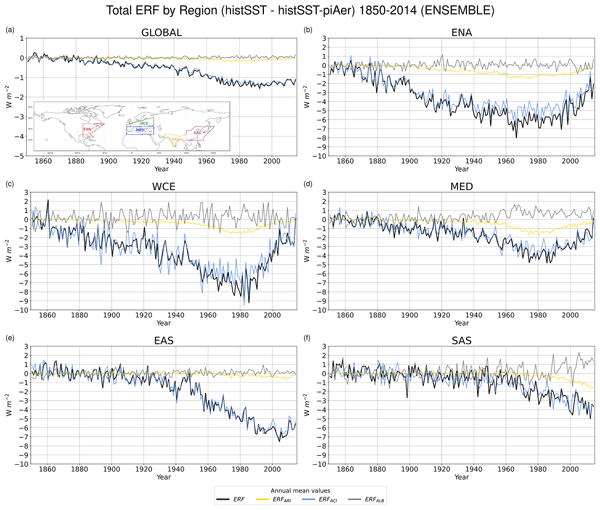
Effective radiative forcing (ERF) is a metric for estimating how human activities and natural agents change the energy flow into and out of the Earth’s climate system. We investigate the anthropogenic aerosol ERF, and we estimate the contribution of individual processes to the total ERF using simulations from Earth system models within the Coupled Model Intercomparison Project Phase 6 (CMIP6). Our findings highlight that aerosol–cloud interactions drive ERF variability during the last 150 years.
Zhen Liu, Massimo A. Bollasina, and Laura J. Wilcox
Atmos. Chem. Phys., 24, 7227–7252, https://doi.org/10.5194/acp-24-7227-2024, https://doi.org/10.5194/acp-24-7227-2024, 2024
Short summary
Short summary
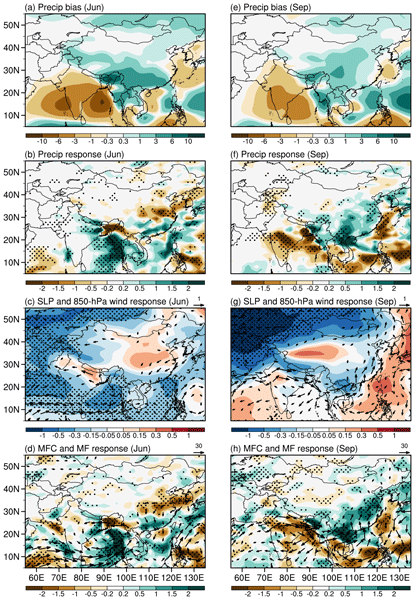
The aerosol impact on monsoon precipitation and circulation is strongly influenced by a model-simulated spatio-temporal variability in the climatological monsoon precipitation across Asia, which critically modulates the efficacy of aerosol–cloud–precipitation interactions, the predominant driver of the total aerosol response. There is a strong interplay between South Asia and East Asia monsoon precipitation biases and their relative predominance in driving the overall monsoon response.
James L. Gomez, Robert J. Allen, and King-Fai Li
Atmos. Chem. Phys., 24, 6937–6963, https://doi.org/10.5194/acp-24-6937-2024, https://doi.org/10.5194/acp-24-6937-2024, 2024
Short summary
Short summary
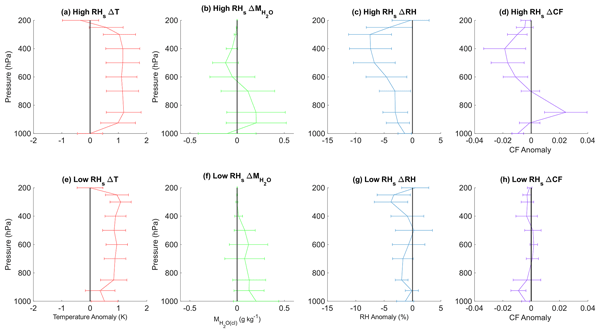
Wildfires in California (CA) have grown very large during the past 20 years. These fires emit sunlight-absorbing aerosols. Analyzing observational data, our study finds that aerosols emitted from large fires in northern CA spread throughout CA and Nevada and heat the atmosphere. This heating is consistent with larger-than-normal temperatures and dry conditions. Further study is needed to determine how much the aerosols heat the atmosphere and whether they are drying the atmosphere as well.
Malte Meinshausen, Carl-Friedrich Schleussner, Kathleen Beyer, Greg Bodeker, Olivier Boucher, Josep G. Canadell, John S. Daniel, Aïda Diongue-Niang, Fatima Driouech, Erich Fischer, Piers Forster, Michael Grose, Gerrit Hansen, Zeke Hausfather, Tatiana Ilyina, Jarmo S. Kikstra, Joyce Kimutai, Andrew D. King, June-Yi Lee, Chris Lennard, Tabea Lissner, Alexander Nauels, Glen P. Peters, Anna Pirani, Gian-Kasper Plattner, Hans Pörtner, Joeri Rogelj, Maisa Rojas, Joyashree Roy, Bjørn H. Samset, Benjamin M. Sanderson, Roland Séférian, Sonia Seneviratne, Christopher J. Smith, Sophie Szopa, Adelle Thomas, Diana Urge-Vorsatz, Guus J. M. Velders, Tokuta Yokohata, Tilo Ziehn, and Zebedee Nicholls
Geosci. Model Dev., 17, 4533–4559, https://doi.org/10.5194/gmd-17-4533-2024, https://doi.org/10.5194/gmd-17-4533-2024, 2024
Short summary
Short summary
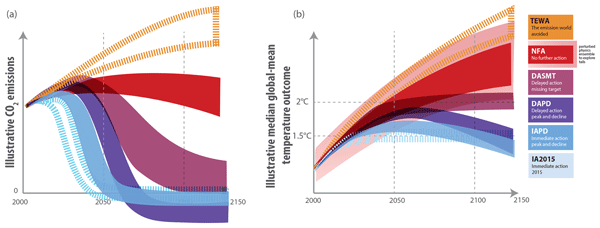
The scientific community is considering new scenarios to succeed RCPs and SSPs for the next generation of Earth system model runs to project future climate change. To contribute to that effort, we reflect on relevant policy and scientific research questions and suggest categories for representative emission pathways. These categories are tailored to the Paris Agreement long-term temperature goal, high-risk outcomes in the absence of further climate policy and worlds “that could have been”.
Stephanie Fiedler, Vaishali Naik, Fiona M. O'Connor, Christopher J. Smith, Paul Griffiths, Ryan J. Kramer, Toshihiko Takemura, Robert J. Allen, Ulas Im, Matthew Kasoar, Angshuman Modak, Steven Turnock, Apostolos Voulgarakis, Duncan Watson-Parris, Daniel M. Westervelt, Laura J. Wilcox, Alcide Zhao, William J. Collins, Michael Schulz, Gunnar Myhre, and Piers M. Forster
Geosci. Model Dev., 17, 2387–2417, https://doi.org/10.5194/gmd-17-2387-2024, https://doi.org/10.5194/gmd-17-2387-2024, 2024
Short summary
Short summary
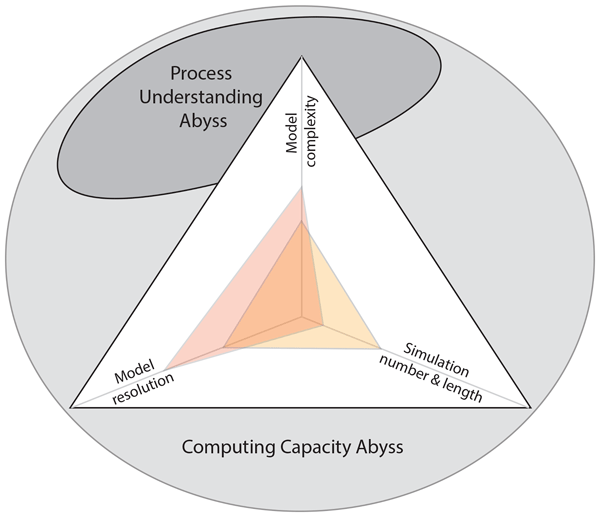
Climate scientists want to better understand modern climate change. Thus, climate model experiments are performed and compared. The results of climate model experiments differ, as assessed in the latest Intergovernmental Panel on Climate Change (IPCC) assessment report. This article gives insights into the challenges and outlines opportunities for further improving the understanding of climate change. It is based on views of a group of experts in atmospheric composition–climate interactions.
William J. Dow, Christine M. McKenna, Manoj M. Joshi, Adam T. Blaker, Richard Rigby, and Amanda C. Maycock
Weather Clim. Dynam., 5, 357–367, https://doi.org/10.5194/wcd-5-357-2024, https://doi.org/10.5194/wcd-5-357-2024, 2024
Short summary
Short summary
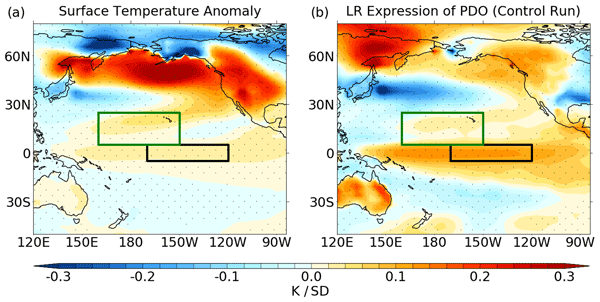
Changes to sea surface temperatures in the extratropical North Pacific are driven partly by patterns of local atmospheric circulation, such as the Aleutian Low. We show that an intensification of the Aleutian Low could contribute to small changes in temperatures across the equatorial Pacific via the initiation of two mechanisms. The effect, although significant, is unlikely to explain fully the recently observed multi-year shift of a pattern of climate variability across the wider Pacific.
Thomas Wilder, Xiaoming Zhai, David Munday, and Manoj Joshi
Ocean Sci., 19, 1669–1686, https://doi.org/10.5194/os-19-1669-2023, https://doi.org/10.5194/os-19-1669-2023, 2023
Short summary
Short summary
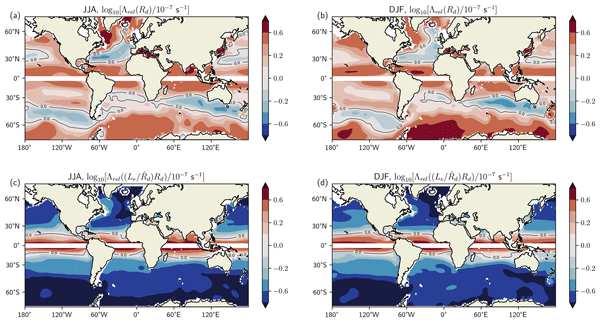
The dissipation rate of eddy energy in current energy budget-based eddy parameterisations is still relatively unconstrained, leading to uncertainties in ocean transport and ocean heat uptake. Here, we derive a dissipation rate due to the interaction of surface winds and eddy currents, a process known to significantly damp ocean eddies. The dissipation rate is quantified using seasonal climatology and displays wide spatial variability, with some of the largest values found in the Southern Ocean.
Saroj Kumar Sahu, Poonam Mangaraj, Gufran Beig, Marianne T. Lund, Bjørn Hallvard Samset, Pallavi Sahoo, and Ashirbad Mishra
Earth Syst. Sci. Data Discuss., https://doi.org/10.5194/essd-2023-310, https://doi.org/10.5194/essd-2023-310, 2023
Revised manuscript not accepted
Short summary
Short summary
Elevated emission of particulate matter is not limited to urban areas, led to poor air quality across the country. Emission Inventory is the first line of defensive tools for air quality management and understanding and identification of the source of pollutants. The present work is an attempt to develop a high-resolution (~10 km) national inventory of particulate pollutants in India for 2020 using IPCC methodology. The developed dataset is vital piece of information for mitigation strategies.
Laura J. Wilcox, Robert J. Allen, Bjørn H. Samset, Massimo A. Bollasina, Paul T. Griffiths, James Keeble, Marianne T. Lund, Risto Makkonen, Joonas Merikanto, Declan O'Donnell, David J. Paynter, Geeta G. Persad, Steven T. Rumbold, Toshihiko Takemura, Kostas Tsigaridis, Sabine Undorf, and Daniel M. Westervelt
Geosci. Model Dev., 16, 4451–4479, https://doi.org/10.5194/gmd-16-4451-2023, https://doi.org/10.5194/gmd-16-4451-2023, 2023
Short summary
Short summary
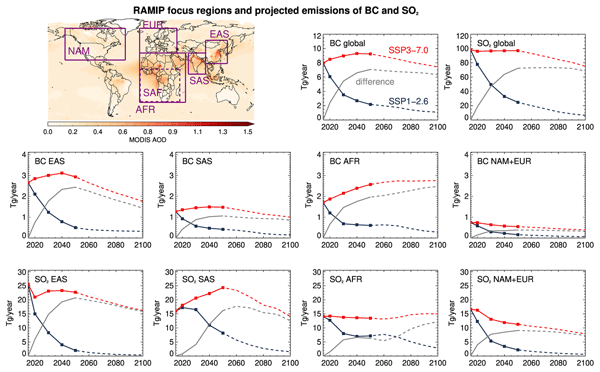
Changes in anthropogenic aerosol emissions have strongly contributed to global and regional climate change. However, the size of these regional impacts and the way they arise are still uncertain. With large changes in aerosol emissions a possibility over the next few decades, it is important to better quantify the potential role of aerosol in future regional climate change. The Regional Aerosol Model Intercomparison Project will deliver experiments designed to facilitate this.
Marianne Tronstad Lund, Gunnar Myhre, Ragnhild Bieltvedt Skeie, Bjørn Hallvard Samset, and Zbigniew Klimont
Atmos. Chem. Phys., 23, 6647–6662, https://doi.org/10.5194/acp-23-6647-2023, https://doi.org/10.5194/acp-23-6647-2023, 2023
Short summary
Short summary
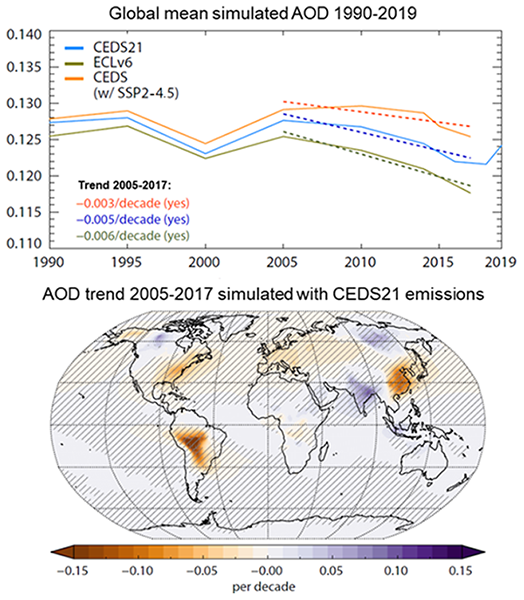
Here we show that differences, in magnitude and trend, between recent global anthropogenic emission inventories have a notable influence on simulated regional abundances of anthropogenic aerosol over the 1990–2019 period. This, in turn, affects estimates of radiative forcing. Our findings form a basis for comparing existing and upcoming studies on anthropogenic aerosols using different emission inventories.
Manoj Joshi, Robert A. Hall, David P. Stevens, and Ed Hawkins
Earth Syst. Dynam., 14, 443–455, https://doi.org/10.5194/esd-14-443-2023, https://doi.org/10.5194/esd-14-443-2023, 2023
Short summary
Short summary
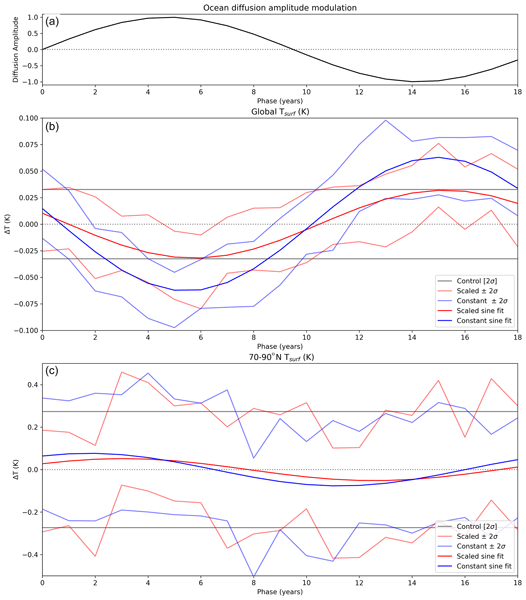
The 18.6-year lunar nodal cycle arises from variations in the angle of the Moon's orbital plane and affects ocean tides. In this work we use a climate model to examine the effect of this cycle on the ocean, surface, and atmosphere. The timing of anomalies is consistent with the so-called slowdown in global warming and has implications for when global temperatures will exceed 1.5 ℃ above pre-industrial levels. Regional anomalies have implications for seasonal climate areas such as Europe.
Jarmo S. Kikstra, Zebedee R. J. Nicholls, Christopher J. Smith, Jared Lewis, Robin D. Lamboll, Edward Byers, Marit Sandstad, Malte Meinshausen, Matthew J. Gidden, Joeri Rogelj, Elmar Kriegler, Glen P. Peters, Jan S. Fuglestvedt, Ragnhild B. Skeie, Bjørn H. Samset, Laura Wienpahl, Detlef P. van Vuuren, Kaj-Ivar van der Wijst, Alaa Al Khourdajie, Piers M. Forster, Andy Reisinger, Roberto Schaeffer, and Keywan Riahi
Geosci. Model Dev., 15, 9075–9109, https://doi.org/10.5194/gmd-15-9075-2022, https://doi.org/10.5194/gmd-15-9075-2022, 2022
Short summary
Short summary
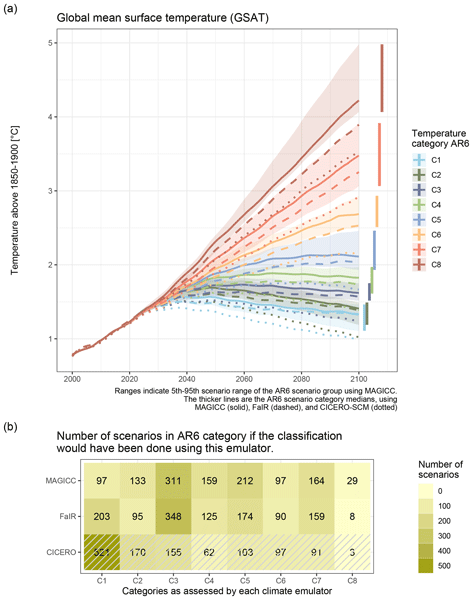
Assessing hundreds or thousands of emission scenarios in terms of their global mean temperature implications requires standardised procedures of infilling, harmonisation, and probabilistic temperature assessments. We here present the open-source
climate-assessmentworkflow that was used in the IPCC AR6 Working Group III report. The paper provides key insight for anyone wishing to understand the assessment of climate outcomes of mitigation pathways in the context of the Paris Agreement.
Alcide Zhao, Claire L. Ryder, and Laura J. Wilcox
Atmos. Chem. Phys., 22, 2095–2119, https://doi.org/10.5194/acp-22-2095-2022, https://doi.org/10.5194/acp-22-2095-2022, 2022
Short summary
Short summary
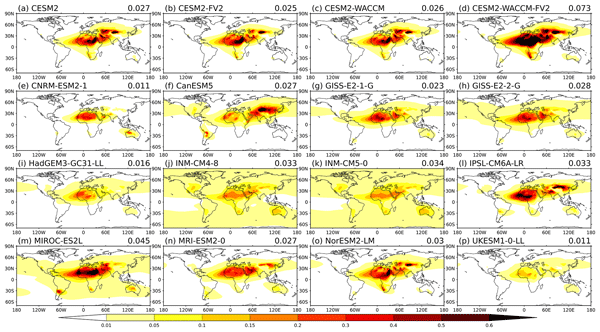
The CMIP6 models' simulated dust processes are getting more uncertain as models become more sophisticated. Of particular challenge are the links between dust cycles and optical properties, and we recommend more detailed output relating to dust cycles in future intercomparison projects to constrain such links. Also, models struggle to capture certain key regional dust processes such as dust accumulation along the slope of the Himalayas and dust seasonal cycles in North China and North America.
Jie Zhang, Kalli Furtado, Steven T. Turnock, Jane P. Mulcahy, Laura J. Wilcox, Ben B. Booth, David Sexton, Tongwen Wu, Fang Zhang, and Qianxia Liu
Atmos. Chem. Phys., 21, 18609–18627, https://doi.org/10.5194/acp-21-18609-2021, https://doi.org/10.5194/acp-21-18609-2021, 2021
Short summary
Short summary
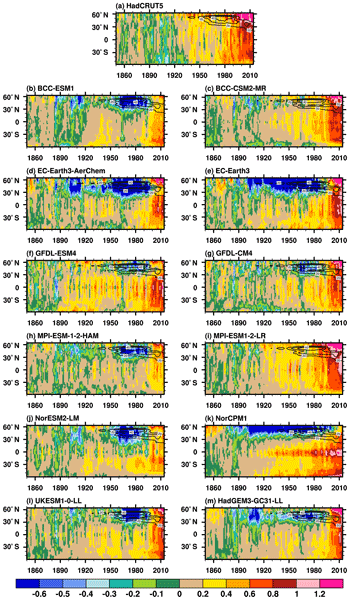
The CMIP6 ESMs systematically underestimate TAS anomalies in the NH midlatitudes, especially from 1960 to 1990. The anomalous cooling is concurrent in time and space with anthropogenic SO2 emissions. The spurious drop in TAS is attributed to the overestimated aerosol concentrations. The aerosol forcing sensitivity cannot well explain the inter-model spread of PHC biases. And the cloud-amount term accounts for most of the inter-model spread in aerosol forcing sensitivity.
Cited articles
Andrews, T., Boucher, O., Fläschner, D., Kasoar, M., Kharin, V. V., Kirkevåg, A., Lamarque, J.-F., Myhre, G., Mülmenstädt, J., Oliviè, D. J. L., Samset, B. H., Sandstad, M., Shawki, D., Shindell, D., Stier, P., Takemura, T., Voulgarakis, A., and Watson-Parris, D.: Precipitation Driver Response Model Intercomparison Project data sets 2013–2021, World Data Center for Climate (WDCC) at DKRZ [data set], https://doi.org/10.26050/WDCC/PDRMIP_2012-2021, 2021.
Bai, J., Ai, W., Tang, H., and Zhang, Z.: Detectable anthropogenic influence on the changes in structure of precipitation over China using CMIP6 models, Clim. Dynam., 62, 8899–8911, 2024.
Betts, A. K. and Miller, M. J.: The Betts-Miller scheme, in: The Representation of Cumulus Convection in Numerical Models of the Atmosphere, Chap. 9, edited by: Emanuel, K. A. and Raymond, D. J., Amer. Meteor. Soc., Meteor. Mon., 24, 107–121, ISBN 978-1-935704-13-3, 1993.
Blaker, A. T., Joshi, M., Sinha, B., Stevens, D. P., Smith, R. S., and Hirschi, J. J.-M.: FORTE 2.0: a fast, parallel and flexible coupled climate model, Geosci. Model Dev., 14, 275–293, https://doi.org/10.5194/gmd-14-275-2021, 2021.
Bollasina, M. A., Ming, Y., and Ramaswamy, V.: Anthropogenic aerosols and the weakening of the South Asian summer monsoon, Science, 334, 502–505, 2011.
Chavez, S. P. and Barros, A. P.: Aerosol indirect effects on orographic clouds and precipitation, Front. Earth Sci., 11, 1025266, https://doi.org/10.3389/feart.2023.1025266, 2023.
Dong, B., Wilcox, L., Highwood, E., and Sutton, R.: Impacts of recent decadal changes in Asian aerosols on the East Asian summer monsoon: roles of aerosol–radiation and aerosol–cloud interactions, Clim. Dynam., 53, 3235–3256, 2019.
Fang, C., Haywood, J. M., Liang, J., Johnson, B. T., Chen, Y., and Zhu, B.: Impacts of reducing scattering and absorbing aerosols on the temporal extent and intensity of South Asian summer monsoon and East Asian summer monsoon, Atmos. Chem. Phys., 23, 8341–8368, https://doi.org/10.5194/acp-23-8341-2023, 2023.
Granier, C., Bessagnet, B., Bond, T., D'Angiola, A., Denier van der Gon, H., Frost, G. J., Heil, A., Kaiser, J. W., Kinne, S., Klimont, Z., Kloster, S., Lamargue, J. F., Liousse, C., Masui, T., Meleux, F., Mieville, A., Ohara, T., Raut, J. C., Riahi, K., Schultz, M. G., Smith, S. J., Thompson, A., Aardenne, J., van der Werf, G. R., and van Vuuren, D. P.: Evolution of anthropogenic and biomass burning emissions of air pollutants at global and regionalscales during the 1980–2010 period, Climatic Change, 109, 163–190, 2011.
Guo, L., Highwood, E. J., Shaffrey, L. C., and Turner, A. G.: The effect of regional changes in anthropogenic aerosols on rainfall of the East Asian Summer Monsoon, Atmos. Chem. Phys., 13, 1521–1534, https://doi.org/10.5194/acp-13-1521-2013, 2013.
Guo, L., Turner, A. G., and Highwood, E. J.: Impacts of 20th century aerosol emissions on the South Asian monsoon in the CMIP5 models, Atmos. Chem. Phys., 15, 6367–6378, https://doi.org/10.5194/acp-15-6367-2015, 2015.
Guo, Y., Dong, B., and Zhu, J.: Anthropogenic impacts on changes in summer extreme precipitation over China during 1961–2014: Roles of greenhouse gases and anthropogenic aerosols, Clim. Dynam., 60, 2633–2643, 2023.
Herbert, R., Wilcox, L. J., Joshi, M., Highwood, E., and Frame, D.: Nonlinear response of Asian summer monsoon precipitation toemission reductions in South and East Asia, Environ. Res. Lett., 17, 014005, https://doi.org/10.1088/1748-9326/ac3b19, 2022.
Hersbach, H., Bell, B., Berrisford, P., Biavati, G., Horányi, A., Muñoz Sabater, J., Nicolas, J., Peubey, C., Radu, R., Rozum, I., Schepers, D., Simmons, A., Soci, C., Dee, D., and Thépaut, J.-N.: ERA5 monthly averaged data on pressure levels from 1940 to present, Copernicus Climate Change Service (C3S) Climate Data Store (CDS) [data set], https://doi.org/10.24381/cds.6860a573, 2023a.
Hersbach, H., Comyn-Platt, E., Bell, B., Berrisford, P., Biavati, G., Horányi, A., Muñoz Sabater, J., Nicolas, J., Peubey, C., Radu, R., Rozum, I., Schepers, D., Simmons, A., Soci, C., Dee, D., Thépaut, J-N., Cagnazo, C., and Cucchi, M.: ERA5 post-processed daily-statistics on pressure levels from 1940 to present, Copernicus Climate Change Service (C3S) Climate Data Store (CDS) [data set], https://doi.org/10.24381/cds.50314f4c, 2023b.
Iles, C. E., Samset, B. H., Sandstad, M., Schuhen, N., Wilcox, L., and Lund, M.: Strong regional trends in extreme weather over the next two decades under high- and low-emissions pathways, Nat. Geosci., 17, 845–850, 2024.
Inness, A., Ades, M., Agustí-Panareda, A., Barré, J., Benedictow, A., Blechschmidt, A.-M., Dominguez, J. J., Engelen, R., Eskes, H., Flemming, J., Huijnen, V., Jones, L., Kipling, Z., Massart, S., Parrington, M., Peuch, V.-H., Razinger, M., Remy, S., Schulz, M., and Suttie, M.: The CAMS reanalysis of atmospheric composition, Atmos. Chem. Phys., 19, 3515–3556, https://doi.org/10.5194/acp-19-3515-2019, 2019.
IPCC: Climate Change 2021: The Physical Science Basis. Contribution of Working Group I to the Sixth Assessment Report of the Intergovernmental Panel on Climate Change, edited by: Masson-Delmotte, V., Zhai, P., Pirani, A., Connors, S. L., Péan, C., Berger, S., Caud, N., Chen, Y., Goldfarb, L., Gomis, M. I., Huang, M., Leitzell, K., Lonnoy, E., Matthews, J. B. R., Maycock, T. K., Waterfield, T., Yelekçi, O., Yu, R., and Zhou, B., Cambridge University Press, Cambridge, United Kingdom and New York, NY, USA, 2391 pp., https://doi.org/10.1017/9781009157896, 2021.
Joshi, M., Stringer, M., van der Wiel, K., O'Callaghan, A., and Fueglistaler, S.: IGCM4: a fast, parallel and flexible intermediate climate model, Geosci. Model Dev., 8, 1157–1167, https://doi.org/10.5194/gmd-8-1157-2015, 2015.
Lang, Y., Zhang, J., Zhao, J., Gong, Y., Han, T., Deng, X., and Liu, Y.: Mechanisms and quantification: How anthropogenic aerosols weaken the East Asian summer monsoon, NPJ Clim. Atmos. Sci., 8, 13, https://doi.org/10.1038/s41612-025-00903-6, 2025.
Li, Z., Lau, W. K., Ramanathan, V., Wu, G., Ding, Y., Manoj, M. G., Liu, J., Qian, Y., Li, J., Zhou, T., Fan, J., Rosenfeld, D., Ming, Y., Wang, Y., Huang, J., Wang, B., Xu, X., Lee, S. S., Cribb, M., Zhang, F., Yang, X., Takemura, T., Wang, K., Xia, X., Yin, Y., Zhang, H., Guo, J., Zhai, P. M., Sugimoto, N., Babu, S. S., and Brasseur, G. P.: Aerosol and Monsoon Climate Interactions over Asia, Rev. Geophys., 54, 866–929, 2016.
Lin, L., Wang, Z., Xu, Y., and Fu, Q.: Sensitivity of precipitation extremes to radiative forcing of greenhouse gases and aerosols, Geophys. Res. Lett., 43, 9860–9868, 2016.
Lin, L., Xu, Y., Wang, Z., Diao, C., Dong, W., and Xie, S.: Changes in extreme rainfall over India and China attributed to regional aerosol-cloud interaction during the late 20th century rapid industrialization, Geophys. Res. Lett., 45, 7857–7865, 2018.
Liu, L., Shawki, D., Voulgarakis, A., Kasoar, M., Samset, B. H., Myhre, G., Forster, P. M., Hodnebrog, Ø, Sillmann, J., Aalbergsjø, S. G., Boucher, O., Faluvegi, G., Iversen, T., Kirkevåg, A., Lamarque, J., Olivié, D., Richardson, T., Shindell, D., and Takemura, T.: A PDRMIP Multimodel Study on the Impacts of Regional Aerosol Forcings on Global and Regional Precipitation, J. Climate, 31, 4429–4447, 2018.
Liu, Y., Sun, J., and Yang, B.: The effects of black carbon and sulphate aerosols in China regions on East Asia monsoons, Tellus B, 61, 642–656, 2009.
Luo, F., Dong, B., Tian, F., and Li, S.: Anthropogenically forced decadal change of South Asian summer monsoon across the mid-1990s, J. Geophys. Res.-Atmos., 124, 806–824, 2019.
Luo, F., Samset, B. H., Stjern, C. W., Joshi, M., Wilcox, L. J., Allen, R. J., Hua, W., and Li, S.: Physical processes influencing the Asian climate due to black carbon emission over East Asia and South Asia, Atmos. Chem. Phys., 25, 7647–7667, https://doi.org/10.5194/acp-25-7647-2025, 2025.
Ma, S., Zhou, T., Stone, D., Polson, D., Dai, A., Stott, P., Storch, H., Qian, Y., Burke, C., Wu, P., Zou, L., and Ciavarella, A.: Detectable Anthropogenic Shift toward Heavy Precipitation over Eastern China, J. Climate, 30, 1381–1396, 2017.
Monerie, P. A., Wilcox, L. J., and Turner, A. G.: Effects of anthropogenic aerosol and greenhouse gas emissions on Northern Hemisphere monsoon precipitation: Mechanisms and uncertainty, J. Climate, 35, 2305–2326, 2022.
Muller, C. J. and O'Gorman, P. A.: An energetic perspective on the regional response of precipitation to climate change, Nat. Clim. Change, 1, 266–271, 2011.
Myhre, G., Forster, P., Samset, B., Hodnebrog, Ø, Sillmann, J., Aalbergsjø, S. G., Andrews, T., Boucher, O., Faluvegi, G., and Flächner, D.: PDRMIP: A precipitation driver and response model intercomparison project, protocol and preliminary results, B. Am. Meteorol. Soc., 98, 1185–1198, 2017.
Riahi, K., Rao, S., Krey, V., Cho, C., Chirkov, V., Fischer, G., Kindermann, G., Nakicenovic, N., and Rafaj, P.: Rcp 8.5 – A scenario of comparatively high greenhouse gas emissions, Climatic Change, 109, 33–57, 2011.
Richardson, T. B., Forster, P. M., Andrews, T., and Parker, D.: Understanding the rapid precipitation response to CO2 and aerosol forcing on a regional scale, J. Climate, 29, 583–594, 2016.
Rosenfeld, D., Lohmann, U., Raga, G. B., O'Dowd, C. D., Kulmala, M., Fuzzi, S., Reissell, A., and Andreae, M. O.: Flood or Drought: How Do Aerosols Affect Precipitation?, Science, 321, 5894, https://doi.org/10.1126/science.1160606, 2008.
Samset, B., Sand, M., Smith, C., Bauer, S., Forster, P., Fuglestvedt, J., Osprey, S., and Schleussner, C.: Climate Impacts from a Removal of Anthropogenic Aerosol Emissions, Geophys. Res. Lett., 45, 1020–1029, 2018.
Samset, B. H., Lund, M. T., Bollasina, M., Myhre, G., and Wilcox, L.: Emerging Asian aerosol patterns, Nat. Geosci., 12, 582–584, https://doi.org/10.1038/s41561-019-0424-5, 2019.
Stjern, C., Joshi, M., Wilcox, L., Gollo, A., and Samset, B.: Systematic Regional Aerosol Perturbations (SyRAP) in Asia using the intermediate-resolution global climate model FORTE2, J. Adv. Model Earth Sy., 16, e2023MS004171, https://doi.org/10.1029/2023MS004171, 2024.
Tian, F., Dong, B., Robson, J., and Sutton, R.: Forced decadal changes in the East Asian summer monsoon: the roles of greenhouse gases and anthropogenic aerosols, Clim. Dynam., https://doi.org/10.1007/s00382-018-4105-7, 2018.
Wang, P., Yang, Y., Xue, D., Ren, L., Tang, J., Leung, L., and Liao, H.: Aerosols overtake greenhouse gases causing a warmer climate and more weather extremes toward carbon neutrality, Nat. Commun., 14, 7257, https://doi.org/10.1038/s41467-023-42891-2, 2023.
Webb, D. J.: An ocean model code for array processor computers, Comput. Geosci., 22, 569–578, 1996.
Westervelt, D. M., You, Y., Li, X., Ting, M., Lee, D. E., and Ming, Y.: Relative importance of greenhouse gases, sulfate, organic carbon, and black carbon aerosol for South Asian monsoon rainfall changes, Geophys. Res. Lett., 47, e2020GL088363, https://doi.org/10.1029/2020GL088363, 2020
Wilcox, L. J., Highwood, E. J., Booth, B. B. B., and Carslaw, K. S.: Quantifying sources of inter-model diversity in the cloud albedo effect, Geophys. Res. Lett., 42, 1568–1575, 2015.
Wilcox, L. J., Liu, Z., Samset, B. H., Hawkins, E., Lund, M. T., Nordling, K., Undorf, S., Bollasina, M., Ekman, A. M. L., Krishnan, S., Merikanto, J., and Turner, A. G.: Accelerated increases in global and Asian summer monsoon precipitation from future aerosol reductions, Atmos. Chem. Phys., 20, 11955–11977, https://doi.org/10.5194/acp-20-11955-2020, 2020.
Xie, X., Myhre, G., Shindell, D., Faluvegi, G., Takemura, T., Voulgarakis, A., Shi, Z., Li, X., Xie, X., Liu, H., Liu, X., and Liu, Y.: Anthropogenic sulfate aerosol pollution in South and East Asia induces increased summer precipitation over arid Central Asia, Communications Earth & Environment, 3, 328, https://doi.org/10.1038/s43247-022-00660-x, 2022.
Yang, Y., Li, S. X., and Liao, H.: Impacts of changes in anthropogenic aerosols on precipitation over China during the past four decades, Trans. Atmos. Sci., 49, 147–155, 2026.
Zhang, X., Alexander, L. V., Hegerl, G. C., Jones, P., Klein Tank, A. M. G., Peterson, T. C., Trewin, B., and Zwiers, F. W.: Indices for monitoring changes in extremes based on daily temperature and precipitation data, WIRES Clim. Change, 2, 851–870, https://doi.org/10.1002/wcc.147, 2011
Zhao, A. D., Stevenson, D. S., and Bollasina, M. A.: The role of anthropogenic aerosols in future precipitation extremes over the Asian Monsoon Region, Clim. Dynam., 52, 6257–6278, 2019.
Zhao, C., Sun, Y., Yang, J., Li, J., Zhou, Y., Yang, Y., Fan, H., and Zhao, X.: Observational evidence and mechanisms of aerosol effects on precipitation, Sci. Bull., 69, 1569–1580, https://doi.org/10.1016/j.scib.2024.03.014, 2024.
Zhong, W. Y. and Haigh, J. D.: Improved broad-band emissivity parameterization for water vapor cooling calculations, J. Atmos. Sci., 52, 124–148, 1995.
Zou, A., Yang, Y., Wang, H., Wang, P., and Liao, H.: Aerosol decline accelerates the increasing extreme precipitation in China, Geophys. Res. Lett., 52, e2024GL113887, https://doi.org/10.1029/2024GL113887, 2025.
Short summary
This study examines whether aerosol impacts on extreme rainfall shift in a warmer world. Using a climate model, we compare identical Asian SO4 forcing under pre-industrial and 1 K warmer climates. Aerosols reduce extreme rainfall in both, but more strongly over northern India in the warmer climate. A warmer, stabler atmosphere weakens circulation that partly offsets aerosol drying in pre-industrial conditions. Continued warming may strengthen this drying over parts of Asia.
This study examines whether aerosol impacts on extreme rainfall shift in a warmer world. Using a...


Altmetrics
Final-revised paper
Preprint