
Articles | Volume 26, issue 19
https://doi.org/10.5194/acp-26-14367-2026
© Author(s) 2026. This work is distributed under
the Creative Commons Attribution 4.0 License.
the Creative Commons Attribution 4.0 License.
https://doi.org/10.5194/acp-26-14367-2026
© Author(s) 2026. This work is distributed under
the Creative Commons Attribution 4.0 License.
the Creative Commons Attribution 4.0 License.
Research article
| 
12 Oct 2026
Research article |
| 12 Oct 2026
| 12 Oct 2026
Synoptic and regional-scale meteorological controls of stratus altitude in the Namib Desert
Viola Hipler
Institute of Meteorology and Climate Research, Atmospheric Trace Gases and Remote Sensing, Karlsruhe Institute of Technology (KIT), Karlsruhe, Germany
Hendrik Andersen
CORRESPONDING AUTHOR

Institute of Meteorology and Climate Research, Atmospheric Trace Gases and Remote Sensing, Karlsruhe Institute of Technology (KIT), Karlsruhe, Germany
Institute of Photogrammetry and Remote Sensing, Karlsruhe Institute of Technology (KIT), Karlsruhe, Germany
Robert Spirig
Department of Environmental Sciences, University of Basel, Basel, Switzerland
Roland Vogt
Department of Environmental Sciences, University of Basel, Basel, Switzerland
Stuart Piketh
North-West University, School for Geo- and Spatial Sciences, Potchefstroom, South Africa
Bianca Adler
Cooperative Institute for Research in Environmental Sciences (CIRES), University of Colorado Boulder, Boulder, Colorado, USA
NOAA Physical Sciences Laboratory, Boulder, Colorado, USA
Jan Cermak
Institute of Meteorology and Climate Research, Atmospheric Trace Gases and Remote Sensing, Karlsruhe Institute of Technology (KIT), Karlsruhe, Germany
Institute of Photogrammetry and Remote Sensing, Karlsruhe Institute of Technology (KIT), Karlsruhe, Germany
Related authors
No articles found.
Bianca Adler, Laura Bianco, David D. Turner, Joseph Olson, Xia Sun, Joshua Gebauer, Nicola Bodini, Stefano Letizia, and James M. Wilczak
Geosci. Model Dev., 19, 8627–8649, https://doi.org/10.5194/gmd-19-8627-2026, https://doi.org/10.5194/gmd-19-8627-2026, 2026
Short summary
Short summary
Accurate operational forecasts of temperature and wind in the coastal marine boundary layer are important for a wide range of applications. Leveraging data that were collected along the United States northeast coast during a multi-year period for the Third Wind Forecast Improvement project, we investigated the performance of the operational forecast model and identified systematic errors in wind and temperature forecasts that are now being addressed by the model developers.
Deepanshu Malik, Hendrik Andersen, Jan Cermak, and Roland Vogt
EGUsphere, https://doi.org/10.5194/egusphere-2026-2693, https://doi.org/10.5194/egusphere-2026-2693, 2026
This preprint is open for discussion and under review for Atmospheric Measurement Techniques (AMT).
Short summary
Short summary
We created the first continuous maps of fog occurrence for the central Namib Desert by combining satellite observations with ground measurements. The study shows where and how often fog reaches the surface and distinguishes it from low clouds that remain above the ground. These maps improve understanding of an important hidden water source that supports desert ecosystems and may help future studies of climate and water availability.
Alexandre Mass, Jan Cermak, and Hendrik Andersen
Atmos. Chem. Phys., 26, 12565–12589, https://doi.org/10.5194/acp-26-12565-2026, https://doi.org/10.5194/acp-26-12565-2026, 2026
Short summary
Short summary
Fog is a vital water source in the Namib Desert, but its year-to-year variability is poorly understood. Using satellite observations and reanalysis data, we show that fog and low-cloud variability is closely tied to sea surface temperatures in the Benguela upwelling system. Warm events driven by tropical water intrusions are followed by reduced fog in the northern Namib, indicating that ocean state carries predictive information for fog in this hyper-arid ecosystem.
Jaume Ruiz de Morales, Josep Calbó, Josep-Abel González, Hendrik Andersen, Jan Cermak, Julia Fuchs, Yolanda Sola, and José Luis Gómez-Amo
EGUsphere, https://doi.org/10.5194/egusphere-2026-3737, https://doi.org/10.5194/egusphere-2026-3737, 2026
Short summary
Short summary
This study presents cloud–aerosol transition zone distributions from coincidental ground-based and satellite lidar observations. The aim is to evaluate the capabilities of both observing systems and improve knowledge of transition zones, including their occurrence, horizontal extent, and vertical distribution. The results show how integrating both methods can compensate for their individual limitations and provide a more comprehensive characterization of cloud-TZ-aerosol distribution.
Clarissa Baldo, Servanne Chevaillier, Sophie Nowak, Gael Noyalet, Sandra Lafon, Claudia Di Biagio, Amelie Chaput, James King, Mathieu Cazaunau, Edouard Pangui, Jean-Francois Doussin, Remi Stanus, Nadine Mattielli, Heleen C. Vos, Gregory S. Okin, Brigitte Language, Tjaart Van Der Walt, Stuart Piketh, Karine Desboeufs, Akinori Ito, Silvia Becagli, Eugene Marais, Laurie Barrier, Stéphane Jacquemoud, and Paola Formenti
Atmos. Chem. Phys., 26, 10727–10749, https://doi.org/10.5194/acp-26-10727-2026, https://doi.org/10.5194/acp-26-10727-2026, 2026
Short summary
Short summary
Our results show that crustal element ratios and clay contents distinguish dust aerosols from arid western coastal areas and humid eastern inland regions in Southern Africa. This dust contains key micronutrients that can become bioaccessible during atmospheric transport to nearby and remote marine ecosystems. It is also enriched in carbonates and K-feldspar, serving as a source of cloud condensation and ice nuclei, with potential implications ranging from regional to sub-hemispheric scales.
Alexandre Mass, Jan Cermak, Reto Knutti, Anna L. Merrifield, and Hendrik Andersen
EGUsphere, https://doi.org/10.5194/egusphere-2026-3242, https://doi.org/10.5194/egusphere-2026-3242, 2026
Short summary
Short summary
Fog is a critical water source for life in the Namib Desert. To assess how fog may change in the future, we combined satellite observations with climate model projections. Warming ocean temperatures reduce fog, but stronger onshore winds and increased atmospheric stability counteract this effect. Overall, Namib fog appears more resilient to climate change than previously thought, a finding that may apply to other fog-prone coasts worldwide.
Nicola Bodini, Joseph Olson, Brian Gaudet, Giacomo Valerio Iungo, Mojtaba Shams Solari, Sayahnya Roy, Julie K. Lundquist, Nathan Agarwal, Timothy A. Myers, Bianca Adler, Jeffrey D. Mirocha, Eric James, Laura Bianco, James M. Wilczak, and David D. Turner
Wind Energ. Sci., 11, 1949–1961, https://doi.org/10.5194/wes-11-1949-2026, https://doi.org/10.5194/wes-11-1949-2026, 2026
Short summary
Short summary
To improve offshore wind forecasts, the Third Wind Forecast Improvement Project monitored the United States east coast for 18 months. We compiled a daily log of weather events using advanced scanners and expert notes. This public dataset identifies important wind patterns, helping scientists test computer models and choose specific cases to study.
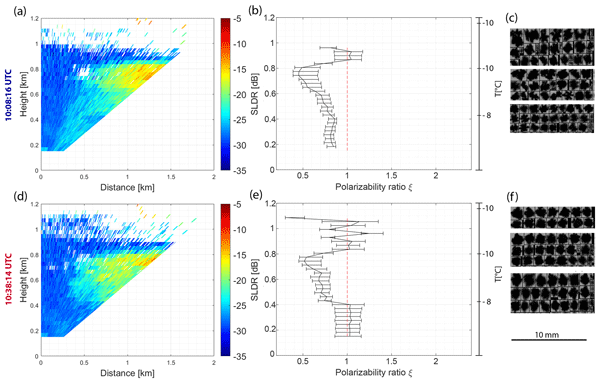
Audrey Teisseire, Patric Seifert, Kevin Ohneiser, Maximilian Maahn, Robert Spirig, and Jan Henneberger
Atmos. Meas. Tech., 19, 2897–2921, https://doi.org/10.5194/amt-19-2897-2026, https://doi.org/10.5194/amt-19-2897-2026, 2026
Short summary
Short summary
This study evaluates the vertical distribution of particle shape (VDPS) method for identifying particle shapes and riming/aggregation using in-situ and multi-frequency radar data from the CLOUDLAB campaign. Despite non-Rayleigh scattering effects, results show that the VDPS method using a Ka-band scanning cloud radar in slanted depolarization ratio (SLDR) mode is effective for hydrometeor classification.
Paola Formenti, Danitza Klopper, Anais Feron, Mathieu Cazaunau, Servanne Chevaillier, Karine Desboeufs, Claudia Di Biagio, Clarissa Baldo, Cécile Gaimoz, Vincent Michoud, Cécile Mirande-Bret, Sylvain Triquet, François Hemeret, Richard Valorso, Stephen Broccardo, Andreas Namwoonde, Mattheus Hanghome, Chiara Giorio, and Stuart J. Piketh
Earth Syst. Sci. Data Discuss., https://doi.org/10.5194/essd-2026-95, https://doi.org/10.5194/essd-2026-95, 2026
Revised manuscript under review for ESSD
Short summary
Short summary
The southern African west coast is highly impacted by climate change and aerosols from natural and human sources, yet observations are scarce. We present measurements (2014–2019) from the Henties Bay Aerosol Observatory in Namibia, including aerosol properties, ozone and meteorology. This unique dataset will support process studies and improve regional climate modelling.
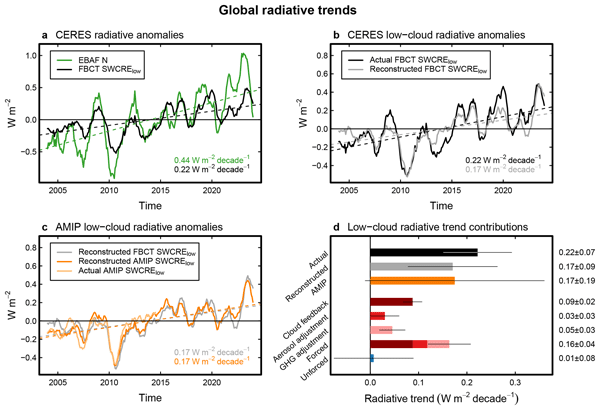
Paulo Ceppi, Sarah Wilson Kemsley, Hendrik Andersen, Timothy Andrews, Ryan J. Kramer, Peer Nowack, Casey J. Wall, and Mark D. Zelinka
Atmos. Chem. Phys., 26, 4153–4171, https://doi.org/10.5194/acp-26-4153-2026, https://doi.org/10.5194/acp-26-4153-2026, 2026
Short summary
Short summary
Recent decades have seen a marked decrease in global low-level cloud cover, leading to more sunlight heating the Earth. This trend is poorly understood, raising the concern that clouds may amplify global warming more than previously thought. We show that the cloud decrease is mostly caused by human forcing on climate, and that it agrees with previous estimates of how clouds respond to decreasing aerosol pollution, increasing greenhouse gas concentration, and their effects on global temperature.

David D. Turner, Bianca Adler, Laura Bianco, James M. Wilczak, Vincent Michaud-Belleau, and Luc Rochette
Atmos. Meas. Tech., 19, 1573–1586, https://doi.org/10.5194/amt-19-1573-2026, https://doi.org/10.5194/amt-19-1573-2026, 2026
Short summary
Short summary
It is critical that a network of ground-based instruments that measure temperature and humidity profiles be well calibrated, so that differences between any two profiles can be attributed to atmospheric differences and not instrument calibration issues. This study evaluated the relative accuracy of 7 ground-based infrared spectrometers and their ability to measure these profiles, and found that the profile bias was much smaller than the uncertainty in the retrieved profiles themselves.
Yichen Jia, Hendrik Andersen, David Neubauer, Ulrike Lohmann, Corinna Hoose, and Jan Cermak
EGUsphere, https://doi.org/10.5194/egusphere-2026-569, https://doi.org/10.5194/egusphere-2026-569, 2026
Short summary
Short summary
Understanding how ocean clouds respond to air pollution is important for climate projections. Using artificial intelligence and a climate model, we show that some model settings produce very high cloud cover, leaving little room for further cloud growth as pollution increases. This “headroom effect” can make cloud responses appear weak. Our results highlight the need to consider existing cloud conditions when interpreting how cloud cover responds to the environment.
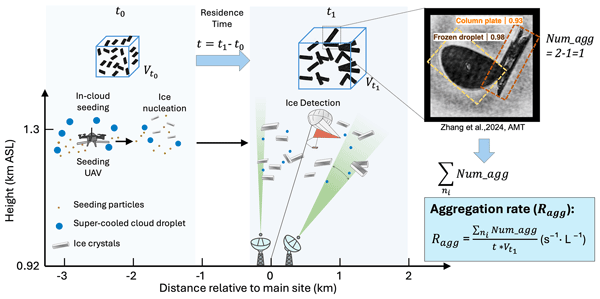
Huiying Zhang, Fabiola Ramelli, Christopher Fuchs, Nadja Omanovic, Anna J. Miller, Robert Spirig, Zhaolong Wu, Yunpei Chu, Xia Li, Ulrike Lohmann, and Jan Henneberger
Atmos. Chem. Phys., 26, 1459–1481, https://doi.org/10.5194/acp-26-1459-2026, https://doi.org/10.5194/acp-26-1459-2026, 2026
Short summary
Short summary
Ice crystals in clouds aggregate, shaping snow and rain, yet rates are hard to measure. Using cloud seeding, we sampled crystals downwind after known times. A deep-learning algorithm quantified aggregation by counting crystal components. Initial ice concentration was the main driver, confirmed by causal analysis, physics, and machine learning, though weaker than theory predicts. Temperature, size, and shape also mattered, while turbulence was negligible.
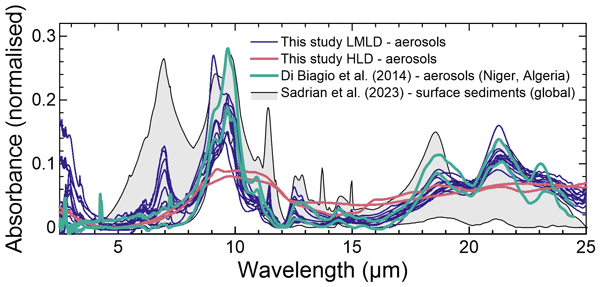
Claudia Di Biagio, Elisa Bru, Avila Orta, Servanne Chevaillier, Clarissa Baldo, Antonin Bergé, Mathieu Cazaunau, Sandra Lafon, Sophie Nowak, Edouard Pangui, Meinrat O. Andreae, Pavla Dagsson-Waldhauserova, Kebonyethata Dintwe, Konrad Kandler, James S. King, Amelie Chaput, Gregory S. Okin, Stuart Piketh, Thuraya Saeed, David Seibert, Zongbo Shi, Earle Williams, Pasquale Sellitto, and Paola Formenti
Atmos. Chem. Phys., 26, 1079–1091, https://doi.org/10.5194/acp-26-1079-2026, https://doi.org/10.5194/acp-26-1079-2026, 2026
Short summary
Short summary
Spectroscopy measurements show that the absorbance of dust in the far-infrared up to 25 µm is comparable in intensity to that in the mid-infrared (3–15 µm) suggesting possible relevance for its direct radiative effect. Absorption signatures differ between Icelandic and low/mid-latitude dust due to differences in mineralogical composition. Spectral differences could be used to characterise the mineralogy and trace the origin of airborne dust based on infrared remote sensing observations.
Deepanshu Malik, Hendrik Andersen, Jan Cermak, Roland Vogt, and Bianca Adler
Atmos. Chem. Phys., 26, 681–701, https://doi.org/10.5194/acp-26-681-2026, https://doi.org/10.5194/acp-26-681-2026, 2026
Short summary
Short summary
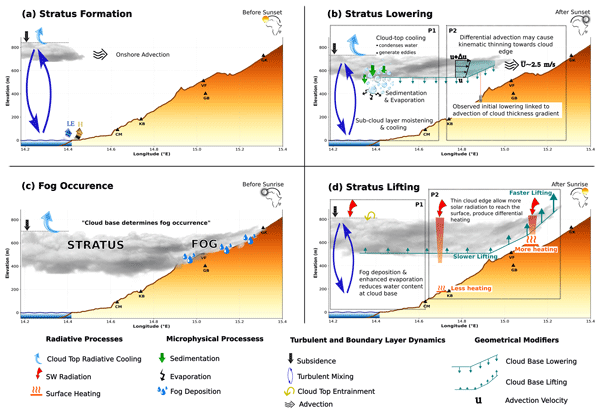
We investigated cloud base height changes in the Namib Desert and developed a method to estimate it using ground-based humidity data. This improves fog monitoring by distinguishing fog from low clouds, which satellites alone cannot reliably do. Our results reveal diurnal patterns and linkages to coastal proximity in the vertical dynamics of fog and low clouds, highlighting key atmospheric processes with potential importance for future research.
Kevin Ohneiser, Patric Seifert, Willi Schimmel, Fabian Senf, Tom Gaudek, Martin Radenz, Audrey Teisseire, Veronika Ettrichrätz, Teresa Vogl, Nina Maherndl, Nils Pfeifer, Jan Henneberger, Anna J. Miller, Nadja Omanovic, Christopher Fuchs, Huiying Zhang, Fabiola Ramelli, Robert Spirig, Anton Kötsche, Heike Kalesse-Los, Maximilian Maahn, Heather Corden, Alexis Berne, Majid Hajipour, Hannes Griesche, Julian Hofer, Ronny Engelmann, Annett Skupin, Albert Ansmann, and Holger Baars
Atmos. Chem. Phys., 25, 17363–17386, https://doi.org/10.5194/acp-25-17363-2025, https://doi.org/10.5194/acp-25-17363-2025, 2025
Short summary
Short summary
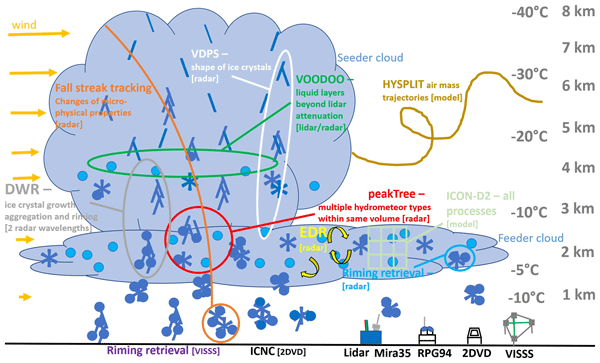
This study focuses on a seeder-feeder cloud system on 8 Jan 2024 in Eriswil, Switzerland. It is shown how the interaction of these cloud systems changes the cloud microphysical properties and the precipitation patterns. A big set of advanced remote-sensing techniques and retrieval algorithms are applied, so that a detailed view on the seeder-feeder cloud system is available. The gained knowledge can be used to improve weather models and weather forecasts.
Paola Formenti, Chiara Giorio, Karine Desboeufs, Alexander Zherebker, Marco Gaetani, Clarissa Baldo, Gautier Landrot, Simona Montebello, Servanne Chevaillier, Sylvain Triquet, Guillaume Siour, Claudia Di Biagio, Francesco Battaglia, Jean-François Doussin, Anais Feron, Andreas Namwoonde, and Stuart John Piketh
Atmos. Chem. Phys., 25, 16127–16145, https://doi.org/10.5194/acp-25-16127-2025, https://doi.org/10.5194/acp-25-16127-2025, 2025
Short summary
Short summary
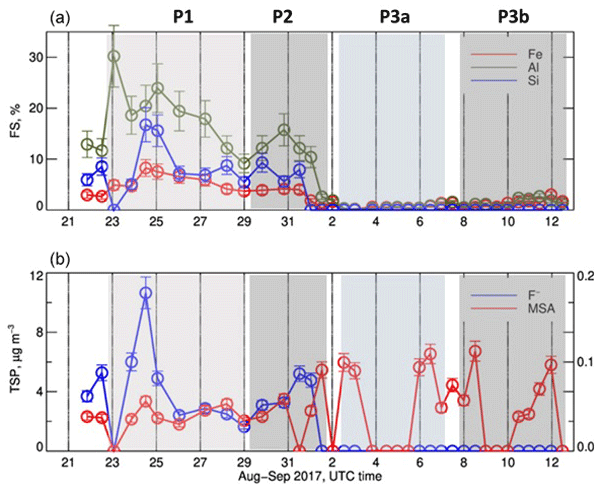
The elemental composition and solubility of several metals, including iron, at a coastal site in Namibia in August–September 2017, indicate that natural and anthropogenic dust had different solubility depending on mineralogy but mostly on the processing by fluoride ions from marine emissions, pointing to the complexity of atmospheric--oceanic interactions in this region of the world influenced by the Benguela current and significant aerosol load.
Chiara Giorio, Anne Monod, Valerio Di Marco, Pierre Herckes, Denise Napolitano, Amy Sullivan, Gautier Landrot, Daniel Warnes, Marika Nasti, Sara D'Aronco, Agathe Gérardin, Nicolas Brun, Karine Desboeufs, Sylvain Triquet, Servanne Chevaillier, Claudia Di Biagio, Francesco Battaglia, Frédéric Burnet, Stuart J. Piketh, Andreas Namwoonde, Jean-François Doussin, and Paola Formenti
Atmos. Chem. Phys., 25, 16107–16125, https://doi.org/10.5194/acp-25-16107-2025, https://doi.org/10.5194/acp-25-16107-2025, 2025
Short summary
Short summary
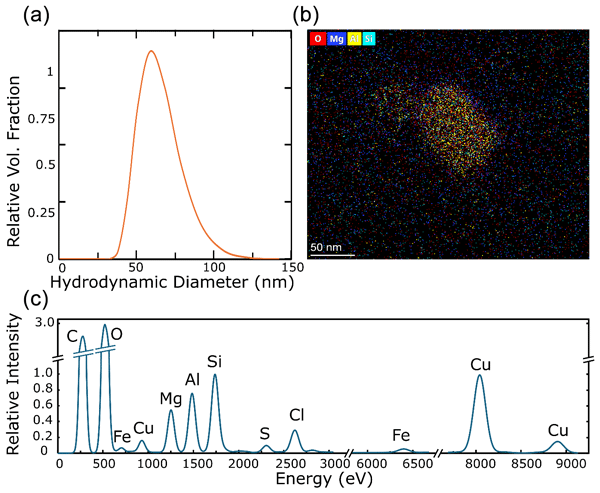
We present a comparison between concentrations of dissolved trace metals in pairs of total suspended particulate (TSP) and fog samples collected in Henties Bay, Namibia, during the AErosols, Radiation and CLOuds in southern Africa (AEROCLO-sA) field campaign. We found enhanced concentrations of dissolved metals in fog samples, which we attributed to metal–ligand complex formation in the early stages of particle activation into droplets that can then remain in a kinetically stable form in fog or lead to the formation of colloidal nanoparticles.
Christopher Fuchs, Fabiola Ramelli, Anna J. Miller, Nadja Omanovic, Robert Spirig, Huiying Zhang, Patric Seifert, Kevin Ohneiser, Ulrike Lohmann, and Jan Henneberger
Atmos. Chem. Phys., 25, 12177–12196, https://doi.org/10.5194/acp-25-12177-2025, https://doi.org/10.5194/acp-25-12177-2025, 2025
Short summary
Short summary
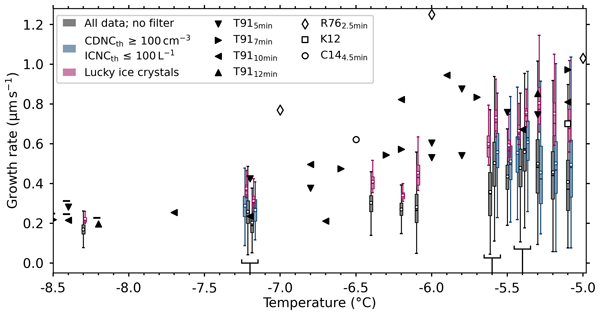
We quantify diffusional ice crystal growth in natural clouds using cloud seeding experiments. We report growth rates for 14 experiments between −5.1 °C and −8.3 °C and observe strong variations depending on the cloud characteristics. Comparing our growth rates to laboratory data, we found similar temperature-dependent trends, but the laboratory rates are higher. These data fill the gap in quantitative in situ observation of ice crystal growth, helping to validate models and laboratory experiments.
Abdulaziz T. Yakubu, Danitza Klopper, Henno Havenga, Roelof Burger, Paola Formenti, and Stuart J. Piketh
EGUsphere, https://doi.org/10.5194/egusphere-2025-1827, https://doi.org/10.5194/egusphere-2025-1827, 2025
Preprint archived
Short summary
Short summary
Low-level inversions experienced along the Namibia coast and adjacent ocean have implications for air pollutant dispersion and low clouds. These affect air quality, human health, radiative forcing and climate change. We used reanalysis and satellite datasets to understand inversion properties over the region. The result shows inversion prominence at night and in winter, seasonally influences pollutant trapping and initiates stratocumulus clouds formation, but is not liable for their extent.
Anna J. Miller, Christopher Fuchs, Fabiola Ramelli, Huiying Zhang, Nadja Omanovic, Robert Spirig, Claudia Marcolli, Zamin A. Kanji, Ulrike Lohmann, and Jan Henneberger
Atmos. Chem. Phys., 25, 5387–5407, https://doi.org/10.5194/acp-25-5387-2025, https://doi.org/10.5194/acp-25-5387-2025, 2025
Short summary
Short summary
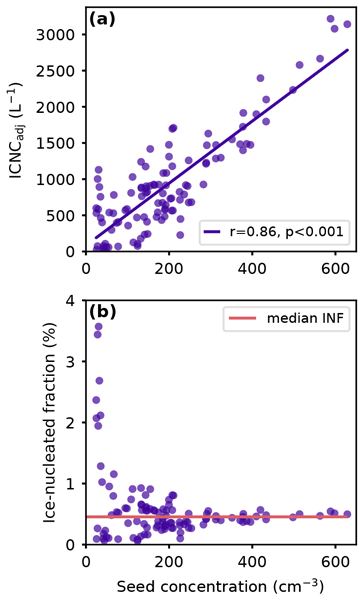
We analyzed the ability of silver iodide particles (a commonly used cloud-seeding agent) to form ice crystals in naturally occurring liquid clouds at −5 to −8 °C and found that only ≈ 0.1 %−1 % of particles nucleate ice, with a negative dependence on temperature. By contextualizing our results with previous laboratory studies, we help to bridge the gap between laboratory and field experiments, which also helps to inform future cloud-seeding projects.
Babak Jahani, Steffen Karalus, Julia Fuchs, Tobias Zech, Marina Zara, and Jan Cermak
Atmos. Meas. Tech., 18, 1927–1941, https://doi.org/10.5194/amt-18-1927-2025, https://doi.org/10.5194/amt-18-1927-2025, 2025
Short summary
Short summary
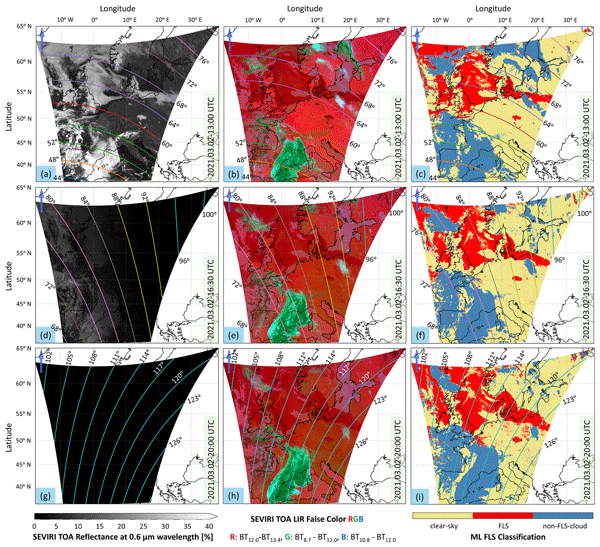
Fog and low stratus (FLS) are both persistent clouds close to the Earth's surface. This study introduces a new machine-learning-based algorithm developed for the Meteosat Second Generation geostationary satellites that can provide a coherent and detailed view of FLS development over large areas over the 24 h day cycle.
Marion Ranaivombola, Nelson Bègue, Lucas Vaz Peres, Farahnaz Fazel-Rastgar, Venkataraman Sivakumar, Gisèle Krysztofiak, Gwenaël Berthet, Fabrice Jegou, Stuart Piketh, and Hassan Bencherif
Atmos. Chem. Phys., 25, 3519–3540, https://doi.org/10.5194/acp-25-3519-2025, https://doi.org/10.5194/acp-25-3519-2025, 2025
Short summary
Short summary
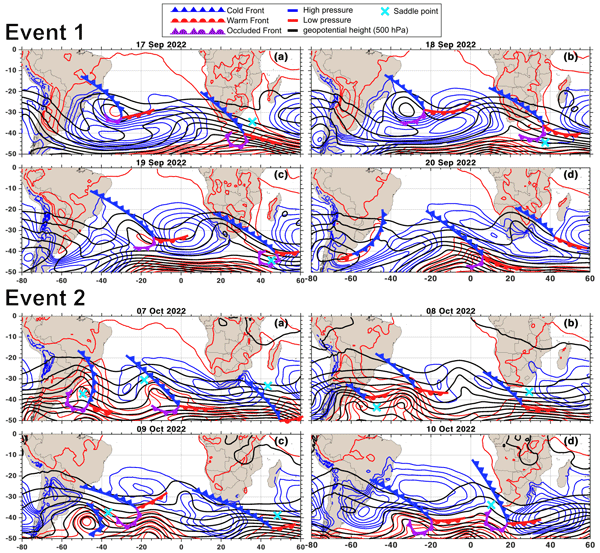
From September to October 2022, the Biomass Burning Aerosol Campaign (BiBAC) in Kruger National Park revealed a significant aerosol loading linked to biomass burning activity, with southeastward transport over southern Africa and the southwestern Indian Ocean (SWIO) basin. The study revealed a predominance of biomass burning aerosols and two distinct transport mechanisms of aerosol plumes and CO, underscoring the importance of east-coast observations in understanding atmospheric dynamics.
Alexandre Mass, Hendrik Andersen, Jan Cermak, Paola Formenti, Eva Pauli, and Julian Quinting
Atmos. Chem. Phys., 25, 491–510, https://doi.org/10.5194/acp-25-491-2025, https://doi.org/10.5194/acp-25-491-2025, 2025
Short summary
Short summary
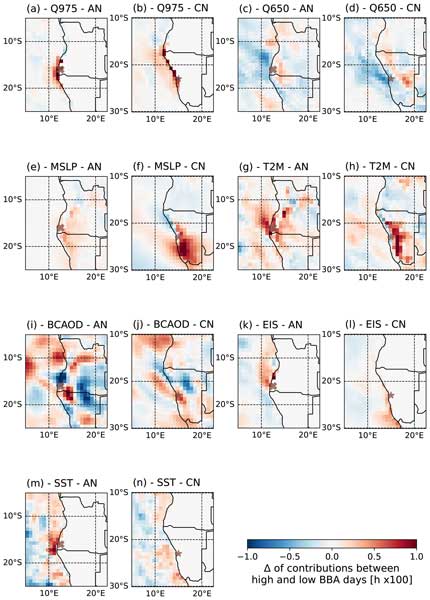
This study investigates the interaction between smoke aerosols and fog and low clouds (FLCs) in the Namib Desert between June and October. Here, a satellite-based dataset of FLCs, reanalysis data and machine learning are used to systematically analyze FLC persistence under different aerosol loadings. Aerosol plumes are shown to modify local thermodynamics, which increase FLC persistence. But fully disentangling aerosol effects from meteorological ones remains a challenge.
Yichen Jia, Hendrik Andersen, and Jan Cermak
Atmos. Chem. Phys., 24, 13025–13045, https://doi.org/10.5194/acp-24-13025-2024, https://doi.org/10.5194/acp-24-13025-2024, 2024
Short summary
Short summary
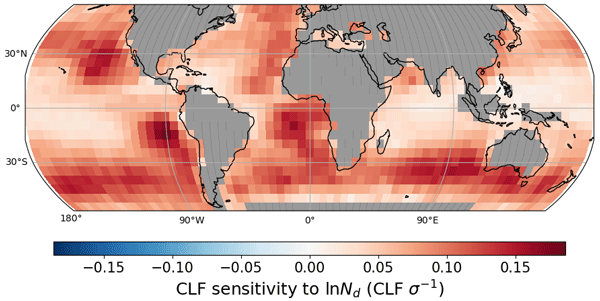
We present a near-global observation-based explainable machine learning framework to quantify the response of cloud fraction (CLF) of marine low clouds to cloud droplet number concentration (Nd), accounting for the covariations with meteorological factors. This approach provides a novel data-driven method to analyse the CLF adjustment by assessing the CLF sensitivity to Nd and numerous meteorological factors as well as the dependence of the Nd–CLF sensitivity on the meteorological conditions.
Bianca Adler, David D. Turner, Laura Bianco, Irina V. Djalalova, Timothy Myers, and James M. Wilczak
Atmos. Meas. Tech., 17, 6603–6624, https://doi.org/10.5194/amt-17-6603-2024, https://doi.org/10.5194/amt-17-6603-2024, 2024
Short summary
Short summary
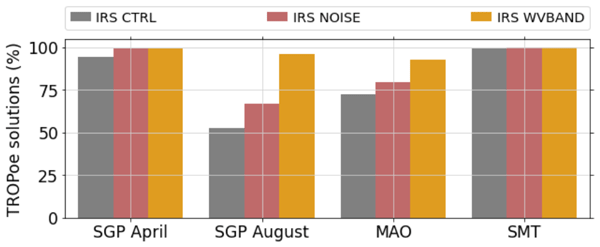
Continuous profile observations of temperature and humidity in the lowest part of the atmosphere are essential for the evaluation of numerical weather prediction models and data assimilation for better weather forecasts. Such profiles can be retrieved from passive ground-based remote sensing instruments like infrared spectrometers and microwave radiometers. In this study, we describe three recent modifications to the retrieval framework TROPoe for improved temperature and humidity profiles.
Sarah Wilson Kemsley, Paulo Ceppi, Hendrik Andersen, Jan Cermak, Philip Stier, and Peer Nowack
Atmos. Chem. Phys., 24, 8295–8316, https://doi.org/10.5194/acp-24-8295-2024, https://doi.org/10.5194/acp-24-8295-2024, 2024
Short summary
Short summary
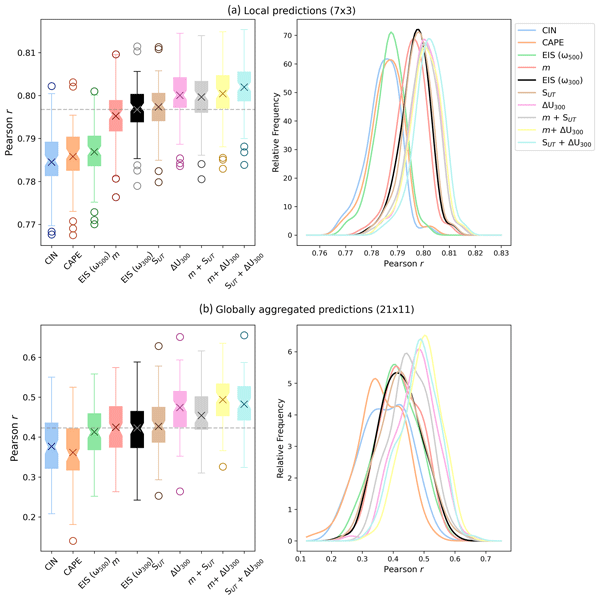
Aiming to inform parameter selection for future observational constraint analyses, we incorporate five candidate meteorological drivers specifically targeting high clouds into a cloud controlling factor framework within a range of spatial domain sizes. We find a discrepancy between optimal domain size for predicting locally and globally aggregated cloud radiative anomalies and identify upper-tropospheric static stability as an important high-cloud controlling factor.
Laura Bianco, Bianca Adler, Ludovic Bariteau, Irina V. Djalalova, Timothy Myers, Sergio Pezoa, David D. Turner, and James M. Wilczak
Atmos. Meas. Tech., 17, 3933–3948, https://doi.org/10.5194/amt-17-3933-2024, https://doi.org/10.5194/amt-17-3933-2024, 2024
Short summary
Short summary
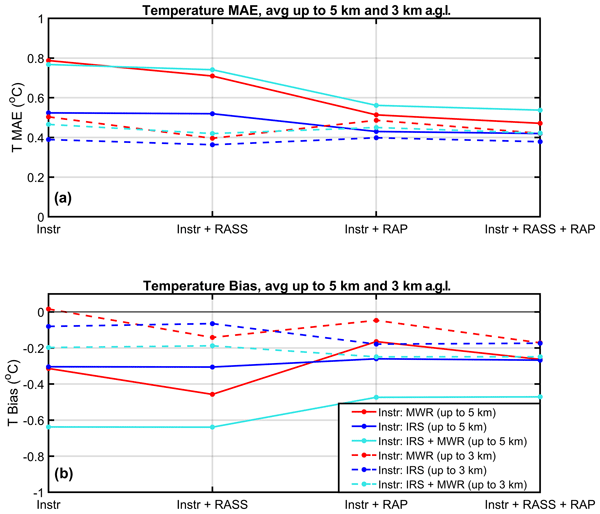
The Tropospheric Remotely Observed Profiling via Optimal Estimation physical retrieval is used to retrieve temperature and humidity profiles from various combinations of passive and active remote sensing instruments, surface platforms, and numerical weather prediction models. The retrieved profiles are assessed against collocated radiosonde in non-cloudy conditions to assess the sensitivity of the retrievals to different input combinations. Case studies with cloudy conditions are also inspected.
Nadja Omanovic, Sylvaine Ferrachat, Christopher Fuchs, Jan Henneberger, Anna J. Miller, Kevin Ohneiser, Fabiola Ramelli, Patric Seifert, Robert Spirig, Huiying Zhang, and Ulrike Lohmann
Atmos. Chem. Phys., 24, 6825–6844, https://doi.org/10.5194/acp-24-6825-2024, https://doi.org/10.5194/acp-24-6825-2024, 2024
Short summary
Short summary
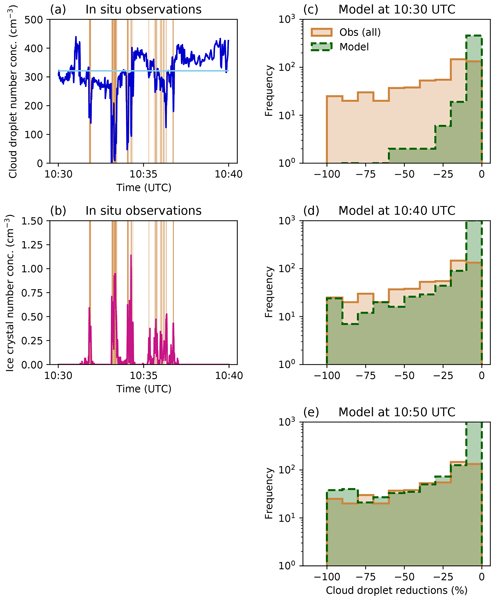
We present simulations with a high-resolution numerical weather prediction model to study the growth of ice crystals in low clouds following glaciogenic seeding. We show that the simulated ice crystals grow slower than observed and do not consume as many cloud droplets as measured in the field. This may have implications for forecasting precipitation, as the ice phase is crucial for precipitation at middle and high latitudes.
Nevio Babić, Bianca Adler, Alexander Gohm, Manuela Lehner, and Norbert Kalthoff
Weather Clim. Dynam., 5, 609–631, https://doi.org/10.5194/wcd-5-609-2024, https://doi.org/10.5194/wcd-5-609-2024, 2024
Short summary
Short summary
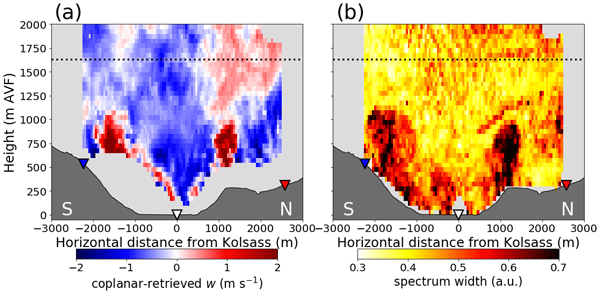
Day-to-day weather over mountains remains a significant challenge in the domain of weather forecast. Using a combination of measurements from several instrument platforms, including Doppler lidars, aircraft, and radiosondes, we developed a method that relies primarily on turbulence characteristics of the lowest layers of the atmosphere. As a result, we identified new ways in which atmosphere behaves over mountains during daytime, which may serve to further improve forecasting capabilities.
Karine Desboeufs, Paola Formenti, Raquel Torres-Sánchez, Kerstin Schepanski, Jean-Pierre Chaboureau, Hendrik Andersen, Jan Cermak, Stefanie Feuerstein, Benoit Laurent, Danitza Klopper, Andreas Namwoonde, Mathieu Cazaunau, Servanne Chevaillier, Anaïs Feron, Cécile Mirande-Bret, Sylvain Triquet, and Stuart J. Piketh
Atmos. Chem. Phys., 24, 1525–1541, https://doi.org/10.5194/acp-24-1525-2024, https://doi.org/10.5194/acp-24-1525-2024, 2024
Short summary
Short summary
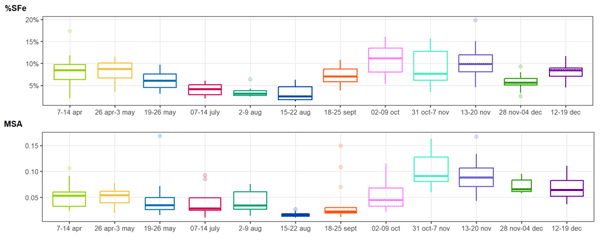
This study investigates the fractional solubility of iron (Fe) in dust particles along the coast of Namibia, a critical region for the atmospheric Fe supply of the South Atlantic Ocean. Our results suggest a possible two-way interplay whereby marine biogenic emissions from the coastal marine ecosystems into the atmosphere would increase the solubility of Fe-bearing dust by photo-reduction processes. The subsequent deposition of soluble Fe could act to further enhance marine biogenic emissions.
Anna J. Miller, Fabiola Ramelli, Christopher Fuchs, Nadja Omanovic, Robert Spirig, Huiying Zhang, Ulrike Lohmann, Zamin A. Kanji, and Jan Henneberger
Atmos. Meas. Tech., 17, 601–625, https://doi.org/10.5194/amt-17-601-2024, https://doi.org/10.5194/amt-17-601-2024, 2024
Short summary
Short summary
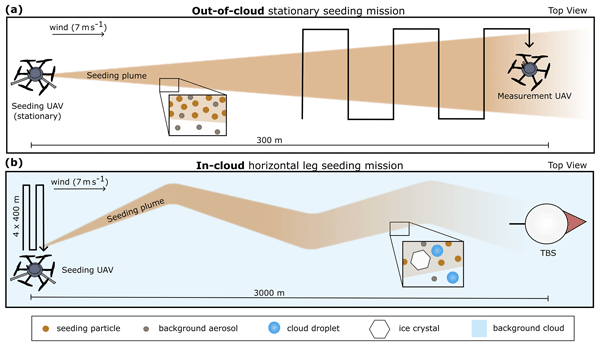
We present a method for aerosol and cloud research using two uncrewed aerial vehicles (UAVs). The UAVs have a propeller heating mechanism that allows flights in icing conditions, which has so far been a limitation for cloud research with UAVs. One UAV burns seeding flares, producing a plume of particles that causes ice formation in supercooled clouds. The second UAV measures aerosol size distributions and is used for measuring the seeding plume or for characterizing the boundary layer.
Hendrik Andersen, Jan Cermak, Alyson Douglas, Timothy A. Myers, Peer Nowack, Philip Stier, Casey J. Wall, and Sarah Wilson Kemsley
Atmos. Chem. Phys., 23, 10775–10794, https://doi.org/10.5194/acp-23-10775-2023, https://doi.org/10.5194/acp-23-10775-2023, 2023
Short summary
Short summary
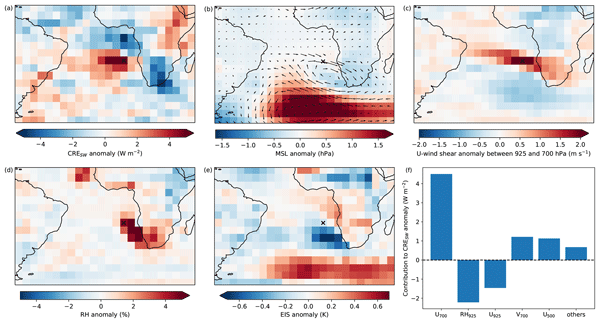
This study uses an observation-based cloud-controlling factor framework to study near-global sensitivities of cloud radiative effects to a large number of meteorological and aerosol controls. We present near-global sensitivity patterns to selected thermodynamic, dynamic, and aerosol factors and discuss the physical mechanisms underlying the derived sensitivities. Our study hopes to guide future analyses aimed at constraining cloud feedbacks and aerosol–cloud interactions.

Bianca Adler, James M. Wilczak, Jaymes Kenyon, Laura Bianco, Irina V. Djalalova, Joseph B. Olson, and David D. Turner
Geosci. Model Dev., 16, 597–619, https://doi.org/10.5194/gmd-16-597-2023, https://doi.org/10.5194/gmd-16-597-2023, 2023
Short summary
Short summary
Rapid changes in wind speed make the integration of wind energy produced during persistent orographic cold-air pools difficult to integrate into the electrical grid. By evaluating three versions of NOAA’s High-Resolution Rapid Refresh model, we demonstrate how model developments targeted during the second Wind Forecast Improvement Project improve the forecast of a persistent cold-air pool event.
J. Robert Logan, Kathe E. Todd-Brown, Kathryn M. Jacobson, Peter J. Jacobson, Roland Vogt, and Sarah E. Evans
Biogeosciences, 19, 4129–4146, https://doi.org/10.5194/bg-19-4129-2022, https://doi.org/10.5194/bg-19-4129-2022, 2022
Short summary
Short summary
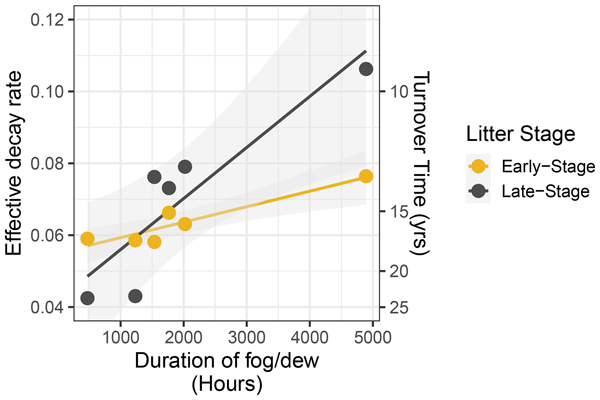
Understanding how plants decompose is important for understanding where the atmospheric CO2 they absorb ends up after they die. In forests, decomposition is controlled by rain but not in deserts. We performed a 2.5-year study in one of the driest places on earth (the Namib desert in southern Africa) and found that fog and dew, not rainfall, closely controlled how quickly plants decompose. We also created a model to help predict decomposition in drylands with lots of fog and/or dew.
Constance K. Segakweng, Pieter G. van Zyl, Cathy Liousse, Johan P. Beukes, Jan-Stefan Swartz, Eric Gardrat, Maria Dias-Alves, Brigitte Language, Roelof P. Burger, and Stuart J. Piketh
Atmos. Chem. Phys., 22, 10291–10317, https://doi.org/10.5194/acp-22-10291-2022, https://doi.org/10.5194/acp-22-10291-2022, 2022
Short summary
Short summary
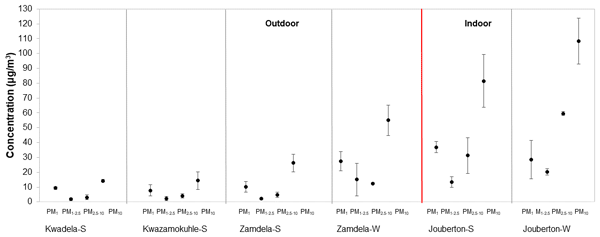
A detailed size-resolved assessment of the chemical characteristics of outdoor and indoor aerosols collected in low-income urban settlements in South Africa indicated the significance of household combustion for cooking and space heating – an important source of pollutants in the developing world – to atmospheric chemical composition. The regional impact of industrial sources in the highly industrialised and densely populated north-eastern interior of South Africa was also evident.
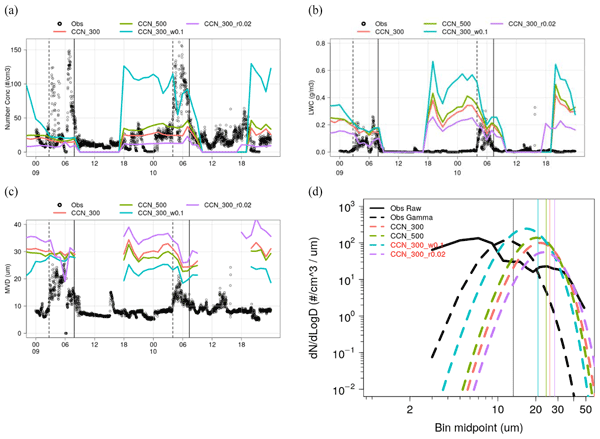
Michael John Weston, Stuart John Piketh, Frédéric Burnet, Stephen Broccardo, Cyrielle Denjean, Thierry Bourrianne, and Paola Formenti
Atmos. Chem. Phys., 22, 10221–10245, https://doi.org/10.5194/acp-22-10221-2022, https://doi.org/10.5194/acp-22-10221-2022, 2022
Short summary
Short summary
An aerosol-aware microphysics scheme is evaluated for fog cases in Namibia. AEROCLO-sA campaign observations are used to access and parameterise the model. The model cloud condensation nuclei activation is lower than the observations. The scheme is designed for clouds with updrafts, while fog typically forms in stable conditions. A pseudo updraft speed assigned to the lowest model levels helps achieve more realistic cloud droplet number concentration and size distribution in the model.
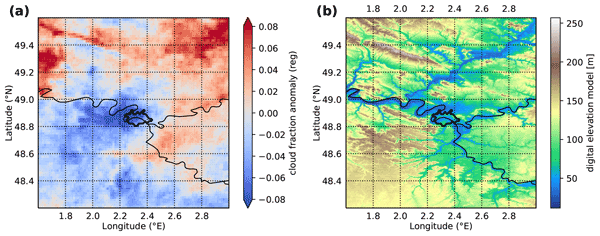
Julia Fuchs, Hendrik Andersen, Jan Cermak, Eva Pauli, and Rob Roebeling
Atmos. Meas. Tech., 15, 4257–4270, https://doi.org/10.5194/amt-15-4257-2022, https://doi.org/10.5194/amt-15-4257-2022, 2022
Short summary
Short summary
Two cloud-masking approaches, a local and a regional approach, using high-resolution satellite data are developed and validated for the region of Paris to improve applicability for analyses of urban effects on low clouds. We found that cloud masks obtained from the regional approach are more appropriate for the high-resolution analysis of locally induced cloud processes. Its applicability is tested for the analysis of typical fog conditions over different surface types.
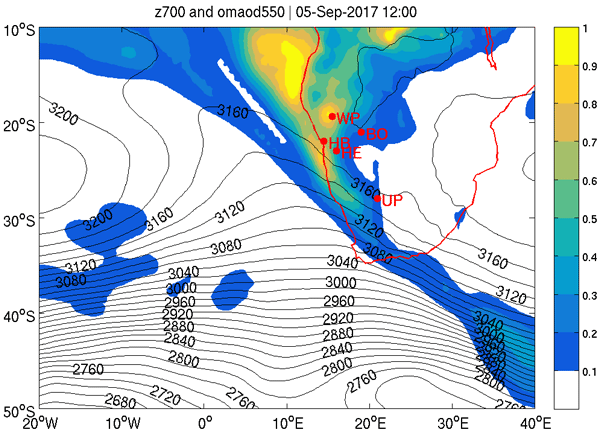
Cyrille Flamant, Marco Gaetani, Jean-Pierre Chaboureau, Patrick Chazette, Juan Cuesta, Stuart John Piketh, and Paola Formenti
Atmos. Chem. Phys., 22, 5701–5724, https://doi.org/10.5194/acp-22-5701-2022, https://doi.org/10.5194/acp-22-5701-2022, 2022
Short summary
Short summary
Rivers of smoke extend from tropical southern Africa towards the Indian Ocean during the winter fire season, controlled by the interaction of tropical easterly waves, and westerly waves at mid latitudes. During the AEROCLO-sA field campaign in 2017, a river of smoke was directly observed over Namibia. In this paper, the evolution and atmospheric drivers of the river of smoke are described, and the role of a mid-latitude cut-off low in lifting the smoke to the upper troposphere is highlighted.
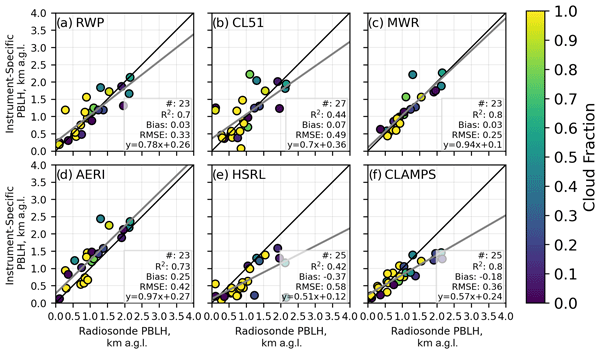
James B. Duncan Jr., Laura Bianco, Bianca Adler, Tyler Bell, Irina V. Djalalova, Laura Riihimaki, Joseph Sedlar, Elizabeth N. Smith, David D. Turner, Timothy J. Wagner, and James M. Wilczak
Atmos. Meas. Tech., 15, 2479–2502, https://doi.org/10.5194/amt-15-2479-2022, https://doi.org/10.5194/amt-15-2479-2022, 2022
Short summary
Short summary
In this study, several ground-based remote sensing instruments are used to estimate the height of the convective planetary boundary layer, and their performance is compared against independent boundary layer depth estimates obtained from radiosondes launched as part of the CHEESEHEAD19 field campaign. The impact of clouds (particularly boundary layer clouds) on the estimation of the boundary layer depth is also investigated.
Irina V. Djalalova, David D. Turner, Laura Bianco, James M. Wilczak, James Duncan, Bianca Adler, and Daniel Gottas
Atmos. Meas. Tech., 15, 521–537, https://doi.org/10.5194/amt-15-521-2022, https://doi.org/10.5194/amt-15-521-2022, 2022
Short summary
Short summary
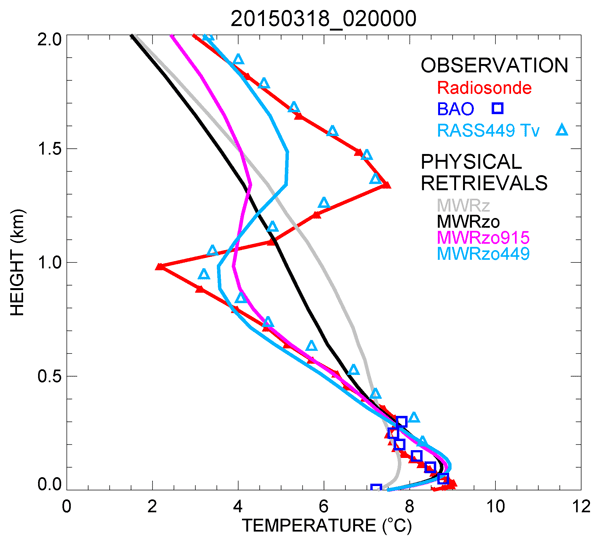
In this paper we investigate the synergy obtained by combining active (radio acoustic sounding system – RASS) and passive (microwave radiometer) remote sensing observations to obtain temperature vertical profiles through a radiative transfer model. Inclusion of the RASS observations leads to more accurate temperature profiles from the surface to 5 km above ground, well above the maximum height of the RASS observations themselves (2000 m), when compared to the microwave radiometer used alone.
Babak Jahani, Hendrik Andersen, Josep Calbó, Josep-Abel González, and Jan Cermak
Atmos. Chem. Phys., 22, 1483–1494, https://doi.org/10.5194/acp-22-1483-2022, https://doi.org/10.5194/acp-22-1483-2022, 2022
Short summary
Short summary
The change in the state of sky from cloudy to cloudless (or vice versa) comprises an additional phase called
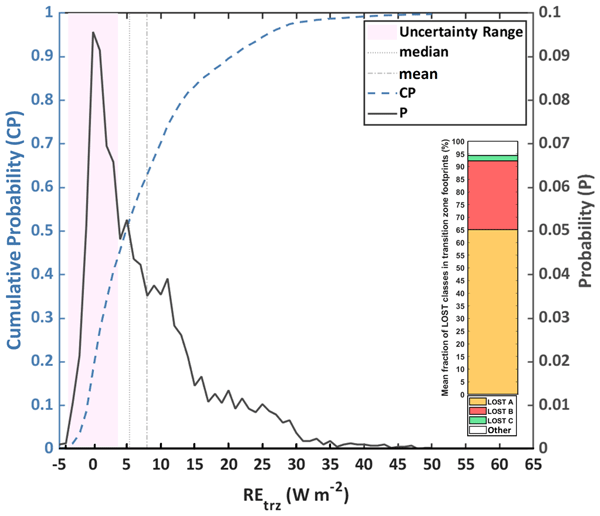
transition zonewith characteristics laying between those of aerosols and clouds. This study presents an approach for the quantification of the broadband longwave radiative effects of the cloud–aerosol transition zone at the top of the atmosphere during daytime over the ocean based on satellite observations and radiative transfer simulations.

Matthew W. Christensen, Andrew Gettelman, Jan Cermak, Guy Dagan, Michael Diamond, Alyson Douglas, Graham Feingold, Franziska Glassmeier, Tom Goren, Daniel P. Grosvenor, Edward Gryspeerdt, Ralph Kahn, Zhanqing Li, Po-Lun Ma, Florent Malavelle, Isabel L. McCoy, Daniel T. McCoy, Greg McFarquhar, Johannes Mülmenstädt, Sandip Pal, Anna Possner, Adam Povey, Johannes Quaas, Daniel Rosenfeld, Anja Schmidt, Roland Schrödner, Armin Sorooshian, Philip Stier, Velle Toll, Duncan Watson-Parris, Robert Wood, Mingxi Yang, and Tianle Yuan
Atmos. Chem. Phys., 22, 641–674, https://doi.org/10.5194/acp-22-641-2022, https://doi.org/10.5194/acp-22-641-2022, 2022
Short summary
Short summary
Trace gases and aerosols (tiny airborne particles) are released from a variety of point sources around the globe. Examples include volcanoes, industrial chimneys, forest fires, and ship stacks. These sources provide opportunistic experiments with which to quantify the role of aerosols in modifying cloud properties. We review the current state of understanding on the influence of aerosol on climate built from the wide range of natural and anthropogenic laboratories investigated in recent decades.
Cited articles
Andersen, H. and Cermak, J.: First fully diurnal fog and low cloud satellite detection reveals life cycle in the Namib, Atmos. Meas. Tech., 11, 5461–5470, https://doi.org/10.5194/amt-11-5461-2018, 2018. a, b, c, d
Bentamy, A., Piollé, J. F., Grouazel, A., Danielson, R., Gulev, S., Paul, F., Azelmat, H., Mathieu, P. P., von Schuckmann, K., Sathyendranath, S., Evers-King, H., Esau, I., Johannessen, J. A., Clayson, C. A., Pinker, R. T., Grodsky, S. A., Bourassa, M., Smith, S. R., Haines, K., Valdivieso, M., Merchant, C. J., Chapron, B., Anderson, A., Hollmann, R., and Josey, S. A.: Review and assessment of latent and sensible heat flux accuracy over the global oceans, Remote Sens. Environ., 201, 196–218, https://doi.org/10.1016/j.rse.2017.08.016, 2017. a
Burke, A.: Plant endemism in the central Namib Desert, Evol. Ecol. Res., 9, 283–297, 2007. a
CampbellScientific: CS215 temp and rh probe: user manual, Campbell Scientific, available at: https://s.campbellsci.com/documents/ca/manuals/cs215_man.pdf (last access: 20 July 2026), 2013. a
Cermak, J.: Low clouds and fog along the South-Western African coast – Satellite-based retrieval and spatial patterns, Atmos. Rese., 116, 15–21, 2012. a
Cermak, J.: Fog and low cloud frequency and properties from active-sensor satellite data, Remote Sens., 10, 1209, https://doi.org/10.3390/rs10081209, 2018. a
Cermak, J. and Bendix, J.: Detecting ground fog from space – a microphysics-based approach, Int. J. Remote Sens., 32, 3345–3371, 2011. a
Cox, D. R.: The regression analysis of binary sequences, J. Roy. Stat. Soc. B, 20, 215–232, 1958. a
De Szoeke, S. P., Verlinden, K. L., Yuter, S. E., and Mechem, D. B.: The time scales of variability of marine low clouds, J. Climate, 29, 6463–6481, 2016. a
Egli, S., Thies, B., and Bendix, J.: A hybrid approach for fog retrieval based on a combination of satellite and ground truth data, Remote Sens., 10, 628, https://doi.org/10.3390/rs10040628, 2018. a
Engeln, A. v. and Teixeira, J.: A Planetary Boundary Layer Height Climatology Derived from ECMWF Reanalysis Data, J. Climate, 26, 6575–6590, https://doi.org/10.1175/JCLI-D-12-00385.1, 2013. a
Espinoza, V., Lobos-Roco, F., and del Río, C.: Synoptic control of the spatiotemporal variability of fog and low clouds under ENSO phenomena along the Chilean coast (17°–36° S), Atmos. Res., 308, 107533, https://doi.org/10.1016/j.atmosres.2024.107533, 2024. a
Fuchs, J., Cermak, J., Andersen, H., Hollmann, R., and Schwarz, K.: On the influence of air mass Origin on low-cloud properties in the Southeast Atlantic, J. Geophys. Res.-Atmos., 122, 11–076, 2017. a
Fuchs, J., Cermak, J., and Andersen, H.: Building a cloud in the southeast Atlantic: understanding low-cloud controls based on satellite observations with machine learning, Atmos. Chem. Phys., 18, 16537–16552, https://doi.org/10.5194/acp-18-16537-2018, 2018. a
Gottlieb, T. R., Eckardt, F. D., Venter, Z. S., and Cramer, M. D.: The contribution of fog to water and nutrient supply to Arthraerua leubnitziae in the central Namib Desert, Namibia, J. Arid Environ., 161, 35–46, https://doi.org/10.1016/j.jaridenv.2018.11.002, 2019. a
Haensler, A., Cermak, J., Hagemann, S., and Jacob, D.: Will the southern African west coast fog be affected by future climate change? Results of an initial fog projection using a regional climate model, Erdkunde, 65, 261–275, https://doi.org/10.3112/erdkunde.2011.03.04, 2011. a
Henschel, J. R. and Seely, M. K.: Ecophysiology of atmospheric moisture in the Namib Desert, Atmos. Res., 87, 362–368, https://doi.org/10.1016/j.atmosres.2007.11.015, 2008. a
Hersbach, H., Bell, B., Berrisford, P., Hirahara, S., Horányi, A., Muñoz-Sabater, J., Nicolas, J., Peubey, C., Radu, R., Schepers, D., Simmons, A., Soci, C., Abdalla, S., Abellan, X., Balsamo, G., Bechtold, P., Biavati, G., Bidlot, J., Bonavita, M., De Chiara, G., Dahlgren, P., Dee, D., Diamantakis, M., Dragani, R., Flemming, J., Forbes, R., Fuentes, M., Geer, A., Haimberger, L., Healy, S., Hogan, R. J., Hólm, E., Janisková, M., Keeley, S., Laloyaux, P., Lopez, P., Lupu, C., Radnoti, G., de Rosnay, P., Rozum, I., Vamborg, F., Villaume, S., and Thépaut, J.-N.: The ERA5 global reanalysis, Q. J. Roy. Meteorol. Soc., 146, 1999–2049, https://doi.org/10.1002/9781118548387.ch5, 2020. a
Hosmer Jr, D. W., Lemeshow, S., and Sturdivant, R. X.: Applied logistic regression, Vol. 398, John Wiley & Sons, https://doi.org/10.1002/9781118548387.ch1, 2013. a
Imbol Koungue, R. A., Brandt, P., Lübbecke, J., Prigent, A., Martins, M. S., and Rodrigues, R. R.: The 2019 Benguela Niño, Front. Mar. Sci., 8, 800103, https://doi.org/10.3389/fmars.2021.800103, 2021. a
Jury, M. and Walker, N.: Marine boundary layer modification across the edge of the Agulhas Current, J. Geophys. Res.-Oceans, 93, 647–654, 1988. a
Juvik, J. O. and Nullet, D.: Comments on ”A proposed standard fog collector for use in high-elevation regions”, J. Appl. Meteorol. (1988–2005), 34, 2108–2110, 1995. a
Loots, S., Ritz, C. M., Schwager, M., Sehic, J., Herklotz, V., Garkava-Gustavsson, L., and Nybom, H. E.: Distribution, habitat profile and genetic variability of Namibian succulent Lithops ruschiorum, Bothalia-African Biodiversity & Conservation, 49, 1–18, 2019. a
Luo, B. and Minnett, P. J.: Evaluation of the ERA5 sea surface skin temperature with remotely-sensed shipborne marine-atmospheric emitted radiance interferometer data, Remote Sens., 12, https://doi.org/10.3390/rs12111873, 2020. a
Malik, D., Andersen, H., Cermak, J., Vogt, R., and Adler, B.: Cloud base height determines fog occurrence patterns in the Namib Desert, Atmos. Chem. Phys., 26, 681–701, https://doi.org/10.5194/acp-26-681-2026, 2026. a, b
Martens, B., Schumacher, D. L., Wouters, H., Muñoz-Sabater, J., Verhoest, N. E. C., and Miralles, D. G.: Evaluating the land-surface energy partitioning in ERA5, Geosci. Model Dev., 13, 4159–4181, https://doi.org/10.5194/gmd-13-4159-2020, 2020. a
Mass, A., Andersen, H., Cermak, J., Formenti, P., Pauli, E., and Quinting, J.: A satellite-based analysis of semi-direct effects of biomass burning aerosols on fog and low-cloud dissipation in the Namib Desert, Atmos. Chem. Phys., 25, 491–510, https://doi.org/10.5194/acp-25-491-2025, 2025. a, b
Mass, A., Andersen, H., and Cermak, J.: Coastal upwelling and tropical warm water intrusions are key drivers of interannual fog variability along the southwestern African coast, EGUsphere [preprint], https://doi.org/10.5194/egusphere-2026-1208, 2026. a, b, c
Maúre, G., Pinto, I., Ndebele-Murisa, M., Muthige, M., Lennard, C., Nikulin, G., Dosio, A., and Meque, A.: The southern African climate under 1.5 C and 2 C of global warming as simulated by CORDEX regional climate models, Environ. Res. Lett., 13, 065002, https://doi.org/10.1088/1748-9326/aab190, 2018. a
Mupambwa, H. A., Hausiku, M. K., Nciizah, A. D., and Dube, E.: The unique Namib desert-coastal region and its opportunities for climate smart agriculture: A review, Cogent Food & Agriculture, 5, 1645258, https://doi.org/10.1080/23311932.2019.1645258, 2019. a
Nicholson, S. E.: A low-level jet along the Benguela coast, an integral part of the Benguela current ecosystem, Clim. Change, 99, 613–624, 2010. a
Olivier, J.: Spatial distribution of fog in the Namib, J. Arid Environ., 29, 129–138, 1995. a
Pedregosa, F., Varoquaux, G., Gramfort, A., Michel, V., Thirion, B., Grisel, O., Blondel, M., Prettenhofer, P., Weiss, R., Dubourg, V., Vanderplas, J., Passos, A., Cournapeau, D., Brucher, M., Perrot, M., and Duchesnay, E.: Scikit-learn: Machine Learning in Python, J. Mach. Learn. Res., 12, 2825–2830, 2011. a
Pokhrel, S., Dutta, U., Rahaman, H., Chaudhari, H., Hazra, A., Saha, S. K., and Veeranjaneyulu, C.: Evaluation of Different Heat Flux Products Over the Tropical Indian Ocean, Earth Space Sci., 7, 1–22, https://doi.org/10.1029/2019EA000988, 2020. a
Preston-Whyte, R. and Tyson, P.: The atmosphere and weather of southern Africa, Oxford University Press, https://archive.org/details/atmosphereweathe0000pres (last access: 18 September 2026), 1988. a
Qiao, N. and Wang, L.: Satellite observed vegetation dynamics and drivers in the Namib sand sea over the recent 20 years, Ecohydrology, 15, e2420, https://doi.org/10.1002/eco.2420, 2022. a
Ramond, J.-B., Baxter, J., Maggs-Kölling, G., Martínez-Alvarez, L., Read, D., León-Sobrino, C., van der Walt, A., and Cowan, D.: Microbial ecology of the Namib Desert, in: Model Ecosystems in Extreme Environments, pp. 113–143, Elsevier, https://doi.org/10.1016/B978-0-12-812742-1.00006-4, 2019. a
Seely, M.: Irregular fog as a water source for desert dune beetles, Oecologia, 42, 213–227, 1979. a
Seely, M. and Henschel, J. R.: The climatology of Namib fog, in: Proceedings of the First International Conference on Fog and Fog Collection, pp. 19–24, Vancouver, https://www.fogquest.org/wp-content/uploads/2015/08/Conf_1998_Seely_Climat.pdf (last access: 18 September 2026), 1998. a, b, c, d, e, f, g, h, i, j, k, l, m, n
Shanyengana, E., Henschel, J., Seely, M., and Sanderson, R.: Exploring fog as a supplementary water source in Namibia, Atmos. Res., 64, 251–259, 2002. a
Spirig, R., Vogt, R., Larsen, J. A., Feigenwinter, C., Wicki, A., Franceschi, J., Parlow, E., Adler, B., Kalthoff, N., Cermak, J., Andersen, H., Fuchs, J., Bott, A., Hacker, M., Wagner, N., Maggs-Kölling, G., Wassenaar, T., and Seely, M.: Probing the fog life cycles in the Namib Desert, B. Am. Meteorol. Soc., 100, 2491–2507, 2019. a, b, c, d, e, f, g
Sun, X., Cook, K. H., and Vizy, E. K.: The South Atlantic Subtropical High: Climatology and Interannual Variability, J. Climate, 30, 3279–3296, https://doi.org/10.1175/JCLI-D-16-0705.1, 2017. a
Tibshirani, R.: Regression shrinkage and selection via the lasso, J. Roy. Stat. Soc. B, 58, 267–288, 1996. a
Tlhalerwa, K., Freiman, M., and Piketh, S.: Aerosol deposition off the Southern African West Coast by berg winds, S. Afr. Geogr. J., 87, 152–161, 2005. a
Tyson, P. and Seely, M.: Local winds over the central Namib, S. Afr. Geogr. J., 62, 135–150, 1980. a
Tyson, P., Garstang, M., Swap, R., Kallberg, P., and Edwards, M.: An air transport climatology for subtropical southern Africa, Int. J. Climatol., 16, 265–291, 1996. a
Warren-Rhodes, K. A., McKay, C. P., Boyle, L. N., Wing, M. R., Kiekebusch, E. M., Cowan, D. A., Stomeo, F., Pointing, S. B., Kaseke, K. F., Eckardt, F., Henschel, J. R., Anisfeld, A., Seely, M., and Rhodes, K. L.: Physical ecology of hypolithic communities in the central Namib Desert: the role of fog, rain, rock habitat, and light, J. Geophys. Res.-Biogeosci., 118, 1451–1460, 2013. a, b
Weathers, K. C., Ponette-González, A. G., and Dawson, T. E.: Medium, vector, and connector: Fog and the maintenance of ecosystems, Ecosystems, 23, 217–229, 2020. a
Weischet, W. and Endlicher, W.: Regionale Klimatologie: Teil 2: Die Alte Welt, Europa, Afrika, Asien, Springer, https://www.schweizerbart.de/publications/detail/isbn/9783443071196/Weischet_Regionale_Klimatologie_2_Die_A (last access: 18 September 2026), 2000. a
Yakubu, A. T., Klopper, D., Havenga, H., Burger, R., Formenti, P., and Piketh, S. J.: Atmospheric stratification over the Southeast Atlantic Ocean adjacent to the Namibian coast, EGUsphere [preprint], https://doi.org/10.5194/egusphere-2025-1827, 2025. a, b
Zheng, Y., Zhang, H., and Li, Z.: Role of surface latent heat flux in shallow cloud transitions: A mechanism-denial LES study, J. Atmos. Sci., 78, 2709–2723, 2021. a
Short summary
Fog is a key component of the Namib Desert ecosystem, and is mostly associated with the advection of marine stratus clouds. Here, we use local measurements near the coast to distinguish fog situations from lifted low-cloud situations. Using reanalysis data, we find synoptic and regional-scale processes over the ocean and over the continent that are connected to stratus altitude and therefore fog occurrence patterns. The results lead to a better understanding of the coastal desert fog system.
Fog is a key component of the Namib Desert ecosystem, and is mostly associated with the...


Altmetrics
Final-revised paper
Preprint